22 September
Wake up to texts from my coworkers, far on the other side of the globe. Apparently the university I work in has just appointed a new vice-chancellor, a man who I’d jokingly suggested as a possible choice from the year before. Immediately resolve to write down next year’s lottery numbers when I have the time.
Today is our last day in Barcelona, and I am at an utter loss. What DOES one visit in Barcelona with six hours to go? The train to our next destination doesn’t depart until half past four in the afternoon, yet there’s still a l-o-n-g list of places which any tourist to the city worth their salt would visit: Camp Nou, Parc Güell, the Arc de Triomf, the list goes on. A visit to Barcelona doesn’t really feel complete without us going to all of these — but alas, four days is not enough for us to even fit ONE of these into our itinerary. (And to think, I’d seriously considered doing a whistle-stop tour of Andorra while planning for this trip.)
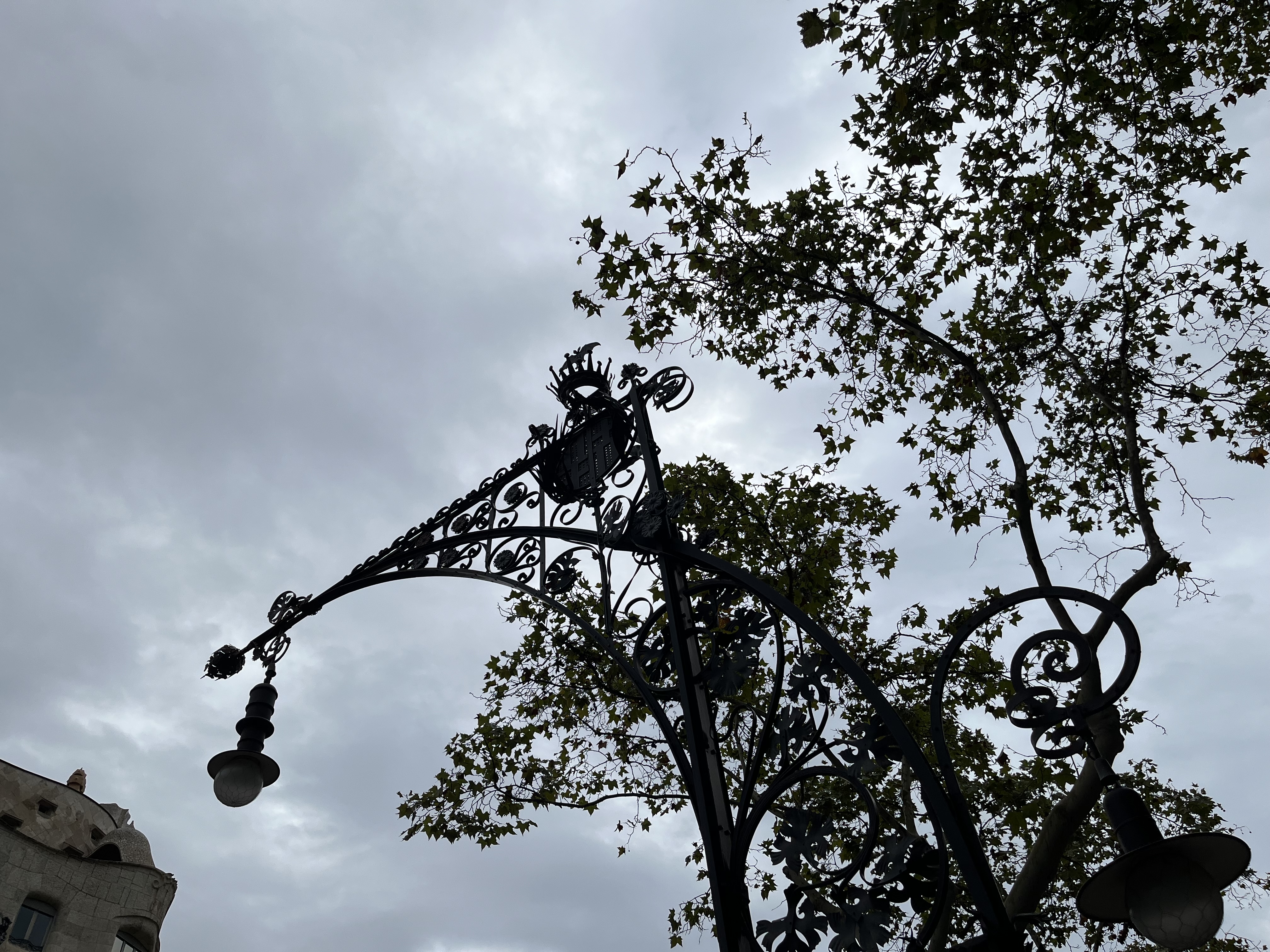
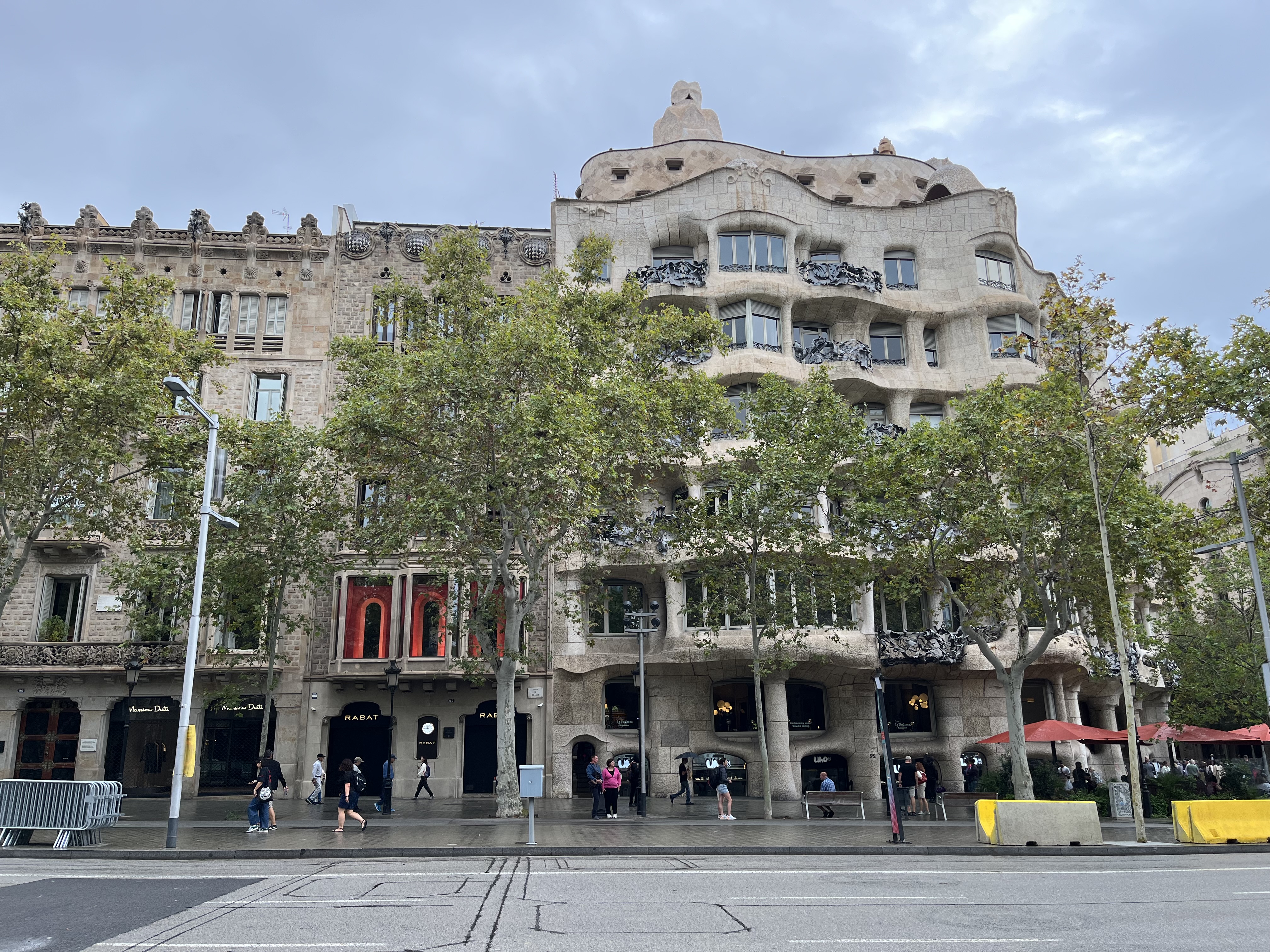
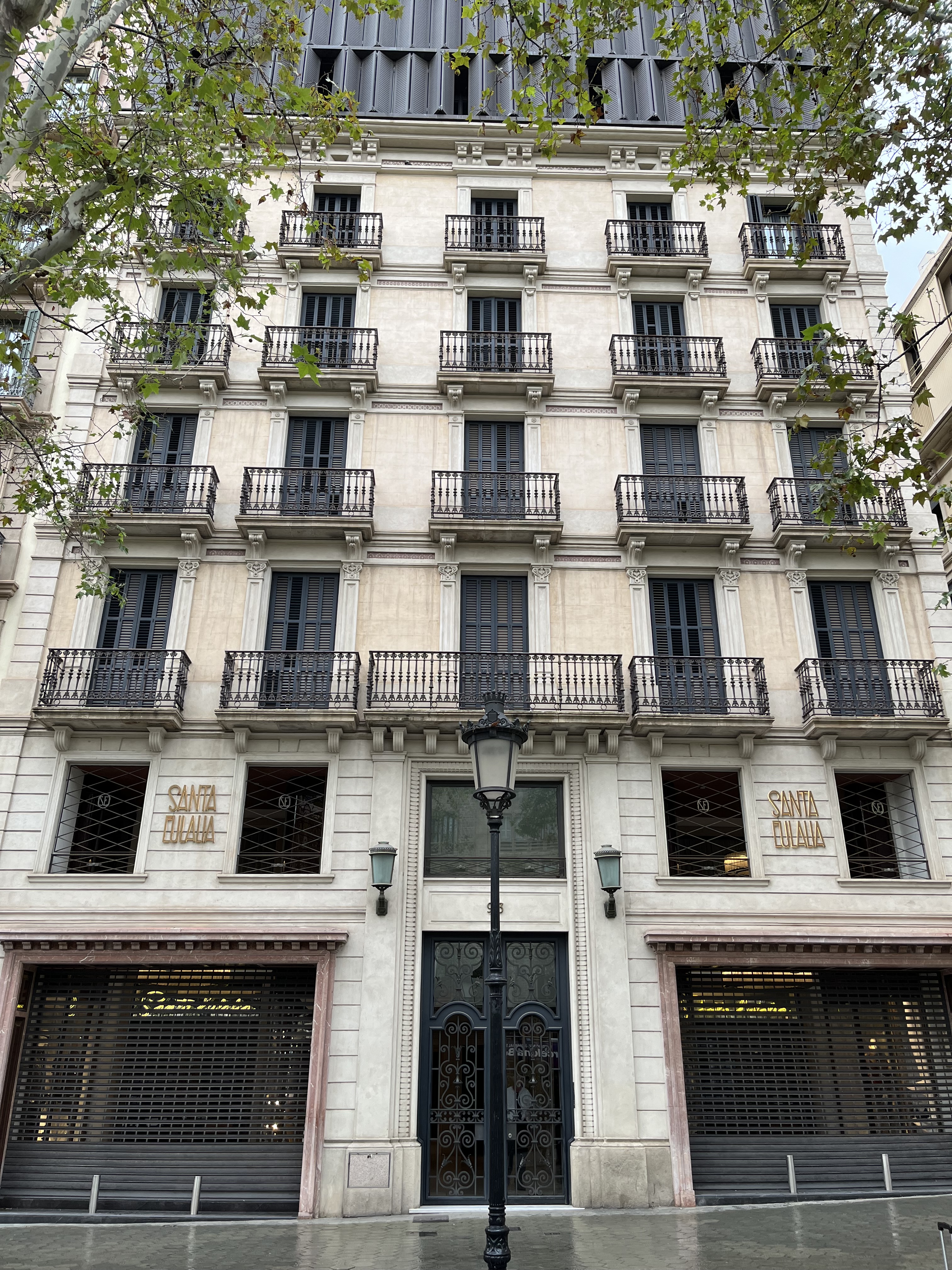
But there is still time for us to fit a couple of other places in, and so eleven o’clock finds us exiting the Metro onto the Passeig de Gràcia. If Barcelona is an open-air architectural museum, then surely the Passeig de Gràcia is its pièce de resistance: a wide, spacious boulevard, every building here looks like it was designed to be a showcase of splendour — and this isn’t that far from the truth, either, with many of them designed by the best Catalan architects of the early 20th century, spurred on by the region’s millionaires all seeking to flaunt their massive wealth. The result is mansion stacked upon mansion, spectacle stacked upon spectacle… and of course, some of the highest property prices this side of the Atlantic.
The centrepiece of this orgy of architecture is the Block of Discord, a collection of five consecutive buildings that line one single city block on the Passeig. Each of these structures was designed or redesigned in the early 1900s by a different architect of the era, and their differing philosophies are evident in the buildings’ vastly different styles: at number 35, the austere Arabesques of Lluís Domènech (the guy who built the Hospital de Sant Pau); at number 37, the restrained Neoclassicism of Enric Sagnier, and so on. Most of the tourists, however, are crowding around the Casa Batlló at number 43, easily the unruliest building on the block with its colourful mosaics and wavey balconies. They take up every available space: the front door, the windows, the rooftop, the pavement, the dividers… even the opposite side of the street are chock-full of pilgrims, almost every single one of them craning their necks and holding their phones, all trying in their own way to admire this freakish, unruly building. (Do I even need to add that it was designed by Antoni Gaudí?)
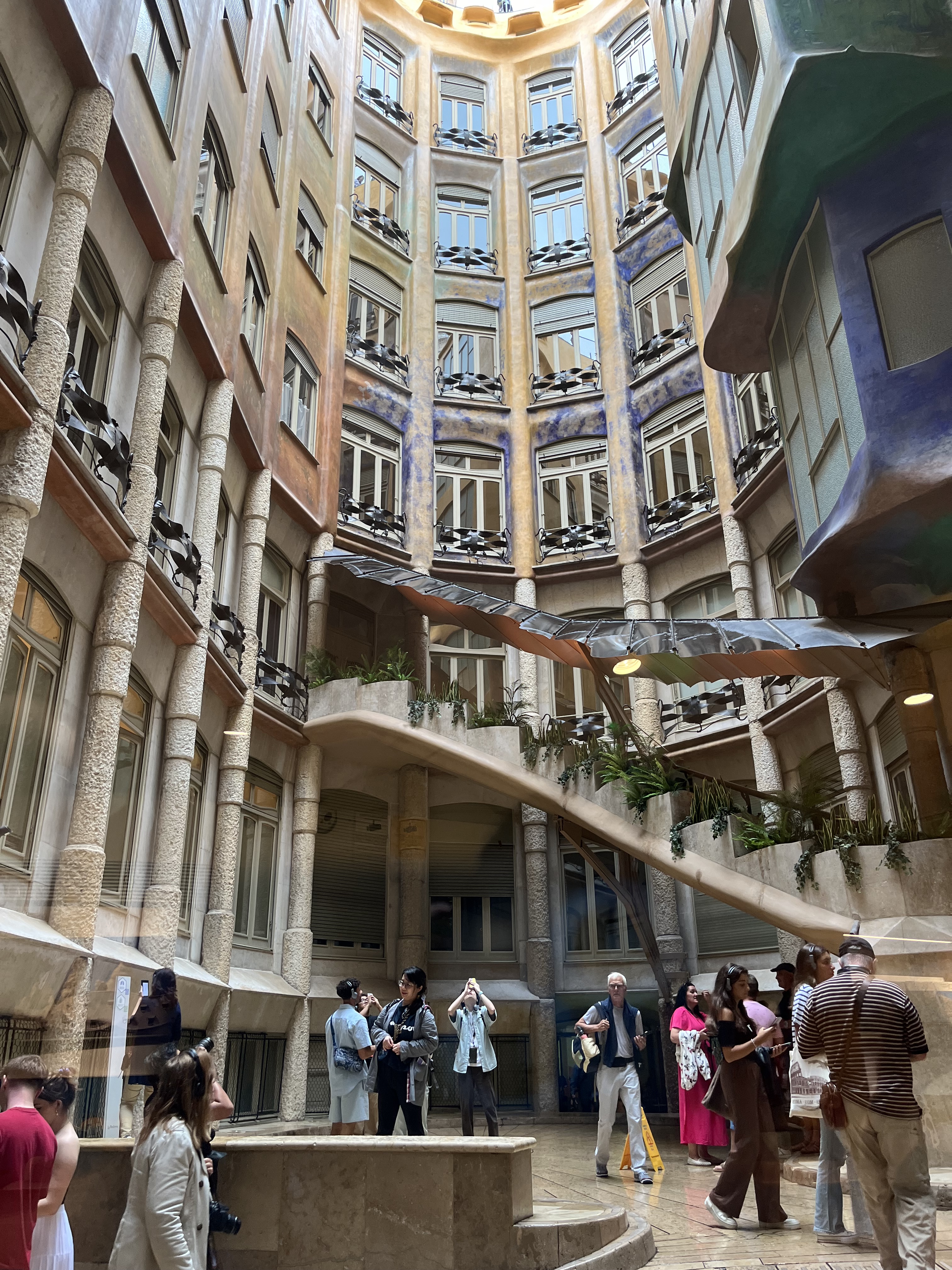
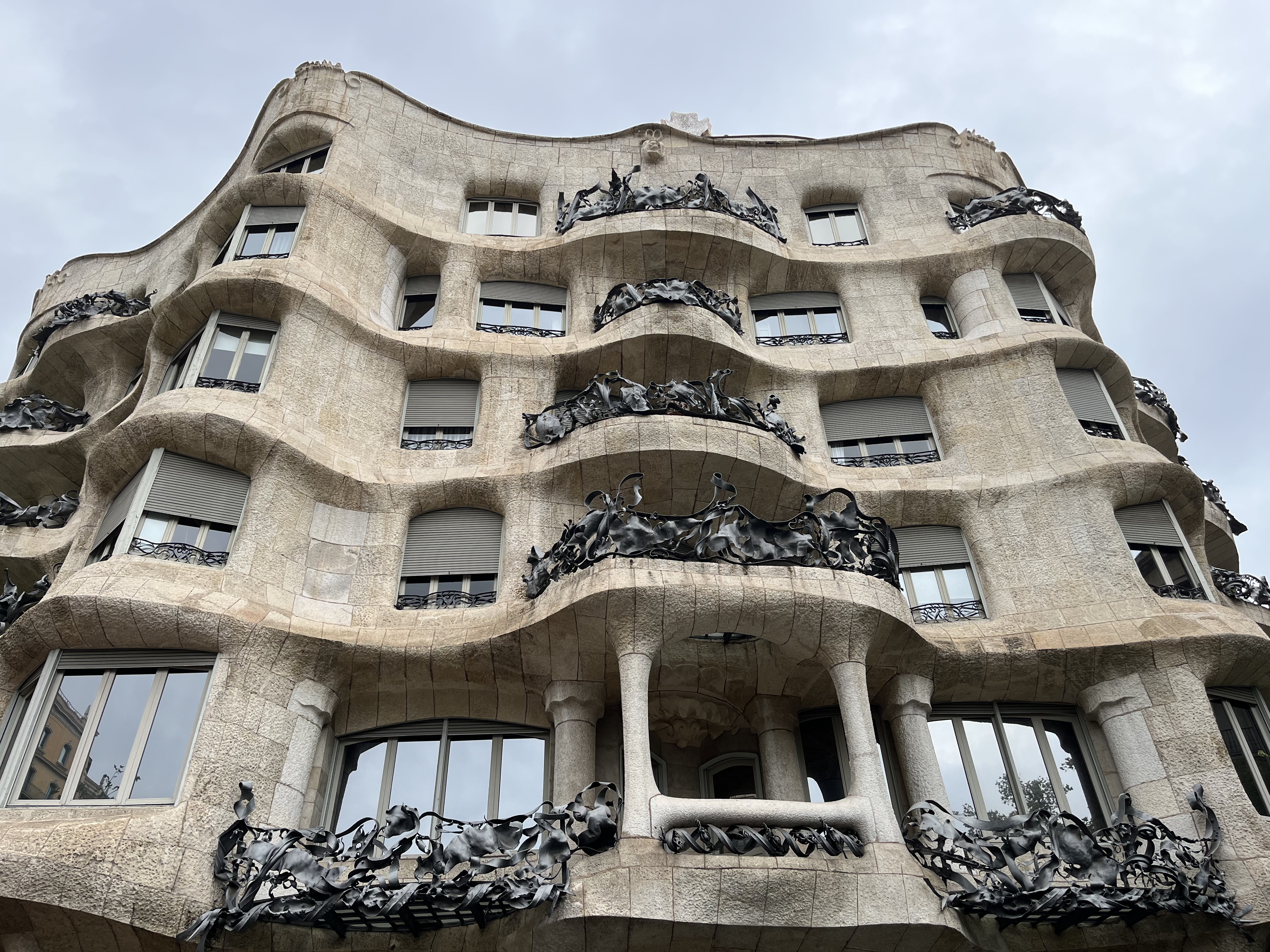
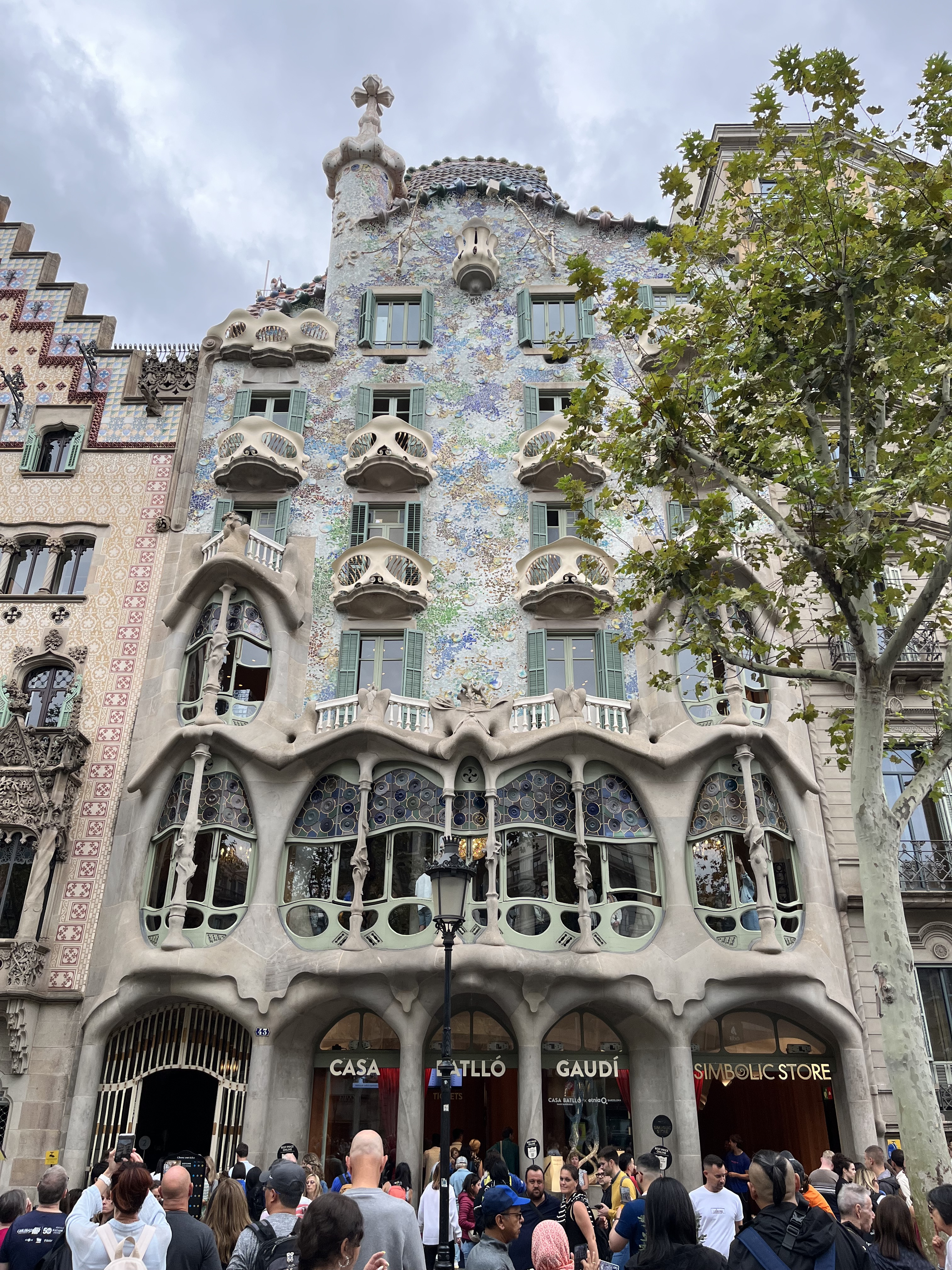
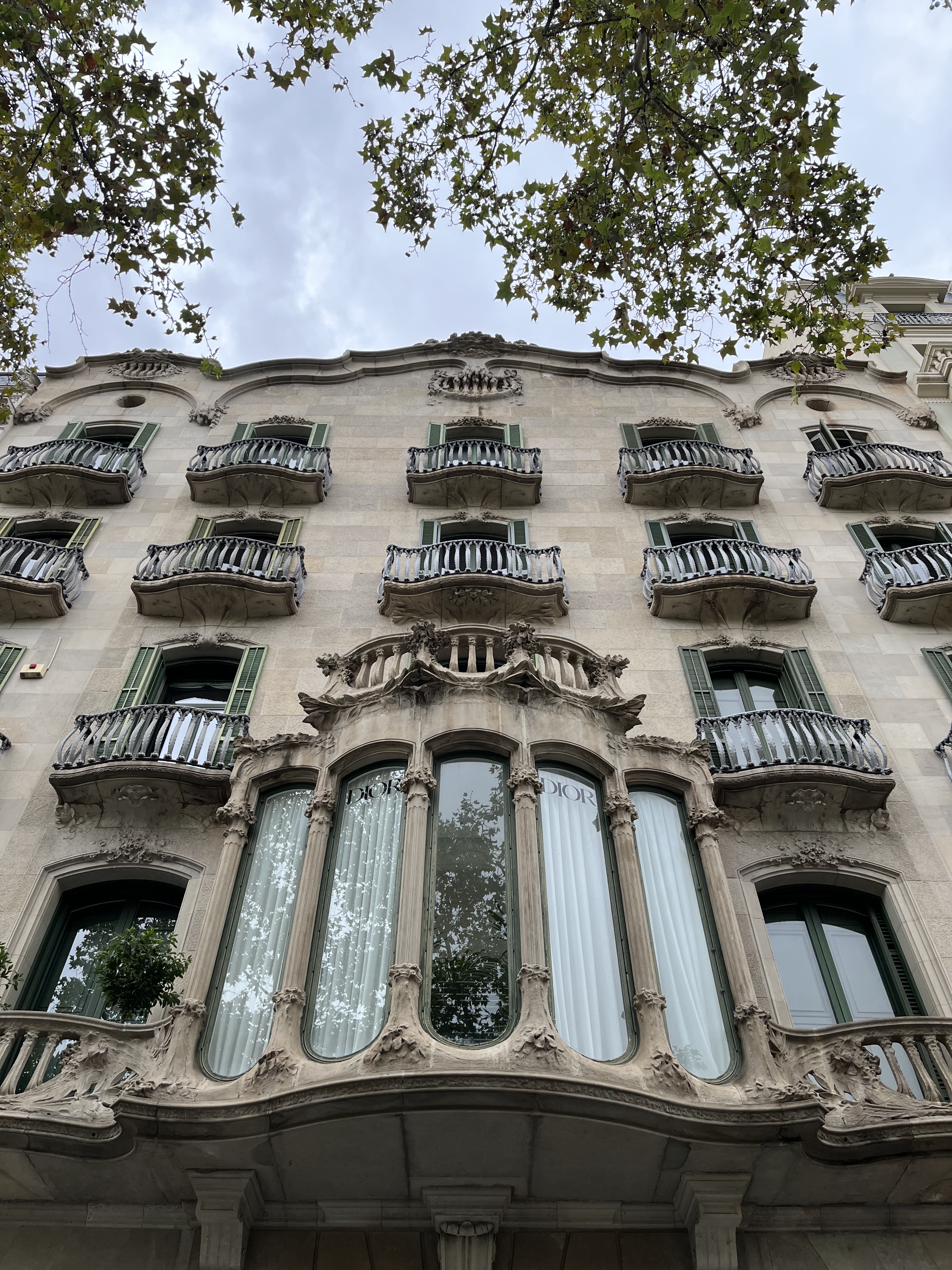
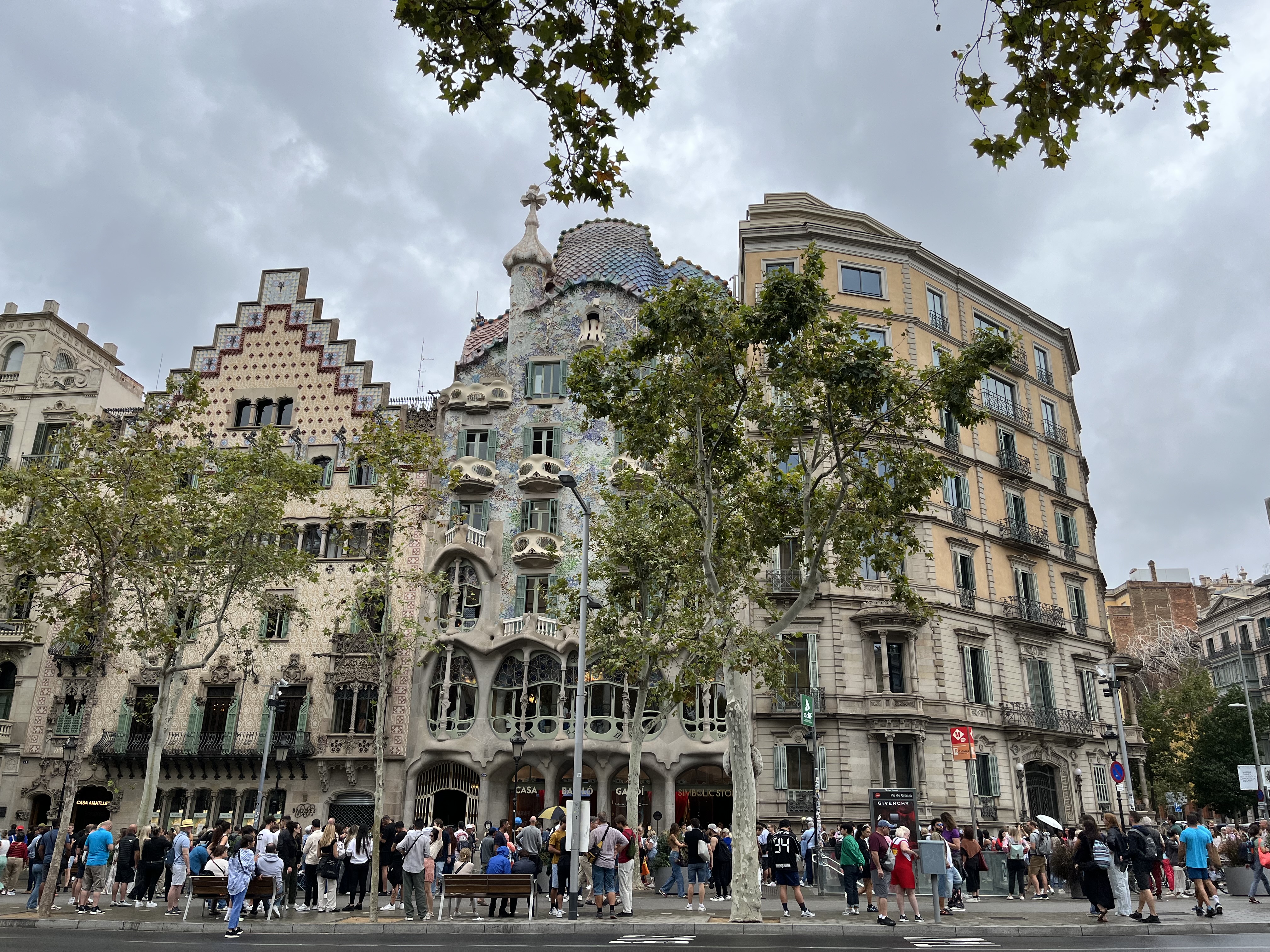
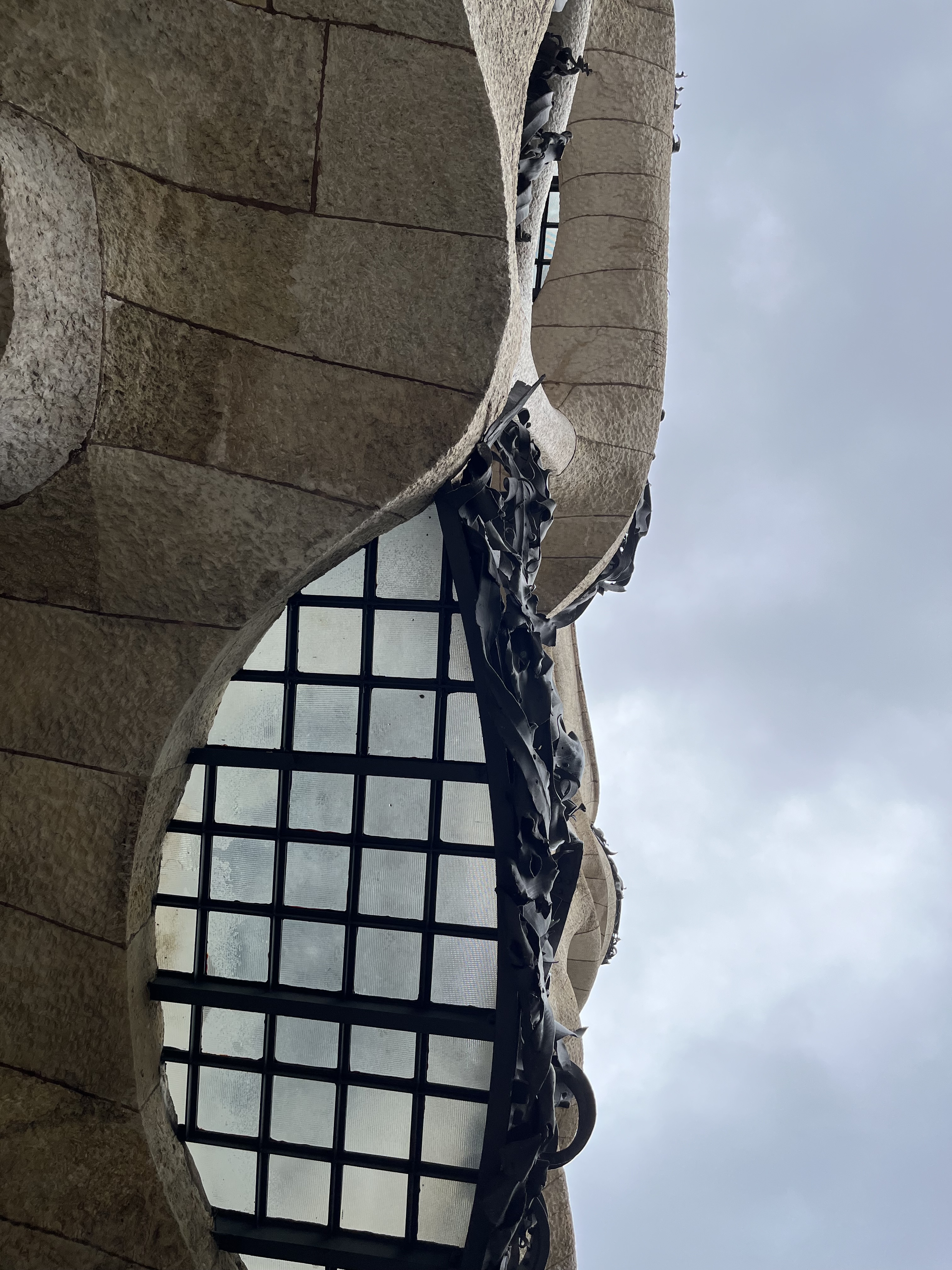
Although we would very much like to join these tourists, the miniscule Casa Batlló charges an entrance fee of THIRTY-SIX BLOODY EUROS, and having already been to two other examples of Gaudí’s architecture, our family collectively decides that we do not need to spend the equivalent of two decent meals here just to see another beautiful tourist trap. So instead we pop across the street to the souvenir shop under a building called Casa Milà (there were also a lot of tourists there, think it’s famous for some reason) before diving into the dense streets of the Eixample quarter.
It’s a lovely autumn Sunday, perfect for walking in this glorious city: a light, warm breeze blows down the street, swaying the fronds and branches of the trees above our heads. Although it’s still somewhat overcast, the streets are still pretty bright, in a way that makes the green and the yellow and the red of it all pop. Traffic is present but occasional, and only rarely does the roar of a car engine break the quiet murmurings on the pavements. Maybe that’s why so many people still stay in Barcelona, to live in this serene, picturesque place — when there aren’t so many tourists around, this can be a pretty awesome place to be.
Eventually we come across a huge maroon building, whose brick-and-glass façade is constantly interrupted by knobbly towers that jut out onto the street. Barcelona is, as we’ve constantly seen through the past three-and-a-half days, filled to the brim with edifices like these, and each of them have their own massive crowds. This one, however, is special, because the classy glassy building in front of us is no mere mansion, but the Palace of Catalan Music. (You can see how proud Catalonians are of their heritage that it’s never a “hall” or a “museum” or a “house”; they all have to be “palaces”, and to say otherwise would be nothing short of a desecration.)
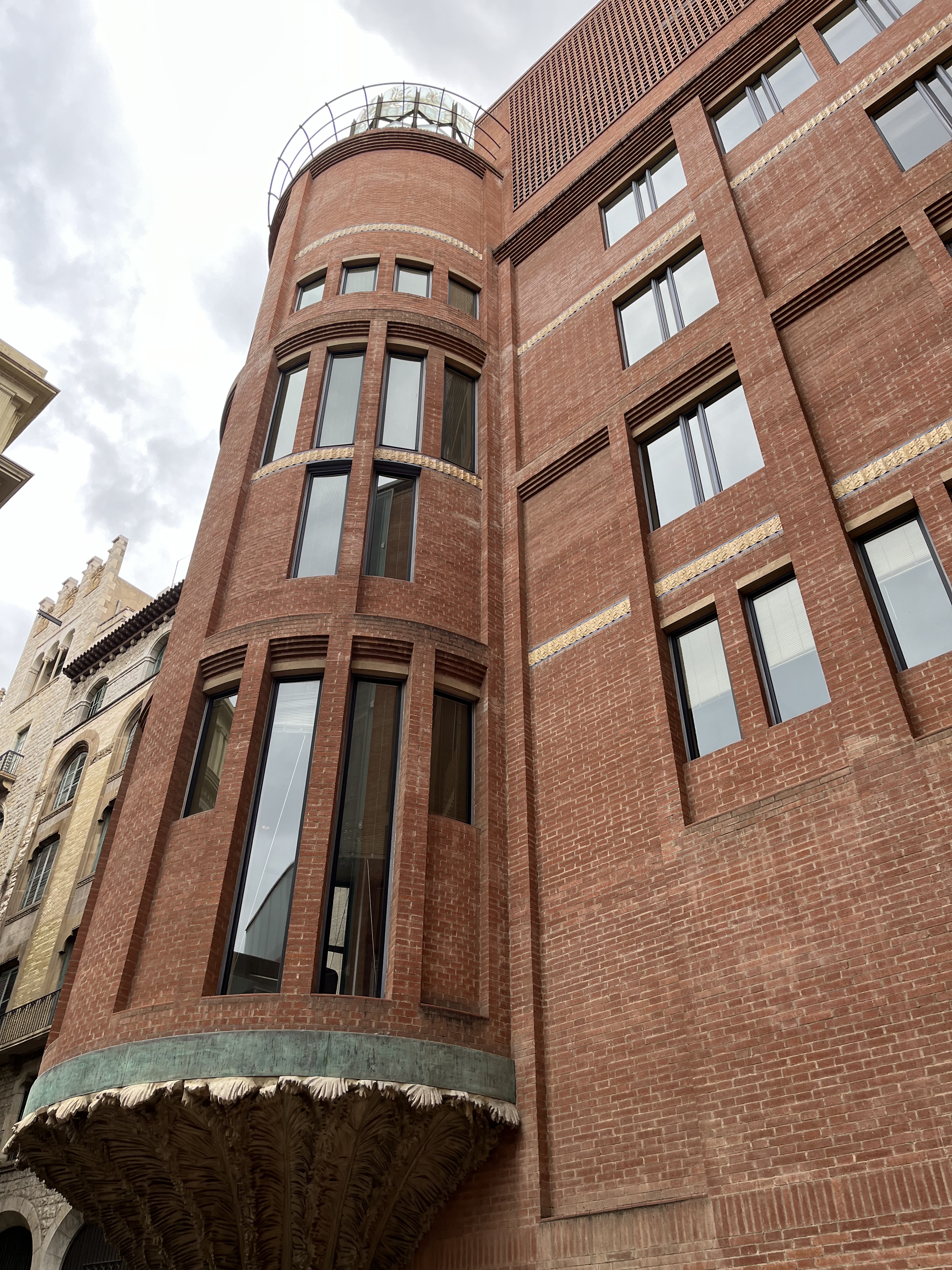
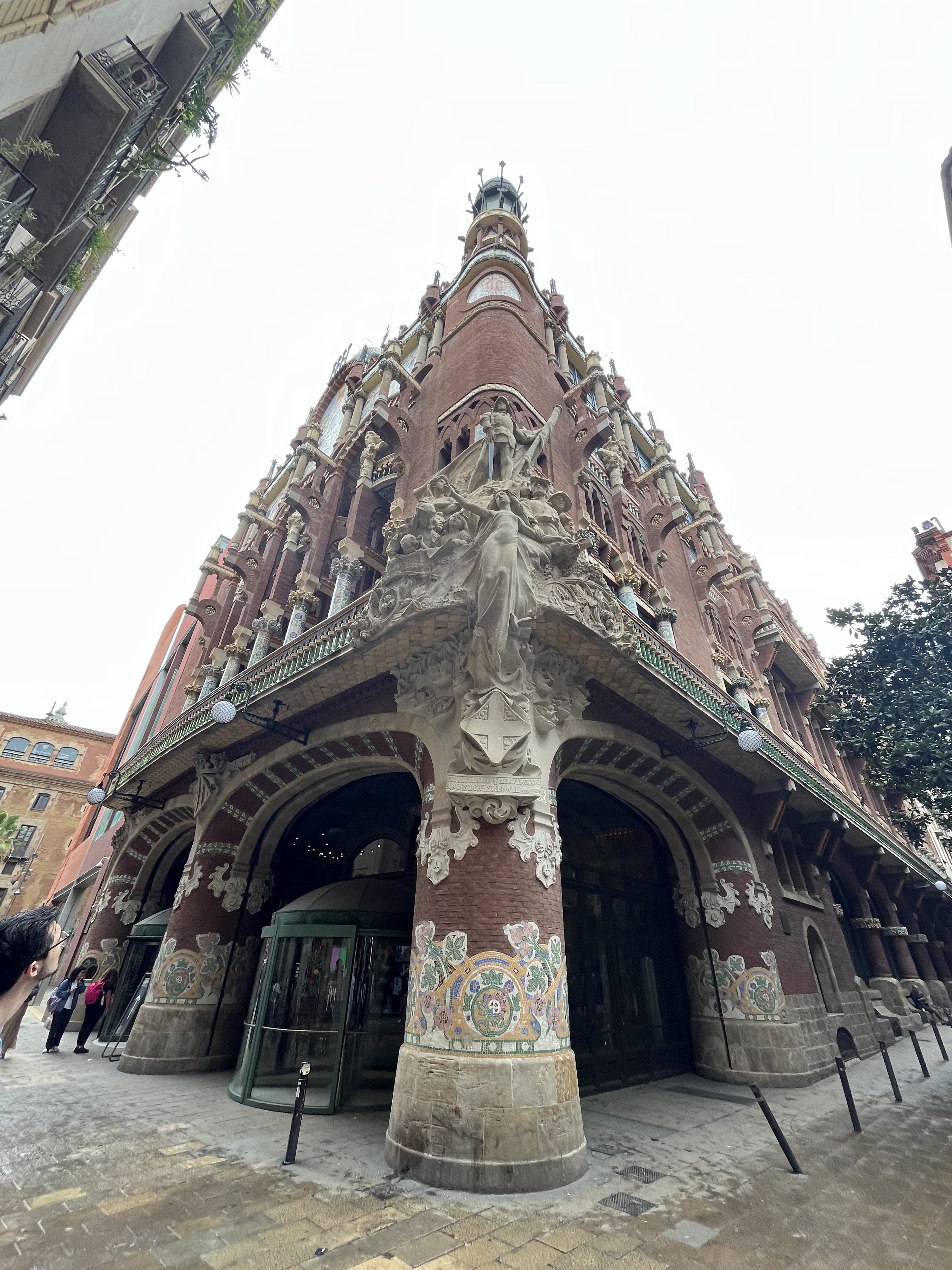
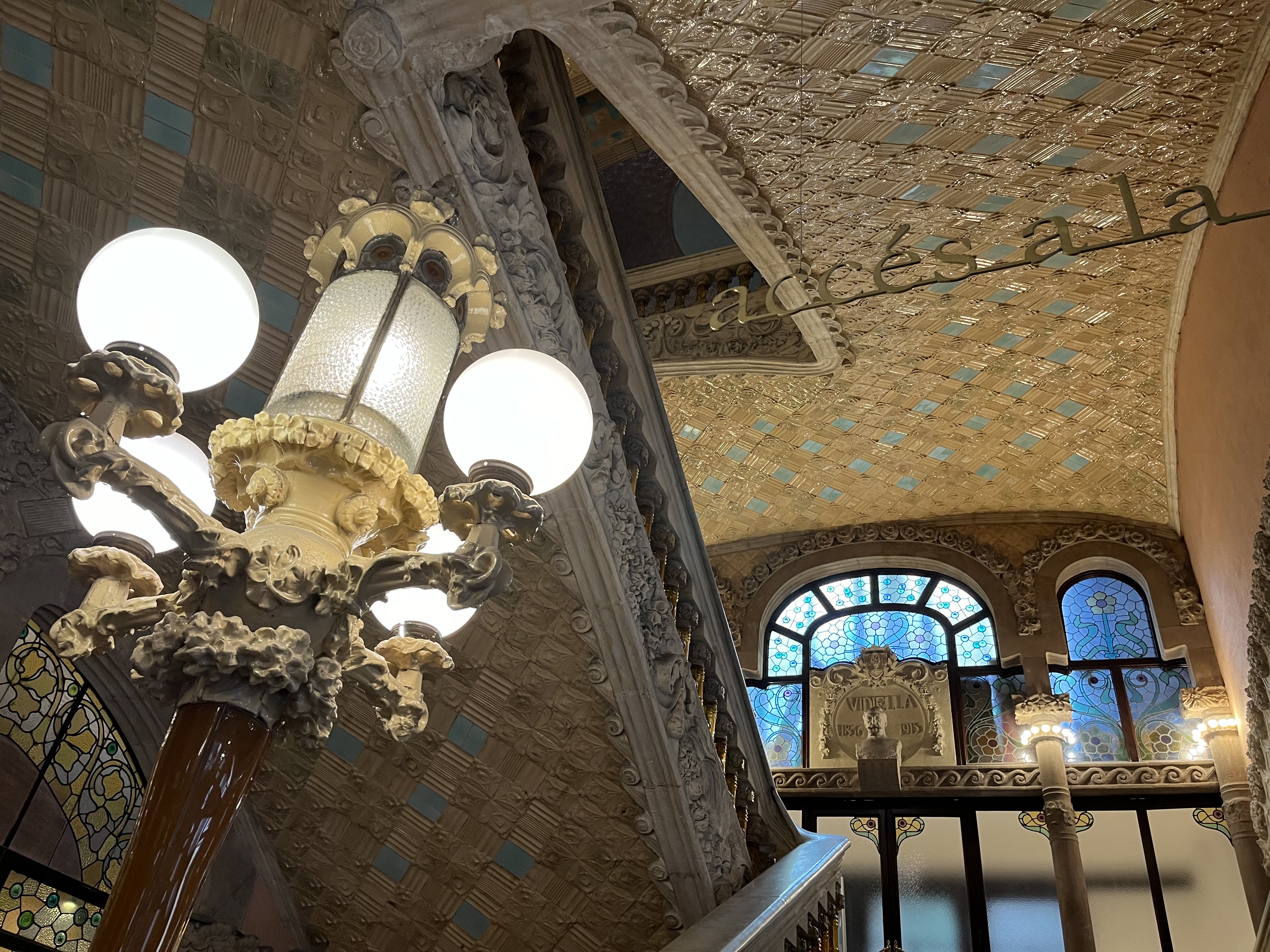
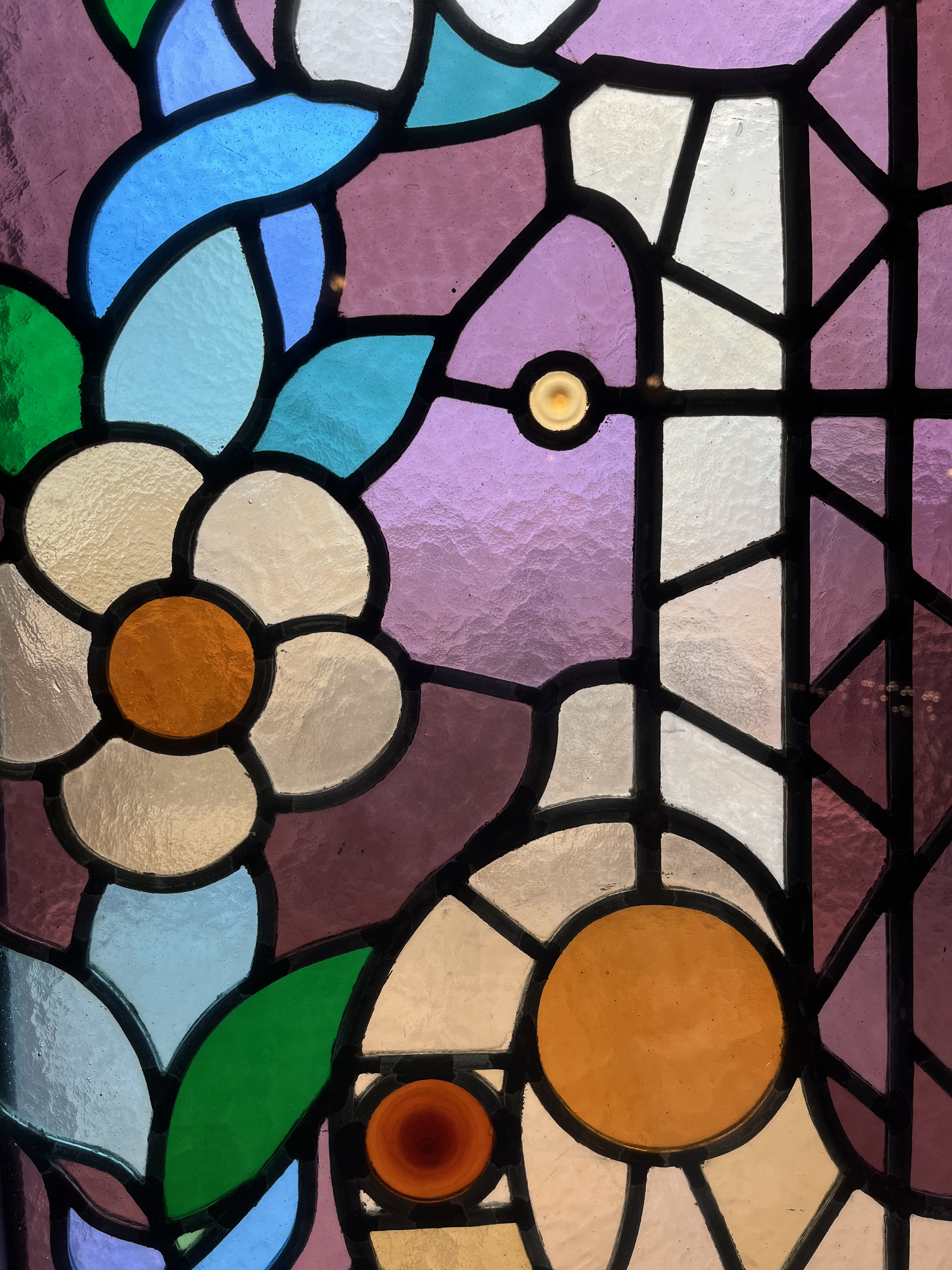
As with all other palaces in Catalonia, the Palace was the place for Catalan culture back in the 1900s, and contributed quite heavily to supercharging nationalism back in its day. But the music form known as cançó was only half of the Palace’s appeal, for this is (of course) yet another example of Lluís Domènech’s handiwork, filled with coloured glass windows, flashy gilded ornaments, and lushly carpeted hallways. Today, it’s still a highlight of any trip to Barcelona, with travel itineraries often including a visit or a concert in its hallowed halls; Wikivoyage even puts it first on its list of tourist attractions in the city, and when a place gets put higher than the Sagrada Família, you know it’s serious shit.
In the grand tradition of all tourist spots in the city, the Palace of Catalan Music also charges an astronomical entrance fee, and having just dodged the twin entrapments of the Passeig de Gràcia I have my doubts about giving money to this one as well. But my tour group, already quite worn out by three consecutive days of voyaging through this dense and sensual city, demand as one to spend the next hour in the peace and quiet of a half-empty concert hall. Decide to stay outside for a bit while they happily pay up — after all, there are already enough vaulted ceilings and chandeliers to take in here in the lobby, and anyway the café here has quite a few tempting options on offer. Not two minutes after they disappear up the stairway, FOMO takes over, and before I can think better of it I’ve paid the €18 entrance fee AND forked over another four for an audio guide. So much for economy.
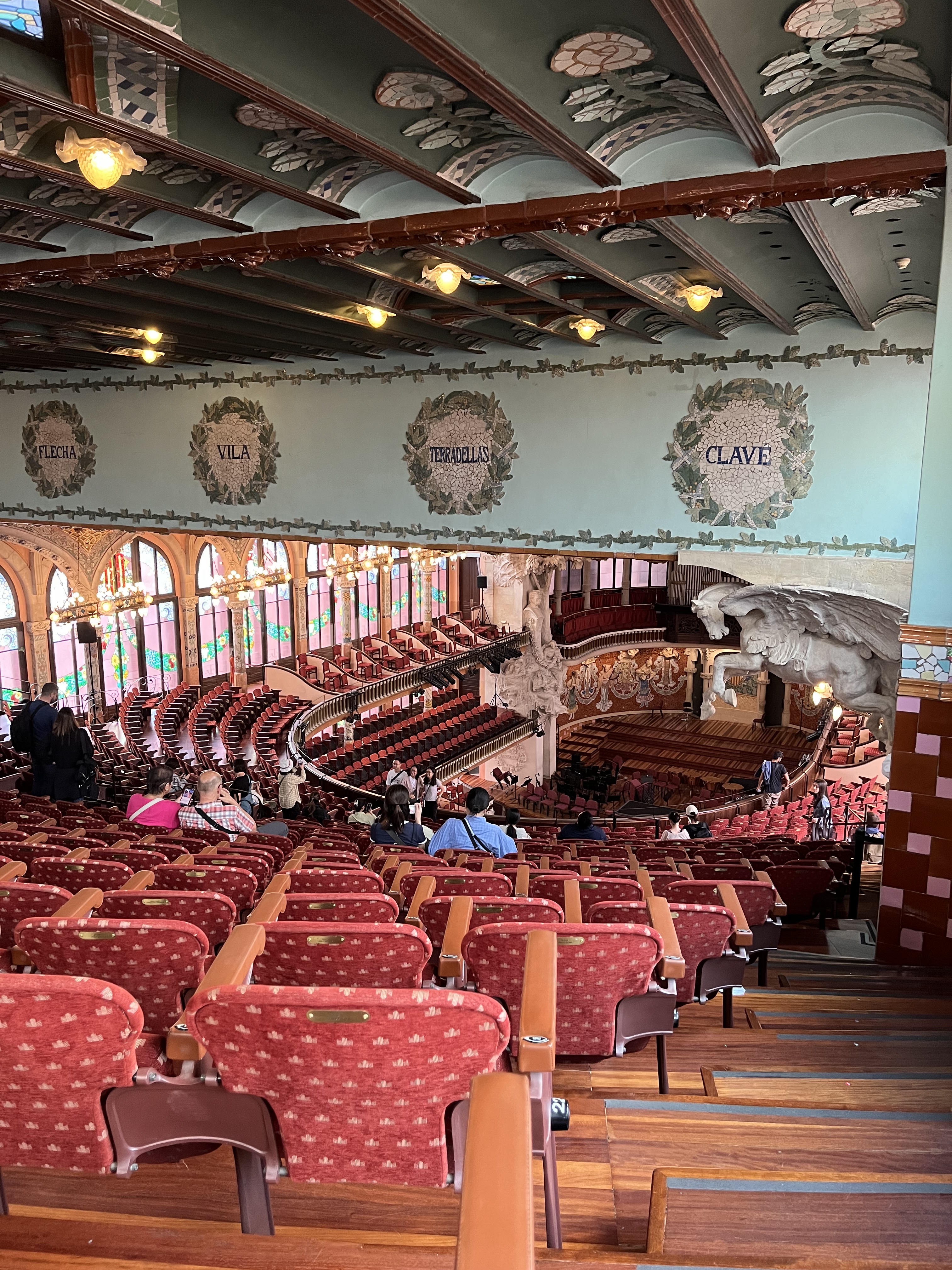
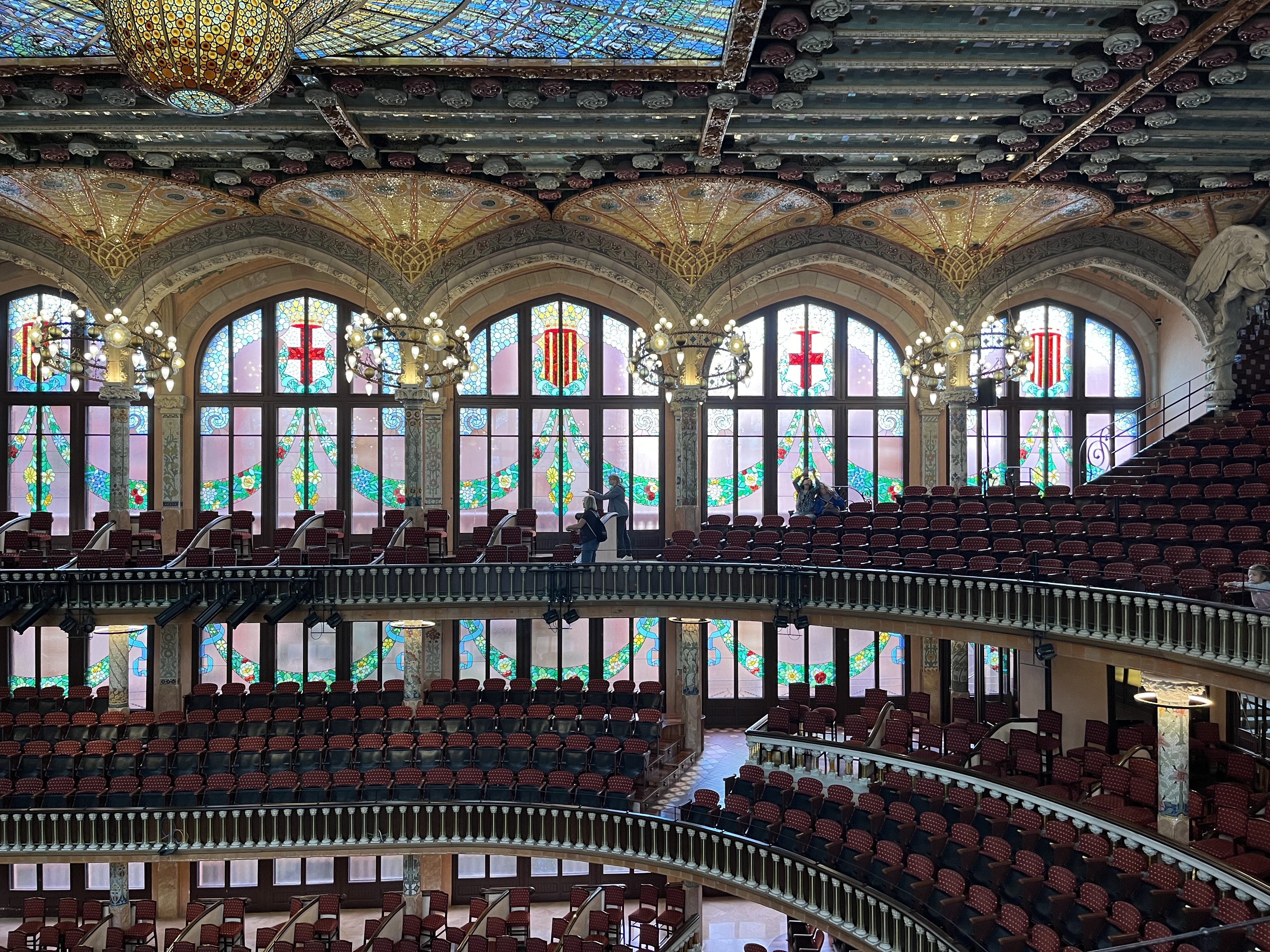
The Palace is really just one big concert hall, but like the Sagrada or Domènech’s own Hospital, it is the sort of concert hall where you have to stop and stare the moment you walk inside. A tour guide is nattering away in Castilian as I plop myself down on one of the covered seats, but right away it becomes obvious that the poor woman is wasting her breath: everyone here is busy looking up, or looking around, or even looking past her. And for good reason.
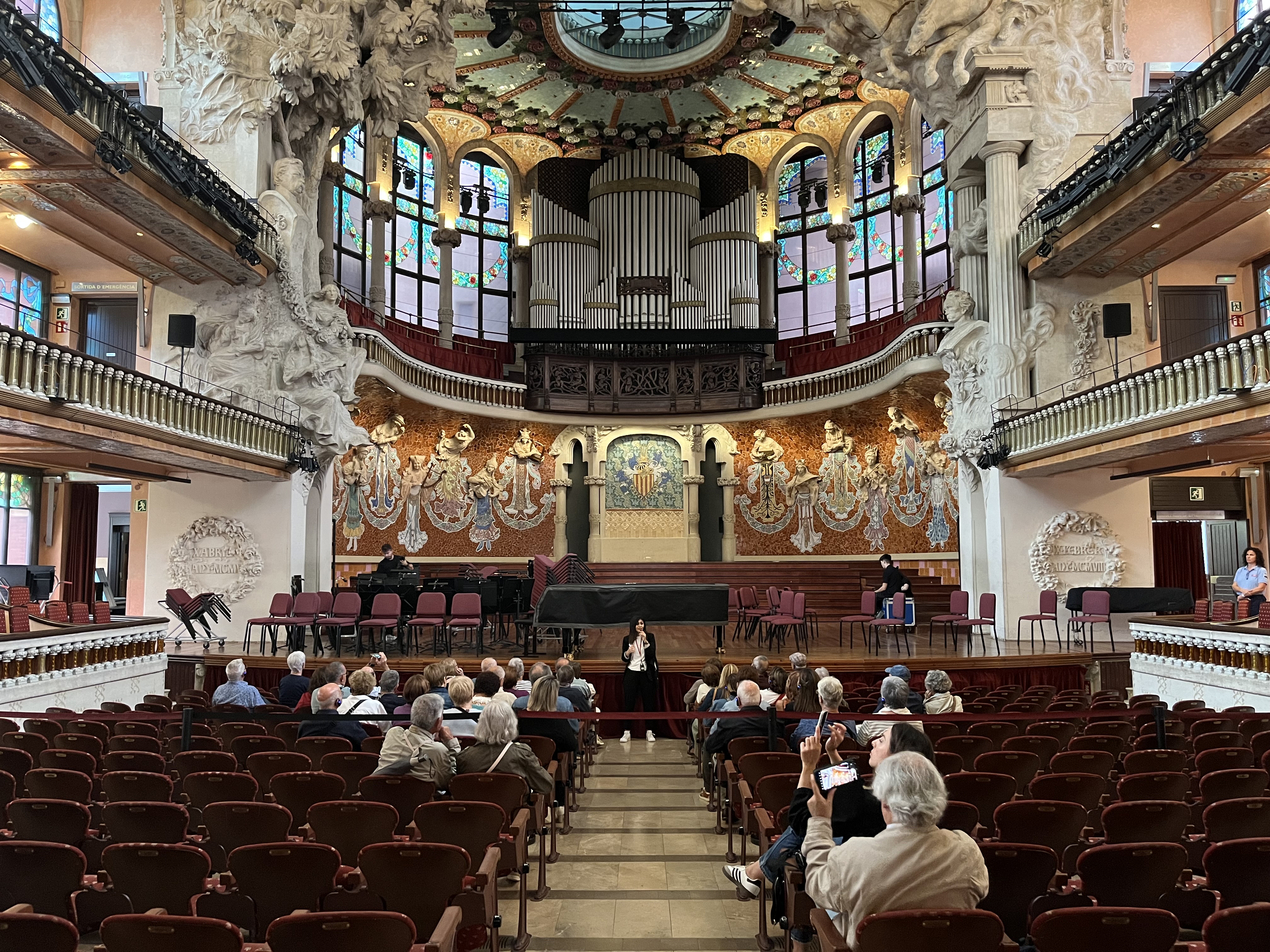
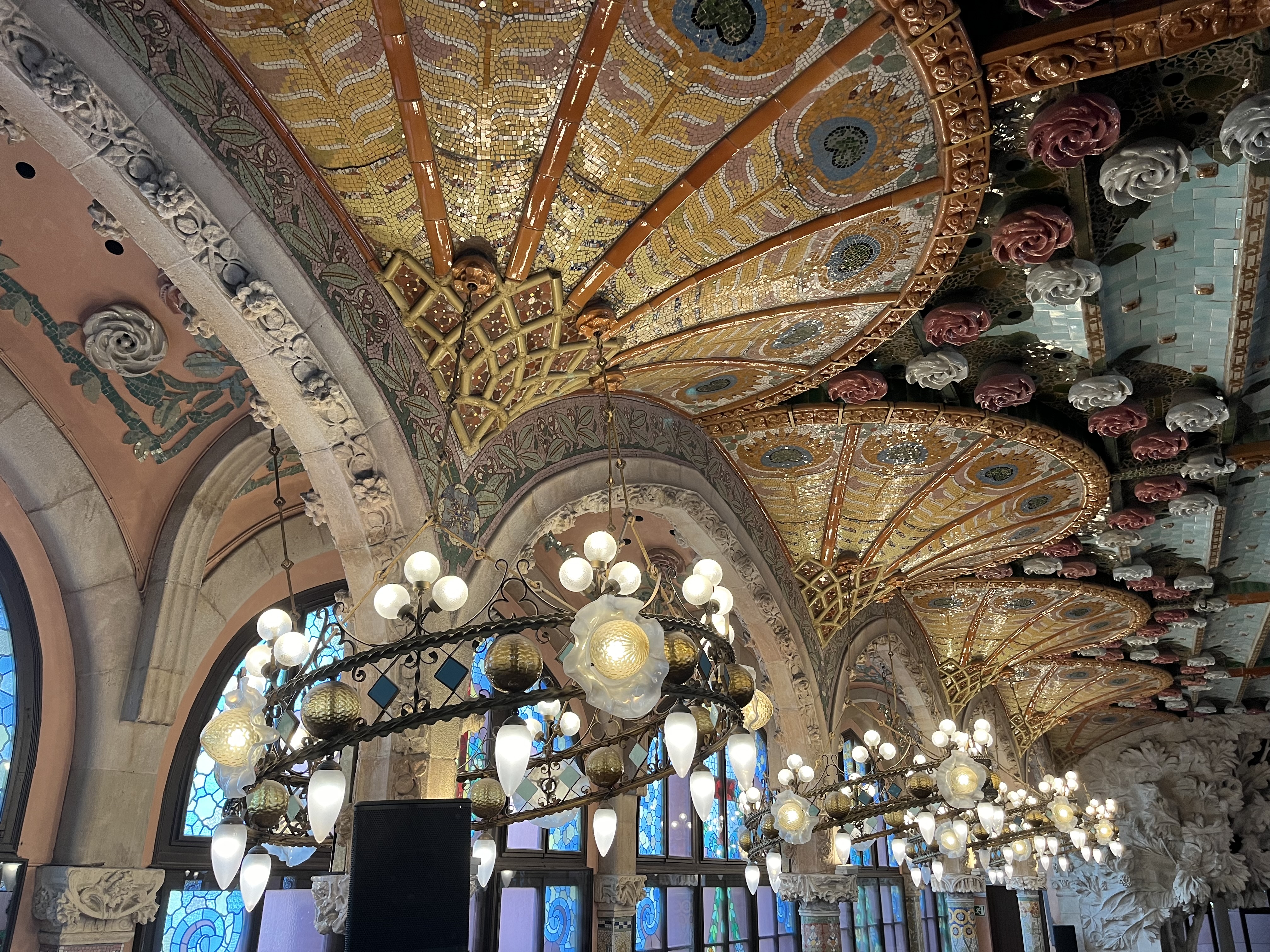
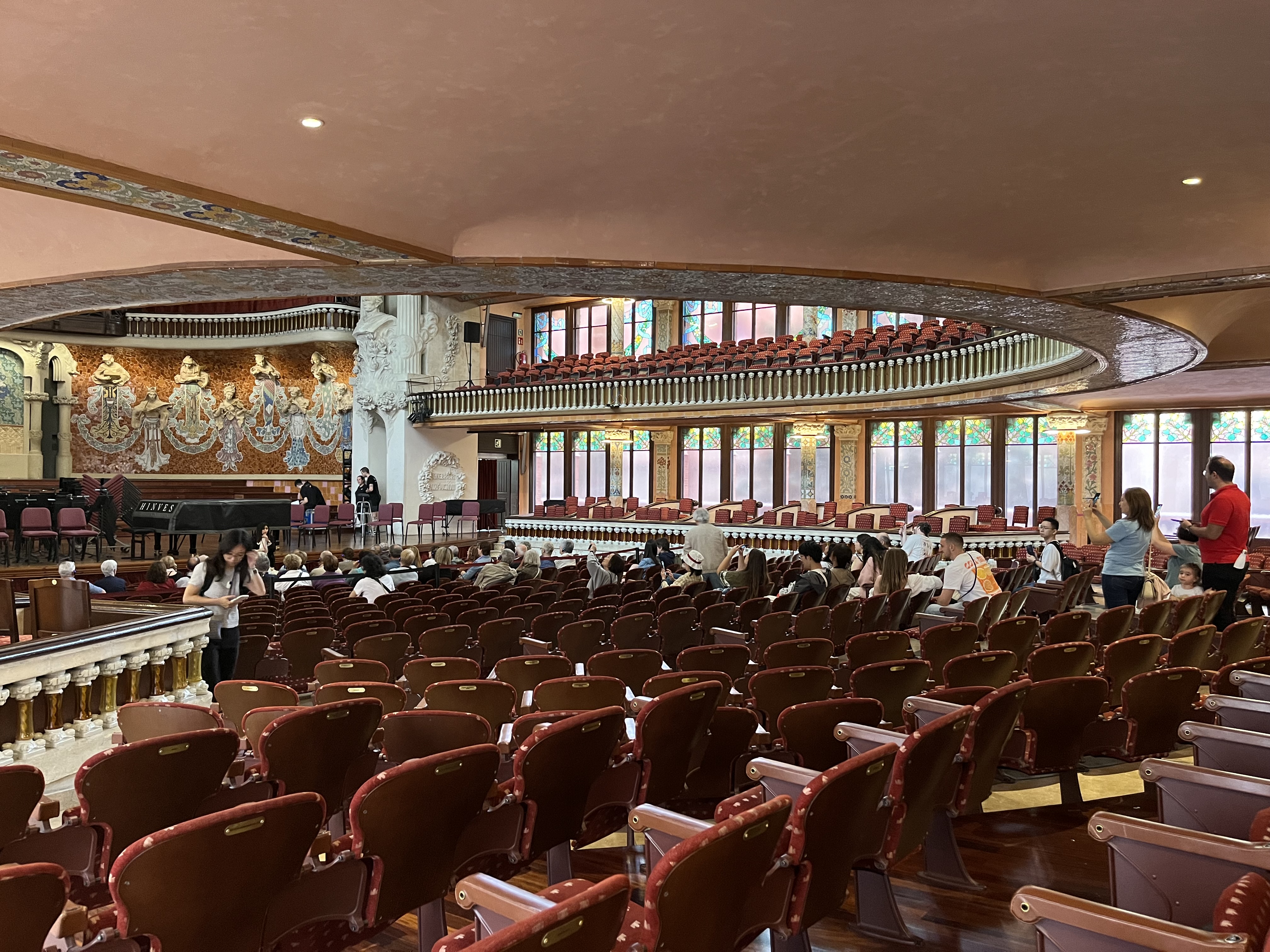
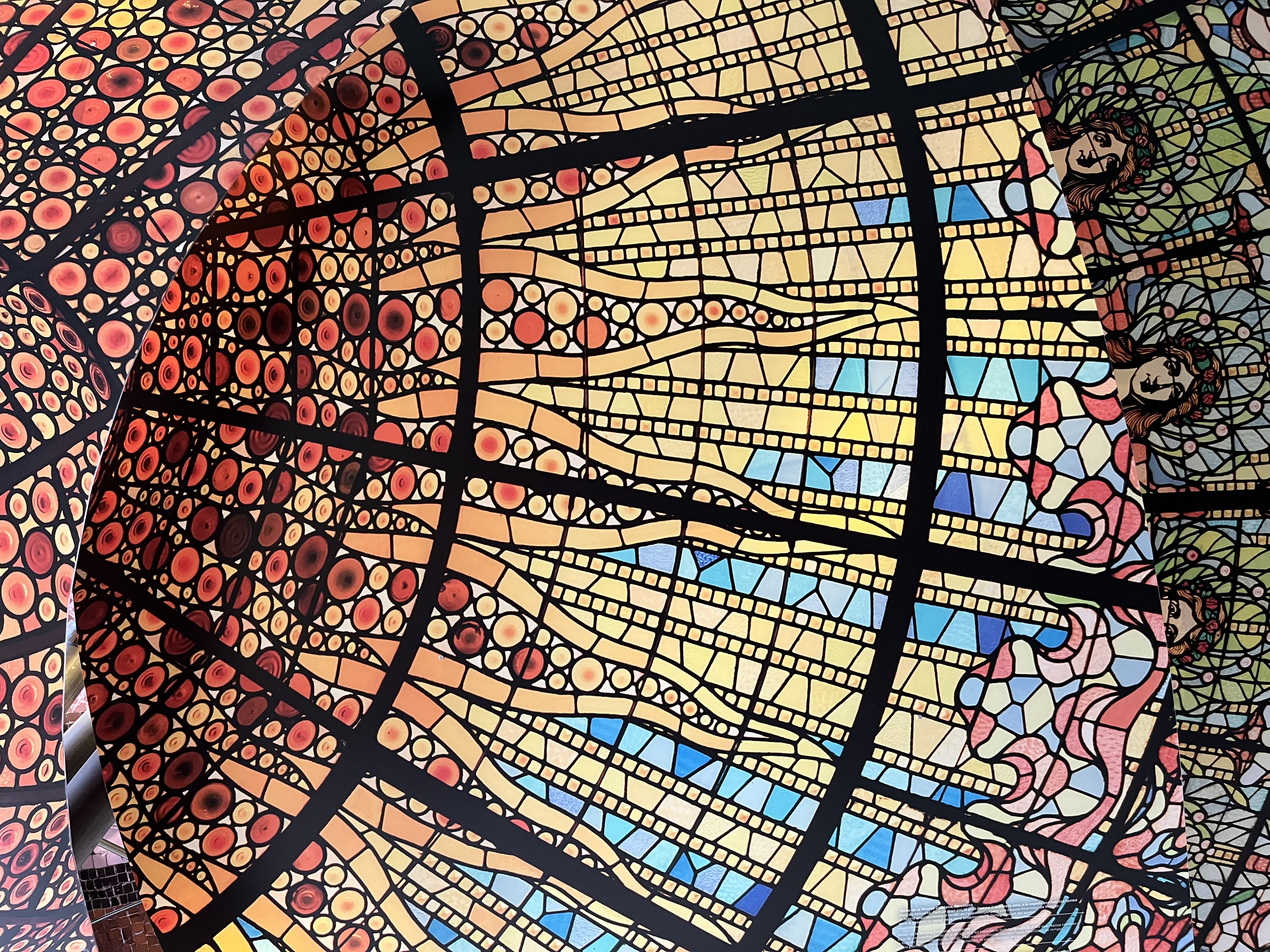
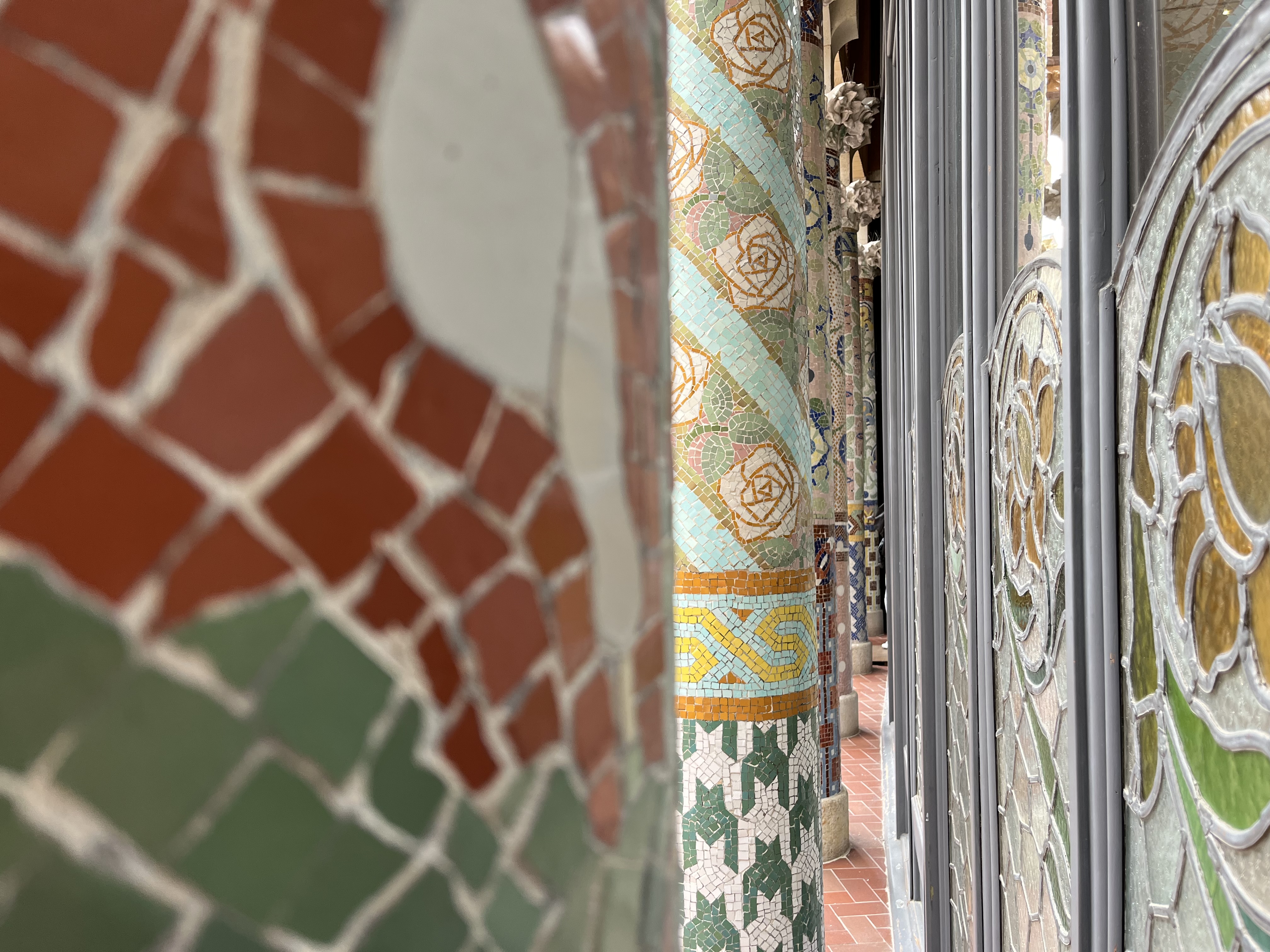
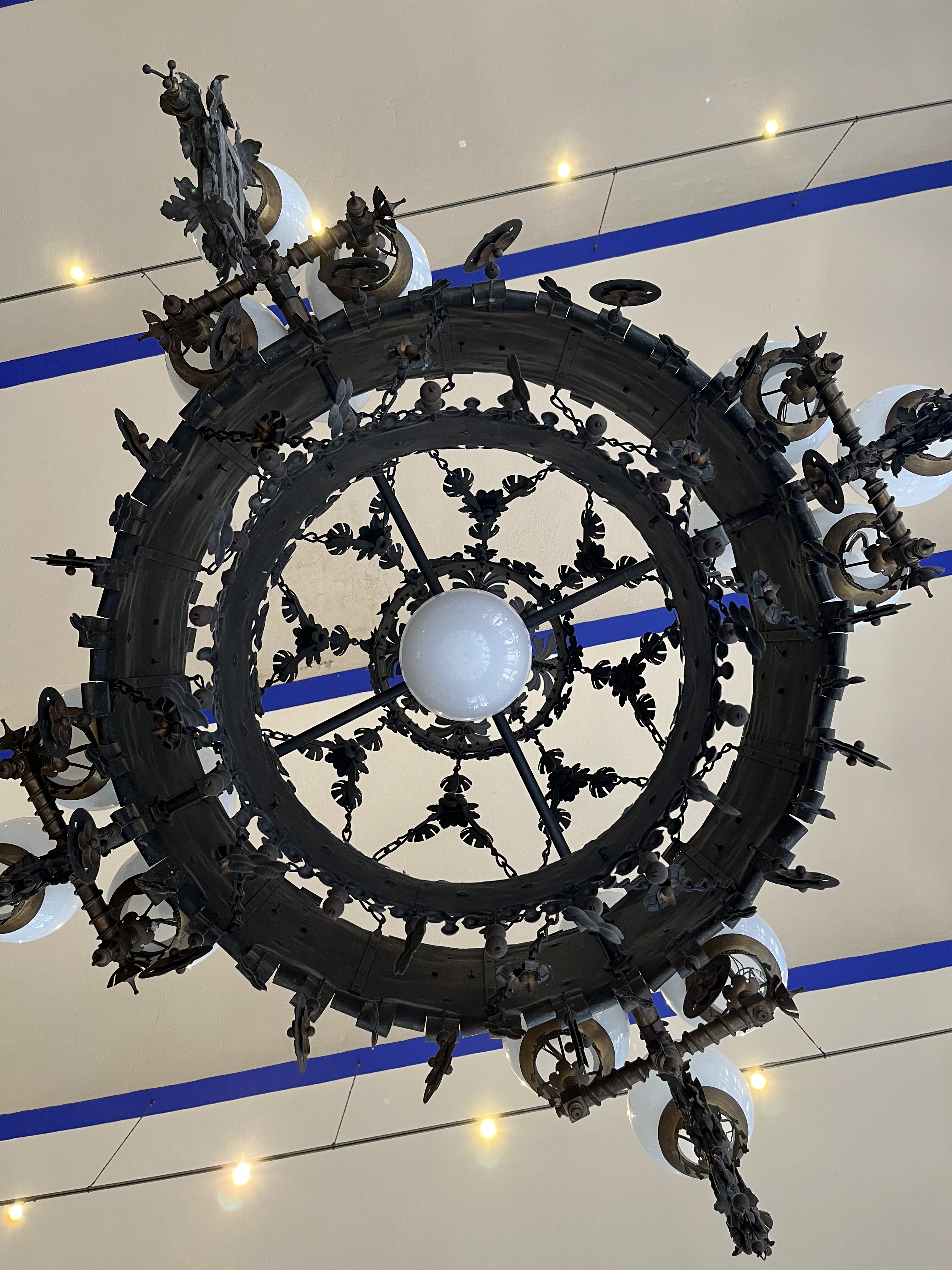
Once again, there is not a single ornament here that hasn’t been cranked up to 11: from the mosaics that decorate every lamppost, to the intricate ceramic roses that dot the ceiling, everything invites you to slow down, to explore at leisure. My favourite, however, is the thing that everyone else is gawping at: in the centre of the recital hall, a chandelier protrudes from an ecstasy of glass, where flowers, sunbeams, angelic figures radiate from the centre in a dazzling display of light and colour. There are so many elements on this fixture, so many things to spot, that you genuinely get dizzy after staring at it for a while. Yet the result of gazing at this chaos is not breathlessness; instead, I hear in the back of my head an invitation from this building: “stop. Turn off your mind, your desire for deeper meanings. Sit down. Look up. And luxuriate.” And so we do, and so we roam.
The organ begins to sound as I climb upstairs, deep sonorous notes that float out from the open doorway and reach into every available space. I reach the balconies, push past a crowd of visitors posing for pictures, and continue my climb, up into the farthest corners of the concert hall. When I do reach the very top I am alone, alone except for the timeless sounds of organ music, and the early-afternoon sunlight filtering in from the coloured glass windows. I sit there, unobserved by my fellow happy travellers, all queueing to slot themselves into the beauty of the Palace; and I realise this will be the aspect of Barcelona I miss the most when I leave it — the brightness, the colour, and above all, the joy it engenders in everyone.
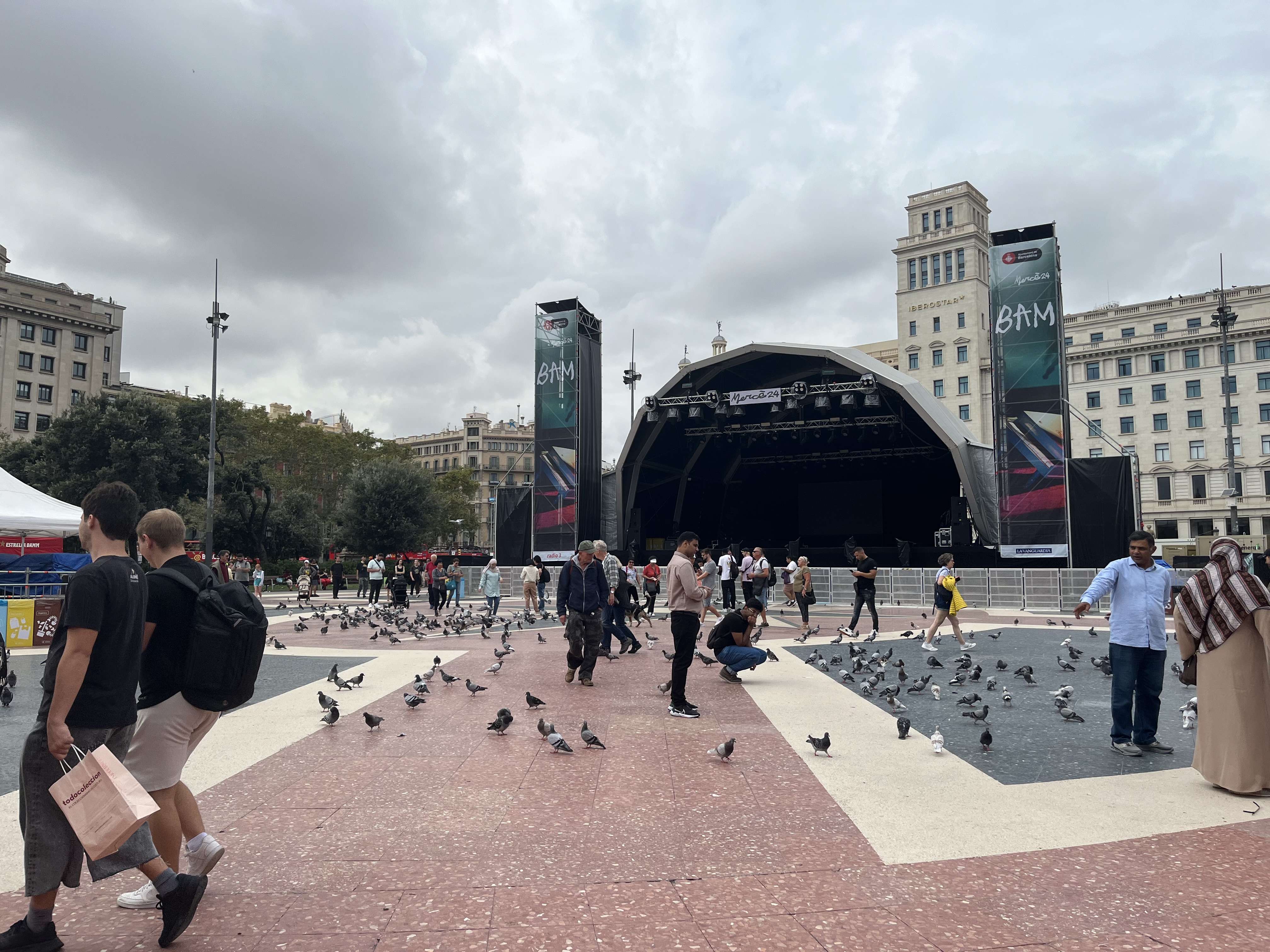
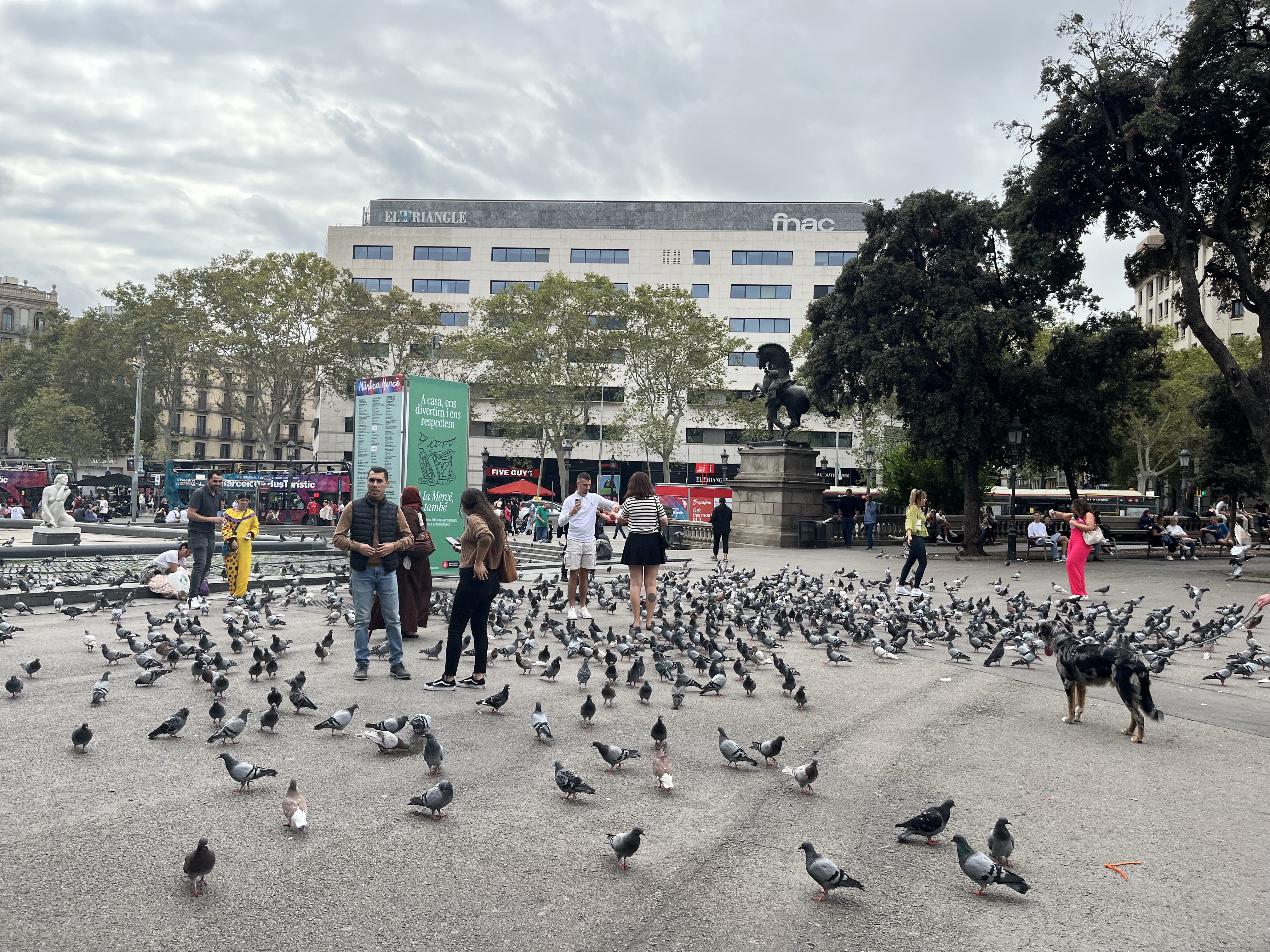
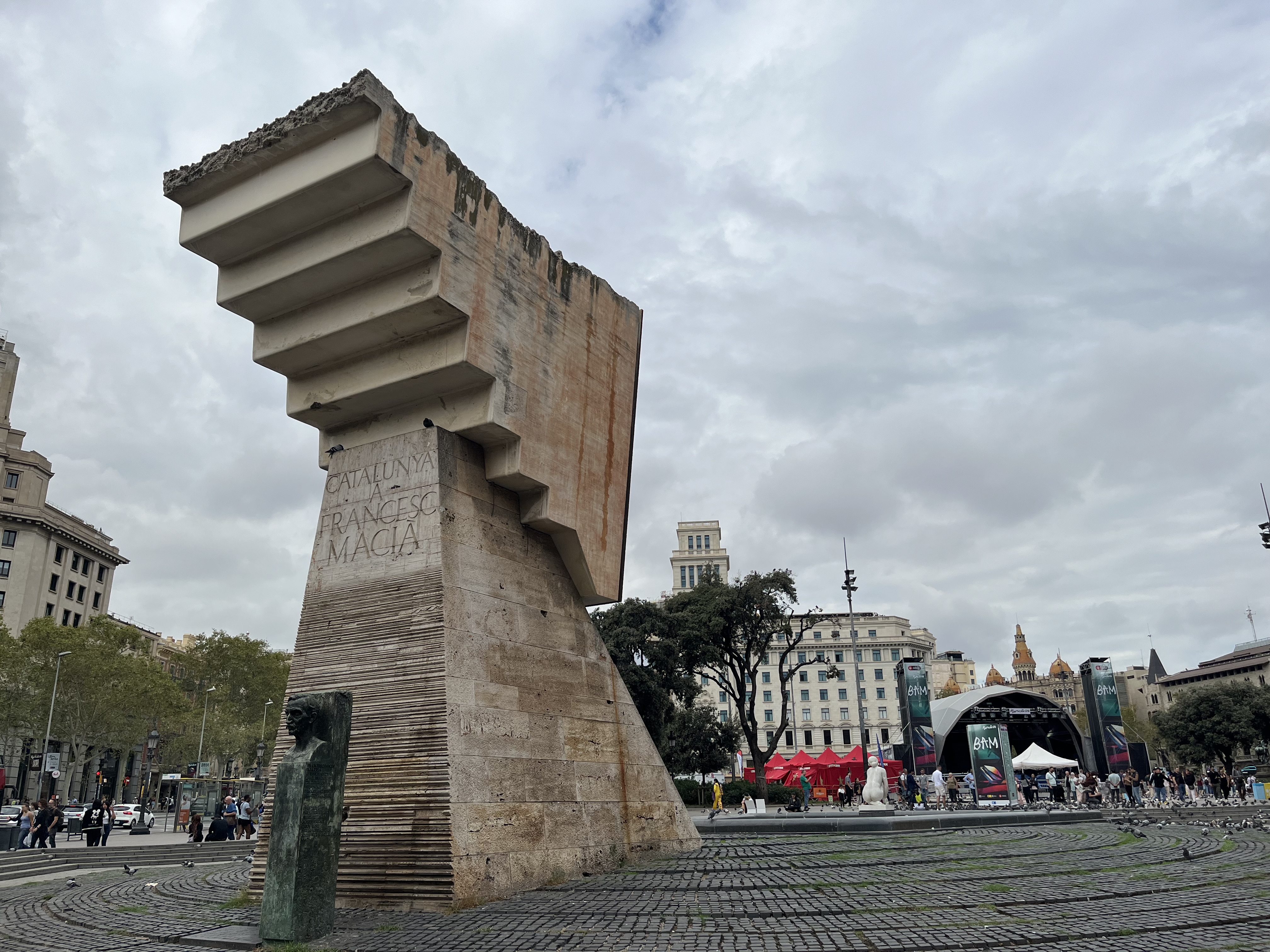
Two thirty. We make our way through the Plaça de Catalunya, where the Sunday crowds mill about and a pigeon-feeder busies herself with her legion flock, and head down into the Metro for one last ride. I had planned that we’d get lunch at the square — after all, it’s Barcelona’s city centre, and it would’ve only been natural to cap off our time in Catalonia here. But to my surprise nobody else is currently hungry, not even Samuel and Grace, who by some unexplained miracle actually came down in time to have breakfast this morning. So instead I find myself clutching a couple of McDonald’s takeaway bags as our train passes through Drassanes and Paral·lel and Espanya once more, on our way back to our hotel where we sit exhaustedly in the lobby for some time while our luggage is rolled out, and I make short work of my Big Mac and fries. (To my pleasant surprise, they also have shake-shake fries in Spain, although the only powder option is sour cream and chives. It’s better than it has any right to be.)
As my elders visit the bathroom or fill up their water bottles, I find myself staring out into the street, watching all the people come and go. In many ways it’s a classical — some might say “stereotypical” — European street scene, and yet it is also so much more potent than that. The trees here seem lusher, the shops more homely and personal, and even the balconies look like they were individually wrought by Antoni Gaudí himself. And this is just your average neighbourhood road: you could close your eyes, spin around three times and randomly shoot a picture, and you would still be guaranteed something gorgeous no matter where you stood. Many’s a time when I’ve had to just stop and catch my breath in the past three days, all so that I can allow myself the enormity of what I’ve just witnessed.
It is this exceptional beauty, this feeling of colour and life and hospitality, that has drawn an endless stream of tourists like me to Barcelona, day after day, year after year. And yet this dazzling city is not all sunshine, lollipops and daisies: there are many run-down streets and alleyways, some mere steps away from tourist hotspots. Theft is more noticeable here than in any other European city (and considering our very next destination, a city infamous for its crime problem, that’s saying a lot). And then there are the problems brought in by people like me, flocking in year-round to take up every inch of space — I think back to those crass, insulting T-shirts on the Ramblas, or the ridiculous prices of the restos and wares I’ve encountered during my stay here. Barcelona in 2024 comes across as somewhat overripe, a runaway success that has run too far and is now slowly alienating everyone with its efforts to remain on top; a bit like Taylor Swift, or Timothée Chalamet. For all its splendour, for all the visual feasts I saw, I never felt wholly comfortable during my stay.
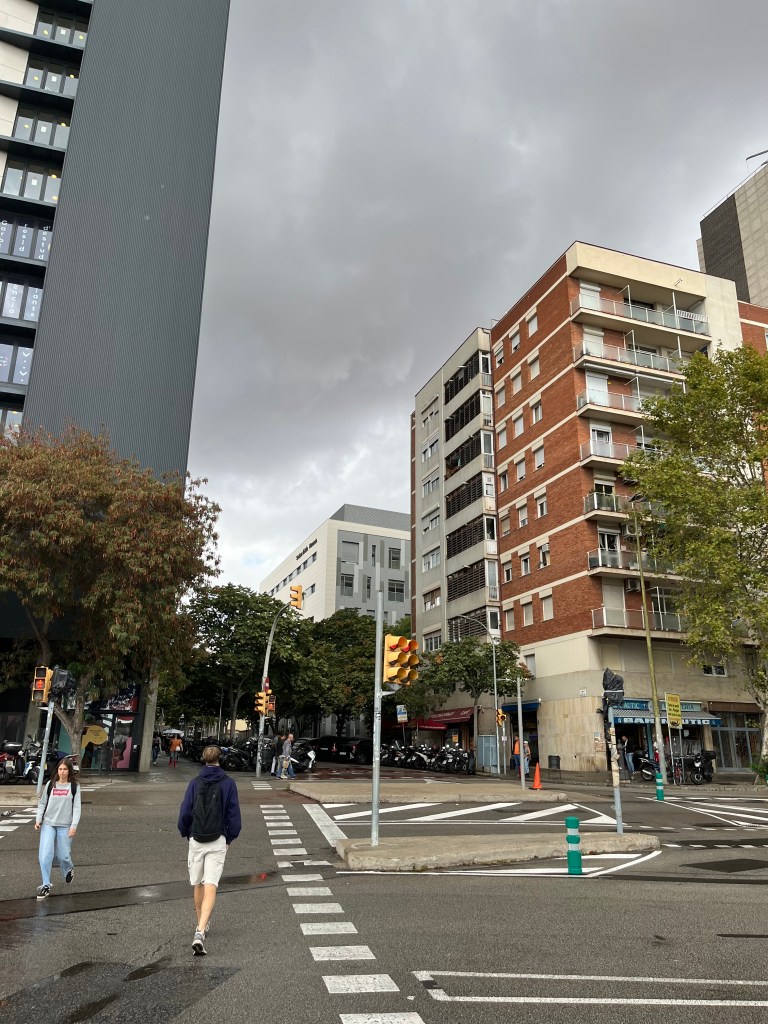
But as we gather our luggage and head back into its streets for one last time, I can’t help but look up once more, up into the calming forest green of the trees and the faded cream brickwork of the buildings. Behind all the debates about overtourism, behind all the struggles of politicians and civic communities, behind all the people — locals, vendors, travellers alike — who make walking down the Ramblas an agoraphobic nightmare, there is still a beautiful, unique city playing host to all of this activity and more. Whatever down moments I’ve experienced, my life is emphatically richer for having stayed four days and three nights in Barcelona, and I’ll be sorry to leave it. Who knows, maybe I might return in a decade’s time, and find, despite all the crowds, a place even more bewitching than the one I’m now leaving behind.
Even with all our dilly-dallying, we reach Barcelona Sants with almost 45 minutes to spare, so leaving my father in charge of the luggage, we head off in search of something to do. Sadly, Barcelona Sants is not a place that makes you want to explore further: built in the early 1970s as a replacement for the much more evocative Estacio de Francia to the south, it’s a staid rectangular box filled with convenience stores and overpriced cafes, and not much more besides. The most extraordinary things in the concourse are the metal detectors: thanks to the 2004 Madrid bombings, everyone wanting to catch a train must go through a security check first, which only adds to the dourness of the place. I’ve noticed that in other railway stations around the world, you can always spot somebody who stops to admire the sheer wonder of a place. But I see nobody of that ilk in Barcelona Sants; the only reason you would come here, apparently, is to go somewhere else.
After a long, long wait, spent alternately browsing the rather rundown stores and listlessly sitting around on the chairs, the departure information for our train shows up on the board, and so we gather at the entrance to platform 6 — all of us except my mother, who is nowhere to be seen.
“Where’s Mum?” I ask my father.
He shrugs. “I think she went to buy something to eat on the train at the café. I’m sure she’ll be back soon.”
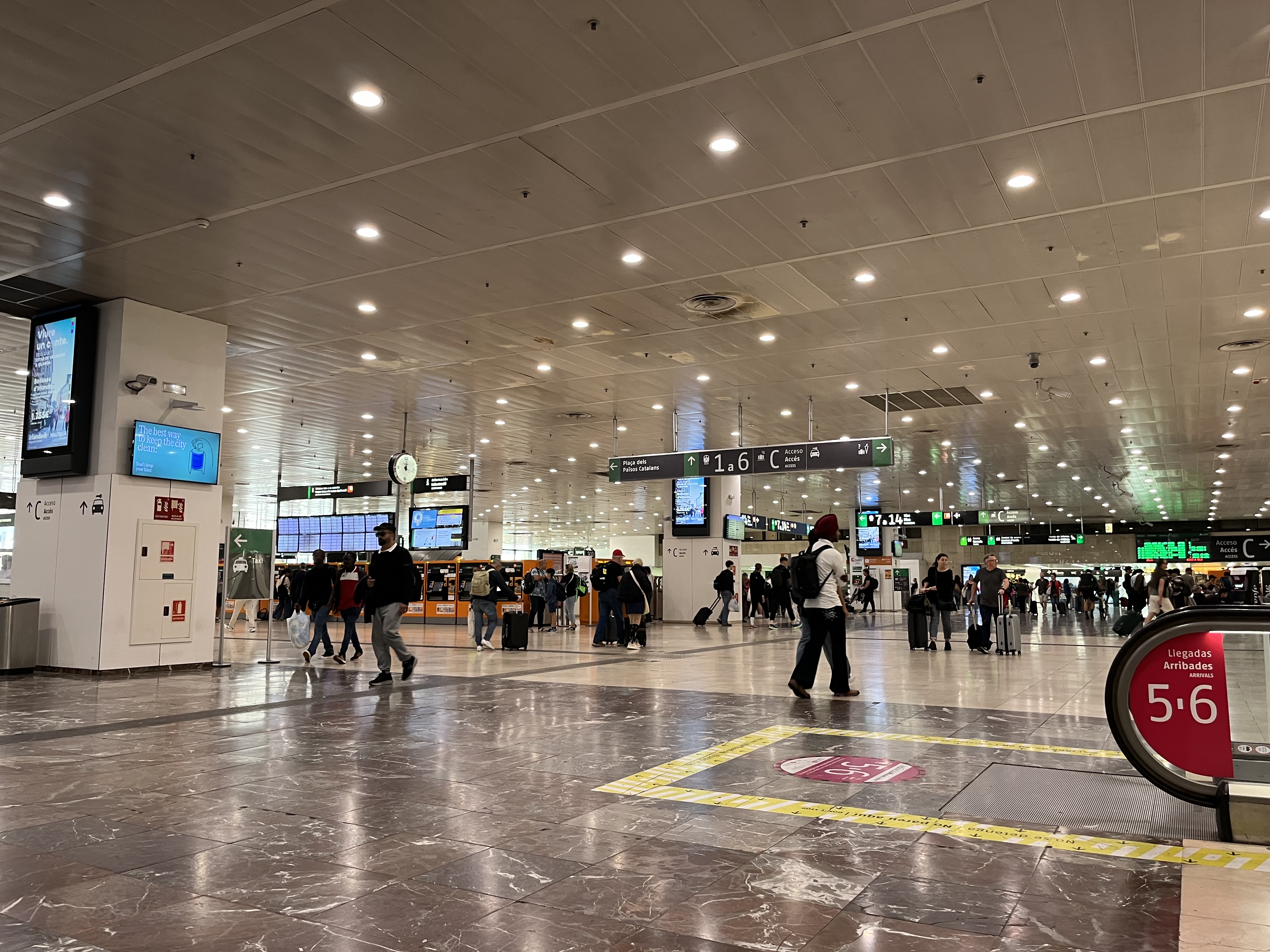
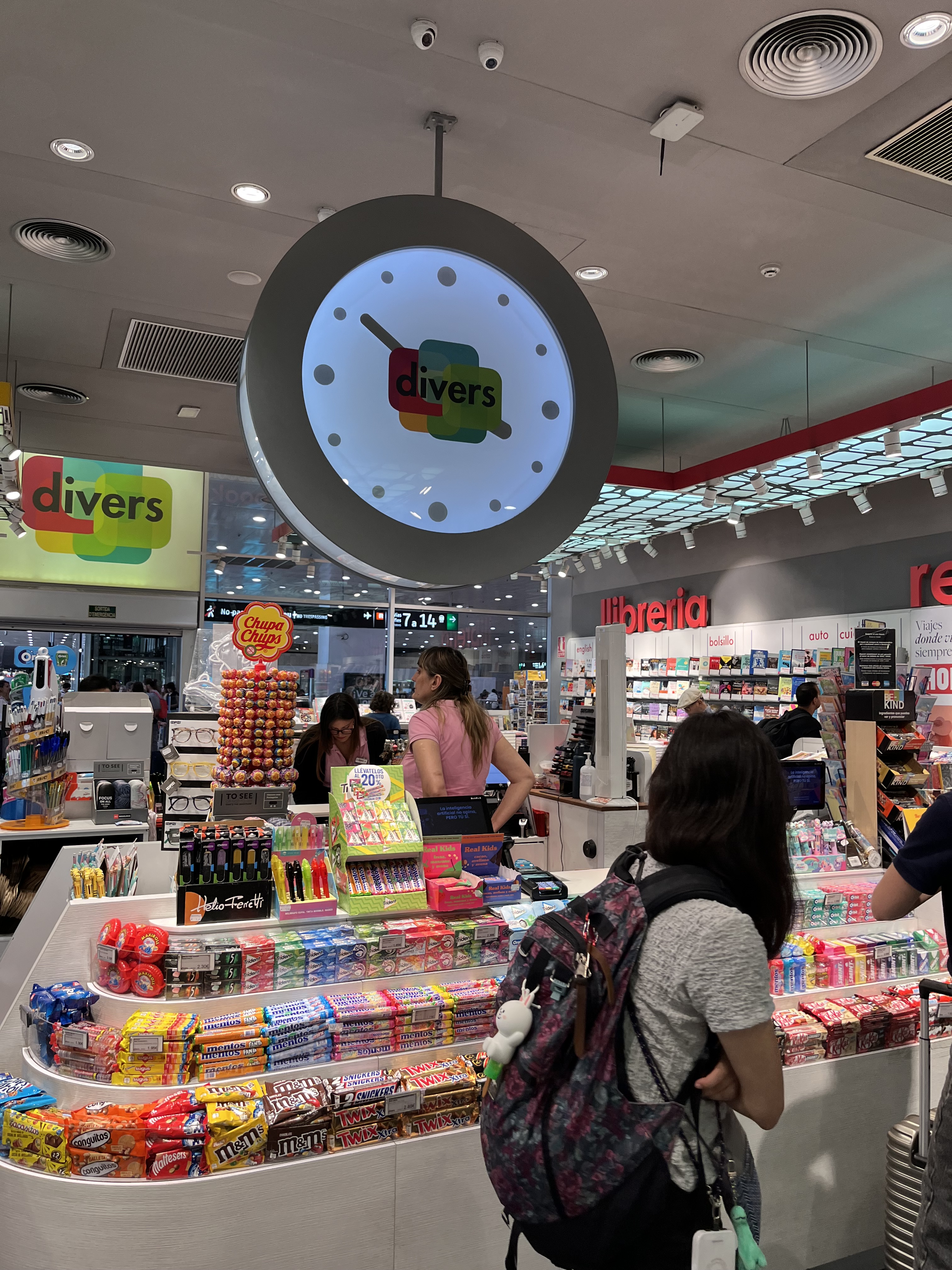
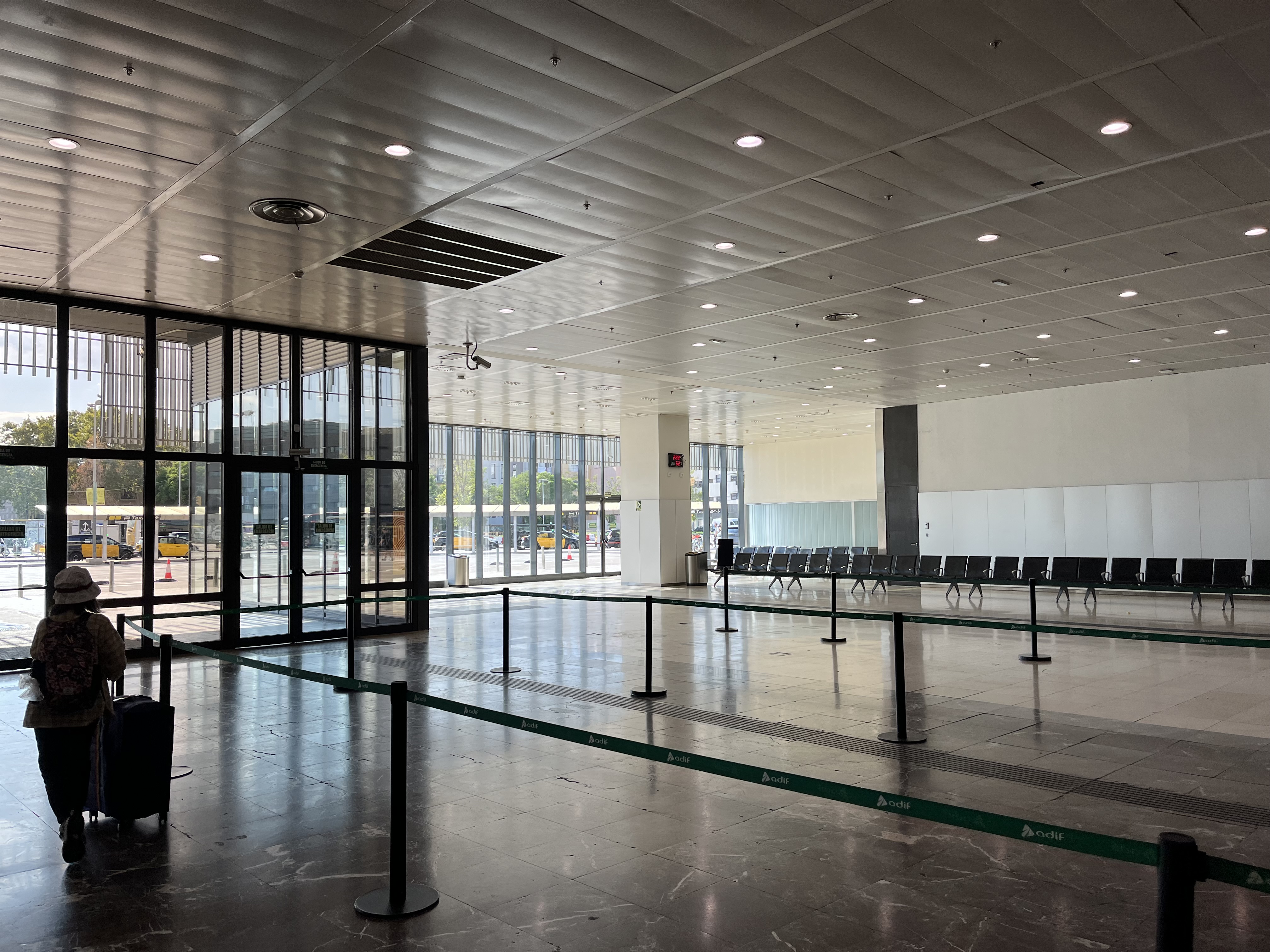
We settle down to wait some more. The minutes tick by, and our fellow passengers fill the waiting area. I scan the crowd: no sign of my mother. Despite myself, I am fidgeting again. Now the crowd is thinning, slowly disappearing down the escalators onto the platform; still nothing. Ten minutes till departure; eight now; six. I try to text her, but reception is so bad in this corner of the station that I might as well have flung a pigeon in some random direction. We are now the only people left in the vestibule. Dad and I run back through the station to the café where my mother is still queueing for a packed sandwich. There are at least five people in front of her in the line.
Convincing her to abandon dinner, we charge at lightning speed back to the metal detectors, where the guards are hurrying us on. I look at the clock as we head down the escalators; one minute to go. Reach the sterile white platforms, where the conductors usher us onto the waiting locomotive, their faces a uniform mask of impatience. No sooner have we gotten on then the doors slam shut behind us, the whistle blows, and the train begins to move; by the time we find our allocated spots, right next to a surfer dude with long blond hair and a completely disinterested expression, Barcelona Sants has faded into a speck of white at the end of a long, dark tunnel, and I have completely exhausted myself for the day.
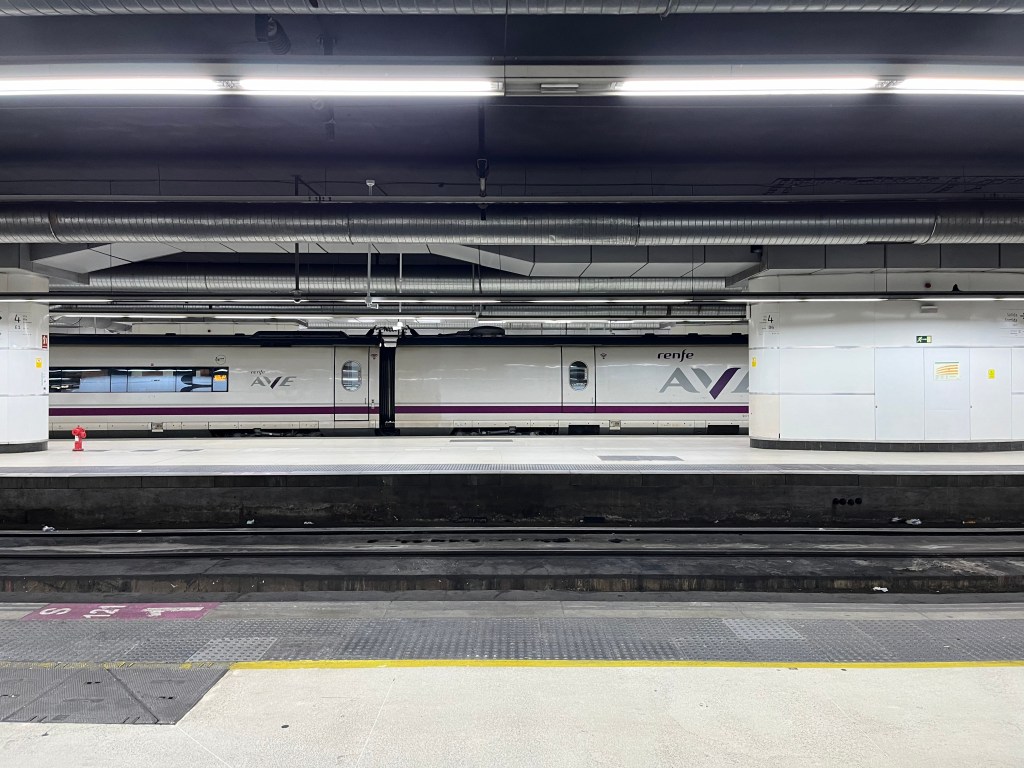
We lift our luggage onto the racks and slump back into our seats. An announcement rings through the train, welcoming us all onboard this long-distance service in equally-accented Spanish and French. It has already travelled from Madrid and Zaragoza on its way to Barcelona, and now it continues its journey eastward, stopping at places like Montpellier and Avignon before coming to a halt at Marseille, the second-largest city in France — and more pertinently, our next destination.
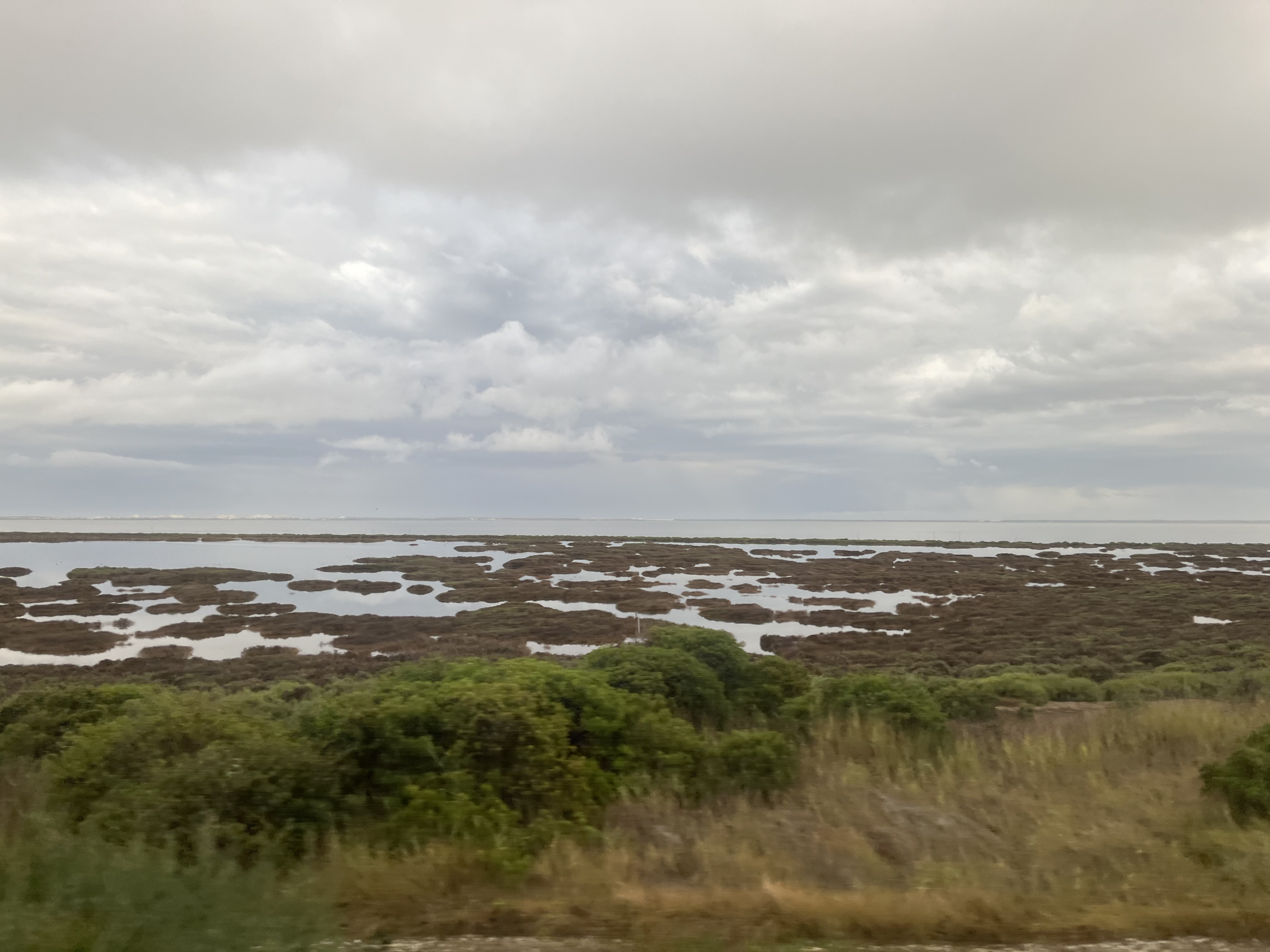
We emerge out of the tunnel into late-afternoon sunshine. Cramped streets slowly give way to suburbs, which gradually thin out until all that remains is the occasional farmhouse, set slightly back from a lonely countryside lane. Catalonia shifts hues as we head north: first it is the parched fields that we saw three days ago, all brown and lifeless in their dehydrated state, then almost imperceptibly the brown lightens, softens, into a more vivid shade of gold (perhaps yesterday’s showers did do some good after all). Before long patches of colour begin seeping in through the fields, as if gradually being filled in with colouring pencil; the leaves and the grass revert to their natural light green, and the sky — so unnaturally pale just thirty minutes ago — resolves into its usual patchwork of blue and white. It’s quite a relief: delightful as the man-made colour palette of Barcelona was, there’s something reassuring about the reversion to nature’s pastels, like a grand old order reasserting itself.
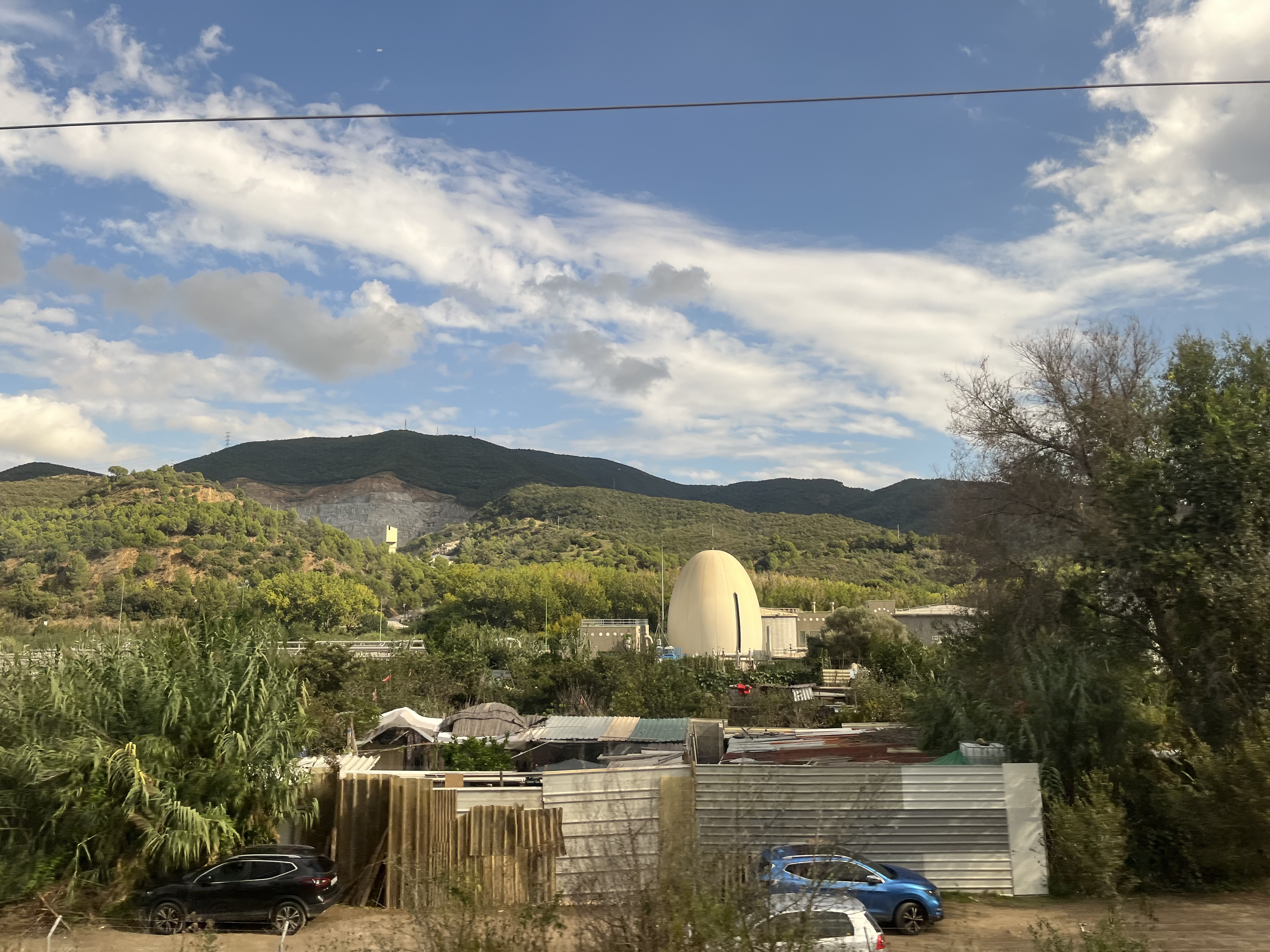
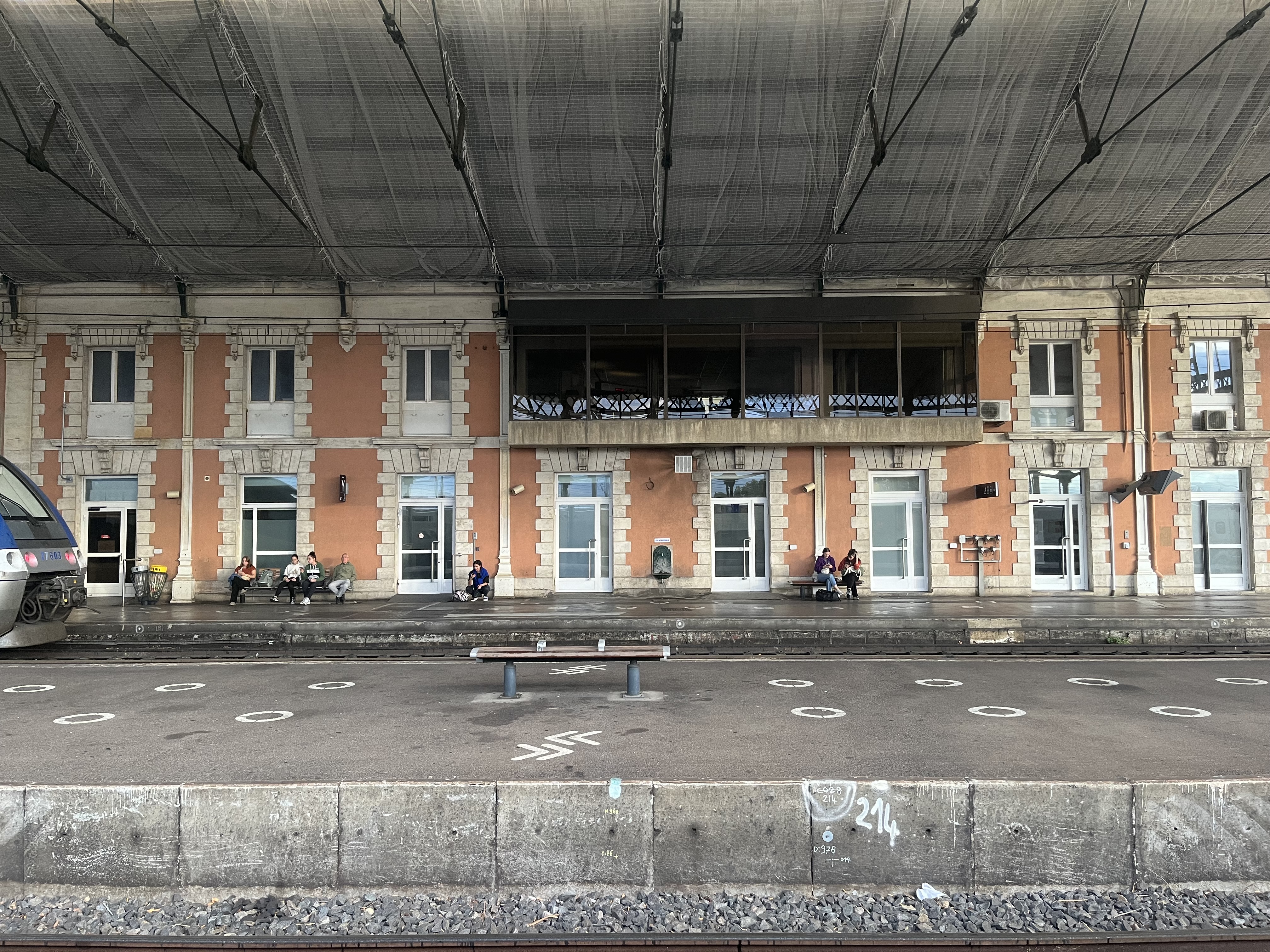
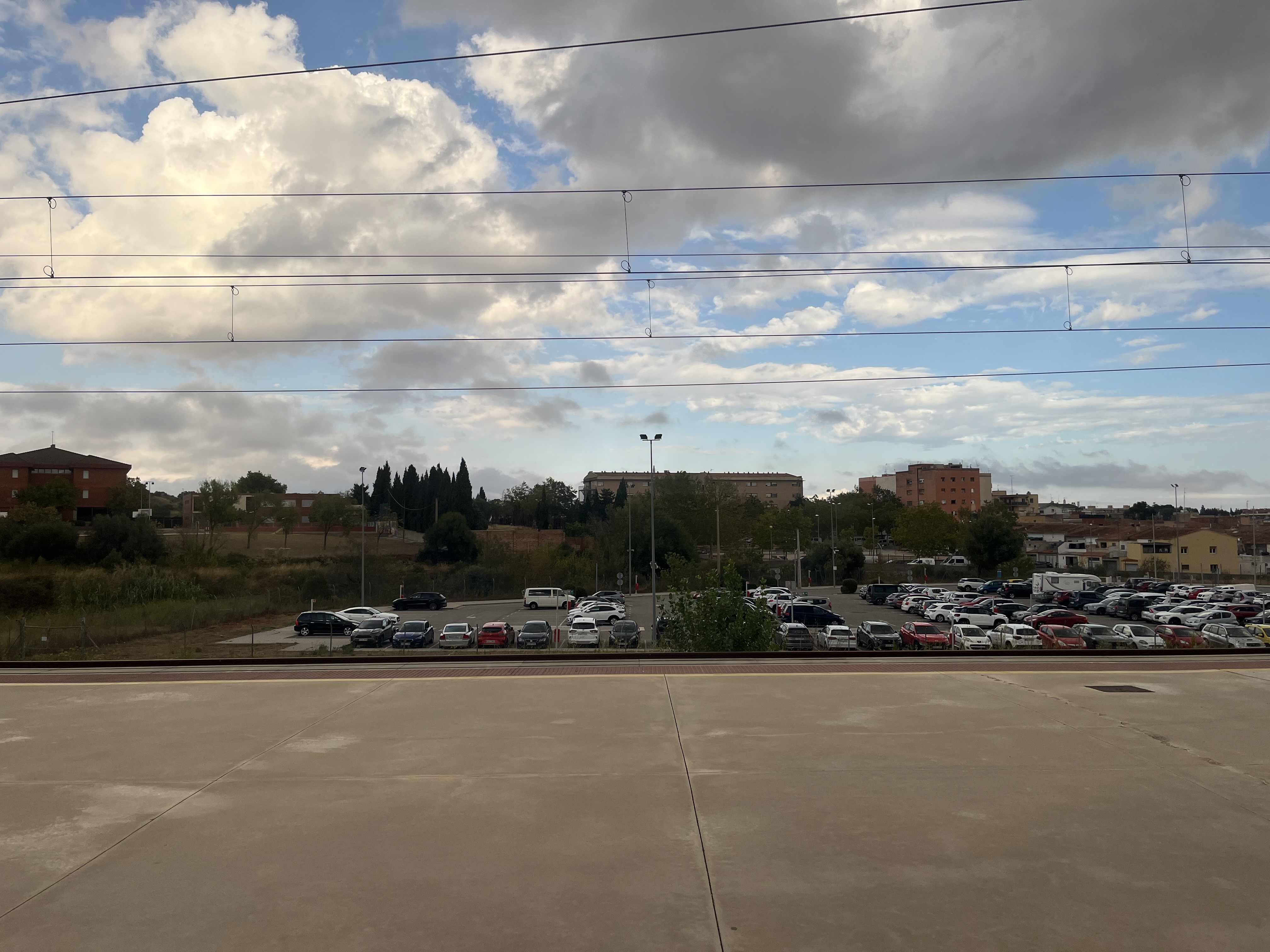
Approaching the French border, I hear raised, anxious voices coming from behind me. A young man, his hair long and his clothes shabby, is entreating a fellow passenger (of a different race, no less) to pretend to be his mother. The inevitable result is of course instant detainment of this smuggler the moment the border guards enter our carriage, his temporary mother affecting complete obliviousness when asked about her supposed relations to the man. Contraband is soon fished from his bags, and he is gently but firmly escorted from our train. As we pull out and gather speed, I catch one last glimpse of the smuggler, a guard on either side of him, sombrely walking along the platform into the gloom of the station.
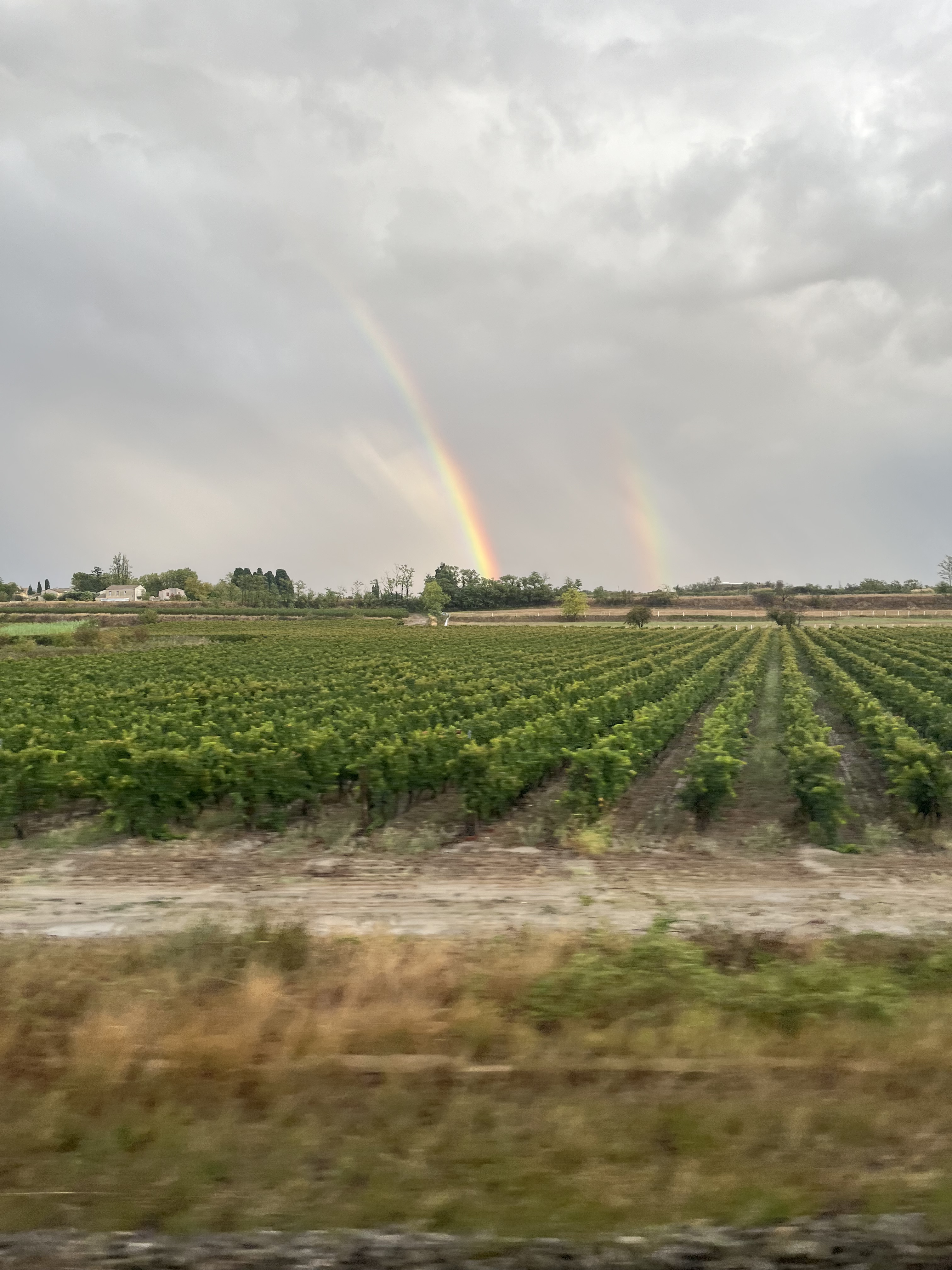
And on that happy note, we’re in France. I’ve been in the country once before, but that was more than a decade and a half ago, and we never stepped outside Paris and its suburbs — certainly we never saw anything of Occitania and its broad plains, which stretch out now from the windows of our express for miles into the distance. The foliage here couldn’t be more different from its Spanish counterpart: less sun-kissed, more faded… but paradoxically, also showing more proof of life, the more real, the landscapes it forms more layered. As we thunder towards Narbonne, there’s a quick burst of rain, followed by not one, but TWO rainbows arcing across the late afternoon sky. I catch my breath as my family members all whip out their phones and praise the Lord for his unending creation; I’m not so easily moved to such piety these days, but even I find myself saying a quick thank-you to the heavens as well.
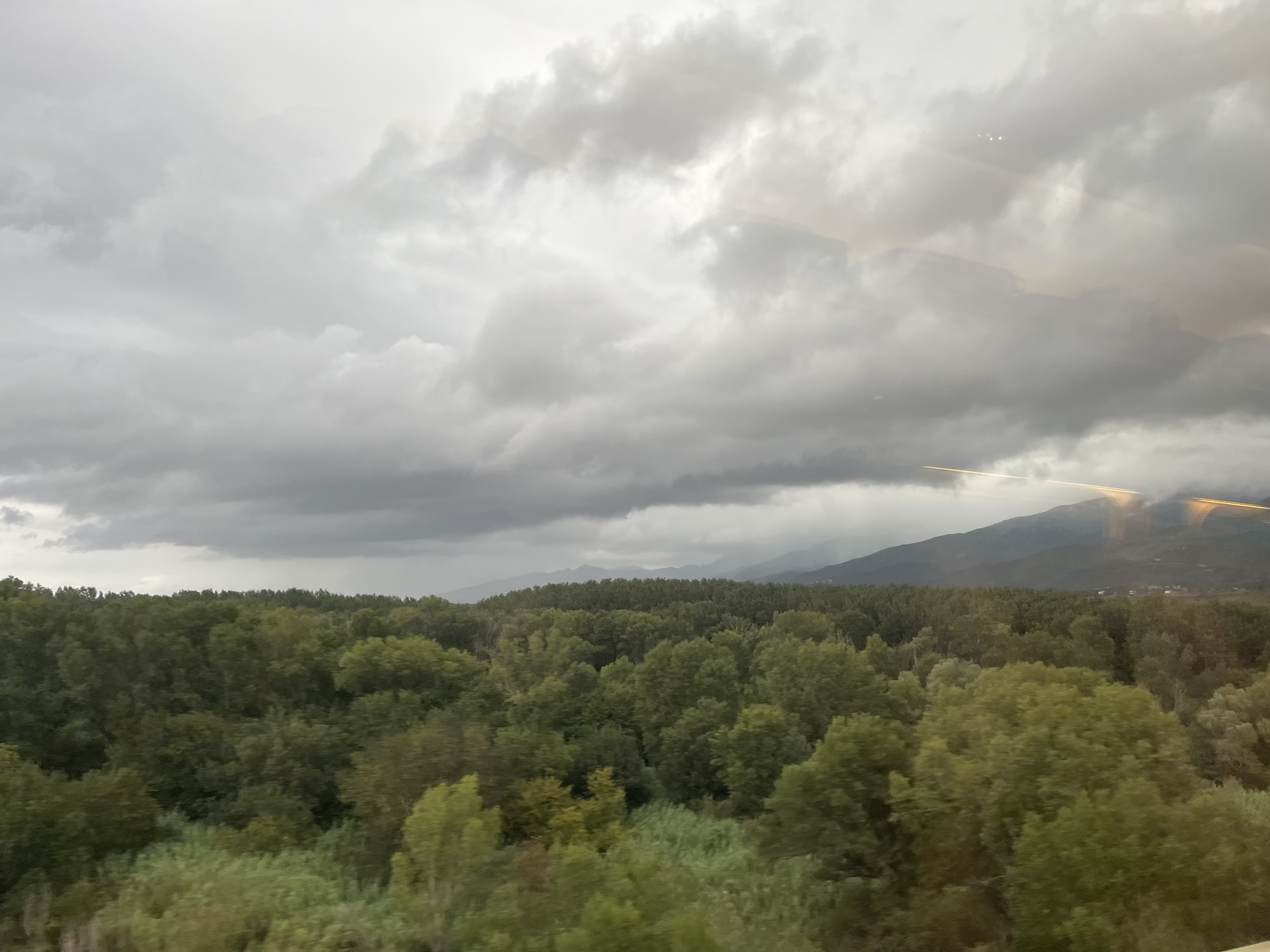
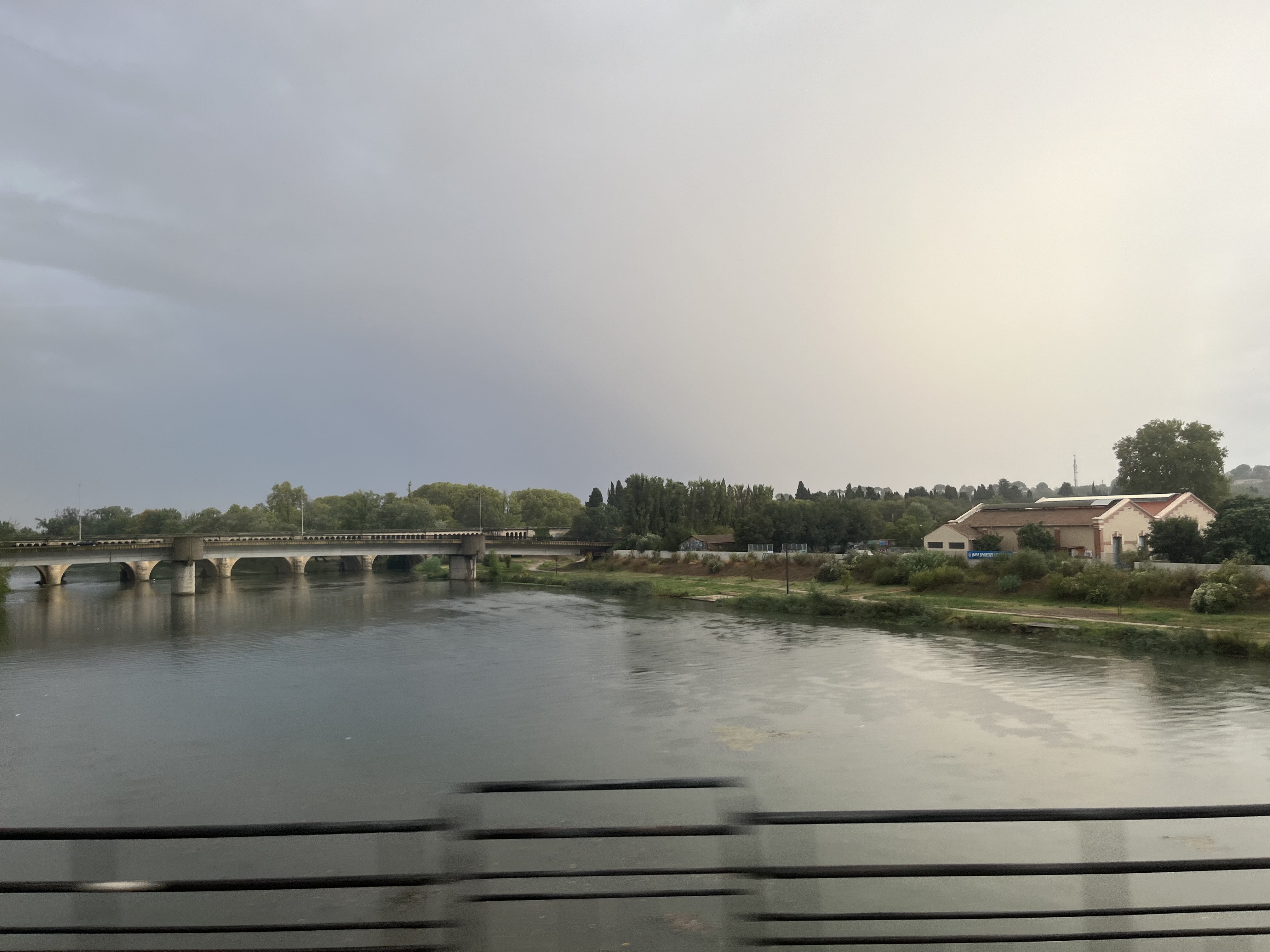
We move on. The rainclouds return, a dark bruise over our heads, and this time the downpour is relentless, huge bullets of water whipping against the glass. Our surfer co-commuter looks up at the rain and wrinkles his nose; perhaps he’s thinking about the weather that awaits him at some unknown French beach. By the time we arrive in Montpellier, that old mediaeval town of renown, the storm has broken — but so has the night, and all that’s visible beyond the lights that illuminate the tracks are glimpses of buildings, with their old mustard-and-beige frontages barely visible in the twilight, and the silhouettes of chimneys and antennae against a wash of violet sky. Three seconds’ time is all I get to take in this romantic picture of southwest France before the train rushes once more into the station approach tunnel; and I never see anything quite like it again on this trip.
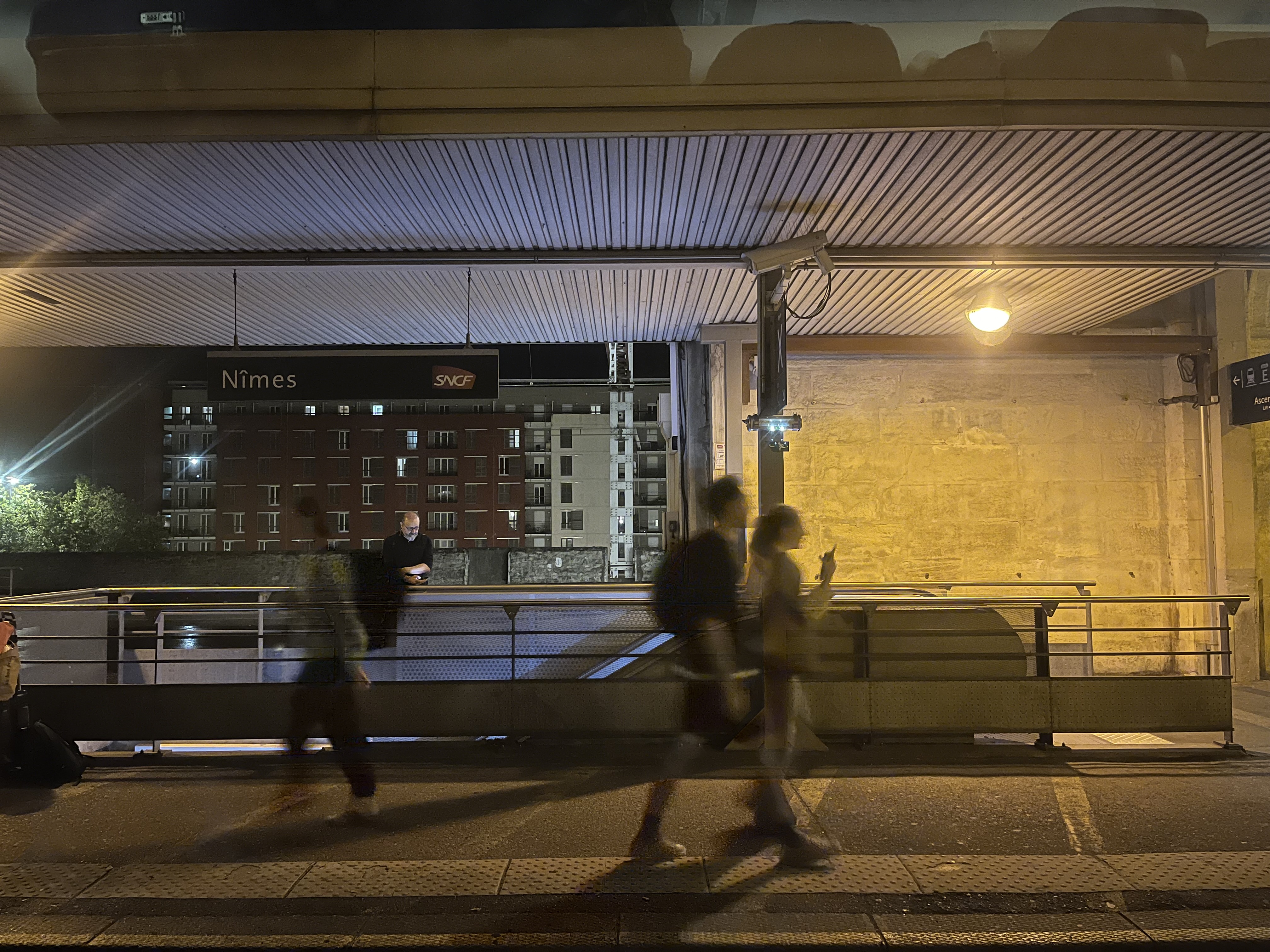
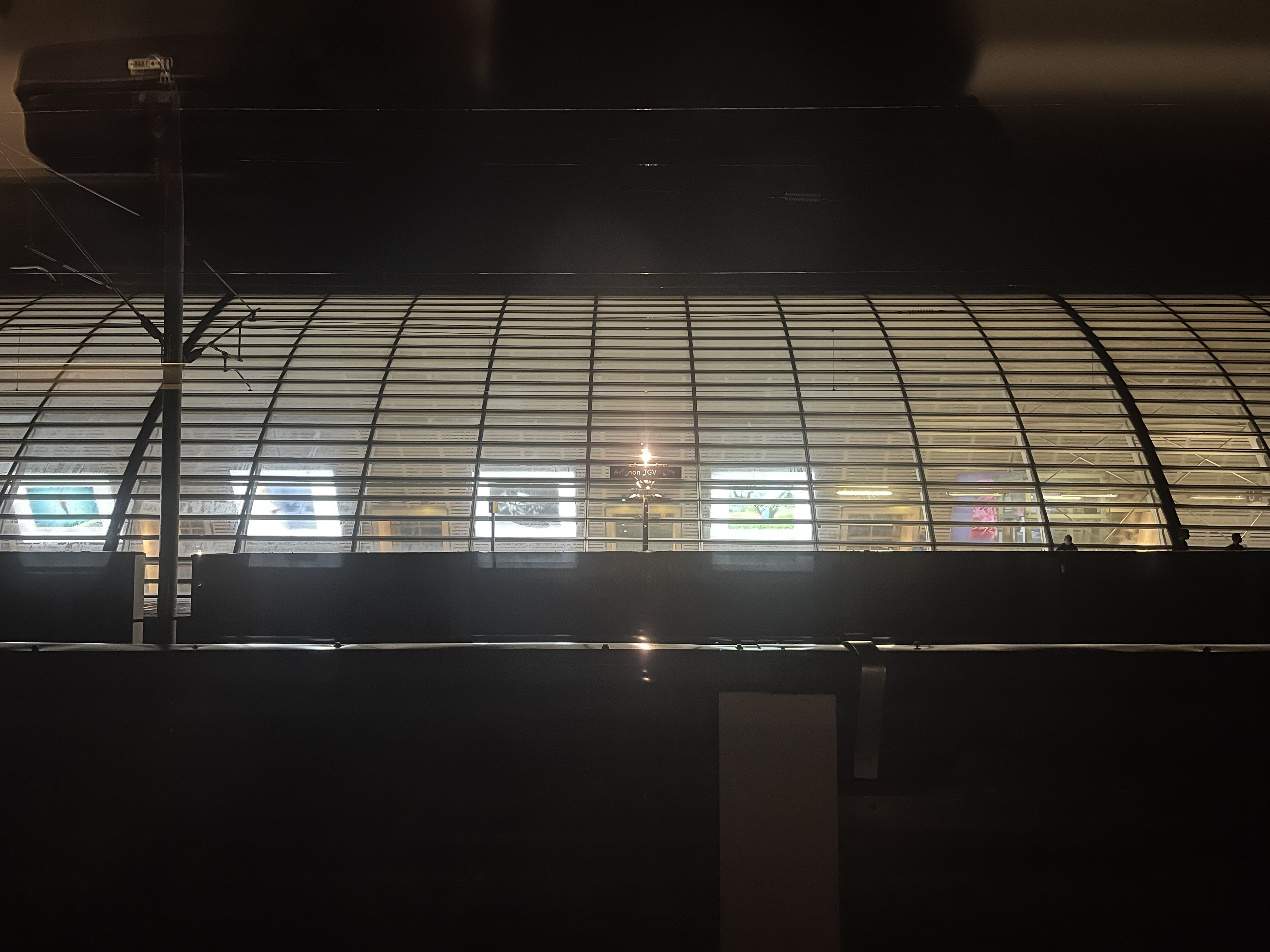
I look at my phone as we pull out from Montpellier Saint-Roch station. Still half the journey to cover, and the McDonald’s from the Plaça de Catalunya is long-digested; I unpack the sandwich I got from Barcelona Sants, but it’s dry and thin and quite cold comfort. The placenames start becoming familiar as we turn south: Avignon, Aix-en-Provence, and Nîmes, which provides evidence that southern France does not entirely consist of placenames that begin with A. Eagerly look out the window at the former for a glimpse of people dancing on the famous bridge, but as it’s nine in the evening all I can see is a very impressive and modern train station. Well, it’s an adequate replacement.
Finally, at half past nine (only ten minutes late!) the train begins to slow. The few remaining passengers around us jump up and begin to gather their things, as if they can’t wait to see Marseille; or maybe, like us, they’ve just had enough of sitting on this sodding train. No sooner have we arrived at our destination then there is a huge rush for the exits; and by the time the last of our suitcases clatter onto the platform of Saint-Charles station, even the train staff has left. For all intents and purposes, we’re the only people around here.
The first impressions I have of Marseille are not good ones. The train from Spain (which stayed mainly in the plain) was the last service of the evening, and though it can’t have been more than ten minutes since our train arrived, most of the station’s lights have already been dimmed or switched off outright by the time we step into the lobby. What illumination remains comes from a few shopfronts, glowing beacons of consumerism even at this late hour, and a bunch of strangely red lanterns casting their weak pall here and there. An eerie dusk suffuses the station atrium, and the trees planted across the concourse cast shadows across the entire place, so it takes me some time to notice the dire state of the marble floor, with its wear and tear showing — or should I say revealing — the station’s age.
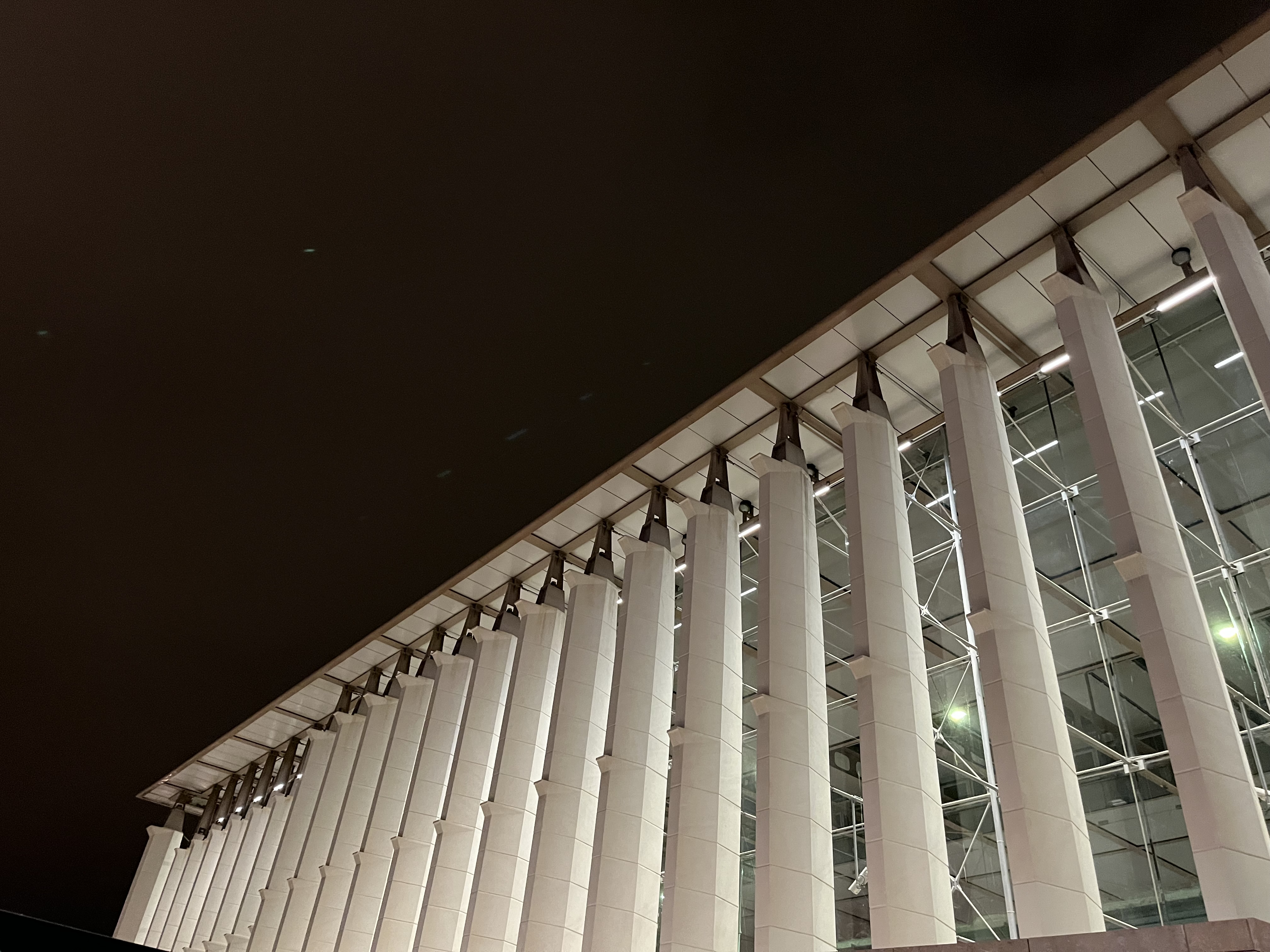
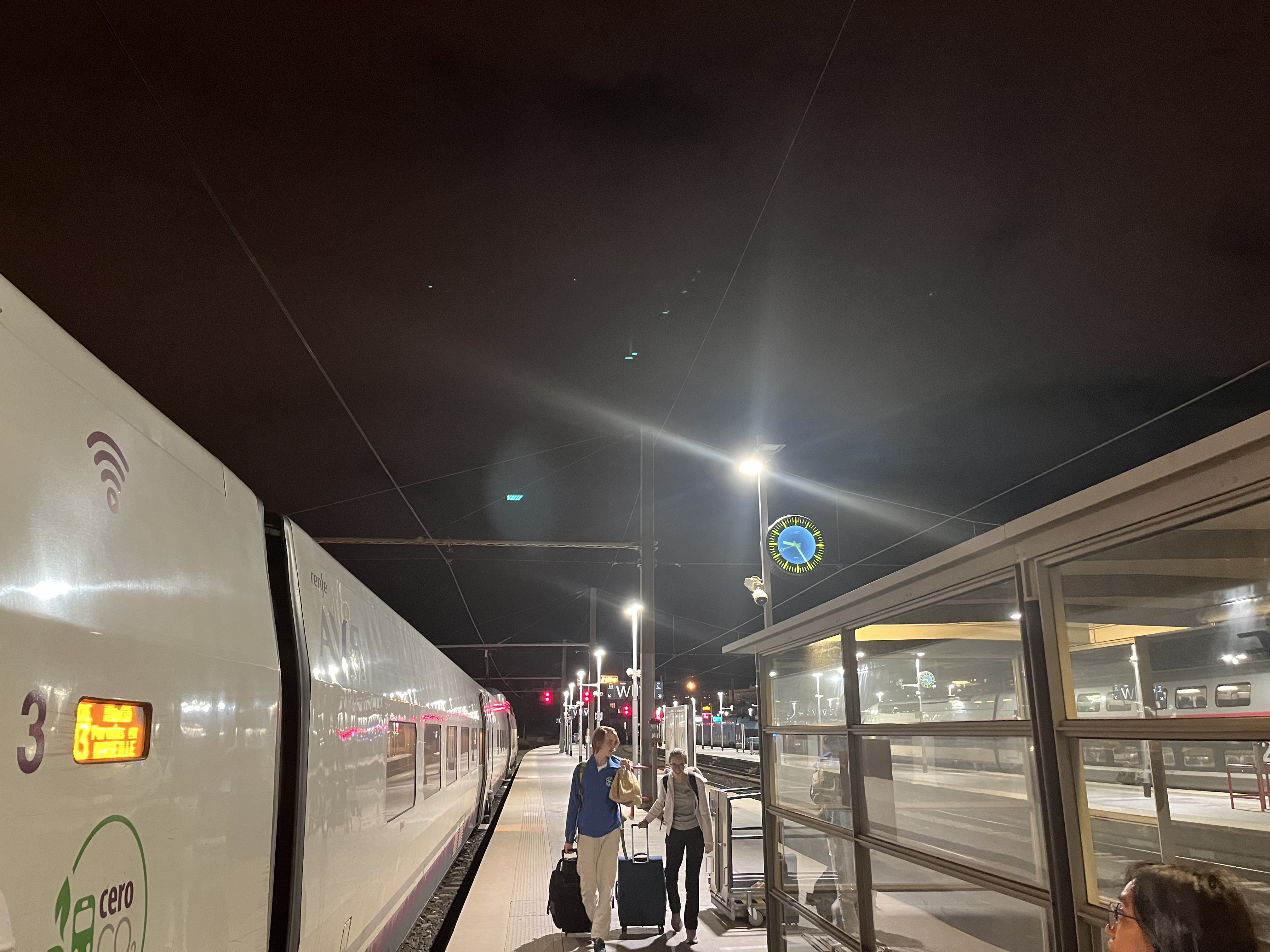
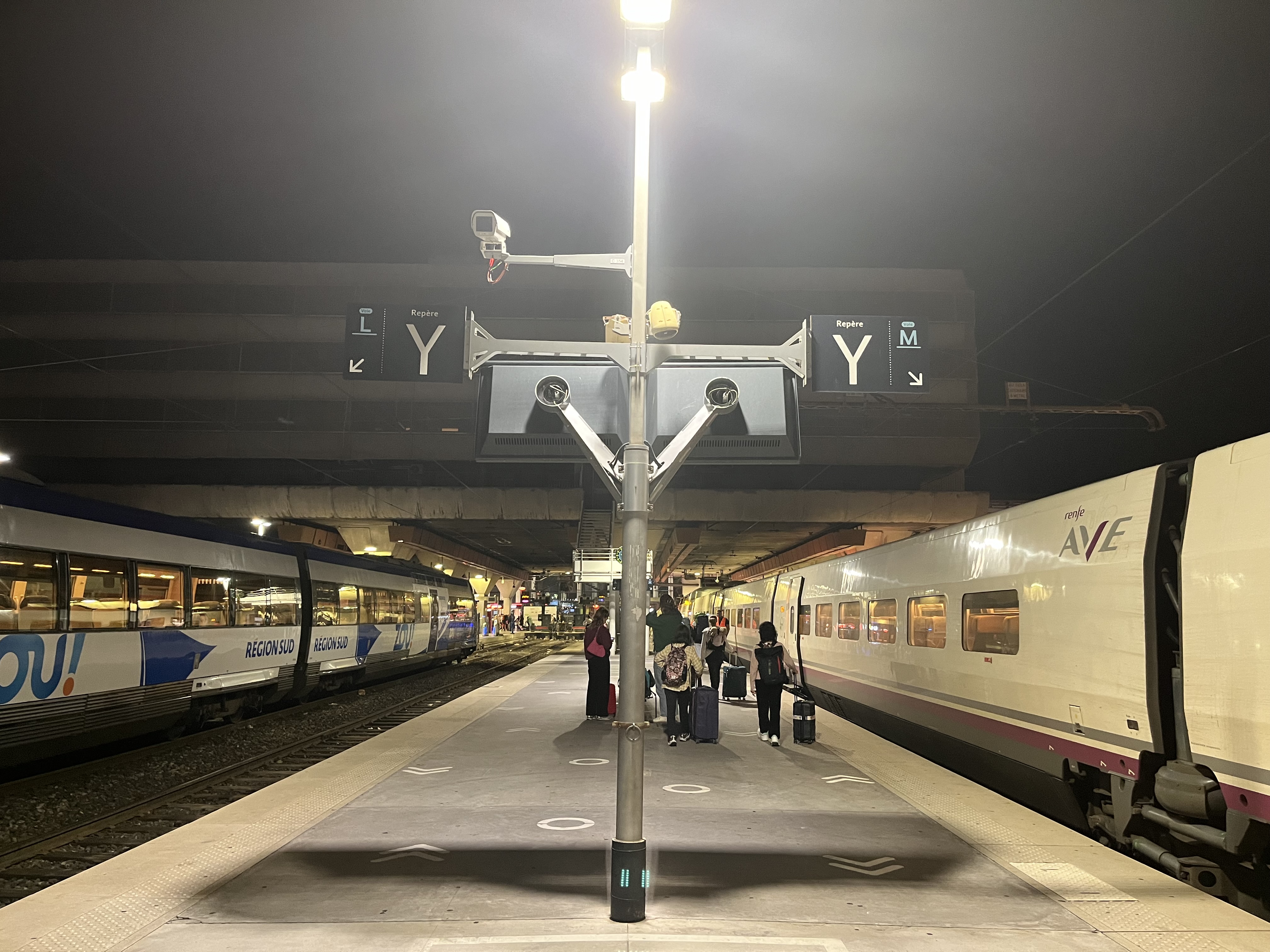
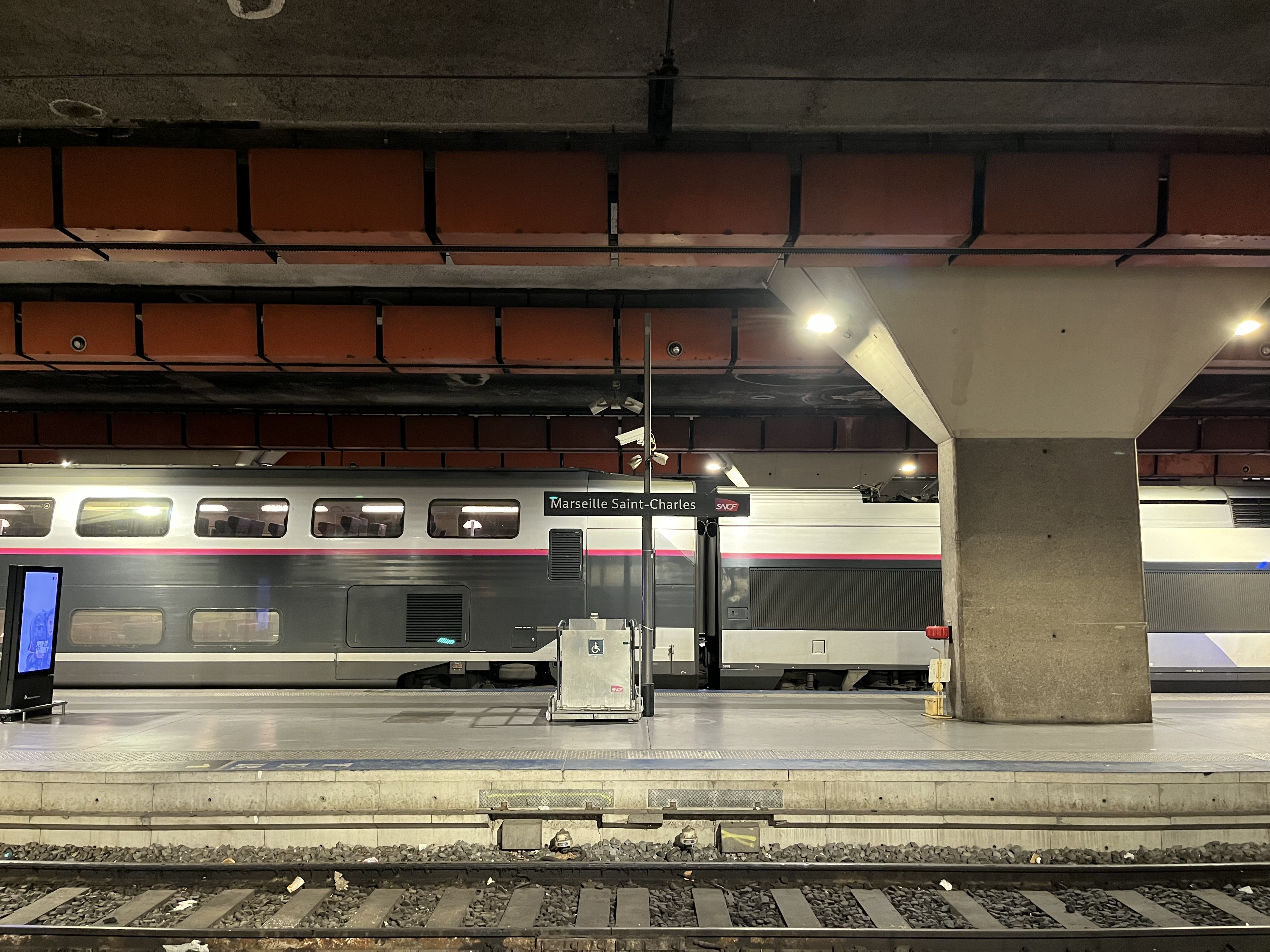
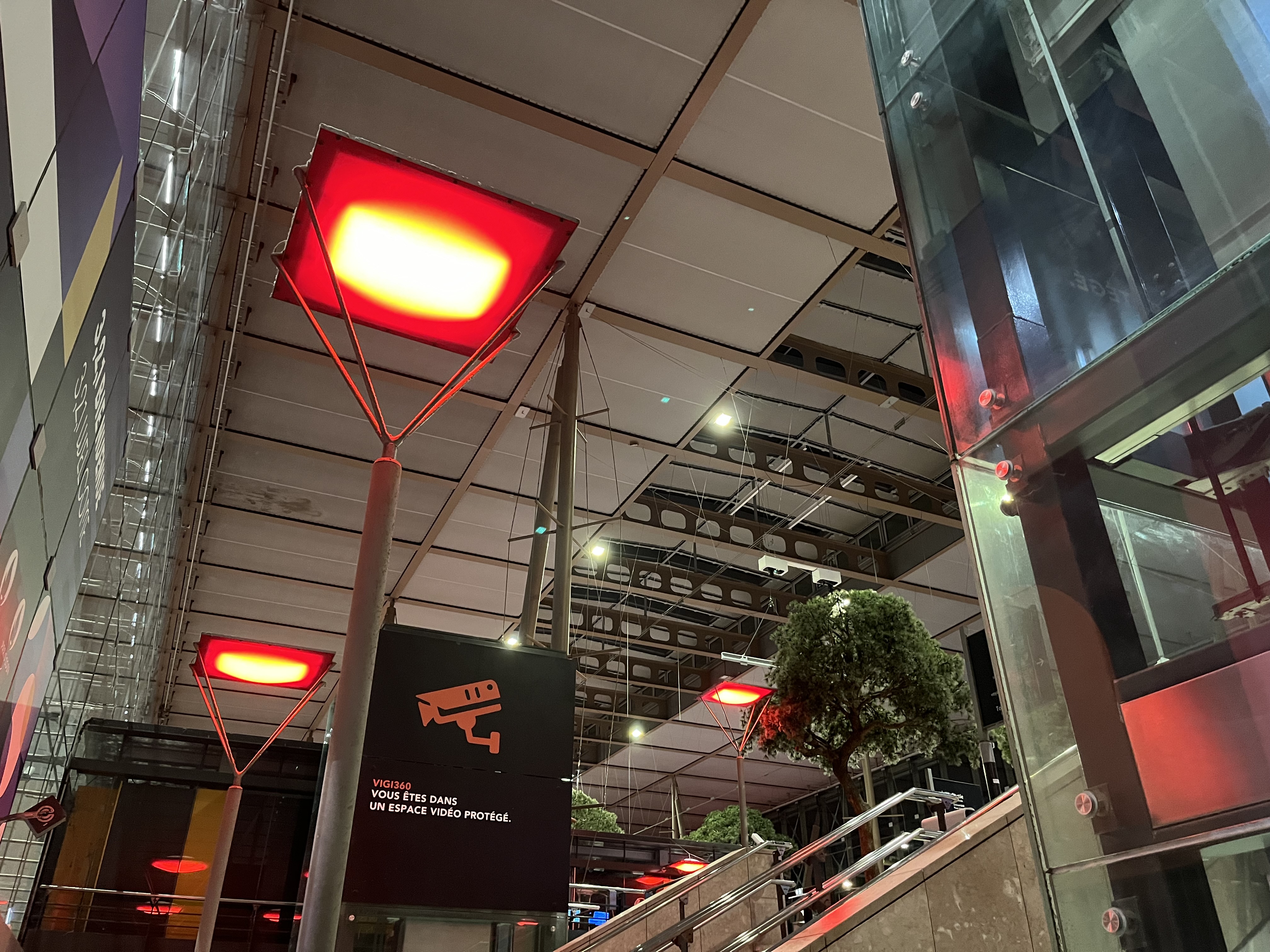
We step out onto the avenue outside, empty except for a couple of loiterers. Saint-Charles station stands at the top of a gentle but large hill, and the walk downtown, down a wide but desolate boulevard, stretches on interminably; behind me, I can already hear my family complaining about the long walk, and how they’ll have to drag their stuff all the way up this slope again come Wednesday morning. But right now, I’m more struck by how rundown the city looks: Marseille is in a class of its own with how slovenly and uncared-for it feels, even more than Prague, even more than Berlin, even more than Bratislava, where paintjobs were literally cracking off the walls in the old town. The few buildings we walk past on the Avenue du Général Leclerc, in between long stretches of fencing, rise menacing in the night and are uniformly caked with heavy graffiti and litter; what windows they have, I notice, are at least ten feet high, as if deliberately designed to ward off burglars. An occasional car zooms by, crudely breaking the night’s silence with loud, raucous music and noisy exhausts.
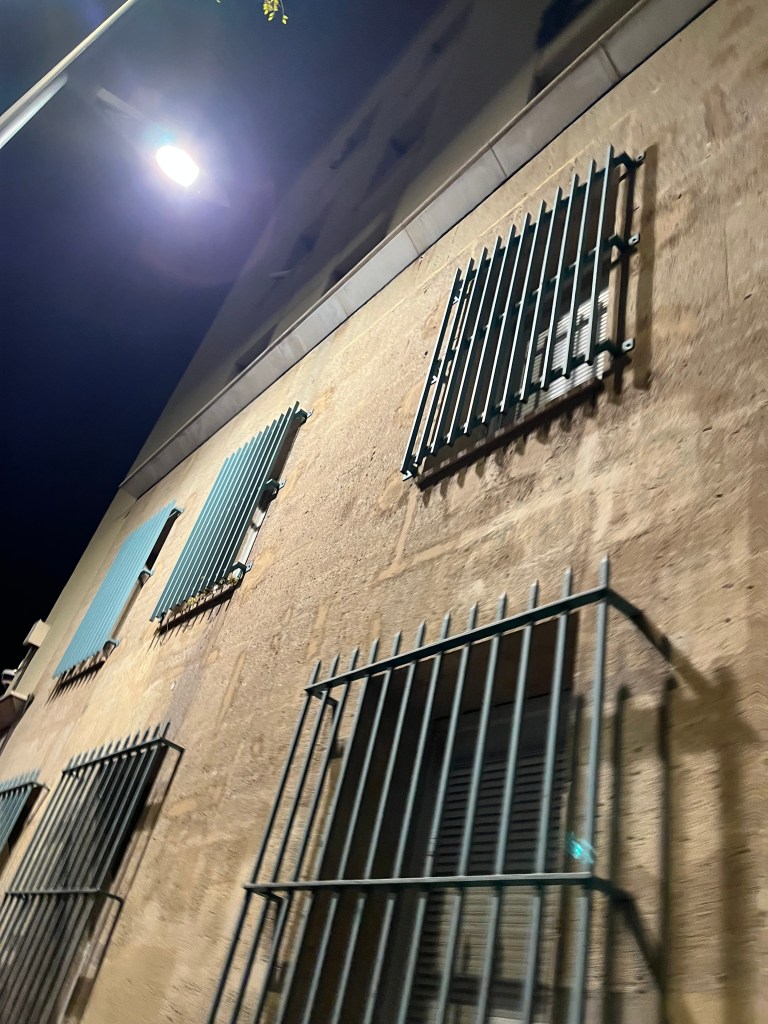
Did we come to the wrong place? Are we even safe here? Marseille has a reputation for being the most crime-ridden place in France, with pickpocketing incidents, muggings and even gang wars frequent in corners of the city. Those blank faces staring at us from the shops and diners, could they turn hostile at any moment? If a gun was to go off on the other side of the street, what would I or my family even do? The rational part of me — the part of me that says “stop being a paranoid racist, you’re with your family, you’re in a safe part of town, nothing will happen to you” — still has control, but it’s a slippery, tenuous sort of control, one that might break loose at the slightest touch. It is with no small amount of relief that I spot the contours of our hotel looming into view, and guide my similarly anxious flock inside its welcoming, familiar, sterile confines.
Unique amongst our many accommodations on this trip, the place we’re staying at in Marseille has a laundry service, which is really just a solitary washer and dryer. Nevertheless Dad decides to take our travel-stained and -scented clothes for a cycle or two, and so it is that when I pass by the door of the laundry at eleven in the evening I spot my father staring pensively at a washing machine, looking very much like a sculptor trying to figure out his next cut. Pass him and enter the communal kitchen, where Samuel and Grace, having eaten absolutely nothing but a few pieces of gum on the train, are huddling with a couple of cup noodles. They wordlessly hand me another, and it’s not until I’ve sat down next to them that I realise just how drained I am, completely knackered from all the travelling I’ve done. Are there really still five more days to go? Do we really have to spend two of them in a place that’s so… nerve-wracking?
As I slurp chicken soup, the door to the hotel opens and in comes some German teenagers. Then some more comes in. Then a whole flood, all crowding round the lifts and chattering away to themselves. A few of them wander into our kitchen, and huddle quietly near the stove. I get chatting to them and learn that they are on a school trip from Cologne, a city 1000 kilometres away (I shudder to think of the coach trip they have just endured) and have just arrived in town. In the spirit of international friendship, I get talking to them in English as I wash up. “Are you looking forward to Marseille?” I ask cautiously.
“Oh yes! Some of our classmates have gone to Paris though, but we hear this place is fun. We’ve just had dinner and it was nice!” says the tallest one, who is almost my height despite probably being a full decade younger than me.
Wonder who in their right mind would prefer Marseille over Paris, but that still small voice at the back of my head starts to reprimand me again. So instead I turn off the faucet, smile politely, and say “well, you all have fun.”
“You too!” they say, and I take my leave. Halfway up the stairs back to my room, I remember too late that I actually know how to speak German.


