23 September
Yesterday the weather in balmy Catalonia had reached the upper twenties; today the Provence offers up a starting temperature of 15°C, and I can’t help but shiver as I stick my head out of our hotel room window and look across the rooftops of Marseille. It’s a typical inner-city view: a rooftop carpark, some graffiti, sandstone-hued apartment blocks. Yet the sun is shining softly, and the clouds swirl daintily in the sky; despite myself, a smile flickers across my face.
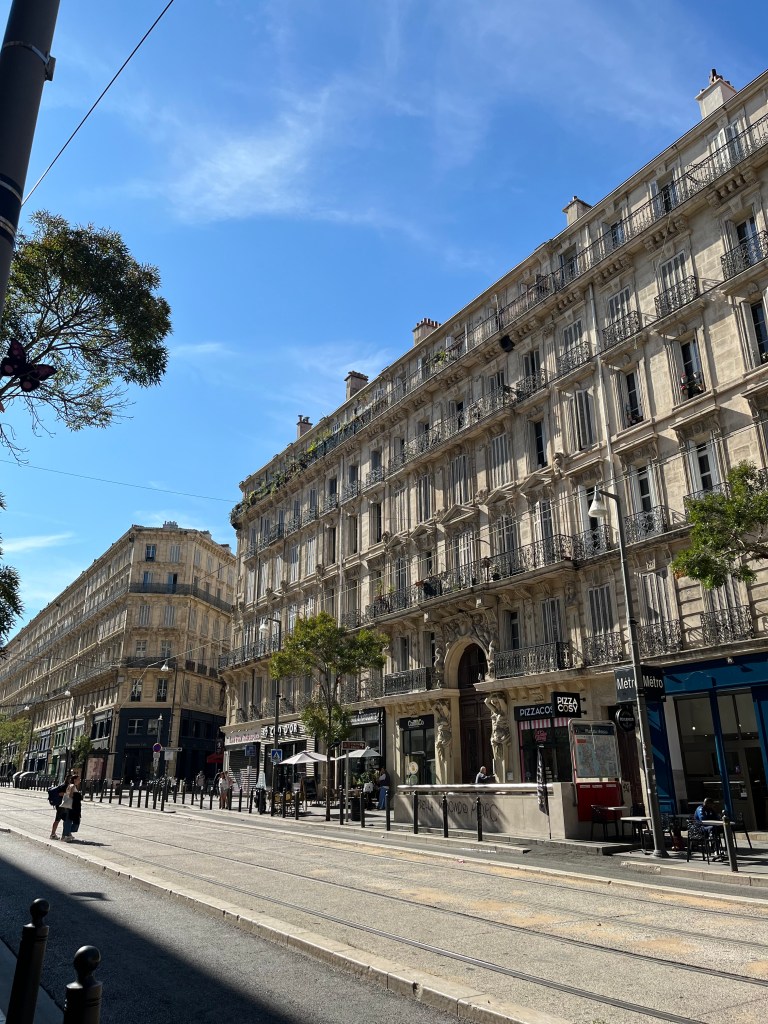
One extremely rudimentary breakfast later, we walk into town proper. Emerge onto the Rue de la République, and am instantly reminded of Paris: a wide-open boulevard, surrounded on either side by cream-coloured buildings, so perfectly constructed they could have been designed by Haussmann himself. But instead of endless fashion boutiques and loud-mouthed tourists, there’s only a quiet trickle of people popping in and out of shops and restaurants; and as we watch a tram glides down the central reservation, lightly ringing its bell as it skips past. Not one person here rushes, like we keep on seeing in Call My Agent or The Devil Wears Prada; instead they stride, or even saunter, as they cross the street and step onto the pavement. This place is looser, more casual — a city that’s a retreat from city life.
We follow these luminaries of walk and head into the Panier district, Marseille’s old town. This is our second old town in three days, but the atmosphere here could not be any more different than Barcelona: that one was dark, solitary, mysterious, adjectives which are preposterous within Le Panier. True, the alleyways here are just as narrow — there are points where you could reach out and touch both walls — but here light saturates every corner of the district. The shops, the walls, even the shadows are all bright and welcoming; the crossroads outside the old Charité almshouse might as well be any old village square, with the huge trees in the centre and old Marseillais sat in the shade underneath. Bicycles lean unattended against walls, as if the owner’s just popped into a side street boulangerie. (Or, this being France, for a quick tête-à-tête with a first-floor tenant.)
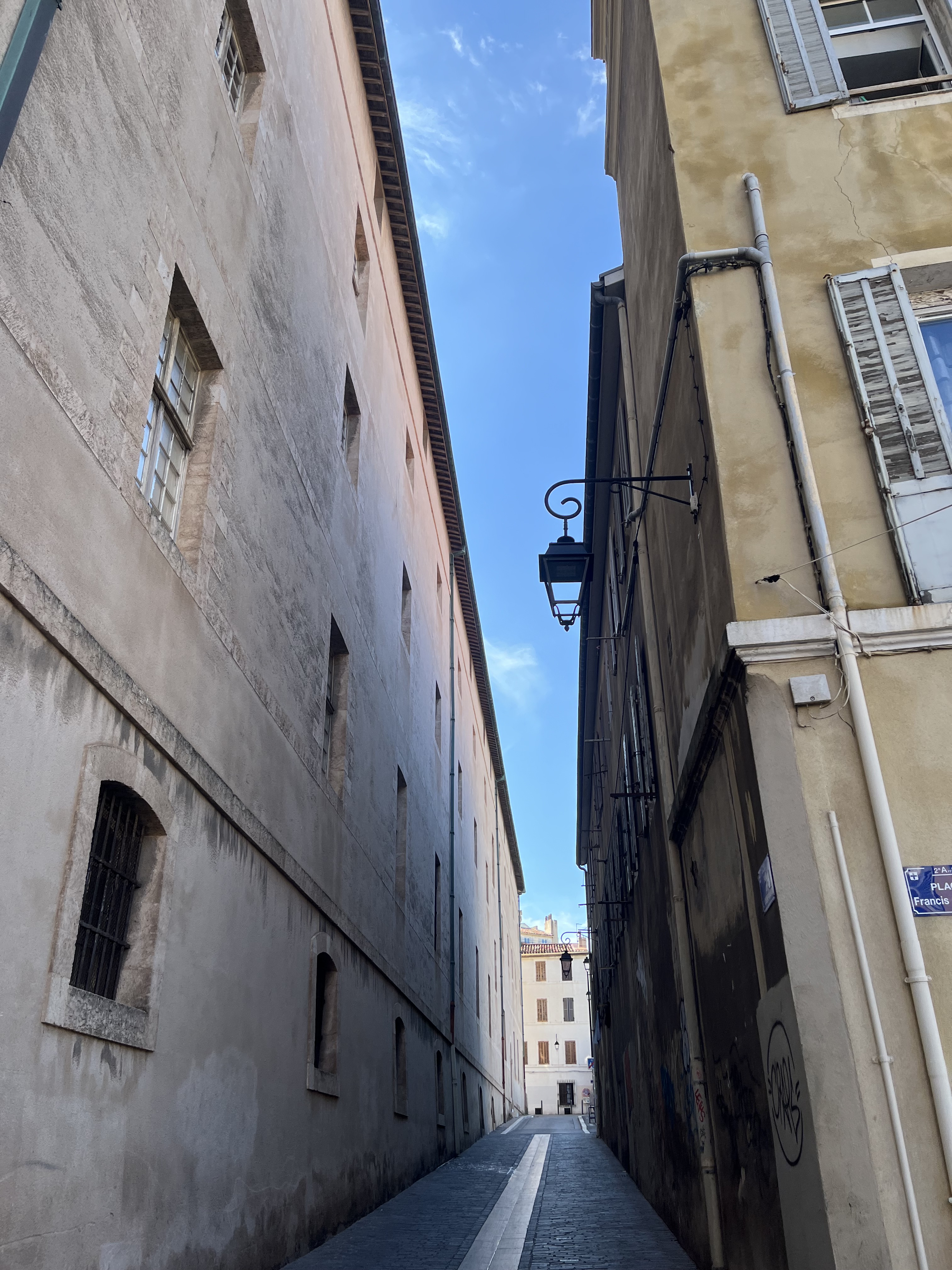
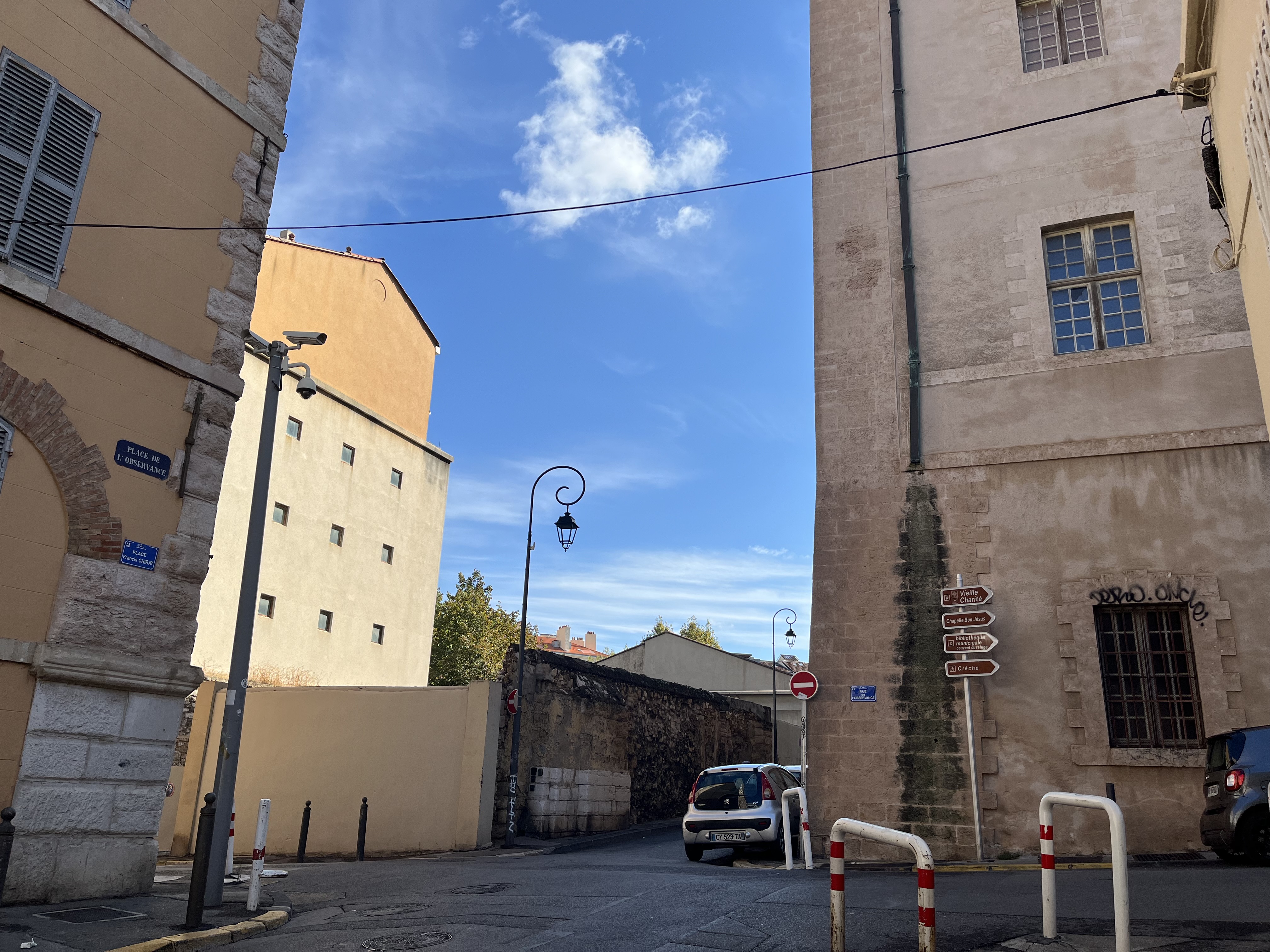
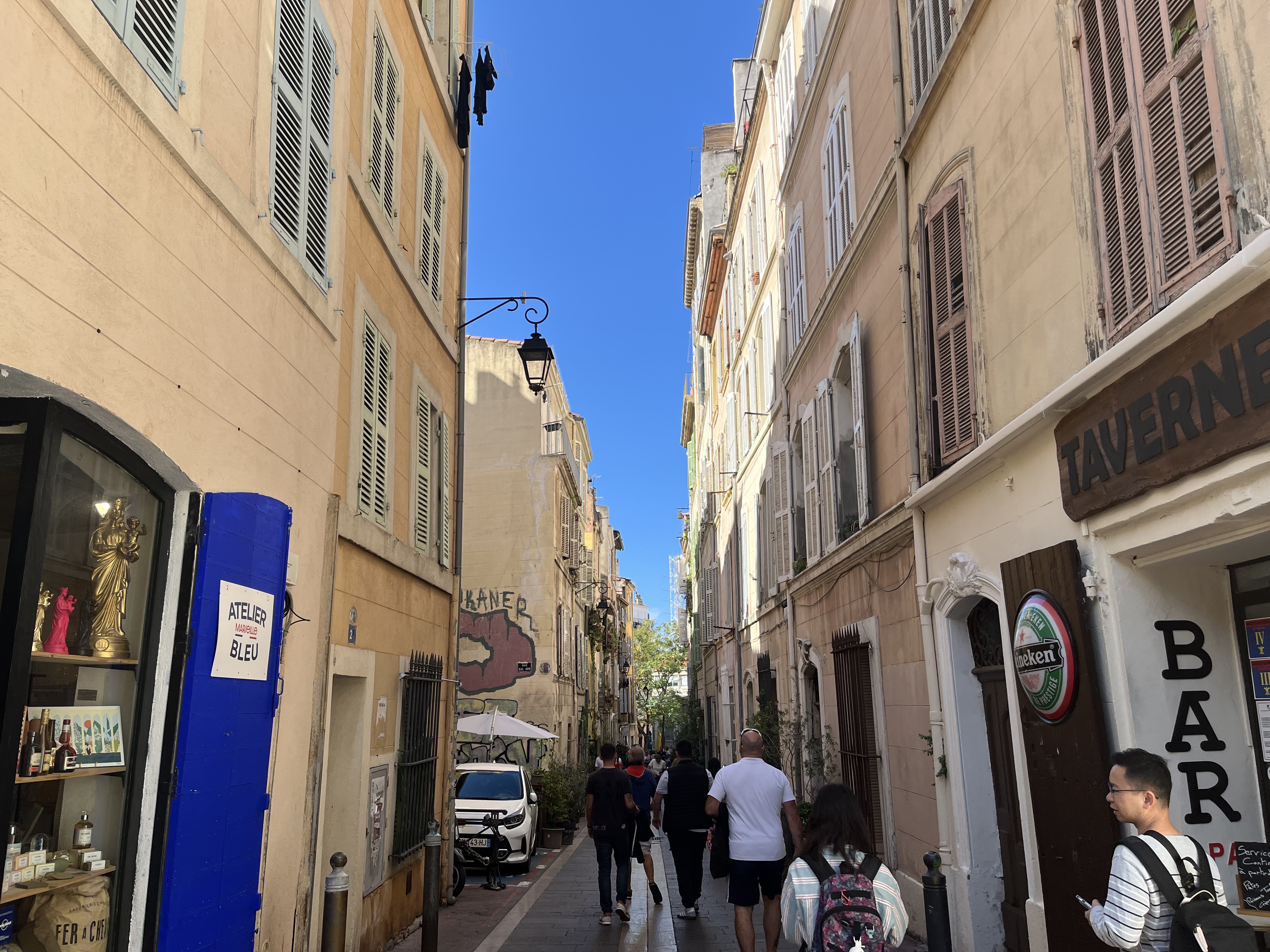
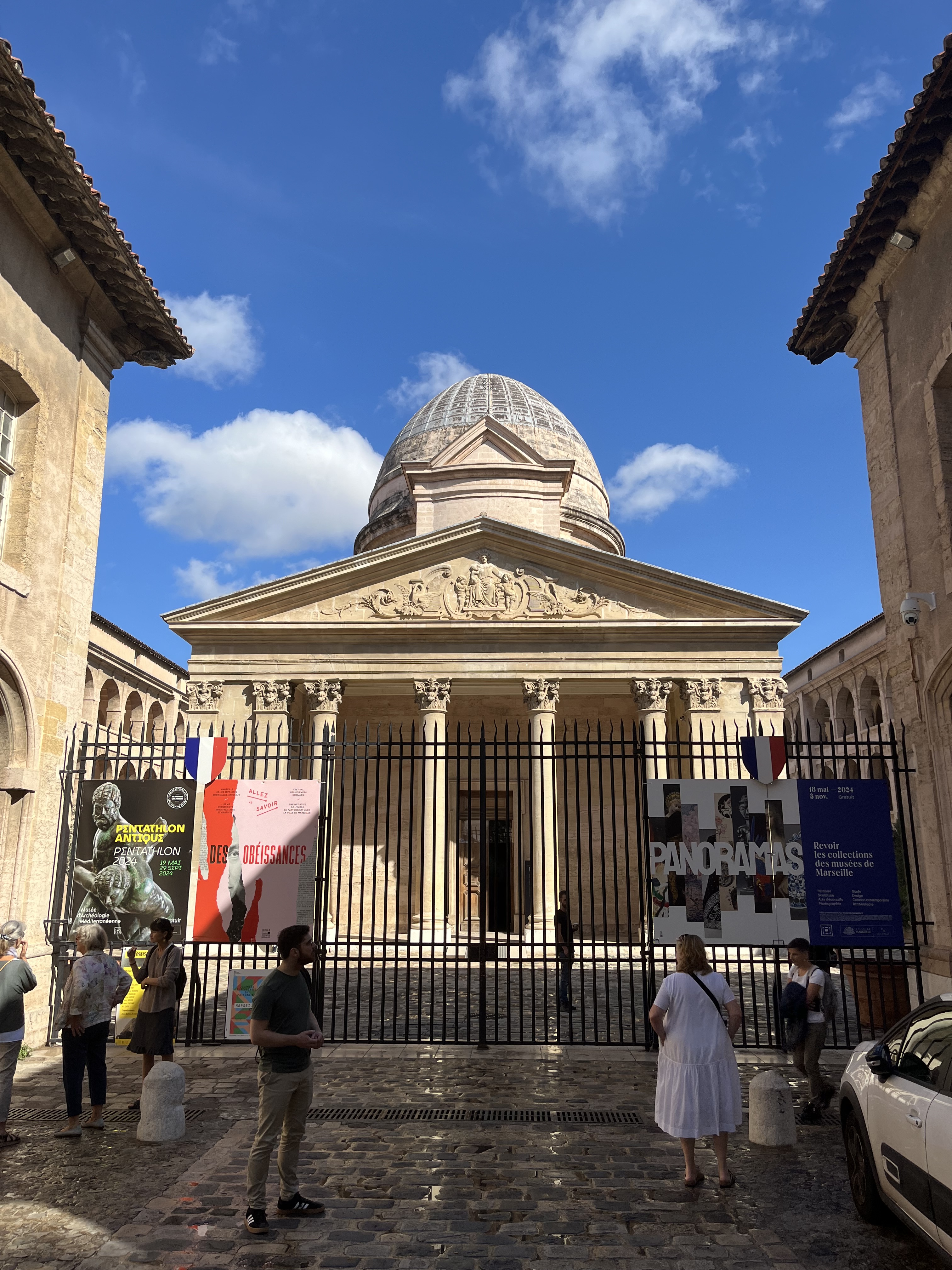
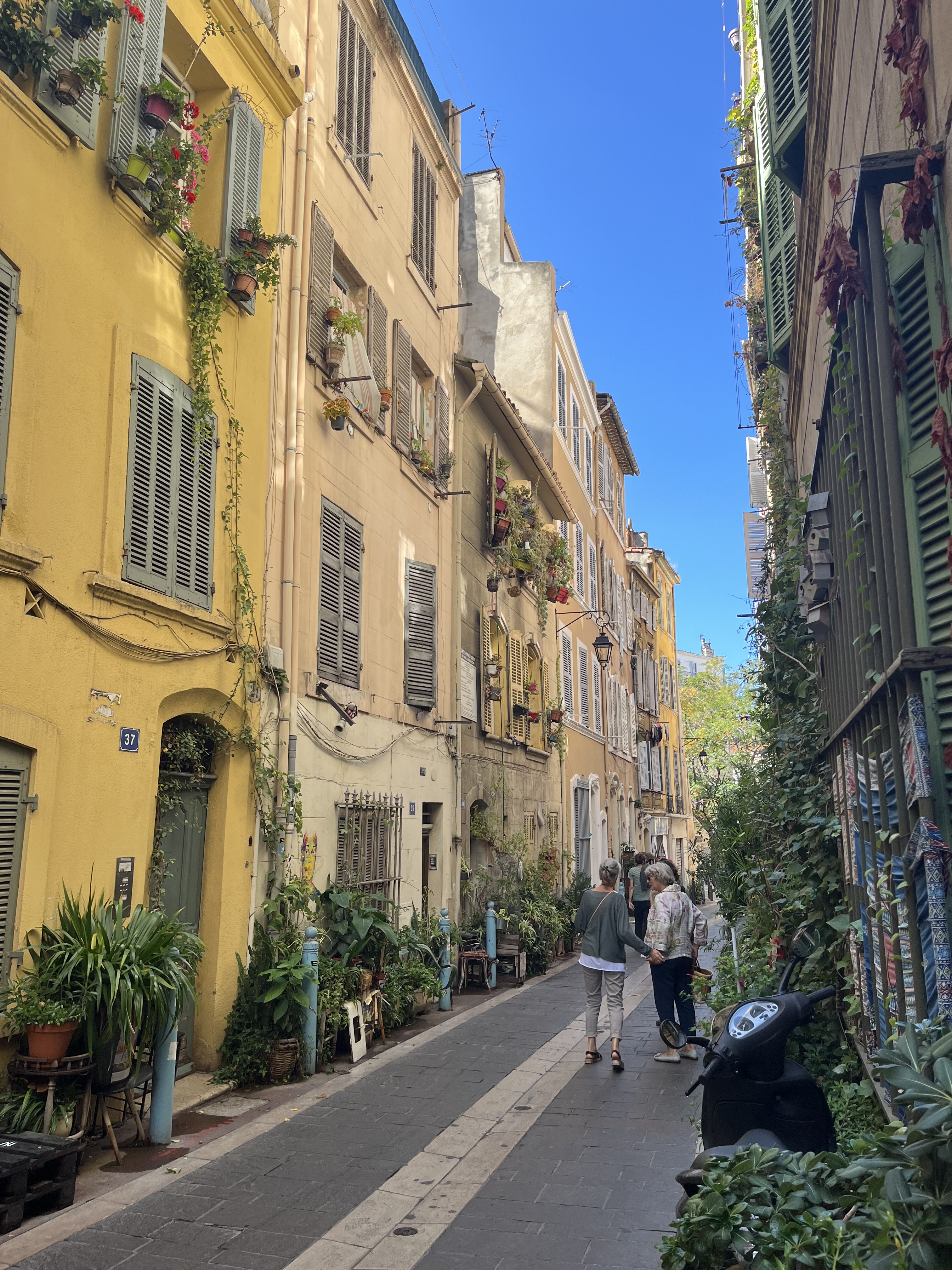
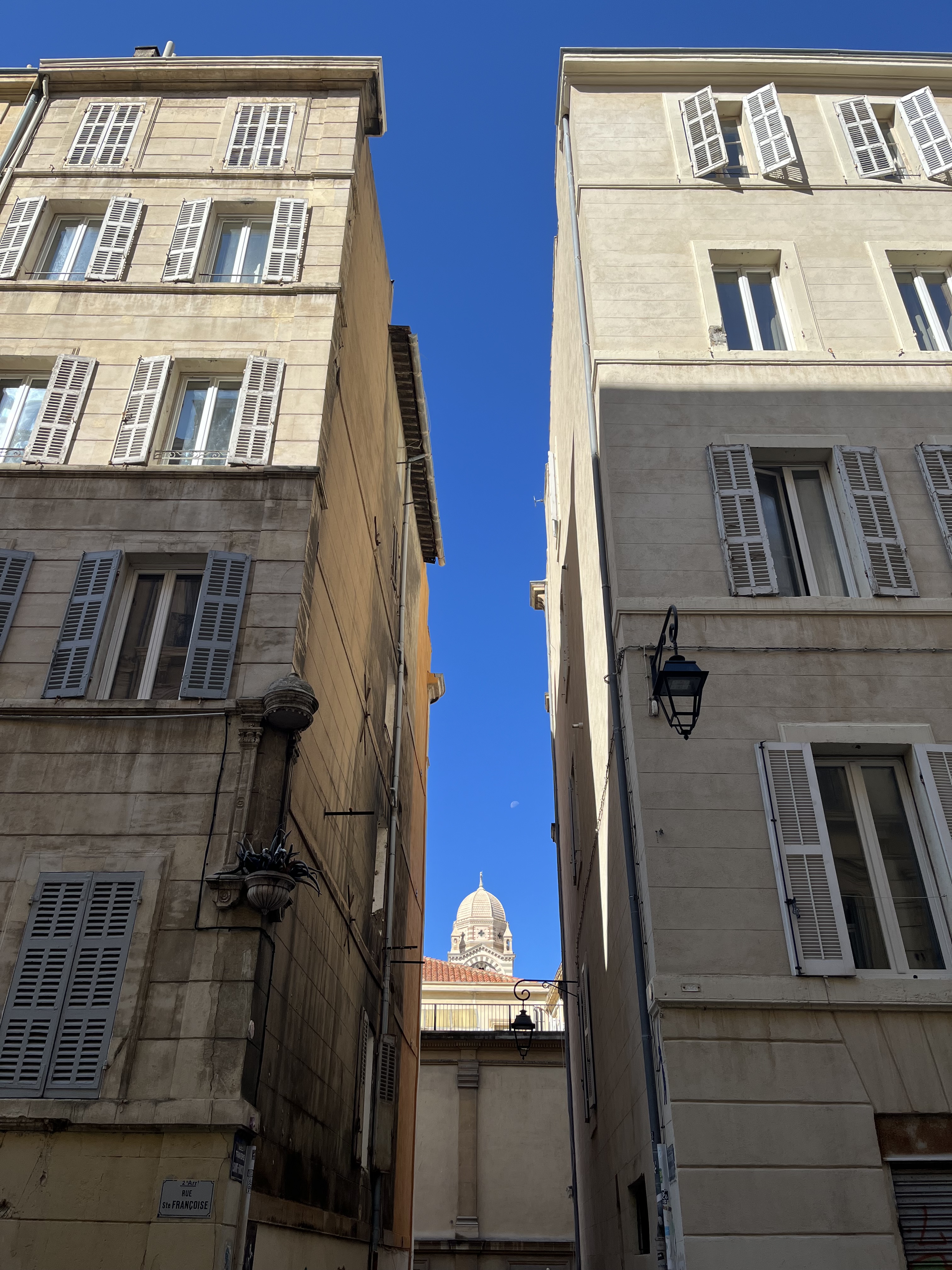
We wander around, astounded by the quaintness of this quarter. There is no trace of the big city here, no sign that a few streets away lie roaring traffic and a thriving cosmopolis; this may as well be just another 2000-year-old Provençal village, and modern life a complete fiction. But at the same time Marseille’s old town feels more grounded, more connected to the outside world than previous ones, which all felt like artistic creations rather than places that people actually live and work in. It’s also more vibrant, too: in a sharp contrast with the uniform dark stonework of Barcelona’s Gothic Quarter, the houses here have all been coated in delicate shades of pastel: peach, mustard, salmon pink; it is true that the paint is quite often faded and cracked in quite a few places, but in Le Panier you never think about it for too long — it forever has a way of making you focus on the big picture, and not the little defects.
Our original itinerary called for an exploration of the Charité, but somehow I forgot to check whether the almshouse would be open on Mondays, so we amble along the laneways instead, our heads craned, only half of our minds on the way we are going. Occasionally, we bump into the same people we saw a few minutes ago: a shopkeeper here, a frizzy-haired tourist there. I’m busy admiring the vines and potted plants that adorn a particularly fetching row of mustard-coloured houses when yesterday’s horde of German schoolchildren surge past us again, nonchalantly nattering about nothing with each other in particular (or maybe my German’s just rustier than I thought). We follow them down the twisting lane as they continue to ignore all the dainty buildings. Then we turn a corner, and there it is.
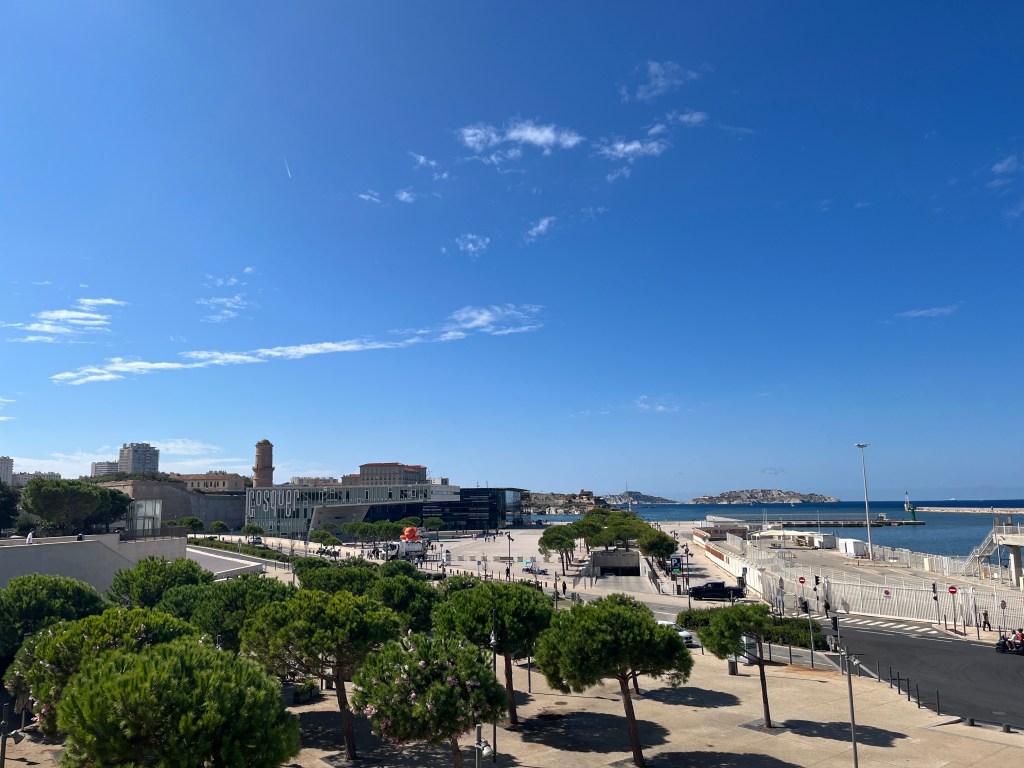
We’ve all been there: you read about a place on the Internet, see all the intoxicating pictures, then you get there and realise just how thoroughly you’ve been duped. That disappointment is inevitable, a key part of the tourist experience. But far rarer is the experience of arriving at a place, and finding that it utterly surpasses your wildest expectations; and against all odds, this is exactly what happens with our view of the Mediterranean as we step out onto the seafront.
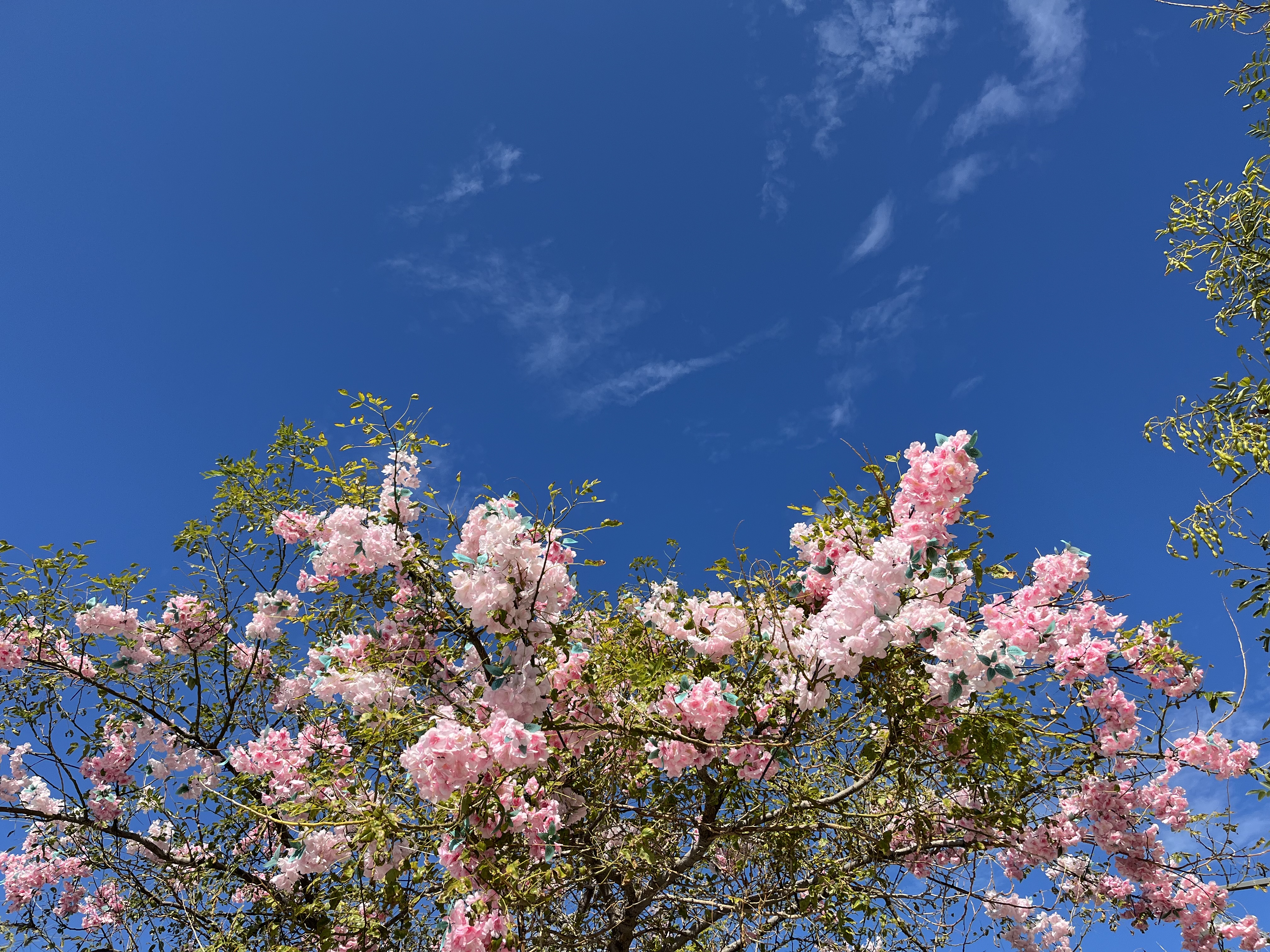
Not even the Provence tourism board could cook up anything as perfect as this: blue skies so deep you could get drunk staring, speckled with just the right amount of fluffy white; as we get closer, we see a forest of green swaying in the breeze, and beyond that, a rolling carpet of light, translucent blue, lapping gently at the breakwaters criss-crossing the harbour. At that moment I understand just why everybody comes to the south of France, year in year out without fail; there cannot be a place on Earth (or at least Europe) that is more satisfying to the mind, that smiles at the worries of the world and renders them all immaterial. Here the soul shakes its feathers, and allows itself to stretch, to soar, and to imagine — if only for a moment — that eternal bliss is not only possible, but attainable.
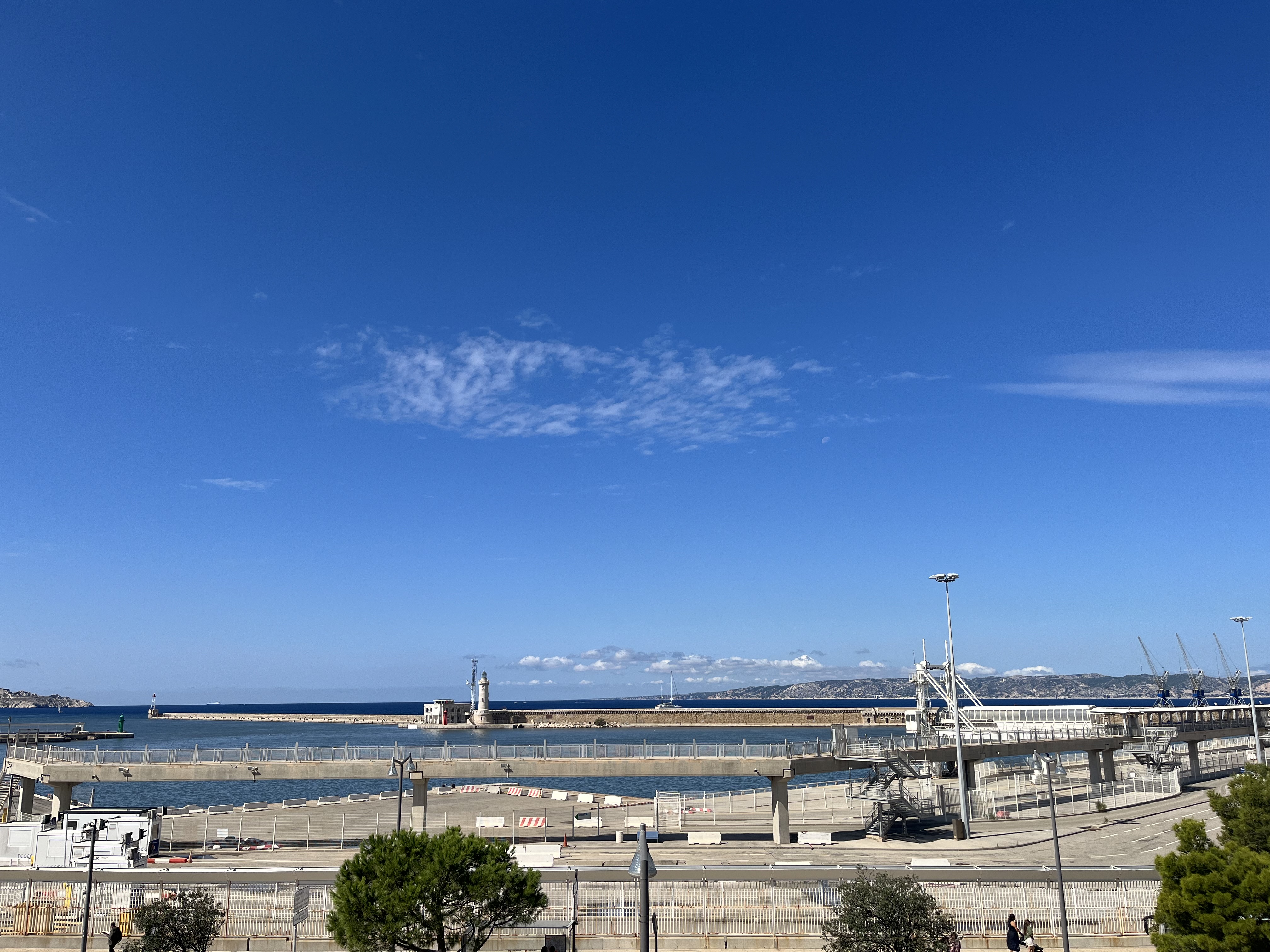
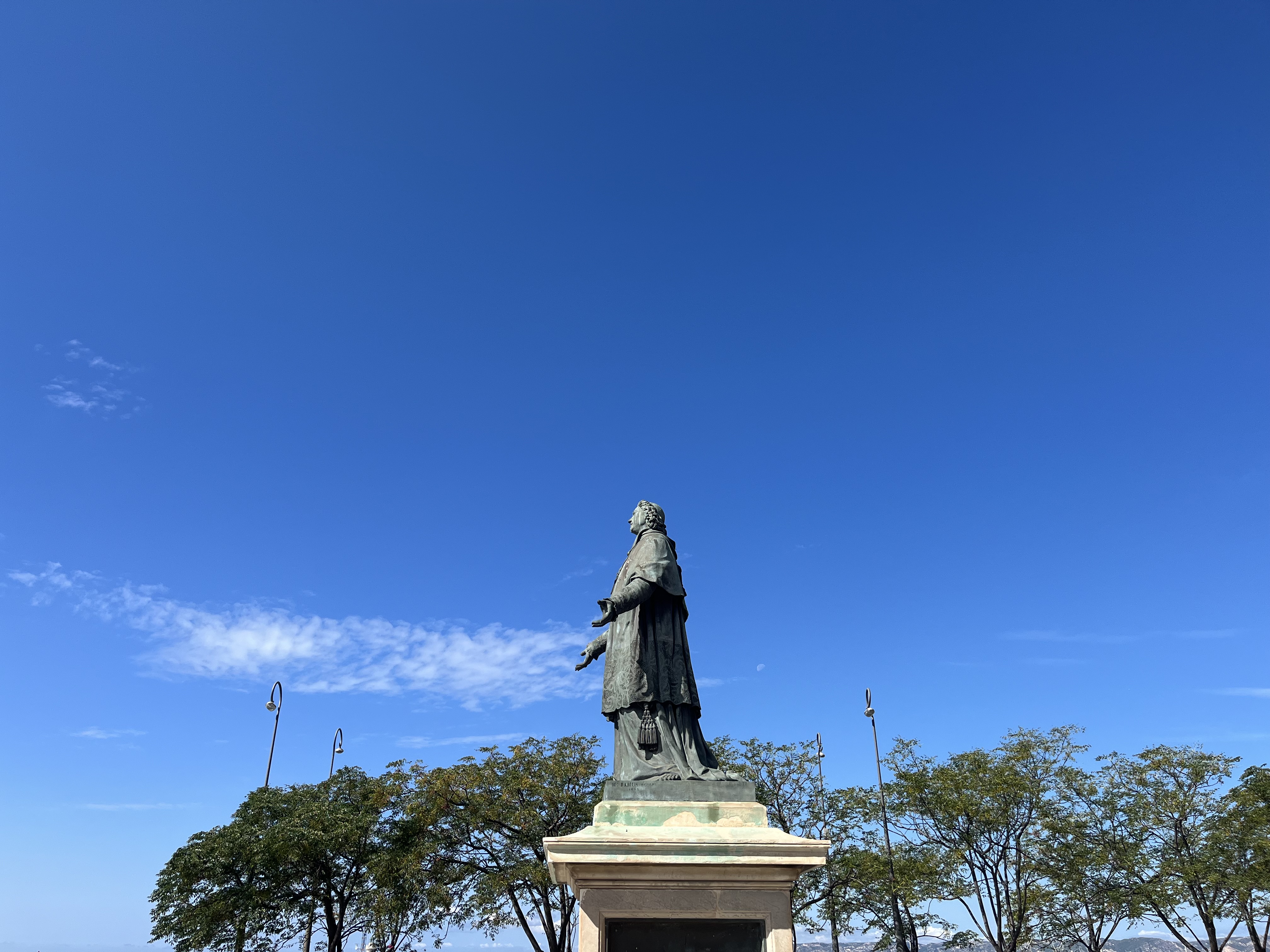
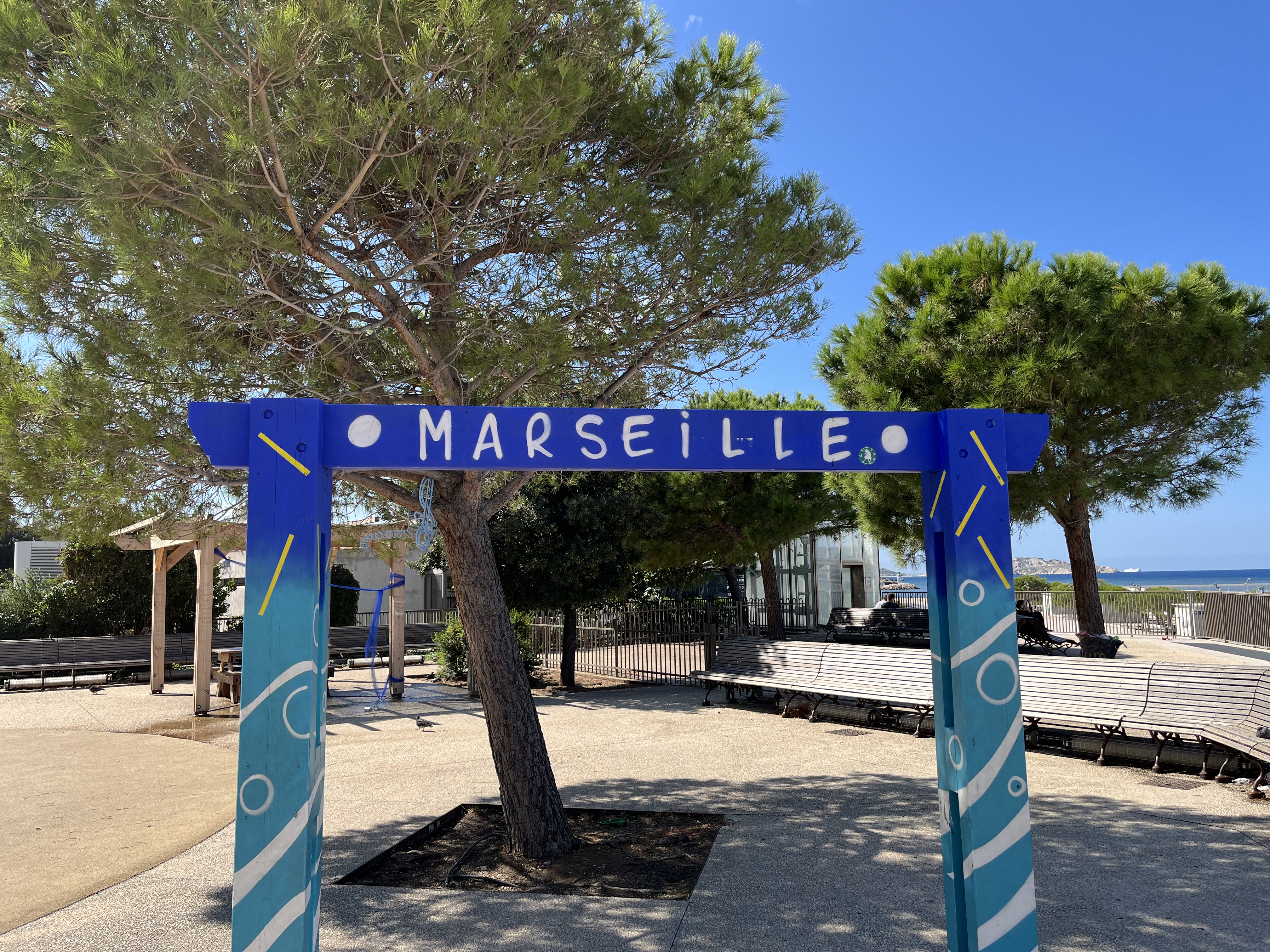
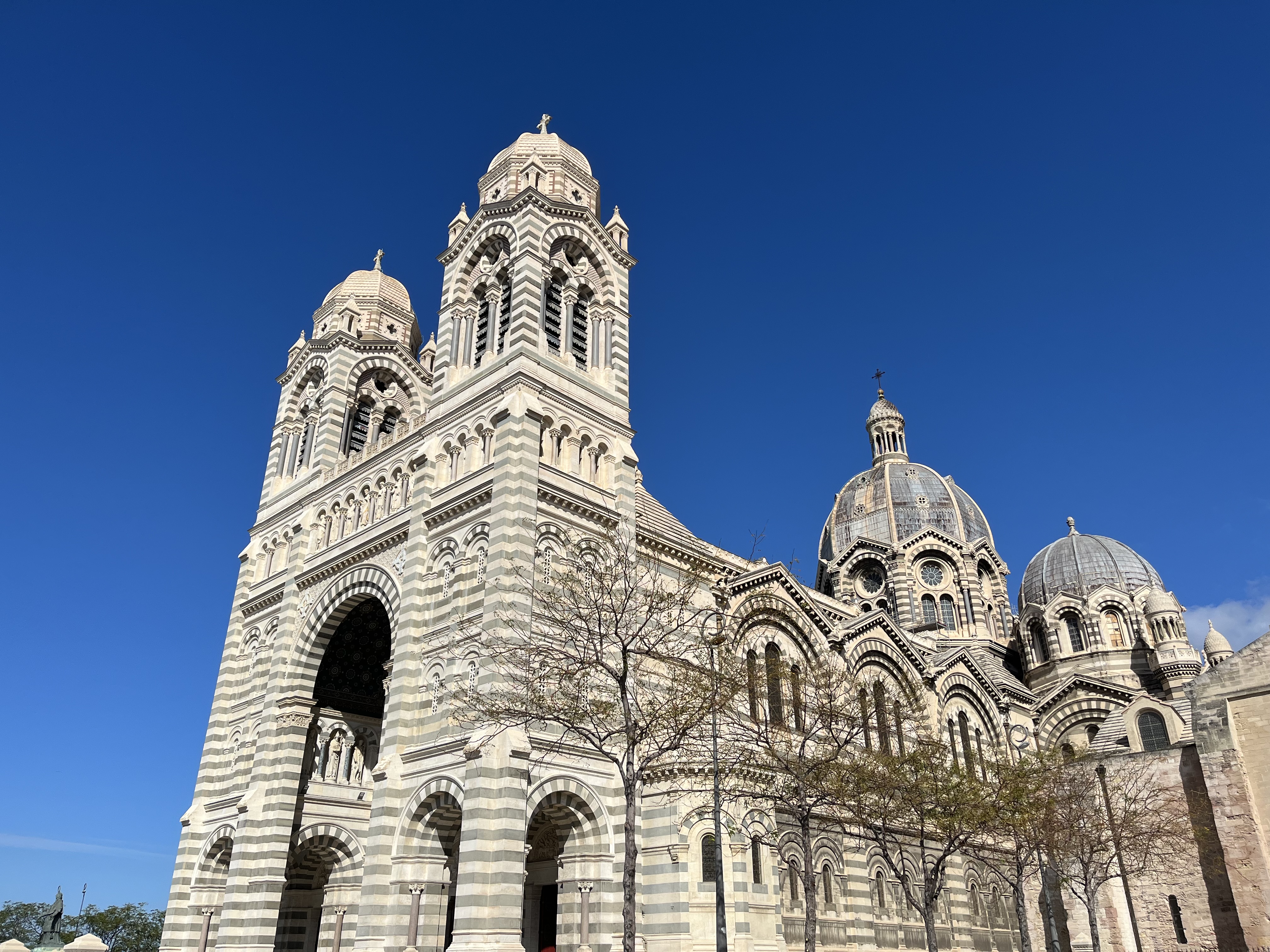
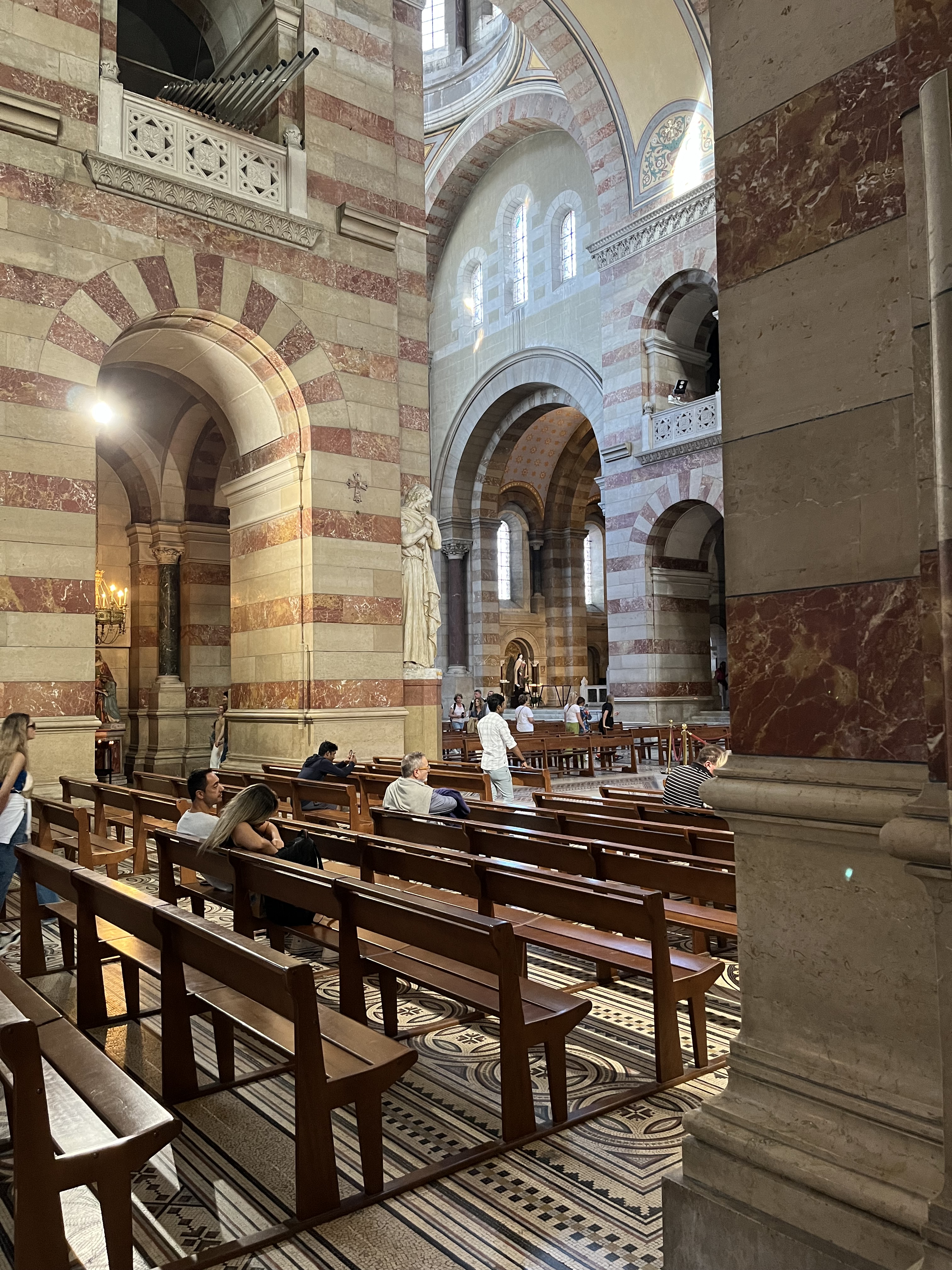
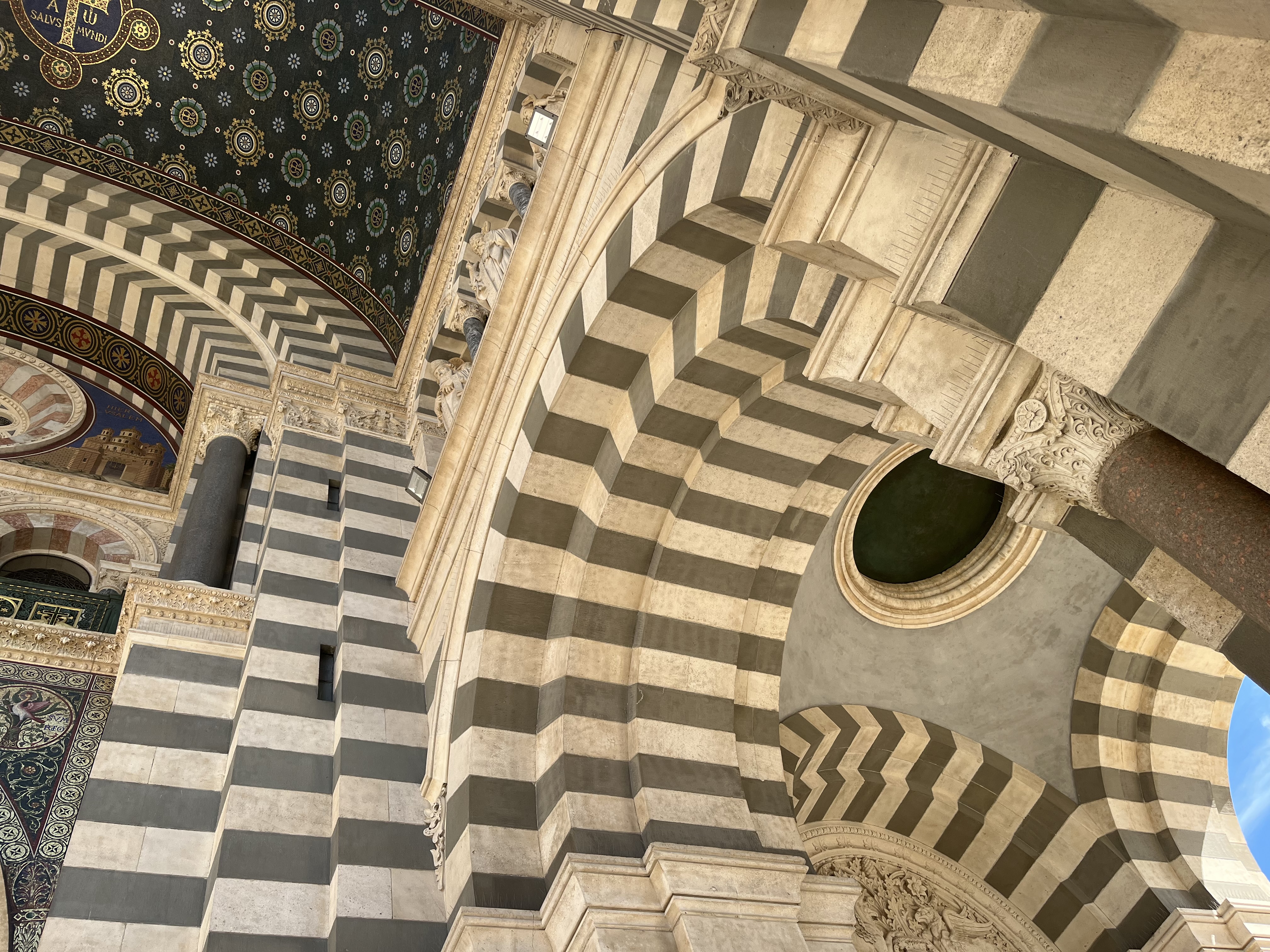
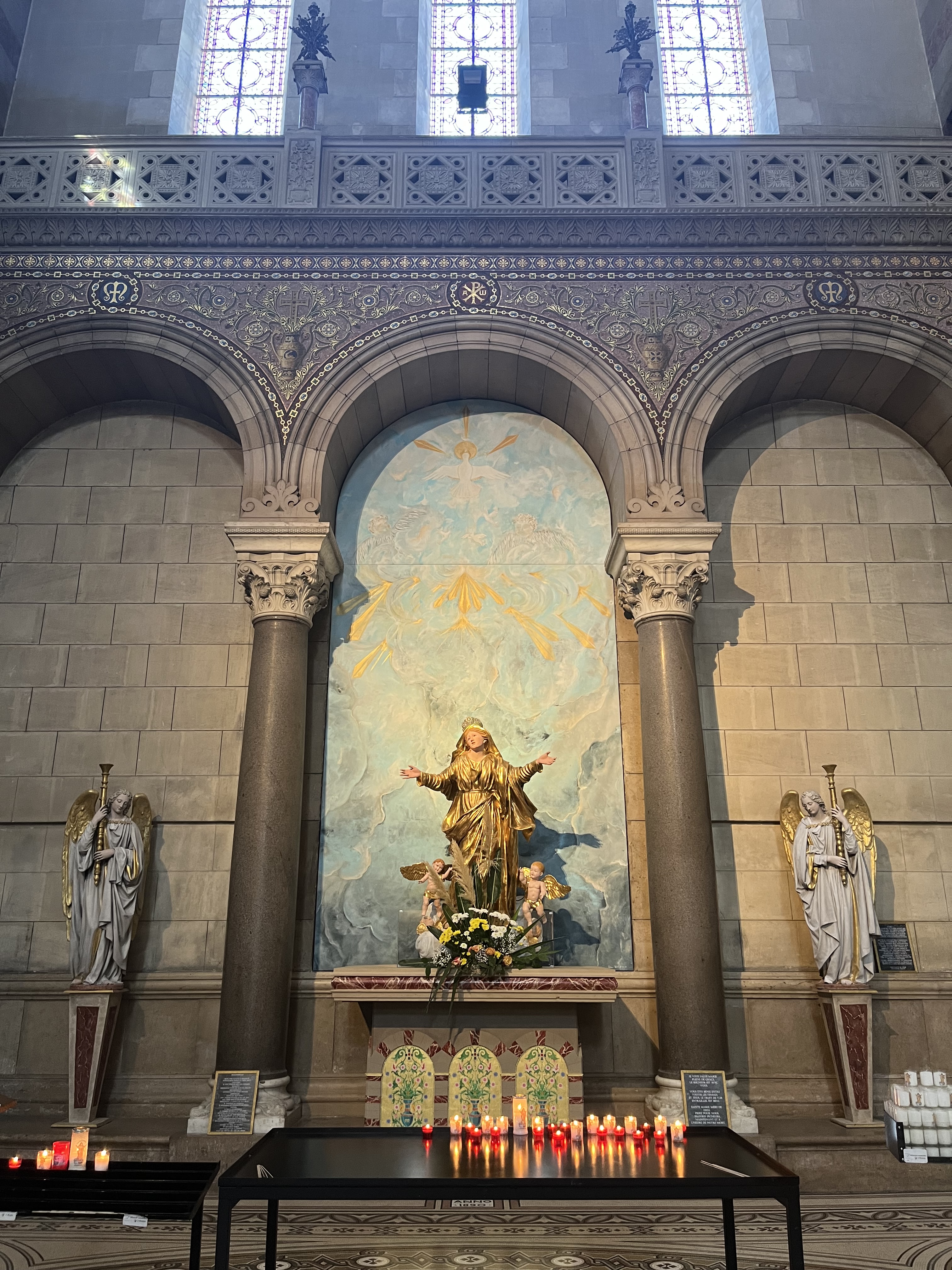
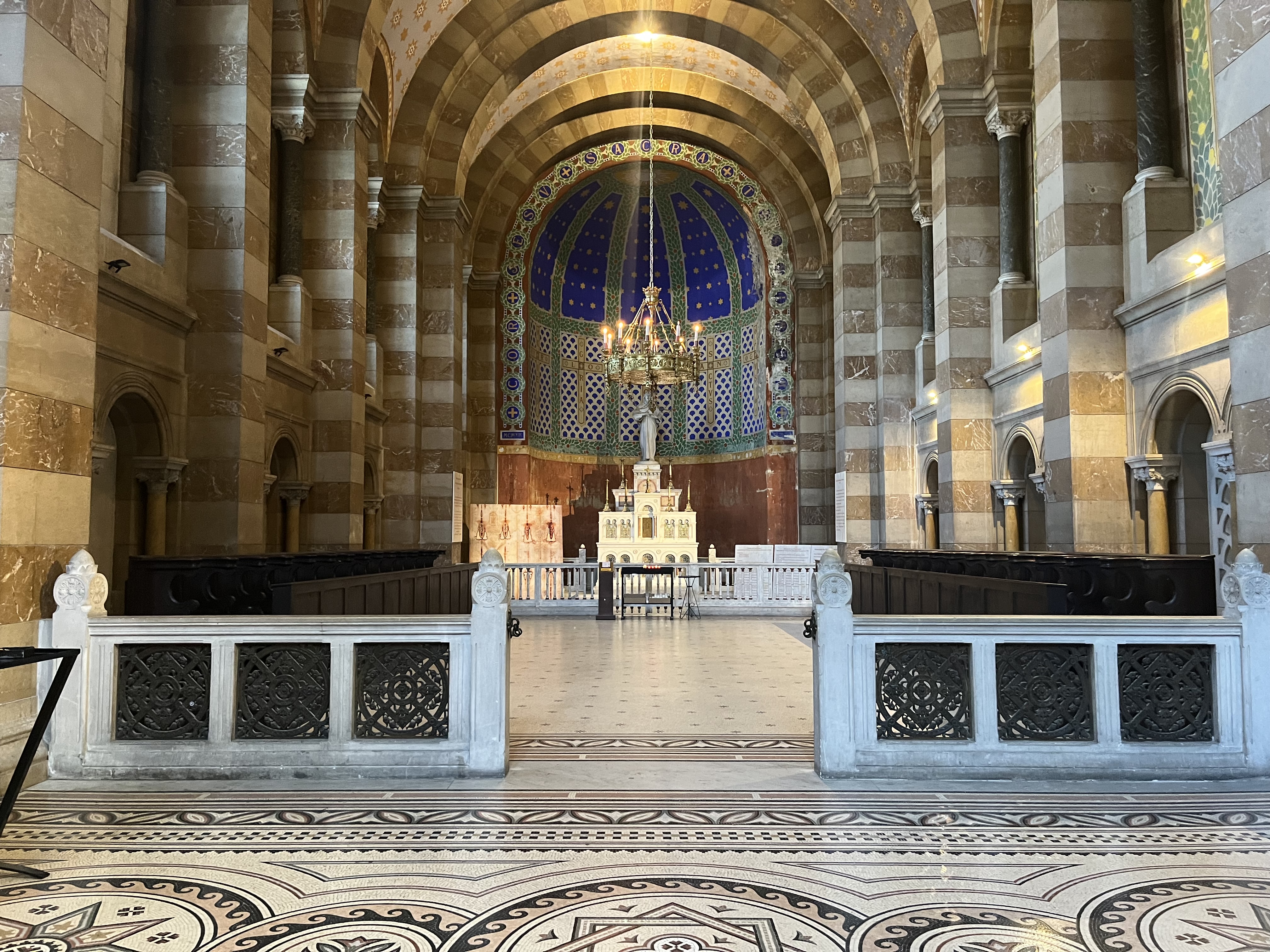
The main defining feature of this patch of seafront is scale. The ships plying through the harbour are huge, nothing like the small fishing-craft which one might associate with a port of Marseille’s reputation, but floating palaces that look like they could hold half the population of Morocco. The esplanade that juts out onto it also looks like it goes on forever, protruding halfway to the breakwaters and offering stunning views of the port and beyond. To our right, Marseille Cathedral, which towers above our heads in all its cream-and-grey striped glory (by a staggering coincidence, also the pattern on my shirt today), and whose mosaics, baptistries, corridors all exist to reinstill the awe of God into humankind. In fact, the only puny things here are humans: admiring the view from the platform, streaming out from the cathedral, playing pétanque in the shade of the church. It is impossible to stand here, in this most majestic view, and not feel even a little conscious of your own smallness.
Time for lunch, and Marseille being the birthplace of the famed bouillabaisse I have made plans for us to sample its mysterious delights in a small brasserie somewhere in Le Panier. I pull out my phone and check my email for the exact location, at which point I discover that our reservation has been cancelled for no discernible reason. Some frantic searching from me and Grace later, we decide to visit a pizzeria on the other side of the old town, and so we traipse back through the district, down streets we walked past just an hour ago, and back onto the street where we began our day; the Rue de la République seems, if possible, even quieter than it was this morning, more deserted, slower-paced. A perfect vision of laid-back living.
Lunch is dispatched with minimal fuss and cost — which is both a surprise and a relief after the hefty bills of Barcelona — and soon we are walking back towards the Cathedral again, back towards that enchanting mix of sea and sky. We descend onto the seafront, cleaned up in the past decade to become an expansive promenade filled with where people can just walk and enjoy the view, and where, barely a stone’s throw away from the water’s edge, two buildings stand; one impossibly modern, the other impressively old.
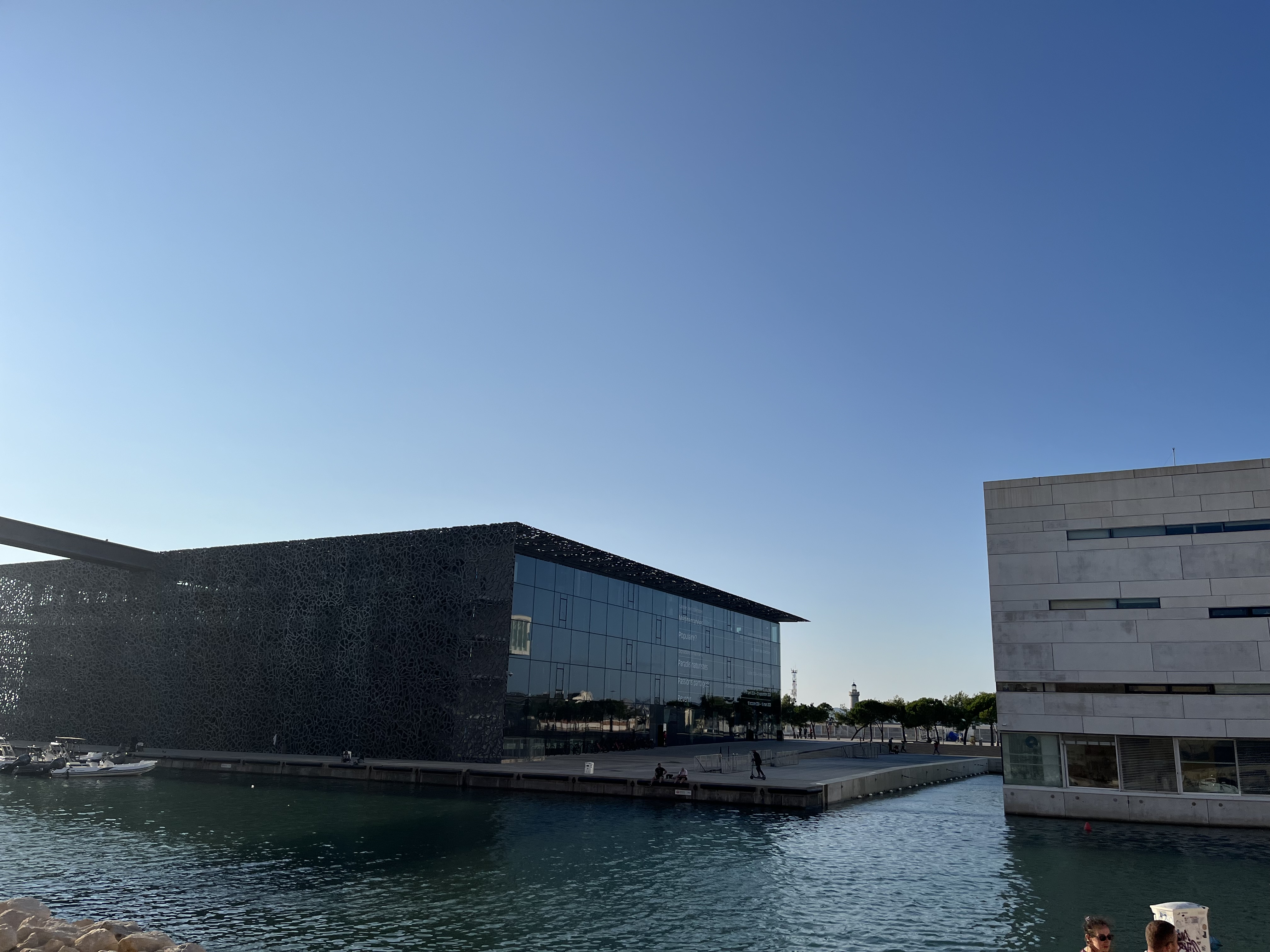
The modern one first: this is the Museum of European and Mediterranean Civilisations, or as almost everyone calls it, MUCEM. As well as being the second-largest city in France, Marseille also has a claim to being the oldest: 2500 years ago, when Paris was still a dull backwater vaguely placed along the Seine, this place was already flourishing as a Greek colony called Massalia, and as time went by forts and battlements were built while the Romans looked ravenously at the endless spoils of Africa, just a few days away on their triremes. Over the ensuing millennia every imaginable kind of flotsam and jetsam, of every conceivable origin, all floated ashore at Marseille, and this great glass and iron building was eventually built to show off some of that. (As well as some other things: apparently there’s an exhibition on naturism running these few months, and they even operate special nights where people who are so inclined can visit au naturelle. Regrettably my family only wish to visit the clothed sections, so all I cast off at the cloakroom is my jacket and my bag.)
Quite an ambitious endeavour, you might say, and as I walk through MUCEM it becomes apparent that the museum is missing the target. The exhibits are all exquisite — from bejewelled lions to paintings of orchards in the Provence — but there never seems to be any point to them beyond “here is a bunch of excellent looking things, aren’t they beautiful?” The permanent exhibition on the ground floor does nothing beyond “presenting the collection in all its diversity”; the feeble attempts they have made at grouping these diverse exhibits make for a confused and not at all entertaining narrative.
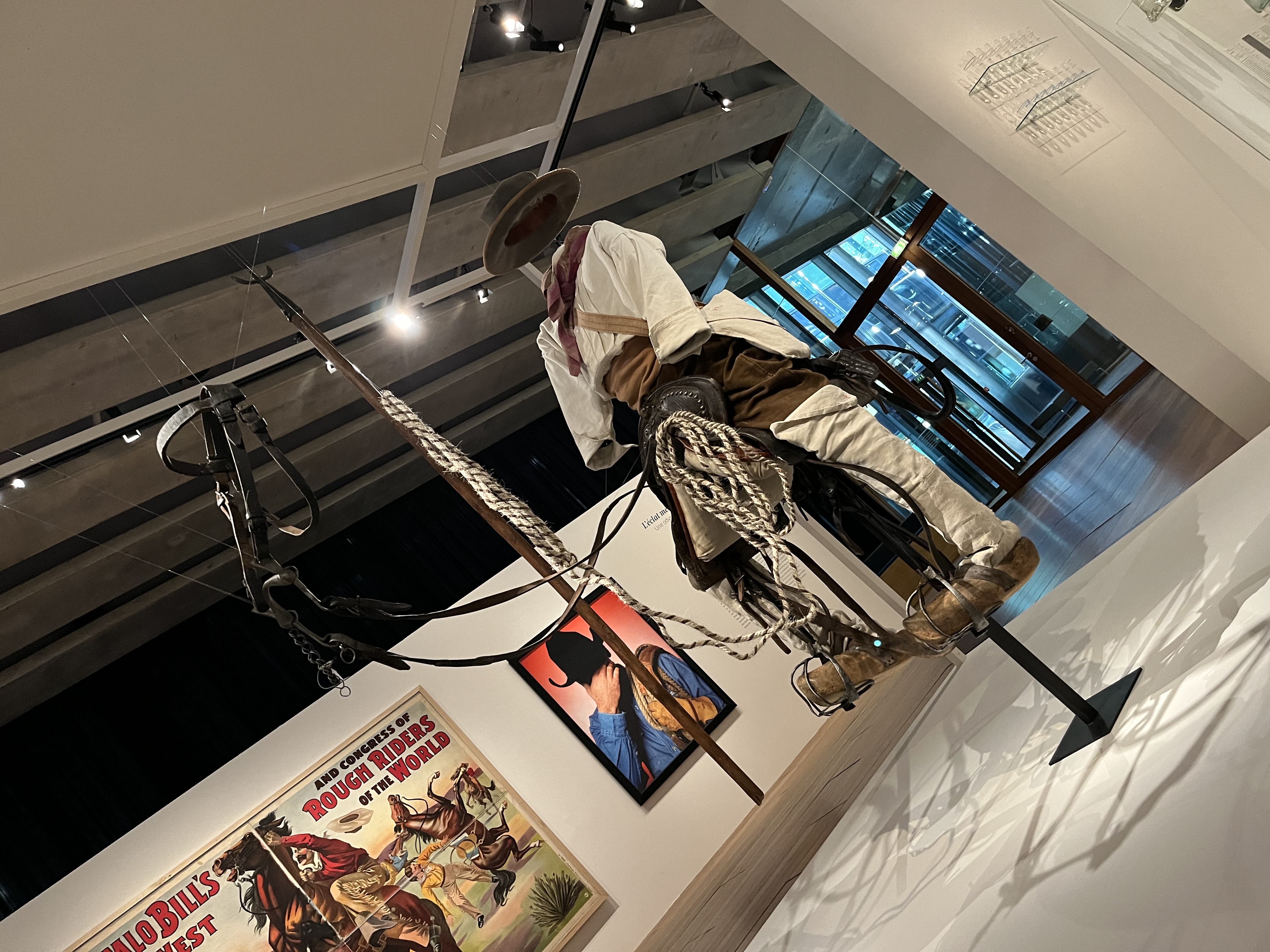
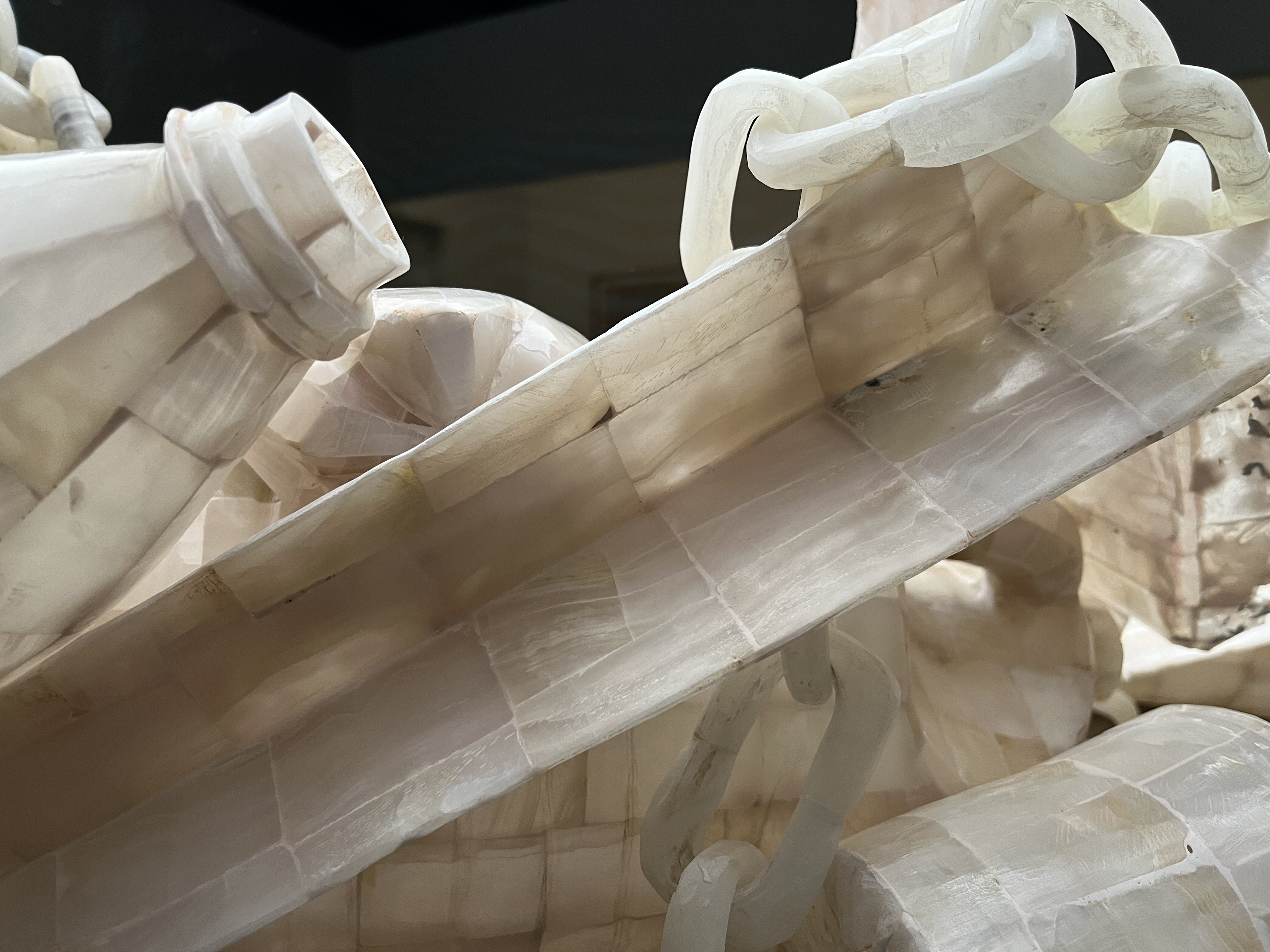
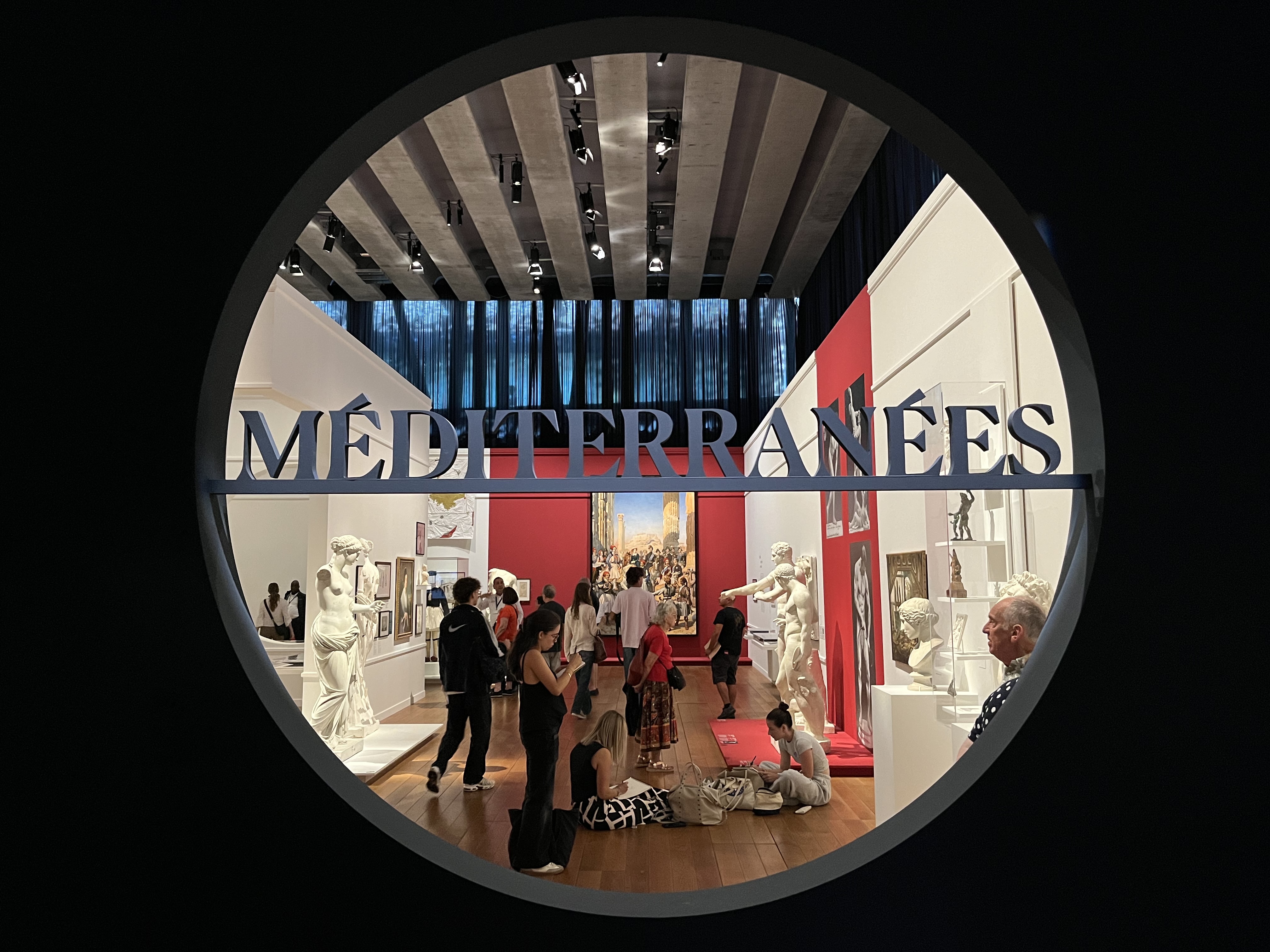
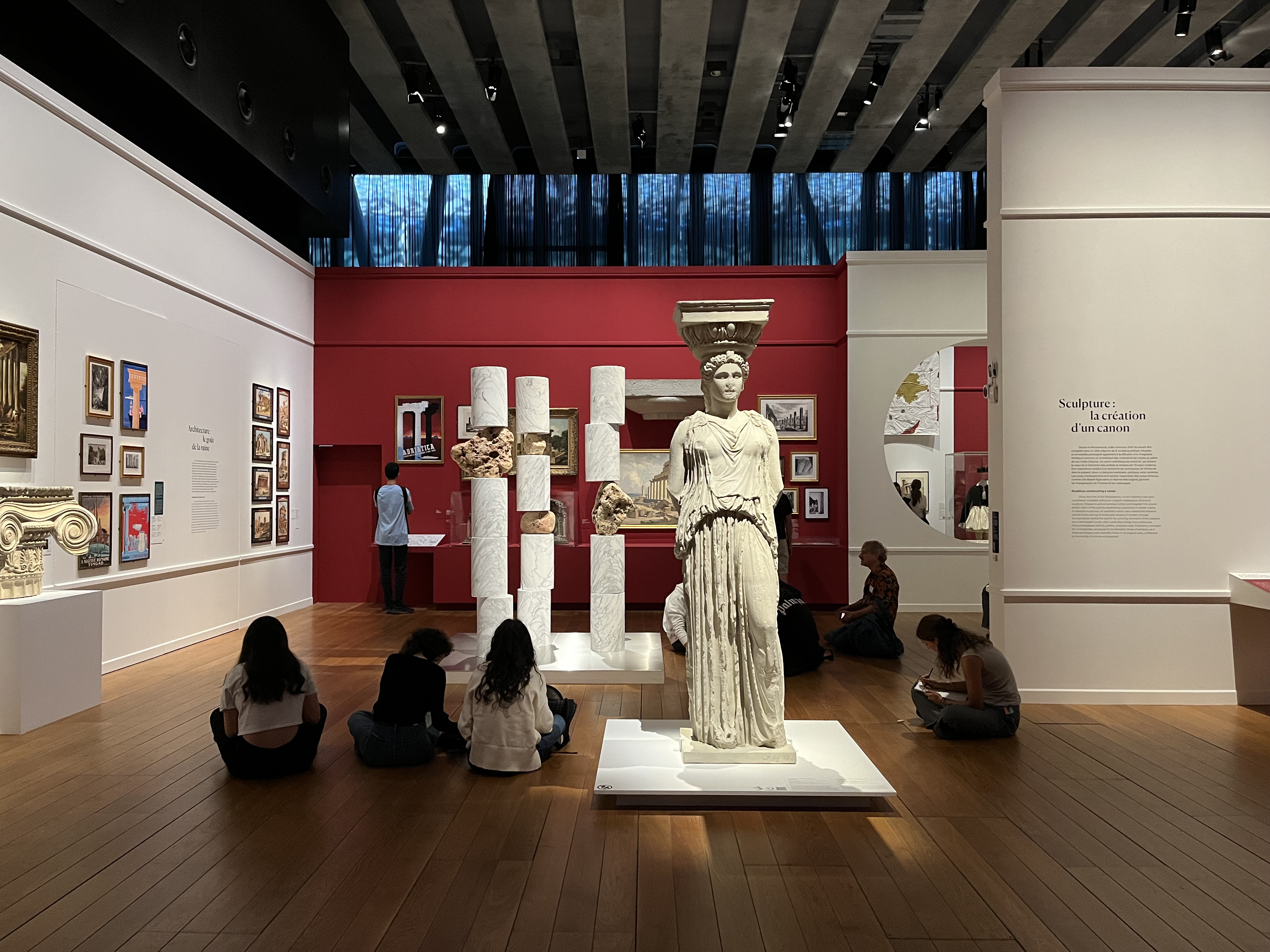
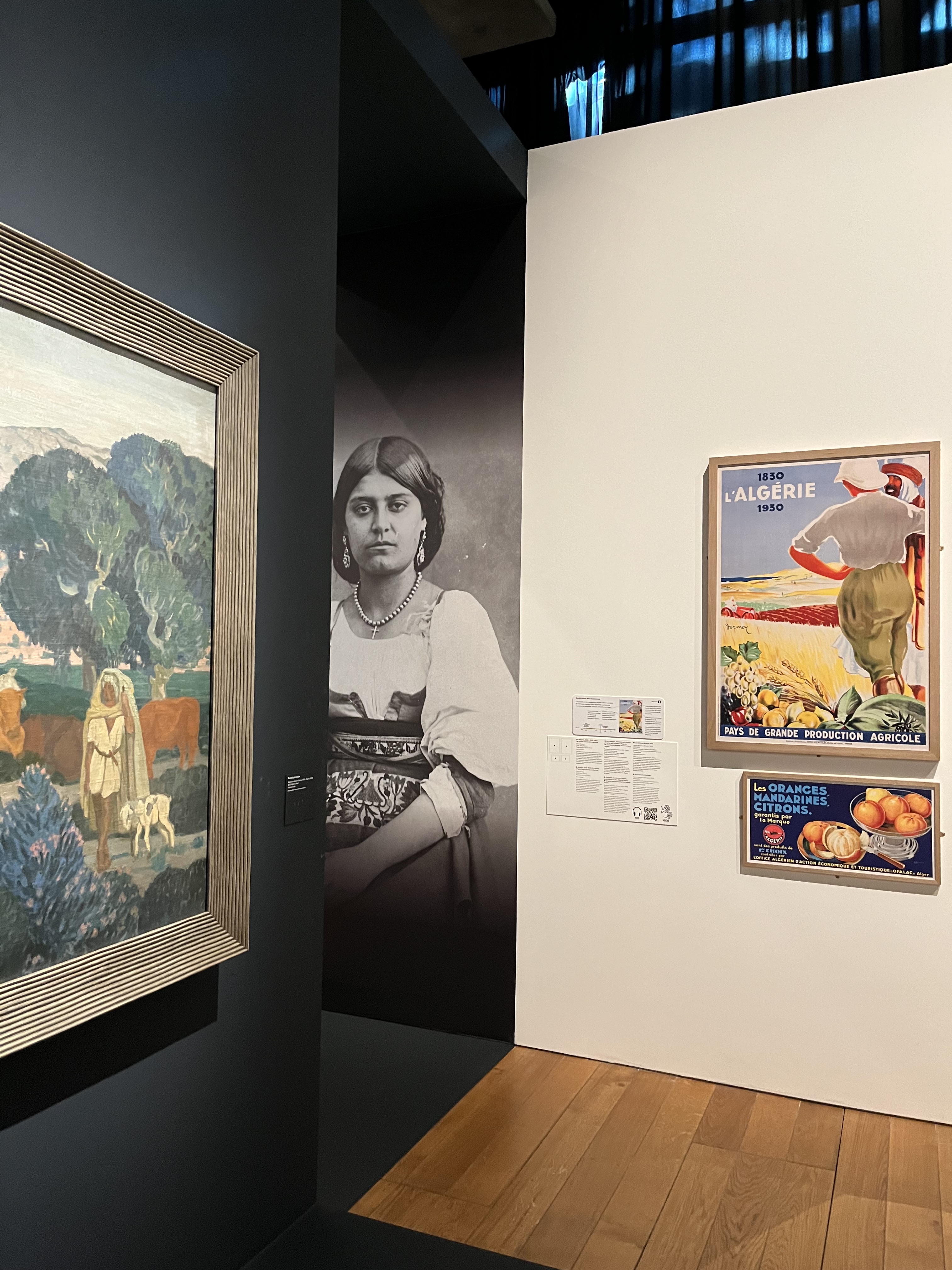
Subsequent exhibitions aren’t much better: the centrepiece “Méditerranées” (Mediterraneans) features little more than perfunctory paragraphs on how French Algeria was a place full of injustice and negligence, or how so-and-so poster reveals the racism inherent during that period; no deeper exploration, no unpicking, accompanies these rote banalities. I spend more time observing the German schoolkids (yes, them again) sketching in the entrance hall than on the other exhibits; and it is not long before most of my family text to say that they have “gone to the building next door”. Indefatigable optimist as I am, I stick at it for another half-hour, but the exhibit never really coalesces.
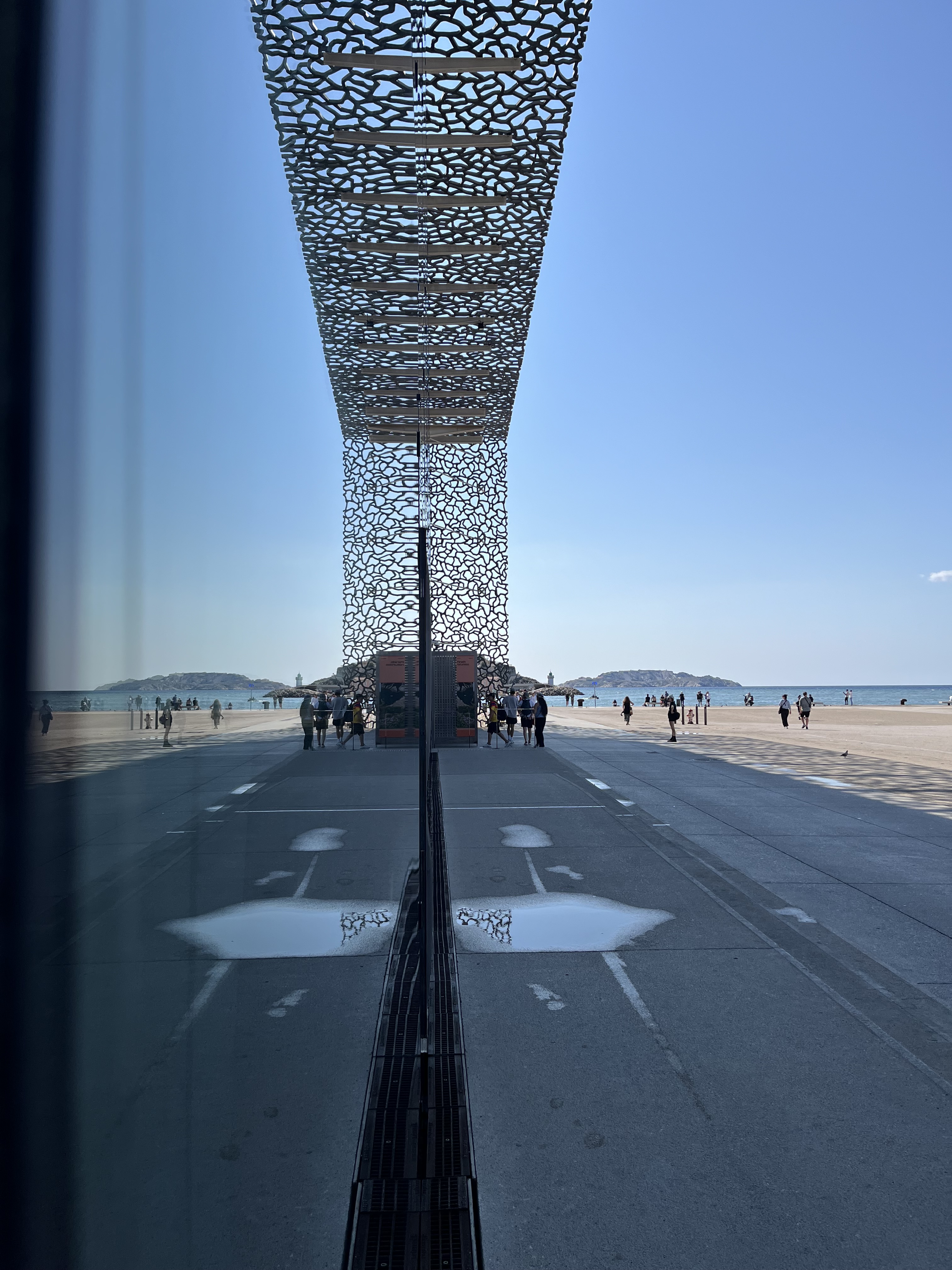
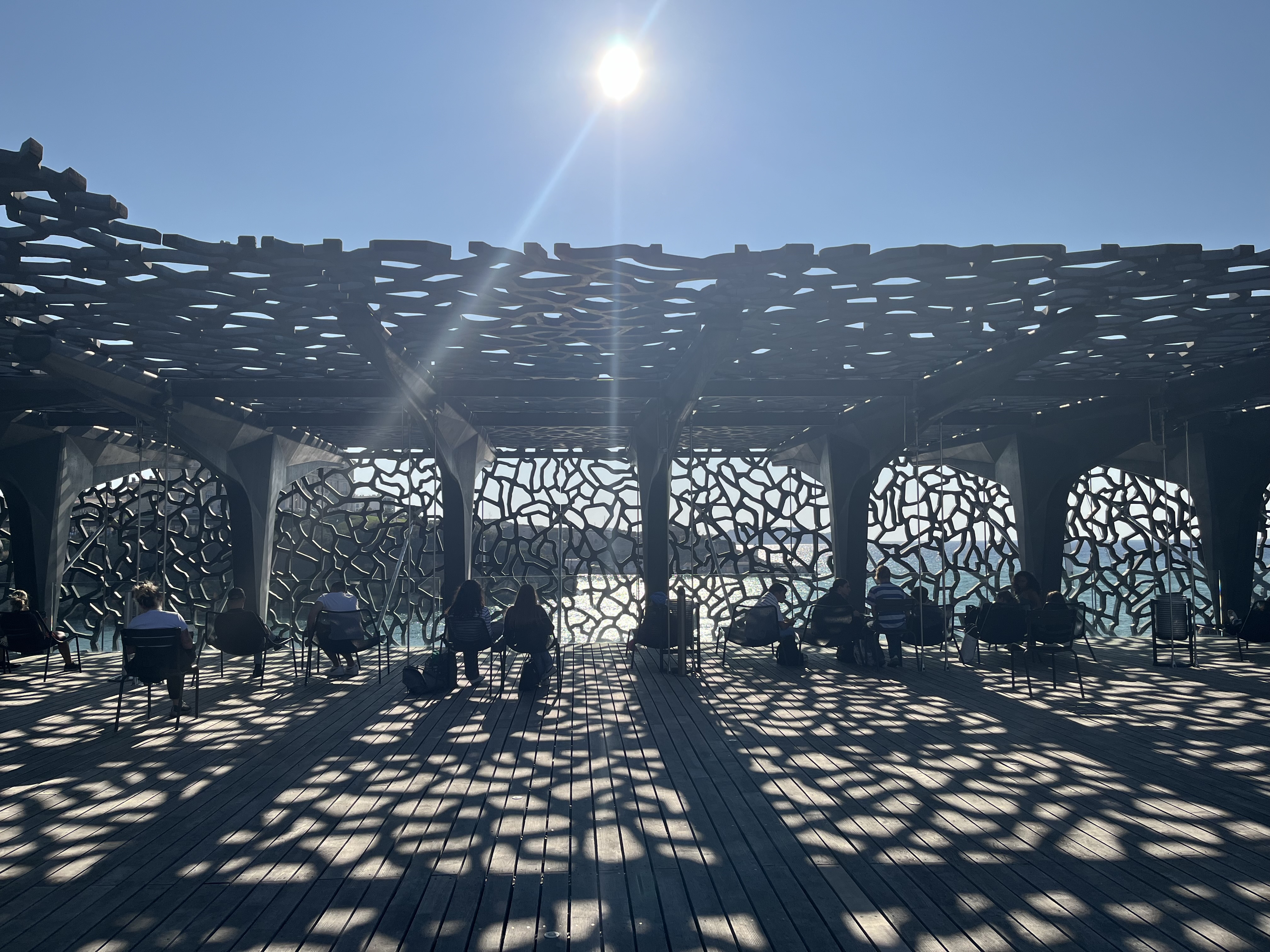
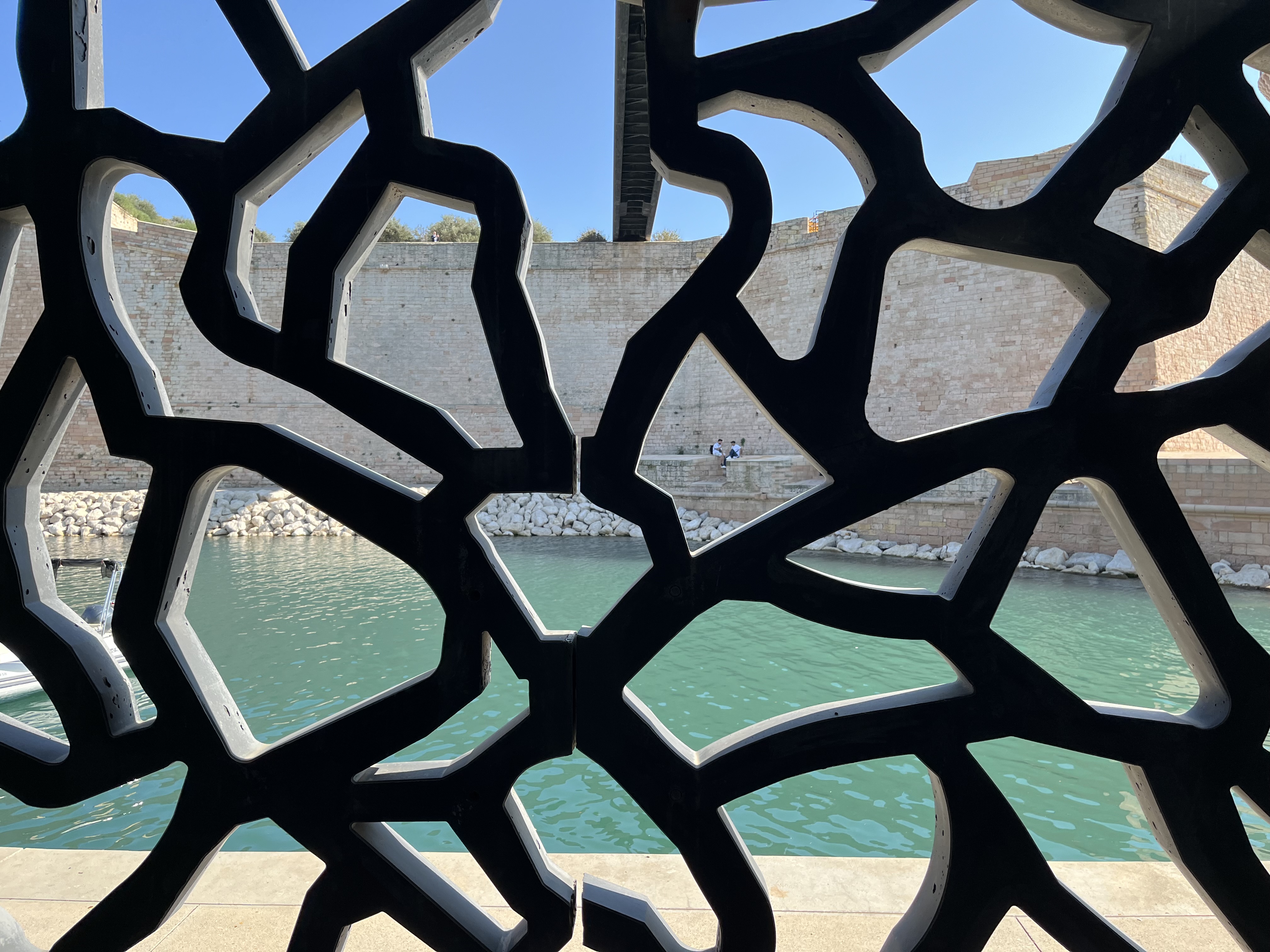
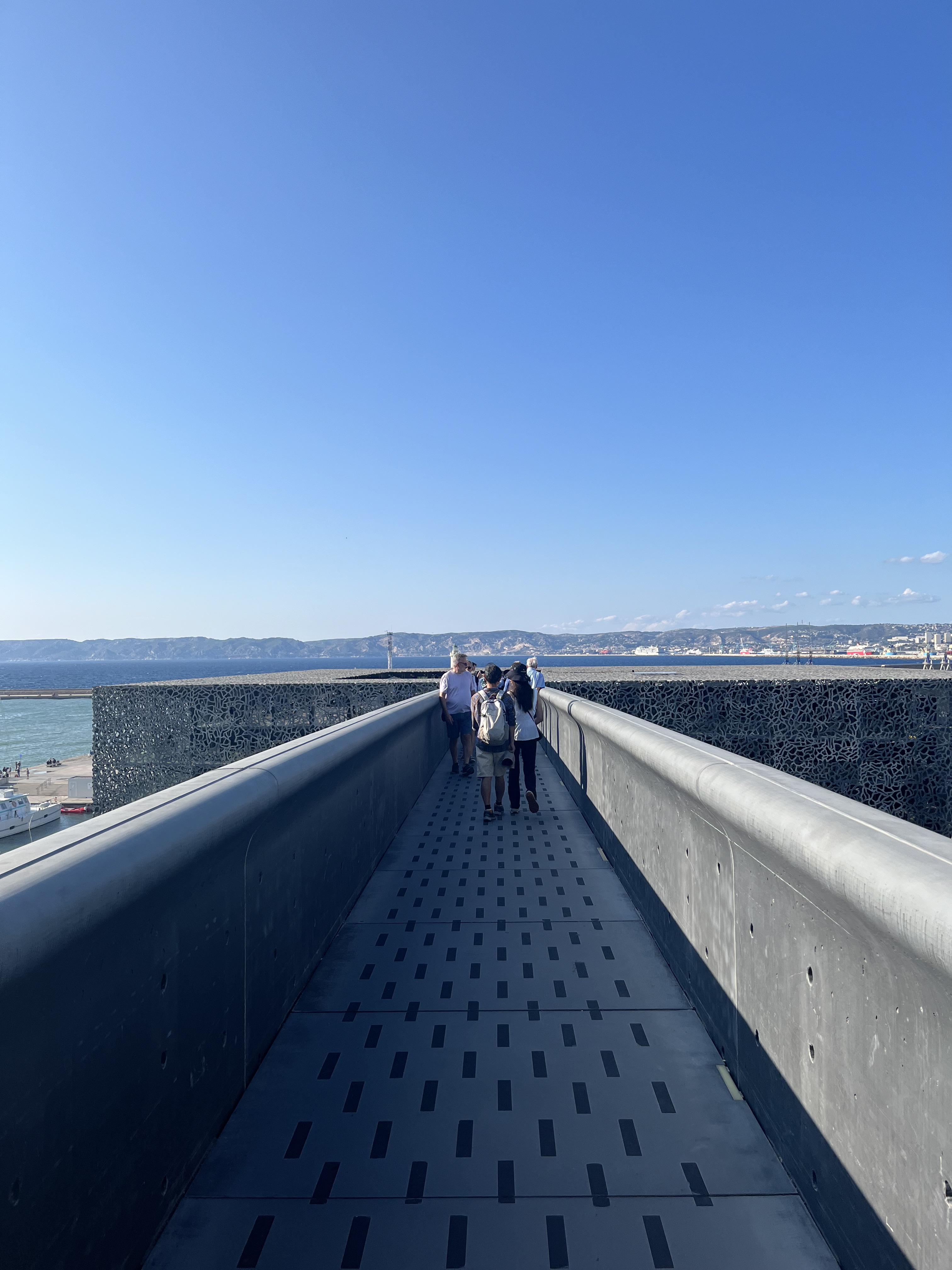
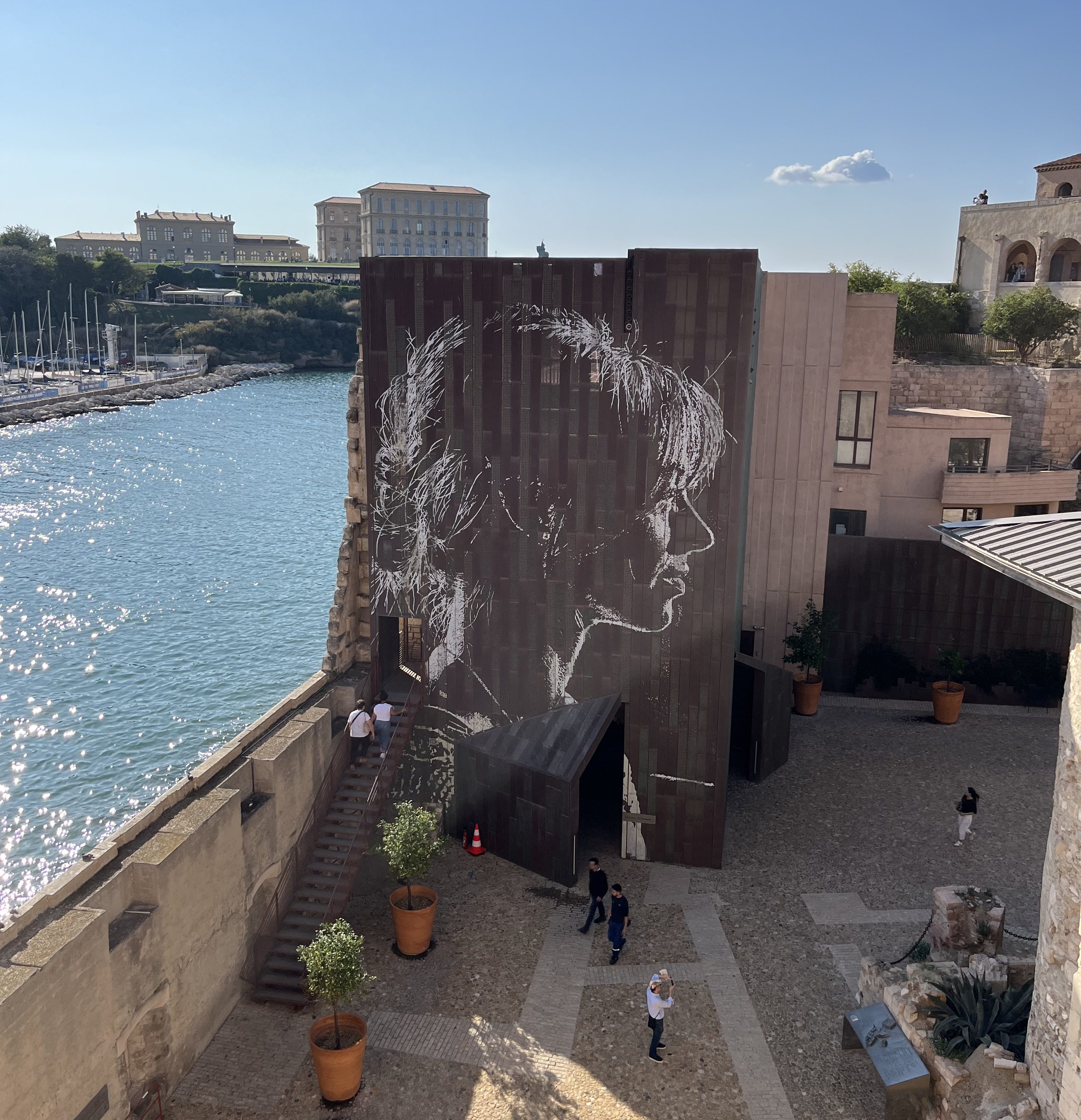
But though the contents of MUCEM leave a lot to be desired, the presentation does not. (France may be the only place on Earth where “style over substance” qualifies as a genuine compliment.) So much of the Mediterranean has found its way into this museum’s design, from the glimpses of the sea caught through many a window, to the sounds of waves that sneak in through the museum’s air vents, to the coral-like steelwork that encases the building. The afternoon sun shines through the gaps of the latter and reflects off the glass, and as I step out onto the walkways that snake between the two, I fancy that I am underwater, letting the soft translucent green wash over me. Circle the building a few times, expecting to end back where I started; it’s not until I reach the roof, and see the gathered loiterers in easy-chairs and seabirds, that I realise how delightfully deceptive the MUCEM building can be.
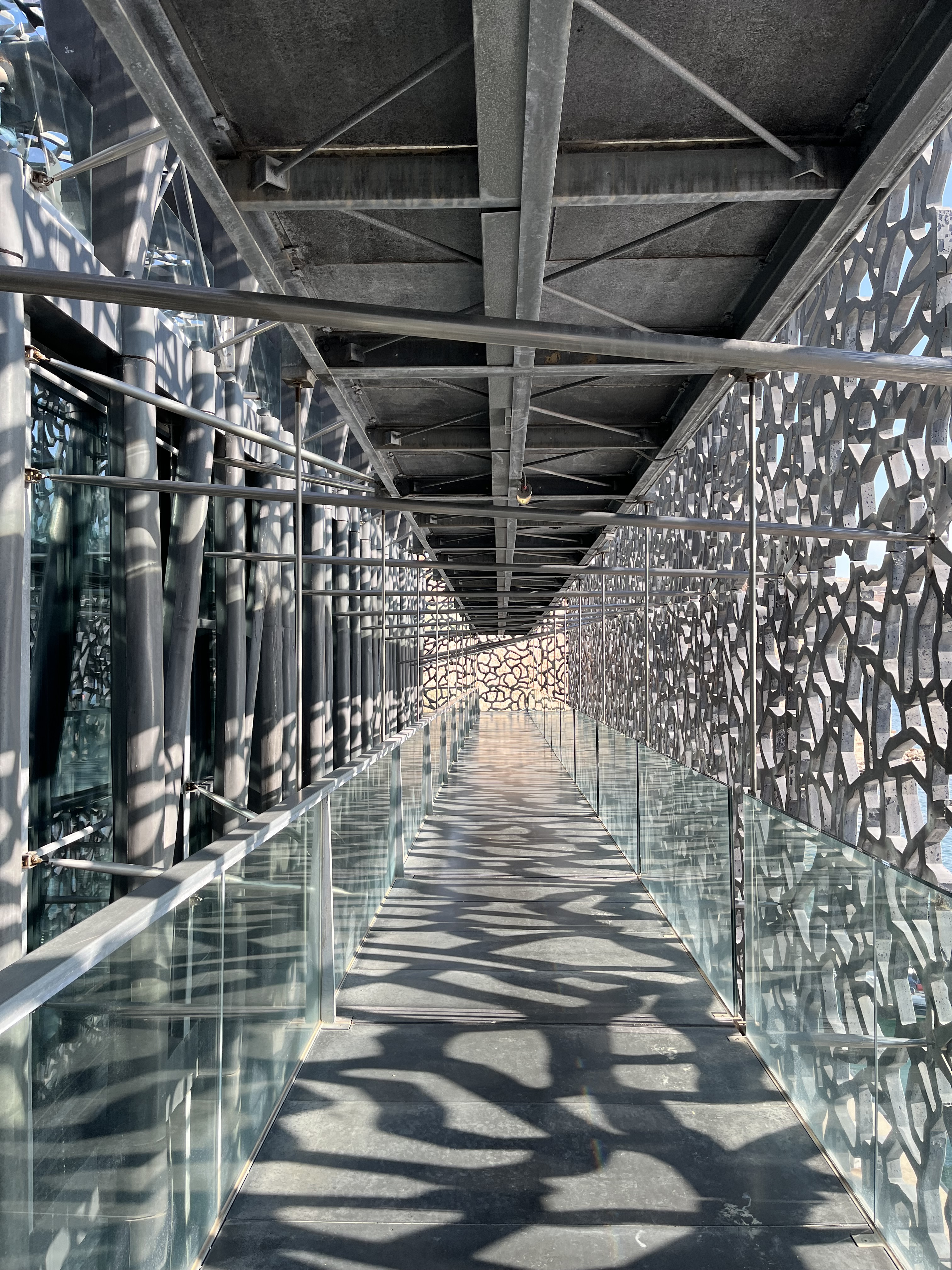
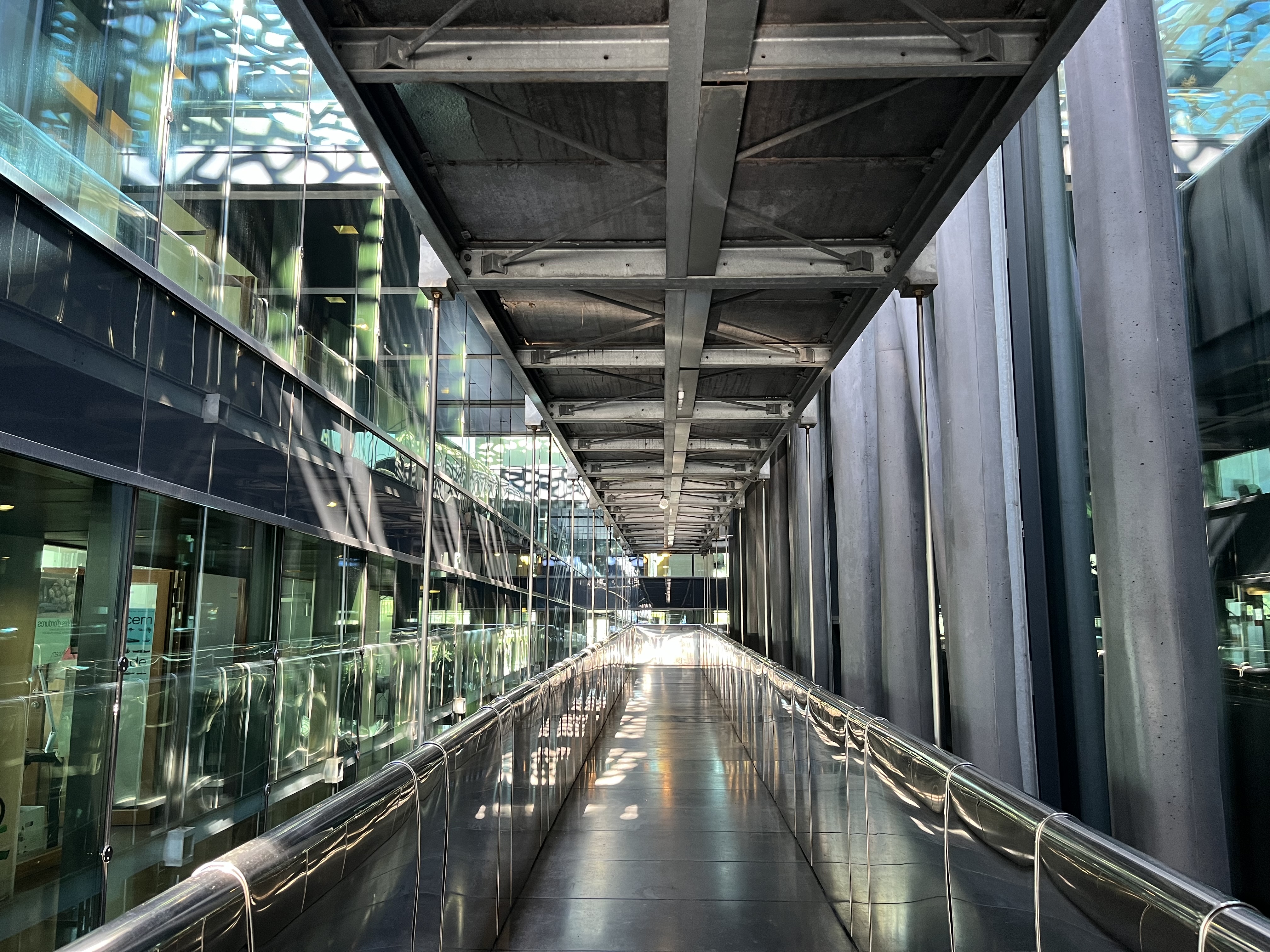
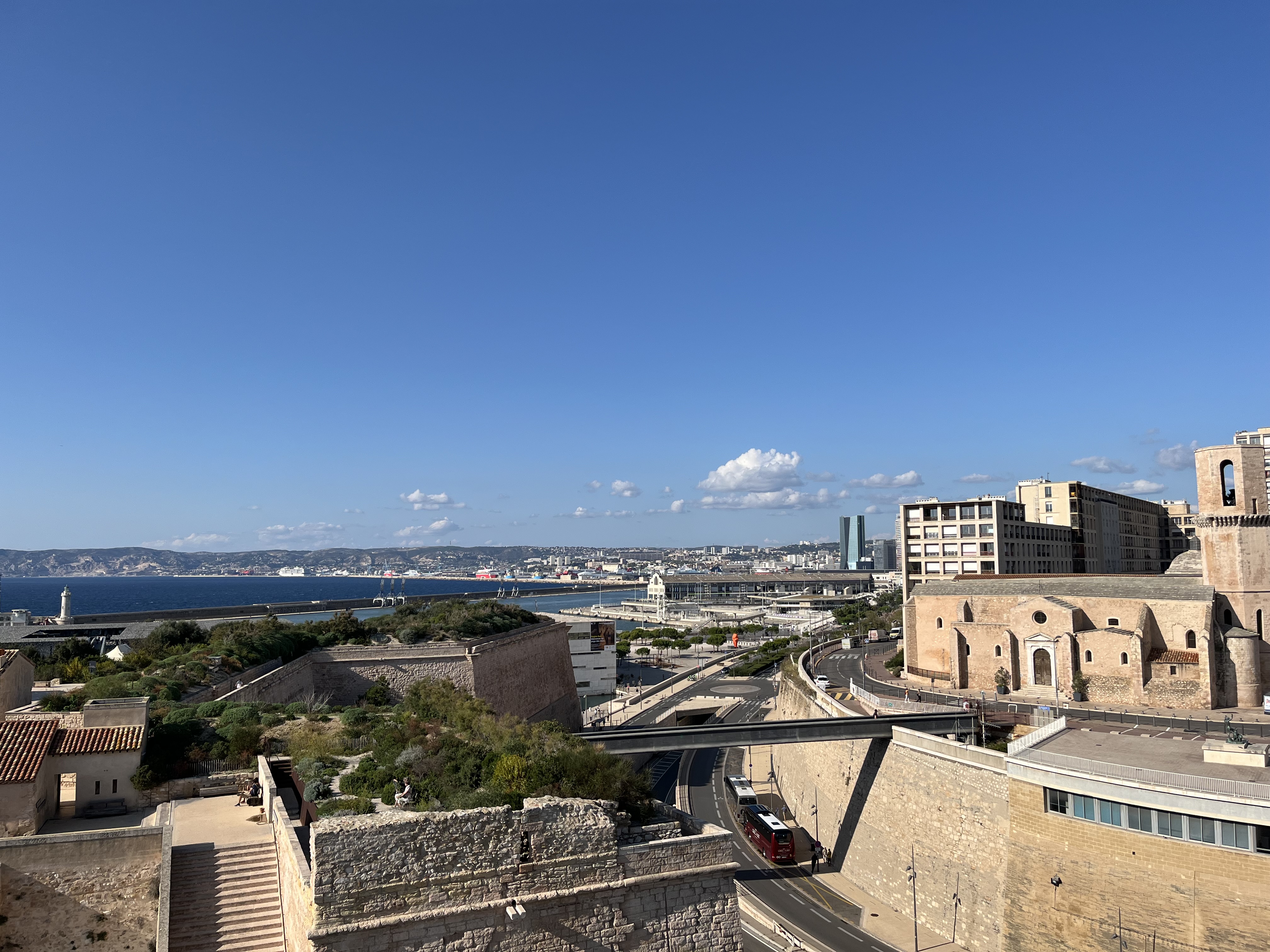
A bridge leads off the roof of MUCEM, a sleek grey concrete bridge that slices right above a turquoise patch of water and deposits us squarely in 1660. “The building next door”, as my family has just called it, is the Fort Saint-Jean, sitting proudly on an escarpment overlooking the old port. Back when Louis XIV first ordered it built, it was the all-important gateway to Marseille, as well as a threat to the citizens of this often-discontented place; nowadays the fulminating masses have moved away, and the fortress is merely a place for historical reflection and exploration.
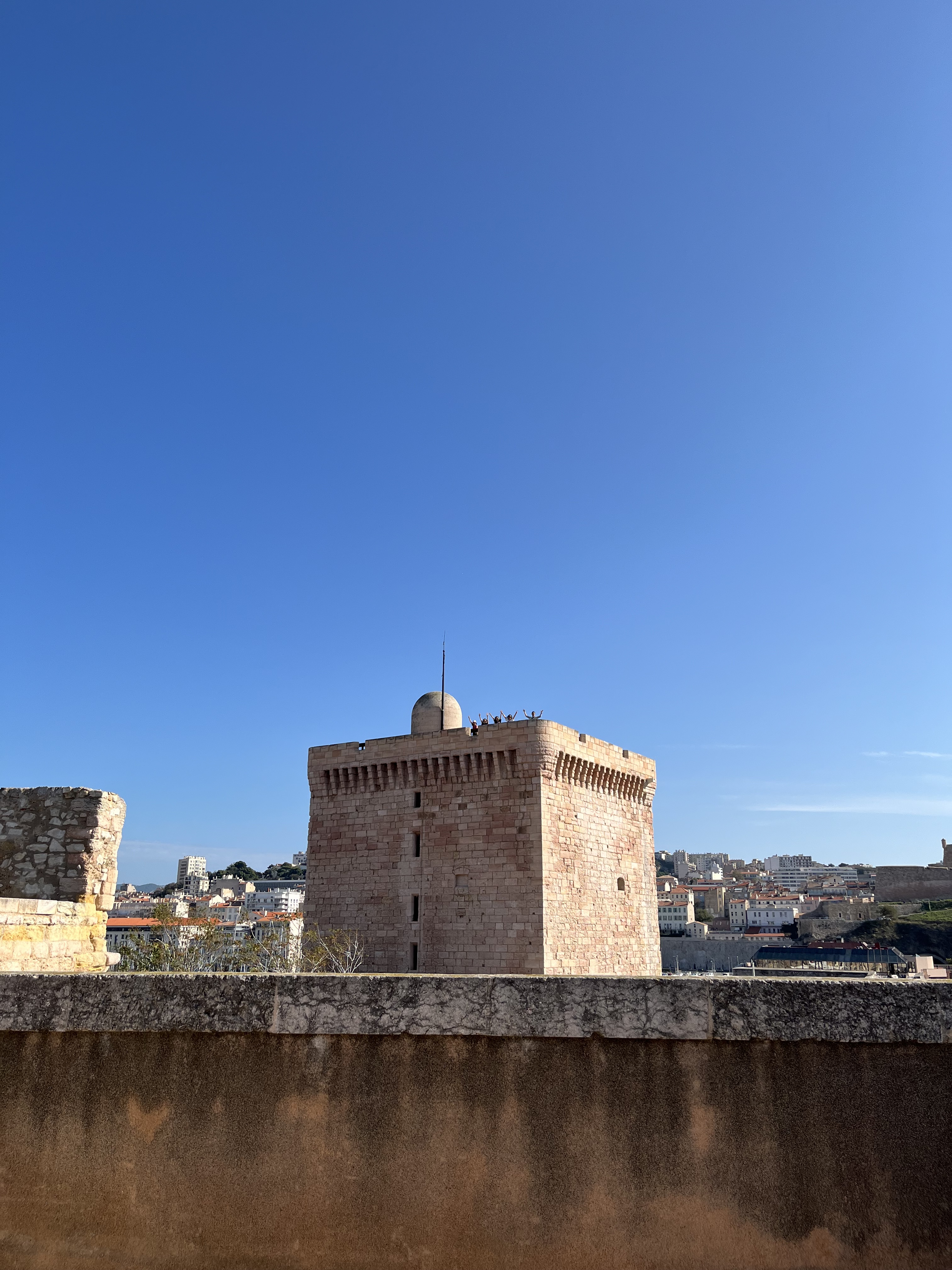
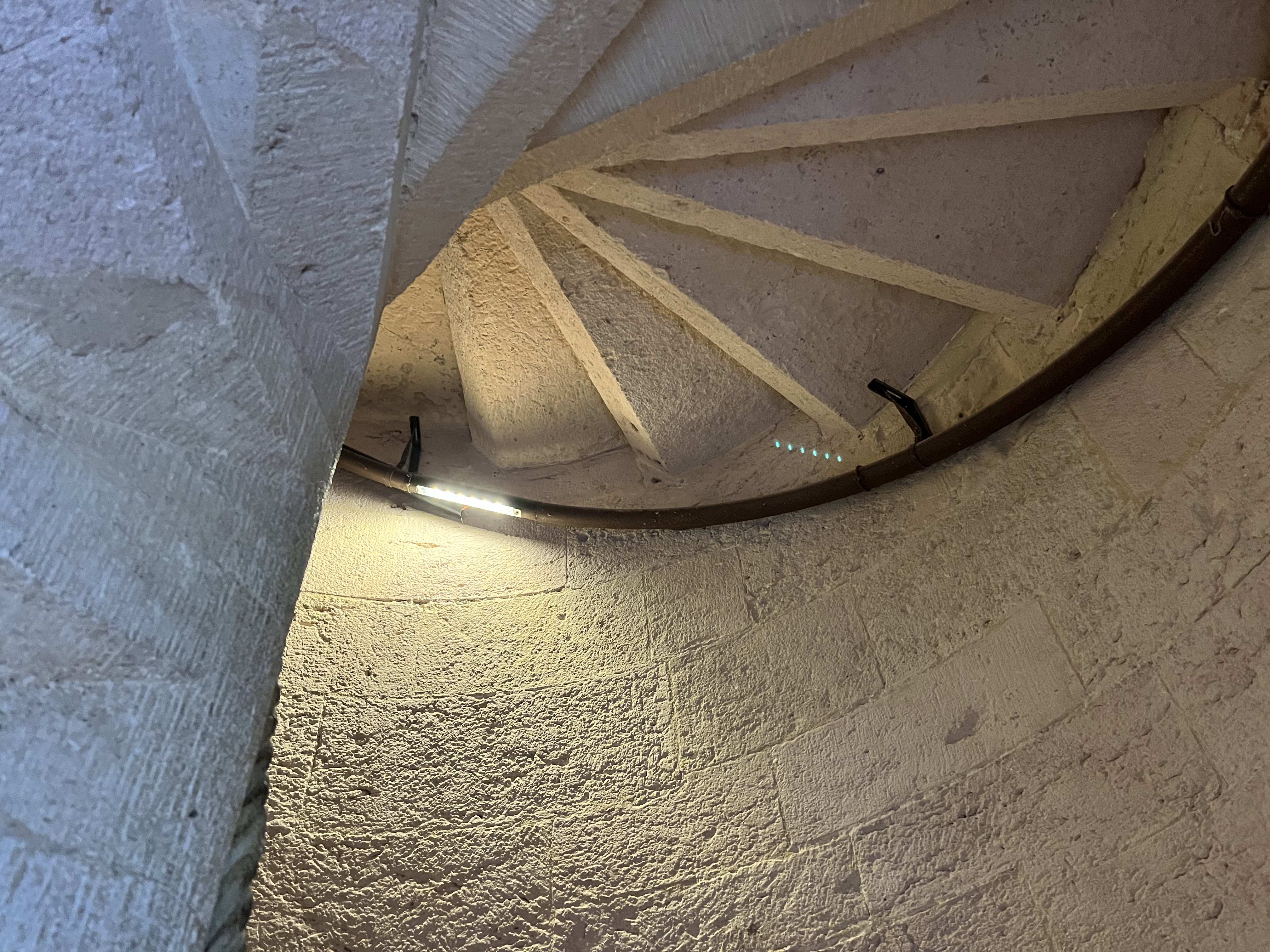
And, I should add, other forms of exploration: the Fort isn’t actually all that big, but as with all military buildings it is home to a dizzying array of passageways, paths and cul-de-sacs that appear to wind nowhere in particular while offering you spectacular views of the sea outside. I follow one particular path that just says “terrasse de la tour”, and it turns out to be an extended rampart that stretches around the outside of the fort, turning abrupt corners and passing under the shadow of many a lookout tower. Eventually I emerge to find myself about ten feet away from where I started, and for reasons too complex/childish to elucidate here, this amuses me to no end.
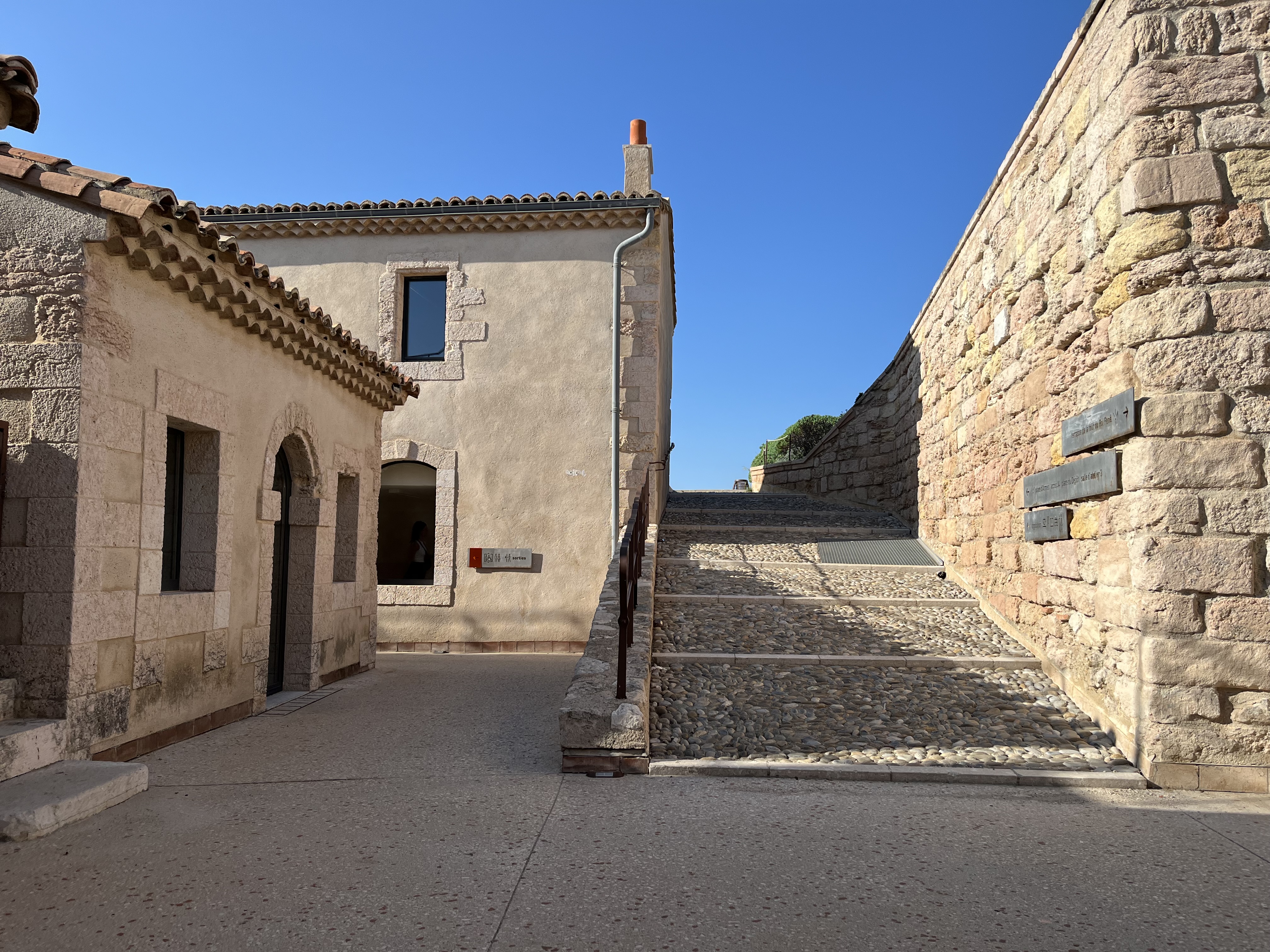
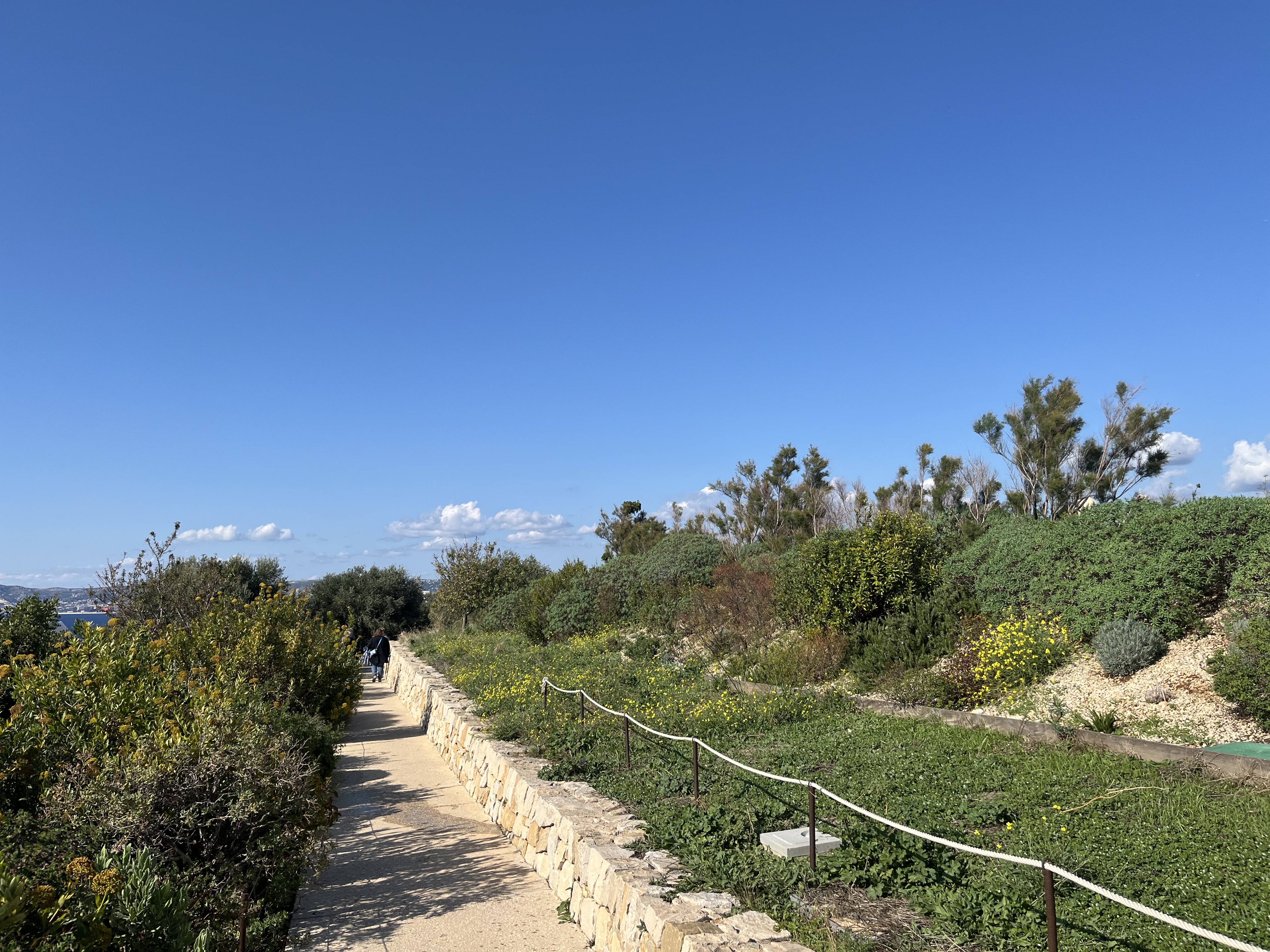
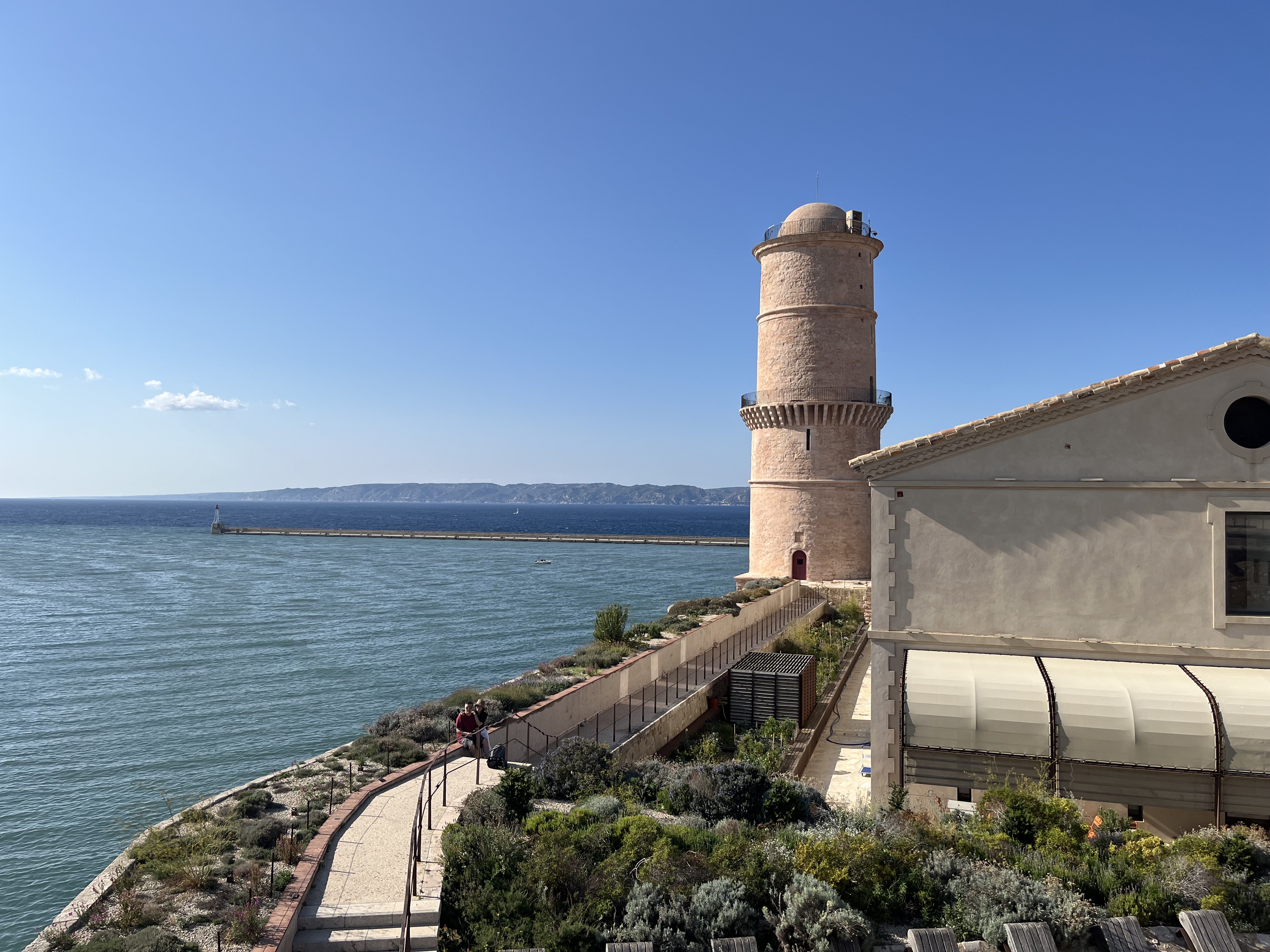
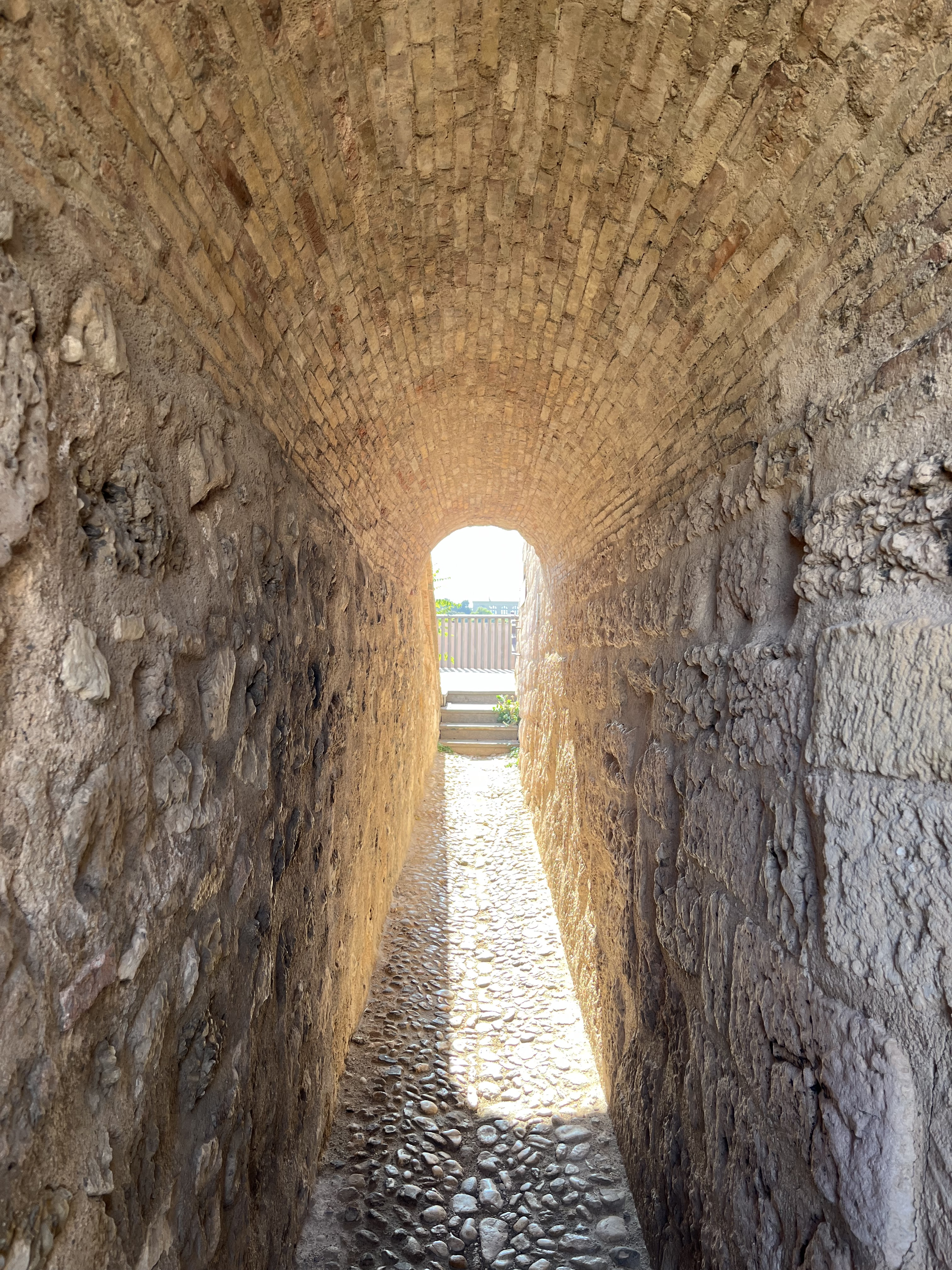
But we are here to learn something about Marseille, and in a small dead-end terrace facing a lush crop of trees I spot a set of rooms, above which hang the faint sign “permanent exhibition”. Inside is a rather eclectic mix of nooks that lead visitors on a journey through the city’s millennia of history, ranging from simple pictures hung on the wall to a machine that blows a stiff wind on my face while an animated video of the Romans landing in Massalia plays. It’s somewhat entertaining, although since the displays are mostly in French I can’t make head or tail of what the Phoenicians and the Romans and the Goths did to Marseille. Heading back out onto the fort afterwards, I spot my family on a faraway tower, waving like little children who’ve just seen their favourite entertainer. “This is so much more fun than that museum next door,” enthuses Grace as I meet them heading back down.
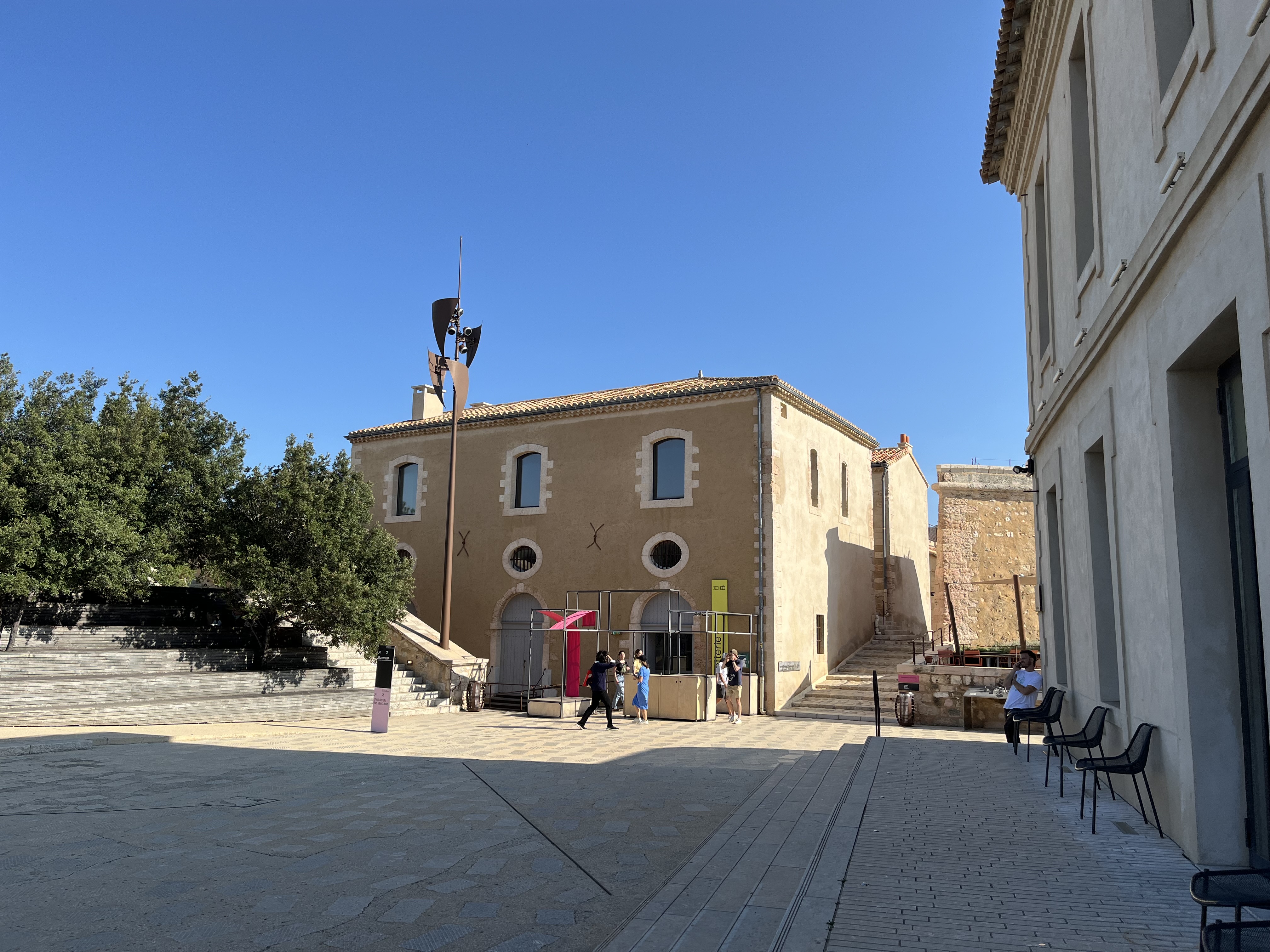
But the main purpose of the Fort Saint-Jean these days is as a gathering place: wandering back into the Place d’Armes, the main square of the fortress, I find a bunch of visitors just lounging on the stepped wooden benches in the centre, all off in their own little worlds. A young man reclines on the top step, soaking up the afternoon sun; nobody gives him a second glance. A middle-aged woman reads a book off on the side. A couple sits on the lowermost bench, she leaning back on the seat, stroking his hair absentmindedly; he dozing off in her lap, his face towards the square. This is perhaps just another Monday afternoon for the Marseillais, but I am immediately reminded of the scenes at Le Panier earlier, with its similar tableau of citizens just sitting about in the sun doing nothing. What a city this must be, if its inhabitants are willing to spend their free time just doing this.
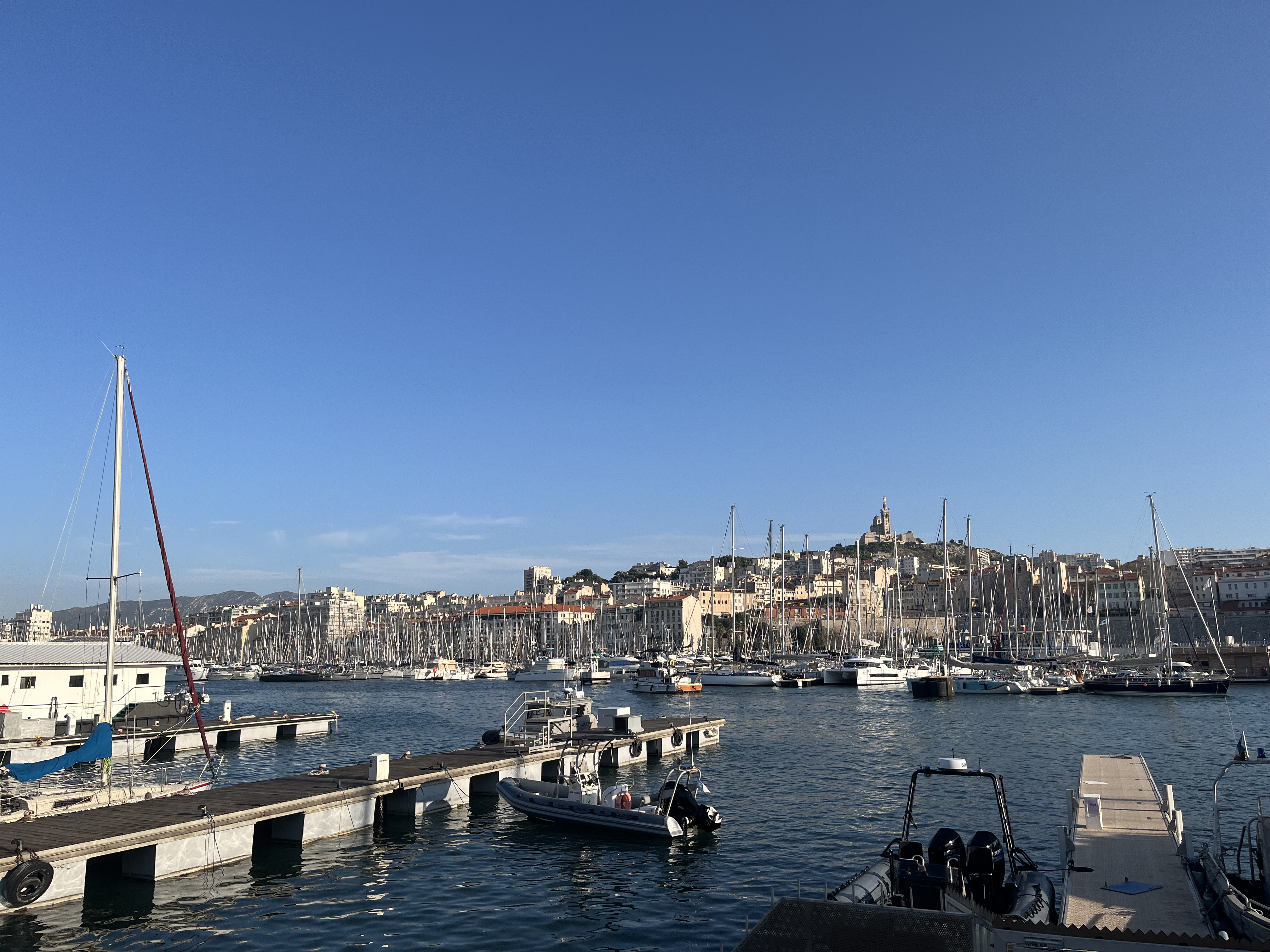
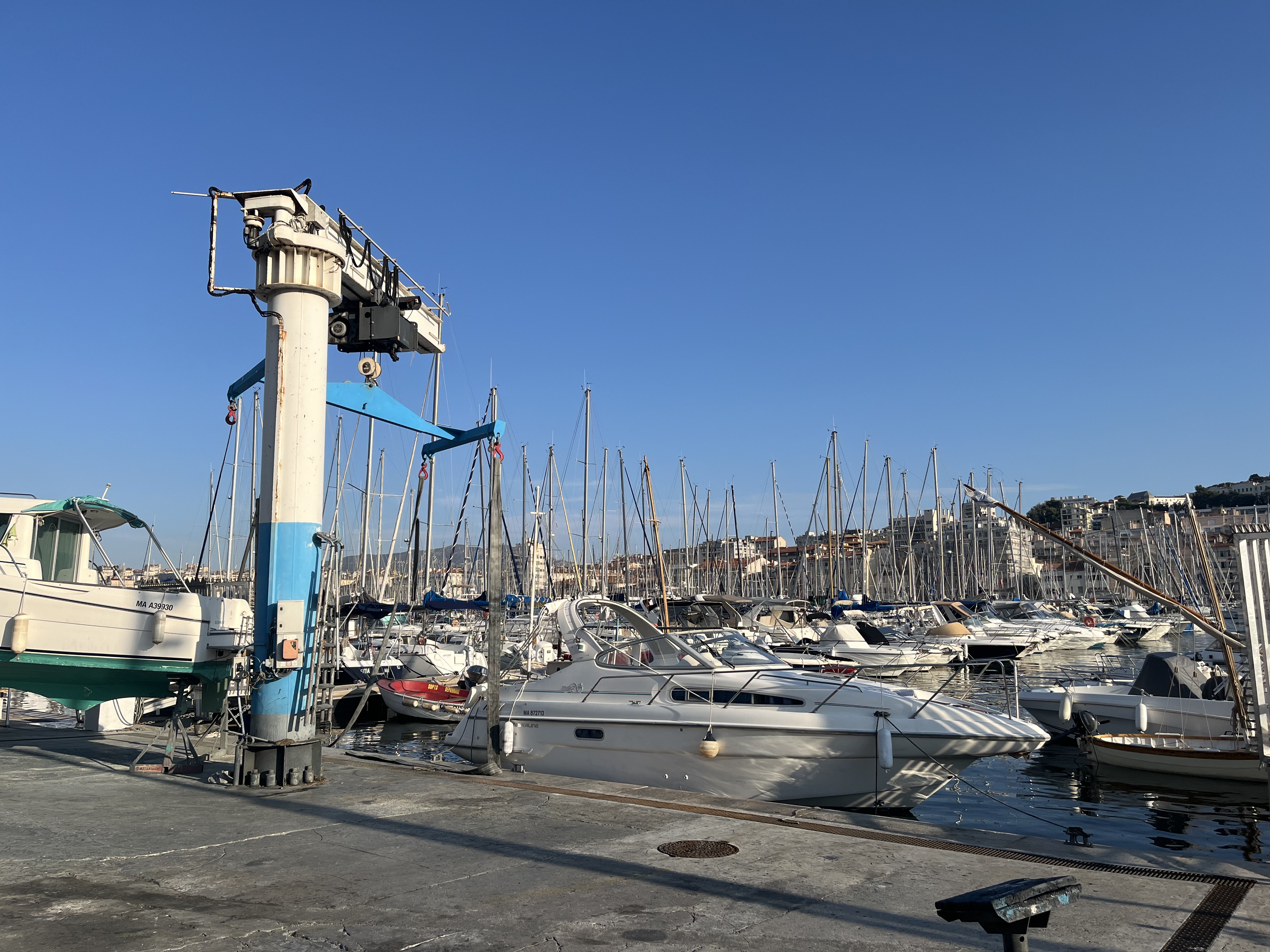
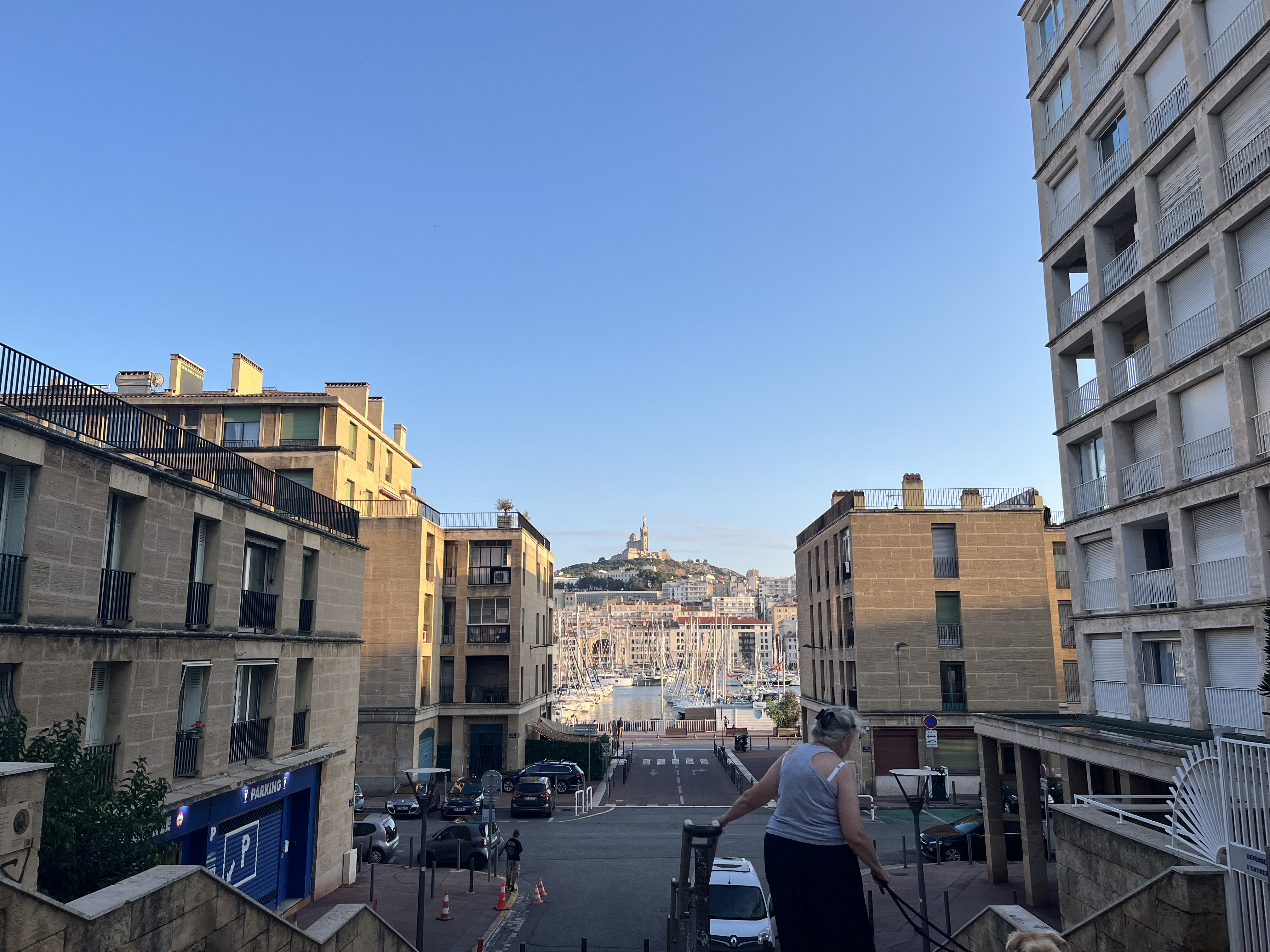
As chimes announce closing time for the MUCEM complex, we head back up onto the on the Avenue Vaudoyer. There’s still an hour or so before our appointed dinnertime, so we stroll along the quayside, the heat of the setting sun still scorching our backs. In front of us is Marseille’s Old Port, which used to be the epicentre of trade in and around the city but is now a laid-back marina, filled with rows of modern pleasure craft and the odd ferry plying the waters; there were of course yachts and motorboats in Barcelona Harbour, but not on a scale like the Old Port, where yachts sit shoulder-to-shoulder, nudging each other on the water. It already looks like a hub for rest and relaxation, but as we find out later all this is only a taster course, an introduction to the leisure of the French Riviera.
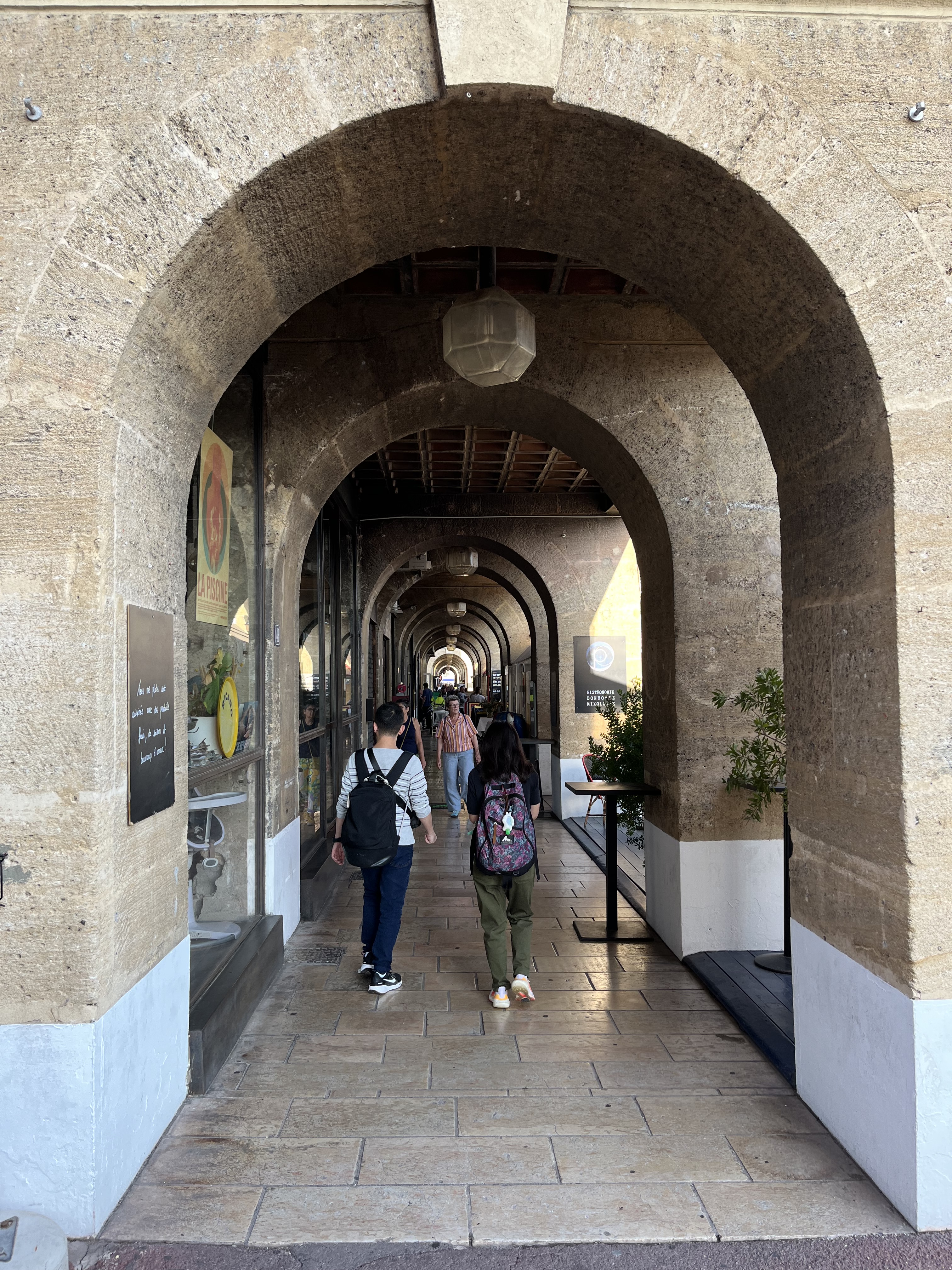
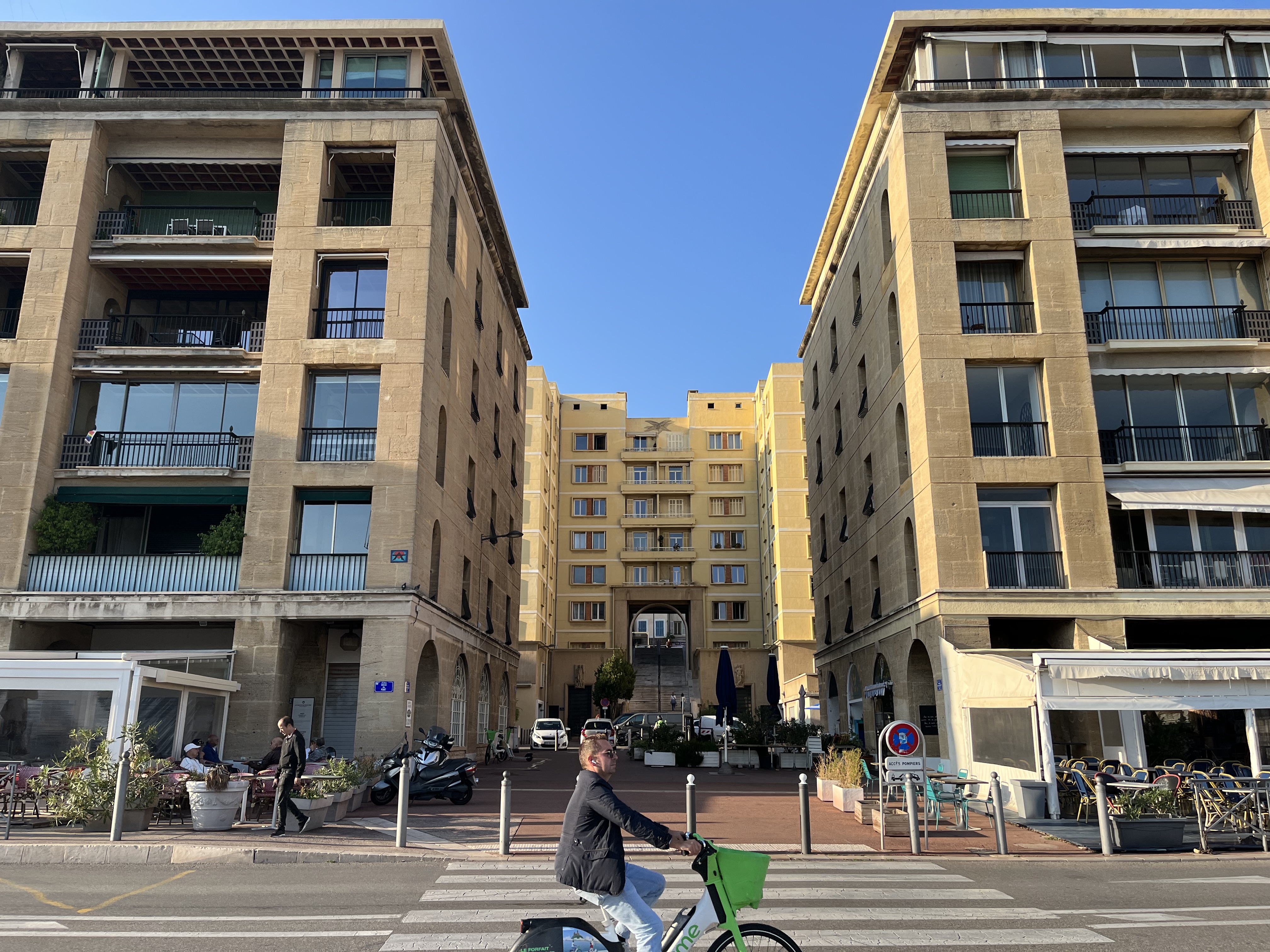
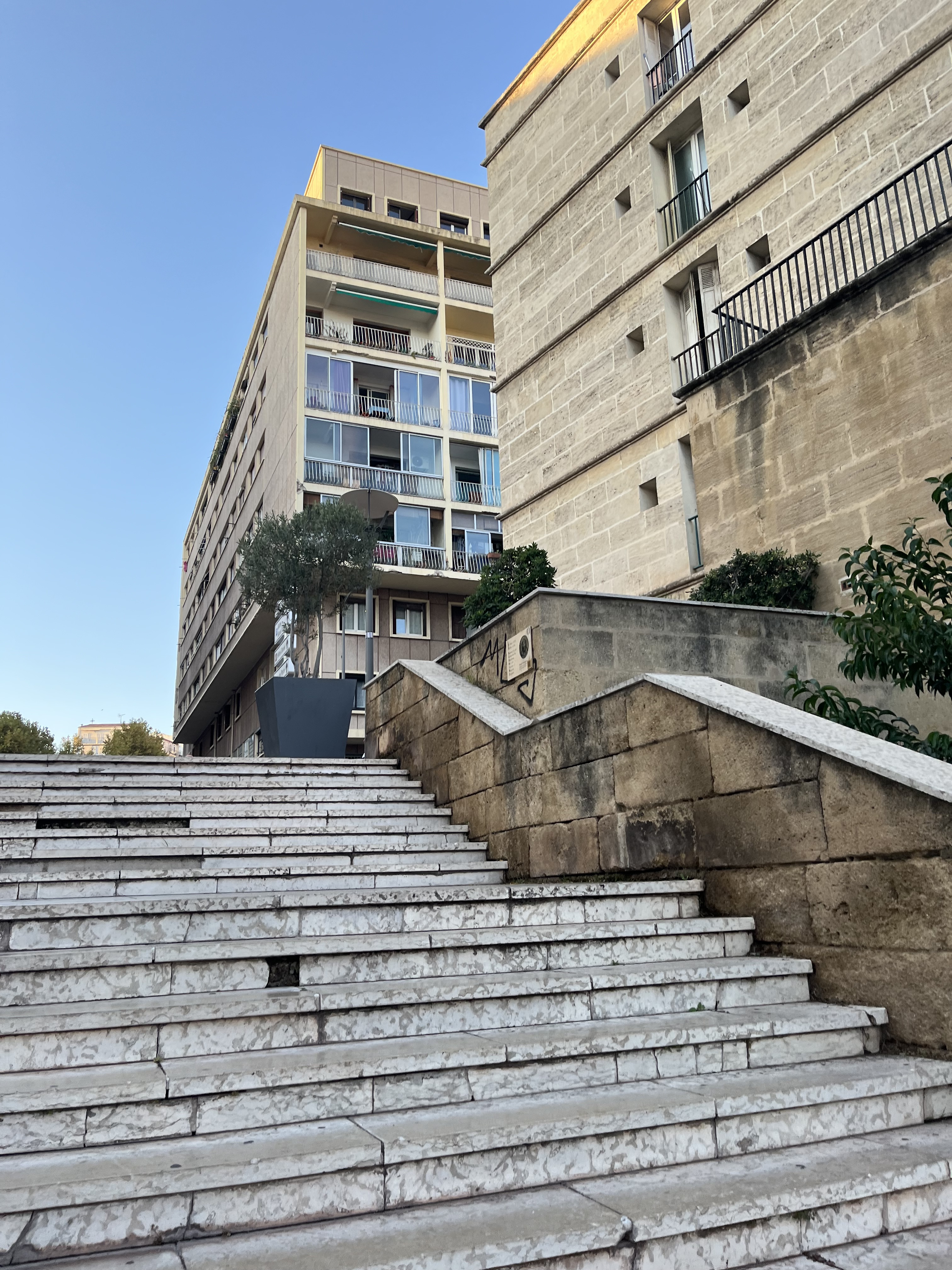
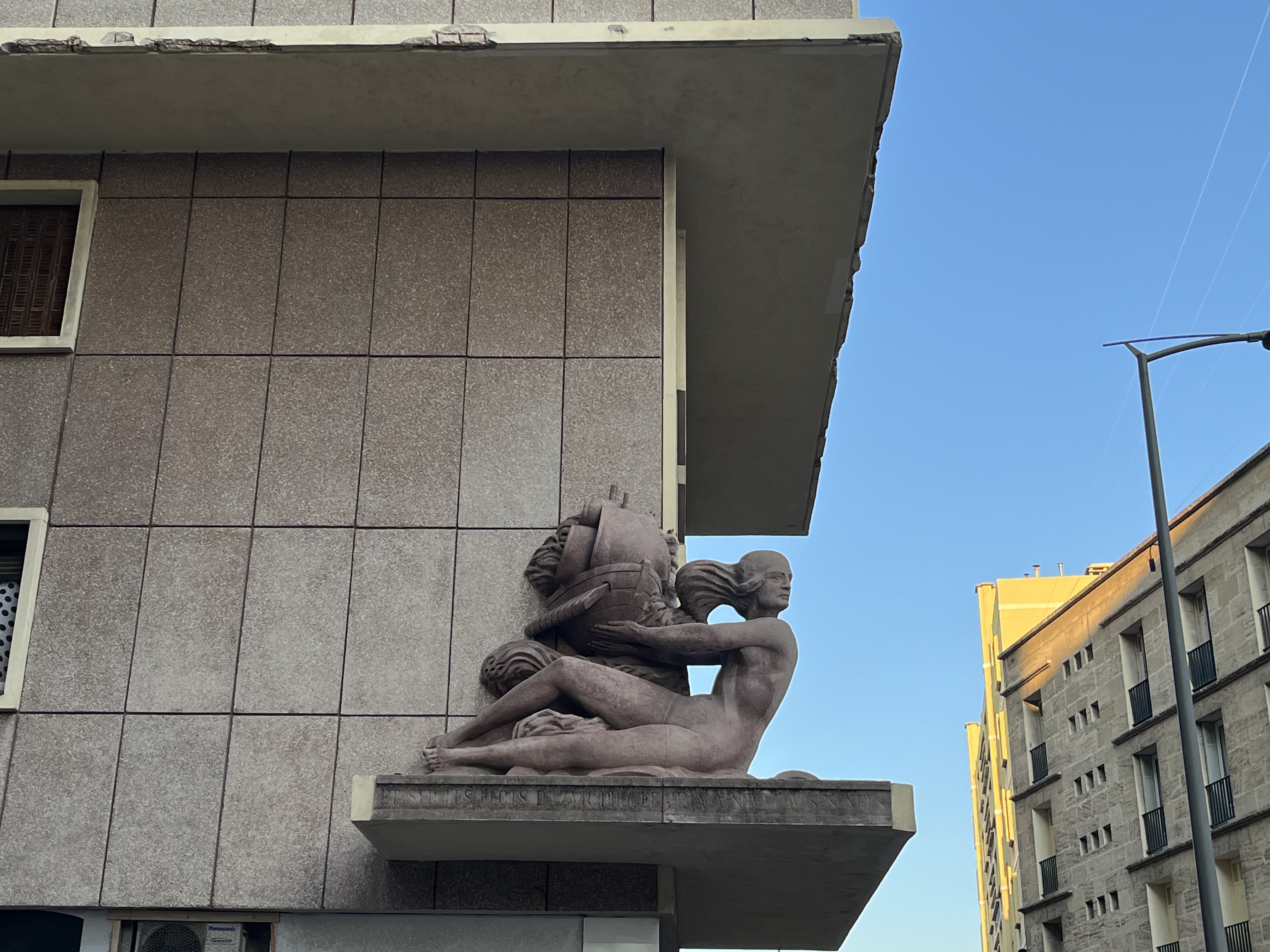
Crossing the road, we duck under the arches of the Quai du Port. This part of town was built in the 1950s, after the Nazis had destroyed much of the seafront; the buildings here are simple yet elegant, sandy-hued blocks that stretch along the road and, with their interiors set way back from the pavement, provide some much-needed shelter to both passers-by and the residents above. Occasionally the arcade breaks up, revealing spacious side streets that leads away from the harbour and up into Le Panier on wide marble steps. The latter, admittedly, are in serious disrepair and something of a hidden hazard in places, but overall it’s not an unpleasant neighbourhood, especially with the late afternoon sun painting everything a rich, enchanting gold.
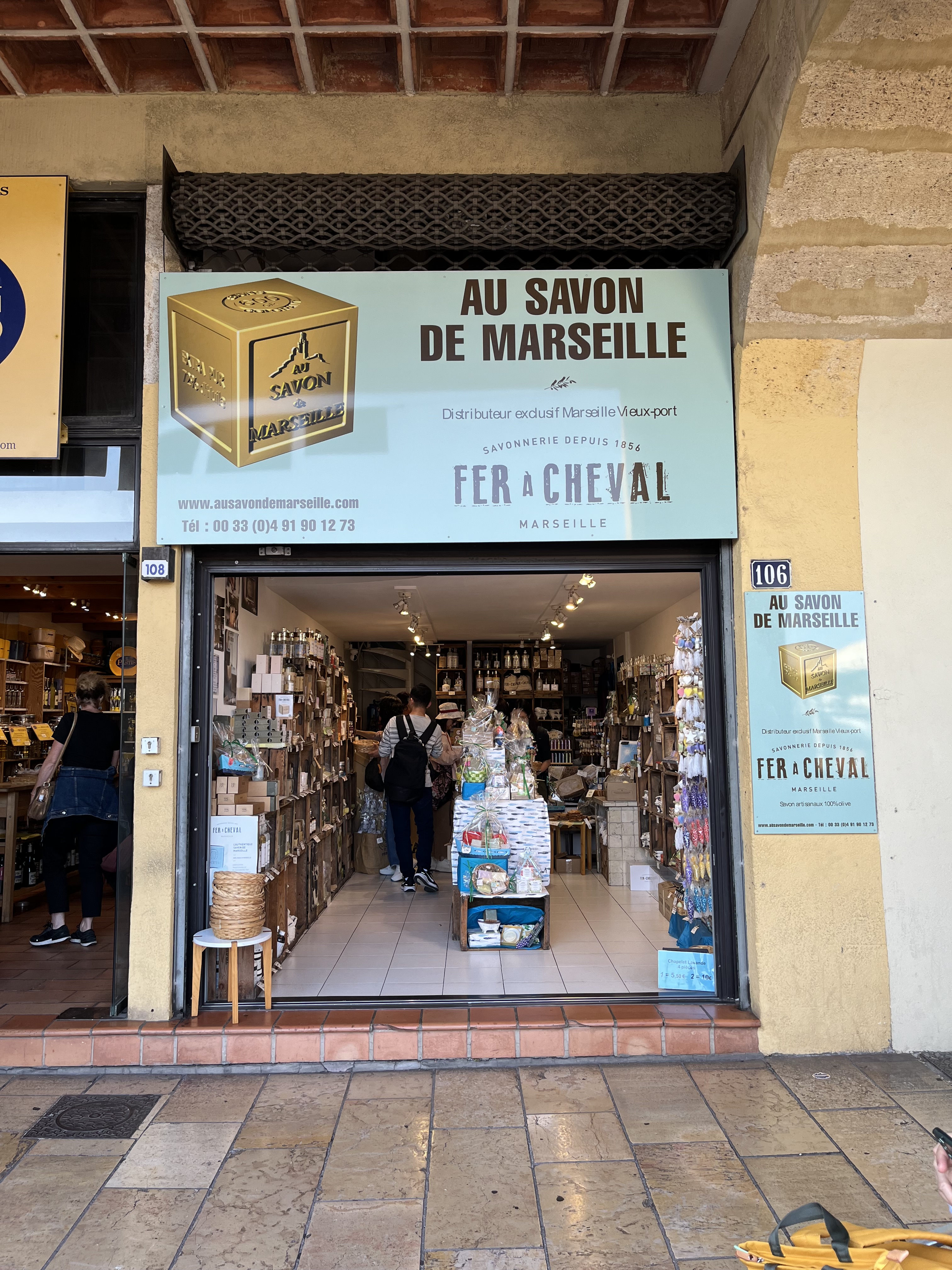
And then, strolling along the arcade, peering into shops and restaurants, we walk right into the arms of one of Marseille’s biggest moneymaking industries. No, not the Unione Corse mafia, but soap shops. Soapmaking has been around in Marseille since the 14th century, and has since been making the city a constant tidy profit. This, despite having a shockingly low variety of products: for quite a long time, only soaps made from olive, palm and vegetable oil were allowed to carry the label “le savon de Marseille”, and judging from the varieties available in the shop we enter, even now people are still sticking to the traditional ways. Anise, honey, rose and lavender fragrances add a bit of colour to the rows of products, but much of the store sticks to the dark green and off-white of the olive and palm oil bars. Funnily enough, it’s the latter that has the stronger smell wafting off the racks, although it’s not exactly a pleasant one, reminding me more of hospital rooms and shower cubicles than it does a nice comforting bath.
Nevertheless, the shopkeepers are dutifully doing their best with what little variety they have, and despite not knowing 90% of what the other person is saying, Auntie Rita somehow manages to strike up a fabulous conversation with one of them, who eagerly recommends her gift ideas and helps her with payment. (The fact that my aunt has at least five bars of soap in her hands may have somewhat lubricated discourse.) Less susceptible to sales tactics, I opt for a single sample of their most famous product, an olive oil bar that looks like it has been dredged from the bottom of the harbour, along with a huge soap dish made of concrete. My mother sighs when she sees me haul it to the counter, no doubt wary about the added weight to our luggage. “How are you going to get it home without breaking it?”
Our souvenirs of hygiene obtained, we head back into Le Panier for dinner. In a stunning display of intransigence, I have booked the exact same restaurant that cancelled our lunch reservation so delicately with half an hour’s notice this afternoon; such is the power of online reviews and the promise of bouillabaisse that I have thrown all caution and touristic dignity to the winds and decided to give it a second chance. (More practically, the Côté Rue restaurant is the only good bistro still open for dinner service in the entire district, so it’s either this or shopping centre fare, and I’d like to put the latter off for as long as possible.)
We reach the restaurant — in another cyclical moment, a few steps off a square we had passed this morning — just as the last wisps of sunlight disappear from the skies, on a cosy little side street. That’s not a typo: there IS an indoors establishment, but it is so dull, so fetidly heated, that both our entourage and the proprietor opt to be seated outdoors, where the warmth of the early autumn twilight still lingers.
The first thing I note as we sit down is that bouillabaisse is off the menu. Having by now fully dedicated myself to a masochistic relationship with Côté Rue, I decide to stay and see what the place still has to offer. There isn’t a lot to choose from, at most seven or eight, but each one of those choices might as well be a great unknown. What do chickpea fries look like? What is their shakshuka made of? What in the name of all that’s holy is a “pissaladière”? We sit in the cool of the evening, debating about which culinary adventures to take and which to forgo, while the street around us slowly fills with patrons; none of them opt for the stuffy confines of the indoor restaurant, and as a breeze rises and whistles down the alleyway, we all gradually lean back in our seats, and sigh. Suddenly the menu doesn’t appear all that impenetrable, and we feel a little more up for anything.
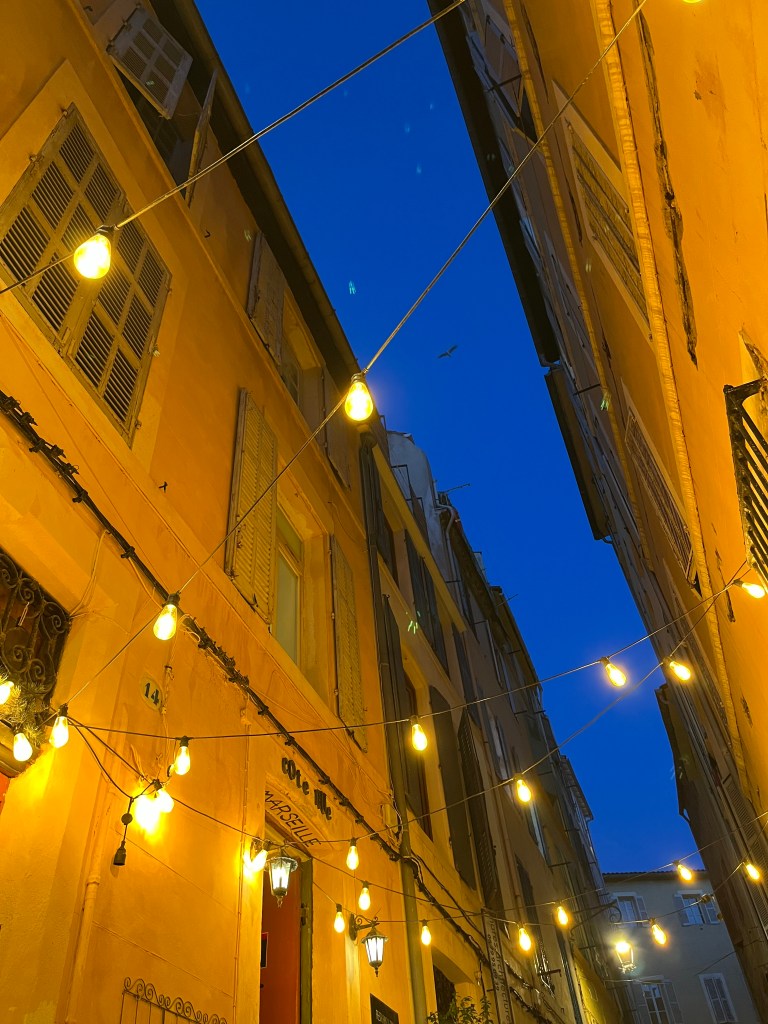
Eventually we decide on a mix of the familiar (breaded chicken, grilled octopus) and the adventurous (shakshuka, pissaladière). While our food gets prepared my family chatters away, and I look up at the skies, now rapidly darkening into shades of darkest blue, and the alleyway that surrounds us. The buildings here are a gleaming shade of lemon zest; under the glow of the fairy lights strung up over our heads they glow radiant, as if they are their own light source. For all intents and purposes, we might be sitting in the middle of a candle, only instead of scorching heat it’s deliciously cool; perhaps we cannot see the Plaça d’Espanya or the chef’s prior awards in this alleyway, but the ambience is still unparalleled.
After a great deal of chatting and dreamy reminiscing about our trip, our food arrives. By now I should know better than to be surprised by good food in Europe, but I still widen my eyes at all the Provençal delights: the shakshuka is tart, but not excessively so and goes very well with bread; ditto for the grilled octopus, which once more tastes like it was just pulled from the sea and somehow marinated in record time. But the item that catches my attention the most is the pissaladière, a mass of onions and tomatoes perched daintily on top of a slice of focaccia, and drizzled so healthily with olive oil that it glistens in the evening light. Although the onions are cold, they aren’t at all icky or slick; instead, the taste is a rather intriguing cross between the top of a crème brûlée and chowder — salty like the sea, but accentuated by a slightly sweet tang. The plate is cleared in seconds.
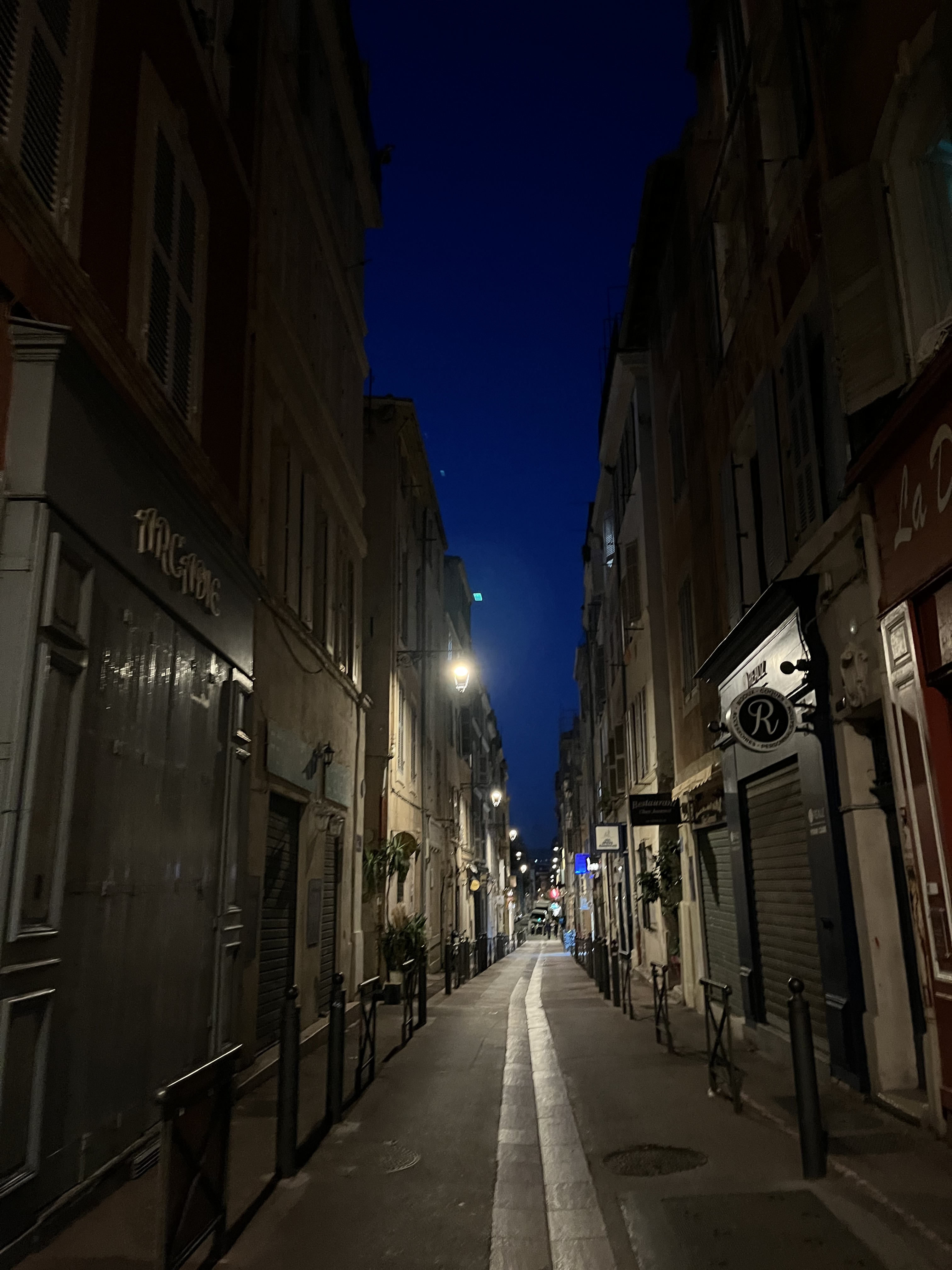
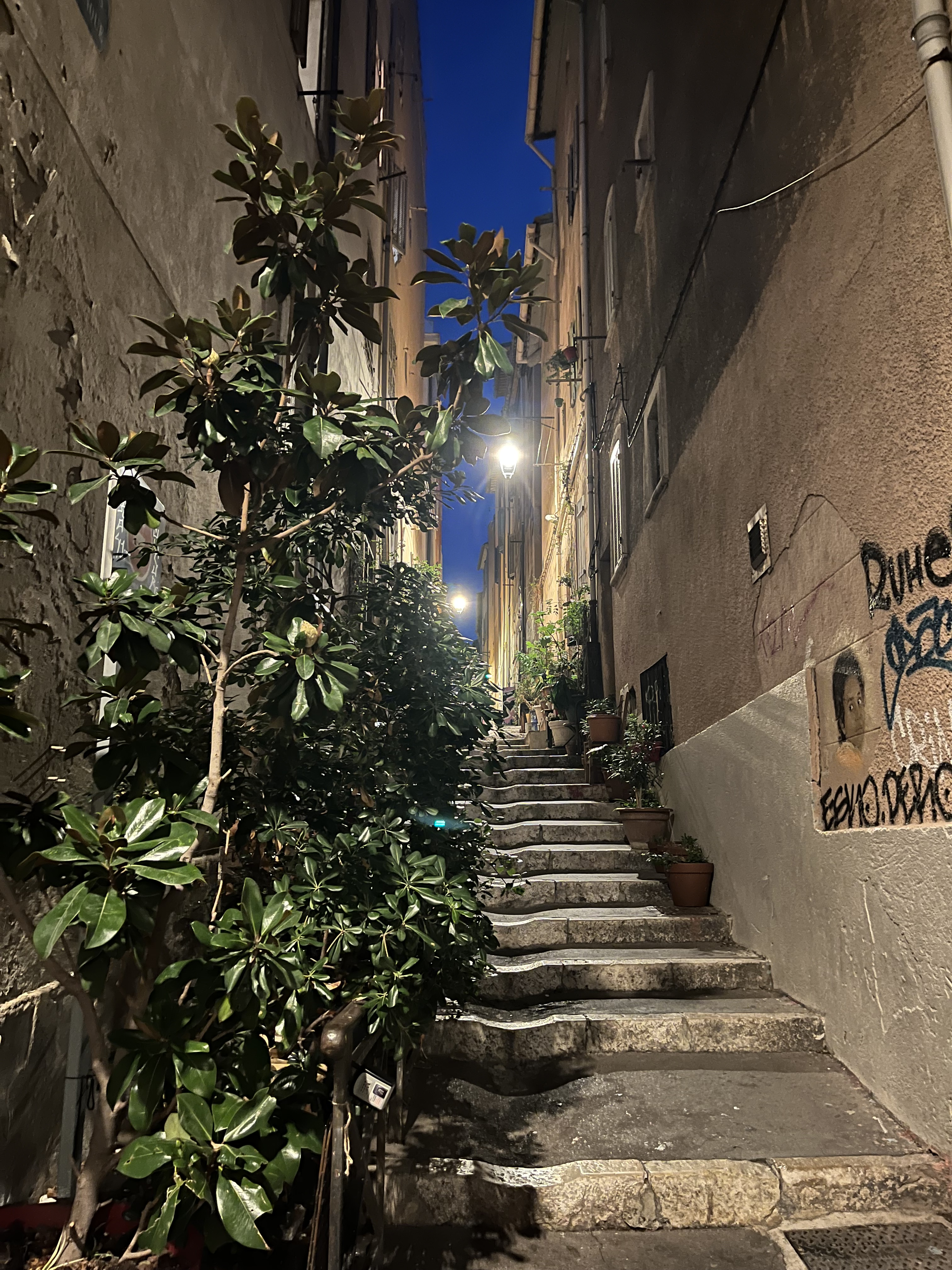
Dinner finished, the sky dark, it’s time to head home. The quickest path back to our hotel lies straight through Le Panier, but my mother, perhaps sensing that I am pushing the title of today’s entry a bit too far, declares that we will take a detour by the cathedral instead. (Also, the streets of Le Panier are poorly-lit and quite empty this time of night, so there is perhaps virtue in taking the less-deserted way.) We follow the same winding path that led us to Marseille Cathedral nine hours ago, its cobblestones reflecting the light cast by the solitary streetlamps. And then we reach the end, and as with this morning, I stop dead in my tracks once I see what greets me again.
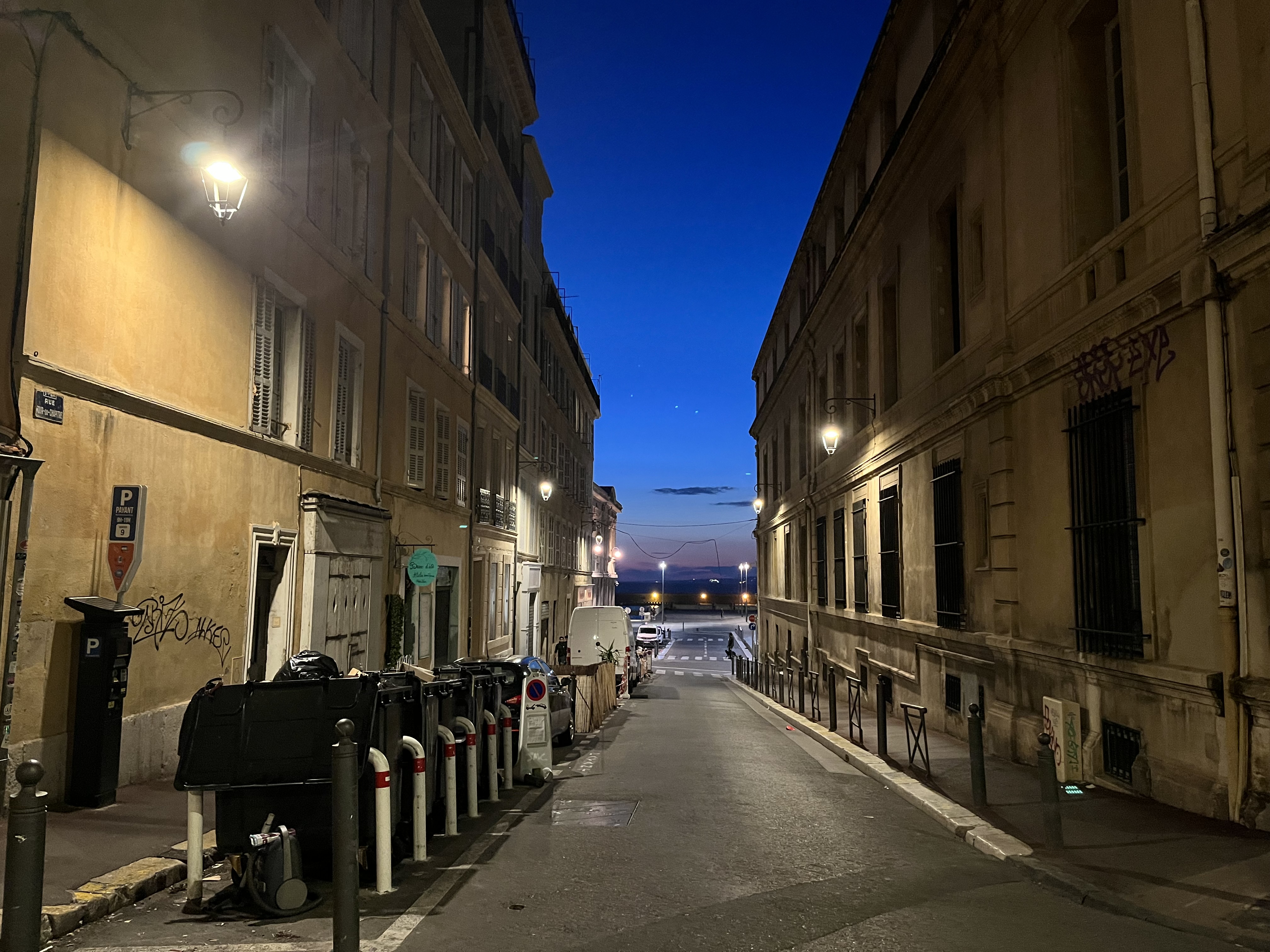
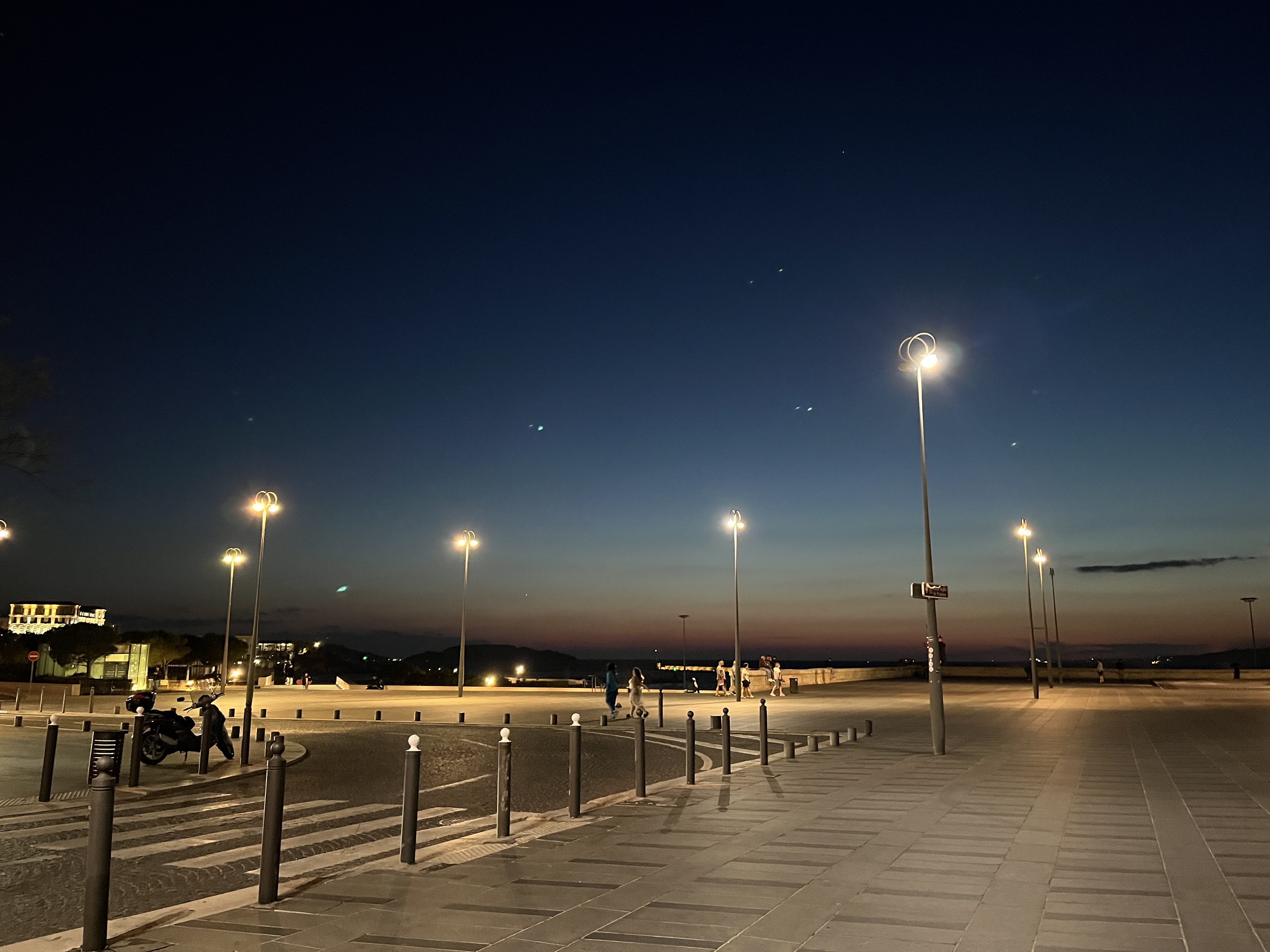
It is the same setting: the same cathedral, the same tiled platform, the same pétanque pit. Only one element is different, and that is the sky: instead of the electric blue of the morning, it has now transmogrified, deepened. The bits of it directly above our head is simply blackness, an empty void that sucks up all available light; but the patch across the harbour is a psychedelic rainbow, fading from dark blue to turquoise to orange to red, so soft that I can’t figure out where one colour ends and another begins. Against all this glow streetlamps at regular intervals, magnified stars powered by steel and alternating current. In the distance, just where the deep red sky meets the dark mass of the waters, I can see the cranes of the Marseille docks, immobile after a long day’s work, clear-cut outlines against the dying of the light.
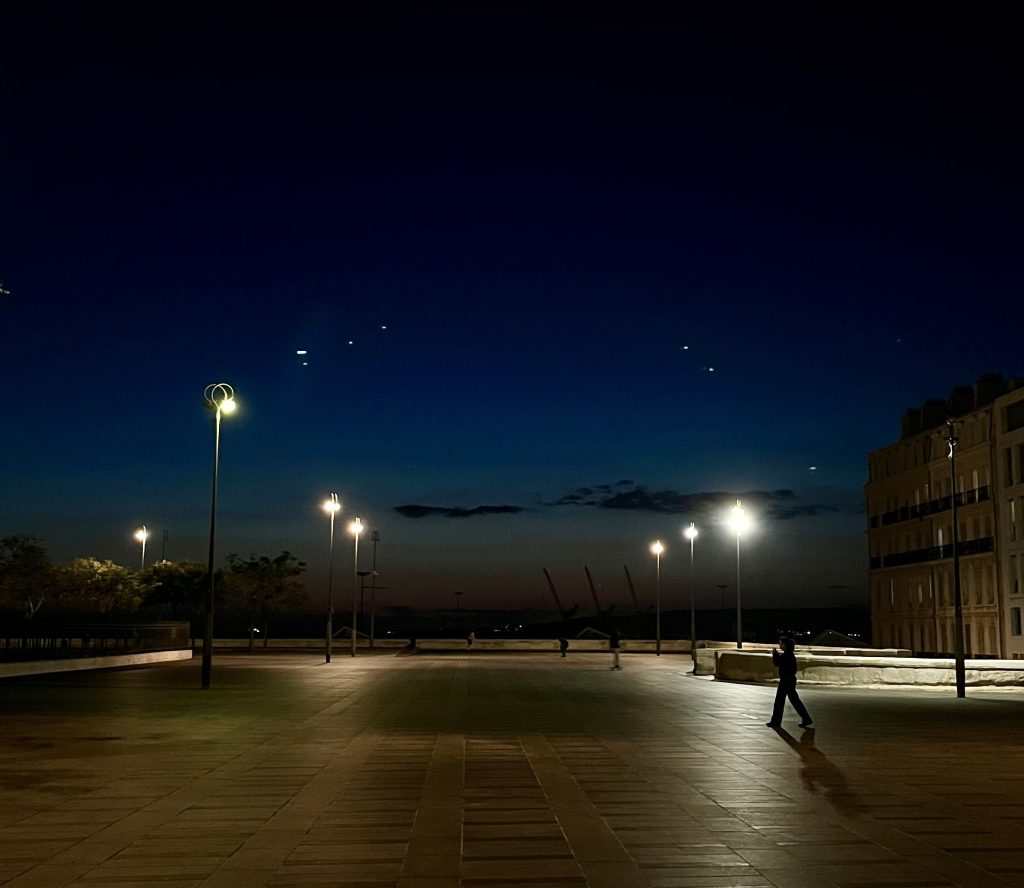
As I watch, a single figure crosses the plaza, his form silhouetted against the dull light of the esplanade. It’s a touch of reality within this perfectly surreal scene; at any moment now, a UFO could come zooming out of that mystical patch of sky, and I would not be the least bit surprised. If twilights can be so astonishing, so unearthly, then surely anything is possible in this infinite universe.


