21 September
Saturday morning finds us not in the plush seats of the hotel breakfast room, but in the hardbacked wooden chairs of the bakery across the street. Having visited it yesterday in search of a hurried breakfast, Grace and Samuel have in turn eagerly recommended its wares to our hungry family. When I get there my parents and aunts have already sat down and are chattering across plates of croissants and pastries; trying to choose from the dizzying array of breads on offer, I once again find myself obstructing a steady flow of customers who have all chosen that exact moment to patronise the bakery. My head buzzing from the bright lights of the shop, I choose a sugar rush of pastries and chocolate milk.
Take the metro down to Drassanes (“Shipyard”) station for our first destination of the day. Such is the proliferation of Catalan modernist buildings that those looking for another fix of Antoni Gaudí can easily take their pick from half a dozen other sites scattered throughout Barcelona. The one we’re about to visit, the Palau Güell, was the architect’s first big project, his first crack at creating grand living spaces for the oligarchs of Catalonia. At just €12, it’s also much more affordable (and accessible, and less crowded) than the overhyped and -photographed Park Güell on the other side of town.
Although it’s really not much more than a townhouse tucked into a side street, the Palau Güell is a thing of wonder from the moment we step in. The exquisite detail of the place can be seen everywhere: the wood panelling that lines the main staircase, the furnishings that decorate the first-floor chapel (really just a nook set into the wall, but what a nook); even the knockers — stop sniggering — on the door to the open-air stables underground. The audio guide we’ve been given continually reminds us of the riches of the Güell family, but by the looks of it Gaudí made good use of every penny: everywhere we look, there’s something to discover, something of surprise or interest. The visitors congregate in the grand parlour, where bright sunshine beams down from the skylight, and those who pass through all stop, lift their eyes up high, and drink in the intoxicating atmosphere as one.
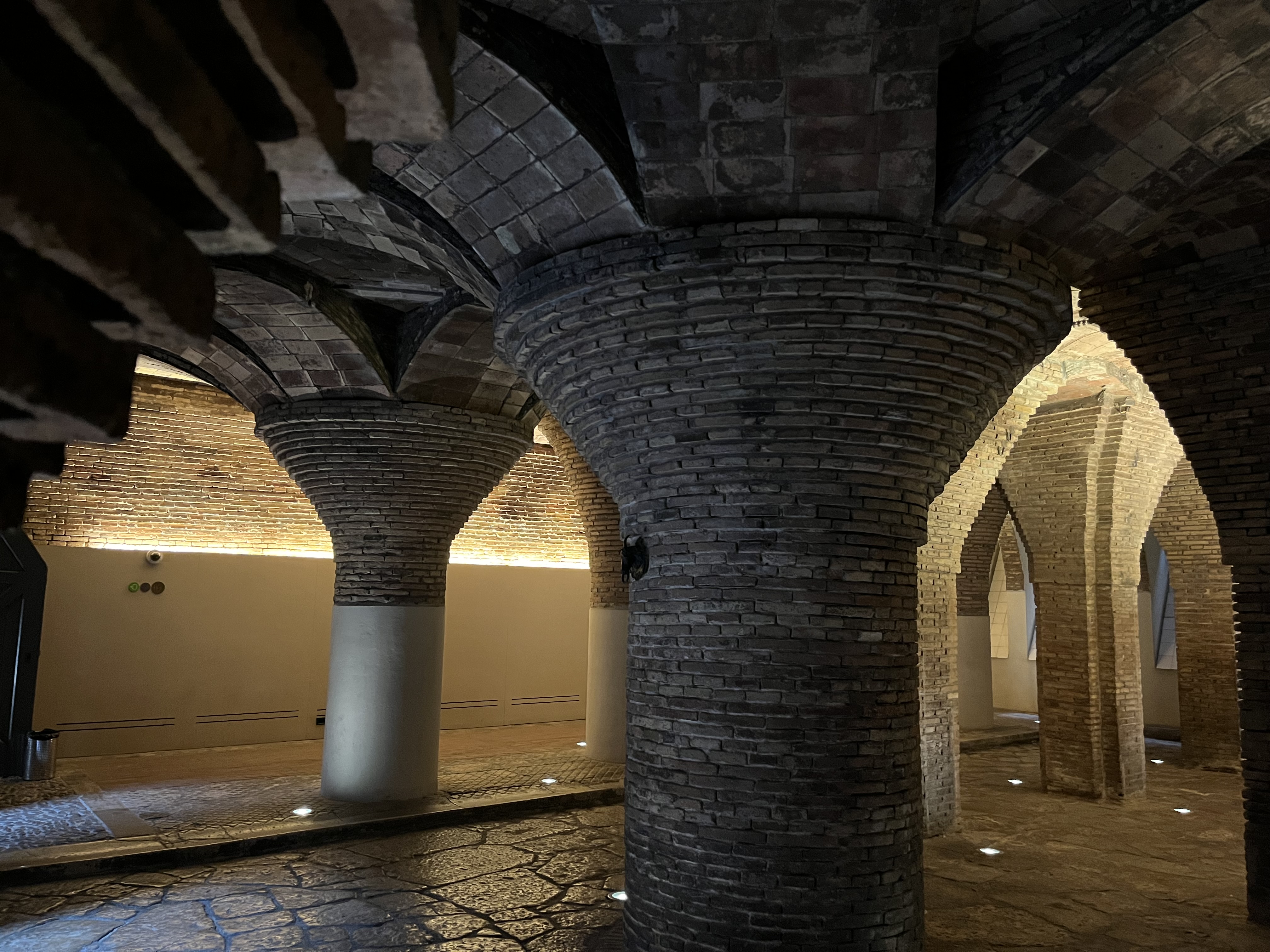
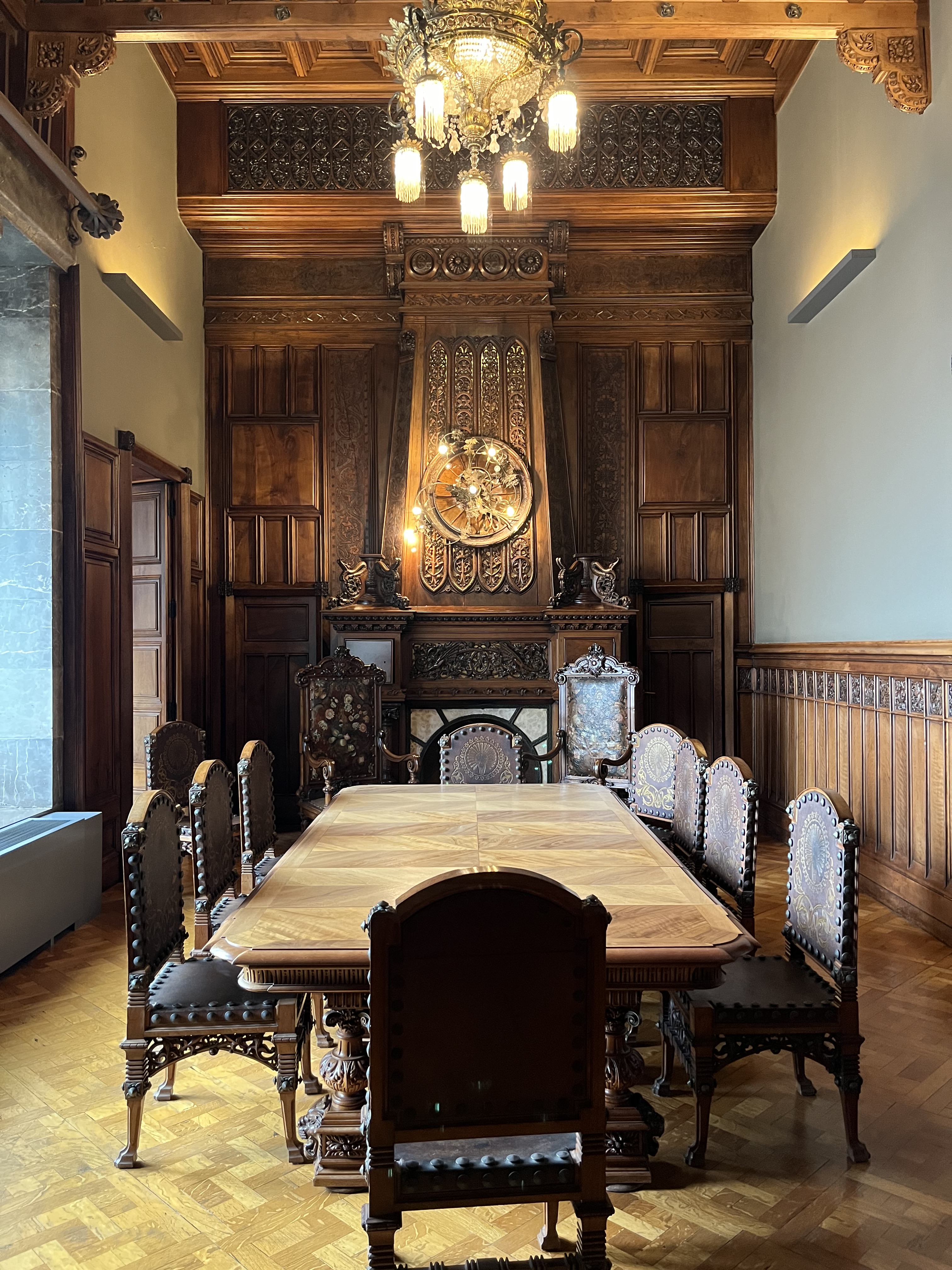
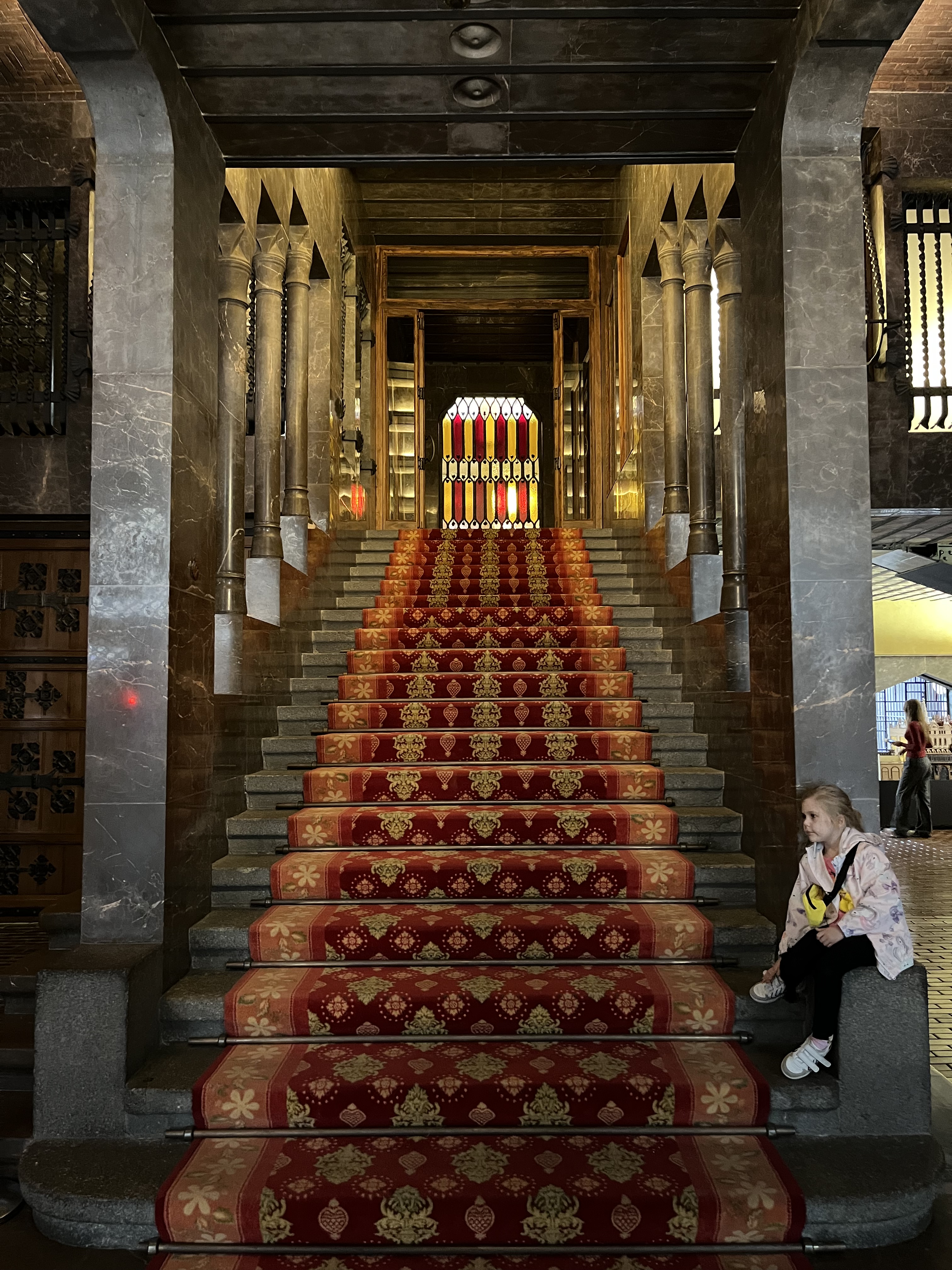
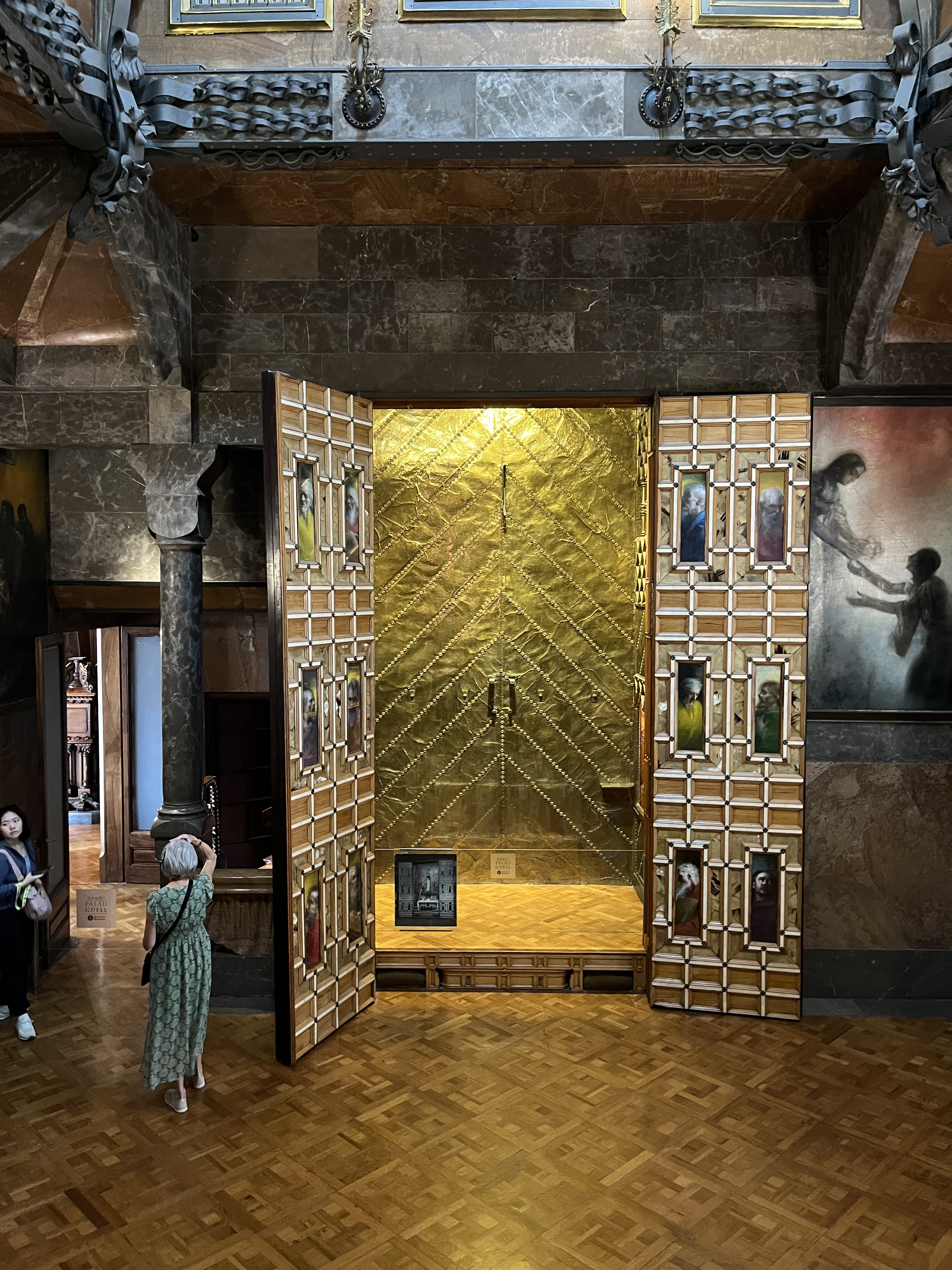
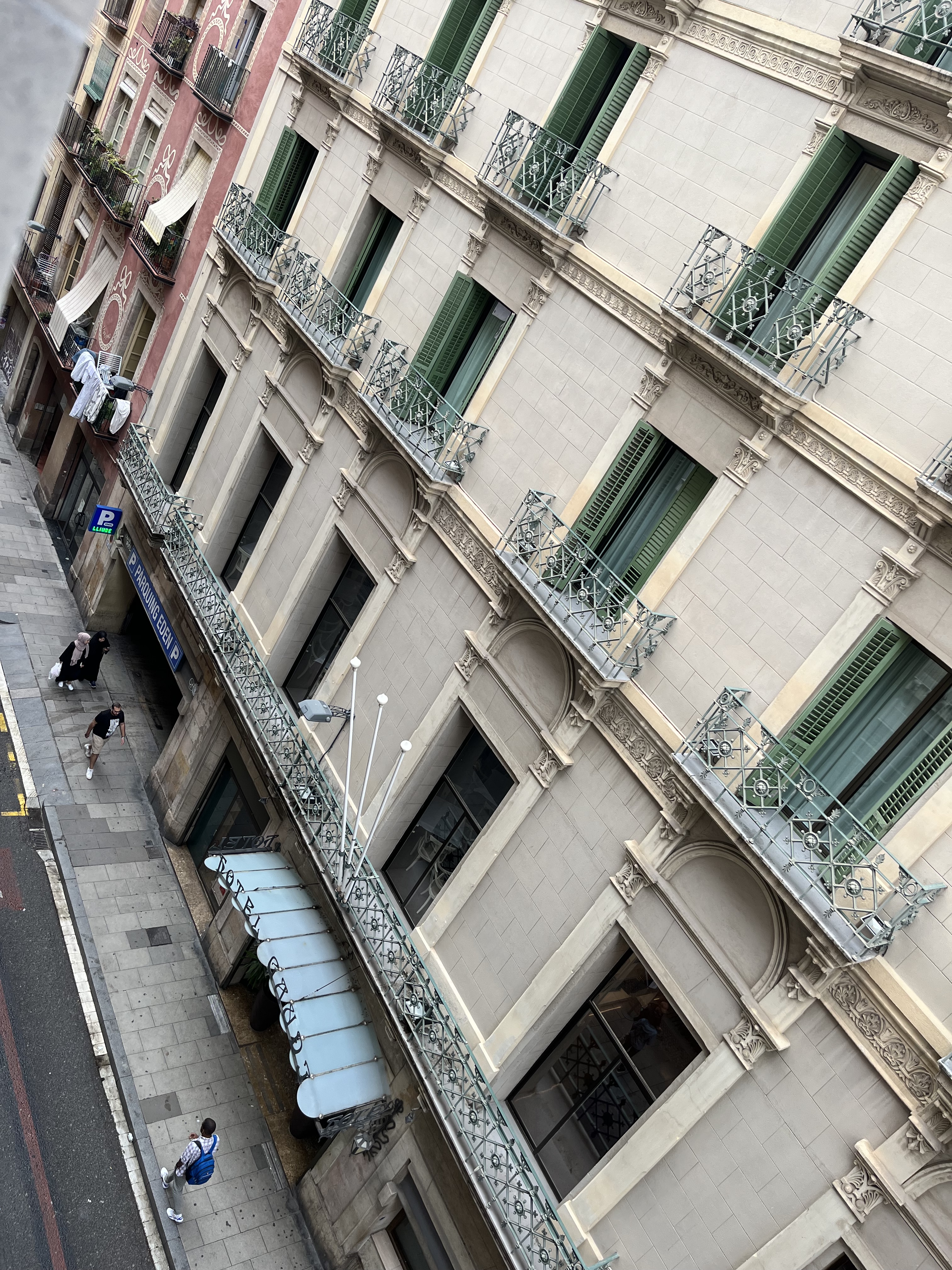
(There are also other surprises lying in wait for the average visitor to the Palau Güell: while looking into the shared courtyard, I observe a young couple about to get it on in the building next door. Sadly, this free peepshow is brutally cut short when the man pauses to draw the curtains, leaving me to walk on dejected.)
Ascend to the rooftop of the mansion. The rest of my family are already there, gawping at the toadstool-like ornaments that dot the rooftop of the Palau Güell; like almost everything else in Barcelona, these ornaments are astonishing works of art, with mosaics that swirl and bulge and collide with each other. My aunts and my mother are busy posing with these strange specimens of Gaudí’s work, so while awaiting my turn with these slightly indecent items, I walk onto a raised platform that allows me to overlook the other rooftops.
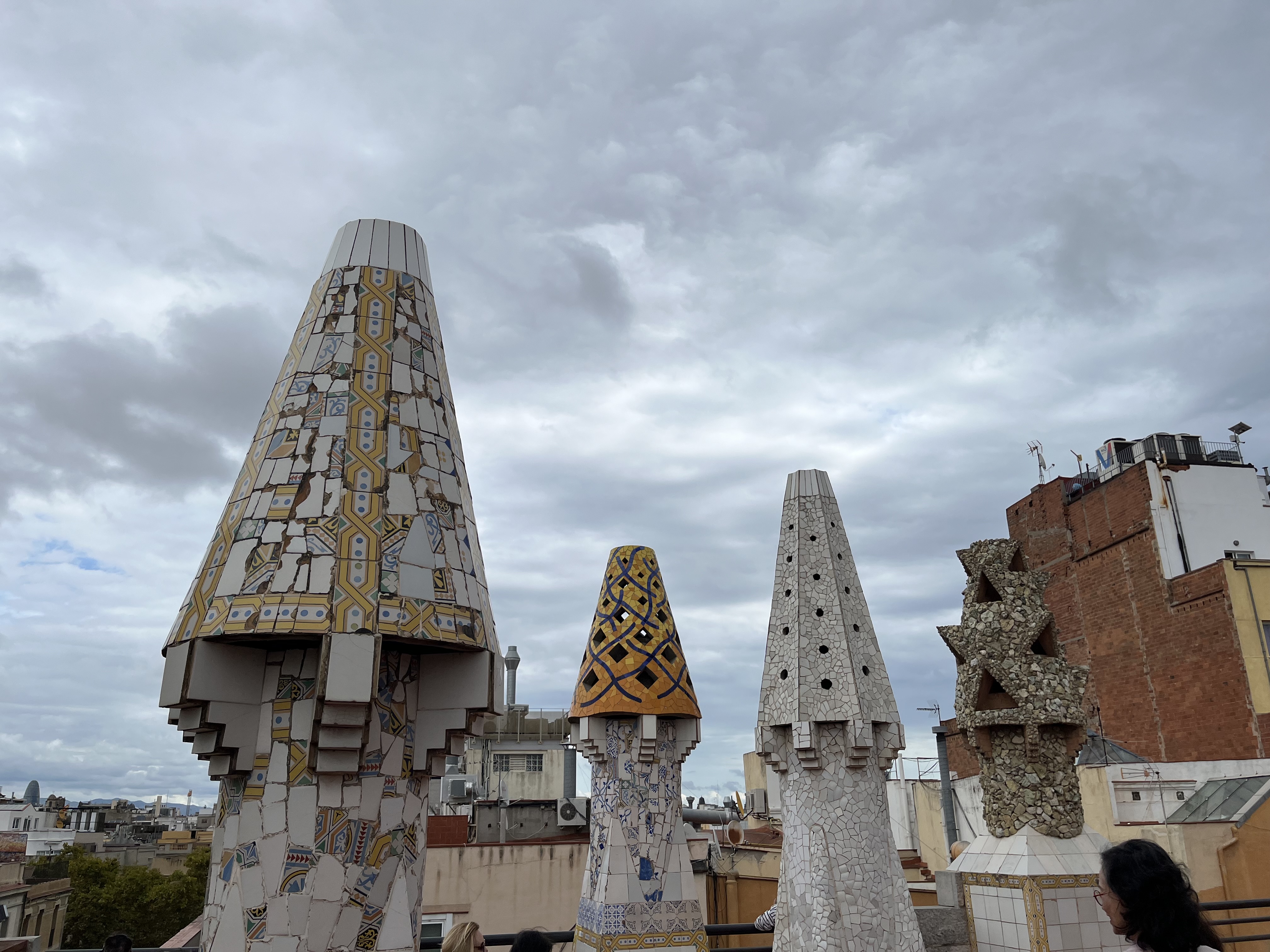
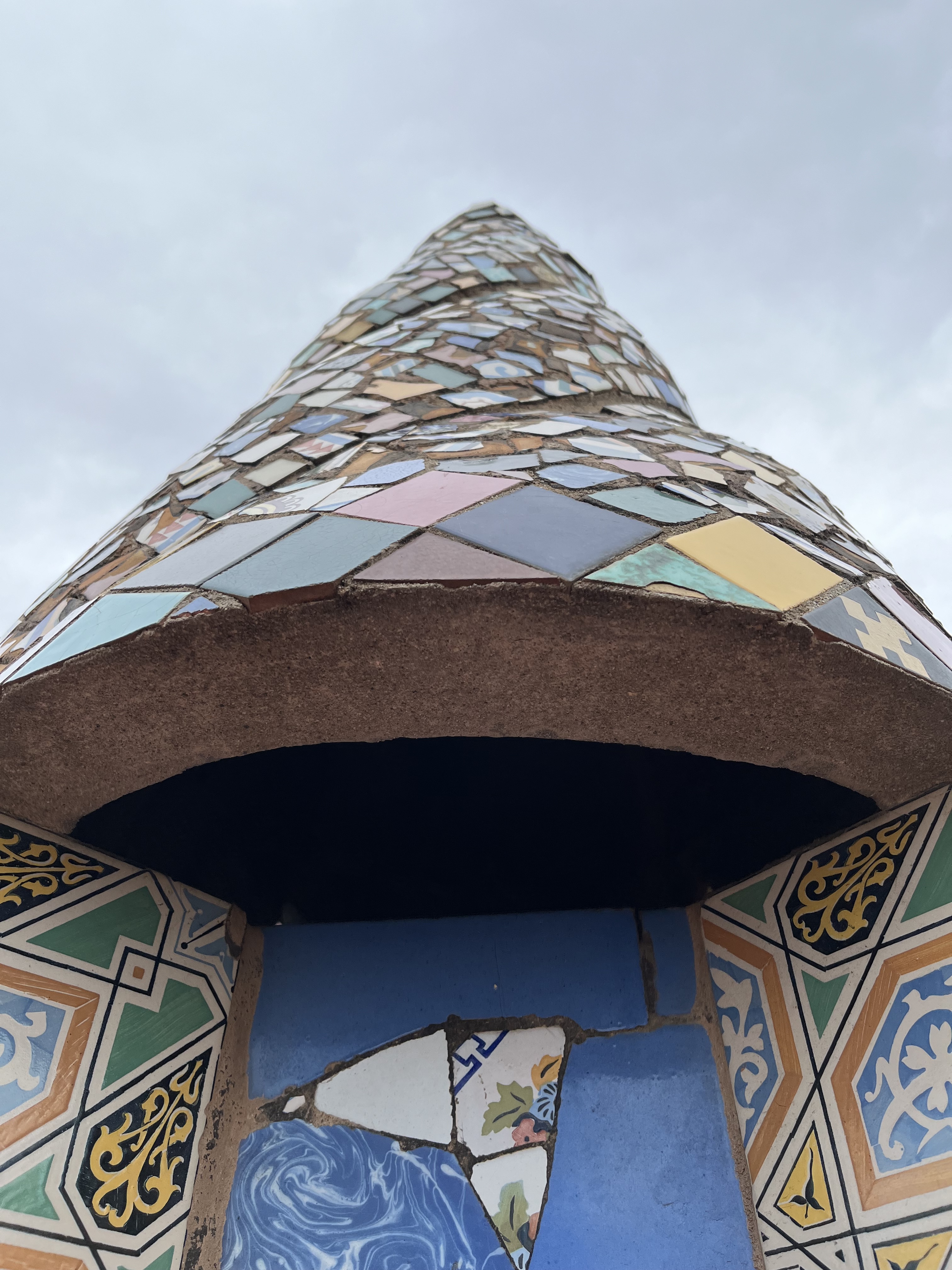
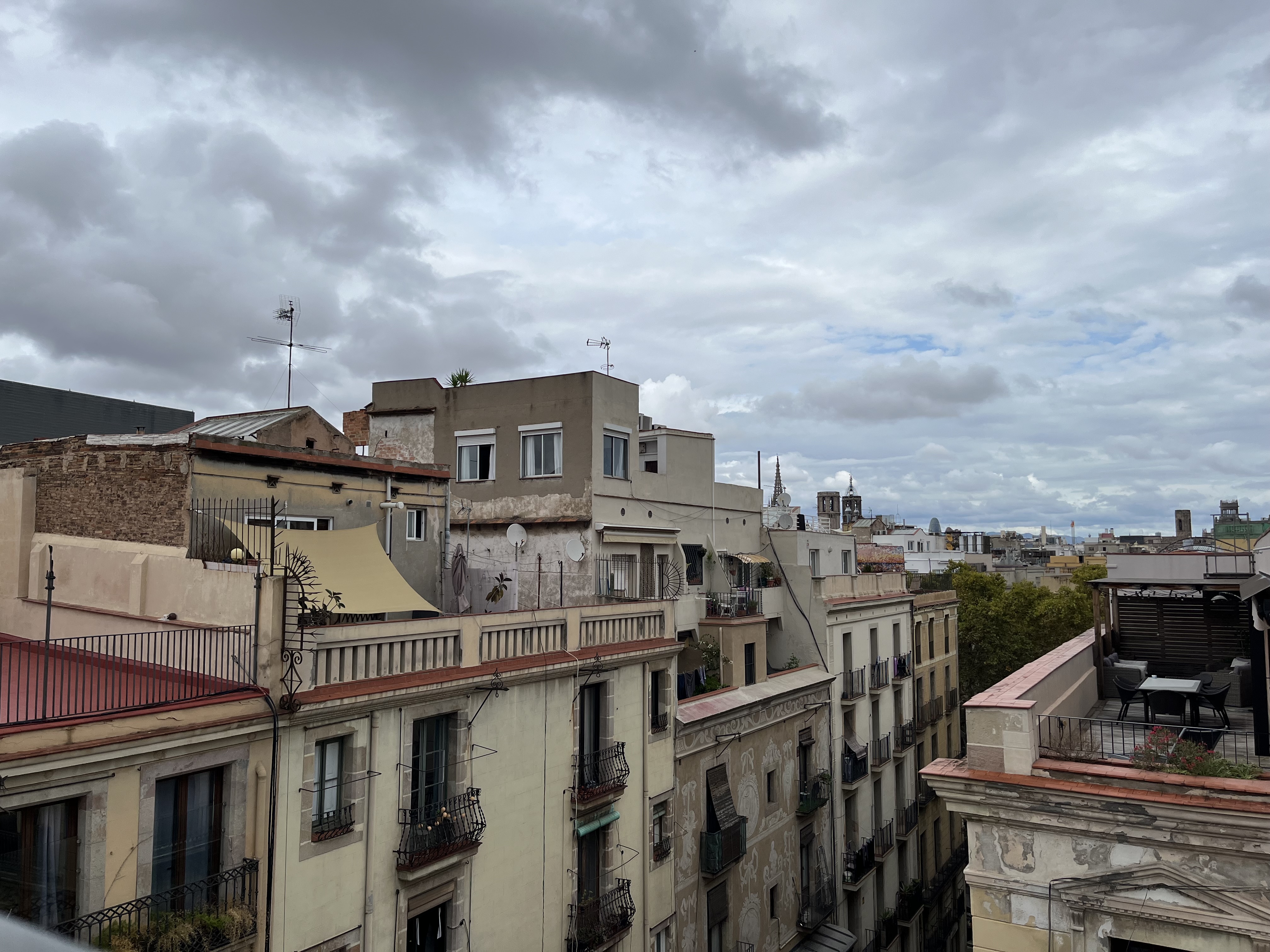
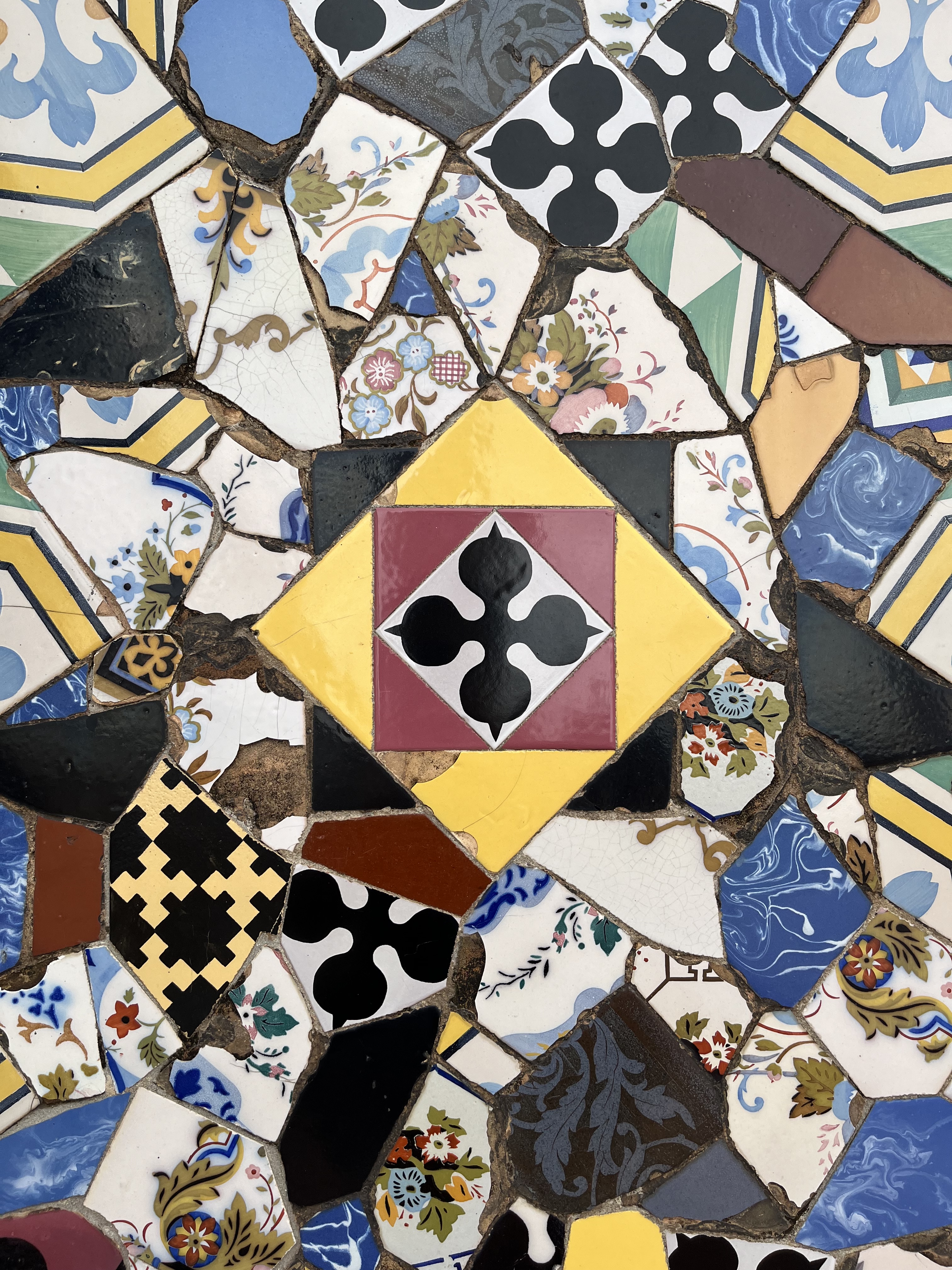
Today’s view of Barcelona is sadly a little lacklustre — the sunlight has been replaced by overcast skies, and instead of glistening like a pot of gold, the Mediterranean is ink-black, dull, uninviting. The streets, too, look like a bad touristic parody of themselves: far down below I spot the Gaudí Hotel, all bright and gaudy (pun not intended) and festooned with Spanish flags, while the buildings surrounding it lie direly neglected, as if all of that council money had dried up immediately after the former’s refurbishment. I’ve had nothing but love for the Barcelonan skyline over the past 48 hours, yet now it appears a little artificial, a little stuffed with cliches.
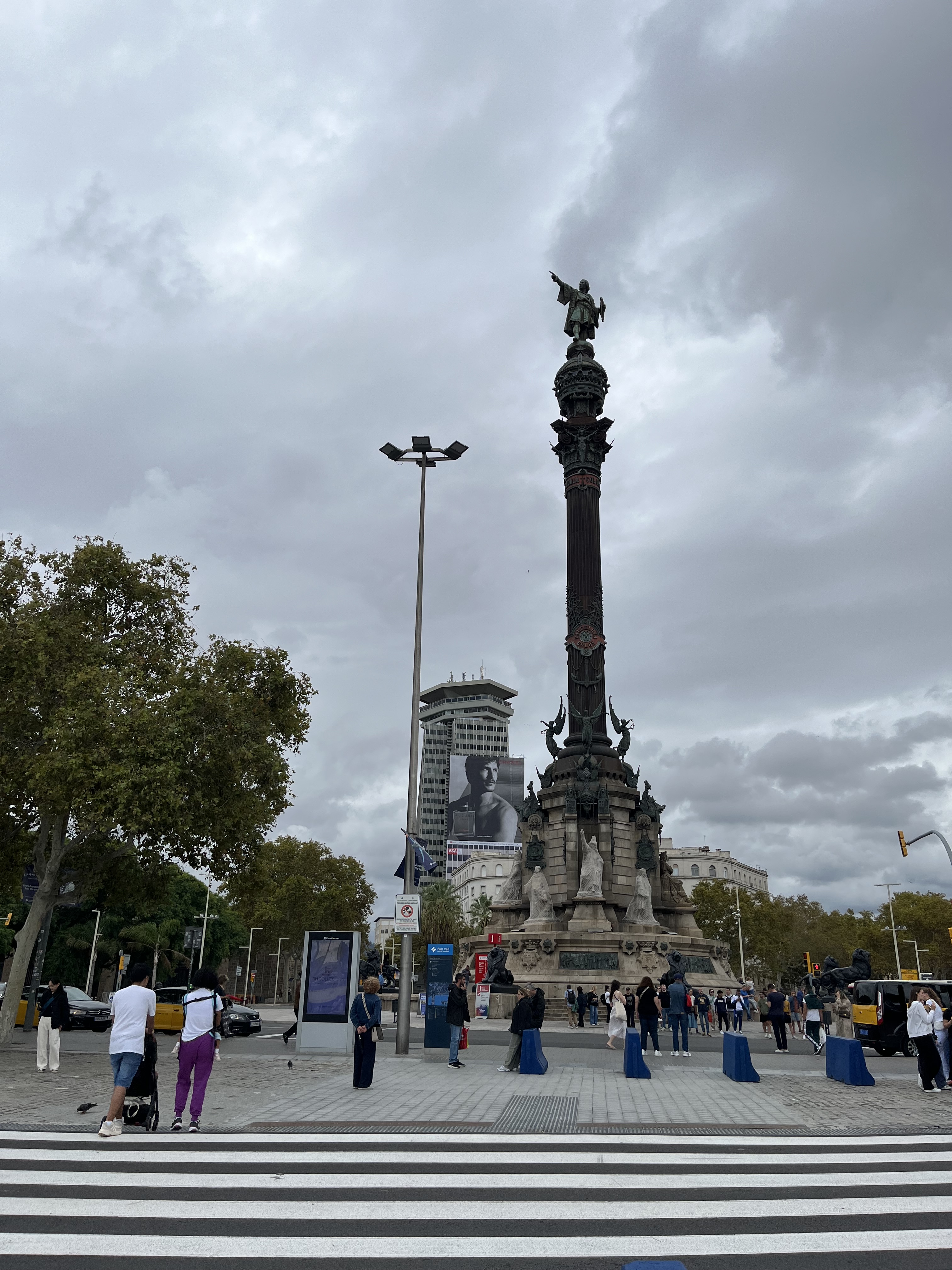
Leaving the Palau Güell, we turn down a couple of side streets. A cool sea breeze, bedecked with flecks of rain, rises as we reach the shore at the Columbus Momument, replete with pedestalled explorer pointing grandly towards the New World, and tourists scrambling around its broad stone base. Then turn around and walk inland, into the shadows of yet another famed European boulevard: this time it is the Ramblas, slowly cobbled together over the 18th and 19th centuries as a gathering place for all things cultural in Catalonia. Two centuries later, its renown has only expanded, and this leafy avenue is now the epicentre of tourism in Barcelona; in the shade of the numerous plane trees stand clouds of cigarette smoke, rows of tatty kiosks, and crowds as far as the eye can see. A huge wall of sound crescendos and envelops us as we step onto the avenue, craning our heads to spot the old signage; it’s barely lunchtime, but the hordes are already in full flow, rubbing shoulders, mixing languages.
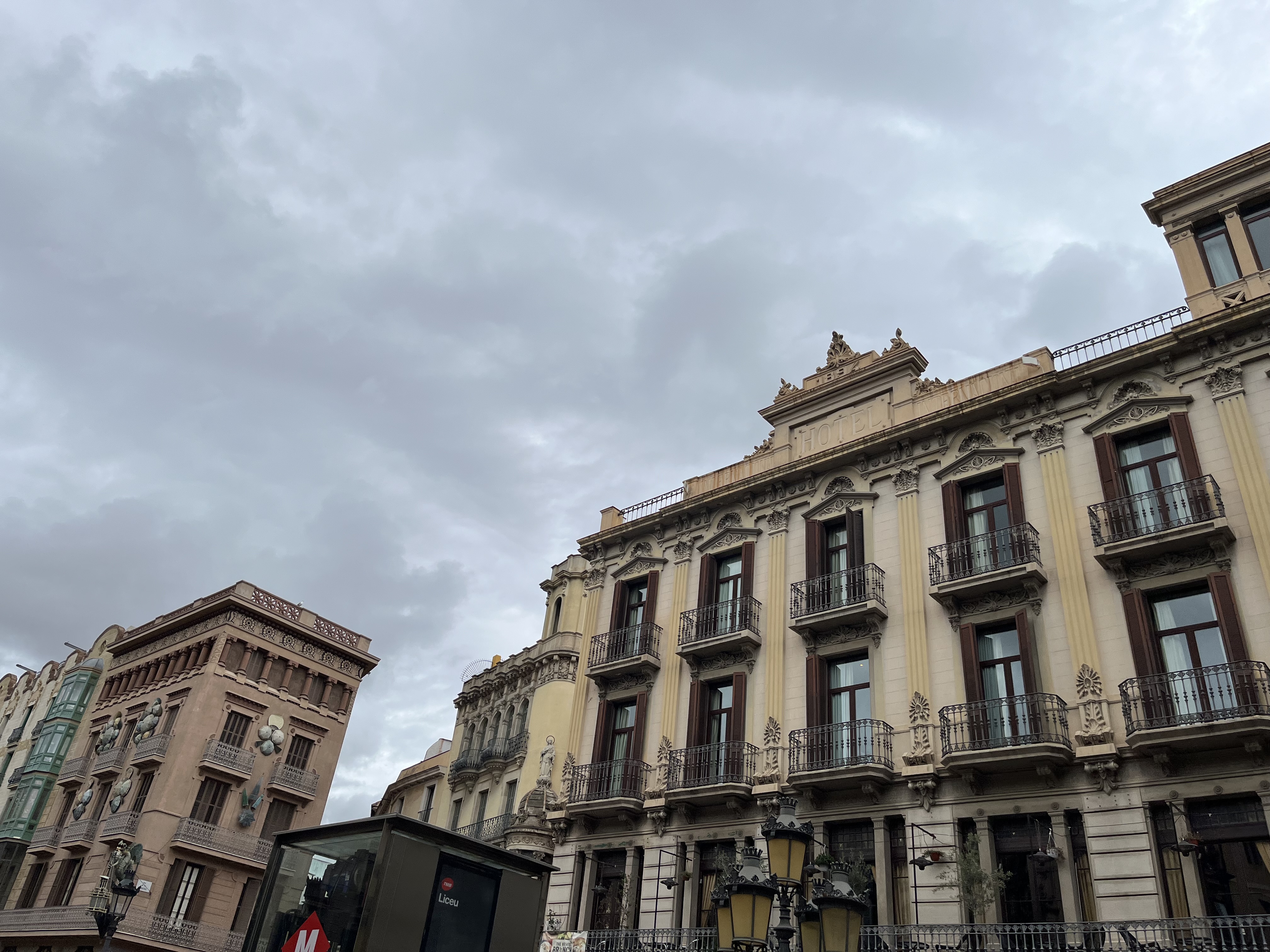
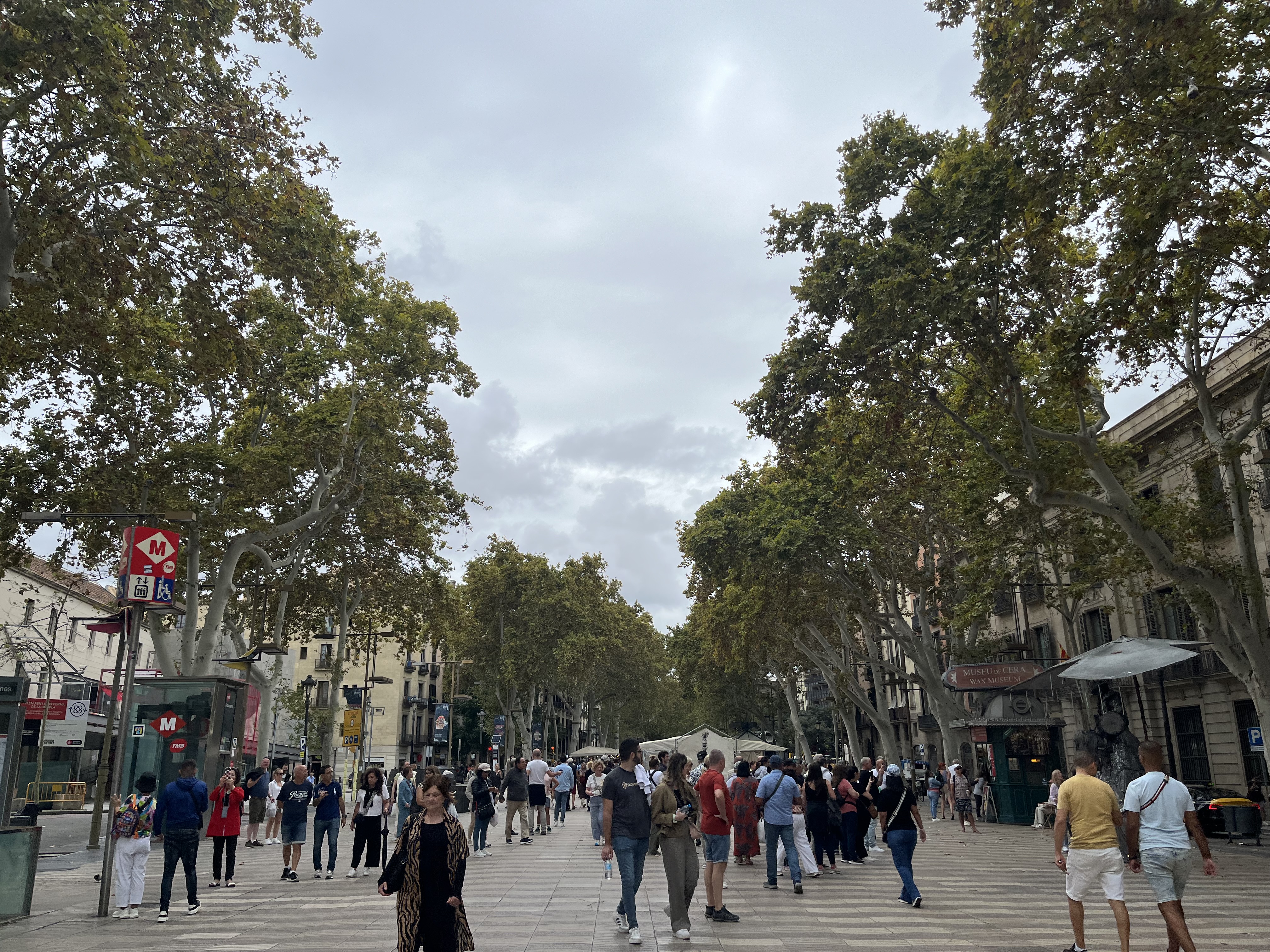
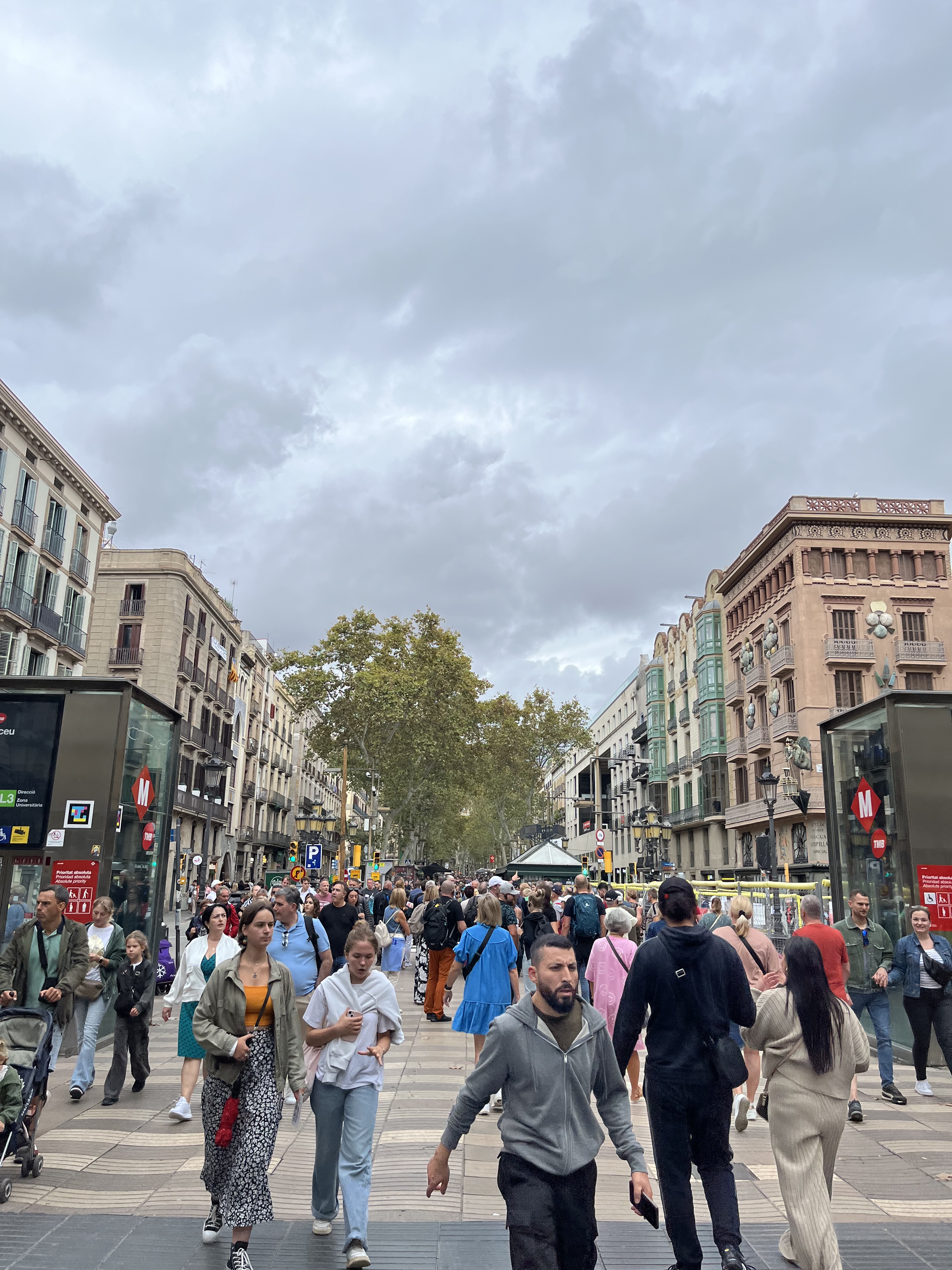
A clarification. The mention of a tree-lined European boulevard may for my readers conjure up images of a bright, wide-open avenue, flanked on either side by genteel cafes and historical buildings like the Champs-Elysees or the Ringstrasse. But tourism has bled deep into Barcelona, and on the Ramblas many a 19th-century structure has been subsumed by cramped tourist shops and restaurants, all explicitly designed to prey on those feckless, reckless travellers who treat cities as nothing more than interchangeable backdrops for their drunken hedonism.
Hence within a few dozen steps, we see the tapas bar that charges way too bloody much, the Irish pub that sits incongruously a few doors down from the Liceu Theatre, and most of all the endless chain of souvenir shops, each selling tawdry fridge magnets and abysmally tasteless T-shirts. (A sample collection from a store by the Carrer de Santa Monica: plain white tee with stencilled “I ❤ Barcelona”. Plain white tee with stencilled “I ❤ Vodka”. Plain white tee with stencilled “I ❤ MILFs”. iPhone 16 phone case. Plain white tee with stencilled “I ❤ doggy style”.) Loud, brain-numbing EDM booms from deep within each store, as if seeking to capture those who wander in by the power of deep techno. If Barcelona is a victim of overtourism, then surely this place, where brash consumerism jars heavily with the classical surroundings, is its location of primary infection.
We turn off the most famous avenue in Iberia and head towards a huge metallic canopy, under which lies the most famous market in Europe. (I have no way of proving that last sentence, but one thing I’ve learnt about Barcelona is that saying something is “the most famous x in Europe” is usually not a bad gamble.) The Mercat de Sant Josep de la Boqueria, or just La Boqueria to people with lives to lead, has stood a stone’s throw away from the city’s most famous street since 1840; originally just a gathering place for fishmongers and butchers, it’s now filled to the brim with stalls selling all sorts of edible matter, some more predictable than others: ham and cheese are obvious wares for a traditional market like La Boqueria to sell, but the huge store selling even huger slushees was emphatically not on my list. At least the colours and the smells here aren’t disorienting like you’d expect them to be; but there are so many of them, each selling things that are only the slightest variation of each other, that it can be difficult to figure out which way you should turn — more than once I find myself thinking “wait, I think I’ve seen these olives before…”
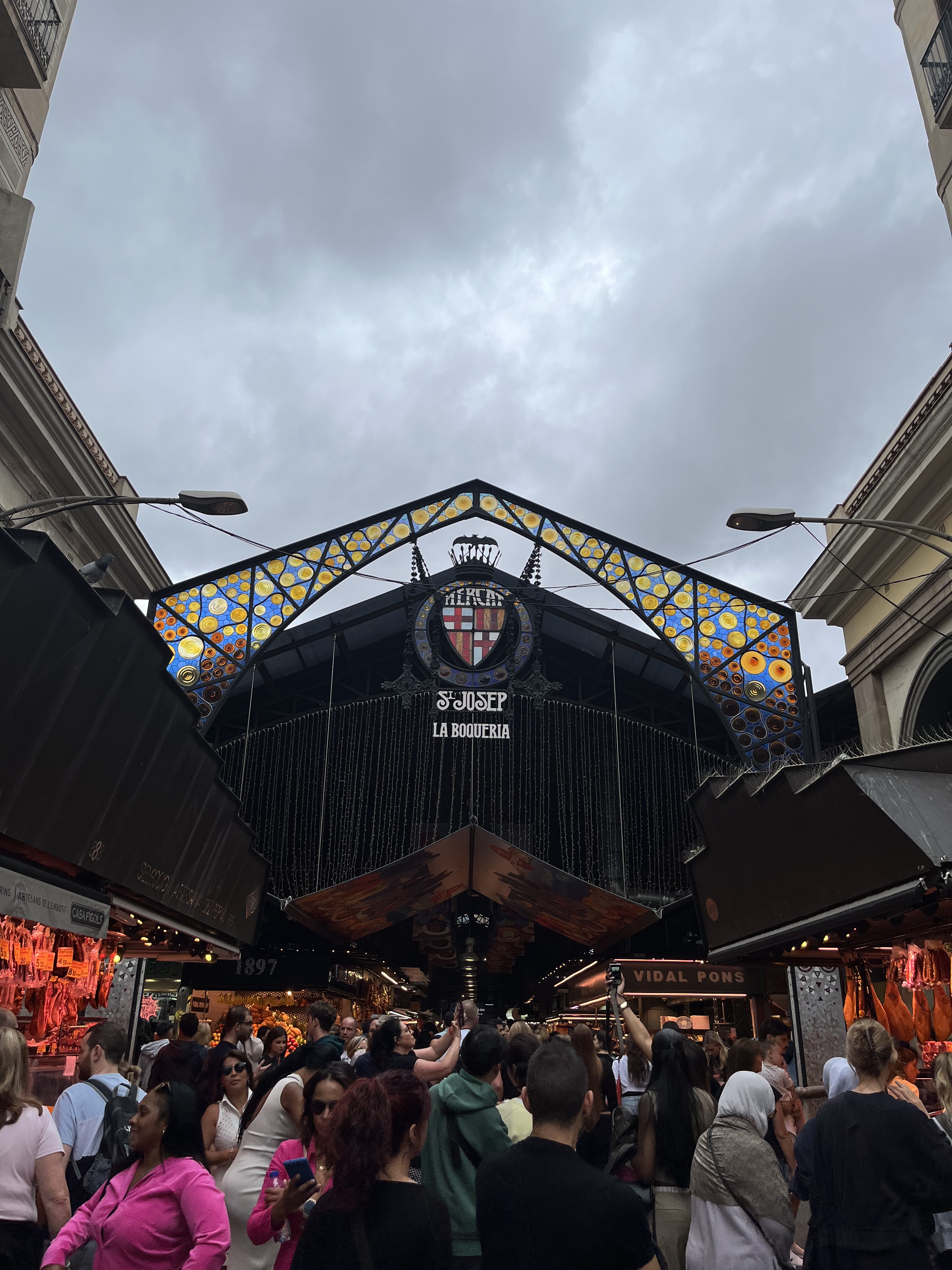
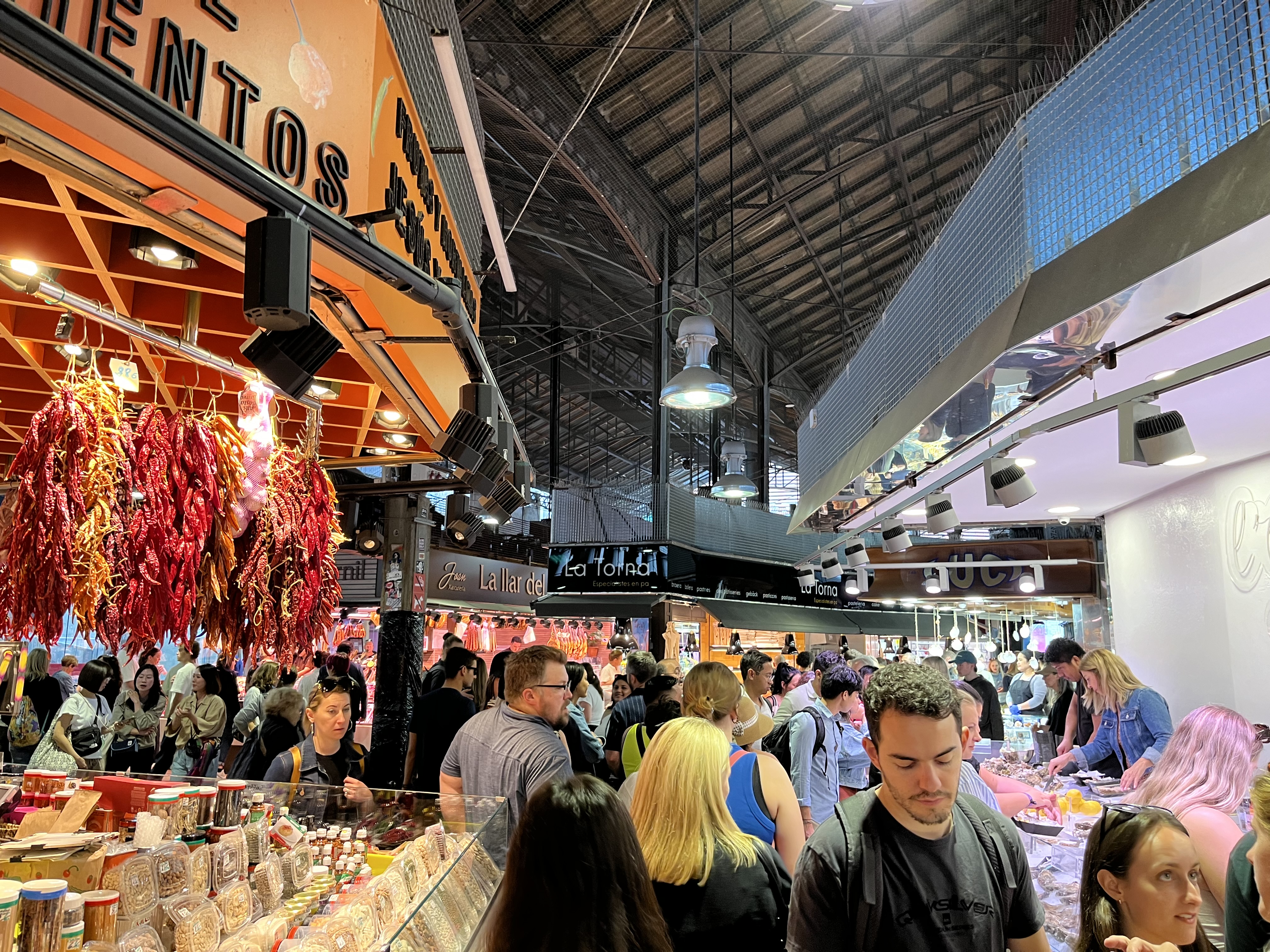
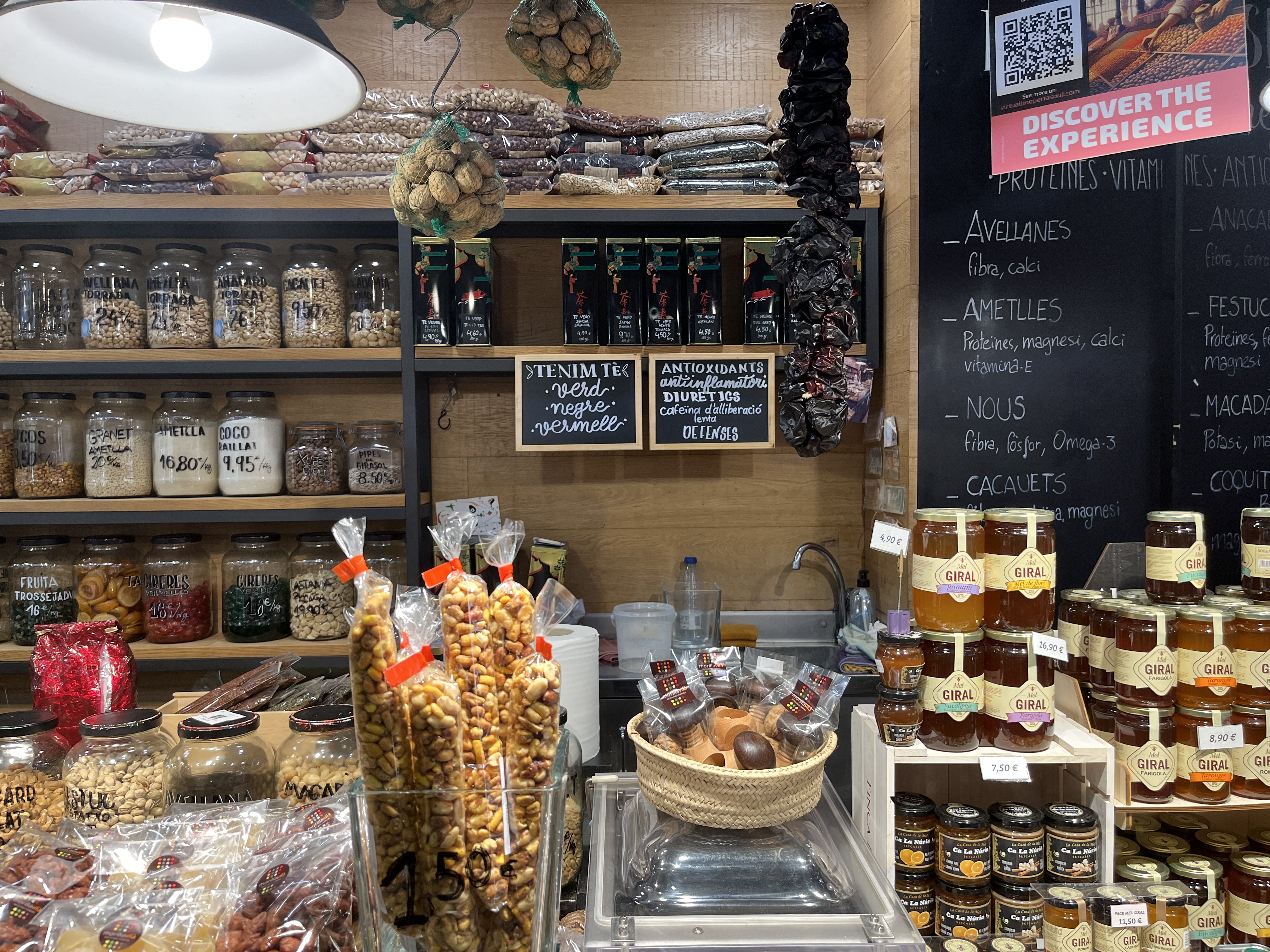
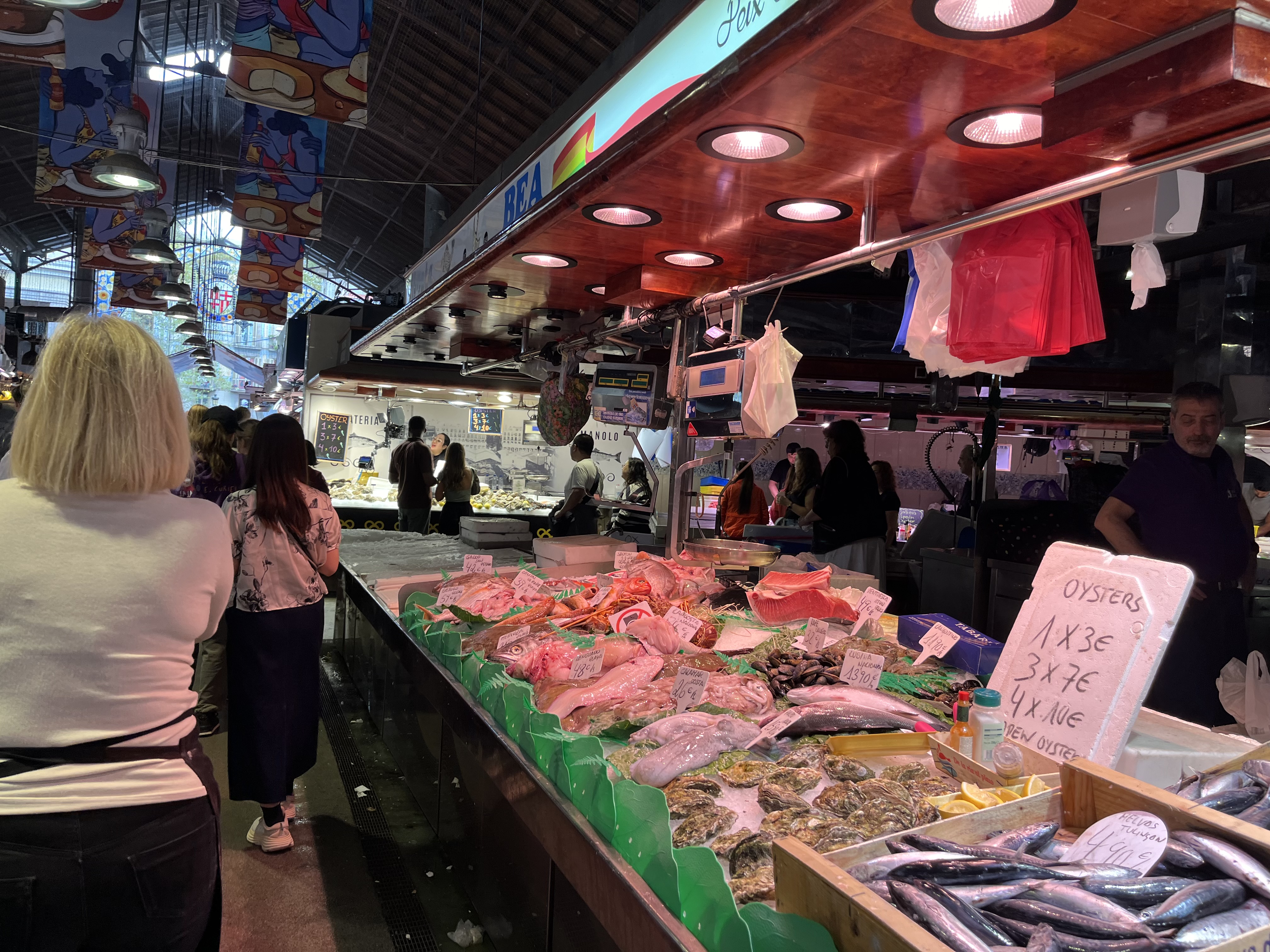
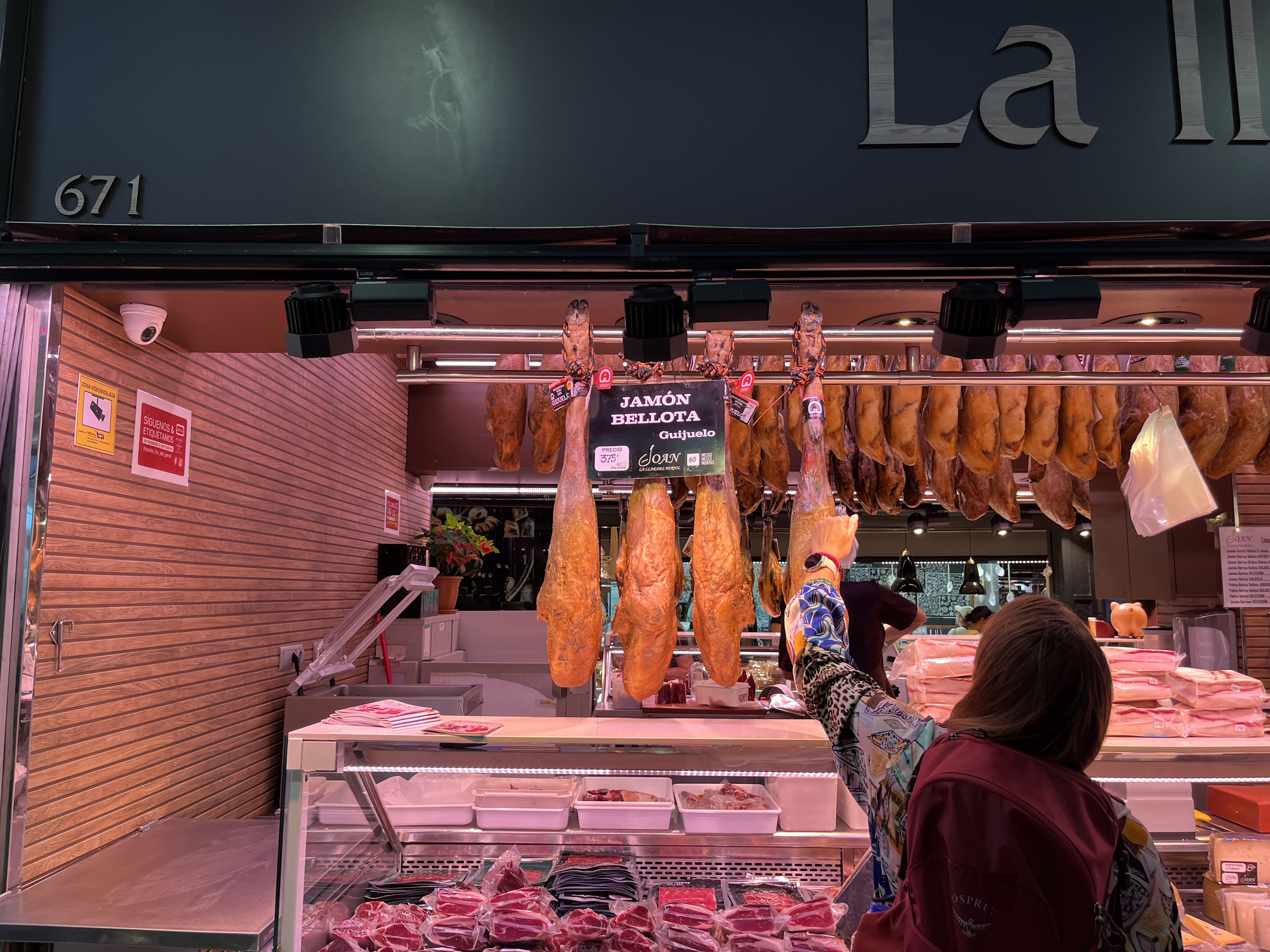
The crowds at La Boqueria are even denser than those on the Ramblas: here I find myself squeezing past crowds of people, a frightening portion of which seem to speak either Cantonese or Mandarin. Some of them just walk past the stalls, nervously not making eye contact with the all-too-eager vendors; others munch distractedly on their cones of jamón or chorizo, trying to separate the wheat from the chaff. But rich rewards await those prepared to throw themselves at the mercy of the sellers, and this latter category includes Samuel and Grace, who taste-test a wide variety of cuts from one of the shops near the back of the market. Despite the slight language barrier their interaction with the staff progresses at lightning speed, and pretty soon the pas de deux is complete, my cousins are loading their bags with multiple packs of dead pig, and I am teaching one of the counter staff to say “tastes good” in Cantonese. As it turns out, he already knows how to say it in Mandarin.
After a very rowdy lunch (during which we find ourselves sitting next to a wedding party), we turn away from the bustle of the Ramblas, and dive into Barcelona’s Gothic quarter, the oldest part of town. The Barcelona we’ve seen up to now has been nothing but colour and glamour (if somewhat faded today), but now the Quarter provides the exact opposite: here one finds the cradle of all mystery and intrigue in the city. Here the afternoon light, already weak due to the cloud cover above, barely penetrates down past the second floor, and so we find ourselves wandering along some shady but deliciously cool alleyways, some of which are barely wide enough for two people to pass each other. It might as well be something straight out of pulp fiction, except these are actual places, pulsing with residents aplenty: as we turn down yet another narrow path, I lift my eyes to the heavens and see a stack of balconies, on which loaf the residents of Barcelona. A little girl thirty feet up waves hello to my father, who bemusedly waves back.
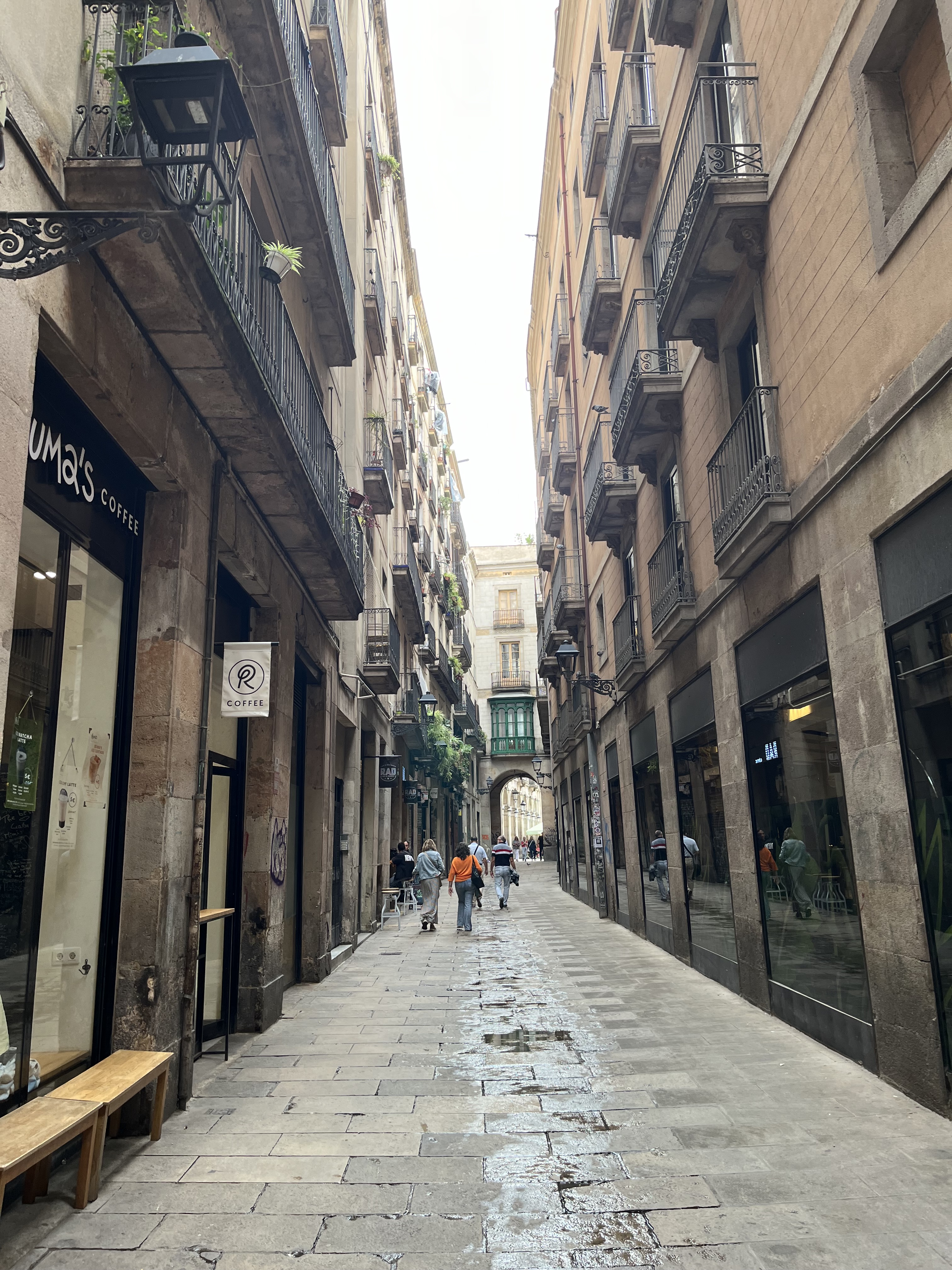
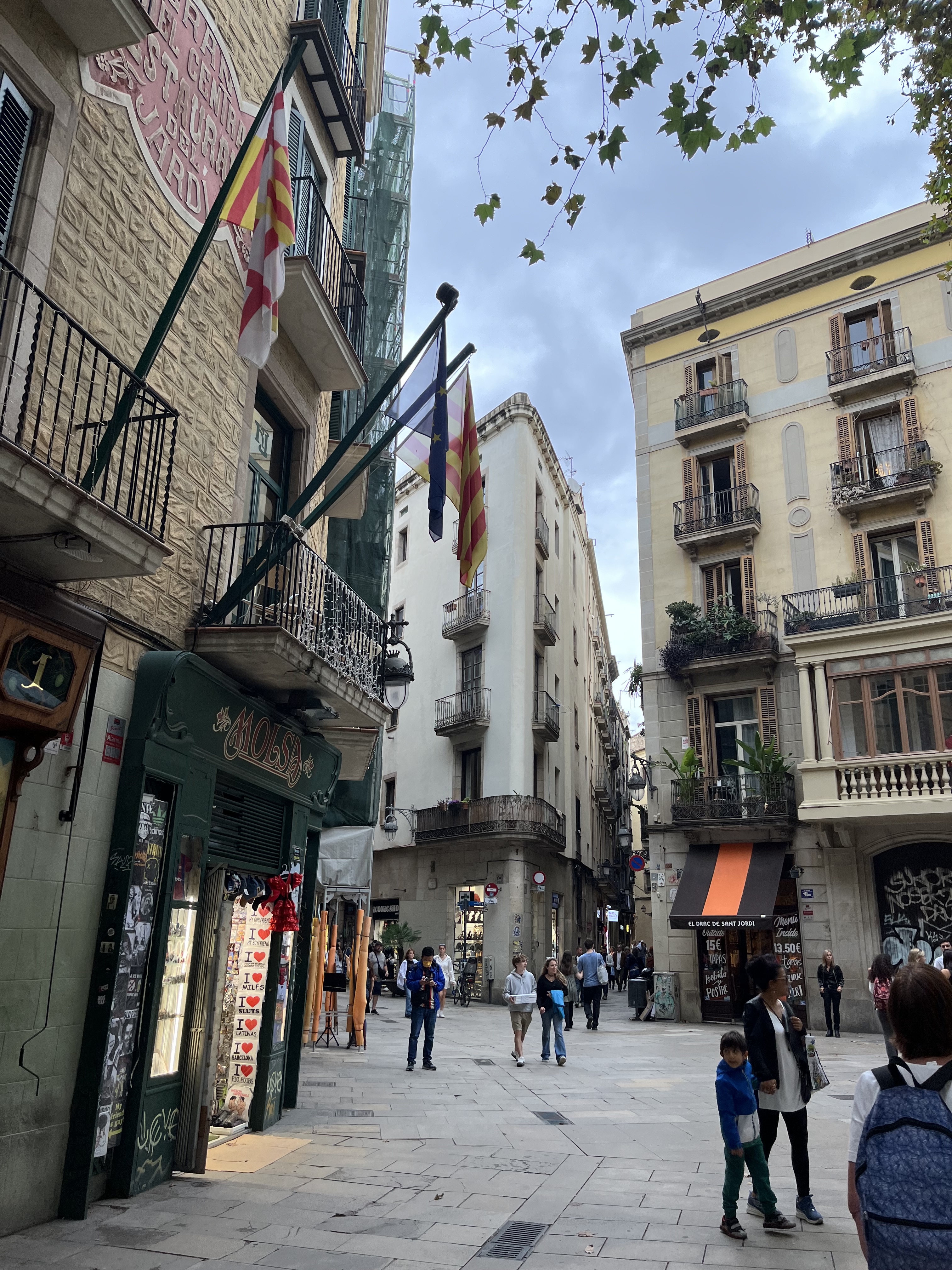
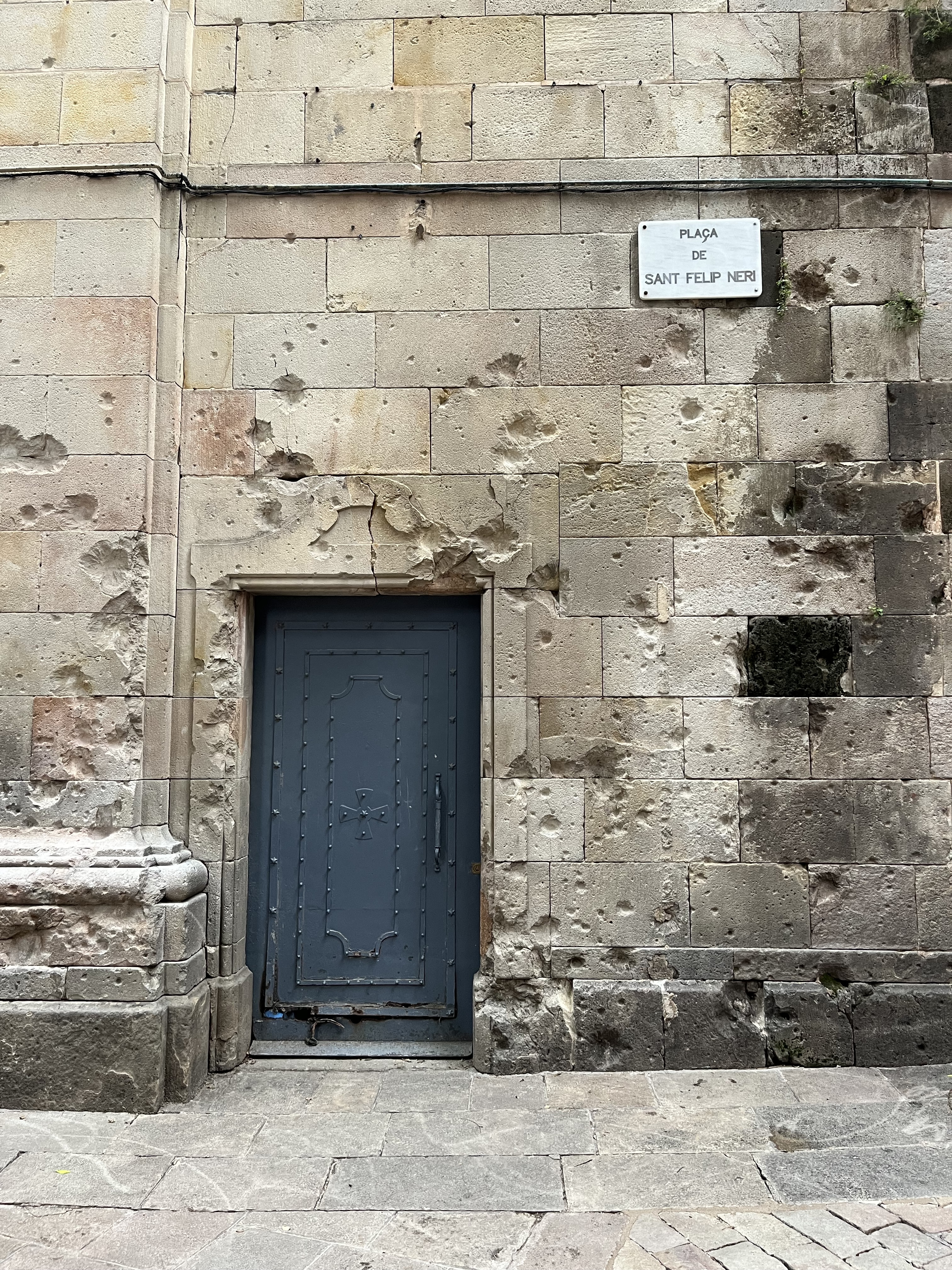
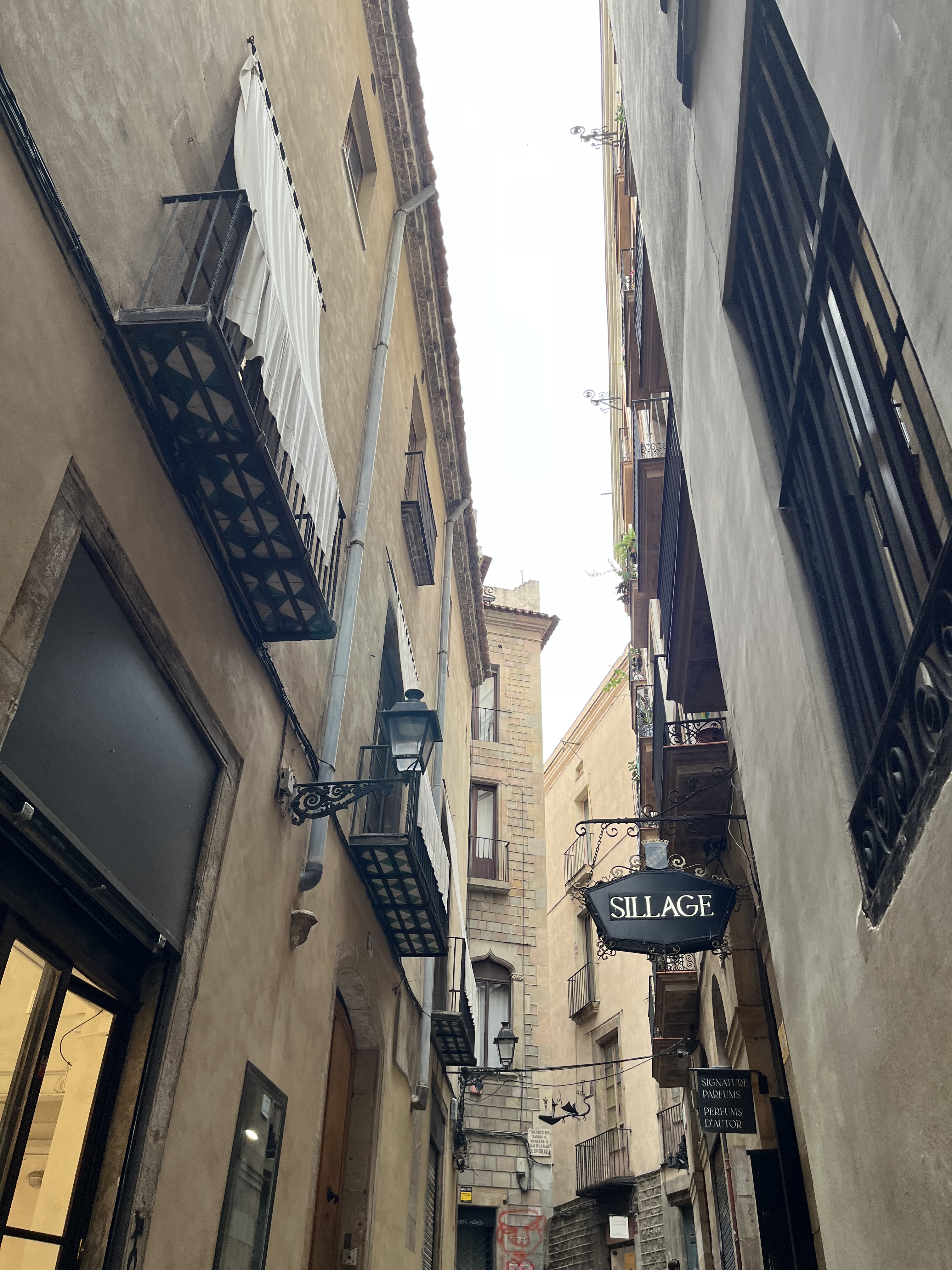
Some of the mystery about the Gothic Quarter, I presume, comes from the establishments: there are no shortage of shops in these alleyways, some of them selling schlocky tat, but others have a genuinely intimate vibe, all softly-lit and crammed to the ceiling with trinkets and bygone delights; step into one, and you might just come out of it with a priceless 16th-century leather-bound novel. But most of all I think it comes from how you never really know what’s coming next — you might turn a corner, for instance, and find yourself in a honking big square, with no sign of the cramped laneway that you’ve just left; or you might suddenly see a church, pockmarked with a thousand bullet holes, and be reminded of the guerilla fighting that took place here in the last days of the Spanish Civil War. In The Shadow of the Wind characters melt in and out of these alleyways, and live in shadows that always lend themselves perfectly to treason and murder. One should never really confuse literary depictions for the real thing, of course, but I do fancy that behind each doorway lies another adventure, another chance to turn my life upside down.
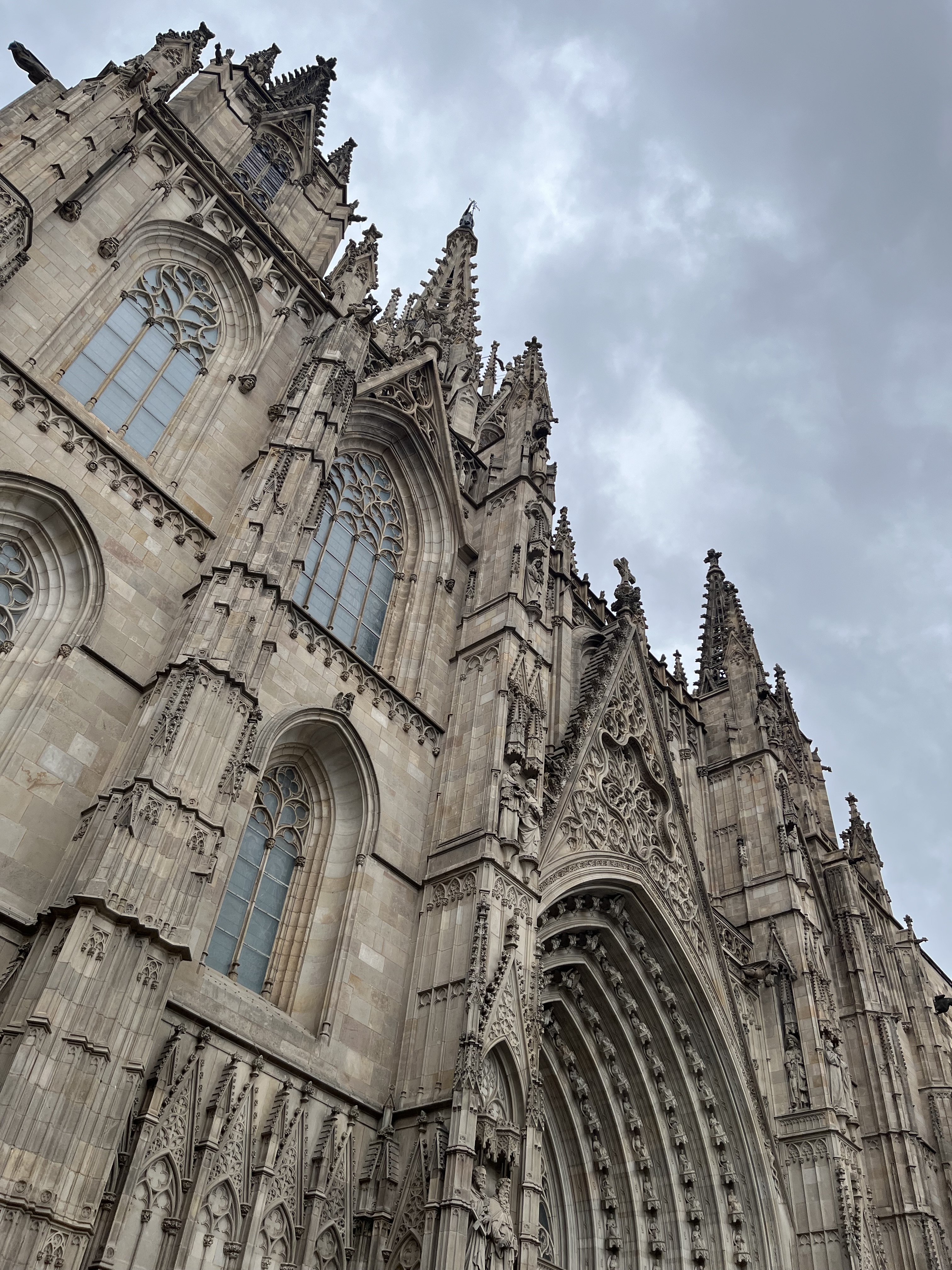
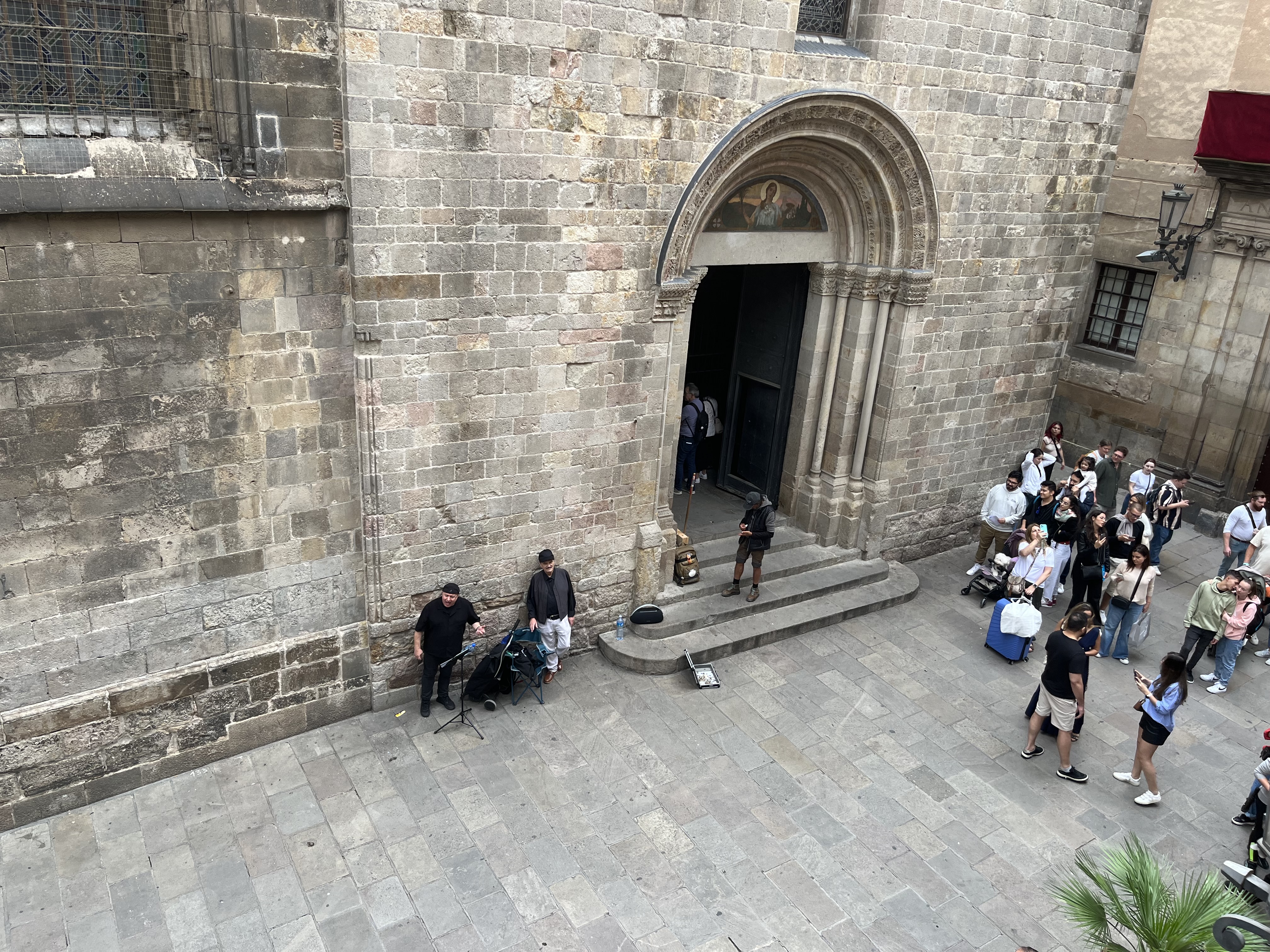
We join a flow of people that’s just emerged from the narrow lane to our left; the crowds slowly thicken as we press on. Some brief sunlight breaks through just as a corner is turned, and there right in front of us is Barcelona Cathedral, the other big church of the city. Sadly, it is already closing at this early hour in preparation for evening vespers, so we settle for exploring the shady Roman-style courtyard of the 12th-century building next door — which I later discover is the city’s archives. Am just admiring my reflection in the funhouse mirrors inexplicably placed on the upper level when I hear, from the alleyway below, the sound of a busker bellowing songs while his friend accompanies him on the violin (or maybe it’s vice versa?). He may strain a bit on the high notes, but his vigour and volume more than make up for any technical deficiencies: at one point he launches into “Funiculì, funiculà” with such gusto that several people at the end of the street snap their necks around with the force of a chiropractor. This alone is enough for me to slip him a few coins from my pocket.
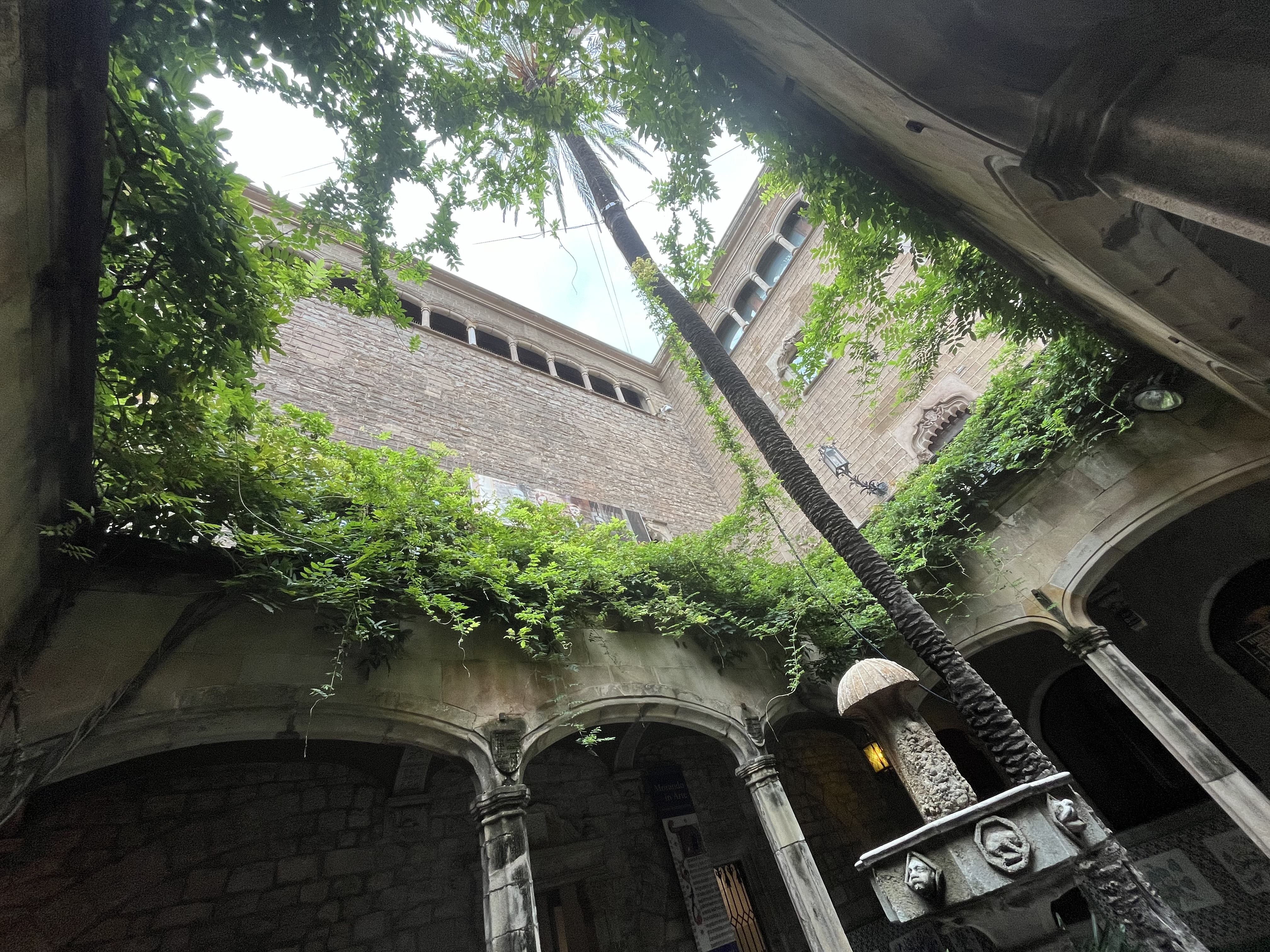
Five thirty. The skies have clouded over once more, the autumnal light is beginning to dim. It is too late for tea, too early for dinner — so obviously, the best place to go is yet another museum, this one suggested to me at the last minute by my boss at work.
It is at this point that, having danced around the subject for two weeks, I must tackle the situation head-on. Yes: despite being a metro nerd, I completely forgot about checking out Correos metro station while I was in Barcelona, even while passing right through it on this part of the journey, and for that I am beyond inconsolable. The other issue I have been dancing around is that of Catalan independence: those of you who have been following Iberian news in the past decade or so will no doubt be apprised of the region’s frequent and often desperate attempts to secede from the rest of Spain, which began pretty much the moment Catalonia was snapped up by the Bourbons in 1714. Despite repeated and often brutal efforts to stamp it out in the three centuries that followed, Catalan nationalism has never really gone away — and now we find ourselves at the Museum of the History of Catalonia, quite possibly the motherlode of the secessionists.
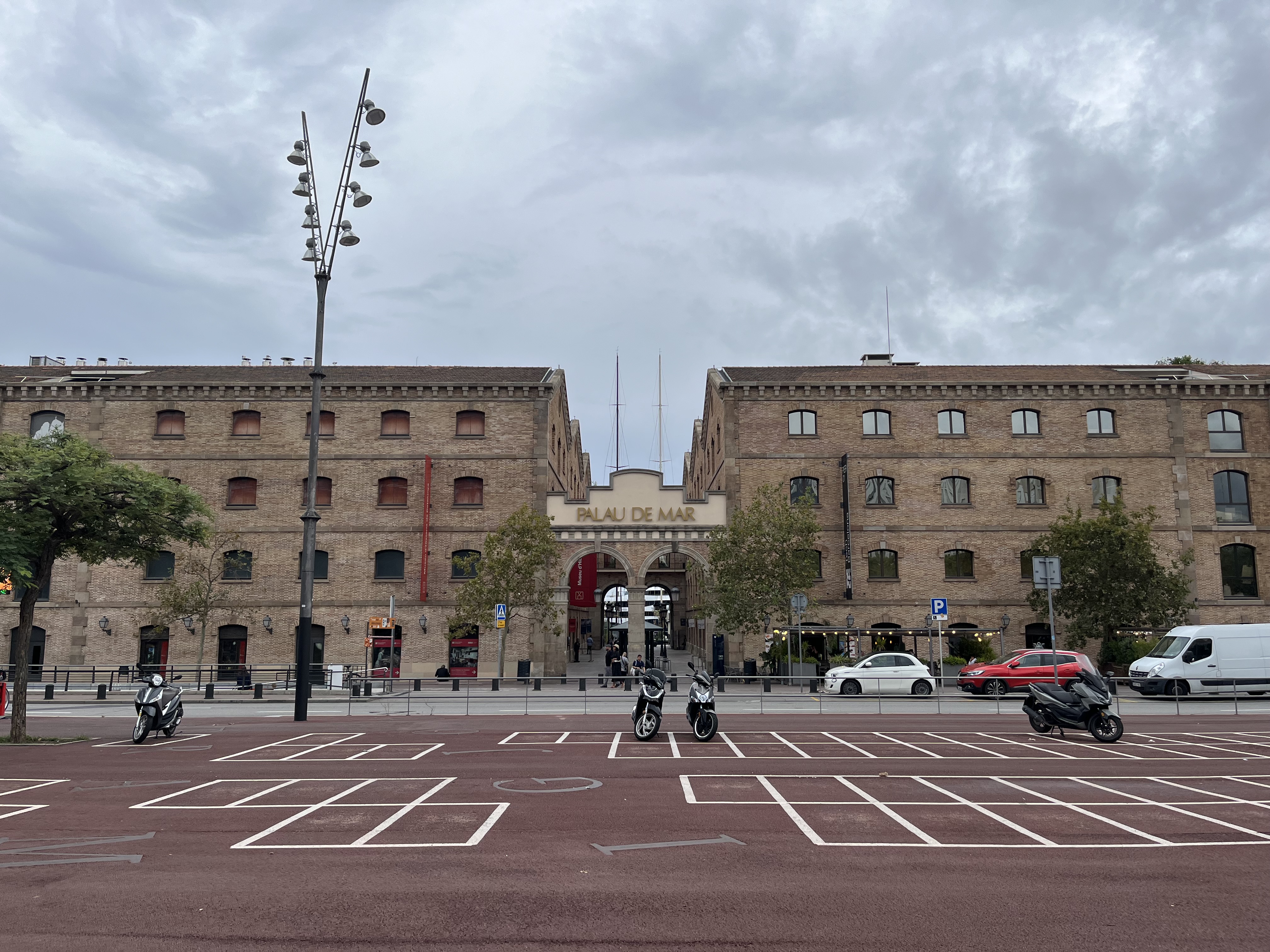
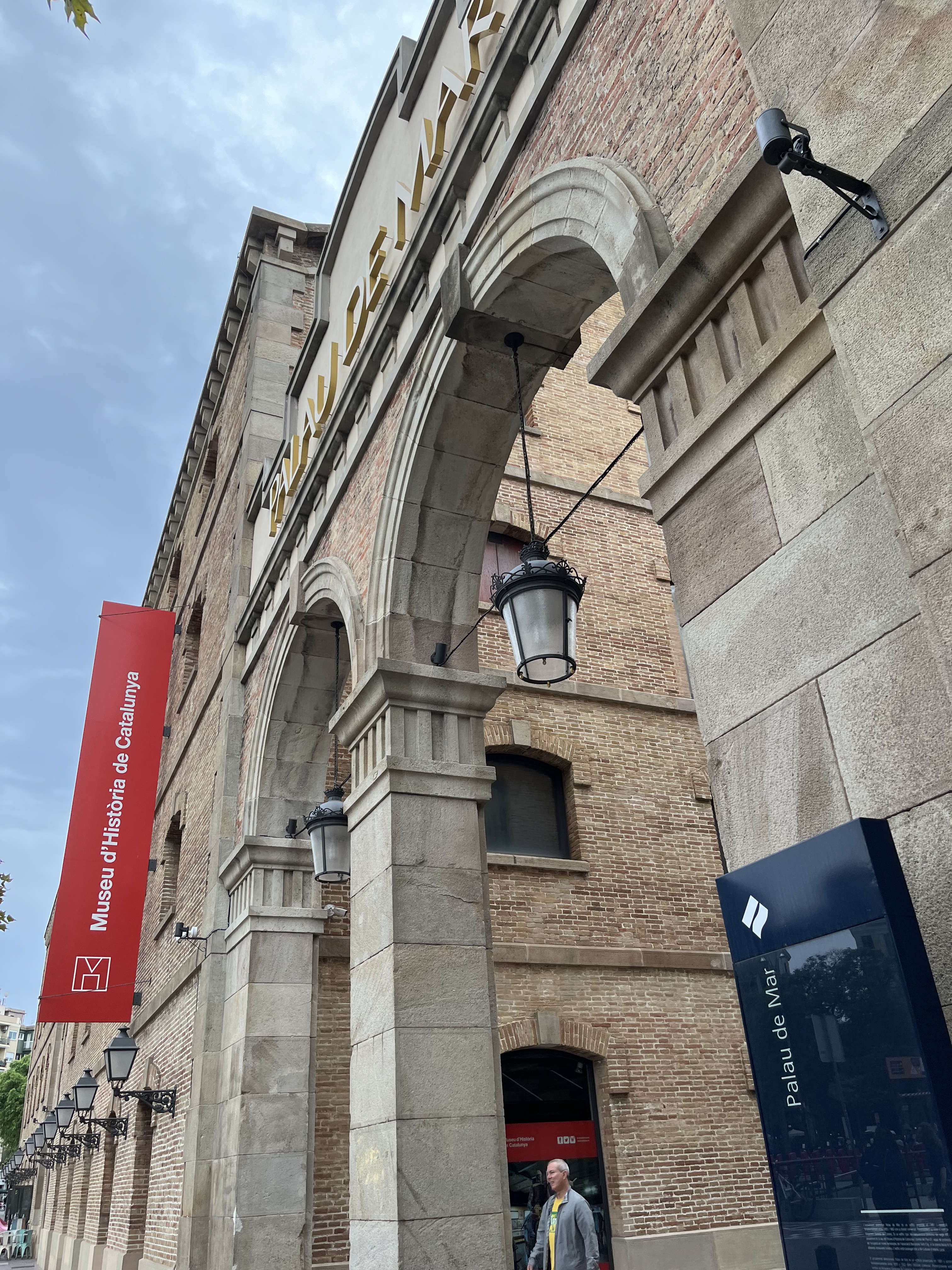
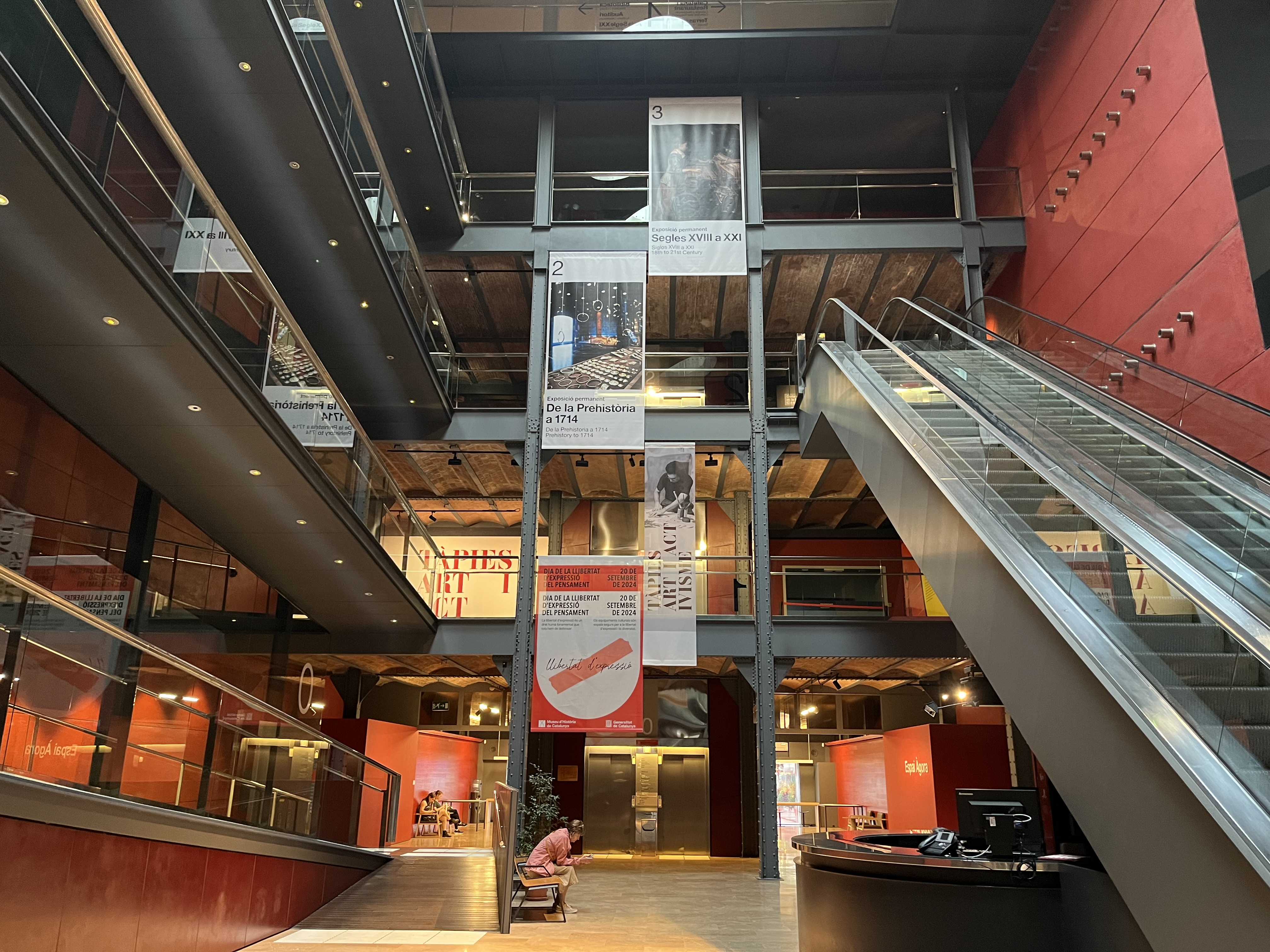
The entrance to the museum is tucked away within a series of warehouses, which used to form Barcelona Port and have now become your average seaside restaurants. Eventually we locate the entrance next to an almost identical-looking bar and step in, where we are greeted by a genial man who looks frighteningly like the receptionist at our hotel. Staring at the prices board behind him, I work my maths out loud: there are seven people in our party, six of whom are adults; one of our party is over 65, so that should be reduced price; so that would mean a total of €49.50. The receptionist calmly waits until I have finished rattling off this very long spiel, before saying, with impeccable timing, “well actually, entrance is free today”.
“That’s my kind of museum,” says Auntie Rita in response.
Unburdened of expenses, we head upstairs. The words “history museum” may conjure up sober images and balanced views of history, yet within the first few minutes it becomes blatantly clear that such a thing does not exist within the Museum of the History of Catalonia. If there is an argument for Catalan independence, whether it be historical or cultural or political, this museum will expound on it at considerable length; throughout our walk down the permanent exhibition, the display panels repeatedly decry the tyranny of the boorish Castilian government while vigorously portraying Catalonia as a place of enlightenment, and innovation, and harmony. No doubt Madrid’s dominance has been the cause of certain horrific episodes in the region’s history, but after a while the explicit partisanship begins to grate on me — surely there must have been some progress towards a mutual understanding, some acknowledgement of any good that’s come from its time in Spain? But if there is, then the museum never talks about it, and there’s a persistent sense of dissatisfaction as I progress through this imperfect catalogue.
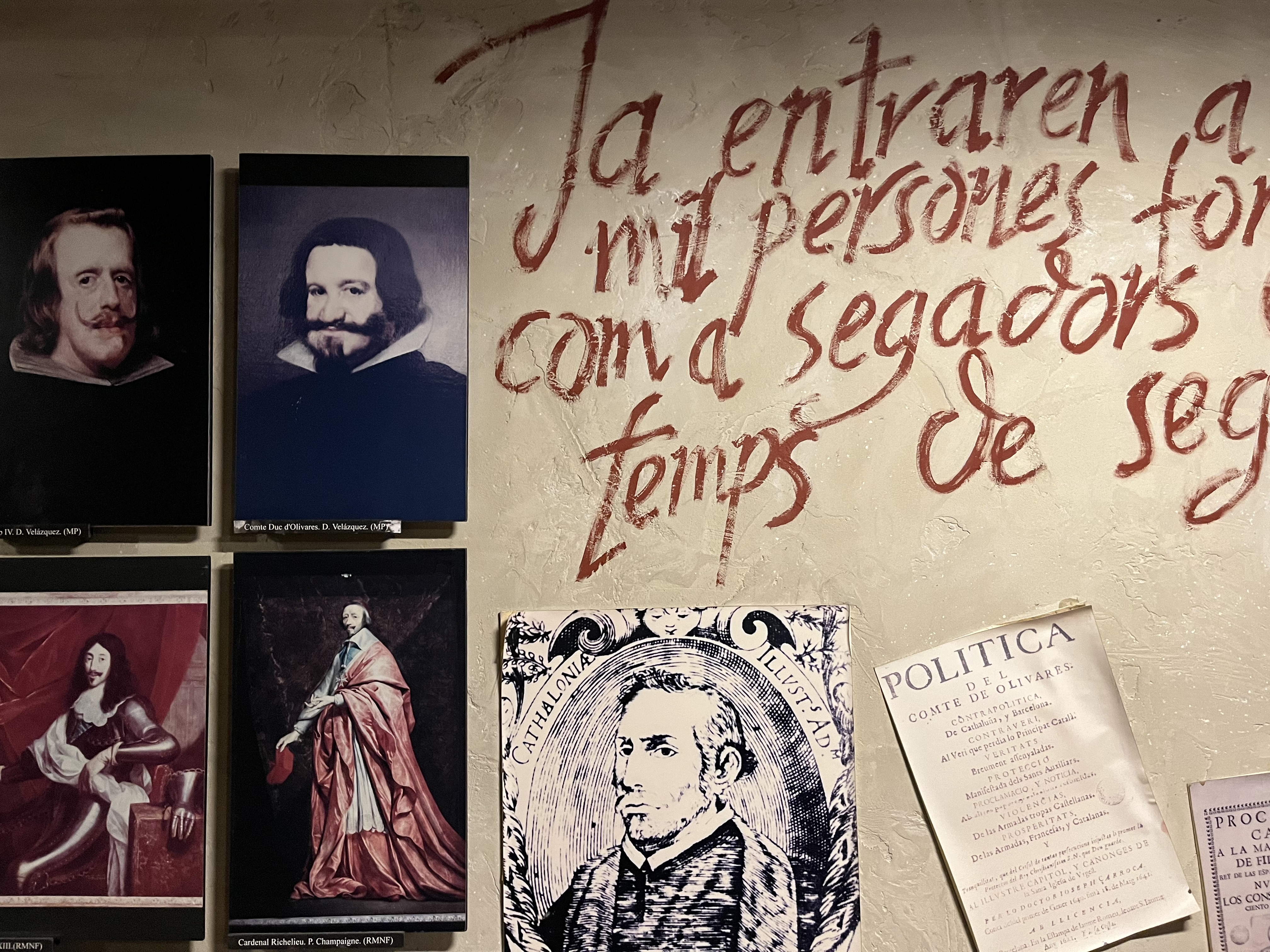
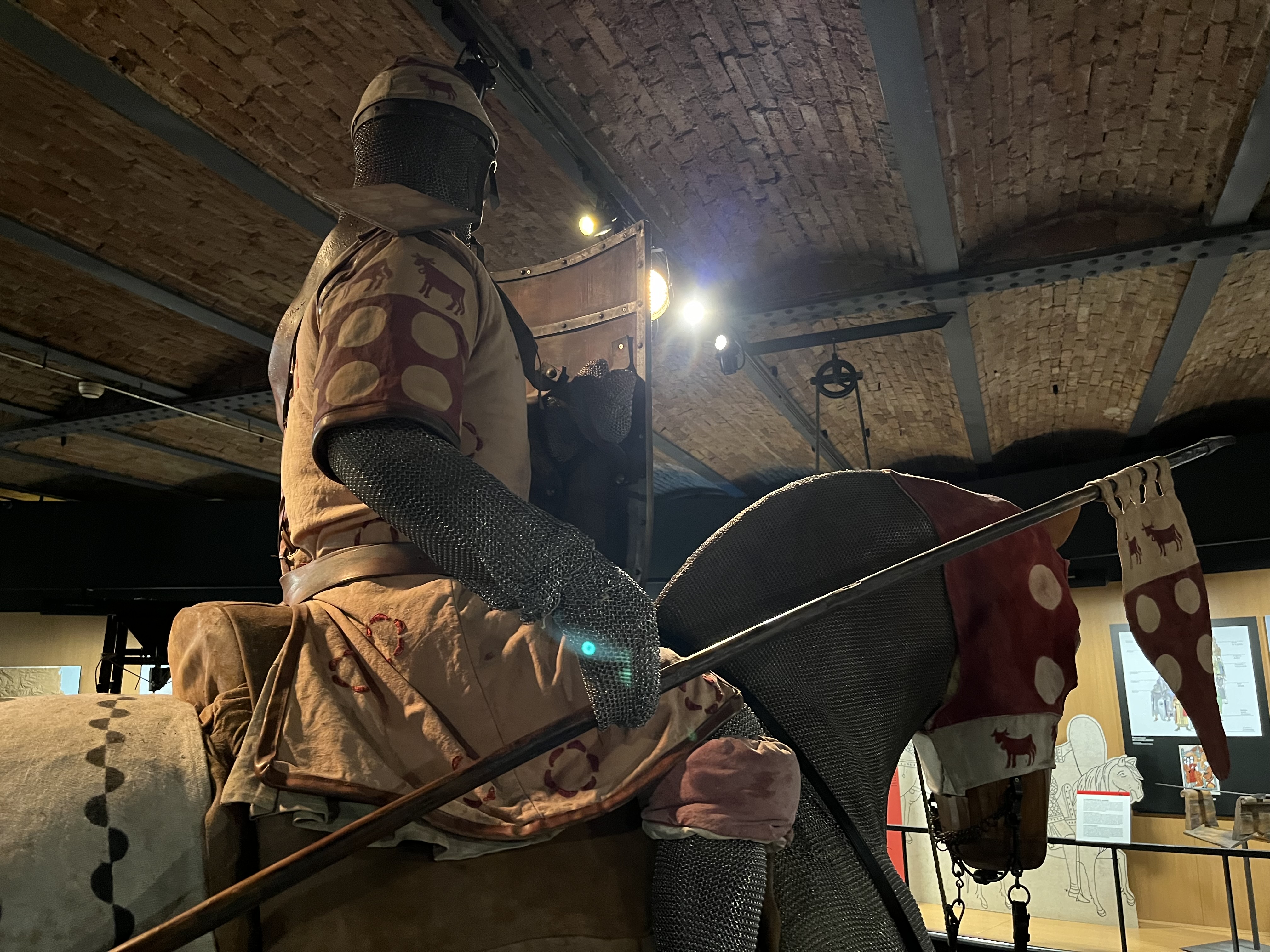
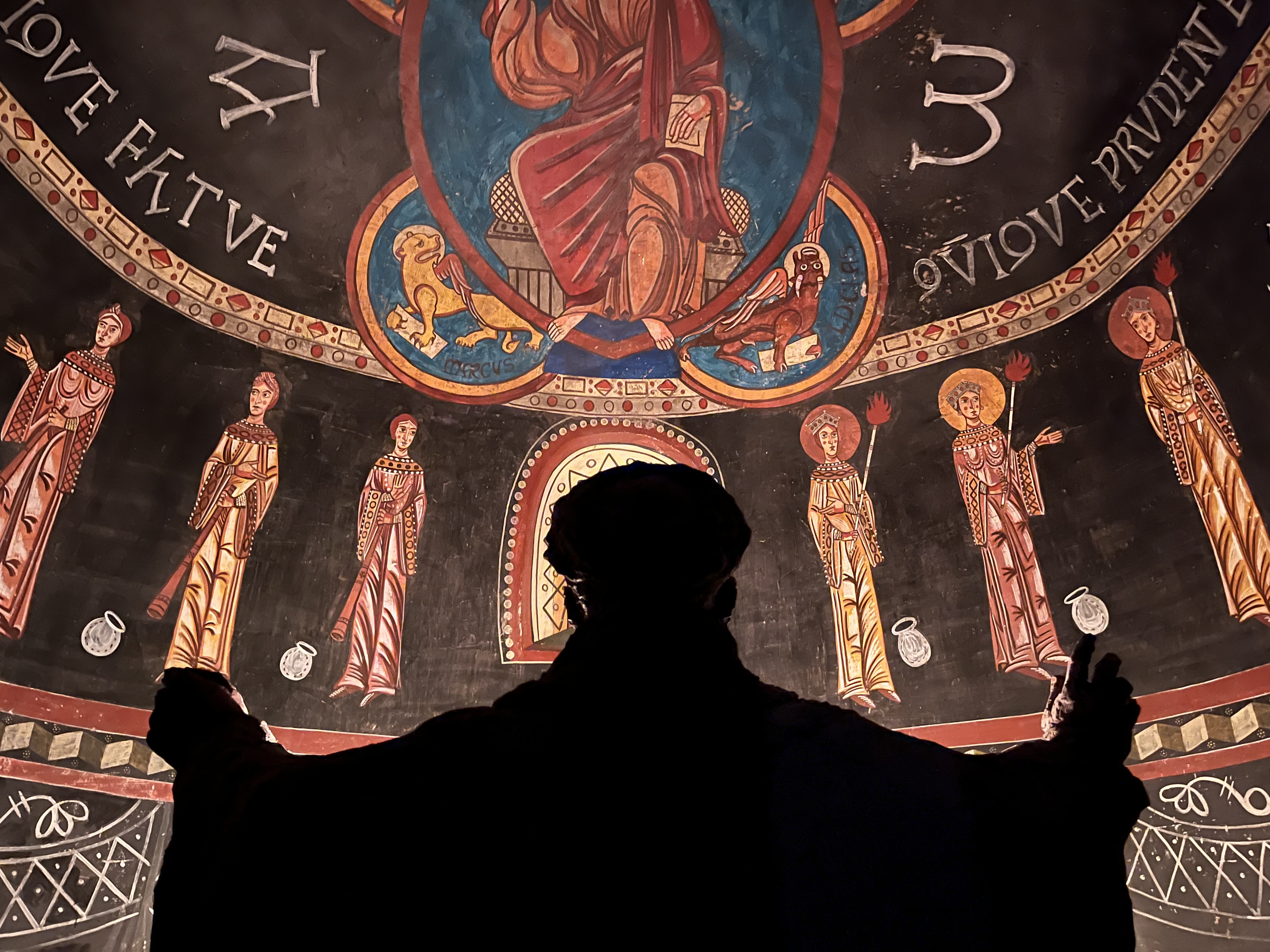
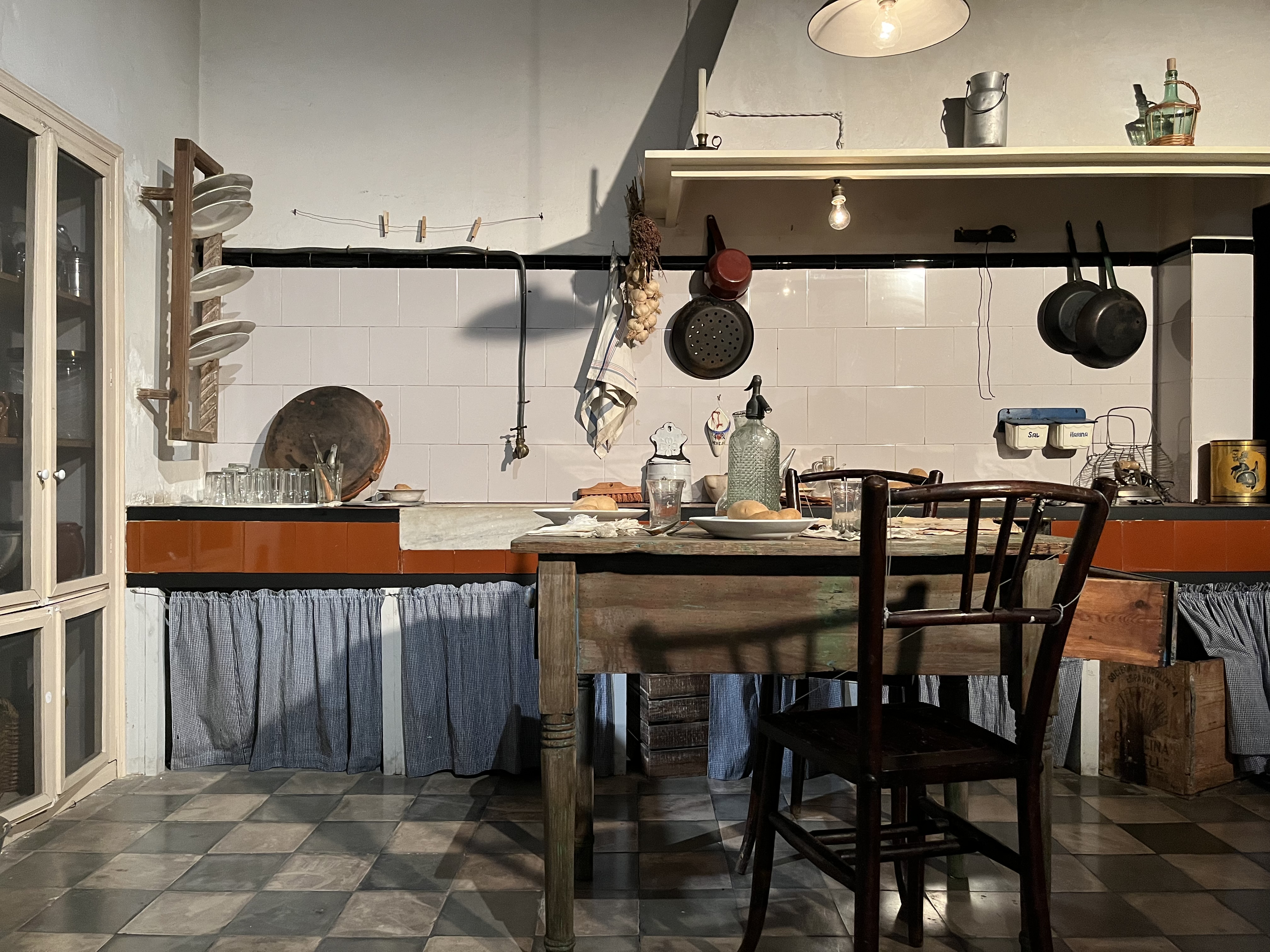
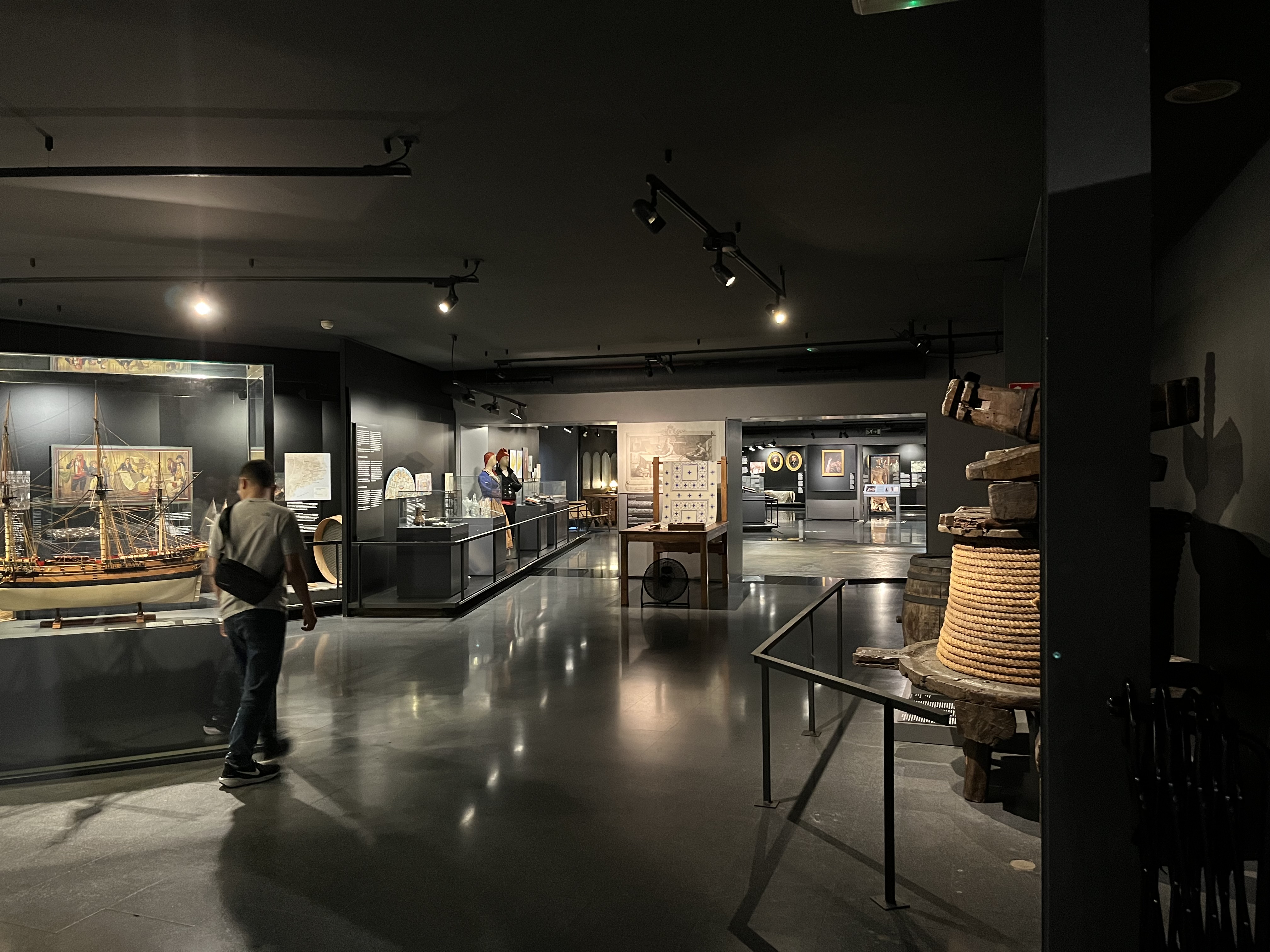
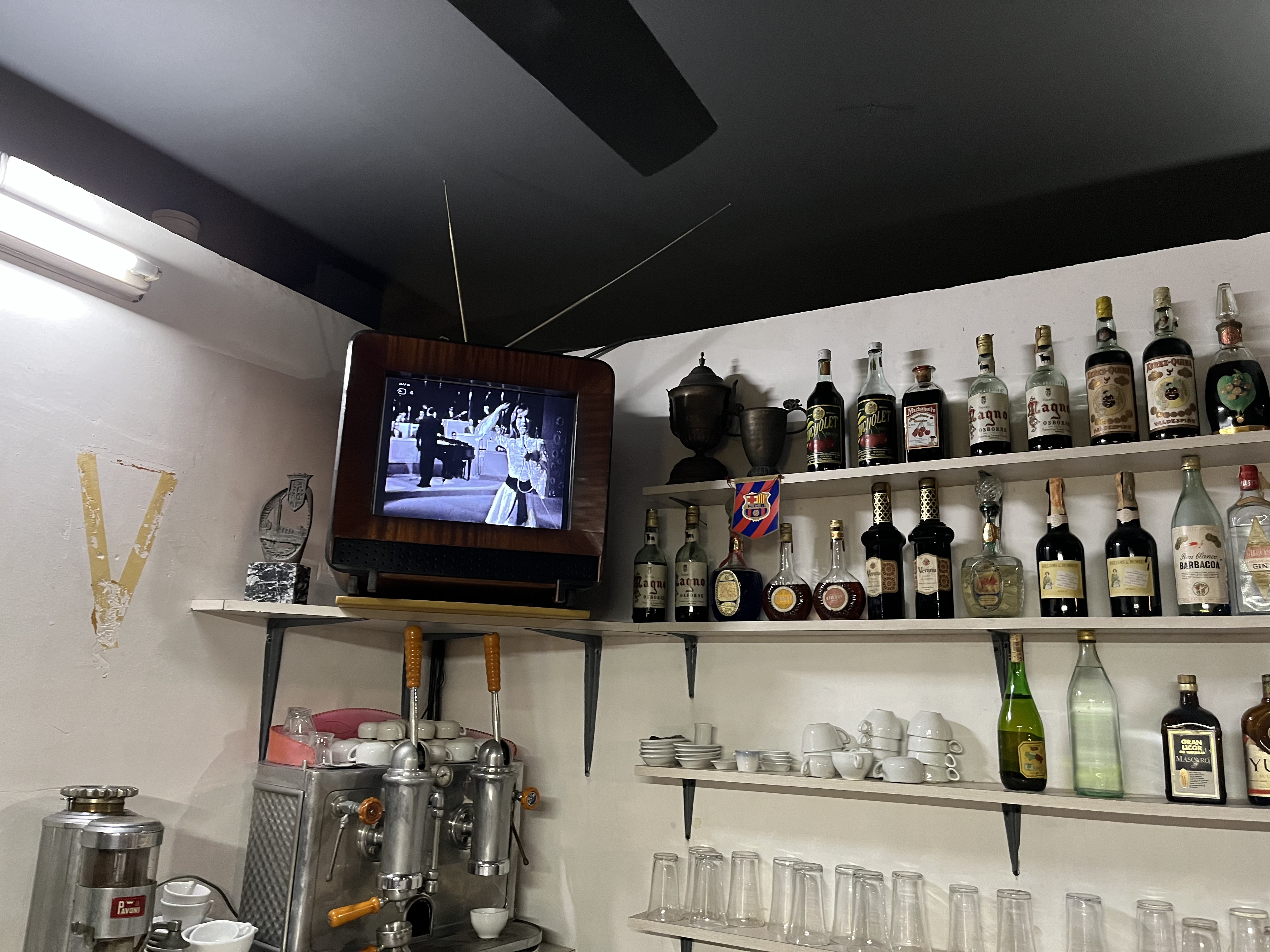
Happily, though, this museum is not all polemic. What it lacks in balance or context, the permanent exhibition here amply makes up for in presentation: even considering my absurdly high standards, I have to admit that this place is extremely fun. There are opportunities for the visitor to put on mediaeval armour, or to sit in a Barcelonan streetcar, or mount a horse (a fake, but a life-size fake). There are even massive dioramas right in the middle of the museum that demonstrate an irrigation system used in the fields near by Girona, complete with dams, flowing water, and actual working windmill — and of course, multiple emphases that this is a unique Catalonian invention. Not only do I find myself eagerly bouncing from exhibit to exhibit, but so does my family, eagerly puzzling out bridge construction methods, or heaving cannonballs with pulleys. Say what you like about the Museum of History, but despite the abbreviated timeframe we have here — we walked in less than 90 minutes before closing time — I remember much more from this place than I do the contents of any other museum on this trip.
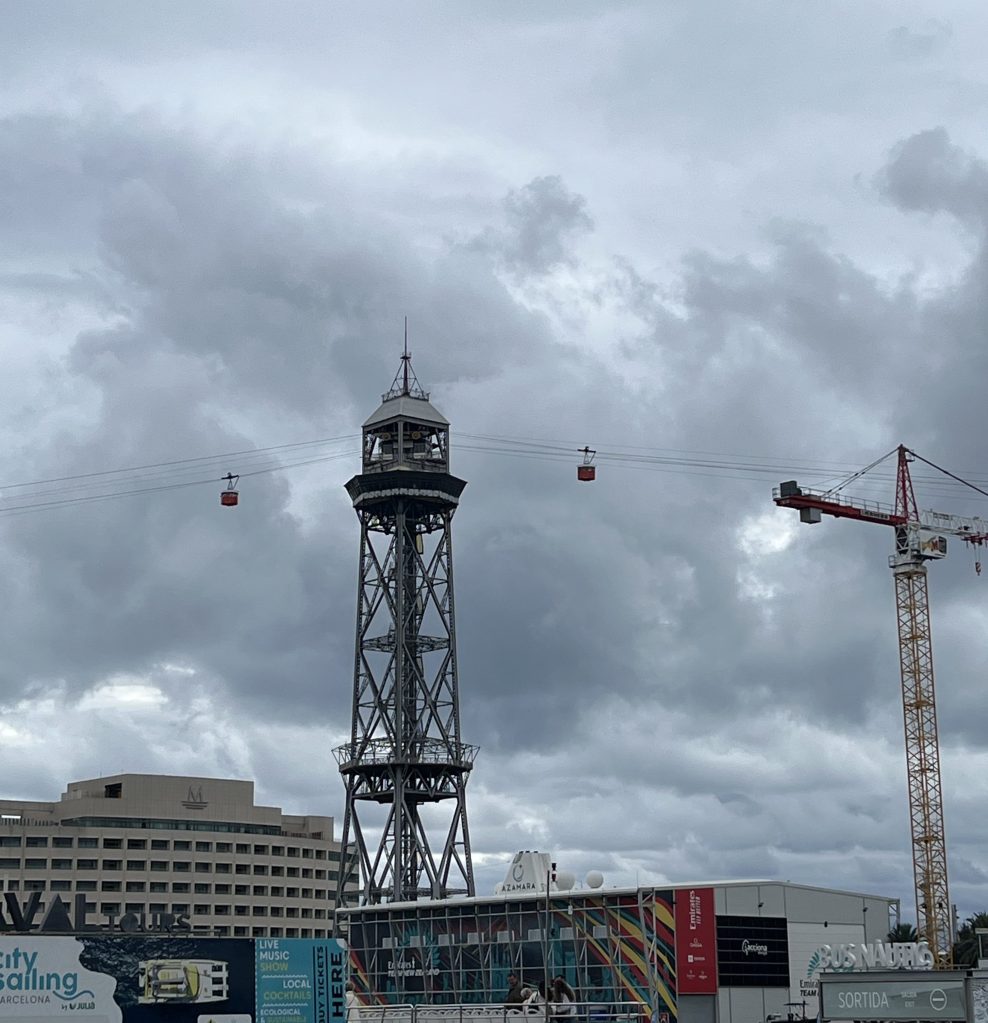
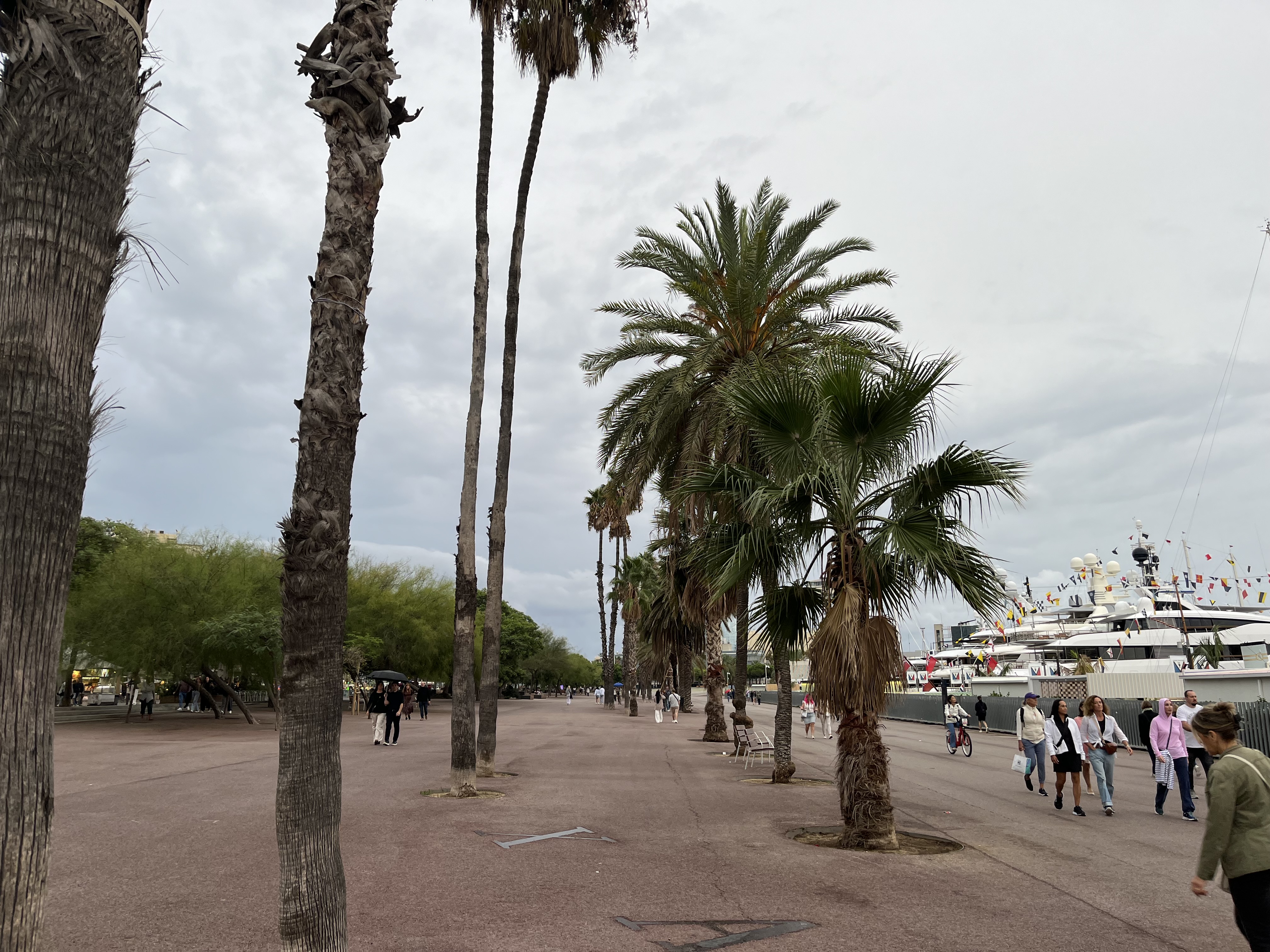
Rain begins to fall as we step back out onto the waterfront, slow fat drops which appear to presage the beginning of a huge thunderstorm. It’s seven o’clock but still too early for dinner, so we wander for a bit around the neighbourhood, down the mosaiced promenade, past the various stalls and pedestrians crowding the path. Although it’s Saturday night, there’s no sense of urgency here, no sense of energy ramping up; few people linger in front of the stalls, which sells mountains of blatantly touristic bric-a-brac — candles, jamón, polished olivewood containers. Halfway up the horizon, the Port Vell cable cars dangle lazily, slowly emerging from the dark trees of Montjuïc before levitating across the Barcelona skyline.
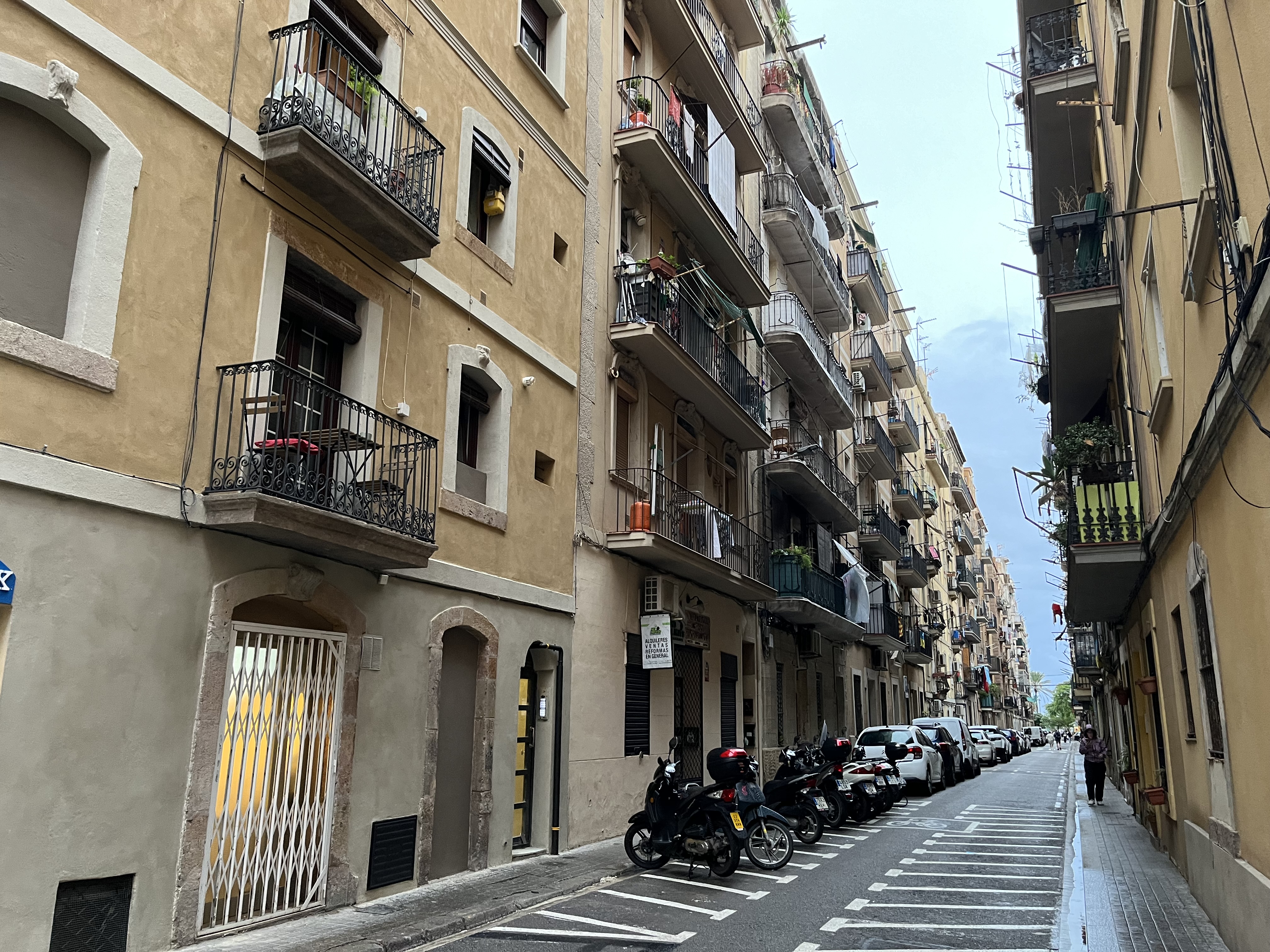
We turn away from the palm trees, cutting through another row of tatty shops and restos all blasting out non-stop techno, and head inside the inner-city web of streets that make up Barceloneta district. The touristic façade falls away, replaced by grimy blocks and rows of faded tenements; a hot, sticky doldrum blows feebly down our path while a few teenagers walk quickly past. Then suddenly, all this fades away, and we find ourselves standing on the periphery of a vast patch of sand — and beyond that, endless water, grey and murky.
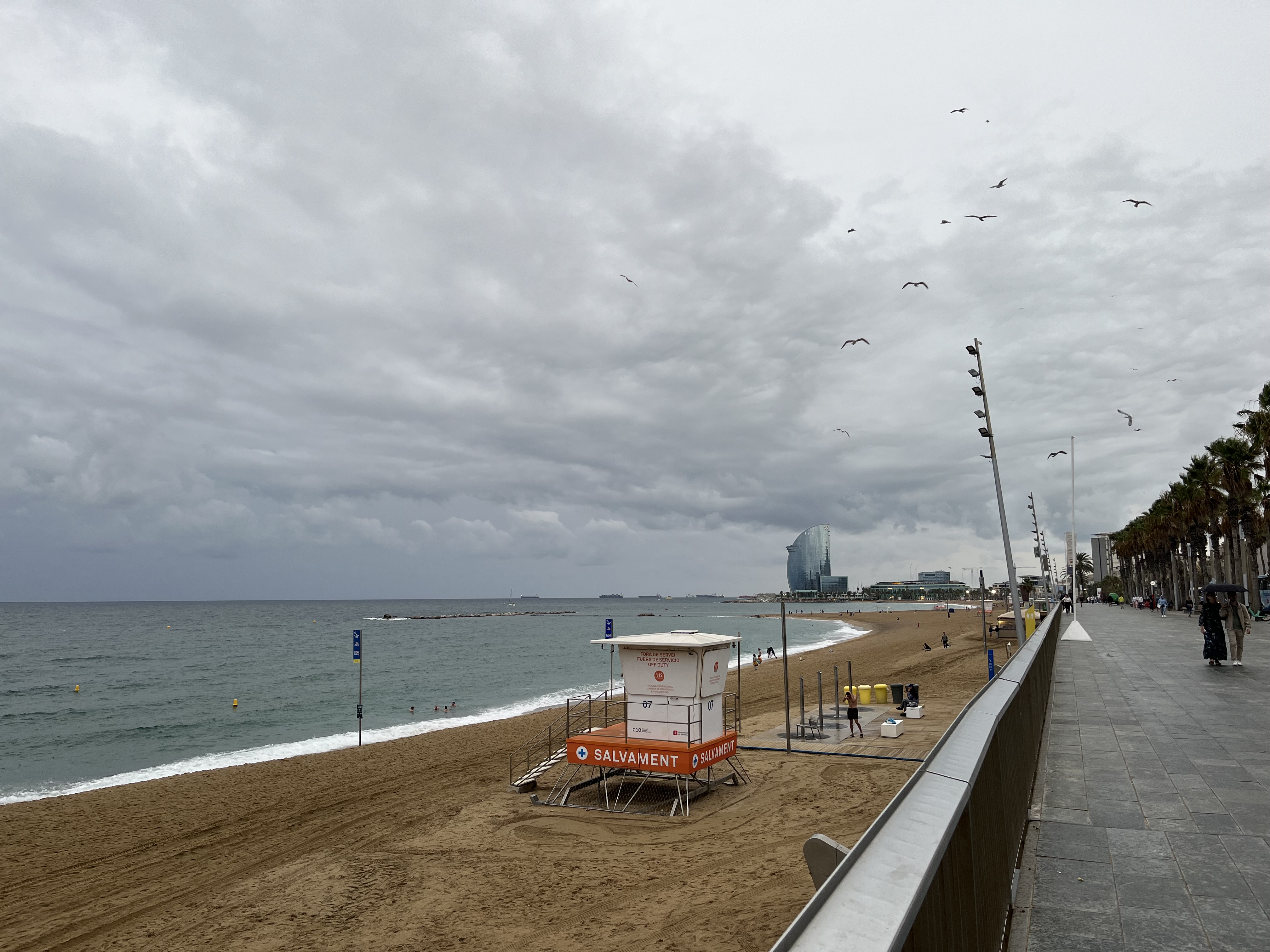
This is Barceloneta Beach proper, a sea change (teehee) from what we’ve seen so far. Gone are the leisure craft bobbing on the waves, gone are the tourists jostling for photos; gone, in fact, are the leisurely vistas of Barcelona itself. All we see here is desolation, distance, darkness: only a few swimmers are braving the tempestuous waters, while angry stormclouds steal slowly in our direction, whipping an inhospitable cold in our faces. A truly Hitchcockian number of seagulls circle and screech high above, threatening to strafe-bomb us at any moment; those of us who’ve braved the rain so far whip out umbrellas, in fear of unwanted guano falling on our heads.
Everything I’d previously read about this place had prepared me for a bustling cityrama: stalls, tourists, swimmers. Instead the scene before me looks dystopian, the solitary swimmer I can see in the waves the survivor of some great apocalypse; far away stands the hulking structure that is the W Barcelona hotel, glassy, inhuman. This is not how I pictured Barcelona, in fact this is nothing like the Barcelona I saw yesterday, the one that was gleaming with colour and joy; today’s Barcelona is frigid and foreboding, straight out of those gloomy British detective series set in a small town, where everyone hates one another and the detectives spend inordinate periods monologuing at the sea. Could this be the same vibrant town that holds the Sagrada Família, the works of Picasso, and the tastiest aubergines I have ever eaten in my life?
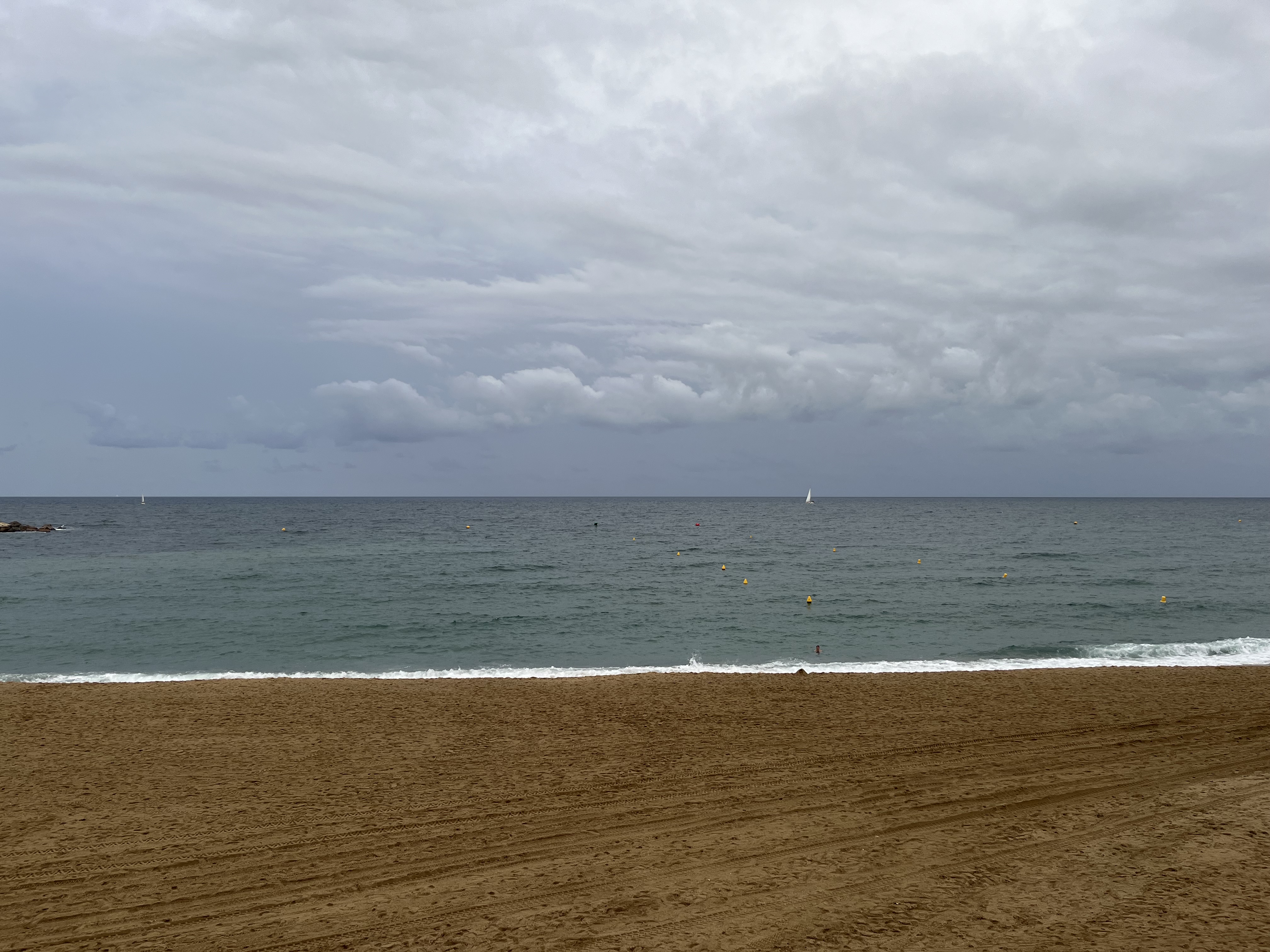
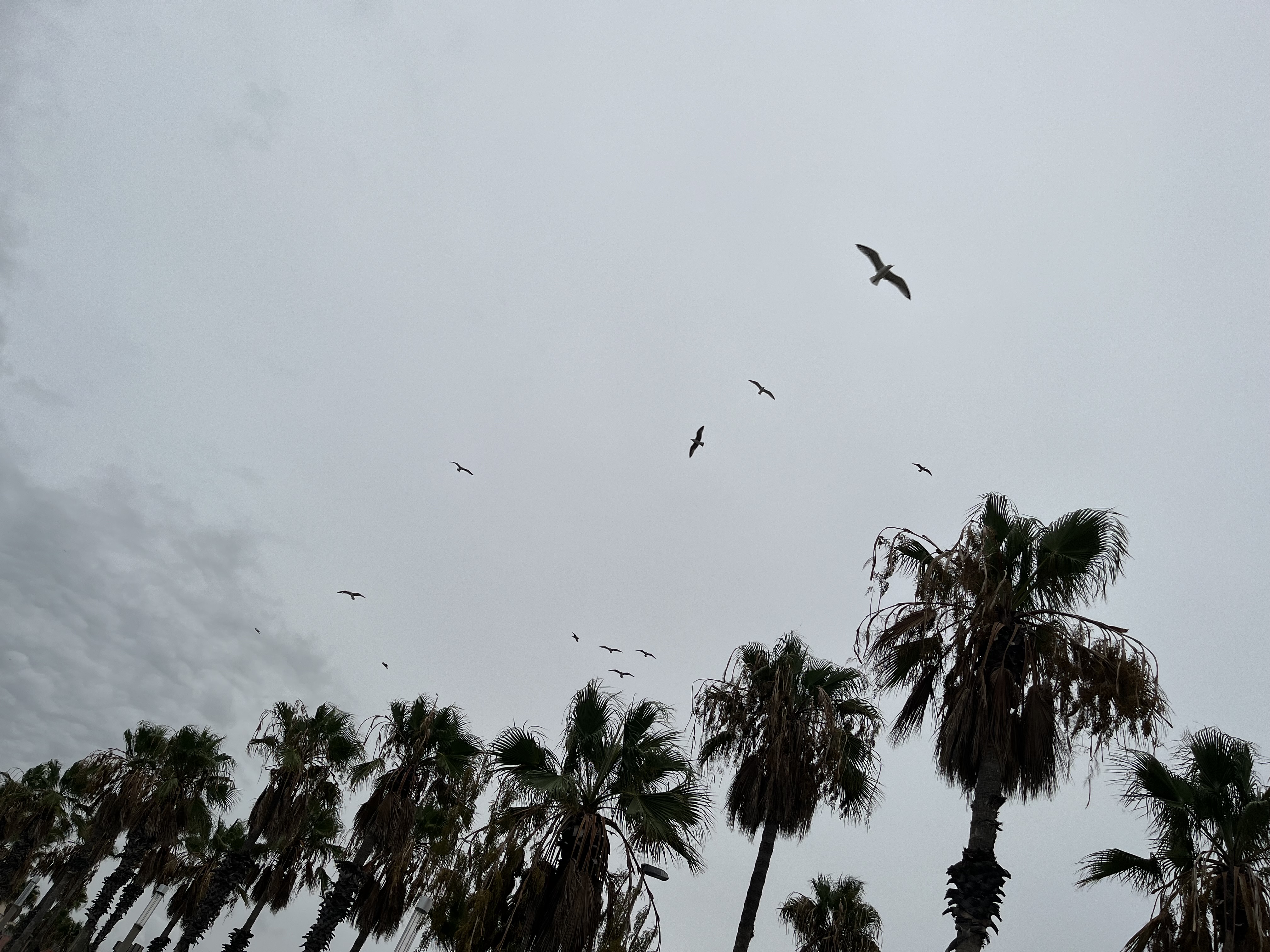
Or perhaps, I think as we stand there, wordlessly staring at the sea, this is the real Barcelona. This is what the tourists don’t see or just pass by, the Barcelona without its makeup on: just an average city, tired and unkempt and overburdened by the generations of people coursing unceasingly through its streets. The locals here, they’re just trying to live a normal life while outsiders peek through their windows or get in their ways. Or maybe it’s both, and the Catalonian capital is a city of so many faces, some of them magnificently chic, others barely holding it together. It can be a visual fiesta, but it can also be a overrun and grimy place; full of splendour, yes, but far from heaven on earth.
There’s not much here left to see here, what with all the sullen weather and the fading daylight, so we decide to look up homeward-bound transport. A bus pops up on our screens, a bus that is fast, direct, and… crap, pulling up to the stop on the opposite side of the street right now. Luckily Grace and I manage to herd everyone onboard before it’s too late, and as the bus pulls away from the curb and trundles back towards town, I take one last look at the temperamental sea outside the windows — and realise, with a start, that this is my first view of the actual Mediterranean, that fabled body of water that has nourished countless civilisations, and which will be the thread through the rest of our journey. A rather ignominious introduction, perhaps, but I console myself with the hope; nay, the certainty that we’ll see it again very soon.
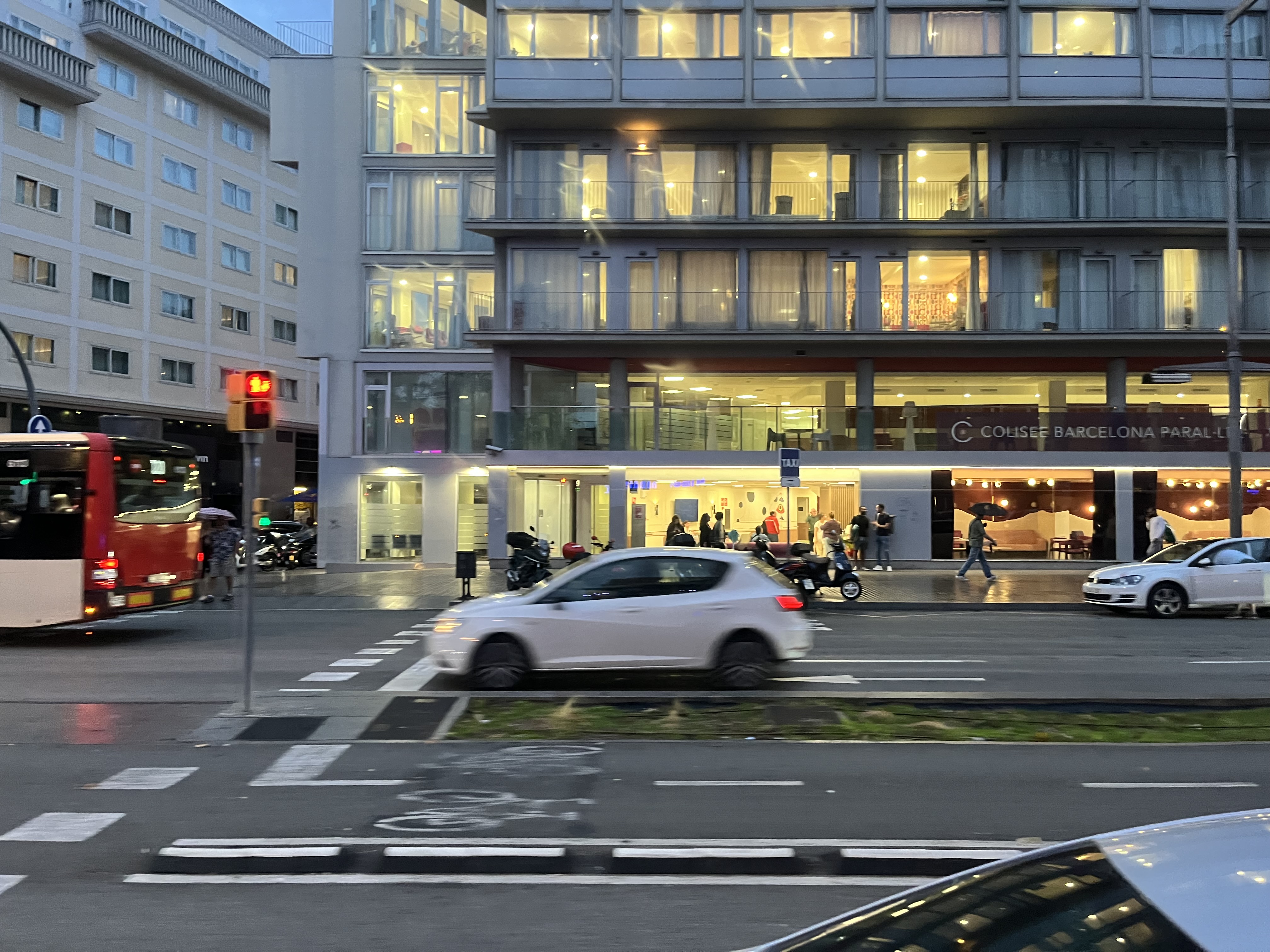
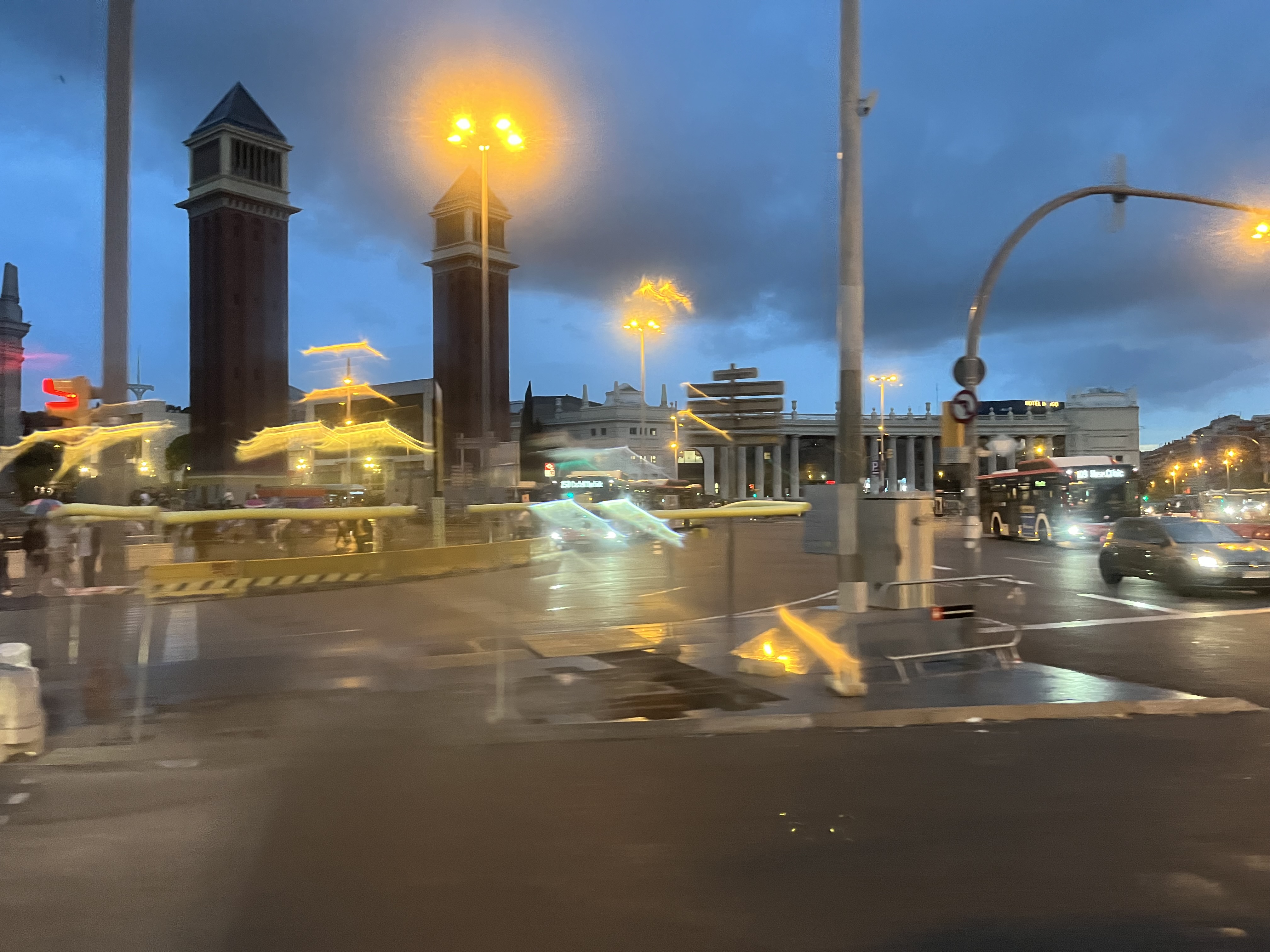
A few teens board as we turn back onto the Passeig de Colom, the avenue that runs along the seaside and past all the things we saw today. After all the noisy music I’ve heard on the streets I’m half-expecting them to start chatting at the top of their voices while blasting Rosalía or something; but instead they chatter quietly to themselves, and infrequently at that. Their hoodies are speckled with rain, the same rain that’s beginning to fall in earnest as I look outside the window, through streaked, darkened windows into an eerily empty cityscape — the theatre lights on the Avinguda del Paral·lel may be on right now, just as they were two nights ago, but I can see precious few people in this major thoroughfare itself. Are they all inside watching plays, or is everyone just staying inside tonight? A Saturday evening? Even typing that sentence down felt weird. Behind me the teens continue not talking to each other, and they get off at the Plaça d’Espanya, to be replaced by even more sullen Barcelonans who don’t even deign to look at us, or each other for that matter.
The bus drops us off on the wrong side of Barcelona Sants, so we trek the last few blocks home. Halfway down the street we come across a burger place, set in a small garden and almost completely empty, and spontaneously decide to have dinner there; to hell with things like local culture, we all need a greasy burger from time to time, and now is one of those times. It is not until we’ve sat down that I gradually realise that this isn’t just any burger bar: the menus are written in the sort of fancy, florid English that one normally finds in Instagram posts or long-winded travel blogposts; and more to the point, there are signs hanging on the wall — modestly displayed, but still — that proclaim that the chef has actually won awards in Italy for his sandwiches. And talk of the devil, here he comes now, a bearded, gregarious man who eagerly points to his creations and suggests that we try the one with double bacon, or perhaps the one with the truffle mayo. Or the cheesecake.
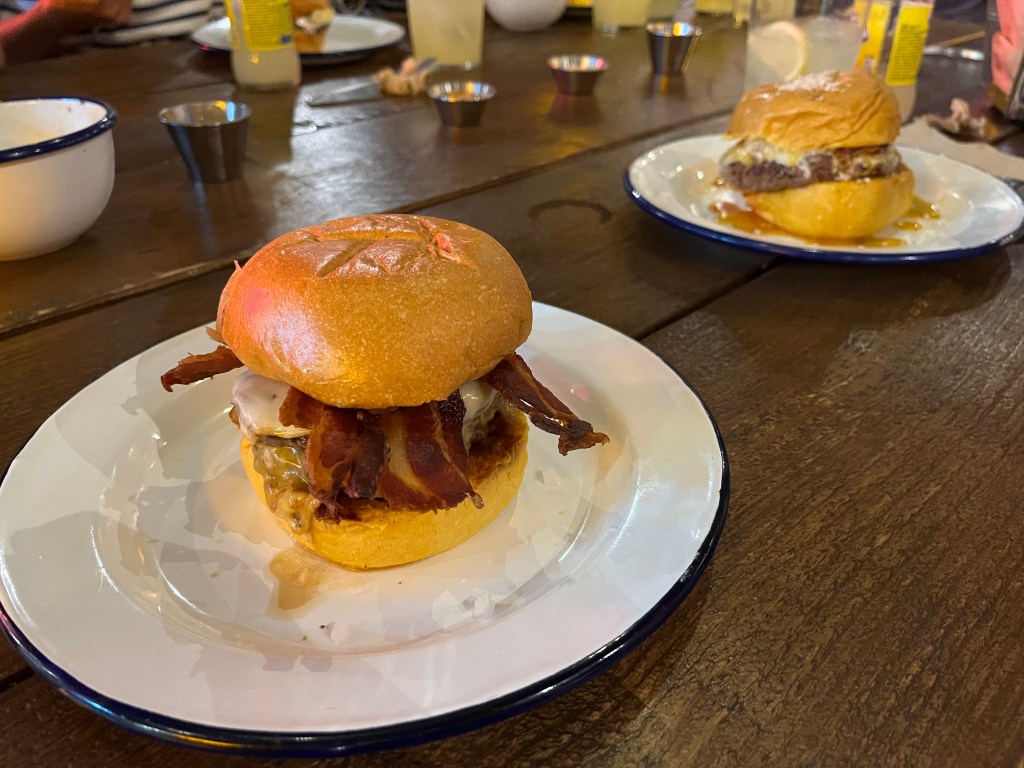
It only takes one single bite of my bacon burger for the awards on the wall to become fully-earned. No wonder Barcelona is a culinary paradise; I had not expected a burger, of all things, to be my favourite food of the day, yet one cannot taste the softness of the burger bun, the succulence of the patties, the crispness of the bacon and lettuce and everything else, and still deny just how delectable these burgers are. Even the members of my family not normally given to heaping praise on junk food are, well, heaping praise on this junk food. It’s not been an amazing day, but at least it ends with the reminder that for every perceived letdown that Barcelona serves up, there are always five bonuses, all waiting to lift the mood once more.


