20 September
The alarm clock wakes me at 8:30 sharp. Open my eyes, and am momentarily confused: I can recognise my parents’ low chatter and the slow shuffle of their slippered feet, but the room, the bed, the view outside, all of these feel like they belong to another world. Then I remember: I am in Barcelona, on a trip with my family, and the red-brick building opposite is not a dystopian vision of hell, but the nondescript apartment block that stands on the other side of an empty lot. My legs still throb from yesterday’s exertions, and I sense that the tiredness of jet lag and travel hasn’t left me completely — but we have an appointment with the eighth wonder of the world today, so gingerly swing those legs off the bed and orient them in the direction of the bathroom.
Ten thirty. We are sitting in the lobby of our hotel — we, as in my parents, my two aunts, and me; Samuel and Grace, both night owls even with a time difference in play, are nowhere to be seen. Despite breakfast having been consumed, there are still jitterbugs in my stomach; we were instructed to turn up at eleven o’clock sharp, yet despite some increasingly concerned texts and calls, there is no indication that my cousins are even awake. While my family lounge upon the deck chairs and prattle on wistfully about the bacons and the cheeses they just had, I look outside at the darkening skies and find my hands clenching tighter and tighter on the armrests as the minute hand steals on. Those tickets cost €36 each, and now they are in danger of being nothing but waste paper.
Finally, at 10:50 the lift doors spring open, and the two of them rush out looking very frazzled and apologetic. Although I know it’s not really worth getting miffed about, I am acutely aware of how red my face is right now, so instead I spin around, rush out the door and into the metro. At least I can concentrate on navigation down there, for Sants Estació station is a much more complex place than it looks; to reach the line we want, we have to walk the entire length of a platform and then down additional interminable corridors. Get to the L5 platforms in a desperate rush, almost leaving everyone else behind, just in time to watch the train we need disappearing into the tunnel; the next one isn’t due for precisely four minutes and fifty-six seconds. Given that our lateness is by now a fait accompli, I sit down with a sigh on the platform benches. Might as well start planning for what comes after this.
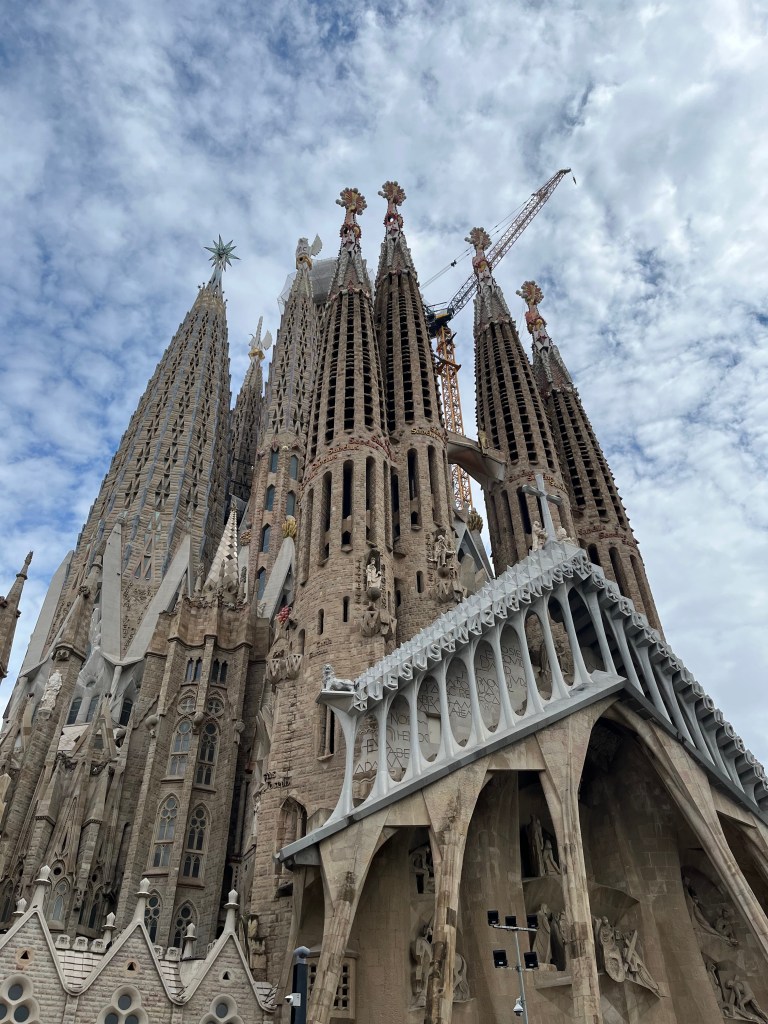
After the longest metro ride of my life, we finally arrive at our station. A downpour greets us as we climb out of the metro and right into the middle of a dense but moving crowd, all of whom have their heads raised high towards the heavens. We follow their gaze, and in doing so catch our first true glimpses of a building that can only be described as “the Sagrada Família”.
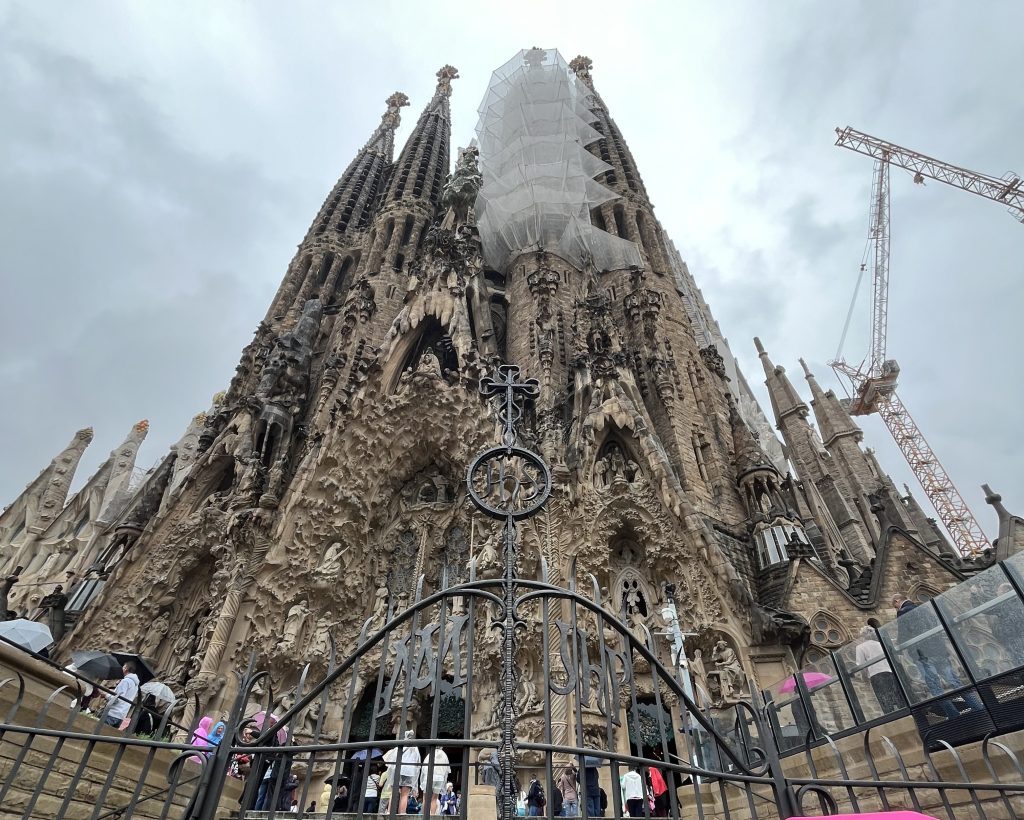
Is there any need to introduce this one? You’ve heard of it. Even if you only know one landmark in Barcelona — or Catalonia, or Spain — it is surely this. It is the most famous church in the world and has had countless accolades showered upon it, which is quite something for a building that is still (at the time of writing) in the process of actually being built. Any wariness of all this being mere hyperbole, however, vanishes the second you first set your eyes upon it up close. It is vast: not merely in the sense that it takes up two city blocks and attracts a huge throng of admirers, but also in how it effortlessly packs so much into the space it occupies. Detailed depictions of biblical scenes fill every conceivable surface of the church, from nativity to passion and beyond; the effect is rather like how some particularly artistic people have tattoos filling every free patch of their skin, and the effect is just as impressive (and slightly intimidating).
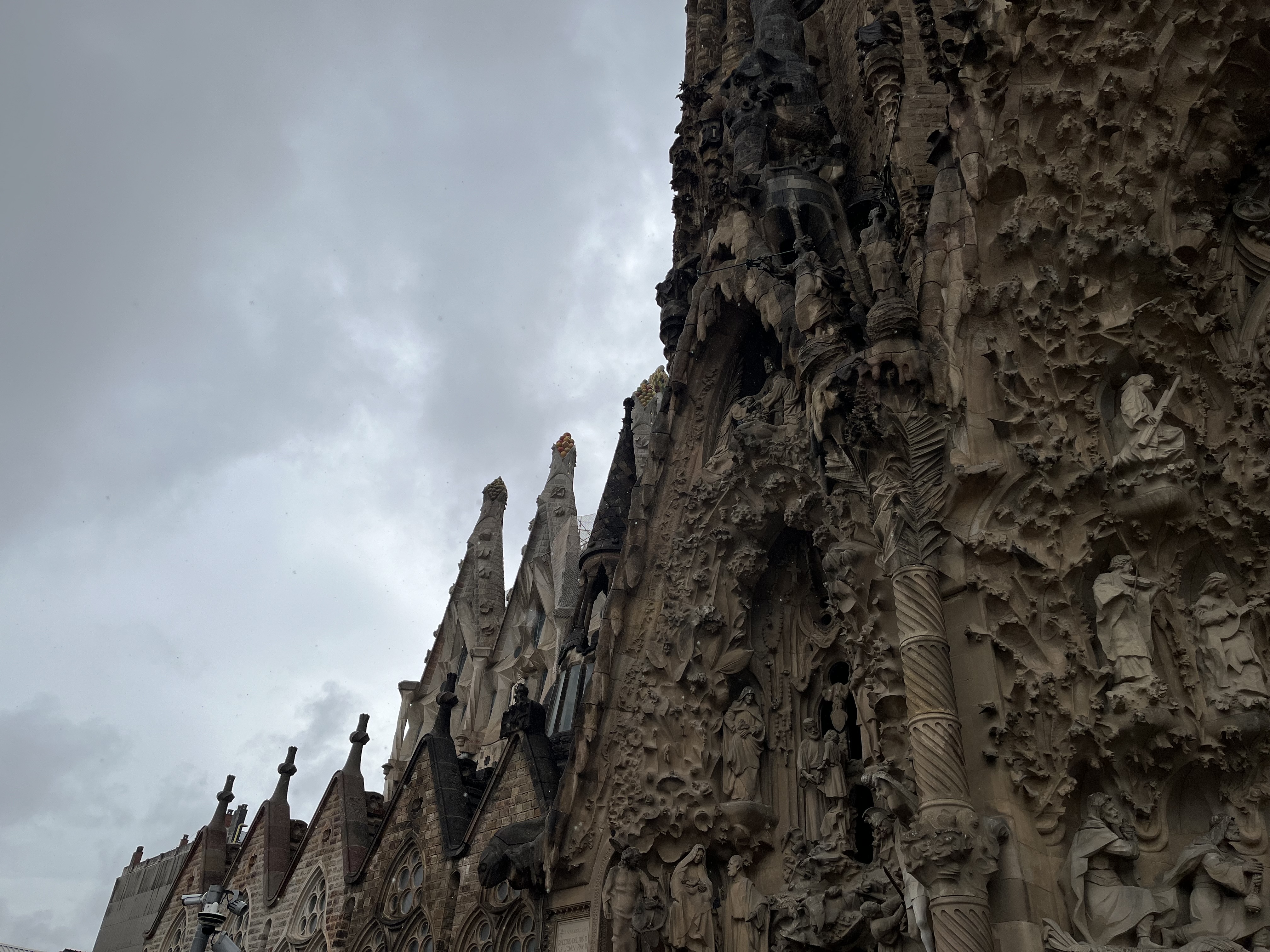
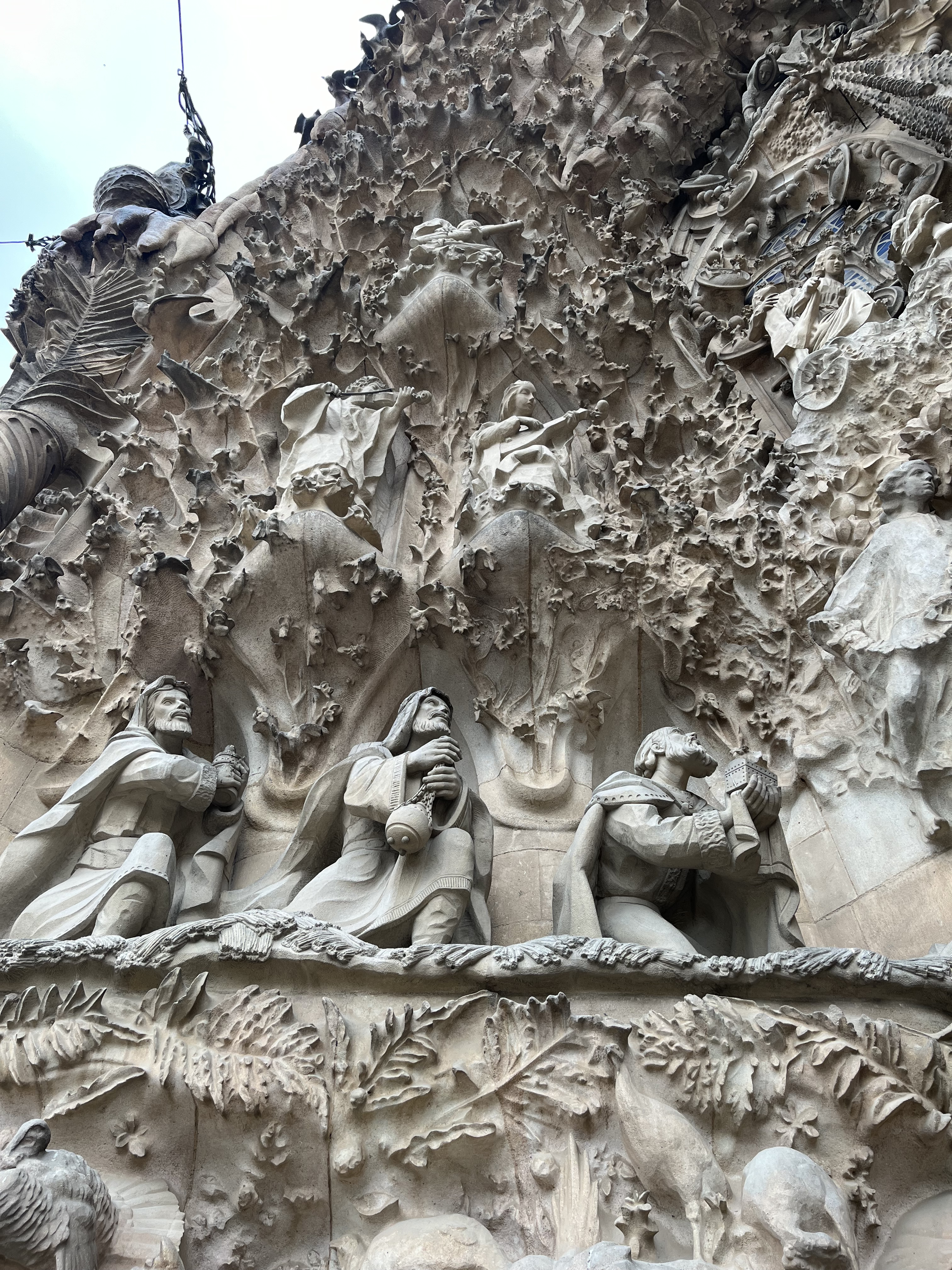
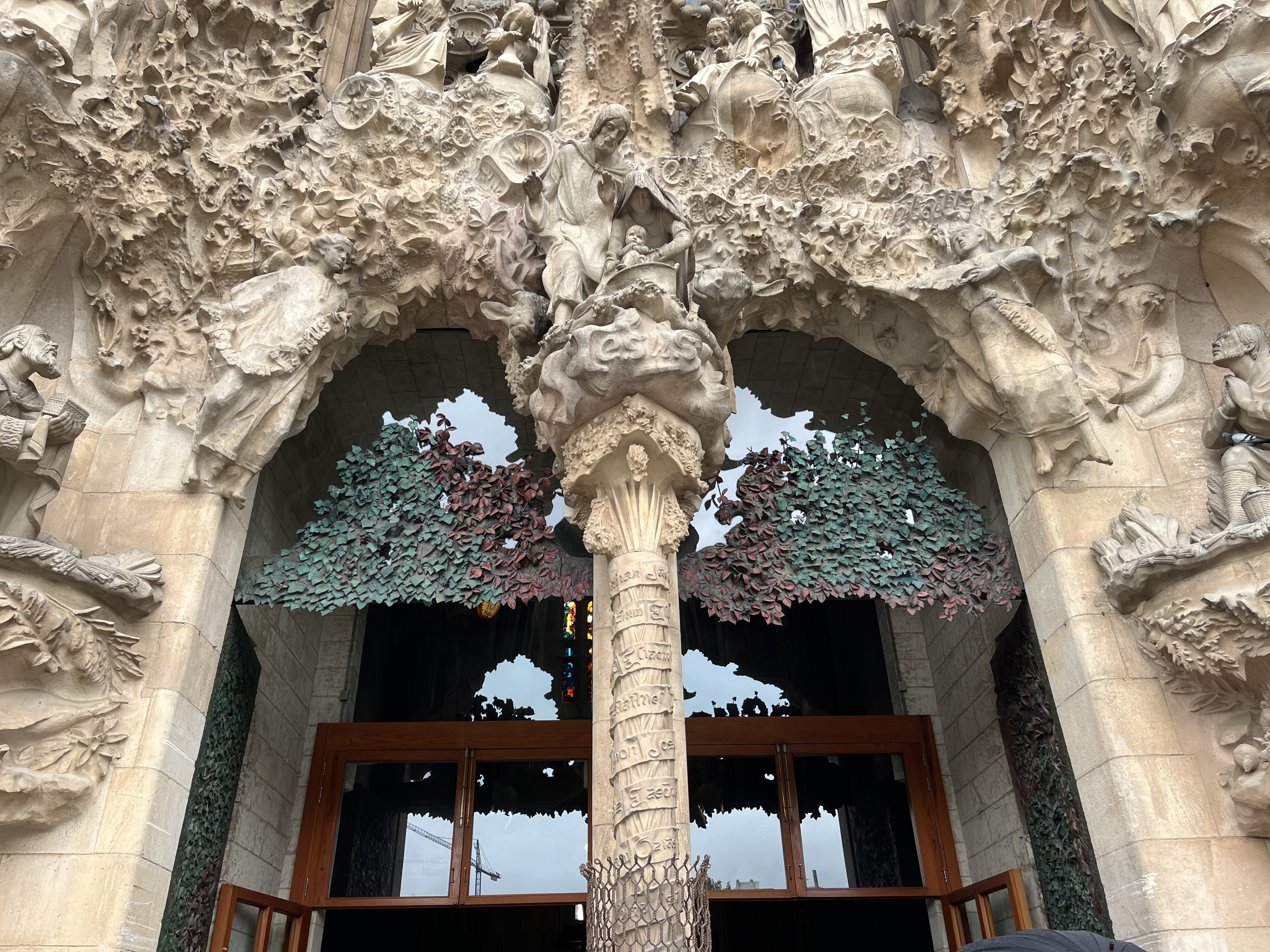
The scale of this place is so impressive that we almost forget that we’re supposed to go inside, and in fact after we’ve finally redeemed our tickets and gained entrance (turns out the Spanish are pretty lax when it comes to this kind of thing) we find ourselves loitering in the forecourt, trying to take in every little detail and luxuriating in the majesty of it all. Despite the considerable rain, I still flip down the umbrella so that my dad can take some shots of me in front of the Sagrada Família. How often does one get the chance for this sort of thing?
Eventually we tire of standing in the rain and walk inside, where — well, see for yourself.
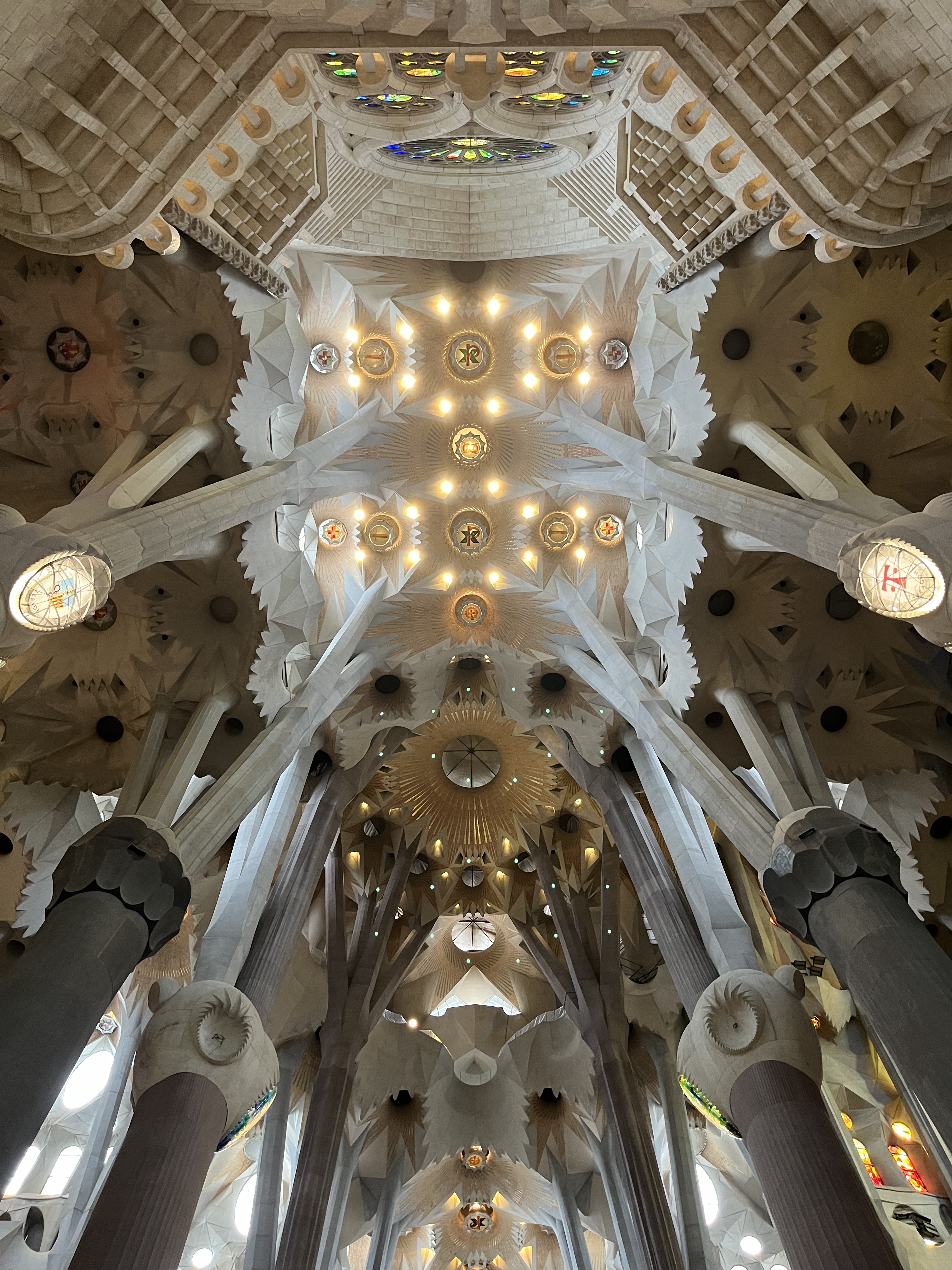
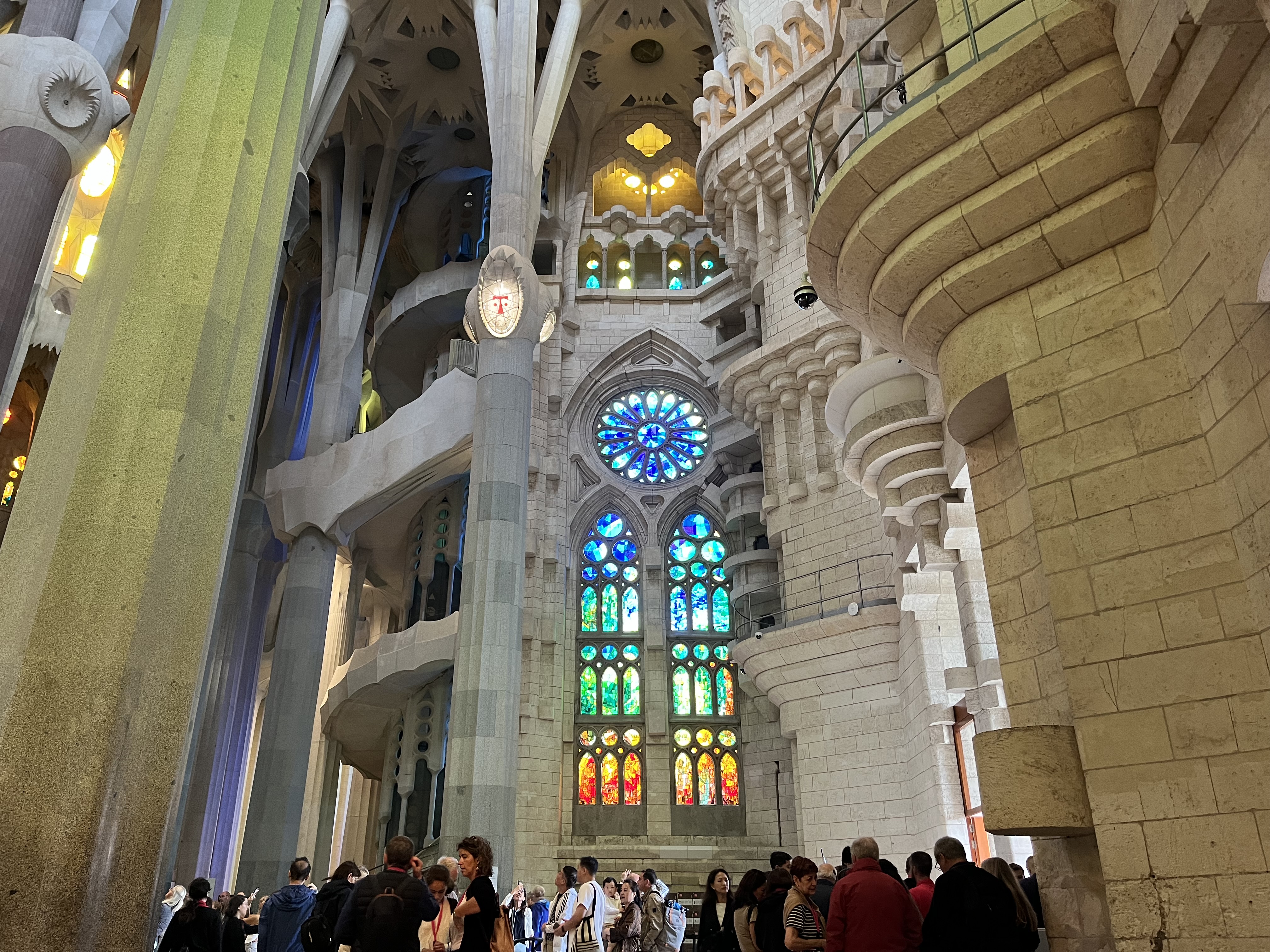
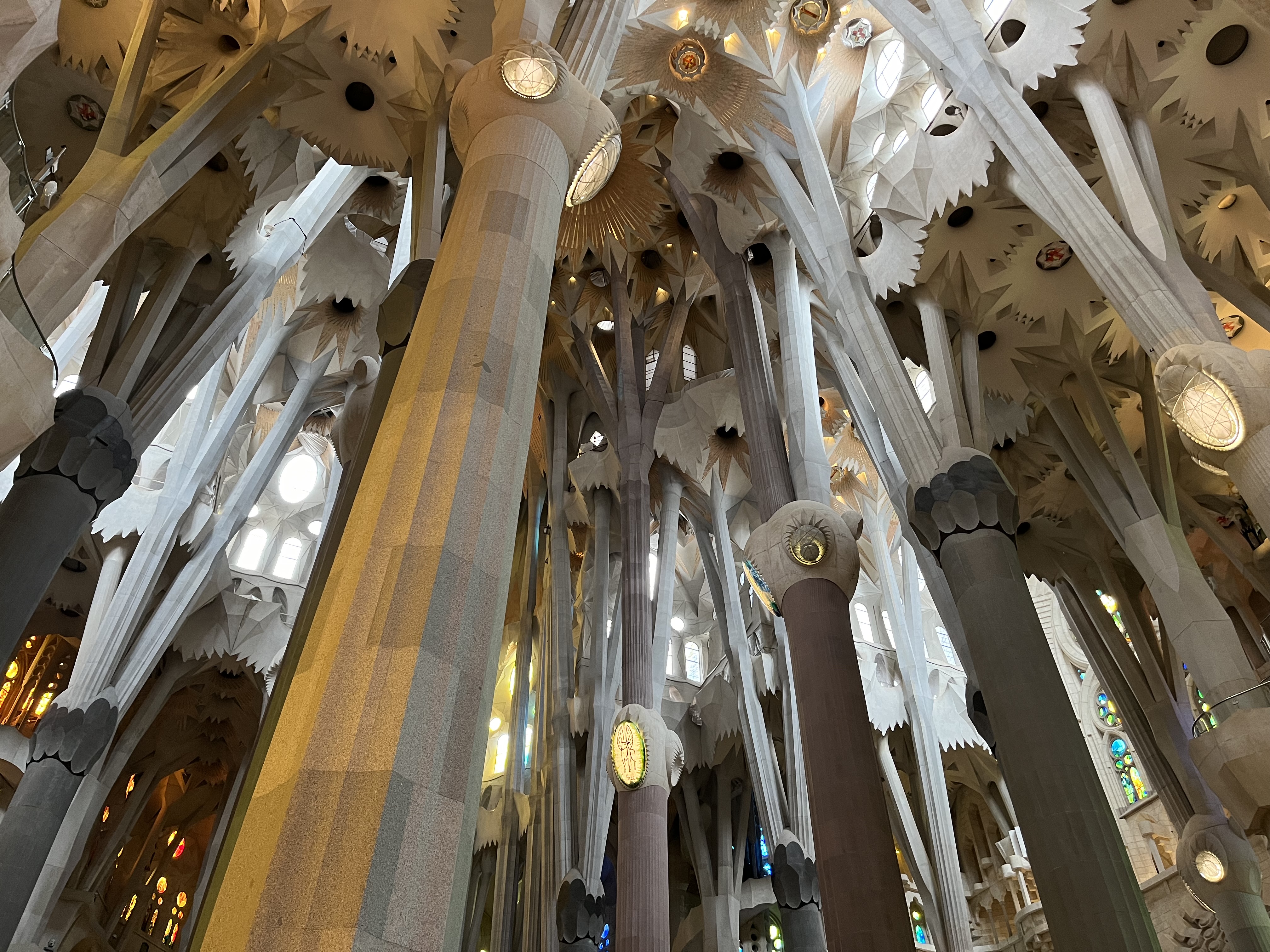
It’s the most commonplace thing in the world: when you first walk inside a building, you stop at the entrance and look around you for a bit, no matter how familiar you already are with it, just to take stock of your surroundings. Yet what strikes me about the Sagrada Família is how this process isn’t just limited to the entryway, but is being repeated all across the cathedral — in the nave, in the transept, even by the altar, where a diminutive priest, unnoticed by all but the most devout, is serenely conducting the midday service. To be sure, this gawping happens at the entrance too: every visitor walks in slowly, steadily, not daring to go at anything more than a crawl; then once they are safely within the confines of the church, they look up, and it is guaranteed that they will stop in their tracks.
Perhaps, upon seeing everything on display, they will take out their phone, and try to capture something of the beauty of the sight before them on their little cameras. Or perhaps they have a little more self-control, and are simply content to soak in the splendour of it all. But there is something about the soft coloured light streaming through the stained-glass windows and down into the cathedral (despite it being an overcast, rainy day outside), the impossible heights to which the masonry soars, and the general atmosphere of awe that permeates the Sagrada Família that every single visitor seeks to immediately imprint in their memory forever; something in the silence that speaks volumes to all us congregants.
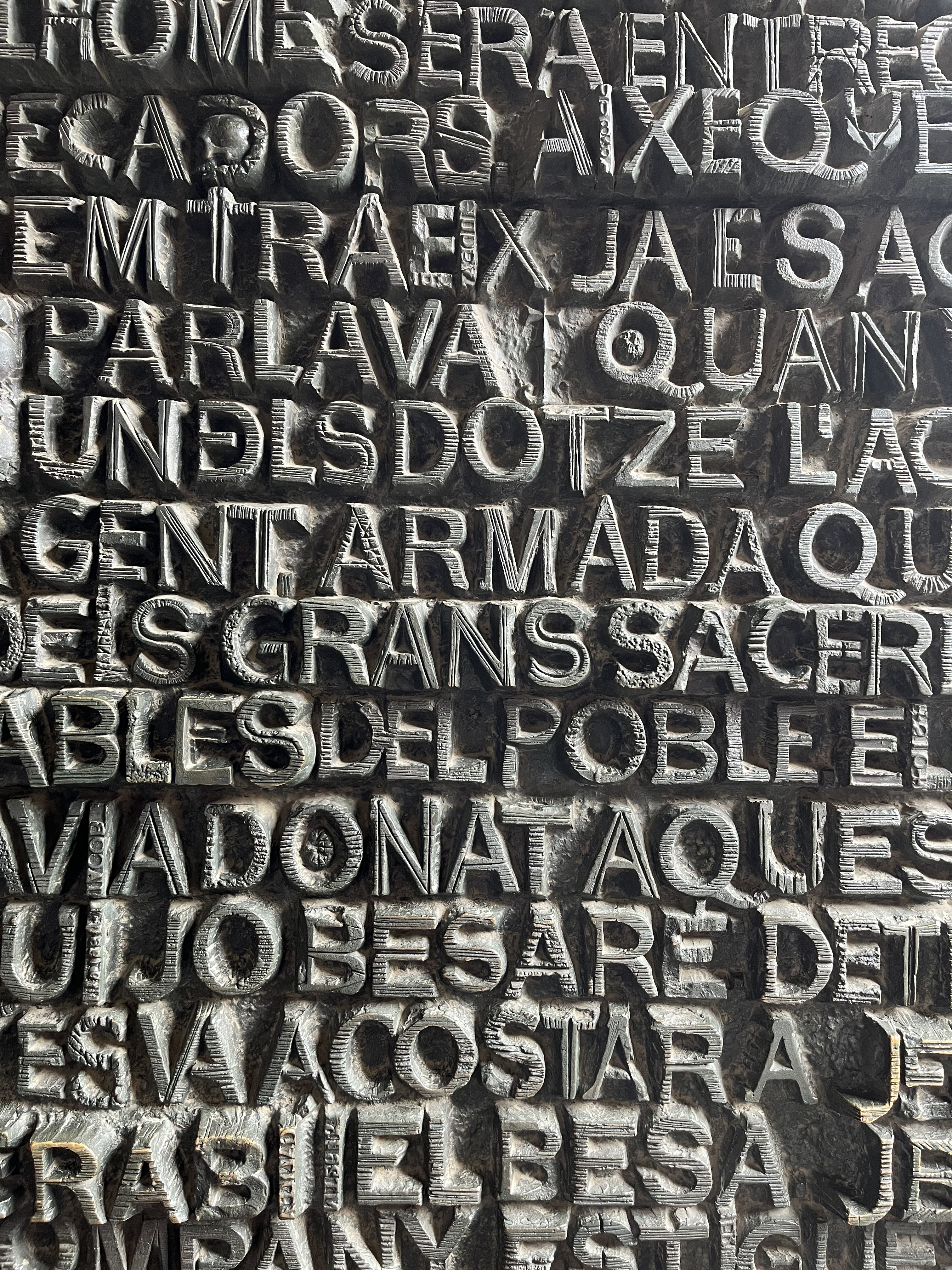
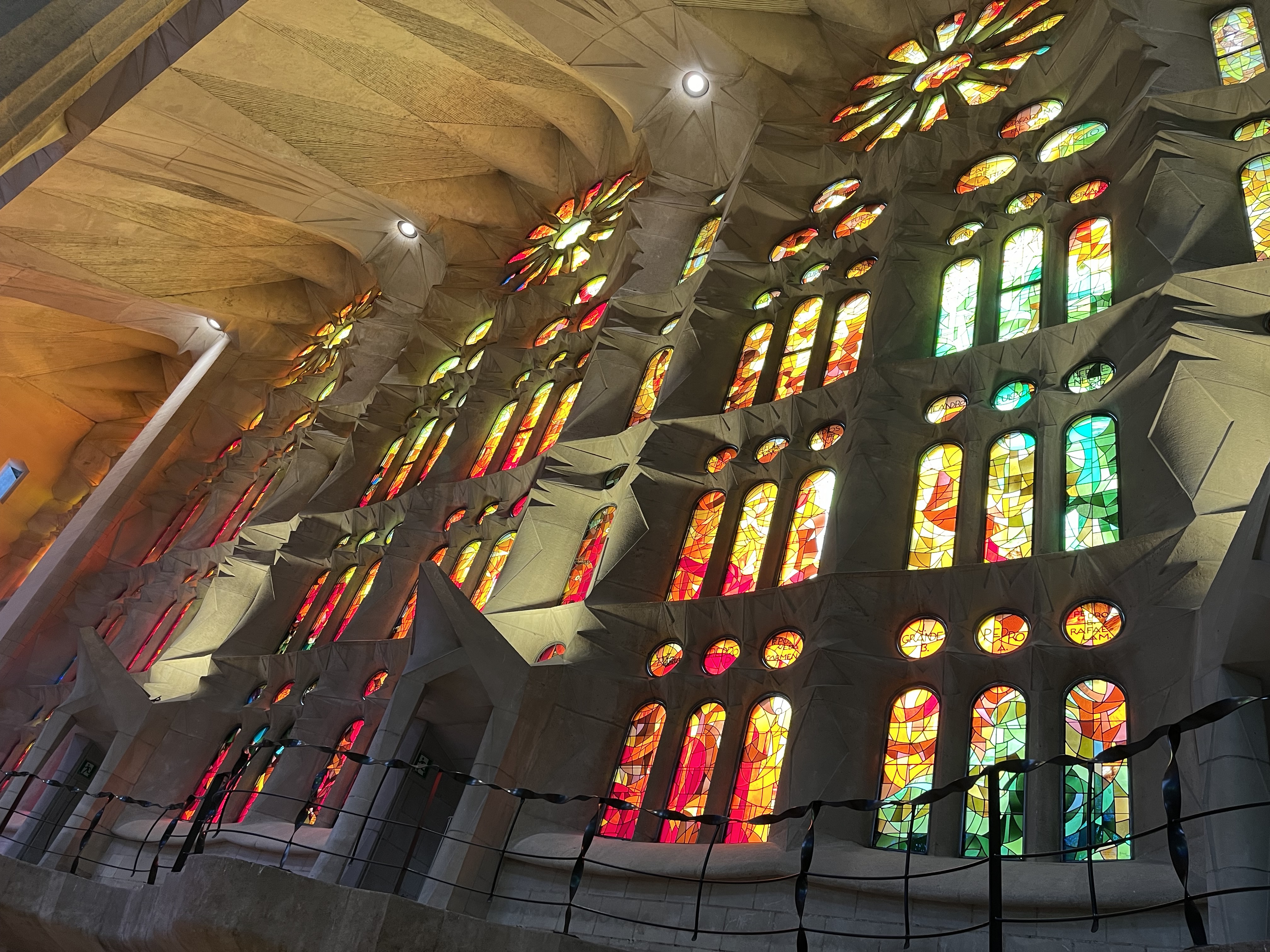
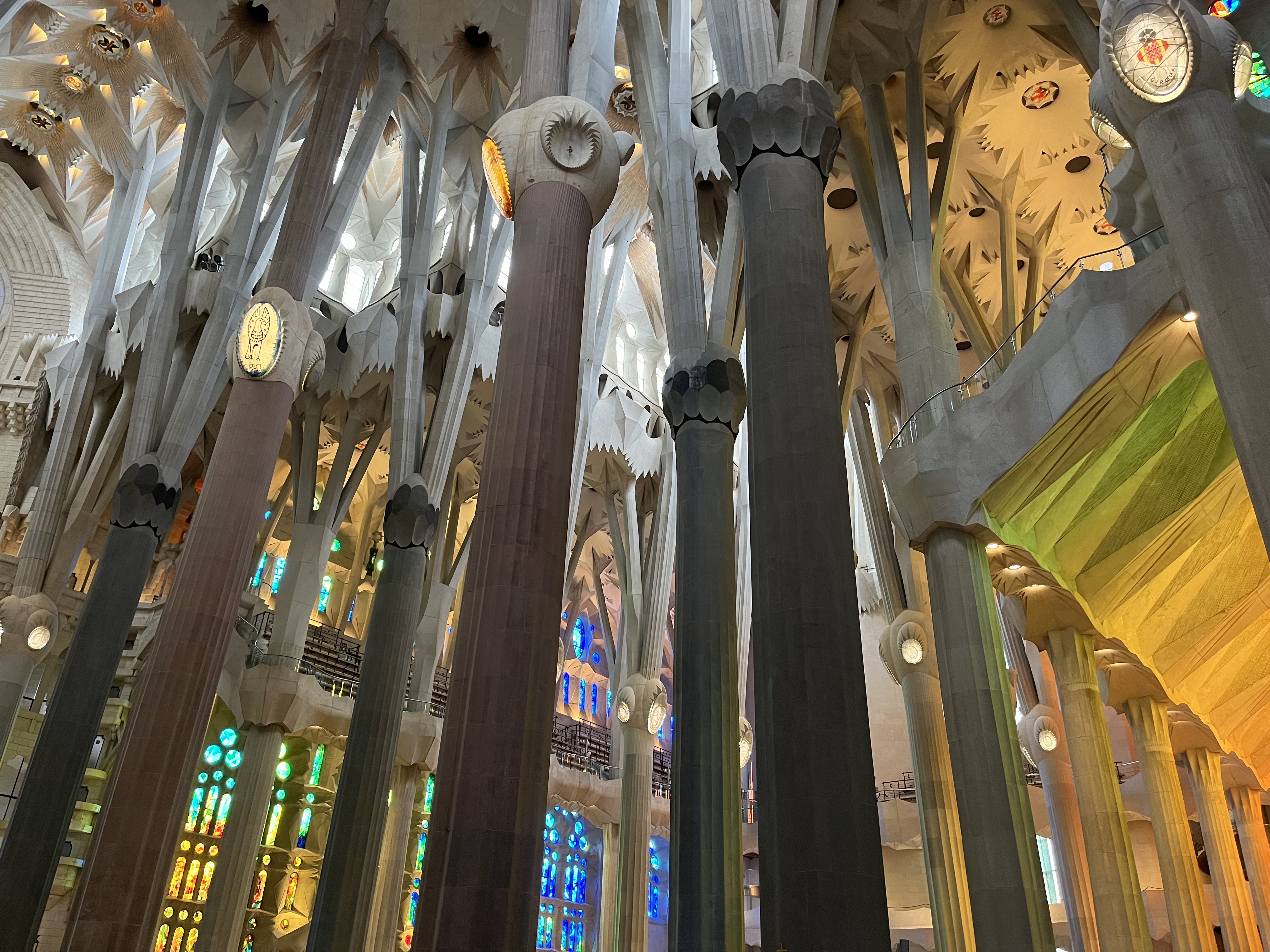
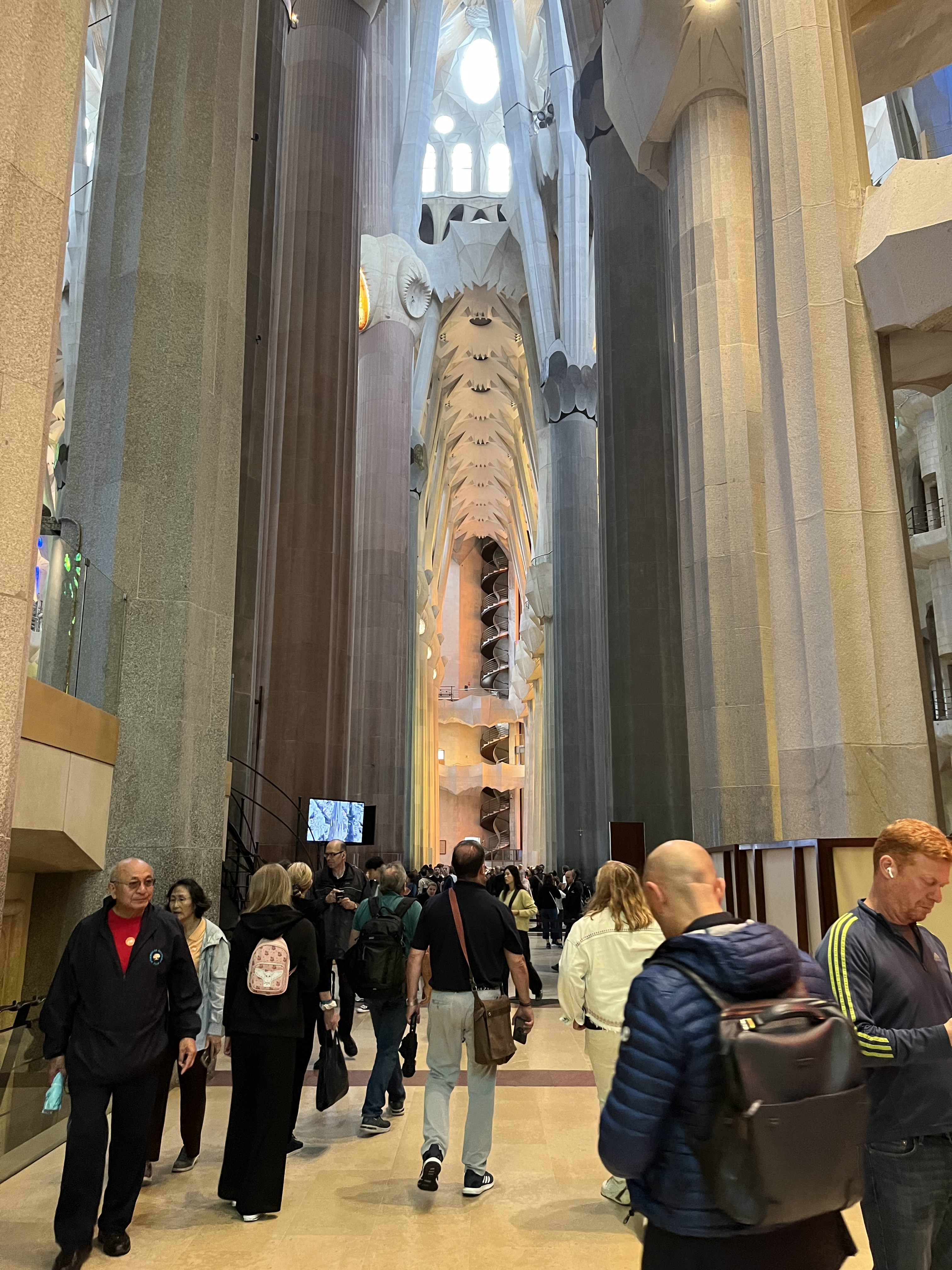
There is no capturing it: try as we might to pin it down or give it a name, the mystery at the heart of the basilica remains elusive, unfathomable. And so all one can do is wander, through the jungle of concrete pillars that rise up high into the heavens, ducking into the nooks and crannies that provide respite and shadow from all the colours, and occasionally pausing to read the display panels that herald the imminent completion of the church (any decade now, any decade). The service at the centre of the church ends, and the priest silently steps from his pulpit; his flock, meanwhile, continue to sit in their seats, apparently still overwhelmed from the experience of communing with God, or perhaps it is the Sagrada itself that they are in deep communion with.
We’d originally hoped to visit the top of the Sagrada, where thousands of workmen still hammer and chisel at the basilica’s towers; sadly, the pouring rain outside has made any potential trip across the rooftops hazardous. So visit the crypts instead, diving down into the church’s foundations, jostled along by visitors speaking a hundred different languages (and I’m pretty sure I heard a smattering of Cantonese from a stranger). There are quite a few panels on the usual stuff: the origins of the cathedral, the materials they use, how it is definitely widely beloved in Barcelona and around the world. But most of it is devoted to the chief architect of the cathedral, a man whose very name sends every architectural nerd into squeals of ecstasy: Antoni Gaudí.
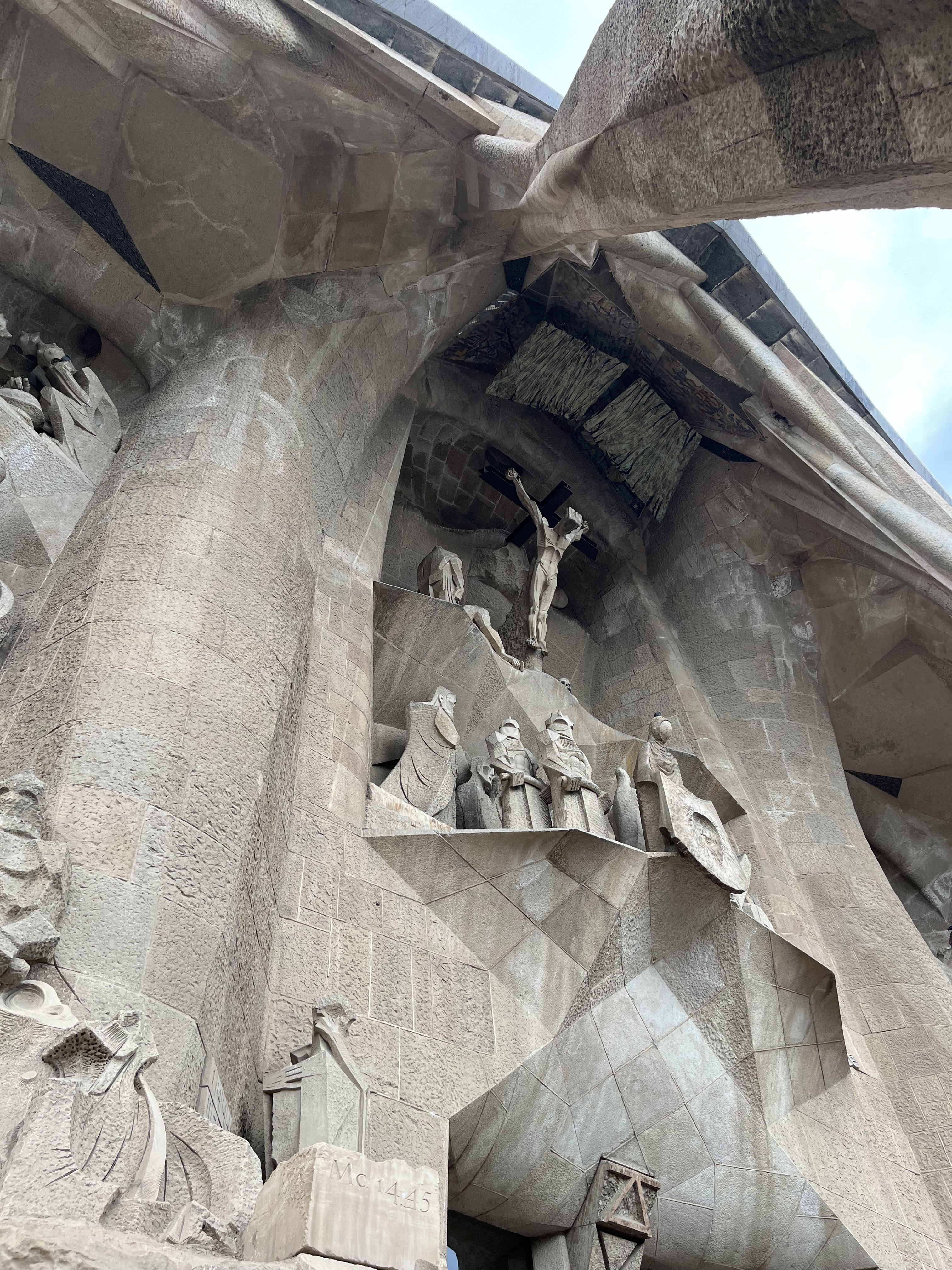
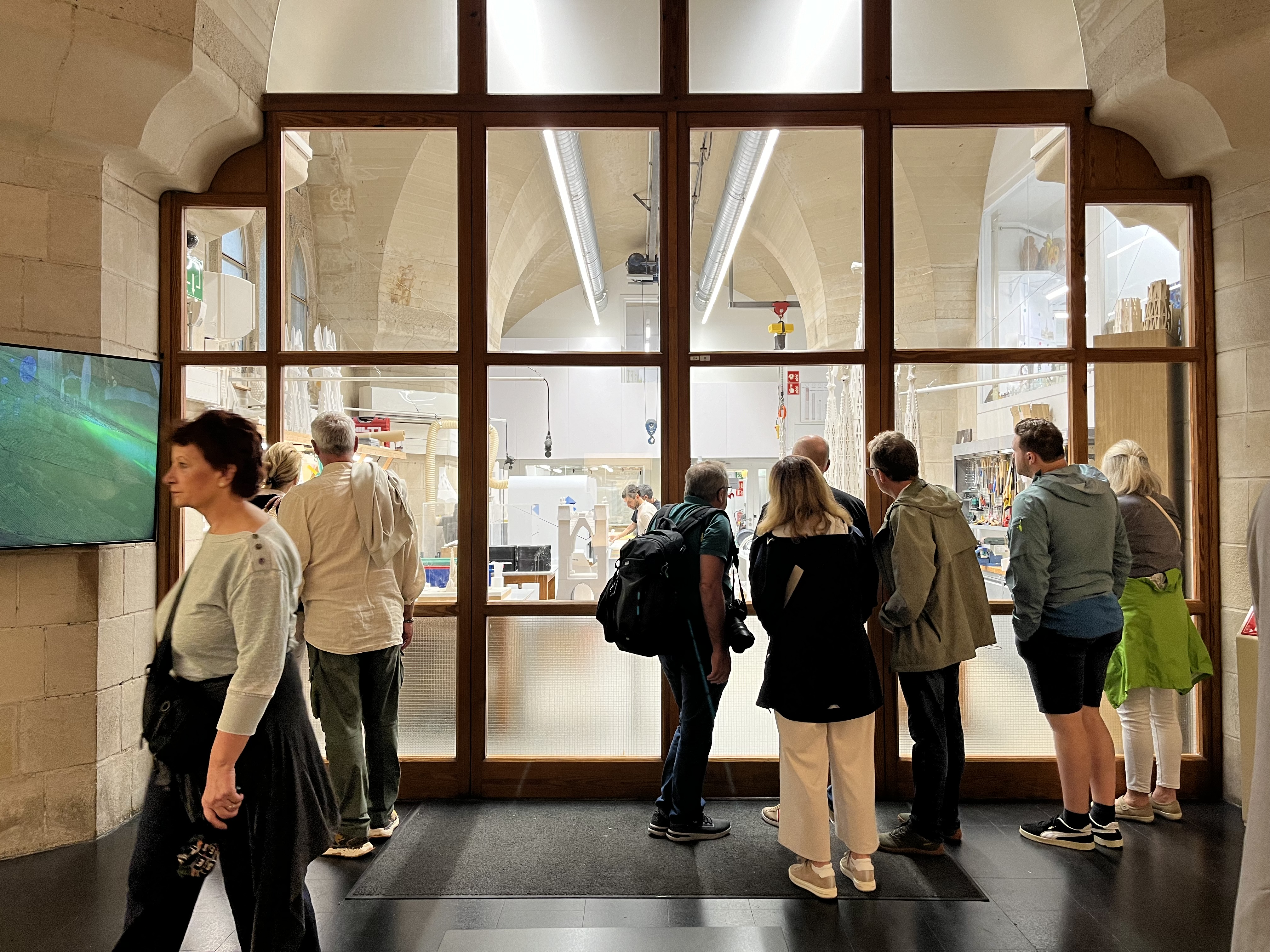
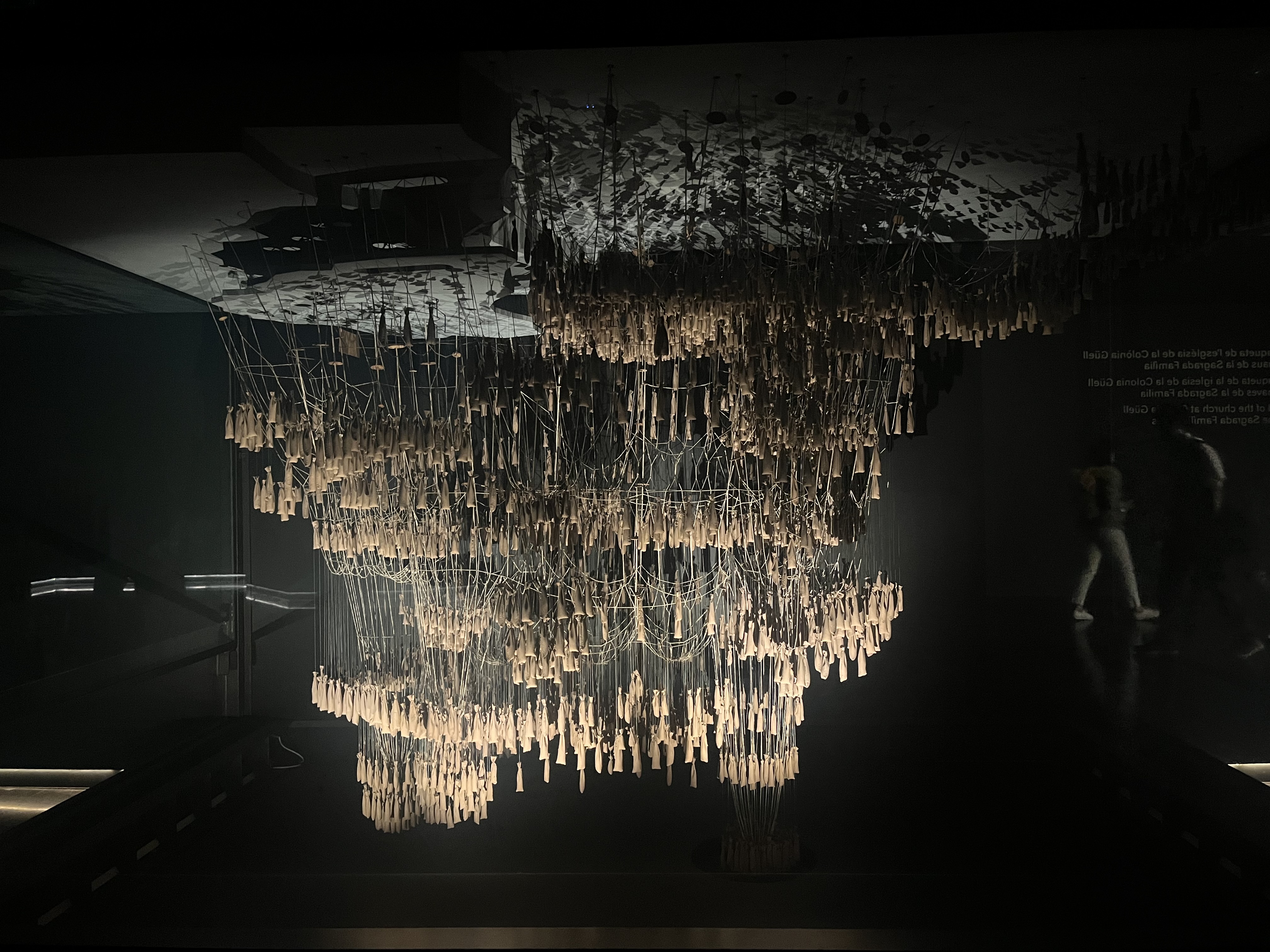
It is hard to encapsulate just how much an impact Gaudí has had since he first started out as a starry-eyed ingenue in the 1870s. Over an illustrious career spanning five decades, the man designed half of Catalonia’s structures, of which countless examples have made their way into history books and prestigious UNESCO heritage lists. His personal style has become the definitive style of his time, and far beyond it too: those outrageously capricious curves, those haphazard mosaics with their explosions of colour, the huge exaggerated size of all his structures; such was the success of this man that he may well be single-handedly responsible for the image of Barcelona you have in your head. Although he never built anything outside the region he called home, he never needed to: this place was enough to singlehandedly stake his claim to fame, and nowadays one can never think about the Sagrada Familia without immediately thinking of his name, his sacred name.
We walk outside to admire Gaudí’s masterpiece better. The downpour has cleared up, and the pavement glistens as we walk across the street and weave around an adoring crowd of tourists, all trying to gain the best view of the basilica. As my father calls us in for another family photo, the first few slivers of sunlight begin to break through the overcast sky. Instantly I sense (or imagine I sense) a certain change: the coolness of the air dissipates, and the trees seem to shimmer and swim in the newfound sunlight. We stand in their shadow, faintly aware of the moisture in the breeze that’s blowing down the street, and simply gawp at the incredible structure towering above our heads. Then Dad presses down on his selfie stick, and our visit is etched down for eternity.
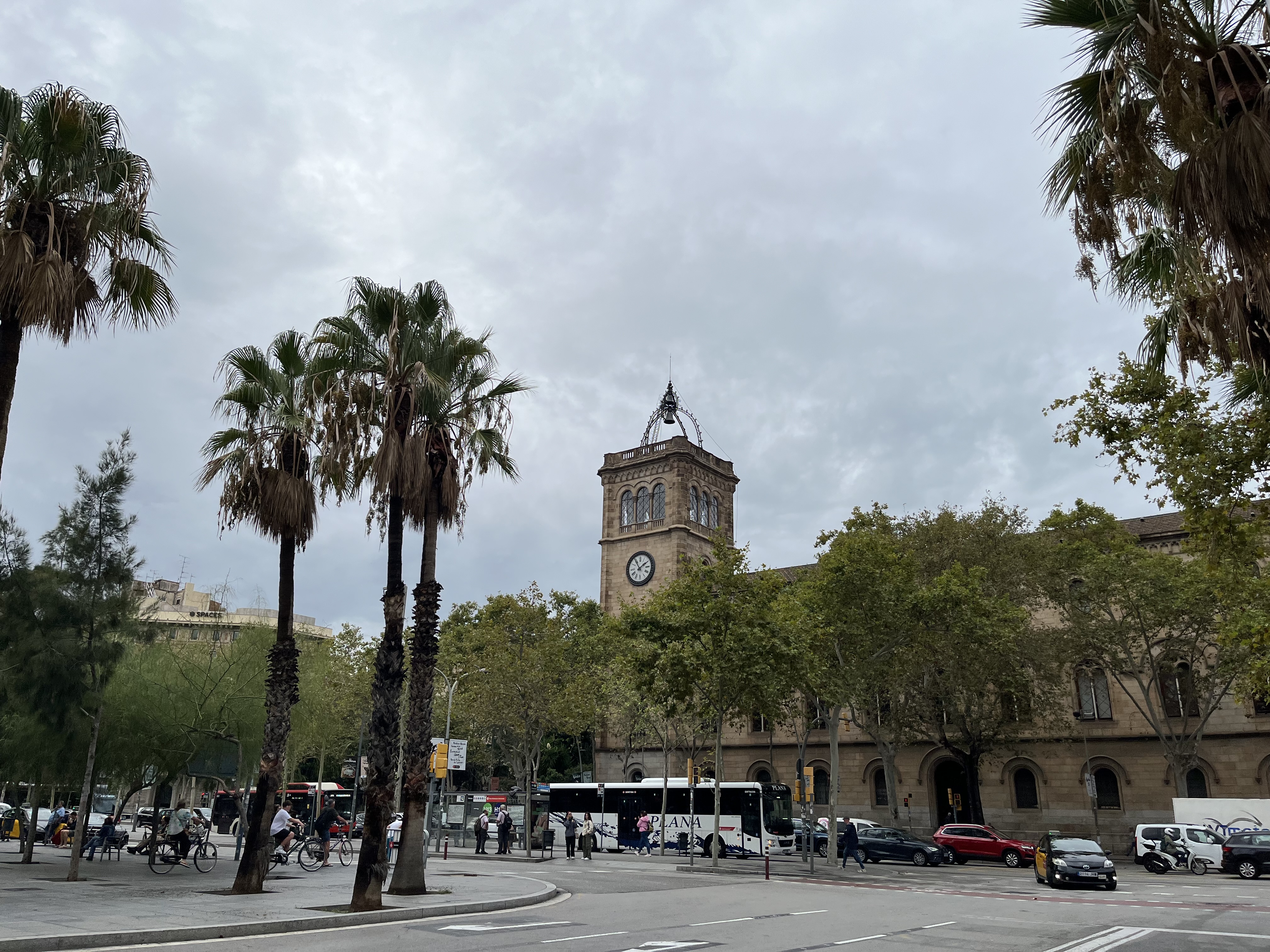
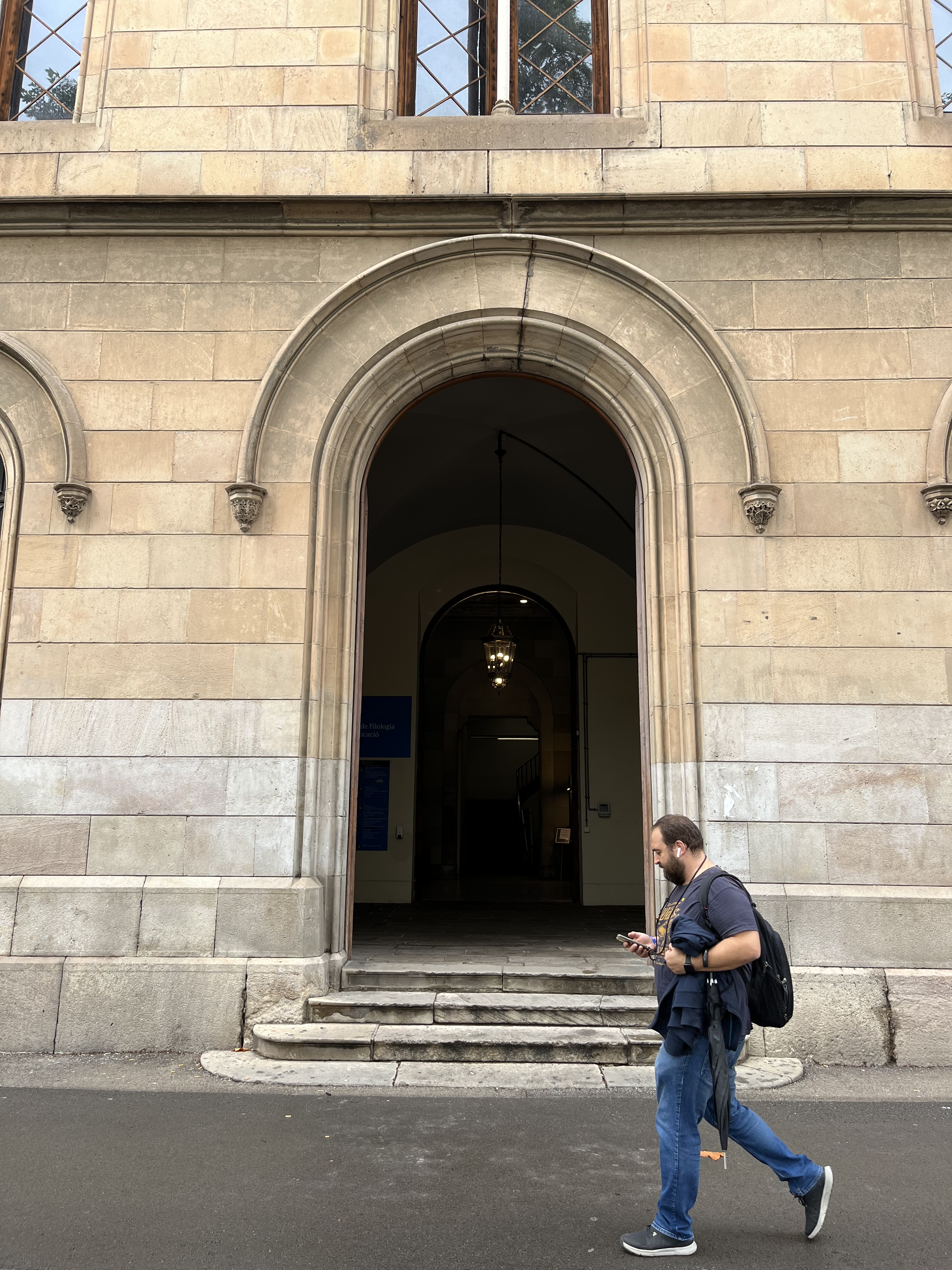
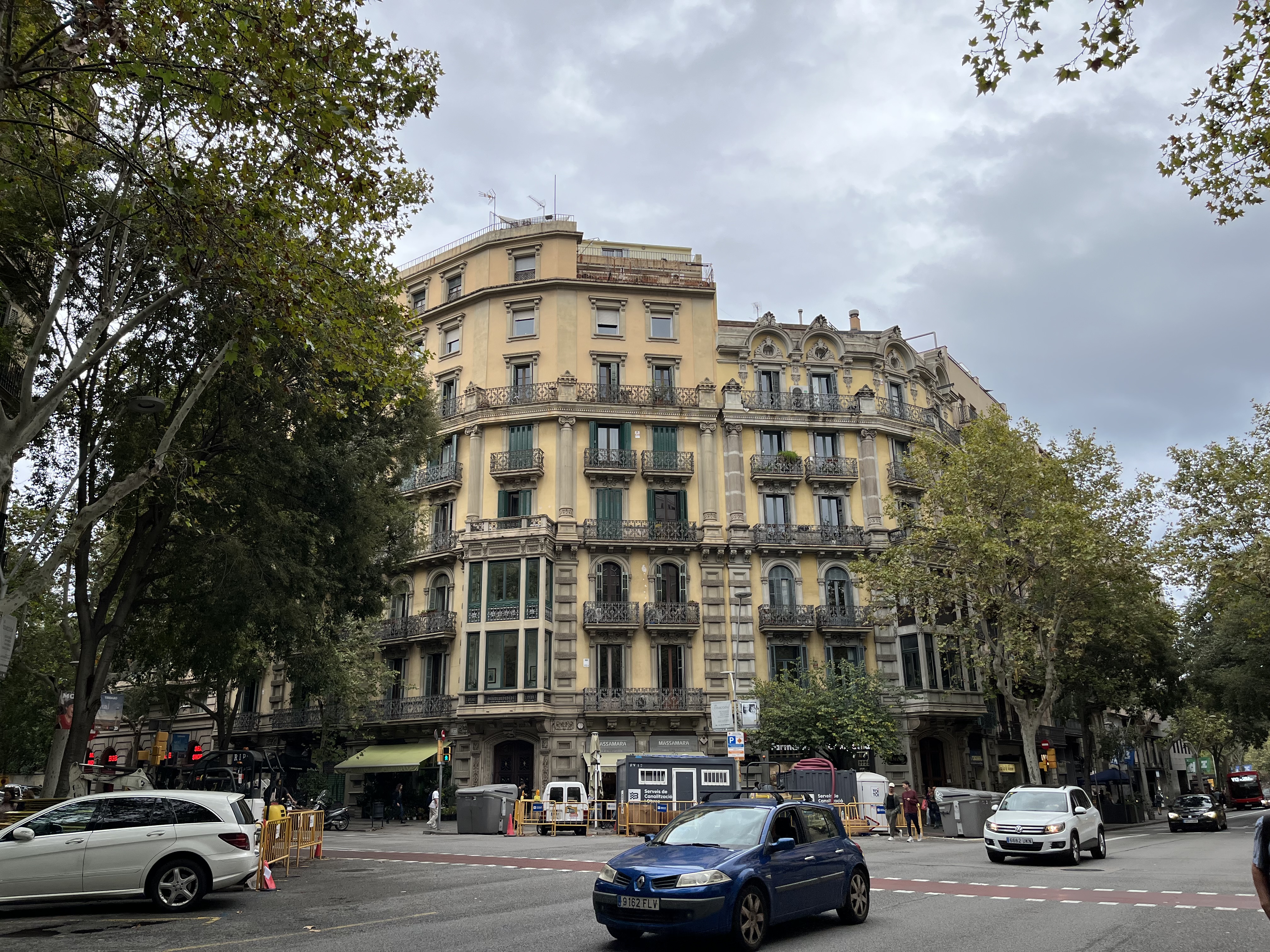
One thirty. Lunchtime. We emerge right in front of the University of Barcelona, another ostentatious building in a city that lives and breathes ostentatious buildings. Posters along its front loudly proclaim the La Mercè festival, one of Barcelona’s myriad ways of both celebrating their city’s history while having the most raucous bacchanalia imaginable. The streets here come straight out of a twentieth-century Gothic novel: wide avenues flanked on either side by identical, classy buildings with wrought-iron balconies and tall single-pane windows; wooden doorways with opaque glass, set into the base of every edifice, suggest whole universes of intrigue and imagined depravity. Lines of trees dot the pavements, each forming a leafy canopy that provides shade and shelter to the cars rumbling underneath and concealing the intermittent streetlights tucked inside. Perhaps these streets may very well be crime scenes every night, but right now the colours and the symmetry are welcoming, the spitting image of the Barcelona I had in my mind’s eye when I chose it for our travels.
Against this background, the Catalan restaurant we’ve chosen for lunch may come off as something of an anomaly — I doubt highly unlikely that anybody would be foolish enough, or sacrilegious enough, to attempt murder amidst the warmth of the restaurant that is La Flauta Aribau. I had my reservations when placing this place on our itinerary; not because I’d heard bad things about the place, but because every review I’d read online put particular emphasis on how long the queues could get there. But room is swiftly found for seven (perhaps they have experience with naïve Asian tourists), and before I really know what’s happening a waitress has magically appeared behind me, waiting to take our order. (Where do they all materialise from?)
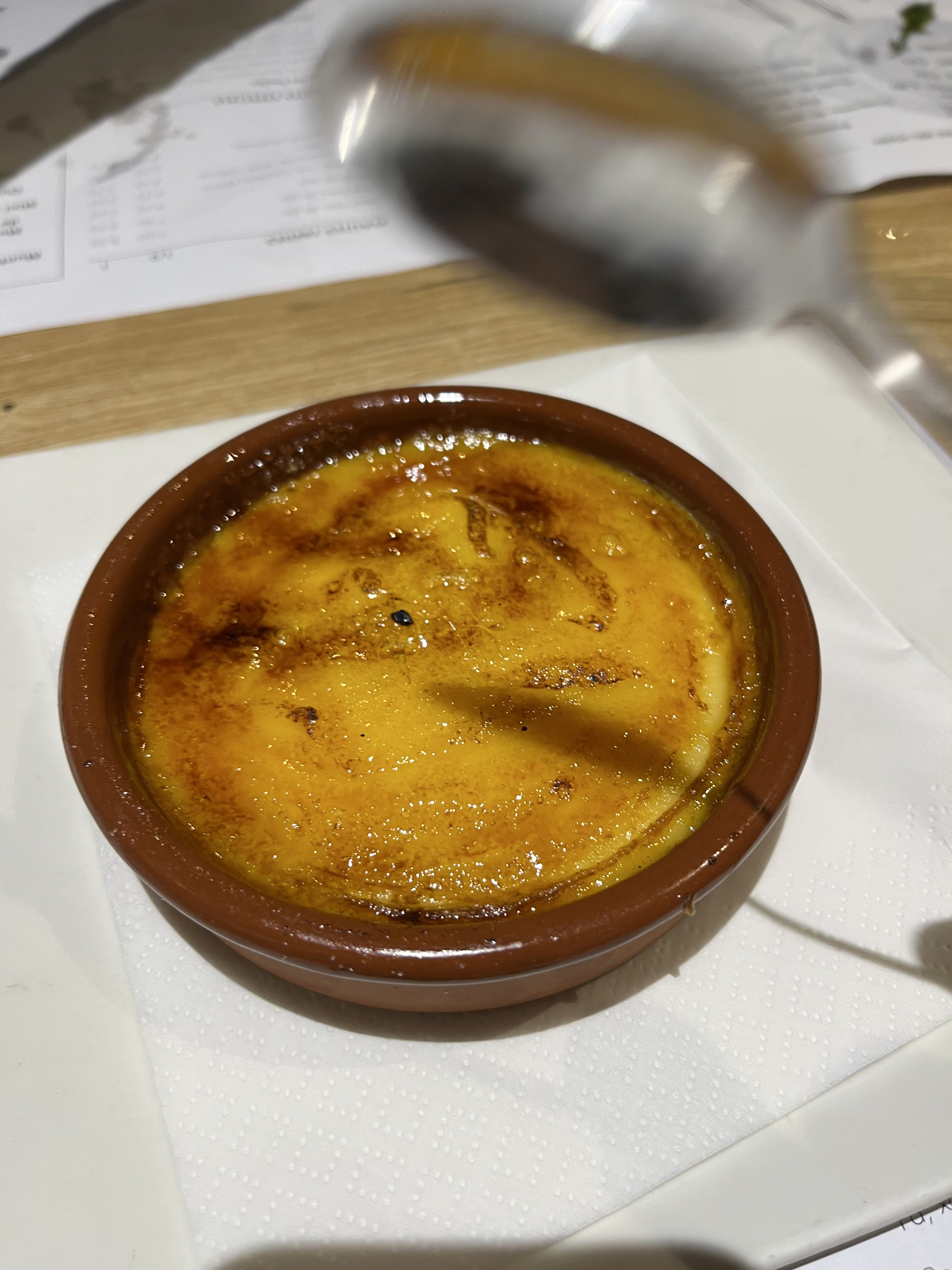
But what makes our experience more than a dream is the food. Normally when food arrives at my table I’m able to hold myself back while a family member or friend satisfies their Instagram cravings. But maybe I’m just too hungry this time, or maybe the food looks too good; in any case, the waiters have barely set an item down before it disappears down my gullet. Everything that arrives on our table — everything — is delectable, from the tortilla with its rich, runny centre to the jamón that sits atop slices of crispy bread. Indeed, as I write these words I can still taste the squid from that afternoon, even the slight hint of Mediterranean brine that hangs on the roasted tentacles. It is not until I help myself to a crema catalana, the thicker cousin of a crème brulee, that I finally find myself slowing down — but even then I still check the menu, trying to see whether there’s anything else I can eat.
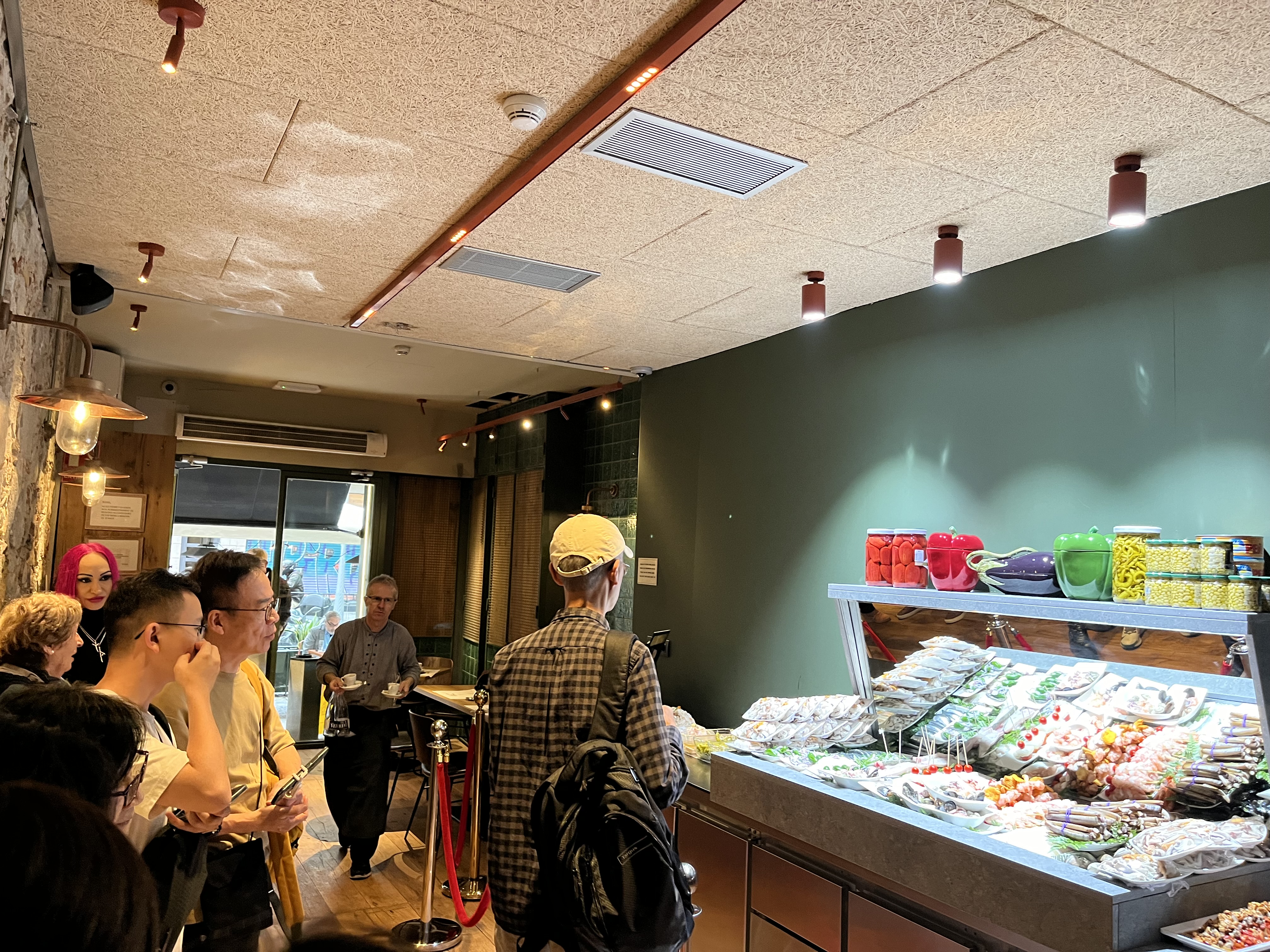
While my family continues to praise the intricacies of Catalan cuisine, I look around me. Such is the popularity of La Flauta Aribau that the waiters never seem to get a break; no sooner have they set down a platter or a drink then they rush off to take somebody else’s order. Despite its homely appearance the restaurant is catering to a diverse clientele today: families, young couples, old couples, you name it. There’s even a woman who looks like she could be from my part of the world, who casually polishes off a few sandwiches, pays the bill and then leaves. I watch as she confidently saunters out the door. Is there still a part of me that compares, that wishes I was as brave as that person? Perhaps it’s faded a bit now, but… I suspect I still have some way to go.
Back underground again. Given that we’ve been rushing quite a bit today, I decide to take a detour to our next destination, and so my aunts and my mother settle down on the seats of the Barcelona Metro while we zoom through the city centre and out into the suburbs. Through the windows of the carriage I spot various dimly-lit stations with vaguely recognisable names: Catalunya, Arc de Triomf, Glories. Time was I might have jumped off the train just to see these places, but today my legs stay stubbornly leaden, unmoving: an unconscious mirror, perhaps, of my family all around me? We reach our destination and prepare to get off; but just as we are about to step onto the platform, a woman brushes her hand against Dad’s fanny pack. He notices and gives her the stink-eye, and we immediately form a protective circle around him as the woman beats a hasty retreat. He assures us nothing has been lost, but for the rest of the day we hug our bags just a little bit closer.
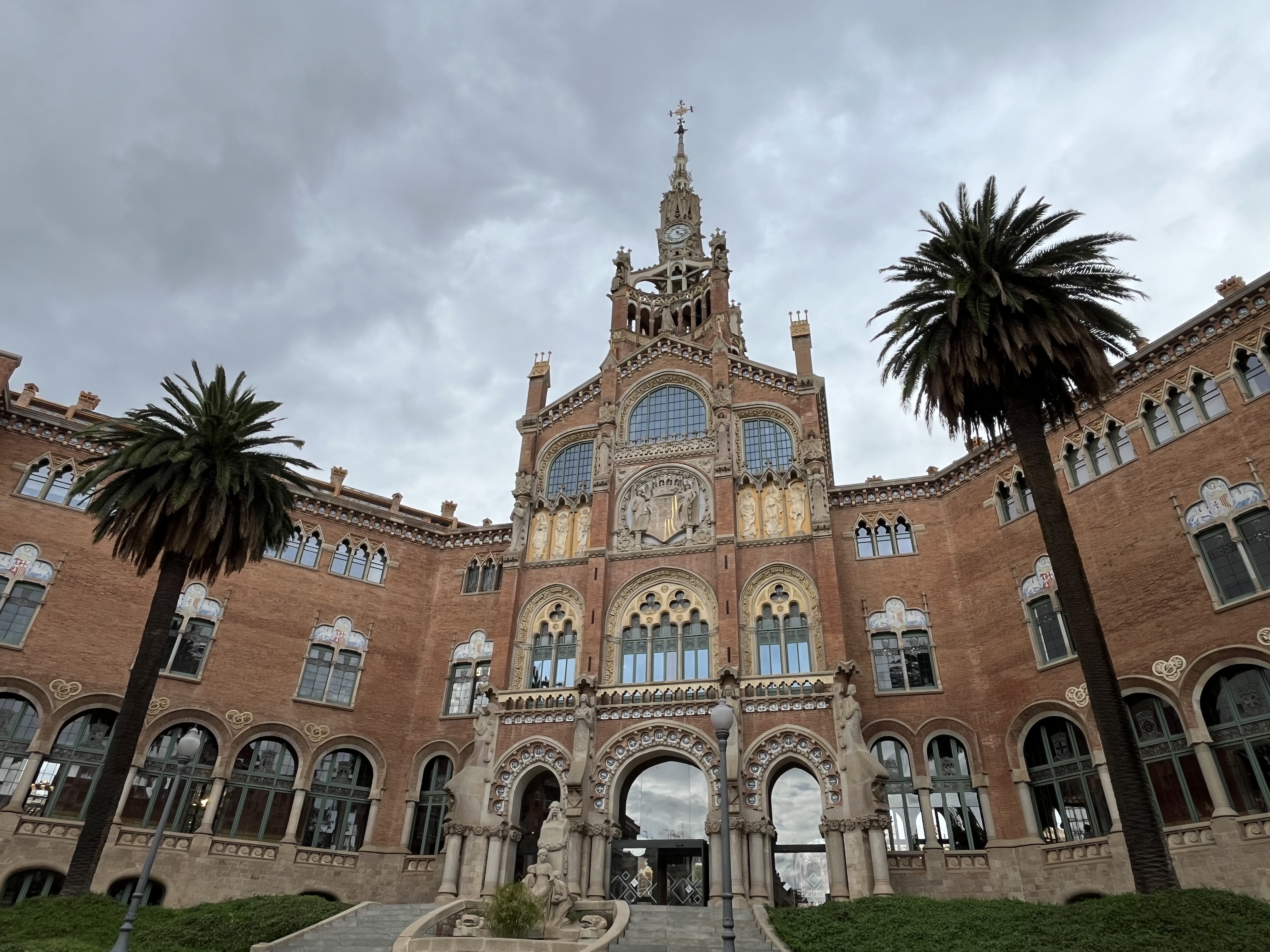
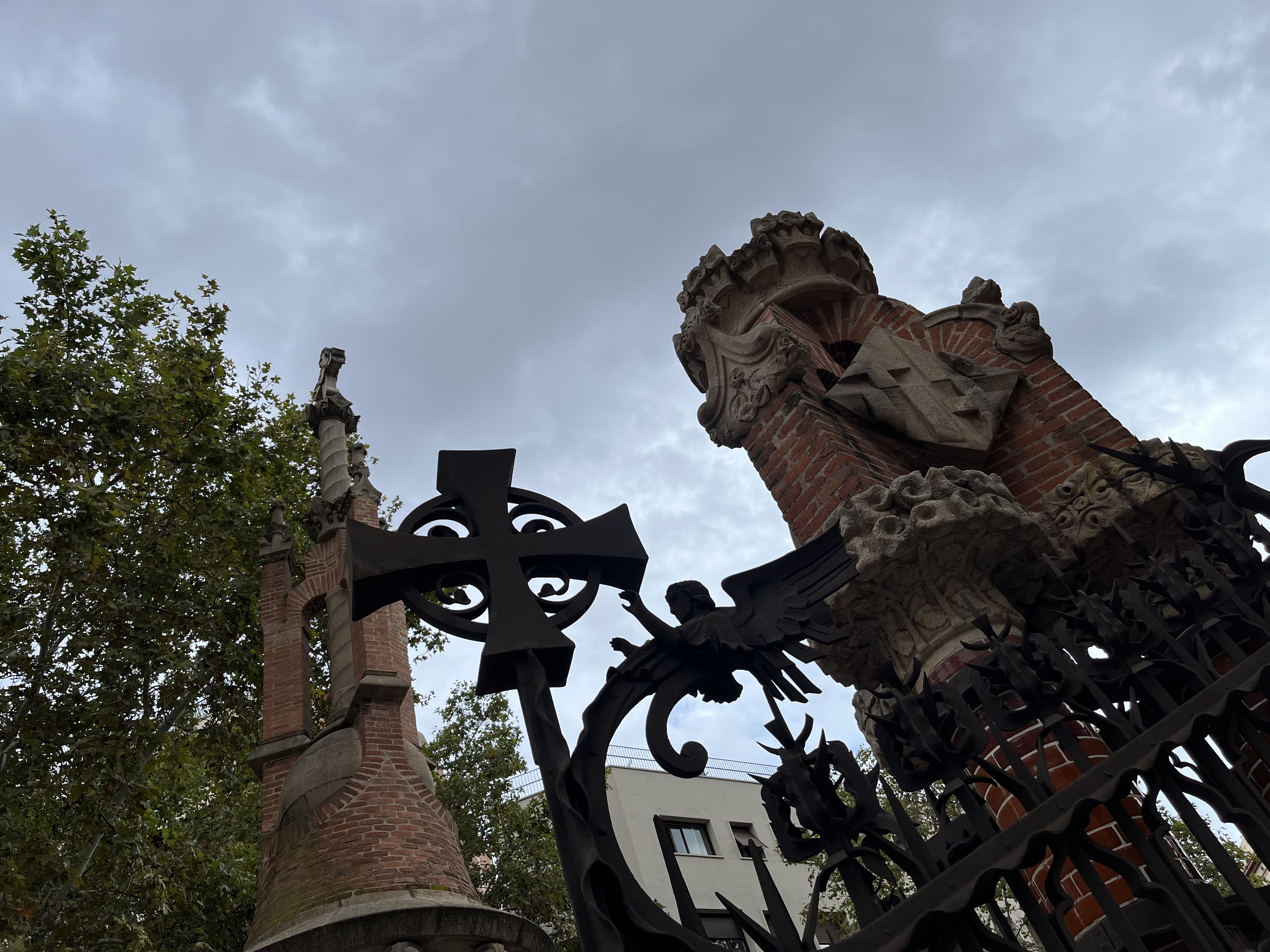
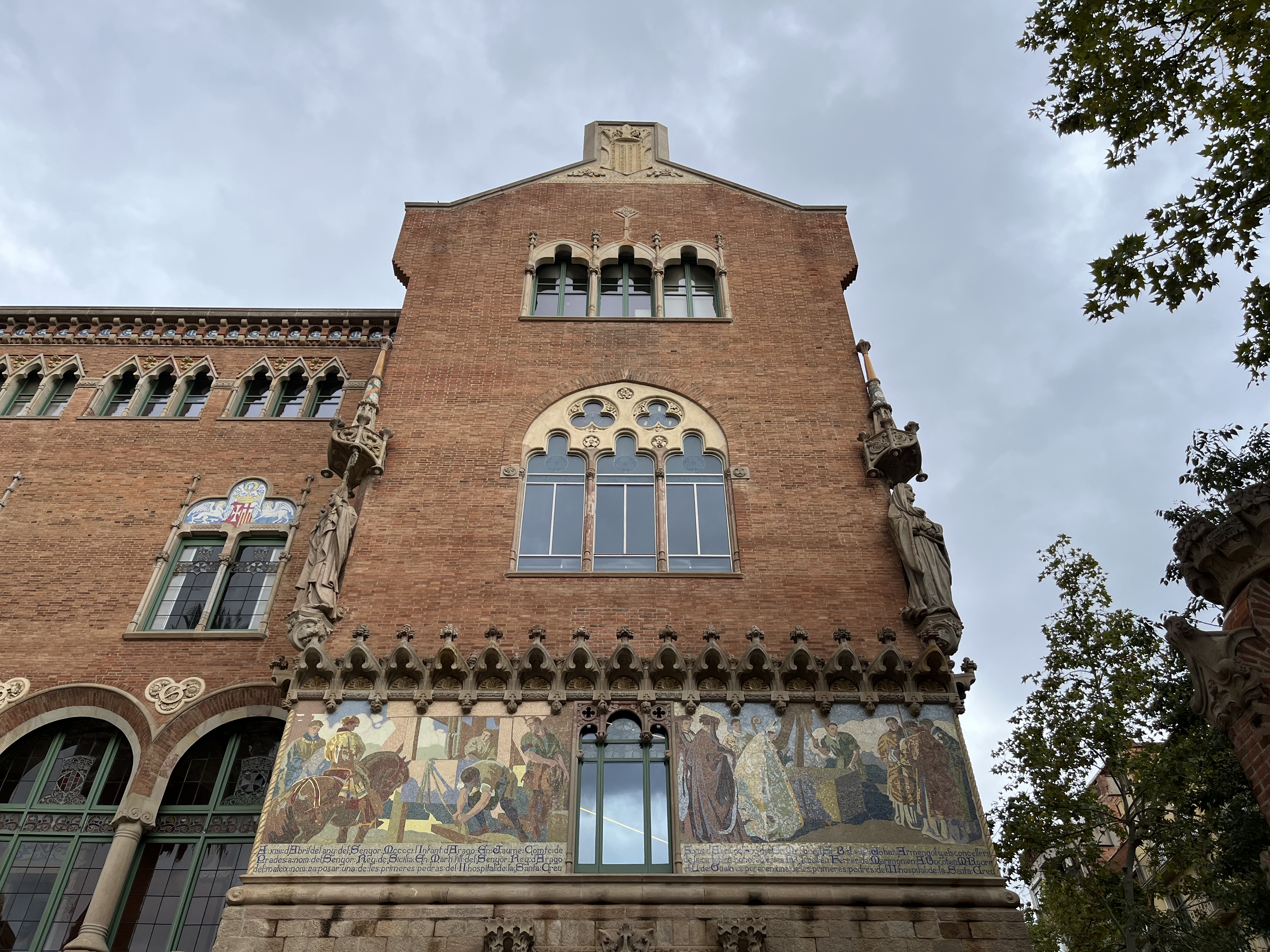
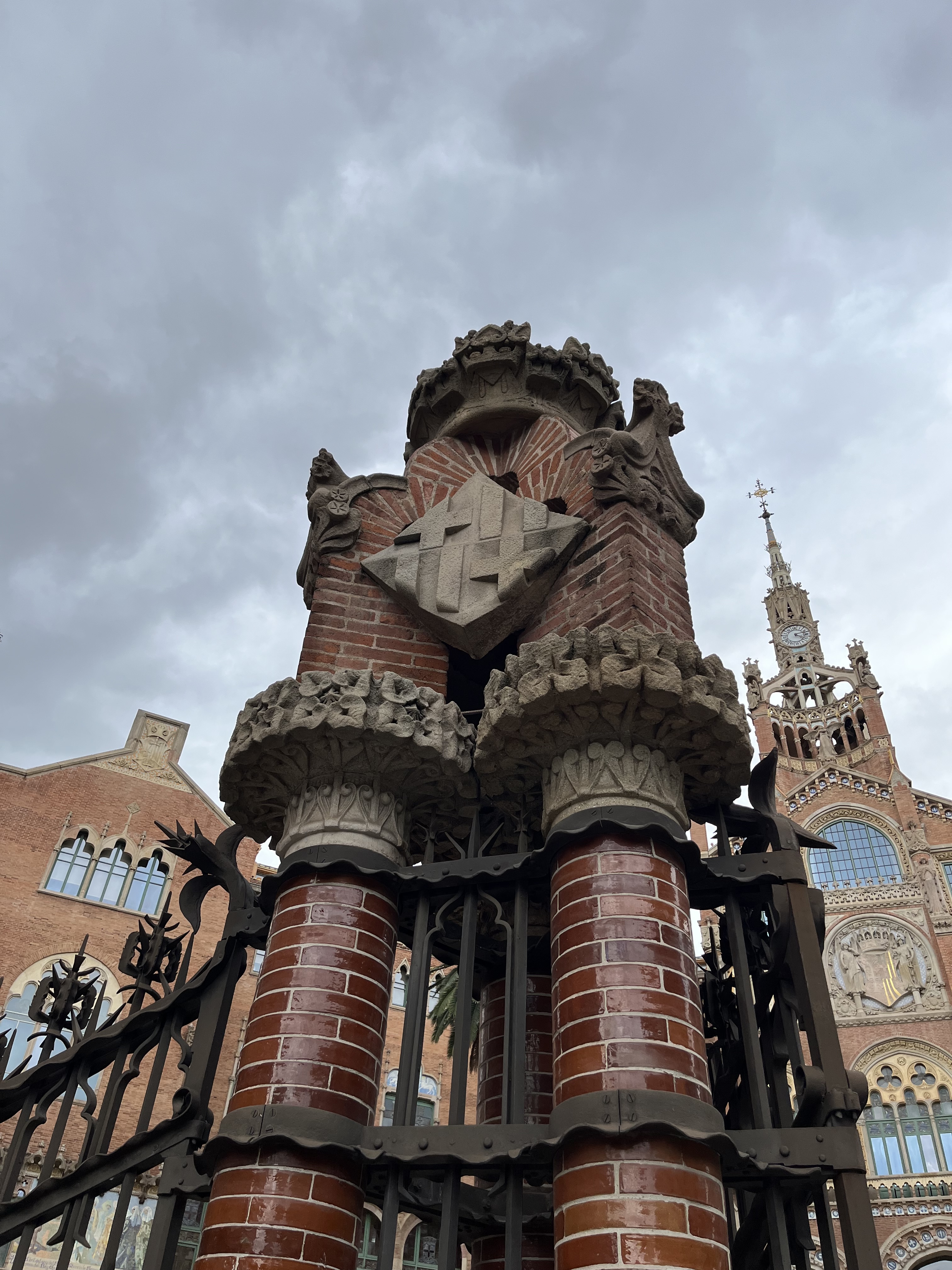
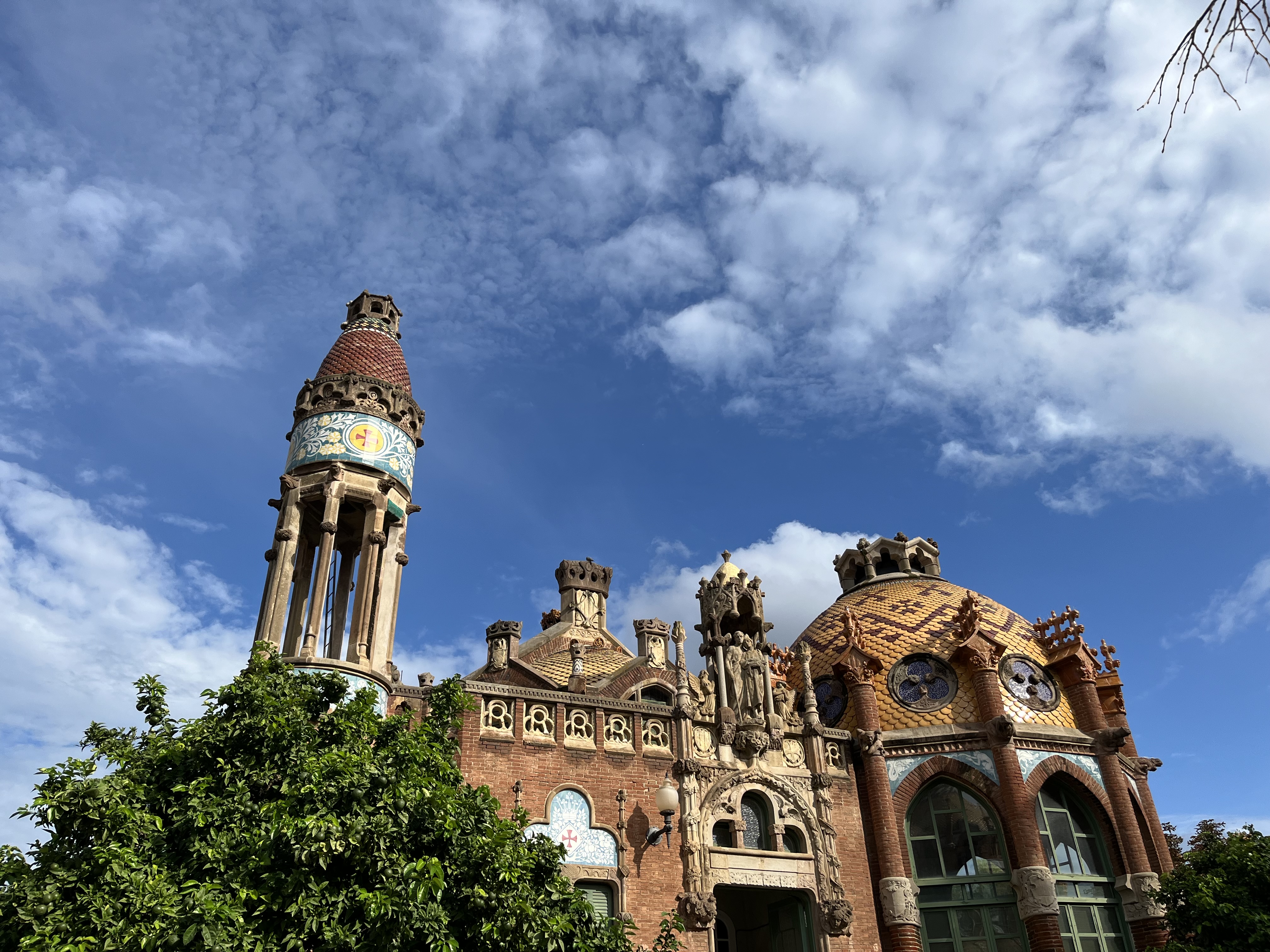
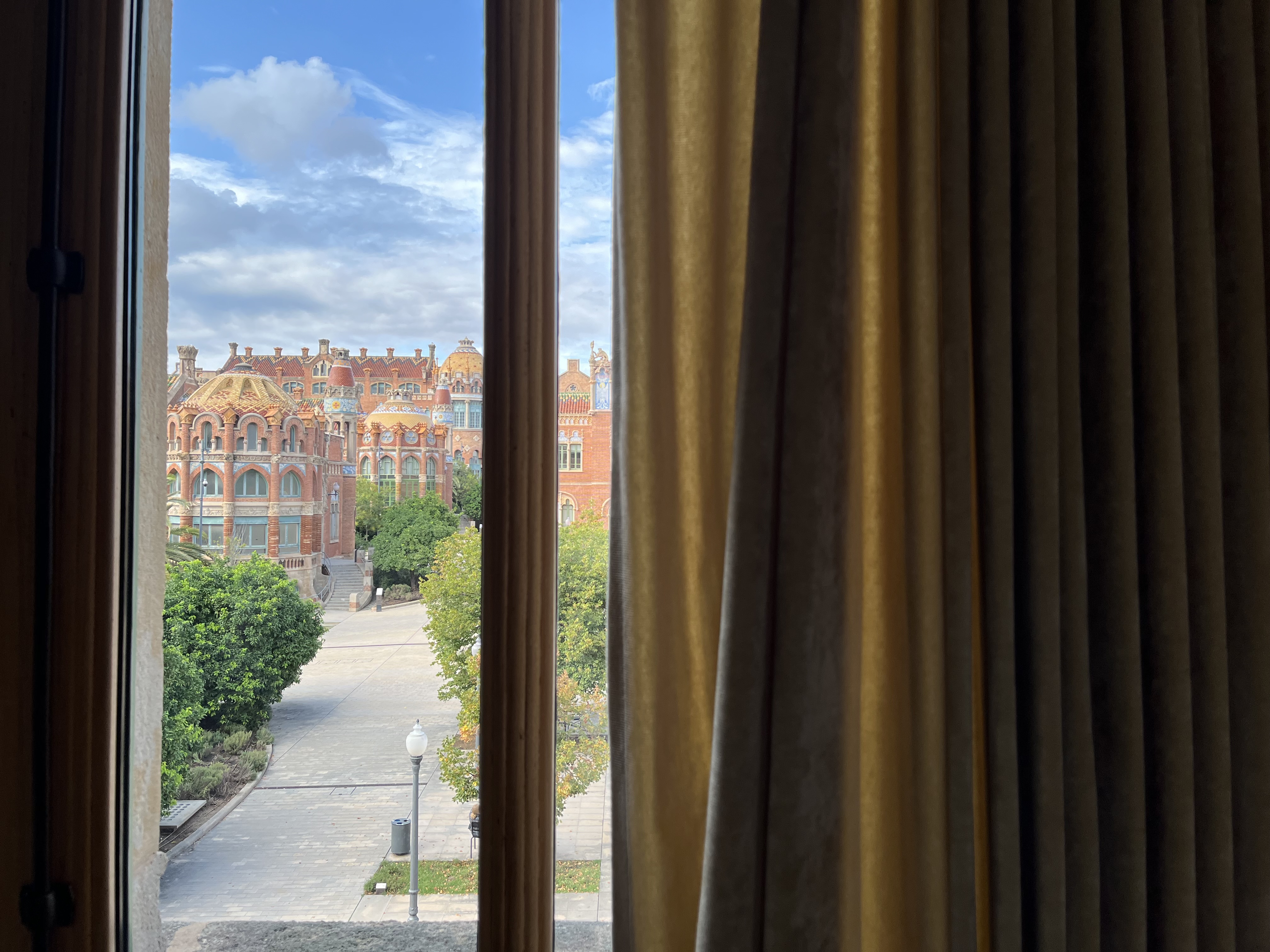
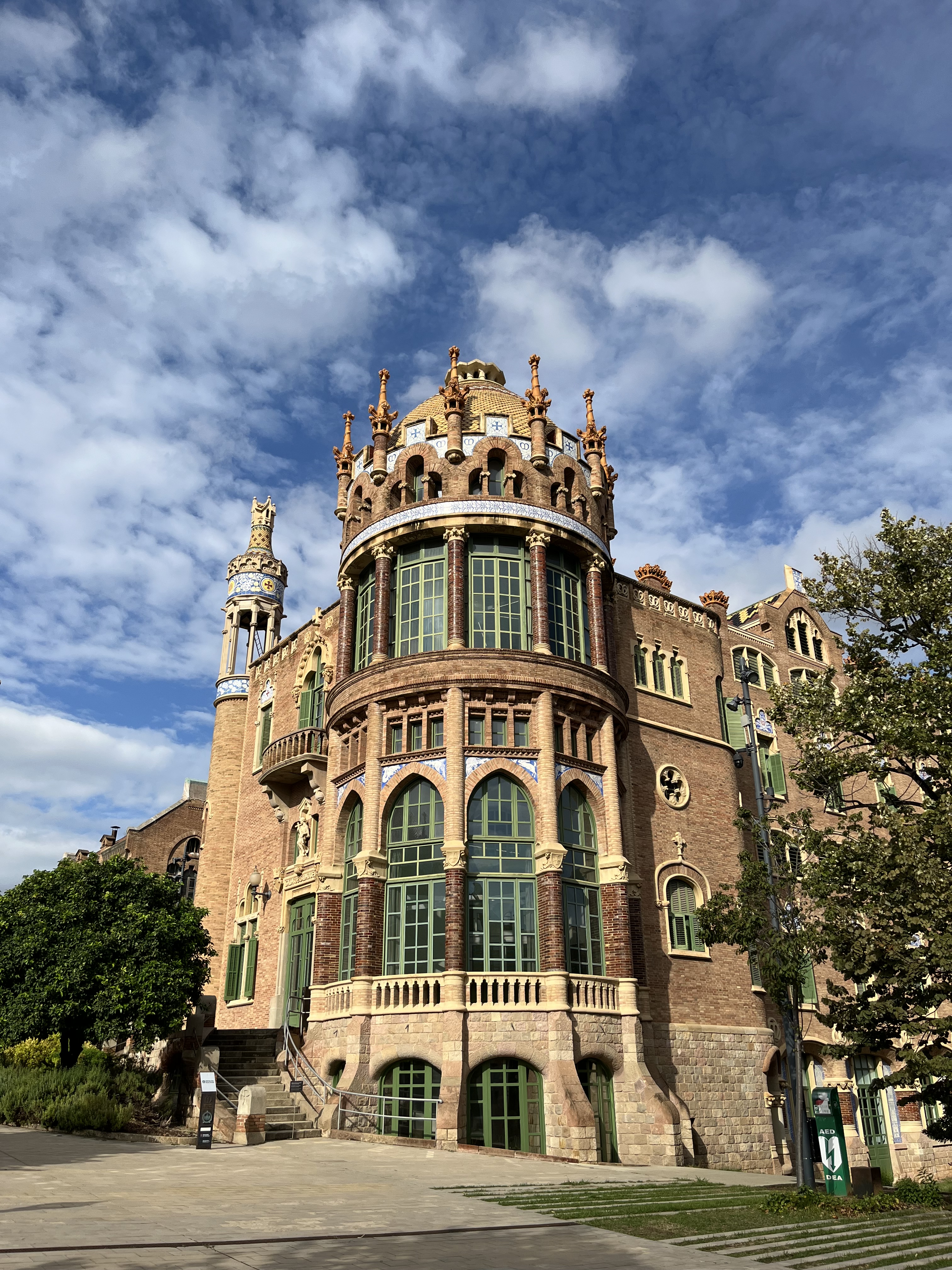
Anywho, while all that’s going on, on with the sightseeing. This ornate building is the Hospital of the Holy Cross and Saint Paul, formerly one of the major hospitals of Barcelona. I say formerly, because it was decommissioned in 2009 and has since been turned into a museum, where visitors can now stand in spaces that were previously operating theatres, reception areas, or even leprosy wards. There are photos of the hospital from its not-so-distant heyday, all tiled out and bedecked with modern surgical equipment, and it tickles me somewhat to imagine patients staring at the finest examples of Catalan modernisme while having their leg sawn off by a team of doctors. After its closure it was decided that the hospital would be turned into a cultural centre and reopened to the public after six years’ time, a timeframe that was laughably short even before bats started coughing up COVID-19.
In a sense construction did cease in 2020: as I make my way through the hospital it becomes obvious that some of the rooms have not seen a construction worker in years, and many of them look no different from the same state of disrepair as they were fifteen years ago. A few of them even have piles of tiling and masonry lying about, as if the workpeople simply gave up halfway through renovating the place; the smell of lime and cement dust hangs heavy in the air. I may be something of an adventurous tourist (now there’s an oxymoron), but I still can’t help a little apprehension about poking around what’s basically half an active construction site, even if it does have an incomparable audio guide.
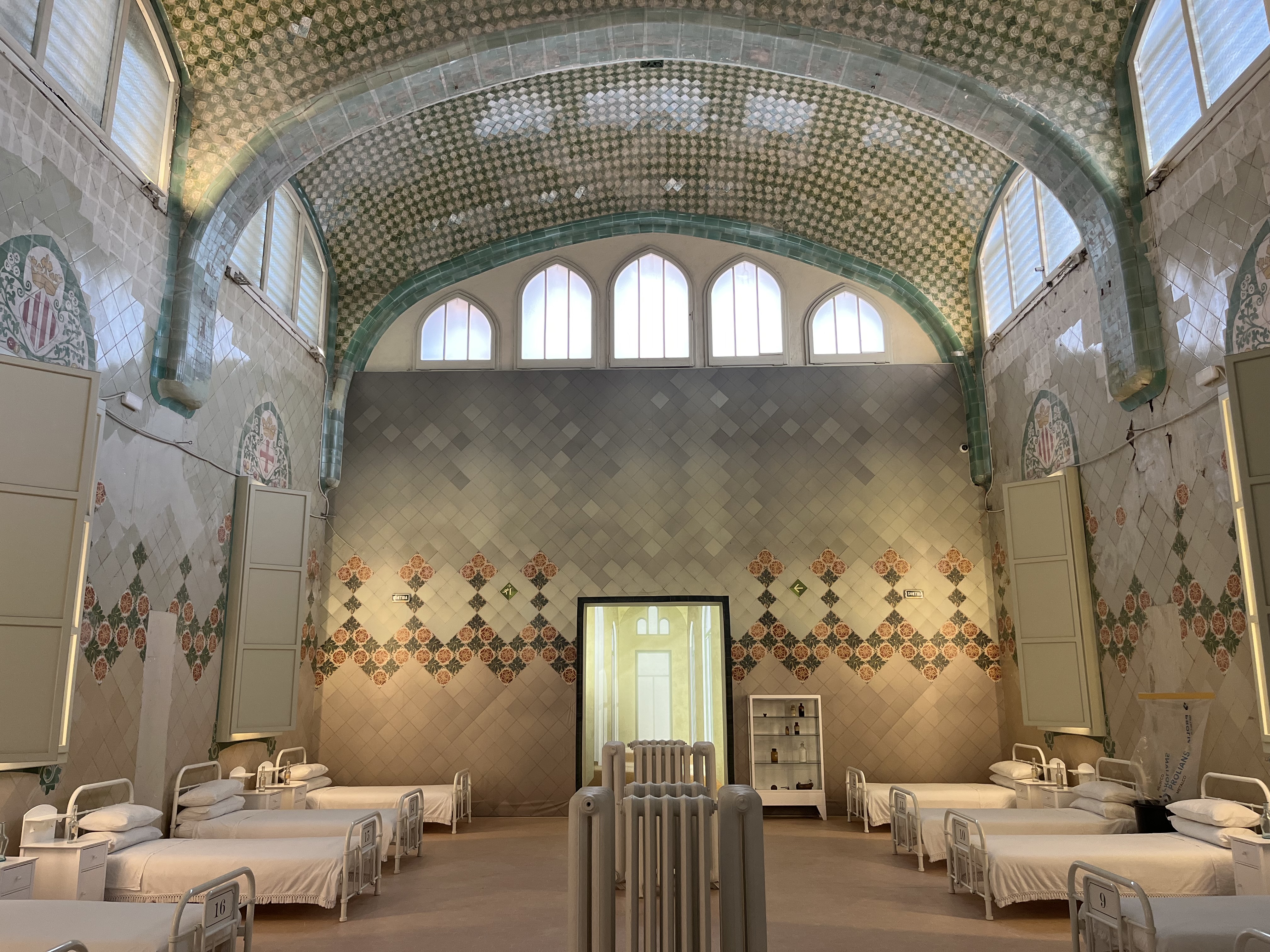
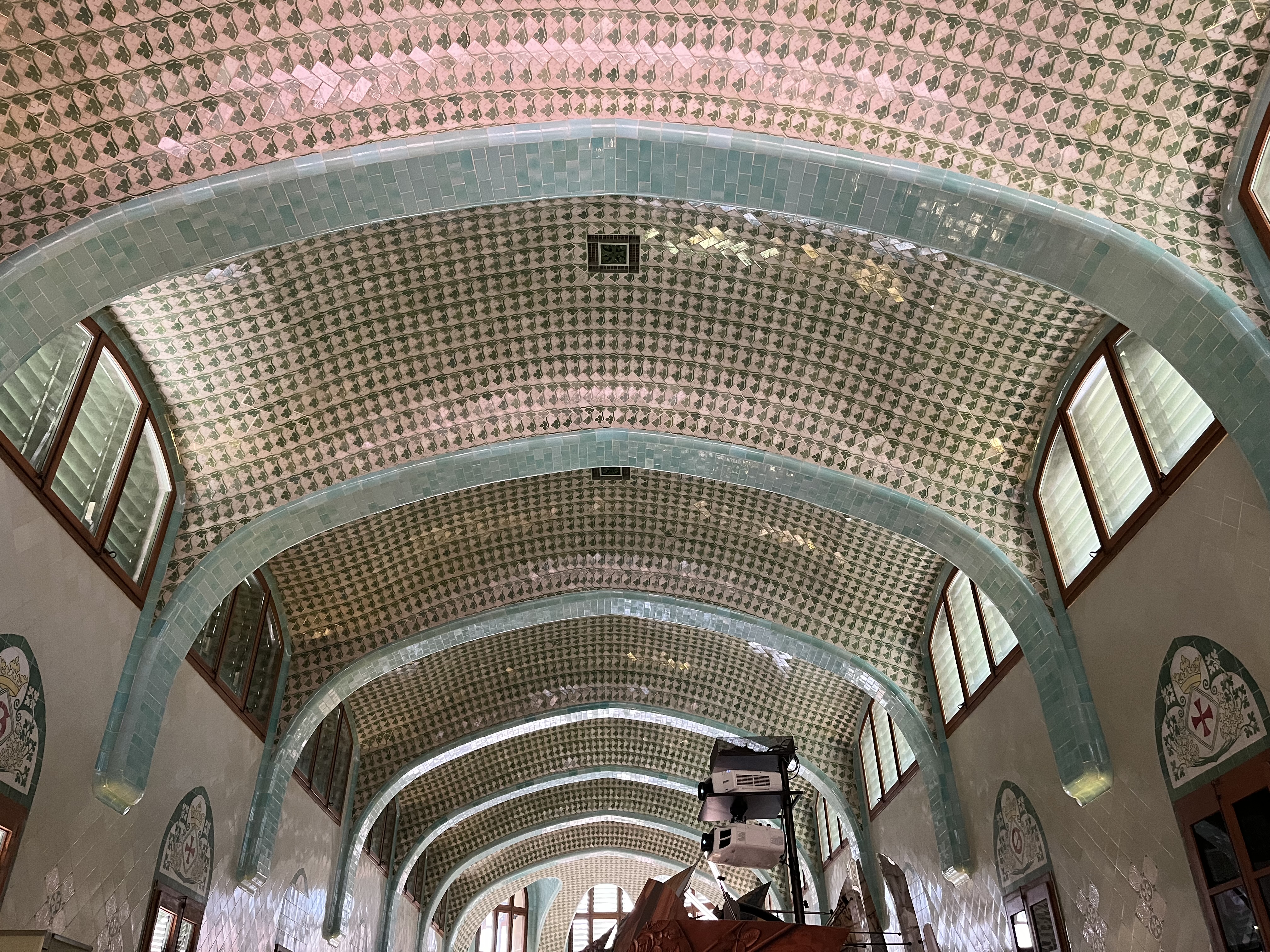
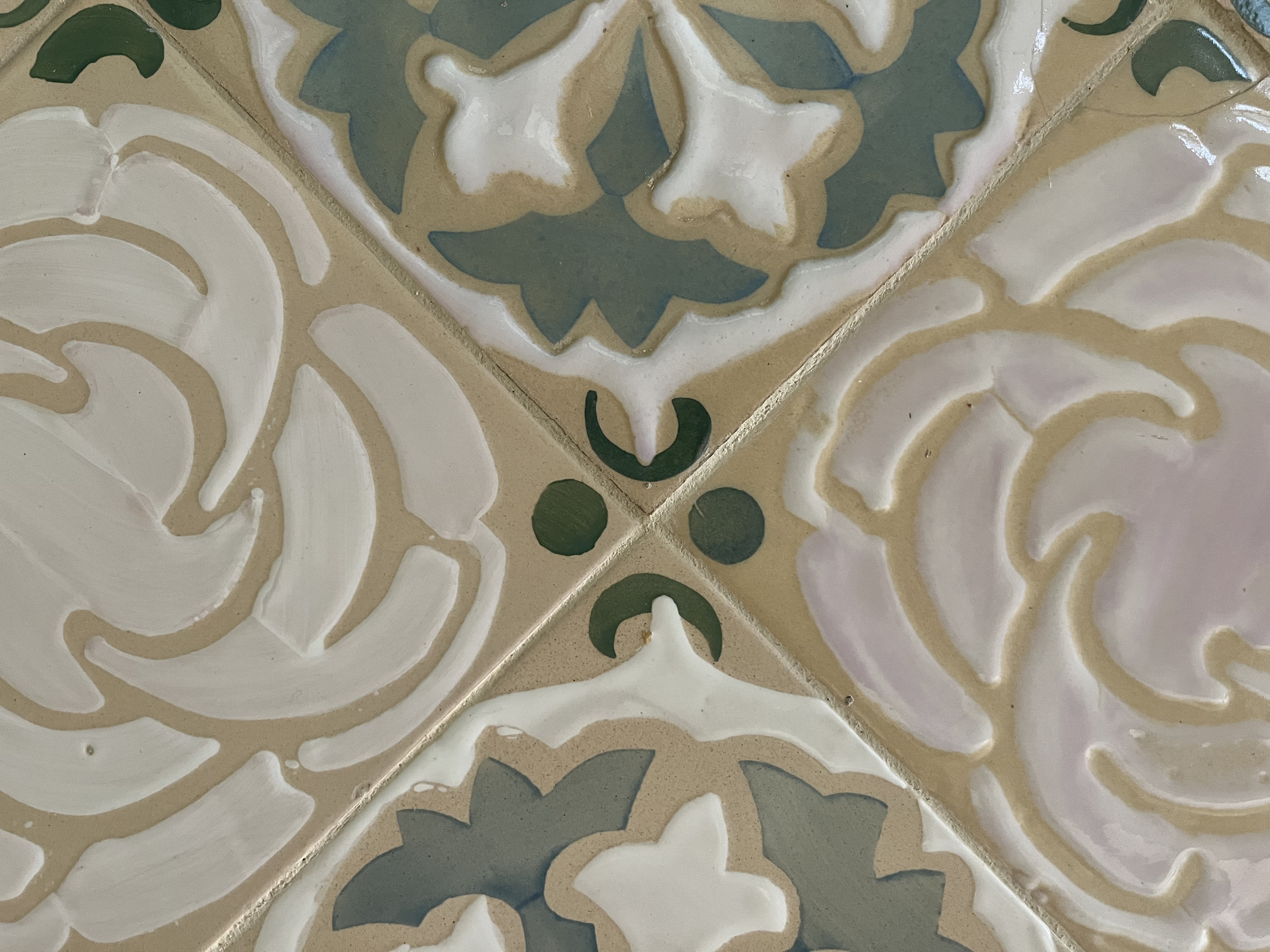
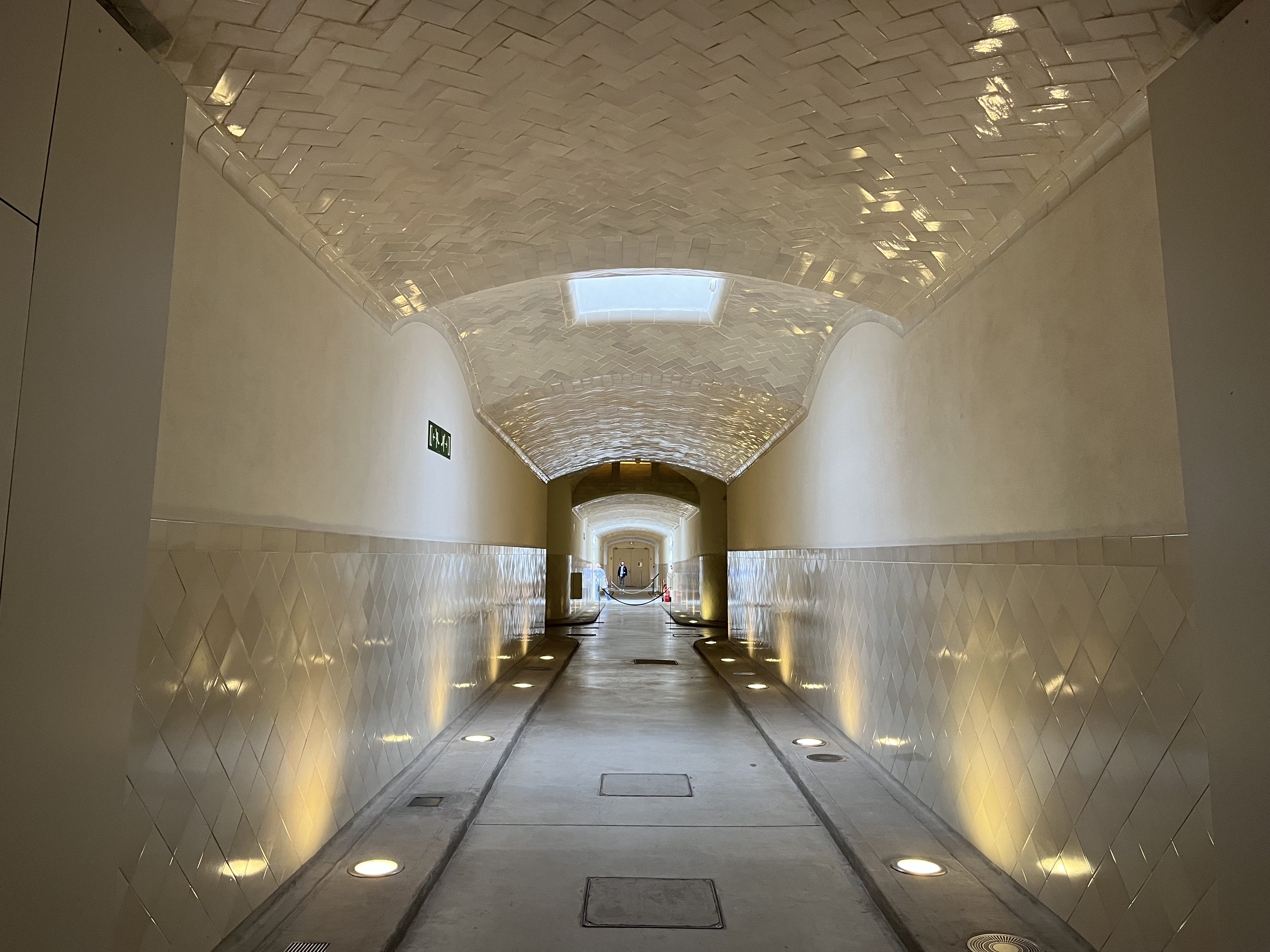
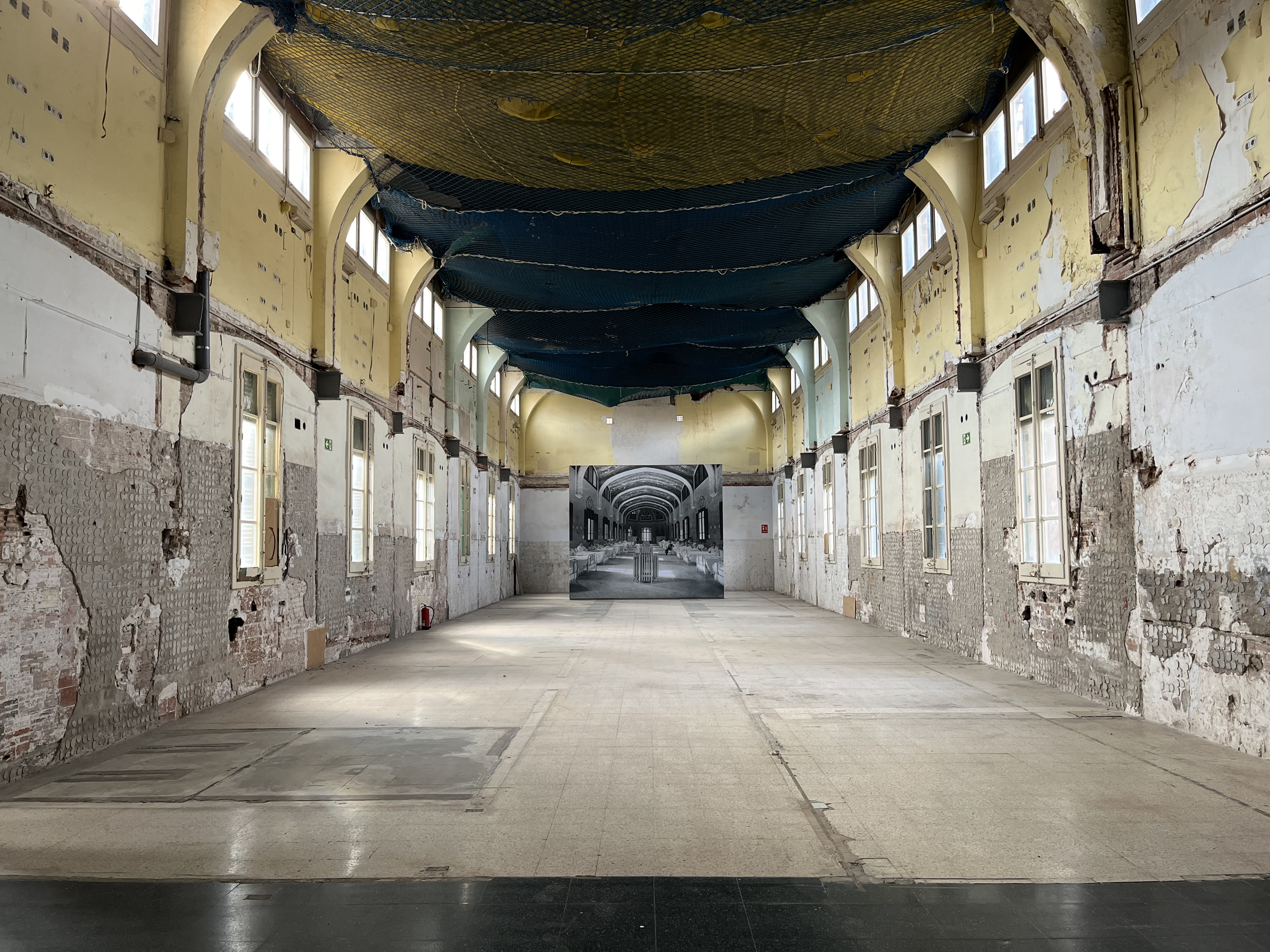
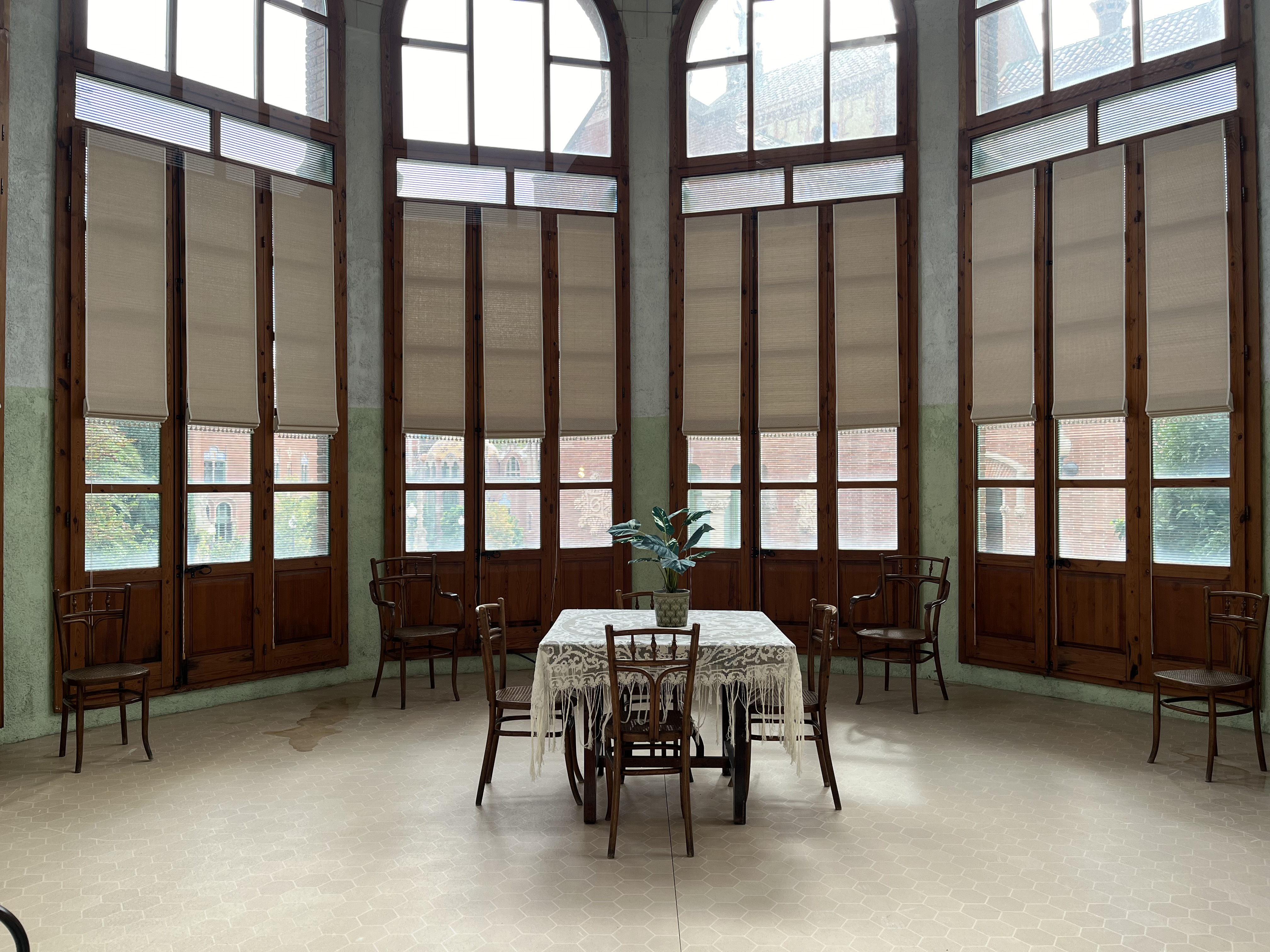
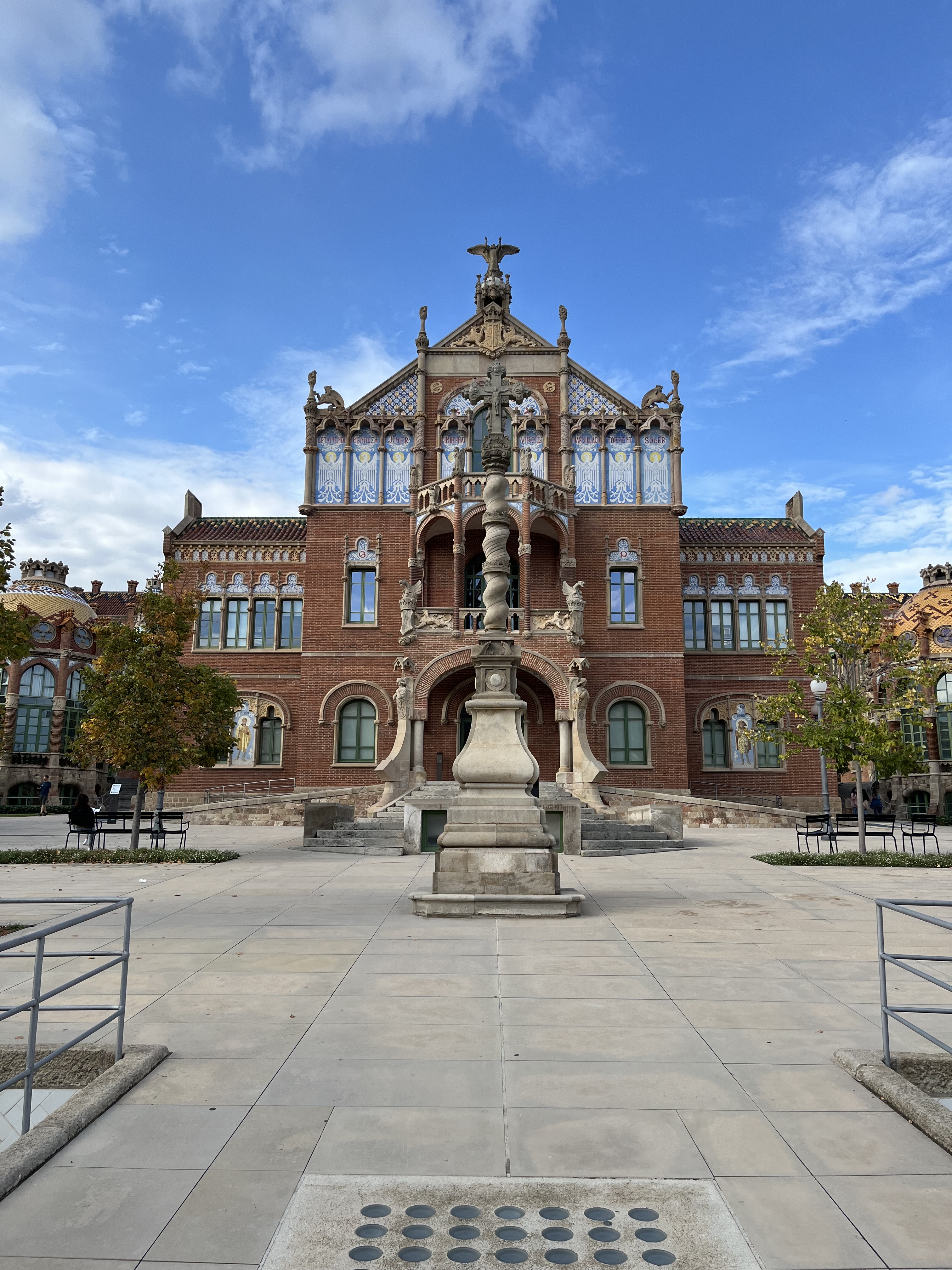
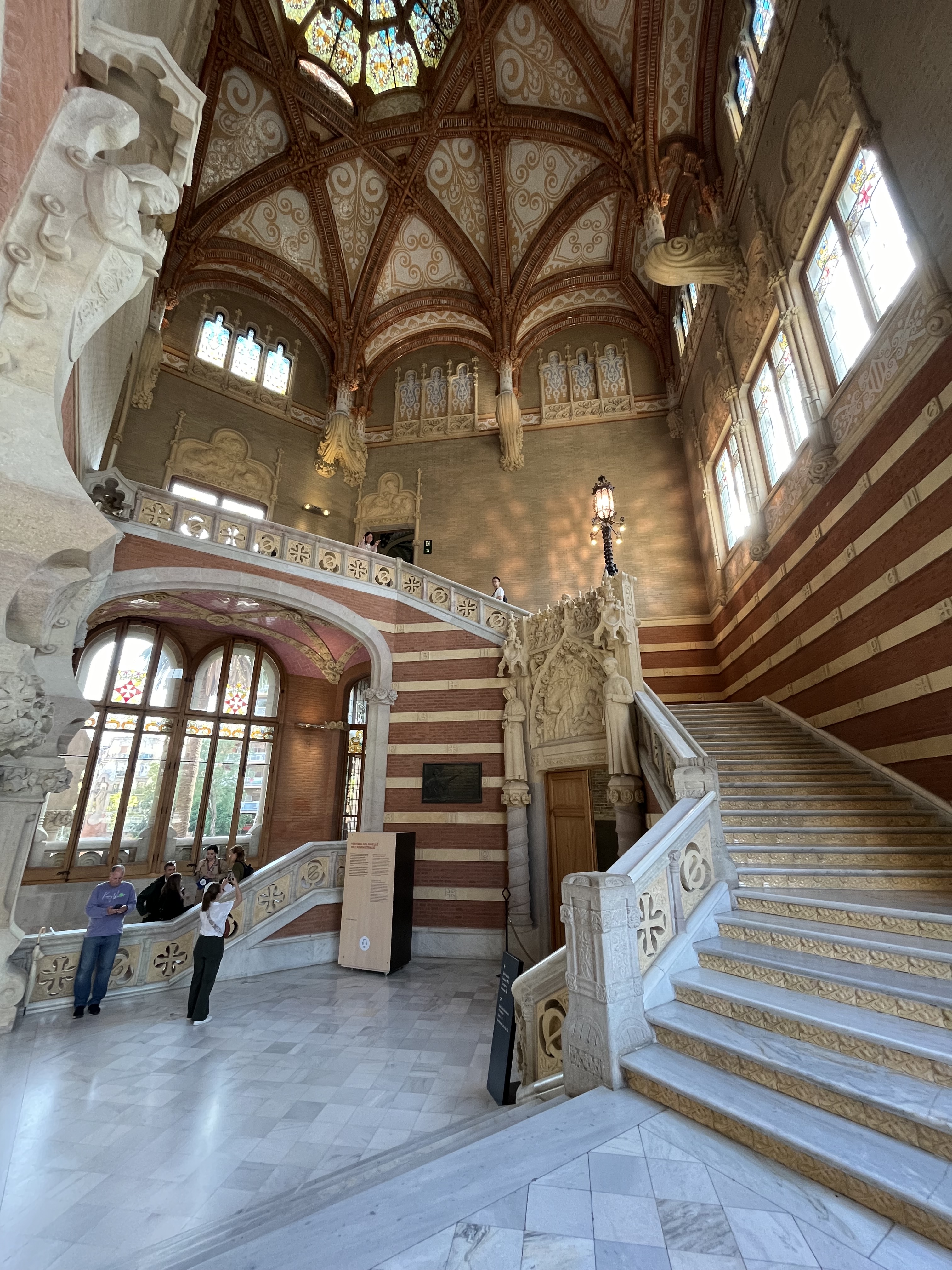
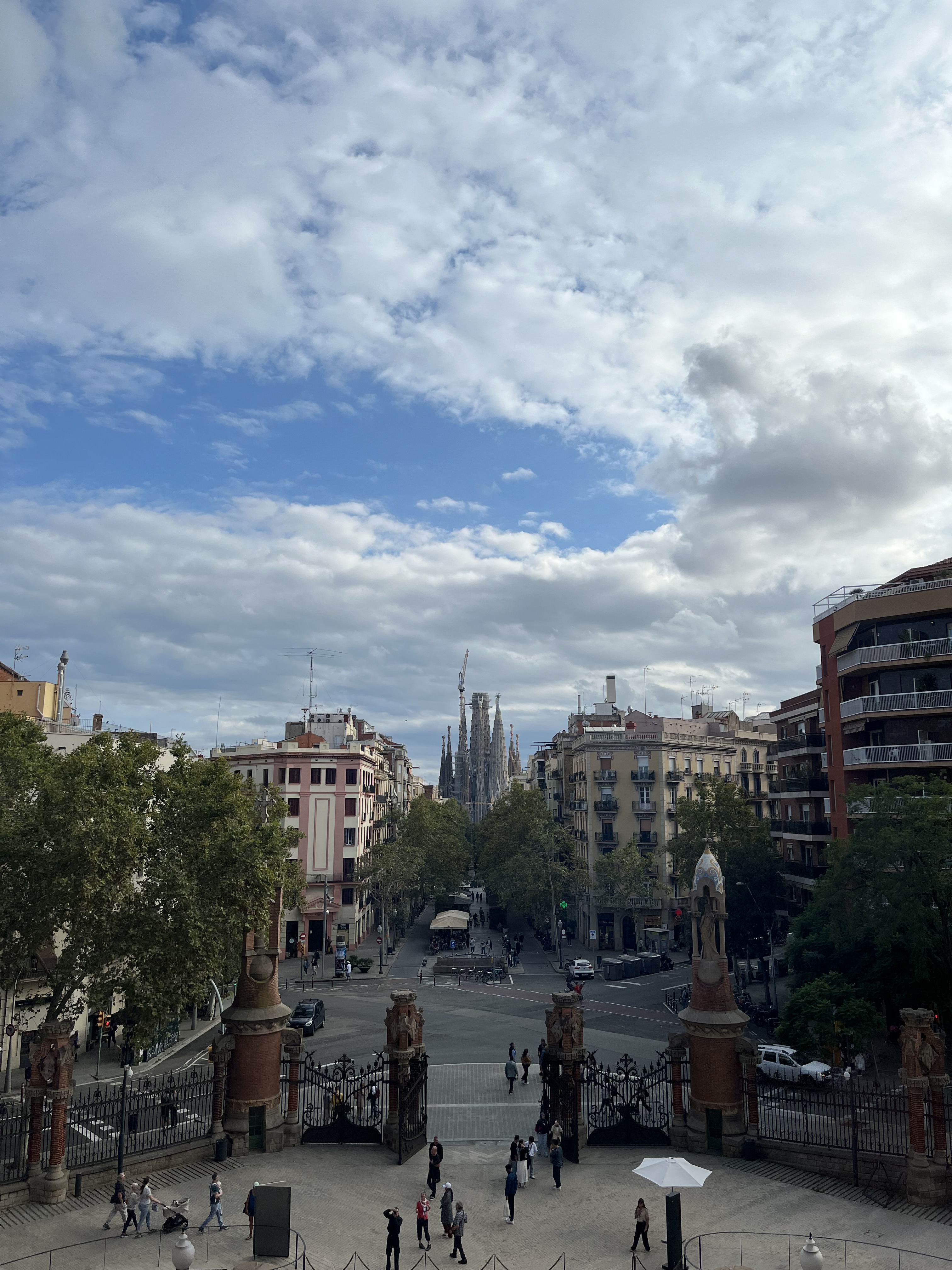
Having said all that, I cannot think of a place I would recommend more to visitors to Barcelona than the Hospital de Sant Pau. It might stand in the shadow of the Sagrada Familia (literally — the two buildings sit on either end of the Avinguda de Gaudí) but this is an even nicer place: there are no crowds lying in your way, and although Lluís Domènech’s work could never compare in fame with his contemporary’s blockbuster of a basilica, his work is colourful, elegant and awe-inspiring in its own right. Each building has been decorated with loving care and exceptional detail, and bursts with unimaginable colour: the cream tiles that sit atop the oxblood ones on every façade, the glazed oceanic blue that line the walls of the rooms and the underground tunnels — one hears a lot about buildings having colours so vivid that they look unreal, but this hospital is the first time I’ve seen actual proof of that old adage. A ray of sunshine beams through the windows into the reception hall, illuminating its cavernous space, the solitary lamppost that sits on the banisters, and the beaming faces of Auntie Rita and Samuel as they ascend to the second level. Warmth floods through me; this is that cosy feeling I’ve been seeking for the past 36 hours. This is what I come to Europe for.
As the clouds finally clear once and for all, we gather in the forecourt for pictures. Barcelona is a city where you could point your camera anywhere and be assured of a good photo, yet there’s something extra about the Hospital de Sant Pau — the explosion of colour, the placement of the trees, or just the general quietness — that brings out the playfulness in all of us. We pose in front of the buildings, perch on the stairways, leap into the air like people half our ages (which is no mean feat for quite a few members of our entourage). Every corner is photogenic, every balustrade a backdrop; it’s the epitome of tourist behaviour, but show me the human being who gazes upon this magnificent edifice, and does not feel the need to prove that they were once here, that they have seen all this, that they allowed themselves to be awed by one of the most exciting buildings to be found in Barcelona.
One last stop before we call it a day. Change at Provença station for the L7 line, a suburban line with only a few stops and even fewer passengers. Separated from most of the other lines, the L7 comes across as an exclave of another network: tiled platform walls instead of paint, dimly-lit train cars, stations that look like they haven’t seen a construction crew (or even a broom) since the 1960s. They even have signs that blatantly plagiarise the London tube roundels. None of this gets the attention of my non-metro nerd family, who stare with mild interest out into the pitch-black tunnels, or chat quietly with one another while the train progressively empties what little clientele it has.
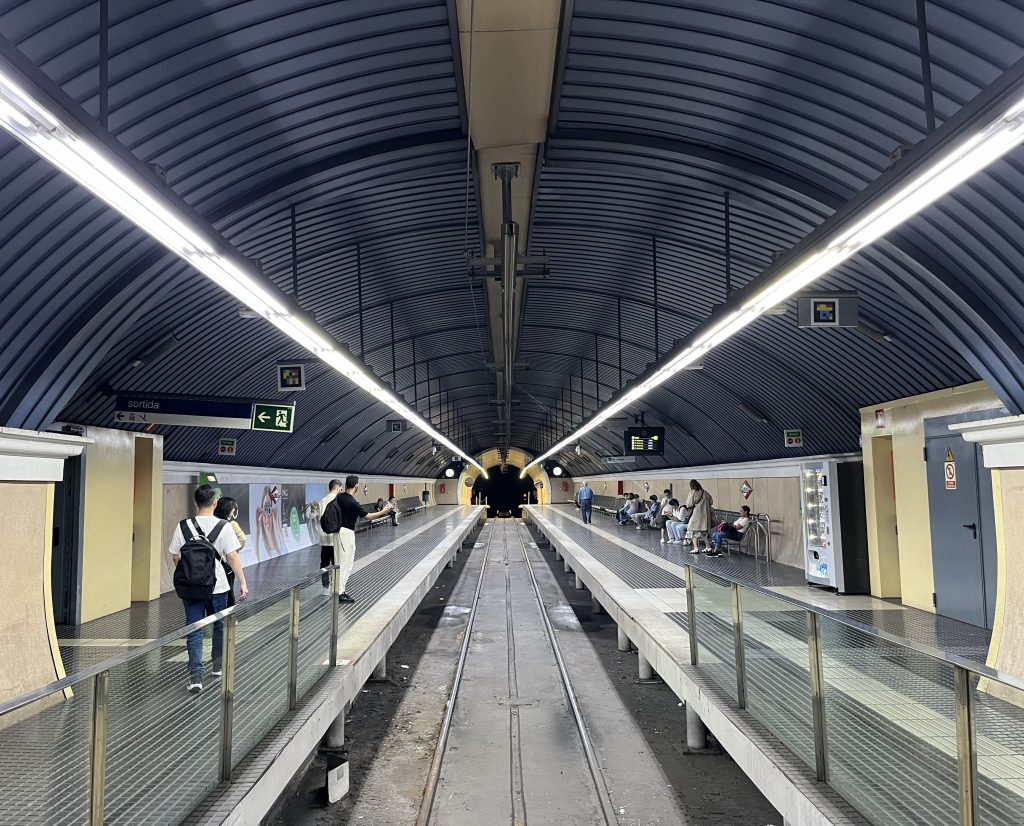
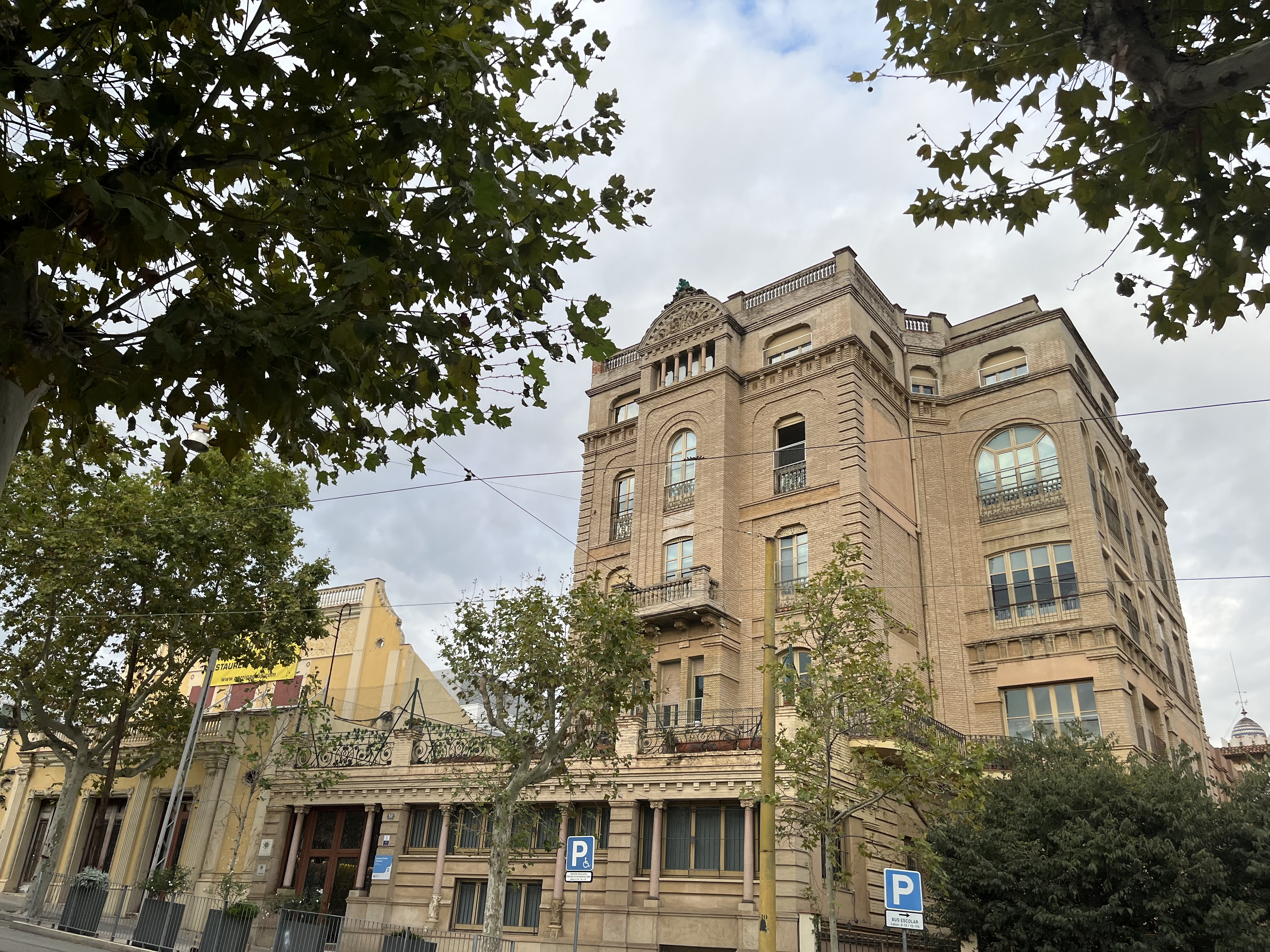
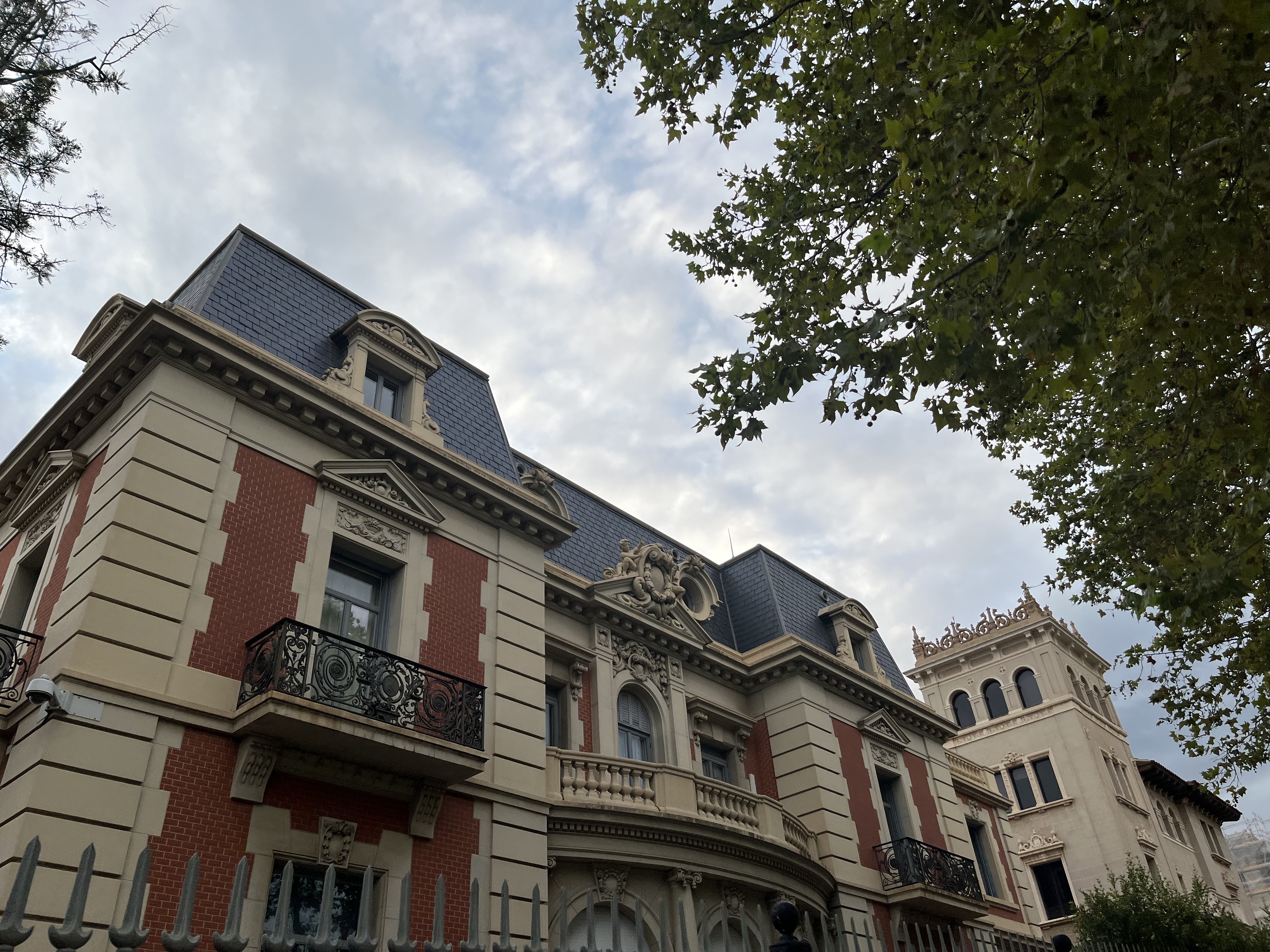
Eventually we arrive at the end of the line — where the tracks don’t end so much as simply run out — and we climb up the long and winding staircase into the late Barcelonan afternoon. Patrons laugh and smoke in the open-air café next to the station exit, while a mother grabs the hands of her two rowdy children as they navigate a street of busy traffic. We follow the latter and soon find ourselves on the Avinguda del Tibidabo, a wide avenue that rises in a long, gentle slope towards the base of Tibidabo hill itself. This is a posh part of the city, and as we climb slowly up the hill, we see loads of imposing, fancy estates, elaborate even by Barcelona’s sky-high standards. Mansions with gigantic windows, fences of fantastically-wrought iron, facades that look like they could only exist in storybooks — the Avinguda is a veritable feast of architectural styles, and as our eyes pass from number 23 to 25 to 27, every building draws another “ooh” from our uninitiated family.
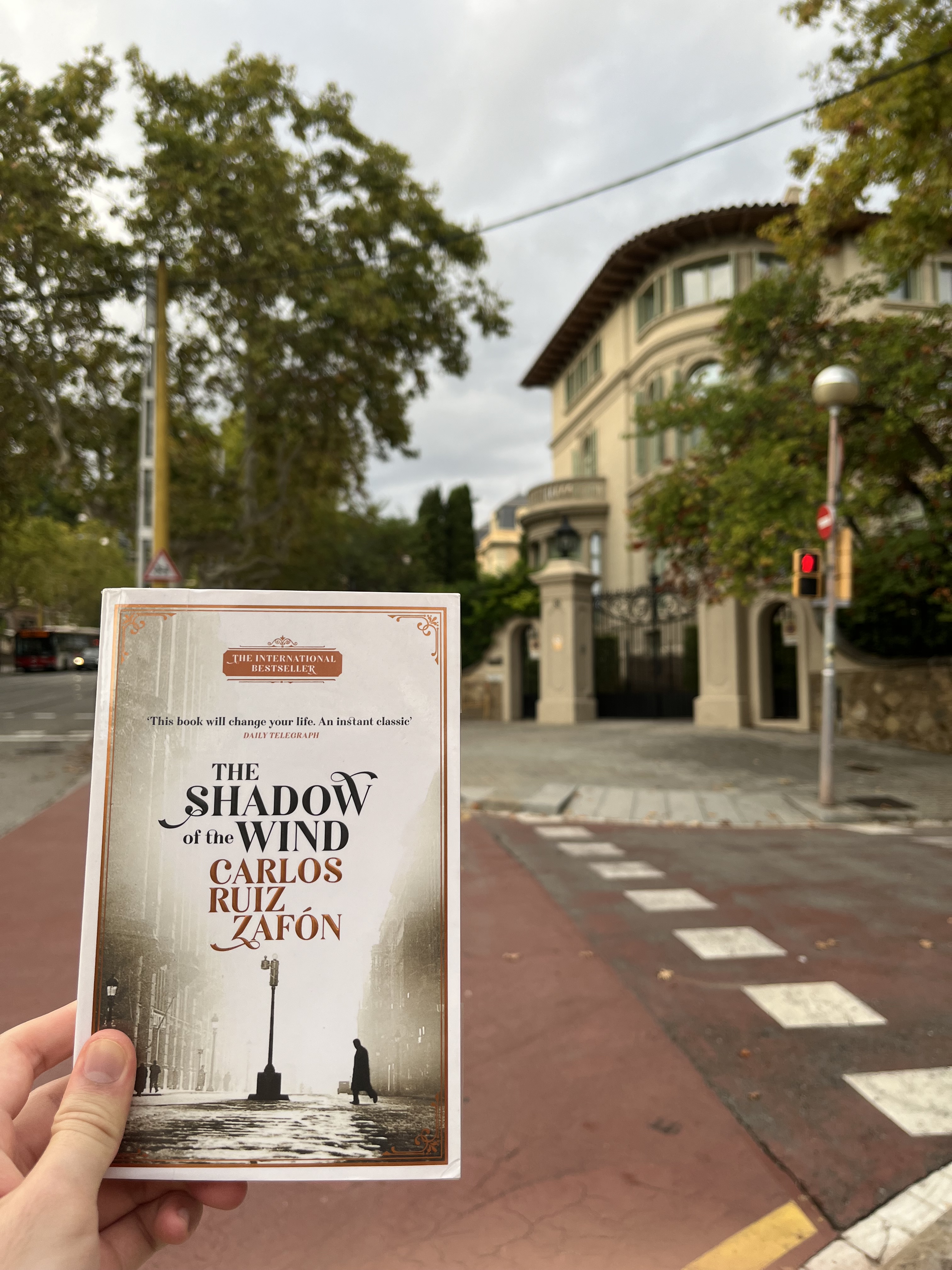
There is one building in particular, however, that I’ve specifically come here to see. Longtime readers of this blog (or of me in general) may be aware of my unhealthy obsession with Spanish writer Carlos Ruiz Zafón’s book series The Cemetery of Forgotten Books, a set of Gothic novels set in Barcelona during Francoist rule; and in particular the first book, the multi-million selling The Shadow of the Wind. Within the pages of this tome, protagonist Daniel Sempere traverses the bookstores and sanatoriums of old, haunted Barcelona in search of an author who disappeared just before the Spanish Civil War. Eventually the mystery coalesces around the old mansion at Avinguda del Tibidabo 32, a place where betrayals are revealed, bodies are entombed, and lives are lost and found. It’s a breathtaking denouement, filled with gunshots and endless revelations; close to a decade after first reading it, I still have every word of those final chapters etched into my impressionable mind.
Sadly, Carlos Ruiz Zafón was nowhere near as good at choosing addresses as he was at telling a story. Instead of a “dark and solitary tower” filled with intrigue, at number 32 I find what is possibly the only boring building on the Avinguda del Tibidabo, a squat, plain edifice with beige stonework and a normally-tiled roof. Ruiz Zafón described in The Shadow of the Wind an overgrown courtyard featuring eerie statues that lead up to a faded mansion, but the only thing that sits in front of this structure is an abandoned bulldozer, and not the sort of abandonment that arises from the workmen going mad either — I actually lugged the book here, and its prequel/sequel, just so I could pay homage to the place, and yet this is what awaits me? I end up taking pictures of the novel in front of other houses, hoping that my friends on Instagram won’t notice the misnumbering.
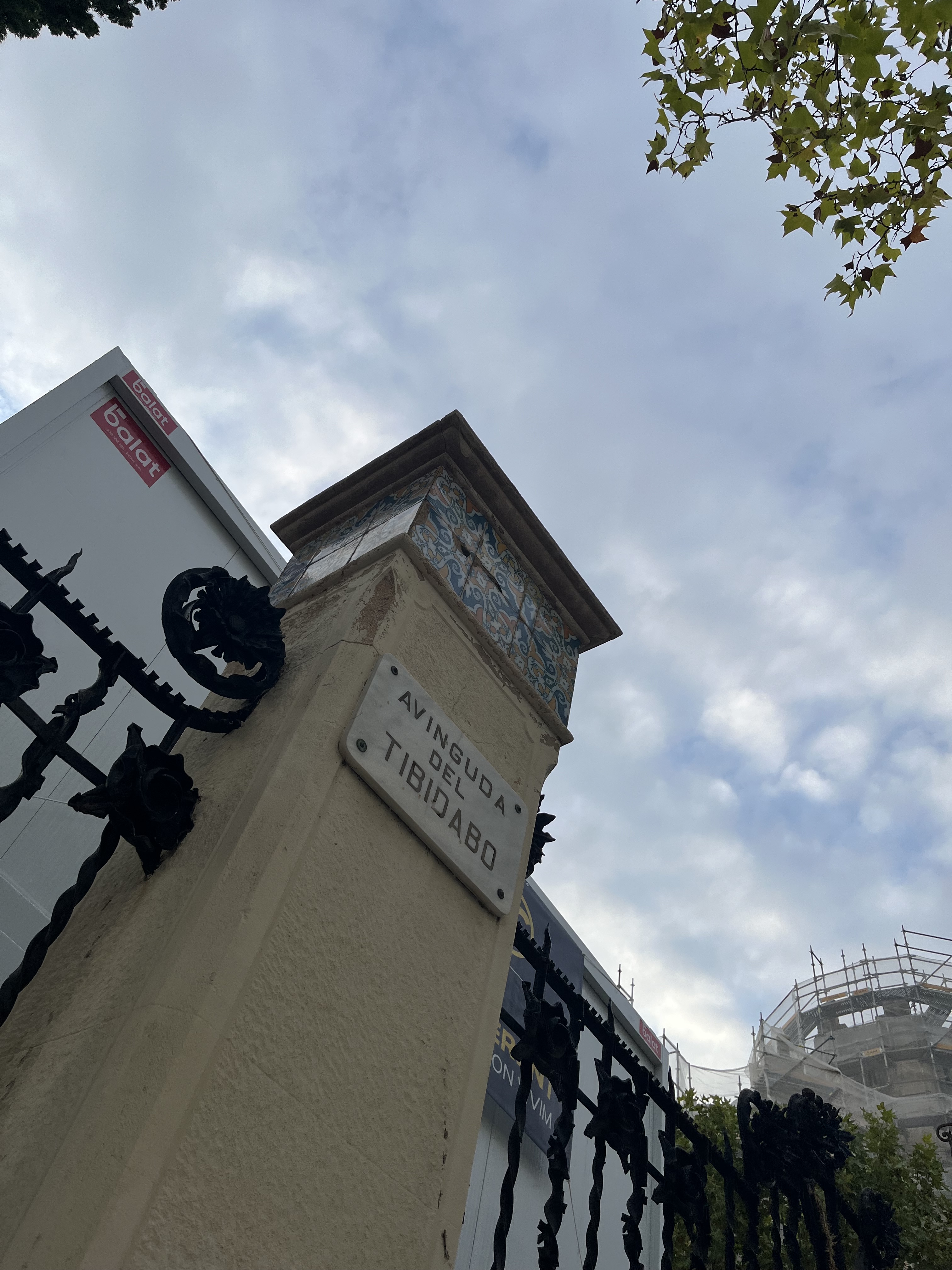
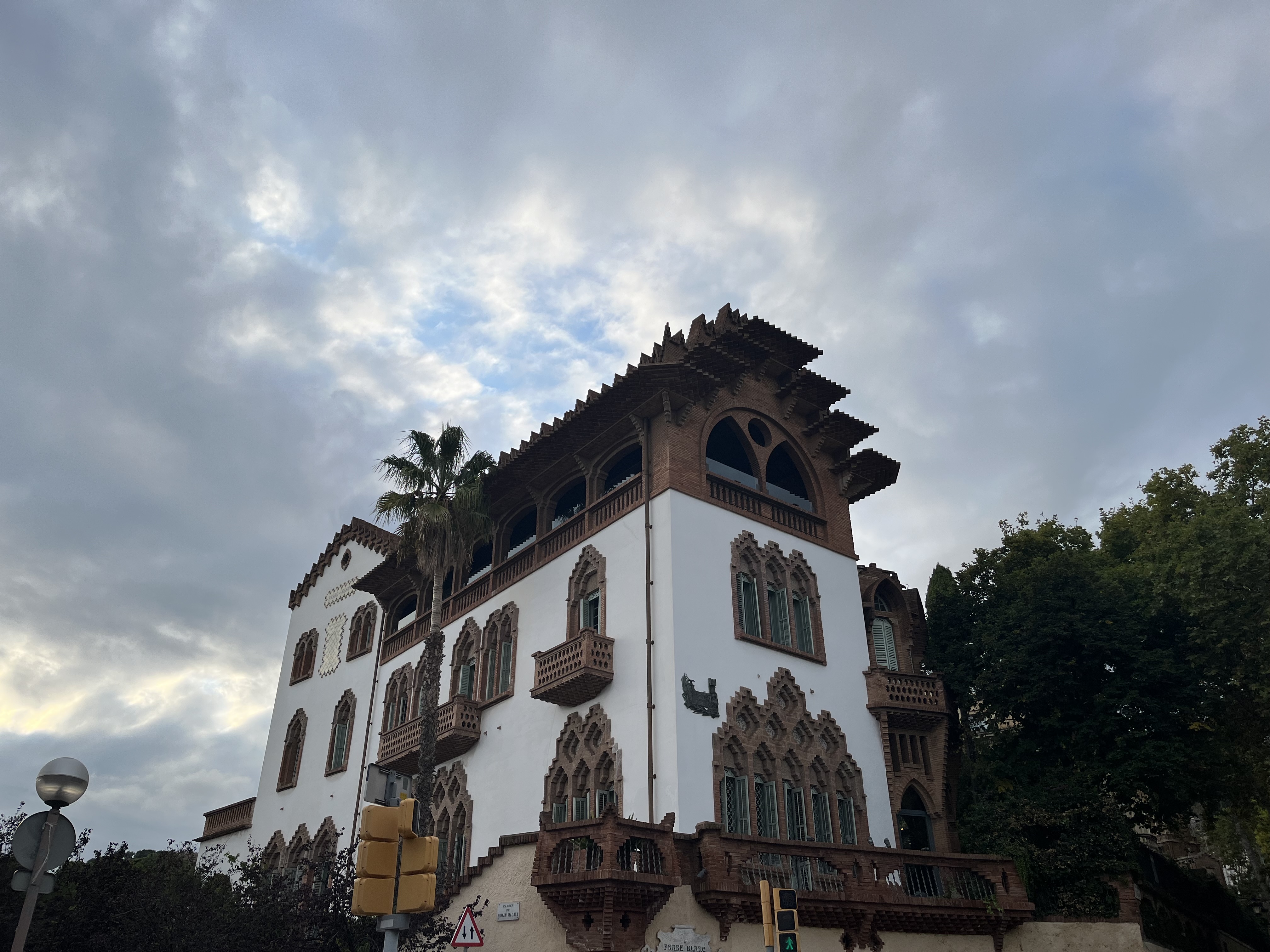
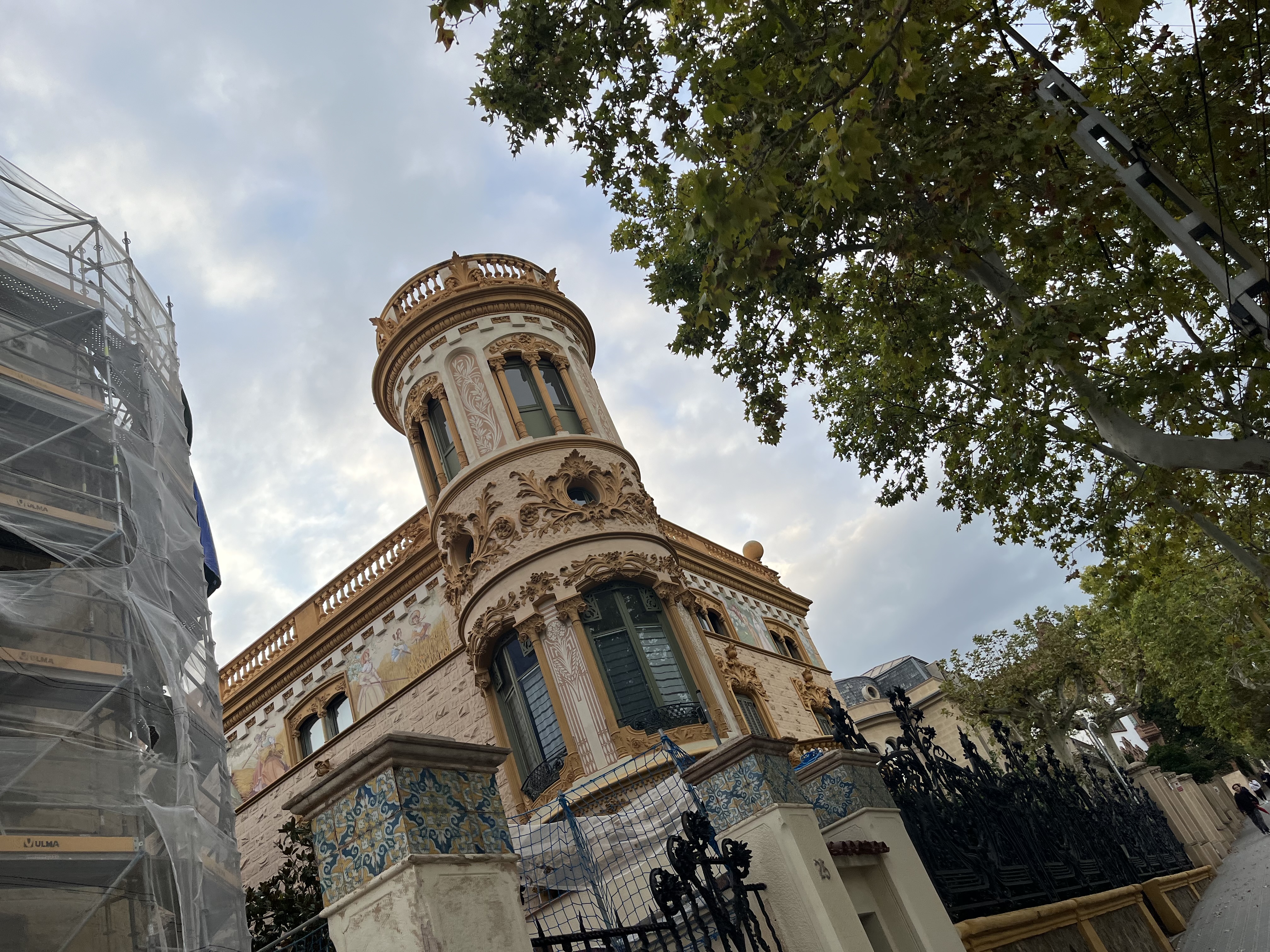
Like Daniel Sempere after his first visit to the mist-steeped and mysterious mansion, we briefly consider heading up to the top of Tibidabo and spending the evening in the hilltop amusement park, but it turns out the last funicular going up left an hour ago; with night falling fast, we decide to head back into the city centre for dinner instead. But what to eat? The area around Barcelona Sants is certainly not lacking for restaurants, but this in itself is a problem: there are so many places to choose from, so many delicacies at our fingertips, that choosing exactly what we want to eat becomes an issue. We could just go into the Spanish restaurant in the hotel lobby, but that would be too easy a move; we could go out for burgers, but nobody wants anything quite so heavy, not after two days of jamón and gooey tortillas.
It is at this point that Grace notices an Ethiopian restaurant just a few streets away from our hotel, and in the spirit of adventurous over-correction we all agree to give it a go. As has become a somewhat regular occurrence, there is some surprise from the waitstaff as our underfed tour group steps in (“of all the food joints in all the towns in all the world, these rowdy tourists walk into mine”), but once we’re all seated, the atmosphere turns genial and the waitress dispatched to deal with us patiently describes to us what we might like to eat. (This is extremely useful, because although the menu has detailed descriptions of the food in Catalan and Castilian, the English version opts for such vague promises as “you will experience a wide range of flavours with our delicately spiced dish”. Fine, but what am I eating?)
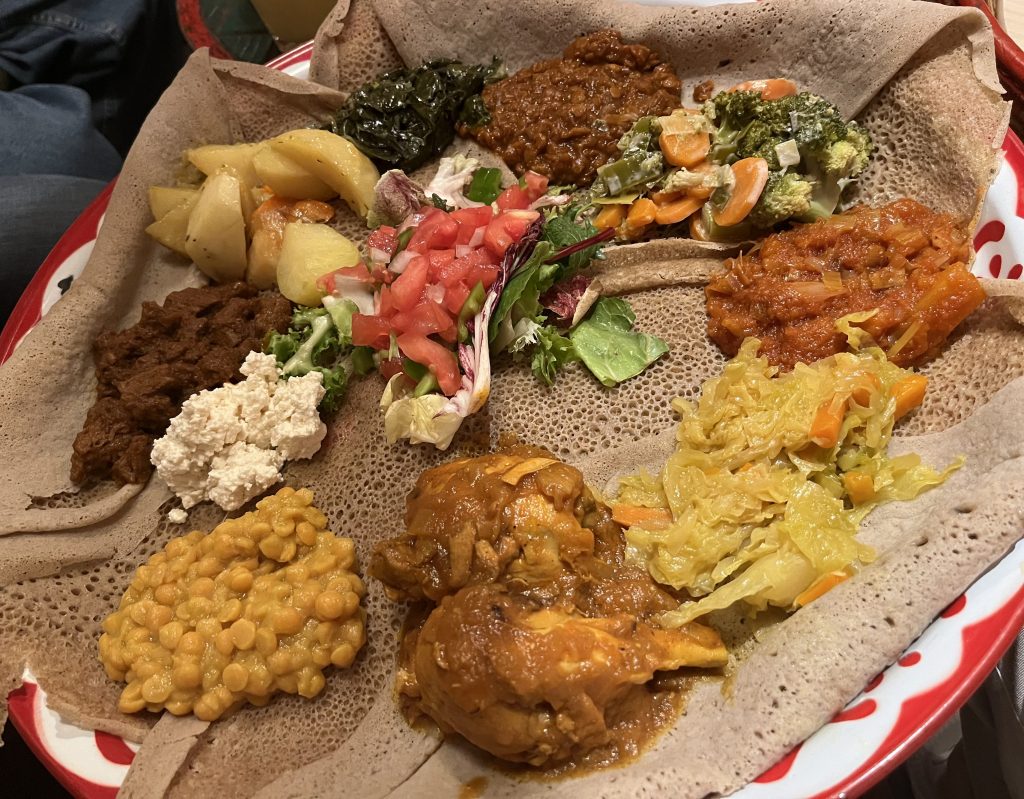
Having never eaten anything as niche as Ethiopian before, we decide to put our lives in the hand of our servers’ recommendations, who are justifiably proud of what eventually arrives: a selection of generously spiced stews, from lentil to lamb, from pickled vegetables to steaming potatoes, all placed on top of a huge mat of injera bread; one eats by tearing off a piece of injera, and then using it to pick up the various stews. Having all been brought up on utensils this takes us some practise, but eventually we get the hang of things and start tucking in with gusto. Seeing my mother struggle with the injera, I announce to the entire table “you are tired from today’s travels, Mother. Let me pick out some food for you”, grab a few potatoes with my bare hands, and lift them onto her plate. This sends my family into hysterics, and that, I suppose, is the best way to finish this very long and tiring day.


