18/19 September
The moon is just peeking over the horizon as my parents and I step out into the street. It was Mid-Autumn’s Festival yesterday, and tonight it still looks luminous in the sky, a bright white disc clearly identifiable even against the early twilight blue of the heavens above. A slight breeze blows down the street, warm and heady with the smells of dinnertime — a couple of villagers making their evening meal. My own stomach rumbles; the tea we had already seems like a distant memory. “Do catch up,” I hear my mother say as we walk to the bus stop.
The airport looks fuller than usual tonight — lots of people setting out tonight on trips north and south; and in the aisle directly in front of us, a group of student cricketers from Addis Ababa chatter, waiting patiently to check in their baggage. Observe them for a while before the other half of our entourage turns up: in front is my Auntie Ching, a seasoned traveller who has probably outdone us all on the places she’s visited (her last trip was to Tunisia, or was it Finland?) and probably the most blasé person I know; behind her crowds my two cousins, Samuel and Grace, along with their mother, the extremely chipper Auntie Rita. A former nurse by trade, as they walk up I hear her discussing with her two children where numerous medicines are kept; when she catches sight of us, she adds, without missing a beat: “and if you happen to fall ill anytime, you can come to me, I’ve got plenty of medicines for you all!” I look at her small suitcase, and wonder if there are depths to the art of luggage-packing that even my mother has yet to uncover.
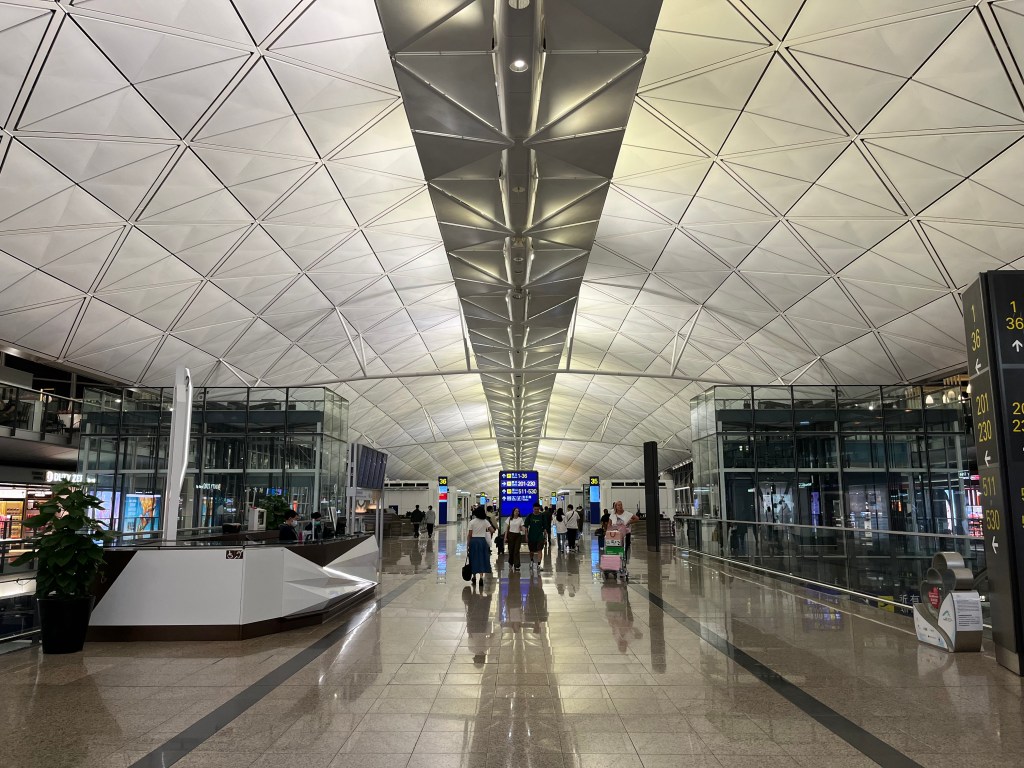
As we walk through border control and into the labyrinth that is Hong Kong International Airport, I can’t help but feel a little bit nervous. I’ve had no shortage of jitterbugs in the stomach the past couple of months, and not all of them are to do with my decision to forgo dinner before boarding; although theoretically I can do no wrong with this trip (we agreed on the very relaxed itinerary months ago and all of the family members on this trip are some of the kindest, most understanding people I know) there is always a “but” at the back of my mind. What if we get lost? What if one of us gets COVID? What if the plane explodes in mid-air? But there is no time to think about all of this, as Dad raises his selfie stick and calls us all together for the first family selfie of the trip. A few seconds later, he calls us together for the second family selfie of the trip, because apparently I closed my eyes for the first one.
Dinner on Turkish Airlines (for it is they) is yet another heavy feast, featuring much the same menu from my last European trip 16 months ago; more famished than a horse and having great (possibly naïve) faith in the airline’s sky chefs, I chow down on the hummus and celeriac salad with great gusto. While all this is happening, the adjacent Grace looks suspiciously at the grainy orange puree that sits in front of her. Finally, she opens the container, spoons out a decent-sized chunk, and puts it in her mouth. Immediately she makes a face, and with a loud glorp the lid is shut once and for all.
Four in the morning, Istanbul time. The lights on the plane were turned on for breakfast as we passed over Azerbaijan, then off again as we neared our destination. The web of lights that make up the busiest city in Turkiye, on the other hand, only grow larger and larger as we cross the Bosphorus and swoop closer to our destination; there are still a couple of hours before this place will fully wake up, but even the few lights that are on right now — on the buildings, on the highways, on the cars — already stretch far beyond the horizon. Istanbul, make no mistake, is a city that is constantly open, constantly moving. And as we bounce down onto the tarmac of Istanbul Airport, we hear across the tannoy the chirpy yet stilted announcement: “welcome to Istanbul… the meeting point of the world!” Samuel, Grace and I look at one another and arch our eyebrows at this braggadocious pronouncement: the first of many arched eyebrows to come.
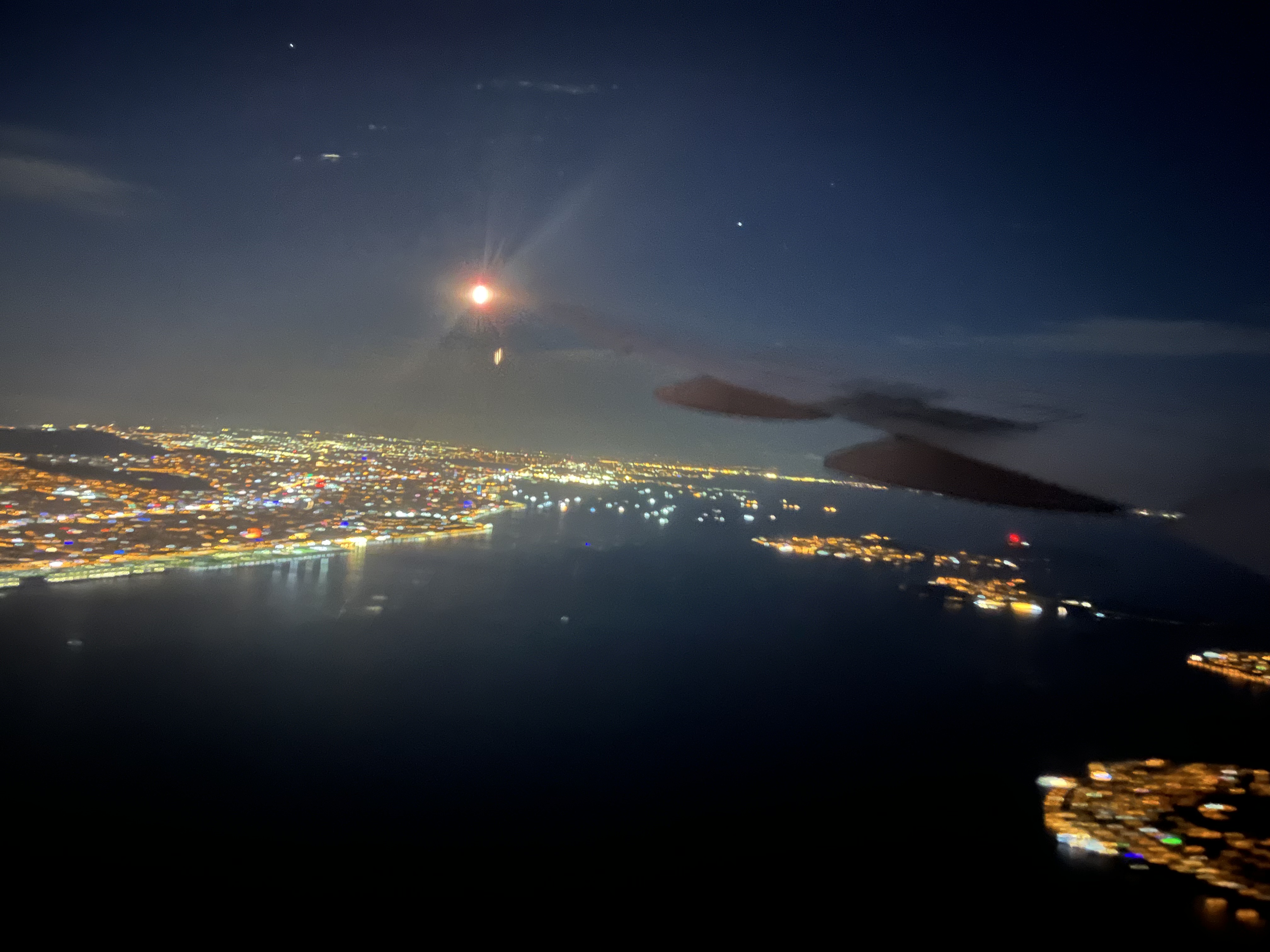
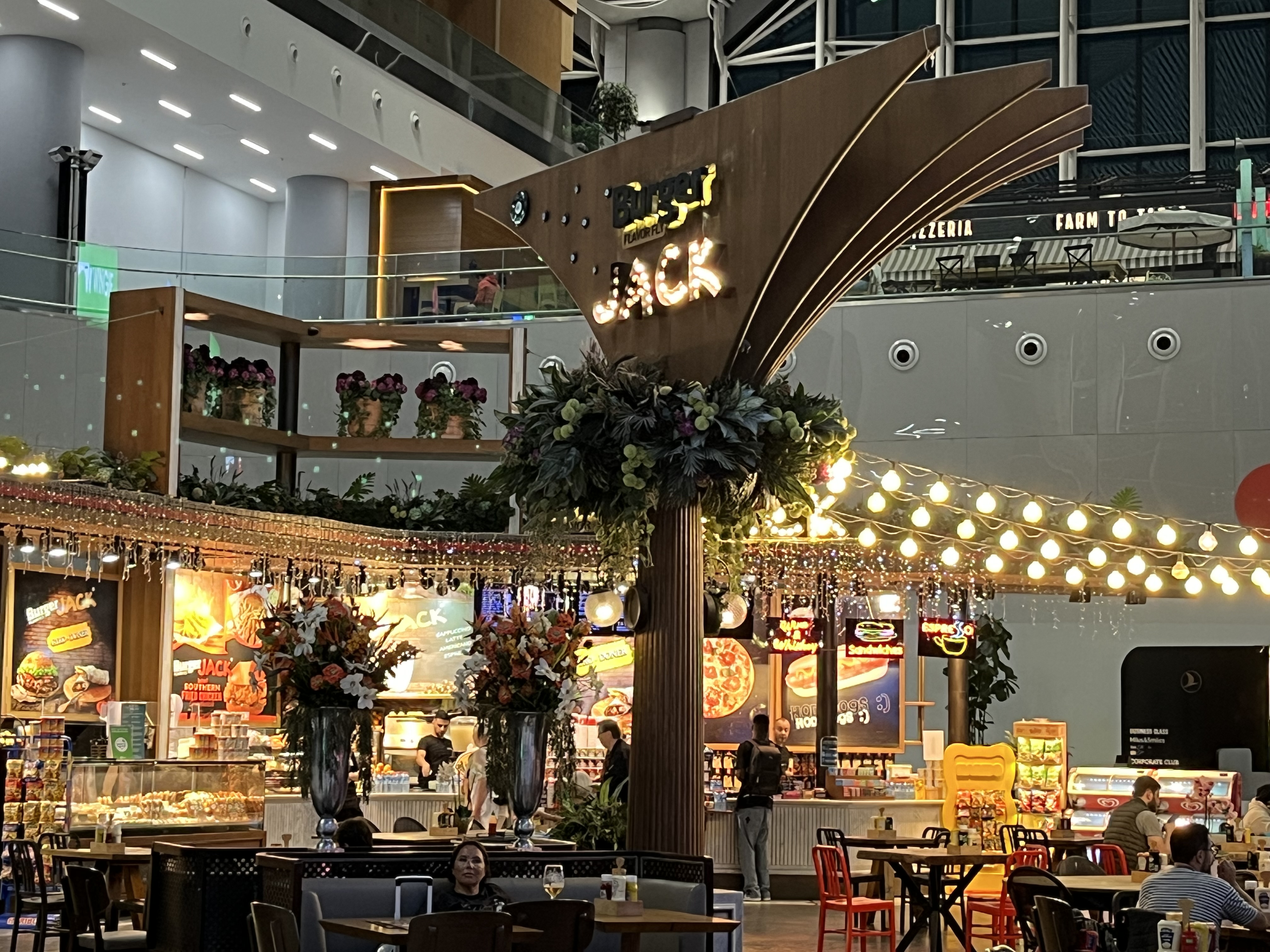
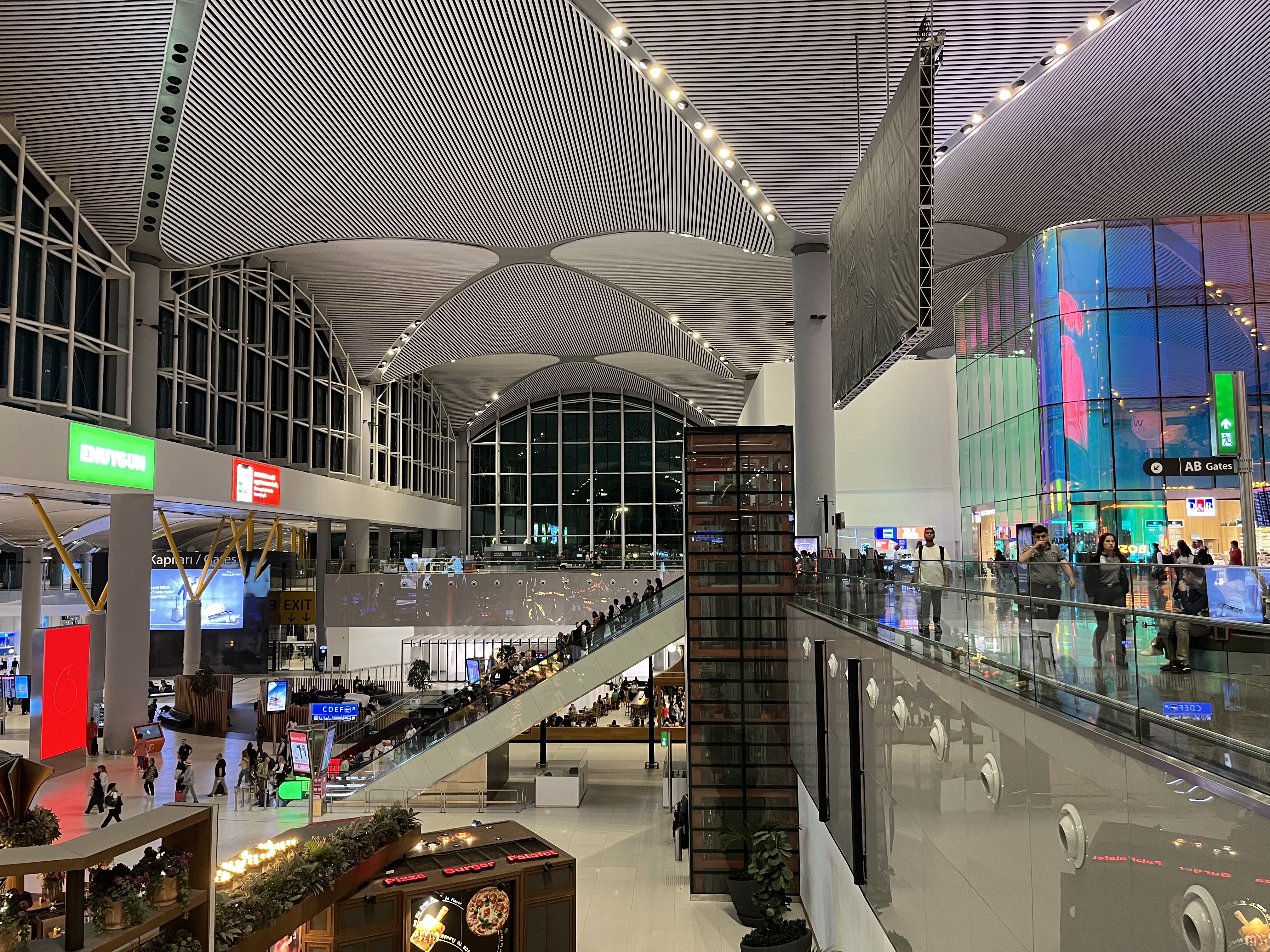
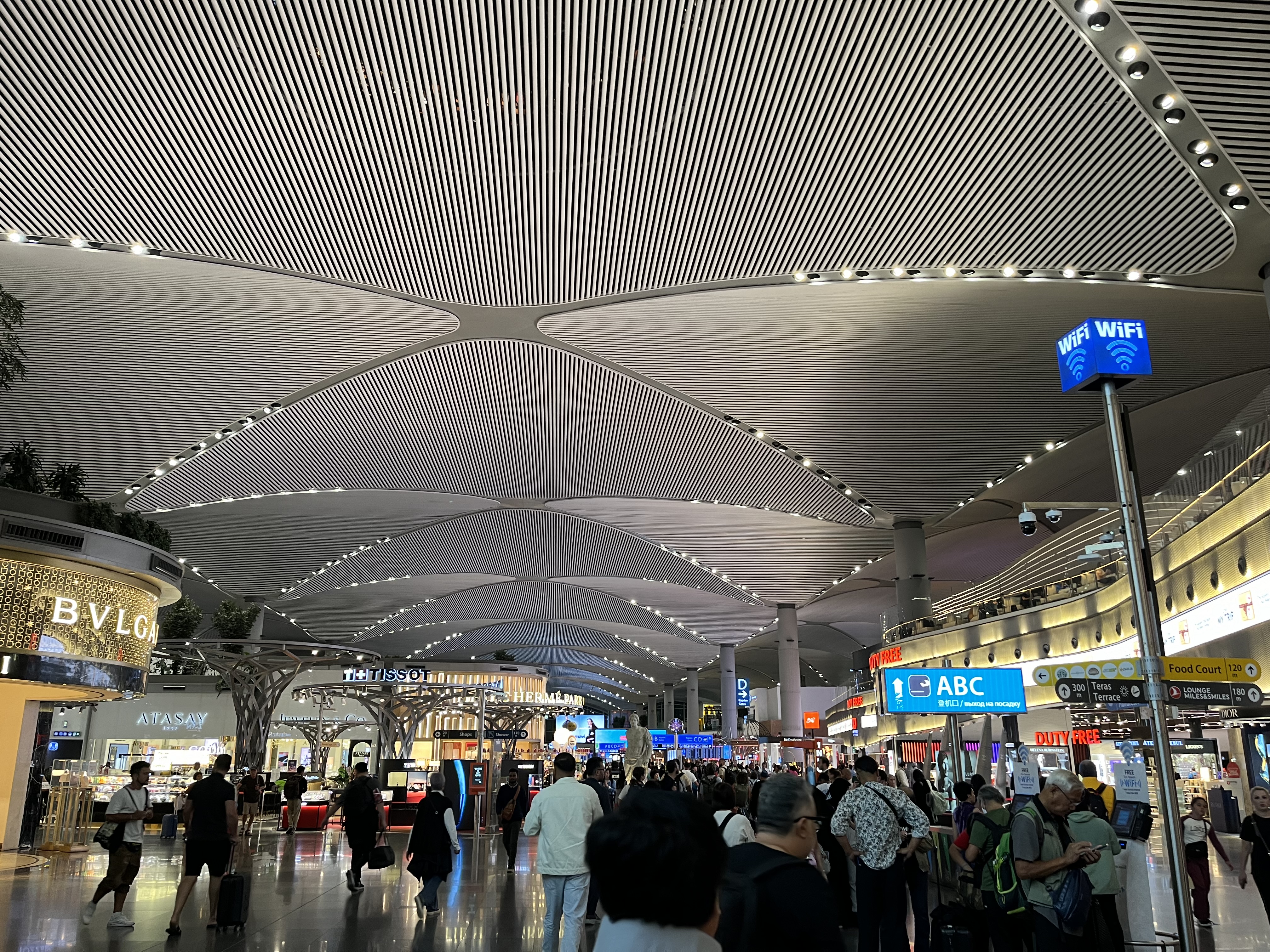
Safely deboarded and bleary faces washed, we stumble into the transit halls of Istanbul Airport. This is my third time passing through, so I’m already quite aware of its many pleasures; for the other members of my family, however, the 24-hour bustle of this airport is a complete surprise, and within minutes all of them are zooming around the shops and marvelling at how this place seems to have everything their hearts might desire, along with many other things they do not desire. (Yeah, yeah, I used the same gag last time; you try coming up with brand-new jokes for the exact same place.) But this oasis of capitalism does not hold our attention for long, and soon we are heading out on the long trek to our gate. As we pass by one of the airport’s many viewing platforms (which not-so-subtly doubles as a smoking lounge) I spot the early morning Moon, still hanging big and bright in the pitch-black sky.
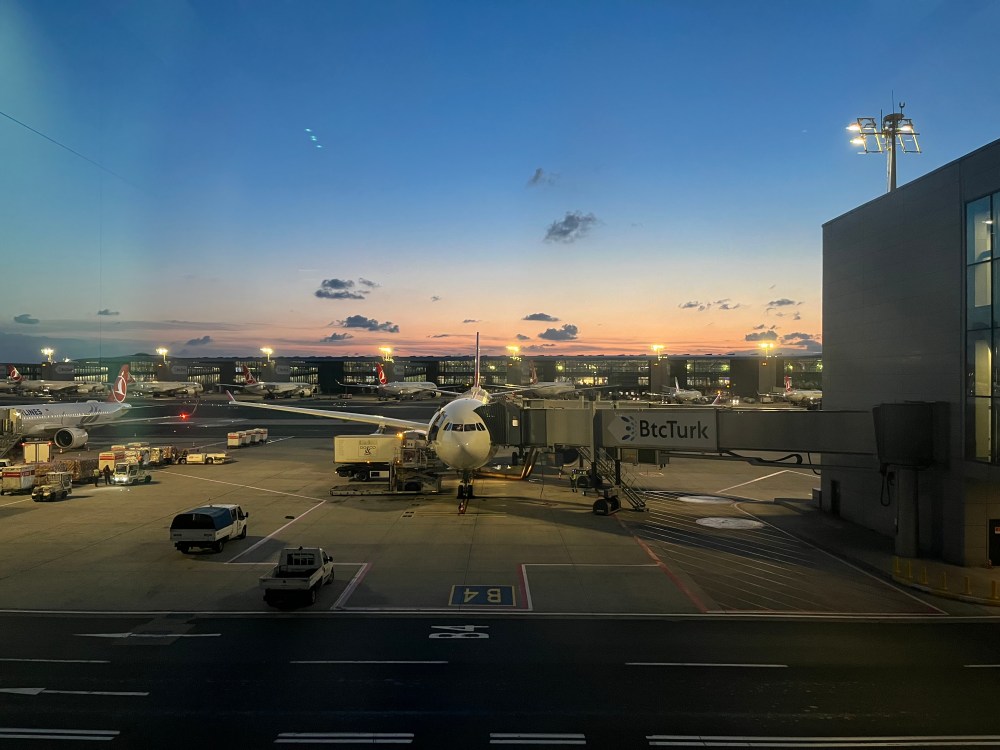
We take off just after sunrise; the sky is a brilliant pale yellow as we lurch once more into the air and over the hills of western Turkiye. The toll of air travel has taken its toll on our family, and the snoring has begun before you can say “surprise, a second breakfast”. The extra slice of börek that they serve is delicious as always, but after that’s been cleared I, too, find myself drifting in and out of consciousness, only waking when the plane hits a spot of turbulence or when nature calls from within. Decide to read a bit to pass the time, only to realise too late that David Kynaston’s history book on Austerity Britain is a terrible stimulant; I end up watching the 2013 version of “The Great Gatsby” on the in-flight entertainment system, even though I can’t bring myself to like the garish razzle-dazzle of Baz Luhrmann’s West Egg.
10:30, Central European Time. We have crossed much of the Mediterranean, passed over Rome and France. The plane slowly begins its descent, easing its way through thin wisps of cloud. (It is at this point that Auntie Ching decides to visit the toilet, even though at this point the seatbelt signs are on and the plane is bouncing around rather alarmingly.) Because of my centre aisle seat I can’t see anything from the window but the blue and white of the sky — then our plane turns around for the final landing, and suddenly the horizon comes into view. The morning sun bounces off the waves below, and fills the cabin with golden light; and in between being blinded I catch glimpses of pleasure craft on the Mediterranean and the squat, brown mountains of Catalonia. There’s barely time to register all of this, my first glimpse of a whole new country, before the plane dips down with a nerve-shattering thump, and we find ourselves careering down the runways of Barcelona Josep Tarradellas Airport.
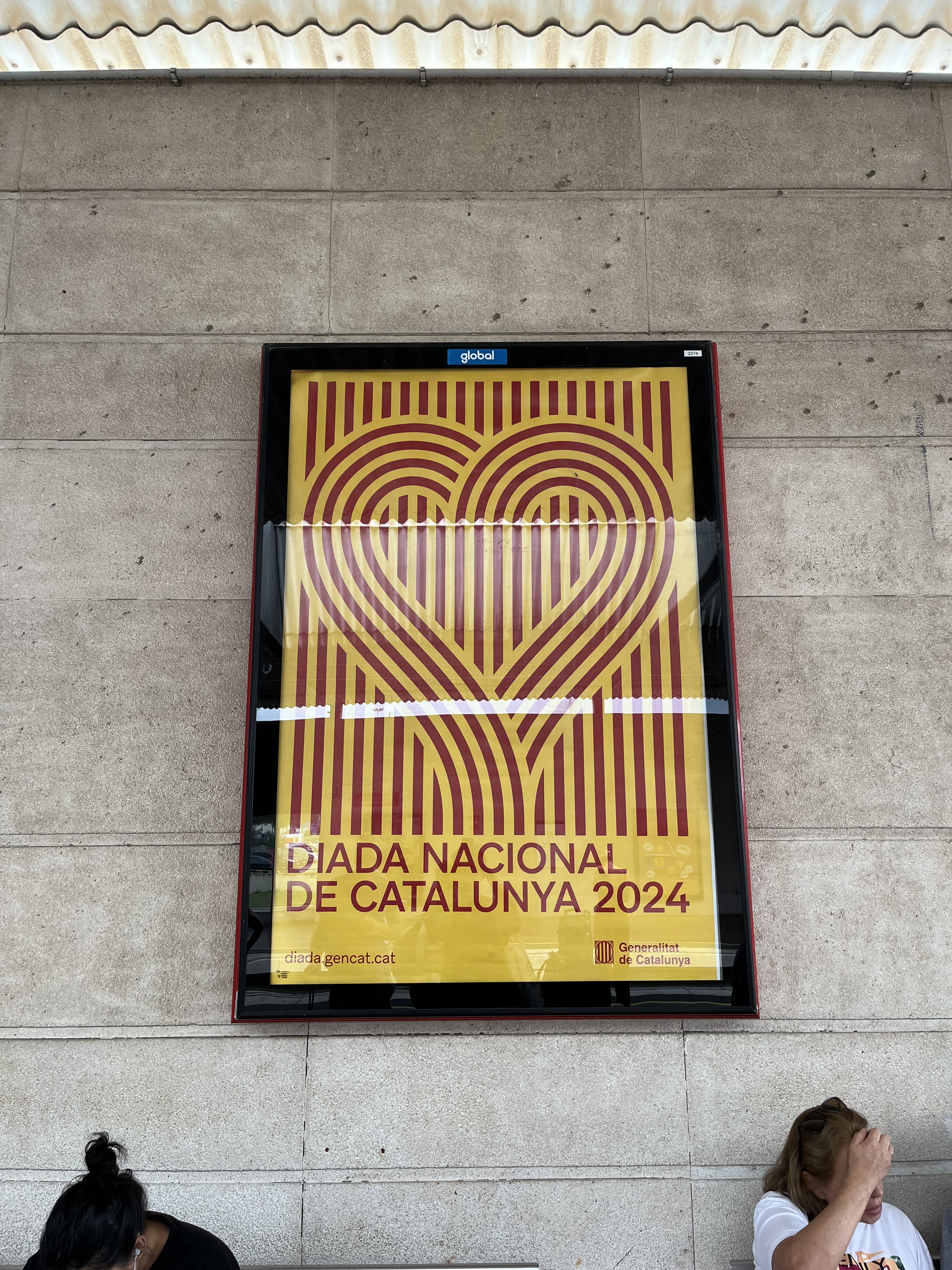
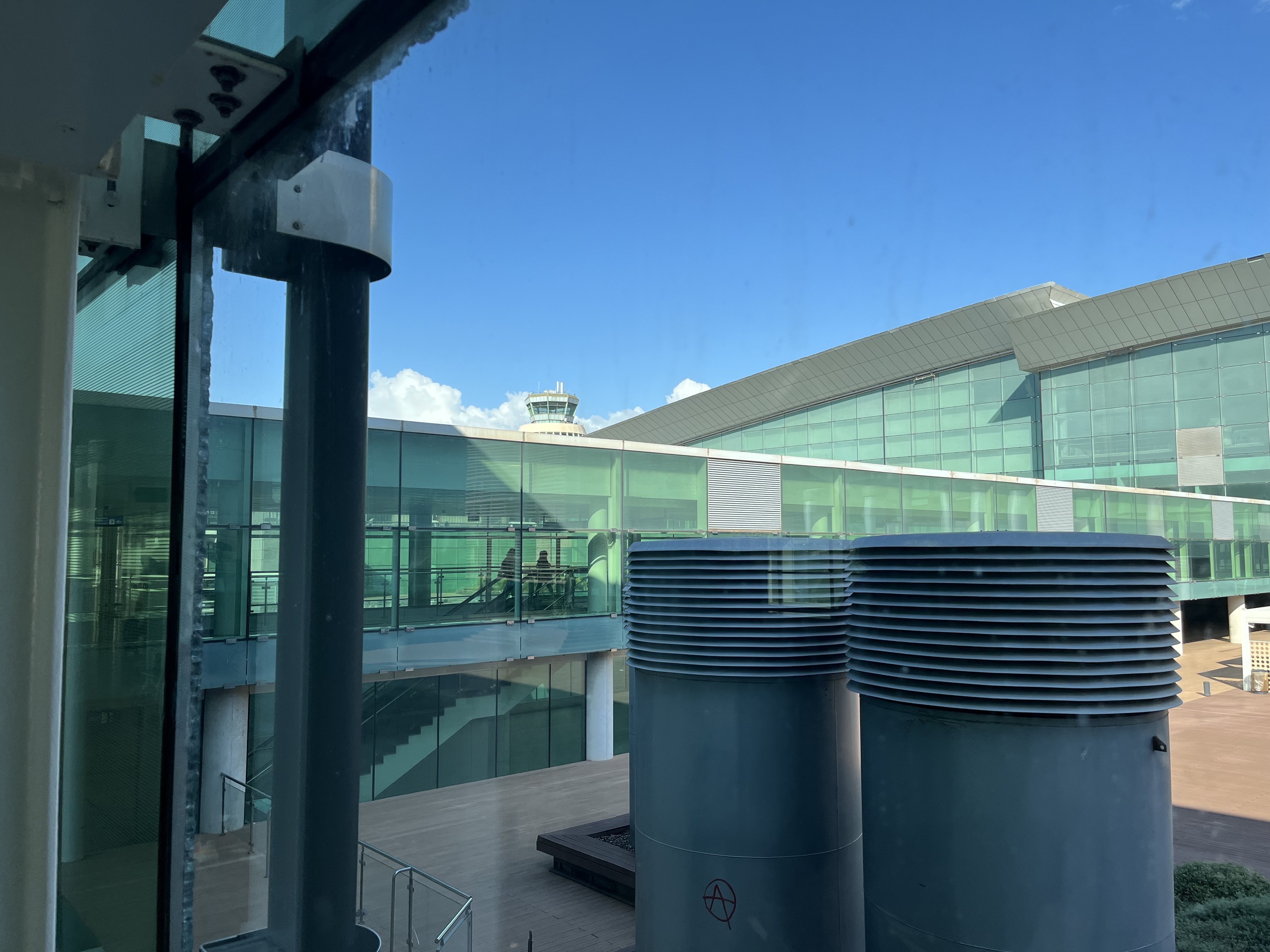
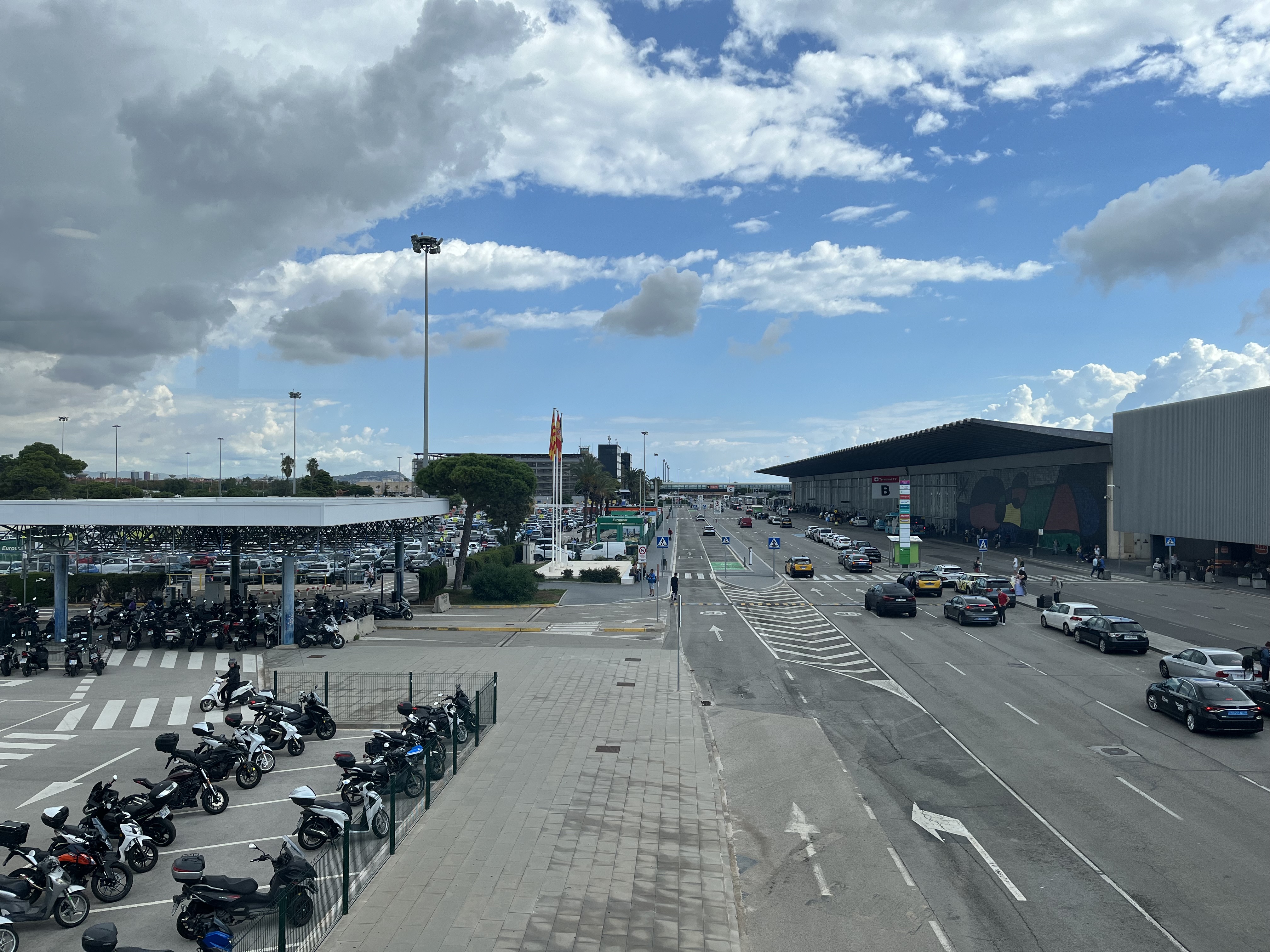
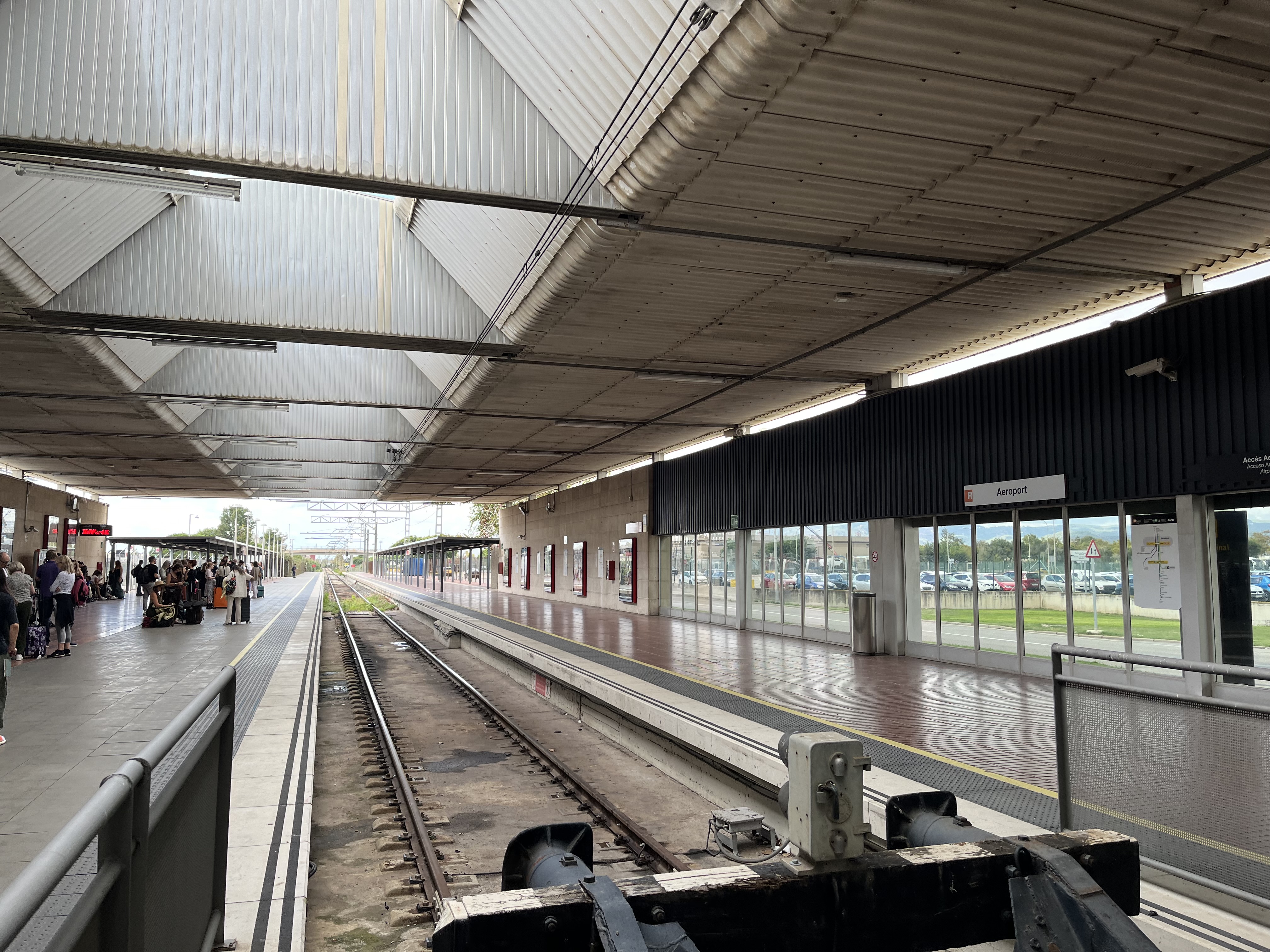
The first impression I have of Barcelona, of Catalonia, of Spain, is one of languor. The sun shines lazily through the glass windows of the Airport as we make our way to immigration, where we are immediately halted by a long, long queue serviced by a grand total of about four counters. Despite the sea of impatient faces waiting to be processed, there’s no sense of hurry from the immigration officers, one of whom even packs off for lunch before my very eyes; we collect our luggage and head to the railway station, only to discover that the train we were hoping to take has simply disappeared into thin air, to the bewilderment of the many tourists standing on the platform. The drowsy, hypnotic vibes of the airport carries on over to the suburbs, where traces of former industry lie silent and the surrounding countryside lies desiccated and unloved. Even the people look a bit sleepy as they walk along the station platforms.
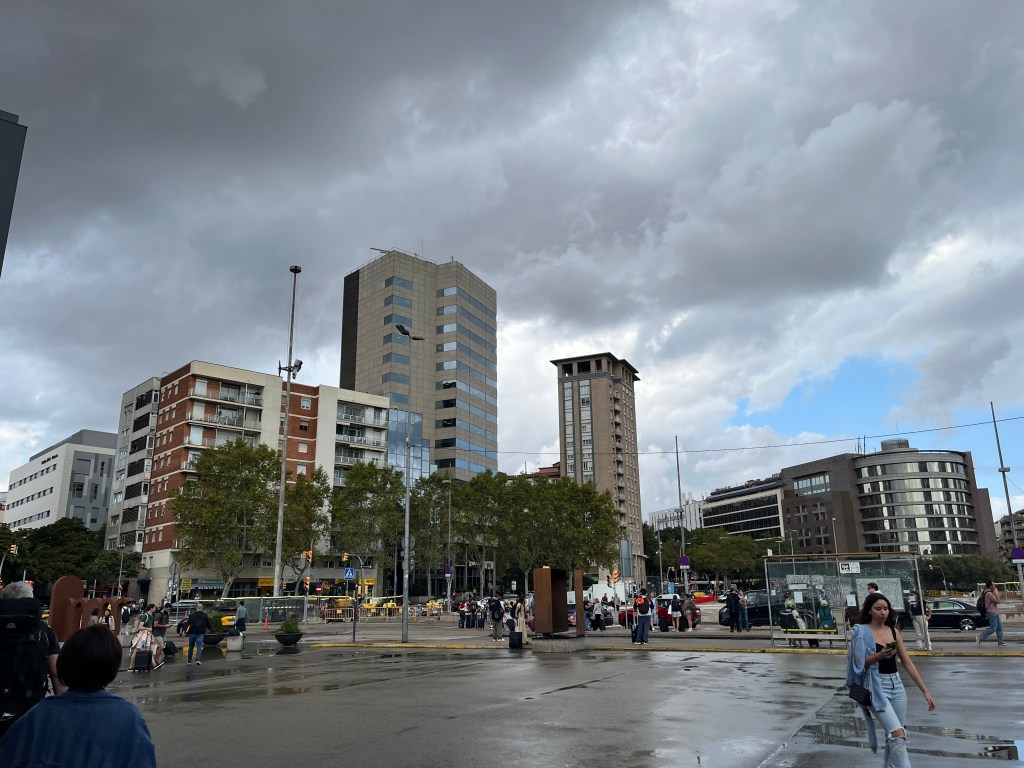
I’m just about to fall asleep on the seat myself when the train rushes underground, and before long the tannoy announces our arrival at Barcelona Sants station — and this is where it all changes. A flurry of humanity greets us as we step down from the train onto the underground platforms; people streaming in and out of the carriage, all towards a jumble of escalators that give no clue as to whether they go up or down; we follow the crowds for one of them, only to discover we’ve picked wrong. When at last we emerge onto the street outside, the chaos is not only palpable, but visceral: a chorus of human voices and automotive sounds, swirling in a thousand different directions, while in the distance a cityscape of antiquated structures stand against a grey-blue sky. My heart instinctively quickens, but there’s anticipation mixed with the apprehension: contrary to my first impressions, this, I tell myself, is a city of energy.
If I was travelling alone or with friends my age, I would now be talking about how we threw our luggage down at hotel reception and then rushed out into the streets, pointing and shouting and being absolute tourists. But these are different times: more than half of our entourage is physically incapable of rushing out into the streets, and in fact one of the first promises I made for this trip was that there would no rushing of any sort whatsoever. (In exchange they all promised that my authority as tour guide would on no account be questioned, so totally worth it.) And so it isn’t until two o’clock in the afternoon that we stroll down to Sants Estació station and take our first metro ride of the trip; the blazing sun beats down on our faces as we emerge from underground, slap bang into one of the most beautiful traffic roundabouts I’ve ever seen.
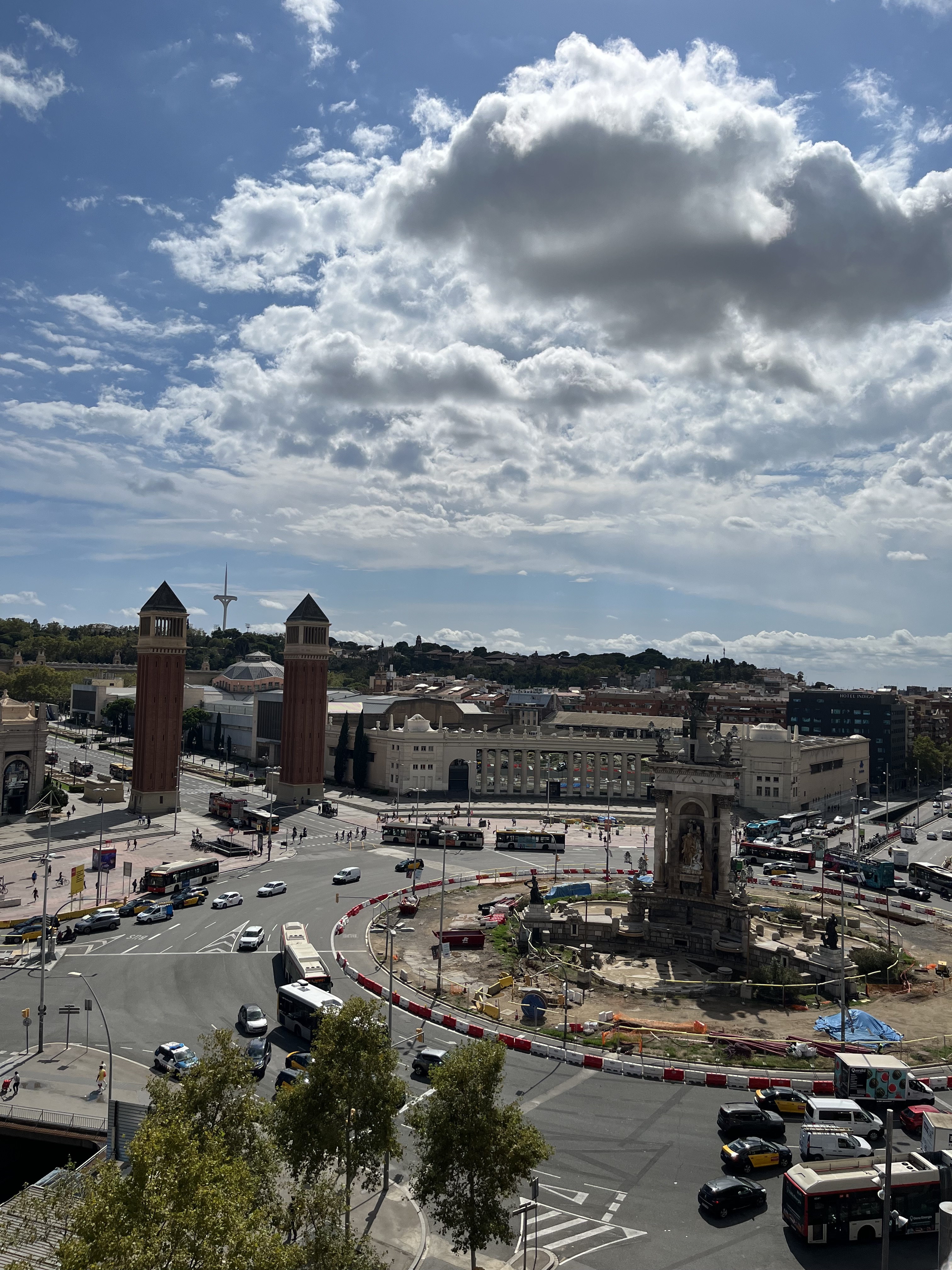
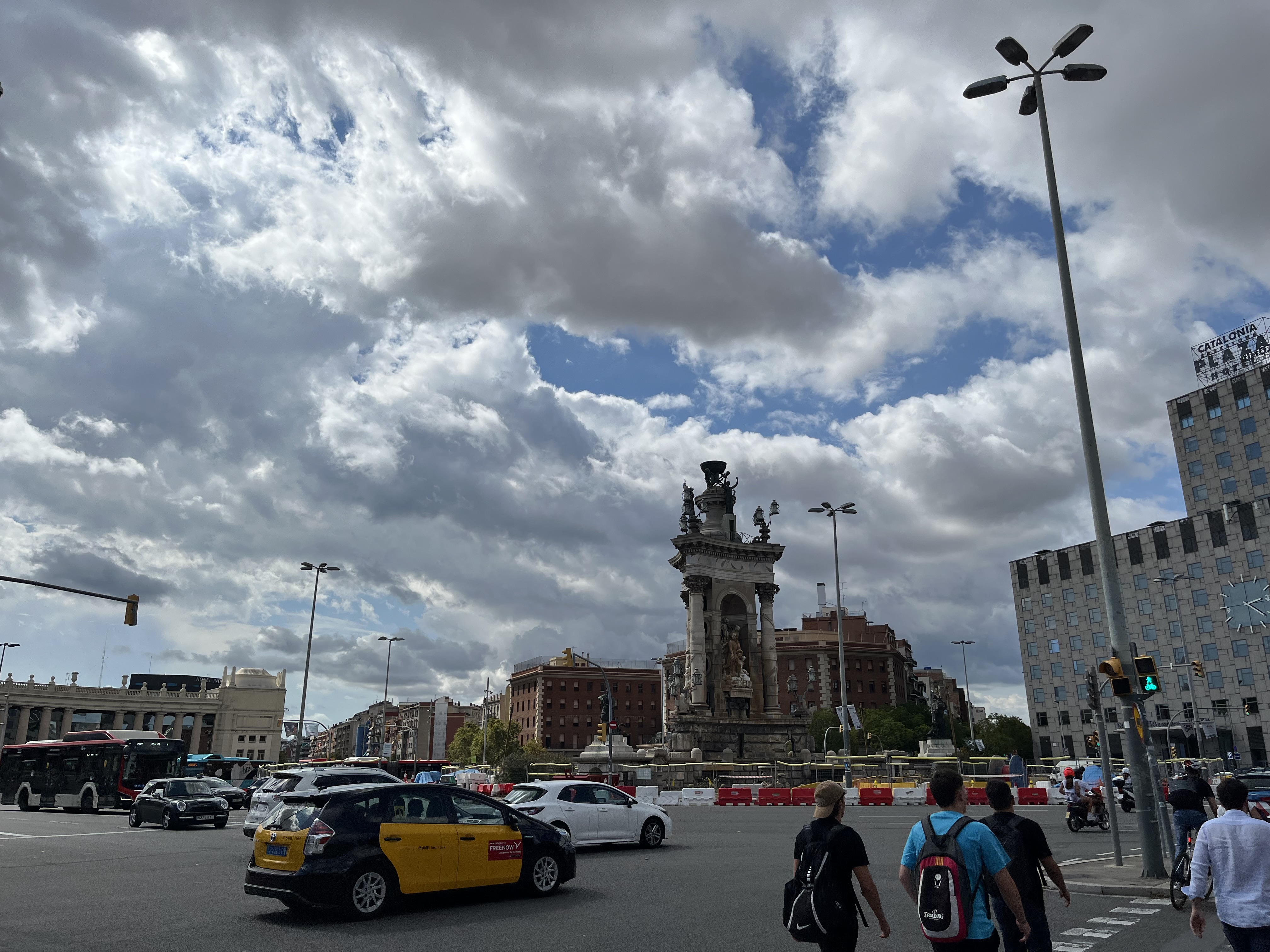
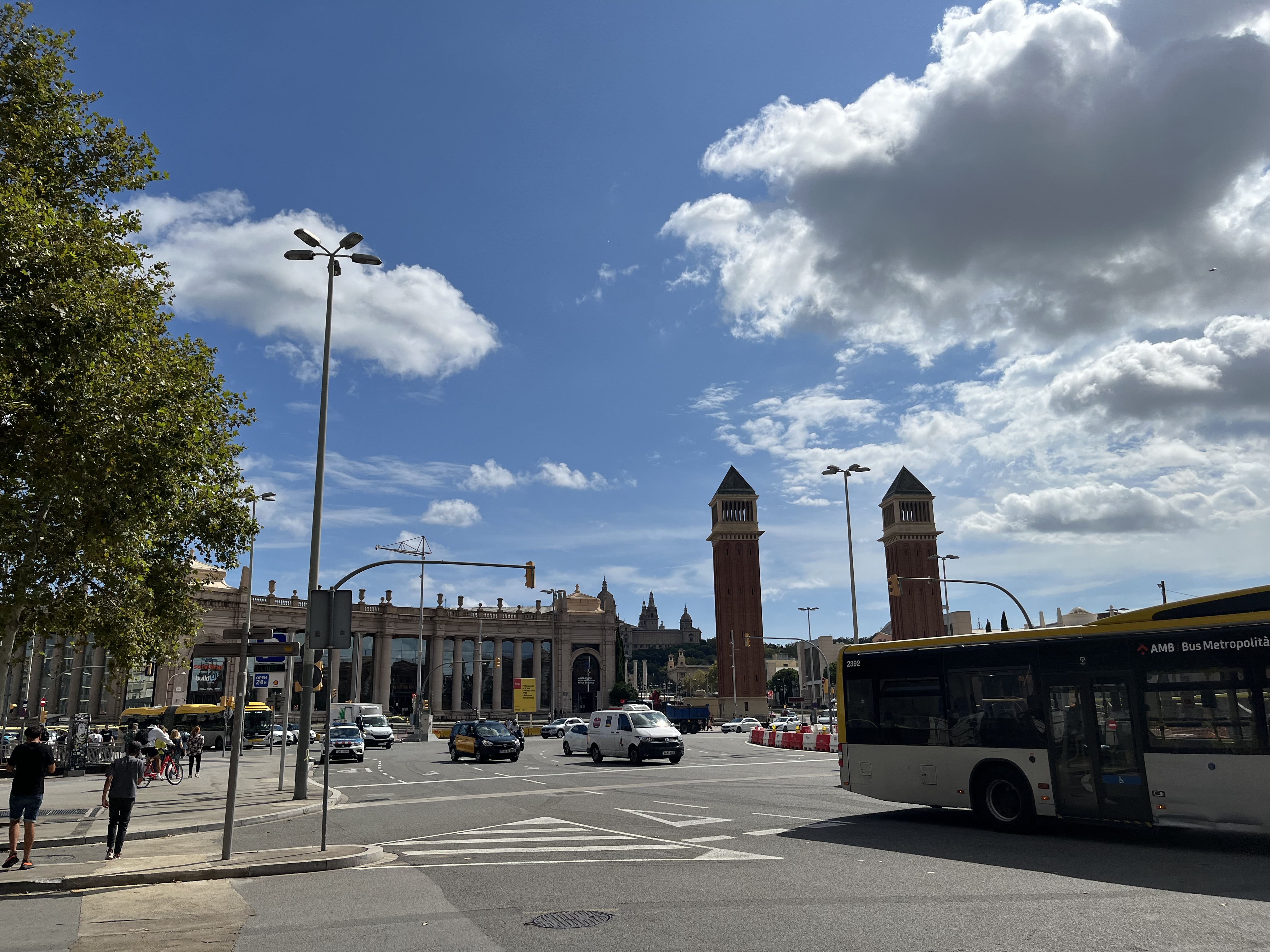
This is the Plaça d’Espanya, one of Barcelona’s most important squares and unquestionably THE best-looking one of them all. It wasn’t always this majestic: back in the 19th century it was little more than a simple crossroads, where you could watch the occasional bullfight at the Arenas next door, or a public hanging if you were really lucky. In the century’s last couple of decades, however, Catalonia experienced a particularly explosive variant of industrial growth (literally, too — it seems to have been a hothouse of anarchism back then), and before long Barcelona was straining to show off the fruits of its developments to the world, to show that it wasn’t just another Spanish region but a place that could hold its own in the increasingly competitive arena of Europe. The end result was the 1929 World Expo, held in specially-constructed venues in and around the Montjuïc area, and the entrance to it all was the square we now see before our eyes, newly rebuilt and prettified.
To say that it is majestic is to undersell things. The architects redeveloped the entire area for the 1929 Expo, straightening out streets and densely lining them with stone-and-glass structures, but it is difficult to imagine any of this without the focal point of the Plaça d’Espanya, the hub for this frenzy of activity. It anchors everything with its hugeness: no sooner have we emerged from the metro than I find myself awestruck with just how BIG every single building here is, from the convention centre that curves round one section of the plaza to the Arenas de Barcelona on the opposite edge. You could be standing on the very edge of the pavement, and the shadows they cast would still envelop you in their delicious shade; meanwhile, an unceasing stream of traffic and humanity pours in and out of this humongous circle, like starships returning to home base for a recharge before heading back out again.
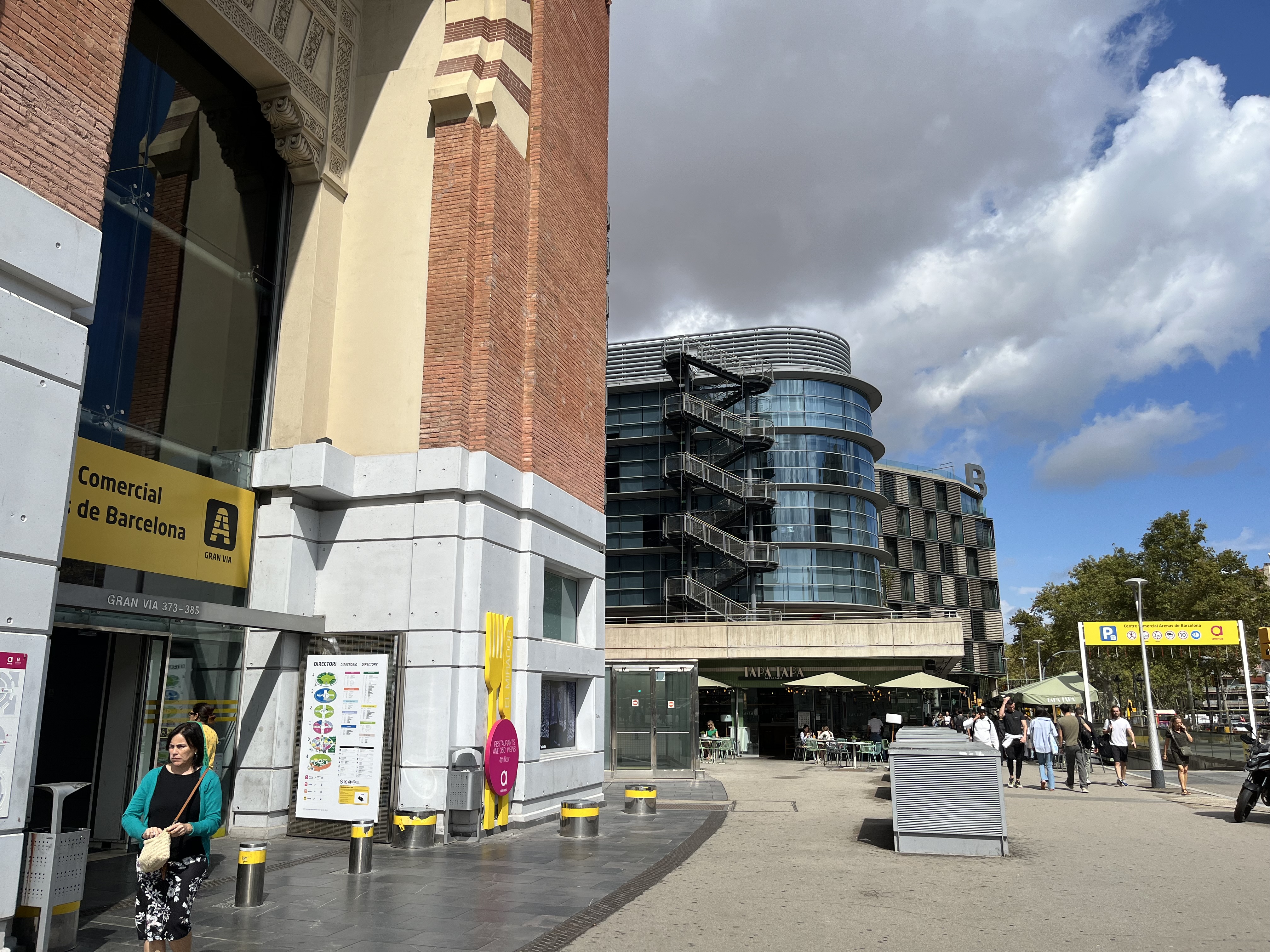
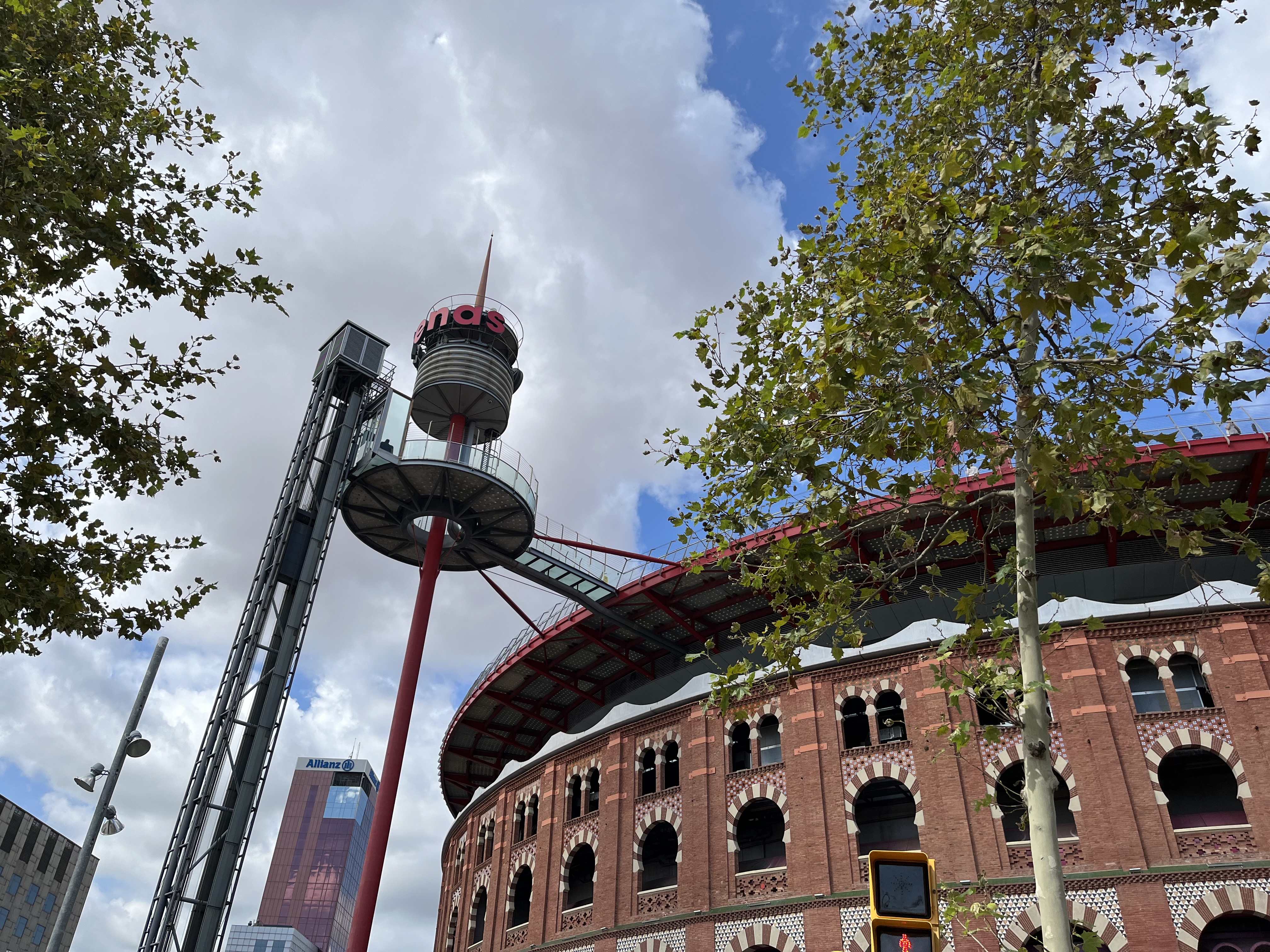
It is against this backdrop that we decide to have lunch. The Arenas de Barcelona, the former bullfighting ring that looks like somebody splashed red paint on the Colosseum, is now a huge and airy shopping centre, and on the roof we find a collection of restaurants that look out on the city below: Italian, American, that bastardised cuisine the Europeans have the nerve to call “Asian fusion”. Strangely enough, the one that looks least like a tourist trap is also the one with the best views of the Plaça: a cosy little nook, painted a modest pastel green, that claims to serve up “the most traditional Catalan cuisine”. No idea what this means, but breakfast having been digested a long time ago, we decide to give it a go anyway.
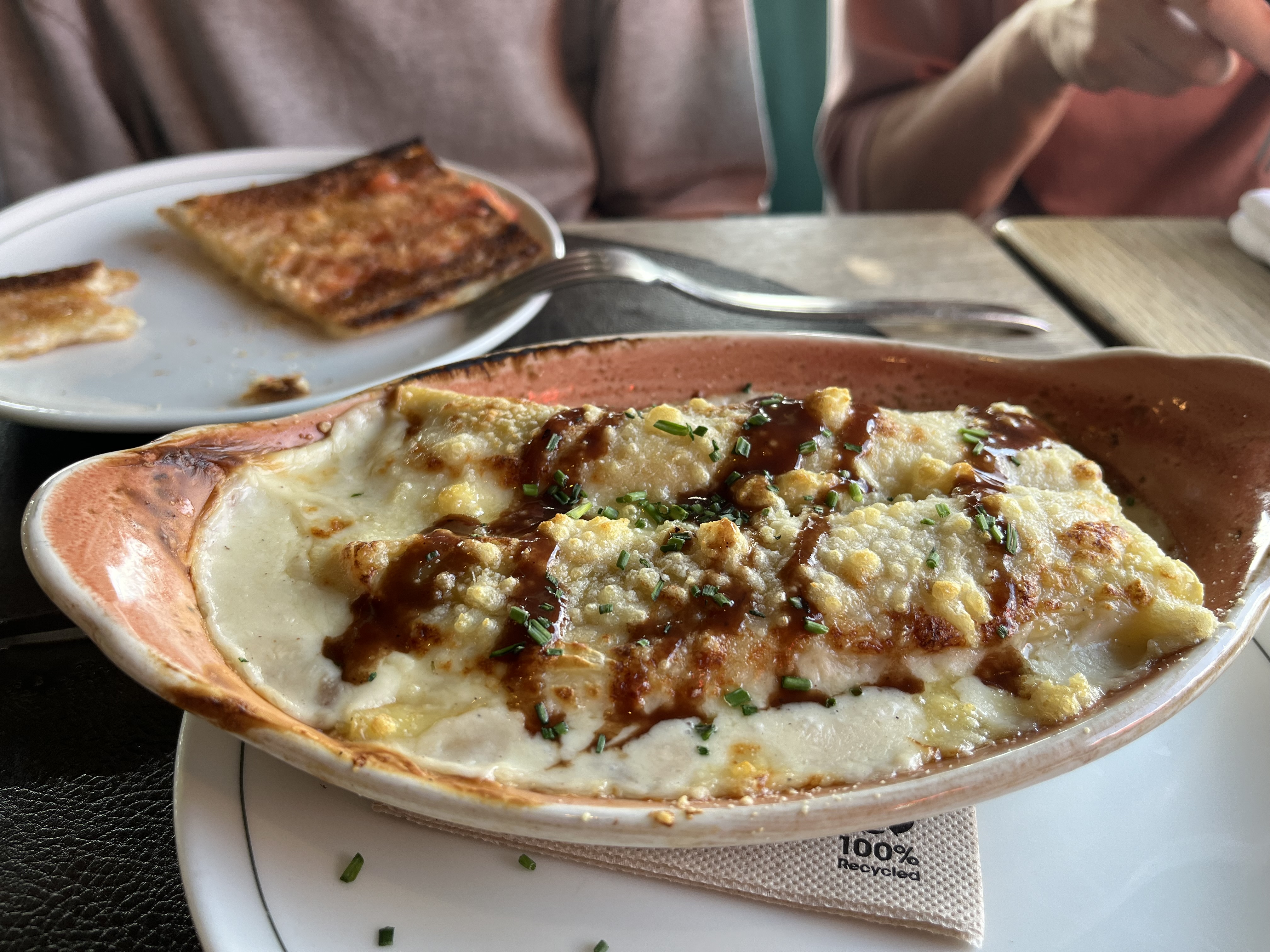
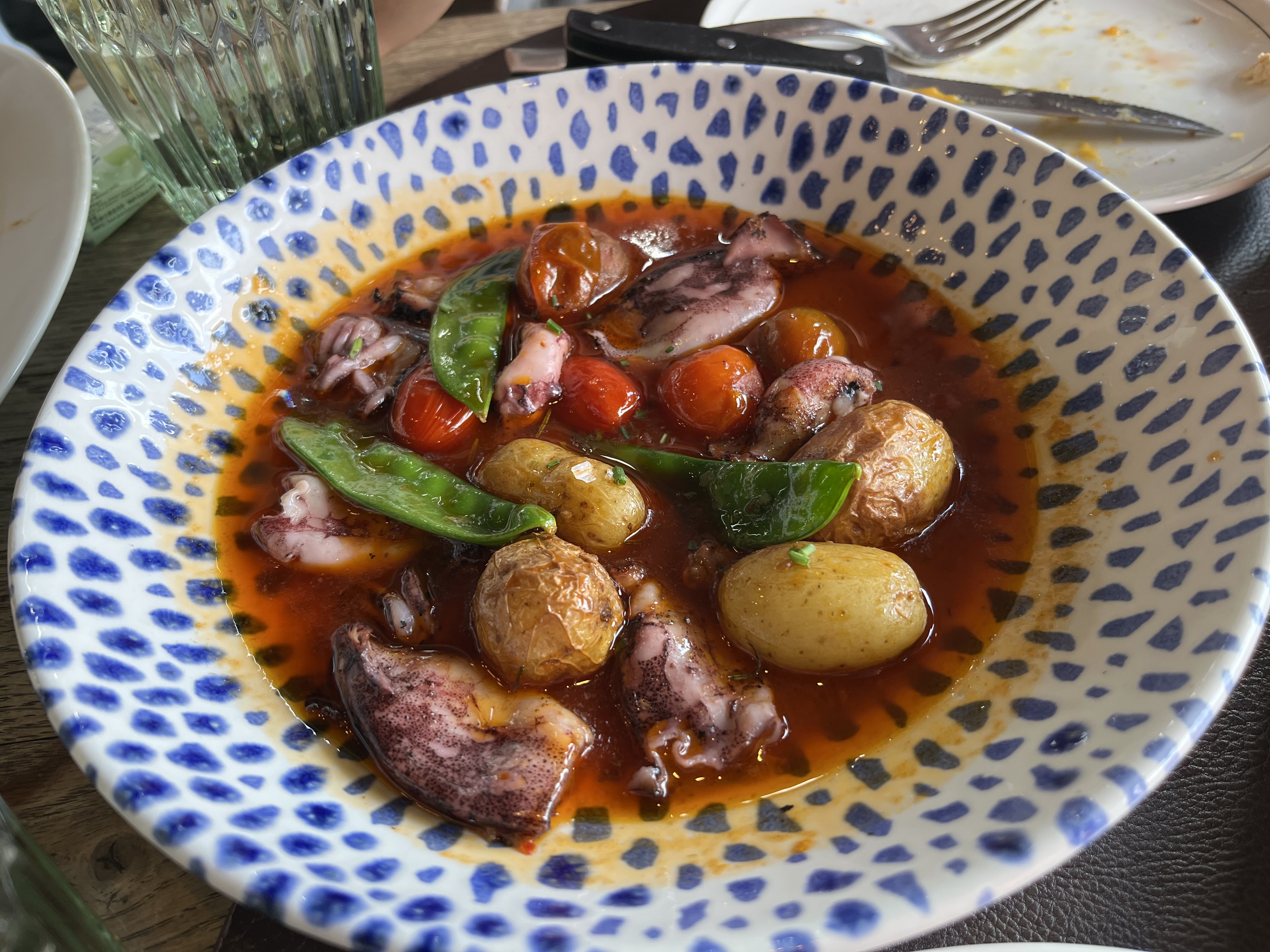
There’s a slight tension in me as we sit down. Part of this is because we have an appointment to keep in 45 minutes; but also this is our first ever meal in Barcelona and I honestly have no idea what to expect: Catalan cuisine is just not something one gets in Hong Kong, or at least not under that name, AND I have been assigned the role of waitstaff-whisperer as the only one in our group who’s more or less fluent in English. I eye our server hesitantly as he glides towards us, and stab at some random dishes I think I recognise. To my surprise he is politely encouraging (none of that snooty European condescension you sometimes get from waitstaff), and even takes the trouble to remind me that the portions we’ve ordered aren’t really enough for seven people. This turns out to be less due to serving size, and more because they are unquestionably all-round bangers: tomato on toasted bread, fresh cuttlefish from the Mediterranean with potatoes, oxtail in a dark and smoky red wine sauce, and above all the aubergine au gratin — good LORD, that aubergine au gratin. My mother frowns whenever she sees an aubergine on the dinner table, and even she dived in with gusto for that one.
European convention dictates that we should now spend the next two hours doing nothing but drink wine and watch the world unfurl beneath us, but we are Asians tourists with places to go, so reluctantly we pay the bill and scramble back down into the Plaça d’Espanya. On the opposite side of the Arenas stand two skyscraping red-brick towers, an homage of the Expo to the ones in Venice; we hurry through these and down the main thoroughfare slicing through the expo grounds. There is so much hear that might merit further exploration — a convention centre to the left, a cultural museum to the right, and just ahead of us the landmark Mies van der Rohe pavilion that introduced German modernist architecture to the world — but our eyes are fixed on the huge, ostentatious palace at the end of the avenue, the jewel in the crown of the Montjuïc redevelopments: the National Art Museum of Catalonia.
The Barcelona World’s Fair may have primarily focused on the advances of Catalonian technology, but it was also something of a celebration. The region had also seen a cultural renaissance in the previous fifty years, with sport and art both blossoming in the area, and like any good state trying to start a secessionist movement, it was decided that buildings were needed to commemorate those as well. Sport got its temple in the form of the Olympic Stadium tucked halfway up the hill, but it was unquestionably art that snagged the better building: a mammoth mustard edifice, almost as tall as it is wide, with domes that would put a normal cathedral to shame. I’ve seen pictures of the building (then called the Palau Nacional) as it looked during the Expo, bathed in the brightest spotlights against the night sky, and by God it makes you wish you were alive in 1929, if only to hear the gasp of the crowds back then. Almost a century on, the palace still houses hundreds of thousands of Catalonian artworks, and we’ve gotten ourselves a date with them this afternoon.
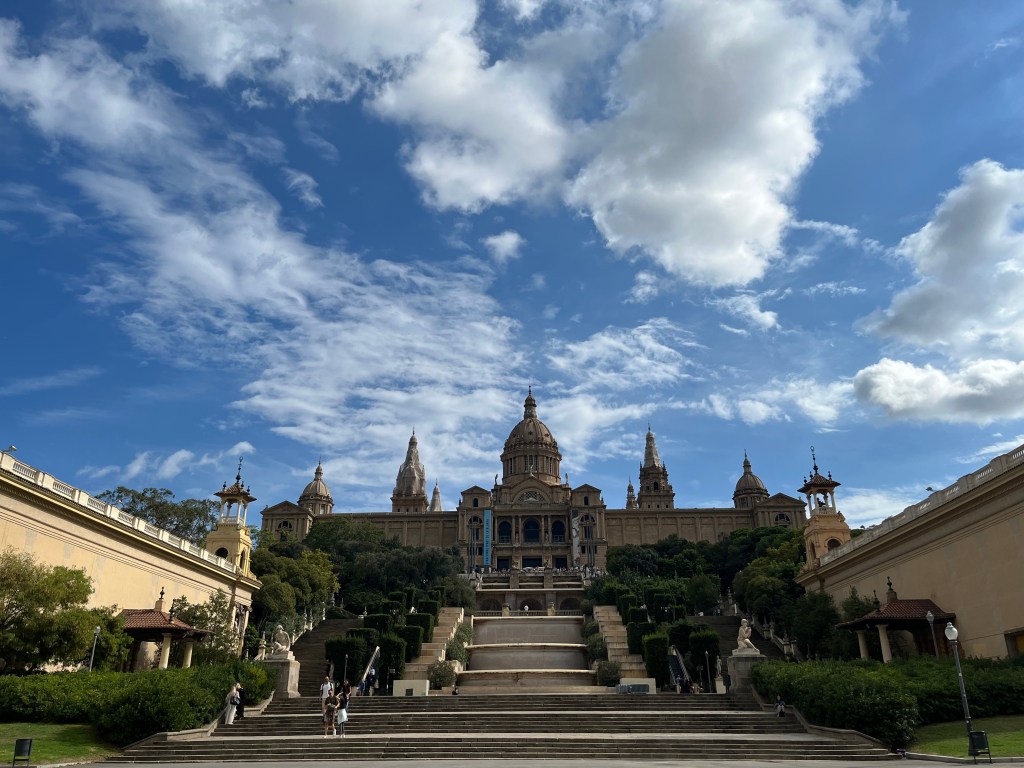
But first we have to get in. The main problem with the Palau Nacional is that we seem unable to get physically close to it: we’ve been walking towards it for ten minutes now, and yet the entrance still feels like it’s half the world away. We pass the Magic Fountain (another 1929 invention), cross the vast courtyard, climb up a set of escalators; surely we must be getting close? One look up, and nope; if anything, the Museum looks like it’s grown even bigger in size while remaining the same distance away. I watch as the minute hand on my phone ticks inexorably past the three o’clock mark — how late can we be, I wonder, before our window expires and we’re denied entry to the museum?
Eventually the obstacles finally run out and we bustle inside the museum, the sound of buskers ringing heavily behind us. Inside we’re met with the kind of hushed museum silence that immediately makes your hairs stand on end; though there are quite a few people milling about in this palatial entrance hall, the place is quiet, with no visitor daring to do anything more than whisper. Even when we walk inside the Gothic and Renaissance galleries, the museum sounds quieter than the grave (literally, as we come face to face with a marble tomb halfway through the gallery). Any noise we make feels astonishingly loud, a profanity on this sacred space.
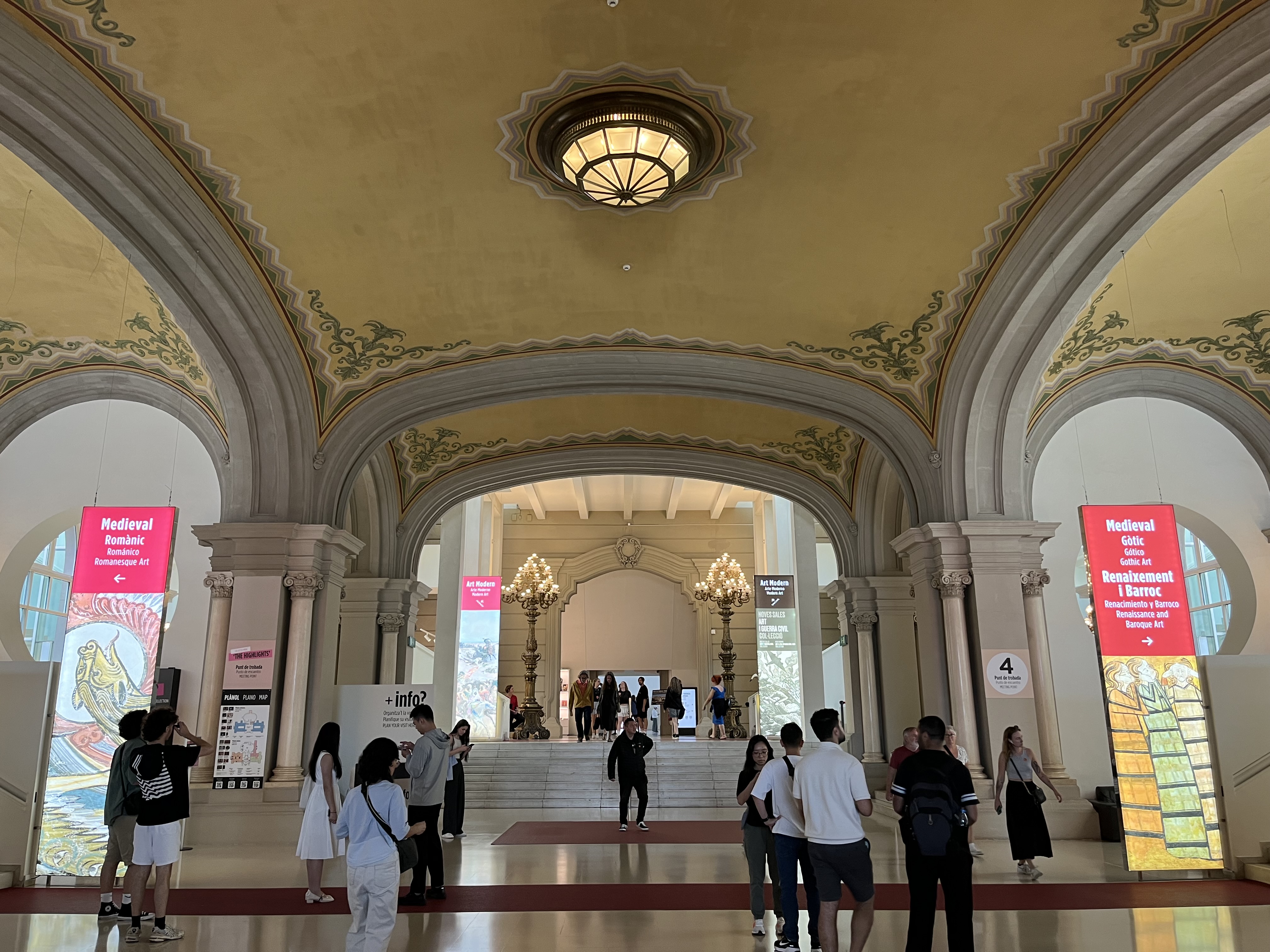
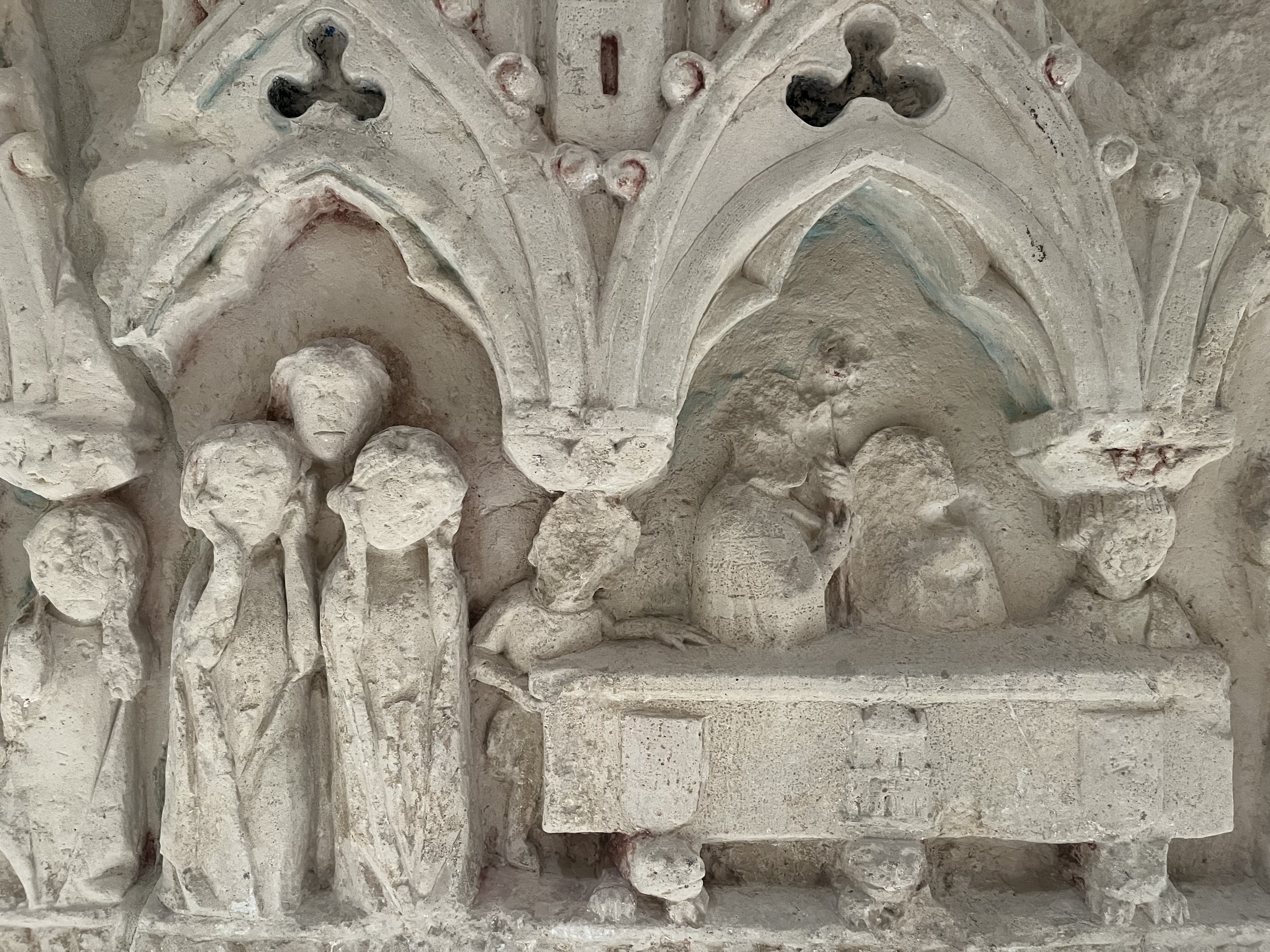
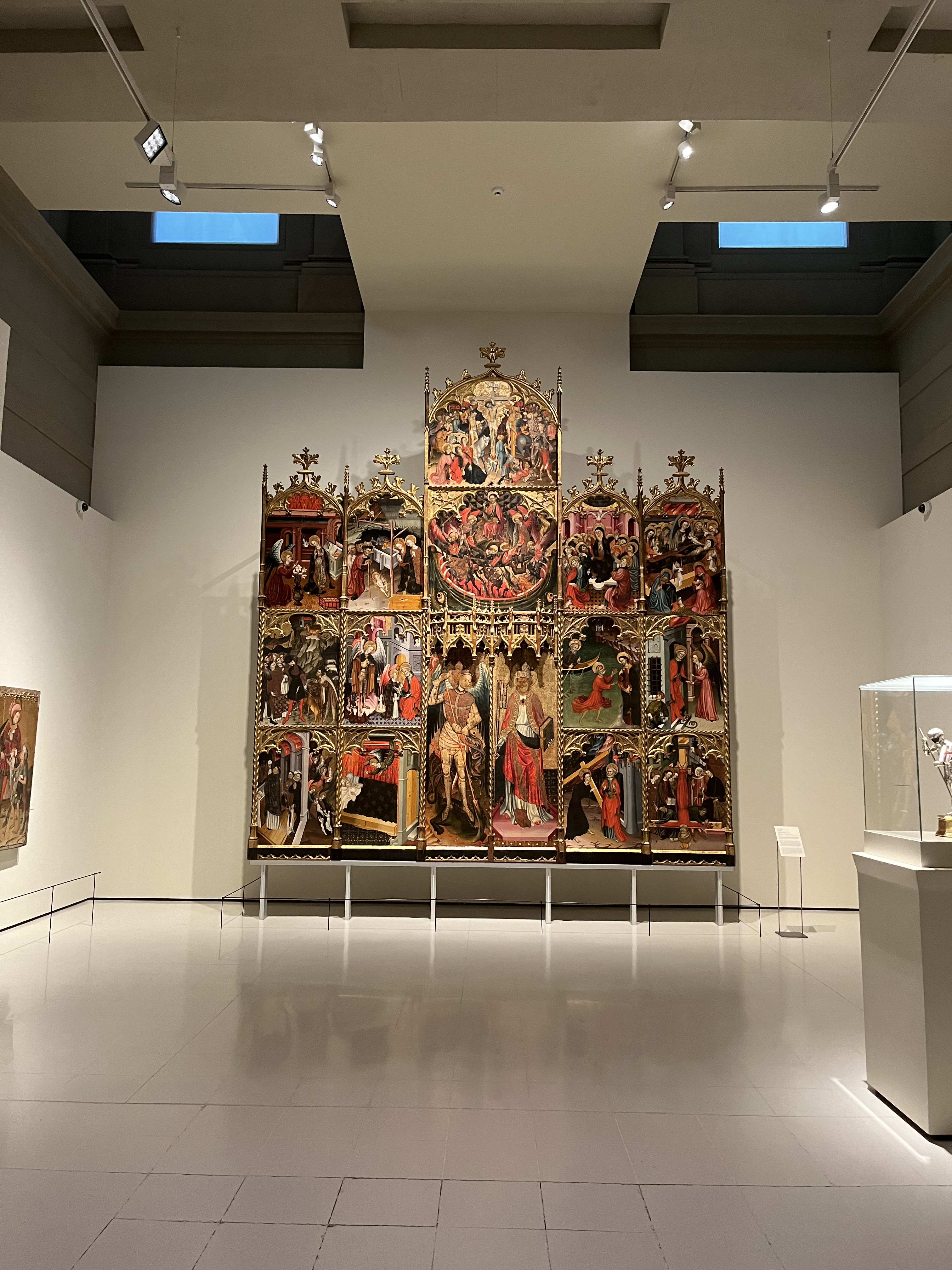
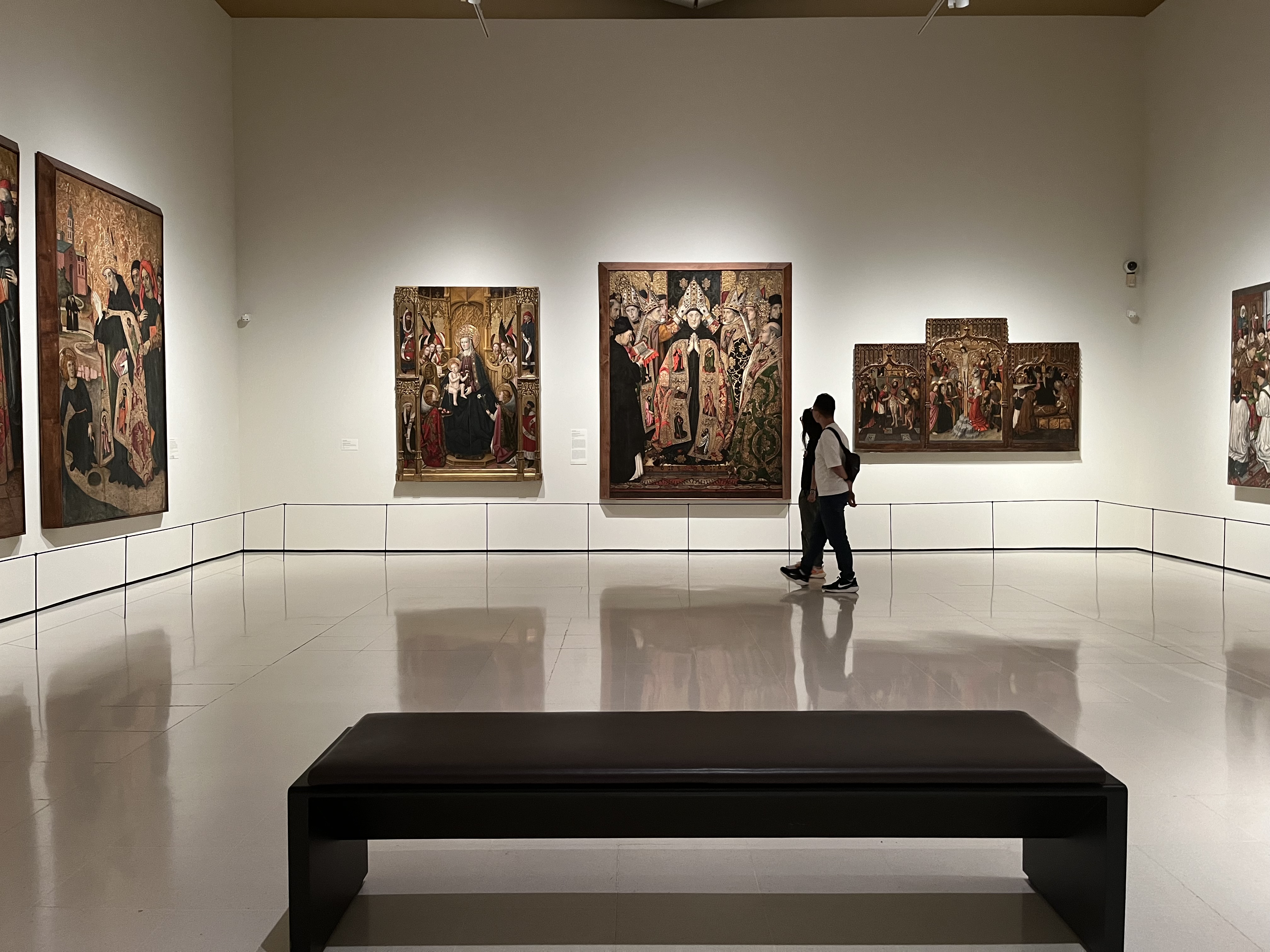
By degrees I stop fixating on the silence and start focusing on the actual art. I’ve never really given much thought to Catalonian art before, and most of the descriptive panels here are in Catalan and Castilian (two languages which I have close to zero knowledge of), but there is a certain difference that I can sense but can’t quite place. Perhaps it’s something to do with the proliferation of faces — it’s rarely just Jesus or Mary in the artworks, always a whole crowd of peoples gaping astonishedly at the scenes before them. Or perhaps it’s the broad palette of colour in the artworks themselves; I can’t remember ever seeing altarpieces or Renaissance portraits this vivid in other art museums before. Either way, I do come out of this exhibit with a deeper impression of Catalonian art than I usually do at museums, especially when one of the last artworks is a depiction of a man cutting out his heart for God. My cousins, meanwhile, are making faces next to the altarpieces.
We’re just finishing the Baroque era and wondering whether to move onto the modern art section when I happen to look out of a side doorway. Immediately I call Samuel and Grace to the doorway, who then call out for our aunts, and together we walk into one of the most amazing indoor spaces I’ve ever seen in a museum.
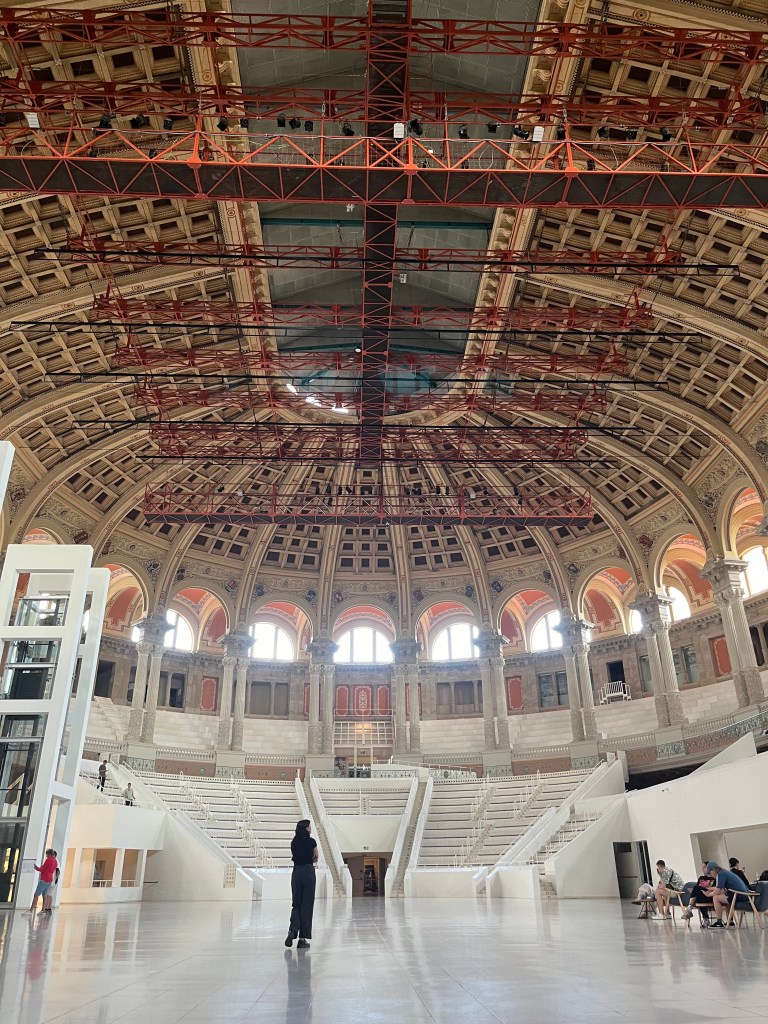
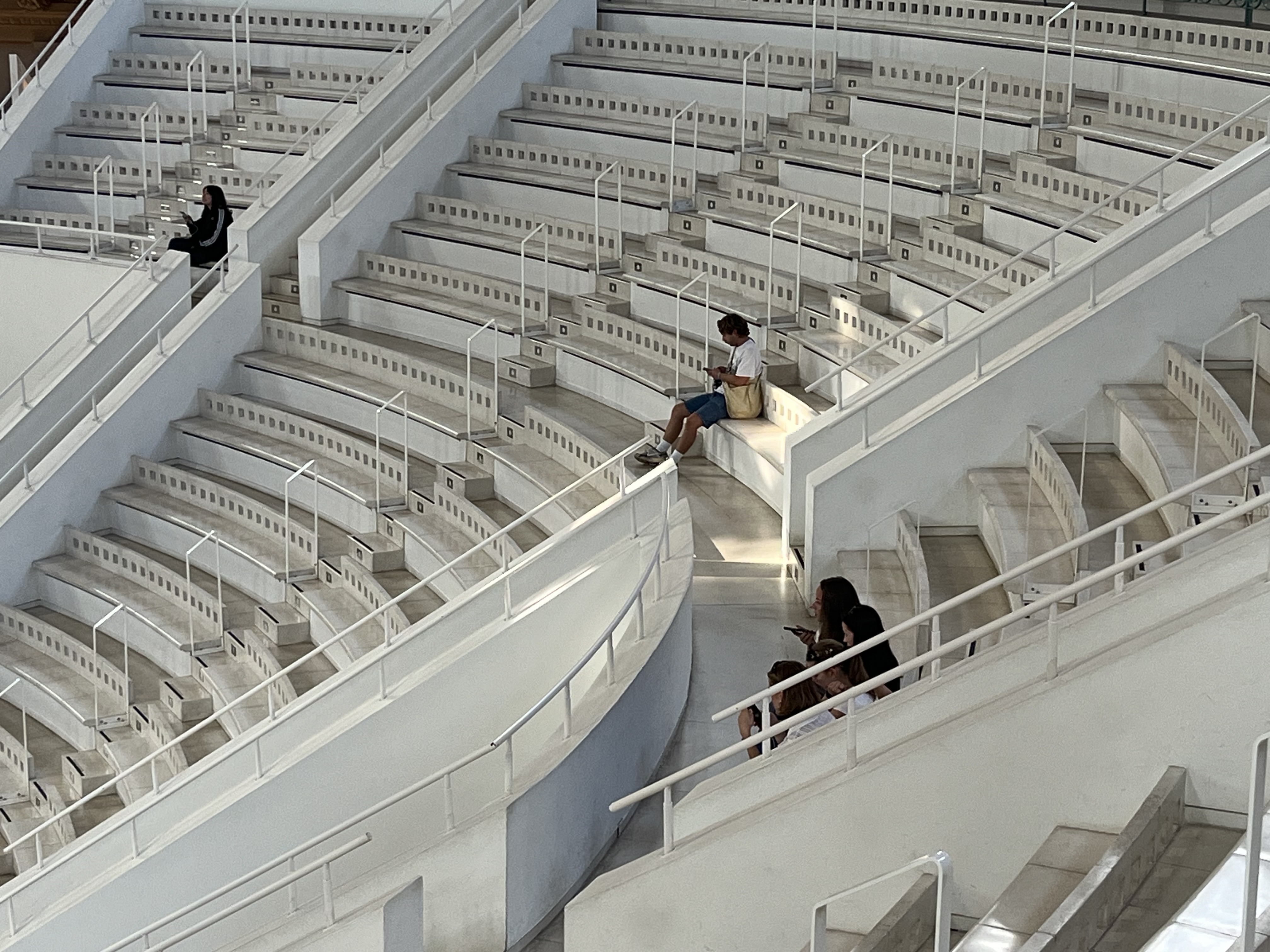
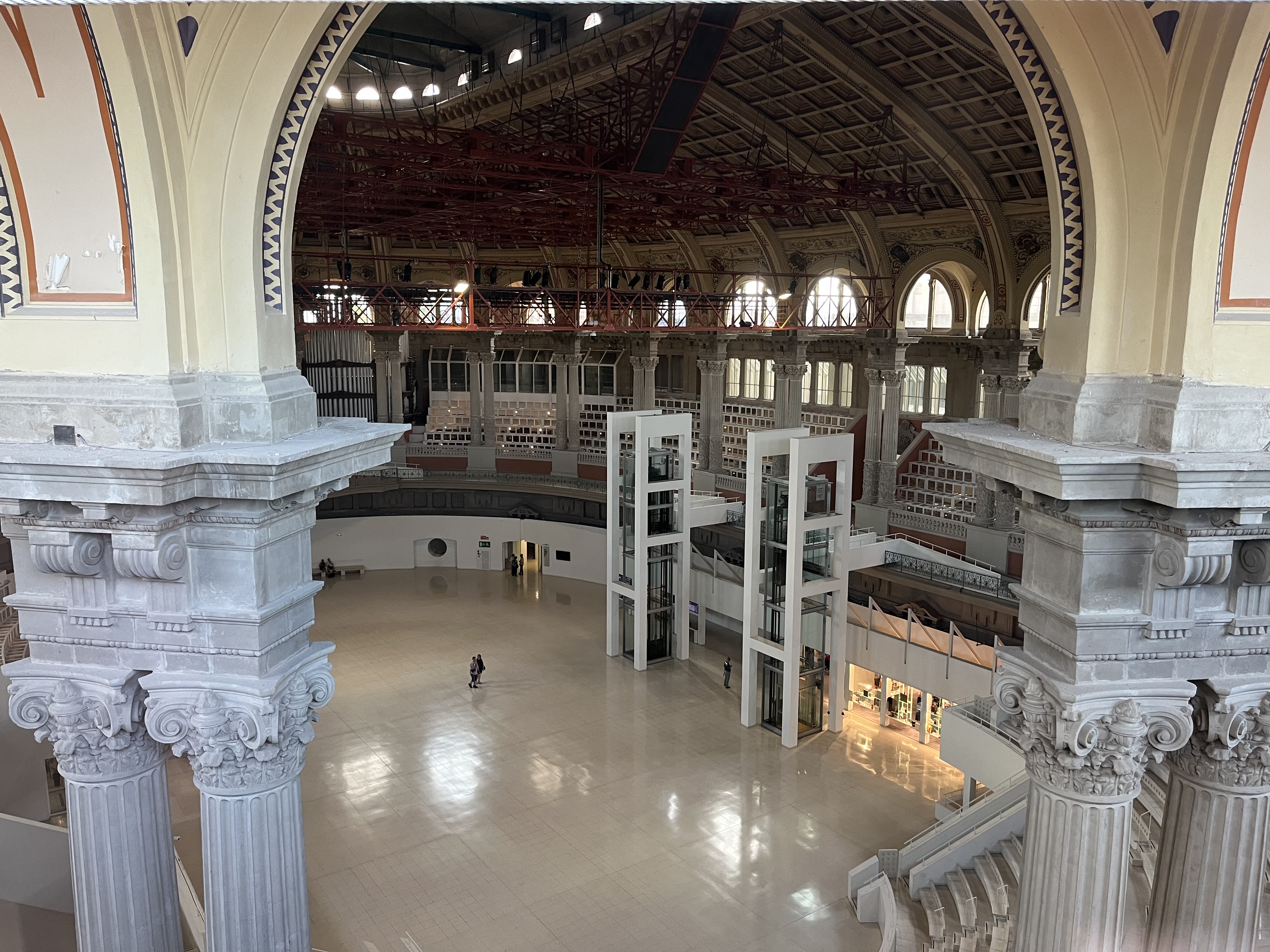
This is the Palau Nacional’s Great Hall, a grand space that hosted the Expo opening ceremony back in 1929. Nowadays it’s mostly an empty space that’s only used for the occasional music show, so any visitor curious enough to poke their head in has the run of the place, and it is gorgeous: a vast, hollow roof that stretches up and up, to the point where you have to lean back to appreciate it all; a roof that is criss-crossed by a dozen modern walkways and held up by a dozen more pairs of antique columns. At one end of the hall is a doorway that leads through to the offices and preservation rooms (and what joy it must be to work facing such a breathtaking space!); at the other, a soaring pipe organ that dwarfs anything and anyone that stands next to it. Nothing on this maximalist instrument looks like it was designed for human use; I can only imagine a giant stomping hard on the keys, cackling madly at the music he creates.
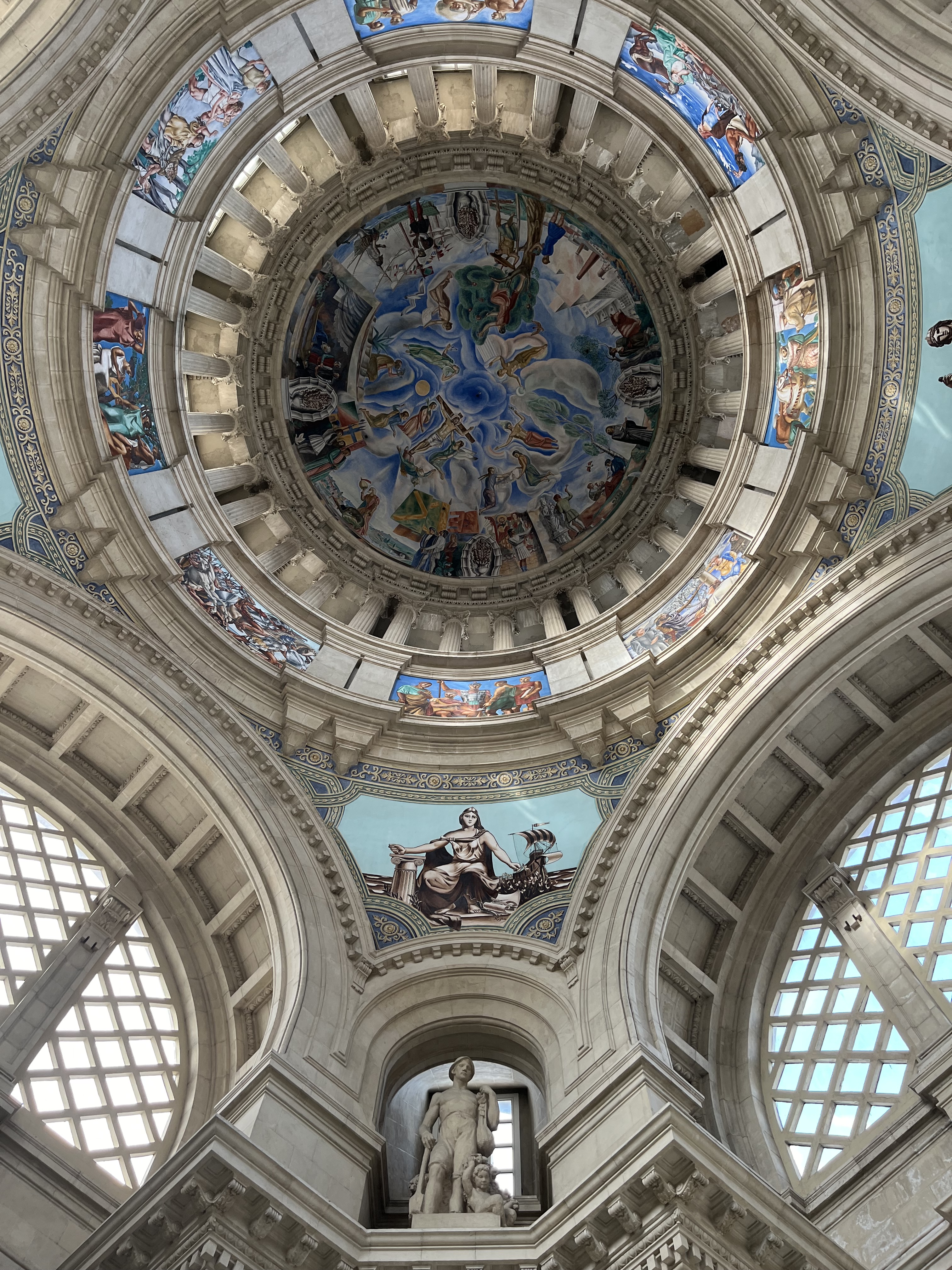
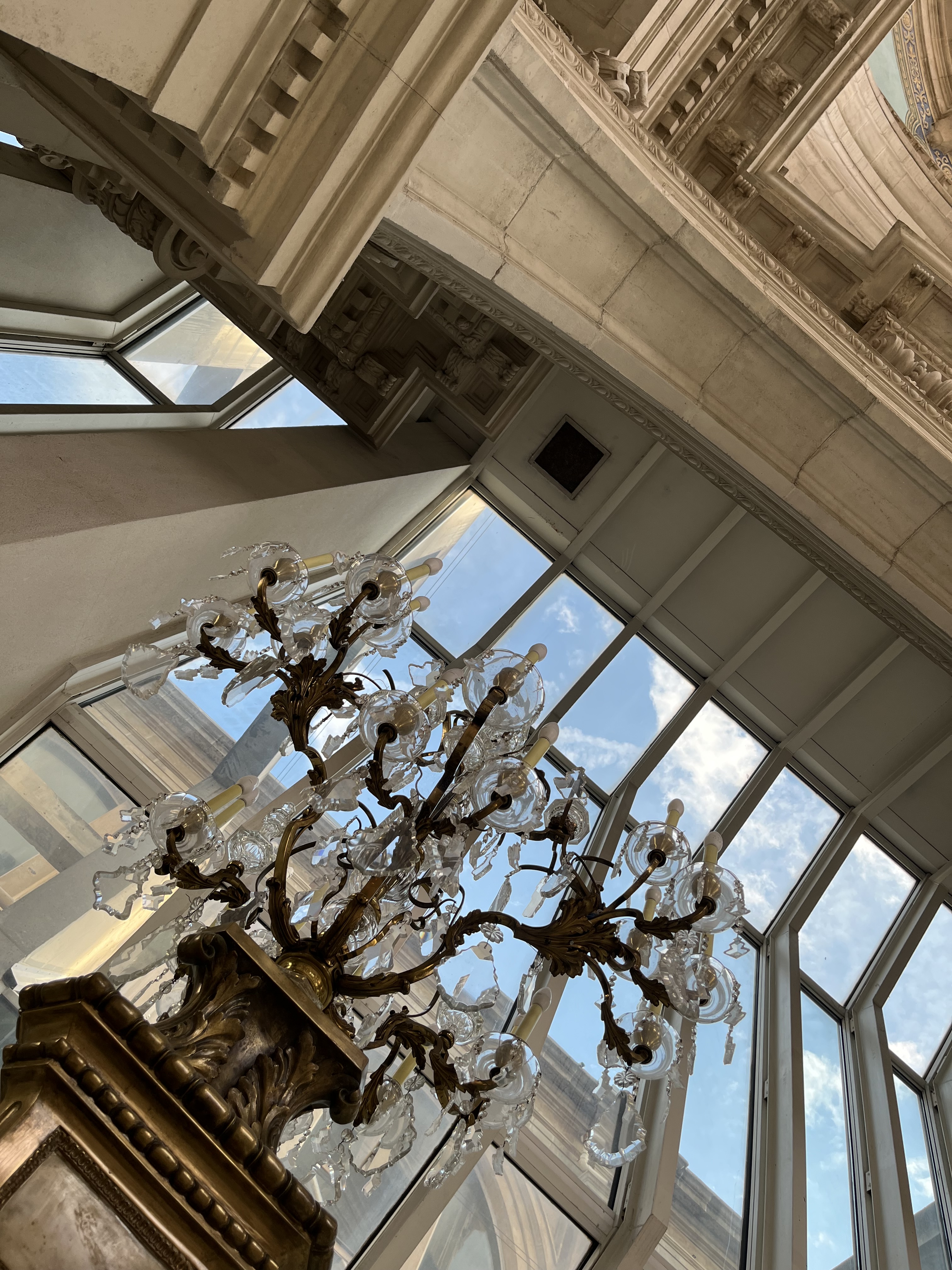
We wander around the museum, gaping at the seamless blend of (faux-)classical and modern, peering into the forbidden sacristies of their office space. It’s hard to believe that they built all of this in less than three years: there is so much artistic detail, so many hidden treasures packed into this place that it feels like the fruit of many decades’ hard labour by an architectural visionary. And yet here it is, a place that has not only outlasted the Expo, but has since become one of Barcelona’s most-visited attractions — and passing underneath the dome, with its amazingly vivid frescos, all that love has been absolutely justified.
But the best part of the Palau Nacional is to be found outside. On the advice of an old American lady just passing by — “you really should go up on the roof! You can walk outside and see the city!” — we climb up to the top level and exit into the open air. An impressive panorama greets us as we step out: much of it consists of the huge form of Montjuïc hill, still brooding and dark despite being bathed in the late afternoon sunlight; but from here I can also see the cluttered houses of the Poble Sec district and, even farther away, the desert beaches of Sant Martí. But then we walk around the outside of the building to the front, and I literally stop in my tracks.
There is a very famous story the Catalans like to tell: during the Temptation of Christ, Satan appeared to Jesus in the desert and brought him to the top of Tibidabo, the highest of the hills surrounding Barcelona. Legend has it that it was there, and not the Mount of Olives, that the Tempter pointed below and promised Him the glories of the world, if only the Lord would just bow down and worship him. I always thought this to be nothing more than an amusing tale — but standing here on top of the Palau Nacional, facing almost the exact view that this version of Jesus would have seen, I’m struck by just how acute the allure could have felt. Because there’s no question about it: Barcelona is a GORGEOUS city:
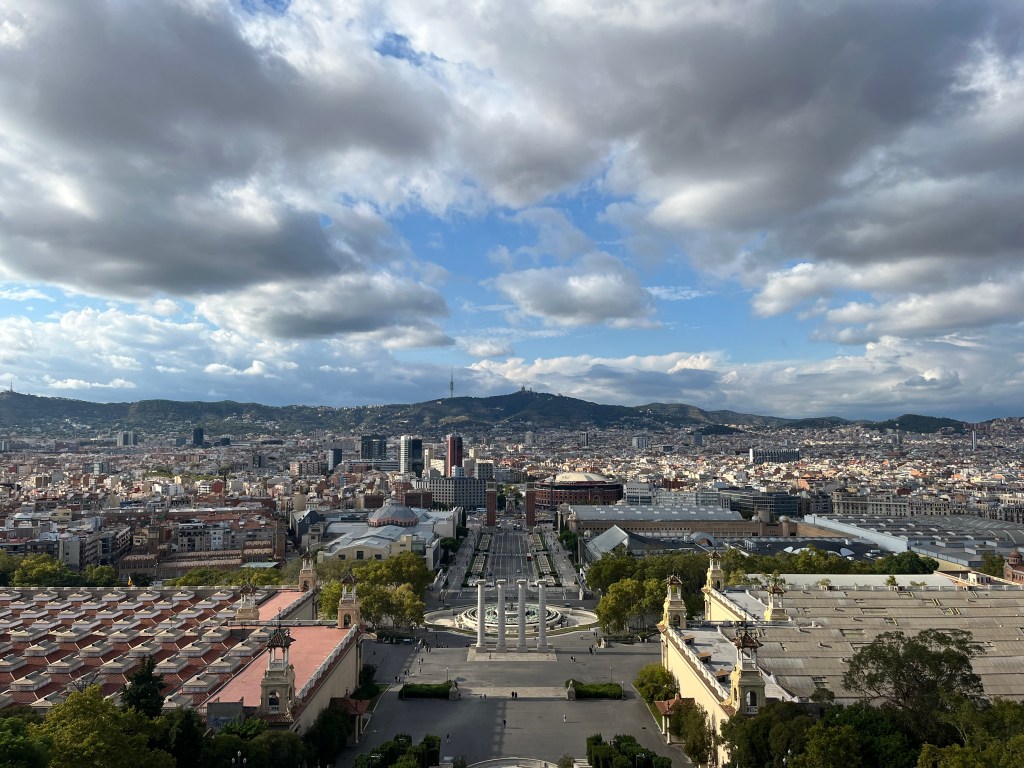
Every structure I can see from here looks exquisitely designed, from the Magic Fountain at our feet to the Sagrat Cor basilica far away on the summit of Tibidabo, and everything squeezed in in between to create the most artistic town I’ve ever seen. Everywhere you look, there are little nuances to pick out, and it’s all complemented by how the light lands on the facades, blending and fading in so perfectly from one building to another. I saw so much more of Barcelona over the next few days, both inside and out, but for me none of those vistas really matched the thrill of that view from atop the museum, the world laid out under my feet.
Six o’clock sees us in a bus, bouncing slowly up Montjuïc hill to our final attraction of the day. Besides being the epicentre of the 1992 Summer Olympics, Montjuïc has always been something of a popular leisure spot for the Barcelonans, and from the window of the 150 bus I see the city’s botanical gardens, Olympic stadium, concert hall… but also loads of people just lounging about on the slopes, doing their daily jog, walking their dogs (their very big dogs) or just reading with their backs against a tree. I look at my phone: the citizens of Barcelona couldn’t have gotten off work less than an hour ago, and yet these people could have always been here, always living a calm life where stress or even hurry do not exist. To someone who lives in a bustling city, this just seems genuinely like a different world.
Montjuïc Castle sits at the summit of its namesake, a heavily fortified building that intimidates everyone at first glance. For good reason, too: it used to be the main military fortress guarding the city, playing an important role in its defence throughout the Siege of Barcelona and then the Napoleonic Wars; during the Civil War and the subsequent fascist regime, it was used to imprison and torture political dissidents, or just people who’d gotten on the wrong side of the law. Today it’s just another museum space, but nevertheless it’s a museum space that gives me the heebie-jeebies, and I breathe a sigh of relief when my family decides not to go in (although THAT decision is more down to cost and exhaustion rather than the shadows of prisoners past).
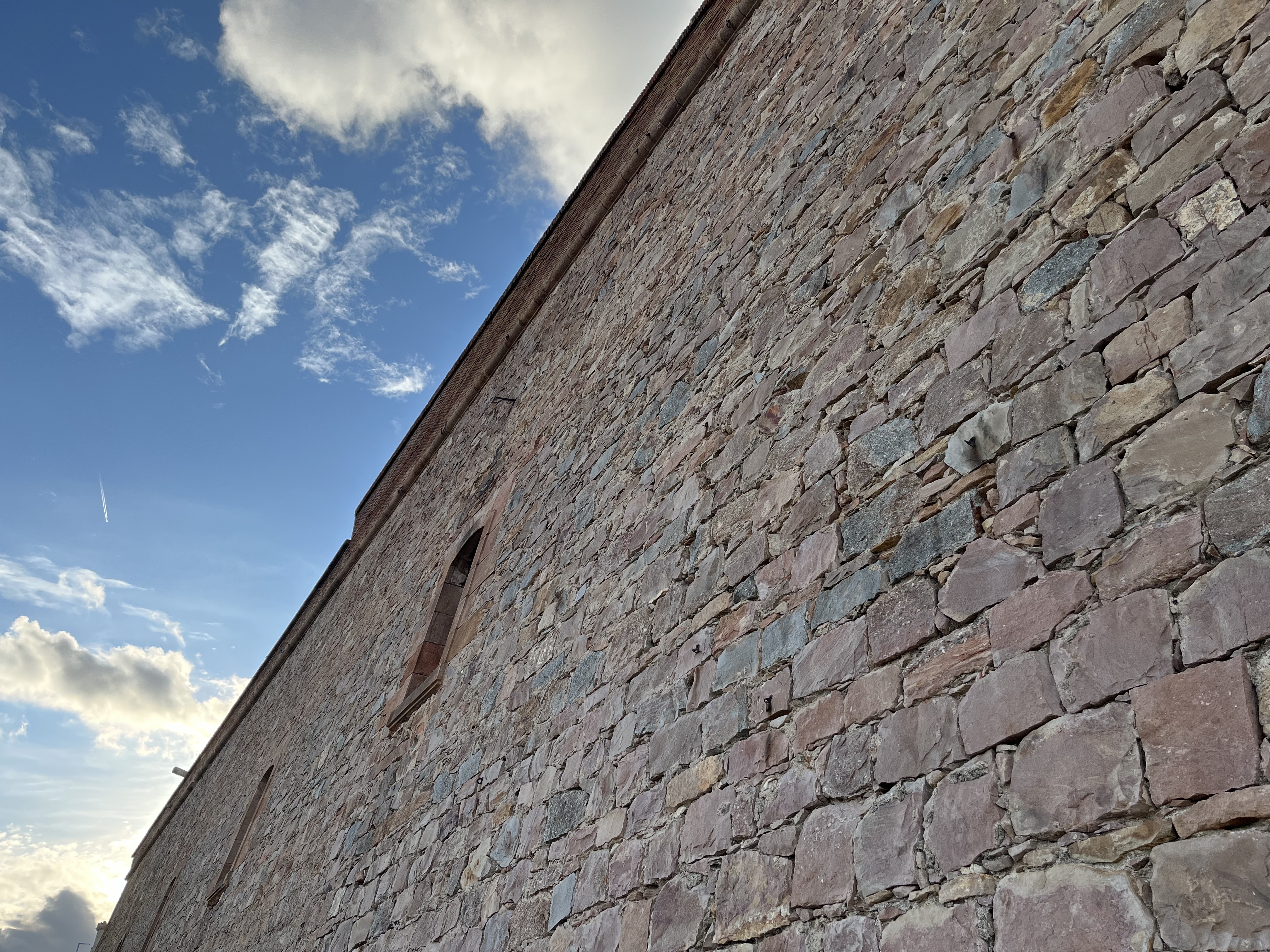
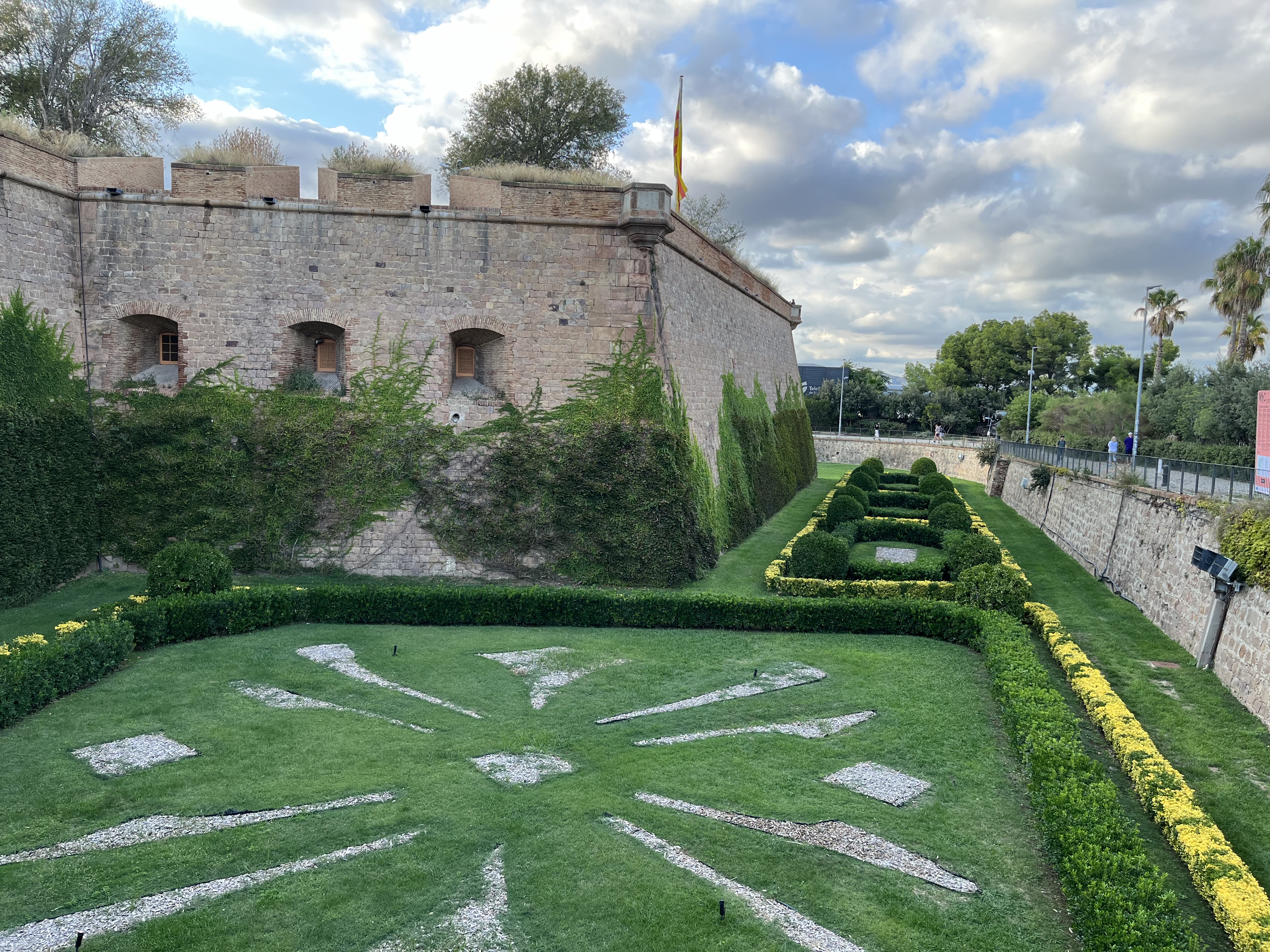
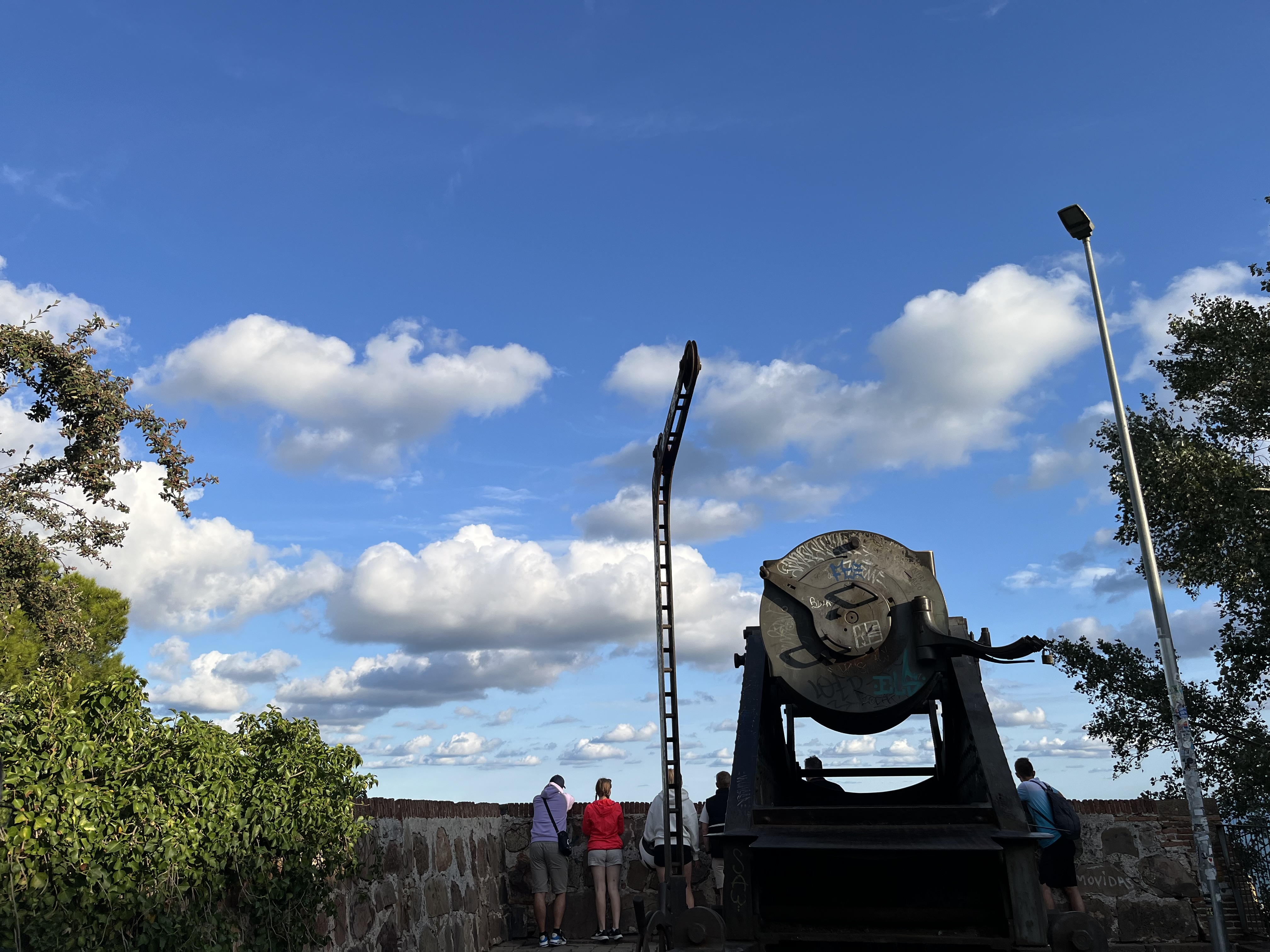
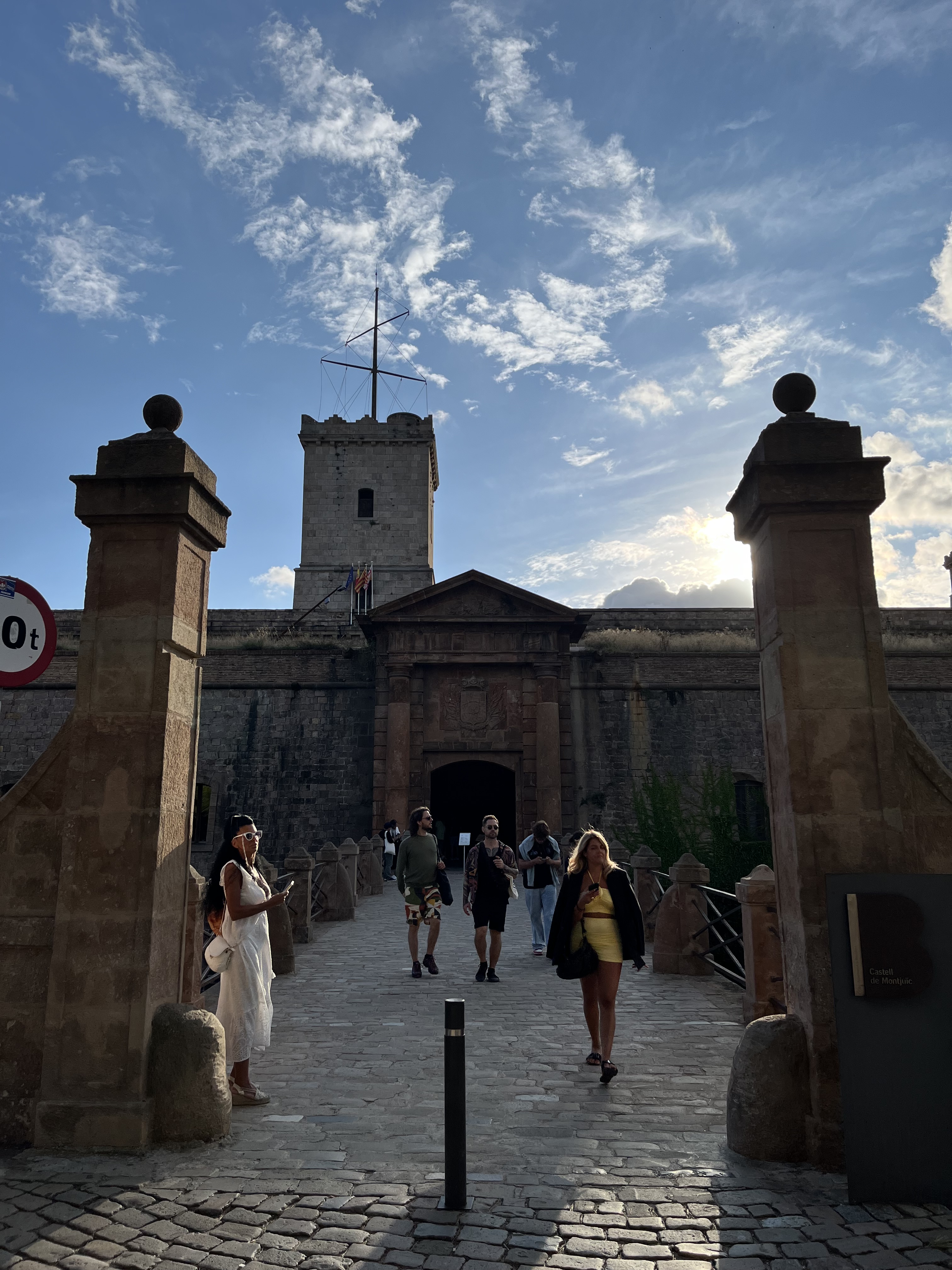
Given how we’ve already been on our feet for much of the day, most of our family opt at this point to simply sit and enjoy the views from Montjuïc. As most frequent readers will realise, however, sitting around is simply not my thing, so I decide to walk around the castle for a bit, accompanied by the simply indefatigable Auntie Ching. We follow a narrow path that hugs the walls of the fortress, meeting only the occasional jogger and dog-walker. Suddenly, the brush to our left clears, and the two of us find ourselves looking upon the Port of Barcelona. It’s yet another majestic view in a day already packed full of them: from here, we can see the containers being loaded and unloaded, the cruise ships coming into port, and even the aeroplanes coming in to land at Barcelona Airport. But what sets this view apart is that there is no sound — no sound from all the traffic zooming underneath our feet, no sound from all the ships at sea, no sound at all but the wind whistling through the tall grass, and the barking of a dog somewhere in the distance.
It’s beginning to get late and the sun is finally dipping below the horizon, so we start making our way downhill. Stop for a while to visit the open-air pool where they held the diving events of the 1992 Olympics; apparently it was designed so that every diver, at the moment of lift-off, would have the Sagrada Familia in the background (I wonder how the divers felt at having their thunder stolen by an under-construction cathedral). Then across the street to the Montjuïc Funicular, another century-old innovation put in place for the 1929 Expo. Honestly it’s just another stair-cum-lift-cum-railway thingy, but even so I can’t hide my delight at the rumble of the steel cables and the smooth way the doors to the platform — not the doors of the platform, the doors TO the platform — slide open and segregate egress from ingress. My family looks on with amusement as I jump around the entire carriage, taking pictures to my nerdy heart’s content.
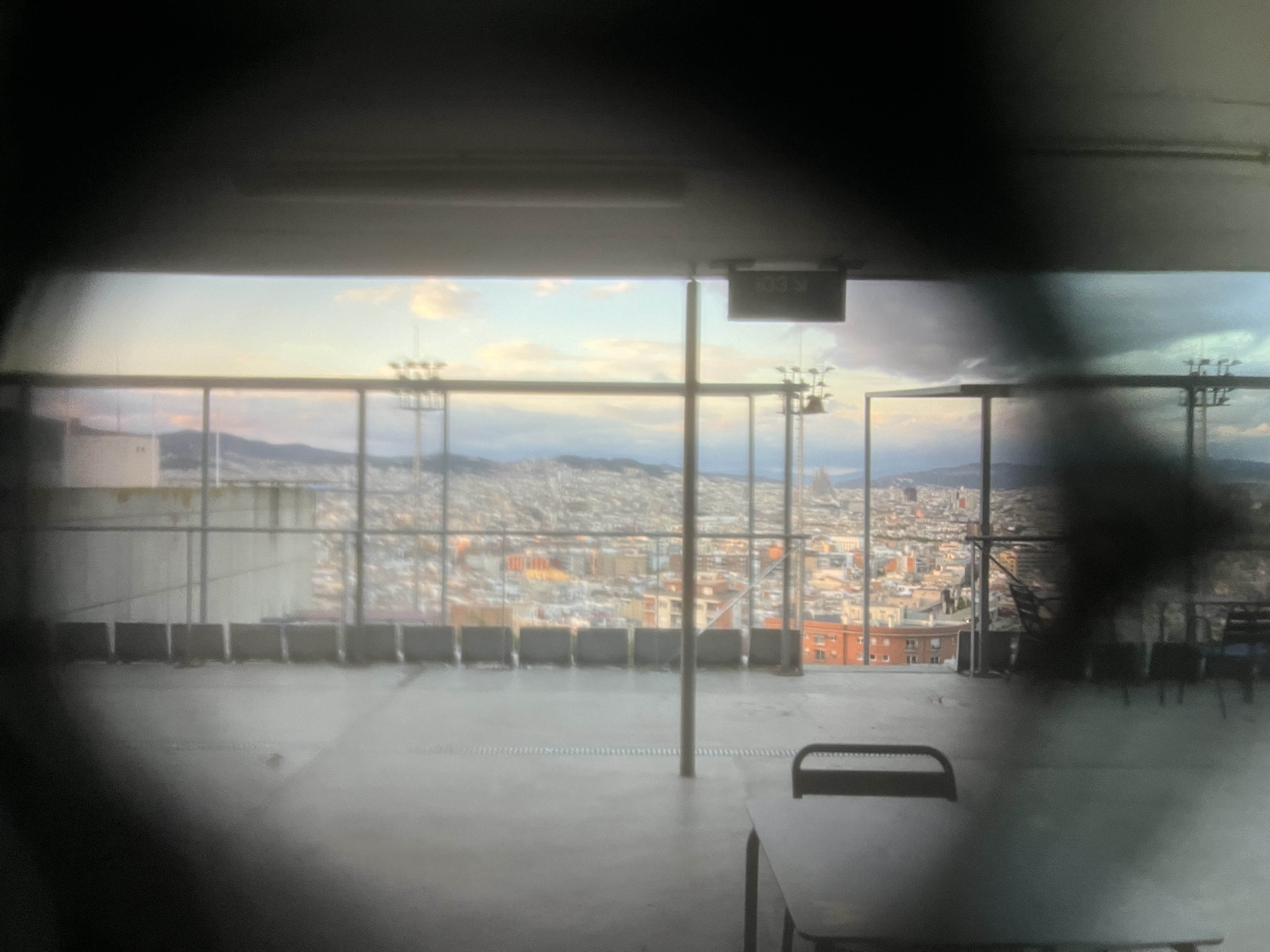
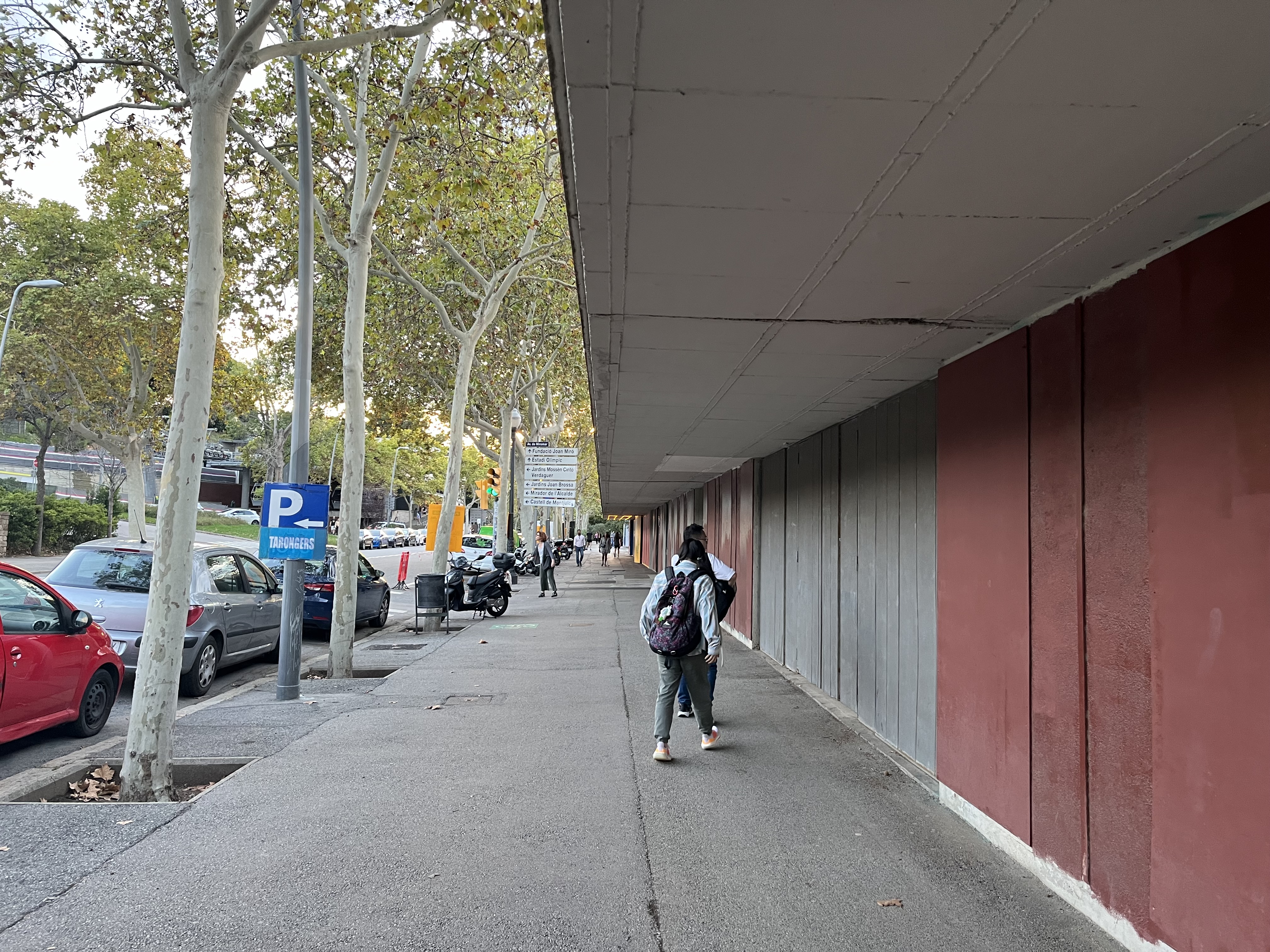
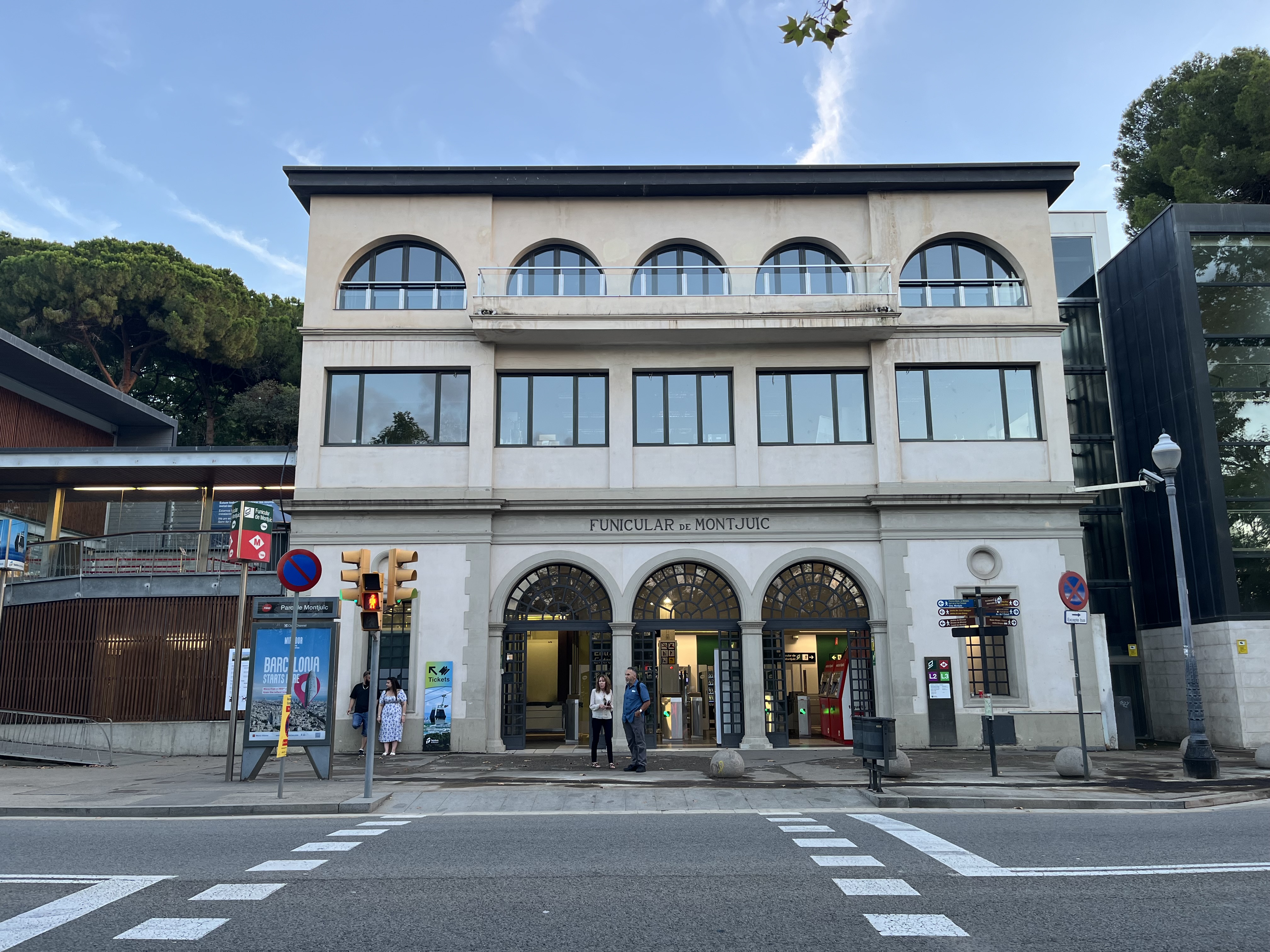
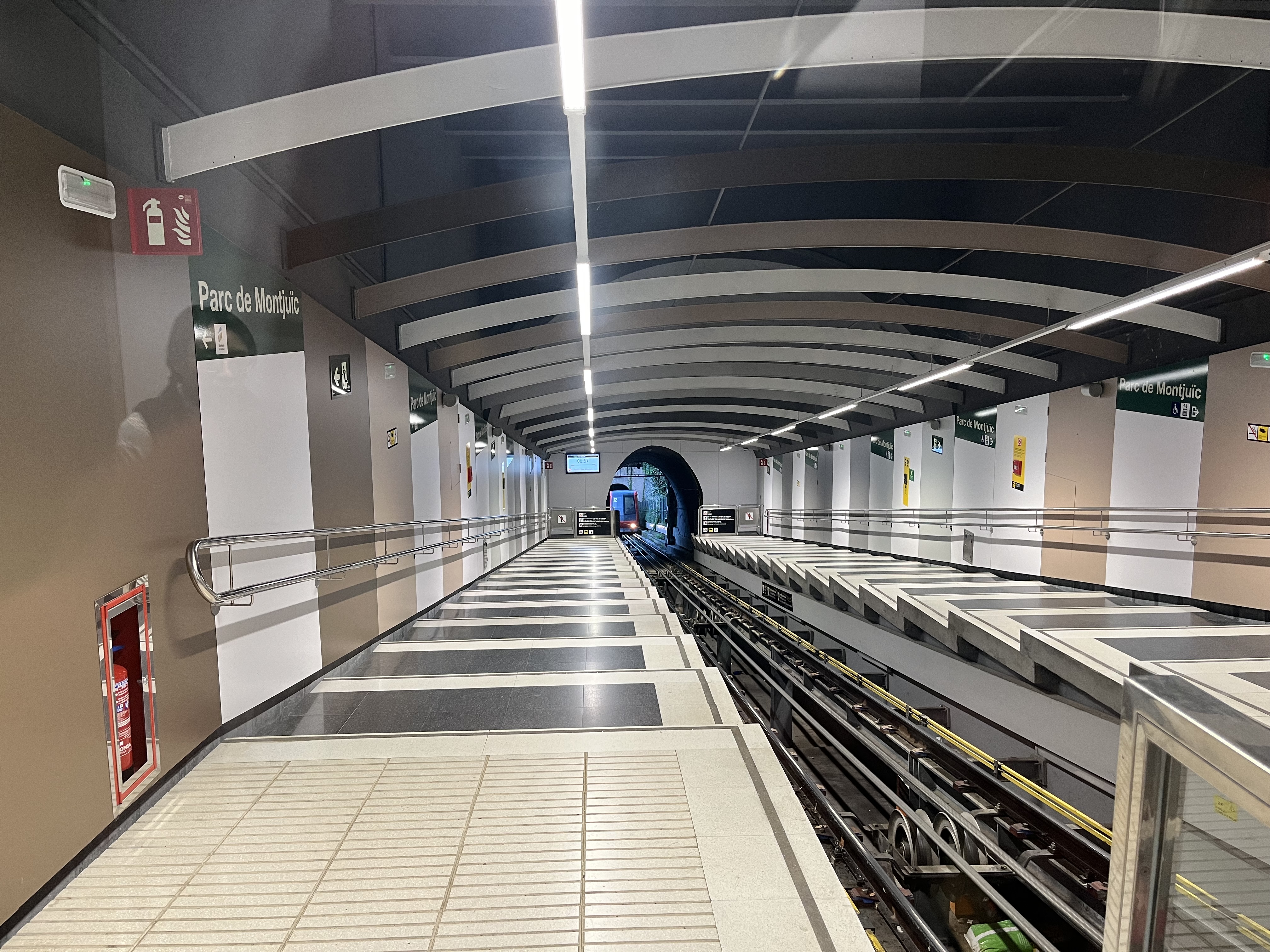
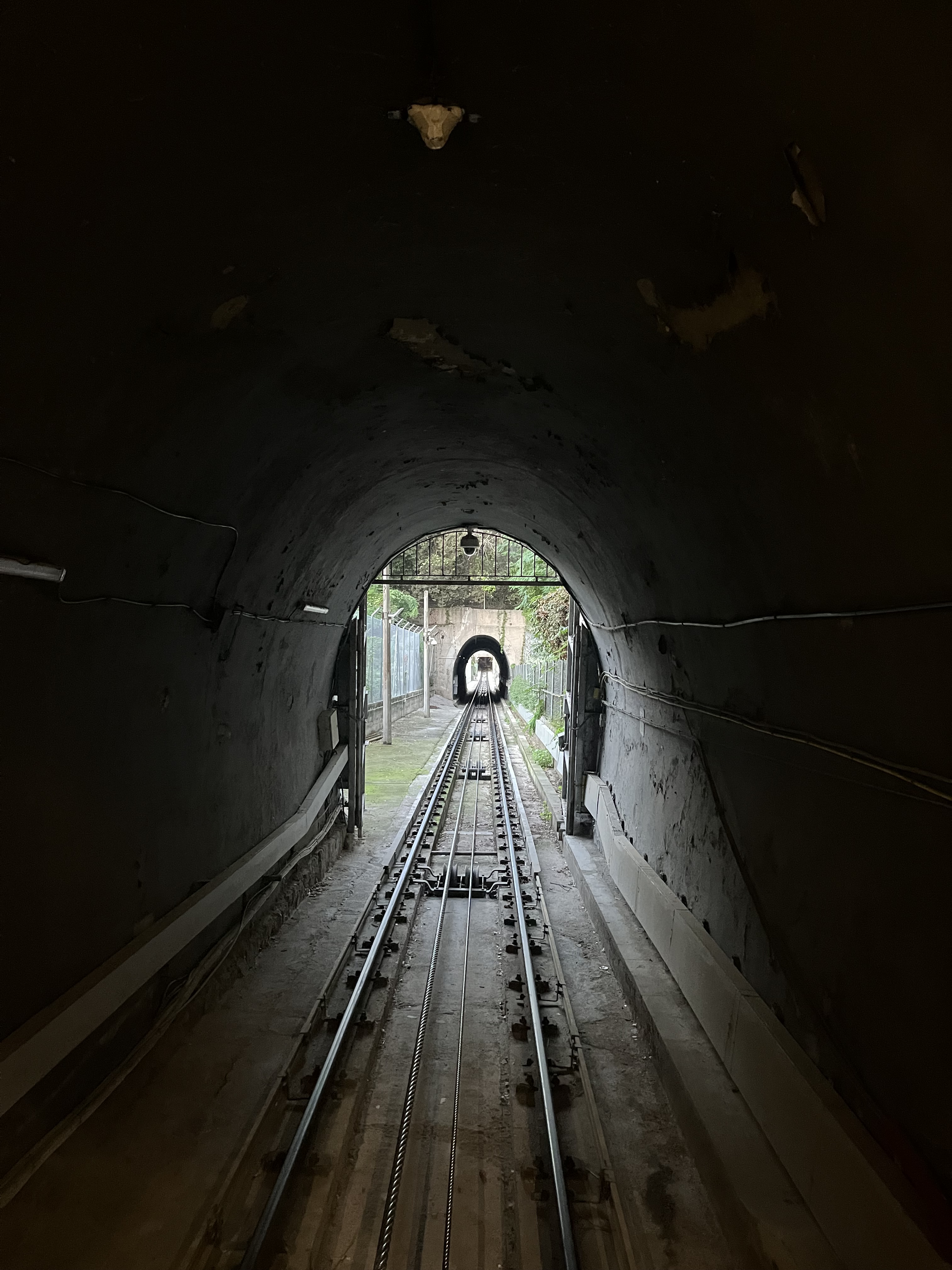
After a ride that lasts all of 90 seconds, the funicular deposits us at the Avinguda del Paral·lel, so named because “ll” in Catalan is pronounced like “ch” in English, hence the dot in the middle. (The name of the street, on the other hand, is due to how it runs from west to east and is therefore parallel with the Equator. Well, it IS a gimmick.) Although it can’t have been 15 minutes since we walked underground into the funicular station, night seems to have cast its cloak over Barcelona at record speed: the sky is a deep navy blue, and the trees that line the avenue look shadowy and slightly ominous. Cars and buses pass us with unceasing speed, and far away the lights of the theatres on the Avinguda shine like fireflies amongst the trees. Just another Thursday night for the city: mysterious, classy, and full of life.
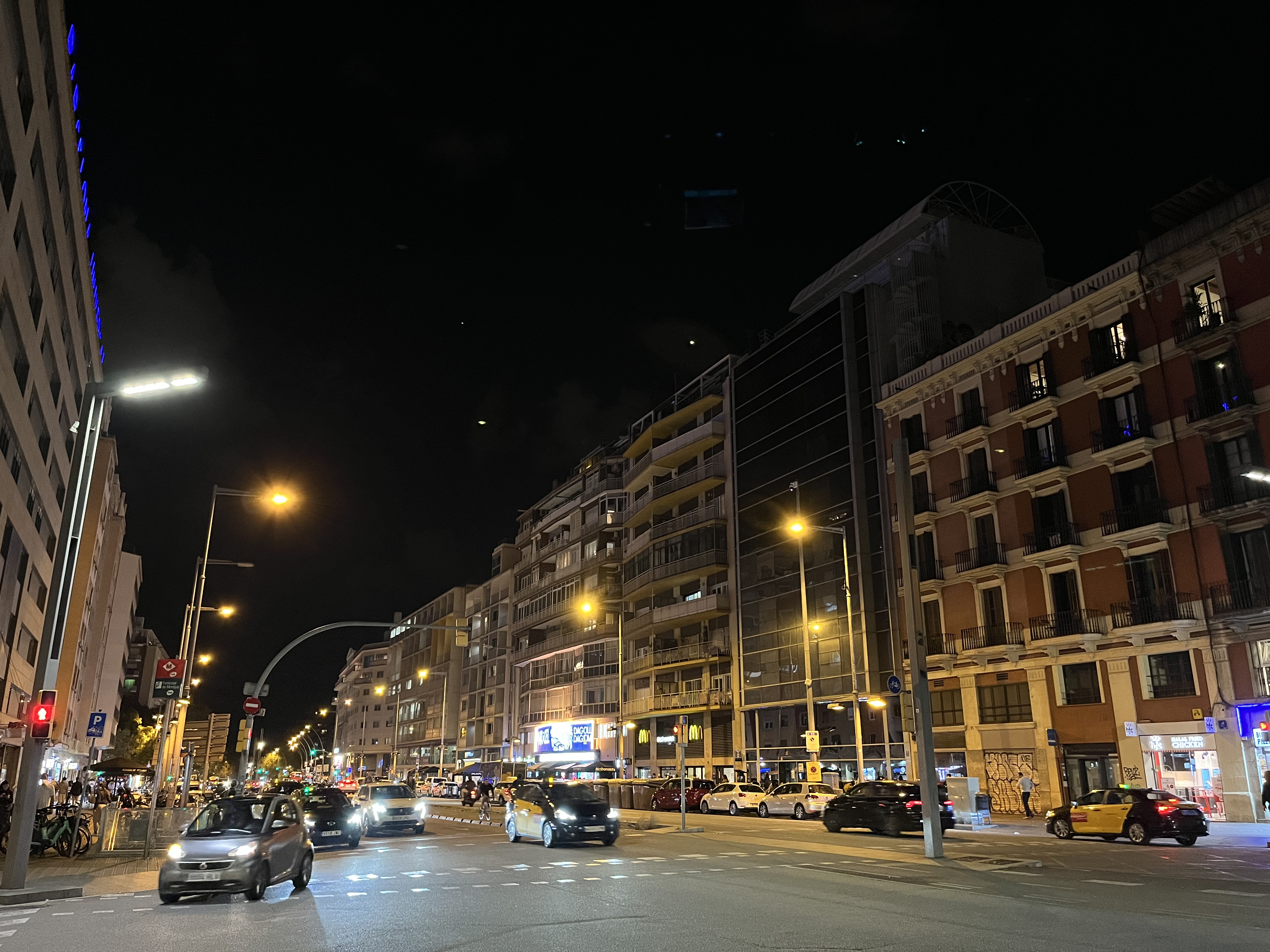
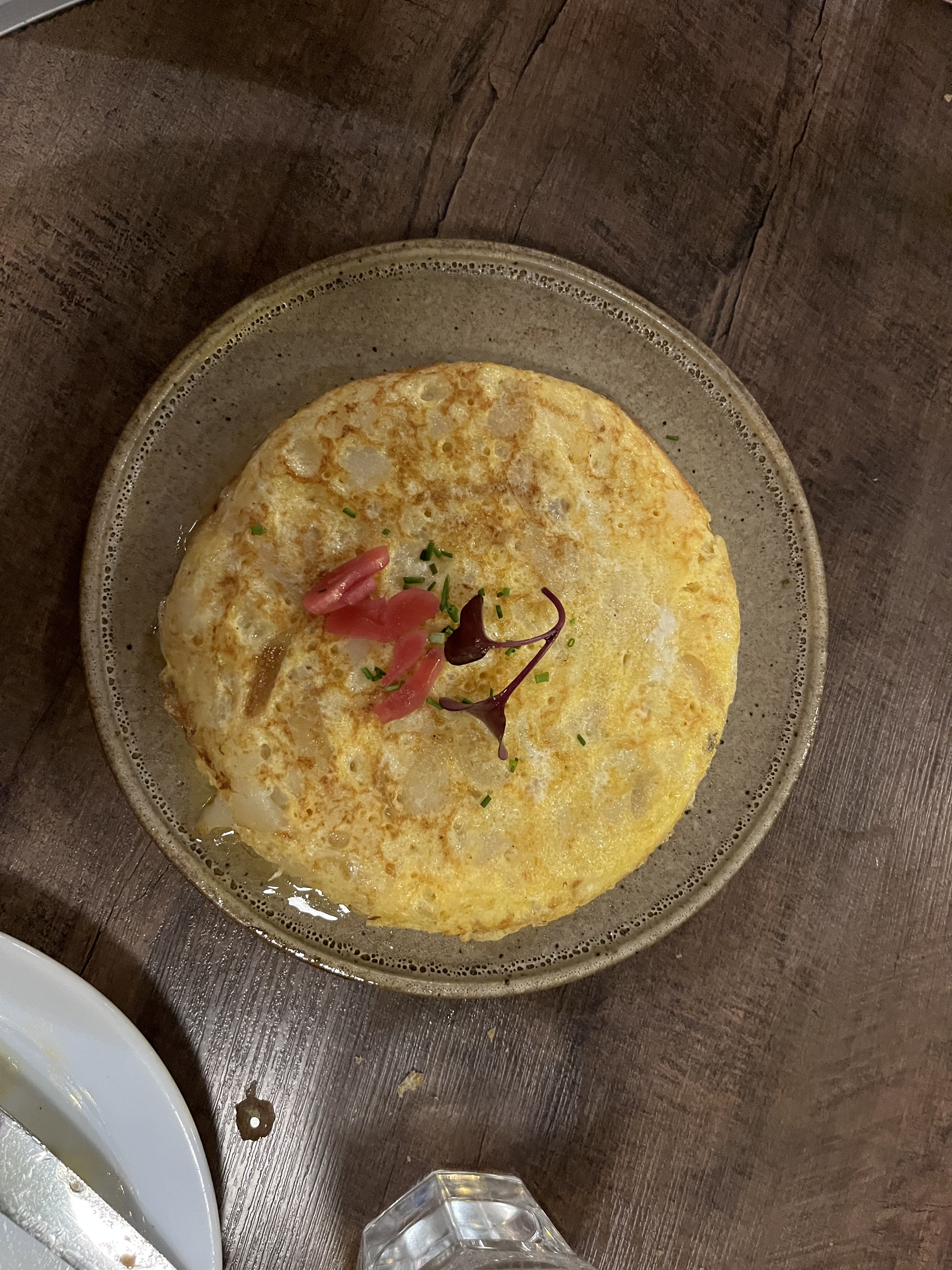
My stomach rumbles. Lunch at the Plaça d’Espanya is already a distant memory, and I’m just about to pull out my phone to look for eateries on the Avinguda del Paral·lel when Grace announces she’s already found one. We follow dutifully to a Galician restaurant just off the avenue, where the staff are momentarily taken aback by the arrival of this large group of hungry eaters, but eventually we cobble together a series of tables and sit down. There is some confusion while we struggle to decipher the menu and the non-Anglophone waiters struggle to decipher my English, but soon our table is loaded with tortillas, jamón sandwiches, prawns and all sorts of goodies. All of this we eat faster than you can say “bon profit”, and before I know it my waistband is already feeling extraordinarily tight. We raise our glasses and toast each other, giddy with joy and relief at this most successful of starts to a family trip.


