24 September
Wake up to discover a definite itch in my throat. Now that the pace of life has slowed on this trip, six months of relentless (though, with apologies to Joyce, not always hard) work at my day job have finally caught up with me; a heavy exhaustion clouds my mind as I sit up from bed and face the view outdoors. Outside the weather is 13 degrees and the beautiful patchwork of colours in the sky has now been replaced by a mostly uniform grey. As we step outdoors, a few droplets begin falling from the sky, as if to presage a very dreary day.
This morning we are on a mission. Since entering France 36 hours ago we have only visited one church, a shockingly low number when compared to the ones we kept on running into in Catalonia. We’ve therefore decided to remedy this by heading to Marseille’s most famous church, the Basilique Notre-Dame de la Garde, perched high up on a hill overlooking the city. Unfortunately, there are no metros or funiculars that will nicely drop us off at this basilica; Google Maps’ suggestions are a 45-minute hike, or a series of buses that threaten one’s sanity.
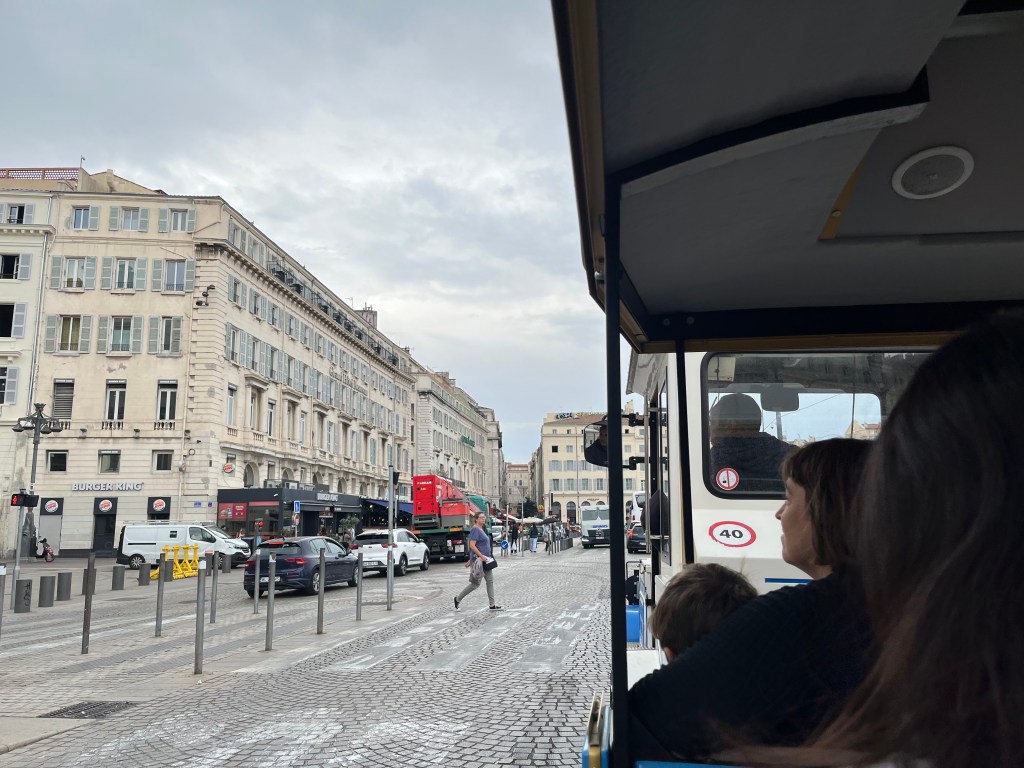
There is, however, one more alternative. At the Quai du Port, a stone’s throw from where we bought our soap(-related paraphernalia) yesterday, a line of tourists are patiently queueing at the counter for the “Little Trains of Marseille”. Train is perhaps a bit of a misnomer: as we find out when it pulls up beside us, there are a series of carriages towed by a locomotive-like engine, but all this takes place on a normal tarmacked road, the wheels are made of rubber, and you sit five to a row in even more discomfort than a normal train seat. There’s a peep from a car horn, and we turn to see a chain of carriages, each barely wide enough for two people, trundle up to the quayside. After some fuss we get a seat just behind the driver and the exhaust pipe, and with a toot we are off, leaving behind masses of expectant but disappointed tourists in our wake.
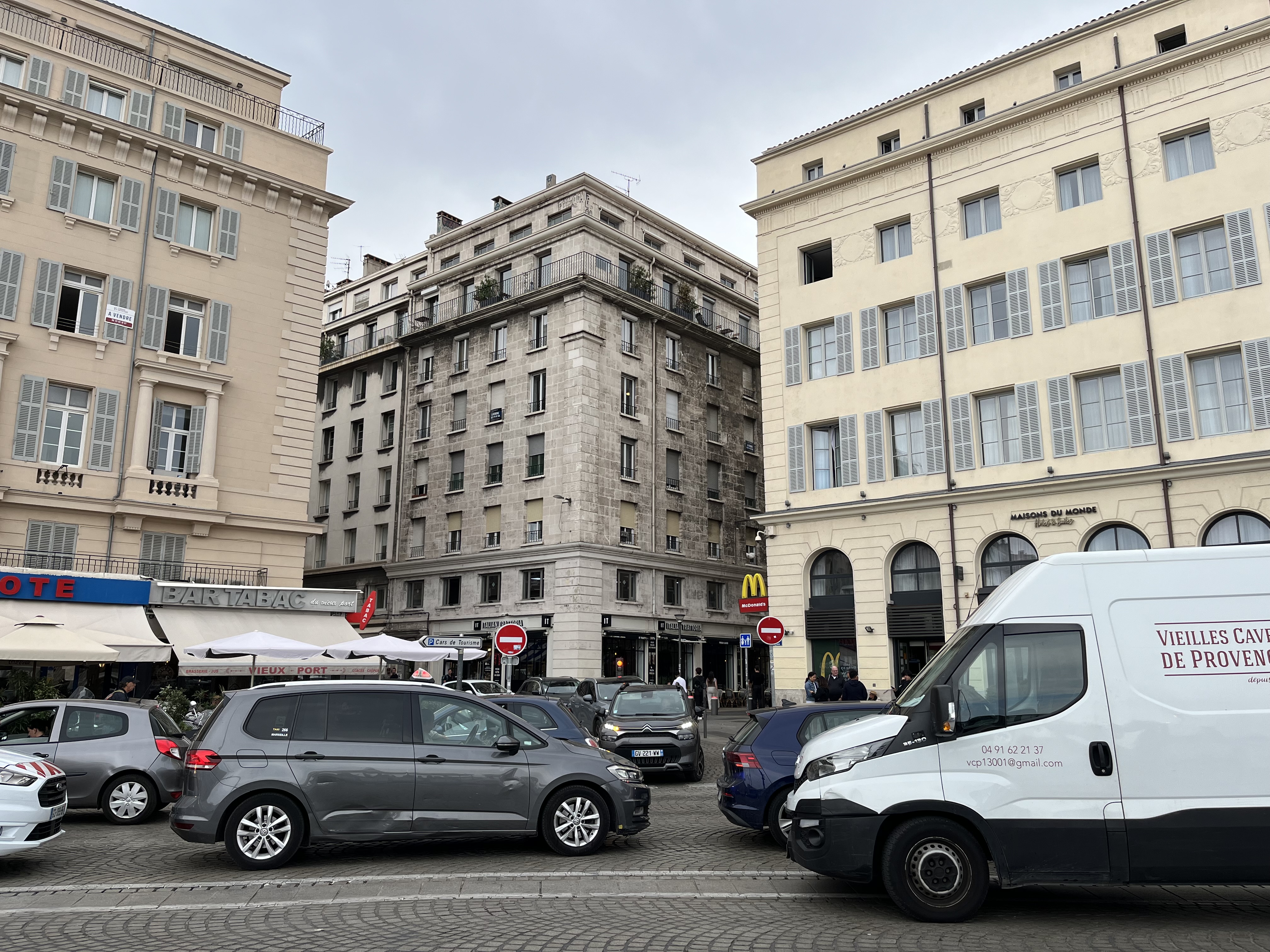
The trolleytrain (I suppose we shall call it that) trundles along the quay and into the town centre. We walked down half of this yesterday on our way to the soap store, but as the short, sandy apartment blocks are replaced by larger, grandiose buildings that mark the city centre, the crowds and traffic thicken; pretty soon we are caught in a small traffic jam that halts our progress for some time. Turning right, we head along the other side of the quay and rise up into a rocky headland; as we trundle along the seaside avenue, which is for some reason named after John F. Kennedy, the Old Port and the other sights of Marseille disappear, gradually subsumed by nondescript, villas and a few shops that suggest a self-contained community, rather than a three-minute walk from the second-largest city in France.
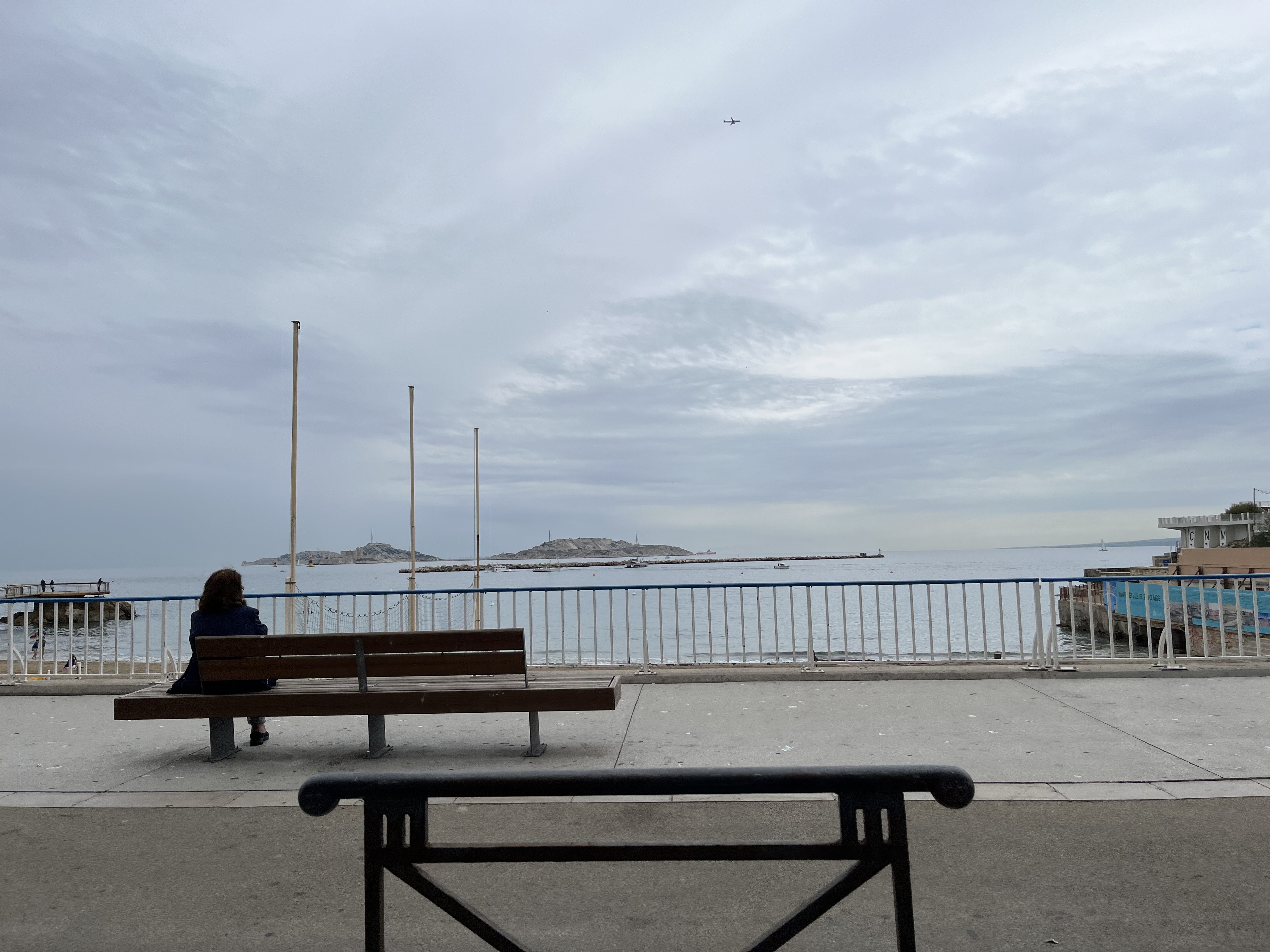
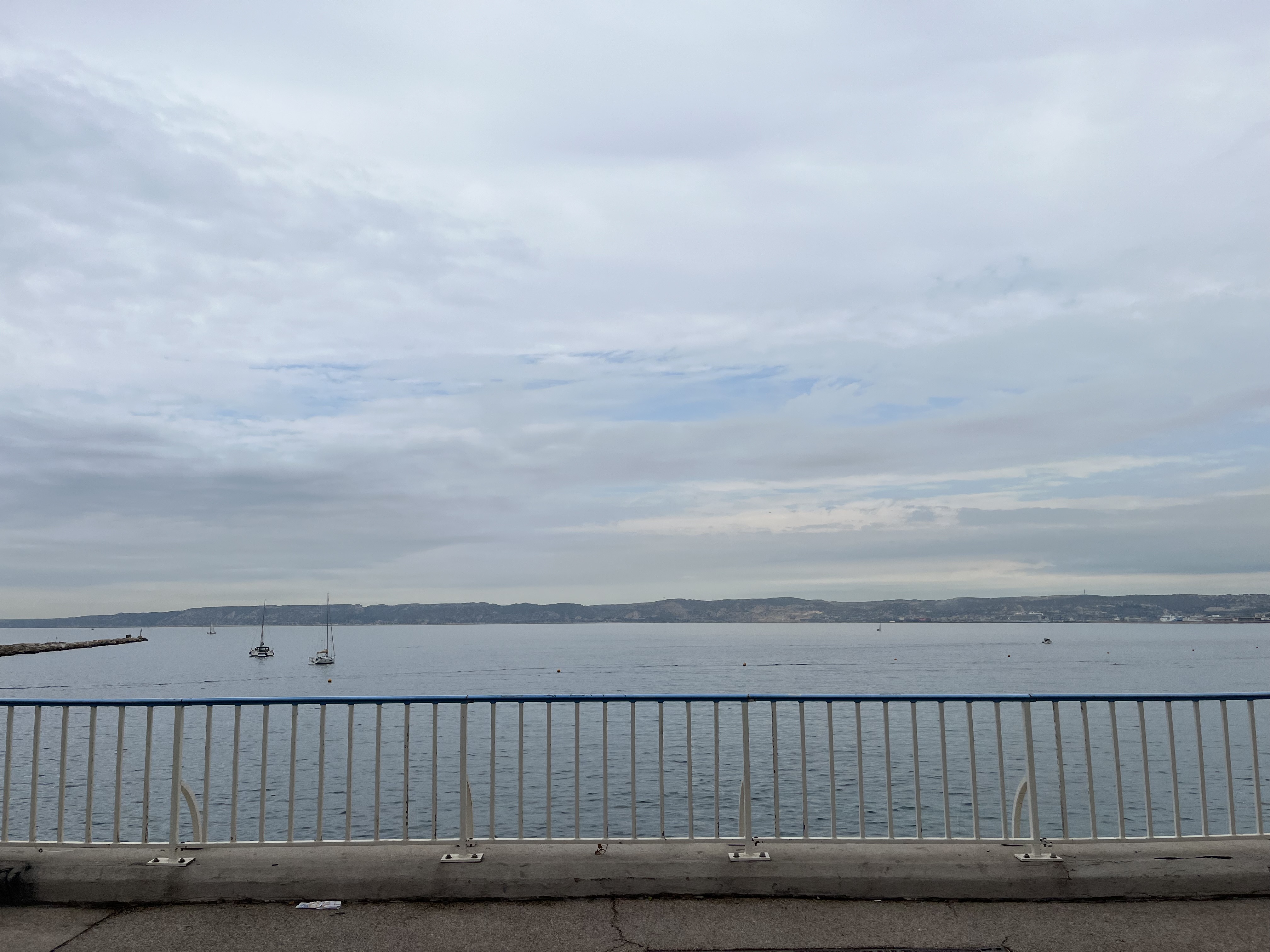
The wind strengthens and whips into our carriage, bringing with it light drizzles that are thankfully only mildly painful against the face. The sea before us is not a pretty sight today: it isn’t angry and foreboding, like it was back in Barcelona, but neither is it welcoming. On a warm sunny day, I suppose this stretch of ocean has its charms; but there is not a wisp of sunlight this morning, just dull overcast skies and an occasional sliver of blue in amongst the grey. As we trundle along the coast and apathetic passers-by glance in our direction, I can’t help but feel we are being paraded as tourists: “look at these people, these gullible people we have managed to convince on our little venture.” As we head further and further away from the town centre, the sea and the scenery become colder and colder, and what joy I might have derived from it has long since dissipated — I just want it to be over.
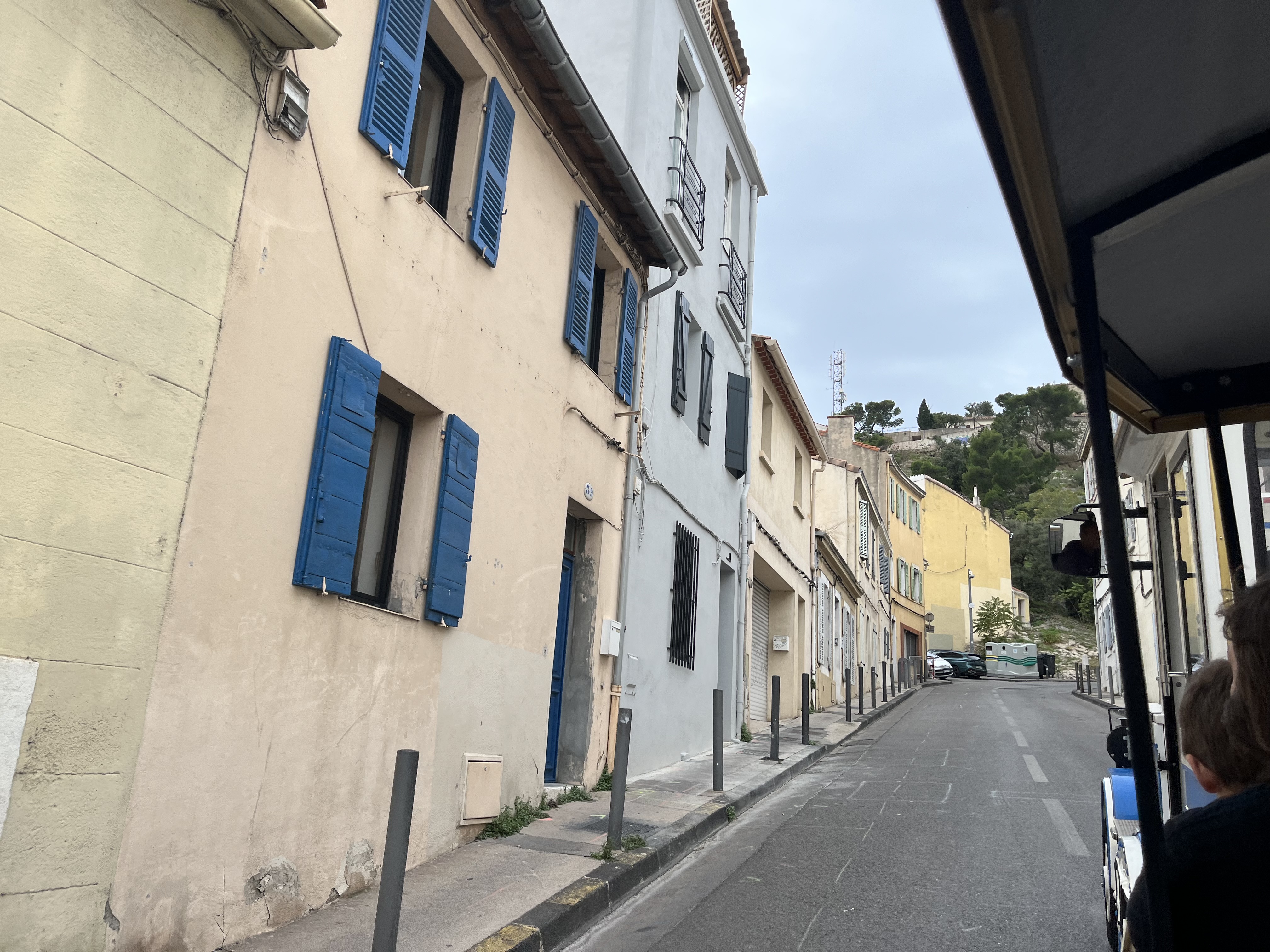
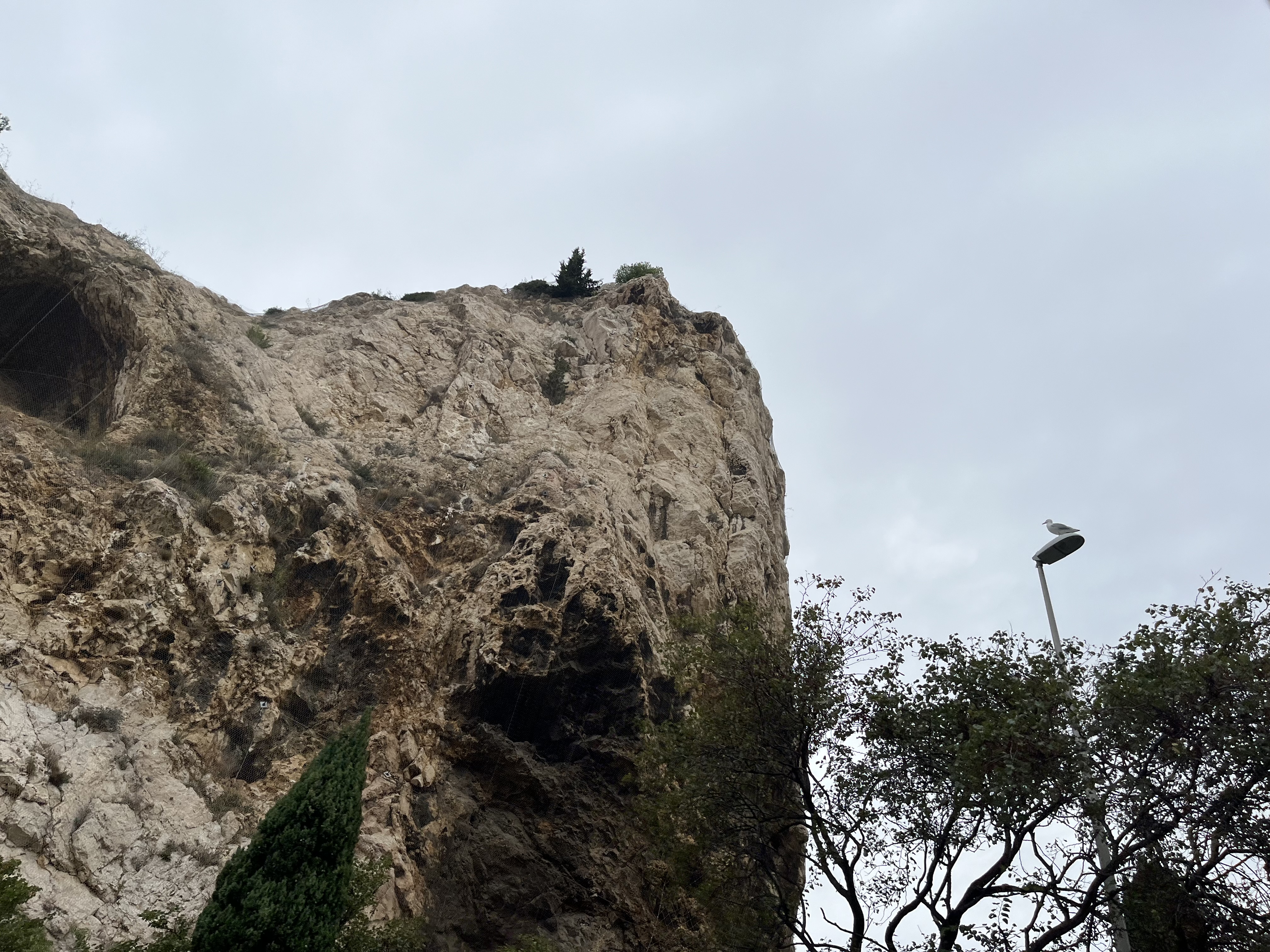
Eventually we leave the seaside and turn up towards the hills, into a whole spaghetti of suburban side streets, some so narrow that I can reach out and touch the bollards if I wanted to. The terrain rises, gently at first, then steeper and steeper till I can imagine myself climbing on a rollercoaster, waiting for a drop that will never come. Behind me the tourists jabber in expectation, craning their heads to see what awaits. We pass a few travellers who are braving the walk, their backpacks slung across their back while they breathe heavily uphill; yet only now are we entering the steepest part of our ascent, where even the buses with their powerful engines are turning back. Higher and higher we go, and now through gaps in the trees I can see Marseille again, the rooftops and the sea, all laid out in a sprawl. Then with a final lurch, we slide into a carpark, turn around, and come to a halt under the Basilique, gravity still pulling heavily on our faces.
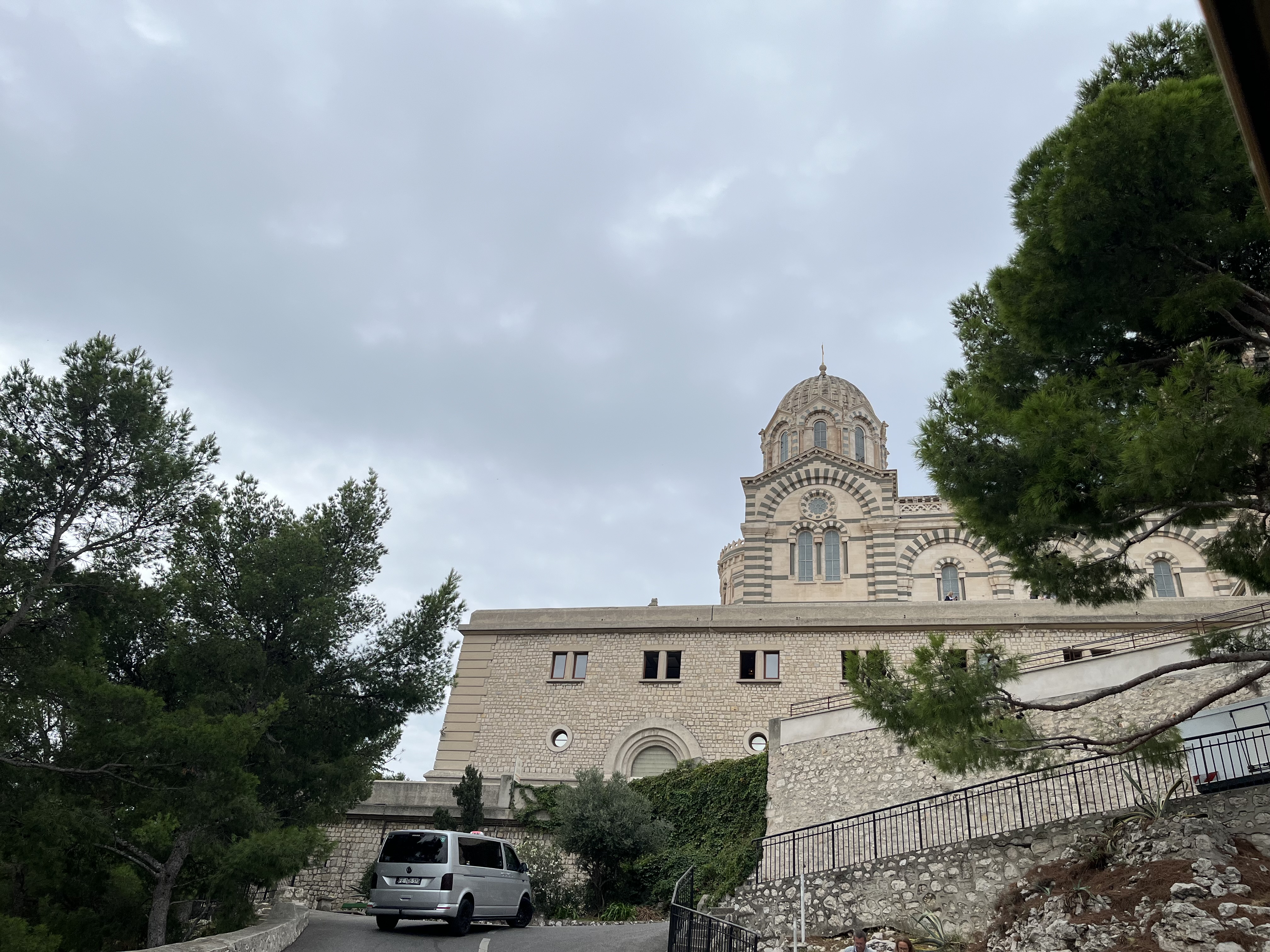
Although Marseille Cathedral is the seat of the Catholic Church in Marseille, it is its rival, high up on a hill overlooking the ports, that has proved the more captivating attraction. Truth be told, the cathedral and the basilique seem made to be complete opposites: where the Cathedral is understated and well-kept, Notre-Dame de la Garde is ostentatious but faded; where the Cathedral feels accessible and welcoming, the basilique hides itself away on top of a mountain. But the biggest contrast between the two comes from the sense of space: sitting on the coast of the Mediterranean, the cathedral felt spacious and open to all, a place to wander and meditate at leisure. By contrast, entrance to the basilique is gained through fighting your way up a narrow stairway with 500 tourists, and then squeezing into a cramped lift with about 500 other tourists.
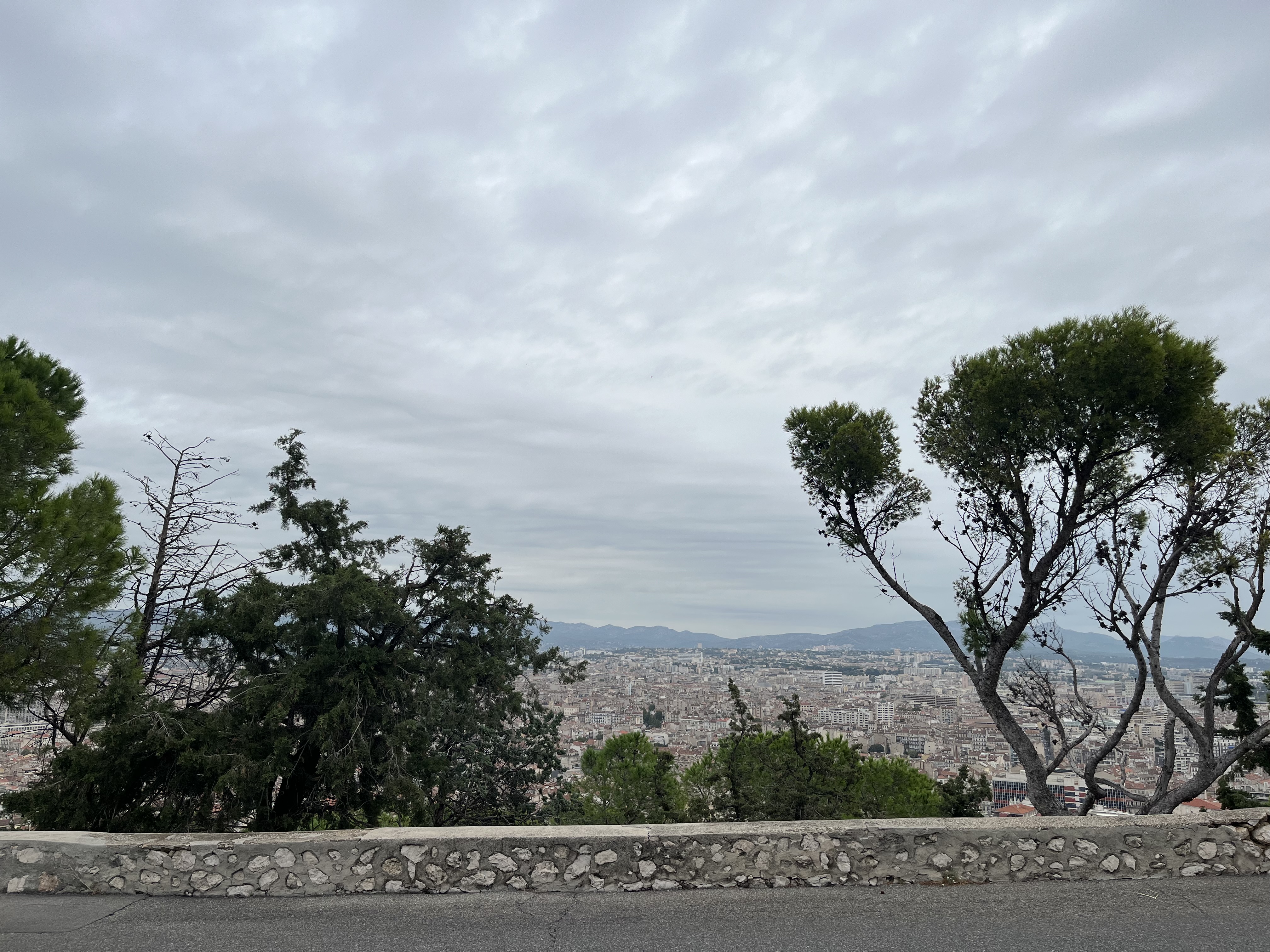
Only when you reach the top of the lift do you exit onto a wide-open area, and like so many wide-open spaces I’ve found on this trip, it is astonishing. The sky is still grey and dreary, but below us stretches Marseille, all the way to the horizon and beyond. I’ve already described different parts of it since we arrived, but now that we have it all underneath our eyes, it’s so much more dramatic: the new here jostling with the old, red tiles cramming up against white concrete and olive-green trees. We’ve climbed so high that our range is genuinely impressive: I can see past the roofs, past the coastline, past the Mediterranean itself, all the way to the gentle rise of the Estaque mountains more than 20 kilometres away. It’s a complete stew of nature and humankind, all of it soundtracked by the low thrum of energy from below, rushed up the hill by the unceasing sea wind.
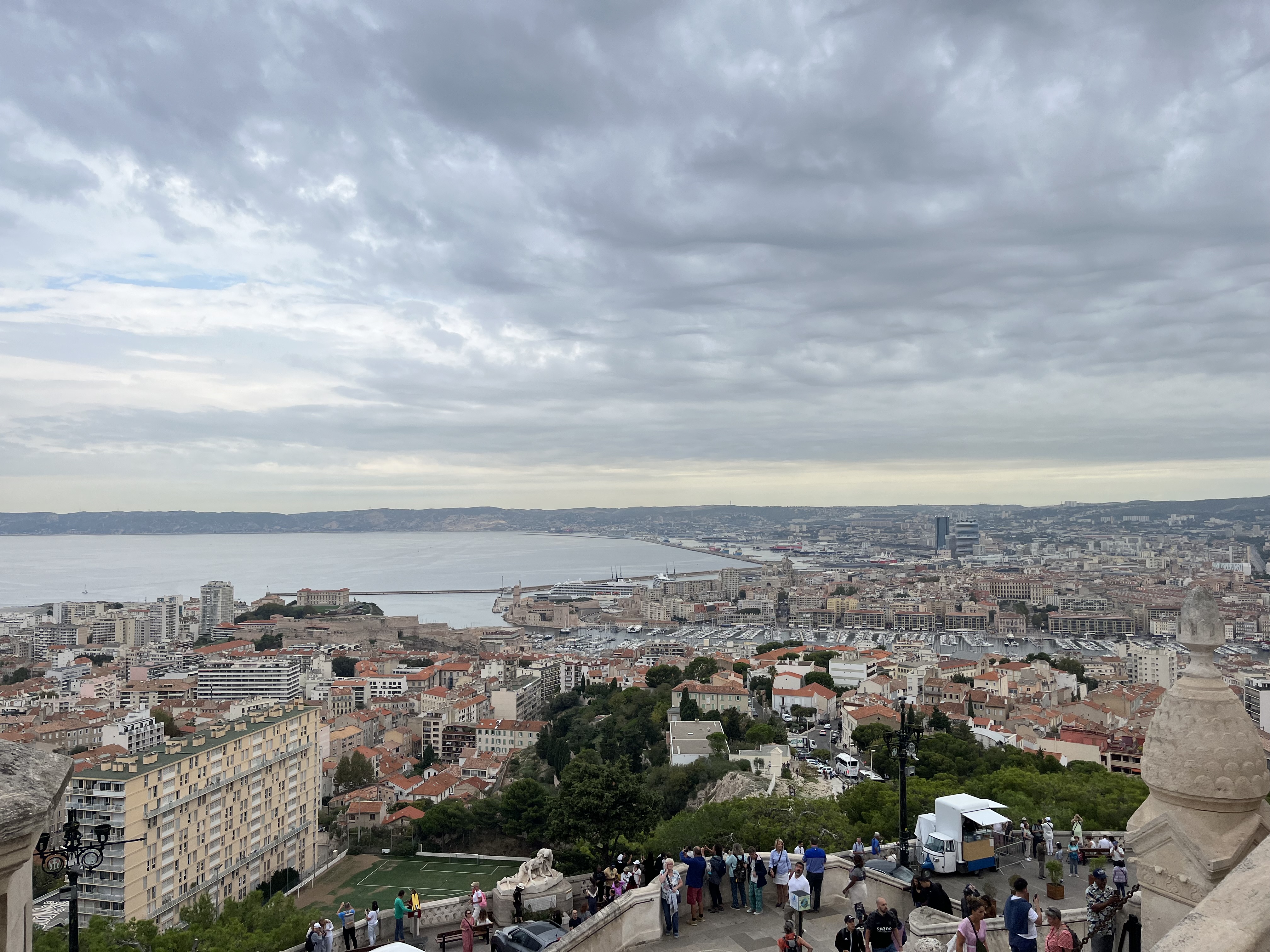
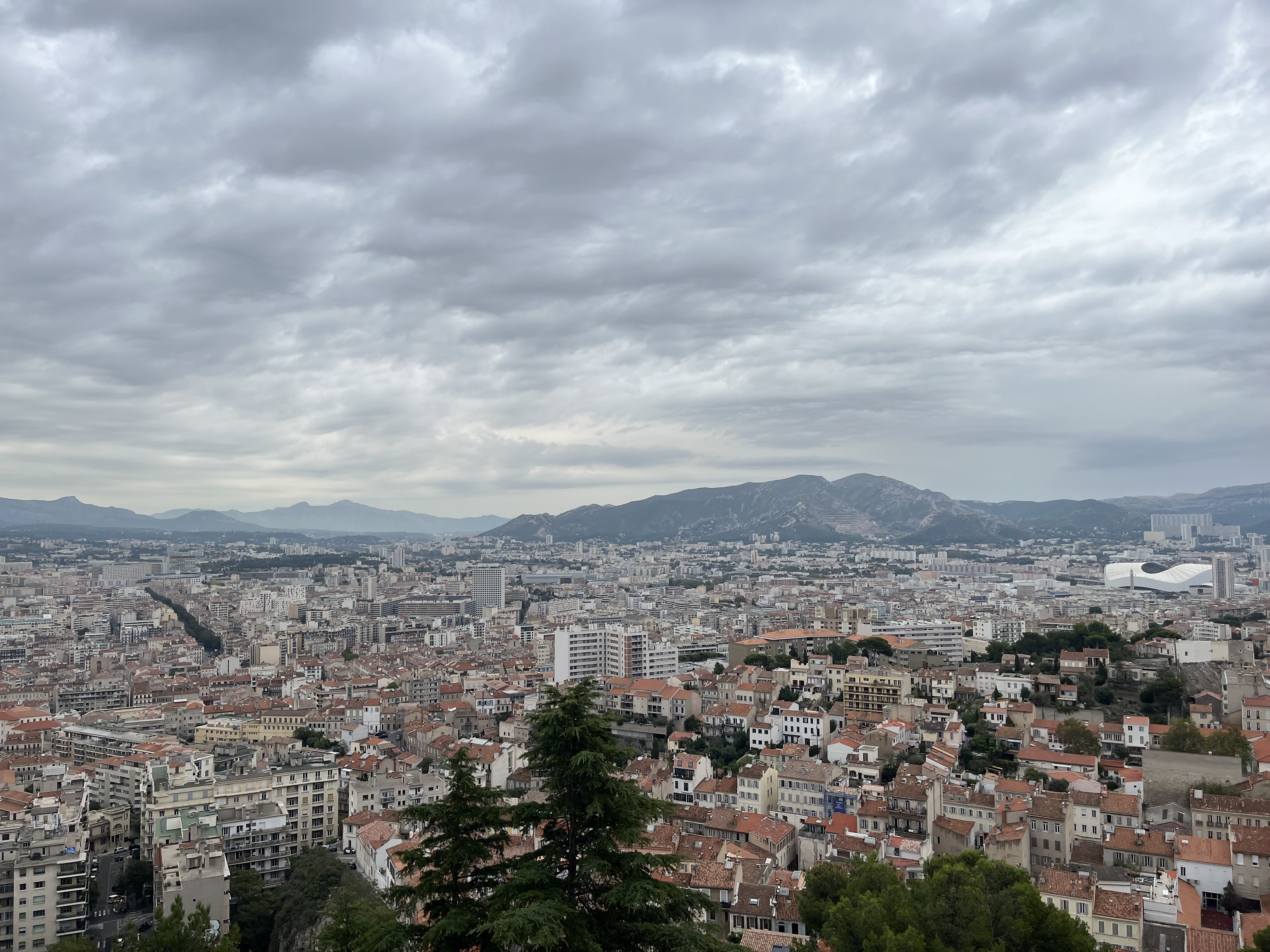
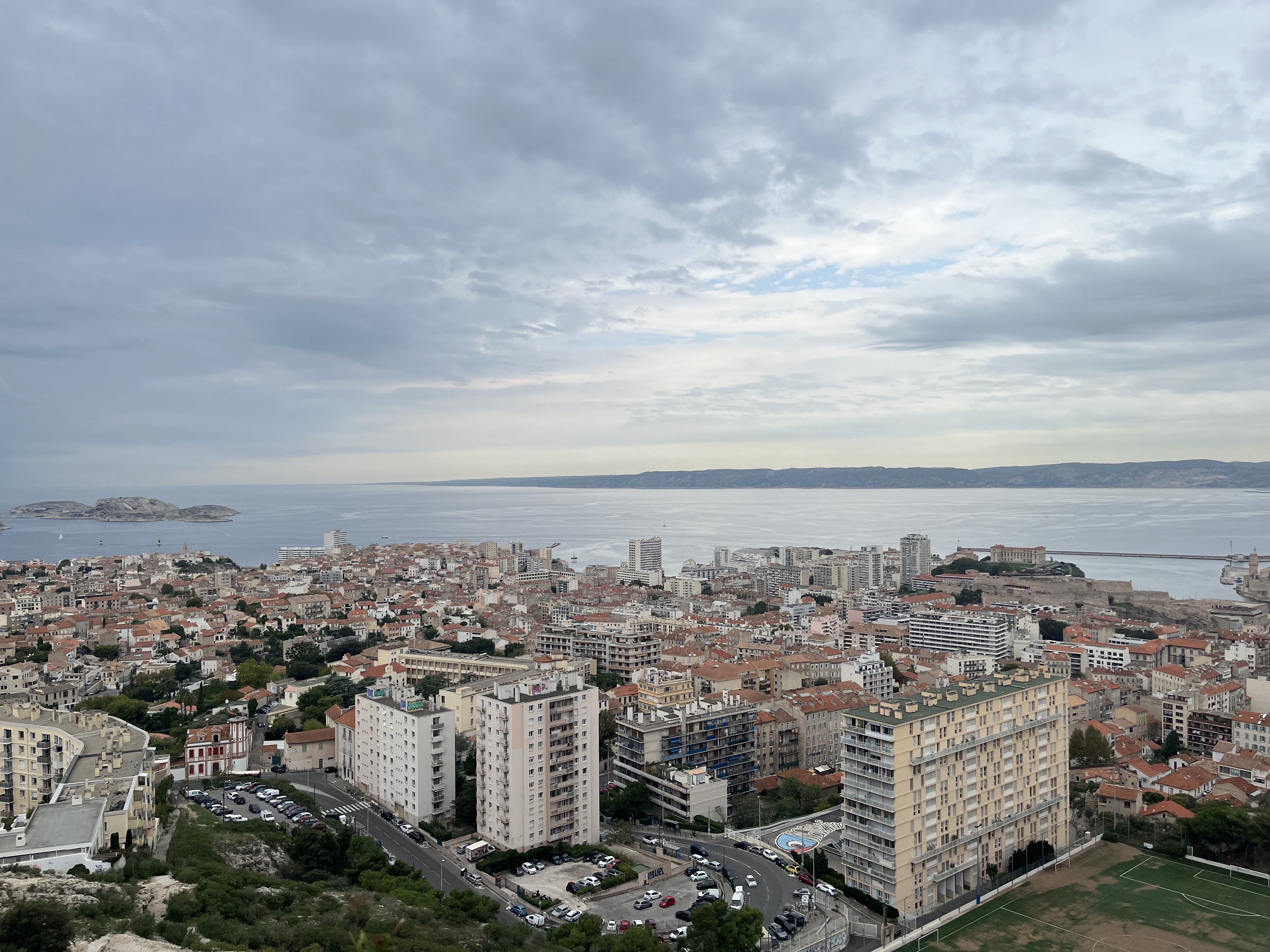
Our plans for the basilique were to head inside the church and just sit for a while, but sadly the noonday service has just started and entrance is strictly restricted to Catholics. The best we can do is the entrance to the underground chapel, a space so poorly lit that every pilgrim there is not much more than a shadow, flickering in between the candles and the sculpted figures. Yet it’s a strangely enchanting place: everybody in here can’t help but speak in hushed tones, and the shades they cast seem, if only for a few elusive moments, to reflect the potency, the mystery, of faith itself.
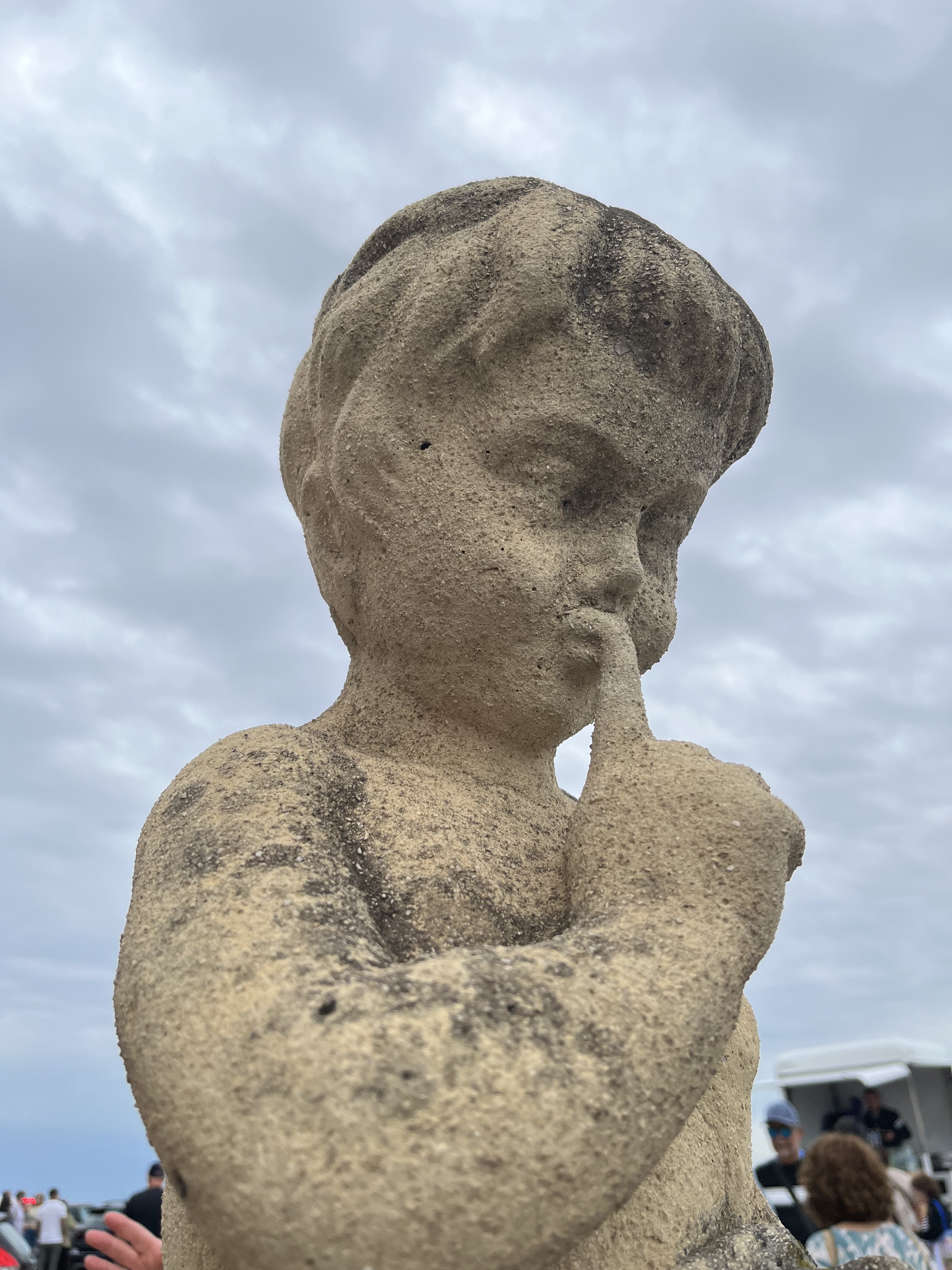
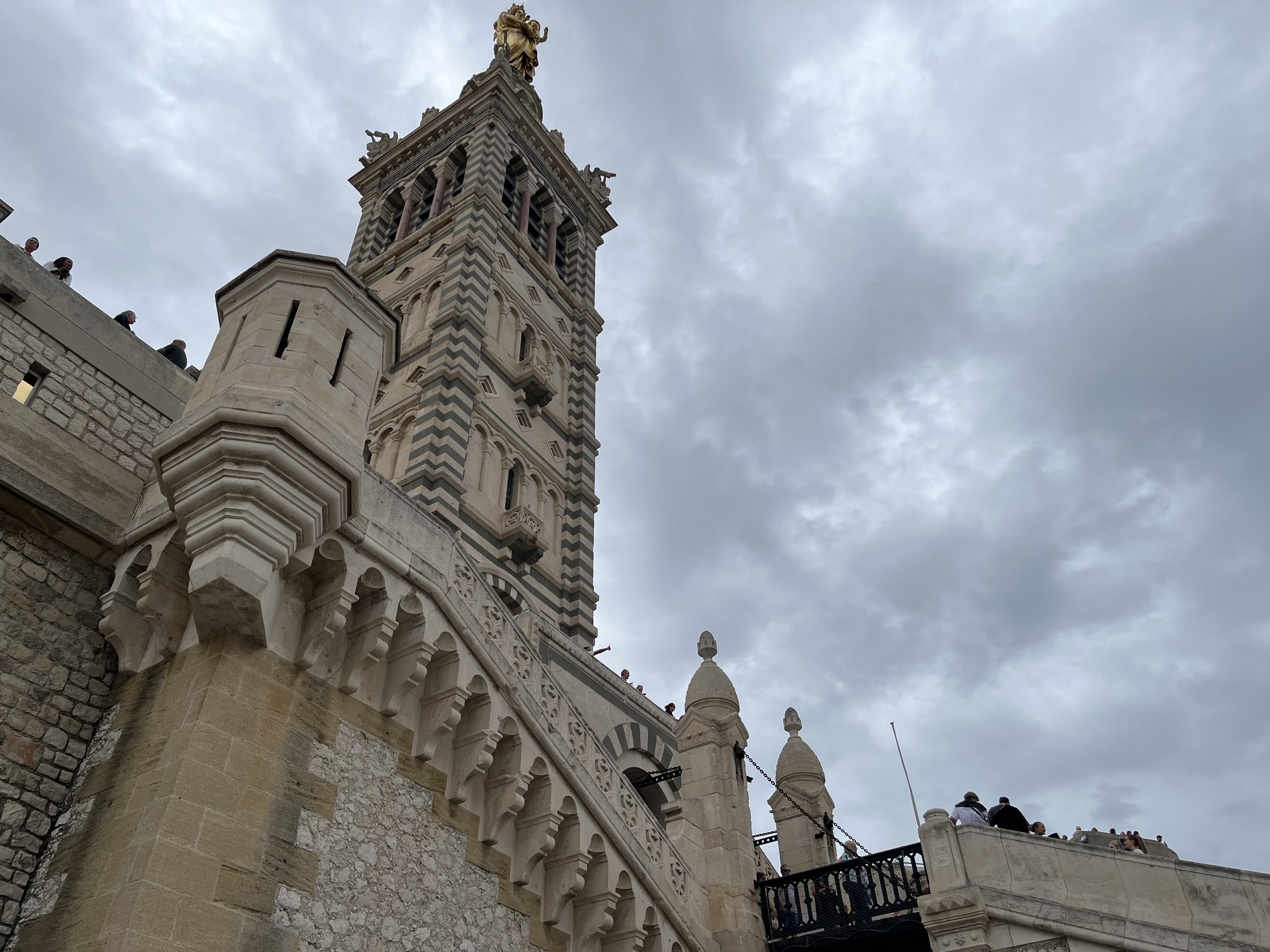
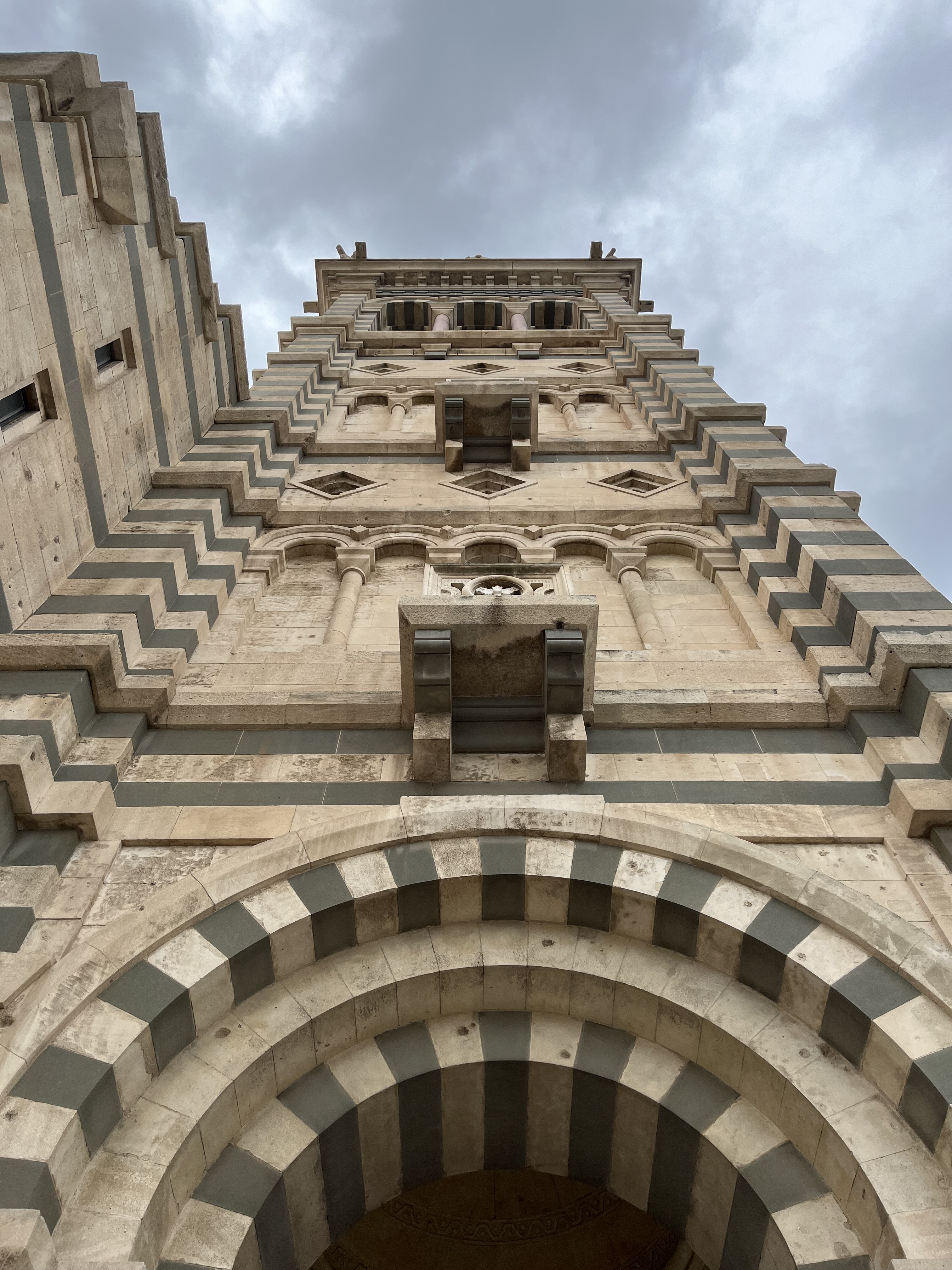
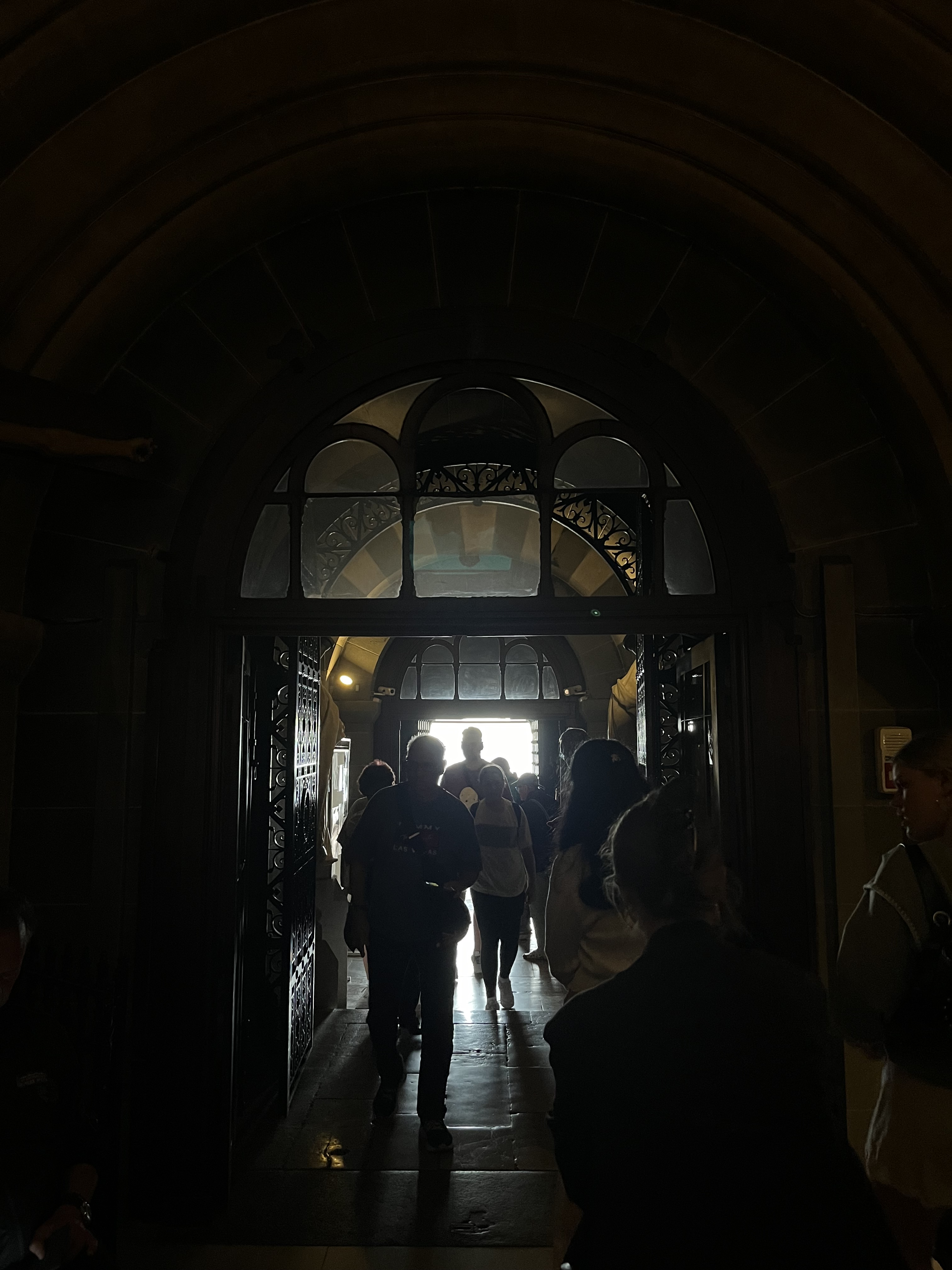
After that there’s nothing to do but head back through the unceasing mob of pilgrims, and down to the trolleytrain station. As we traverse the steps, past the cheeky cherubs on the banisters and the endless visitors stopping to take pictures, my shins begin to sag, utterly worn out by all the jostling and the people that overwhelm my agoraphobic, autistic mind. Get on the trolleytrain near the back and find myself behind a group of Down syndrome students on their day out; they clap and groan excitedly as the vehicle swings out of the carpark, their boundless enthusiasm overlapping with one another. I imagine that their chaperones must be even more exhausted.
The way down turns out to be much quicker: we turn a corner, go downhill on a very steep slope for five minutes, and there’s the Old Port again, looking even gloomier than it was an hour ago. By the time we step back onto the Marseille quayside, the clouds have regained their angry look, uttering ominous rumblings that match those now emanating from my stomach. The rain finally begins to fall in earnest as we step back onto the Quai du Port, and despite swift deployment of our umbrellas it falls down thick and fast, water bouncing off the pavement onto our trousers and shoes, seeping through the cracks, leeching into our socks.
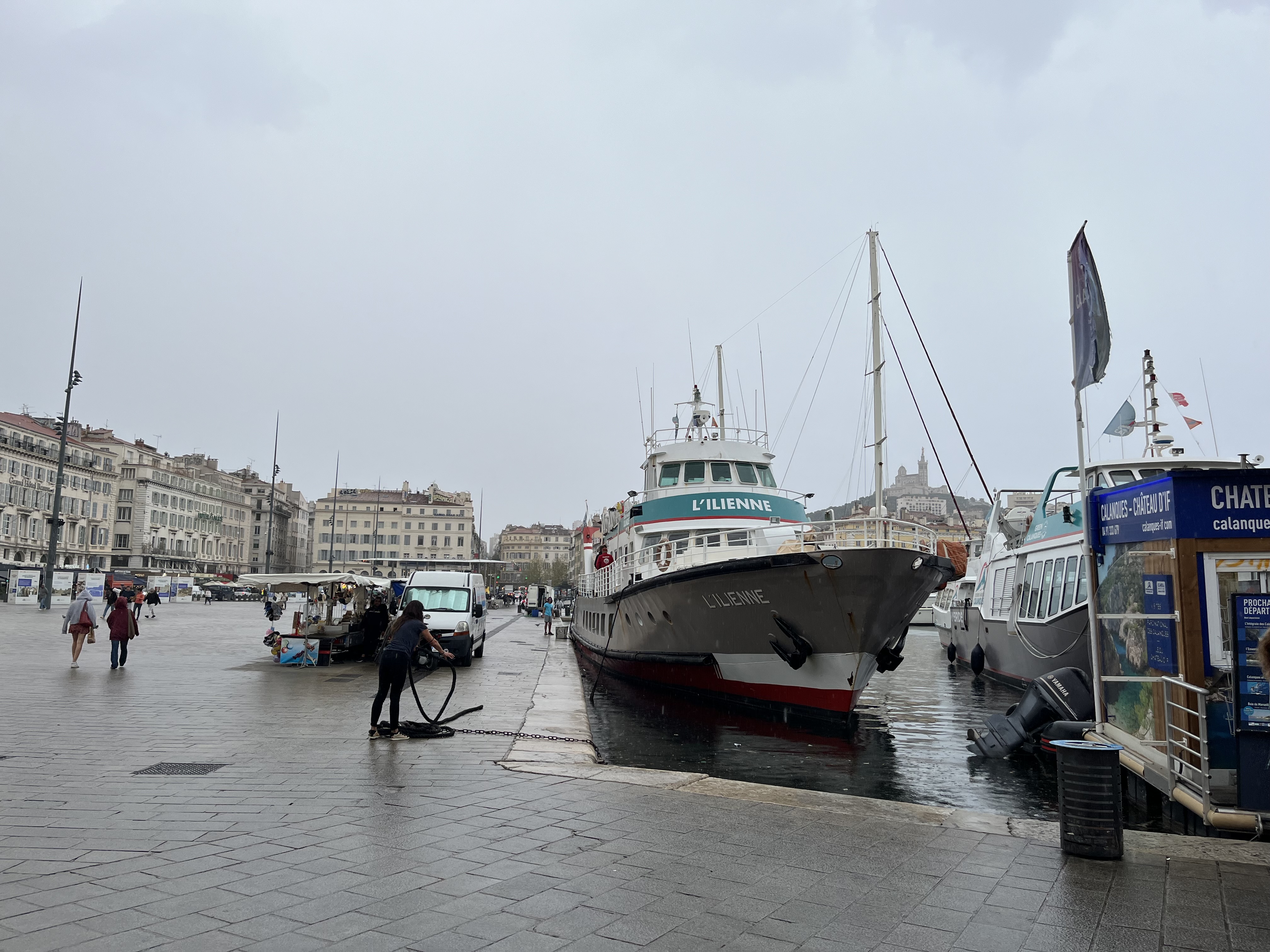
I urge the others to walk quickly, not just because it’s way past lunchtime and I’m both tired and hungry, but because we have an appointment to meet. Although we have tasted many a Provençal delight, that holy grail that is the bouillabaisse has remained stubbornly out of reach; determined to remedy this before we leave the fish soup’s spiritual home, I have booked ourselves lunch at a place on the other side of the harbour. But whereas Côté Rue was an intimate establishment, barely held together with and the proprietor’s charisma, La Daurade is a marbled, airy restaurant with staff in suits and shirts. No such thing as outdoor seating here; once we step foot inside that restaurant, we are calmly steered by the waiters towards a palatial room, with chandeliers and gold ornaments hanging from the ceiling. As I sit down at the massive table at its centre, I cast my eyes about this space, and realise to my astonishment (and slight terror) that we are the only occupant.
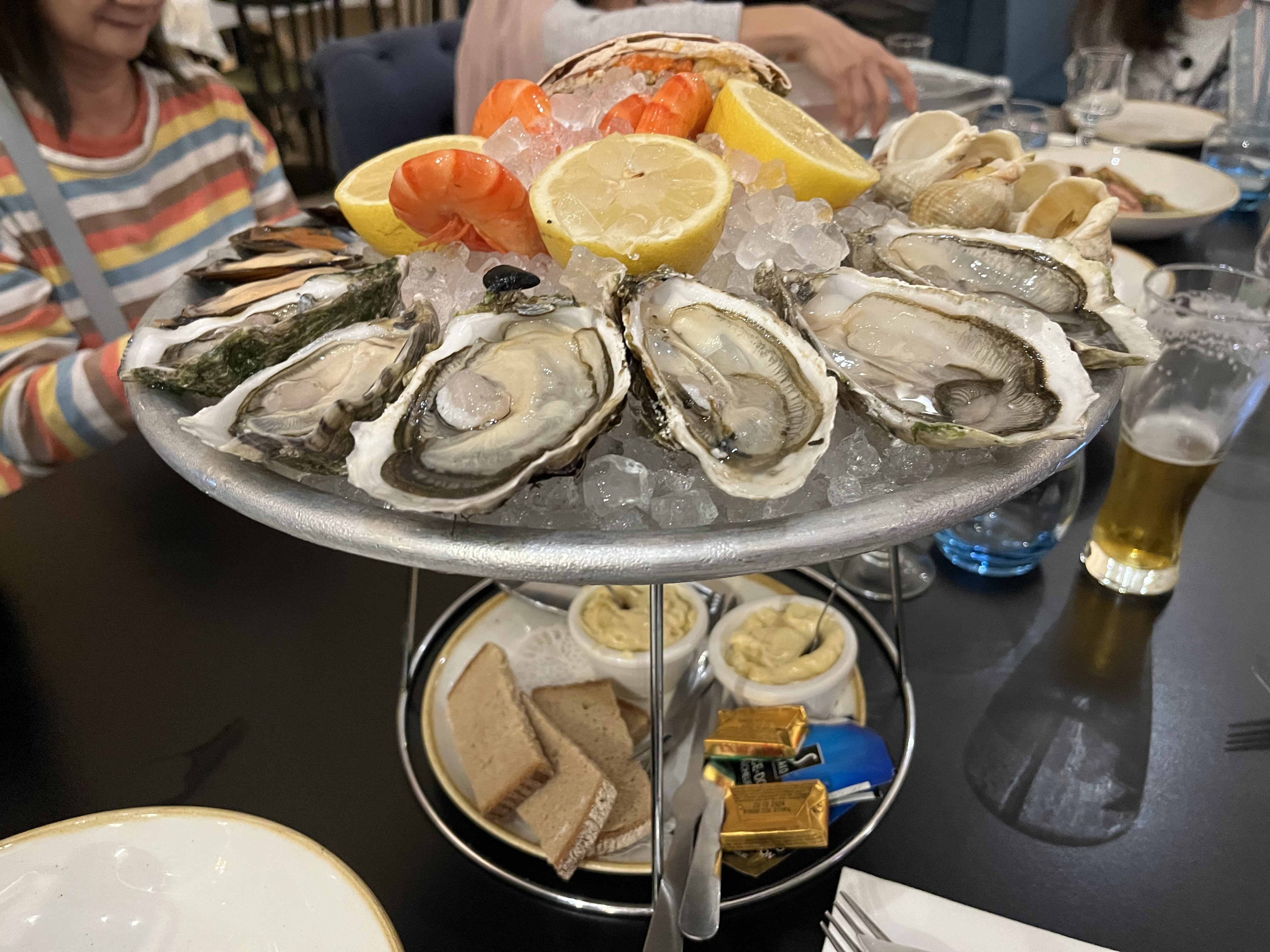
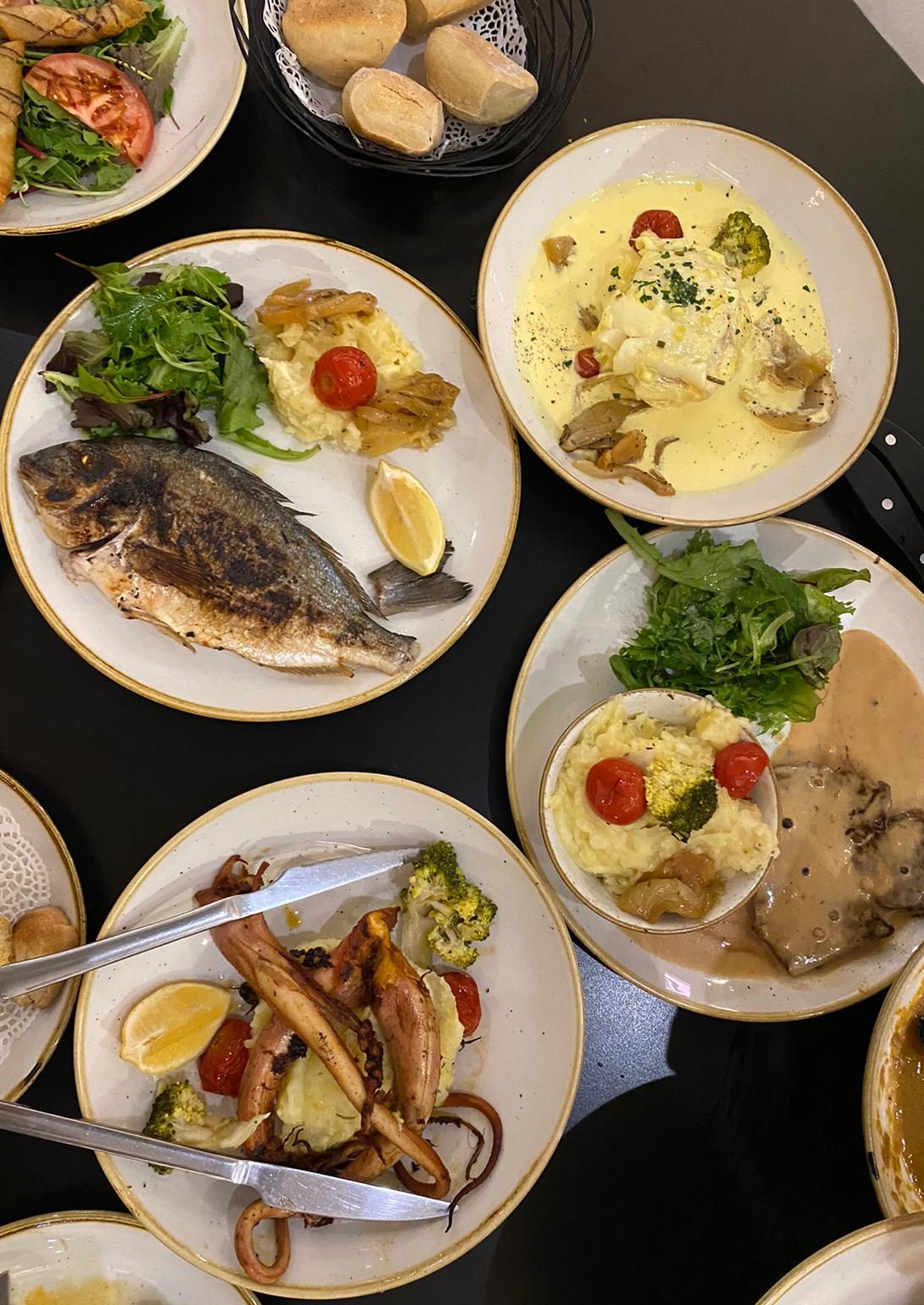
In the midst of our sitting down I am handed a menu and told by my family to order with haste, but such is the flurry of activity that I never quite figure out what I’ve ordered. This, however, is still France, so what eventually lands on our table is uniformly appealing to both eyes and palate: a grilled sea bream, a burrata salad, squid slathered in an aioli sauce, oysters fresh from the sea down the street… the list goes on.
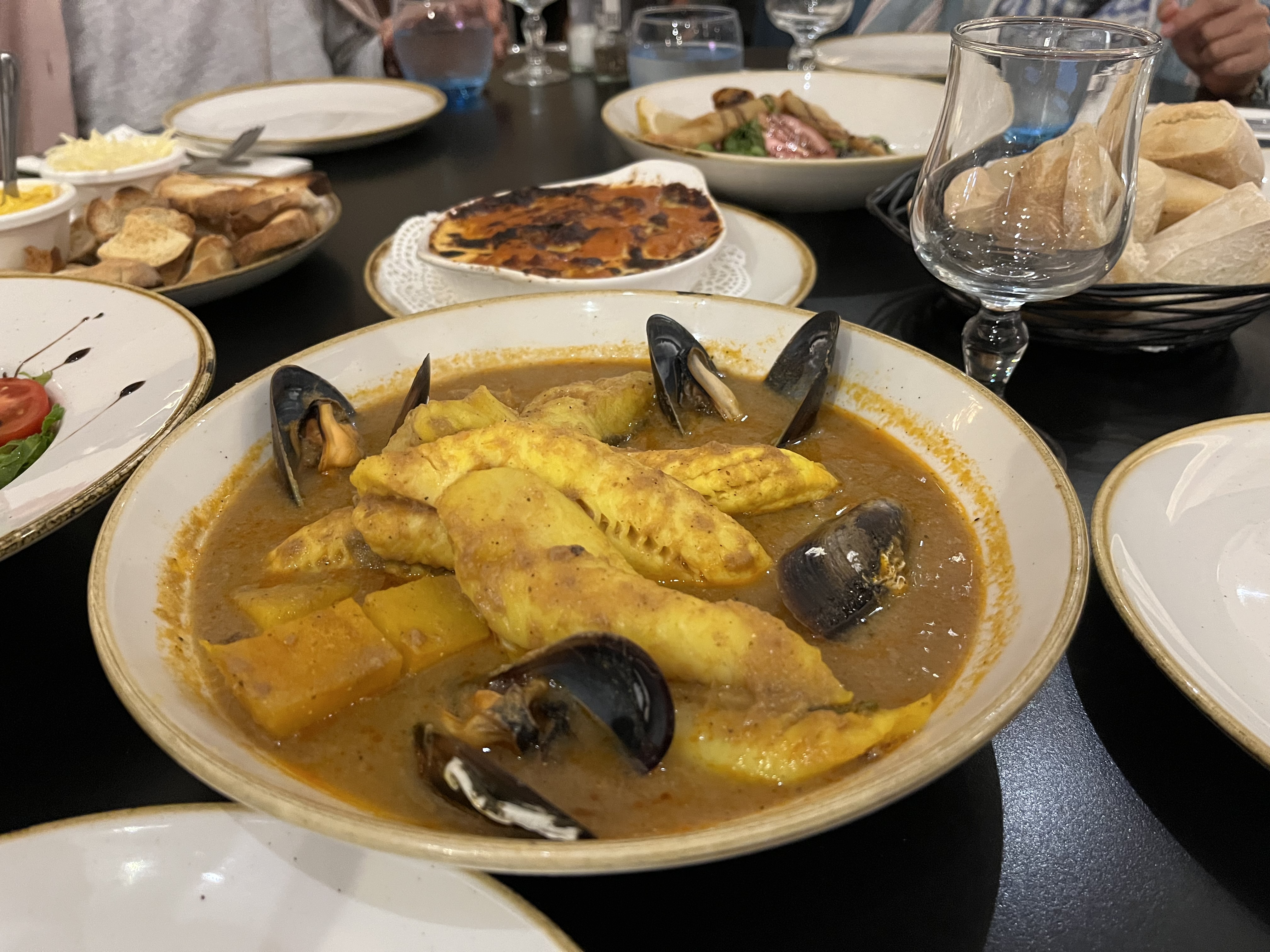
But for me, all this is mere accompaniment to the item in the middle of the table, a shallow tureen filled with a dark yellow soup. Could it be? I dip my spoon in while everyone’s attention is still on the oysters, and take a long, hard sip. The extremely strong broth, infused with the flavour of the stonefish and a whole lot of salt, hits me at once: at long last, we have a bouillabaisse! It’s not as thick as I thought it might be (I was told that people actually get diarrhoea from underestimating how rich it is) but it’s good enough; the stonefish that sits guilelessly in the soup has soaked up so much liquid that it flakes apart on contact, making it a wonderful textural complement, and though the mussels are a little rubbery, it doesn’t feel at all out of place in the bouillabaisse. Leave some for the others to try, but for some reason I’m the only one who takes more than a sip.
We step out into the streets just as the quayside establishments begin closing up for their siestas. It’s raining again, and just as we rush under the mirrored canopy by the Old Port the rain becomes a downpour, clattering on the polished metal above us and turning the port into a hazy blur. The monitors in front of us flash, signalling the imminent departure of the ferry to the Château d’If, the notorious prison featured in Alexandre Dumas’ seminal work The Count of Monte Cristo. Not particularly fond of jailbreaking, however, we decide to leave the port altogether and head somewhere even more diverting — but to do that, we need to first enter into a filthy, stinking warren stuffed full of other people. Even worse, it’s the Marseille Metro.
A clarification. Readers of this blog may be vaguely aware of my metrophilic tendencies: if a city has a rail mass transit system, then rest assured I will spend roughly 700 paragraphs tirelessly gushing about its properties and aesthetic gems. Yet I cannot bring myself to do this for the Marseille Metro, easily the ugliest, the most neglected, the grossest system I have ever ridden. The stations are horrid: dimly-lit, foul-smelling, and so cramped that they feel claustrophobic. The trains are old, antiquated metal-and-plastic affairs that judder and swerve their way from station to station. Every time it accelerates, I am thrown out of my seat; every time it bounces, which is often, I fear for my life, for what feels like the imminent disintegration of the entire carriage.
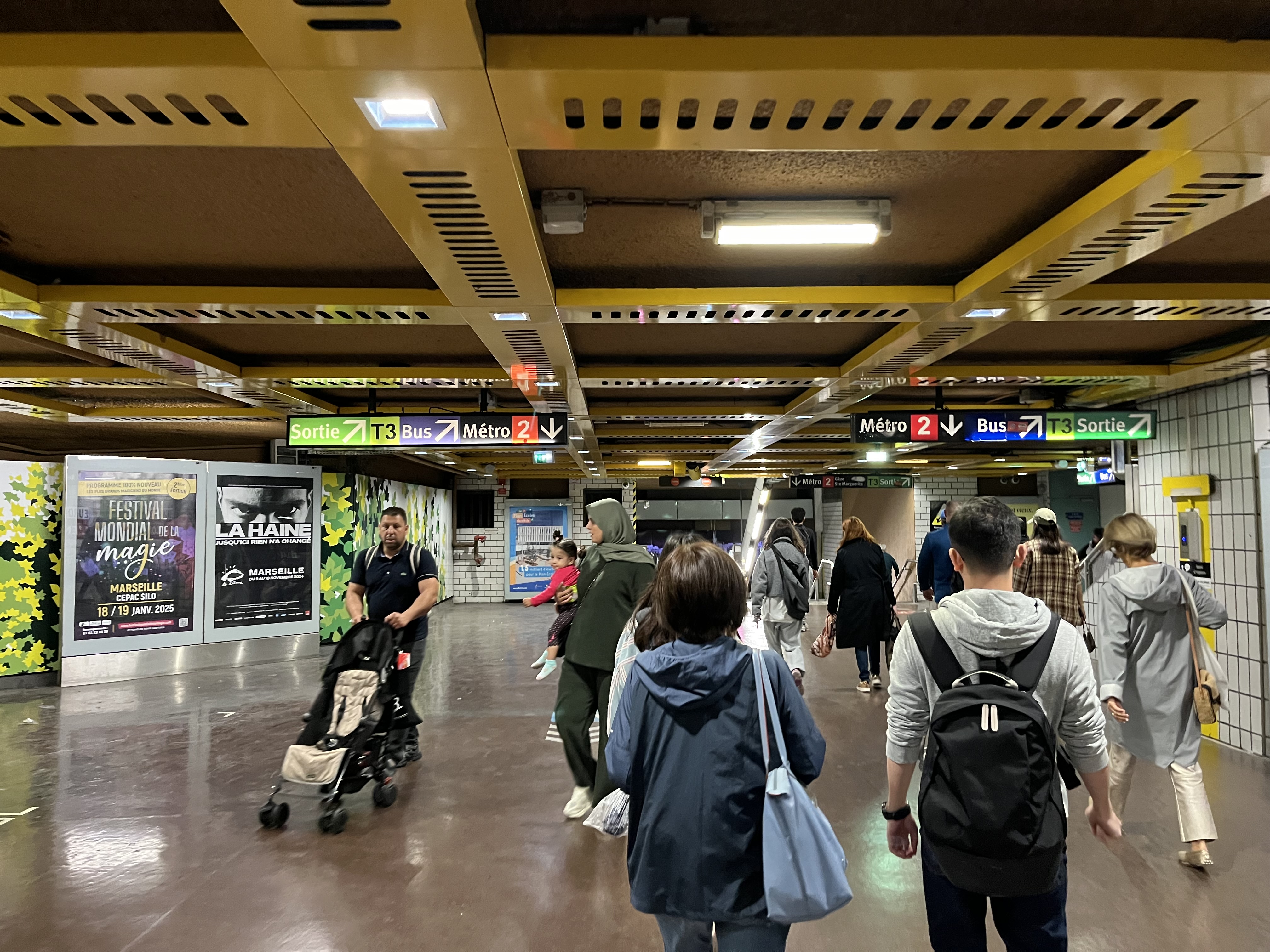
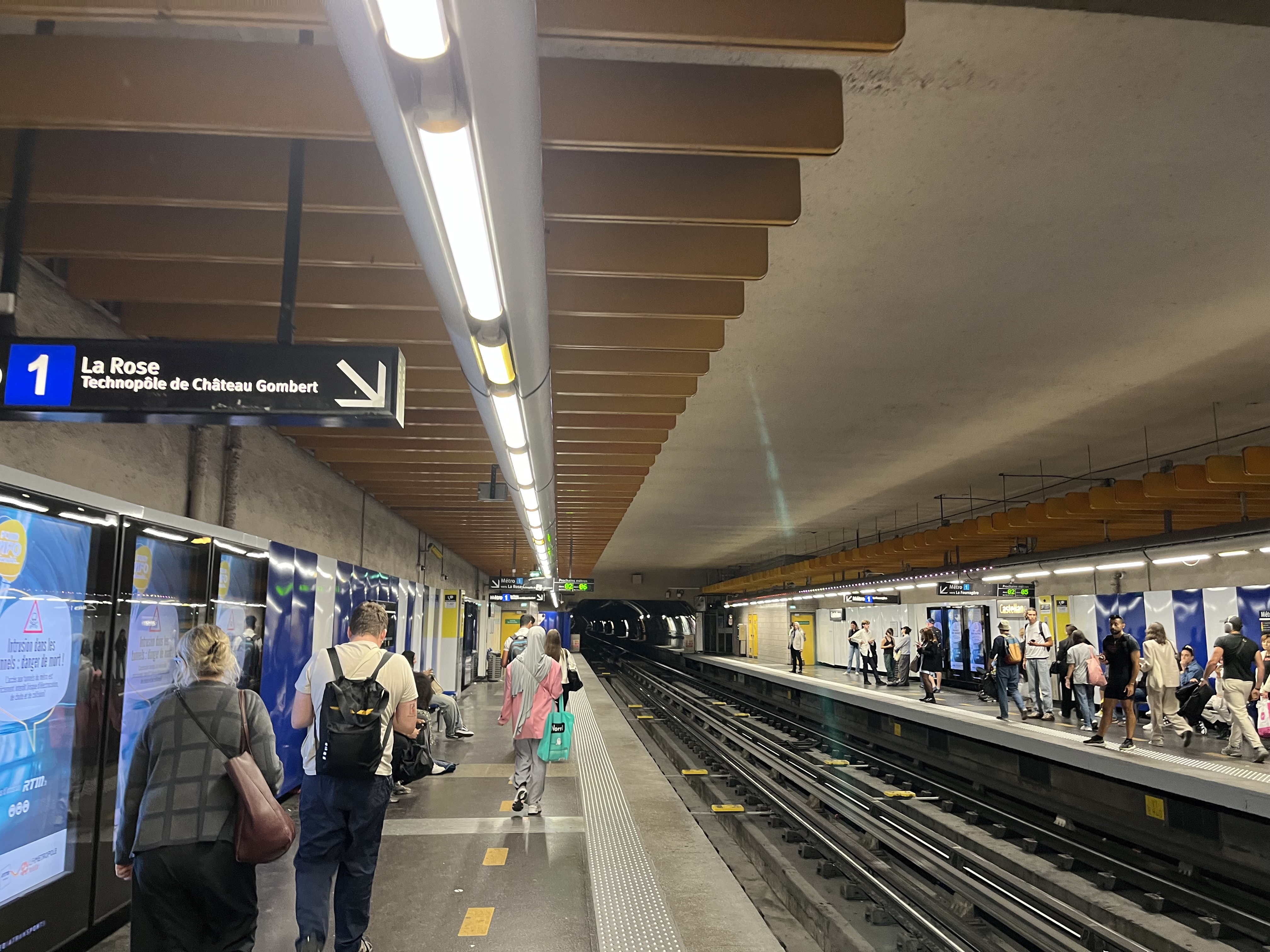
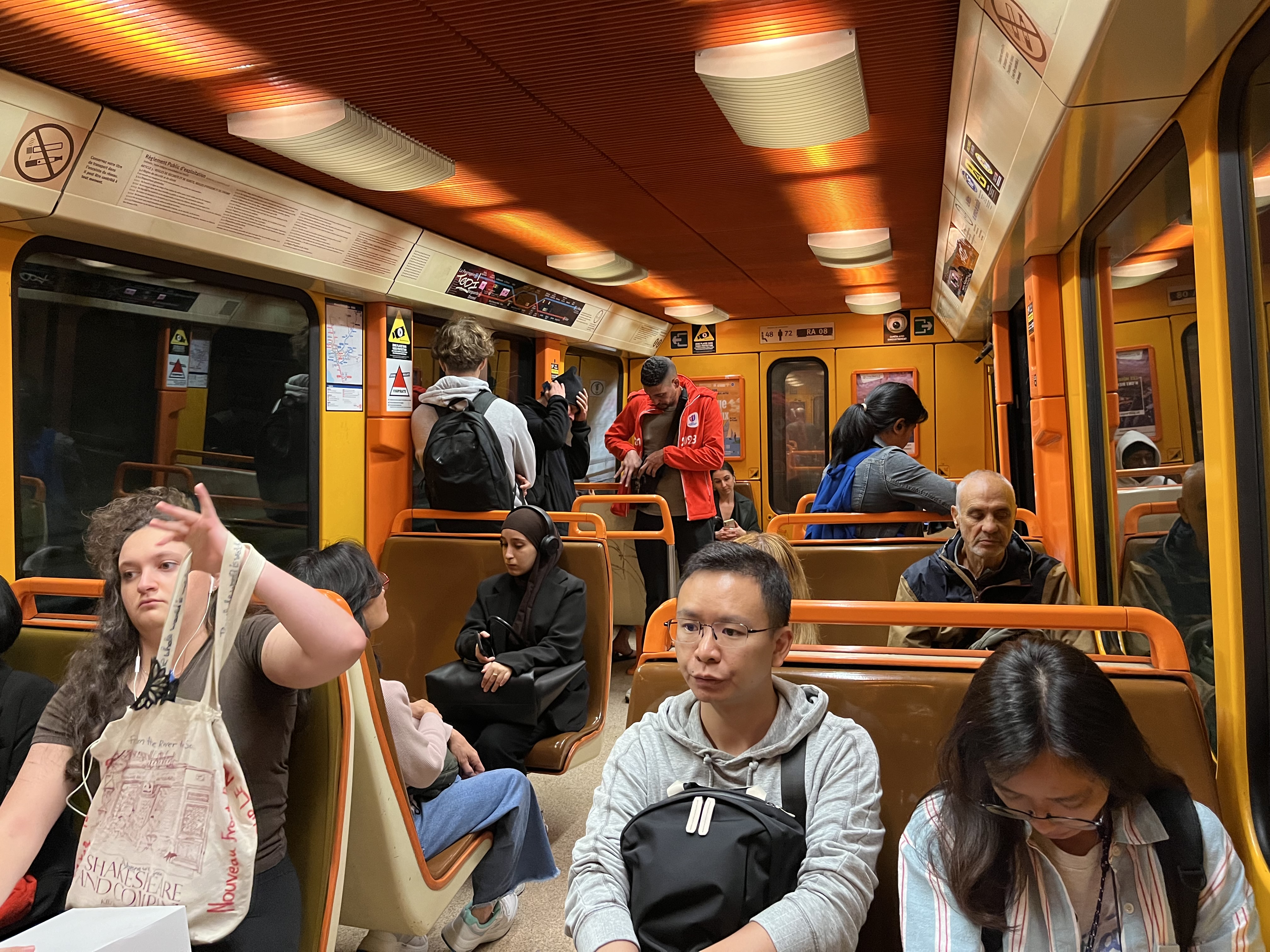
But worst of all is the rubbish. It is simply everywhere: on the stairs, on the tracks, on the seats of the carriages. On the bins. Around the bins. FLOWING OUT of the bins. Every other locational preposition relating to the bins. Such is the volume of garbage in these subterranean haunts that I half expect to find a mouse scurrying across my path at any moment. How is this right? How is this even allowed? I am aware that I live in a city where cleanliness is practically a religion, but never have I seen such abject levels of disregard for civic upkeep as this place. It’s been more than a year since I rode the Marseille Metro, but my skin still crawls whenever I remember those ten minutes I spent in it. No wonder some people are repulsed by the idea of public transport.
Emerge from the depths at Castellane into a completely different day. It can’t have been more than twenty minutes and five kilometres’ distance, yet the downpour at the Old Port already feels a whole world away. Instead, sunlight is pouring on our faces, and a few small puddles on the pavement are the only evidence that it’s rained today. We find ourselves a busy interchanged clogged with cars and lined with buses; it’s only three o’clock, yet already every single vehicle around us is packed to the brim with people, and as I watch a bus pulls out in front of me, its doors barely managing to close against the scrum. I haven’t seen anything this chaotic, this populated, since rush hour in Tokyo.
Which of these are we to take? I can see a gazillion routes here, and the last thing I want is to get on the wrong bus and then find ourselves halfway to Calais. “Cette pour la Cité Radieuse…?” I bewilderedly ask the first bus that looks promising, and quite to my surprise the driver nods and beckons us in. Thank God, there are still seats available on this bus, and we gratefully sink into these just before the rest of Marseille piles onto our vehicle as well.
After a while of passing through some leafy but nondescript streets, the bus drops us off in a suburban stop named, quite simply, “Le Corbusier”. Crossing the street, we enter the grounds of the Cité Radieuse, Marseille’s most famous building. Unusually for such superlatives, it is a block of public housing: designed by modernist architect Le Corbusier and built during the late 1940s, it was the exemplar of his modernist architectural theory of unité d’habitation, where communal living was facilitated through modern bells and whistles coupled with plain, everyday materials. Gone would be the frilly, opulent designs that characterised prewar building styles; here simplicity would take precedence, a “rational” simplicity that was born of bare concrete and minimalistic paintjobs. (Yes, Le Corbusier was Swiss, not French. How did you know?) Above all, the idea was that unsophisticated buildings like these could provide an easy solution to the problems of post-WWII housing, while still looking acceptable to the French eye.
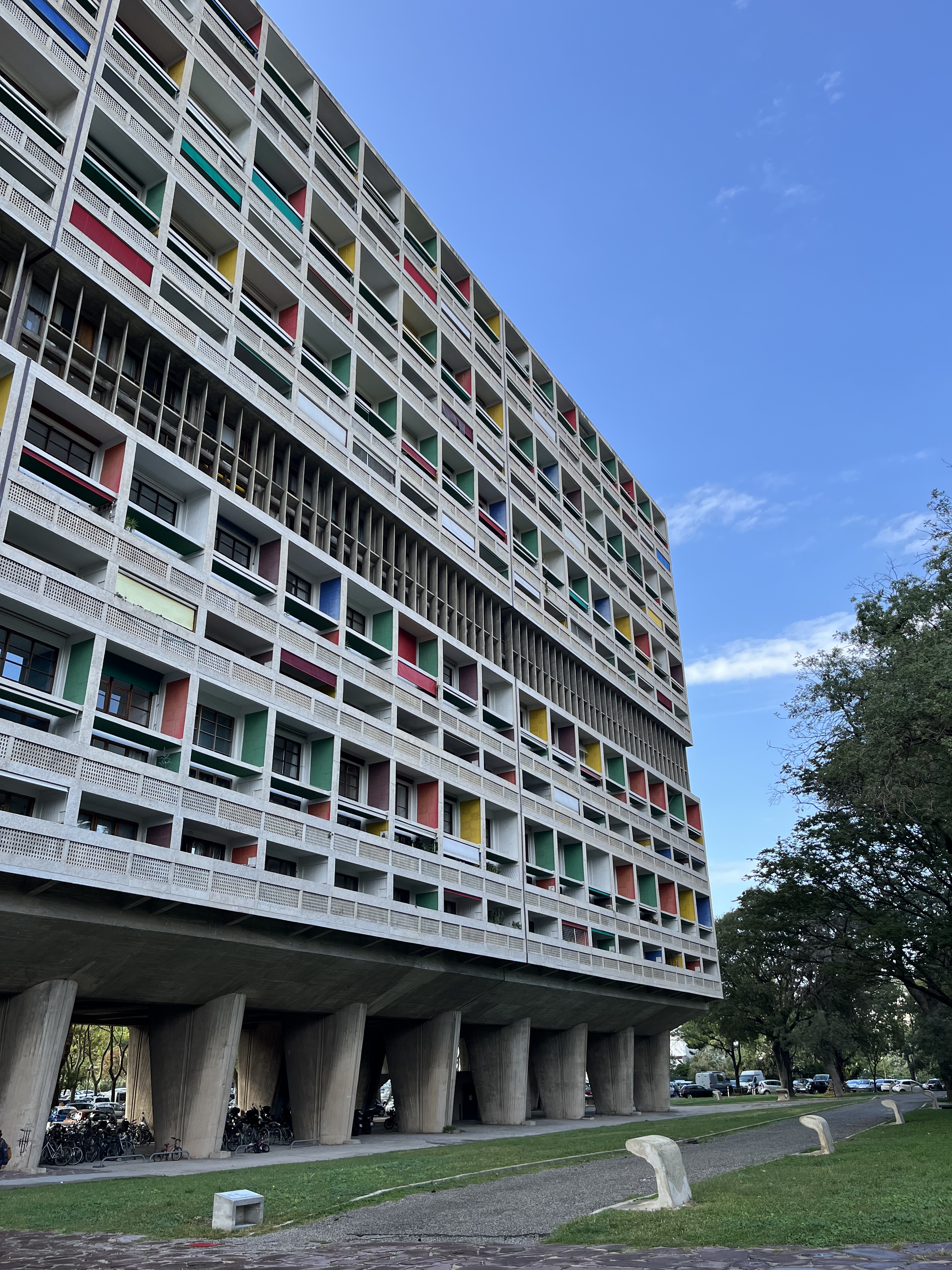
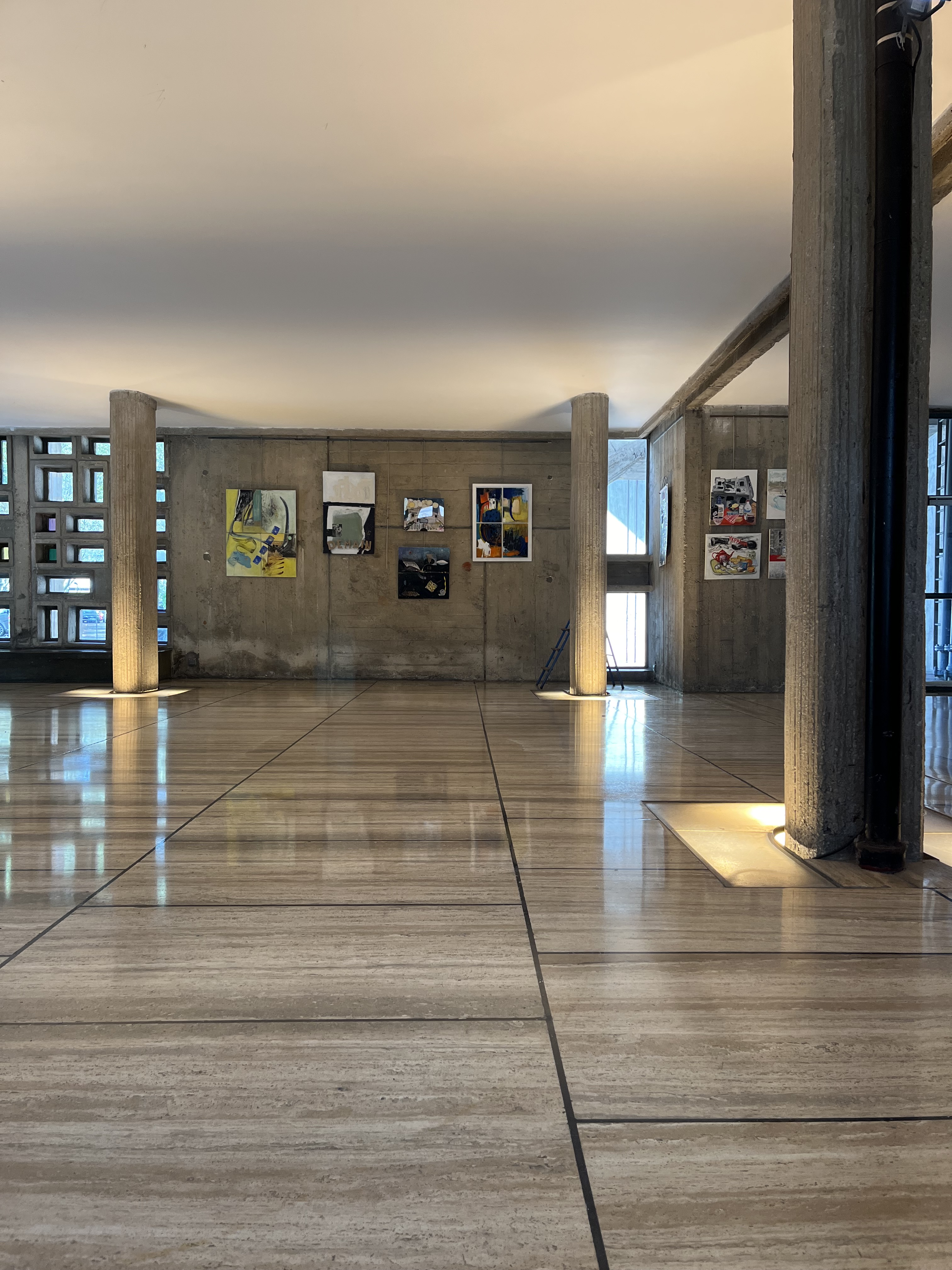
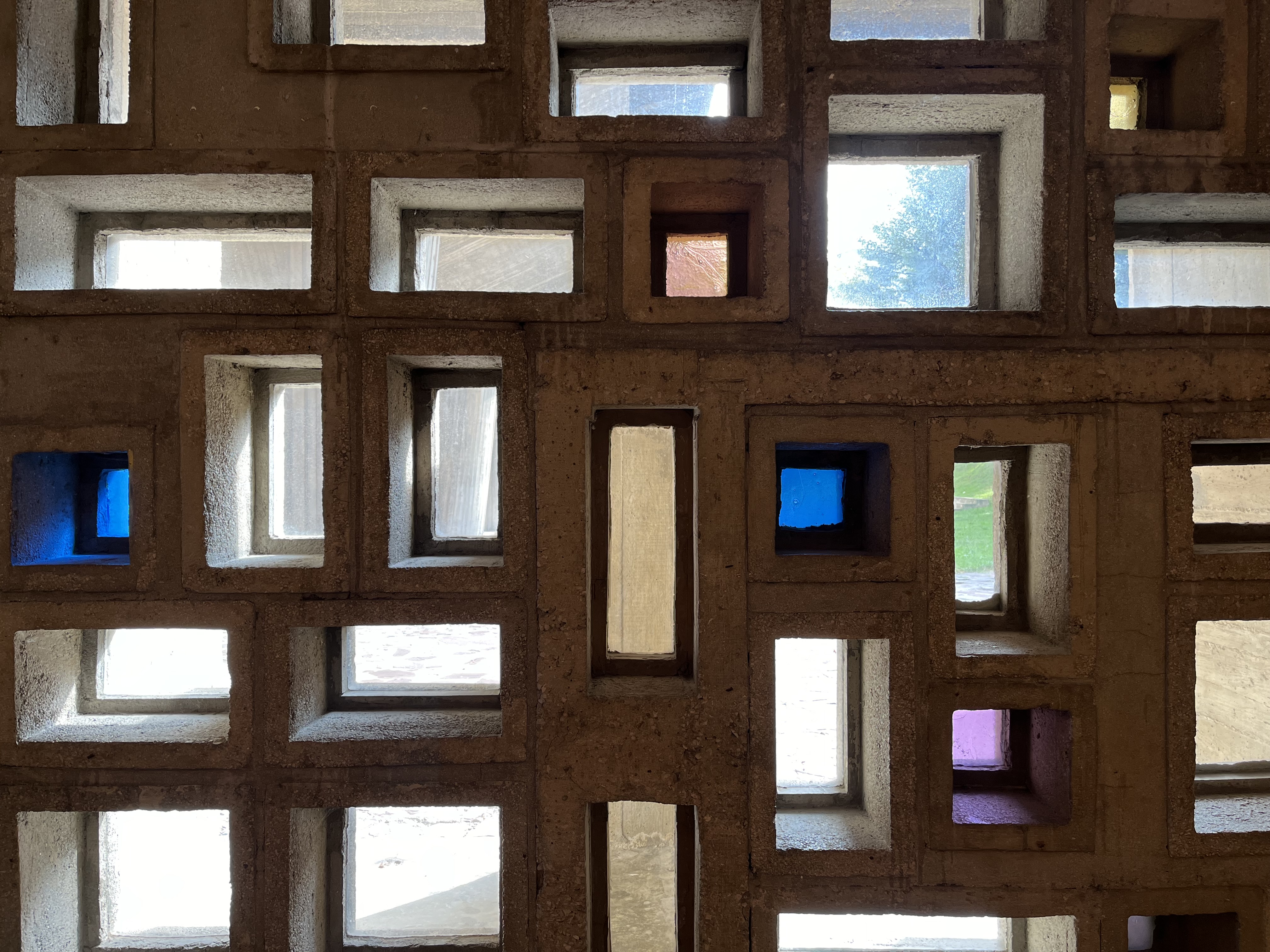
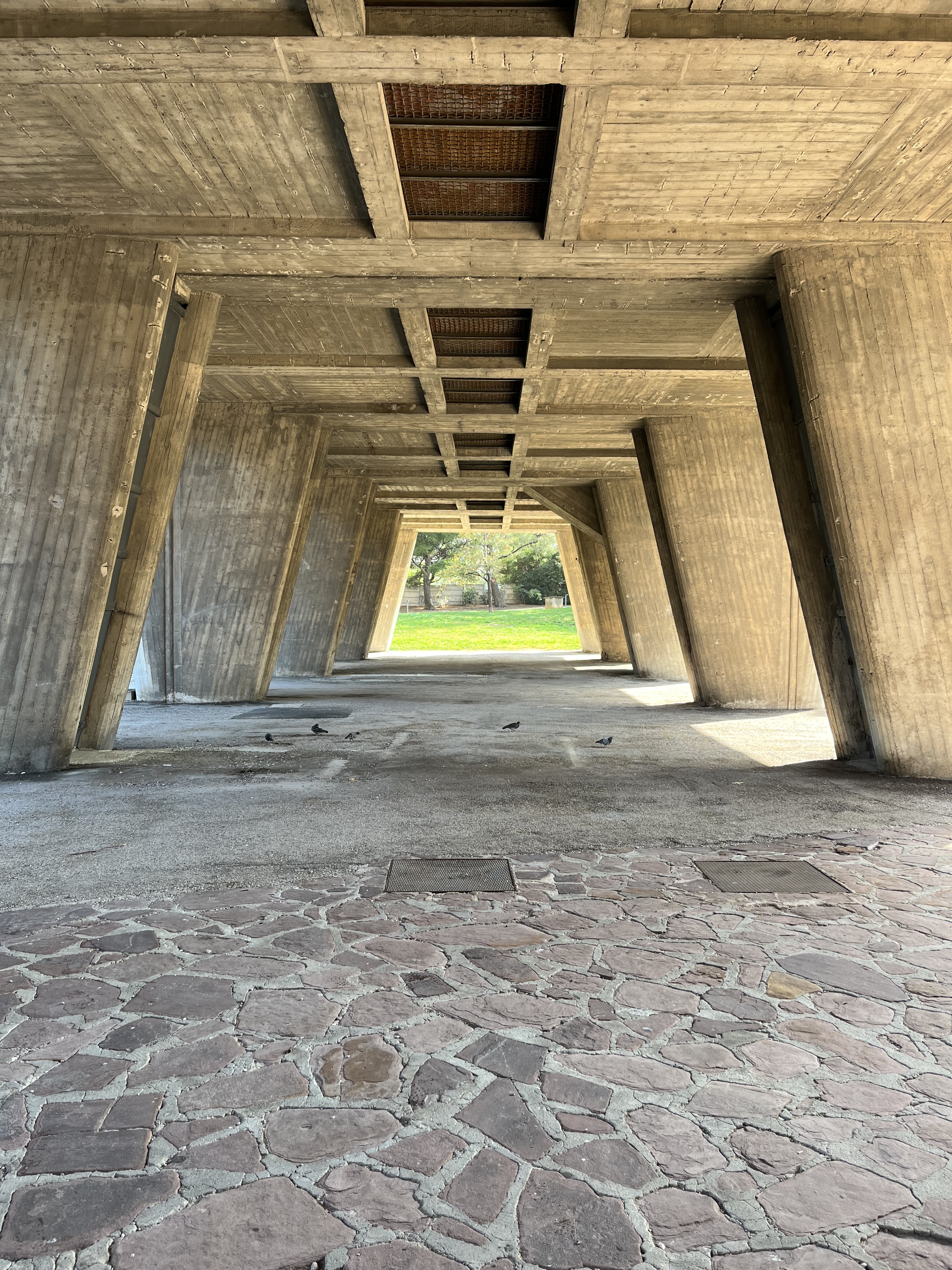
The brutalist style of building pioneered by Le Corbusier took off very quickly around the world as left-wing governments sought to provide housing for the masses, but pushback came quickly: it was so basic, so unsentimental, so ugly. The style never really went away, though, and in recent years people have come back round to it, and buildings like the Cité Radieuse are becoming more and more appreciated as part of the vanguard of modernist architecture. Being his pièce de resistance, this building is particularly beloved by architecture nerds and nerd-adjacent types like me, which is why I have dragged my entire family out into the suburbs to gaze upon its majestically unadorned facades.
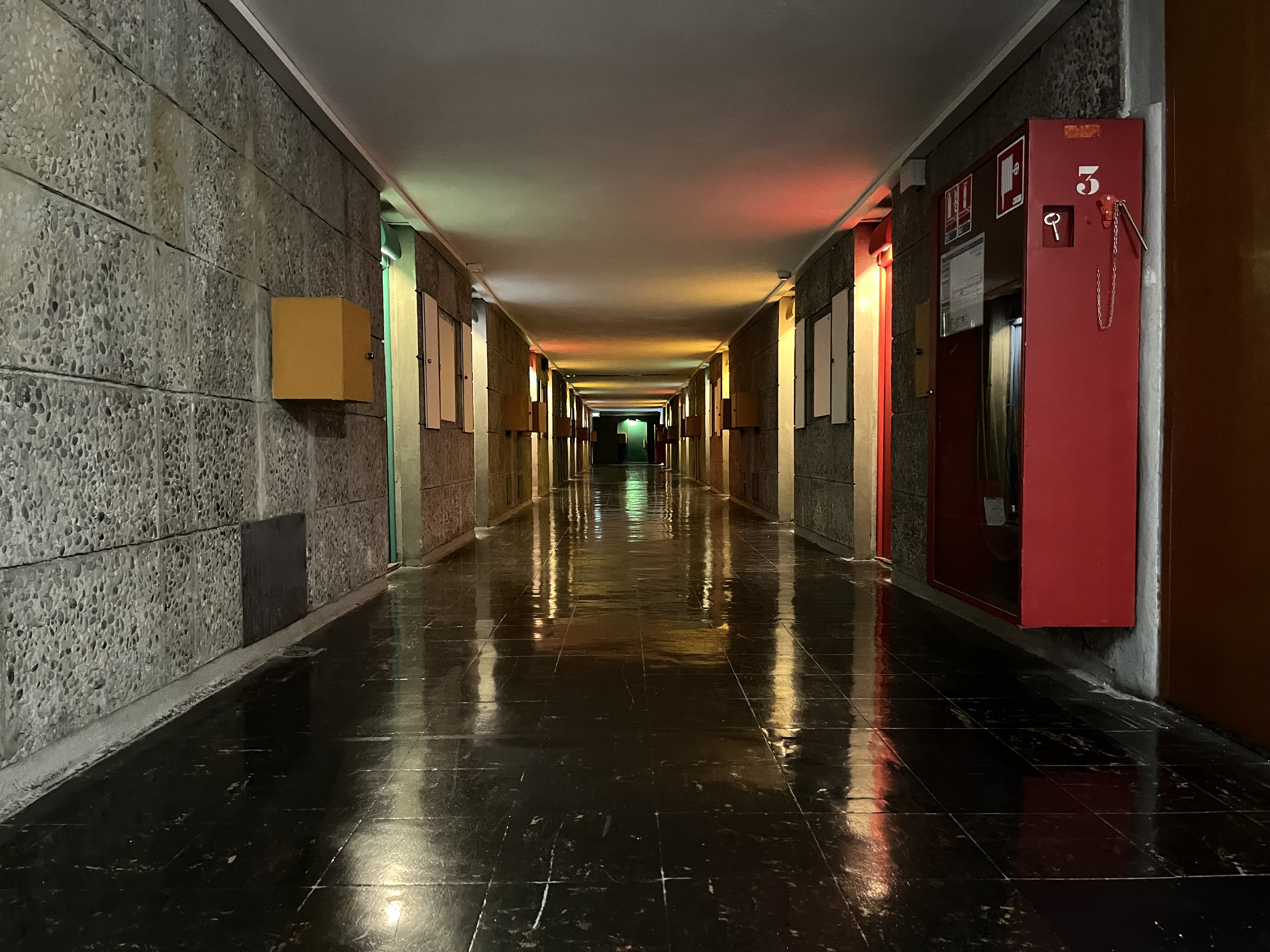
Surprisingly for a building with such fame and history, the Cité Radieuse is still being lived in: as we prowl around its open-air courtyard, a couple of residents pass us with plastic shopping bags. Strict house rules are plastered everywhere: in the lift lobby, in the lifts themselves; arriving on the third floor, we are directed sternly by some signage towards the non-residential side of the block. Our eyes initially struggle to adjust themselves to the dim lighting: the place is sparsely lit by yellowish lamps, and what natural lighting there was from outside has been screened, shadowed and blocked by a thousand glass doors and curtains. In the gloom I barely manage to make out the Le Corbusier Hotel, which basically offers a slightly fancier residential experience, and the adjoining restaurant with prices that shock even our Barcelona-hardened selves. The rooms on the right lead off into office spaces: quiet, expansive. Empty.
But once we pass the first few shops and turn the corner into the far end of the building, I begin to see just what Le Corbusier had in mind with the Cité Radieuse. One side of this section is little more than large rectangular windows of wood and glass, allowing the afternoon sunlight to fall across the concrete benches in front and stream into the corridor; if you close your eyes, you might be able to fool yourself into thinking you’re in a quiet Japanese cottage, with the wind puffing softly on our cheeks, and a tranquil stillness filling the air. On the other side, underneath a wall of hollowed bricks, we find a few boutiques, all selling some weird undefinable service or souvenirs that no one in their right mind would buy. (I get a tote bag with the Cité Radieuse design pattern on it.)
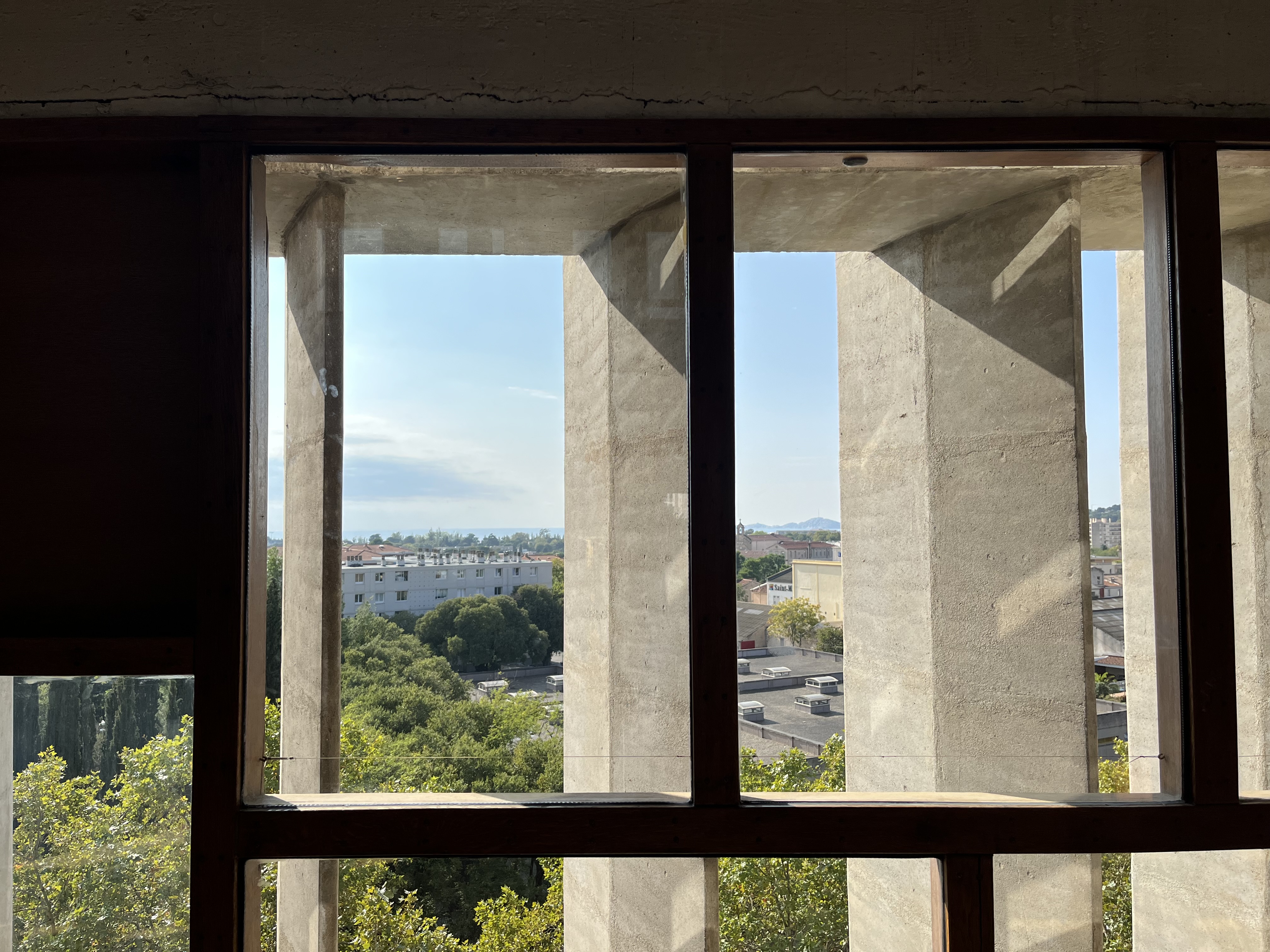
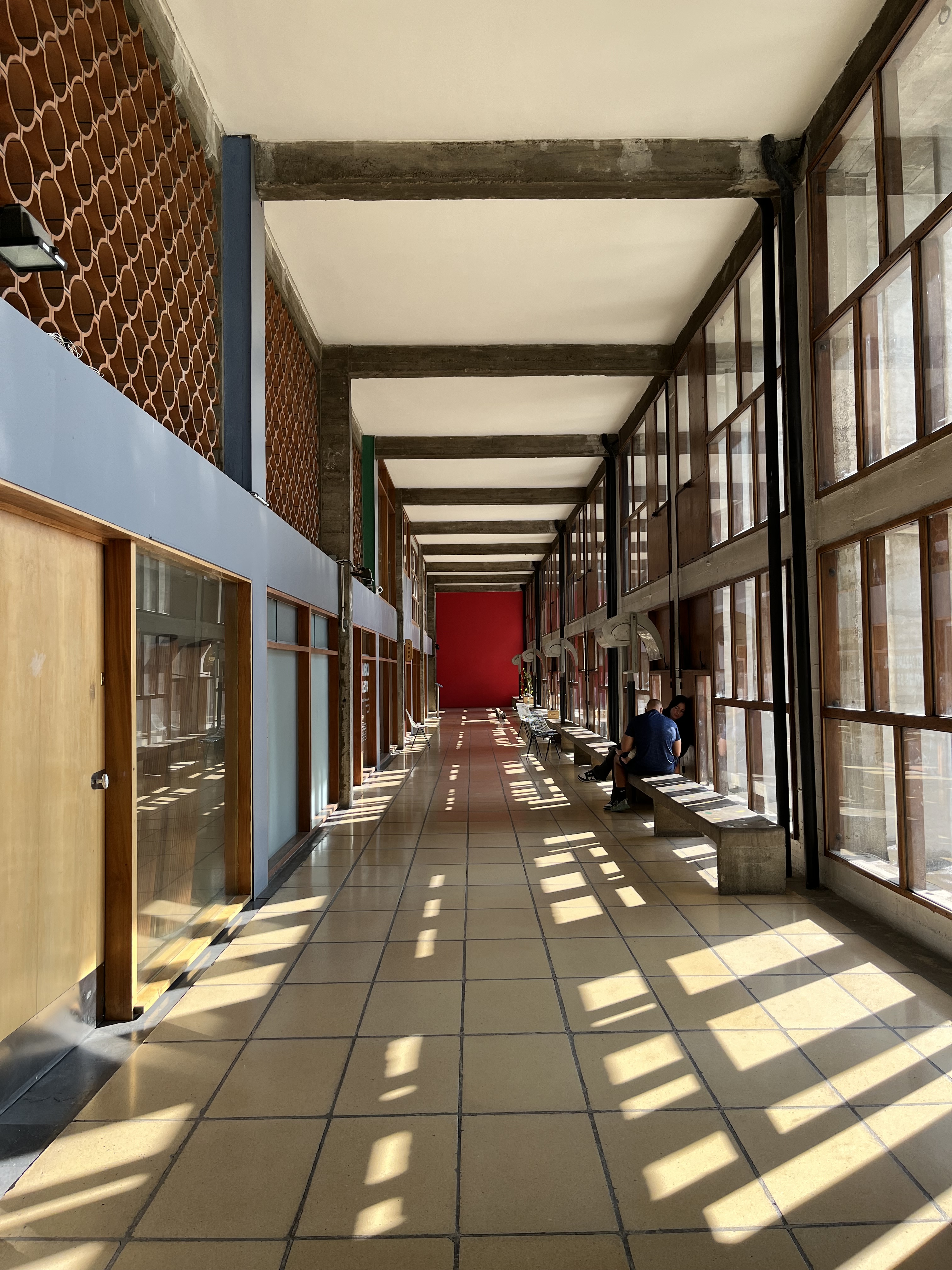
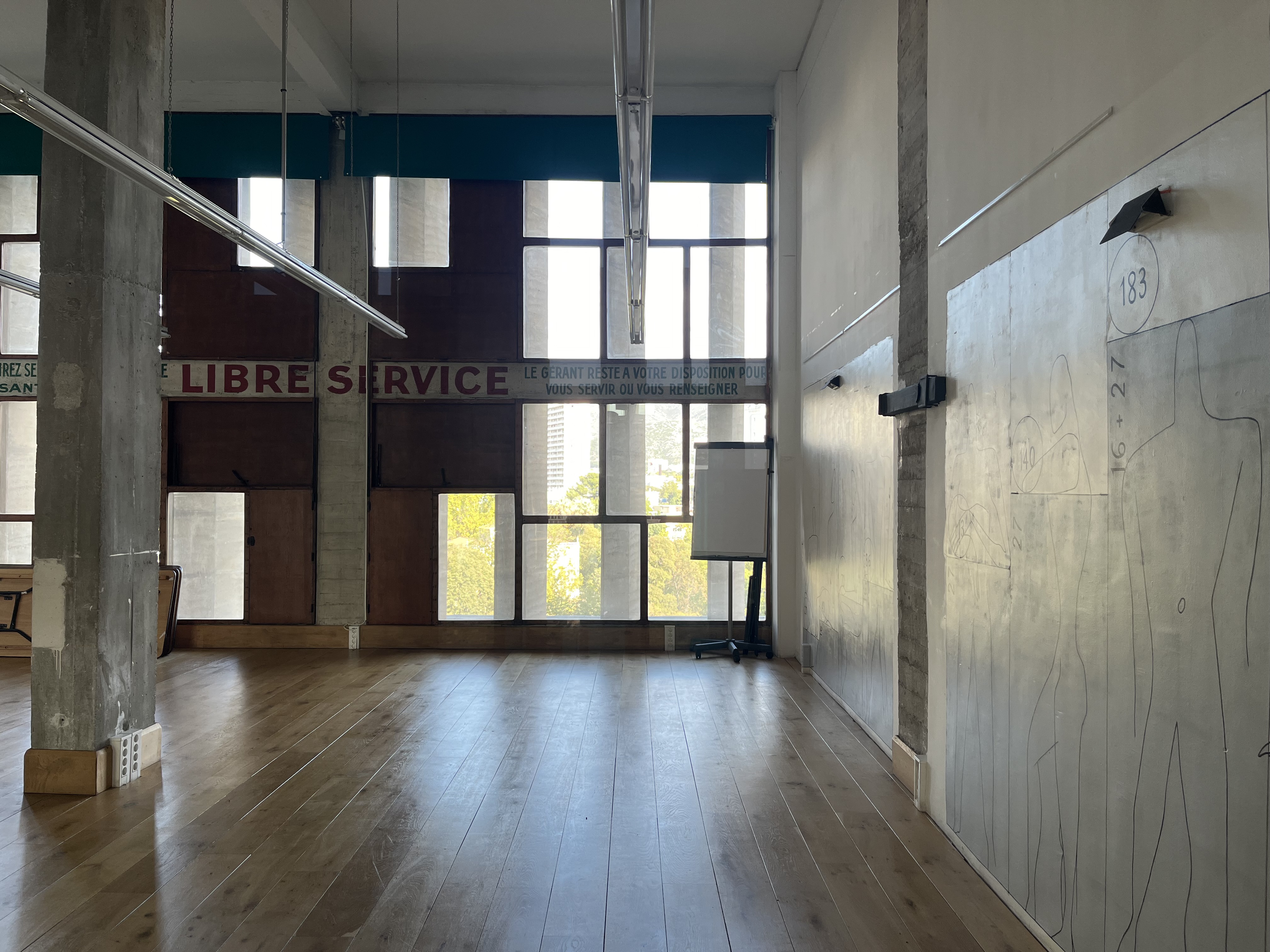
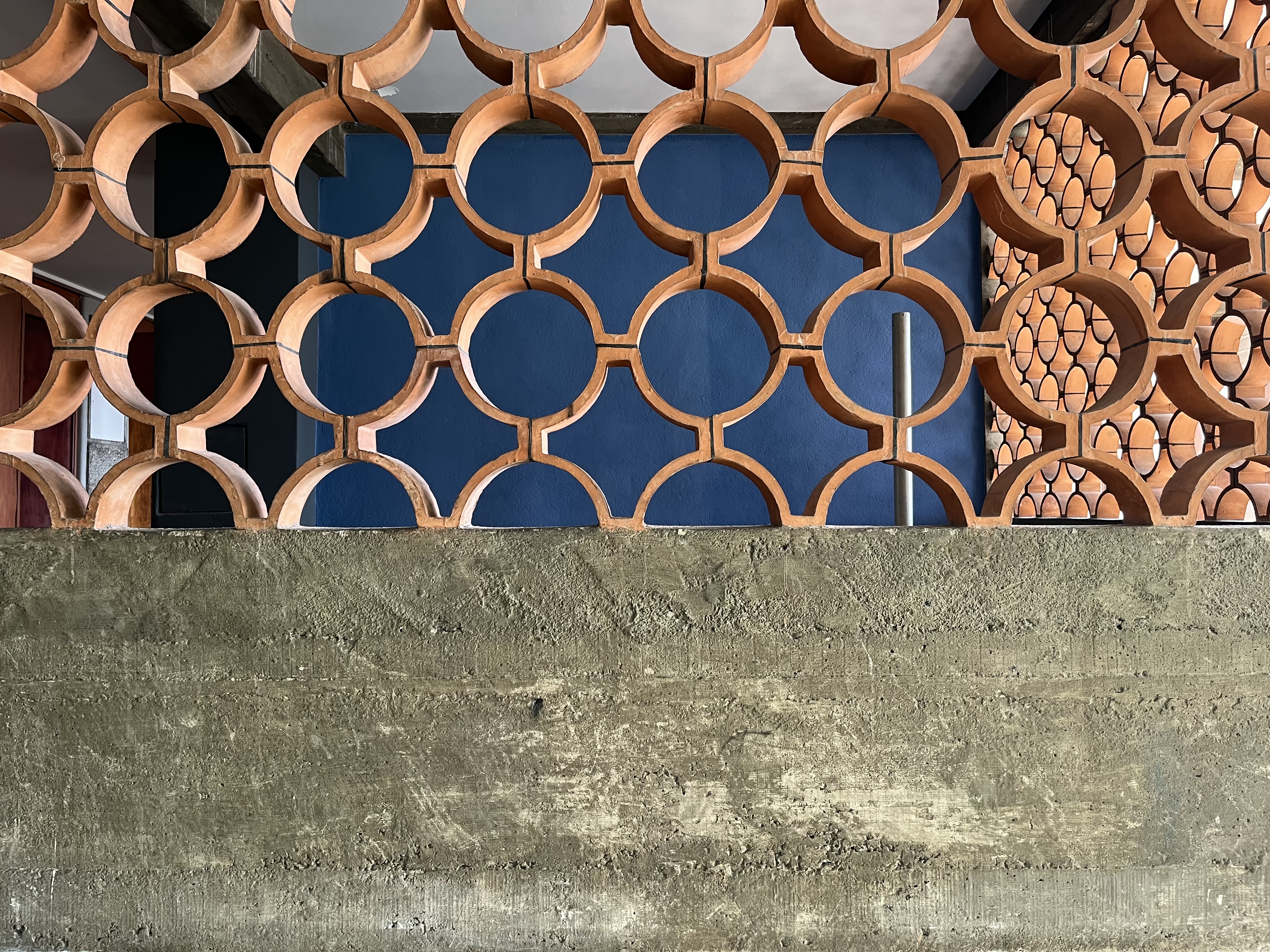
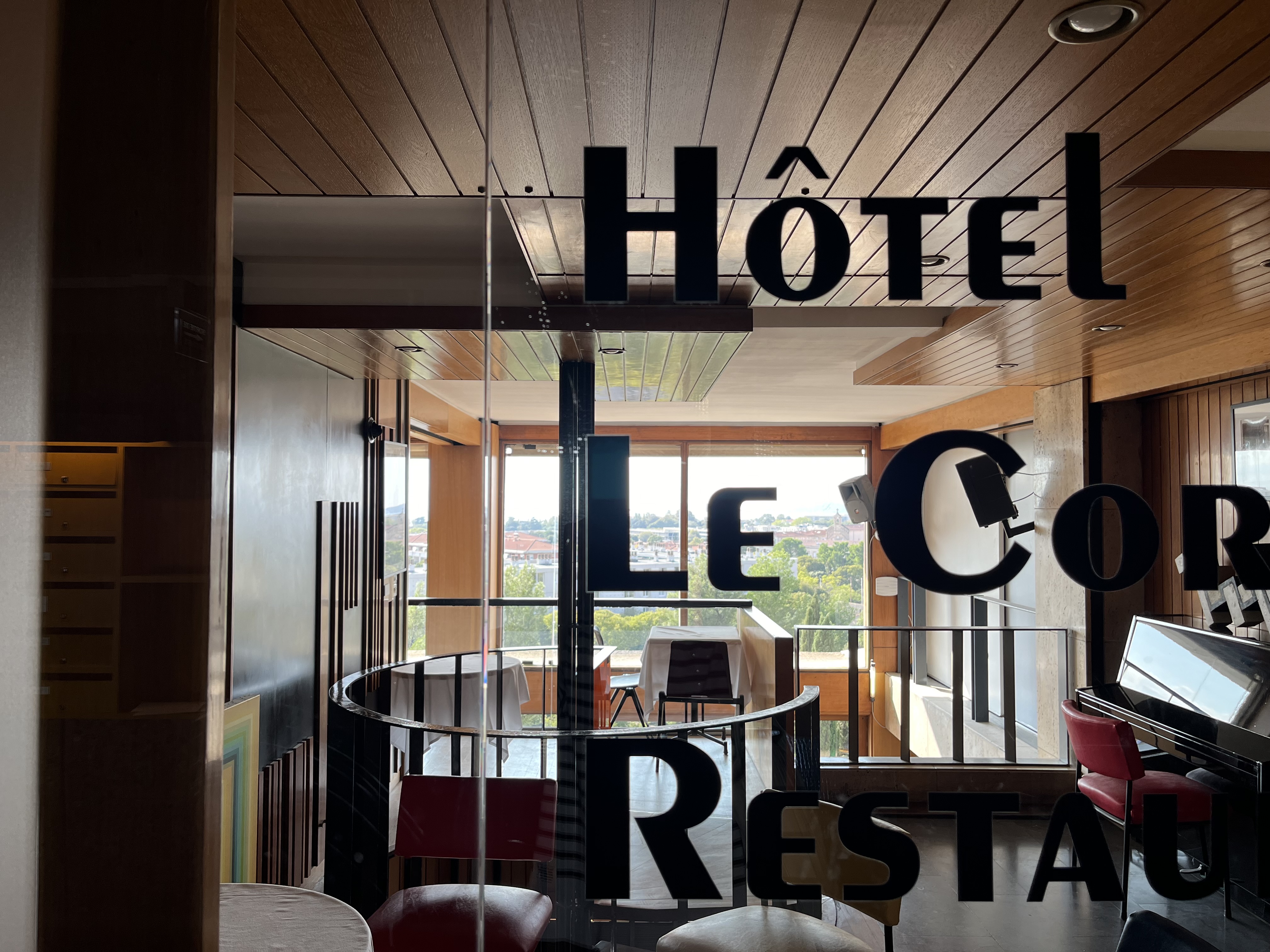
These communal spaces, loftily named “streets in the air” when this building was first built, might seem a bit odd: it seeks to replicate the casual togetherness of the village high street, yet wraps all of it in concrete and glass and forces it into rigid, regularised compartments. But despite the gentrified nature of the shops, the human touch still permeates this space: a couple cuddles on one of the benches, while the boutique attendants are refreshingly chirpy and polite — a riposte to the idea, so often bandied about, that modernist Le Corbusier-style architecture dehumanises those living or working within. It even affects those visiting: as we ascend to the roof, we come across a small tour group, and even though we can barely communicate with each other, they still hold the door for me and my father as we climb out into that quirky, angular space.
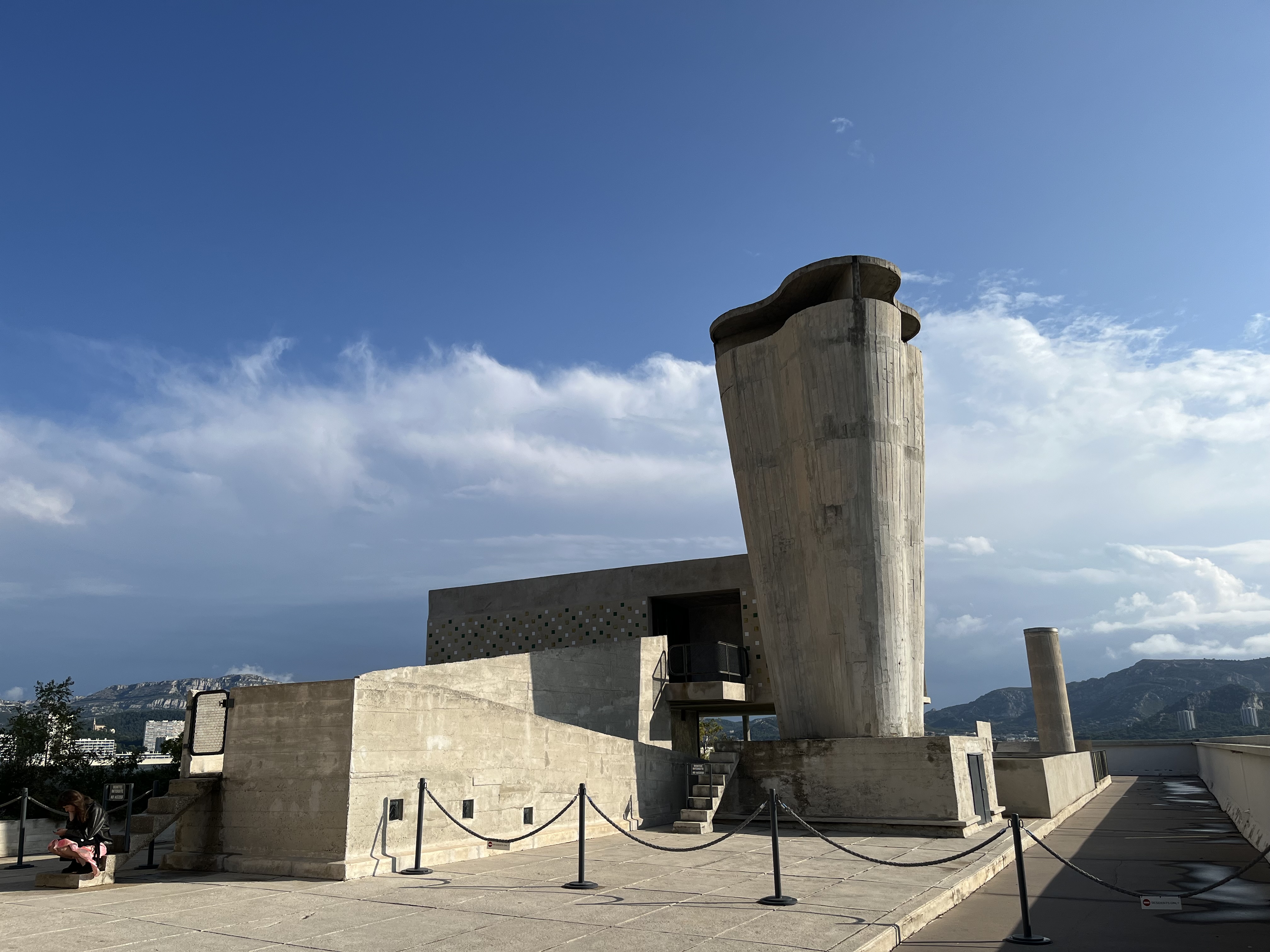
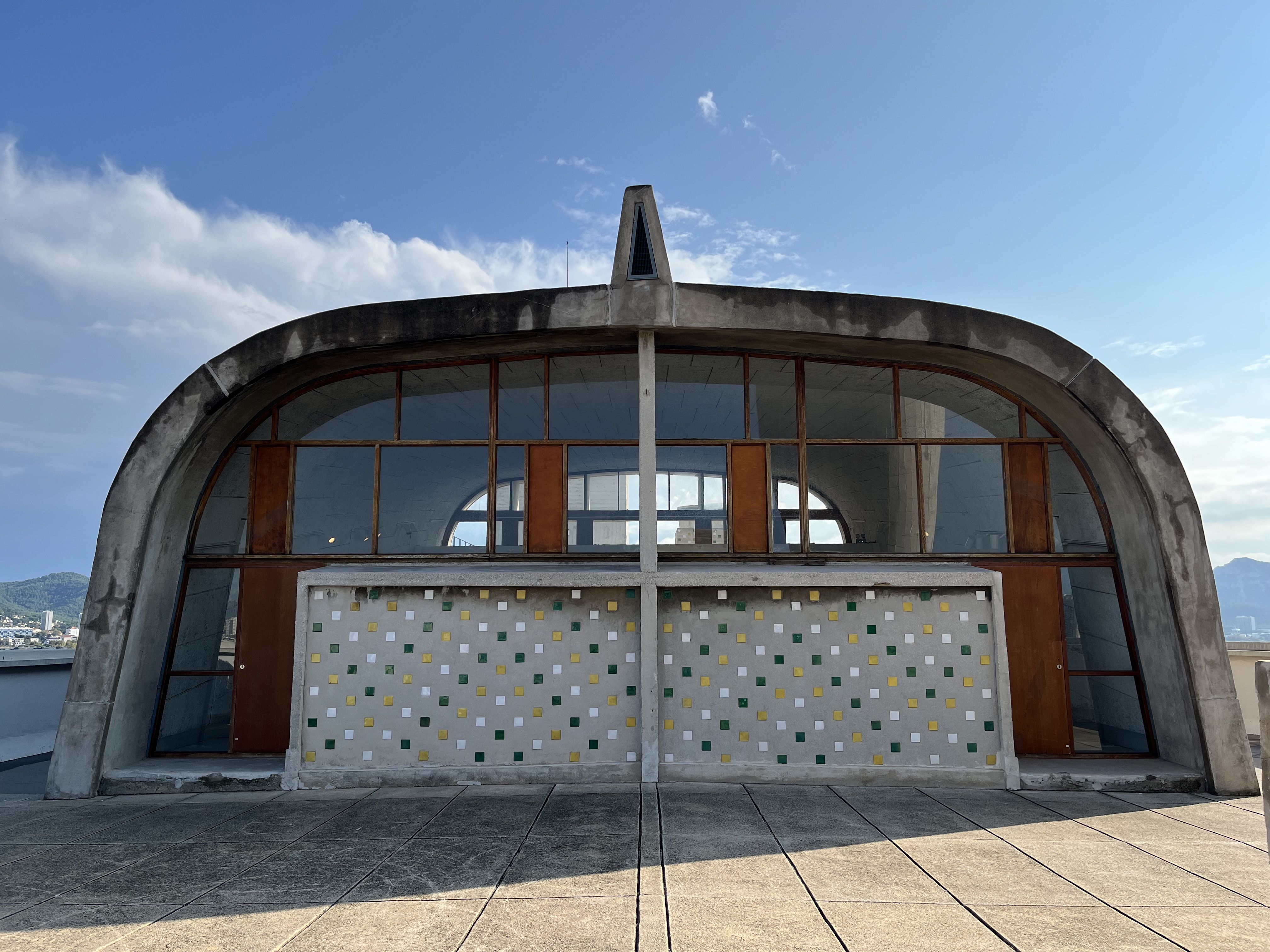
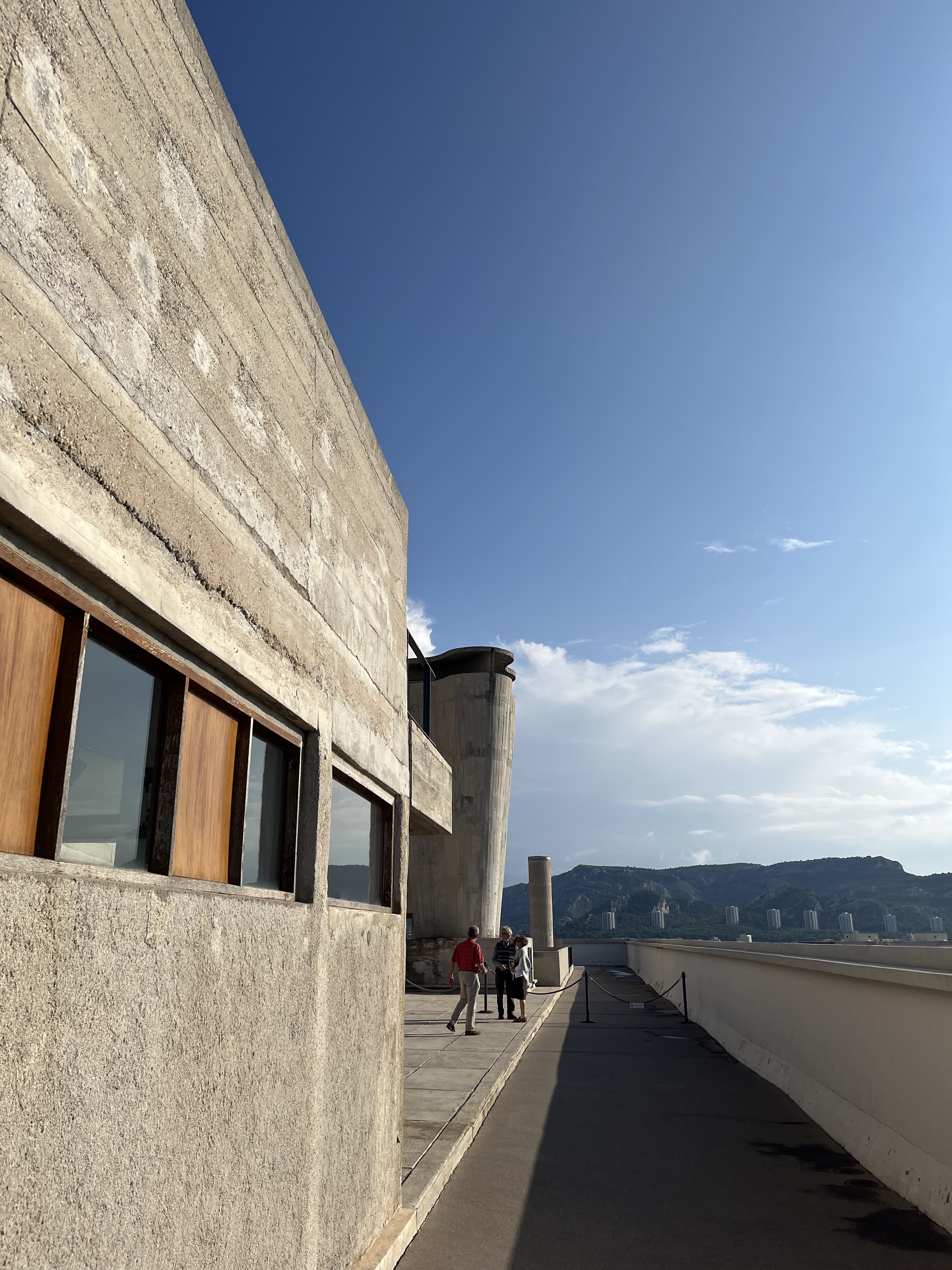
The roof of the Cité Radieuse is, if it were possible, even more modernist than the levels downstairs. Huge concrete edifices, most of them unpainted and undecorated, dwarf everyone passing underneath them; doubtless they serve some important, life-giving function, but it is also quite amusing to see these appendages incongruously sprouting from the ground and looking like Soviet-era sculptures. A rooftop bar, empty but mostly-furnished, opens silently onto one side of the roof; it’s probably just undergoing renovations, but it looks like it hasn’t seen a soul — or a living one, at least — for two decades.
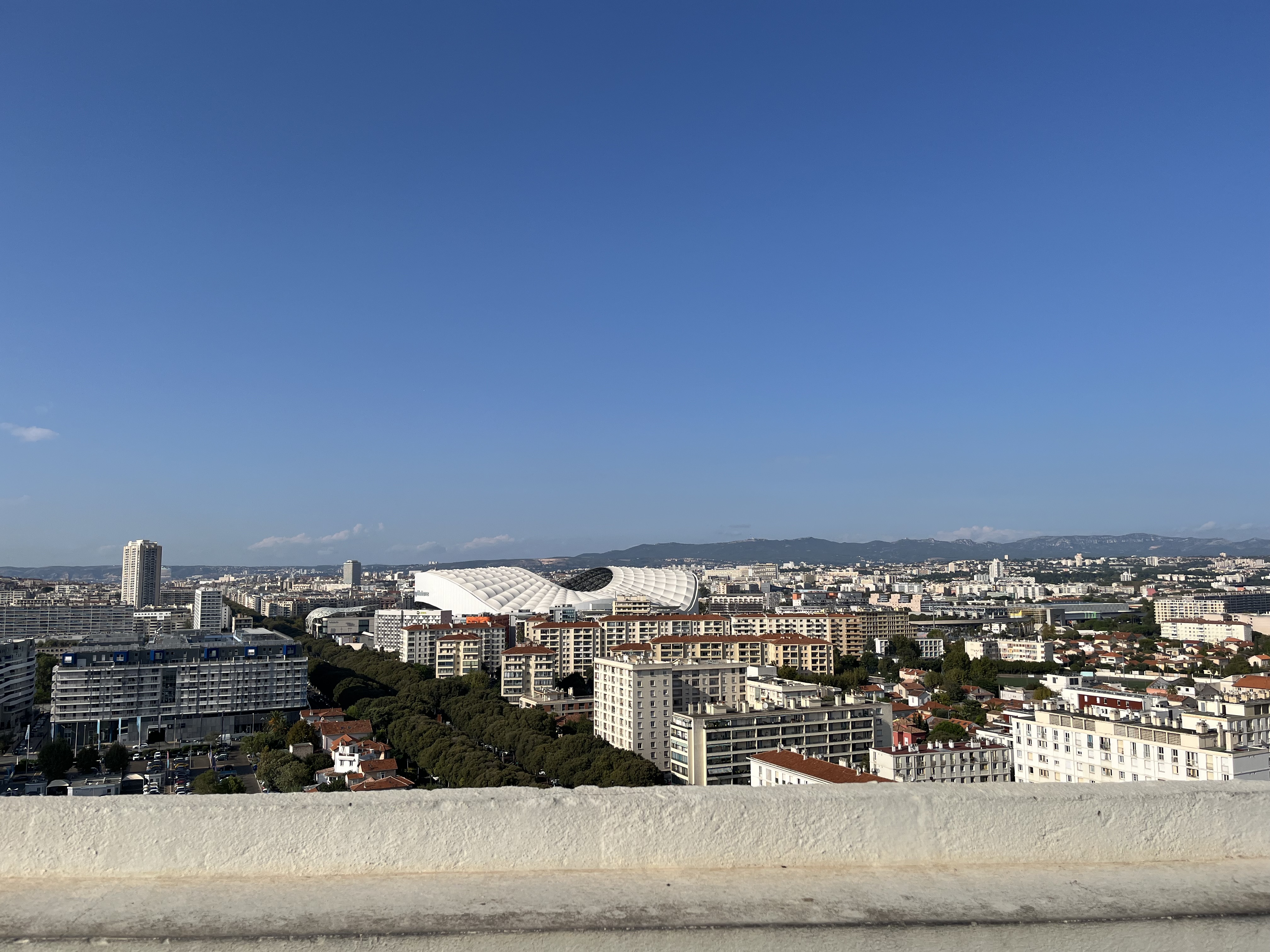
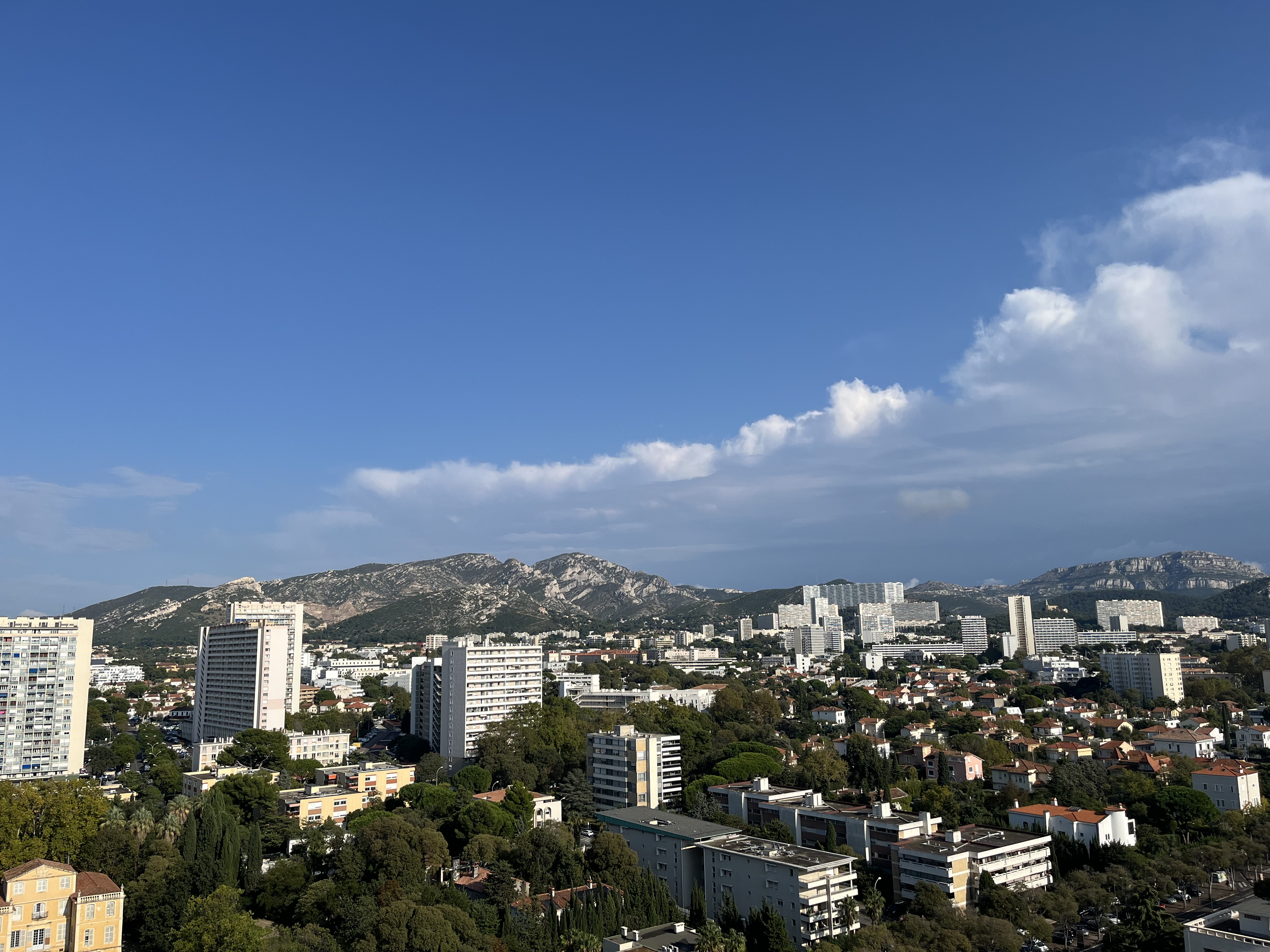
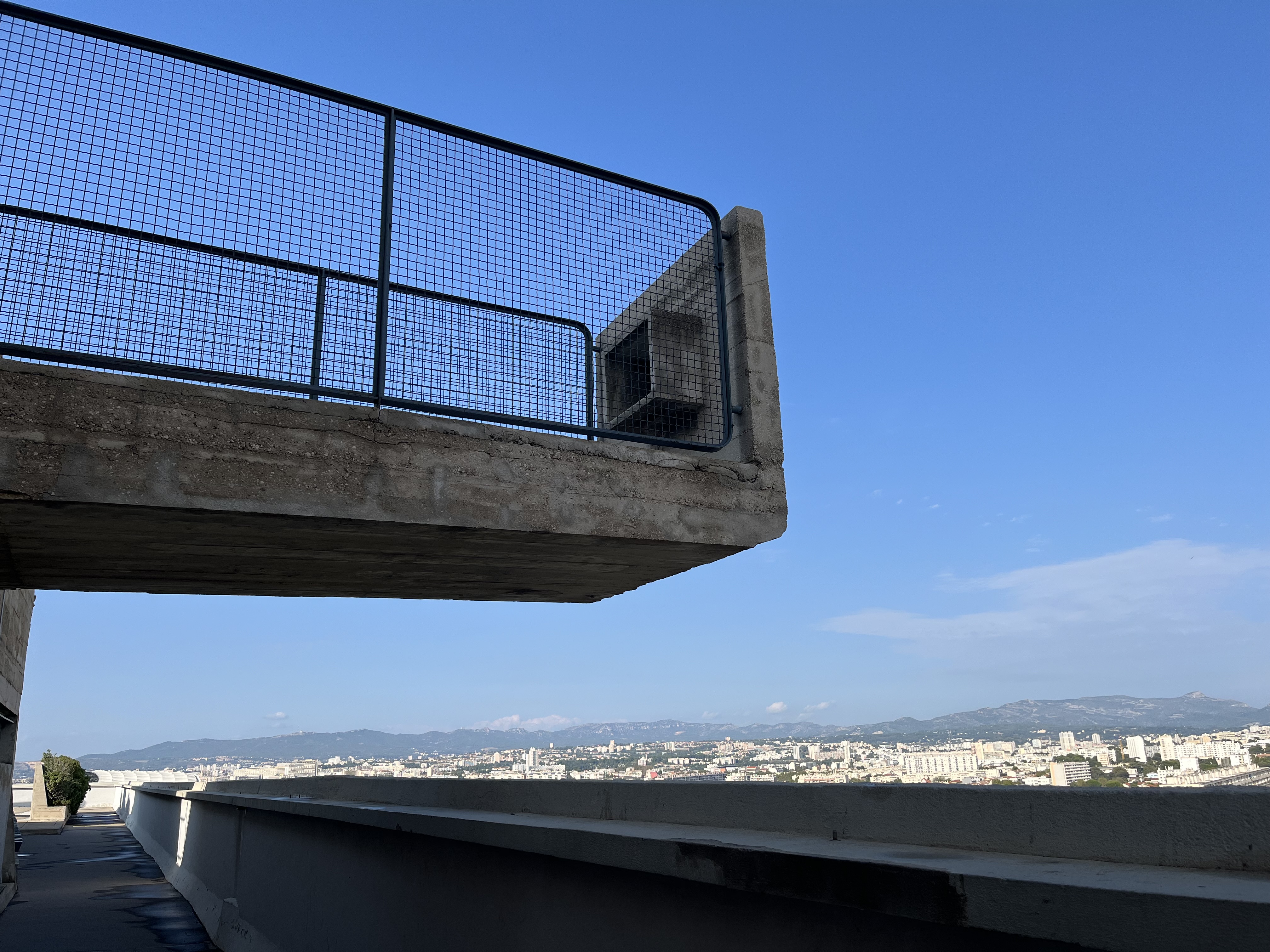
Walk to the edge of the building and look out onto the suburbs of Marseille. Perhaps it’s because the rain has stopped, but I find myself much more intrigued by this view: ringed on all sides but one by the mountains, there’s a little more order than the clutter of the city centre. Tidy rows of white and lemony apartment buildings, broken here and there by spots of dark green; amidst all of this, the circular behemoth that is the Stade Vélodrome (the home ground of the local football club). On the other side, the land slopes gently down towards the sea, which glistens with afternoon sunshine; a Ferris wheel turns lazily in the afternoon sun. A picture-perfect seaside suburb, even if the grandiosity of the Ferris wheel is a little unexpected. I can see myself living here, this little oasis of calm, the sound of the sea faintly in my ears.
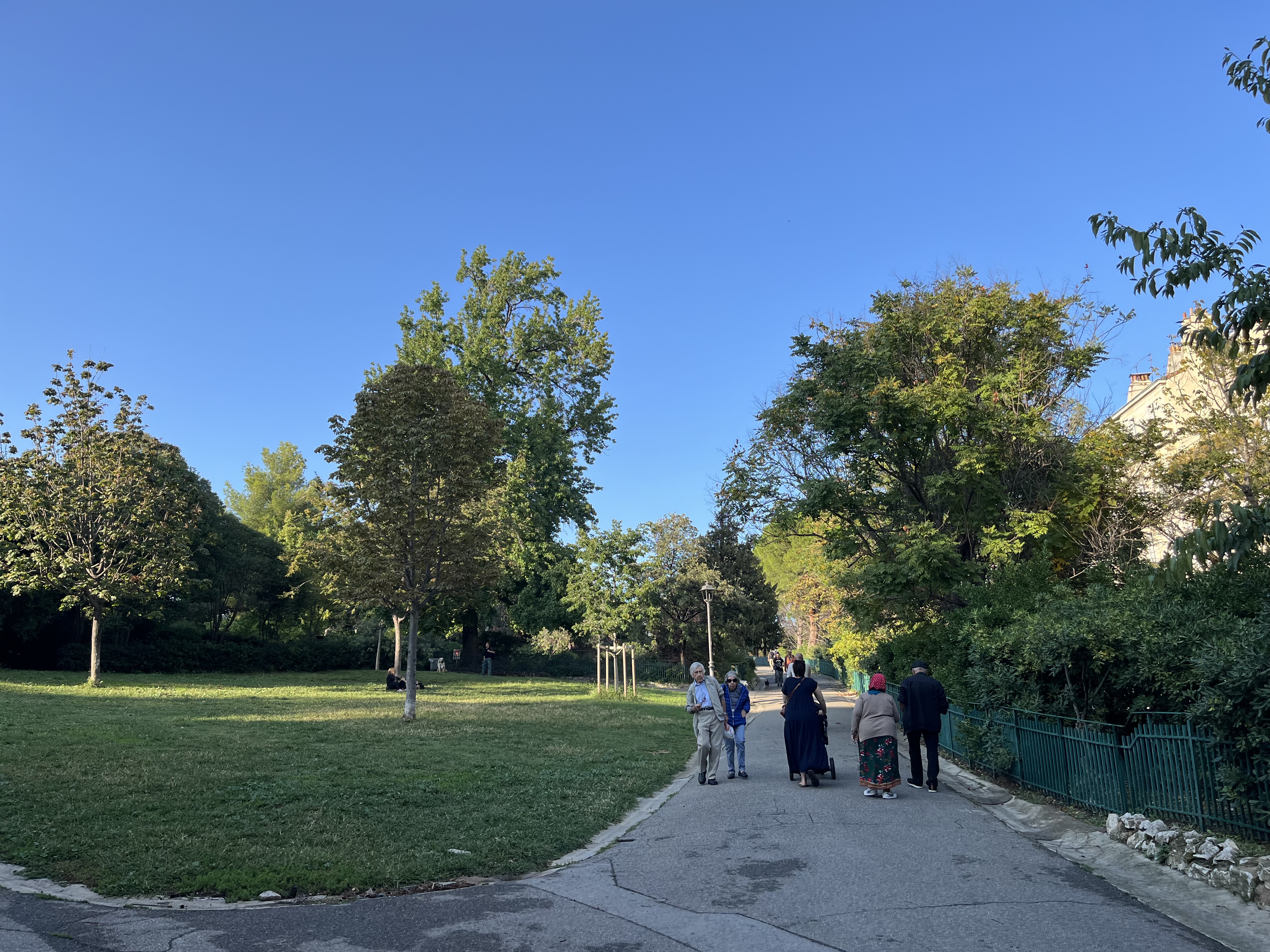
Quarter to six. We emerge from the ground once more, our nerves shaken by another harrowing ride on the Metro. The Cité Radieuse was supposed to the end of our itinerary for the day, but with the sun still hanging high in the sky, we’ve decided to squeeze in one more destination. And so we find ourselves in the slightly unkempt Longchamp Park, tucked away in the northeast of the city and home to quite a thriving gnat population. Insects aside, though, the Longchamp is quite a pleasant place to spend your late afternoon, with sturdy park benches and lush (if somewhat unkempt) shrubbery. It’s sunny, but there’s more light than heat here, and a cool breeze fills the air as we climb up stairway after stairway to the park.
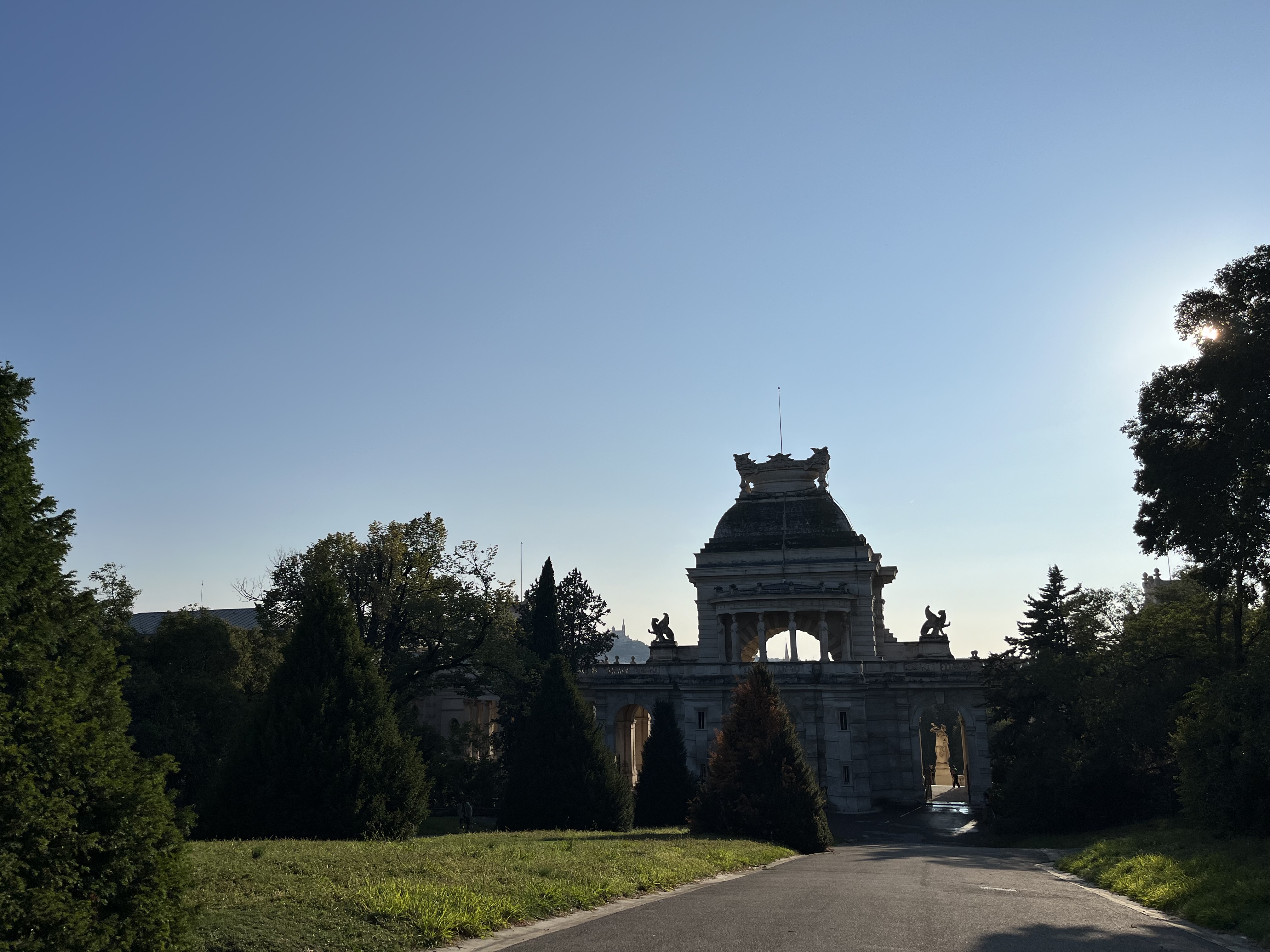
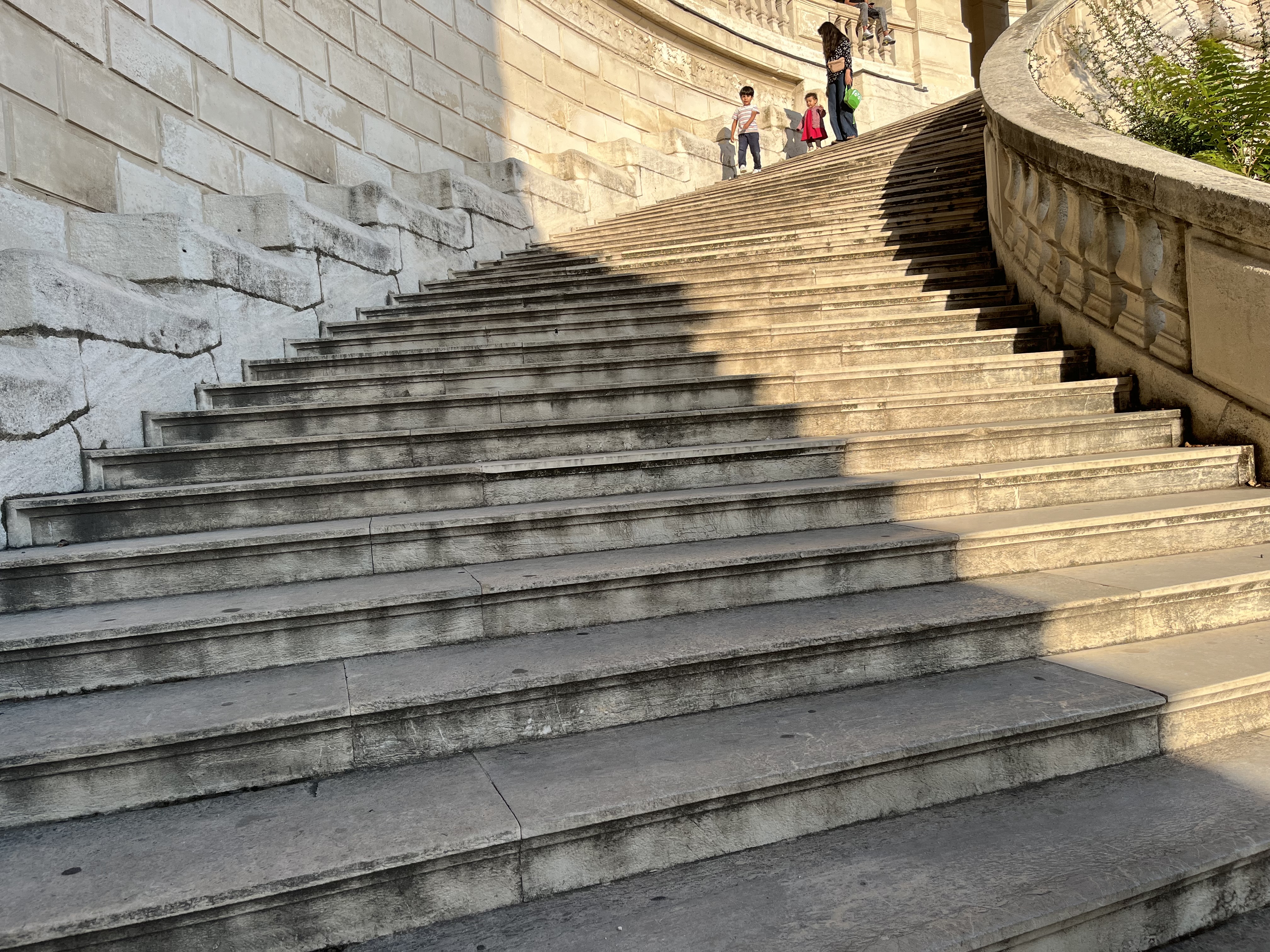
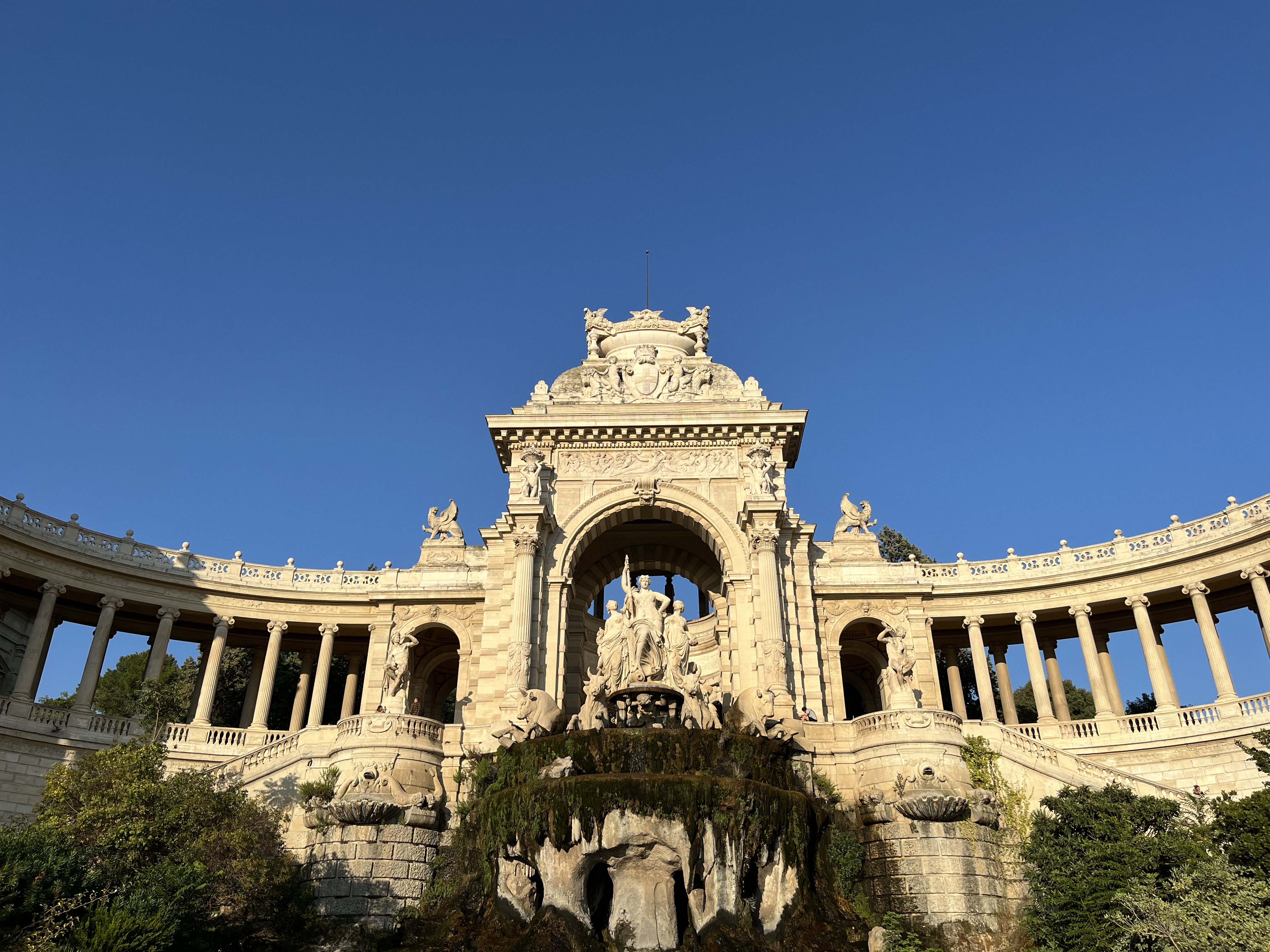
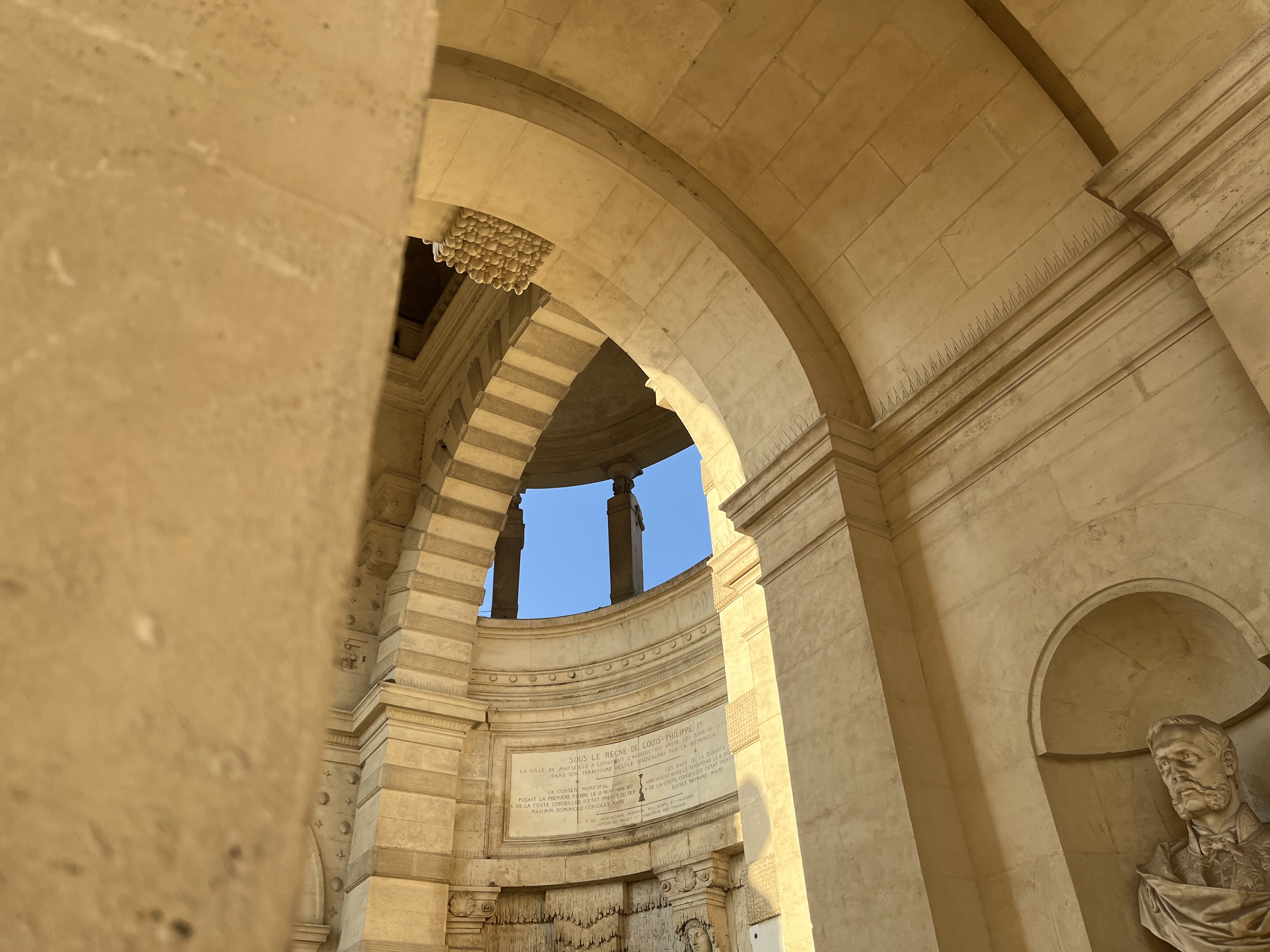
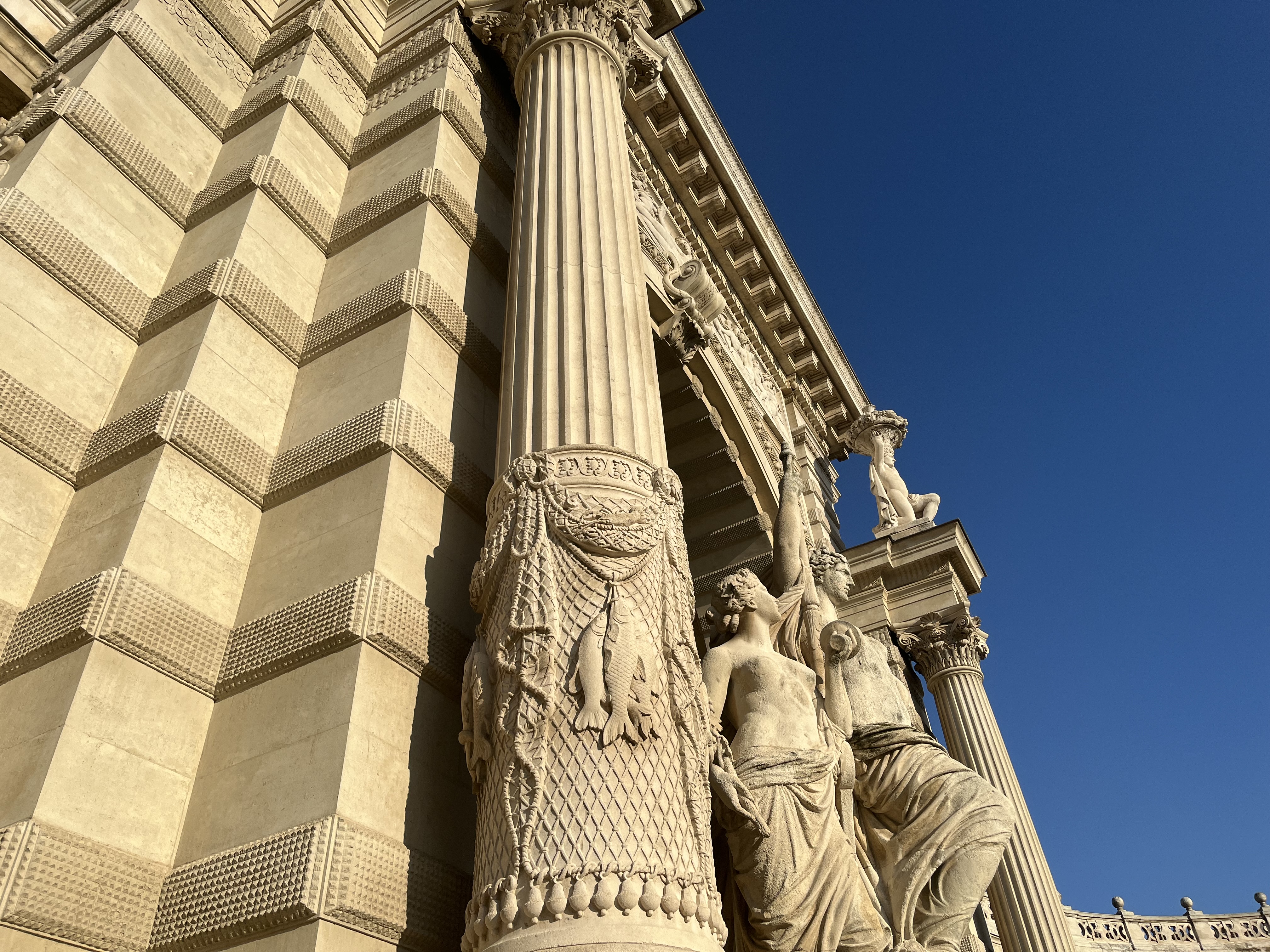
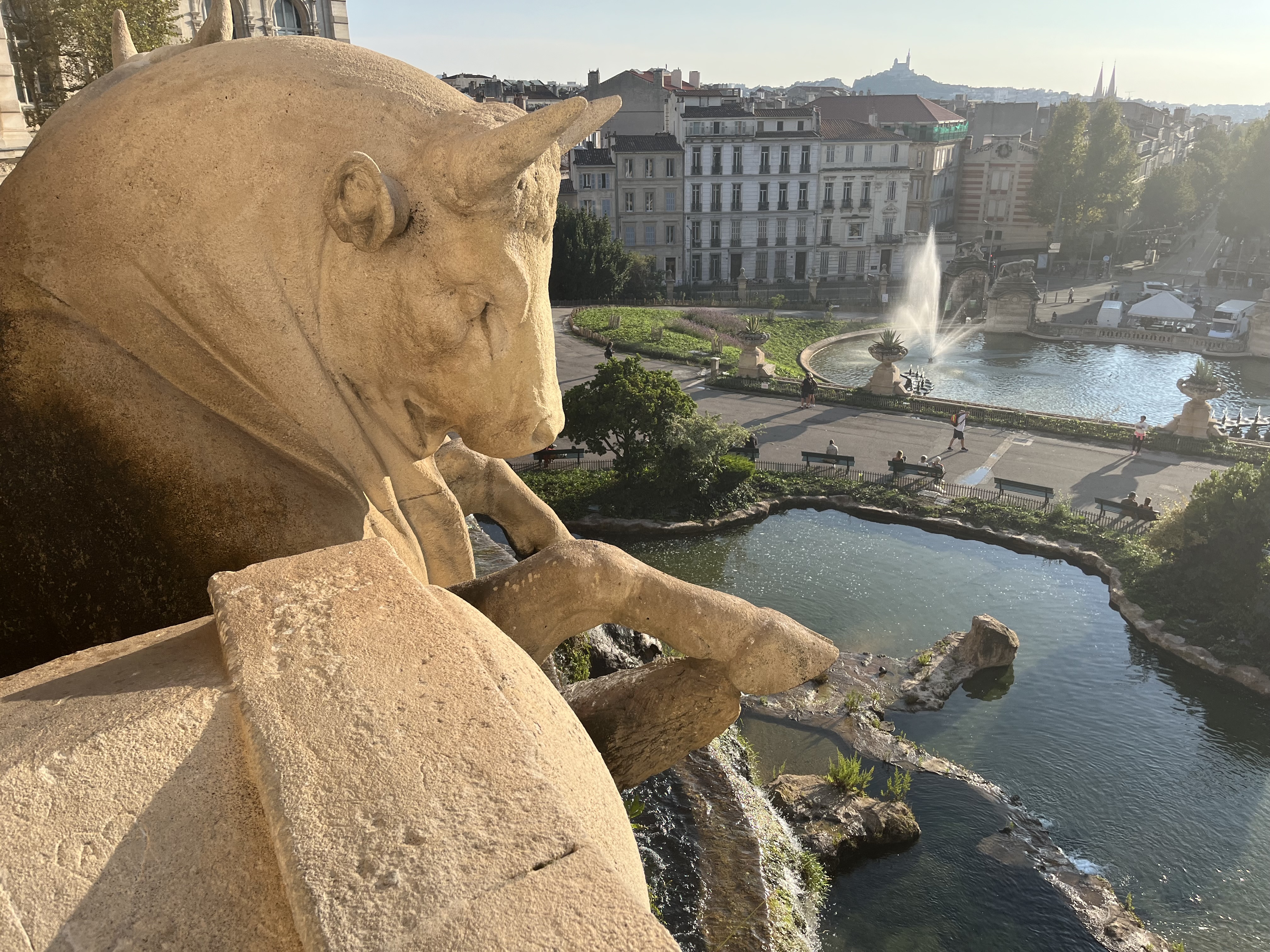
A huge building, perching precariously over the city, awaits us at the top. This is the Palais Longchamp, originally built in the 1860s to house the city’s Fine Arts and Science Museums — the two buildings now sitting on either wing of the Palais, underneath those two colonnades curving gracefully to envelop the garden like an embrace — as well as celebrate the construction of a canal that brought fresh water to the people of Marseille. It’s a rather typical Beaux-Arts building you might find at any Parisian intersection, but being in Marseille it easily overshadows every single thing around it. And it is quite brilliant, from the statues roaring with life on the dome at the top; to the grand, sweeping staircases that unwind either side in front. As I snap a picture of this last one, a toddler lumbers past me with her mother, a little hesitant… but undeniably having fun.
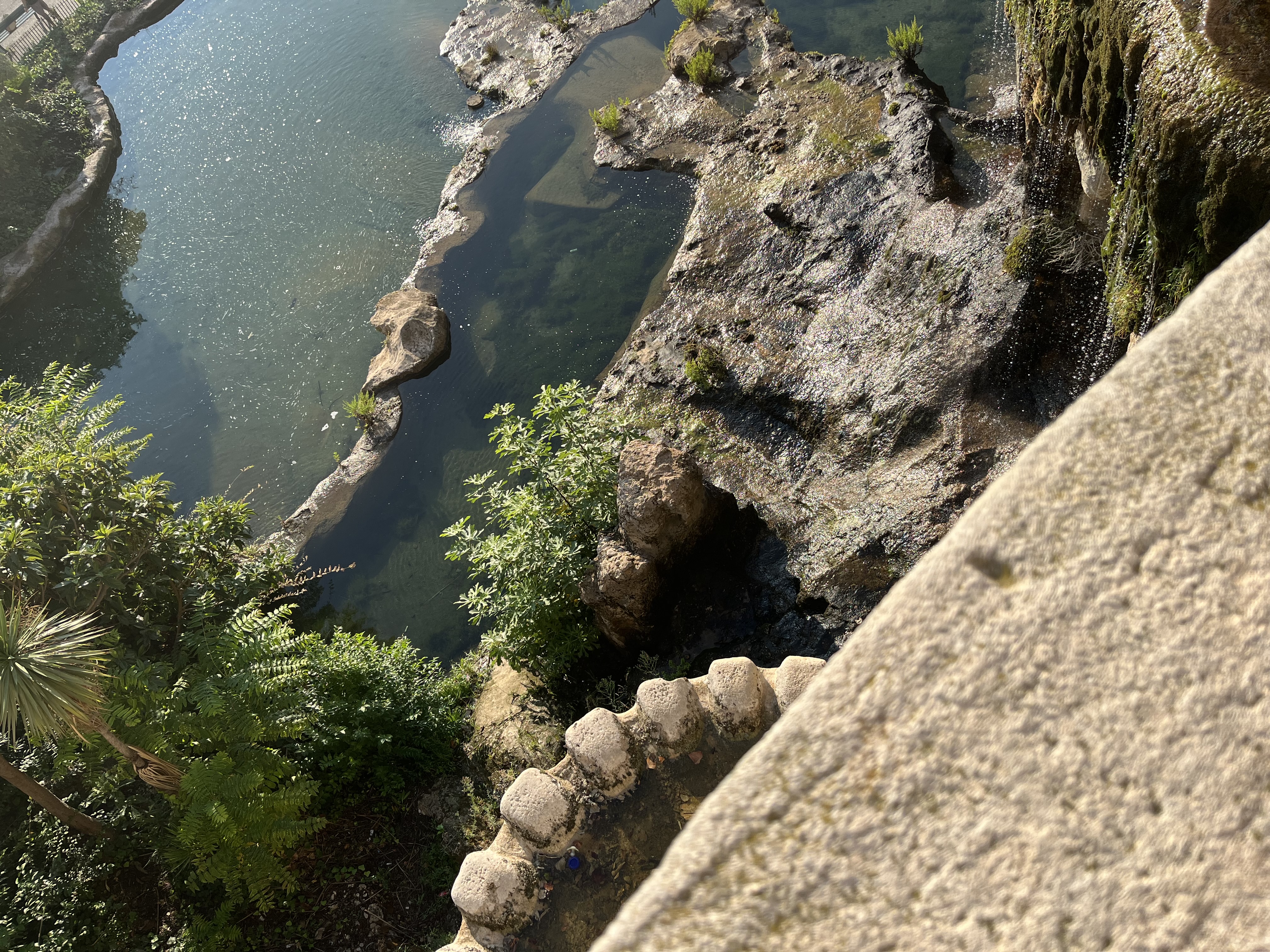
Would have loved to go inside one (or both!) of the museums, but they’ve already closed for the night, so we decide to admire the fountain in front instead. But what a fountain it is: a cascading series of waterfalls, spouting from the very heart of the building, in among statues of Neptune and his maidens, and from there on broadening its reach as it traces its way along cliffs and steps, flanked by verdant grass and floral arrangements, down towards a central pool where a small jet sprays it all back into the air. What strikes me about this fountain is just how much momentum there is in the waters — you often find fountains that are either vast, or vivacious, but a fountain that does both is rare. Not this one: its energy is apparent from source to bottom, from the moment the water gushes from Neptune’s throne, down to the merry jet sprinkling it in a dozen different directions. It might not be Geneva, but it’s still a construction to behold.
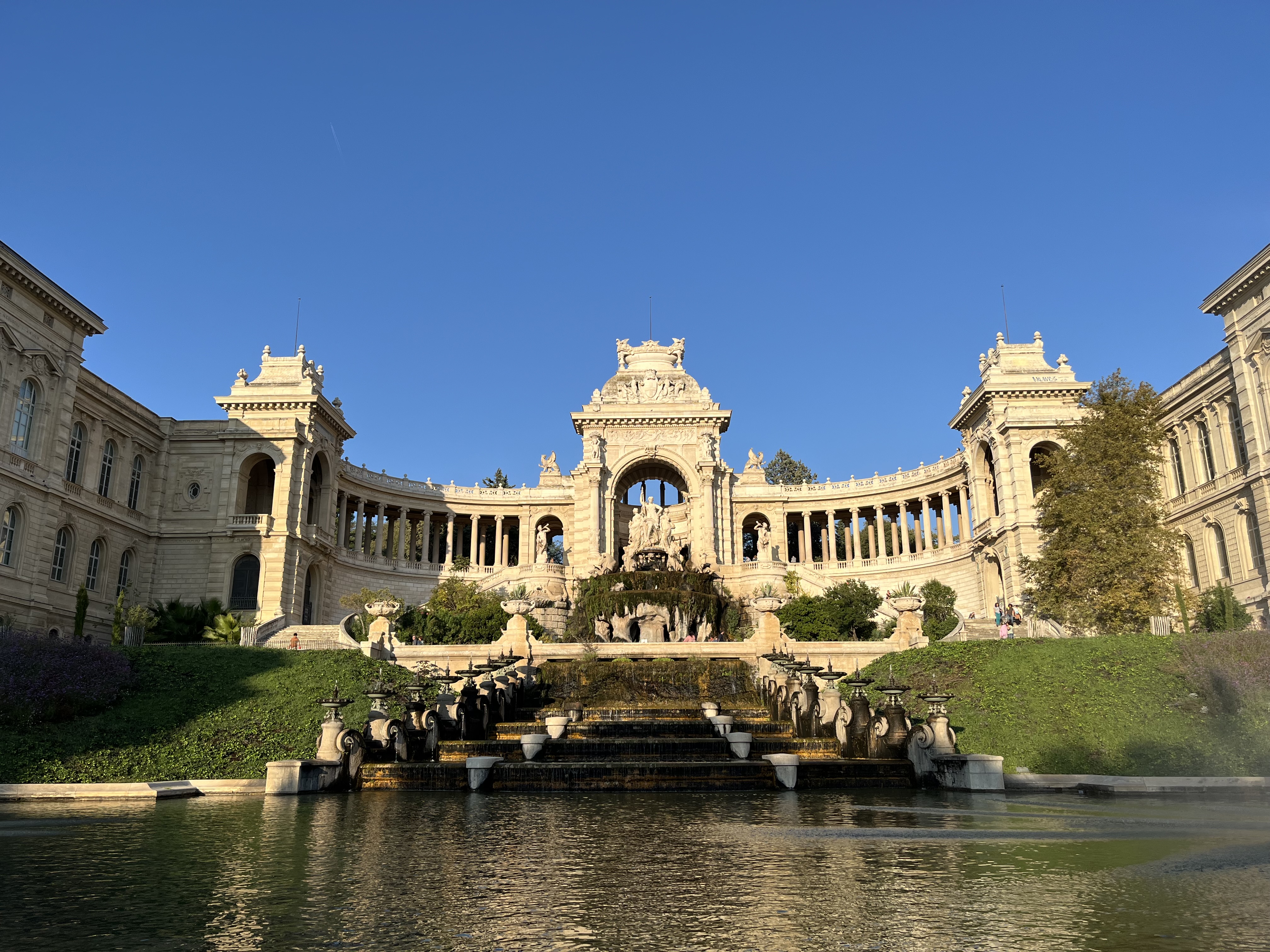
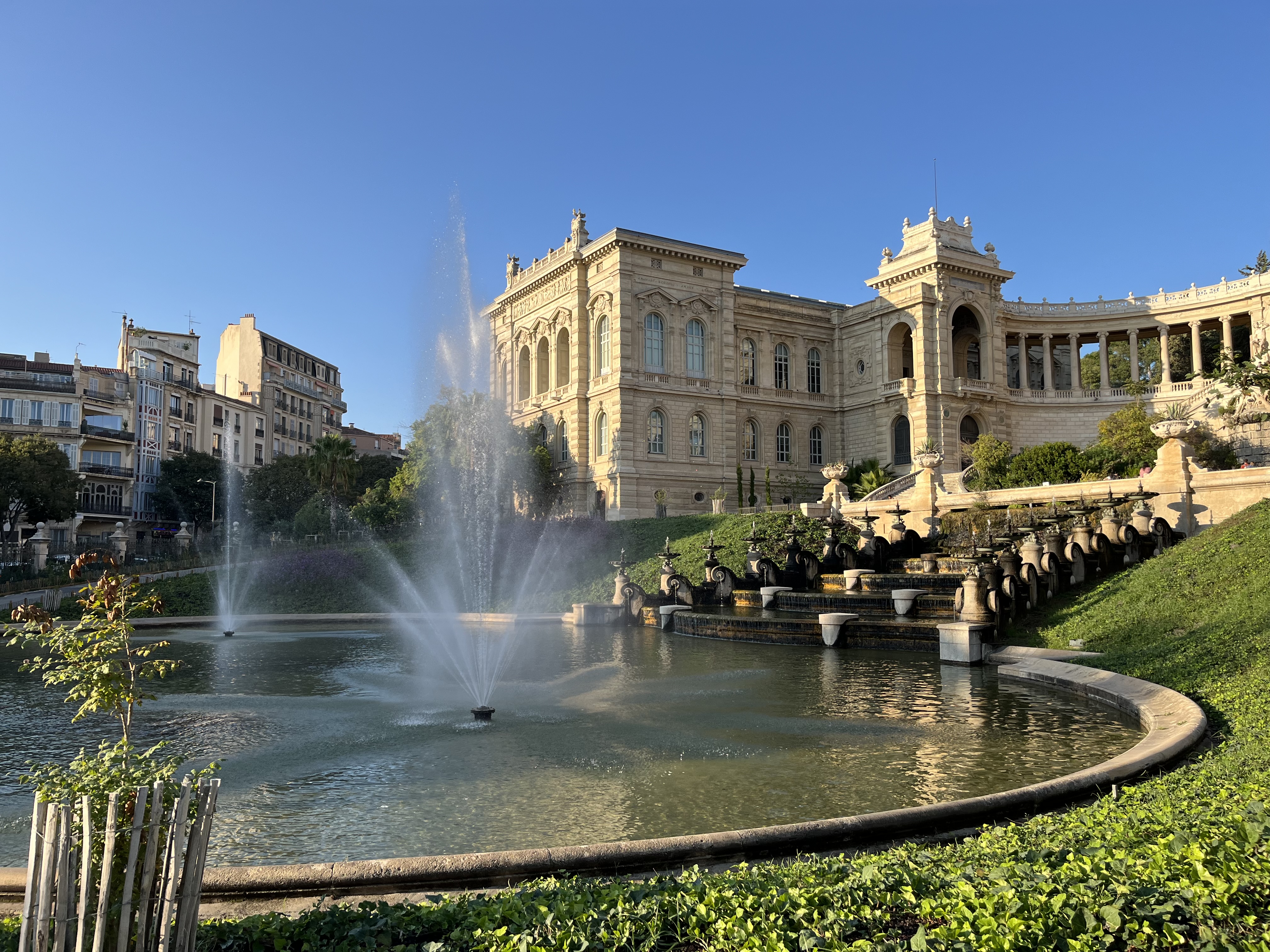
Dad calls us together, and we stand in front of the fountain. We’ve taken many a picture during this trip, but it is this one that stays with me: us crowding in front of a fountain, forming a perfect curve with our heights. We may look tired (I’m sporting eyebags the size of a fanny pack) but there’s also genuine happiness on our faces: a gladness that we’re here, that we’re exploring the south of France together. Just out of the frame is a lorry, backing up and about to run us over, but there’s no sense of urgency or impending doom visible on our faces — Dad’s even thrown up a victory sign, as if to say “here we are, despite everything that Marseille has thrown at us. We have survived, and we are here, and it is wonderful.”
Wonderful indeed. I hadn’t given much thought to Marseille when I first planned this trip: to me, it was little more than a stopover, a place to rest our heads before we headed on to the Riviera and beyond. Doing my research for this place in earnest only increased my trepidation: we were going here? A city famed for its crime problem, for the appalling neglect it had suffered in recent years? Maybe some of that bled into my first impressions, too, as we walked down from the station and into the inner city: the grime, the cracked paintwork, the social malaise.
But as our tram back into the city squeaks round a corner onto La Canebière avenue, there’s none of that on show. All I can see right now are tree-lined boulevards, the late afternoon sun glowing through the leaves, and happy citizens strolling past us with nonchalant ease — all this, a mere few hundred metres away from the streets we walked down just two nights ago. It looks like any other city; in fact, it looks precisely like the sort of city I’d happily spend a lifetime in: populated but not cluttered, beautiful in the sunshine, filled with trees and trams and the scent of a sea breeze. The crime and the shabbiness are a distant memory; I am certain that social neglect and violence still lurk in Marseille, but here it doesn’t look any worse than Barcelona or even Berlin.
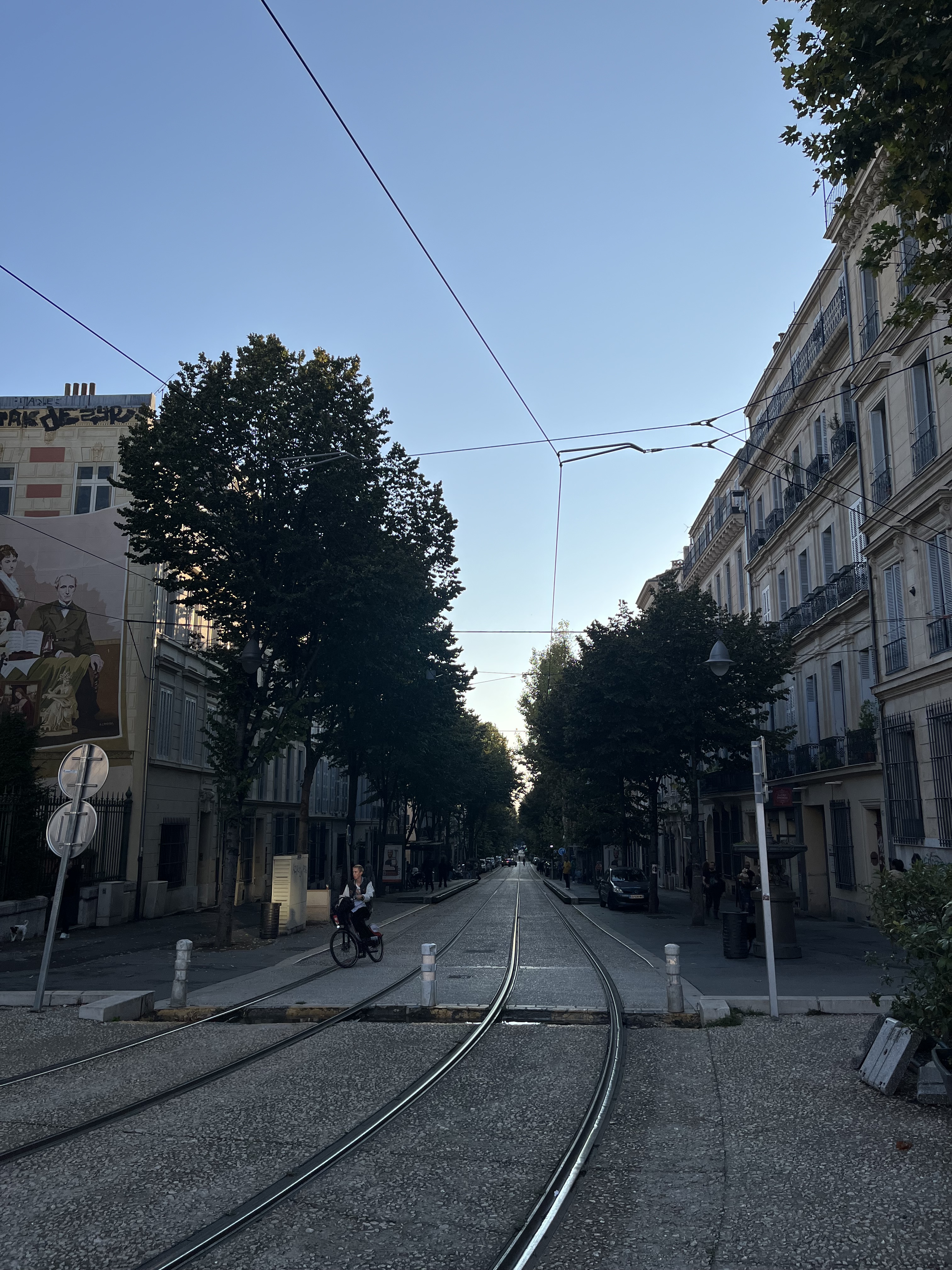
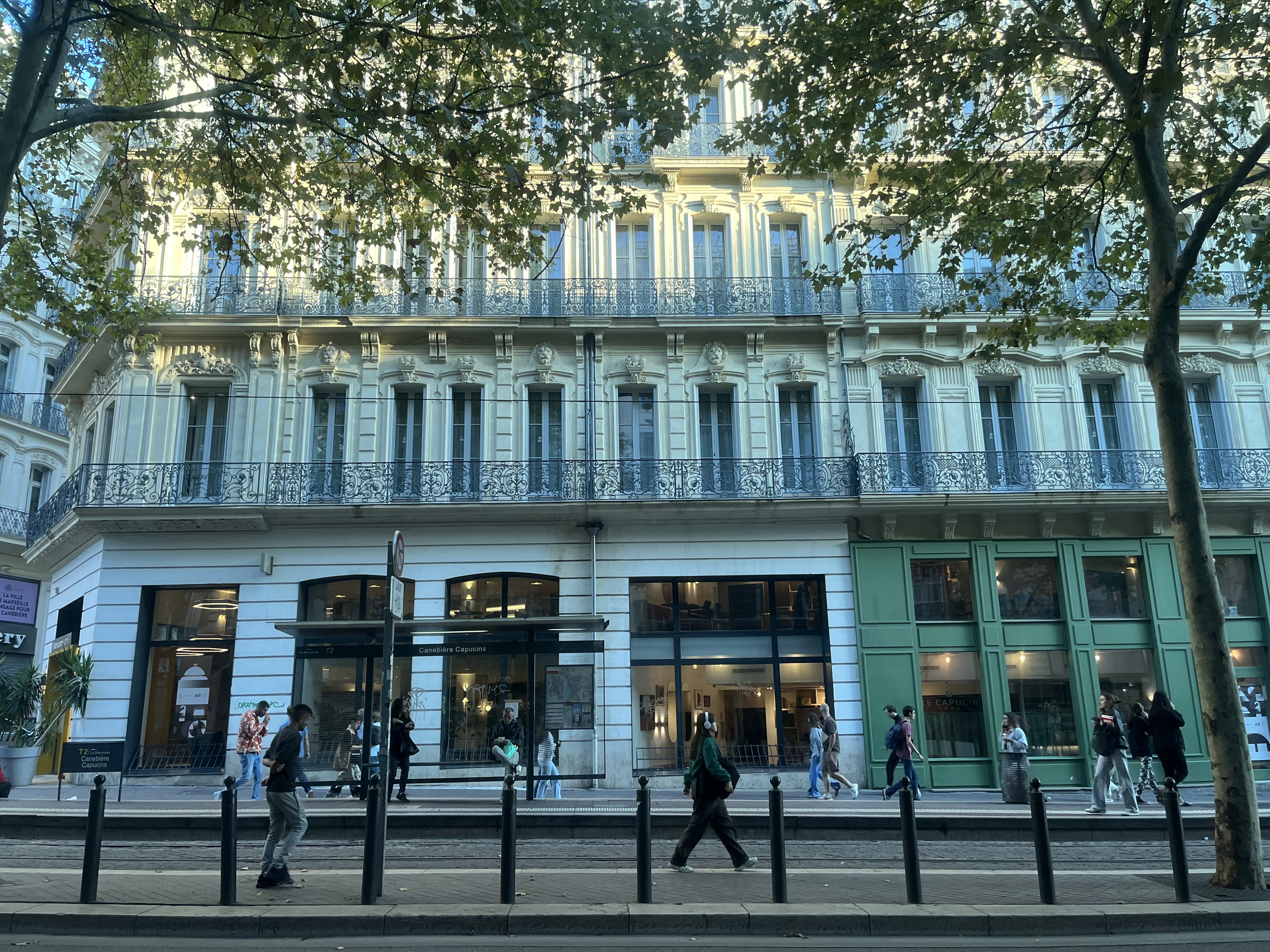
Maybe I’ve been wrong about Marseille this whole time. Because yes, there have been disappointments here, but so many more things have blown my mind: the view from the waterfront, the food, even just the way it looks. And I was expecting to be treated like excrement by the French waiters, but every establishment we’ve been to has been courteous, even friendly on occasion — this is a place that takes your expectations and prejudices, and then completely subverts then, surpasses them even. Even though I’ve been here less than 48 hours, my impressions of this city have lengthened and deepened, into something much more than just soaps, or brutalism, or stonefish soup; every one of these 2500-year-old streets contain charm and character, and I wish I could spend more time to scratch deeper than the surface.
I can only leave you with a few words of advice: should you find yourself aching to visit Marseille (hello, Charmaine!), don’t do what I did. Spend more than two short days here. Explore more of the city’s excellent shops, and zones, and culinary delights; dive deeper into the indelibly rich culture, richer even than the best bouillabaisse in town, that lurks within this city — you will find yourself more amply rewarded than you can imagine. But please, for the love of God and all that’s holy, avoid the Metro as much as you can.
And speaking of abandoning public transport, time to alight the tram and look out for dinner options. This time I’ve come prepared: we alight at the Quai de la Joliette and cross the road to the Terrasses du Port shopping centre. This shiny and new building sits at the entrance to the modern port of Marseille, just next to the docks with the ferries to Italy and across the Mediterranean to Algeria. After all the old, creaking infrastructure we’ve seen today, it’s a bit of a shock to come across a modern building that’s all polished glass and concrete, but the Terrasses is a lovely little edifice, airy and brightly-lit and filled with all sorts of creature comforts: there are children’s play areas, art installations, and most importantly air-conditioning.
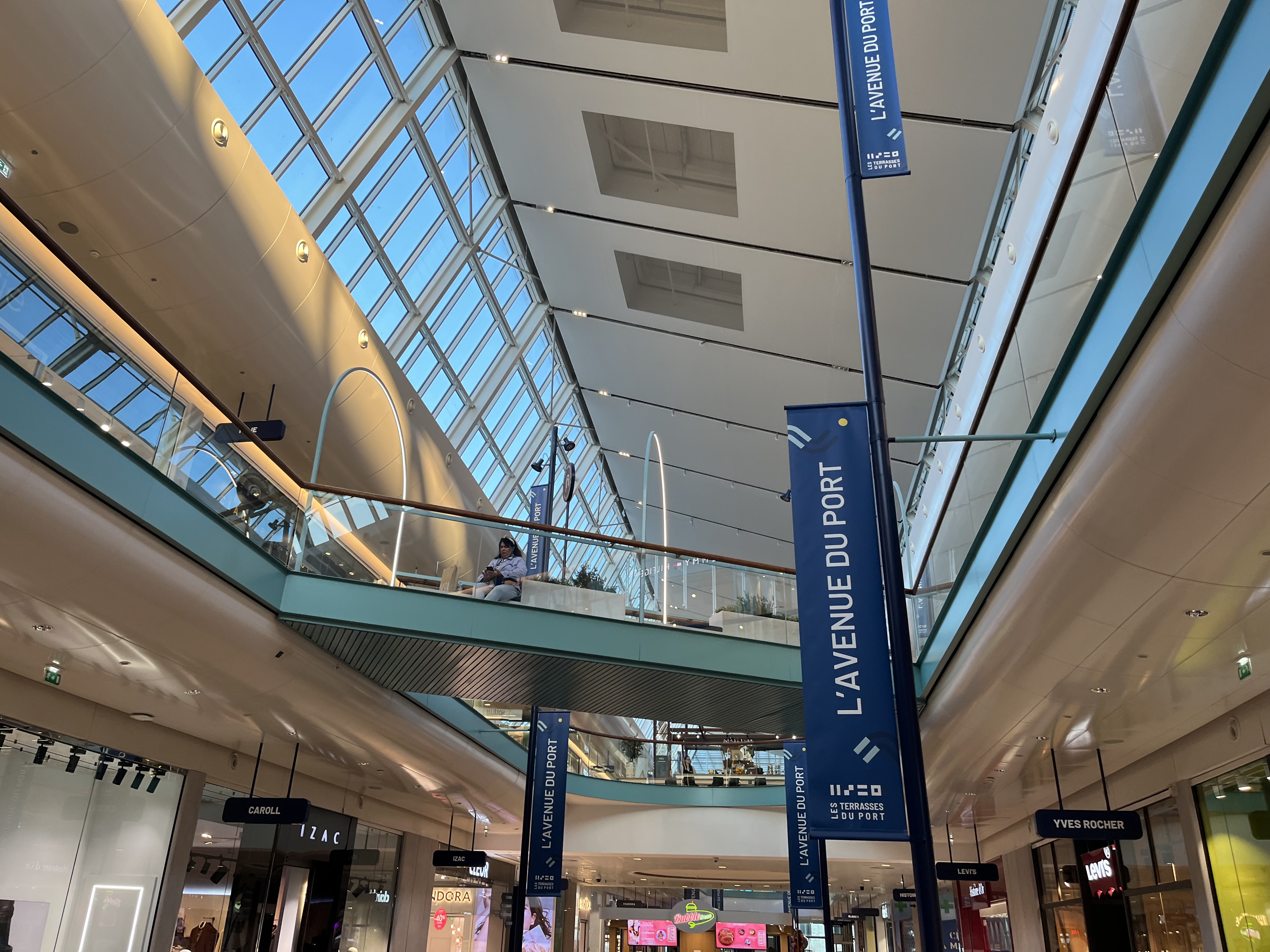
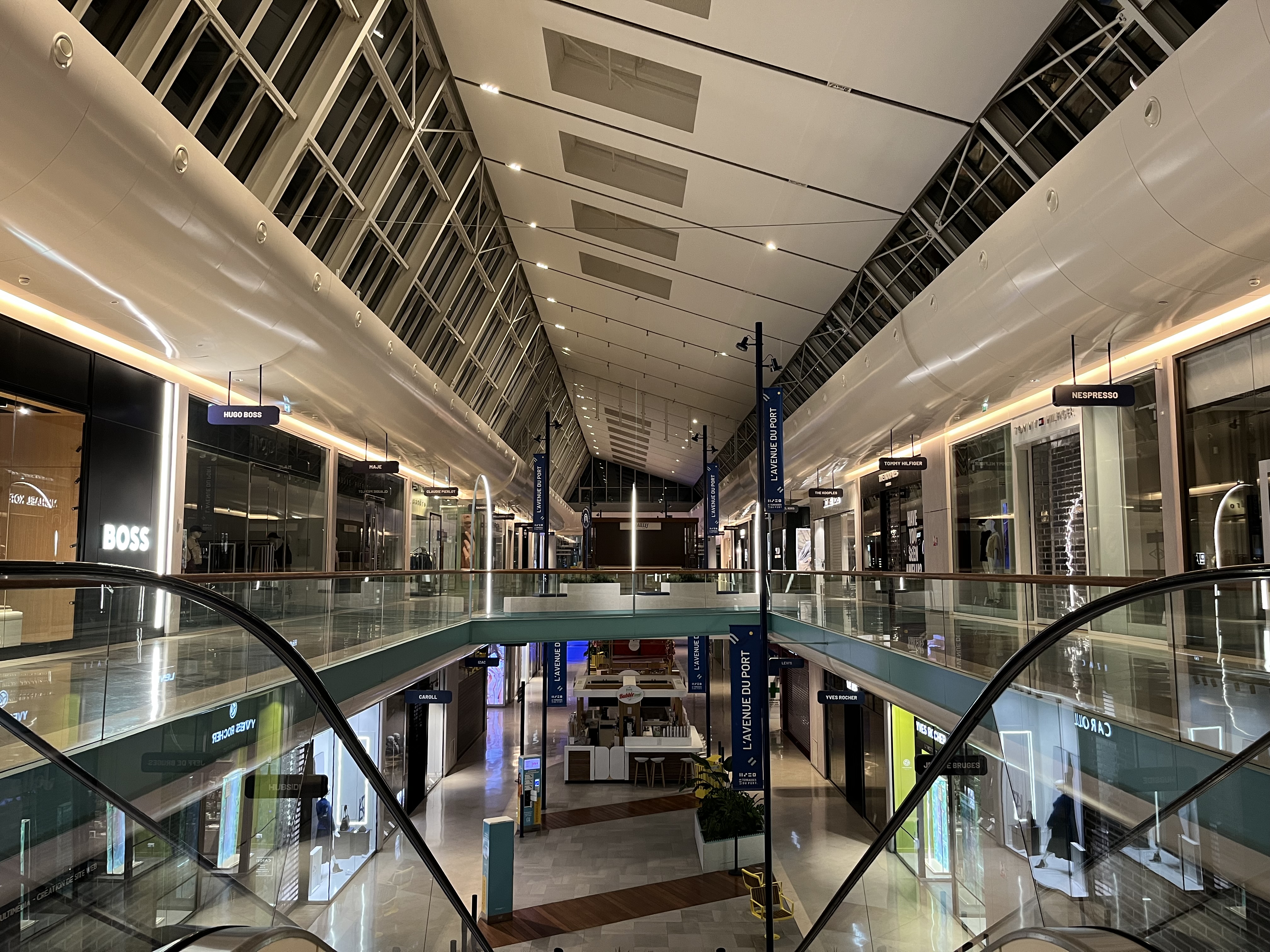
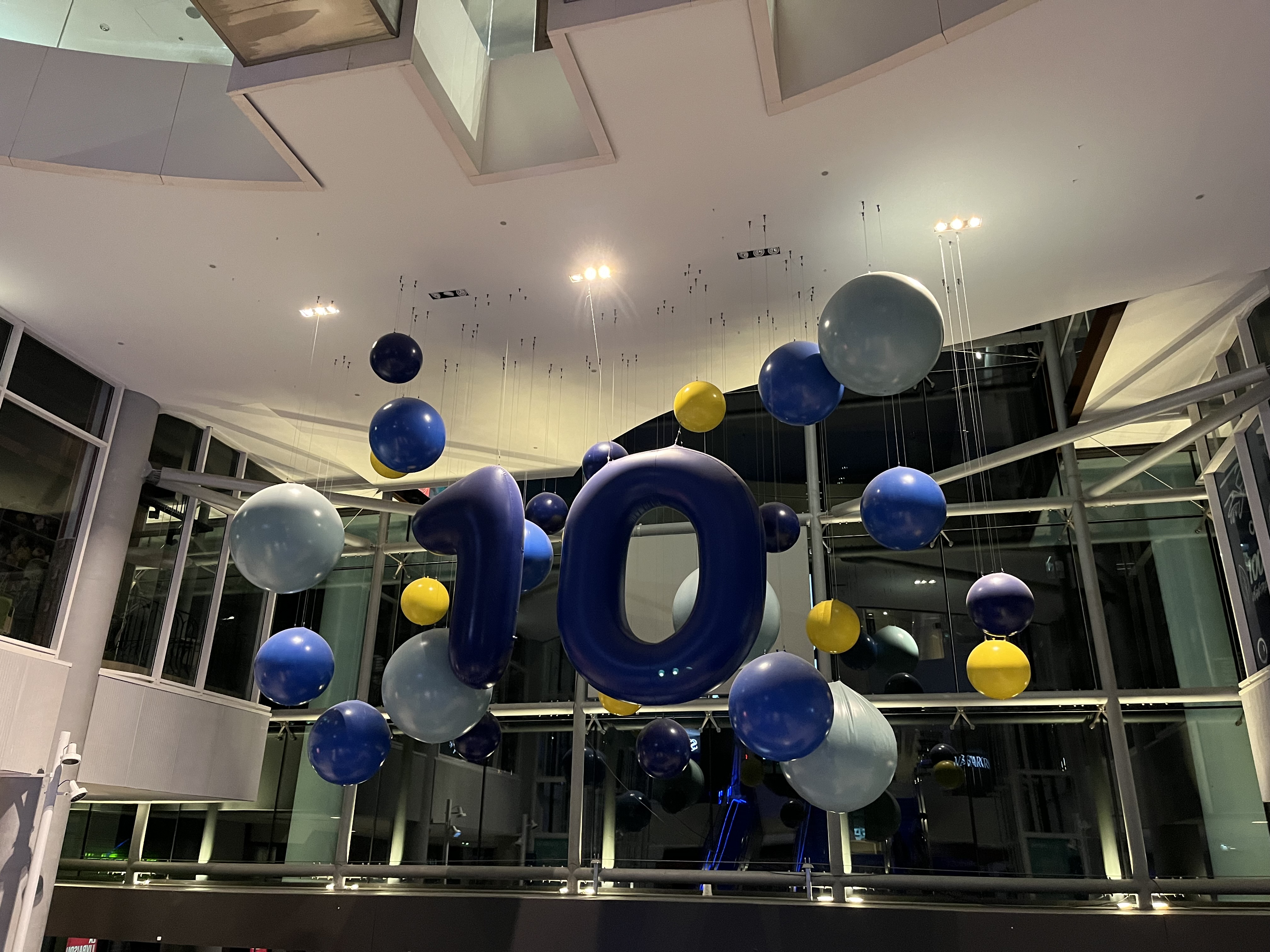
At the edge of the shopping centre is a Vapiano’s pasta bar, which readers may recall last made an appearance all those years ago in Vienna. I approach the restaurant, fully expecting to indoctrinate my family in the delights of German Italian cooking. At this point, however, Grace notices that it closes substantially later than the rest of the mall — it is the sole establishment that operates past eight o’clock — and declares that it is time to do some shopping before the other stores close. Not being a fan of retail therapy except when it comes to books, I decide to sit and sulk opposite Vapiano’s, in the largest easy chair I have ever seen in my life. (It is not enough to say that this chair is “big”. A Frenchman is big. A cruise ship is big. The storefronts selling all sorts of tat in the Terrasses are big. This easy chair is so gargantuan that it rises almost to the ceiling, at least twenty feet above my head; me and Dad plop our sorry arses in it, and can still find room to fit in our bags.)
The easy chair sits just opposite a set of screen doors that leads out onto the titular terrasses, on which I can just about spot other visitors loafing around in deck chairs, all of them thankfully smaller than the one I am in. A warm breeze blows in from the open door, and I must have dozed off for a minute or two; woken by the sound of the doors sliding open again, I decide to walk out onto the viewing platform and observe the peoples gathered there. As I step out, the warmth of the September evening wraps around me, still fuzzy and comforting; people sit on benches or at tables, or run around the deck with absolute abandon. My aunts are sitting side-by-side on two of the chairs, sunglasses on despite the late hour, dreamily gazing at the setting sun and chattering to each other.
It’s a perfect place to be sitting, too, for what greets us all is yet another amazing view of the harbour and the setting sun. You would never have thought that it was raining cats and dogs just this afternoon: the richness of the colours I saw just yesterday have returned, with (if it were possible) even more splendour than before. A golden yellow fills the horizon, deepening slowly as you raise your eyes higher; then all at once the yellow flames out, and you’re left with this entrancing, mesmerising blue. A patch or two of cloud rises up from far away, as if the sea itself has risen to do battle with the skies; meanwhile, the breakwater stretches past us and into the sea, its yellow halogen lamps casting flickering shadows on the water like candles. I have found the best sunset on this trip, and it comes to me on the second floor of a shopping centre.
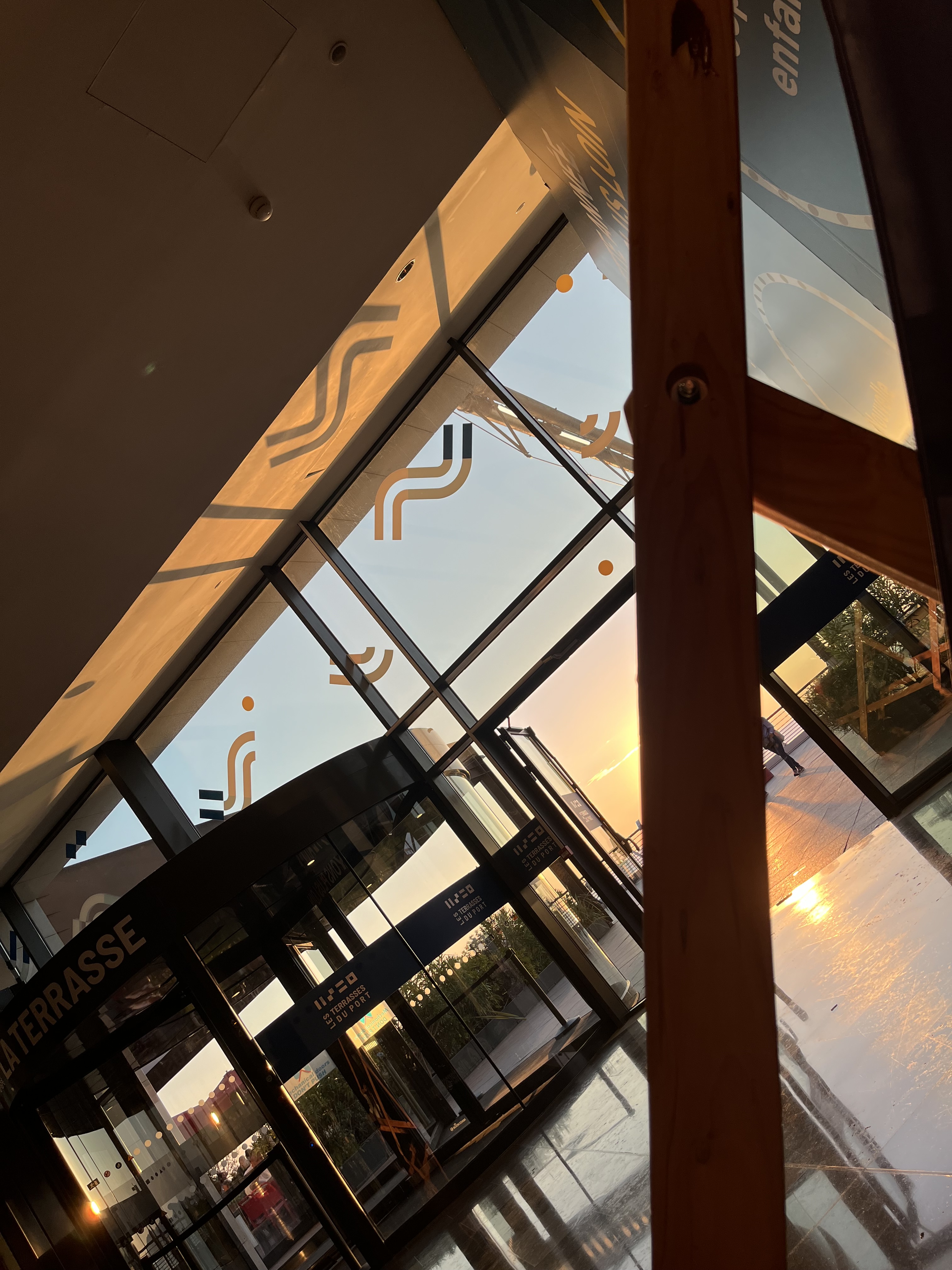
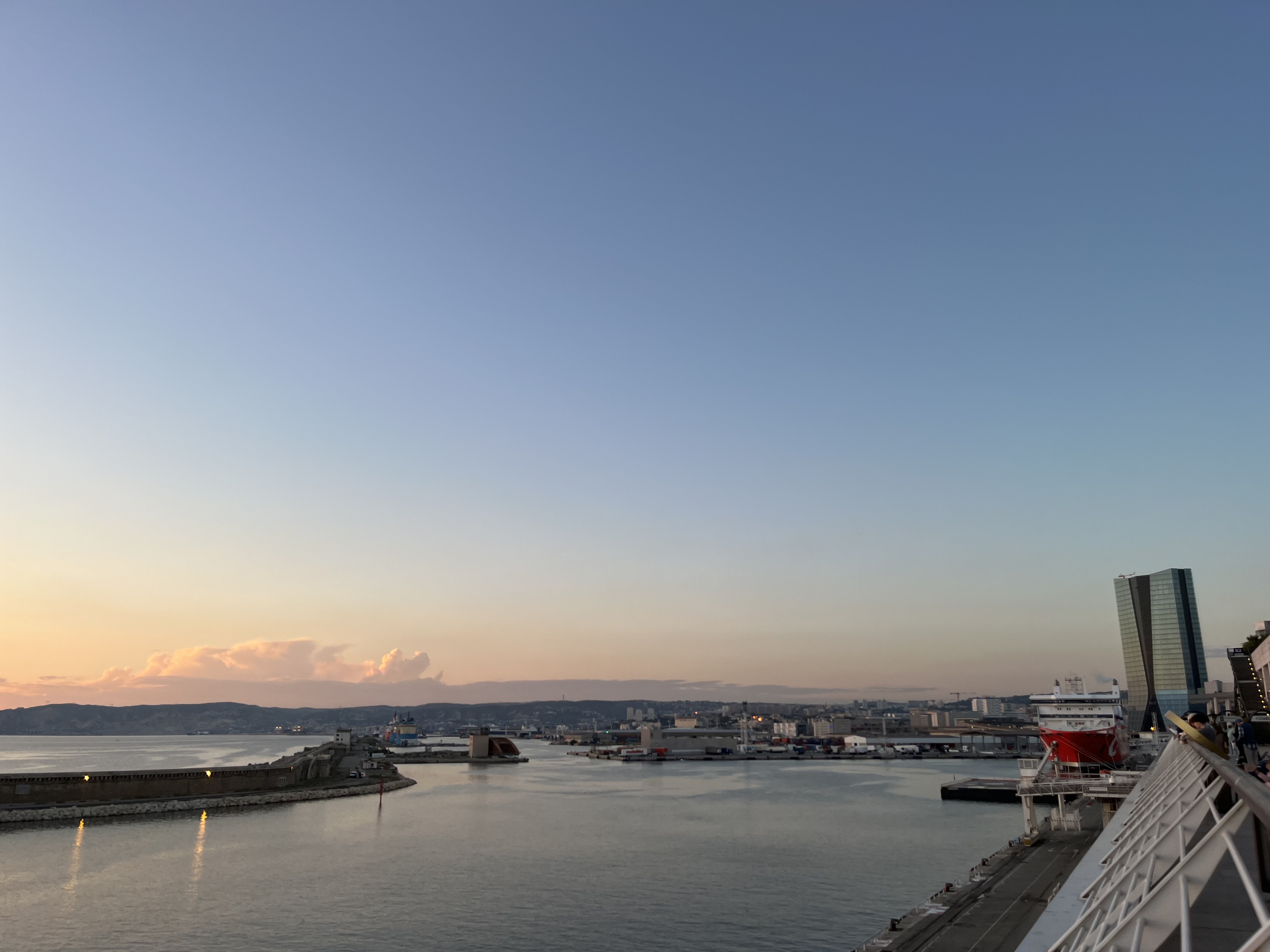
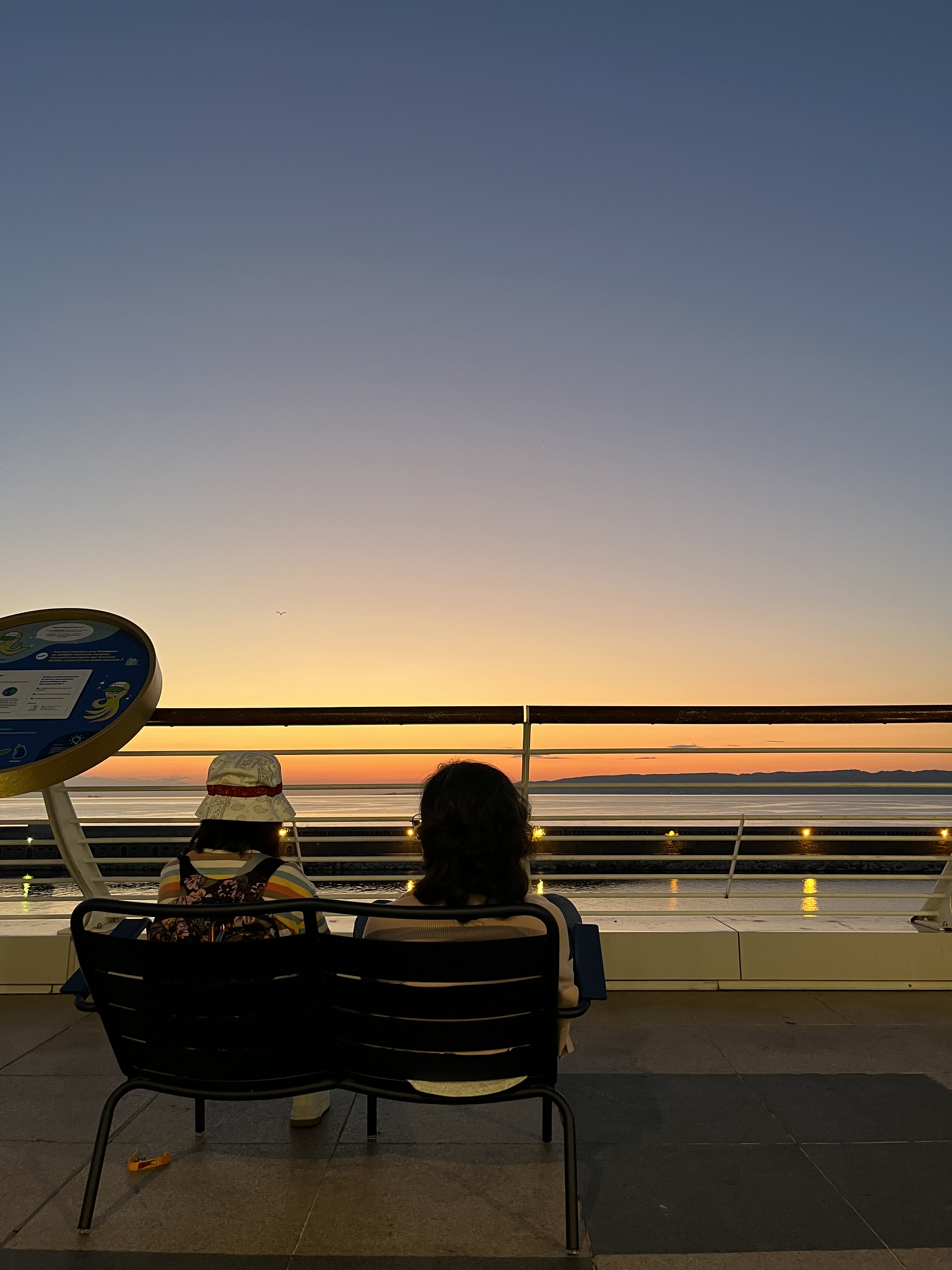
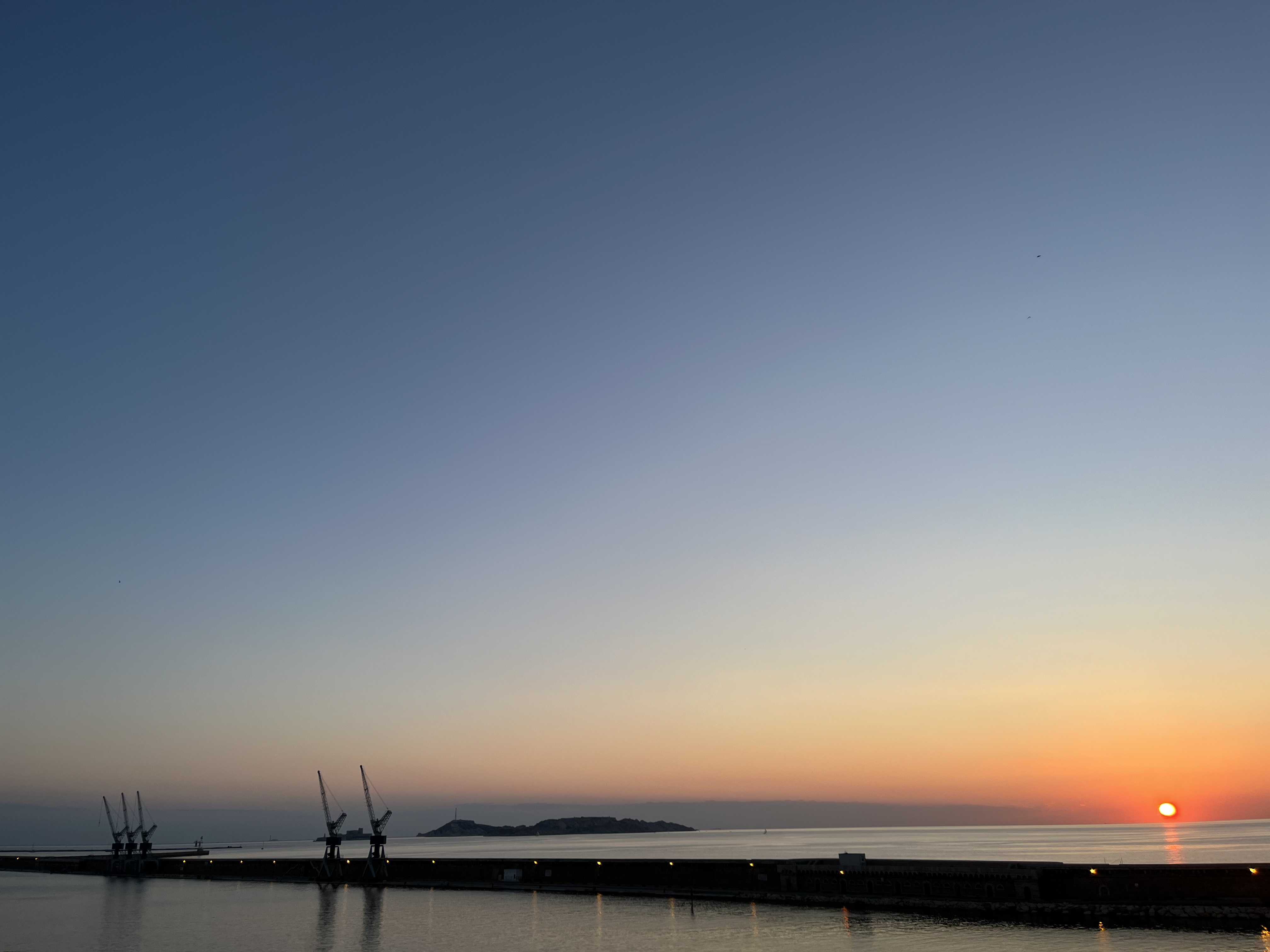
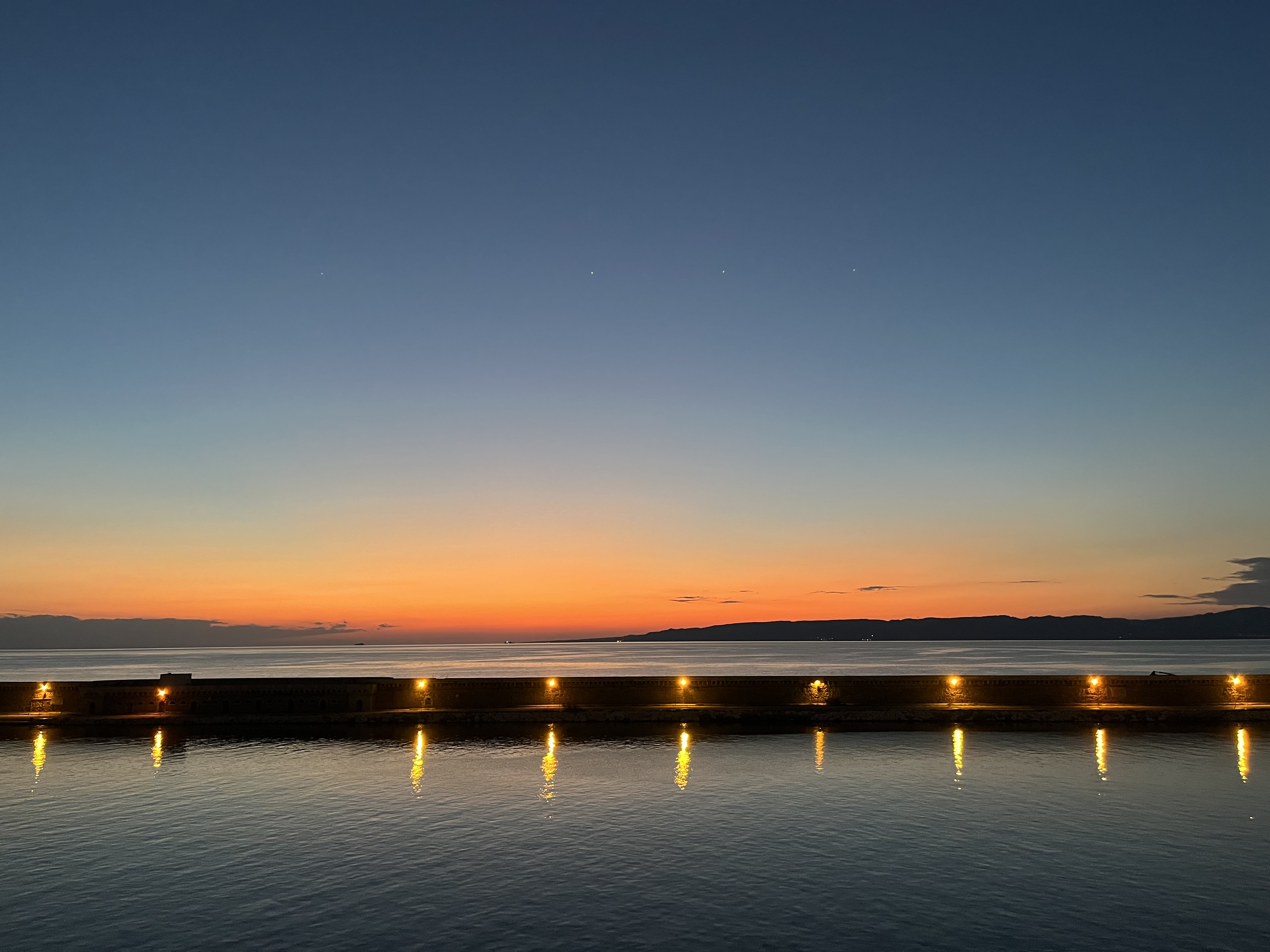
Eventually I walk back indoors, where I observe that another young man has occupied the large easy chair with a friend, and is vaping away directly underneath a massive smoke detector.
A perfectly competent dinner at Vapiano’s later (most of the staff had already gone home for the day, so ultimate we only get a normal pasta restaurant experience) we head back up the quiet roads of the old town to our hotel. Turn on the television in our room, and discover that France Télévisions is showing The Good, The Bad and the Ugly tonight. While Dad gets lost in the fluid charms of Sergio Leone’s filmmaking, I opt for the more pedestrian charms of the new US version of Have I Got News for You. Given the current state of American politics, I’m not missing out on the gunfire.


