29 March
Alarm goes off at 6. Turn about in bed and curse. The skies outside are still dark, and the air in the hotel feels more frigid than it’s ever been — which means getting out of bed is extra torture. As obsessive readers of my blog will probably know, normally I have a cardinal rule against waking up at such ungodly hours on holiday, but we’re supposed to be at Dongdaemun station in an hour and a half, so I hoist myself out of bed and stumble into the bathroom. Turn on the light, and am almost instantly blinded by the piercing white glare.
7:15. We step out into a chilly and damp spring morning. Although the sun’s been up for a while now, the light today seems extremely faded, as if a filter’s been added to my sleep-addled eyes. Nevertheless there are tourists already on the move — one strides right past us, suitcase and all, as we make our way towards our local metro station once more. Pass a few all-night restaurants on the way, a handful of male clients within; they all sit staring bleary-eyed into space, or huddled in a ball in front of their stews, their faces all scrunched up and sour. On the metro the faces aren’t that much improved either: behind the peach-coloured cheeks and the fancy eyelashes, there’s a weariness in the eyes of these young commuters that no amount of makeup can really obscure; same as it is everywhere else.
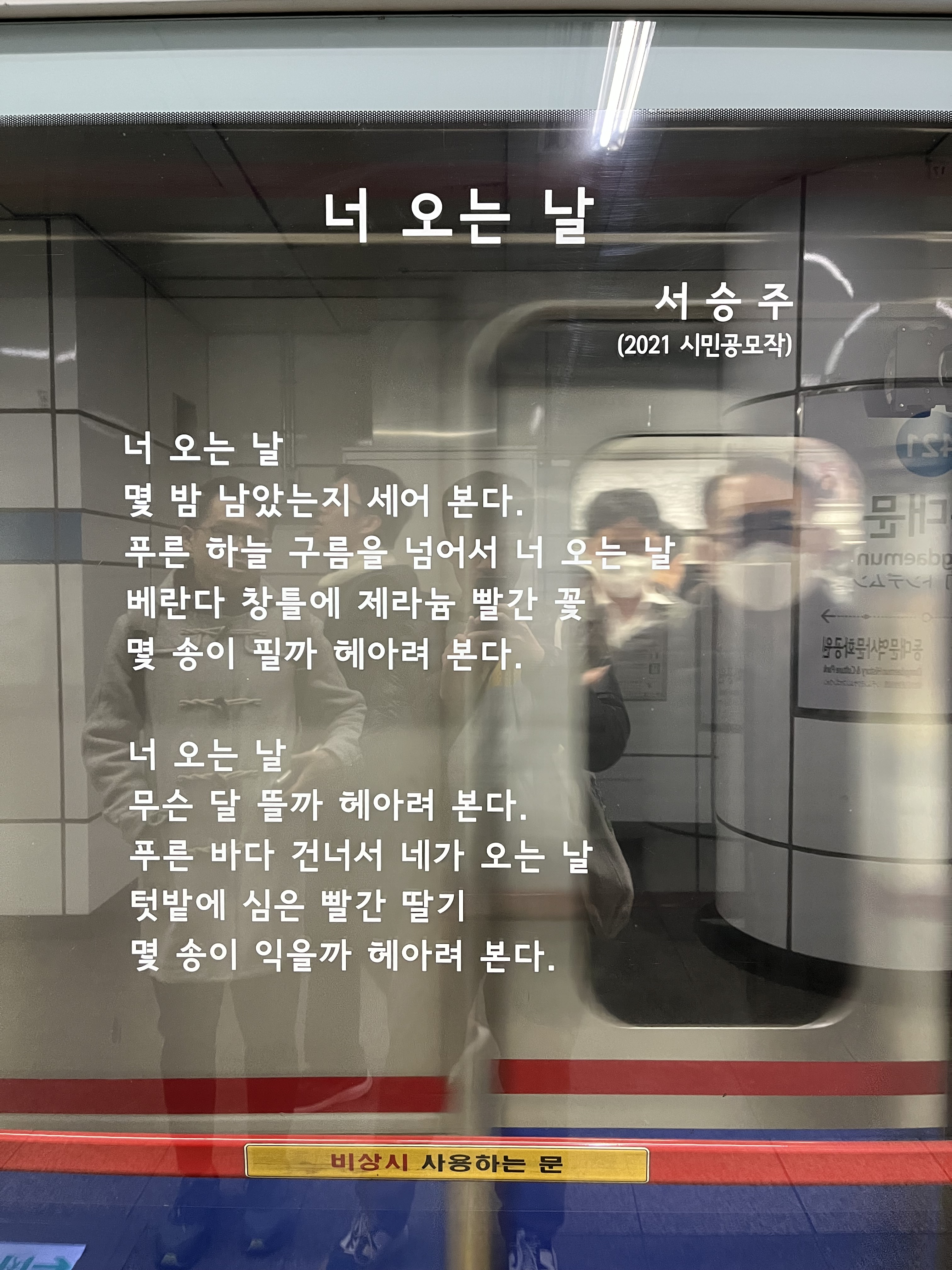
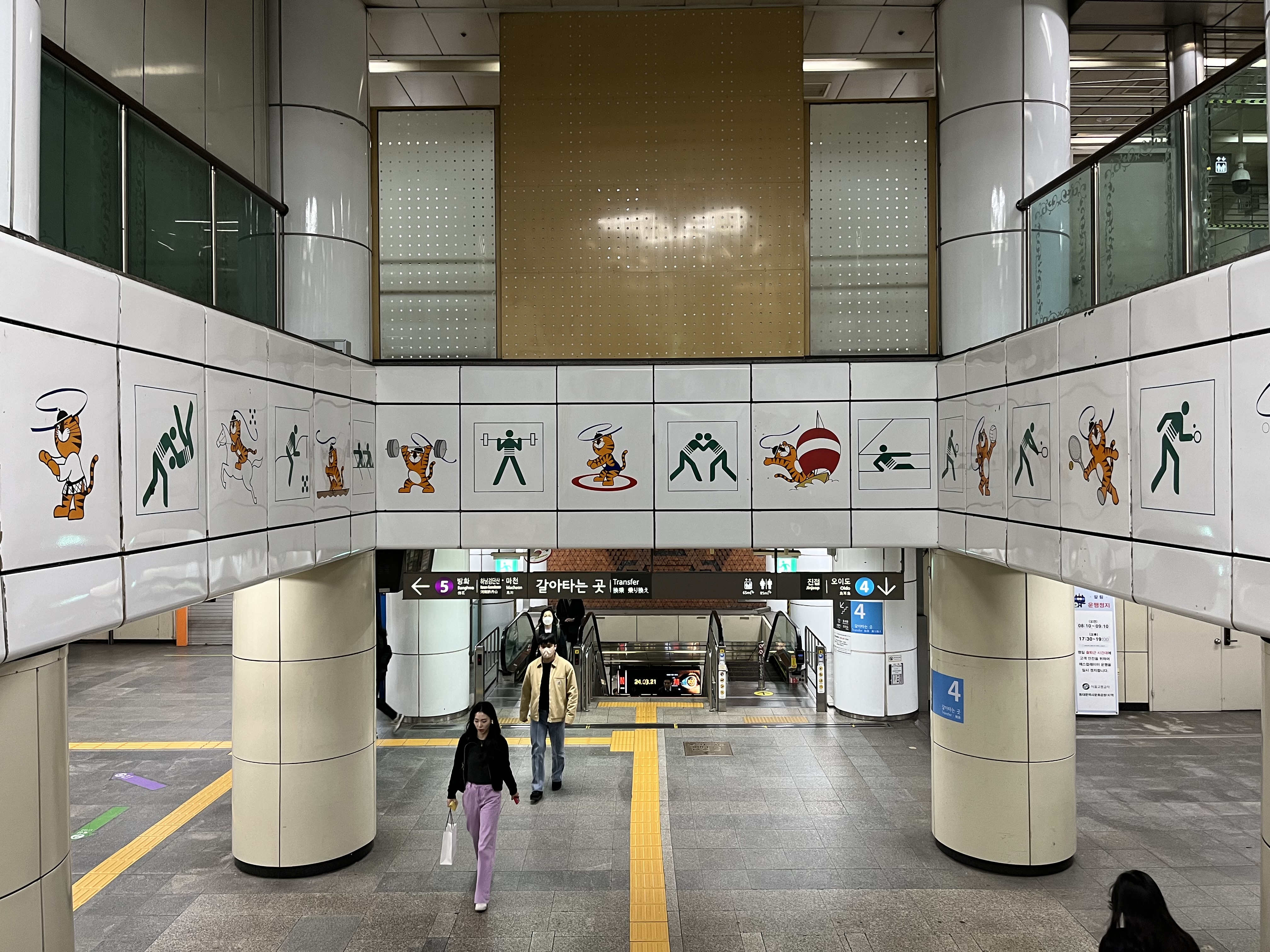

“Dongdaemun History & Culture Park station,” announce the carriage loudspeakers. Push our way out of the train and out onto the station platforms. The walls are decorated with pictures of Hodori, the cartoon tiger that was the mascot for the 1988 Summer Olympics; would have loved to stop and admire all their different poses (honestly, one of the cuter Olympic mascots we’ve had) but there’s just no time, we could miss the bus altogether, and so we rush through endless long passageways, through the labyrinth of corridors that make up this huge interchange and into the daylight once more. Loads of tour buses parked across the street — which one’s ours? We run down to the pedestrian crossing, which takes an agonisingly long time to switch to green; choose a bus at random and ask the anxious tour guide standing in front if there’s a reservation down for four boys from Hong Kong. “We’ve been trying to reach you for the past ten minutes!” she says, and we guiltily board the bus.
Once on the bus, we set off roaring down the avenues of Seoul. Our tour guide, Coco, has been doing this for a decade and a half, and it shows: she rattles off her patter with the monotone of someone who’s long memorised her script and can’t be bothered to refresh it. To be fair to her, many of the things she’s saying are actually a fascinating glimpse into her life (“I wake up at four in the morning for this tour, and get to bed at midnight, six days a week”), and her summary of our itinerary for the day is short and to-the-point; however, it being eight o’clock in the morning, our powers of retention are lower than the temperatures outside, so we shrug and decide to figure things out when we get to our destinations.


Meanwhile, our bus joins the motorcades of Seoul. Considering it’s rush hour, traffic is pleasantly light — only once do we slow down for a slight traffic incident, and once we’re past that our speed picks up for good. We cross the Han River, still murky and brown this morning, and flash by the Olympic Stadium, with the five huge rings proudly displayed on the concrete semicircle; imperceptibly we climb higher and higher, till suddenly Seoul is far below us, a distant, sparkling sea of glass and concrete. I barely have time to register all of this before it’s gone all too soon, replaced by the blank white walls of a tunnel. Without noticing it I fall asleep, lulled by the warmth of the bus and the gentle hum of the engine just underneath our seats, and all I remember of the next hour or so is the occasional flash of daylight as we run between tunnels, and the faded green of the trees crowding by the motorway.
When I finally manage to rouse myself from my slumber, the scenery has changed completely: we’re rolling down a road in the country, with not a single living creature in sight; there is only a rushing river to the side, a dilapidated hut, and some hills looming on the horizon, so dark and shadowy that they appear almost black. To my left, the boys are deep in slumber again, in accordance with much of the other passengers (even the kids on this vehicle are abnormally quiet, which as any parent will tell you is a godsend). After a while the bus slows down, and we turn into a desolate parking lot. I find myself leaning forward on my seat: through the window, the words “rail park” are just about visible, and my heartbeat leaps up a notch.

Okay, some background. My knowledge of the Korean railways isn’t as good as the ones they have in Europe, but Google tells me that we’ve arrived at the old alignment of the Gyeongchun line, a commuter railway that ran out of Seoul into Gangwon State; opened in 1936, the old line apparently gained some sort of reputation as an excellent day trip out of the capital. When the government decided to upgrade this line in the 2010s, this entire section was decommissioned and replaced; some enterprising soul then decided to convert the old section between Gimyujeong and Gangchon into a rail park — a place for people to ride modified bikes on the old rails. When it reopened a couple of years later, the rail park was an immediate smash, and I saw it on endless variety shows and K-dramas — and today, it’s our turn to play with it.
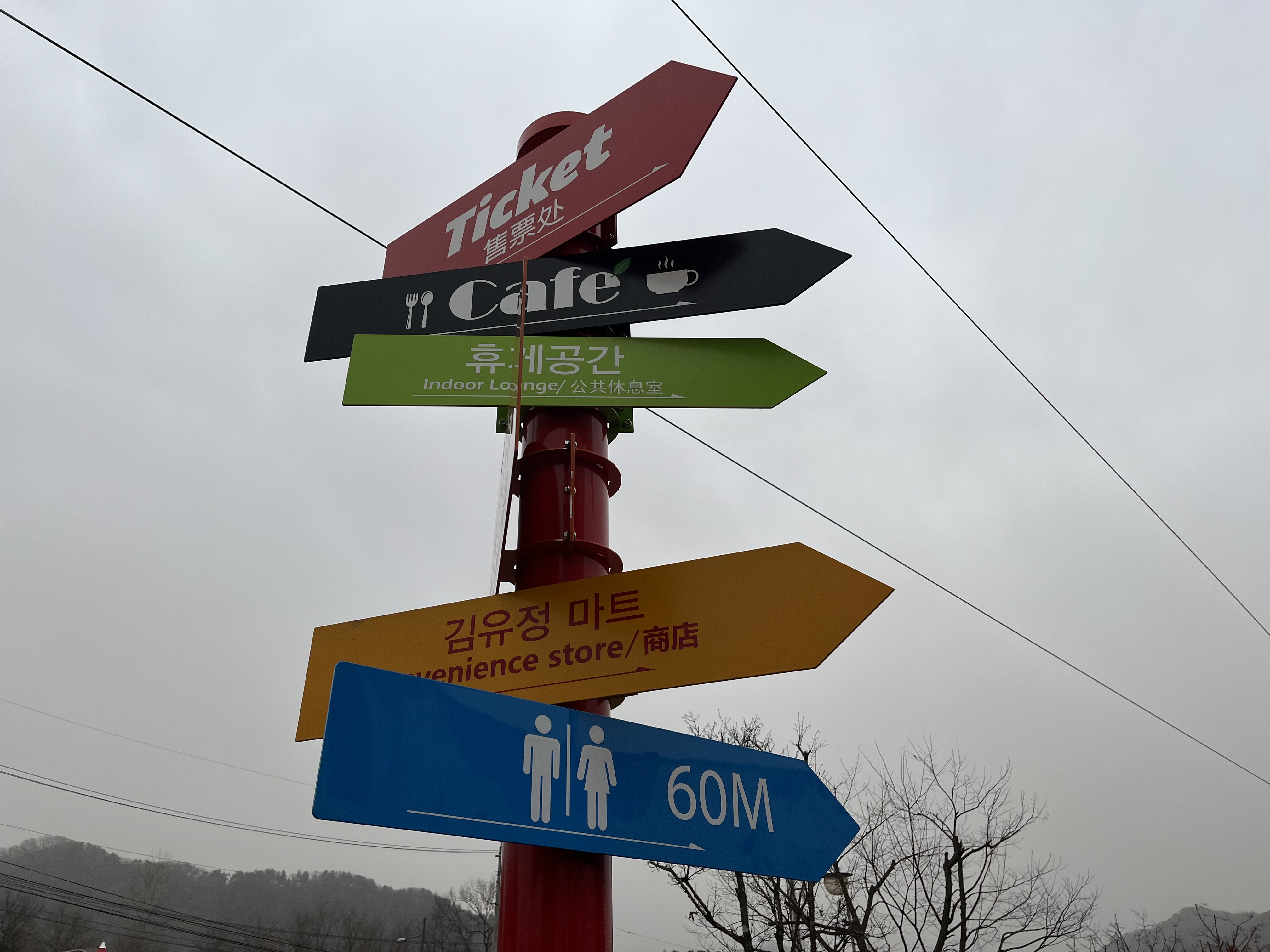
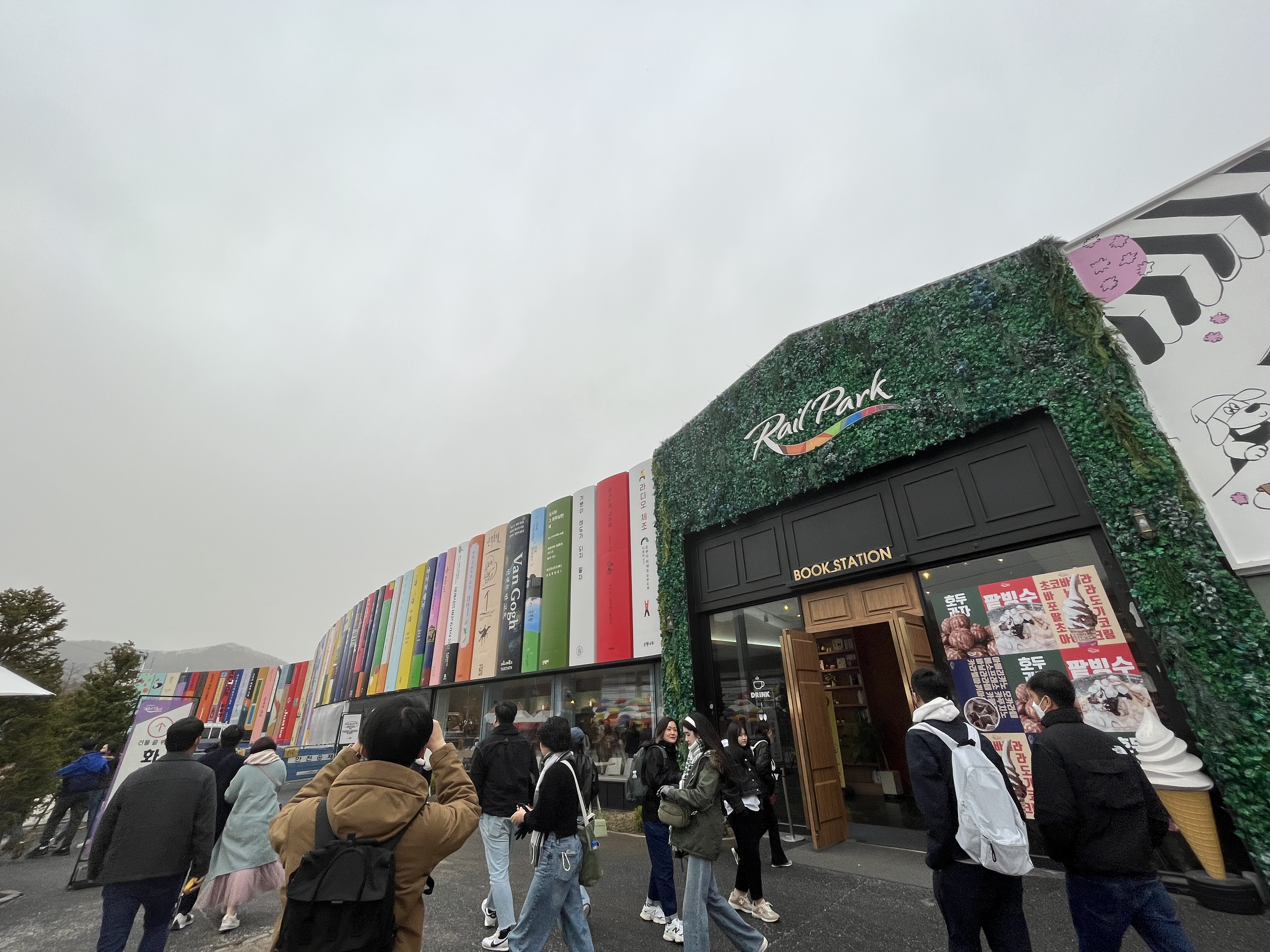
Some light drizzle begins falling as we disembark from the bus: heavy enough to be noticeable, yet light enough that none of us bother with opening our umbrellas. While everyone heads off to the toilet, we look around the starting zone. It’s classic tourist trap material: kitschy decorations strung from end to end, signposts in broken English, and a café so large it could almost be called a diner. Despite layers of down jackets and thermal undershirts the chill from the falling rain gets to me within about ten seconds, so after a few attempts at photos we all duck inside the café, where a booming business in coffee and croissants is being made, and where in amongst a library of fake cardboard books, I spot the title “Size Isn’t Everything” — a message rather undercut by the buxom lady prominently displayed on the cover.


Eventually the clock strikes 10, and our tour group is herded towards the railbikes. The landing where we get on used to be a railway platform, though you’d never guess it from the way it’s been primped up: opened umbrellas strung out above our heads, wooden walkways and flowerbeds, and of course a huge orange canopy draped across the tracks itself. The lavish decorations of the platforms stand in stark contrast to the railbikes themselves, which are spartan affairs, not much more than a steel carriage with two seats at the front and two at the back; pedals, handbrakes and a thin canopy over the top completes the entire set. Briefly consider the front row as it offers unimpeded views of the track ahead, but then I realise I do not want the North Wind buffeting me in the face for 50 minutes non-stop, so Sunny and I scoot into the back while Eugene and Daniel plop into the seats in front.


As we get ready to leave, the chaos around us amplifies. Families shout over each other’s heads, trying to get their bikes to work or snap a quick photo before they depart. Coco walks around the landing, wishing us good luck (?!) and bidding us goodbye, while a staff member comes around to check on our seatbelts and making us promise we won’t get up to any naughty stuff while we’re on the tracks. Then the long queue of orange chasses in front of us stretches, thins, and we start moving amidst the ruckus; then suddenly the canopy disappears and we are off, careening down an embankment at astonishing speed, with nothing but miles of fields and houses, far as the eye can see.
Reader, if you have never ridden on a railbike through windswept countryside, then I urge you to close this browser page and book tickets to South Korea posthaste. On the face of it, it sounds like just another bicycle ride, albeit on specially designed rails; but it is far more exciting, far more emotional than that. You have the indescribable initial thrill of rolling down a desolate hillside, the speed just fast enough to make you feel like everything’s out of control; then as you reach the bottom and the bike slows down, you finally remember to look around you and take in the scenery, and the thrill gets replaced by wonder as you see the wide wide river, the faded grass, and above all the animals that graze about within hand’s reach. (Has any farmer lost a chicken or two that way before? That might explain the fences.) But as the clatter of metal on metal settles into a steady rhythm, gradually you learn to look farther afield — at the mountains, at the settlements, as far as the horizon and the skies above. Then you are overtaken by a sense of calm, while the world breaks away and nothing intrudes upon your little island of propulsion. Apropos of nothing, a couple of lines from Mike Oldfield’s “On Horseback” flash through my mind:
Hey and away we go, through the grass, across the snow
Big brown beastie, big brown face
I’d rather be with you than flying through space
It all feels very, very freeing.


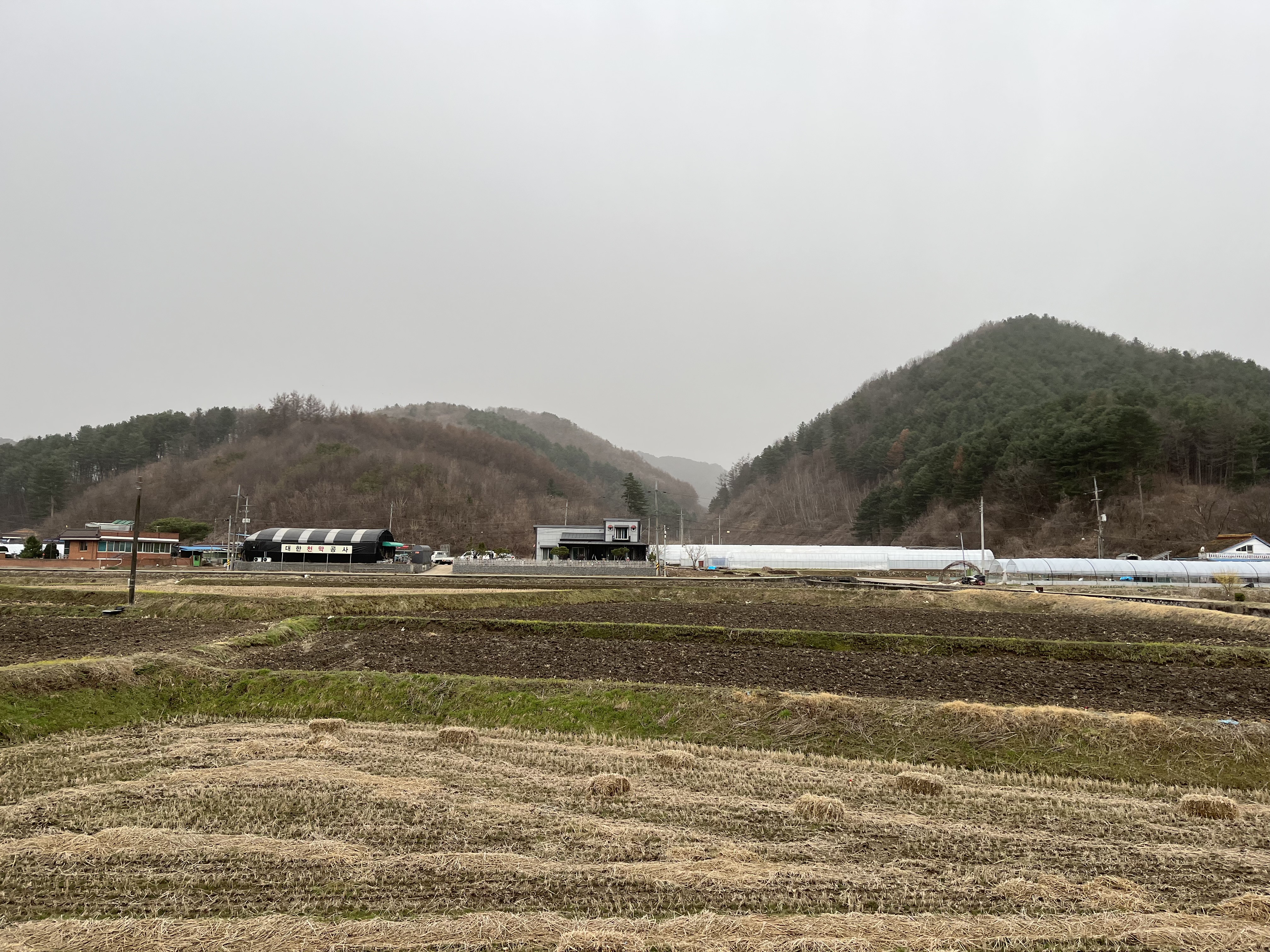
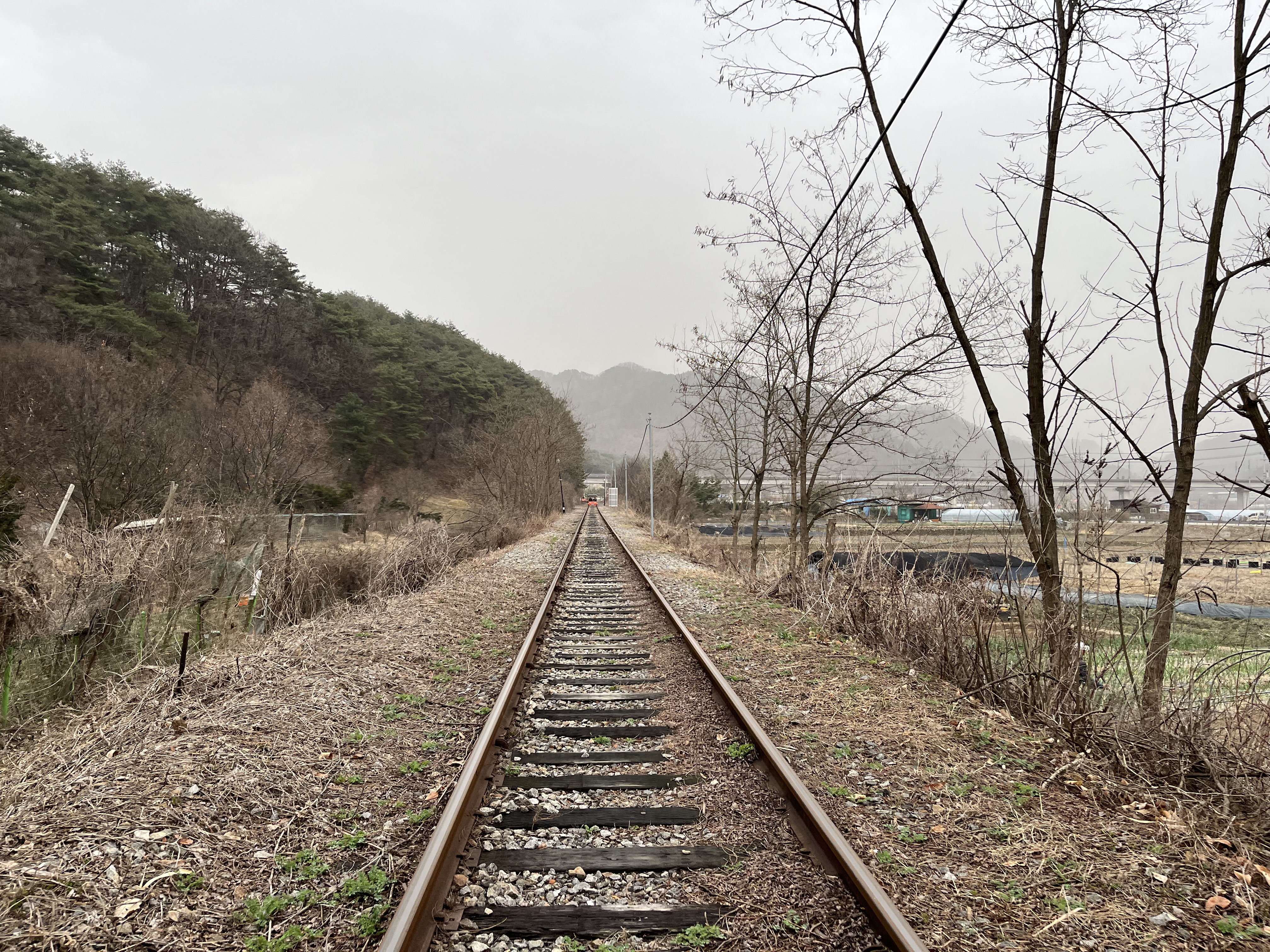
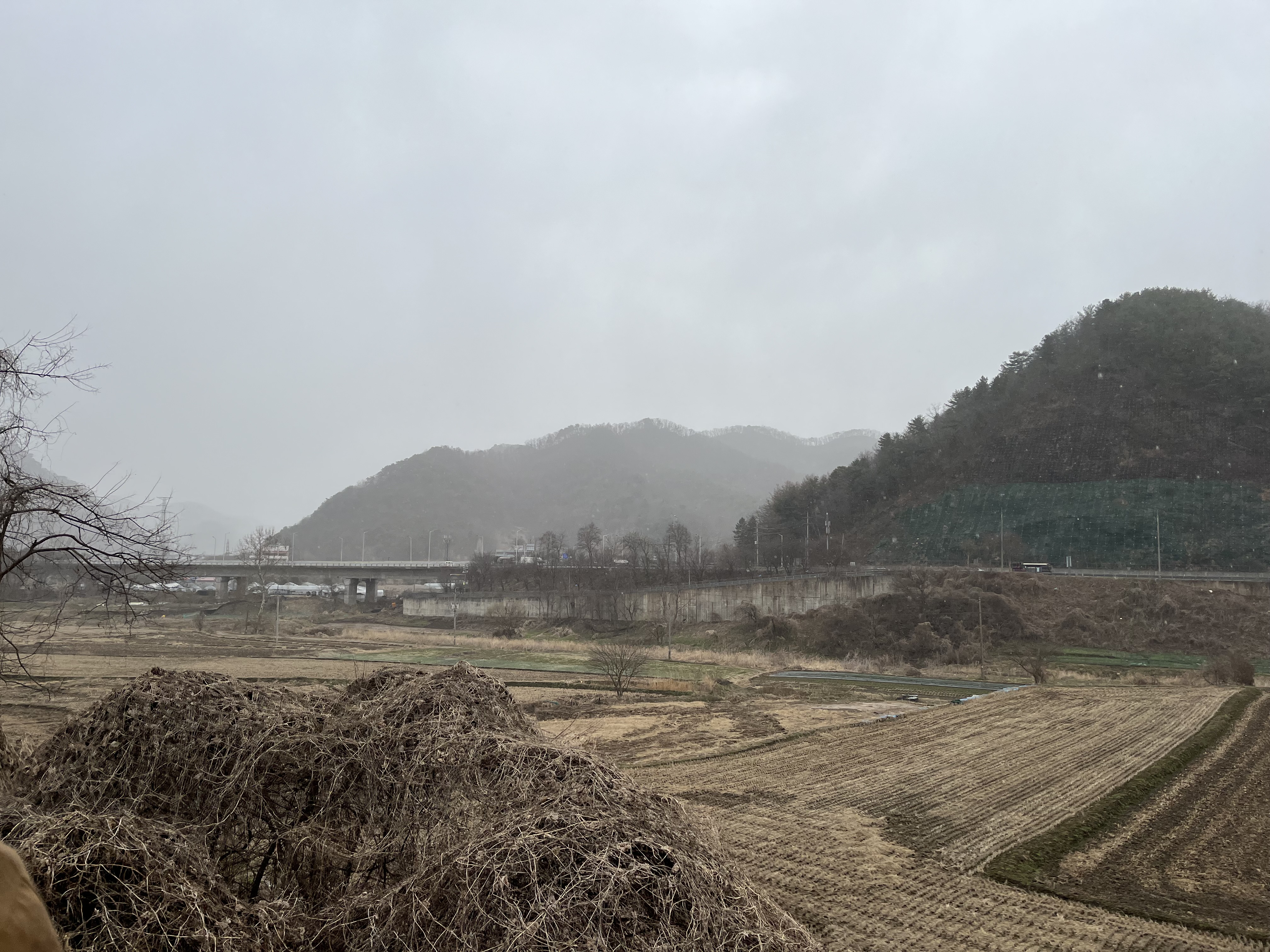
It also feels very, very wet. Cycling through windswept countryside is not an easy job at the best of times, but the drizzle that greeted us half an hour ago has intensified into a downpour, and the plastic canopy above our heads is no match for rain that comes in at gravity-defying angles and drips right into my down jacket. Add to that an air temperature of SEVEN degrees Celsius — almost Arctic for someone from the (sub)tropics like me — and the result is a frozen right arm on one very irritated young man. “I AM VERY COLD,” I shout to my friends. Then, just to make sure they completely understand my discomfort, I shout it about three dozen more times.
The railbike convoy slows down, partially because some knob at the front has stopped to selfie with the animals, but also because we are approaching the first of many tunnels on this ride. The second half of the ride snakes its way through a lot of mountains, and between us and our destination are at least four tunnels which date back to the line’s construction. Now, riding through old, dark, damp tunnels — some of them more than a kilometre long — may not sound like an attractive proposition, but as we pedal onwards it becomes apparent that the people in charge of the rail park have really gone above and beyond in livening it up for their clientele.

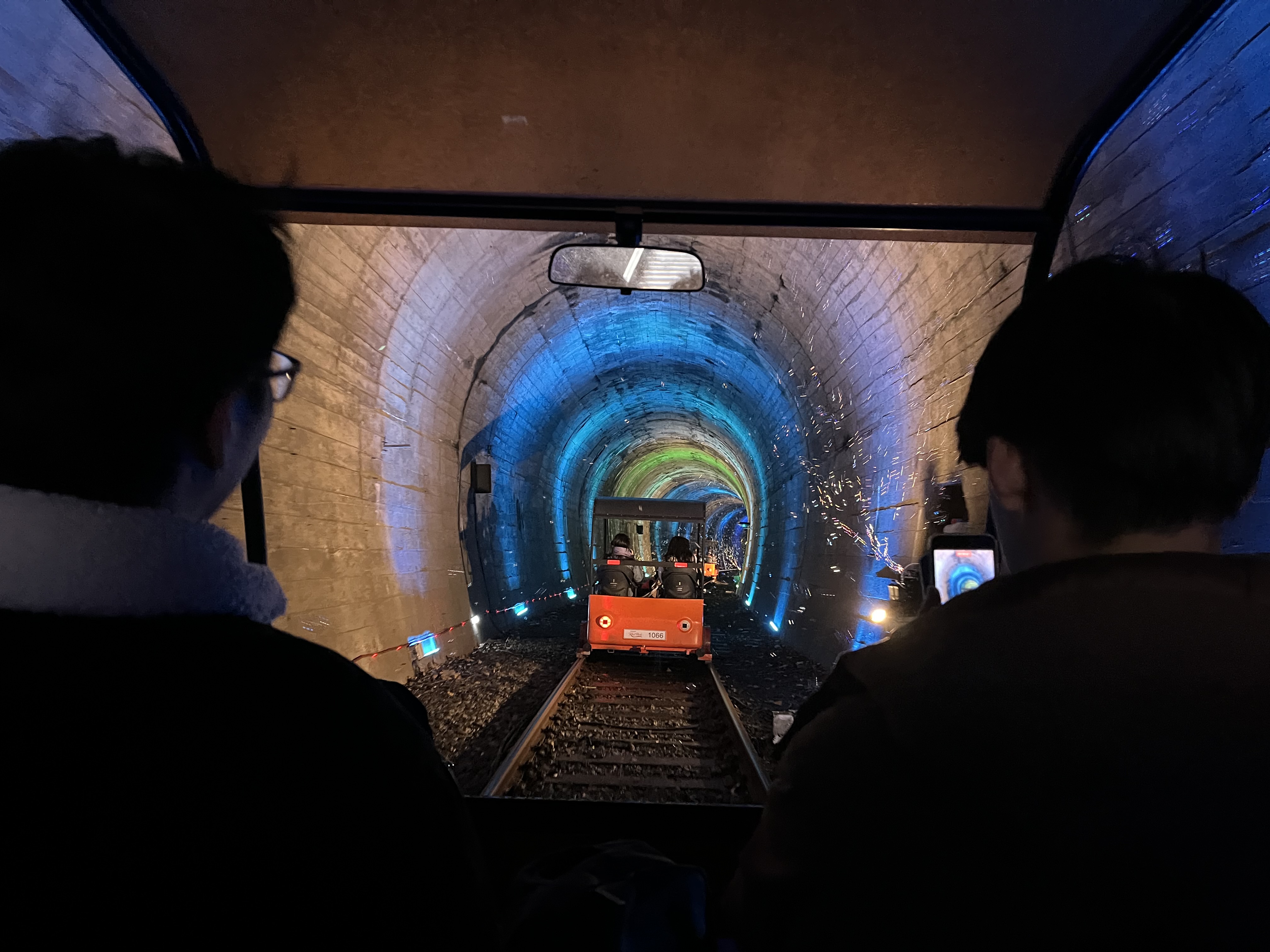
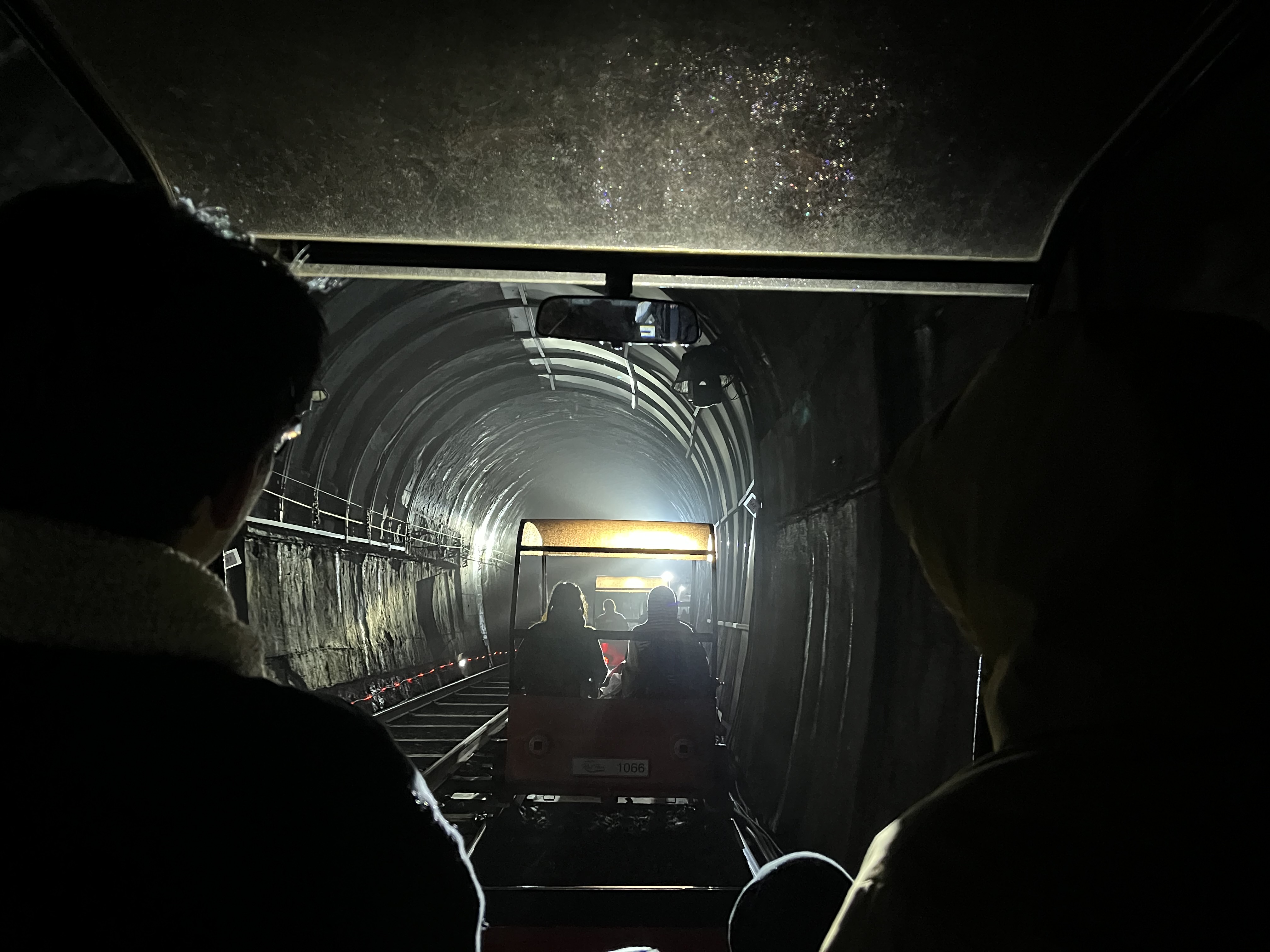
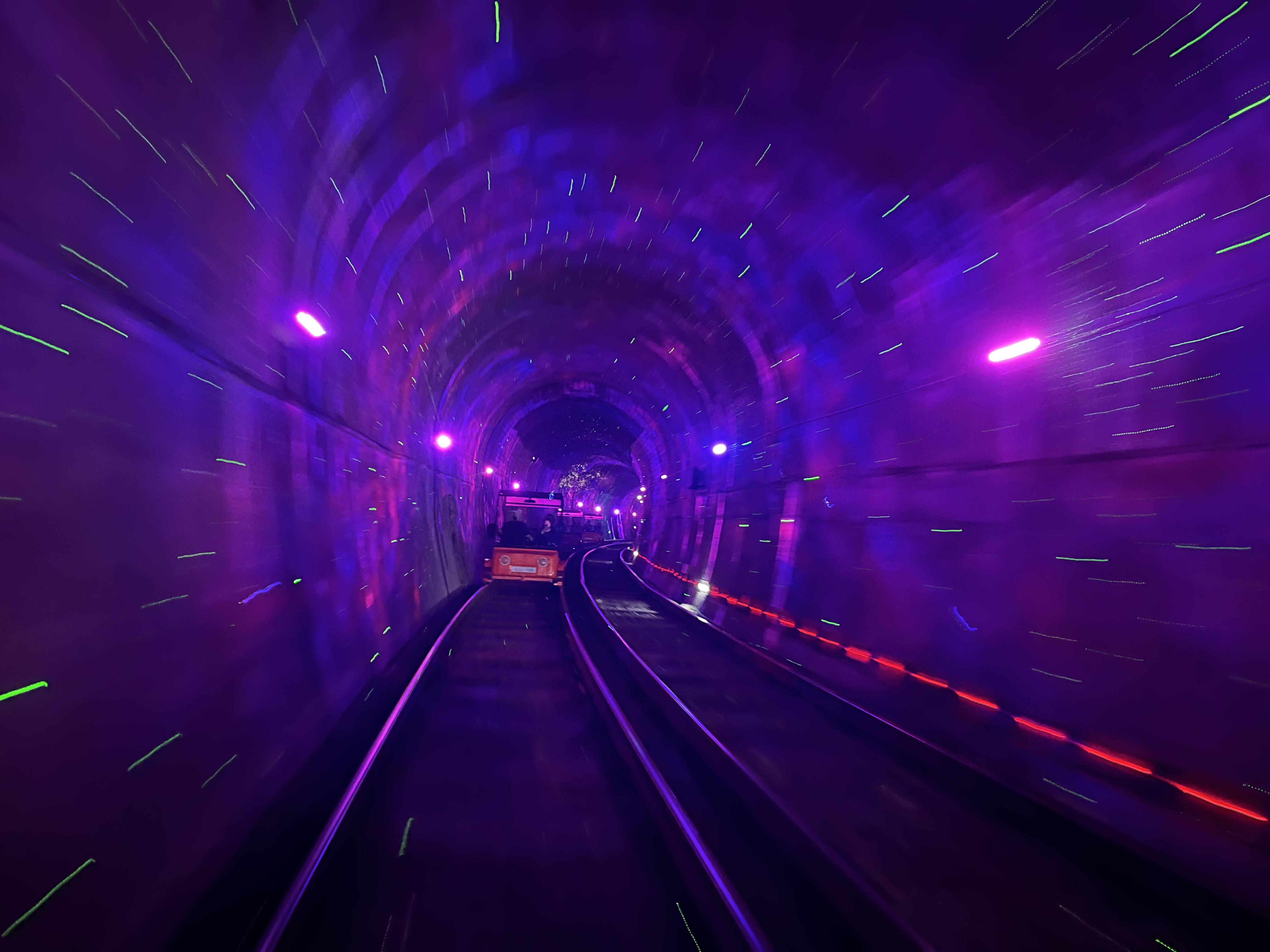
At first, they look rather low-effort: the first tunnel has nothing but white lights and a row of colourful paper windmills; the next one has more colourful lighting, but doesn’t do much else other than gently blow bubbles into our faces. But then it starts ramping up: the lighting for the third tunnel is mind-bending psychedelia, complete with dots on the wall that could easily be mistaken for fireflies, while fantasy-movie music wafts through the air — all very Aladdin’s cave. But nothing beats the last and longest tunnel, which is a complete volte-face from the last three: even before the tunnel entrance comes into view, we can already hear its raucous soundtrack blasting away, and upon entrance we are immediately half-blinded by the lasers flashing on and off in the darkness. (I guess they weren’t kidding with that epilepsy warning when we got on.) Having never been to raves before, I’m caught out by how the EDM seems to carve a direct path into my body: not only my eardrums, but also my brain, my stomach, my lungs all seem to be vibrating uncontrollably, while the stone walls around us flash white and yellow and blue and God knows how many other colours. I’m pretty sure there are raves in Seoul that are less of a sensory overload than this place, but all the same it’s a unique kind of fun, and part of me thinks as we exit that if only more railways would turn their tunnels into discotheques, public transport would become MUCH more popular.
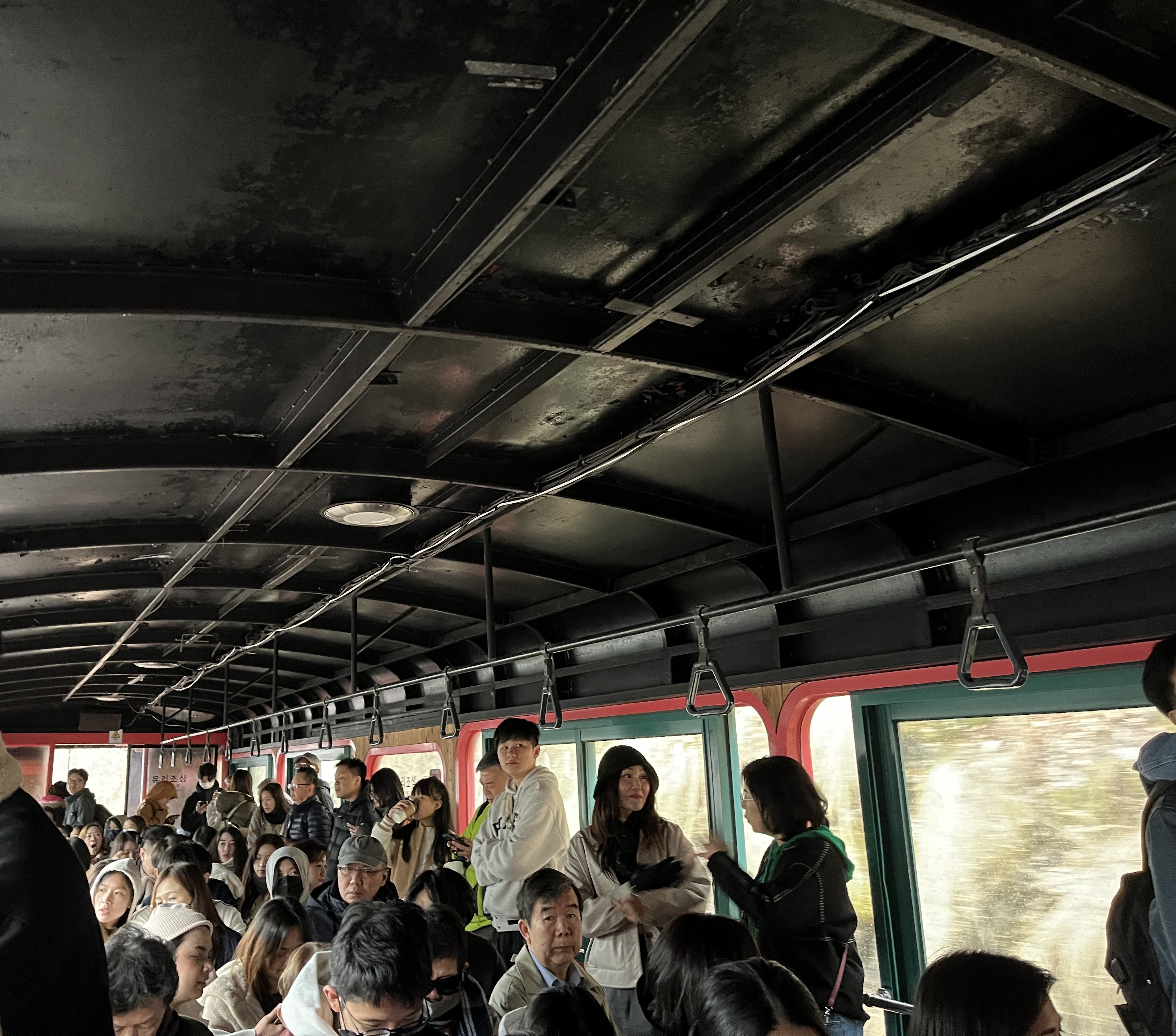
We pull off into a siding. Although there’s still some way to go before the old Gangchon station, we’re changing onto a train for the last third of our journey. Said train is currently nowhere to be seen, though, so while most of our fellow riders disappear into the wholly ineffective tent standing on the platform, others crowd around a kiosk selling fishcakes and sausages and other good things to eat when the temperature is five above freezing. Daniel and I head off to the outhouse at the far end of the station, which is little more than a wooden hut with a hole in the ground. When we emerge, the train is sitting at the platform and most of the visitors have disappeared, so the two of us rush up into the rear carriage seconds before it pulls out of the station. Apparently this part of the track was very popular with young lovers back in the 80s, to the point where a K-pop song was written about it — and that song is what floats through the carriage as we trundle along the tracks, the rain lashing against the windows. Can’t quite imagine how it was for all those kids way back then, but judging from the chatter in the carriage, a nice time on this cold, cramped and rather musty train is apparently possible.


Retire to a nearby restaurant for lunch. One of the most surprising things I’ve discovered about South Korea on this trip is just how much they’re into cast iron pots and grills: in the past couple of days alone, we’ve had Korean barbeque, sol-sot rice, huge stews. But none of them really measures up to the huge stir-fry pan that greets us as we sit down at the table, onto which is added a huge amount of marinated chicken, vegetables and rice; pretty soon the spices and the cheese start bubbling away, their aroma rising from the table and filling the room. My stomach is rumbling hard before I even know it, and it is with great difficulty that I resist shoving my face into the pan and chowing down on half-cooked chicken. Just as we’re about to dig in, Coco comes up to us — “you boys can take care of yourselves, right?” — and slaps me hard on the back, sending me face-first into my plastic bowl.
Lunch over, we walk out into a parking lot. The downpour continues unabated as we pass scores of tour buses and private cars; above our heads, a huge steel edifice rises high into the sky, its skeletal structure making horror-film noises. Lifting my umbrella just long enough to look up, I can see the two zipwires that stream out from the top of the tower, an unsightly dark streak against the sky. We follow them across the parking lot and onto a ferry pier, where yet another snaking queue sits under a wooden canopy with the words “Naminara Republic” written on it — the name, as it happens, of our next destination.


The name might not ring a bell with most of my readers, but the Naminara Republic — or to use its less pretentious name, Nami Island — might just be the culmination of all those K-drama mentions I’ve been doing throughout this journal. Although it’s barely an hour’s drive or ride from Seoul, it’s gained a reputation as one of the most ethereal places in the country, and for good reason: from the quaint houses and sculptures that greet you as you arrive, to the towering trees that line its numerous paths and the petite animals that roam freely around the island, this is a place that seems very much out of this world; no surprise, then, that all the K-dramas want to shoot at this place, and that it’s become a magnet for tourists seeking a reprieve from the hustle and bustle of the capital city. It’s just one of those places that look absolutely stunning.
On second thought, a correction: it looks stunning, if you come here when the weather is good. Unfortunately it’s still raining quite heavily as we disembark from the ferry that connects to the island, and the scenery is less photogenic than expected: visibility is not more than a dozen paces, the path underneath our feet is more mud than stone, and the snowmen sculptures that dot the island are infested with mosquitoes. Despite it being mid-afternoon the air temperature is practically unchanged from this morning, which means it’s both pissing it down AND almost freezing, as attested by the taps in the toilet I visit. To make matters worse, due to time pressure we’ve only been allocated 45 minutes here — so there’s no time to wander about or wait for the weather to clear up.


And yet after a while, after we’ve trudged through the mud, after we’ve taken a few freezing pictures for each other, the allure of the place begins to percolate through. Although the pines on the main path are bare from the cold of March, they still form a pretty sweet avenue on their own, and the balloon-shaped fairy lights hung from tree to tree are their own sort of charm — what must this place be like, when the sun is gone and your only way forward is illuminated by fiery, glowing balloons? From time to time we leave the main path, distracted by yet another side attraction: a miniature railway track, a bridge decorated with glass bottles, a garden with gargoyles and a stone fountain. The variety of shops here on the island also surprise the unsuspecting visitor: of course there are souvenir shops and the occasional snack kiosk, but one can also find libraries and woodworking kiosks and even a smithy (sadly closed when we were there, but still). And of course I can’t talk about this place without mentioning the animals: it is on Nami Island that I see a peacock in person for the first time in my life, while further on a couple of geese waddle across our path and over to a house of glass, which on closer inspection is a restaurant.
“Maybe they have family trapped inside,” says Sunny.


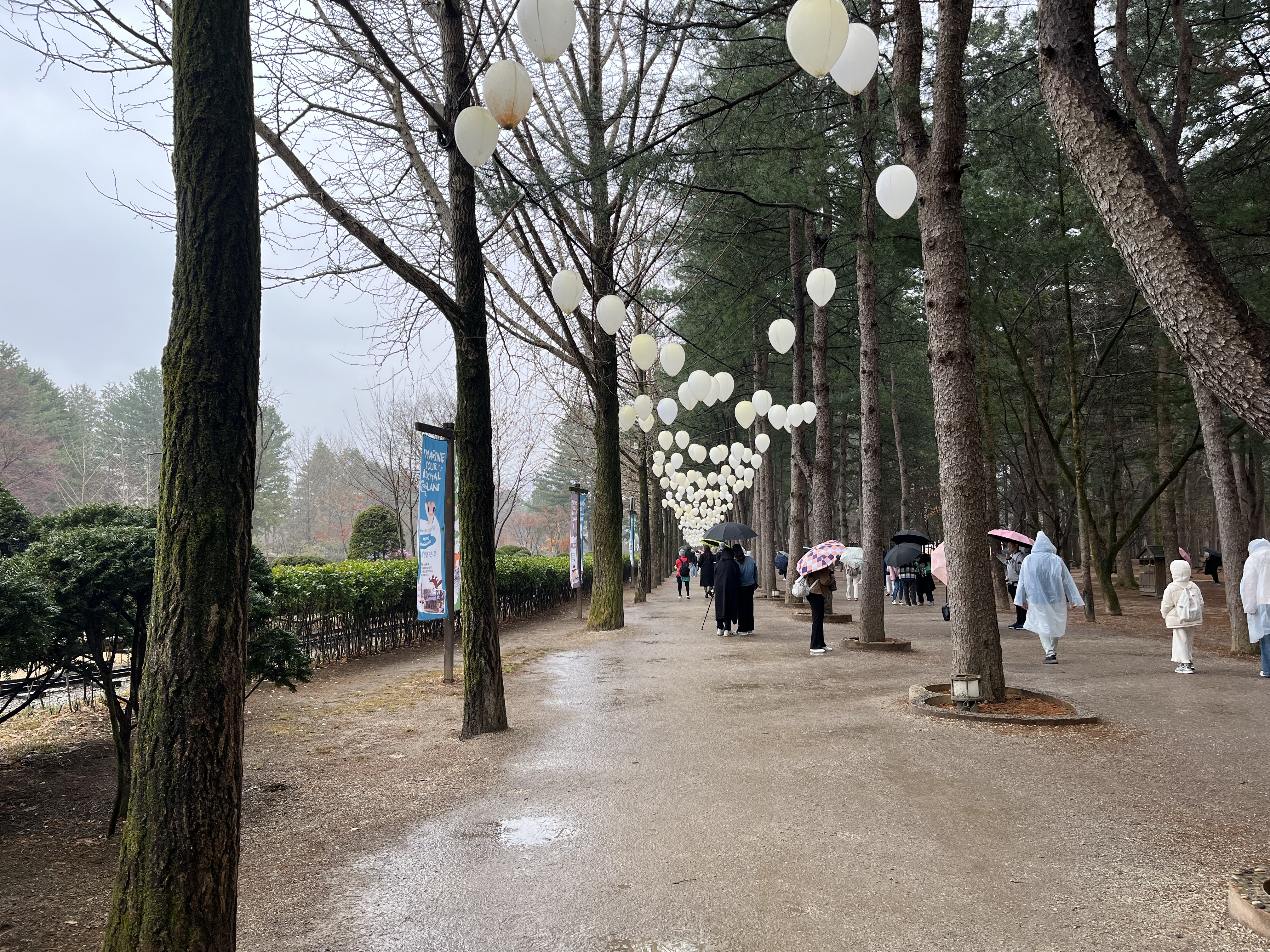


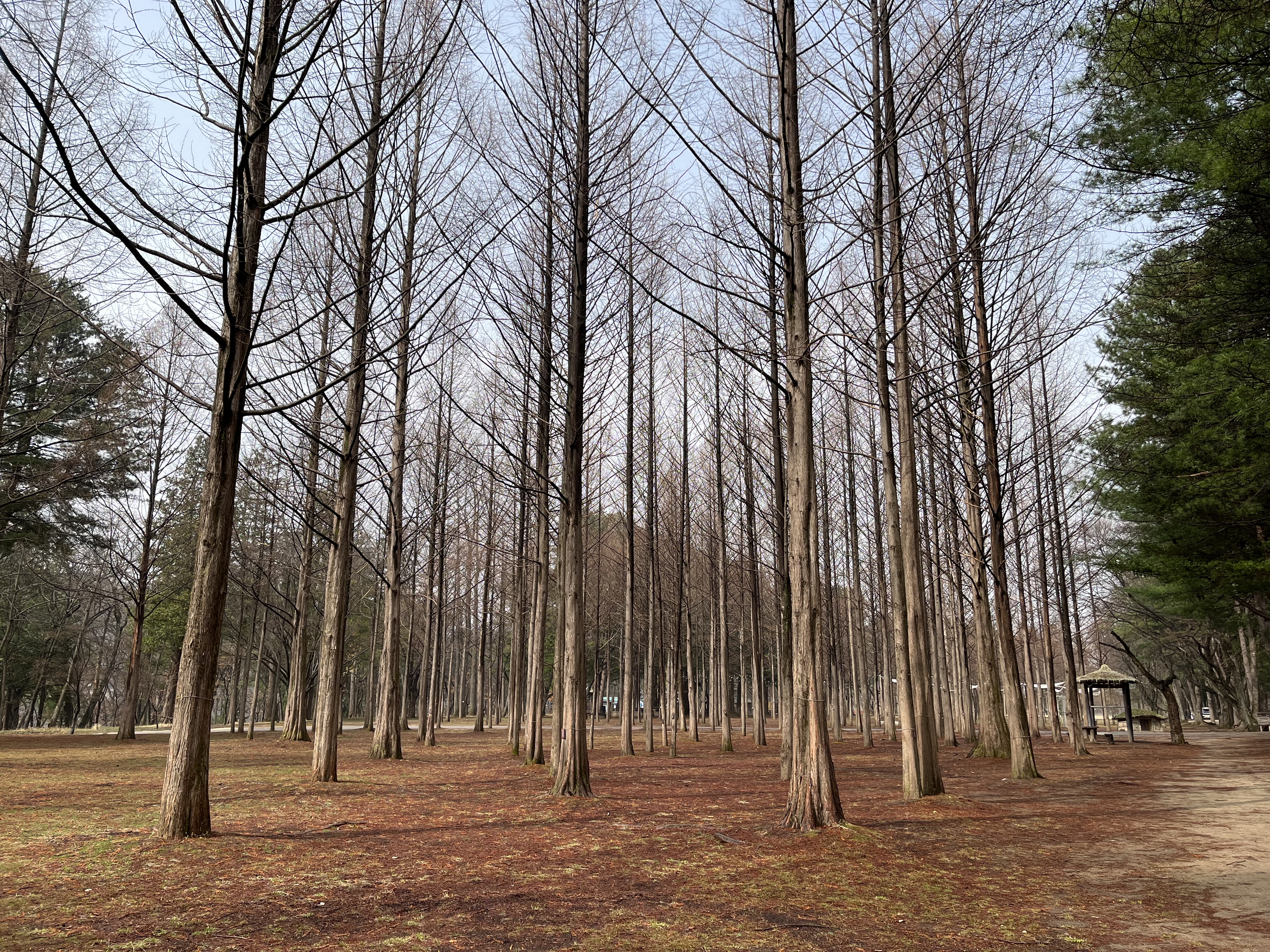
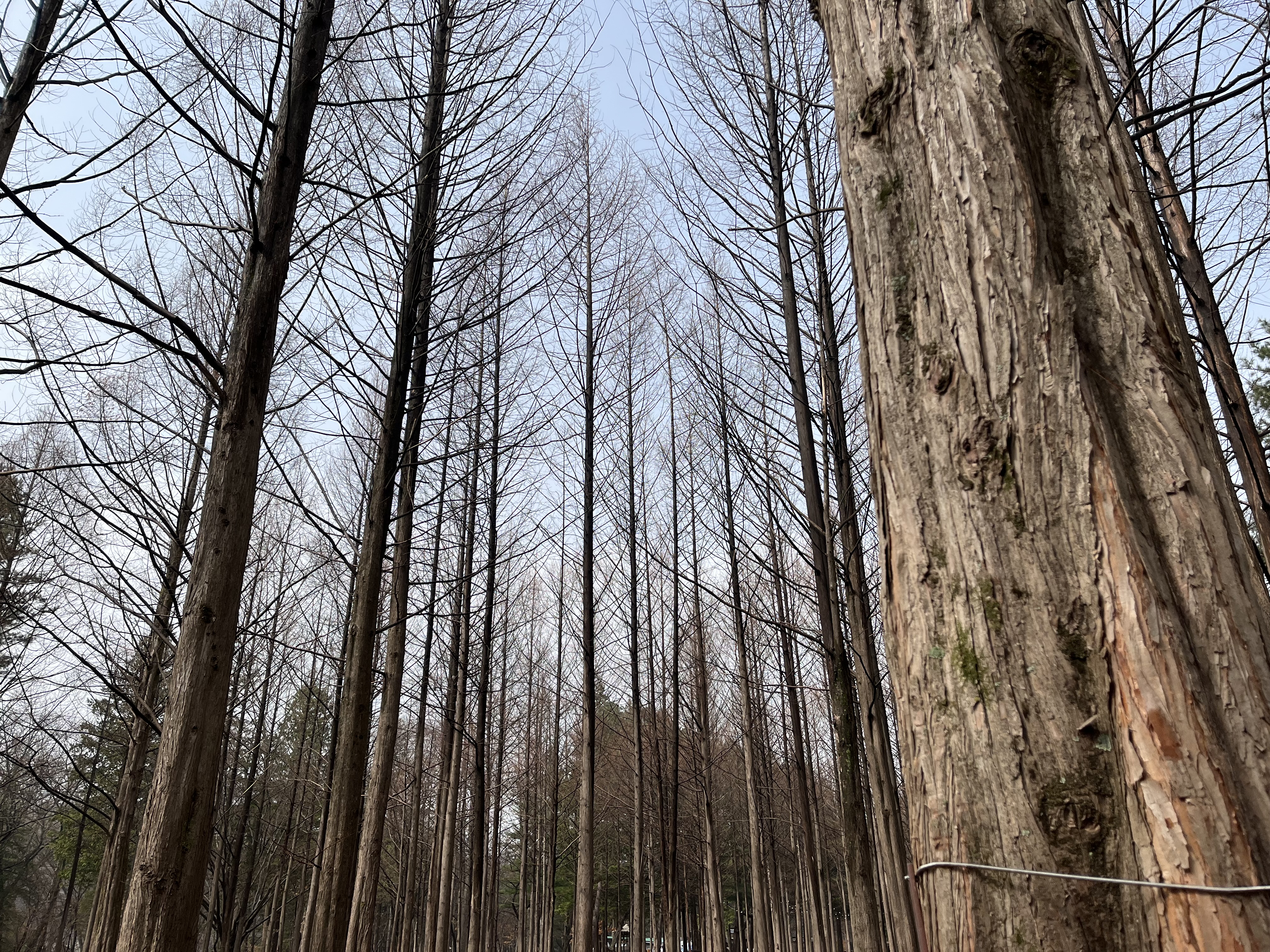
But the best part of the island has to be the part where we reach the other end of the island and see the avenue of gingko trees. Tree-lined avenues on the island are, as you’ve probably guessed by now, rather multifarious, but this one is in a league of its own: the trees stand ten metres, twenty metres, perhaps thirty metres into the air, their branches mesmerizingly bare. The wind blows gently through the gaps in the branches, making them shiver; underneath, hundreds of tourists crowd around the trees, anxious to take their picture in this eerily beautiful landscape. While this is all happening, ghostly carnival music floats through the air, as if we have somehow landed in another world entirely and South Korea was all just a dream. We snap our pictures there, in amongst the tree trunks, weaving on and off the paths laid before us. It all feels rather surreal, and despite all the tourists crowding round the island, I never feel more cut off from the real world than I am at Nami Island, wandering the island with its otherworldly, fantasy feel.


Three thirty. Despite all the sightseeing we’ve already done for the day, we’re far from finished. Just up the road from Nami Island is yet another tourist attraction — or to be precise, a pair of tourist attractions. As our bus arrives at the carpark, we can clearly see the twin settlements that dominate the hillside, along with a connecting path that diverges at the end of the parking lot and slopes toward the two. The one leading right heads up to a walled citadel, and as Coco has suggested we visit that first, we climb up the steep trail, huffing and puffing along the way. A gargantuan statue of Pinocchio abruptly looms out of nowhere, a ten-metre-tall colossus that simply towers over us and provides our brains with ample ammunition for nightmares tonight; this signals our arrival at the theme park known as Little Italy, the newer and more atmospheric of the two.
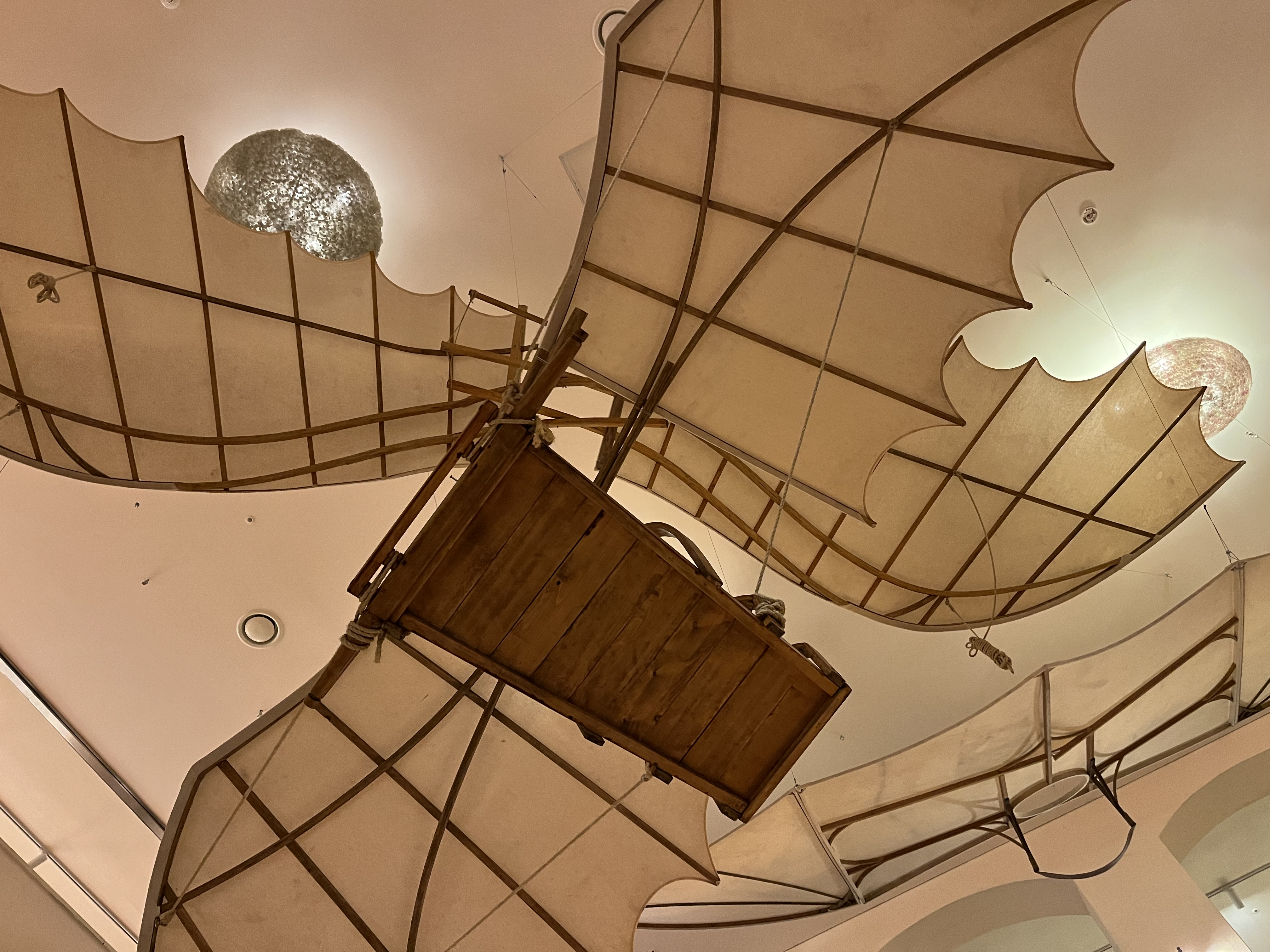
At this point, I should probably explain something. If you are American, you will probably be expecting Little Italy to be something a bit like EPCOT, that august Floridian institution that makes a thing out of showcasing, or if you prefer aping, other countries’ cultures. Having only a fraction of the budget of the Walt Disney Company, the Korean version of Little Italy is… a little more modest. Sure, there is the nightmare-inducing Pinocchio, as well as an entire citadel, but there are no tacky restaurants or sinister entertainers to intrude upon your wanderings. What there is is an exhibition on the inventions of Leonardo da Vinci — yes, of course there were reproductions of the Mona Lisa and the Vitruvian Man — as well as reproductions of houses in Tuscany, and the most low-resolution depiction of the Ligurian Riviera I have ever seen in my entire life. Surely this is a sign that no Italian has ever visited this attraction, as any self-respecting person from Genoa would have sued the moment they laid eyes on this atrocity.



Despite the general tackiness though, I do find myself liking Little Italy a bit: although I can’t read 95% of the exhibit panels on display, it’s clear that they’ve put a bit of thought into representing the culture of Italy and its intricacies. The same cannot be said of Little France, or as they insist on calling it, “Petite France”, at the bottom of the same hill. This one is very much a collection of European cliches thrown together before the people-in-charge went off for lunch; the main selling-point of the whole attraction seems to be the unending wall of pastel facades which house generic stores and shopfronts which might hazily fit into a European vibe — they literally write on the guide map “European-style living room”, despite the fact that Danish living rooms would probably look much different from a French or a Greek living room, much in the same way a Japanese living room would look different from a Korean one.


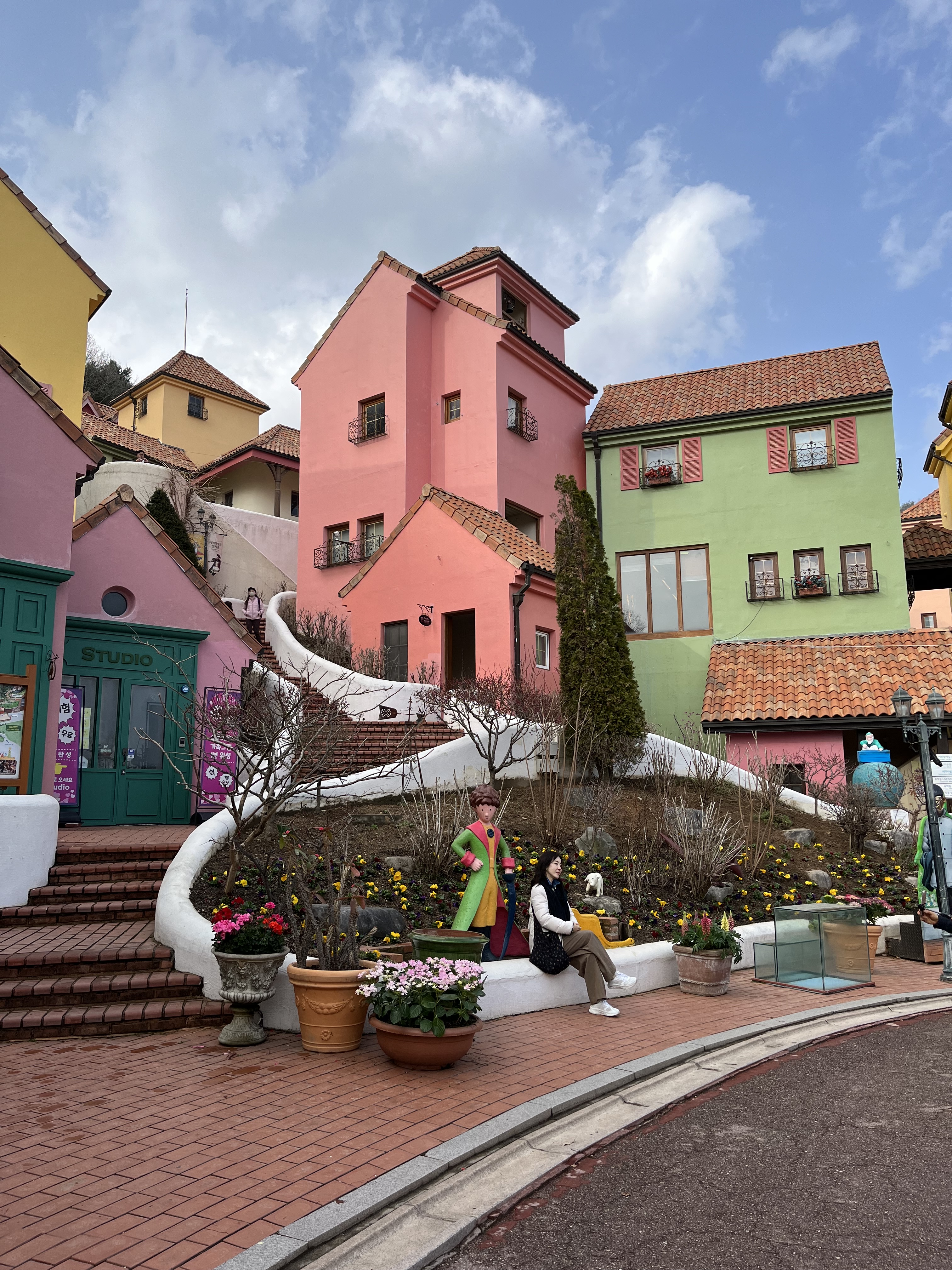
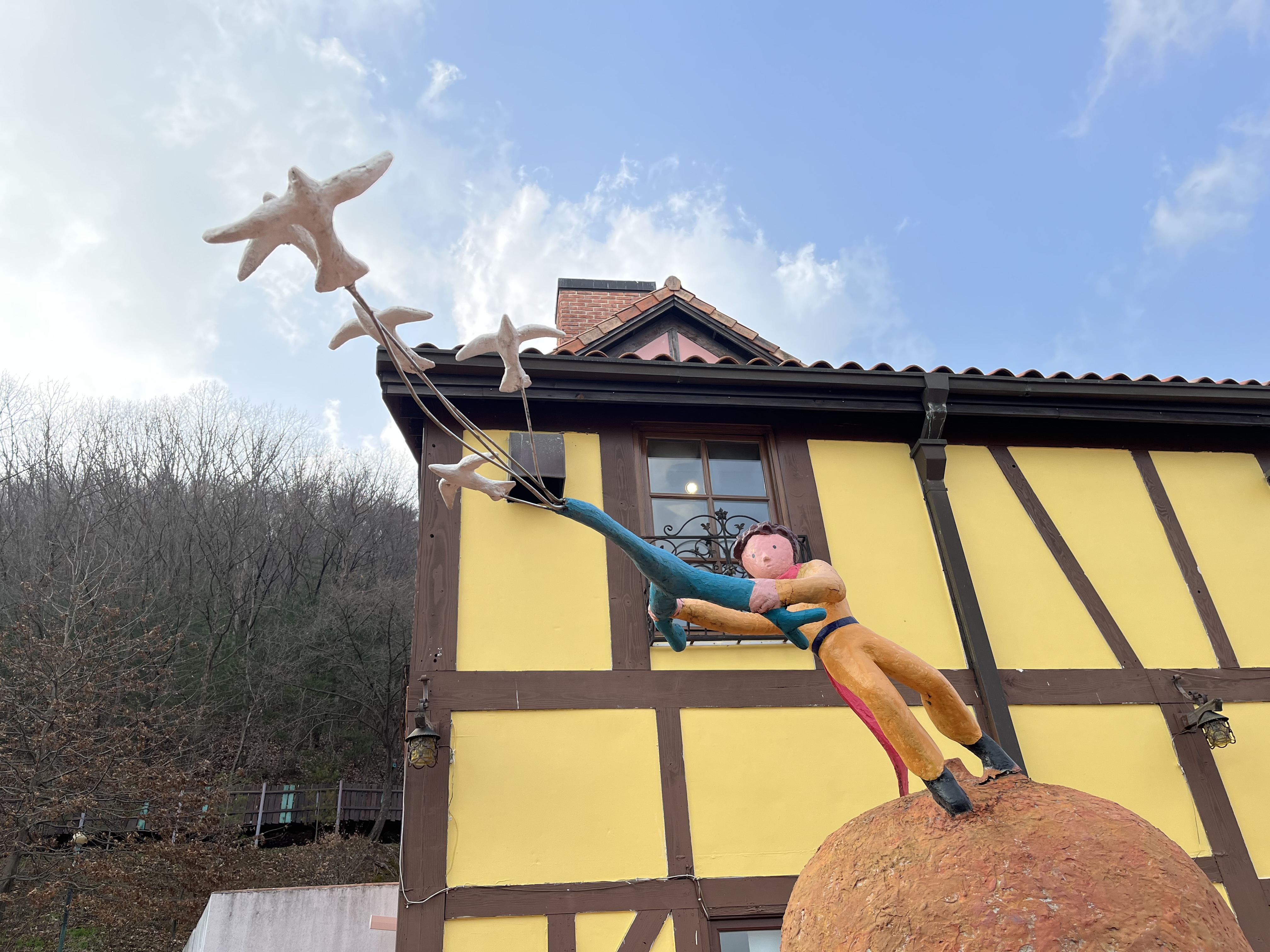
With all that said, this sort of insipid generalisation hasn’t prevented multiple Korean television productions from using the place as a “dreamy locality”. The acclaimed pinnacle of K-drama My Love from the Star, for instance, famously used this place to demonstrate the male lead’s supernatural powers — a fact shamelessly paraded by the theme park with a large poster of the two leads swinging in the stars. (Incidentally, this sits right next to a large poster advertising Jacques Tati’s classic film Mon Oncle, and the Tati fan in me audibly groaned when I saw that juxtaposition.) For those not of the K-drama persuasion, fret not because the park has also plastered images of the Little Prince all around the premises, from a sculpture depicting him harnessing the aviation power of a flock of birds, to a mute video installation of him looking lost around various planets. Now, I have a soft spot for all The Little Prince-related things, but Antoine de Saint-Exupery would probably be rolling in the grave at this cynical exploitation of his work, not to mention the very concept of childhood innocence. Console myself by buying some Little Prince-related merch; at least I’m getting a couple of gift ideas out of this trip.
Finally, home time. We pass out of the theme park and back onto our bus; such is the amount of travelling we’ve done today that I fall asleep almost as soon as the bus pulls out of the parking lot. Awake to find the familiar interiors of tunnels passing by, our bus starting and stopping and starting again as we make our way through the dense spider’s web of rush-hour traffic. The sun dips, dims, and finally disappears as we trundle through Seoul’s northwestern suburbs, passing through some of the same districts we saw as we came into town three days ago — almost like a second reintroduction to the city. Eventually the streets narrow and the crowds on the pavement thicken, and before long we are grinding to a halt on an absolutely congested street corner, and my friends wake up to find the metropolis around them once more. This is Hongdae, the neighbourhood that surrounds the city’s Hongik University, and like most university quarters around the world it is a never-ending source of bustle and youthful energy; and it is here that we are being dropped-off. Job done, call it a day, head off back to the hotel…
… except no, because there is still the small matter of dinner to deal with. Earlier today, when Coco was rattling off her long itinerary for the day, she mentioned how Hongdae was the best place for food — “after all, you get the best, cheapest restaurants here”. However, given that we’re coming back here tomorrow, and I don’t want to steal my own thunder for next week, we decide to head off to Dongdaemun instead. None of us know anything about the place, except that it exists with a certain degree of fame and is close-ish to our hotel, so we decide to give it a shot.
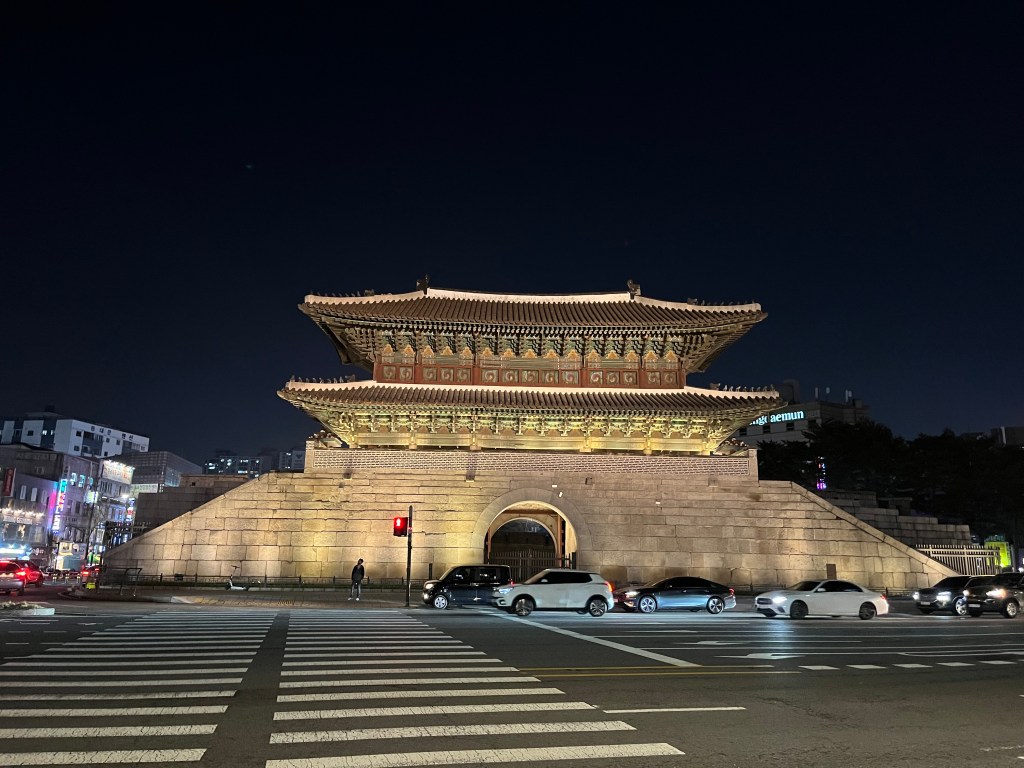
With the possible exception of Gangnam, Dongdaemun may be the most famous district in Seoul: back when the Korean wave was first taking off, I remember this place being relentlessly promoted on television, over-the-top noises and flashing colours describing it as a modern shopping heaven that was open for business 24/7. But not much of that energy seems to exist as we come out of the metro once more; the traffic surges around the gate that gives the district its name, but once more we find the market nearby to be an empty, underwhelming affair, devoid of business despite it being well past eight o’clock.
Cross the road and walk down the Jongno avenue. If we walked up this road, we’d end up at our hotel; if we walked down it, we’d find ourselves at Gwanghwamun once more. Right now we’re walking both ways in search of a good dinner; our thirst for samgyetang having reignited, we’re trying to find a place that might serve decent chicken soup at this hour. However, most of the chickens on this display here seem to be roasted instead of broiled, and after a few minutes of tired searching we decide to settle for this alternative form of poultry and pick the least-threatening store on a food app. To their credit, when the food actually arrives it looks like a million bucks: two glistening chickens, roasted to perfection, surrounded by a bed of glutinous purple rice and an island of melted cheese on one occasion. It might not be the most fibrous meal, but it’s very, very welcome on this damp and chilly night in March.


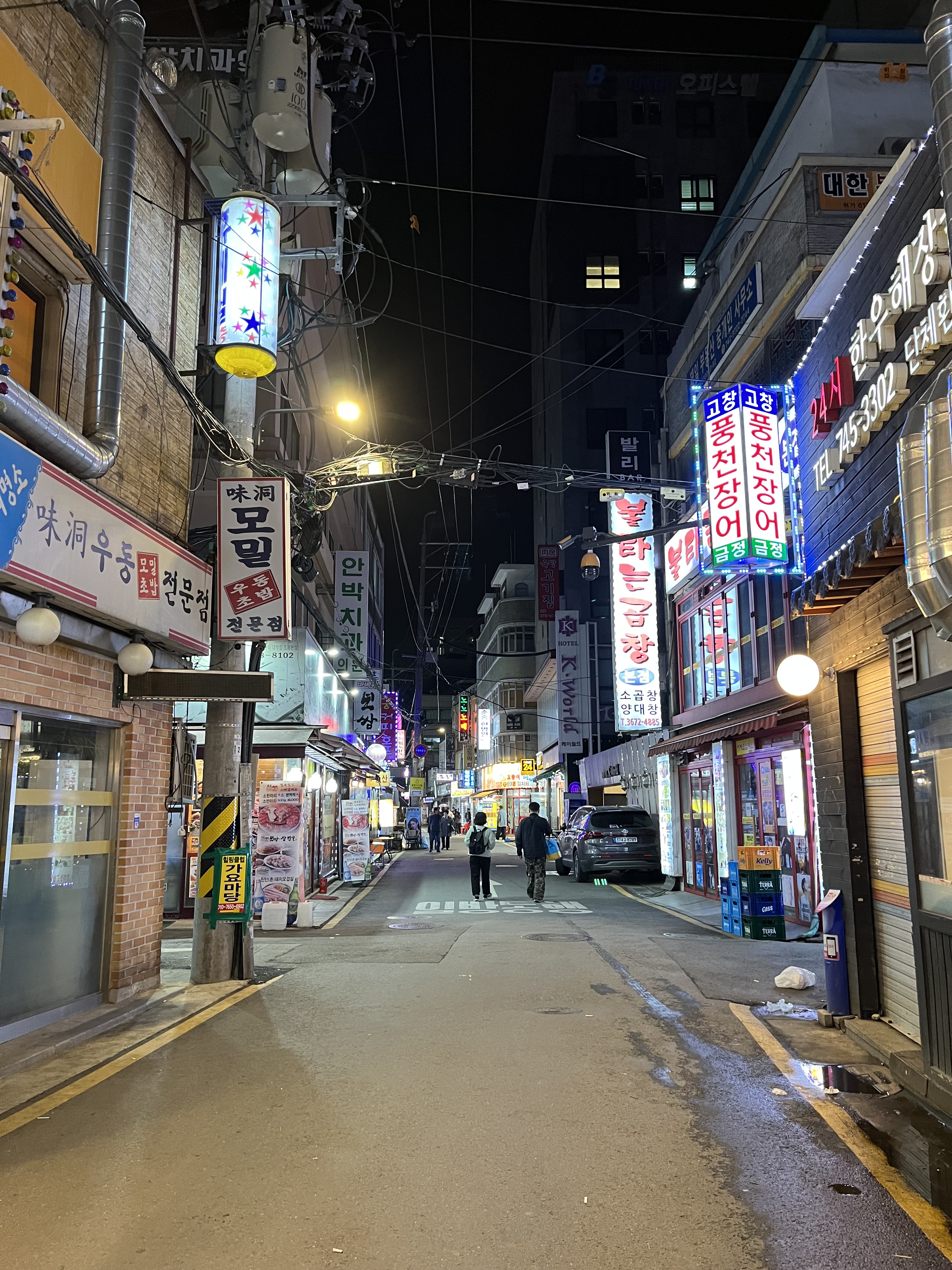
Our souls warmed and our spirits amply lifted, we set off into the night. Go through the market, still deserted as a post-apocalyptic world, then walk across a bridge, under which the sound of water trickles quietly (a bit of map-checking tells us that this is none other than the Cheonggyecheon once more). Then back into a warren of streets again, passing by a variety of shops and restaurants that could be silent as the grave, or have long lines snaking out the door. Skip past a bunch of workmen, still hard at work hauling manhole covers across the street at nine in the evening, the roar of the diesel generator shattering the quiet murmur of the alleyways. Then turn the corner, and our eyes immediately light up with colour — we have, at long last, located the busy part of Dongdaemun, a place filled with streams of pedestrians and nightlife-hunters. Just before we join the main road once again, we see a shiny department store, disgorging shoppers onto the pavement at a steady pace. The perfect place, we all agree, for some last-minute souvenir hunts.
Freshly laden with goods, we head to our final destination of the day just across the road. Although it may look like a misshapen lump of titanium, this building is in fact the Dongdaemun Design Plaza (or DDP, for short), the face of Seoul’s turn towards the 21st century. What it sells exactly is almost irrelevant; the façade alone is its own draw, as it is now for four young men all with an eye to their own social media profiles.


From a distance, the DDP isn’t actually very impressive — Eugene can’t keep himself from saying “is that it?” as we look at it from across six lanes of traffic. But once we’ve gotten up close, the charms of the place become evident. A bare concrete staircase stretches down from ground level into a subterranean plaza, a wide open space criss-crossed by unvarnished concrete pillars. The result of so many pillars is that It’s extremely shadowy and atmospheric, a space where you can be in bright floodlit areas one moment and in total gloom the next. Although this space goes on for blocks, it’s so dark that scores of people darting in and out between the pillars are easily missed. “Another round of pictures?” I ask my friends, and pretty soon I am doing my best parody of a celebrity photographer, lying down on the floor and asking my subjects to gaze dreamily at distant imaginary objects. It works a treat.

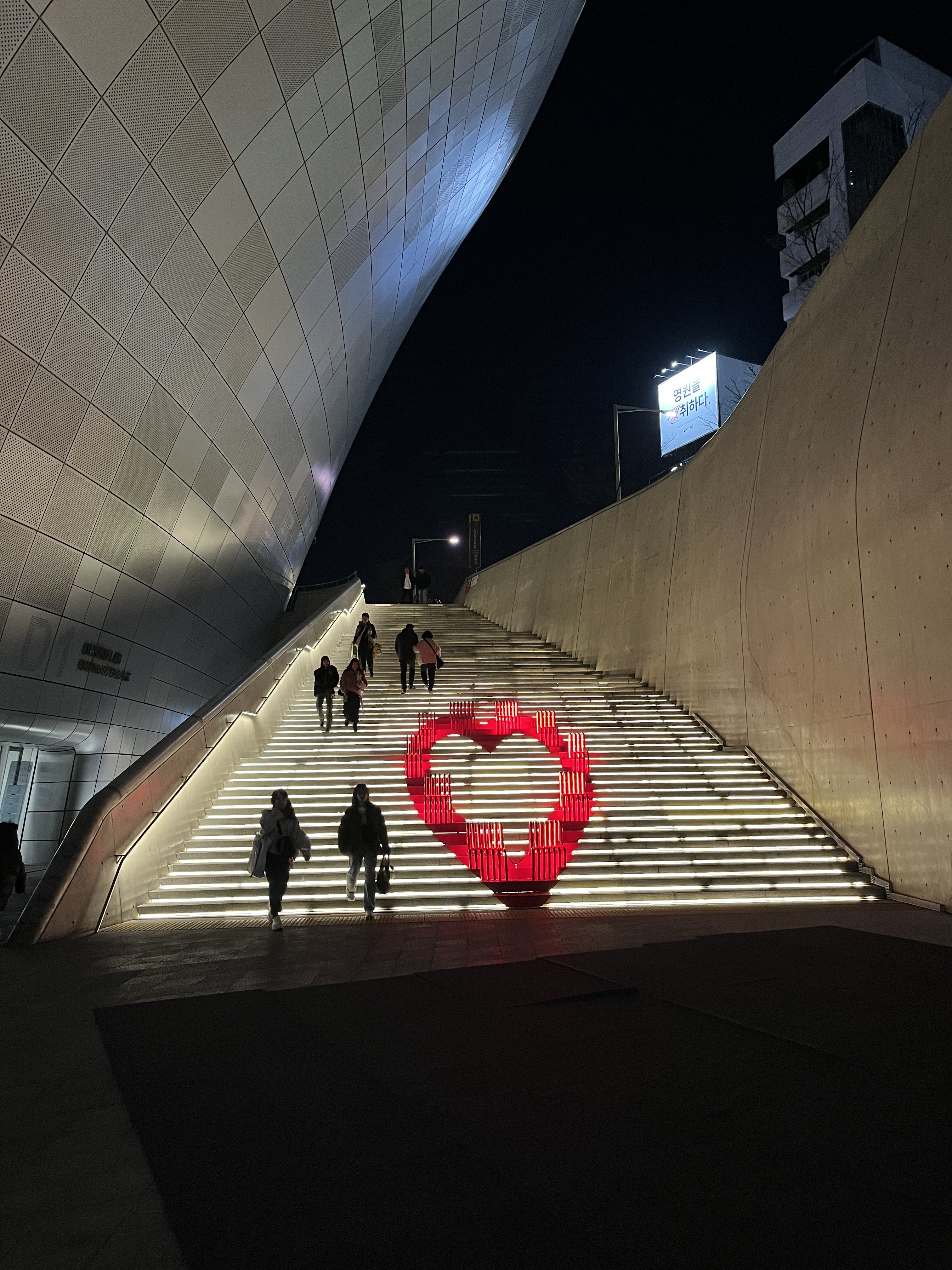
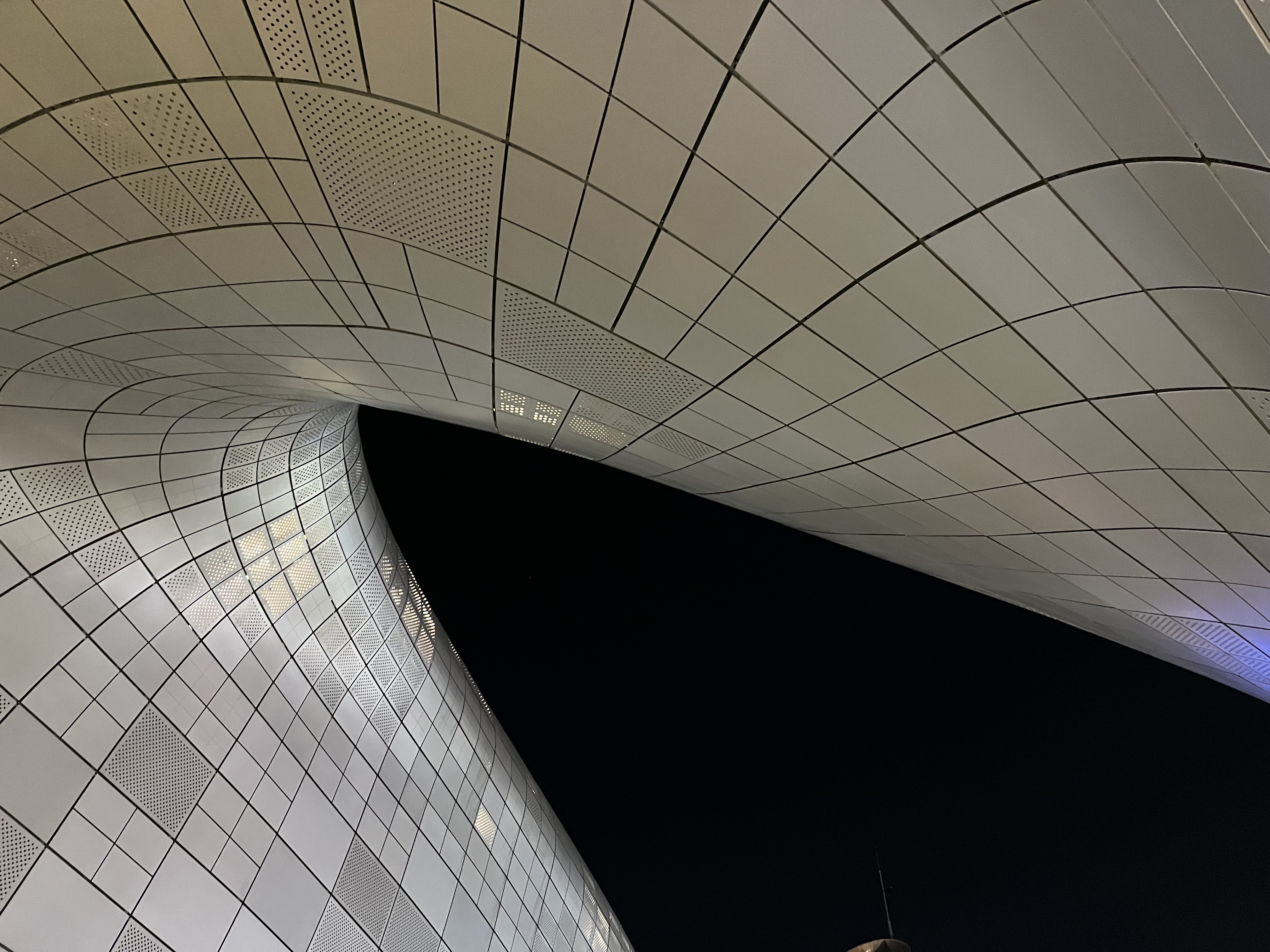


We move upwards to ground level, where the DDP has a complete change of character. Whereas it was all angular concrete underground, here it’s all smooth curves and metal, like an ever-evolving blob that might change form at any second. A slight shift of a few inches to the side is enough to produce a radically different picture: one moment I can still see the night sky, but one step to my right and most of my vision is occupied by the silvery building and the just-as-shapeless plastic chairs on the podium. Just around the corner, tucked within an arch in the building, a few youths climb and jump on the short, flat sculptures that line the passageway while blasting hip-hop music from their phones; it’s all very anarchic, like something out of A Hard Day’s Night, and yet it seems a perfect fit for its hypermodern surroundings, a testament to the never-ending energy that this place has to offer. And so it is that our day ends with the four of us standing there, gaping at this exuberant display of youth, mesmerised by Seoul’s never-ending capacity to surprise.

 Inkpot Shuffles in the Twilight