28 March
“BUS STRIKES TODAY” screams a “public safety alert” on my phone as I wake up this morning. Apparently the South Korean government has just decided to upset a lot of bus drivers with pay disputes, and so as of 4:30 this morning, a staggering 98% of buses are not running in the capital area. Looking out the window, the streets seem just a little emptier, just a little less crowded. Then I realise that most of the commuters are probably underground on the Subway, and I sigh.
The bus strikes have caused a bit of a dilemma for us. We had originally planned to visit the Ihwa Mural Village this morning, another of those must-go tourist attractions that people keep on posting on Instagram. But it is also a place that is way off the beaten track, and given the gruelling endurance course that I put my friends through yesterday, I am reluctant to start the day by having them walk uphill for 25 minutes non-stop. So we pull out the map, look up places that are both appealing to us and easily accessible by the metro. After a while I spot on the paper the word “Yeouido”, an island on the Han River which appears a lot in Korean variety shows, and based solely on this one instance of name recognition we decide that this will be our starting point of the day.

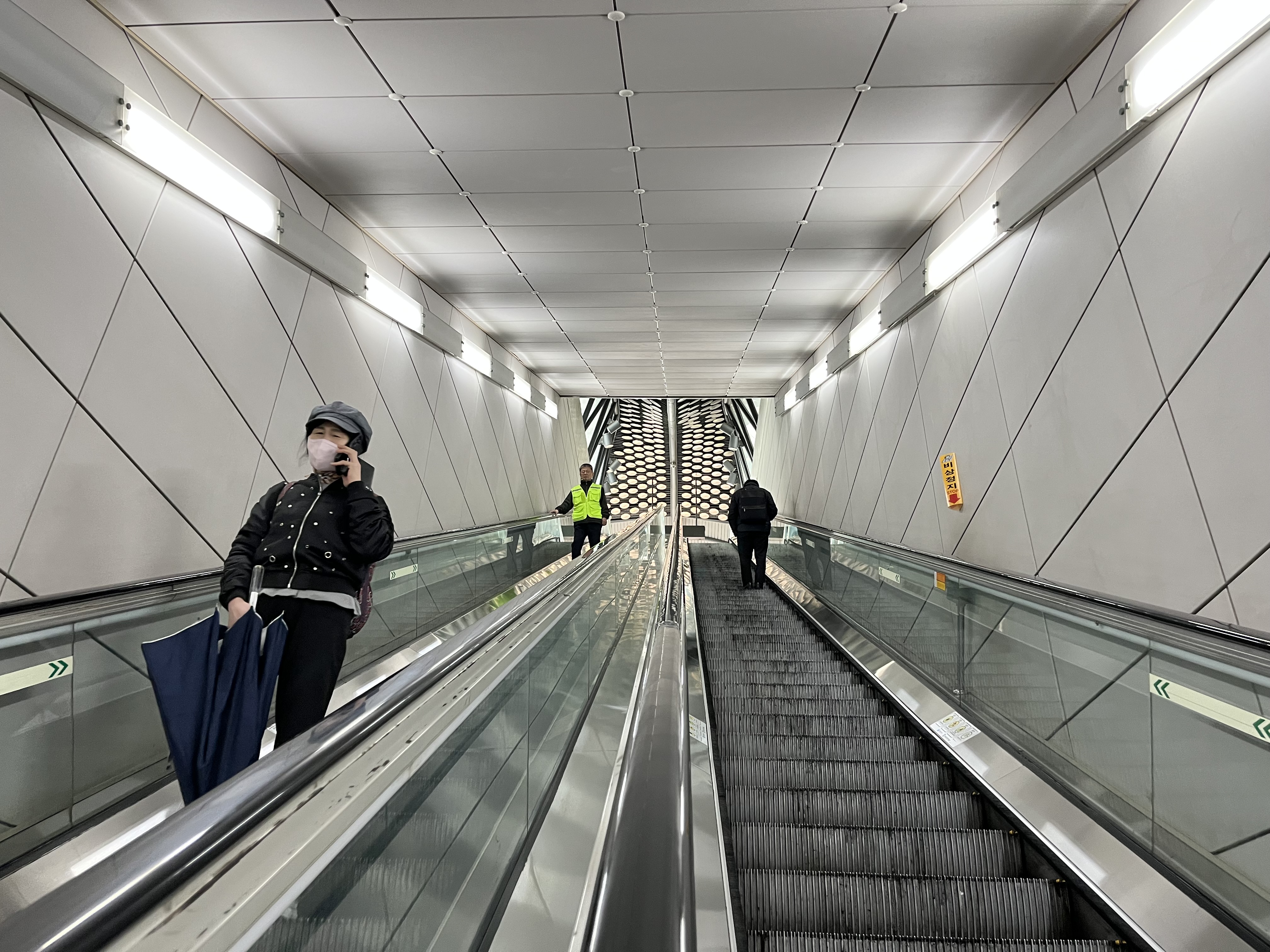
And so it is that this morning we find ourselves halfway across town, emerging from the gilded cage of National Assembly station to a barrage of loudspeakers and police sirens. Although parliamentary elections are a mere two weeks away in Korea, most of this crowd are normal petitioners: asking the government to acknowledge this incident, straighten out that atrocity and so on. Still, though, it’s quite a large wave of sound, and for a moment we stand disoriented outside the gates of the complex, stealing glances at the guards and wondering if we’ll get shot if we walk in through the front door. (Well, I’m thinking that, at least. Perhaps the others were thinking about lunch, or the cold weather, or whether their decision to come to Yeouido was a wise one.)
“I’m not sure I’ll go in,” I say.
“Oh that’s fine, we can just take a picture here and then move on,” says Sunny.
Fifteen seconds later I am strolling through the Assembly grounds, making a beeline for the huge building at its centre. Although the National Assembly building is by far the most impressive structure in the complex, it’s surrounded by a huge coterie of similar-looking buildings — so similar that not even a look on the map by the entrance helps distinguish all of these identical grey structures; is that the Members’ Offices, or the Communication Building, or the Library? Yet there’s no mistaking the Assembly with itself, with its blue dome and the gang of bronze statues surrounding it; it stands alone in the centre, appearing to grow higher the closer we move to it. A wide stone staircase leads up from the square in front to the building itself, gargantuan, solemn, silent — and heavily fortified. A discreet passageway at the bottom leads to the dignitaries’ entrance, a wood-panelled reception area where more security guards impassively stare back at us.
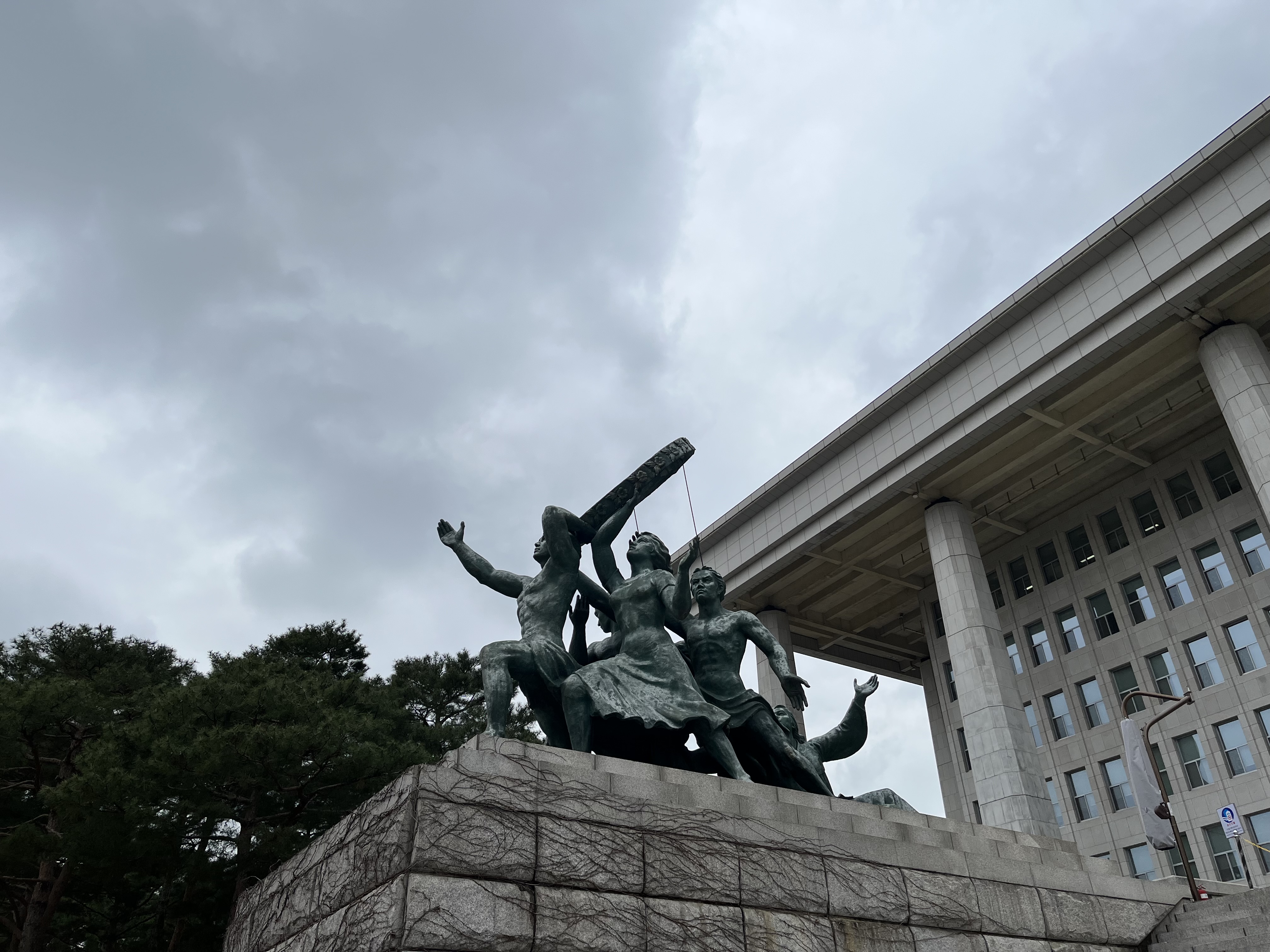


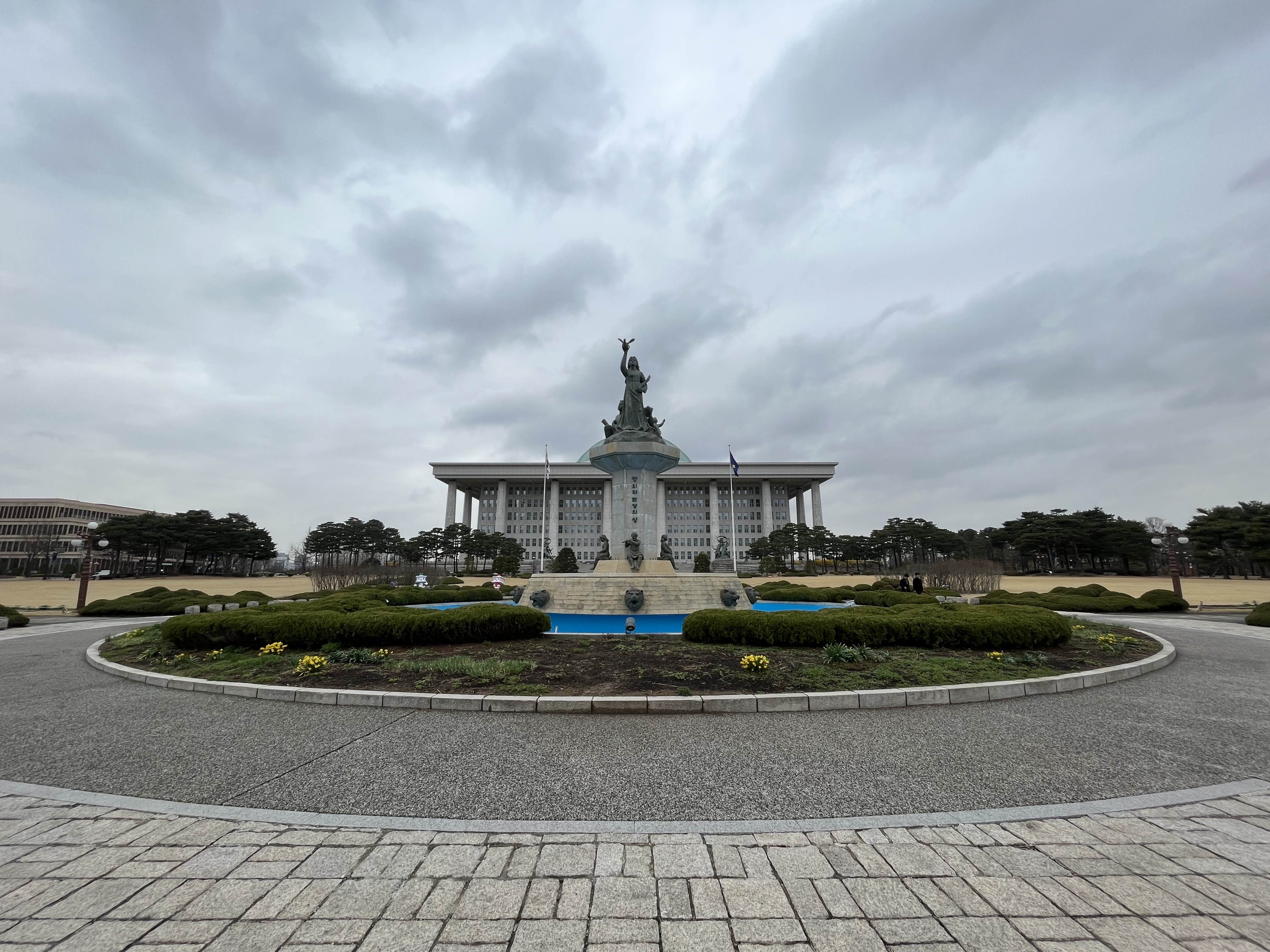
While my friends stand at the base of the steps, I take a closer look at the statues. There are two of them flanking the staircase, and both of them are pretty similar to one another: bare-chested men and full-figured women, all holding up giant flags or Korea’s national taegeuk symbol, and looking as if they’re staring into the world’s most powerful wind machine — not too far, in fact, from the ones beloved by authoritarian regimes. Of course this shouldn’t be surprising (Korea only transitioned to a democracy in the 1980s) but from where I’m standing, the whole thing still feels excessive: the statue is as long as the huge staircase it’s on, blocking out much of the sky above, and in the faces of the men and women I spot a yearning that’s intense, almost fanatical.
Wrench ourselves away from the building to explore the neighbourhood a little more. Apart from being the centre of national politics, Yeouido is also renowned for its sakura: during the spring, the avenue we’re walking down right now always gets featured on Instagram, when the trees bloom into a pastel paradise of pink and green. Sadly after the false spring of yesterday the thermometer has plummeted again this morning, and most of the trees are extremely uninviting, with the few blossoms on show looking faded and dirty. We walk down the road for a bit, but soon enough the breeze blowing in from the river and through gaps in the trees is cold enough to send us ducking back inland once more, our heads tucked deep into our coats.
And anyway, it’s not like this place doesn’t have other entertainments on offer. To our left stands multiple featureless, off-white buildings, apartment blocks by the look of things, with the letters “KBS” emblazoned across them; to our right, another huge complex, in front of which are huge steel gantries as well as Ancient Greek pillars and statues. This announces our arrival at the headquarters of the Korean Broadcasting System, one of the biggest television stations of the country; if you were part of the K-drama craze before Netflix grabbed the wheel, then chances are you’ll have seen productions such as Autumn in My Heart or First Love or Good Doctor or a thousand other programmes that came from the KBS stable.


Well, now we’re here, but what do we do here? A television station is not an ideal place to hang — one does not head to 30 Rock or BBC Television Centre for leisure purposes, and the same goes for this place. There are no museums on Korean television history, no glimpses into productions in action. There is only the mammoth concrete-and-glass building before us, and the cold, grey sky right above it; the only people in this complex are the four of us, no artists swaggering up to the gate, no crew members hurrying between buildings. We briefly spot two people discussing stuff near the empty canteen, but turns out that they’re deliverymen who disappear the moment we walk in their direction. This all feels very haunting, and for a few minutes it feels like we’re on the film set of a dystopian film: emotionless, towering concrete, empty cityscapes, dreary weather.
Eventually, though, we find a flock of people crowded around one single window. This is no ordinary contingent of stage door fans either: these people have brought stools and chairs to stand on, and I’m pretty sure I spotted an actual TV camera there as well. Some of them hold their phones aloft in the air. Through the crush of humanity huddled around that solitary pane of glass — a very long pane of glass, but still — I catch a glimpse of a spacious sound booth, in which a young, fresh-faced woman delivering her radio show with calm, quiet confidence. The radio show is being broadcast live out onto the streets, and even if I can’t understand a word she’s saying, she still radiates a certain charisma as we watch her work: a type of assuredness, dependability in her voice that one inevitably associates with the best radio presenters.


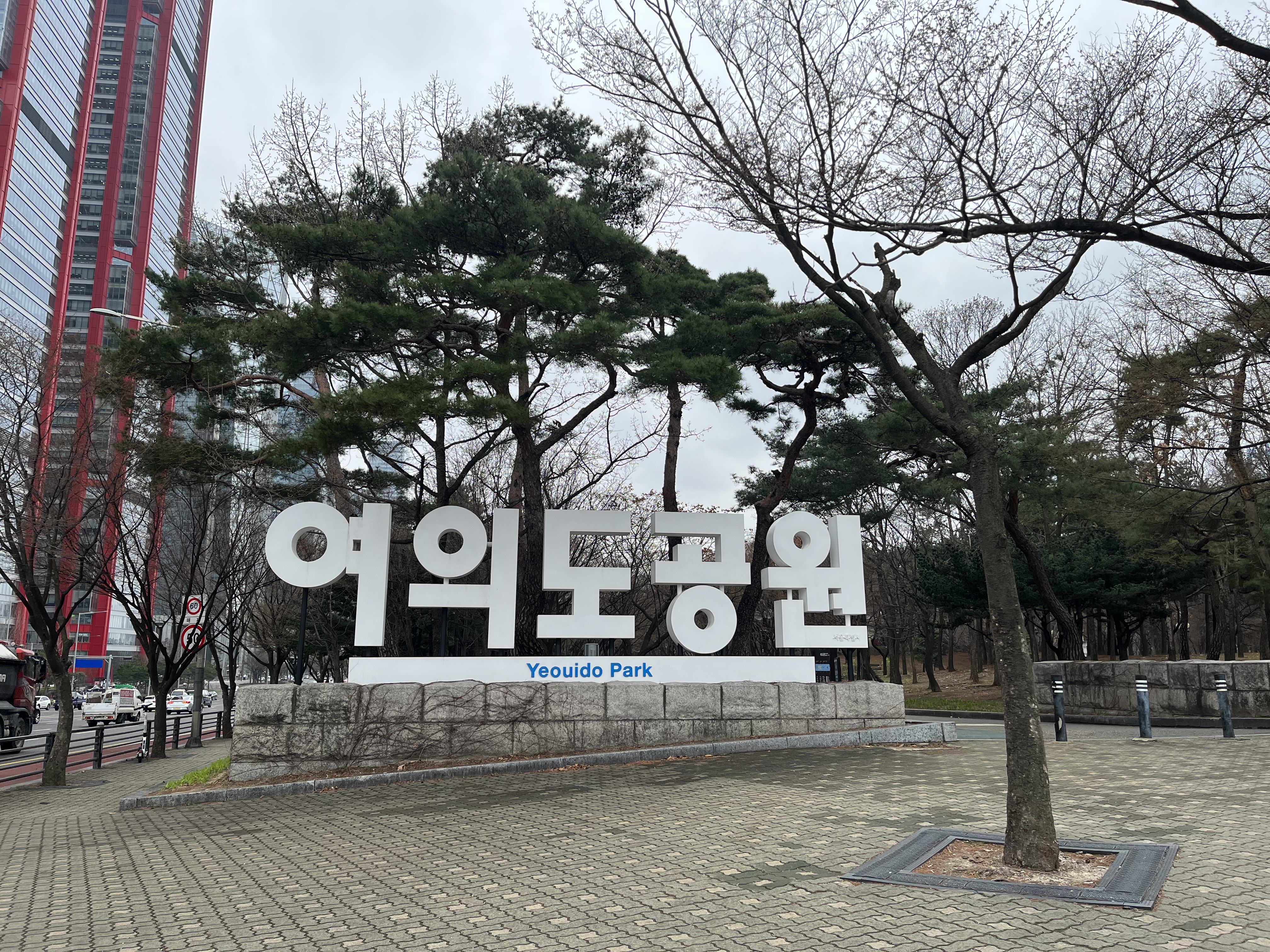
After a long walk around Yeouido Park, built on the site of Seoul’s first airport, it’s time to find lunch — but where exactly? Being the political and cultural centre of Seoul means that most restaurants here have much higher prices than the other restaurants we’ve seen around Seoul; of course, compared to Hong Kong they’re still fairly reasonable, but given the plethora of cheap food we’ve experienced over the past 36 hours it seems outrageous that we have to return to normal HK prices. Eugene pulls up a series of restaurants on his phone, only to be greeted with the words “closed” (at half past one in the afternoon?!) or even more horrifyingly “$$$”. We wander through the park, discussing options while trying to ignore the rain, which is becoming increasingly intense and therefore uncomfortable.


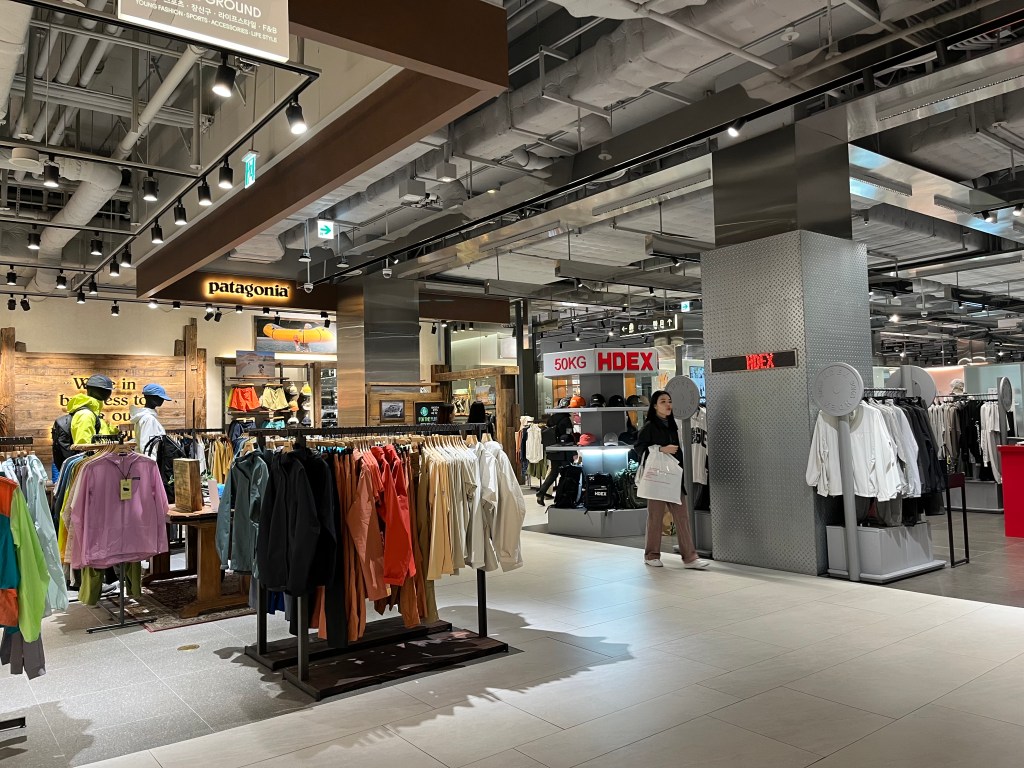
We end up in the Hyundai Mall. Most of us know Hyundai as a car company, or if you’ve been paying attention, as a construction company that was owned by a former Korean president. The truth is that Hyundai is all of that and more: as we push through the immense glass doors that lead down into the depths of the shopping centre, I note the skyscraping tower that sits atop our heads; and all that money has enabled the company to build a simply MASSIVE mall underneath the streets of Yeouido — massive enough that it has its own designated zone for K-pop fans to sit and wait for whichever artist might be holding a fan meeting there today. We see a bunch of these gathered in a corner, clutching their phones, anxiously waiting for him to pop round the corner.
But stans aren’t the only people gathered here: as we walk through the numerous levels of the Hyundai Mall, it becomes apparent that almost every Asian nationality is here — Indian, Vietnamese, Indonesian, Japanese, and lots and lots of Chinese people. More than once a snippet of Japanese catches Eugene’s ear; more than once I turn my head to catch a glimpse of a fellow Cantonese-speaking stranger. Here, too, are restaurants catering to the homesicknesses of each and every tourist, ensuring — for a price — the culinary comforts of their place of origin, or at least the facsimile of one. Having run out of options we pick a generic east Asian version, and soon we are slurping our way through cold soba noodles, and watching the familiar voices pass by.
It is during lunch that I begin to feel it: a weariness that courses through my body, draining it of energy. I’ve always loved soba noodles, yet today I feel weirdly disinterested in the plate before me; the more I eat, the more ridiculous I find the idea that I am on holiday and I am supposed to be enjoying myself here. My head hurts and there’s a nausea that seems to be bouncing around my body; the crowds now swirling around me as we finish up and head towards the metro station seem like they are from another world. Not helping things is how the others are walking really, really quickly, as if anxious to get to the metro station as soon as possible; somewhere in my mind I want to tell them to slow down, to let me breathe a little, but no sound comes out of my mouth. I know we have someplace to get to, and I HATE going back to the hotel in the middle of the day — but right now there is nothing I would like better than to do just that, to lie facedown on my bed for an hour or two. Eventually we get to Yeouido station and my mind just gradually drifts to other matters; but for the rest of the day that nagging tiredness sits at the back of my brain, like a brattish child constantly asking “can we go home now?” in the rear seats.
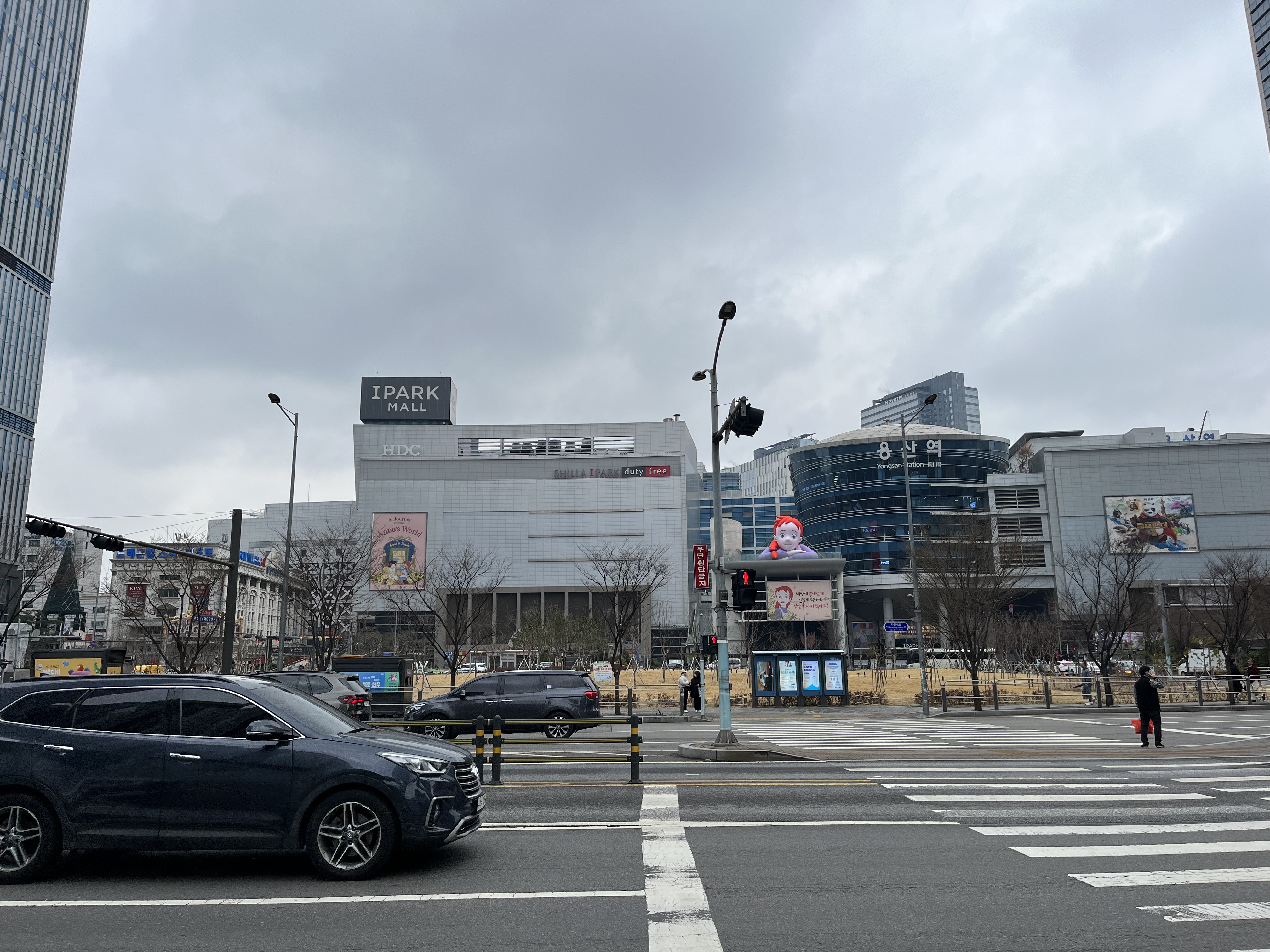

The itinerary for the rest of the day is simple: a visit to the War Memorial of Korea, dinner at Itaewon, then home. However, I (or more precisely, my ADHD brain) have other ideas. I lead my bedraggled friends off the train one stop early, at Sinyongsan station; following the signs for Hangang-daero avenue, we straggle up onto street level and set off down the road. We dodge construction work, marauding cars, the occasional local walking the other way. The shops around us are quiet little stores, yet one thing they all seem to have are signs in different languages: English is common, and more than once I see Simplified Chinese. After ten minutes of harried walking, we arrive at the front entrance of a nondescript glass building; a few groups of young women are standing there, alternately gazing expectantly inside their lobby and checking their phones. I once again catch a few snippets of Mandarin. To the casual observer, this is just another skyscraper, one in a million that have sprung up in Seoul in the past three decades.
But this is no ordinary edifice. These girls, I explain to the bewildered-and-more-than-a-little-irritated boys standing in front of me, are here to catch a glimpse of the latest, hottest K-pop stars, because we are standing in front of the headquarters of one of the most formidable entertainment conglomerates of South Korea, perhaps of the entire world. Such is the reach of HYBE Entertainment that you will have at least heard of one of the hits their acts have produced. “Dynamite”, “Super Shy”, “Eve, Psyche and the Bluebeard’s Wife” — all these are tunes so popular that they’ve even managed to percolate into my Europhilic mind, and all of these originated within the walls of this very building. (I presume. I have no idea how K-pop works, I’ve only seen that Blackpink documentary.) Here, I tell them, is the nexus of modern Korean culture. Here is where NewJeans and BTS make their bewitching music.
“And what is BTS?” asks Eugene innocently.


Half past four in the afternoon. Having stumbled back the way we came, we now stand on the tree-lined Itaewon-ro avenue. This is a thoroughfare that contains much political and cultural heft: on our right we see the new Presidential offices, a refurbished military building that honestly just looks like your average 1990s office block; somewhere behind that lies the National Museum of Korea, with its vast expansive grounds and its state-of-the-art building. On our left is a similar building: the War Memorial of Korea, opened in 1994 on land that used to be part of the Yongsan Army Base, and now one of Seoul’s biggest attractions — big not only in terms of visitor numbers, but also in terms of area; even the walk up to the building takes five minutes across a colossal plaza, paved with inscribed stones and polished steps, which prove to be a huge strain on our already-tired feet. No sooner are we inside than Eugene flops onto a bench by the gift shop, declaring in a voice brooking no disagreement that we will rest before heading further in, closing time be damned.
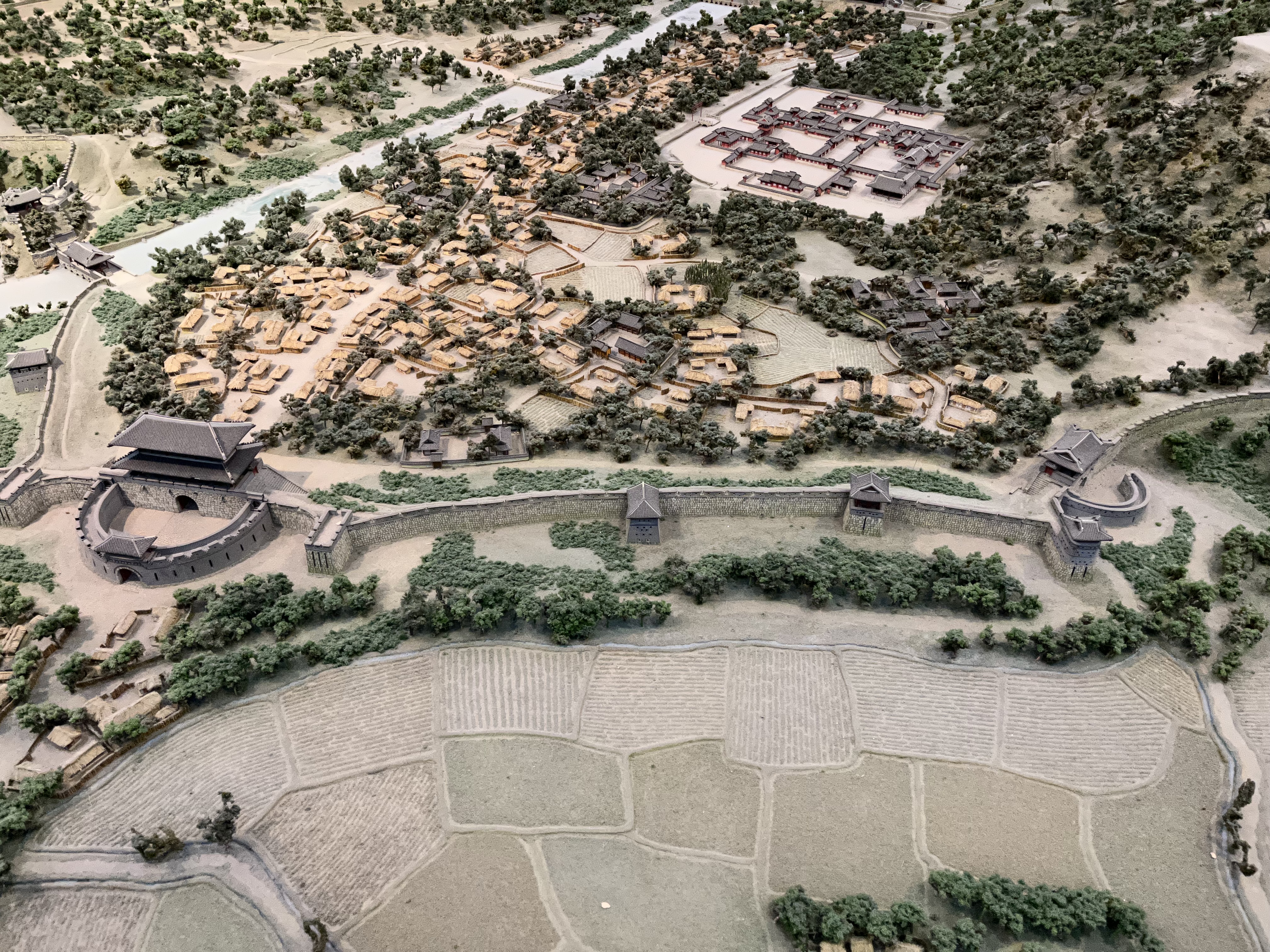
The War Memorial is quite a pretty place to be in. The vestibule in which we are resting our weary feet is a high, majestic space; the walls stretch up high into the air, finishing as a colourful, psychedelic dome way above our heads. As we walk further in, a pitch-black corridor slowly envelops us, and the only audible sound is that of water, lapping gently down the sides of a black marble bowl at the end of the corridor. As we circle down towards the exhibition area, the bare concrete walls are sparsely but tastefully lit by periodic lamps — which means that when a single sentence or display appears, it draws every single iota of your attention. Meanwhile, the actual exhibits themselves are extensively detailed: there are plenty of dioramas and exhibition panels, showcasing important battle scenes and the lay of the land. The boys stand in front of a diorama that recreates the seventh-century Battle of Salsu; there are even captions in Chinese and Japanese for this one.



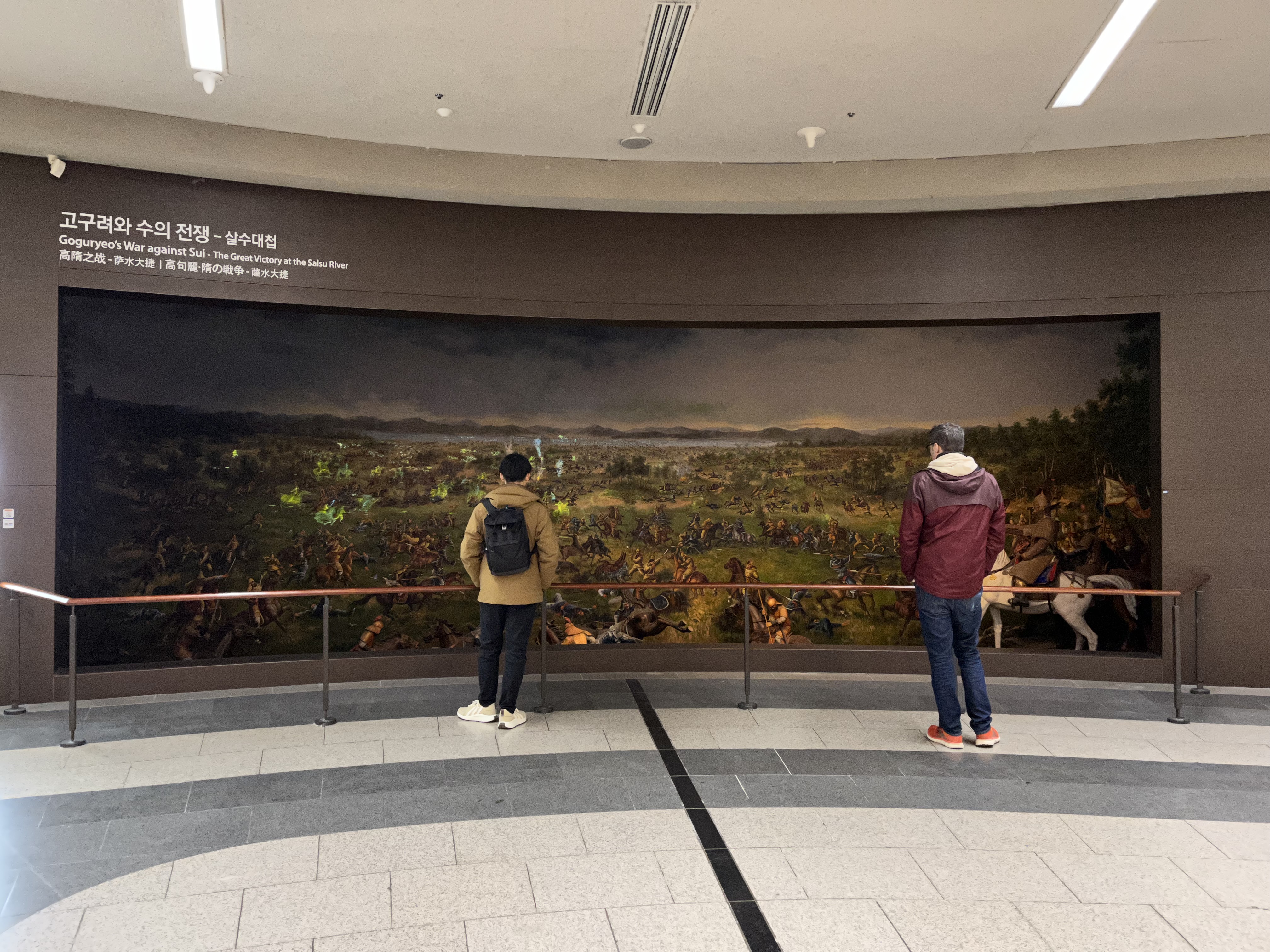

But it is in these exhibits that I also begin to detect more than a hint of aggression within. I had expected a museum dedicated to commemorating the Korean War to be jingoistic, of course, but even so the rhetoric still raised my eyebrows. Take for example the quote prominently displayed at the entrance to the exhibition: “if you want peace, prepare for war” — doves and kumbaya this is not. A military defeat by the Koreans is tinged with regret; repeated assassinations of foreign dignitaries, failed or otherwise, are glorified as “martyrdom” and part of the “continued efforts” to reunify the country. And even their supposed allies aren’t spared: the arrival of American traders in Korea is given the caption “disturbance by the Westerners”, and I couldn’t help but read the words that followed as a lament. In a sense this is all very inevitable: Korea was a country born of various wars: as the exhibition tells it, one Korean tribe would swallow another, and then find itself attacked by a third, while the remnants of the vanquished one would somehow find a way to strengthen itself again, and so on throughout millennia. (The English translations are decent, but to someone who only has the vaguest knowledge of Korean history, it’s all somewhat confusing.) This is a country with much trauma interwoven into its history, and that kind of trauma can mess up a nation in return; even as South Korea becomes one of the most prosperous countries on earth, one is always reminded of the anger it shares with its neighbours.


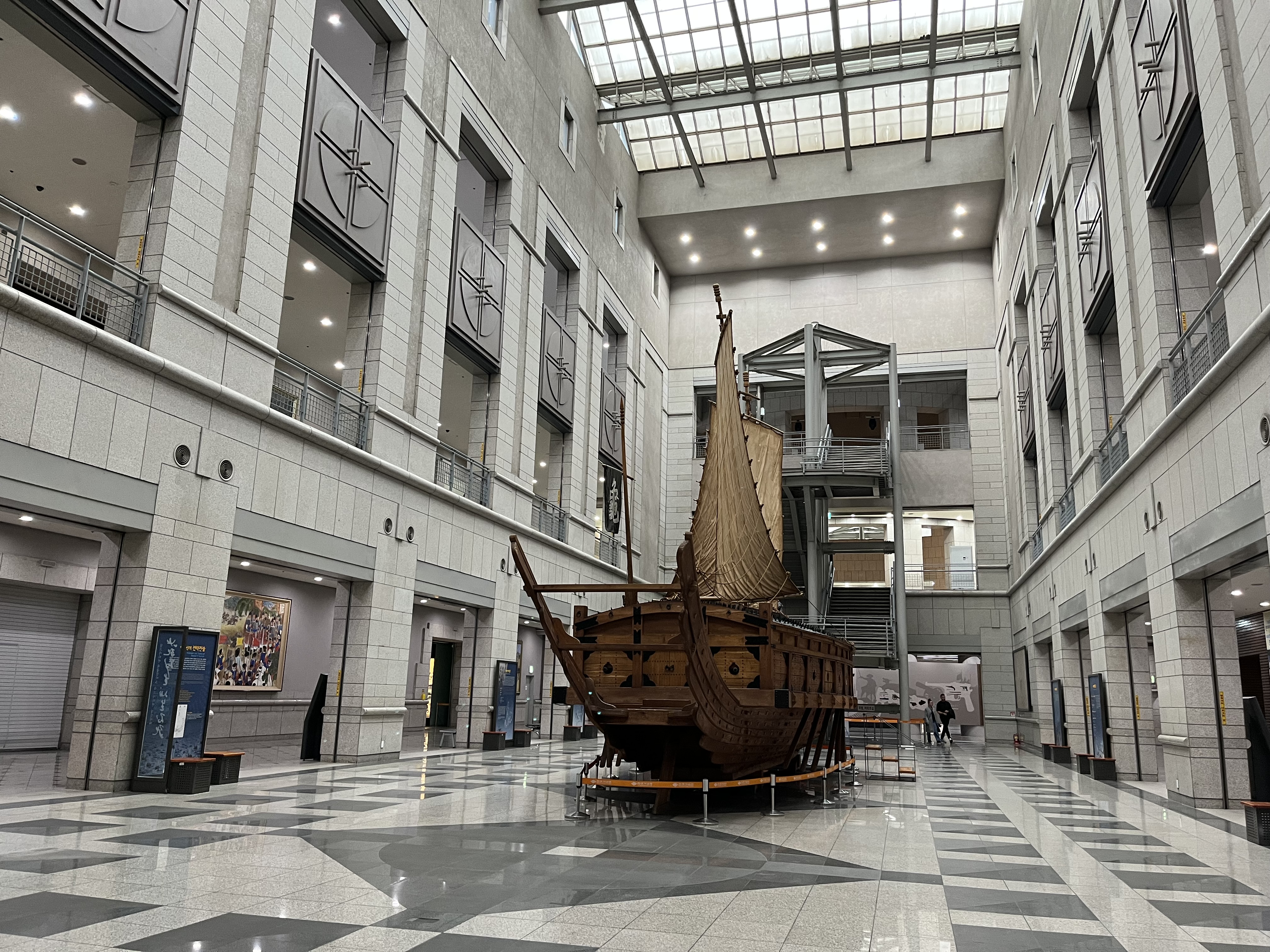
Of all these neighbours, none has raised the ire of Koreans more than their neighbours to the east. Having embarked on a huge modernising drive in the mid-19th century, the Japanese also gained a taste for imperialism and promptly set about conquering the lands closest to them. The fallout from that has been widely dissected in history books and Wikipedia, as well as by my virulently patriotic father, but still it would be nice to understand it from the perspective of a country that was at the forefront of this colonisation. Passing through endless labyrinthine halls, walking past I patiently read through the exhibit panels, counting down to the stretch of history I know. At long last, I come to the First Sino-Japanese War in 1894. “The Japanese invaders had, during the Meiji period —”
A chime rings out through the exhibition hall. “The museum is closing now. Please head to the exit. Thank you for visiting us at the War Memorial of Korea, and we hope to see you again.”
Oh for Christ’s sake. This wasn’t supposed to happen: the brochure clearly says that the museum closes at six, and it’s now 17:40 — how the hell are they emptying the halls NOW? I recognise that going through the entire museum was an absurd proposition, but it’s just idiotic to close this much ahead of time, and just as the history’s getting interesting for me, too. I shuffle out of the exhibition room and rejoin my friends in the entrance hall; having walked so much for so long, they look more relieved than forlorn that our sightseeing for the day is almost over. Console myself somewhat by taking my sweet time reading the commemorative plaques in the plaza (a surprising number of countries helped South Korea out in the Korean War) and then strolling into the adjacent courtyards, where an array of decommissioned tanks, aircraft and ships lie scattered far into the distance. A military nerd’s wet dream, but since I’m not one I focus instead on the black cat that leaps out from one of the bushes and straight into the undersides of the fighter jet in front of me.

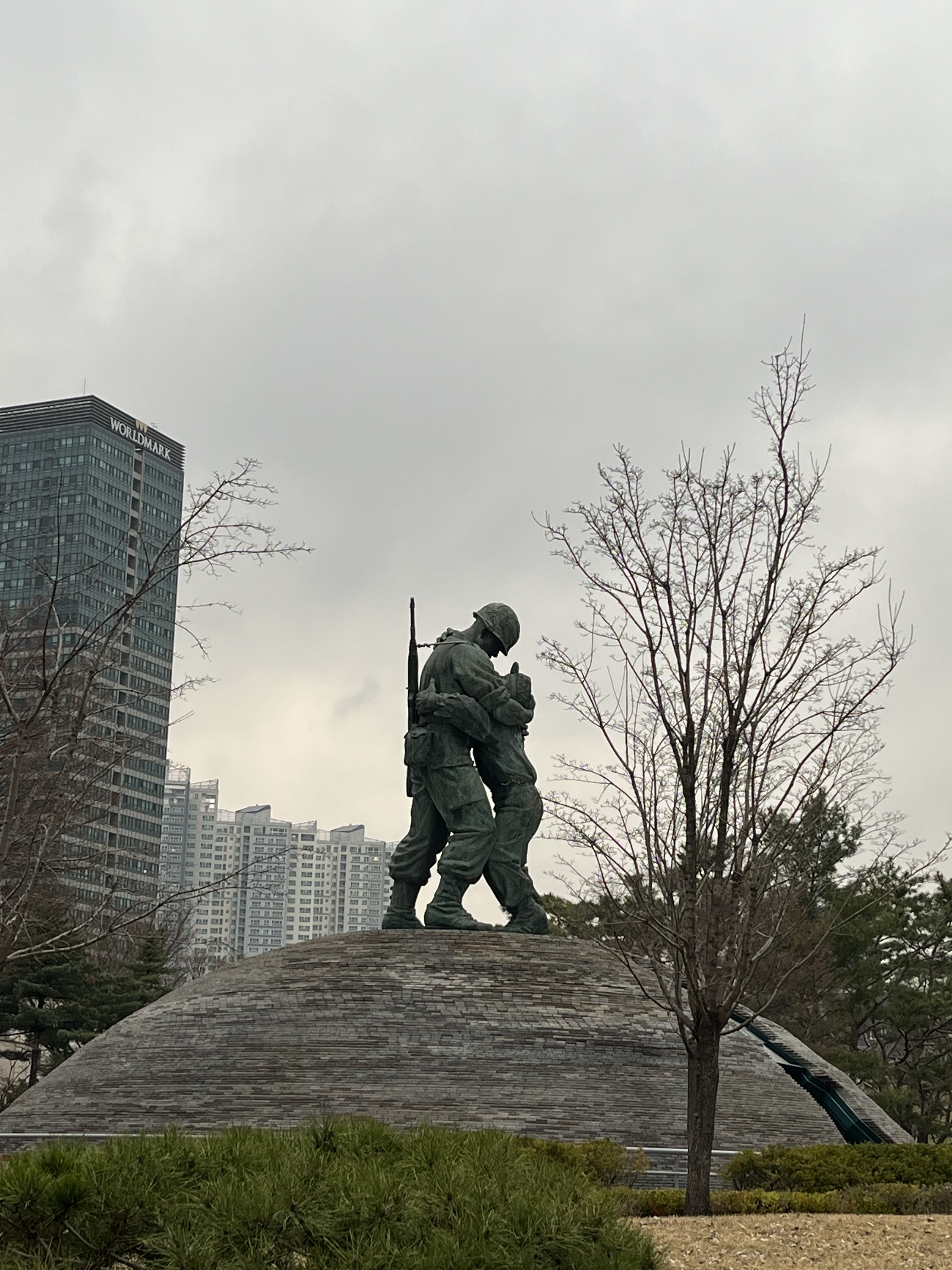

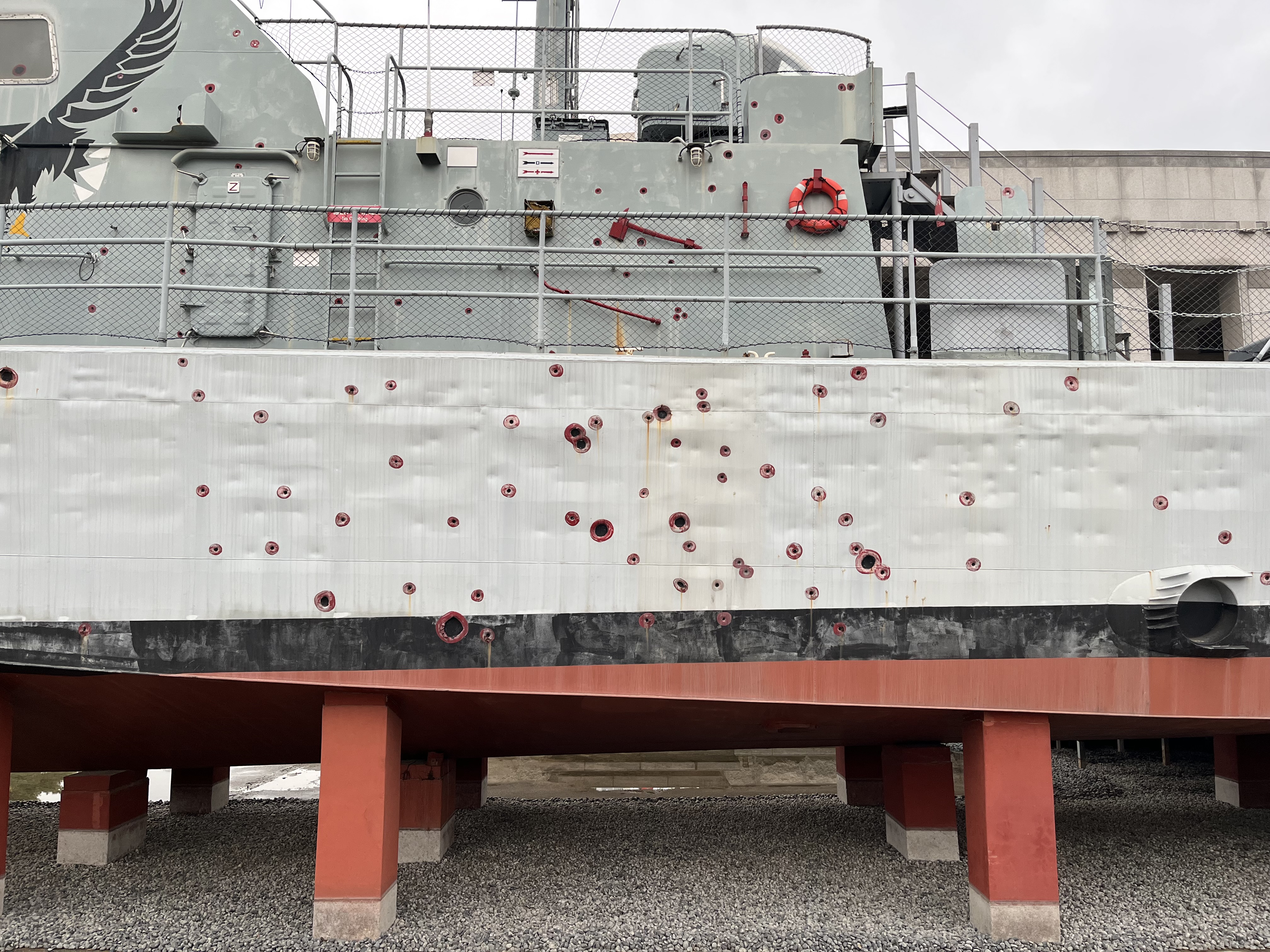

Meanwhile, two people sit at the main entrance, doing a YouTube livestream of some sort. Brief perplexion about their choice of location — a war memorial is hardly appropriate for livestreaming, and anyway their backs are to the road — before I notice the new presidential offices looming up behind them, and it clicks.
Six o’clock sees us popping up at Itaewon station for the last destination of the day. (I had suggested that we just walk it, but Eugene literally put his foot down and declared we’d done enough.) Just outside exit 1 is a short side street, barely two car-widths wide, that slopes uphill and ends quite abruptly at another T-junction. It looks like any other side street in Seoul, but it was here, two years ago, that South Korea’s deadliest crowd crush happened (Halloween weekend, loads of youngsters from home and abroad, someone slipping in this congested alleyway) and left 159 people dead in the aftermath. Today it looks very much like it did in the news: narrow, precarious, more than a little seedy; the fact that the paving stones are a little slick in the falling rain is enough to send shivers up the spine. To the side stands an informational panel, eerily colourful despite its sombre contents; for a few minutes we stand there, silently reading its eulogy — written in surprisingly eloquent English. Somehow, this street feels more solemn than the War Memorial.

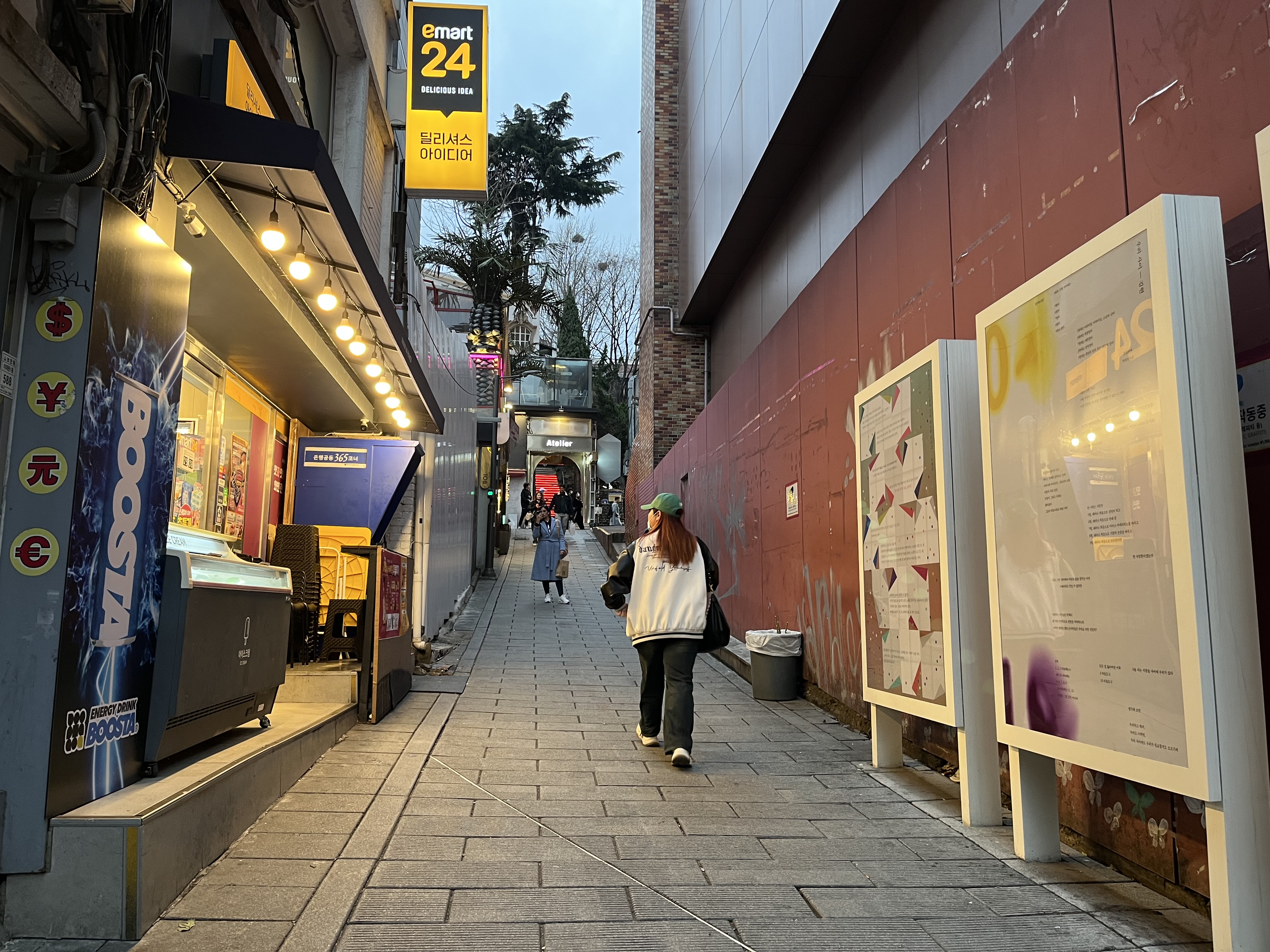
We walk up into the streets of Itaewon itself. This is a district that has a healthy reputation as a popular, trendy hangout for the young from home and abroad — perhaps you’ve seen that Netflix drama, or heard about it from a friend who’s been there. In addition to not being popular nor trendy, however, we have also come here on a Thursday night, and so business at the bars and restaurants are merely respectable rather than booming; and the only people roaming the streets are a few restaurant owners and waitstaff, trying to find hungry people and coax them into their own establishments. The energy here is kept at a slow simmer, not helped by how a light but persistent drizzle seems to automatically dampen the surroundings. Still, there’s a certain multicultural, youthful spirit to be detected here: within the different eateries (Irish, American, some weird fusion of Chinese and Korean), what clientele there is tucks in with gusto, happily chattering with one another, just enjoying what time they’re having together.

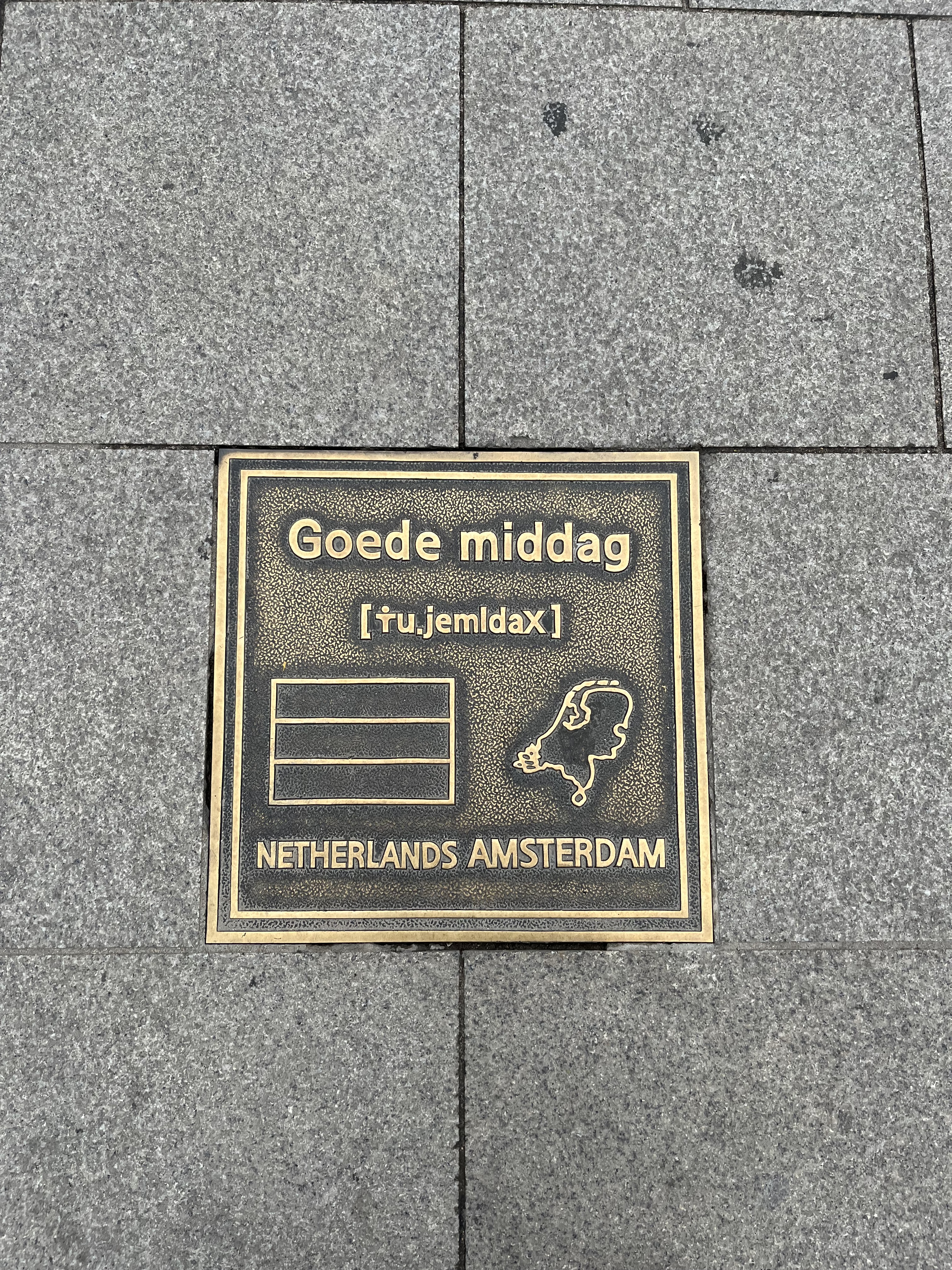

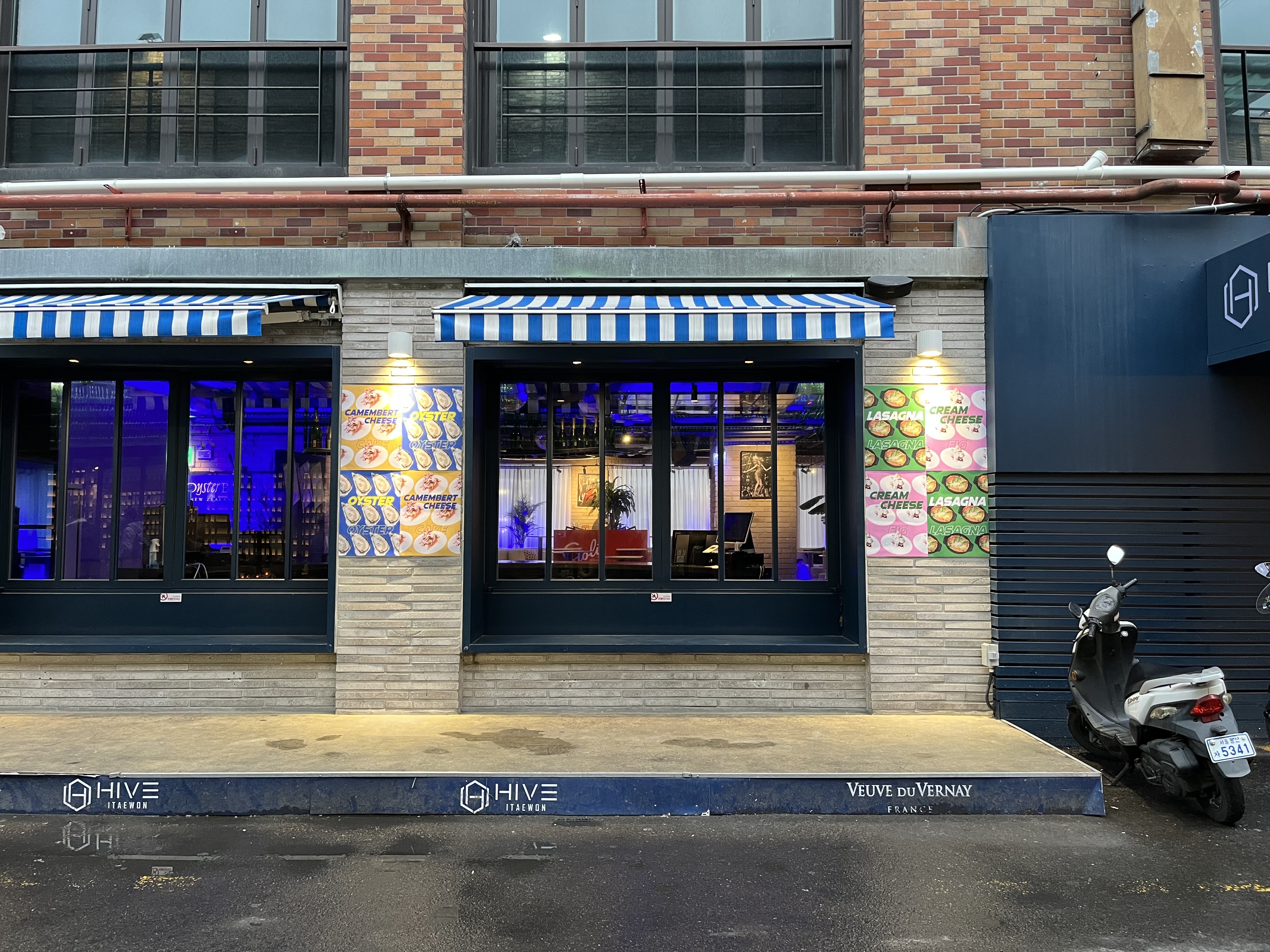
This sight reminds us that we, too, need to start thinking about dinner prospects. We’d bookmarked a pasta place in the neighbourhood (“the Korean take on Western food is also a cultural experience in itself”, I argued this morning) but after circling the same city block three times in a row we come to the belated conclusion that the establishment we’re looking for is no more, and has been replaced by a Chinese hotpot joint. I’ve never been that much of a fan of hotpot, and so the news that it’s usurped an Italian restaurant is just depressing to hear.
We drift up the Itaewon-ro. No longer the tree-lined avenue it was outside the War Memorial, this section is instead lined with squat concrete buildings, with endless shops and restaurants that shine their bright lights onto the street. But as we follow the road downhill, the bright lights fade out, and the faded concrete frontages are slowly replaced by steel and polished glass. The roar of traffic, so loud at the Itaewon, has gradually petered out here, and so has the flow of pedestrians; soft music plays from a sleek little building marked “Music Library”. We have passed into Hangangjin, Itaewon’s upmarket elder sibling; this is a place that swaps out the latter’s rambunctious caffeinated energy for quiet sophistication and artsy eclecticism. The bars and the street dives remain, but there are also quiet cafes, car dealerships, and even a museum or two (the Samsung Corporation’s Leeum art collection is tucked away in a backstreet around here somewhere, because they can).

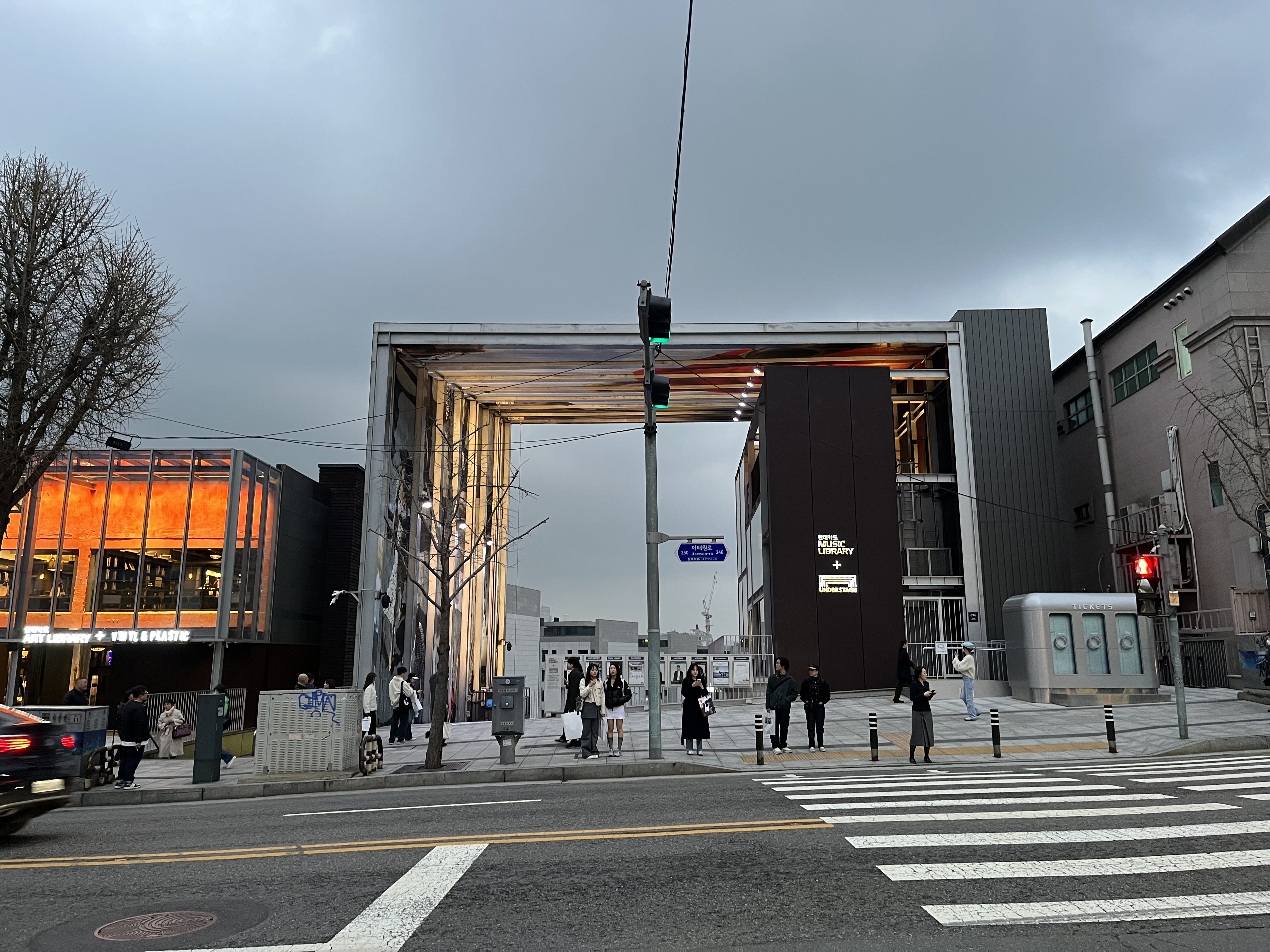
And of course, there is no shortage of restaurants here. There’s a bistro on one street corner, an American burger bar on another, and even a Taiwanese place selling beef noodles — Chinese restos are a dime a dozen in South Korea, but this is the first Taiwanese one we’ve passed by. Settle for an Italian deli proudly advertising the quality of its cheese and charcuterie boards, which turns out to be no idle boast: four different cheeses, each one its own type of savoury, and each pairing beautifully with the various cuts of ham served along the side. It’s not all just bits of pig and stale milk here either: the pasta here is thick and pillowy, the pasta rich like paradise, and even the olives feel like they’ve got that special something in that restaurant.
Filled to the brim with good food, we sit back in our chairs and listen to the quiet music floating through the air; at the other end of the restaurant, a group of three converse loudly enough that I can hear them slipping into Mandarin and back into Cantonese. The waiter comes by to collect our empty plates; Eugene stares at her as she walks off.
“I think she might actually be Japanese,” he says. “That way of speaking English…”
“It’s been three days and we’ve run into so many languages,” observes Sunny languidly. “Have you hit bingo yet?”
“Quite possibly,” he says. “Mandarin, Cantonese, Japanese…”
I nod solemnly. “We are in your realm of recognisable languages.”
We head back outside into the night. Even though it’s quieter than Itaewon, I find myself liking the Hangangjin neighbourhood a lot. It feels a little oasis of calm amidst the cacophony of Seoul, less frantic and more polished; there’s just as many cultures represented in Hangangjin as there are in Itaewon, but they don’t feel as jumbled here — you can wander at leisure, and discover stuff at your own pace. And the buildings here, with their glass and well-lit interiors, feel much less claustrophobic than the ones we saw up the road: while the other boys briefly stroll across the road to look at a clothes shop, I stand myself at the entrance to a building all in black, maybe an apartment block of some sort; stairs lead up from the entrance onto little platforms that gaze back down into the little side street we’re on, while musak filters softly through the loudspeakers. Just think: if I’d skipped the BTS headquarters…


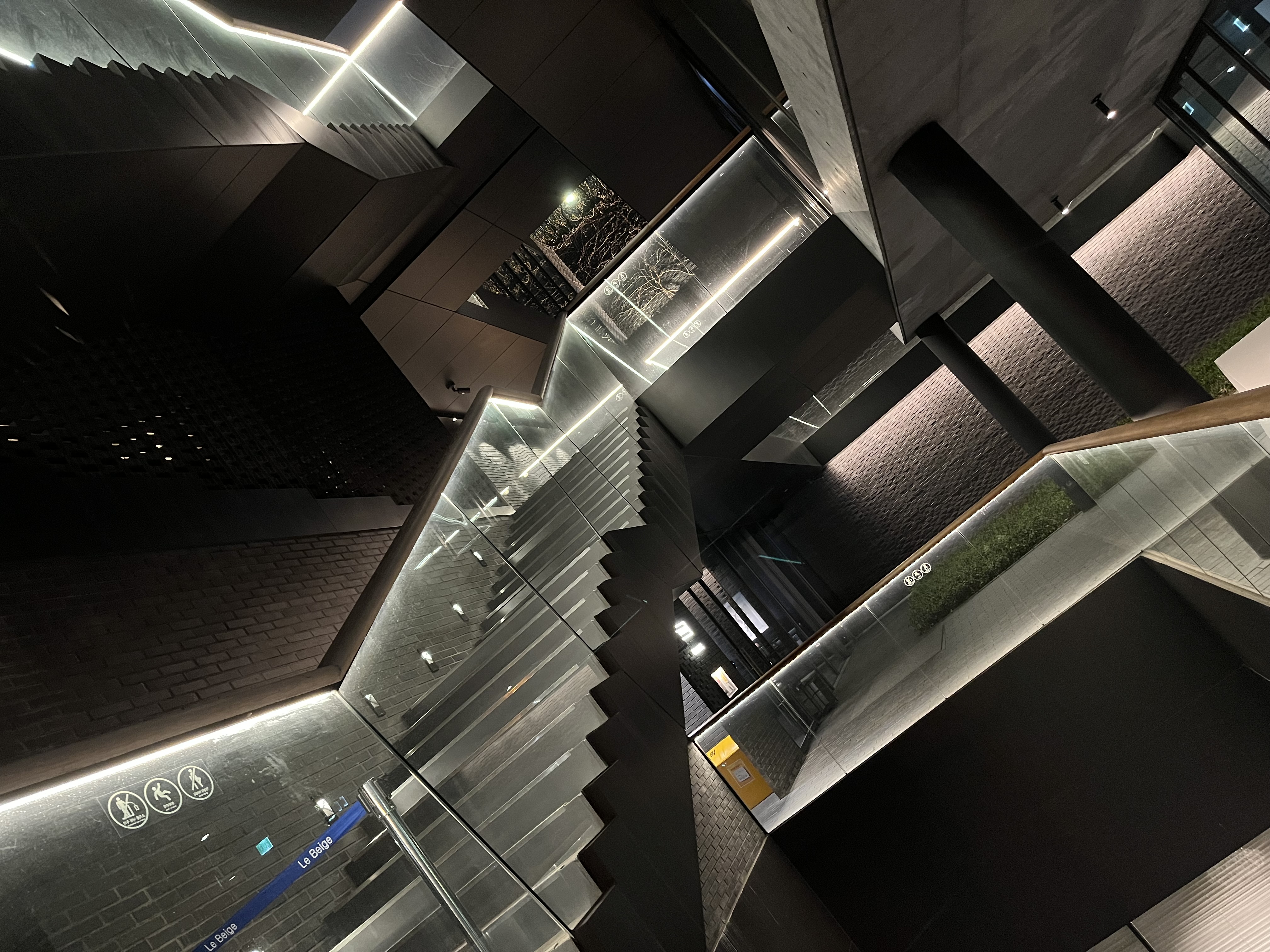
Would have loved to explore this place further, but we have an early start tomorrow and everyone’s already exhausted enough as it is, so we head back. The last thing I read before I turn in is another public safety alert proclaiming the transport strikes to be over, and that buses have returned to the streets of Seoul as of five in the afternoon. Which certainly makes the journey we have tomorrow much easier.

 Inkpot Shuffles in the Twilight