27 May
When I do finally get into bed, sleep doesn’t come easy. In between fits of waking up covered in sweat, I dream my way through a strange mishmash of images which cobbled together create a strange, Inception-esque tale, one that involves the three of us, a pickpocket from Naples, and an author watching all of us from a café in Copenhagen H. During those hours my mind flits freely between layers of Dreamland, and by the time morning rolls around I have sufficient images to write a short novel with. (Maybe I should get food poisoning more often. It seems to unlock more of my subconscious.)
Decide I’ve had enough by 8:30 and rise gingerly to pack. Having emptied most of the contents of my stomach last evening, my body is on power-save mode and I stumble unsteadily from suitcase to bed and back again, each time just carrying one or two items. I have never really prided myself on being a fit person, but even gripping more than one thing seems to take a more than superhuman effort this morning, and having once again foolishly claimed top bunk during our arrival, the repeated up-and-down journeys soon sap my remaining energy, and I find myself slumped on the floor of our room as check-out time rapidly approaches. (Much later, when I return to Hong Kong, I will discover that in my tired daze I have left behind a book, a plushie, and an entire knapsack in the hostel room. I hope whoever was in that room next likes G. K. Chesterton.)

Amble over to Copenhagen H with Dennis and Charmaine. It’s another beautiful day today: the skies are still electric blue and a delightful, mild breeze is whistling down the streets; perfect weather for exploration. Yet the walk from our hostel to the train station, a short journey which I’ve made so many times, drains me so thoroughly that upon arriving at the latter I have to sit down and rest my head against the rough brick walls of the station. Left alone while my friends go in search of breakfast (at 11 in the morning), I cast my eyes on the people flowing through the concourse. I see grandparents holding little boys and girls on their lap, bouncing them up and down; I see a woman being welcomed by a group of friends with song and big hugs; I see a grizzled man falling to his knees in the centre of the hall, supplicating himself before the deities of transport. Joy suffuses this vast vestibule, and as I watch them I feel absolutely disgusting. Here I am, poisoning this safe haven with my poor health and thoughts — why didn’t I wash my hands yesterday? Why is everyone so happy? Am I even worthy of being part of Copenhagen today?
Enough. Self-pity will get me nowhere, and that’s even more the case for someone who still thinks of himself as a traveller. I may not be in best shape today, but it’s still my last day in Copenhagen — my last day before returning to the drudge of daily life — and I’m damn well making sure it ends on a high note, even if it kills me. Struggle to my feet, my grip tightening ever so slightly on the water bottle, and shakily make my way down once again into the bowels of the Copenhagen Metro. On the train, the stations pass by: Gammel Strand, Kongens Nytorv, Marmokirken — stations I all stopped at yesterday and the day before, but now the journey to each stop seems to take much longer than I remember, stretching into an eternity. Eventually, though, the train reaches Østerport station, and I stagger out into the sunlight, blinking the sudden glare out of my eyes.
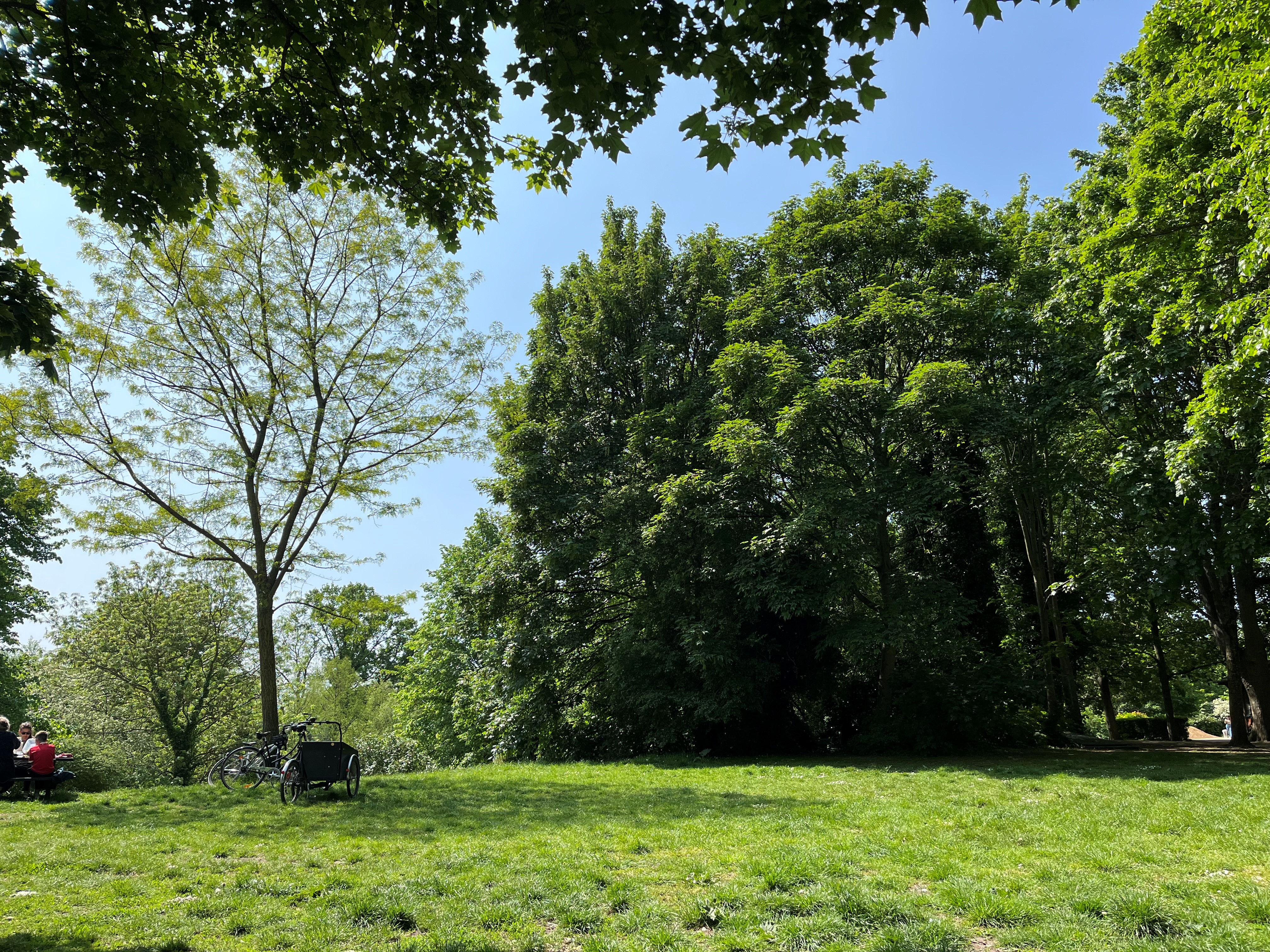


It takes a while for me to get my bearings (voiding your digestive system and a lack of sleep will do wonders to your navigational skills) but eventually I spot an opening in the hedges on the opposite side of the road, dive in, and find myself walking through a delightful park on the outskirts of the Kastellet (“Citadel”) precinct. Even though it’s a Saturday morning, the grounds are already thrumming with activity: people jogging, sightseeing, even lazing about on the grass. The Danes really do take leisure seriously, it seems, no half-arsing when it comes to day outs, and for an instant I am transported back to yesterday afternoon again, strolling through the gardens at Frederiksberg, my mind not on my own misery so much.
At the centre of the precinct is Kastellet itself, its brick-red buildings hidden behind ramparts and castle walls. Much of the citadel sits on an islet that looks like any old defensive islet, but when viewed on a map its curious outline is unmistakable: a series of jutting-out bulwarks and earthworks have created an island that’s rather like a five-pointed star. I walk up onto the ramparts, partly to see this effect with clarity and partly to figure out how the hell I can reach the other side of the citadel. This is a decision I soon come to regret, as it turns out there are only two paths leading up there, and getting to the other one requires the visitor to walk the outline of half the island — the shape of which means endless detours. What was in theory a simple ten-minute jaunt becomes far more than that, as I amble forwards like an arthritic old man and ease myself painfully onto bench after bench, only to discover that I’ve covered about thirty feet and the exit is still a gazillion miles away. It never occurs to me that I could have simply doubled back and walked straight through the complex instead.


At last I reach the north end of Kastellet and make my way downwards. After a quick pop inside, mostly for the toilet, I walk back up the steps and cross the road. Join a bunch of tourists who are all making their way downhill; despite it being close to lunchtime the crowds stretch on before and behind me, a bewildering mix of young and old, foreign and local. The road slopes downward to a grove of trees, beside which countless tour buses are parked and out of which even more tourists are pouring. We all make for a gap in the trees, through which we find the North Sea, glittering in the sunshine like it always has — and on a small outcrop of rock to our right, the thing we’ve all come to see.

Although Denmark is a country of many merits, it will forever be best known for the literary works of one particular man with a very big nose. Countless children across space and time have found themselves enchanted by the tales of Hans Christian Andersen, as inextricably linked to Danish culture as depression or the open sandwich. Although he was born in Odense, a hundred miles to the west, Copenhagen has never been shy about milking their own connections to their greatest storyteller; hence this statue of the Little Mermaid, plopped here on the Langelinie promenade by the head of the Carlsberg brewery after he took a shining to a ballet adaptation of the story (and especially its young lead actress). It is far and away the most iconic thing that the capital has to offer, and still attracts visitors from all around the globe.
One of the more interesting things I find about the Little Mermaid statue is how it’s often described in the media: time after time, visitors have been underwhelmed after catching their first glimpse of it. “It’s just a statue, and not a particularly majestic one at that,” they say. “You’ve seen pictures of it before anyway.” Perhaps it’s because of this that when I first lay my eyes on it, separating it from the surrounding, adoring masses, I find myself pleasantly surprised. Yes, I’ve seen statues that look way more majestic and inspire a deeper sense of awe in me — but neither is it a massive disappointment. There’s been a lot of discussion about how the Andersen story is, at its centre, a representation of the author’s melancholia and heartsickness; looking at the statue, situated in the middle of a crowd of worshippers, I detect a slight forlorn look on her face, the kind that actors tired of the celebrity circuit always seem to unconsciously have. Maybe it’s just me, but the whole thing has a rather contemporary sensibility, perhaps even speaks volumes about the modern problems of social disconnect and the inability to relate to each other. Hans Christian really was an author for the ages.
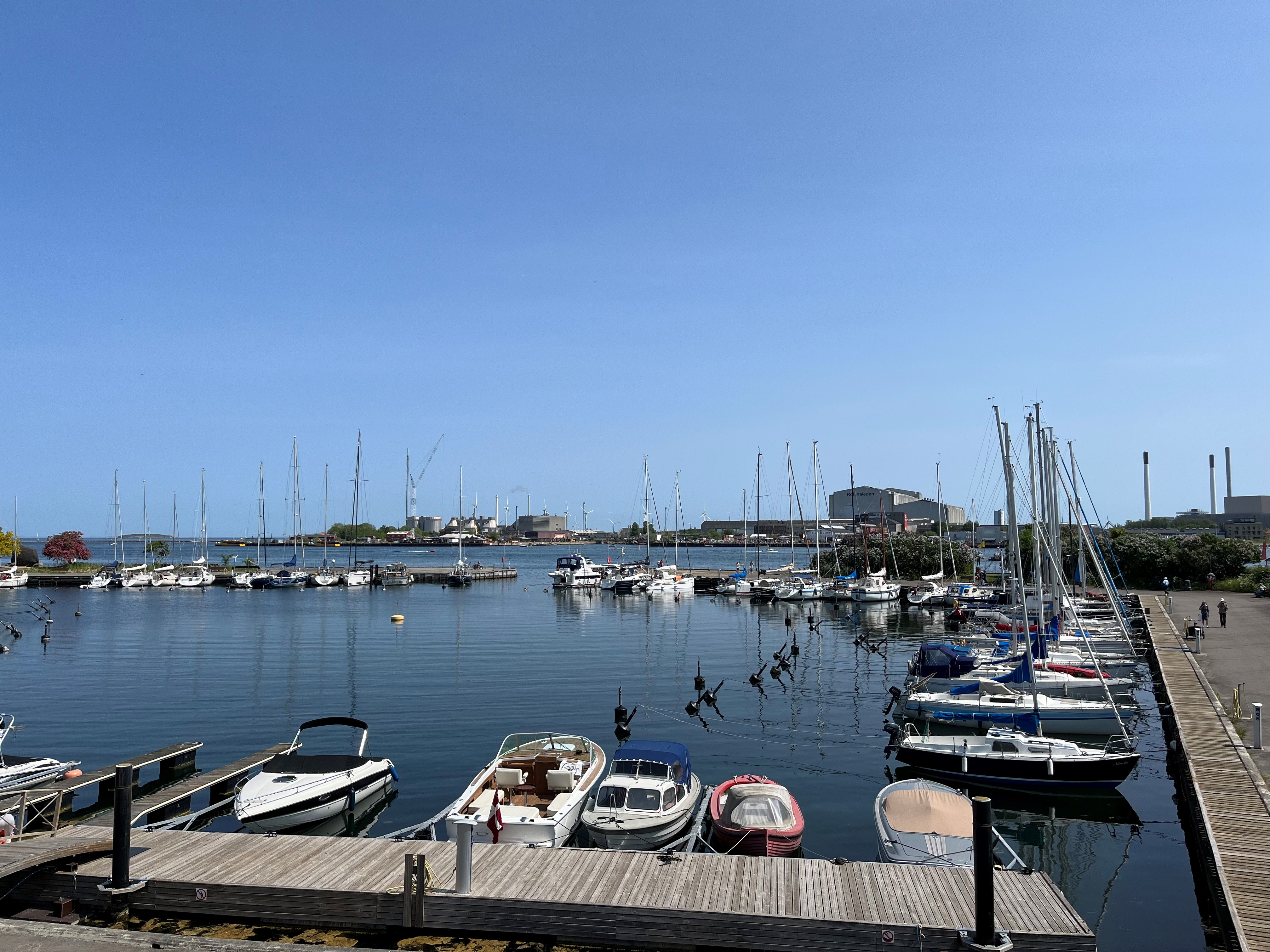

Back in the outside world, I am trying to get a clear shot of the statue. It’s hard enough to get a picture of the Little Mermaid at all, but there are so many people surrounding the sculpture — so many people eager to prove they’ve been to Denmark — that getting a picture of the Mermaid on her lonesome requires almost Herculean levels of effort. There is a queue of tourists all waiting their turn to get their picture taken, people of all nationalities and languages, to the point where the Mermaid itself can look like just another face in the crowd. But she does get occasional breathers while her latest admirer waddles back onshore, and it’s during one of these pockets of solitude that I snap a picture of the statue, striking against the blue of the skies and the North Sea, looking all the more lost in amongst the modernity of Copenhagen.

Sitting in the grove of trees that separate the road from the waters, I pull out the map to decide my next destination. (This is a more difficult task than it sounds, largely because half the tourists here are smoking like chimneys, and I seem to be followed by a fog of second-hand cigarette smoke wherever I go.) Since what’s coming up will probably be the last thing I visit in Denmark, I want it to be something special: my last European trip ended with me having a mini-breakdown at the reception desk of an underwhelming side attraction, and that’s just something I don’t need a repeat of. So I’ve narrowed it down to two places: Rosenborg, a castle on the edge of town; and the Danish Designmuseum (which all the branding INSISTS is one word), just ten minutes’ walk away. The appeal of the former is strong — I’ve not visited a castle in the past nine days! The injustice! — but I decide against it, largely because I just haven’t the energy to go all the way across Copenhagen in my current state. Plus, the Designmuseum has a café.
So down the Langelinie boulevard I go, shielding my eyes against the harsh sunlight. Turn away from the waters a bit and head inland, against the tide of tourists heading my way; the sounds of the sea fade away, replaced by the honk of tour buses and car horns and tourists; pretty soon I find myself in the all-too-familiar environs of Bredgade, on which lies the Marble Church Named After Frederik and the Amalienborg Complex Where Queen Margarethe Does Not Currently Live. Before I catch a glimpse of all that, however, I spot the small vertical banner for the Designmuseum (one word) flapping above my head, and peer into a small and homely courtyard, backed by yet another stately home. Inside I am greeted warmly by a silver-haired receptionist as well as the news that prices are reduced for visitors under the age of 27, which is a source of great relief to both me and my wallet. Enquire tentatively if they still have an on-site eatery, upon which the old lady at the desk smiles. “But yes of course we have a café. And it’s very good.”


With my stomach still threatening revolt I decide to leave lunch for later and see a bit of the museum first. Although I’ve never been much of an artistic type, good design has always fascinated me; as longtime readers may have noticed, I am fascinated by how rudimentary lines and shapes can accumulate into something simultaneously so out there and yet so wonderfully usable. The Scandinavians are masters of this: I’ve already alluded to the Sydney Opera House, but there’s also IKEA, Egg chairs, and so much more. Here, at the Danish Designmuseum (one word), one gets a sumptuous feast of all these elements: walking through the first few rooms, the visitor is presented with examples of jewellery, costumes, glassware and more, alongside detailed explainers that my addled mind can only skim through. What strikes me is how everyday these items look: those plaids and porcelain urns wouldn’t look out of place in a normal wardrobe or a mantelpiece, yet in this museum they are upheld as object lessons in Nordic refinement. And I, for one, am fully convinced.
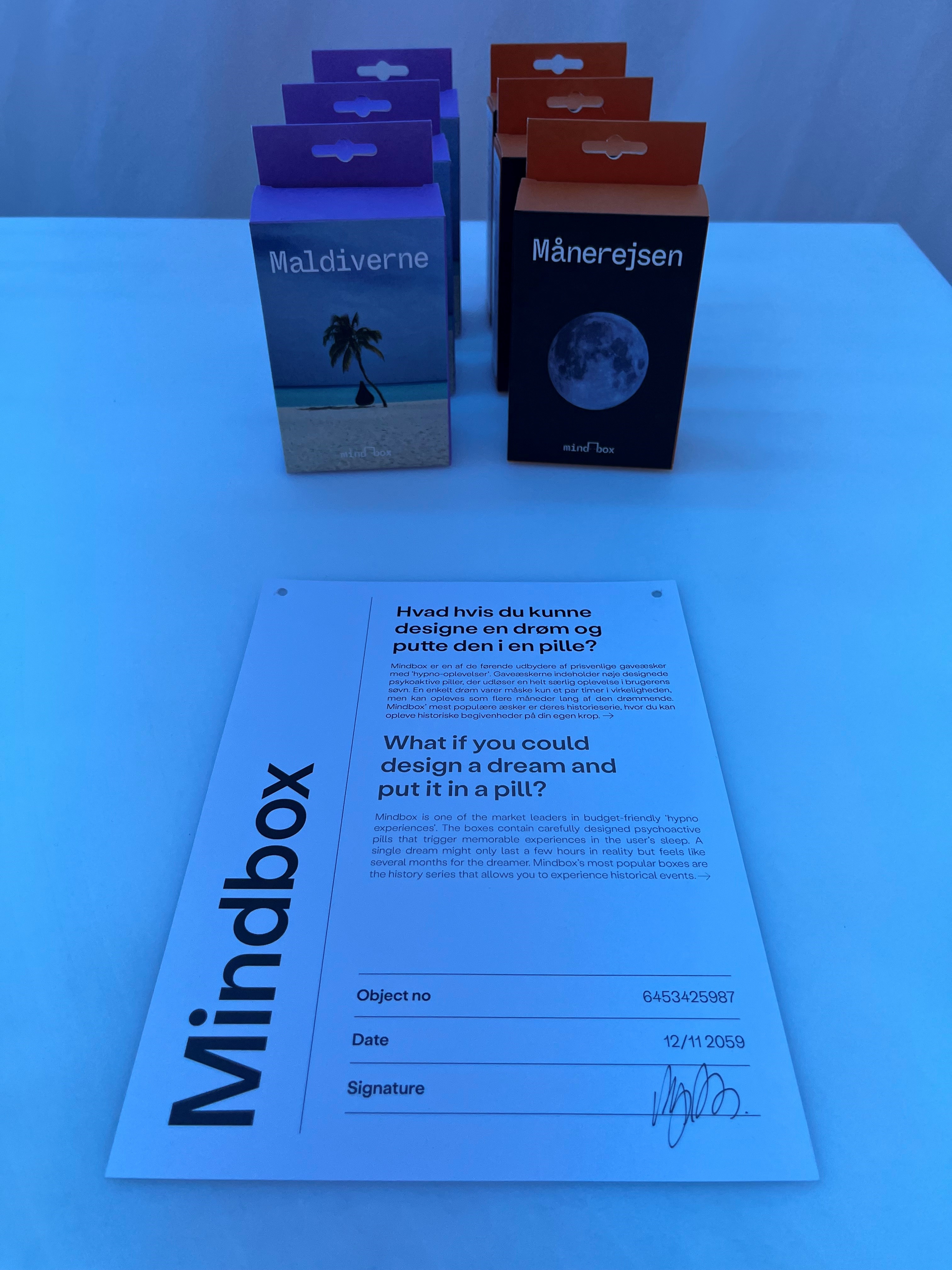
But the museum’s also eager to remind you of how design isn’t limited to the realm of the physical — behind every good design, they say, lies a certain philosophy or a certain idea. I first catch a glimpse of this philosophy after a section on 18th century Danish metalwork; turning the corner, I step into a wide, empty hallway, furnished with nothing except the exit on the other side. A neon sign just beyond the doorway, orange against the bare white of the walls, loudly proclaims: “THE FUTURE IS PRESENT”. Step past that into the next room, where I am suddenly confronted by a barrage of questions. “What if you could design a dream and put it in a pill?” asks one panel. “What if you could vaccinate yourself with emotions?” Any notions that this is just pie-in-the-sky chatter is dispelled by said pills and said bottles of medicine, staring innocently up at the visitor. It isn’t every day that you get to contemplate the prospect of injecting happiness or boredom into your veins (if you have experience otherwise, do please contact me), and I stand there for some time, suitably lost in thought.


It is in one of these rooms, however, that I also feel my knees begin to sag. A combination of nine days’ hyperactivity and diarrhoea has taken its toll, and every step I take drains me, every sensory experience both a million miles away and also uncomfortably close. Try to stave it off a bit by the occasional sitdown, but all that does is impress on me just how tired I am right now, and how I can’t keep this up much longer. About a third of the way through the museum, I decide to give up the fight: staggering through the halls, I find a deserted couch at the back of the building, right next to the men’s bathroom, and almost collapse onto its plump, velveted surface. Resting my head on the walls and the sound of plumbing ringing in my ears, I close my eyes and sink, almost immediately, into dark, blissful oblivion.
When I come to, it’s already half past three. Two hours between now and our mandated arrival time at Kastrup Airport, and I still haven’t had lunch. Rush through the remaining rooms of the Designmuseum (one word), trying to navigate my way to the exit. On the map, I was already halfway through, but this second half of the museum seems to go on and on and on, and I find myself rushing through endless rooms with endless exhibits. I want to stop and look at some of them — a gigantic wooden throne, a collection of papers, so much more — and yet I can’t, I simply can’t, and every chamber I rush through is one more sad reminder of just how much stuff I’m missing, every reluctant command to push forward a stab in my heart and a strain on my legs. This is literally my shit, my idea of nerd heaven. But as it is, this particular heaven comes with a time control, and after what seems like an eternity I drag my legs out of the museum area.


Make a beeline for the café and sit down, feeling very much like a ragdoll that’s escaped from the museum collection. The weather is absolutely gorgeous this afternoon, warm with a hint of breeze, and from my corner seat I can discern adults and children pottering about in the trees; the only things preventing me from joining them are my curiously immobile legs and an obstinate self-consciousness that warns me against embarrassing myself further. A young waitress, noticing my awkwardly raised hand, floats over to my table. (A word about this waitress, who I have decided merits her very own tangent. She is the prettiest human being I have ever had the fortune to meet; in fact the word “pretty” would be something of an insult if applied to her. Imagine, if you will, the already-perfect image of Elle Fanning stood before you, complete with radiant smile and twinkling eyes; add a slight dash of textbook Scandinavian coolness — the kind which immediately exudes a calm, gentle control over any situation — and a sparkling, slight Danish accent, and you have an approximation of the fresh-eyed woman who stood before me on that Saturday afternoon. I’m 25 years old, this kind of narrative intrusion is inevitable.)
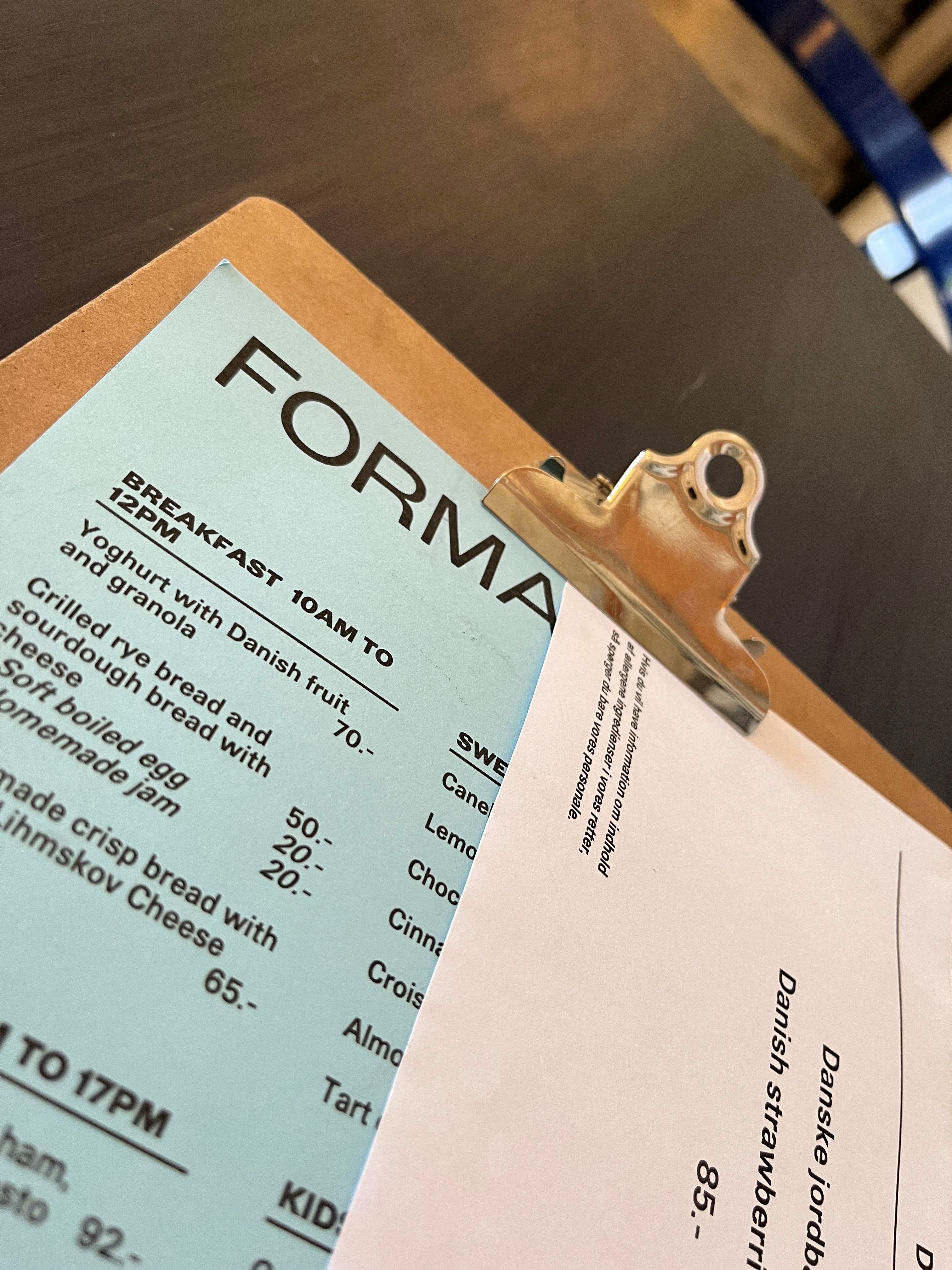
Anywho, I look at the menu and tiredly point at the cheapest main — my digestive system is still decidedly angry at me, so might as well try and reduce food waste. However, I have forgotten that Danish portions are not the same as Asian portions, and so I am greeted with a MONSTROUS sandwich bigger than my head; my immediate reaction to the appearance of the supposed panini is to mutter “oh no”. To make matters worse, it is a delicious panini, the type that I normally would have wolfed down in a second — stuffed full of cheese, pesto and Duroc ham, this is literally my idea of a perfect sandwich. As it is I only get through two-thirds of said perfect sandwich before giving up; eating more would risk a public repeat of last night’s horror show, and I do not wish to leave Copenhagen on that literal sour note. I feel so guilty about not finishing this culinary masterpiece that I seriously consider leaving a message on the table, something along the lines of “sorry about not finishing it, it’s not you it’s me”. But I don’t do that. Feels a bit naff.


Perhaps, I think as I leave the Designmuseum (one word), there are just some things that you’ll never be able to finish. Everything I’ve done today has had the air of incompleteness — I never finished that sandwich, or the Designmuseum, or got my picture with the Little Mermaid. Come to think of it, that applies to a lot of other things here in Copenhagen as well: I never visited Rosenborg, or Malmö, or that aquarium that Charmaine and Dennis were so avidly gushing about. It’s not just about sights, either: I’d have loved to sat down and chatted with the receptionist at the Rundetårn, or the guy who gave me directions to the Frederiksberg Gardens, or the mind-blowingly stunning waitress who brought me my panini just now. (Steady, Chamois.) There was so much that I’d like to have done in the Danish capital, and yet here I am, already walking back into Marmokirken station for my last Metro ride, already beginning to fret about how the people back home will receive their souvenirs. Cruel, cruel curtailment.
Curtailment has been a running theme throughout this trip. I remember leaving Vienna feeling much the same way: happy about all I’d seen, yet still feeling that my experiences were somehow incomplete. It’s a feeling that’s even more acute for Copenhagen, which in less than 70 hours has somehow vaulted to number one on my list of favourite cities: granted, I was always going to be favourably disposed towards a city I’d dreamt of visiting for years, but I’m still surprised by how much I’ve enjoyed the Danish capital. This is a city that has given me bouts of loneliness, disorientation, and even a case of food poisoning, yet all that has only fascinated me more, made me want to stay in Copenhagen forever and a day. I just haven’t spent enough time here, nor have I seen even a fraction of what I want to see. As I walk up the steps to our hostel for the last time, I see Charmaine and Dennis sitting there in the lobby, and I know that my face is a mirror of theirs — downcast and exhausted. The dread of returning? Or something more mundane? Either way, the regret is thick as we gather our things, and walk the short distance to the bus stop.

And yet as the bus jostles its way through the suburbs of Copenhagen, the afternoon sunshine through the windows making all of us sleepy, I keep having fragments of thoughts, bits and pieces entering my mind; an alternate perspective, one that just might give my time in Denmark, in Europe even, a happier ending — or more accurately restore it. Because let’s be honest, I’ve not been unhappy. For every blip that I’ve encountered in Europe — the train cancellation in Bratislava, the cold winds of Hamburg, being VIOLENTLY ill here in Copenhagen — I’ve had five good things to balance it out. Just in this town alone, I’ve had so many good experiences: I got to scream my heart out on the Tivoli Rutschebanen, I got to see those dreamlike multicolour squares down in the Cisternerne. I met so many people, beautiful in character and/or appearance, and even though my time with them was short I still shared so many lovely moments with them. That’s more than I’d originally hoped for, for goodness’ sake.
Of course, there’s a part of me that wishes I could have done even more. Of course there is: Copenhagen, like every place before it, is just too rich with nooks and crannies to justify just a couple of days’ exploration; and I already know that one day I’ll have to come back and see the rest of it, or retrace my steps from this weekend again. Because I will come back, come back for the food, for the people, for the bits of the Designmuseum (one word) that I never got to see; and whether it takes me a year or five, it’s something to look forward to, something happy to work towards. As I think this, the bus passes by Den Blå Planet, the aquarium where Charmaine and Dennis spent many an hour cooing over sea creatures yesterday. Even though I’m as comfortable with animals as I am with gastrointestinal distress, I can’t help but feel a pang of curiosity, and crane my head to get a better view. Charmaine gives me a look, and I raise my eyebrows. That one out there, I’ll add to the list too. She leans back in her seat, her enthusiasm successfully contagious.


All those voyages can come later. Right now I’ll just have to close the book on this place for the moment, and treasure what memories I have of wonderful, wonderful Copenhagen. I won’t have truly seen this fantastic city (or Hamburg, or Vienna, or even quaint little Bratislava) in three short days, and maybe it’s something I will never achieve. But as we get off the bus and stare at the anonymous glass frontages of Copenhagen Kastrup Airport, the drone of aeroplane engines loud in our ears, I allow myself to smile just a bit. We’ve had our fun. And I suppose that’s all that needs to count.

 Inkpot Shuffles in the Twilight