26 May
Wake to the sight of a panic. Charmaine and Dennis are running around our tiny hostel room, hurriedly packing things and telling each other to get ready. Apparently they’re off to see some aquarium or other in Kastrup, near the airport and the Swedish border. The animal shows begin at 10, and they’re anxious to see everything the place has to offer. Having had enough exposure to non-humans after the Schönbrunn Zoo, I shrug and turn over in bed, knowing I can, for once, afford to be relaxed.
It’s closer to lunchtime than breakfast as I begin the walk towards Copenhagen H. Descend into the subterranean world of the Metro once more, before popping back up at Poul Henningsens Plads for a bus which deposits me in the heart of the windswept suburb of Hellerup, right opposite my first stop of the day.
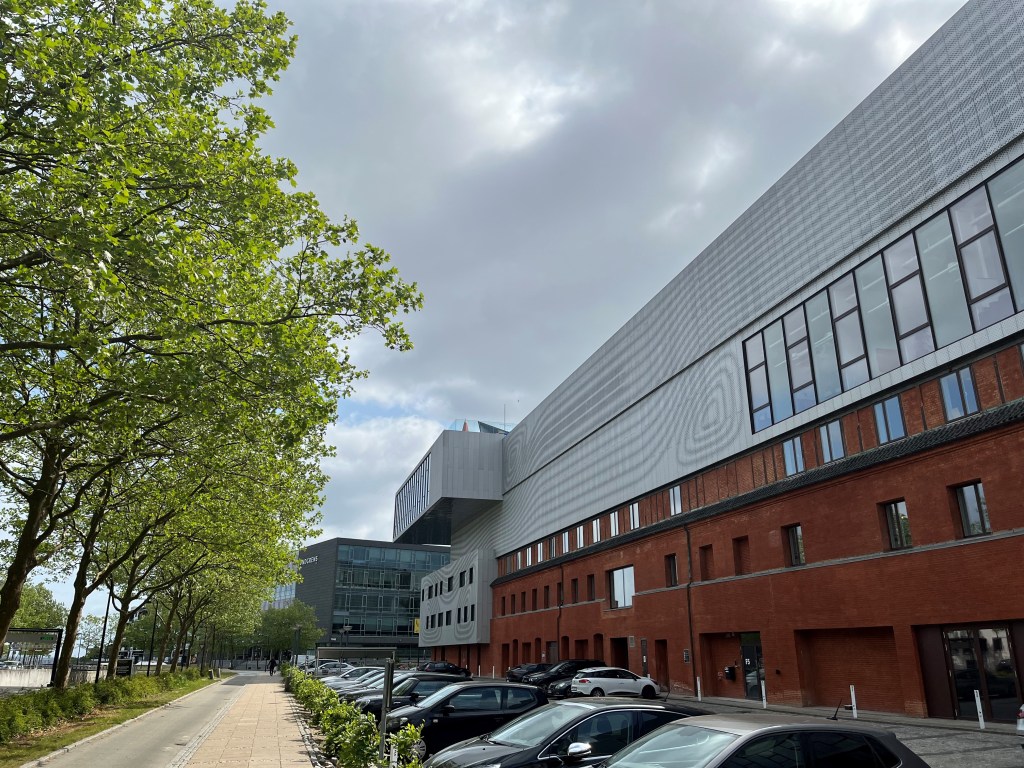
The name already creates expectations. It is impossible to hear the name “Experimentarium”, and not immediately imagine the most awesome sciencey things available to man. This is an image that the museum itself has carefully cultivated: its website and brochures are full of giggling children, handling larger-than-life appliances and machines and generally having the time of their life, as people in promotional materials are wont to do. The Experimentarium’s videos, however, offer a neat twist: occasionally an enthusiastic grandma ALSO pops into frame, as spry and curious as the children dragging her along. This, then, is not your average museum where human offspring run around screaming while daddy and mummy nurse coffees and headaches — this is genuine fun for all the family, even your grumpy old grandpa. Despite my 25 years I’m still very much a child at heart, so I decide to spend my Friday morning fiddling with giant machines and splashing water around. What could possibly go wrong?
That ominous note aside, when I enter the Experimentarium I find myself genuinely impressed and excited by everything around me. A giant spiral staircase stands in the centre of the museum, curling upwards like a strand of DNA; ascending to the first floor, I am greeted by a system of pulleys and metal tubes that extend high above my head, in a demonstration of the workings of international trade. I’ve been to quite a few science museums before, but this is the first one that’s dared to do logistics and commerce. Within seconds I am a little child again, dutifully obeying every instruction and encouragement written on the placards, pulling on ropes and flicking switches with glee.
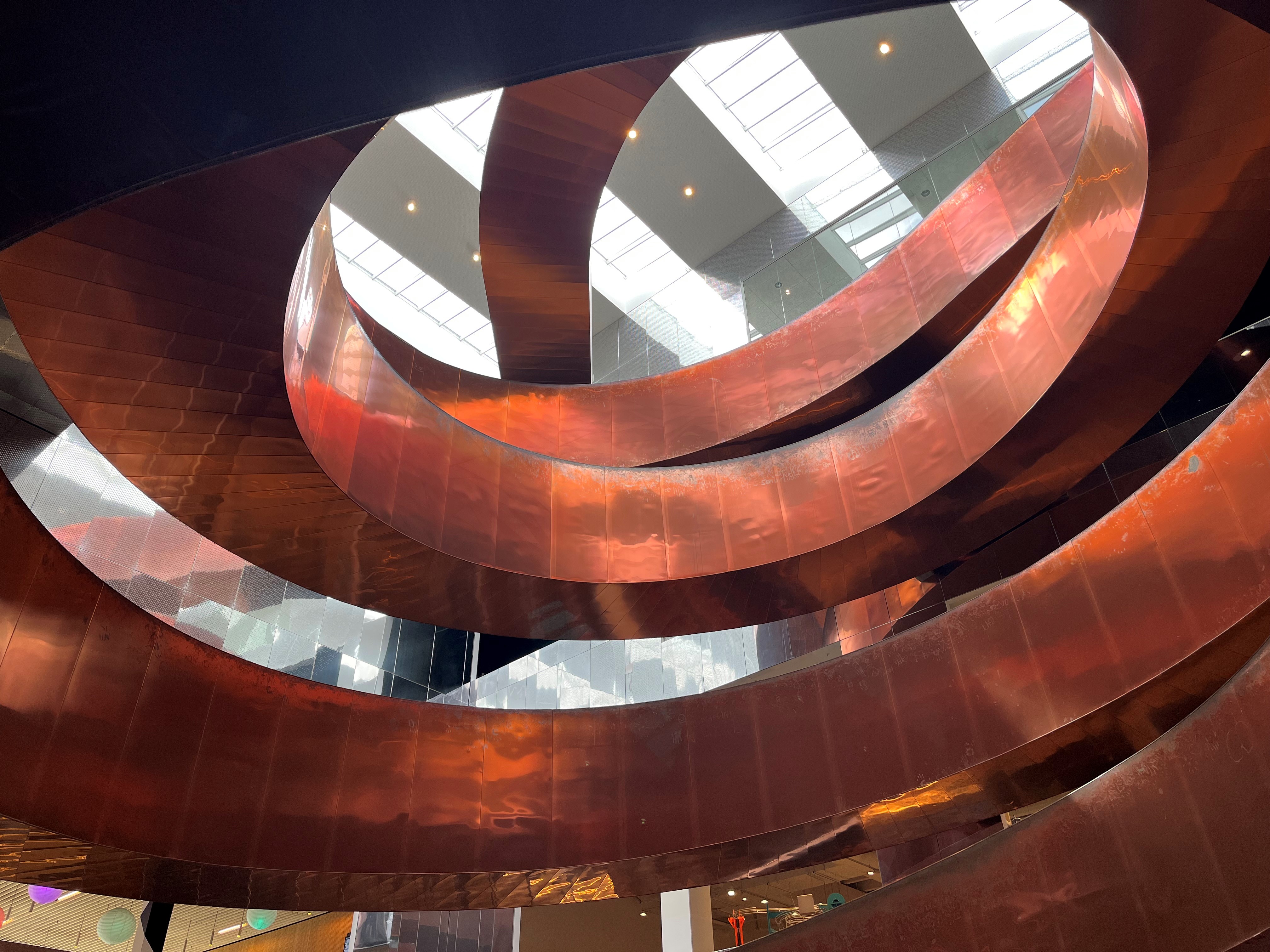
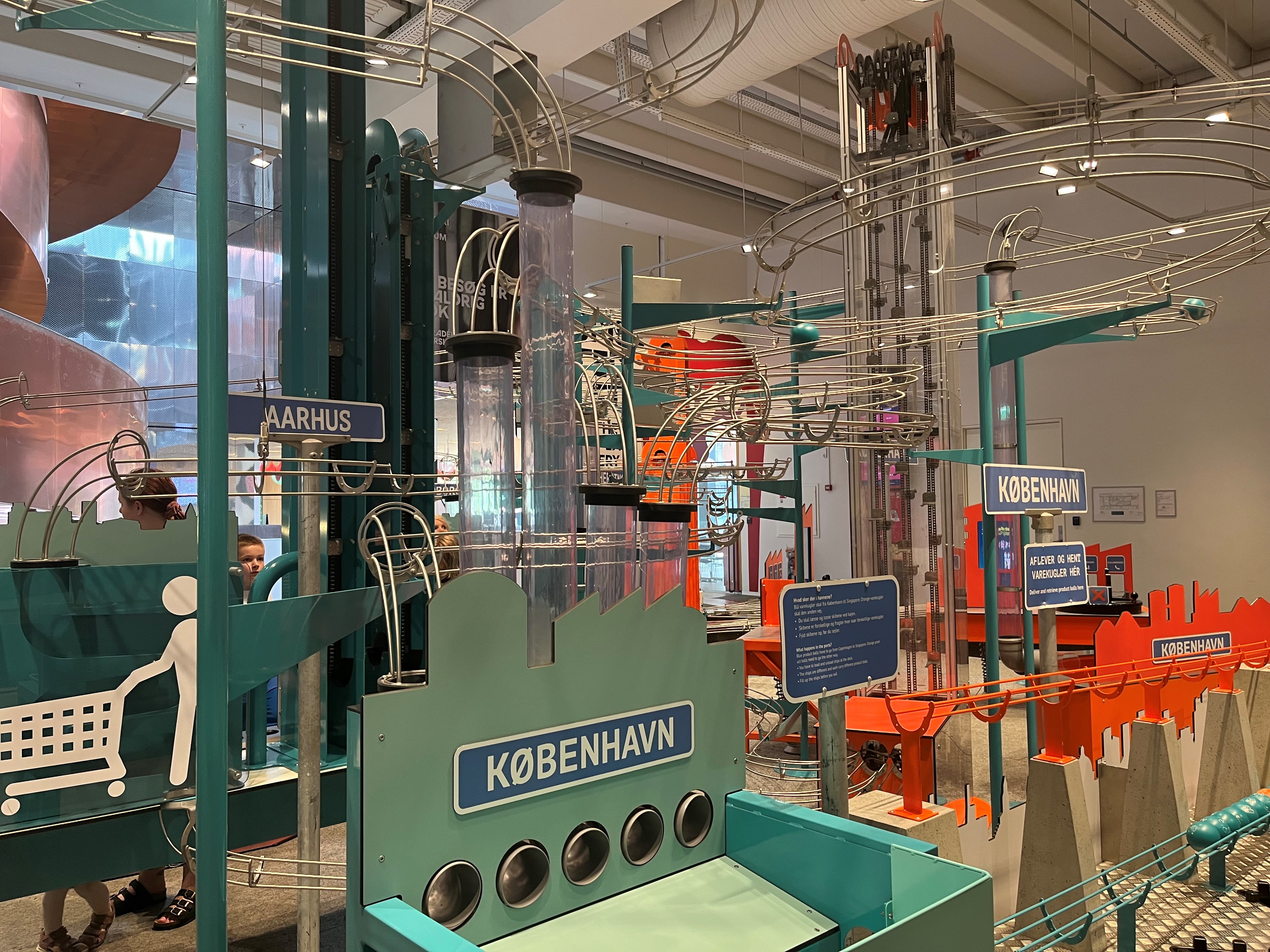
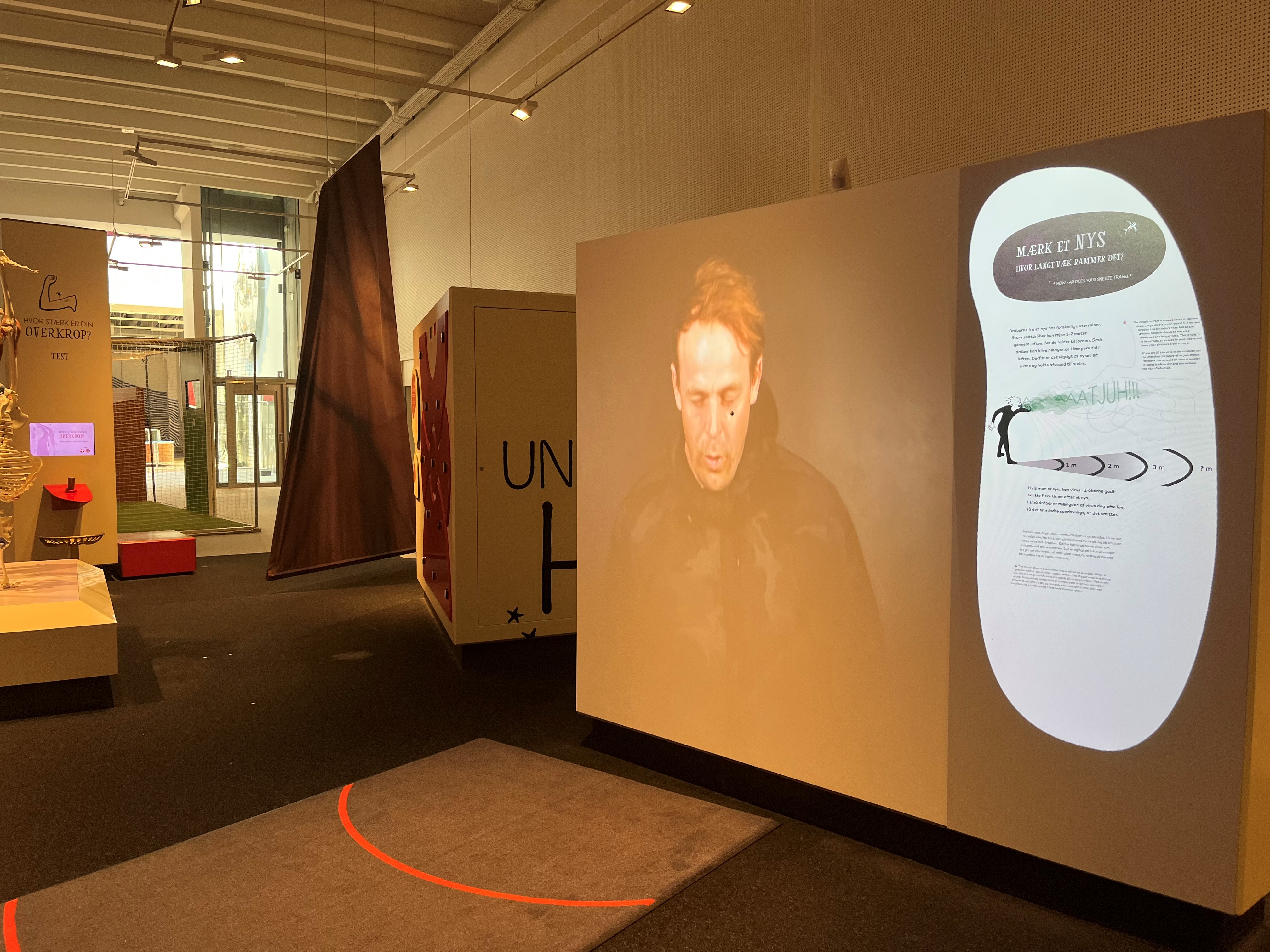
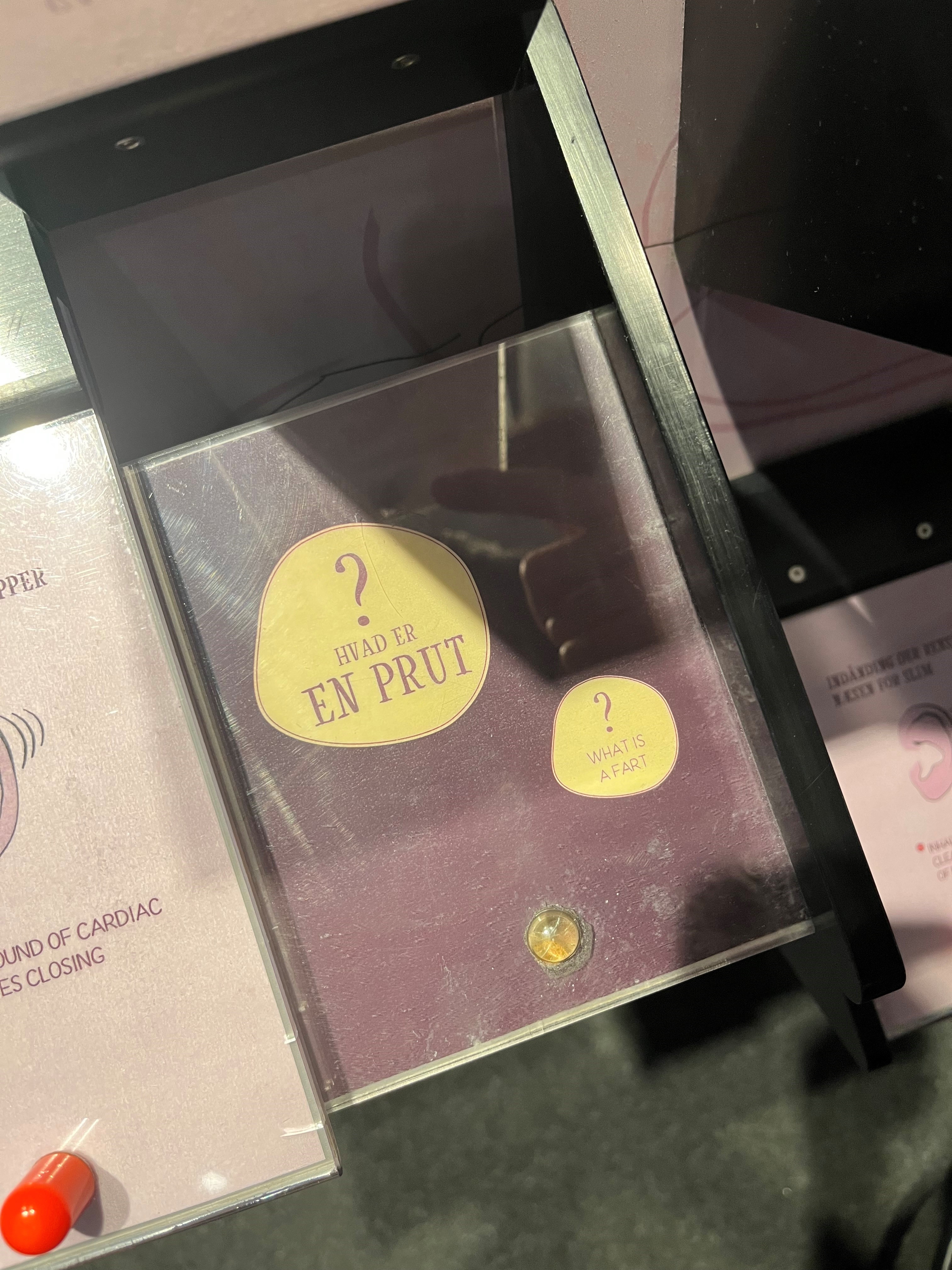
I won’t bore you with what happened next. Suffice it to say that the next two hours were heavenly for me, full of adventure and discovery, as I literally skipped from one corner of the museum to the next. I pondered for ages the answers to the puzzles in the Puzzler Corner, and then groaned in disappointment when I inevitably had to check the answers. I flitted amongst the shadows in the Labyrinth of Light, playing with colours and shapes and silhouettes, and earning weird looks from passing parents in the process. And I wriggled through the claustrophobic, dark Tunnel of Senses, which forced me to literally assume the foetal position before spraying pine musk right in my face. I loved it.
There are two incidents, however, which stick in my mind even long after I’ve returned to Hong Kong. One comes as I’m sitting down in a dark corner in the Labyrinth of Light exhibition, my body sadly refusing to match my untapped enthusiasm with the requisite energy. A child appears, screaming with the sort of vigour only a child can muster, and his parents follow behind, weary but still smiling. The child turns to face his parents, gesticulating wildly at the exhibit behind him and babbling something in Danish. It is then that the mother replies, in a flawless RP accent: “yes, but have you washed your hands first?”
I’m all hunched up in a corner, only half-listening to this conversation, but this answer makes me bolt upright. But the temptation to think that this mother is just an English transplant is upended when to my even greater surprise, the child then replies in an accent that is emphatically from Essex: “yeah, but I wanna… I wanna play with this!”
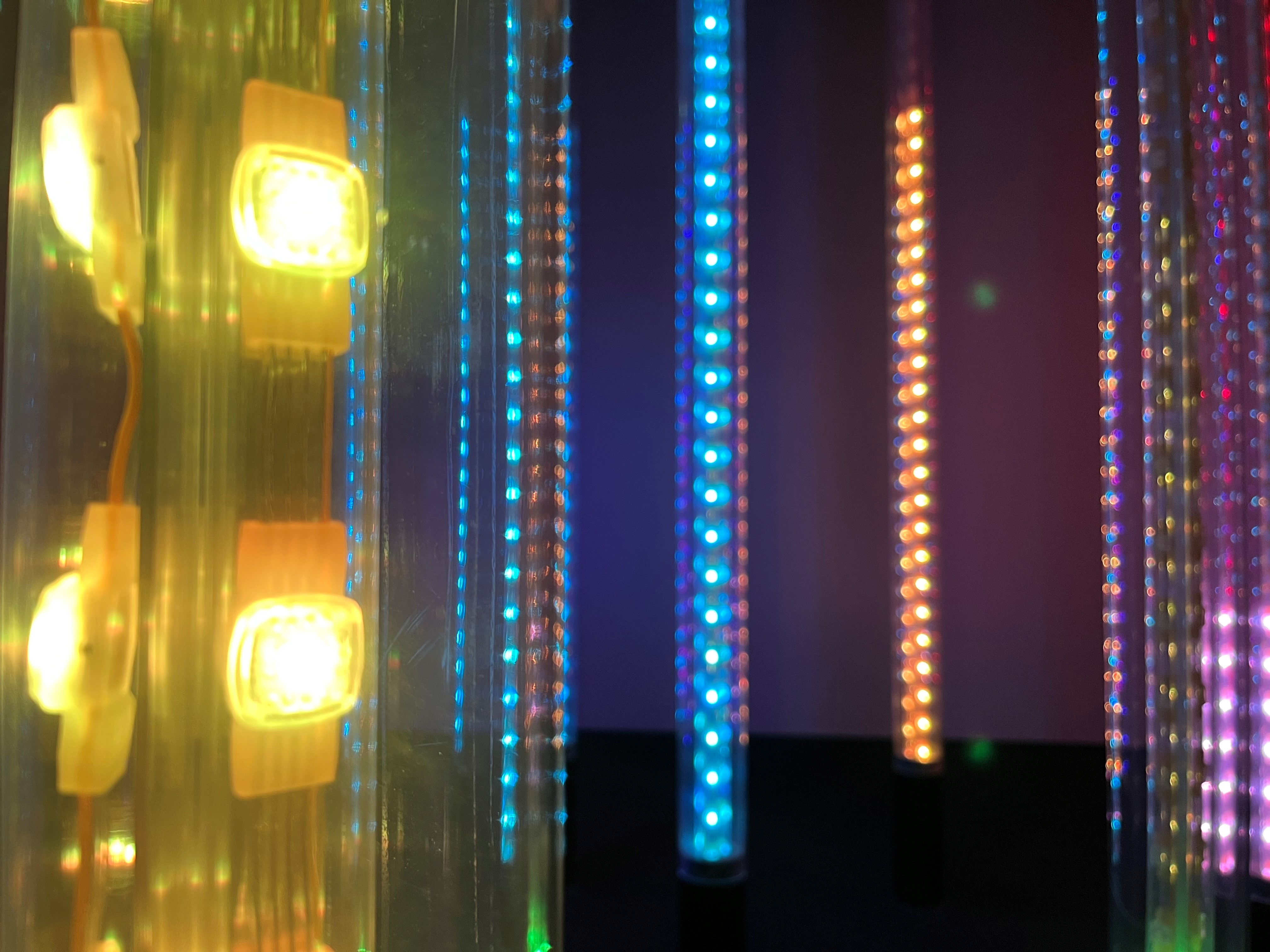
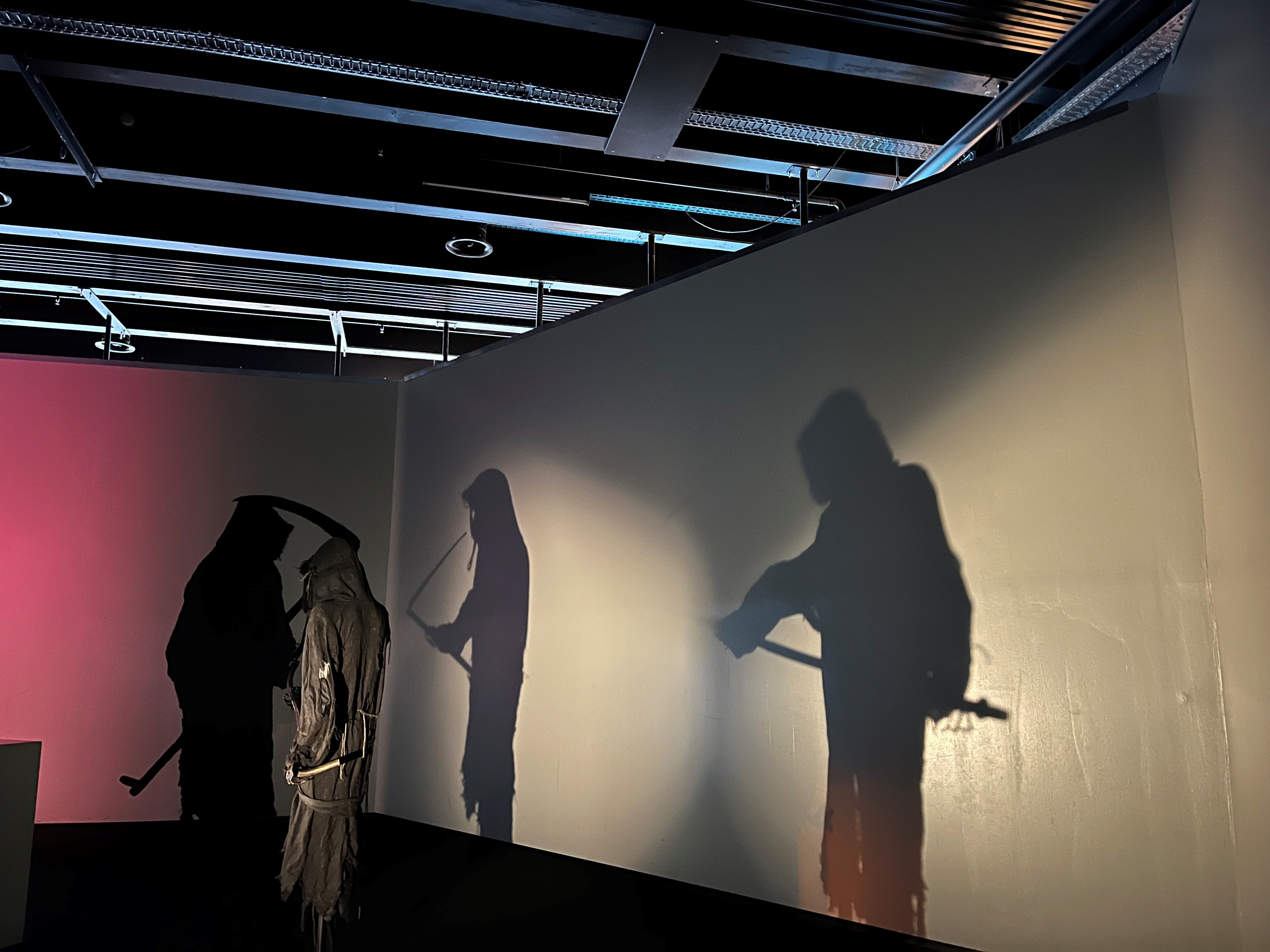
To say I am dumbfounded is to understate things. I check the display board next to me — have I accidentally stumbled on a portal to London? Surely the Experimentarium isn’t that good? But no, the signs beside me are all in Danish, and halfway through her answer the mother switches back to that language as well. Stumble out of the Labyrinth in a daze, thinking it’s just a one-off, but then I hear ANOTHER family code-switching with perfect ease between British-accented English and Danish. I shouldn’t be surprised at this, of course: like Hong Kong, English is taught from primary school onwards in Denmark and practically everybody here knows the language. But to hear it spoken in such casual settings is jarring; you’d be hard-pressed to that level of proficiency on every street corner here (unless, of course, you happen to be an expat like Nicole Kidman). Perhaps we in Hong Kong have some catching up to do…
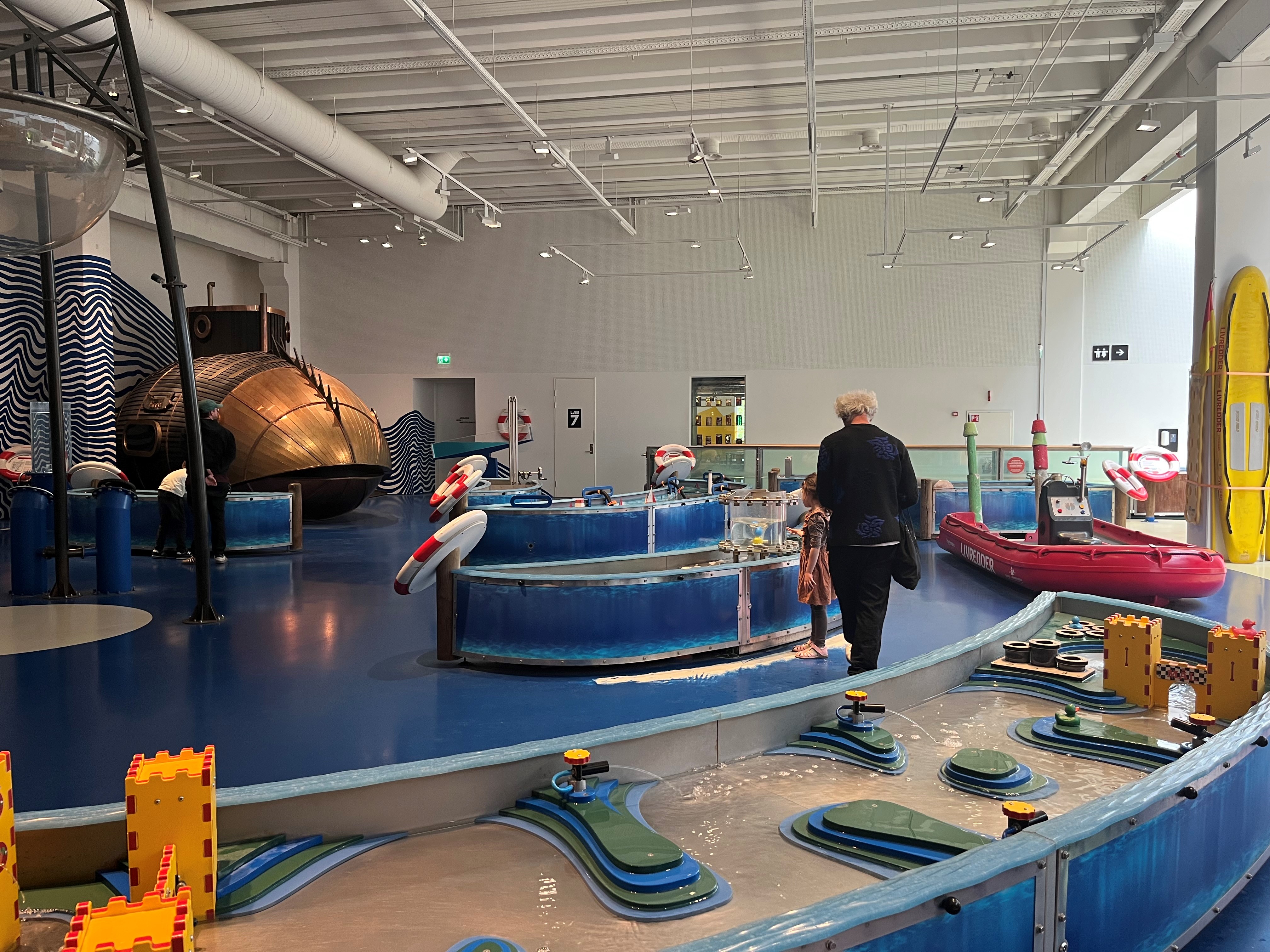
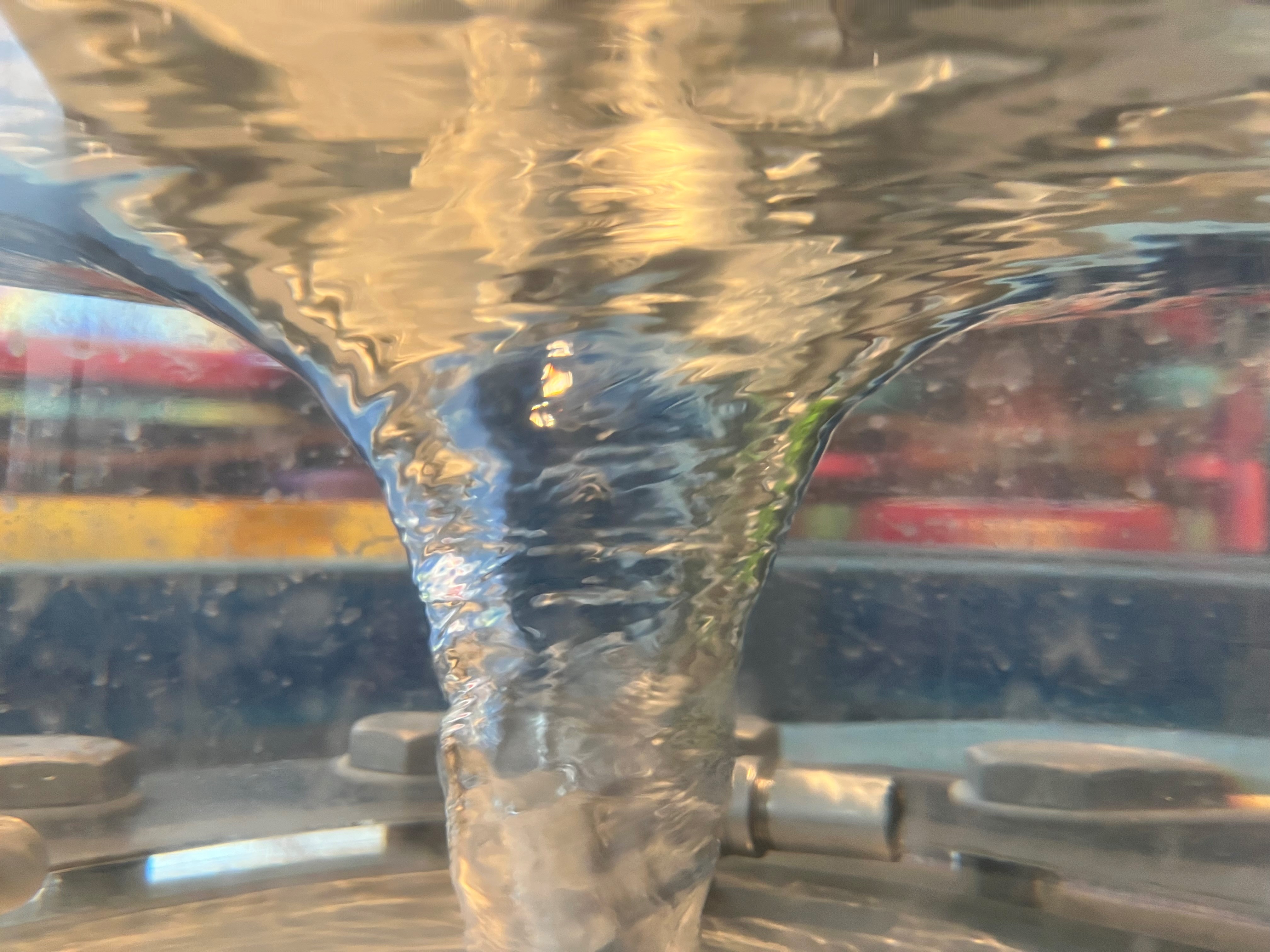
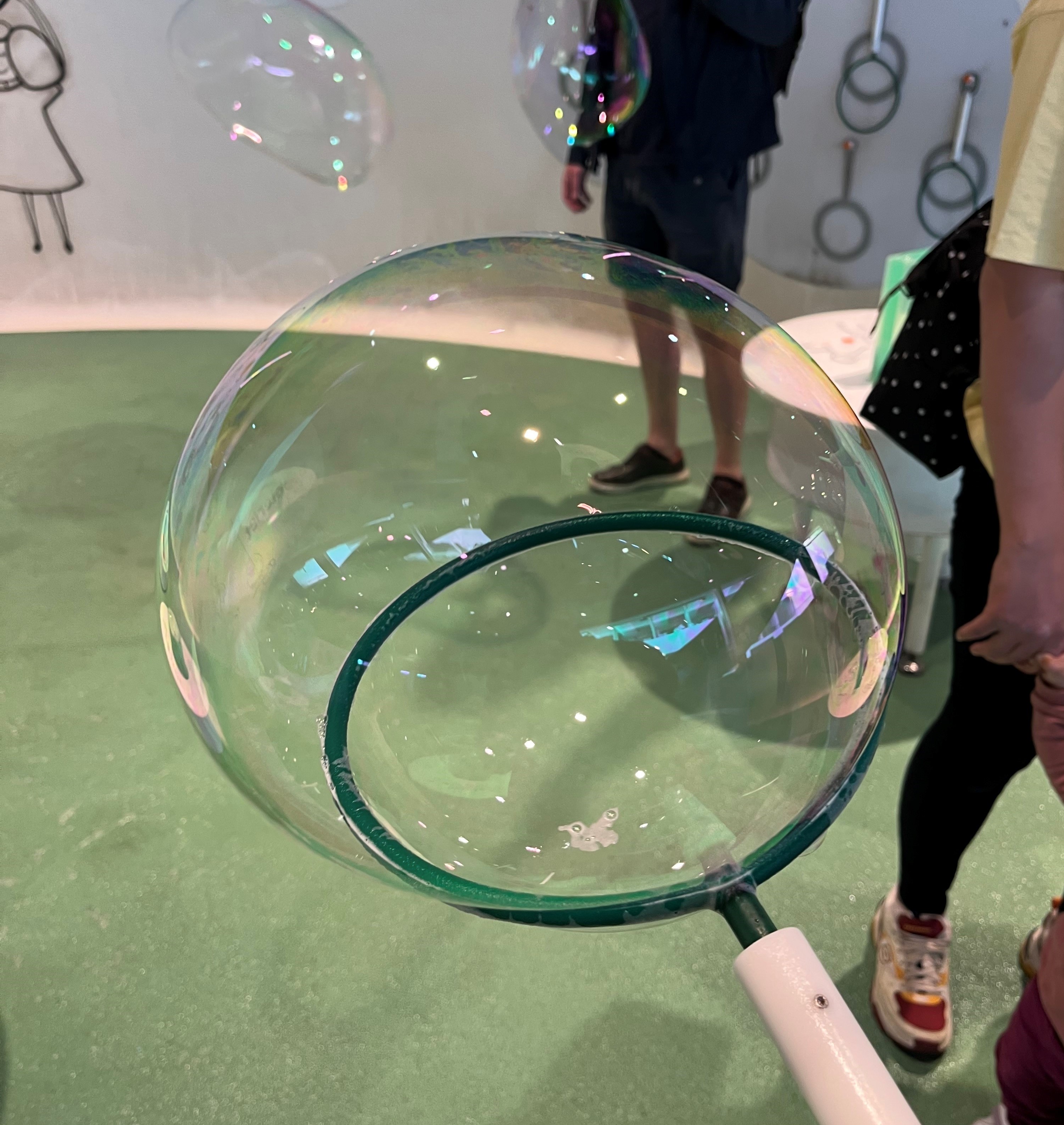
The second thing that sticks in my mind begins much more surreptitiously. I hear it before I see it: the gurgle of water as it sloshes through pipes and slaps against walls; the closer I get, the more I feel like I’m in a waterworks. As it turns out that description isn’t so far-fetched: dedicated to coastal processes like tides and erosion, as well as the fluid mechanics powering them, the Experimentarium’s “Beach” exhibit is easily the most hands-on corner of the museum. The visitors around me — mostly children, but who’s counting — fiddle with plastic flaps or set free little boats on little islands of water; their tiny fingers fumble with incomprehension as the objects they hold invariably slip out of their grasp. This spot is heaven for me, and I spent ages trying to pump out circular bubbles, or creating a water vortex, or pressing down on a diver’s suit just to see how it remains buoyant on the water. Shortly after that last one, I notice another exhibit upstairs called “The Bubblearium”, where children laugh giddily as their parents pull up HUGE bubbles around their bodies. Without a second thought — or washing my hands — I dash upstairs, eager to immerse myself in that world as well.
Half past one sees me walking down the streets of Hellerup, exhausted but happy after two hours of frolicking in the best science museum ever. I’ve arranged to meet Dennis and Charmaine in the same food market they visited yesterday: all three of us having realised that we’re nearing the end of their European sojourn with nothing to show for it, we’ve decided to kill two birds with one stone by doing both lunch and some last-minute shopping. The question that concerns me right now, however, is how to get there in the first place — the Experimentarium is situated in a rather remote corner of the suburb, and although I could take the same bus on which I came back into the city, there’s just something unappealing about retracing your steps in a foreign country.
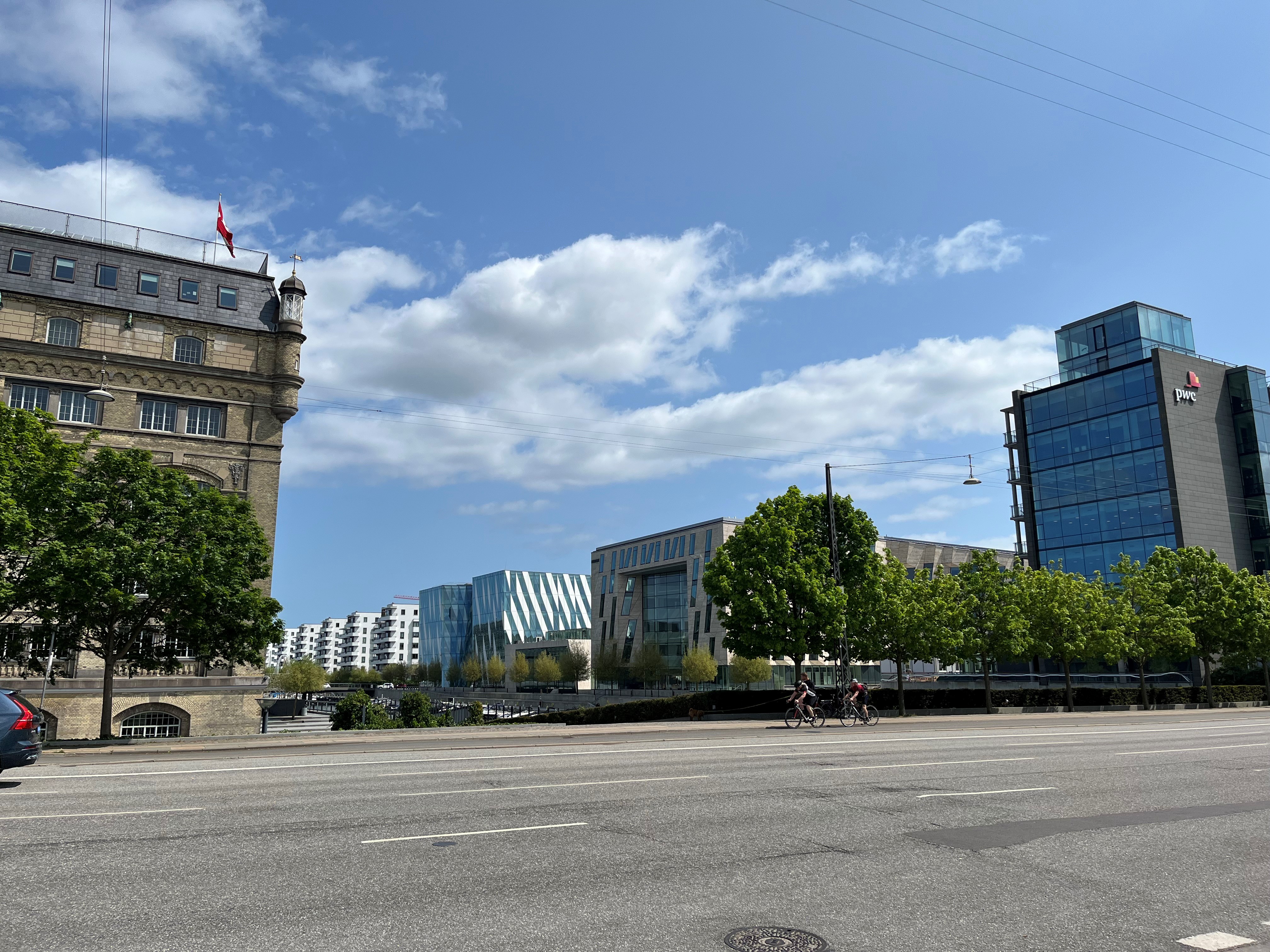
So I decide to walk to the next station at Svanemøllen, 15 minutes or so away. The streets are calm on this Friday afternoon: the occasional car speeds past, complemented by the occasional bus or the occasional bicycle. But mostly I have the street to myself, and I amuse myself/distract myself from my increasingly achy feet by noting the designs: even here, in the mundanity of the Copenhagener suburbs, the houses look exquisite as ever, every single detail on them pleasingly simple yet beautiful. Yet it’s this exact view, so daintily beautiful, that brings out the melancholy in me once more: yes, these are all pretty buildings in the most excellent surroundings, but where are all the people? Throughout my 20-minute walk (I am a terrible judge of distance) I see exactly three citizens, one of whom was just taking the bins out. This is a vast city, yet I’m not meeting anybody: they all seem to be tucked up safe inside their offices, their homes or their cars, and the thrill of getting to know new people, the excitement of establishing a connection across cultures — normally such a vital part of travel — is gloomily absent.
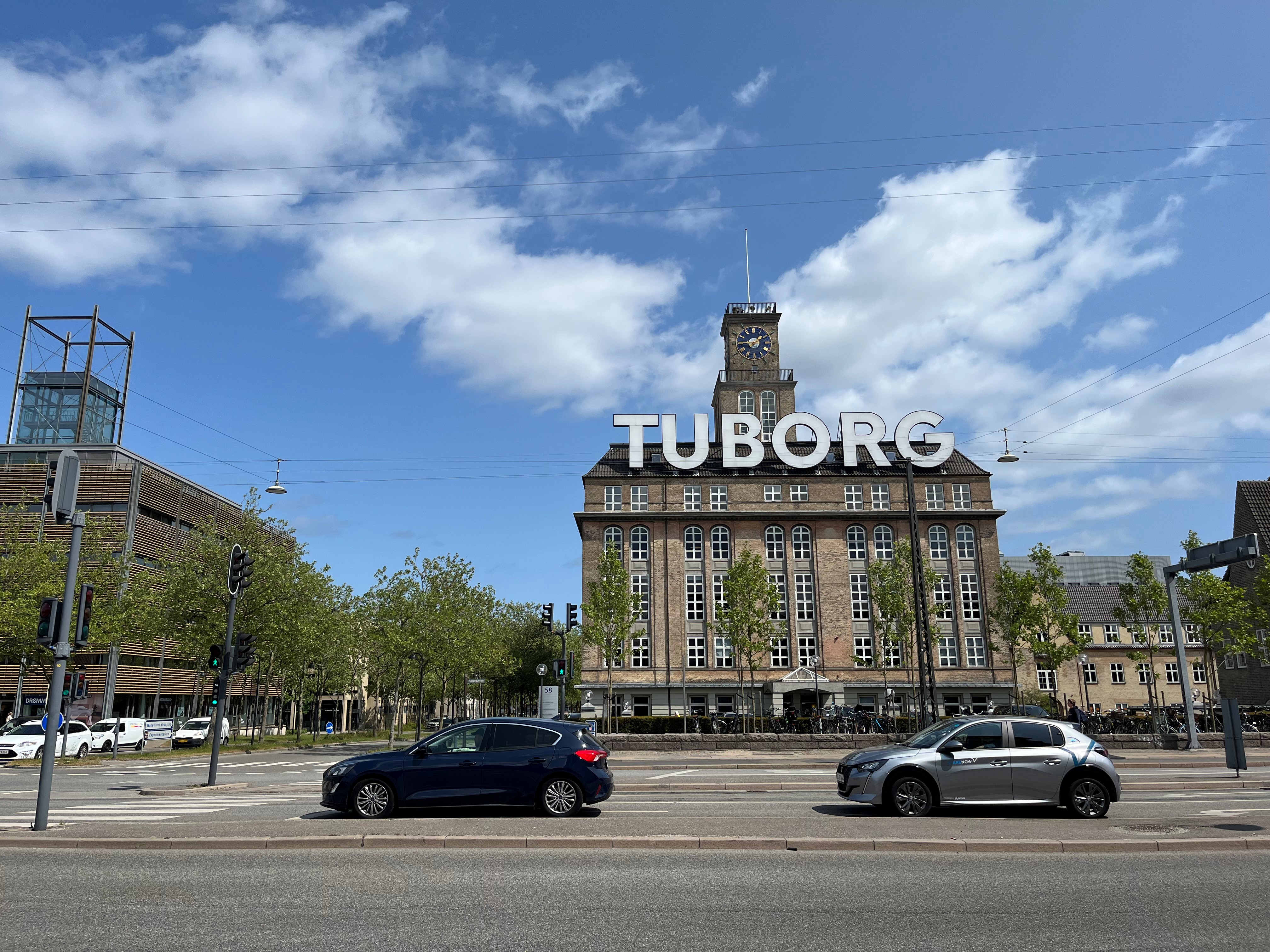
The same problem happens when I finally reach Svanemøllen station and hop on a train towards the city centre: yes those famous hexagonal S-trains are beautiful, but everybody seems to be minding their own business or quietly talking to one another; the only lively presence on the train is a group of rambunctious teenage girls, who are FAR more active than the ones I’m used to in Hong Kong. More to the point, they are emphatically not the type of people who’d be interested in striking up a conversation with a foreigner at this moment. None of this is really the city’s fault: it’s still a beautiful city, and none of its citizens have an obligation to entertain me. But I can’t help but feel that something’s missing in the moment, that I’m not getting — the same worry, in fact, that nagged at me during that last bus ride in Vienna.
Decide to think about all of that again later. Having arrived at the TorvehallerneKBH food halls, my biggest concern swiftly shifts from the ennui of loneliness into the more pragmatic concern of options for lunch. As befits one of the largest food halls in Copenhagen, there is a bewildering array of restaurants to choose from, most of them dealing with the freshest and most delectable produce that Denmark has to offer. With never-ending fresh food comes a never-ending stream of customers, amply compensating for the suburban drought: I’d stopped here briefly yesterday evening on my way to Tivoli and even had dinner here, but it was nowhere near this level of bustling. I briefly catch a glimpse of my two friends, only to lose sight of them almost immediately, and only after a couple of frantic texts do I locate them in a store, pondering what kind of canned fish to buy for the folks back home.
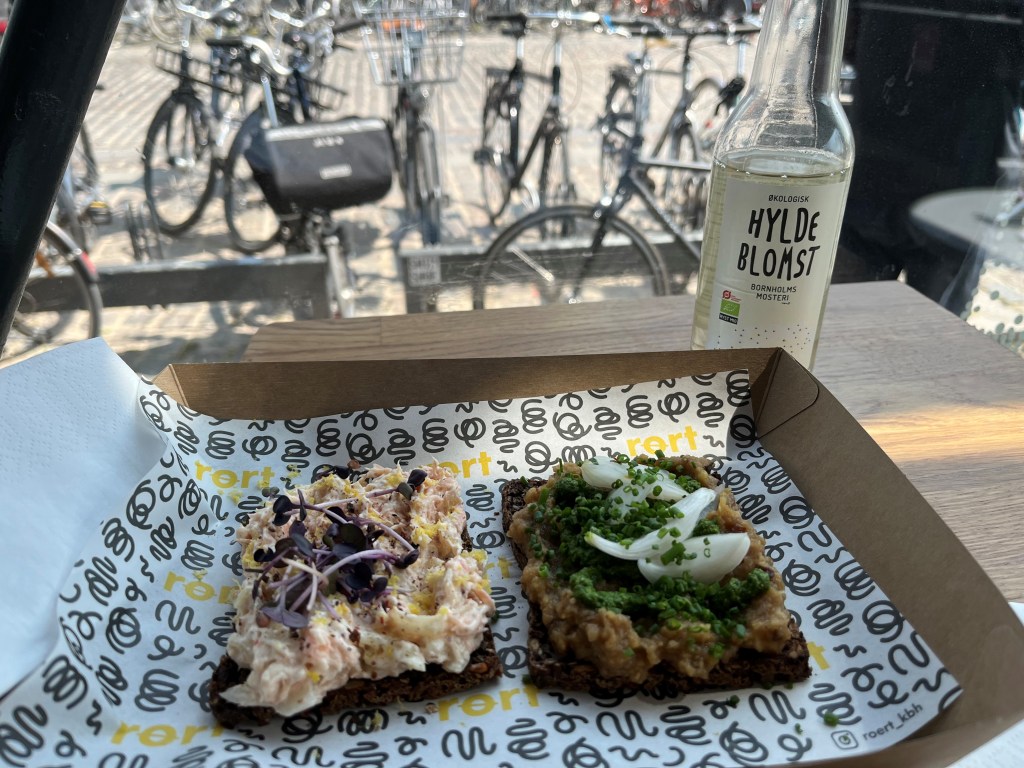
Sitting in a restaurant with Charmaine and enjoying a couple of open sandwiches afterwards, we do our customary midway chat. “The thing about Copenhagen,” I say, struggling to talk through a mouthful of sandwich, “is that everybody here feels so alien. I feel like I’m in the middle of a huge city, amidst a buzz of activity. And that’s great. But I can’t seem to relate to any of it — everybody here seems to me so cold and uninterested in you, and I feel like I’m just an anonymous face in the crowd again. Vienna and Hamburg… maybe they felt more intimate because they were smaller. But I don’t feel any of that warmth here.” I let my eye wander through the crowds outside, all going about their own business.
“Weird, cause that’s not how I’ve experienced it,” says Charmaine. “Everybody’s been really helpful here… this morning, we were on the bus to the aquarium, and we were looking out the window trying to figure out, you know, ‘where is it, have we missed the stop’, stuff like that. Then somebody on the bus not only asked us if we were lost, but even pointed us in the right direction without us asking for it.” She takes a sip from her rhubarb soda. “People around here are willing to talk and are so, so nice. I really like it here.”
I say nothing, but her words echo in my brain. It’s true: I haven’t really been able to connect to other people, but I haven’t really tried either. In the process of rushing from place to place, trying to take in as much of the cities I visit as possible, I’ve let human interaction fall by the wayside. Specifically, I haven’t really talked to anybody besides Charmaine and Dennis since Bratislava, and since then it’s gotten lonelier everyday, the distance between me and the world outside drifting ever further. Now my friend reminds me that all these people have been here — have always been here — and would happily engage, if I only reached out. A bit of reluctance is only natural: I’m a stranger here, and everybody feels a bit of anxiety when they’re in new environments. But with only one heartwarming interaction to show for the whole week, I can’t help but wonder: am I still struggling to adapt to this new world in front of me, or am I merely refusing to partake in joy? More to the point, could it be the case that, after all this time, I have been the cynical, insular person I have spent all my life professing to dislike?
Well, there are a few things one can do against this, I suppose. Start by stuffing my phone deep into the recesses of my tote bag, making a mental note prohibiting use for the rest of the afternoon; as I descend into the Metro once more, I pull out a paper map instead, and begin doing my best lost tourist act. No rewards as yet, but I’ll have plenty of time to perfect it: I’ve decided to spend the rest of this afternoon in Frederiksberg, an affluent municipality just west of the city centre; and since both Charmaine and Dennis have decided to retire for the afternoon (both of them having none of my youthful energy), I’ll be on my own again.
Emerge into the light at Frederiksberg station, the sun in my eyes once more. It’s way past lunchtime by now, which might explain why the streets here seem to buzz more than the Hellerup ones. Families lounge in front of shop windows or in café chairs, while office workers dart in and out of buildings — modern, more conventional affairs, none of the retro charms of the city centre or even the suburbs. Frederiksberg has always been a fiercely independent part of Copenhagen; in fact, chances are I’ve already offended some of its residents with the words “part of Copenhagen”. (Hello! Goodbye!) It definitely feels different — more urban, more spick-and-span, more tightly-packed. But despite the different styles it’s just as pretty, and the afternoon sun shining through the gaps still warms my heart.
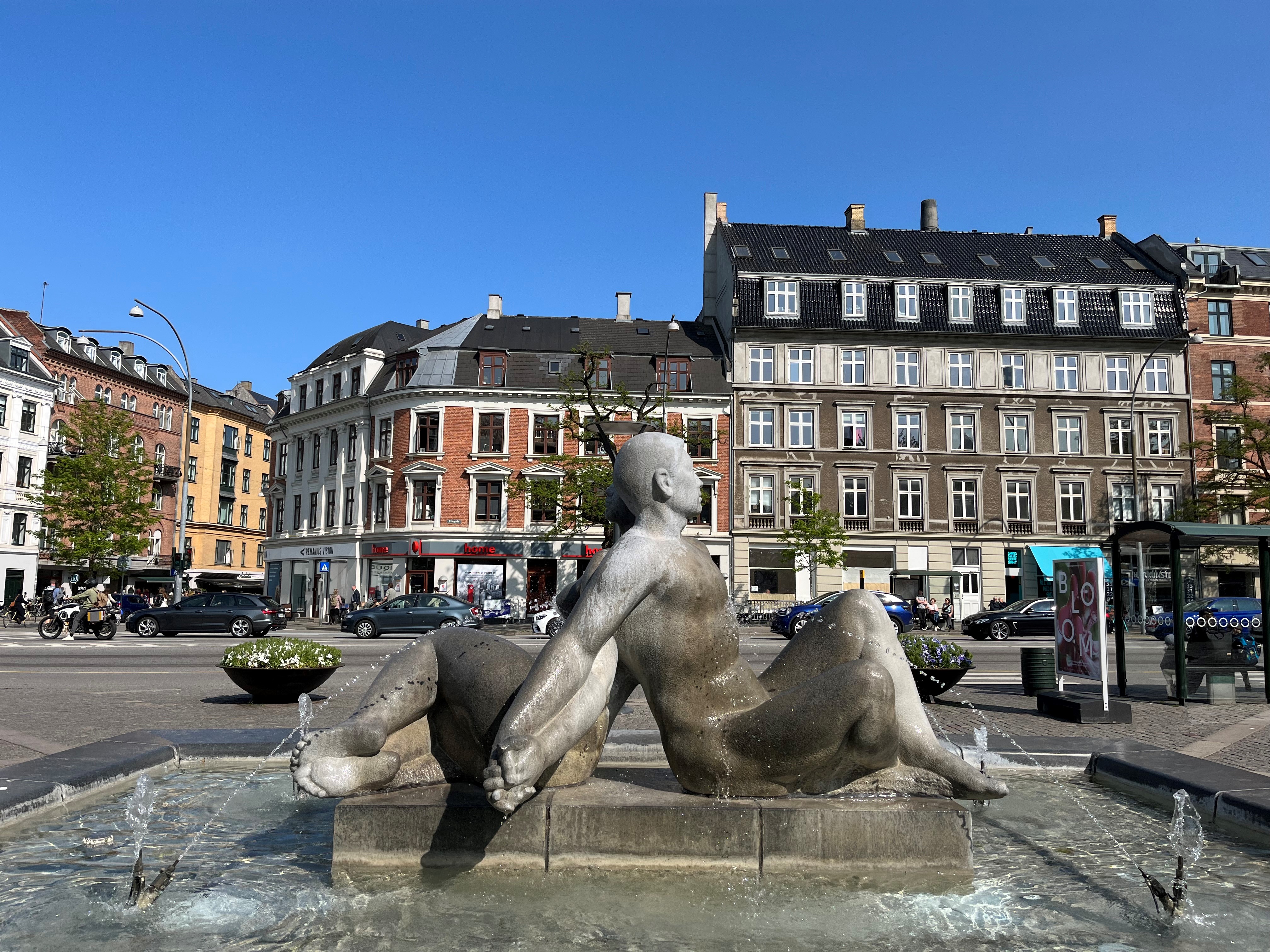
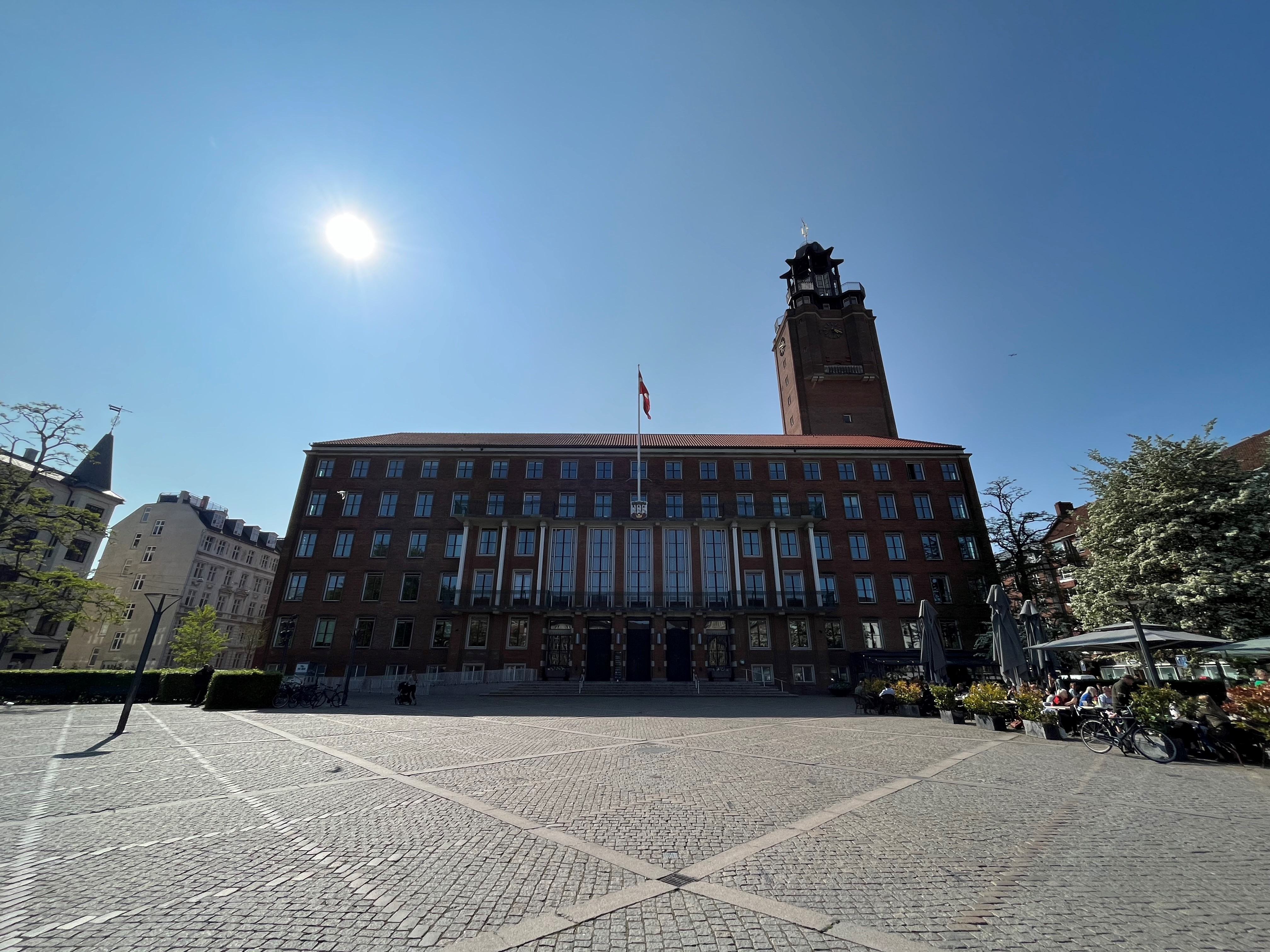
Next to Frederiksberg Town Hall, built during the 1950s in an alleged attempt to one-up the one in Copenhagen, I pause to get my bearings. The large map in my hand suggests that my next destination, the Frederiksberg Gardens, should be right behind these houses, but though I can certainly see greenery all around me I have no real way of getting to it without stomping through multiple back gardens and climbing an iron fence. Since my keenness to experience Danish culture does not extend to getting arrested for unlawful trespass, I wander back out onto the road. At the corner with Storm Petersens Vej I pass a nursery school, where a father is busy picking up his daughter and talking to her teacher. Suddenly it occurs to me that I’ll never have a better chance, so I walk towards the crowd. They look at me as I approach. I can feel the sweat, clammy in my hands.
“Excuse me, sorry to interrupt.” I say. “How would you get to the Frederiksberg Gardens?”
As I speak, I can’t help noticing that the face of the man is slightly red. Maybe he’s already been at the tipple. Maybe there’s a thousand things running through his mind right now, wondering what this Chinese guy is doing here. But then his face softens, and in perfect British-accented English, he says, “It’s not that far away.” He leads me to the street corner. “Go straight, you’ll see a pub on the first left. Turn down that, head to the end of the path, and you’ll be in the gardens.” He smiles understandingly.
“Thanks… you have a nice day,” I say, scampering down the road, my step feeling somewhat lighter.
“You too.”
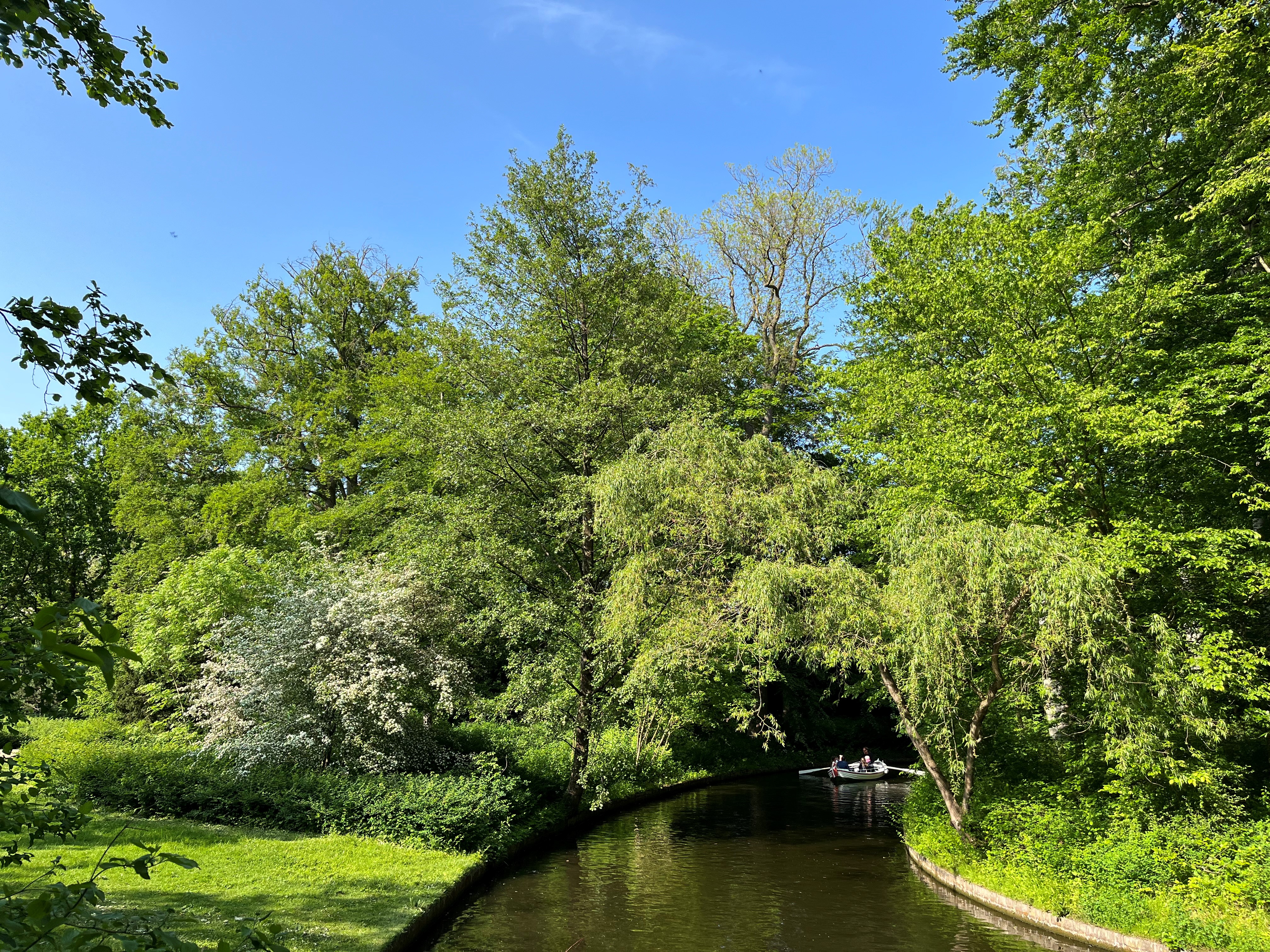
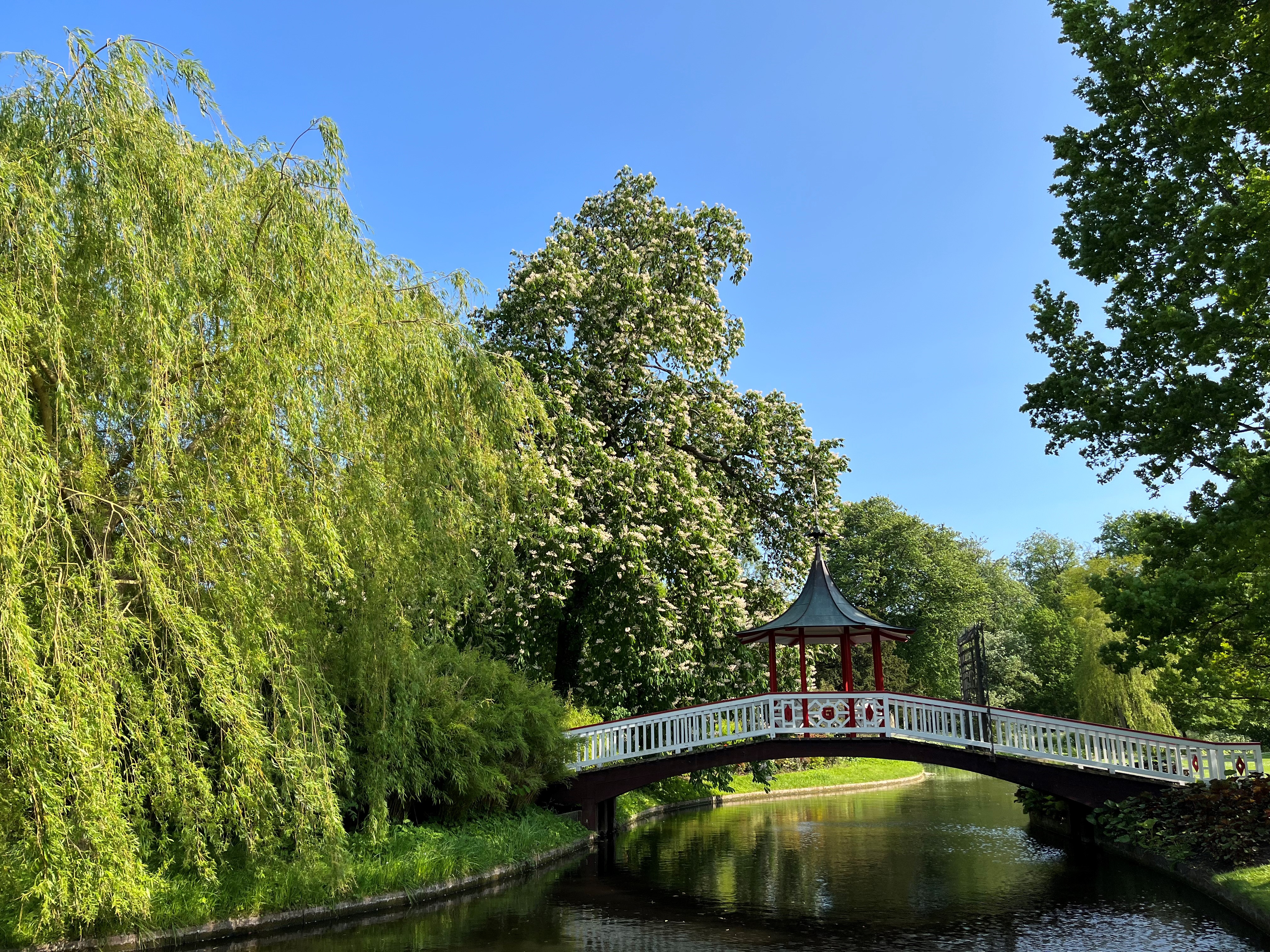
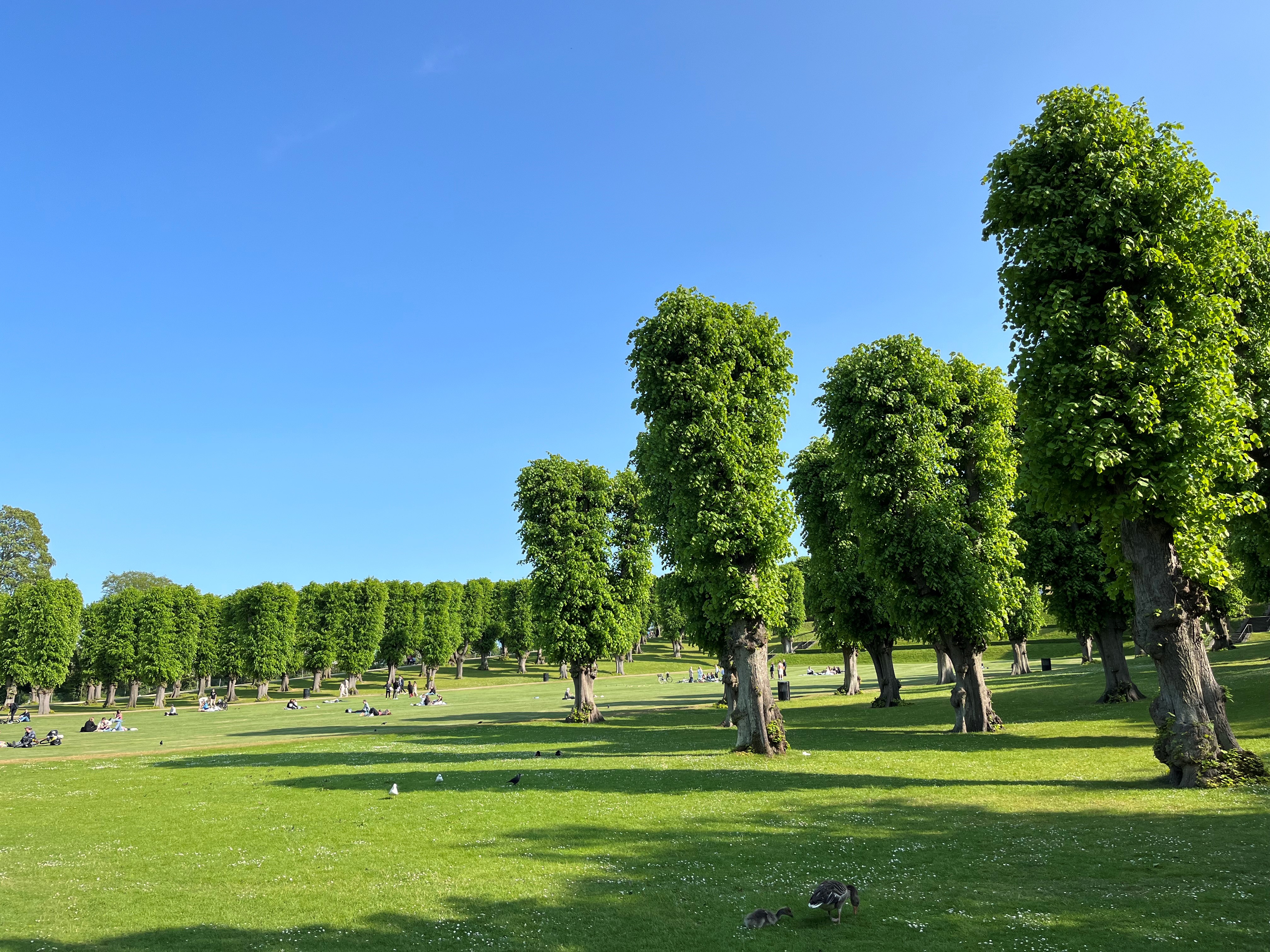
It’s the 56th anniversary of the Beatles’ Sgt. Pepper’s Lonely Hearts Club Band album today, and as I walk into the gardens I find myself singing “A Day in the Life” sotto voce. The perfect soundtrack, I think, for these dreamy surroundings: leafy green plants surrounding a slowly-flowing river, parkgoers lounging on benches or jogging steadily down the gravel paths, and even dogs lazing about with frisbees in the sunlight. Dropping randomly down side-paths and cutting through lawns, I stumble across pleasant surprises: a Chinese pavilion, for instance, or a mock Roman temple. It’s the epitome of leisure, the kind of place you’d fantasise about or see through Instagram filters; and yet this idyll is just another inner-city park for the Copenhageners. What must it be like, I wonder while watching the family calmly boating in the waters below, to live in such a place, day after day?
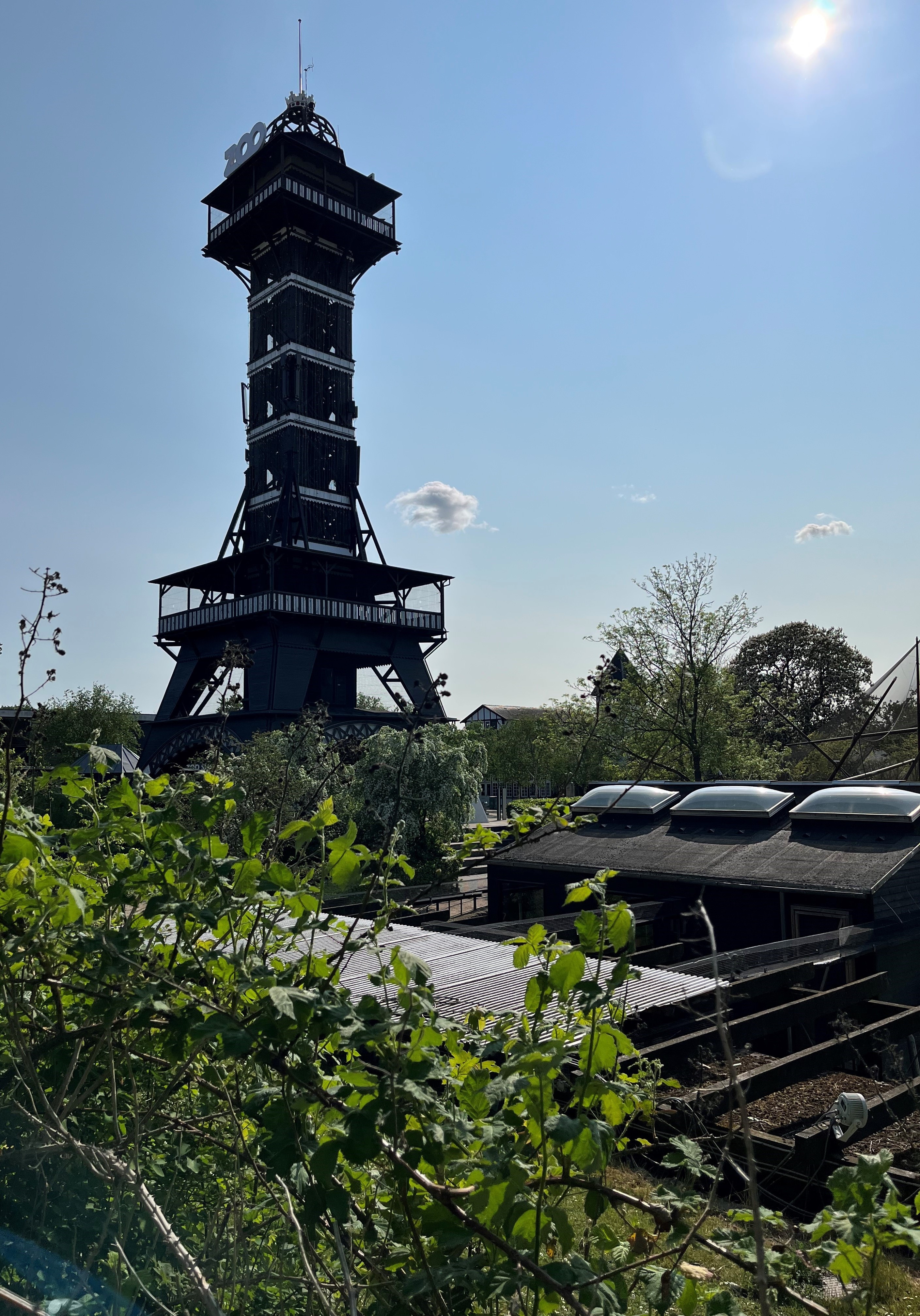
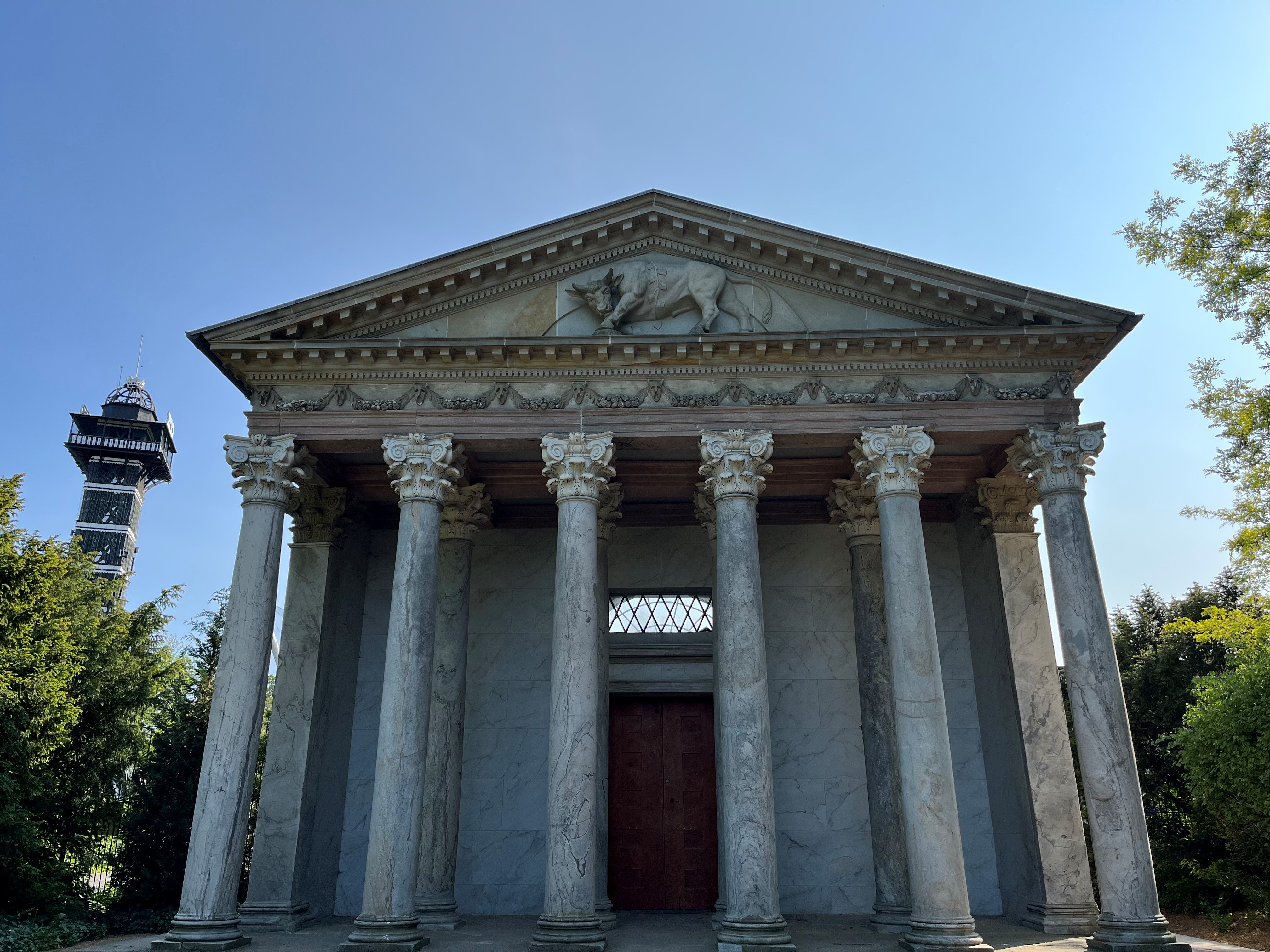
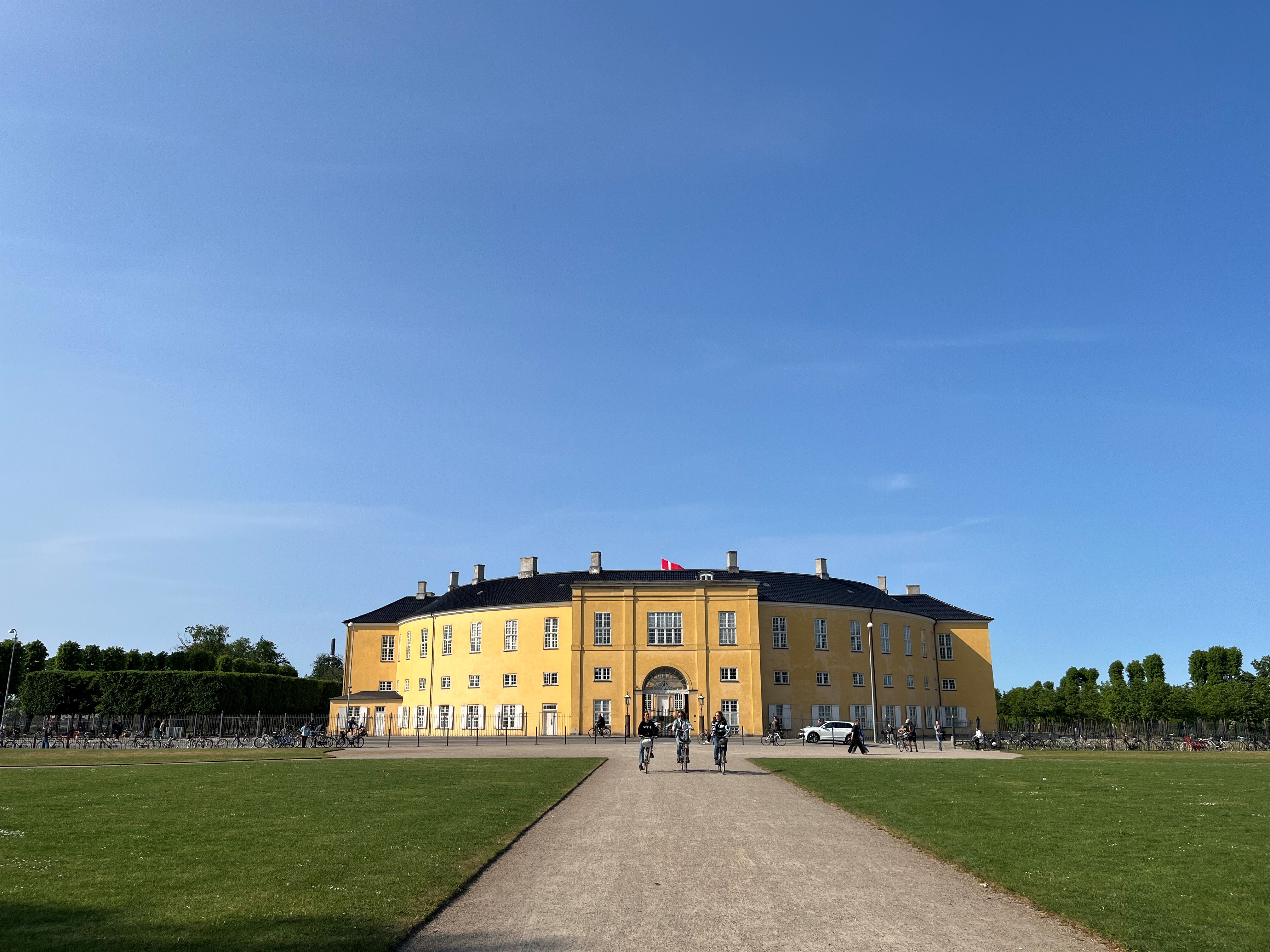
At the end of the Gardens stands Frederiksberg Castle itself, a stately mustard building that casts a long shadow over the vast, rolling lawn directly before it. Despite the temperature plunging in the shade, people are laid down on the grass, doing nothing in particular, having the time of their lives on this Friday afternoon. (It’s not only the people who love the grass of the gardens: while making my approach to the castle, I find myself navigating a hazardous minefield of duck droppings.) Stop briefly to take a picture of Copenhagen Zoo’s tall spire before crossing the road into the Søndermarken, the southern half of the castle grounds and just as delightful as the half I’ve just left. In the centre of the park, situated right between two tree-lined avenues, I find two glass pyramids sticking out of the ground; peering inside, I spot a staircase that leads downward, fading abruptly into darkness. Perfect. A curly-haired young woman sat at the entrance sells me a ticket, then asks me where I come from.
“Oh, Hong Kong — why’d you ask?”
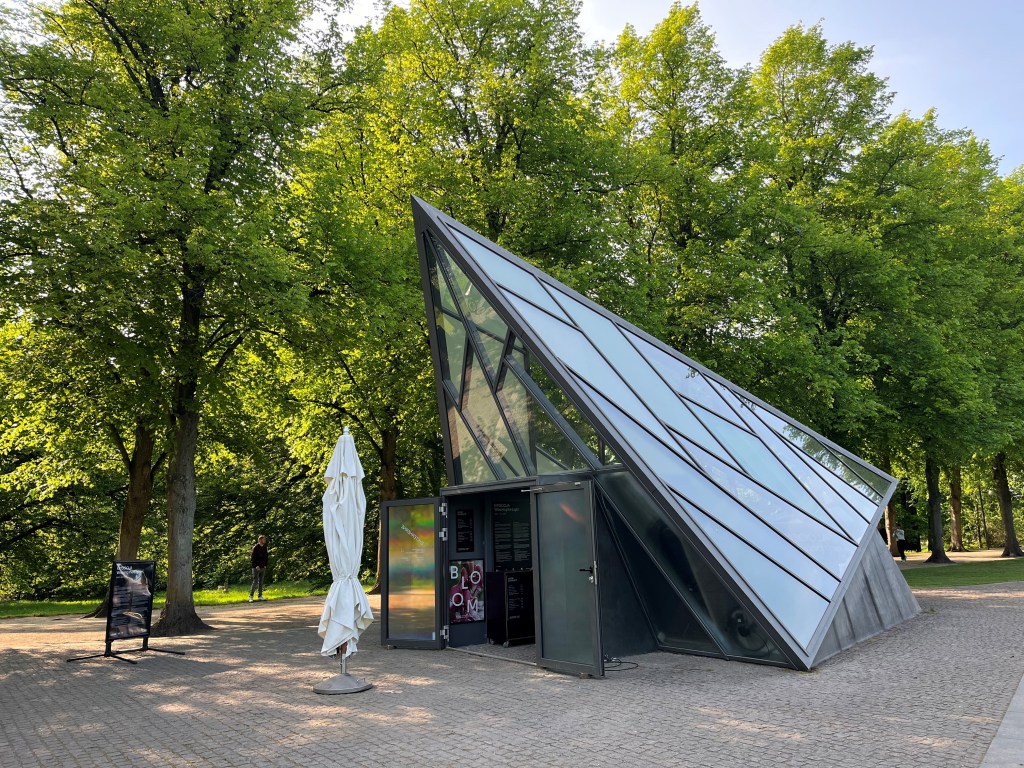
“We just want to keep track of our visitors… who comes from where, things like that.” She makes a mark on a piece of paper, and I note with amusement how the various continents are demarcated with different coloured pencils. “Anyway, be careful not to slip on the bottom stairs, it’s especially wet down there; and a reminder that flash photography isn’t allowed in the museum!”
She smiles at me, and for the first time that day, I find myself smiling back. “Thanks! You have a nice day.”
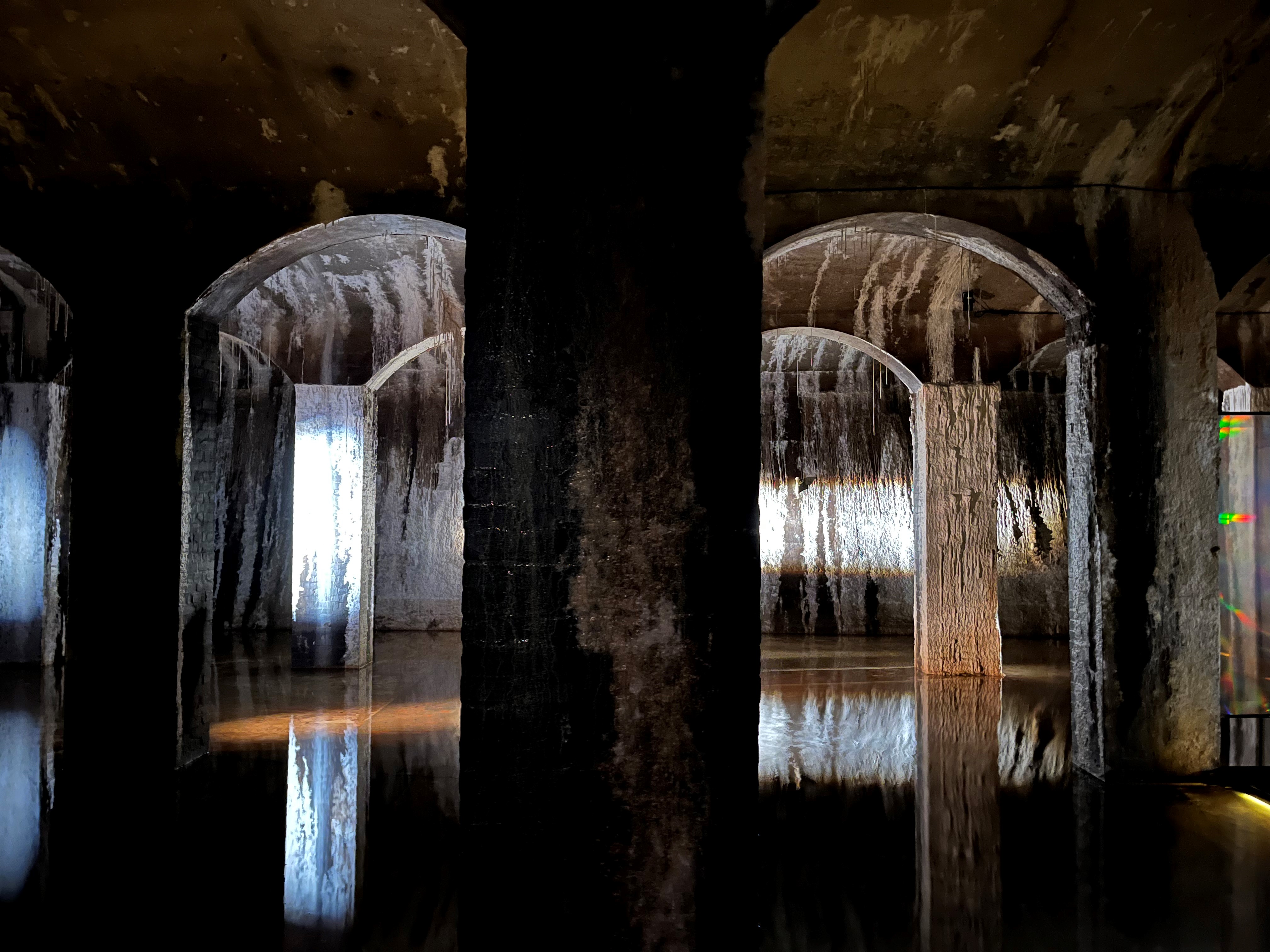
The receptionist wasn’t kidding: although there hasn’t been a drop of rain since we arrived in Copenhagen, puddles pool on the rough stonework of the stairs as I descend; and the further down I go, the chillier it also becomes. By the time I step onto the ground, I feel like I’ve been transported back into February, with the walls wet and the air sharp like a knife. But then my eyes adjust to the gloom, and the wonder in me surges once more.
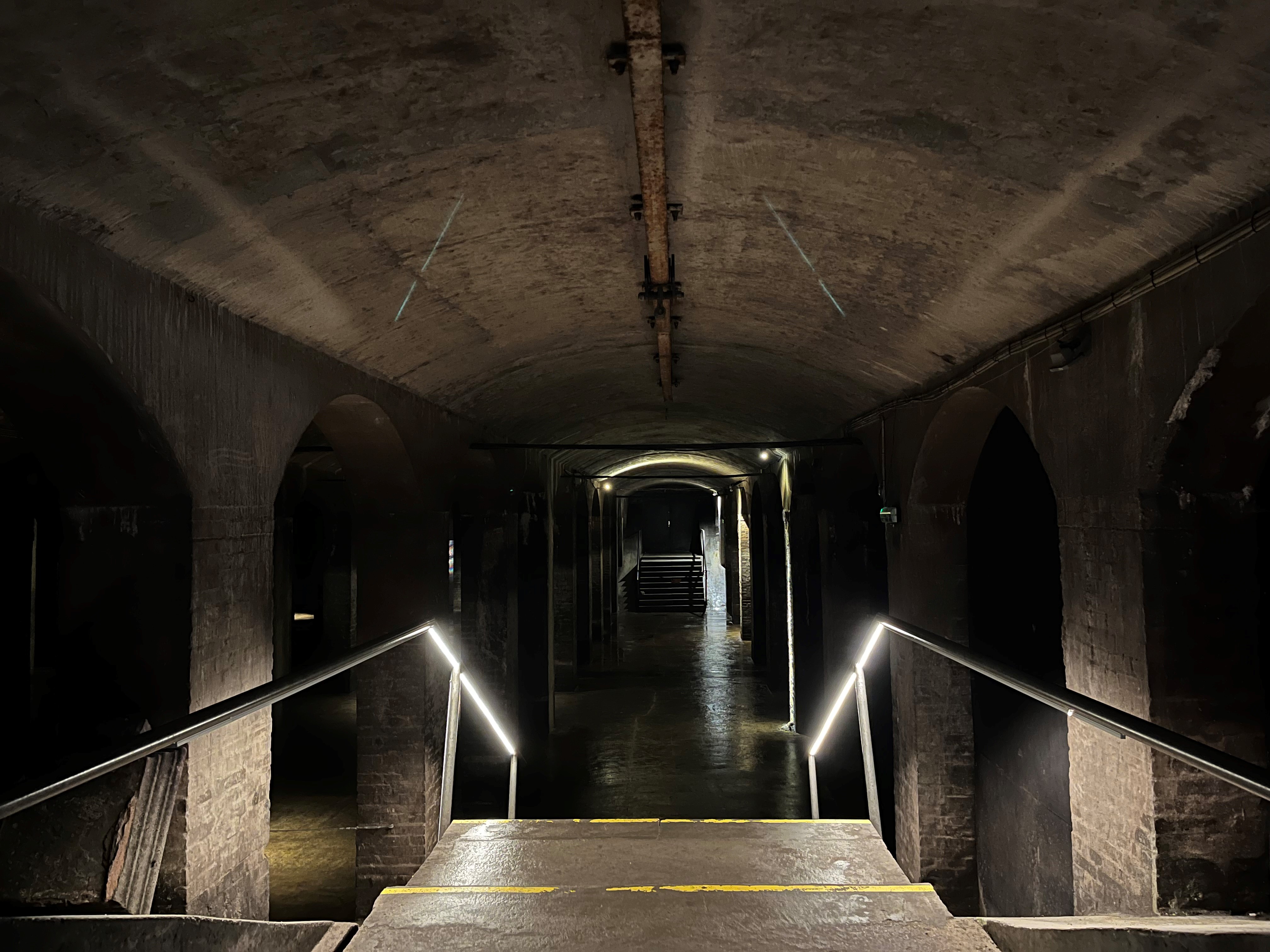
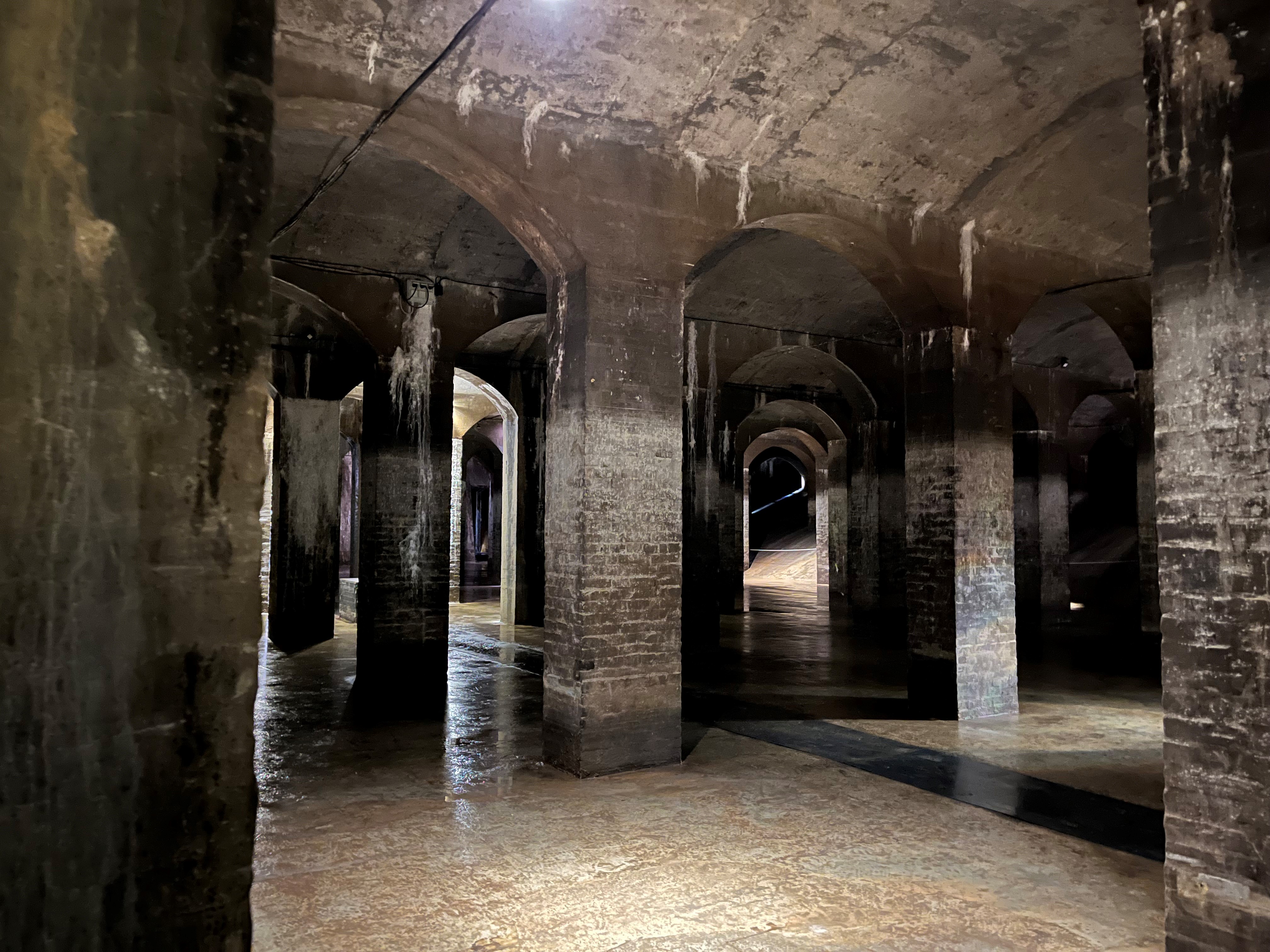
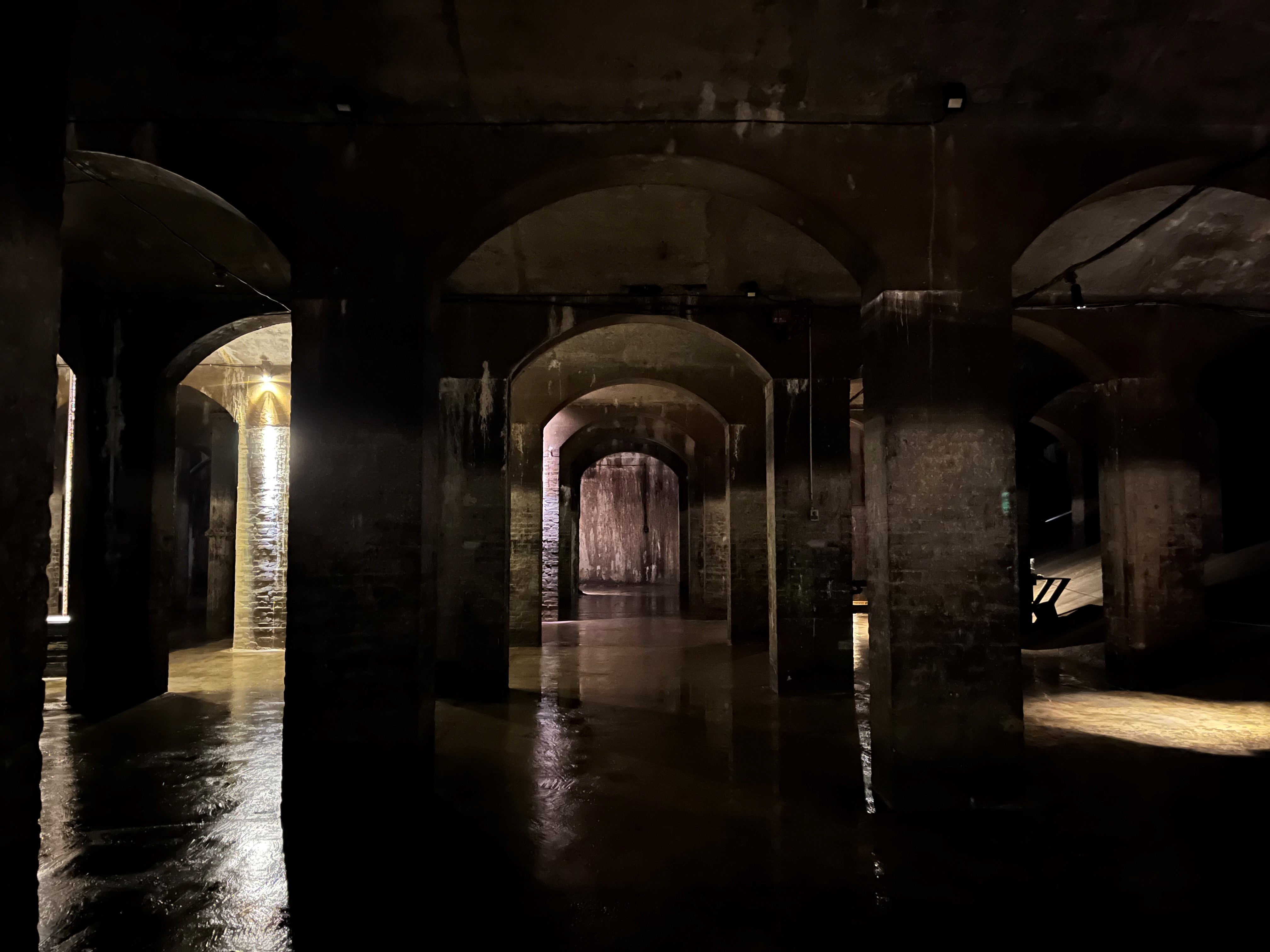
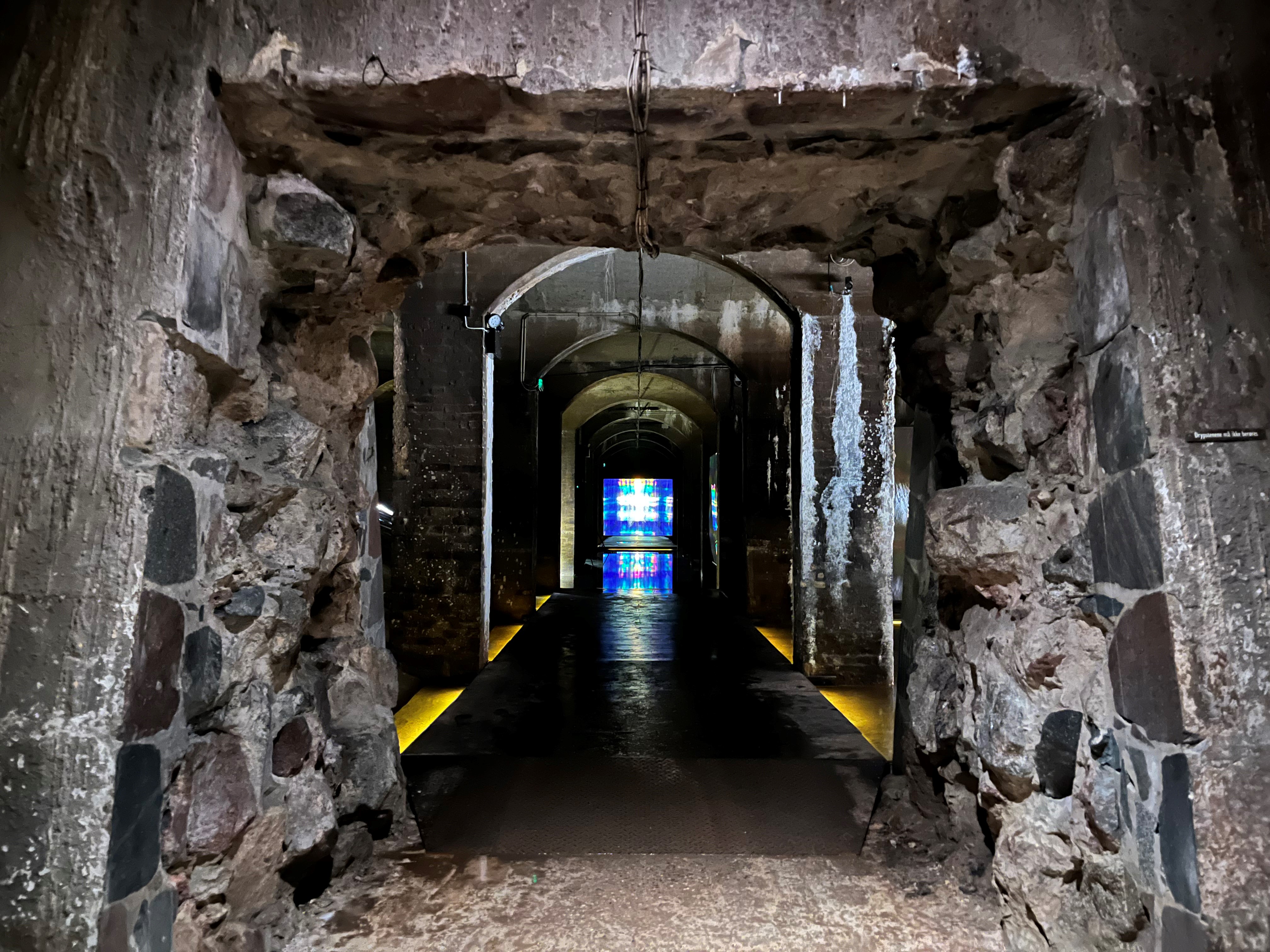
Many art museums around the world are situated in odd places nowadays: train stations, distilleries, darkened tunnels. There can’t be that many places in the world, however, where a whole underground reservoir has been emptied and co-opted to host a whole gallery of ten-foot-tall psychedelic pieces — yet that perfectly describes the Cisternerne, a dim, cavernous space that seems to stretch on forever. A sign on the far side of the entrance notes how this grotto used to hold Copenhagen’s entire water supply in the 19th century; after the city decided to move its water source elsewhere, the place was eventually repurposed as a museum for massive art installations, all of them looking like the coolest things ever concocted by humankind.
As a sidenote, the sign — possibly the brightest lit spot in the whole of the cisterns, though that isn’t saying much — also reminds visitors that the Cisternerne, being wholly underground and perpetually moist, remains stuck at a temperature in the low teens. I’m not usually a fan of the cold (having to wear more than two layers causes me physical and mental anguish), but here it all folds into one impressive atmosphere: standing in the antechamber, I can hear the drip-drop of water as it falls onto the pools below, the gentle echolocation of visitors’ voices as they stroll along the granite columns; I reach out my hand, rub my hand against the stones, and feel the wetness of the masonry, and then withdraw my hand because this sentence really is getting too erotic. Despite the shadowy nature of the place, it’s still oddly comforting and reminds me of the Peterskirche back in Vienna: the same placid rumbling of the crowd, the same chill in the air that seems to hint at the presence of something greater.
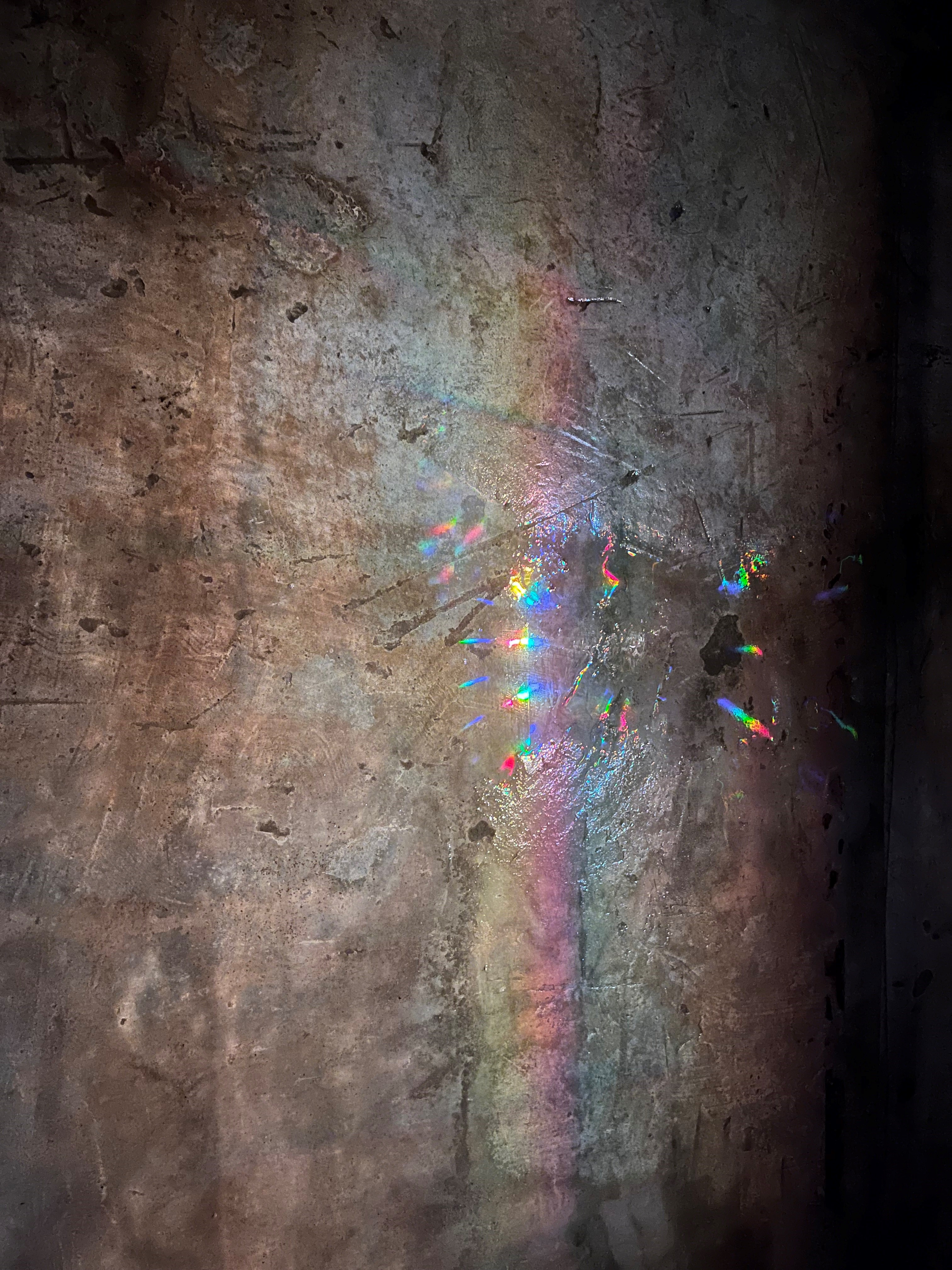
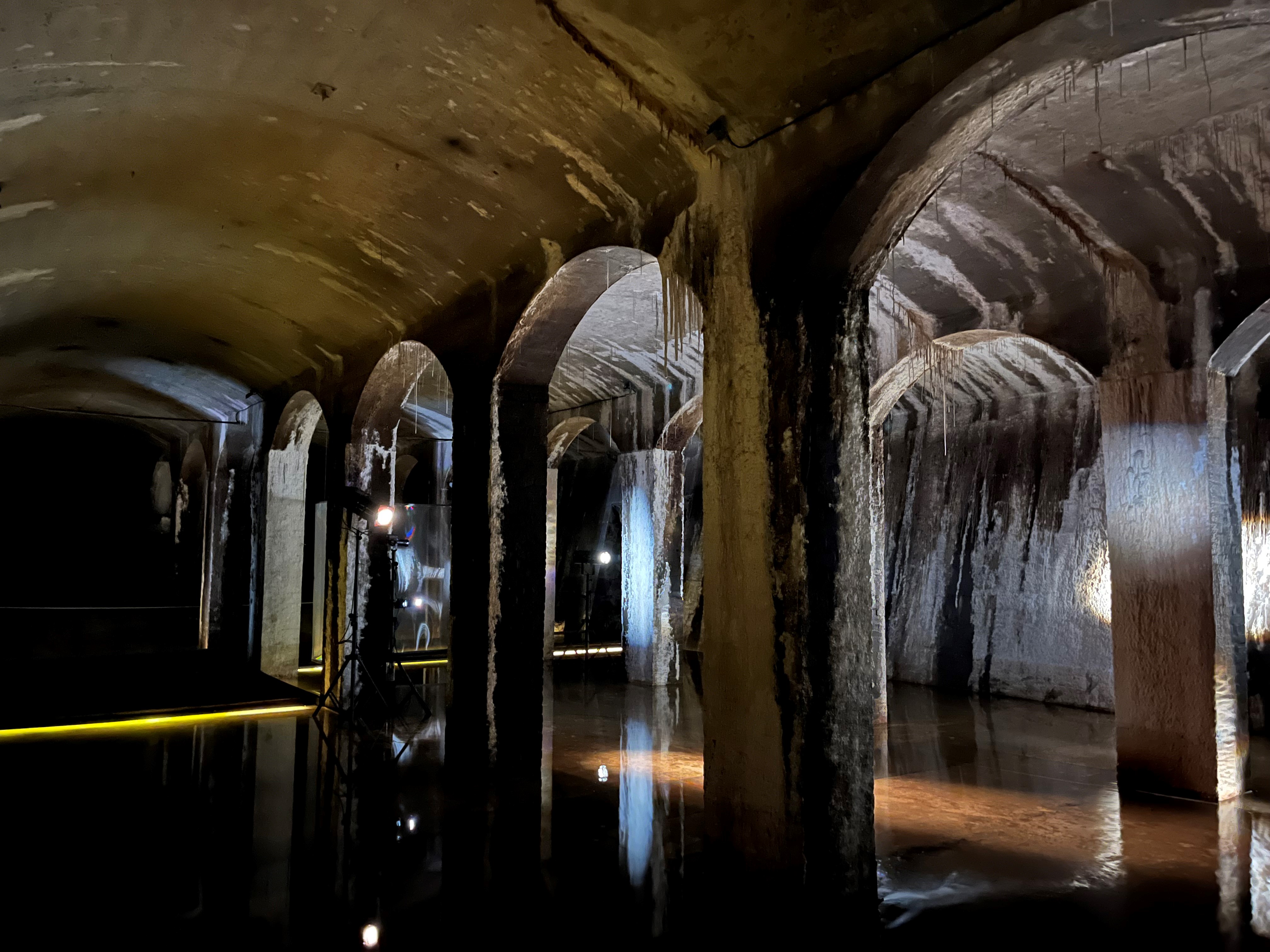
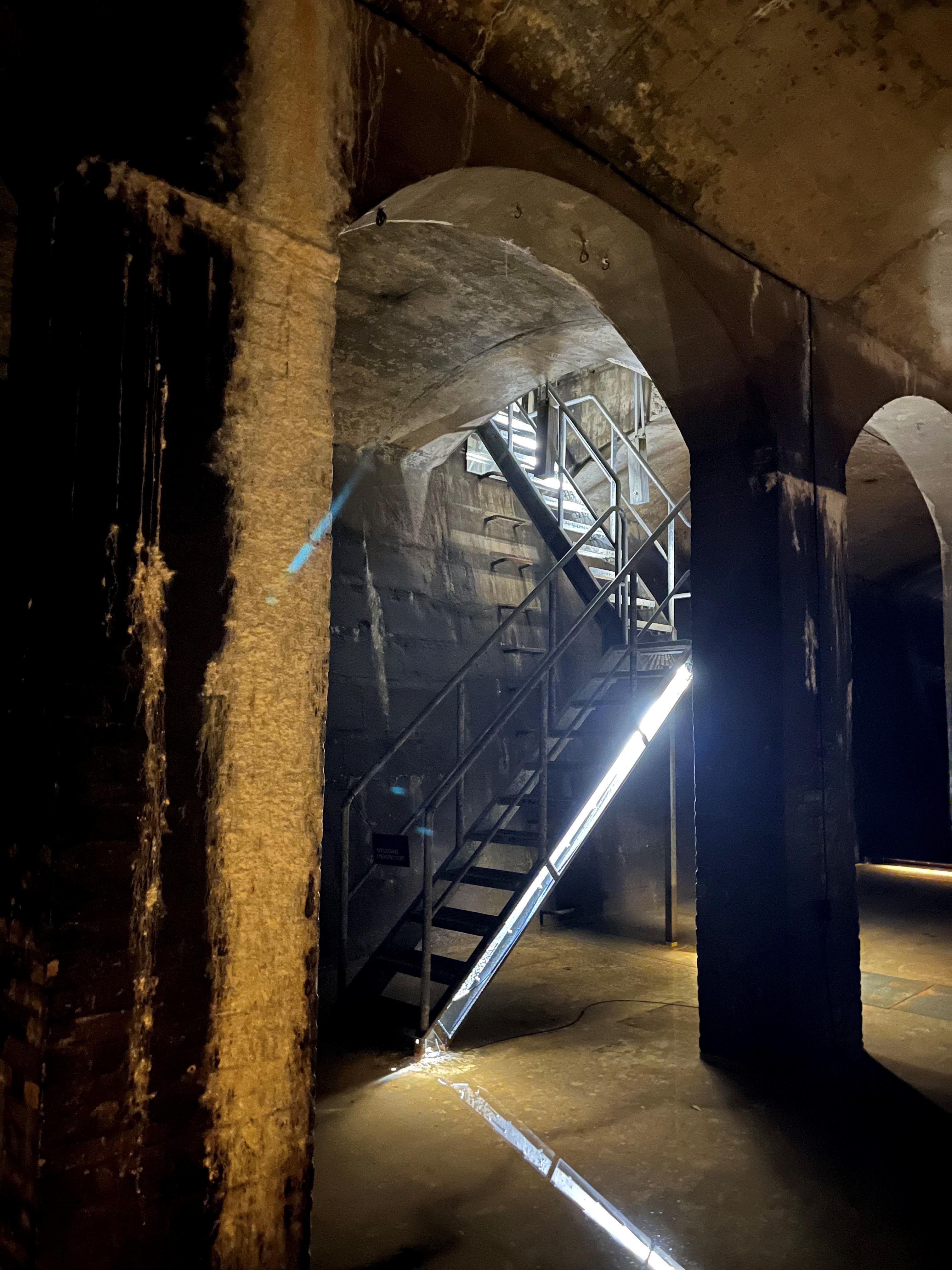
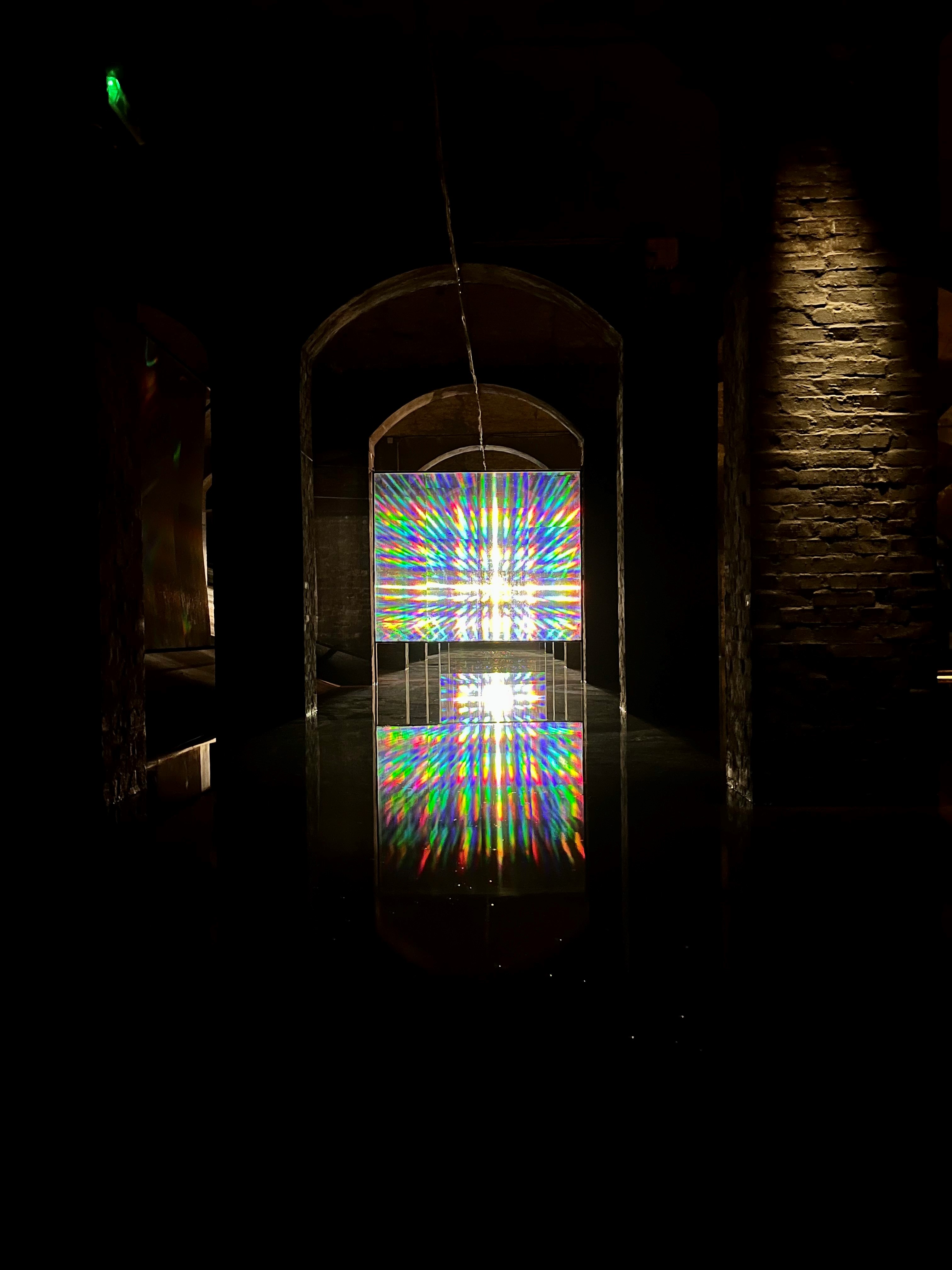
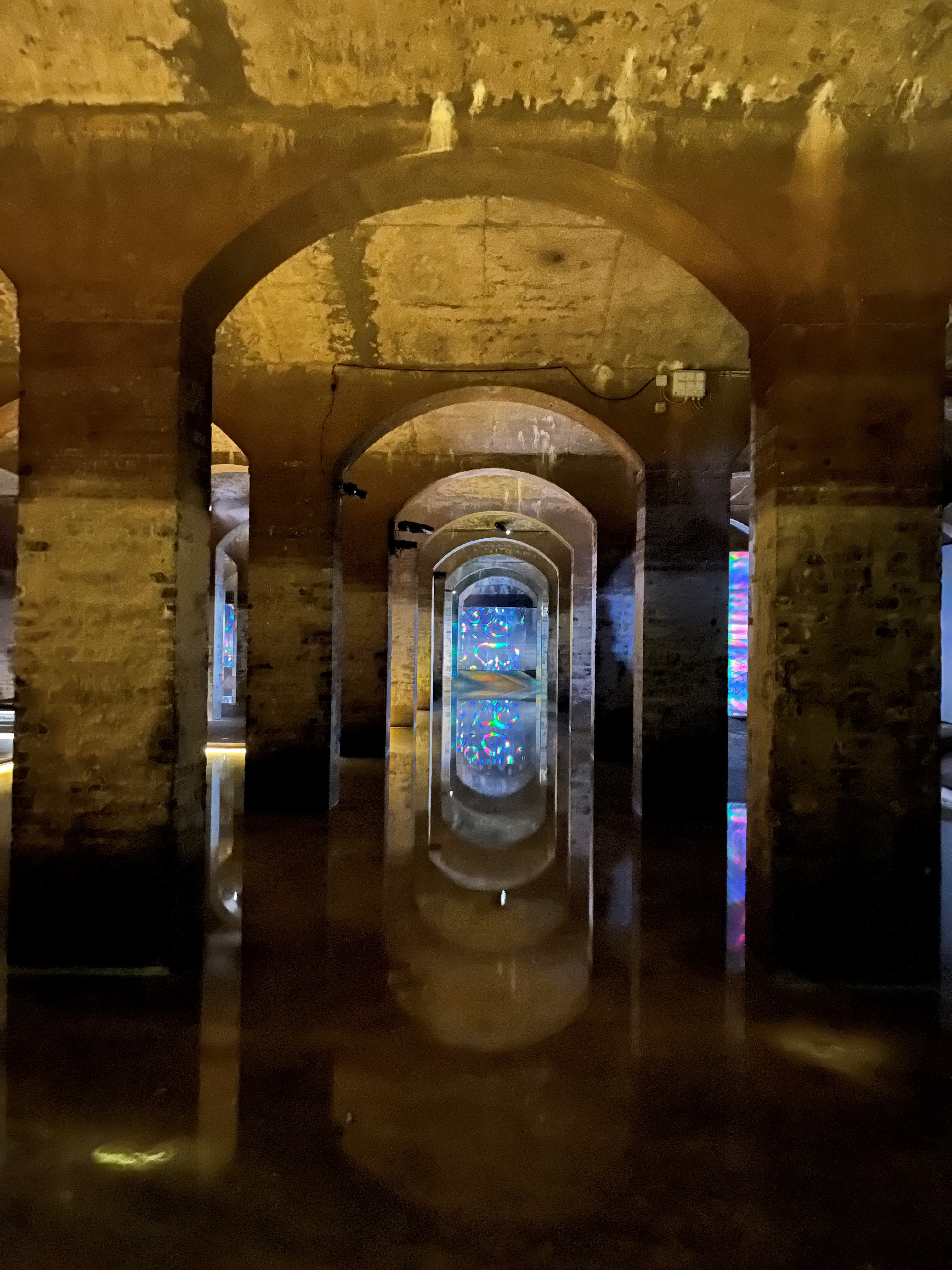
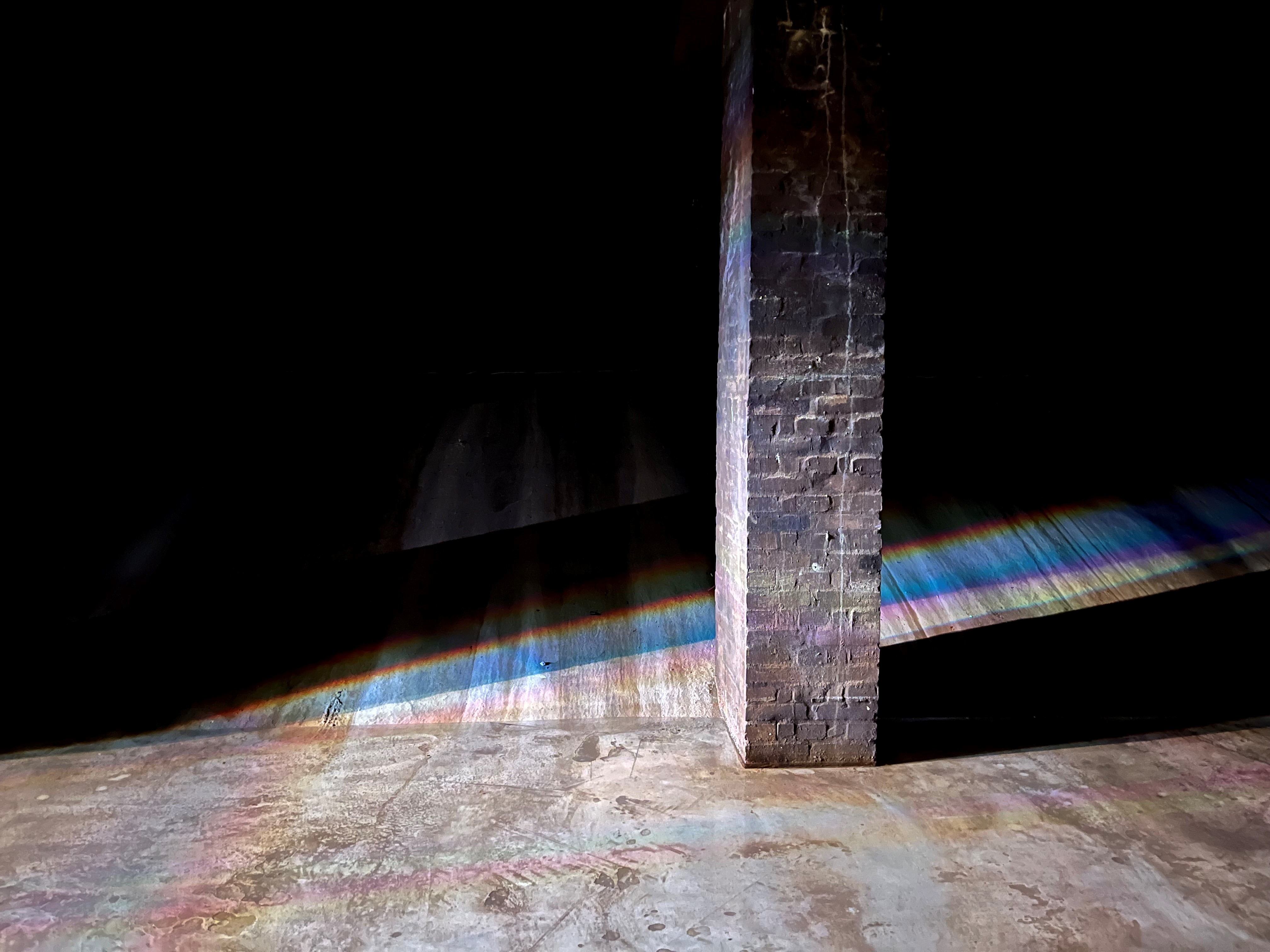
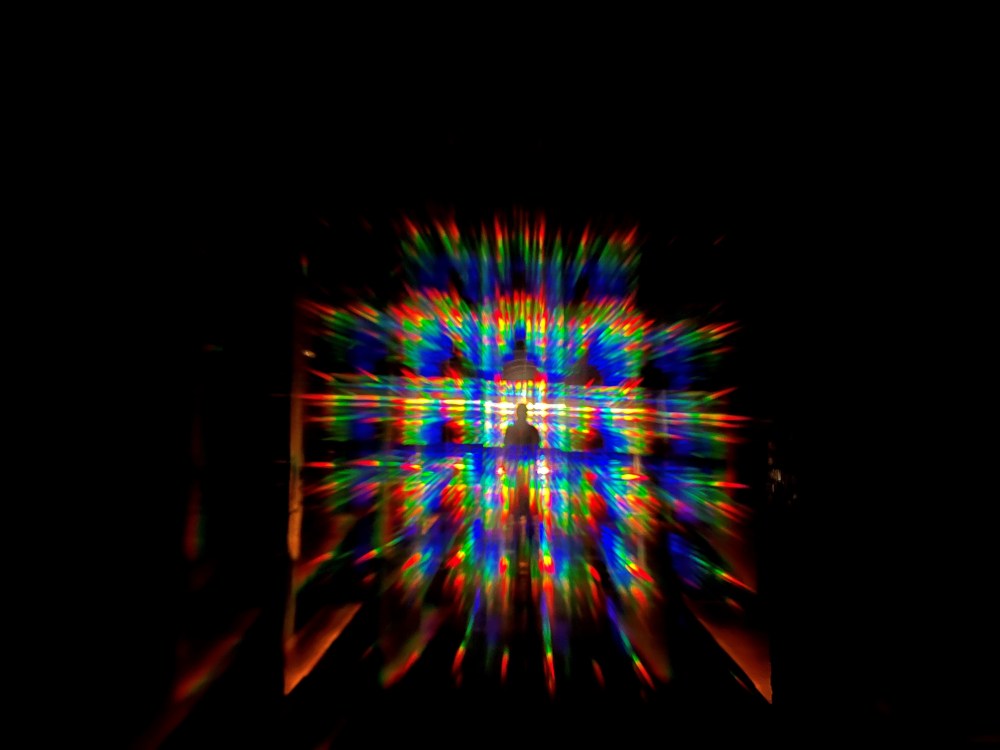
I walk further into the chambers, on boardwalks suspended just above the surface of the waters. The Cisternerne wasn’t brightly lit to begin with, but as I push further in the light practically disappears, and the only source of brightness are in the colours refracting from the works of art, hung at intervals on the walls of the reservoir space. This year they’re spotlighting South Korean artist Kimsooja, whose work is best described as “rainbows moulded into different shapes on acrylic squares”. (Did you know that rainbows can be a square? I didn’t.) My scepticism towards modern art, so recently demonstrated at the KunstHaus Wien, suddenly melts away into the pools of water at my feet, and I spend much time examining the pieces, trying to work out a 47th way of photographing these wonders. A visitor next to me, in a flagrant breach of the museum’s “no touching the water” rules, flicks a pool high into the air; it patters down softly, rippling into the black water on the ground, somehow making only the lightest of sounds.
Eventually I stumble back into the antechamber and check my phone, which to my surprise tells me that I’ve only been walking for twenty minutes. Immediately I turn and walk back in; there’s just too much detail in this place, and a single go-around will simply NOT do. What I like about this place, I decide as I step onto the boardwalks once more, is the feeling of solitude I get here: although I am in a crowd of hundreds, perhaps thousands once more, I’ve never felt more at peace during this trip. Everything here is just so calming — from the darkness to the ambient noise, from the colours to the columns of stone. Amidst all this, it’s easy for the visitor to fit in; to feel themselves buffeting along the elements, one in a universe of millions. And you know what, I love this type of being alone — it’s not the kind where loneliness rushes in to squeeze out any existing space, but rather it’s the kind that lets you breathe, to explore your own boundaries, even within this crowded, vibrant city. And it’s at this point, wandering amongst grids and squares of Technicolor light, that I realise it: I have truly, incontrovertibly fallen in love with Copenhagen.
The next few hours, however, will put that newfound love sorely to the test. As I walk up the steps of Copenhagen H metro station, I begin to feel a stabbing in my stomach, one that just won’t go away no matter how much I burp or rest. I first noticed it walking through the Cisternerne, but now it has become more insistent and acute, gripping my bowels like a vice. Enter our hostel room, only to discover that dinner choice duty has been foisted upon me, which is a bit like asking a man on death row to choose his preferred guillotine. Settle on an Italian eatery on Vesterbrogade, just south of Frederiksberg; by the time we arrive at the restaurant I am beginning to shiver and am in no mood for culinary nor conversational merriment. Like almost everything I’ve encountered in Copenhagen, both the street scene and the pasta are absolutely amazing, and I’m trying desperately hard to forget the pain and enjoy myself, but with every minute that passes it’s getting increasingly difficult.
Dinner over, we wait for the bus back. The stop is just opposite the restaurant, and I can still see my plate of unfinished fettucine as we wait there, glaring and accusatory. The chill is biting in a way I’ve never experienced before, and the stomach cramps are still building; resort to singing “Bohemian Rhapsody” loudly in the street, stamping my feet and dancing around, anything to distract myself from the pummelling my digestive system is now going through. Five minutes tick by. Ten. Finally the bus arrives, and as we board Dennis announces plans to return to Nyhavn — he wants a rousing finale, something indelible to cap our time in this beautiful city. Unfortunately for me, I have a literal feeling in my gut that warns me I will severely regret any further activity for the day, so I reluctantly bid my friends farewell and retire to the comfort of our room.
I shall spare you my subsequent agonies for that evening; you are here to read a light and frothy travel narrative, and a “reversal of fortune”, as it is called in competitive eating circles, cannot really be considered “light”. (“Frothy”, though… maybe.) When it happens I am on my bed, clutching a cardboard bowl that thank God I had the foresight to swipe from the pasta place; in a miraculous synchronisation the Sgt. Pepper album which I had thrown on as a sort of mental pain relief (as well as to fulfil my Beatlehead obligations) reaches its apocalyptic climax shortly after the event, and as I sit there gulping and feeling absolutely drained I take solace in the fact that the songs of Lennon-McCartney are still, as ever, the perfect soundtrack to my life.
I dispose of my output as best as I can down the loo and then dispose of the container outside, during which I bump into a group of Swedish ice hockey players, all of them utterly hammered. Charmaine and Dennis return shortly after, bearing plastic bags and the news that their return to Nyhavn was a complete success; sitting on my suitcase I listen to their adventures, of how the two of them got there just in time for the perfect sunset, of how they were mistaken for husband and wife, of how Dennis was then surrounded by three girls from Morocco, all asking to be photographed by him. (“A right Casanova”, snarks Charmaine.) A mental image of the two of them gadding about on the banks of the canal and being accosted by envious Africans is hilarious enough for me to forget the hellfire in my intestines, however momentarily.
Time passes, and the room falls silent. I return to my bunk to heave some more, while Charmaine and Dennis do their own nightly routines and turn in. Would have loved to follow suit, but my stomach is still rumbling like mad and the fever I have right now is refusing to let me drift off. Sometime around midnight I get another attack of the cramps and decide that the toilet will be the safer place for me, at least for a bit. And so it is that I spend my last night in Europe sat on a great white porcelain throne, alternately sipping water and apple juice, waiting for a catastrophe that never comes.

 Inkpot Shuffles in the Twilight