25 May
Nine o’clock in the morning. I open the curtains of our crowded hostel room, one foot on the steps of my narrow bunk, the other perched precariously on the window ledge. Immediately all the colours pop out at me: the blueness of the skies, the marble white of the building opposite, even the tiny dots of the coats down in the street. Already Copenhagen seems a far more vibrant city, more diversely colourful than the sandstone hues of Vienna or the muddy brickwork of Hamburg. I can’t wait.
Walk with Charmaine to Copenhagen H for breakfast and Danish kroner. Bernstorffsgade, the thoroughfare that leads towards the city’s main station, is a quietly busy affair: pedestrians walk along the street with an air of solemnity, their soles clattering against the cobblestone pavement, and any conversing couples seem to do so in hushed tones — or perhaps that’s just the effect of the brisk north wind, swallowing their words and scattering them across the Øresund Strait. Yet there are also signs of a looser side to the city: shouts of joy from far above reach our ears, and craning out heads we spot the imposing structures of a thrill ride in the distance, already welcoming thrillseekers at this early hour.


Breakfast eaten, Dennis briefly rejoined and non-euro currency obtained, we head across the square and down into the netherworld of the Copenhagen Metro, a system as far removed from the previous two as it is interesting. Unlike Vienna or Hamburg, the metro came relatively late to Copenhagen’s transport infrastructure — it only opened in October 2002, which makes it the first metro system I’ve ridden on that’s younger than me; the Cityringen line, which we are taking this fine morning, is less than FOUR YEARS OLD. Perhaps that explains its wonderfully airy and modern feel: the stations are spacious and modestly decorated, while light suffuses every corner without the harsh and sterile glare you might expect from a big city’s metro systems. As my eyes travel down from the angular mouldings in a bird’s-eye view of station’s transparent infrastructure, I note how natural light mixes with electric, making the station welcoming and genial. Even the card reader on which commuters tap their cards emits a blue glow that is at once both calming and mysterious; for a moment I fantasise about placing my hand on it, and having the wisdom of the ancients beamed into my head a la Cate Blanchett in the Indiana Jones movie.
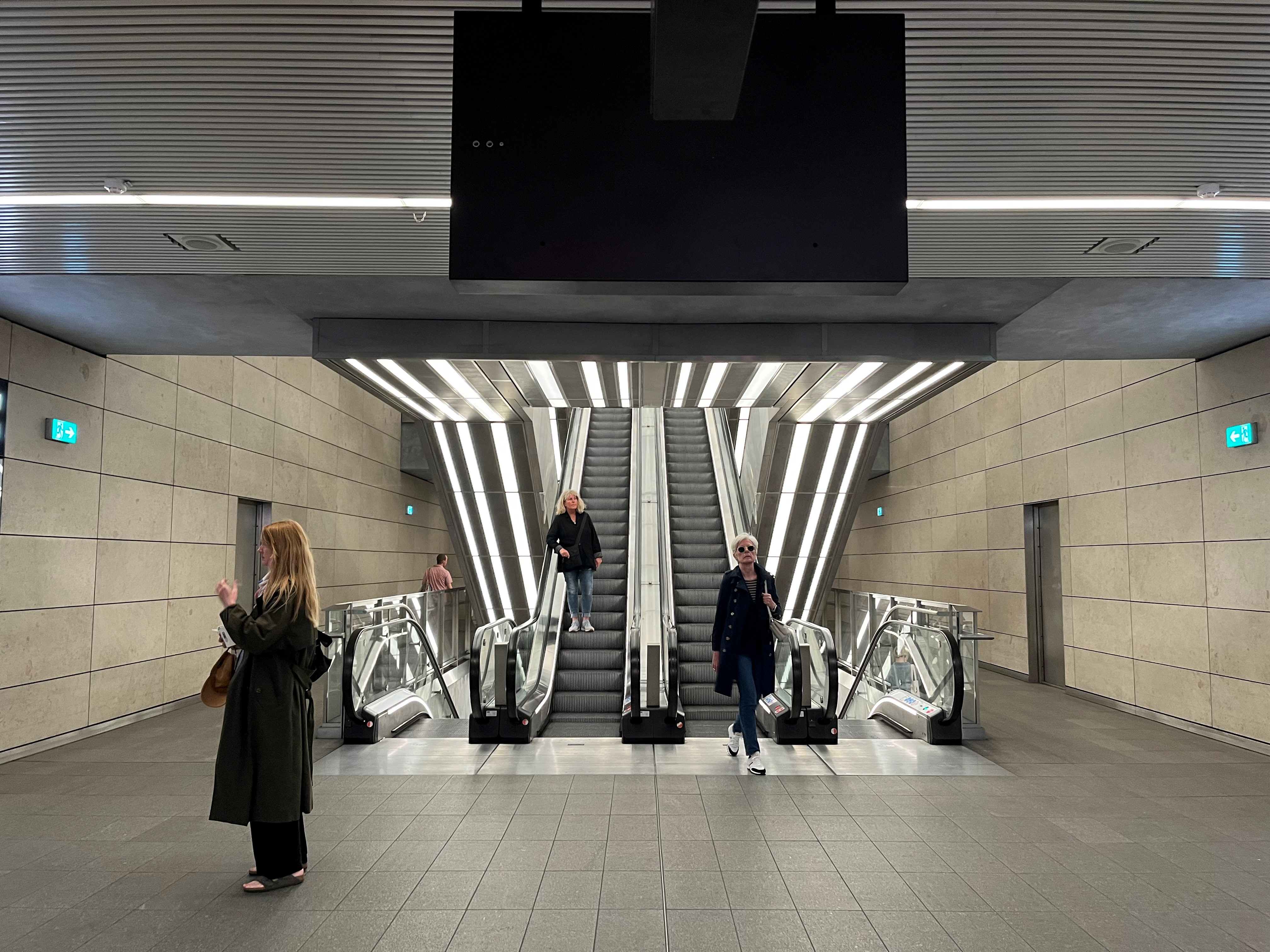


The driverless trains glide in, sleek and silent. Onboard, few commuters chat with one another and there’s little of the cacophony that you might find in Hong Kong or even Vienna — the loudest noise comes from the trains, hurtling through the tunnels like a rollercoaster. It’s not all machinery sounds though, there are conversations, and very loud and lively they are too — all of them conducted in person. Is this how people in the Nordics compose themselves? Aloof to the outside world, yet impossibly warm to the people they know well? There’s no time to think about all of this before the metro deposits us at Marmokirken station, and we stumble out onto yet another platform with another well-lit set of escalators, before emerging onto ground level once more, where we are greeted with the sight of an enormous church.

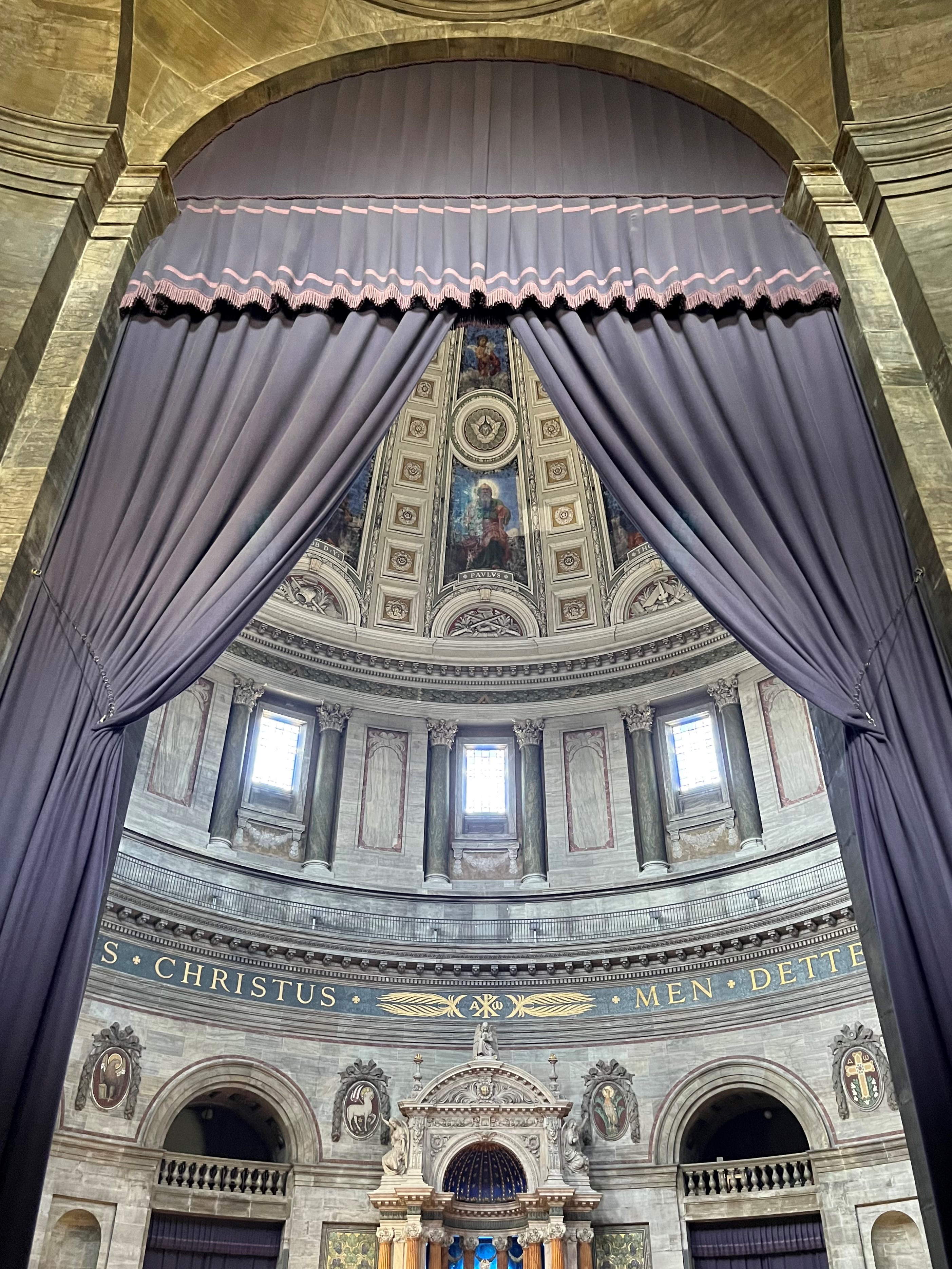
This giant building standing in our way is Frederik’s Church, named after a ruler of Denmark and Norway. At least, that’s its official name — apparently nobody calls it that, which is why the Copenhagen Metro have gone for the more colloquial name of “Marmokirken”, the Marble Church. (Imagine TfL renaming the Waterloo & City Line “The Drain” and you’ll have an idea of how weird this is.) There’s certainly a lot of tourists surrounding this church of marble on this morning: a mix of languages and accents swirl around us, voices rising and falling as we walk slowly towards the entrance. In one corner of the square a tour guide is holding court on the history of the church of Frederik, and as he points towards the heavens I spot the colossal statues surrounding the building; in another, trees reach up three, four floors high, quietly showing off its vibrant purple flowers, swaying gently in the cold breeze.
We enter the Frederik Church of Marble. I barely have time to note the sign next to the doorway that says “please beware of pickpockets” before I am pushed inside along with the crowd, through the rumble of sound in the vestibule and into yet another sanctuary. A blast of freezing cold strikes me once more, yet there is no North Wind to be identified as the source this time — it is simply the chill contained within the marble, or perhaps it is the presence of the Lord. My eyes adjust to the gloom, and I make out the shapes of people moving through the exterior circle, a place where light and shadow seems to actively fight for dominance: you can see the rays of the sun beaming in through the plain glass, you can feel the damp and darkness where they do not reach. We gravitate towards the centre, towards the holy of holies, and there I lift my head up to the dome, far, far above us, awash in a simple fresco, and gaze upon it for what seems like a calming eternity.


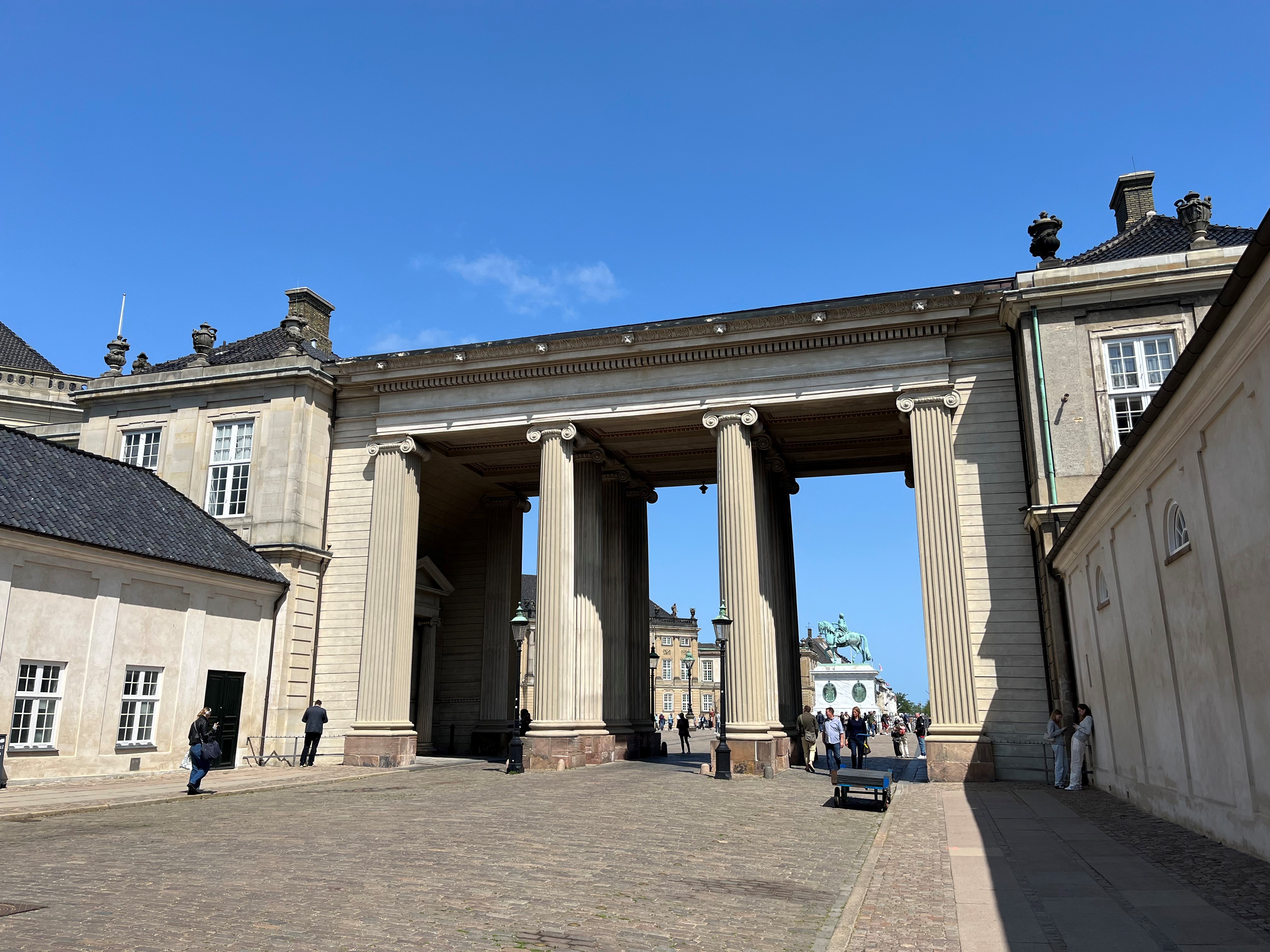
Walk out into the sunshine, and barely a stone’s throw away from Frederik’s Marmo Church we run slap bang into another complex of buildings that inspire awe. In some ways the Amalienborg palace complex is similar to Schönbrunn (was it really only five days ago?): both have histories dating back to the Baroque period, both fell under the gaze of their country’s royal families, and both became official residences for said families at the end of the 18th century. The difference, of course, is that Austria no longer has a reigning royal family, whereas the Danish royals are still alive and kicking; perhaps this is why there is still a changing of the guard ceremony every day at noon at Amalienborg, and why we find a band of guards in smart black-and-blue uniforms heading straight towards us. We’ve seen enough “ignorant Chinese tourist assaults palace guard” videos to get out of the way, so we hastily shuffle off to one side.


Once the guards are gone the crowd in Amalienborg Square disperses, and we’re left to admire the four buildings that make up the complex. They are, in order, the Christian VII Palace, the Christian VIII Palace, the Christian IX Palace, and the Frederik VIII Palace, because the Danes have a really good sense of humour. These four off-white facades surround Amalienborg Square itself, an extensive space open to the skies and the connecting streets. I find it fascinating that the palaces are so out in the open; having both visited Buckingham Palace before, Charmaine and I recall the solemnity and the security that surrounded that royal family’s dwellings. Of course we can’t just waltz into one of the palaces here and demand a reception with Queen Margarethe on a whim (for one thing, she’s at her summer residence in Aarhus), but this degree of exposure is still pleasantly surprising, and says a lot about the country itself.
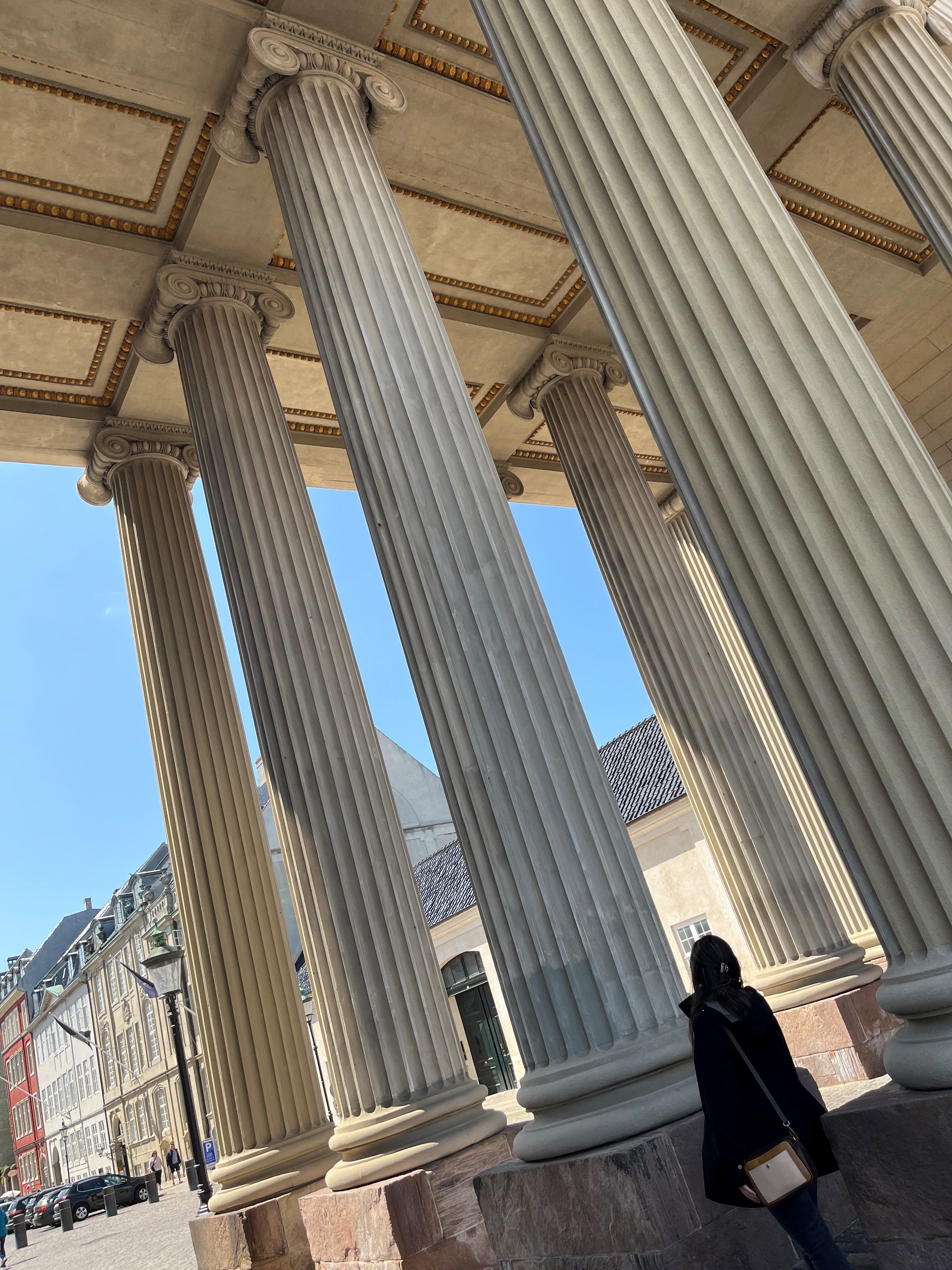
I sneak a glance at Charmaine, and find her visibly (if not audibly) squeeing. Even before we arrived in the city, she was already quoting “Wonderful Copenhagen” at length, and her ardour has only increased with the passage of time. Her social media feeds are now inundated with shots of the buildings and flora we’ve passed in the past hour, and given how reticent she usually is, this newfound enthusiasm from her is staggering. Now she leans against one of the gateways leading out of the square, and requests a picture. Being the excellent friend that I am, I immediately oblige; being the absolutely rubbish photographer that I also am, I take ages to figure out an angle which will be acceptable to both of us. Just as I’ve fired off a couple of test shots a guard on the other side of the square shouts at Charmaine to get off the columns; not wanting to bring the wrath of the Copenhagen King’s Guard on our heads we beat another hasty retreat.
We saunter through the streets, dropping in on the many souvenir shops that dot the downtown district and making nuanced observations along the way. (An example: “Charmaine, is it just me or are Danish girls so much prettier than others?”, which gets an eyeroll for an answer.) The crowds slowly thicken as we move down Toldbodgade, filling the sidewalks and almost spilling out, and the reason for all these people becomes abundantly clear once we reach the water’s edge.
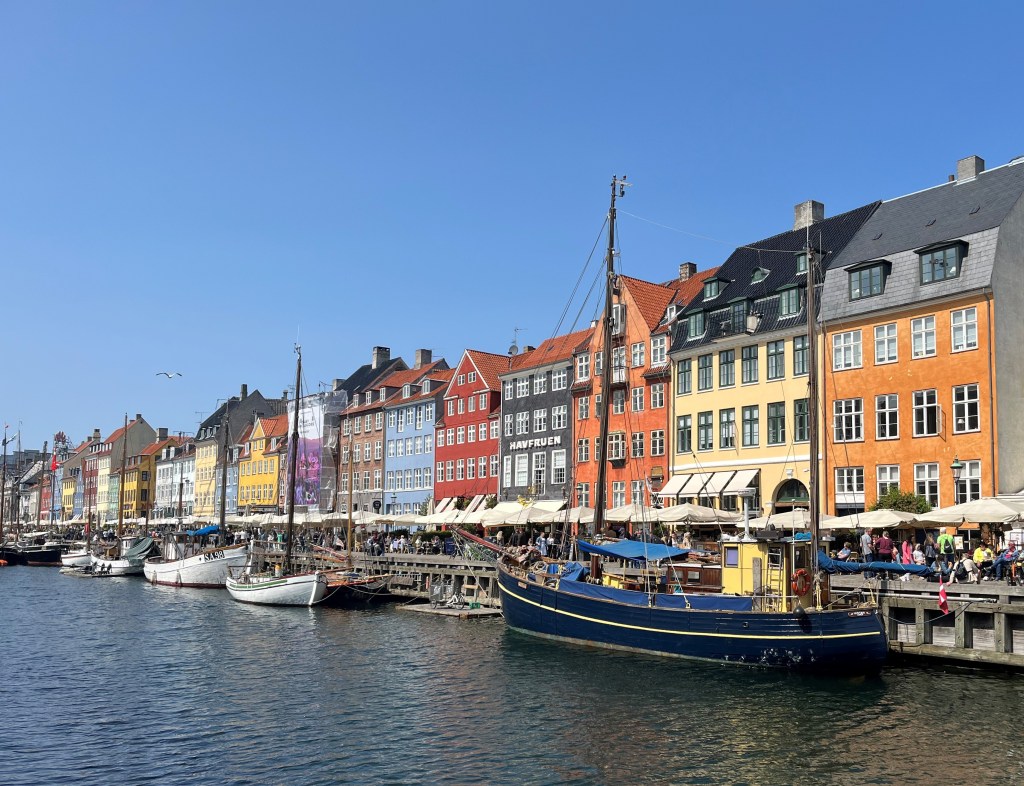
Mention the word “Copenhagen”, and this is the image that immediately pops up in your head. Colourful houses set alongside the water’s edge, an old sailboat bobbing gently on the waves, and a patch of sea underneath — there is no other image other than that of Nyhavn, and rightly so, because this is where the prettiest elements of the city converge. Nowhere else in the city will you get such a perfect mixture of sea, sky and structures; there may be places where the waters are more crystalline, or where the ships are more beautiful, or where the seabirds are better behaved, but at Nyhavn it reaches that ideal balance where any single alteration would be detrimental. Even the air, so frosty when we stepped out of our hostel this morning, seems to have attained just the right temperature as we step onto the canalside.
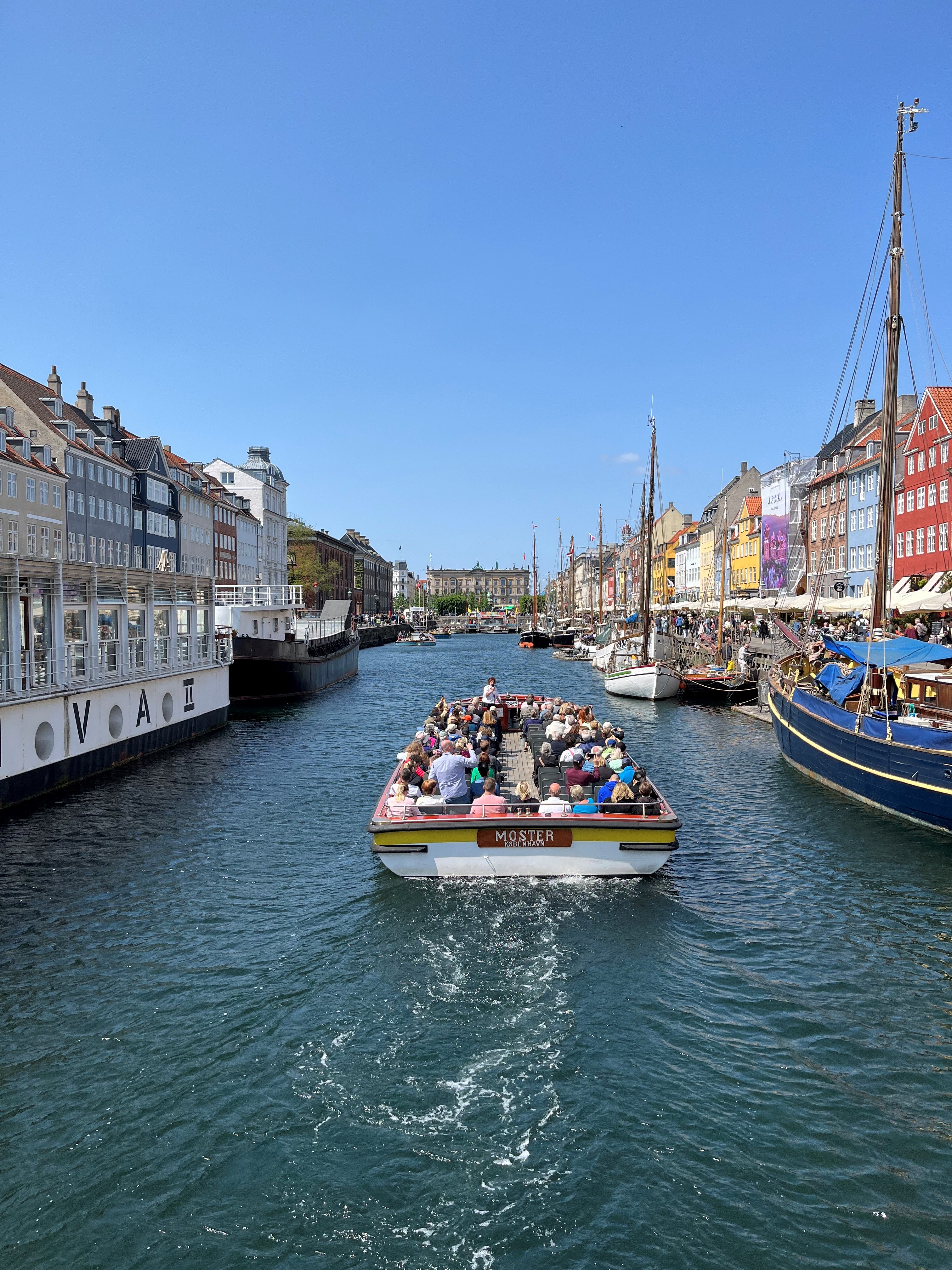
Both of us walk up and down the waterfront, spellbound by the magic of the scene before us. Sunlight makes a hell of a difference here: the moment I step into the shade, I feel the cold creeping up my body once more and I reach for the down jacket; but when I join the tourists on the bright side of Nyhavn the warmth returns in an instant. It might well be all the people on this side that’s making a difference; there seems to be a truly international blend of travellers walking by the canal today, and the vowels and consonants interlock with one another, creating a curiously pleasant din. While taking pictures on one of the bridges, Charmaine spots a woman walking her dachshund on the other side of the road; the proud owner of two dogs herself, she barely thinks twice before rushing across to say hello and ask for petting privileges. I take pictures of this charming interaction between woman and dog, and wonder about this new, assertive Charmaine that I’ve rarely seen before — could it be that Copenhagen has more to it than just amazing scenery?


It takes us a while, but finally we tear ourselves away from the water and walk up to Kongens Nytorv, the largest square in Copenhagen and one of the prettiest. As traffic swirls around us Charmaine and I mill around the square, popping into shops and looking at the garden features; there is an installation of mirrors just off the road that captures my attention for an inordinate amount of time. After a while Dennis joins us, fresh from another round of bus photography, and we walk through the streets to Gasoline Grill, a roadside restaurant serving burgers from a former petrol station. Such is its fame that orders need to be placed a day early — which is why yesterday Charmaine found herself in the odd position of ordering food from a restaurant that was 330 kilometres away — but it’s very much worth it: the patties are crisp yet juicy, the sauce mouth-watering, and I soon discover it’s very difficult to stop at just one truffle fry. If Copenhagen was thinking of sending more good food my way, they have a high culinary bar to clear.
Shortly after lunch and a repeat visit to Nyhavn (already!) we split up — Dennis and Charmaine hop on rented bicycles and head to a food hall near Nørreport (during which they slow down to make a turn and get snarled at by a local for their sudden braking); while I opt for yet another of my long city walks even though my feet are beginning to hurt from walking 25,000 steps every day for a week. Start by powering along Christianshavn Canal, heading for nowhere in particular. The bright weather that greeted us this morning has gotten even brighter, if that was possible — the sun bounces off the waters of the inlet, and every time I look to my right I find myself squinting, blinded by the radiance it has this afternoon.


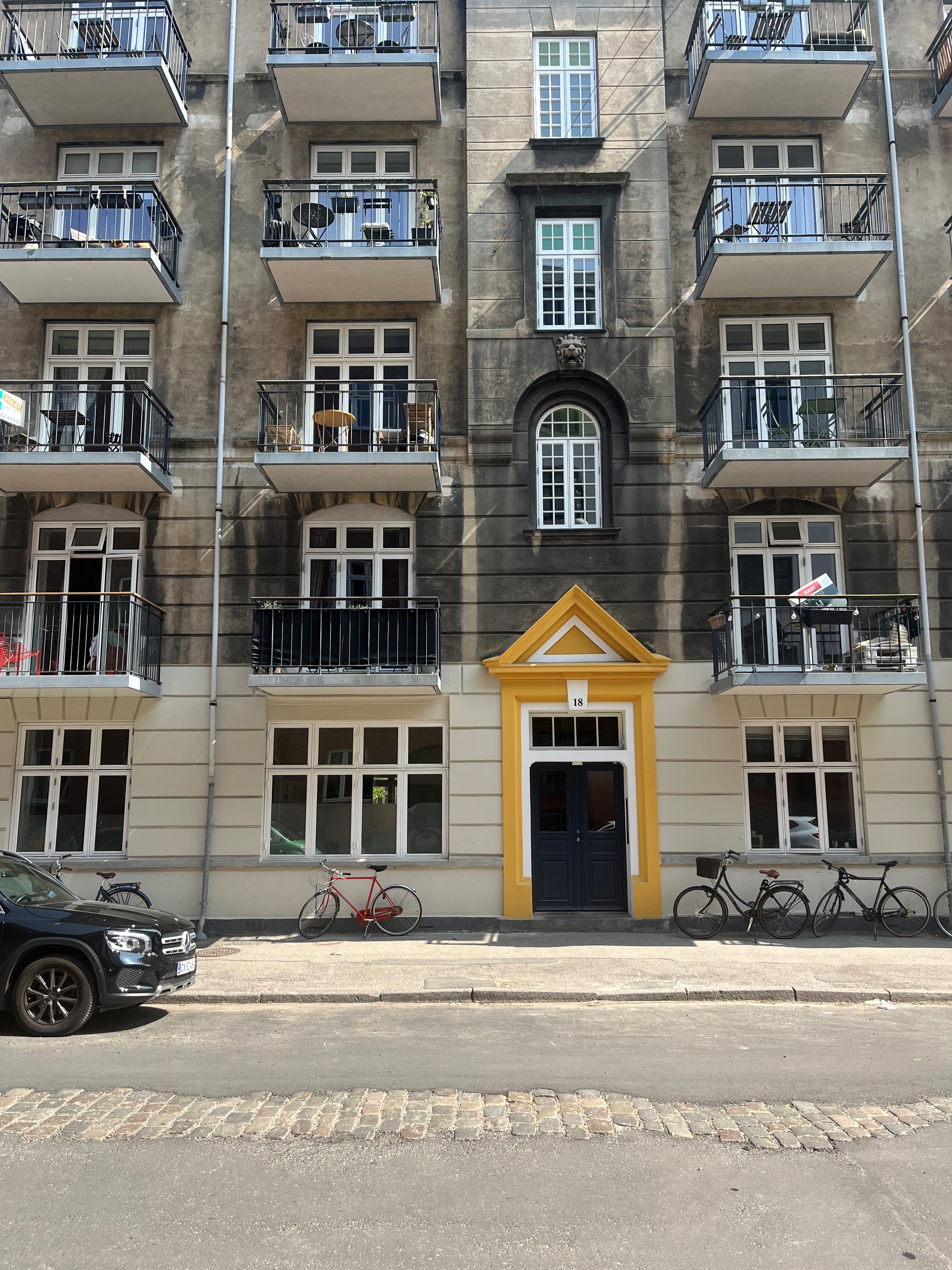
Trying to escape the glare, I duck into the backstreets. Christianshavn feels like your quintessential/stereotypical Nordic neighbourhood: tenements brightly painted yet slightly faded, set against cobblestone streets and a bicycle or two propped up against the sides; the kind that’s cosy and tight-knit without ever straying into suffocating territory — postcard scenery, ideal for lazy utopian dreams. Yet Christianshavn is a district of multitudes: turn the corner and drab buildings with bare grey walls present themselves, complete with layers of chaotic graffiti. This particular shift is explained by a slightly forlorn-looking wooden archway across the street that proclaims the “Freetown Christiania”, an anarchist-hippie commune that lies on the site of an abandoned naval base. After moving in in the 70s, the hippies have stood their ground for half a century despite the occasional half-hearted attempt by the Danish government to boot them out, and today Christiania stands as a sort of twilight zone where the laws of the land are only loosely applied and marijuana is traded freely — indeed, there seems to be a whiff of it in the air as I walk down Prinsessegade. Briefly consider wandering in for a visit, but as I’ve got other stuff to see today and my politics are merely social democrat, I head back towards the canalside.


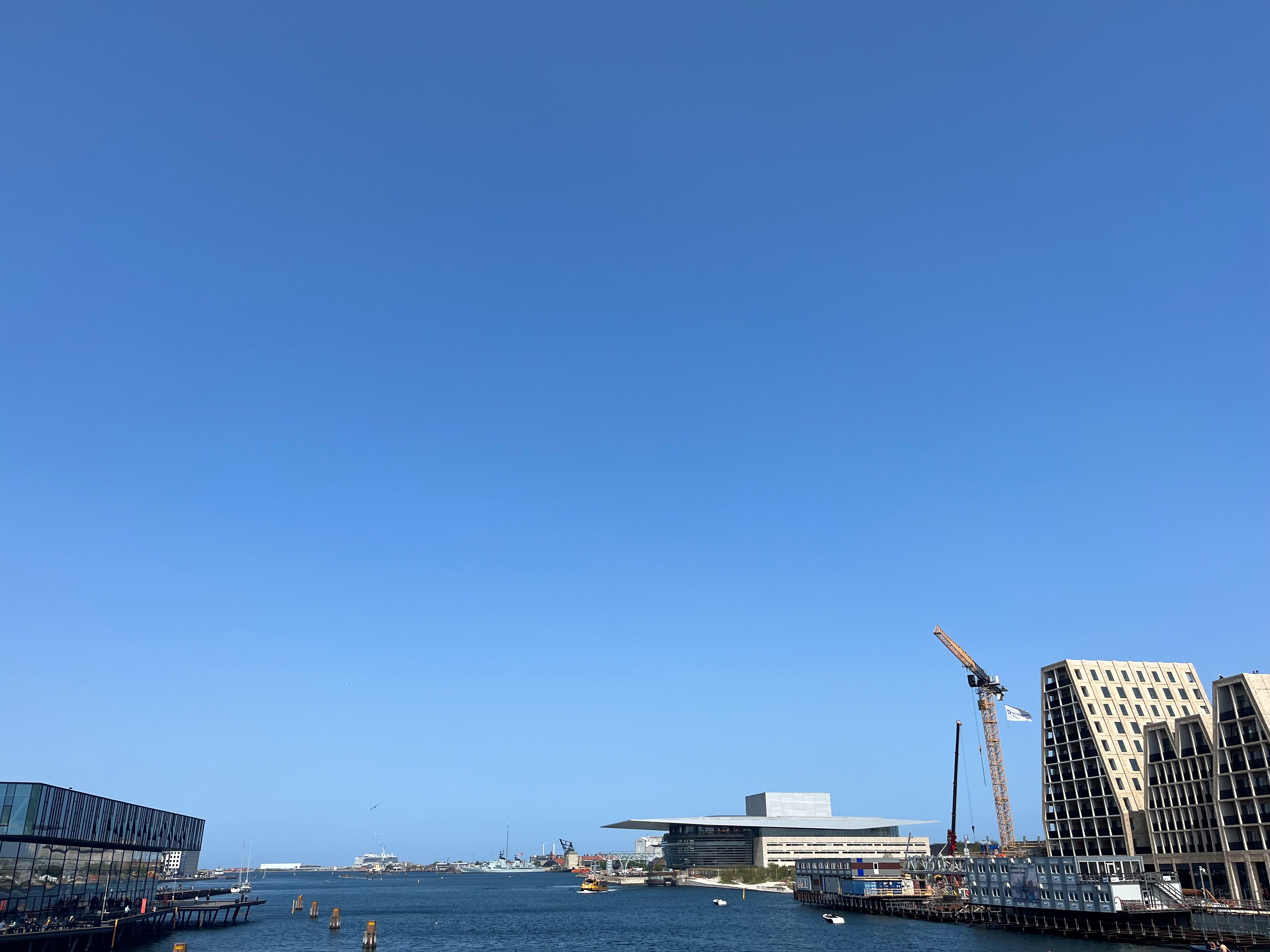
Four o’clock sees me sitting opposite Copenhagen Harbour itself, watching life flow by. The riverside bustles with activity: cyclists ride their machines, heedless of the steep drop into the water just a few feet away; ferries skip across the harbour, yet without the industrial lumber of the ones in Hamburg; and on a pier just below me I catch glimpses of a swimming party, towelling off and laughing amongst themselves after a dip in the Harbour. (None of them grow a third arm in the five minutes afterward, to my slight disappointment.) It’s a very idyllic scene, relaxed yet also packed with spirit, and I can’t help but smile as I sit and survey all of this. Just then, the lines of the Pet Shop Boys’ cover of “Go West” run through my mind, and I can’t help feeling, sitting here in the open air, that the lyrics are a perfect match for Copenhagen. I wonder if Neil Tennant has ever lived here…
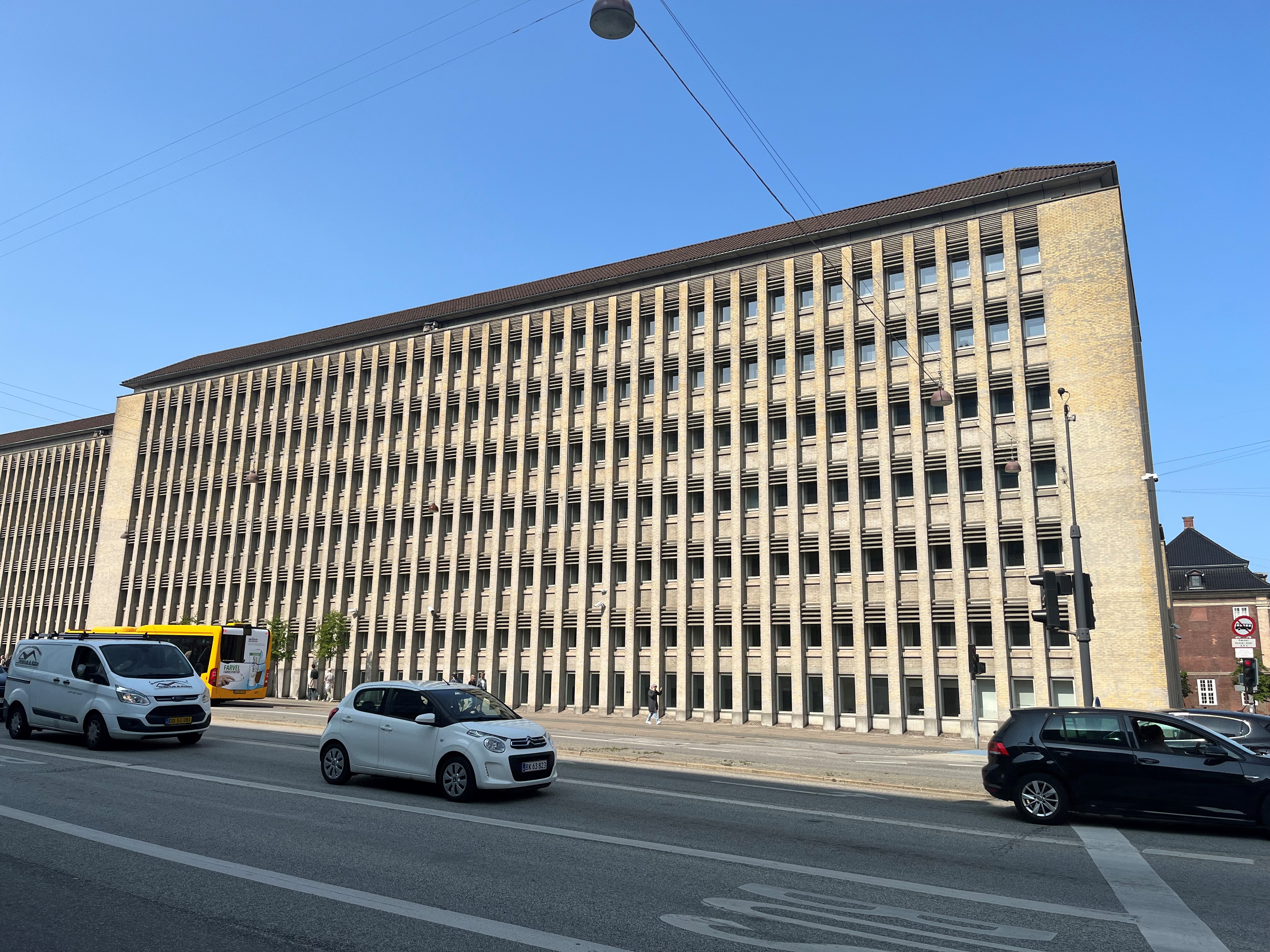
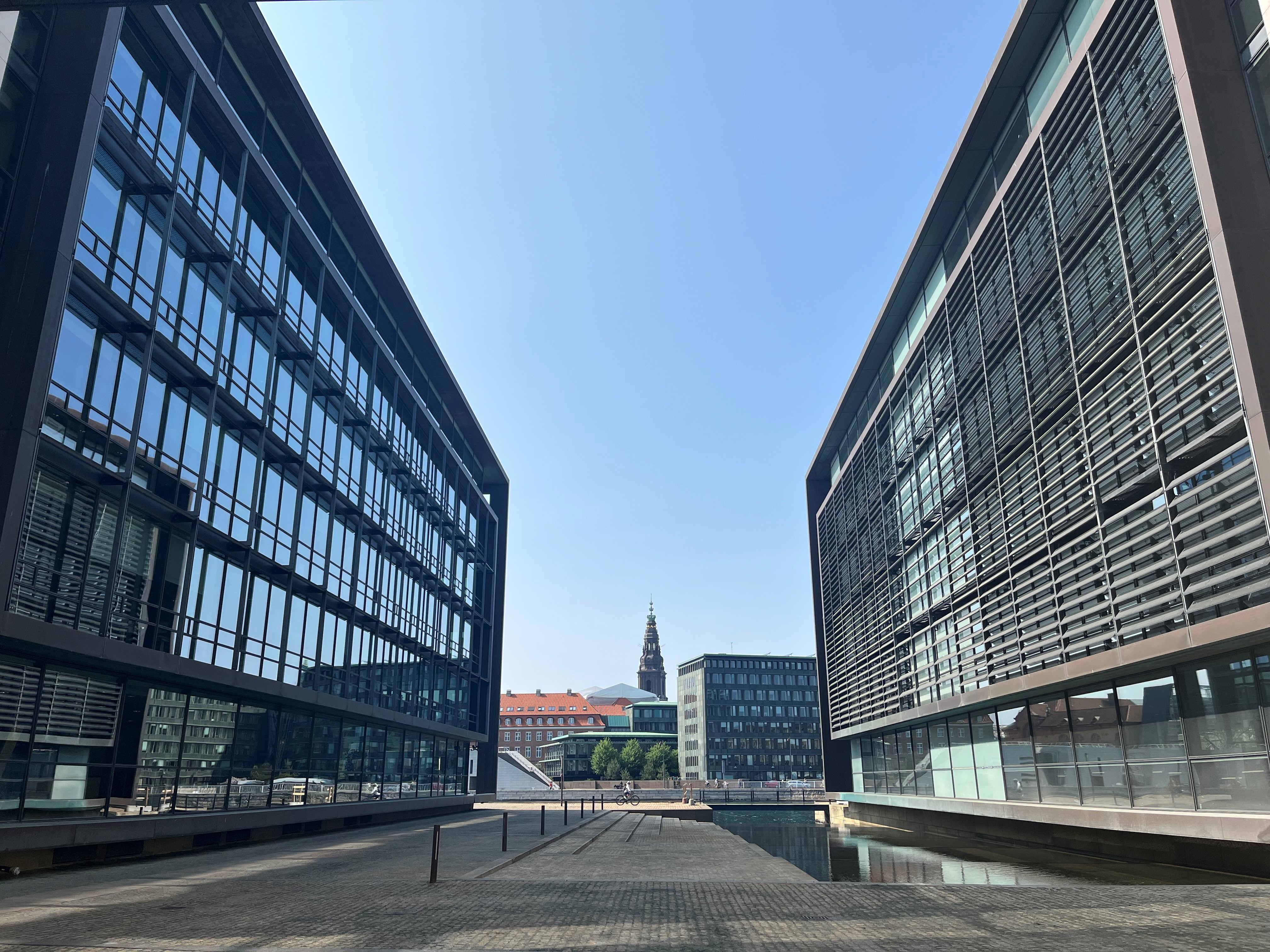


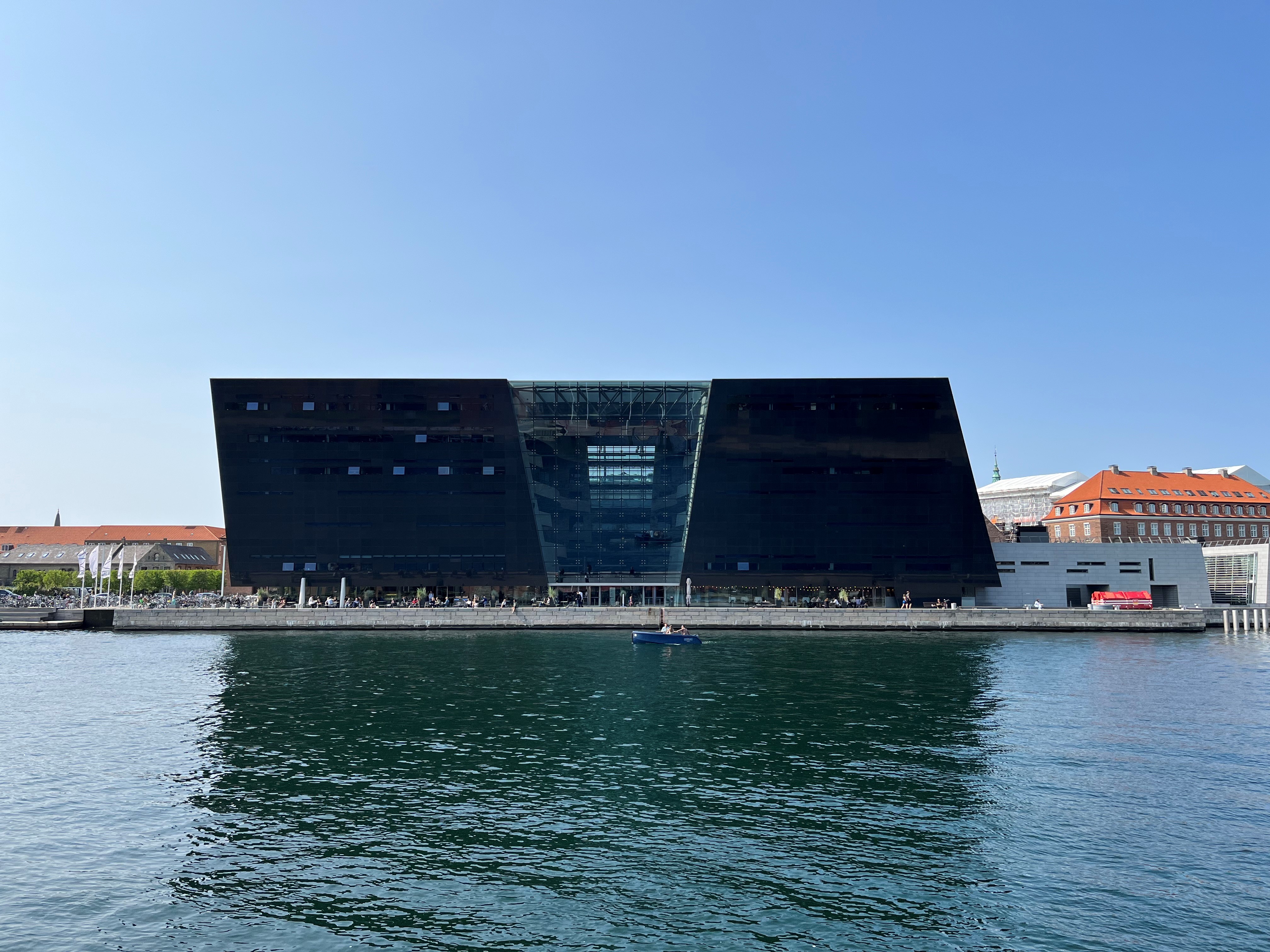
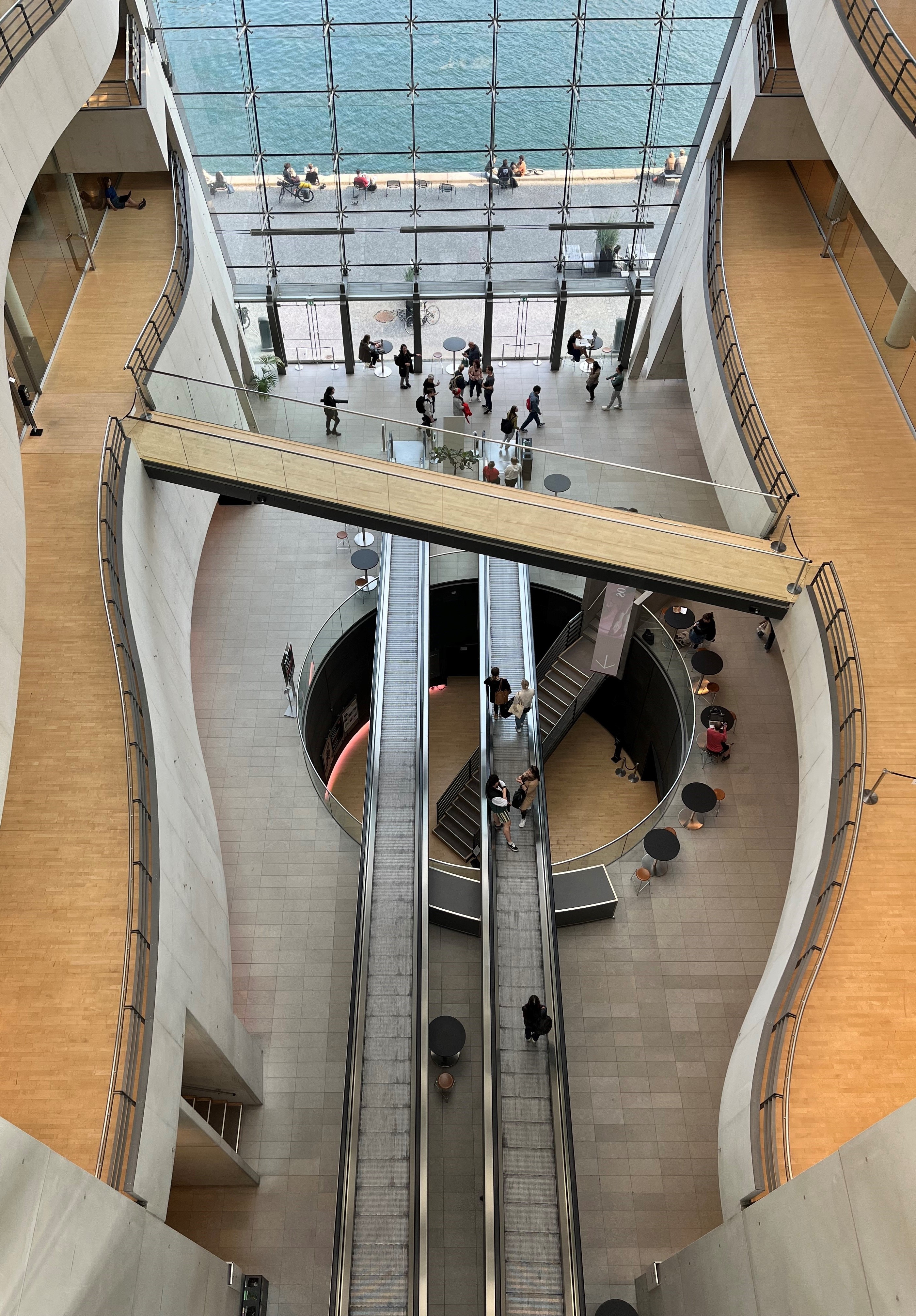
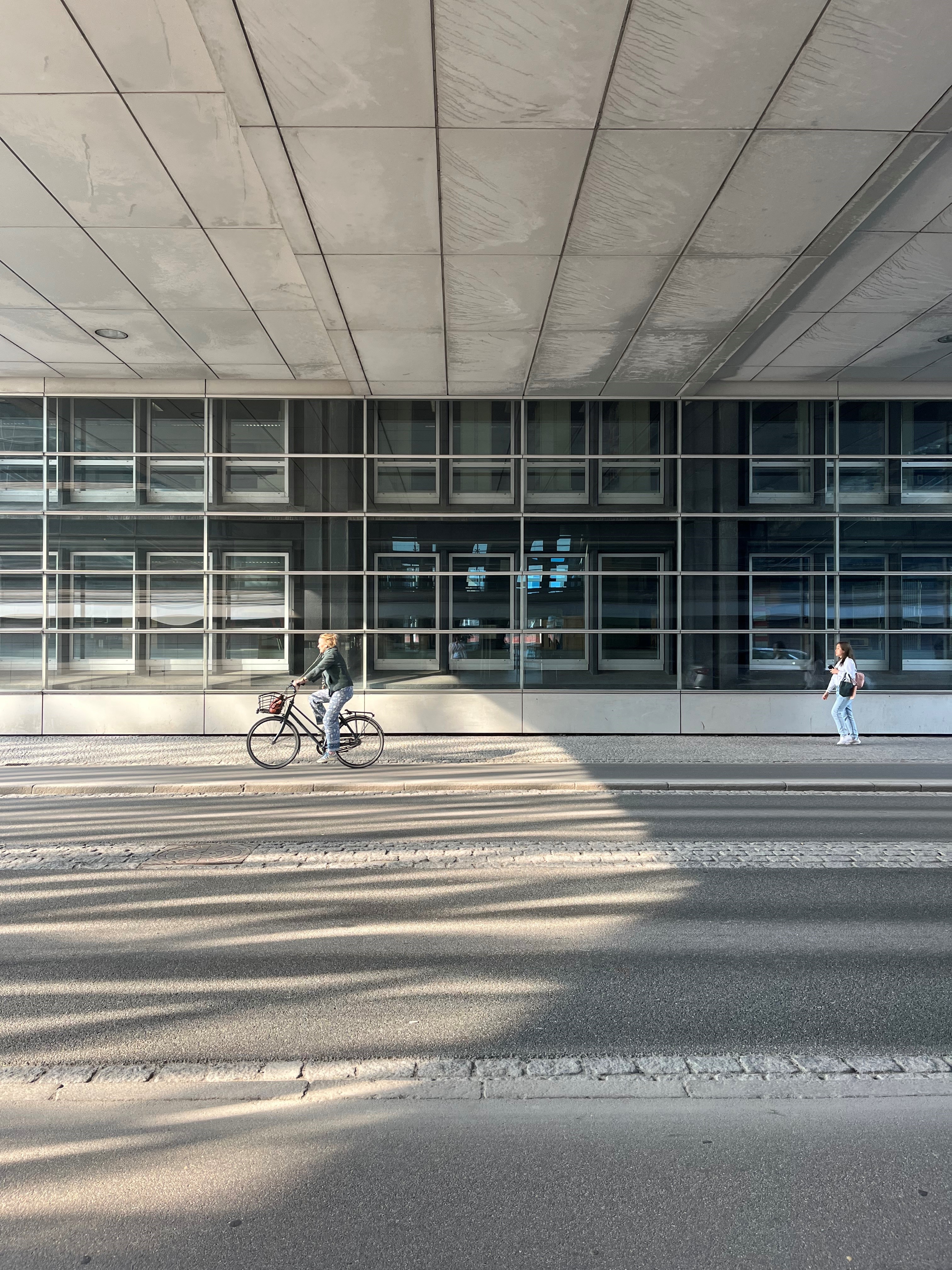
Cross on one of the city’s numerous bridges and head inside the Royal Library, a modern building set just slightly back from the water’s edge. Although a physical library has existed on this spot since 1906, the current structure was built around the turn of the century, and its polished, pitch-black walls are a reminder of the sustained excellence of Danish architecture. (It was, after all, a Dane who built the best building of the 20th century.) But the biggest indicator of its modern credentials comes when I follow the directions to the toilet, where I walk in to find two girls chatting quietly by the washbasins. Check the sign on the door to see if I’ve accidentally stumbled into the wrong washroom, but no, this is a unisex toilet, and the girls don’t even glance in my direction as I walk awkwardly past, trying to affect nonchalance while searching for an unoccupied cubicle.
Once I’ve taken care of that kind of business, my nerves abate and I enjoy this place a little more. I’ve been in a great many libraries on my travels, but this one feels especially like a treasure trove, both in how big and how intimate it is: the staircases and escalators rise six floors high, yet the café on the ground floor is still a convivial space, quietly thrumming with activity and the hissing of coffee machines. The boundary between the old section and the new is blurred: glass and steel leads seamlessly into marble and stone, and plenty lounge about in the transition area, reading their books or tapping on their laptops. Figuring that I’ll never have a better chance, I lean back on one of the sofas just across from the entrance to the old building, pull out Tarjei Vesaas’ The Ice Palace (of course it has to be Scandinavian!), and manage to lose myself in words for a half-hour.



A while later I find myself at the base of a tower that looks uncannily like a packet of chocolate digestives. This is the Rundetårn, or Round Tower, built in the 17th century as an observatory and now one of Copenhagen’s star attractions, which is enough reason for me to hike the whole way up. I pay my fees, chirp “have a nice day!” to the guy sitting at the reception booth, and start the long trek upwards. It’s a very pleasant walk up: not only because of the occasional distractions along the way (a chapel, an observatory, and a shaft that runs the whole height of the Tower, to count just a few), but also because in a victory for accessibility it is almost completely stair-free, and instead slopes up in a gentle incline. Apparently it was designed like this so that King Christian IV could ride up most of the way in a horse and carriage; another reason, I think, to give thanks for human laziness.


Seven and a half circuits later, the passageway abruptly narrows and stops before a set of traffic lights. No, Christian IV’s architects weren’t THAT innovative, the winding staircase up onto the Rundetårn’s viewing pavilion is just so narrow that it requires traffic control to handle modern tourism. I cautiously make my way up the stairs (so steep that they bring back memories of Slovakia) and finally emerge onto yet another windswept platform, with a whole city once again beneath my feet.
I’ve seen many a city panorama, of course — on this trip alone, I’ve hit four for four — and at first glance, it looks like yet another conventional bird’s-eye view. There’s the same mix of old and new buildings, the same matchstick people far below, and even the same bracing wind whipping around the tower. But after a while, subtle differences begin to present themselves. For one, the sky is bluer than anything I’ve seen on this trip, nothing like the milquetoast pale shade that I saw in Central Europe; the winds are just right, too, not hurricane-level like Hamburg’s, or stiflingly still like Vienna’s. But what lifts my spirits the most is the view out to the East: the blue and white waters of the Øresund Strait, complete with the slow revolutions of the wind turbines; and far beyond all of that, the city of Malmö, Sweden’s third-largest city. It’s not a smudge on the horizon either, nor a trick of the light: I can pick out individual buildings and smokestacks, evidence of actual human habitation. It’s so close, practically within reach — perhaps, given one more day in Denmark, I could crossed the border, and discovered that particular flavour of Swedish charm too. Already I’m coming up with reasons to make a return trip…

The clocks at Copenhagen H are showing half past seven as I step out of the station once more, and yet the Sun still hangs high in the sky, its brightness undimmed since I walked along the Christianshavn Canal. Despite the late hour, it’s only now that we’ve reached the highlight of the day, perhaps even the highlight of our entire trip. I can hear the screams of joy and exhilaration even before I enter, and it adds a spring into my own step as I scan my ticket, and enter the carnival world of the Tivoli Gardens.
This is not the first (or even the second) amusement park I’ve visited on this trip, but a couple of things lift Tivoli above the fray. For a start, it’s the big daddy of amusement parks: not the first one ever (it got beaten to that by about, oh, 250 years) but it’s the first one to be an unqualified success, having catered to visitors from all across the globe since 1843, including a certain Walt Disney looking for “inspiration” for his own amusement park in the early 1950s. It’s also smaller than most of them — occupying only a few city blocks, it’s barely bigger than Copenhagen H just across the street. And yet the thing that distinguishes Tivoli the most is its unique atmosphere of enchantment: nowhere else have I felt more like I was walking into a fairytale, from the sharply twisting streets that greet the visitor as they step through the gate, to the strings of multicolour lights that switch on, one by one, as night slowly steals its way across the sky.


But all that is to come. Now there are a staggering number of rides for Charmaine, Dennis and me to discover, and almost as many game booths to play in. I mentioned during my visit to Prater my absolute refusal to go on rides, but here I find myself eyeing endless rides with dazzling names — “Fata Morgana”, “The Milky Way”, “The Sky Ship”. The one we end up riding is simply titled “The Rollercoaster”, except Danish; the Tivoli Rutschebanen has been entertaining guests for almost 110 years now, and judging by the number of people literally jumping over barriers just to queue up, it’s still one of the most popular rides in Tivoli. Riders include Richard Ayoade, Phil Rosenthal, and Michael Portillo; and if it’s good enough for the former British Secretary of State for Defence, it’s good enough for me.
Strangely confident as I sit down next to Charmaine, I find myself scrutinising the design of the cars and the expectant faces in the queue. This misplaced confidence evaporates entirely from the moment the train lurches forward, at a speed which seems way too fast to be safe; as we swerve round the corner and upwards, I have just enough time to note how high up we are before the whole train swerves and we suddenly find ourselves in freefall. Unaccustomed to such precipitous drops, my stomach tries unsuccessfully to maintain its original altitude, slamming upwards into my oesophagus, and I remember a calm, slightly irritated voice in the back of my head going “oh my God everything’s just scrambled in me now” before letting out the LOUDEST SCREAM I’ve ever made in my entire life. I’m vaguely aware of my hands, white from the effort of gripping the rails in front of me; I seem to have heard Charmaine screaming beside me as well, or maybe it was someone behind both of us; but all this is just backdrop to the tension that’s crowding my brain right now, a tension which can only be let out by the most passionate shrieks. (This is all no doubt child’s play to almost all my readers, but I will stress again that I am a wimp, and you could count the number of rollercoasters I’ve ridden on one hand.) Just in front of us the brakeman smiles serenely and pulls gently on the lever in front of him; he must do this a hundred times a day, and in between periods of screaming I can fully understand the love: surrounded by sounds of joy and an amazingly picturesque environment, who wouldn’t want to work the Rutschebanen?
Briefly think about going on a second time, but then reason takes over (and, more importantly, my wristband fails) and I decide to take a backseat while Charmaine and Dennis go on other rides; although the former professes her hesitancy over going on more rides, she ends up joining him on every ride but one. Cursed with technical difficulties, I play photographer while they go and have fun; reviewing those photos while waiting for them to come back down, I receive the biggest shock I’ll ever have on this trip — in almost every photo, Charmaine, normally so stoic and ironic, is having the time of her life, smiling and laughing as she soars through the pale blue sky. Coupled with her screwing up the courage to approach a doxie owner this morning, Copenhagen seems to be working its magic on her; can this really be the same woman whom I’ve journeyed with in the past week?


When not screaming their heads off on thrill rides, the three of us stroll together through the grounds of Tivoli. As day fades into twilight, the amusement park becomes astonishingly pretty: the lights switch on, giving the place a warm, dreamy mystique, and the crowds thin somewhat, allowing the merriment to subside a little and the ambience to seep through. Much of the lighting here is soft and mellow, a warm intimate shine instead of a harsh blaze, and as the night progresses I find myself noticing more details instead of less: the flags on top of the Concert Hall, for instance, or the nautical-themed decorations on top of the Sky Ship swings.
Occasionally I stop and run off on a whim while Dennis and Charmaine hold my bags: a couple of games at the booths, for example, or an enormous gelato that I wolf down despite a brain freeze and an air temperature of 11 degrees. But mostly we wander, past the food hall and its darkened corners, past the rides whose tracks dangle only a few feet above our heads, and past the laughably Oriental stylings of the souvenir stores. Despite its small size, Tivoli seems to present an endless array of scenes: we walk past the lake at least thrice and marvel at it every single time, from the illuminations circling the rim of the waters to the rides and trees that frame the vista. Even though we see the outlines of construction sites right behind it, it feels unnatural, a reminder of some impossibly distant life; here in the Tivoli Gardens, the outside world of Copenhagen and beyond seems insignificant, ridiculous, even alienating. Here is where the fun is; here is where happiness and beauty are to be found.


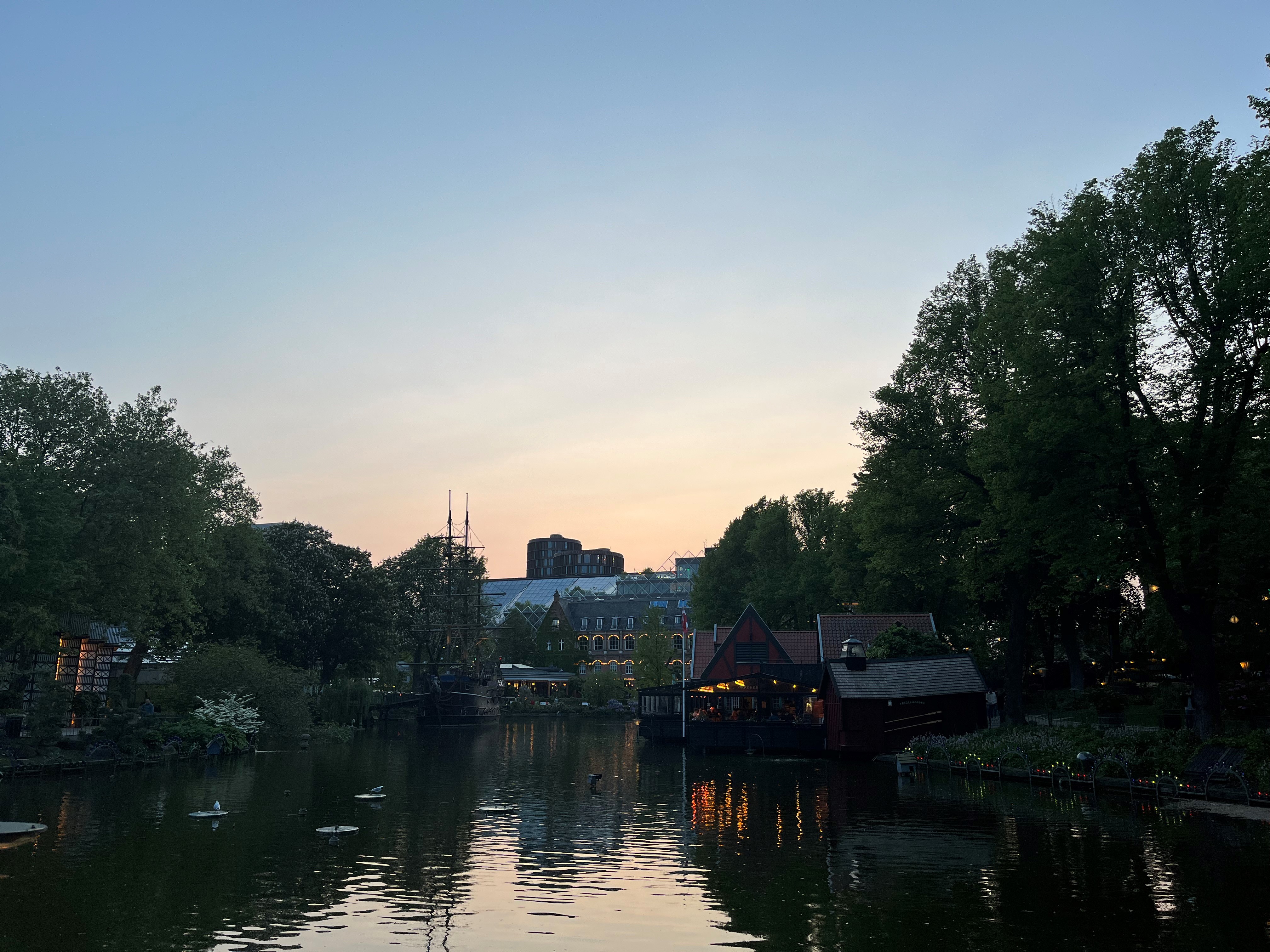
The Sun finally, definitely sets at half past nine, half an hour before the park closes for the night. Many of the stalls we walk past are shuttered and just as many of the rides are closed; only a few power on, determined to bring joy until the very end. Dennis and Charmaine go for one last ride on the flying swings (and then another, and then another, and then one more) before we decide to call it a day. But doing one last reluctant walk around Tivoli, we find ourselves stopping every twenty metres or so: every place we walked past during daytime has now been transformed, subsumed into an endless carnival of light. Every new scene we encounter takes our breath away; every new display a fresh enchantment on the senses.
But Tivoli saves its most breathtakingly gorgeous view for last. Heading up towards the exit, we pass the cobbled path which greeted us when we first entered the park — only now it’s a mesmerising wonderland, a truly radiant spectacle without compare. Bright halogens mix with neon as the street slopes upward, painting everything in its way with a soft, golden glow: the facades of the buildings, the leaves on the trees, even the faces of Charmaine, Dennis and I as we stand awestruck at the bottom of the incline. Archways and beams cross above our heads at angles all askance, yet somebody’s been thoughtful enough to string chains of lights upon them, so every single corner is lit up with gentle warmth. Even though everything around us is closed, the silence and the desolation only add to the seductive atmosphere — as if this place is ours and ours alone to discover. This is the kind of setting you’d only see in dreams or through the magic of the silver screen, yet all this is undeniably, stunningly, real.
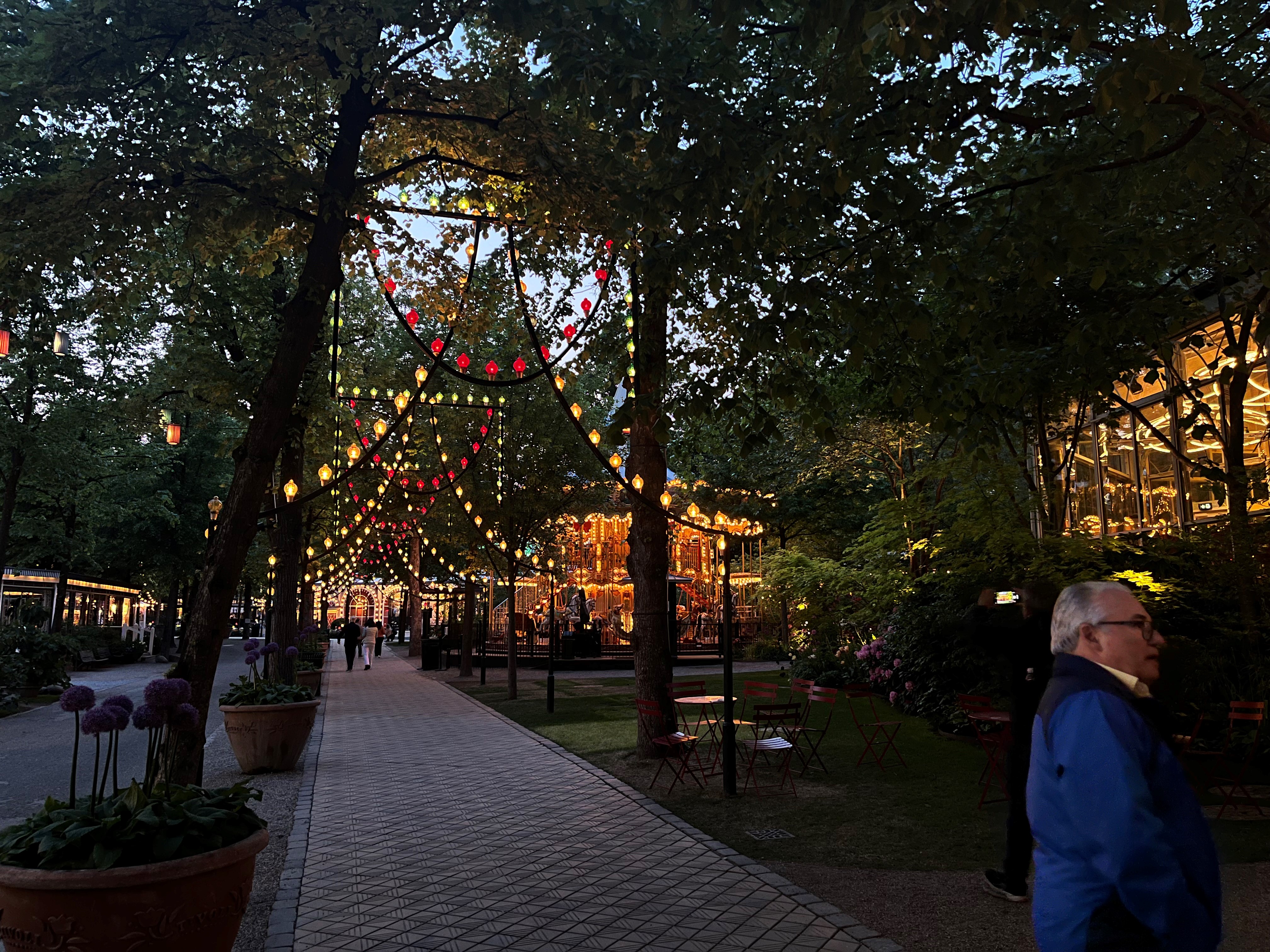


It’s already quarter past ten, and the three of us are the only visitors left in the park, but nobody takes one more step towards the exit. Nobody wants to break the spell, or be the first to leave. After all, when you find yourself in a perfect, intoxicating dreamworld, why would you ever want to take yourself out of it?

 Inkpot Shuffles in the Twilight