24 May
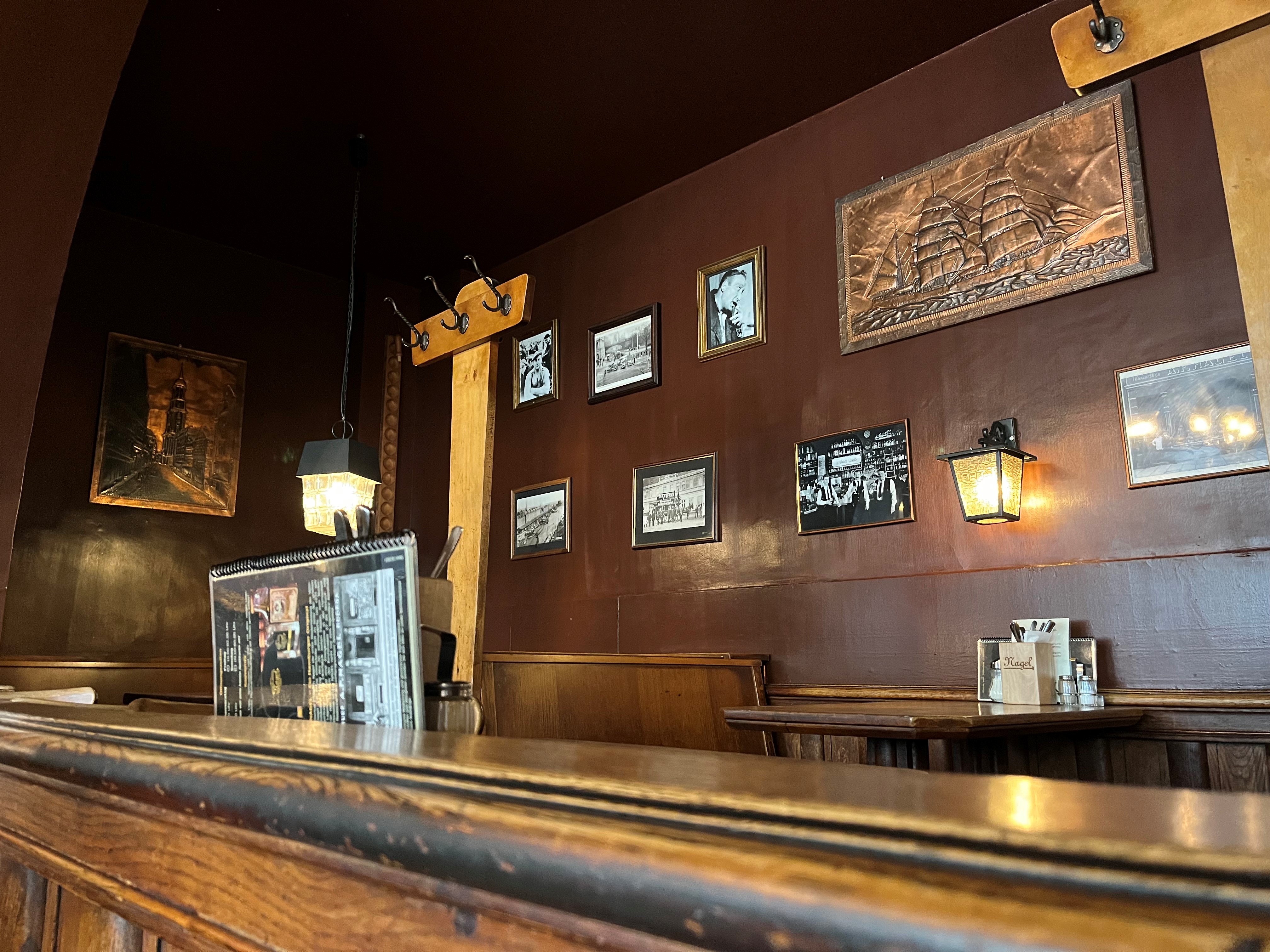
Barely have we entered Hamburg then it is time to get out of it again. All this travel has sapped our energy to no end, and so it is that we have our first meal of the day at 11:30, at a restaurant just across the street from the Hauptbahnhof. We can’t visit Germany without sampling some of the foods that the country is famous for, and this recommendation I swiped from a travel site just happened to be nearby; apparently it has been operating since 1926. It certainly feels historic — with high ceilings and a rustic wooden interior, it’s not a million miles from the beer hall that Dennis and I visited on our first day in Munich, lo those many years ago; that said the Nagel is a lot quieter and more intimate than the rowdy Hofbrauhaus, and the food takes significantly less than 45 minutes to arrive. (Maybe it’s because we’re the only three customers in the restaurant at this early hour. Not sure.)
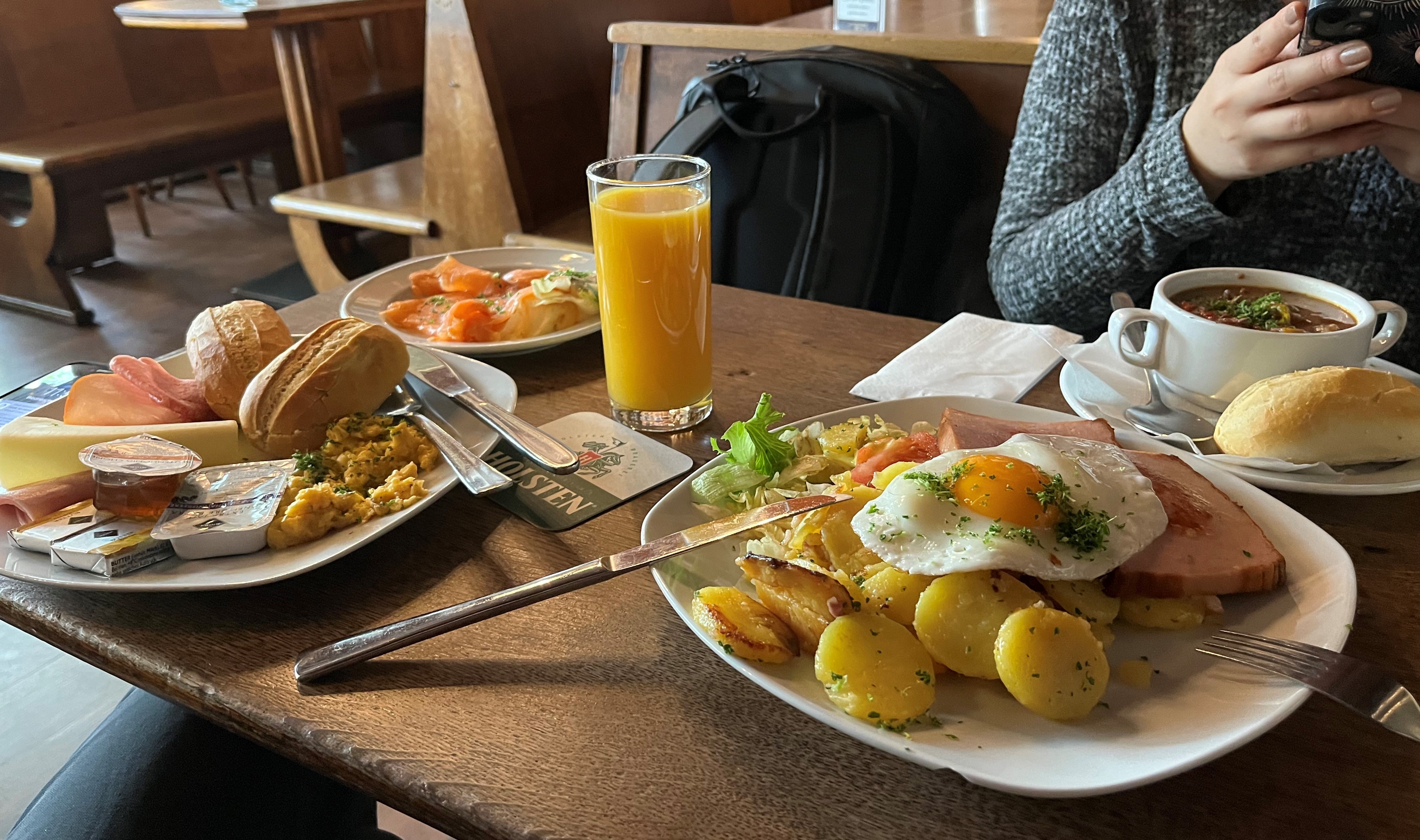
The food itself is wonderfully filling: I order a meat pie with roasted potatoes on the side, while Dennis opts for a medium breakfast (which despite the name is still enormous) and Charmaine goes for a stew/soup thingy that still looks like it could make for a decent lunch. Even though my brain is only half-awake and my fingers are once again numb from the cold, I still smile when I see our food spread out on the table, steaming hot and colourful; as if in agreement, Dennis tucks in heartily, despite the food in front of him emphatically not being pasta.

The restaurant’s soundtrack is a mix of Krautrock and British Invasion bands, and one very famous band in particular; this reminds me that I have one last place I have to visit before leaving Hamburg, and so we pay our bills and gingerly walk back out into the freezing cold. Say goodbye to Dennis and Charmaine (who in a twisted folie à deux are going to sit on sightseeing buses for the whole afternoon) and descend back into the tunnels of the S-Bahn network. Catch a westbound train, nervously looking out the window each stop to check that I haven’t gone past my intended station; get off at Reeperbahn station and look around for the right exit. Emerging into the light, I look around uncertainly for my destination; with so many buildings looking alike in Hamburg, finding your way is much more difficult than it sounds.
But finally I spot them: four steel silhouettes, standing in a circle, gleaming bright despite the overcast skies. With a spring in my step I enter the Beatles-Platz, named after four obscure musicians from a place called — ah, what the hell, you know who they are. If you know anything about popular music (and everybody does), you know who John, Paul, George and Ringo are; and almost as many people know that they got their start playing the underground clubs on the Reeperbahn, and especially the Grosse Freiheit which leads off it. There they played for two years, with occasional visits back to ol’ Blighty; stopping only to knife Pete Best in the back and replace him with Ringo, it was in the seedy bars of Hamburg that they became the best band in the world — a fact that the city council has been milking ever since.


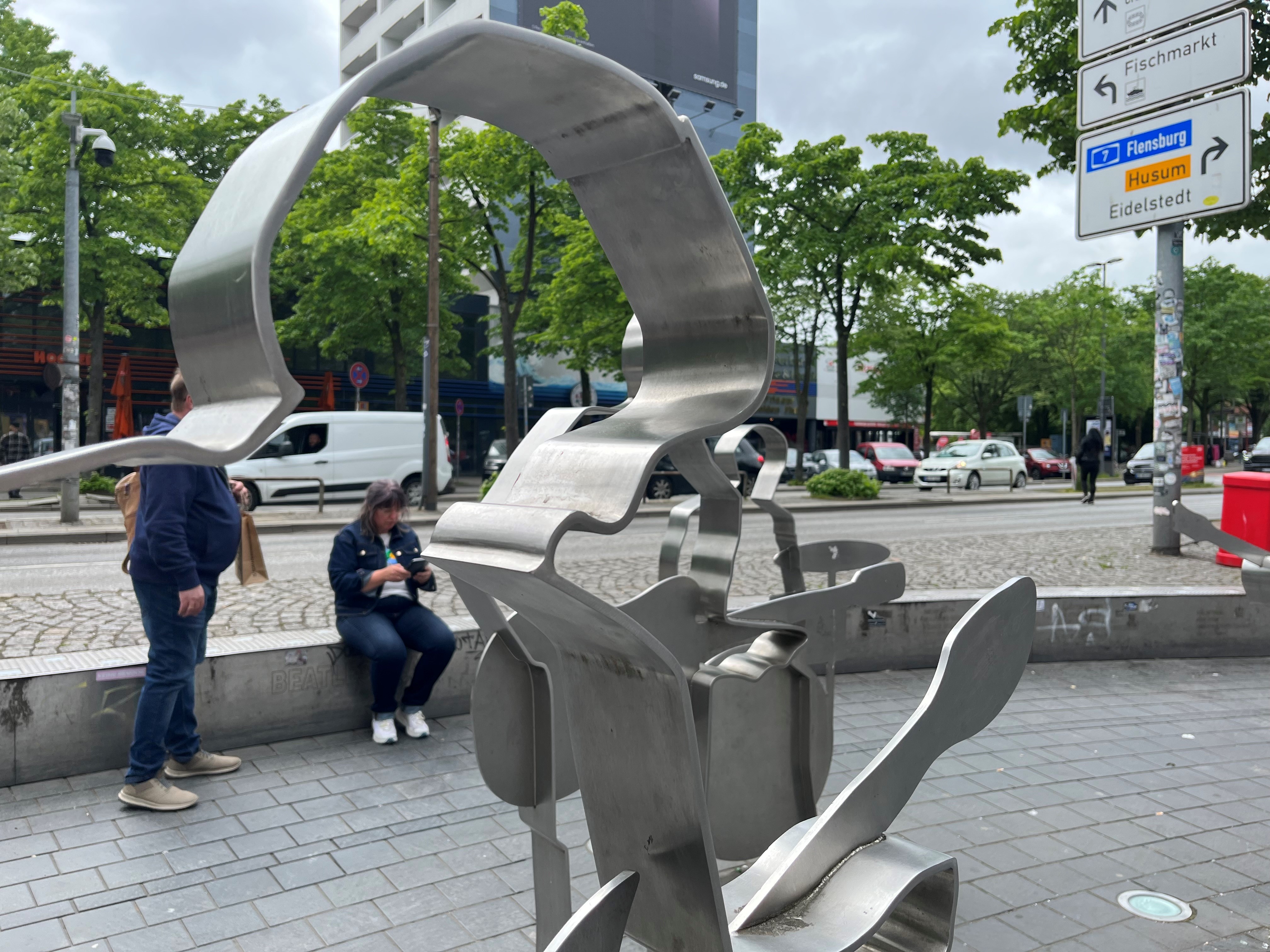

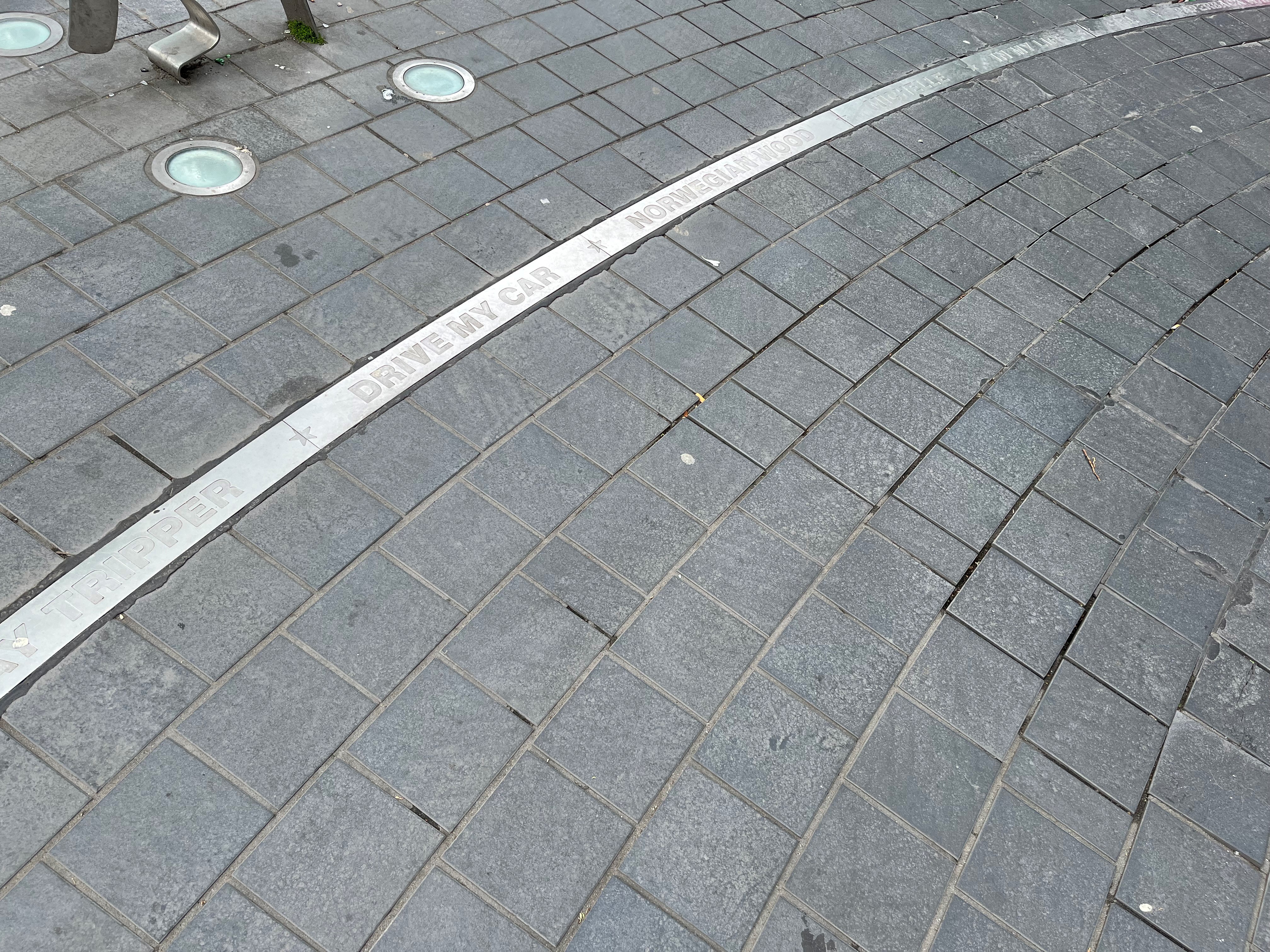
Hence here we find the forms of the four Beatles, concentrating on their instruments and determined to make a splash. (I note with interest the faint outline of vomit at the feet of Paul McCartney, which has been freshly cleared up.) A series of rings ripple outward from the four, with names of their hits etched into the ground (although the choices are a bit suspect — “Michelle” instead of “Nowhere Man”?); and the silhouette of the drummer has been tactically modelled to resemble both Pete and Ringo. The effect is diverting but not especially striking — it took me a while to distinguish which was which, and had I not known this place existed it could just as easily have been a tribute to Gerry and the Pacemakers, or even the Monkees. Nevertheless, it’s still a more-than-functional shrine, and even on this Tuesday lunchtime there are a few Beatlemaniacs like me wandering around, united by our love for the band and happily taking pictures for one another.
But of course rock groups aren’t the Grosse Freiheit’s only claim to fame: back when the Fab Four arrived in the early 60s, the street was notorious for its proliferation of sex shops and bars; although in recent years the Hamburg city government has made a couple of half-hearted attempts to clean up the Reeperbahn district, many of those businesses have remained, defiant to the Council and conservative mores. Looking down through the band into the Grosse Freiheit, no less than three signs for strip clubs greet the eye; cheeky but at least a decade out of mode, these signs are merely the tip of the iceberg for the industry that thrives on the Reeperbahn. This being half past twelve on a Tuesday, there isn’t much of a clientele around, but I still hear booming beats coming from one or two of them, and a few vagrants slump on tables outside the clubs, nursing an early drink and blankly staring into space while many a curious tourist files past. My Protestant upbringing kicks into overdrive at this point, but I still gaze for more than a moment or two at a couple of establishments, the windows of which have some truly fascinating tableaux: the one I remember most features a clothed mannequin, sitting with a sock in its hand and leering at a lingerie-clad compatriot; meanwhile a large, knitted cock-and-balls sits in front of both, smiling innocently at the outside world. And they say that children are too young to understand these things.


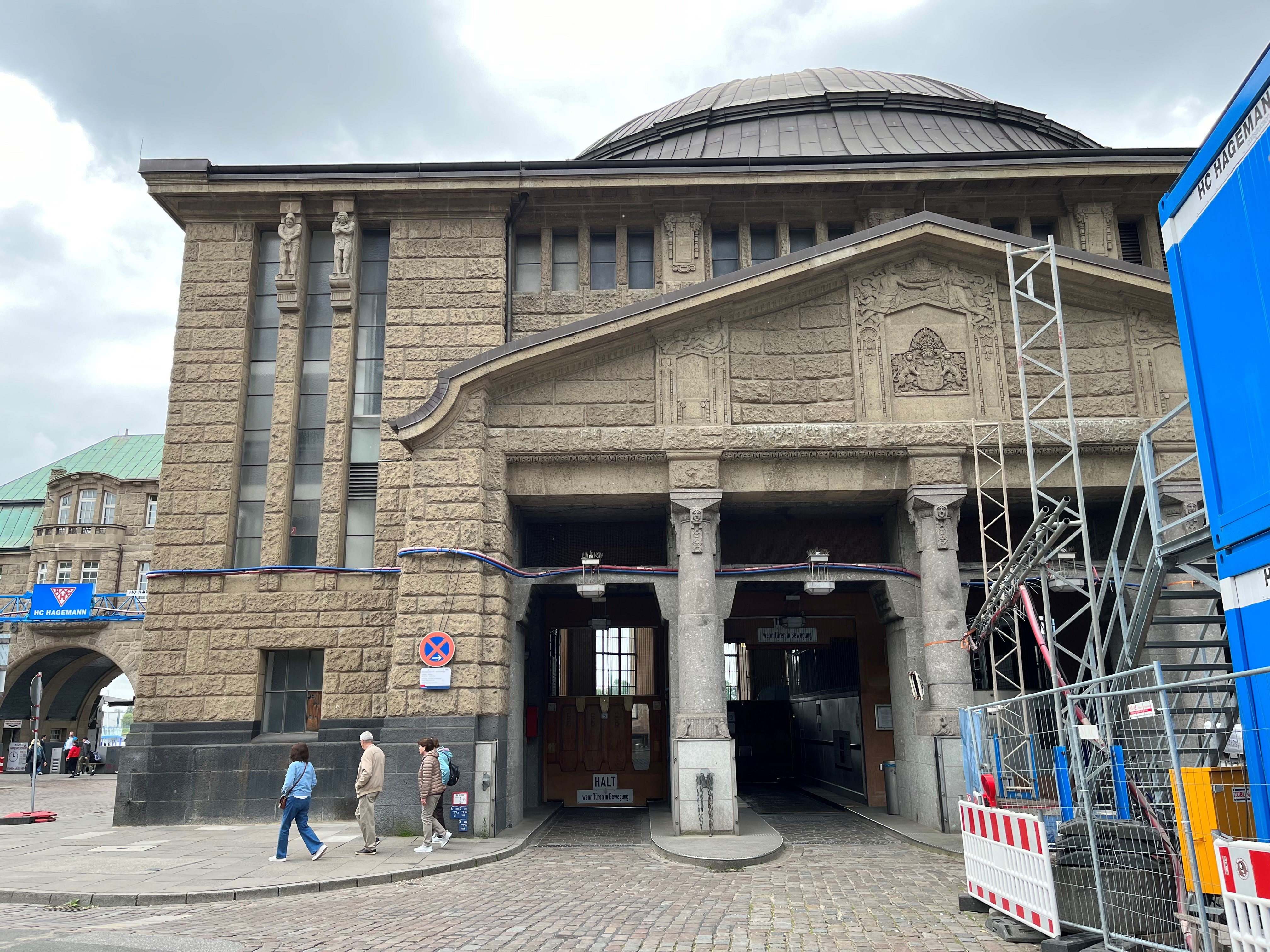
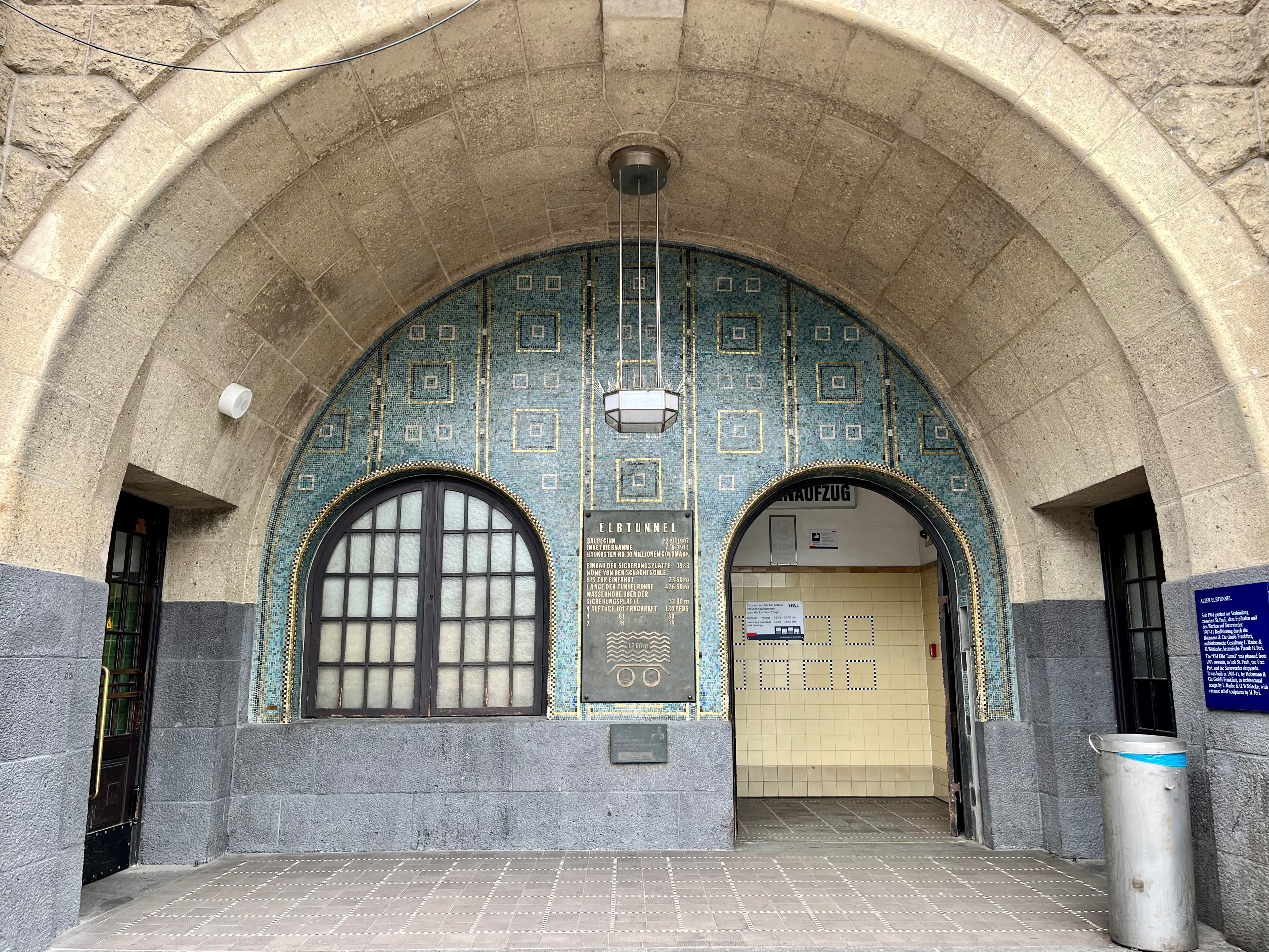
Eventually I leave the Reeperbahn and head down a side street that slopes steeply down to the banks of the Elbe. A short walk takes me to a large domed building, sitting on the waterfront. Its frontage is surrounded by scaffolding and other industrial accoutrements, but I still recognise the entrance to the St. Pauli Elbtunnel, the first tunnel built for both pedestrians and road traffic to burrow underneath the Elbe, and unquestionably the most visually impressive of them all. Its aesthetic pleasures are not immediately apparent to the eye — it looks incredible from the outside, of course, but then so too does every building on the Hamburg waterfront — and so I locate the pedestrian entrance, step inside to get a better look. The vistas are, to say the least, astounding.
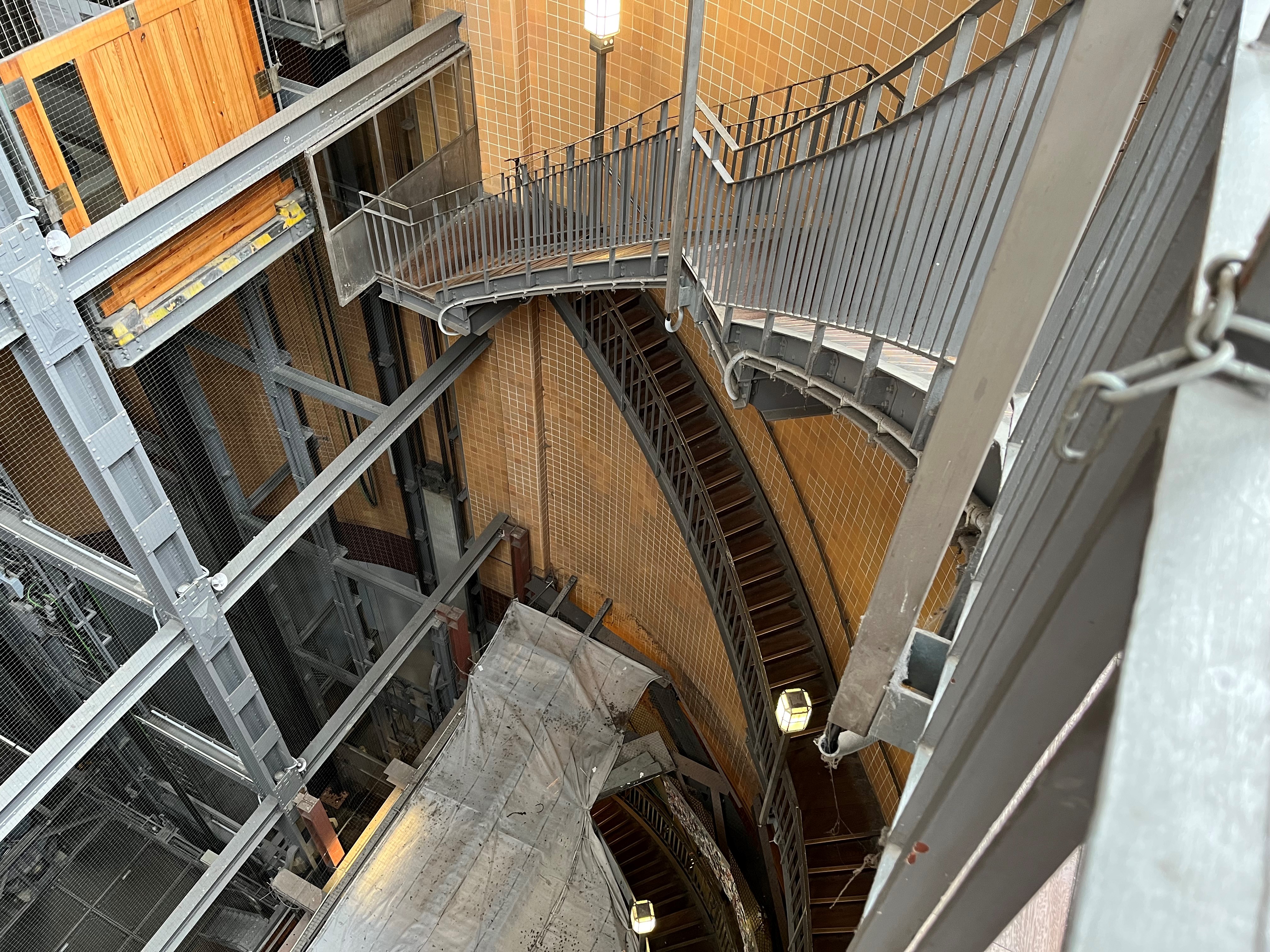
The first thought I have upon stepping in: “God, it’s like a cathedral”. Although there are no statues or angels or stained glass to speak of here, the feeling I get in the vestibule of the Elbtunnel is not dissimilar to the one I experienced when I stepped through the doors of St. Michael’s Church. Both have the same vastness of space, and both hit you with the same feelings of awe as you enter: here, ceramic tiles of salmon pink and sandy brown curve in a semicircle, broken only by the diagonals made by the staircases leading down; they surround a cavernous space, interrupted only by a colossal set of lifts that transport cars and bicycles and construction material down into the murky gloom. All this, concealed behind an ordinary set of doors; it is impossible to walk in, and not marvel at the implausibility of it all. The further I step into this sanctuary, the more my wonder grows: every sound is once more amplified, but this time it’s the roar of machinery instead of people, the creak of the wooden, 110-year-old staircase as you descend into the depths, bouncing off every surface. Pottery and steel have replaced masonry and glass in this steampunk cathedral, but I still sense an aura of might in here — of humankind, in one of its rare triumphs against nature.


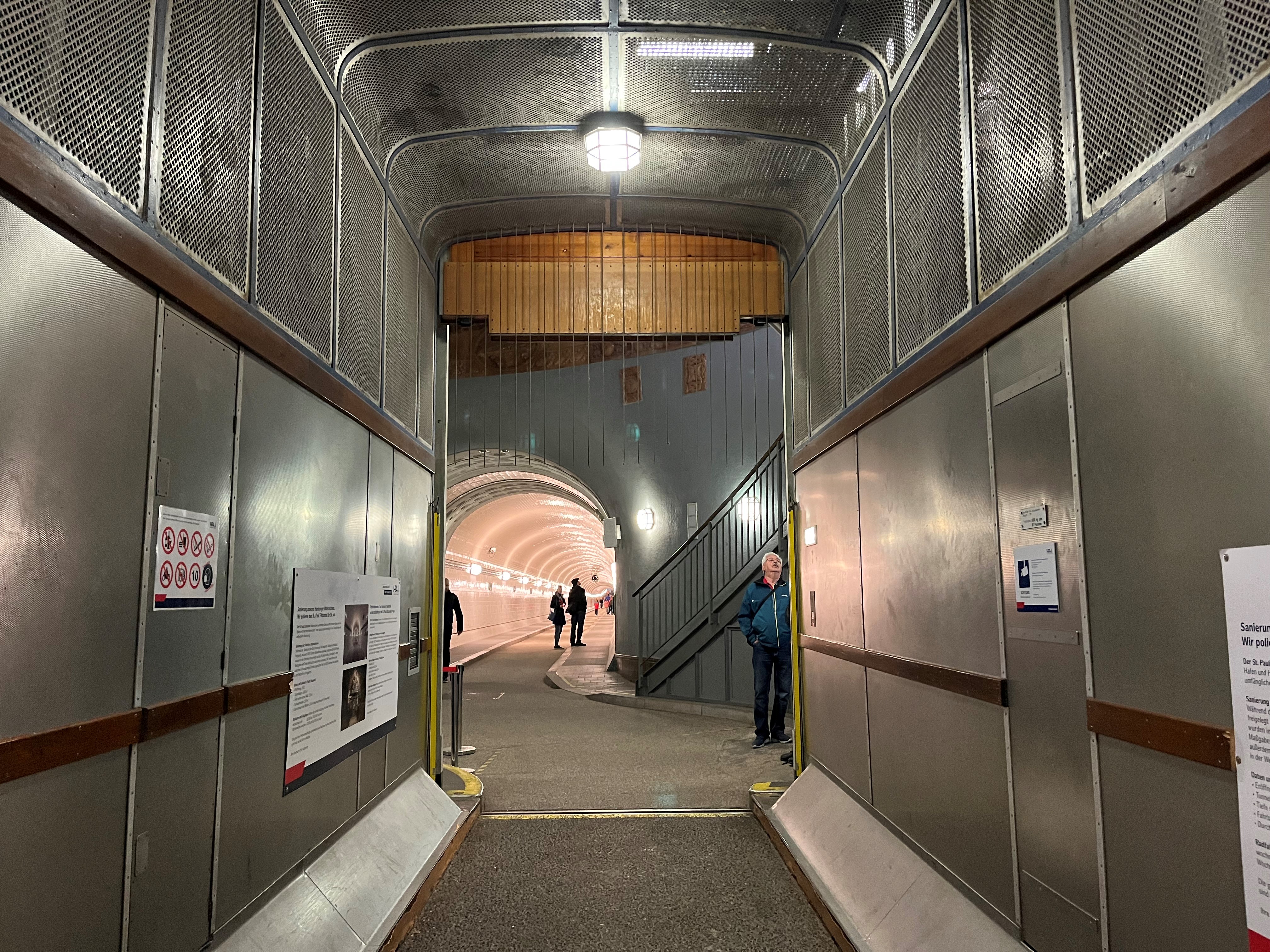
As I step onto the floor of the Elbtunnel. I look back the way I came, to that entrance hidden somewhere way up above those rafters. There’s a bit of warmth down here, brought down by the sunlight that streams past the iron lift shafts, but that all disappears once I leave the rough concrete of the entry portal, and step inside the tunnel itself. It’s cool in here, but deliciously so, a refreshing cold breeze rather than a blast of frigid air, and a jolt of energy runs through my body as I look across to the other side. An almost perfect cylinder of cream and white tiles stretch into the distance, punctuated every now and then by a stone arch or a bright lamp; although the latter is almost blinding in its luminosity, the intervals still feel somewhat gloomy and dark. Indeed, shadows form behind pedestrians as they plod along the sidewalks, their footsteps and chatter echoed and amplified and melding into one large block of sound, rising and falling in waves as you progress through the tube.
I step off the sidewalk and take a photo of this mechanical miracle, then almost immediately have to leap back on as bicycles and cars bear down on me. Even after a century of operation, and despite the presence of better transport links, there are still vehicles using this as a transport link across the Elbe. These fat little saloons skirt the pavement as they pass through, and very odd these modern machines look against the whole antiquity of the surroundings. I’ve seen loads of evidence that Hamburg is a city of clashes between the old and the new, yet the Elbtunnel is the pinnacle of them all, a place where the 21st century casually blunders into the previous’ territory — and looking at the whole scene before me, a place where it all seems to work together just fine.


As the afternoon wears on and the clouds roll by, I emerge out of the tunnel and walk down the Landungsbrücken, Hamburg’s collection of piers dotting the waterfront from here to the Elbphilharmonie. Here ships plying all manners of trade line the water’s edge, with frazzled, chattering tourists rushing onto one boat or another while the seabirds gaze nonchalantly from the cupolas of the stone buildings, occasionally swooping down to strafe unsuspecting tourists. All kinds of seafood are being sold here, fresh from the North Sea, and I recall Dennis’ gushings about this area from the day before. Tempted to visit one of the stalls and try out a Fischbrötchen, a sandwich made with a HUGE fillet of fish and onions — but brunch being just 90 minutes past I decide to keep walking instead.
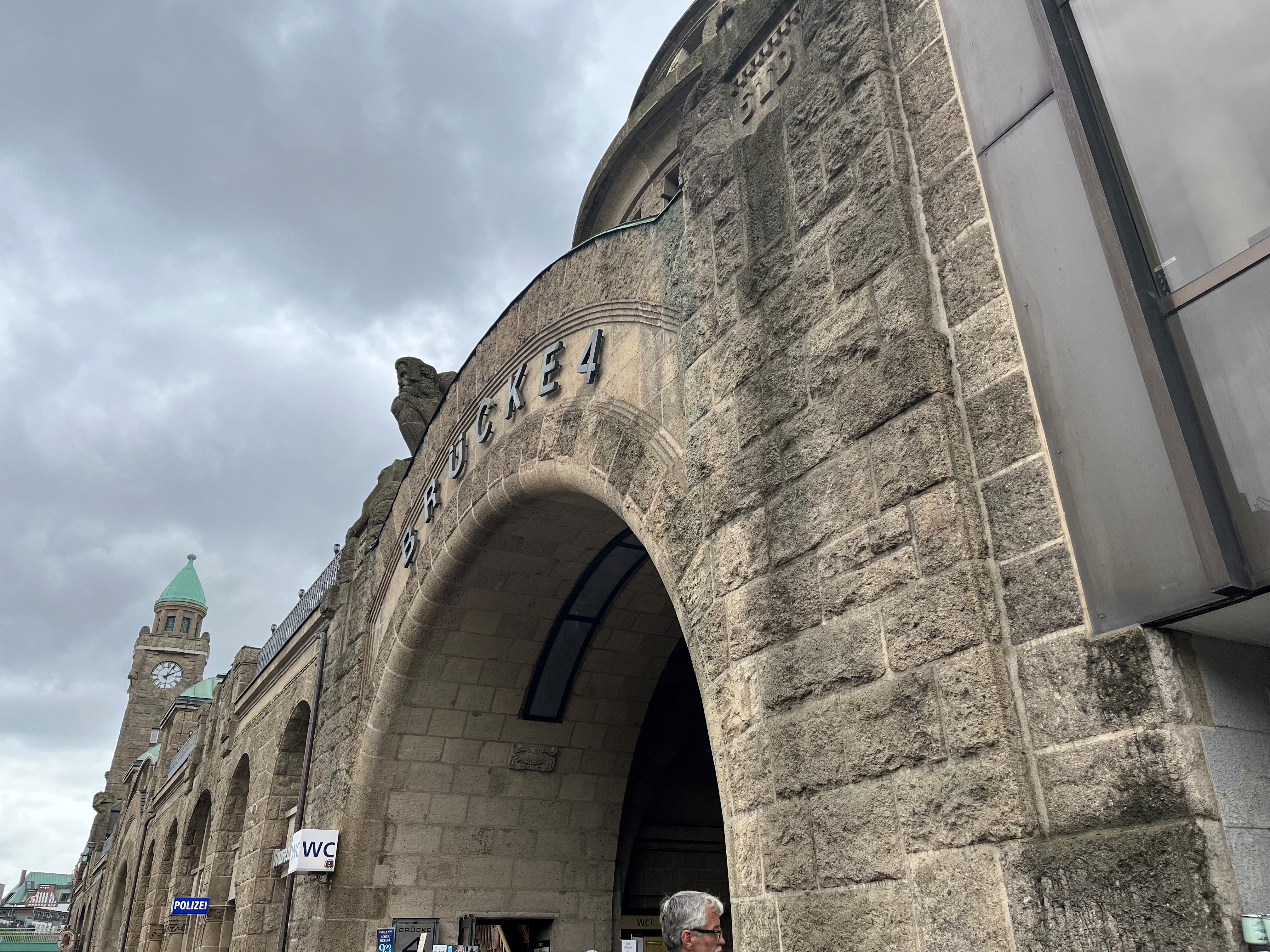


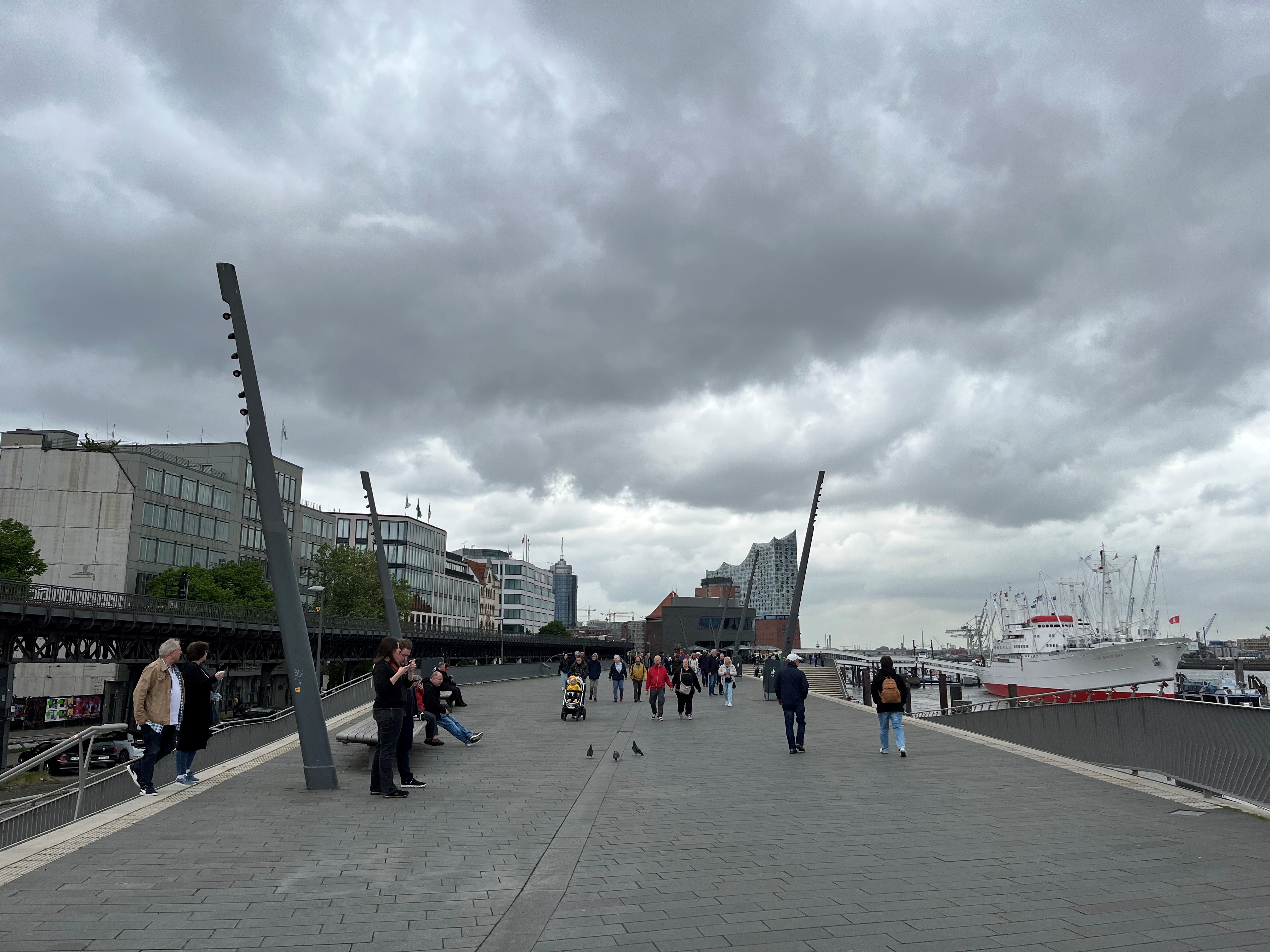
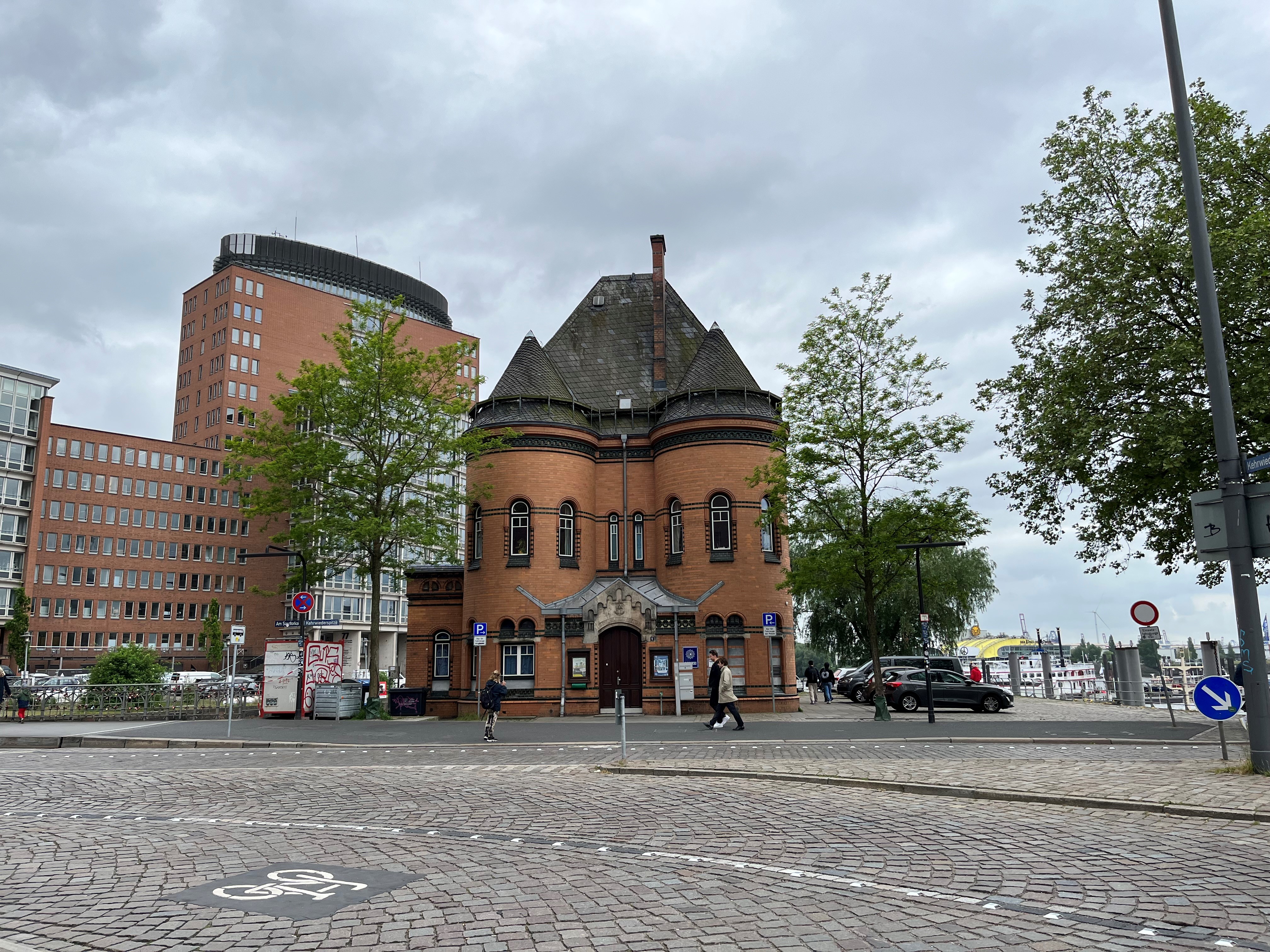
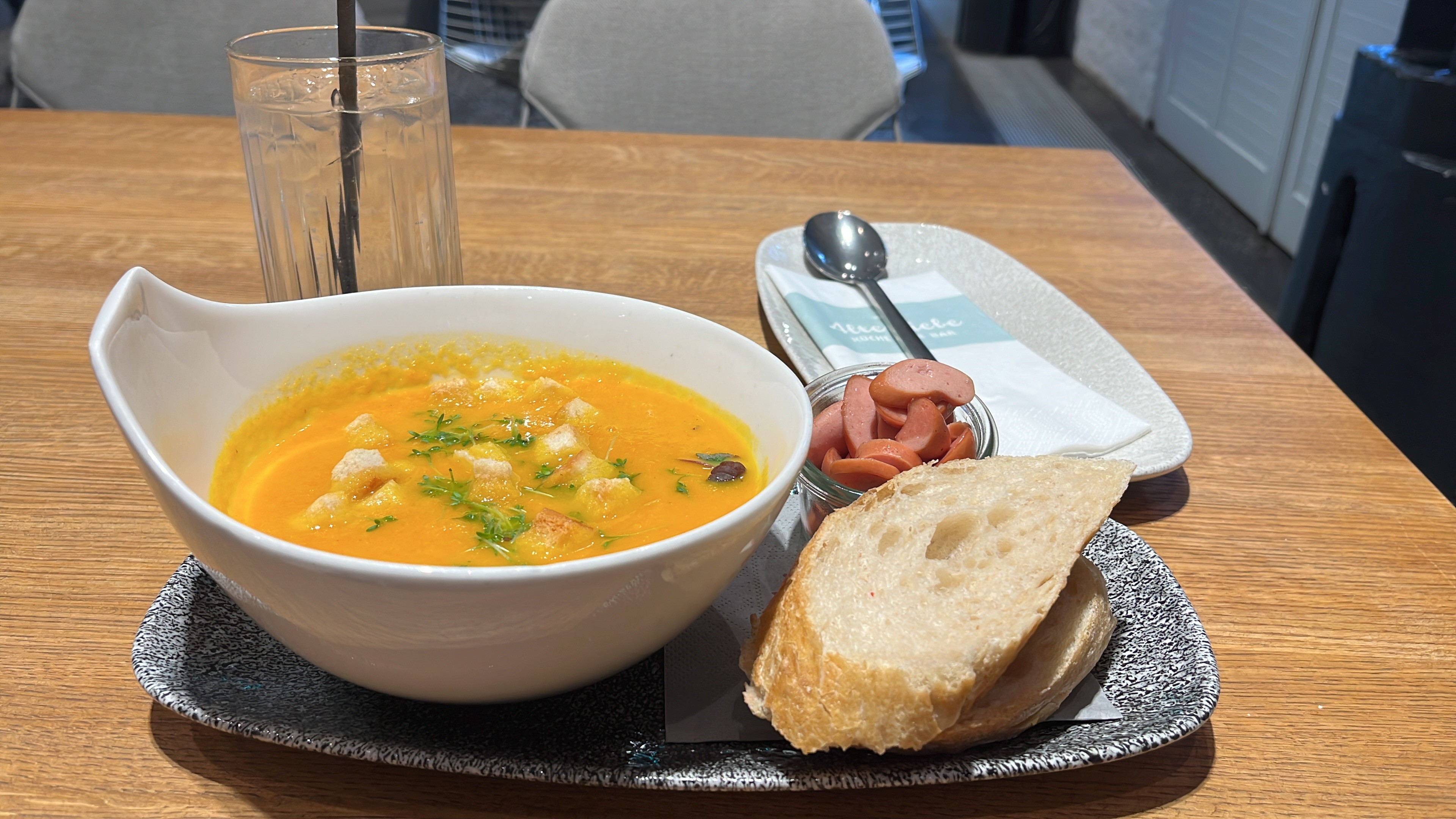
Cross the bridge and head back into the Speicherstadt; although the Elbphilharmonie is delightful as ever, I try to focus on the surroundings instead this time: the canals, the architecture of the warehouses, and the tourists running back and forth on the streets. The streets here are all named after cities around the world, as a way of commemorating the city’s rich maritime heritage; thus it is with some bemusement that I spot names such as “Singapurstrasse”, “Osakaallee” and “Busanbrücke”. (Given how it’s 13°C right now, their tropicality seems faintly ridiculous.) At the end of the last one I come across the International Maritime Museum, which is NINE FLOORS HIGH and boasts a staggering collection of items and materials from all around the world, a testament to the breadth and depth of our nautical culture. Unfortunately I haven’t really got the time to go through that impressive collection — my train leaves in two hours — so I duck into the café instead, where the palest man I have ever seen in my entire life genially takes my order for stew and sliced sausage.
The pumpkin stew that arrives is delectable but has the temperature and consistency of fresh lava, so while waiting for it to cool I start thinking about my time in Hamburg. Unlike Vienna or all the cities I’ve described before it, my time in the second-largest city in Germany has been short — it’s mind-boggling to think that I only arrived thirty hours ago. And perhaps it’s because of this very reason, perhaps it’s because I’m still buzzing from the thrill of discovering a whole new city, that I don’t have a complex, love-hate relationship with it like I did with the Central European cities. When I picked Hamburg I’d envisioned it as nothing more than a stopover — one version of our plans would have seen us leave for our next destination that same afternoon. Sure, this stopover catered to almost all of my interests (sea! Railways! 60s Merseybeat bands!) but I figured there wouldn’t be much else to see here. There was certainly not much here that would suggest an adventure.



But relaxing in the comfy, warm café of the International Maritime Museum, I find myself liking this German city like no other before. It’s not frigid like Munich, nor excessively chaotic like Berlin; instead, it sits somewhere in between — warm in the face of the cold north wind, quirky despite its austere appearance, and as modern as 1200 years of history can be. There’s a sense of unpredictability lurking in these streets, but not so much that the less adventurous tourist will feel startled or alienated. Most of the discoveries one can make in this place are pleasant: the unexpected street-names of the Speicherstadt, for instance, or Überseequartier station and its oceanic aesthetics. Perhaps if I stayed here for another day or two I’d find things to nitpick about it: maybe the constant freezing weather or the rich Hamburger food (heh) would prove too much. But those concerns haven’t had the chance to surface yet, and that can only be a good thing. Writing all this four months later, I still find myself missing my visions of that charming, well-balanced city somewhat; maybe, just maybe, I’ll come back someday for another visit.
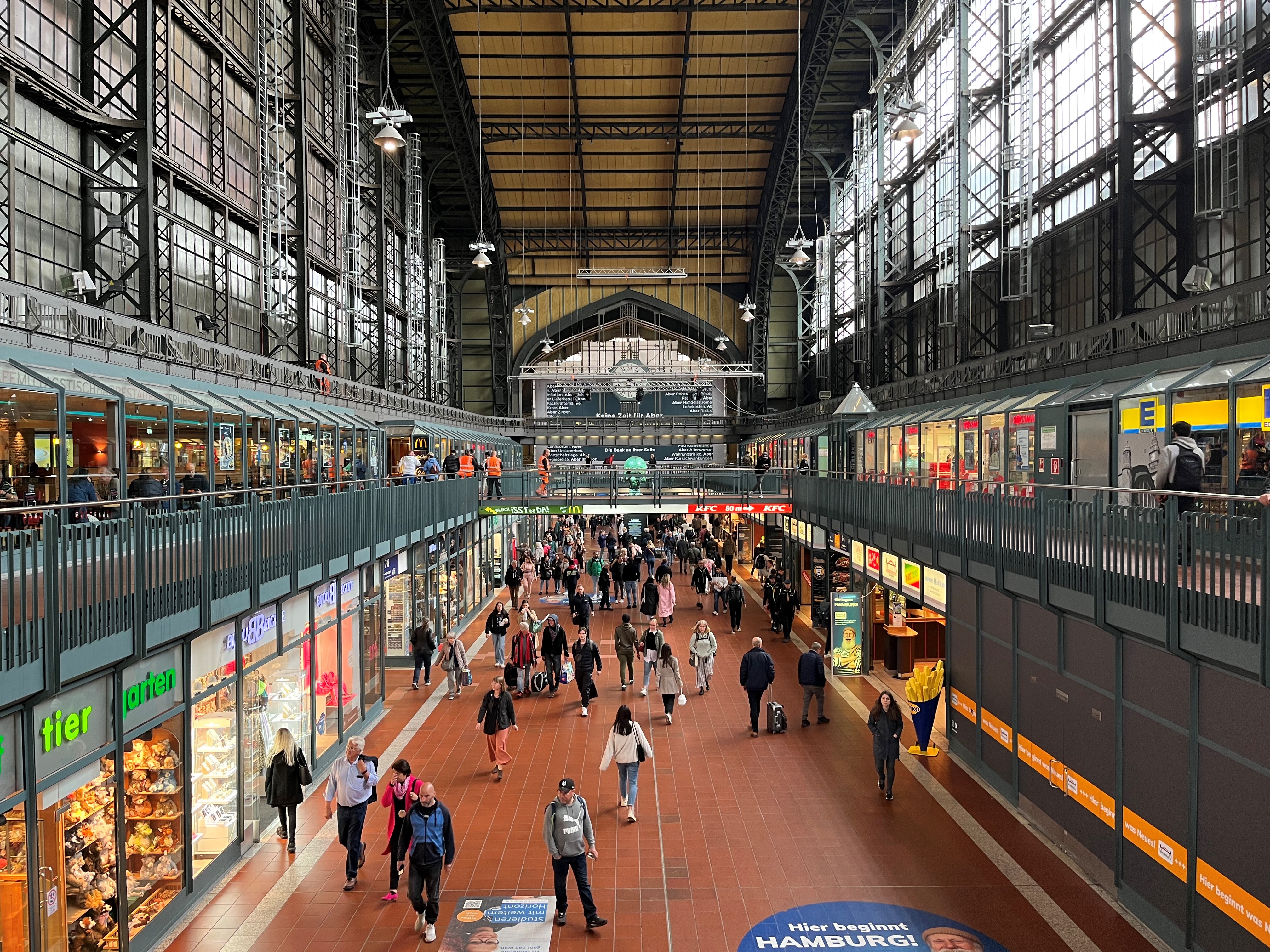
Meet Charmaine in the halls of Hamburg Hauptbahnhof. Although we passed through this place early yesterday morning (can it really be only yesterday?), this is my first real look at Hamburg’s main train station, and like so many things in Germany, it is another enormous affair: arching roofs thirty feet high, gargantuan panes of grimy glass, and enough tracks to keep a steelworks busy all year long. In this mess of steel and humanity one can find supermarkets, pharmacies, eateries, and other stores in the plural form. At the centre of all this, high up in the station arcade poetically called the Wandelhalle, there stands a statue of Atlas, the whole world heavy on his shoulders. It certainly provides a nice mirror image to two weary travellers.
Our train doesn’t leave for another 45 minutes, but we’re here early because our next ride is five hours long and has zero restaurant cars; the skill of skipping meals not being in my repertoire, I’ve decided that we should buy some dinner to eat on the way. The question is what to buy: the plethora of choices in the arcade confound rather than excite, and most of them seem to offer local delicacies neither of us are intrepid enough to bring on a long train journey. Eventually I settle for the comforts of beef and chow mein, and turn around — only to find that Charmaine has disappeared into thin air. Try not to panic and jump to the conclusion that she’s been abducted by some scary German gang, but only when I see her at the opposite end of the luggage hall, obliviously collecting her suitcase, do I realise how loud and shrill my inner monologue had gotten…
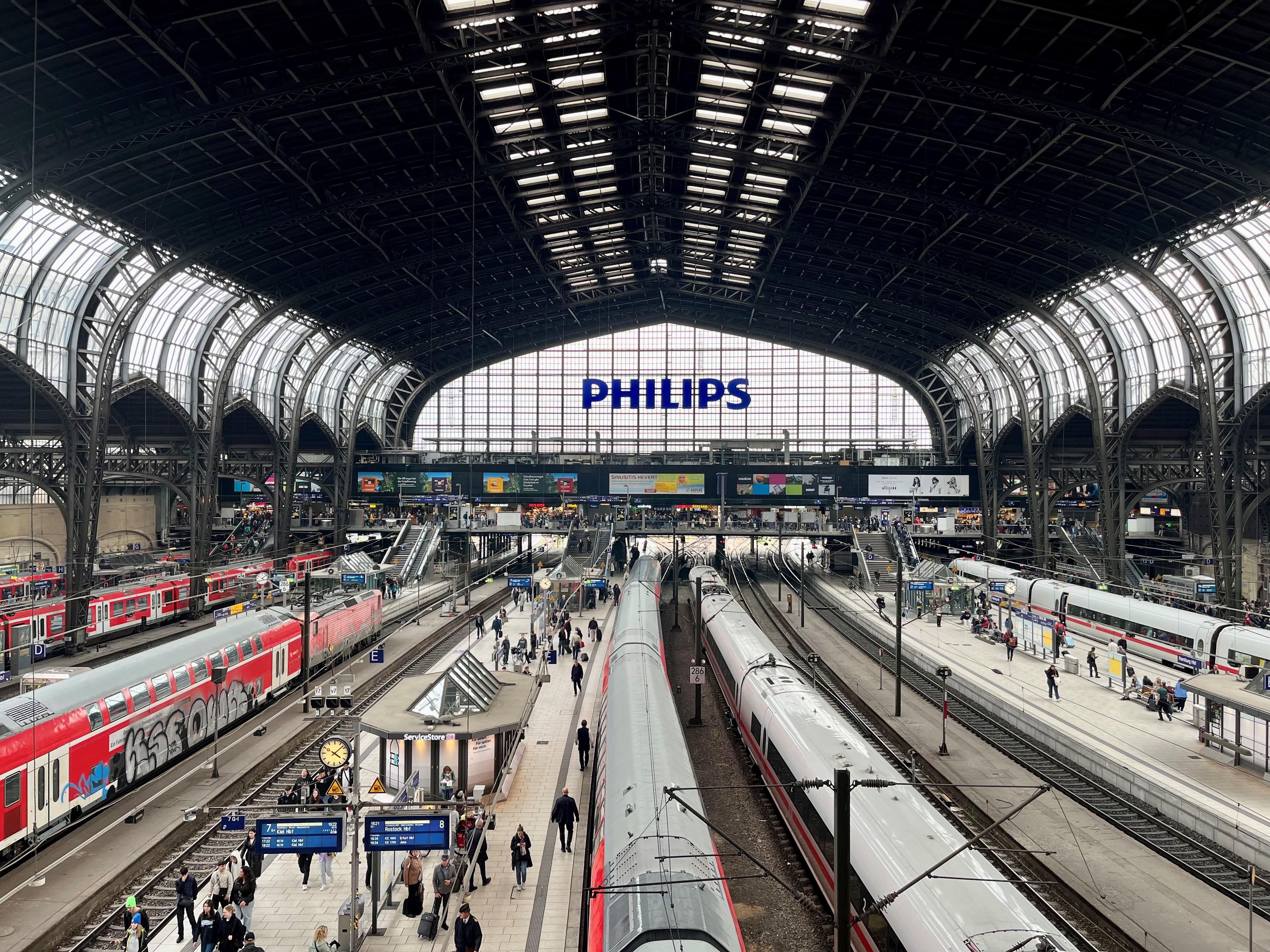

Quarter to five. The three of us stand in the shadow of an escalator, the cold north wind pummelling our frail bodies once more. More than any other moment on this trip so far, uncertainty fills the air; none of us, not Dennis, not Charmaine and not even me, really know what to expect from here on — and unlike our little Slovak incursion, this time we cannot simply retreat into familiar territory. My feet shuffle with uncertainty, or maybe it’s anticipation, but even so I feel the adrenaline rising once more as a squat little locomotive hurtles its way onto the track at platform 8, and the display boards above us proudly announce the arrival of the 16:54 to Copenhagen.
The arrival of the Copenhagen train is a great event. As soon as it comes to a halt, hordes of people who we’d previously never noticed suddenly appear, swarming the train like wasps on an unsuspecting picnic group. The trouble with all these new people is that you get disoriented by them very easily: having battled the crowds through half a carriage, we find a free space and sit down, only to be politely told by a bearded, British-accented gentleman that we’re in his seat, after which long and puzzled negotiations ensue in which nobody is really sure where anybody else is supposed to be, and the word “sorry” is liberally thrown around. During this time, unnoticed by anybody, the train slides out of the station and begins its long journey north. By the time the conductor has found us our seats (three carriages down!) next to a Danish man of few words and even fewer facial expressions, the dense houses of Hamburg are already beginning to recede from view, replaced by the low hills of Schleswig-Holstein.
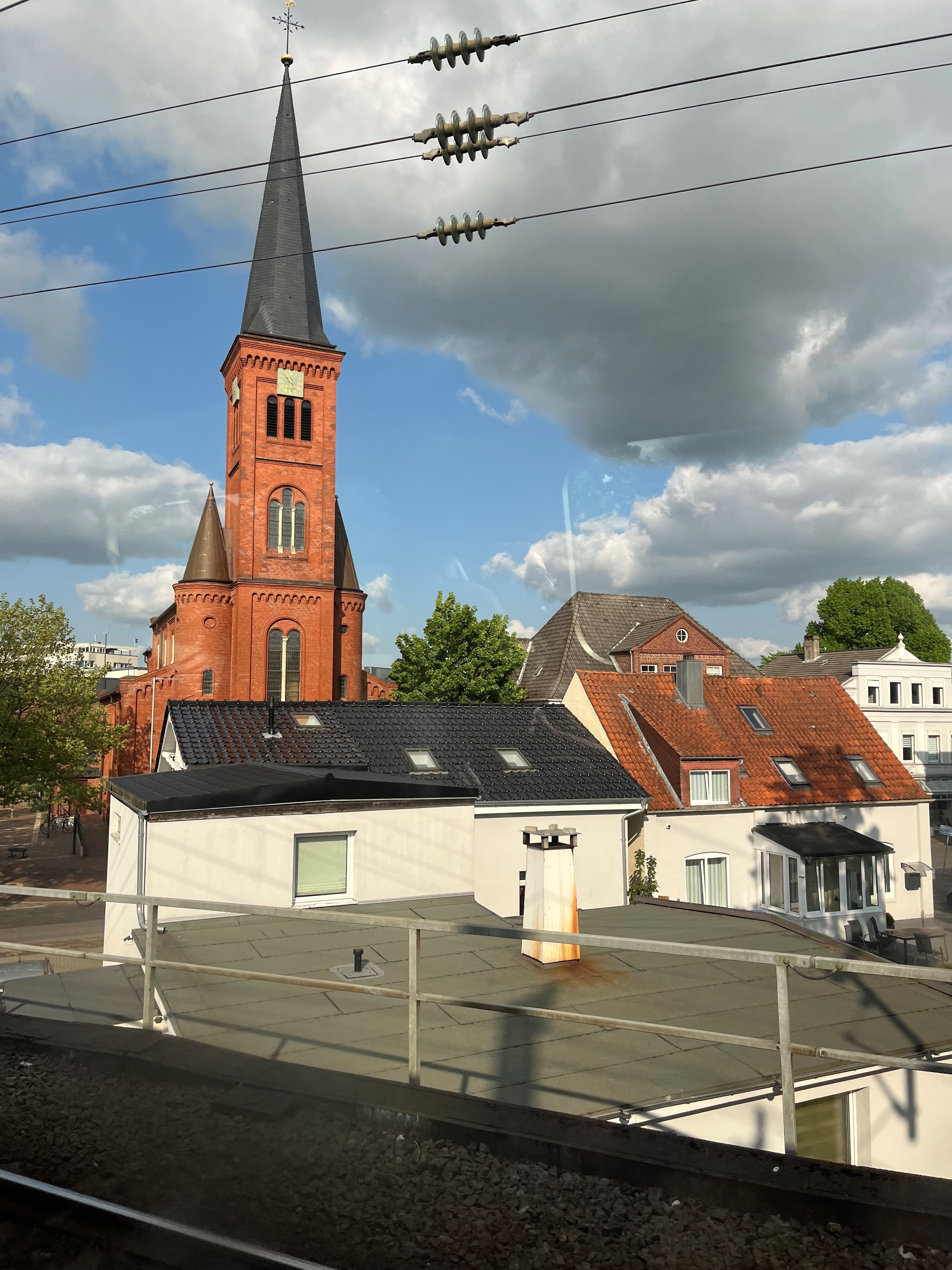
At first, the northern part of Germany doesn’t seem much different from the south: gentle rises in the landscape, dense foliage and wind turbines fill the horizon, interrupted by the occasional settlement that don’t seem much different from what we’ve just left behind. As our train dashes through the town of Neumünster, for instance, I catch a row of old buildings that wouldn’t look out of place back in Hamburg, all in shades of concrete grey or earth-brick brown, and all tightly packed together. People mill about in the streets, but there aren’t many of them, even near the centre of town, and Neumünster already seems to be winding down for the night at quarter to six. (As if to highlight the paucity of things to do in town, a banner strung across the street says “Neumünster: City. Sex. Kino”.)


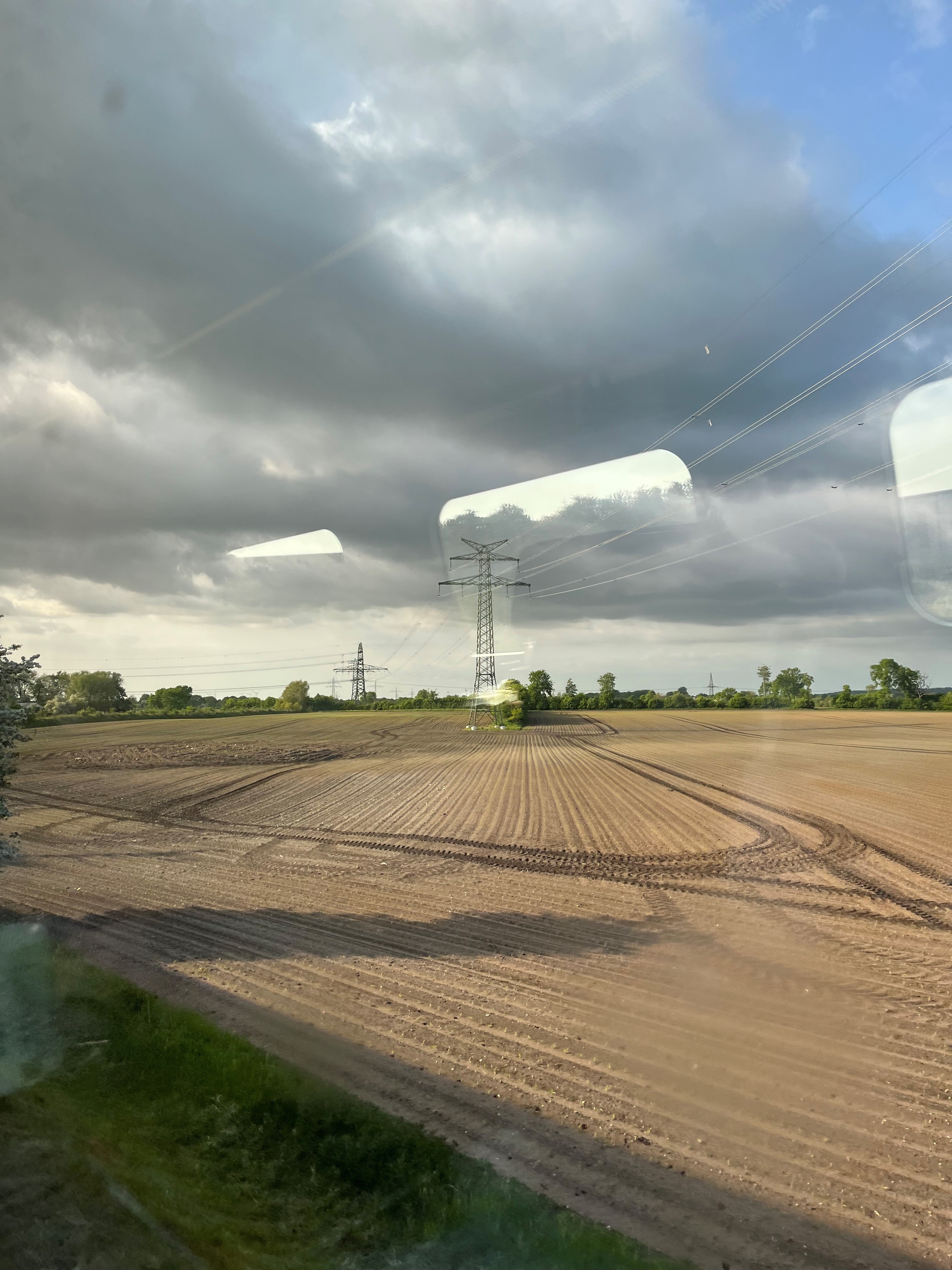
But as we near the border, a gradual, almost imperceptible shift begins to take place: the overcast weather finally gives way to warm sunshine, and the natural landscape, only moderately hilly to begin with, flattens even further into endless fields, across which cows (mostly white with speckled brown, but also the other way round) obliviously wander. Human habitation intrudes less and less into the view outside; even when we do spy a town or two, the houses are all detached from one another, surrounding a quaint little church or some other antiquated building. It’s all becoming more and more understated, a far cry from the Teutonic maximalism we’ve become acquainted with over the past couple of days.

Cross the Danish border just before seven o’clock. Our train grinds to a halt and border guards enter our compartment. Briefly worry that they’ll have somehow figured out our nefarious plans to plunder their fish reserves, but as it turns out our passports get barely a glance from the guards; it is our Danish compatriot who gets more scrutiny than all three of us combined. Any lingering anxieties that this might be an unfriendly country are dispelled at the next stop at Kolding, where many of our fellow passengers disembark and, despite a delay of twenty minutes, alight to a chorus of expectant shouts from gathered friends and family. They greet each other with the warmest of hugs, holding onto each other for what seems like an eternity. None of us have seen anything like this before, not even in Austria or Germany, and I realise that Denmark is going to be a whole new ballgame.
It’s not just the people that have changed, though — the views, too, seem to become distinctly Nordic. The gradual transition that started somewhere in Schleswig-Holstein is suddenly complete: the buildings seem so much more colourful, painted in pastel shades; graffiti is a little more prevalent here than it is in Germany, but nothing that might indicate serious neglect or urban decay. Meanwhile the landscape softens even further, aided by a sunset that seems to just keep on setting: the sky has been stubbornly blue with streaks of gold for the past two hours, and only around quarter to nine does it reluctantly change to pink and a slightly deeper orange; the sea, meanwhile, seems to be constantly in view, no more than a stone’s throw away from the train tracks regardless of where in Denmark we happen to be.
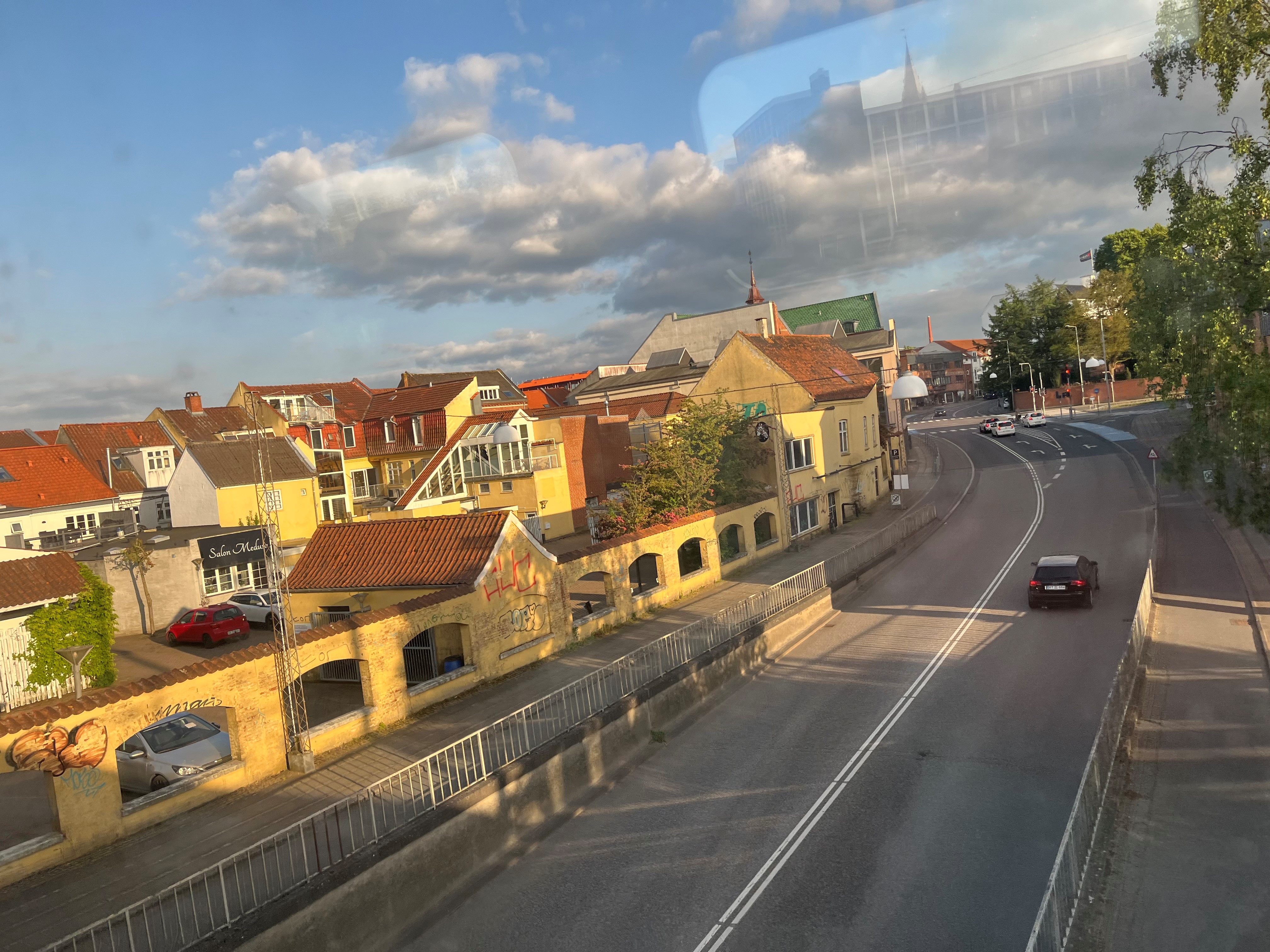
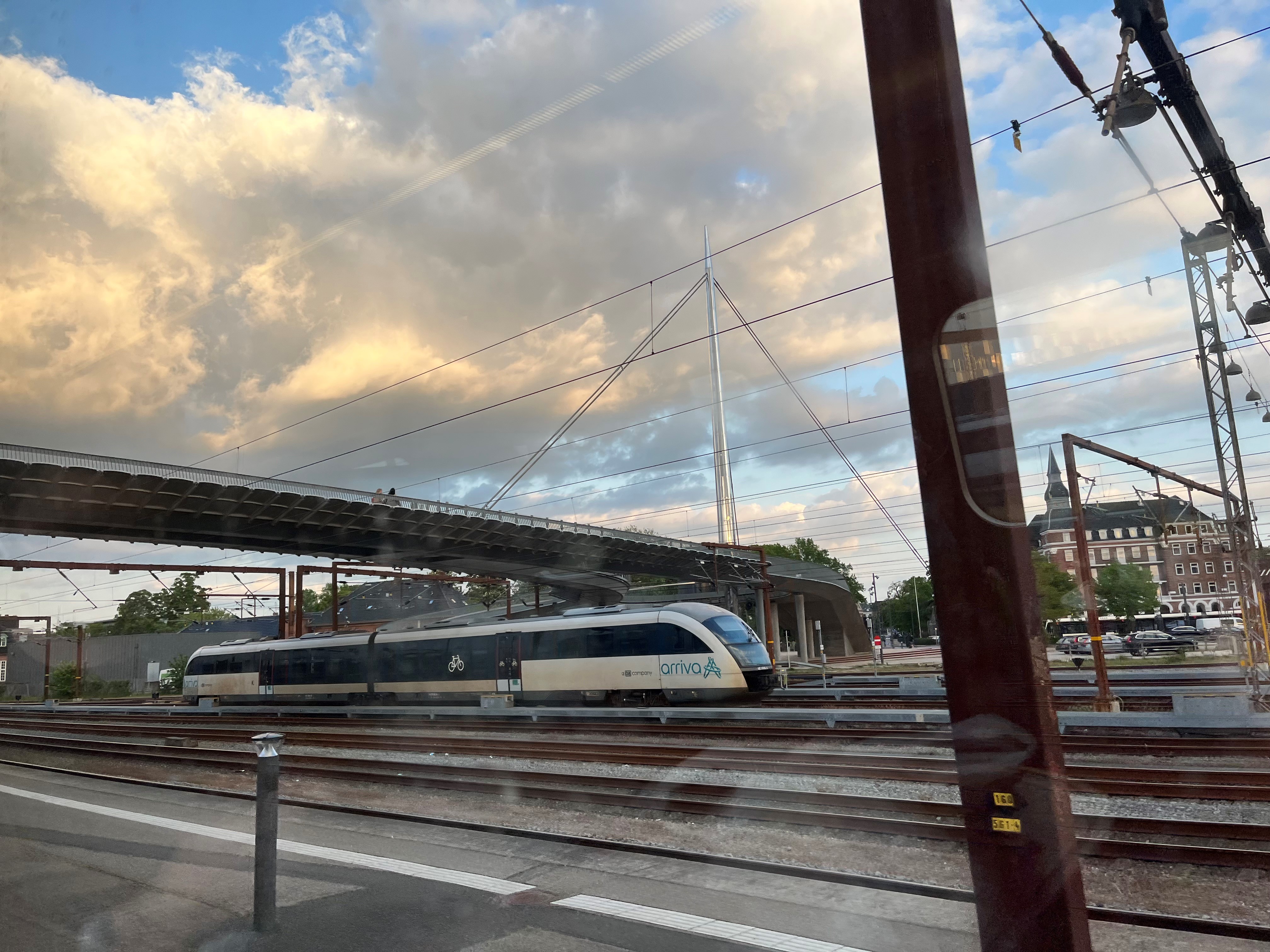
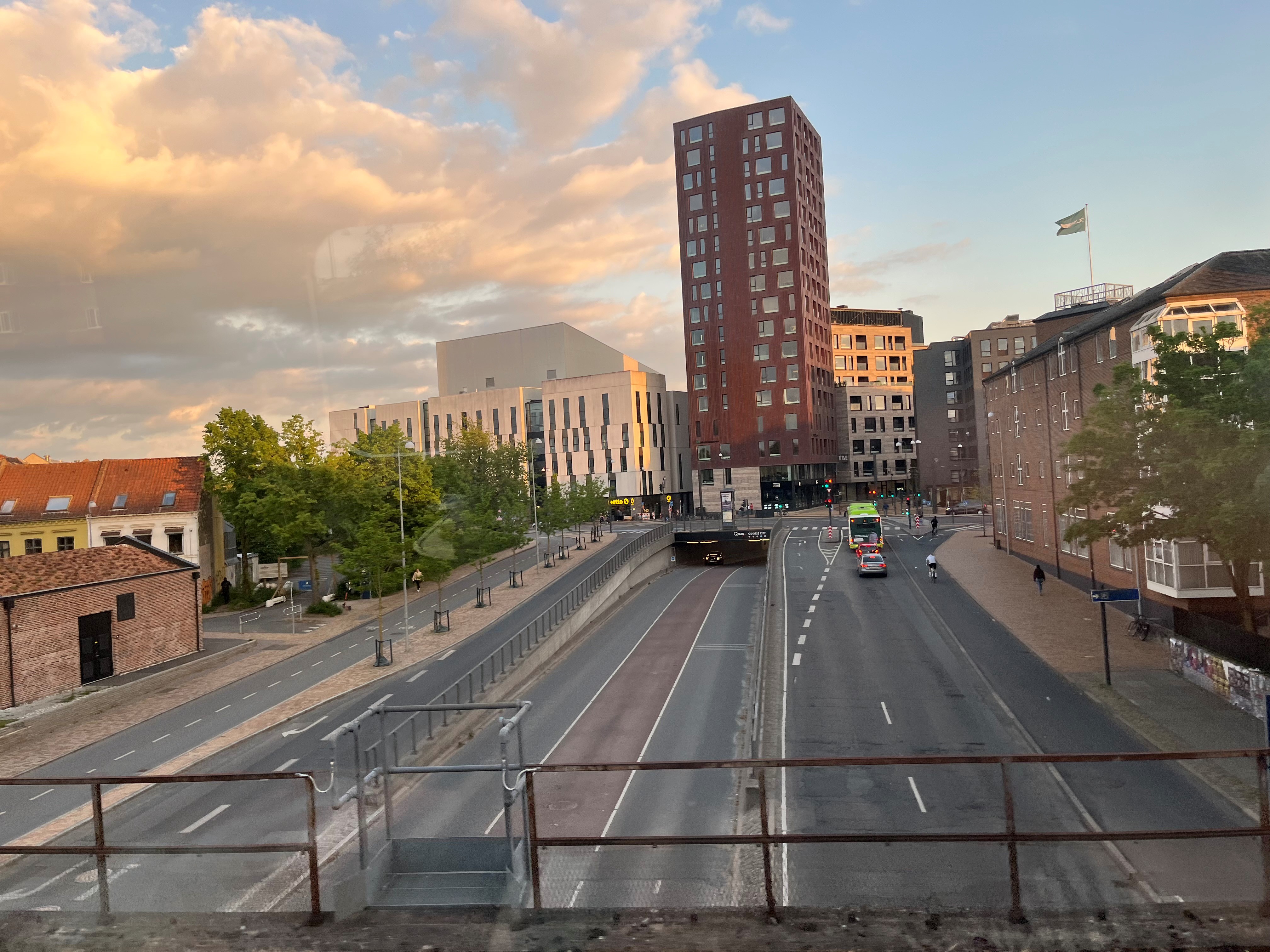
All this culminates in the great event of the trip, shortly after we leave Nyborg station: the train accelerates as it rounds a curve, the foliage disappears from view, and suddenly there is nothing around us but water and sky. We are crossing the Great Belt Bridge, one of the world’s longest suspension bridges, and home to the best sunset I’ve seen on this trip. No, seriously, this is the one: an intoxicating smudge of the most intense orange marks the sun’s position on the far edge of the waters, while cumulus clouds alternately cover and reflect its last rays; this dash of colour contrasts delectably with the darkness of the land and the turbines in the distance, turning the entire landscape into a vivid shadow play. But my favourite thing about it all is that the bridge itself seems to have disappeared, the steel tresses and concrete pylons holding us up vanished, and our train is travelling through all of this unsupported — a metal bird, flying alone through the twilight. All three of us charge to the end of the carriage, where there are no seats or commuters in the way, and take about six hundred photos apiece. A few metres away, the Danes around us smile tolerantly at the sight of these uninitiated Asian tourists.


Time passes. So too do the Danish towns and cities. The built-up settlements get more and more frequent, and more and more modern, and as the Sun finally slides beneath the horizon and the skies turn a brilliant shade of navy blue, we finally glide smoothly into the welcoming arches of Copenhagen Central station. (Technically it should be “Københavns Hovedbanegård”, but out of consideration for the reader and their eyeballs I’m calling it “Copenhagen H” from now on.) We exit into a wide brick atrium that stretches for miles and is topped by an arched roof. The place is deathly quiet — which is only natural, given that it’s already ten in the evening, but it still feels odd to be introduced into the capital of Denmark when it’s silent as the grave.


We file out of Copenhagen H quickly and start our walk towards the hostel. The chill in the air is biting but not unpleasant, invigorating rather than excruciating. We turn round, just to check the way we came, and gasp in unison: behind us is yet another perfect twilight, with the blue sky slowly brightening to white, to gold, to deepest vermilion just over the horizon; it’s framed on both sides by brick buildings and softly lit all around by white and golden lights. A few people ride past on bicycles — the first reminder of the city’s inescapable cycling culture — and yet they make no sound at all, as if afraid to break the silent majesty of the scene. There have been prettier scenes and prettier sunsets on this trip, yet this combination of light and brickwork is the one that remains after all these months, bursting with life and colour, indelible on my mind. We stand for minutes on that street corner, hardly daring to believe our eyes, dumbstruck by the beauty of it all.

More UNO games tonight. Lose all of them terribly.

 Inkpot Shuffles in the Twilight