23 May
It’s amazing how one little thing can have a massive effect on you and your whole day. The receptionist’s words are still ringing in my ears as I step out of the shower — and what a shower it is. Water at just the right temperature, plush towels right next to the cubicle, and even a ventilation system that means my glasses aren’t fogged up when I emerge. (Its well-equipped nature extends to other aspects, too: in amongst the toiletries laid out on the counter I find a condom.) Make no mistake, Vienna is a wonderful place, but our hostel never had THIS kind of bathroom, and I don’t think I would have made it through Tuesday had that miracle of a shower not existed.
Despite our early start to the day, it’s close to noon by the time we step out of our hotel with a sense of mission: Charmaine and I to explore the old town of Hamburg, and Dennis to photograph its buses (of course). The two of us take the S-Bahn as far as Jungfernstieg station in the city centre; pretending to know where I’m going, I point us toward the pair of exits marked “Alster”.
As we draw near the surface, we notice that the exit seems somewhat… white. The portal seems to empty out onto a featureless expanse of nothingness, no trees, no people, no nothing. Thinking it’s just an oddly-positioned exit, we take a few steps closer. The white does not budge. We take a few more steps towards it, and by now we are perilously close to this great white unknown, but still it is just one big blank void. “Is it —” “Are we sure we’re —” “Oh my GOD”, we say in unison, whereupon the white finally resolves into a pale sky and a slightly darker patch of water: the station, as it turns out, has deposited us right on the banks of the Alster Lake — as in, about ten feet away from the water’s edge. Should you happen to be distracted by something as you exit, you risk getting a very wet introduction to Hamburg.
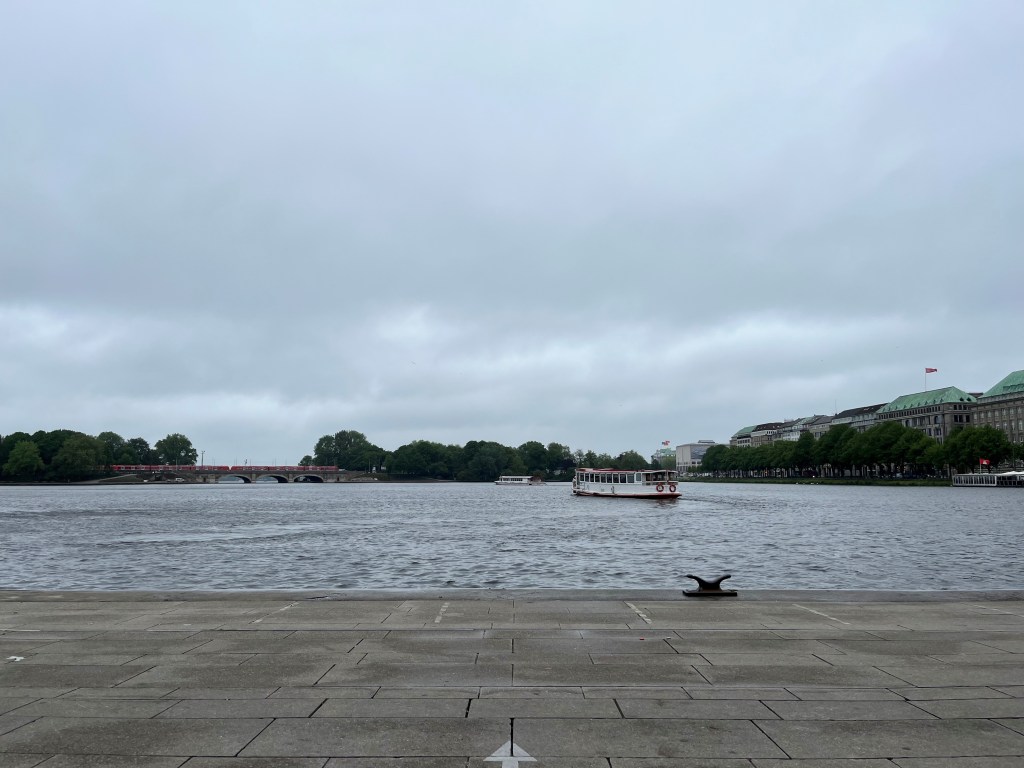
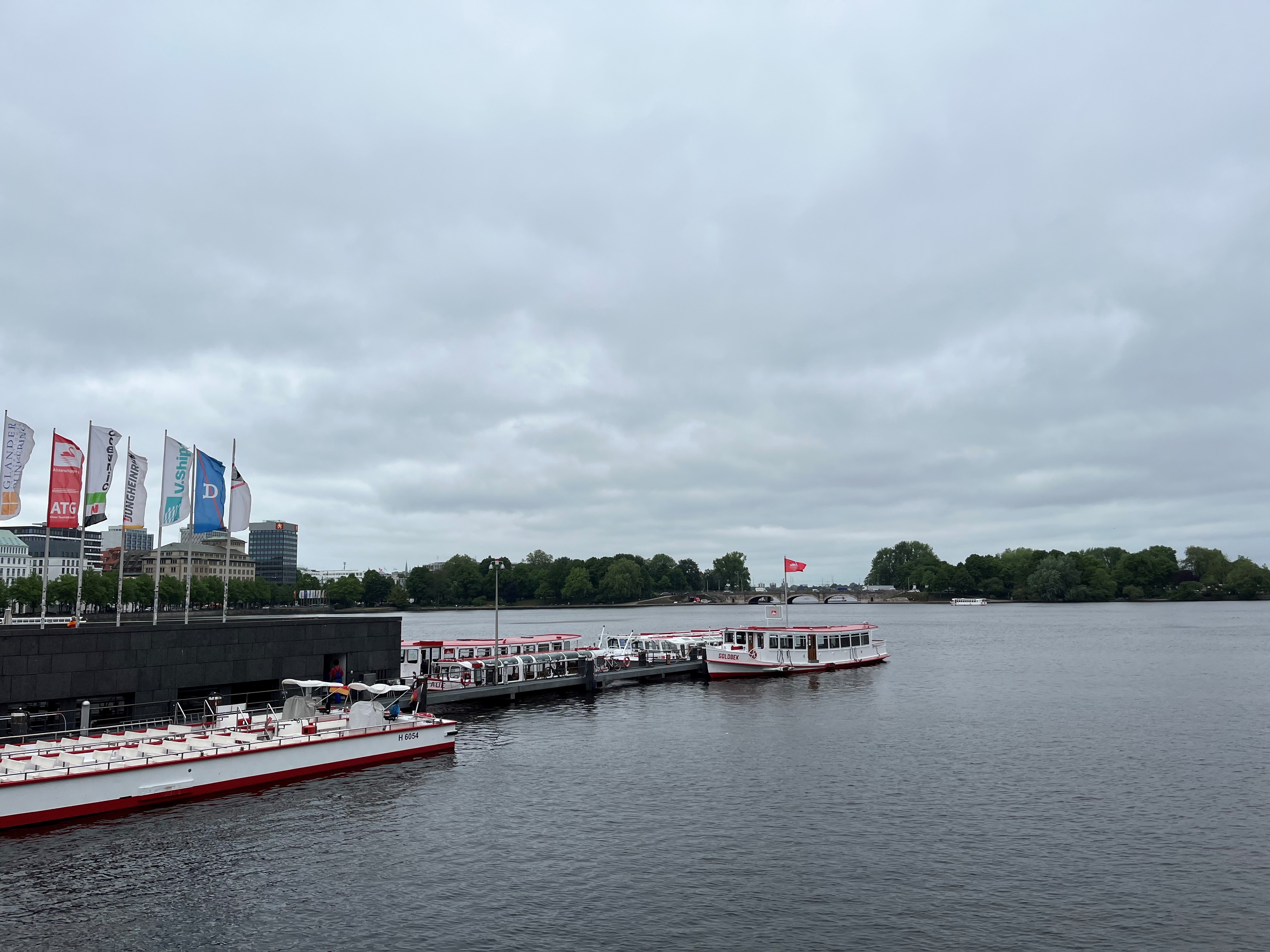
The threat of dampness past, we take a stroll along the Jungfernstieg, the boulevard on the shores of the Alster. The Jungfernstieg has existed for centuries — there are mentions of it as early as the 13th century — but it was only after its rebuild following a huge fire in 1842 that it came into its own as a commercial and recreational centre for the city. Nowadays this part of town, especially the lakeshore, has become the de facto centre of town, or at least the upscale part of it: classic, grandiose buildings line up against the pavement like children at school, all proudly advertising one commercial venture or another. Cafes and banks and shops squeeze in alongside each other, serving a steady stream of clients during the current lunch hour. On the other side of the avenue the pavement tapers off into the Alster, where a few loudly quacking geese and ducks float side by side with a few barges and ferries, heedless of the cold and the drizzling rain. Charmaine and I snap a few pictures on the promenade, but the weather isn’t really ideal for touristy behaviour, so we retire into the nearest shopping centre for a bit of warmth and lunch.
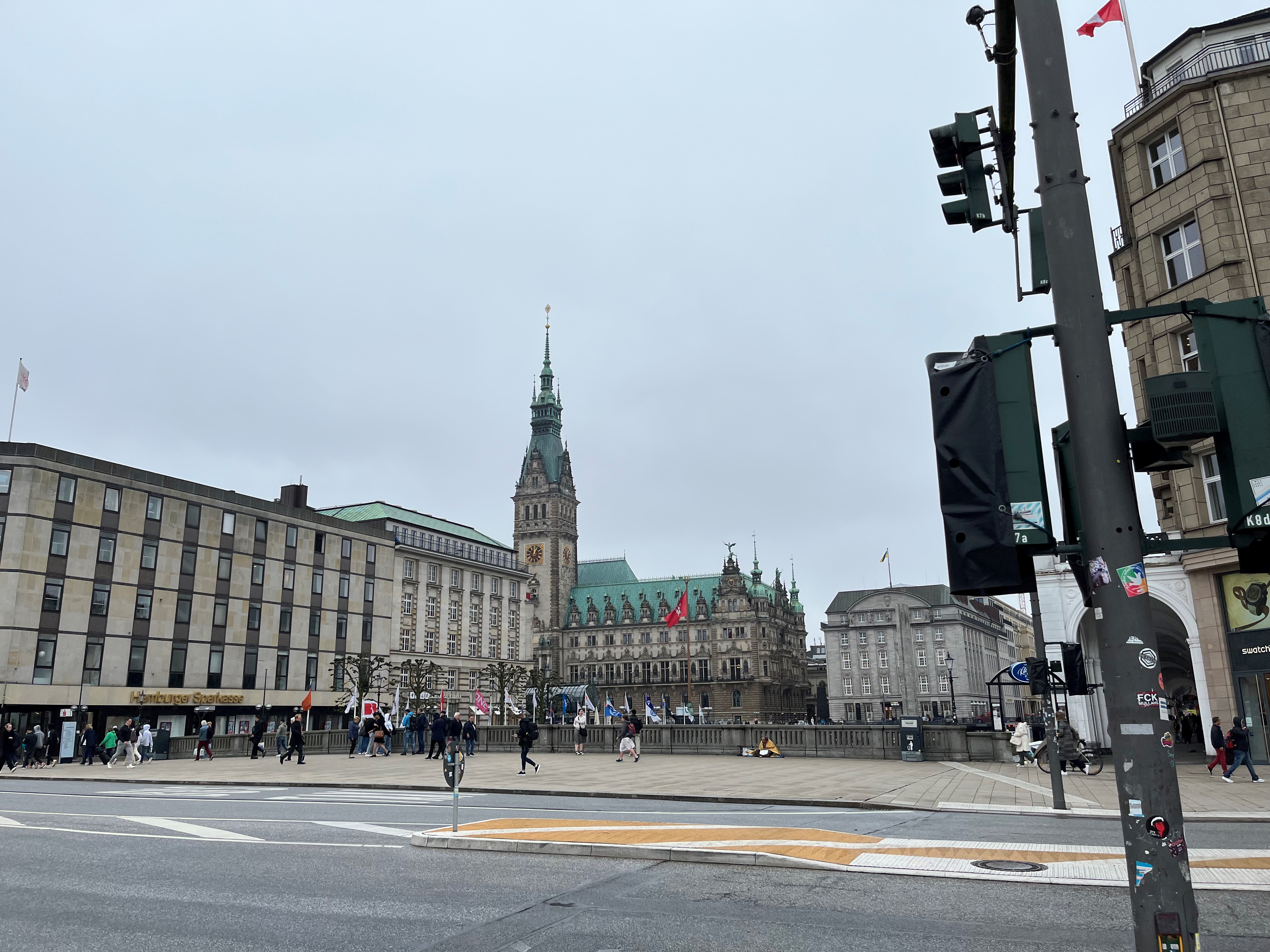
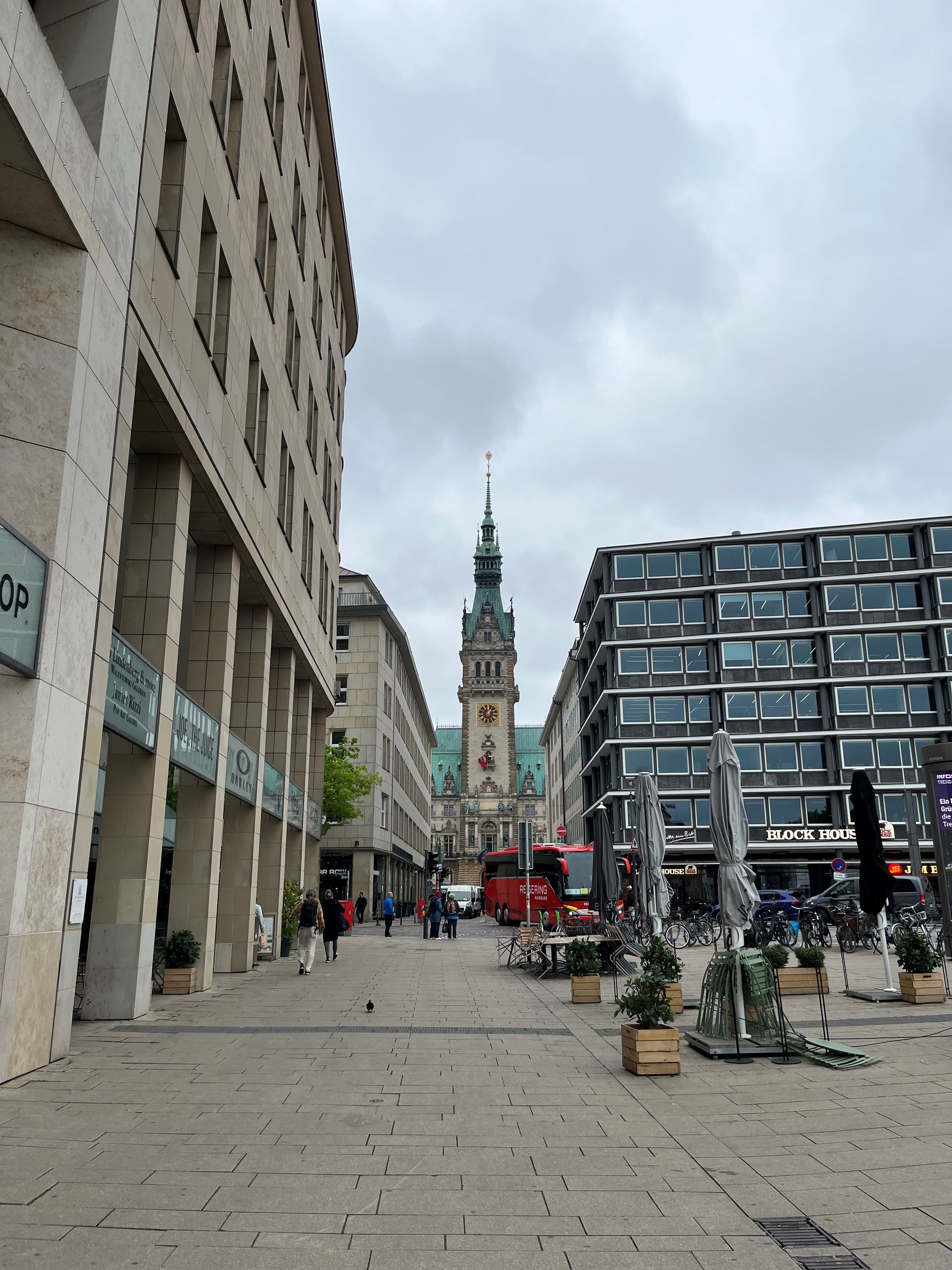
The strain of travelling begins to show during the latter: my tiredness momentarily overtakes me and I stuff twelve euros inside the tip jar instead of handing it over to the cashier. Truth be told, we’re all a bit exhausted after last night’s exploits: although somewhat invigorated after freshening up at the hotel, Charmaine’s energies are noticeably on the wane and she announces that she’ll be going back to the hotel soon after lunch. Consider following her lead — my clothes are slightly too thin, my feet are wet, and there’s a part of me that doesn’t want to explore this city alone — but in the end my curiosity about the city gets the better of me, and we agree to do the Altstadt, the old town of Hamburg, before parting ways.
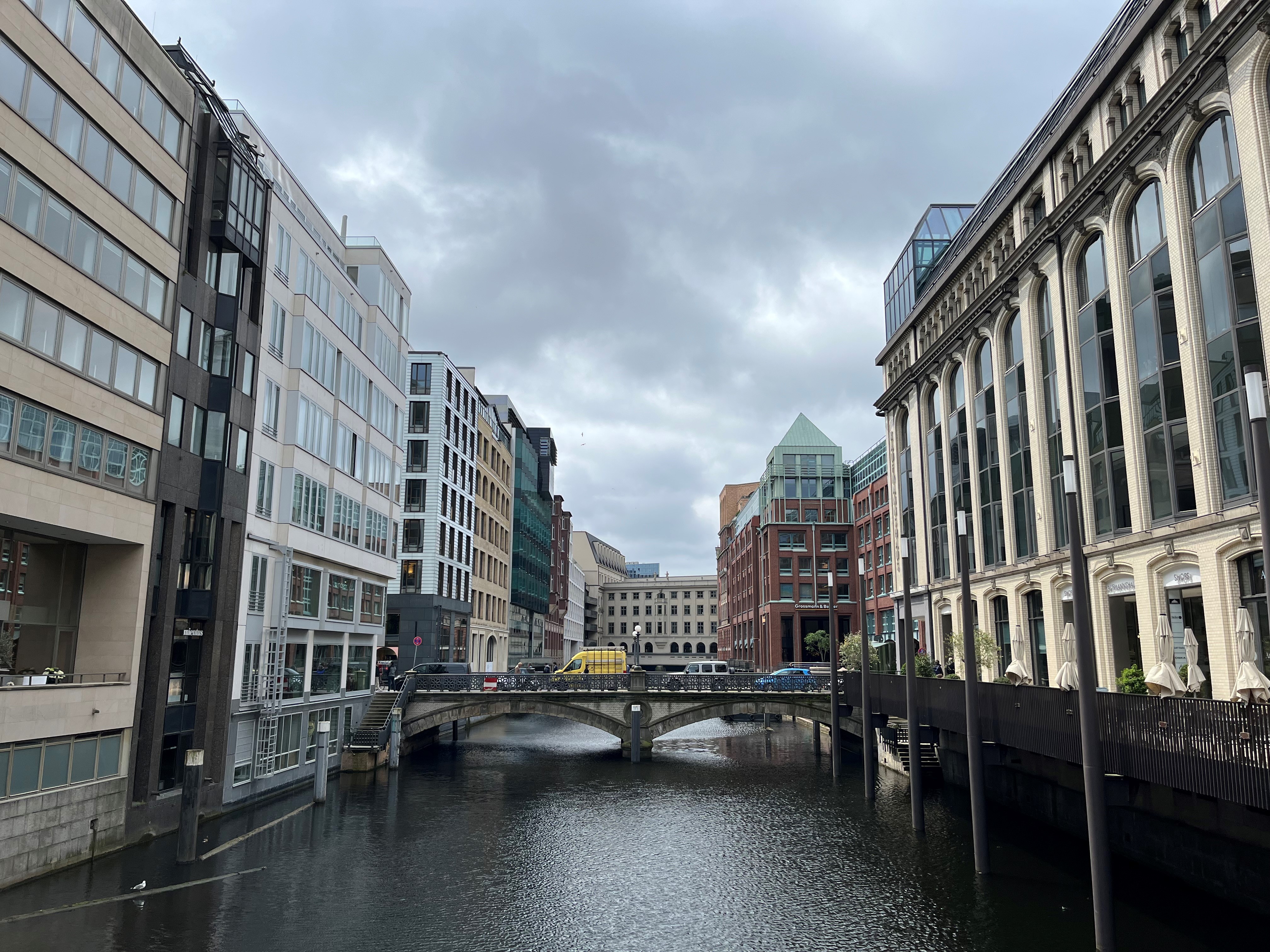
It’s during this short tour that we get a first glimpse of the canals that have earned Hamburg its reputation as the “Venice of the North”. This being Germany, however, the canals in question are not narrow, shadowy waterways but broad, open channels, and some of them are big enough to have their own piers. On any given bridge you can see lines of buildings that stretch far away, all abutting the water’s edge while still creating an unbroken straight line. We stop on one of them, look across the water, and agree that despite the bad first impressions, Hamburg still has some serious appeal.
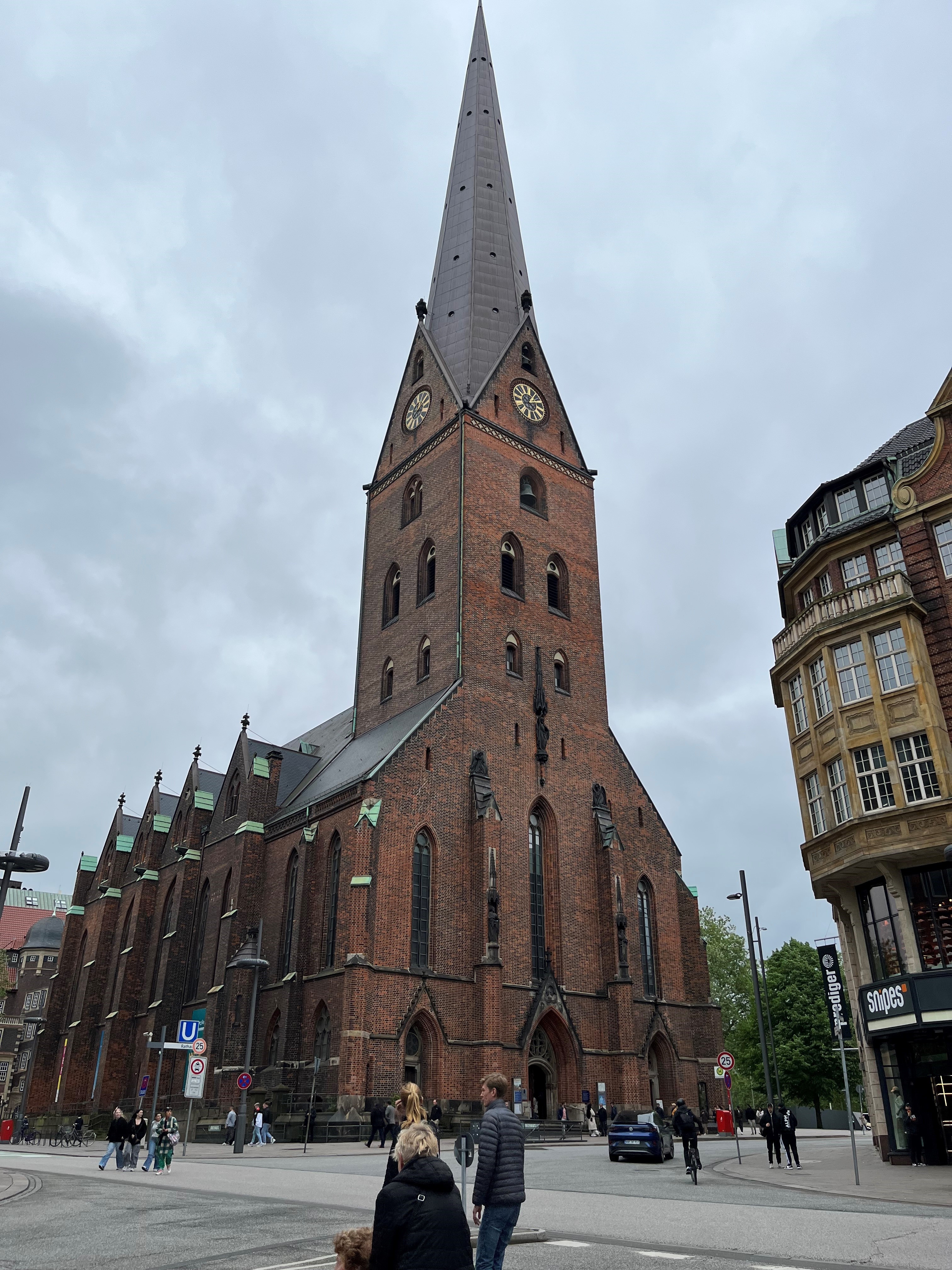
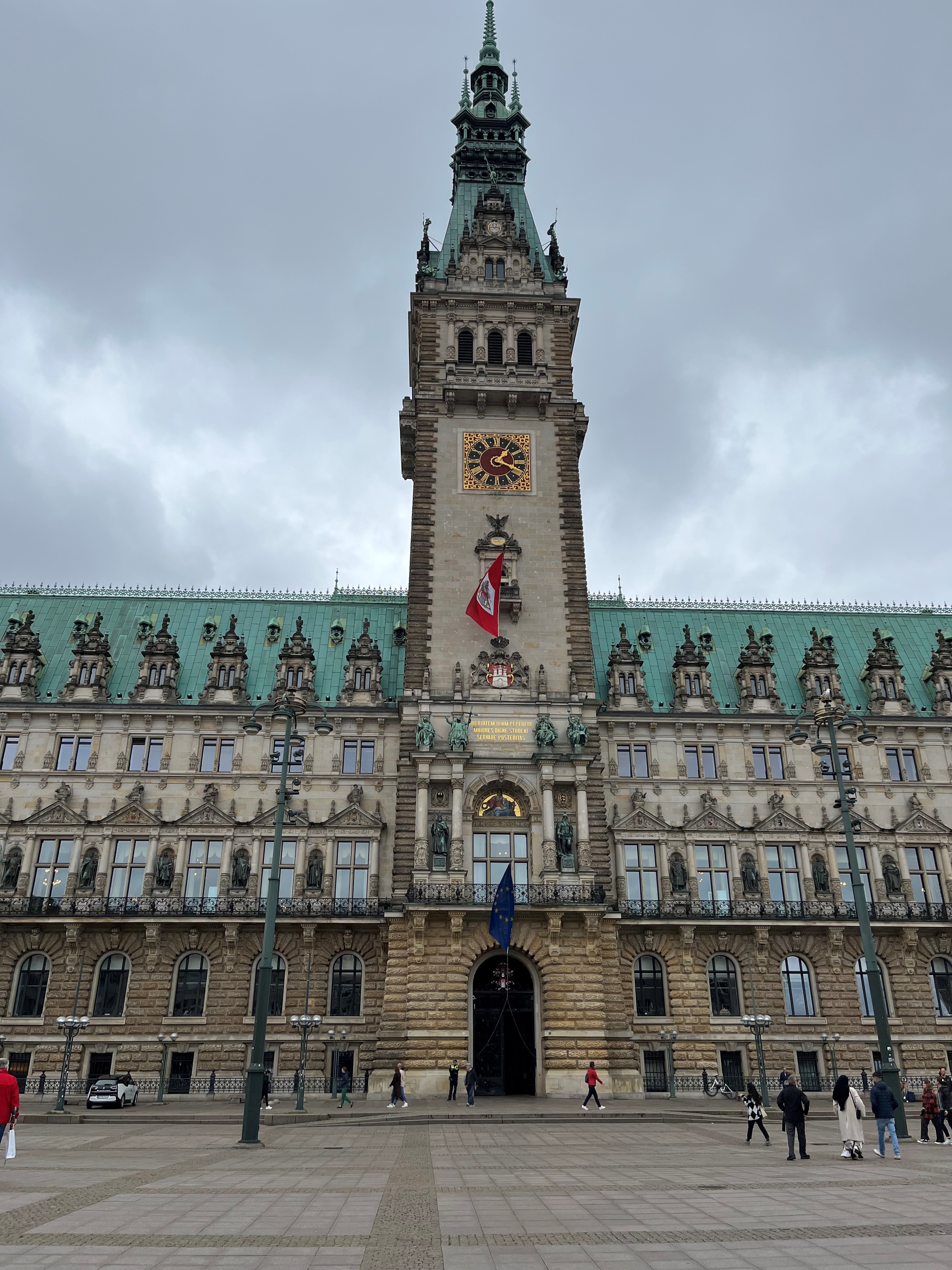
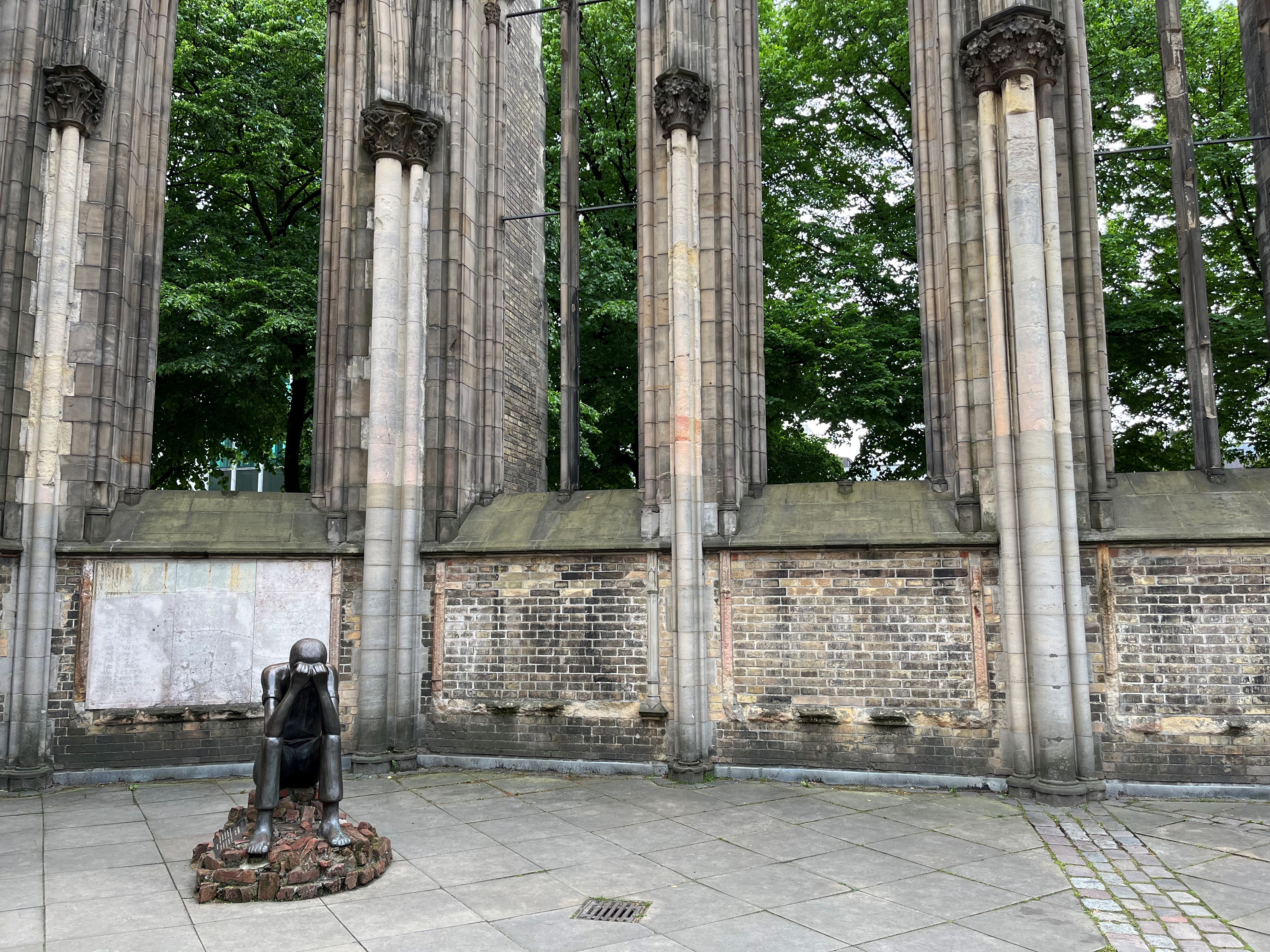
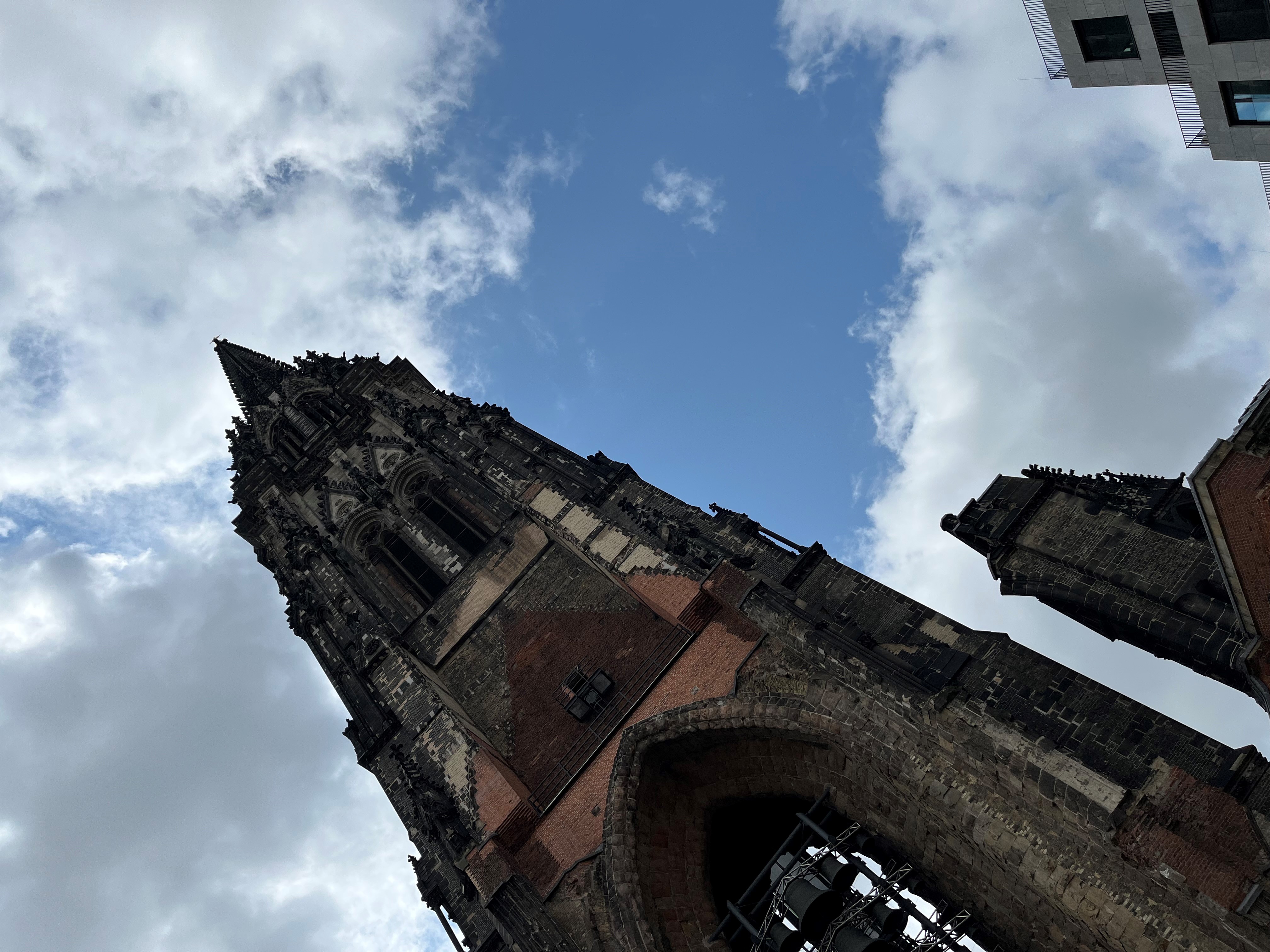
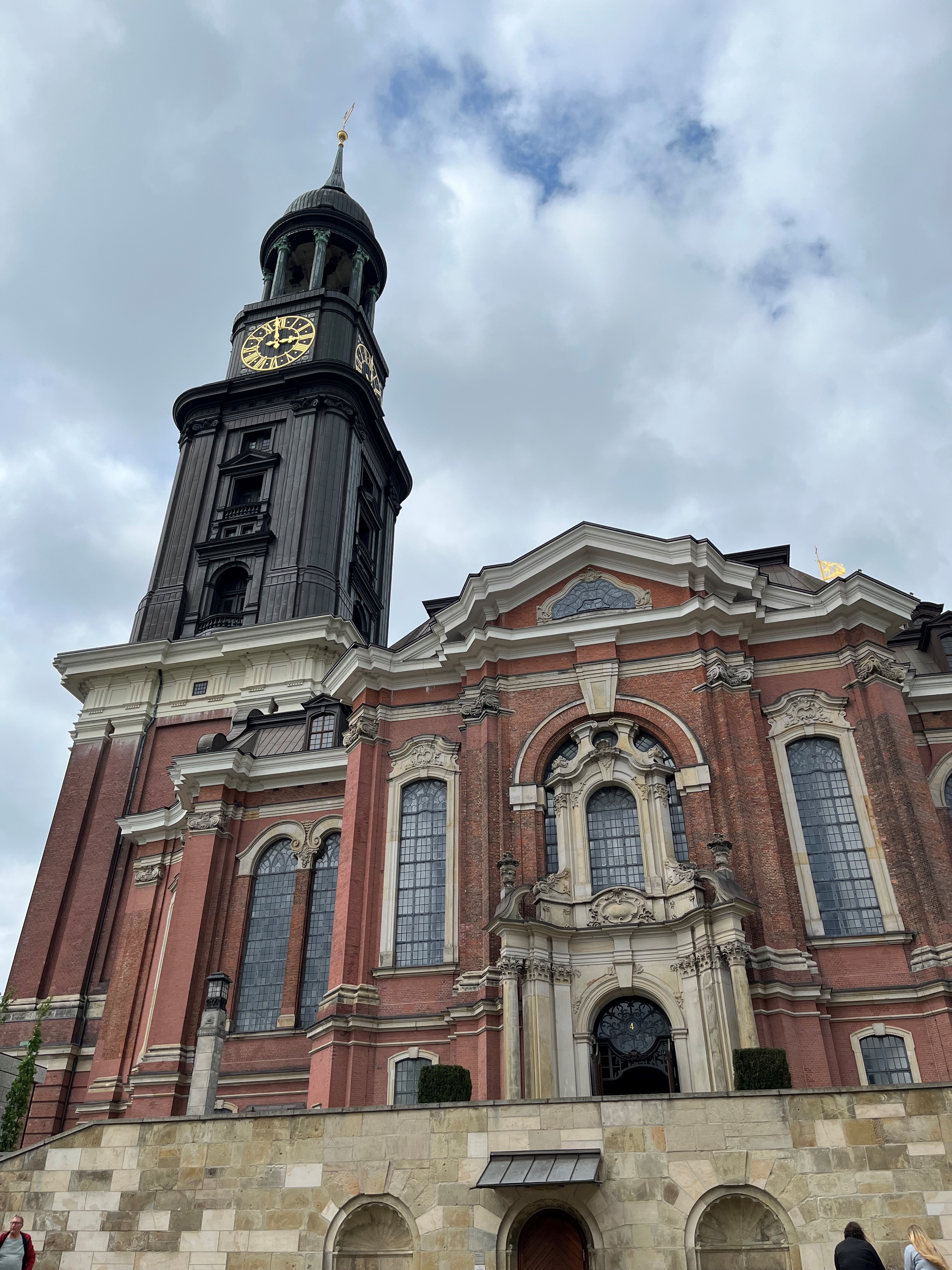
Later. As the bells strike three I arrive at St. Michael’s Church — my co-traveller having cruelly abandoned me to my fate, I’ve got a couple of hours alone before I meet up with Dennis later in the afternoon. Knowing little about the city of Hamburg, I decide to go around and hit up a bunch of destinations I’ve vaguely read about in the past five months. The Hauptkirchen (main churches) of Hamburg were a collective that frequently popped up while I was researching the city, and while making my way here, I’ve already stopped briefly at St. Katherine’s, one of the city’s oldest buildings; as well as the neighbouring St. Nicholas’, heavily bombed by the Allies in 1943 and now just a hollow ruin and memorial. St. Michael’s, however, is something else — the largest of the city’s religious buildings, it’s also the most famous, and so I decide to actually pop in for a visit. Just before I enter the church, the Sun finally bursts out from behind the clouds — even the Almighty is excited by this place of worship.
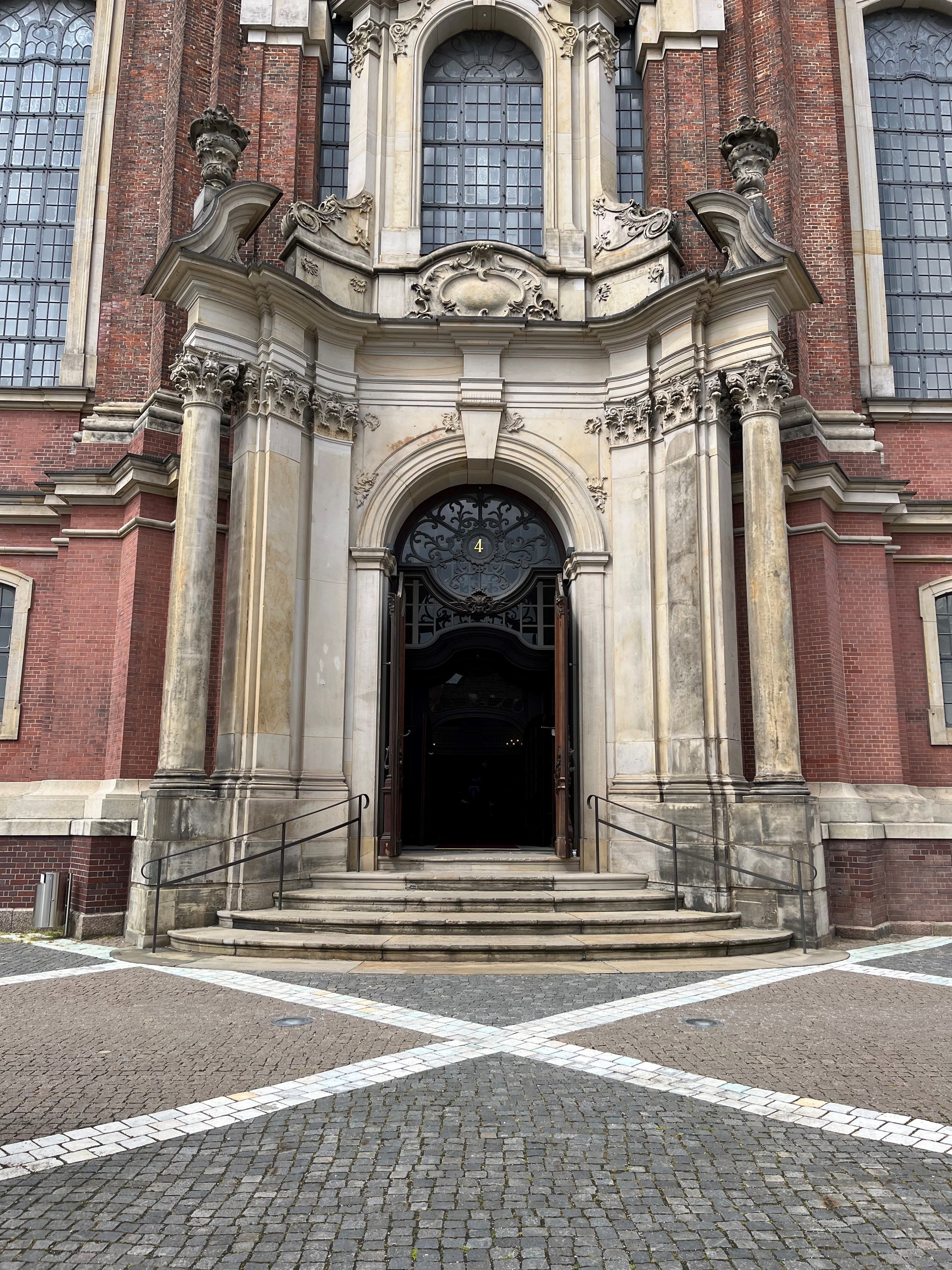
As I enter the roar of city traffic is silenced for a split second, before it is replaced by the roar of children, so loud that I stop in my tracks. Momentary concern that I have stumbled into the Last Judgment is quickly mollified: I have merely chanced upon a children’s choir rehearsal. Although there’s more to it than that — perched way up in the clerestory, the kids attack their song with gusto, shouting and snarling their way through the words, clearly relishing their chance to show off. I was in a children’s choir for a few years myself, but never were we this animated, or this much a joy to behold: the energy they give off reverberates around the church and bounces off every surface, including the corner where I’ve secluded myself. The choir practice comes to an end, and even though it’s just a rehearsal, some of us down in the nave are awestruck enough to applaud.
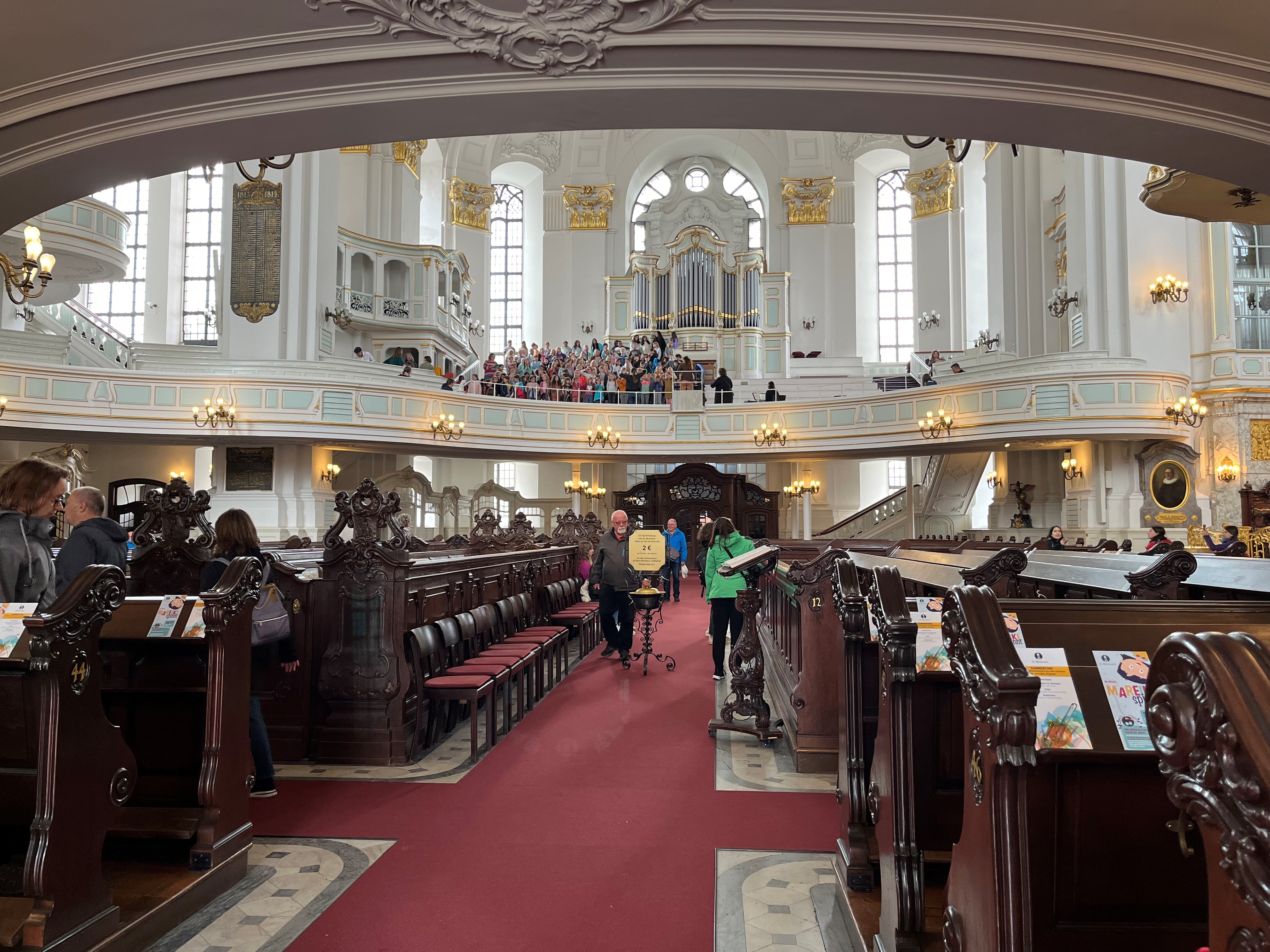
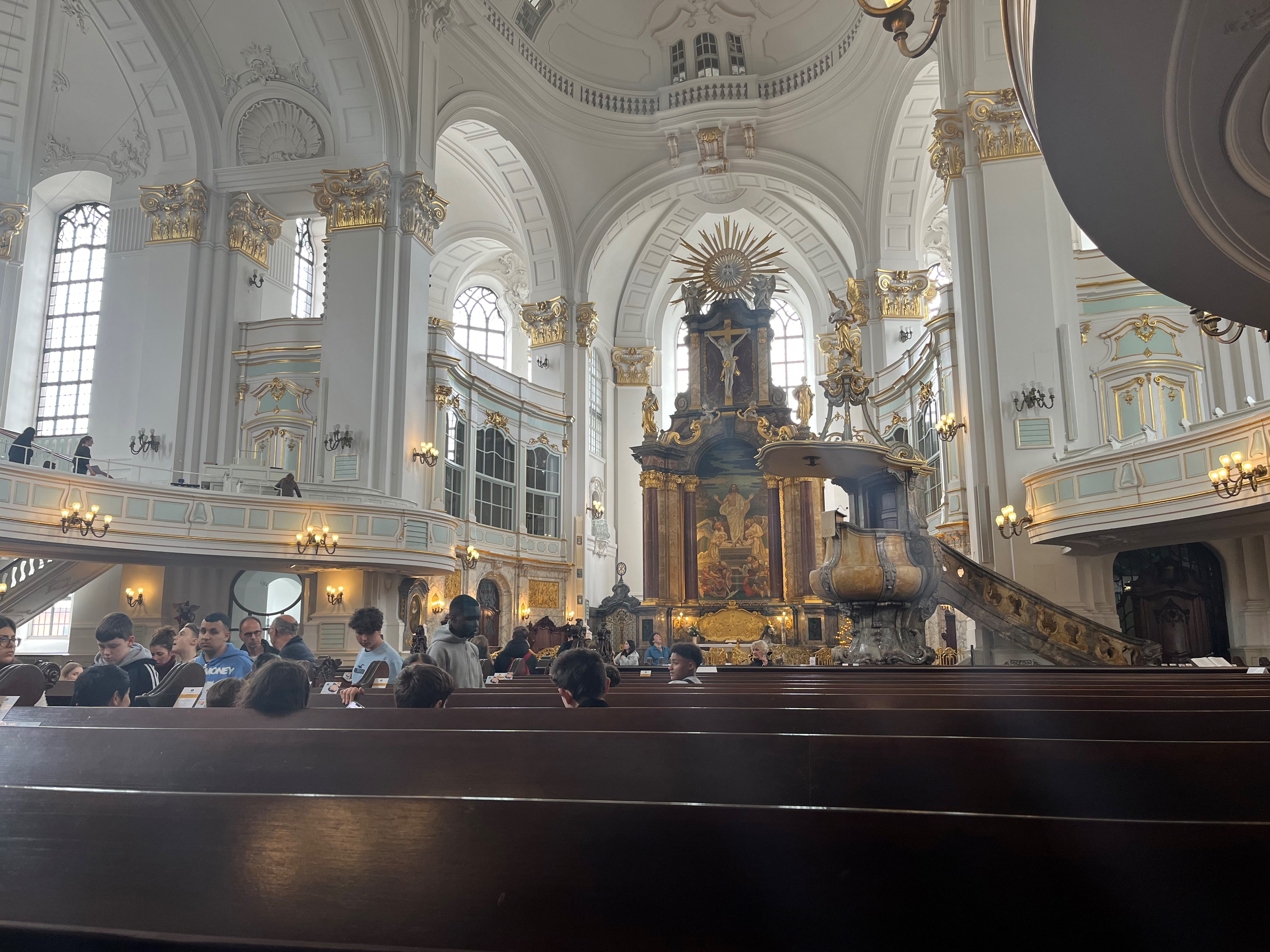
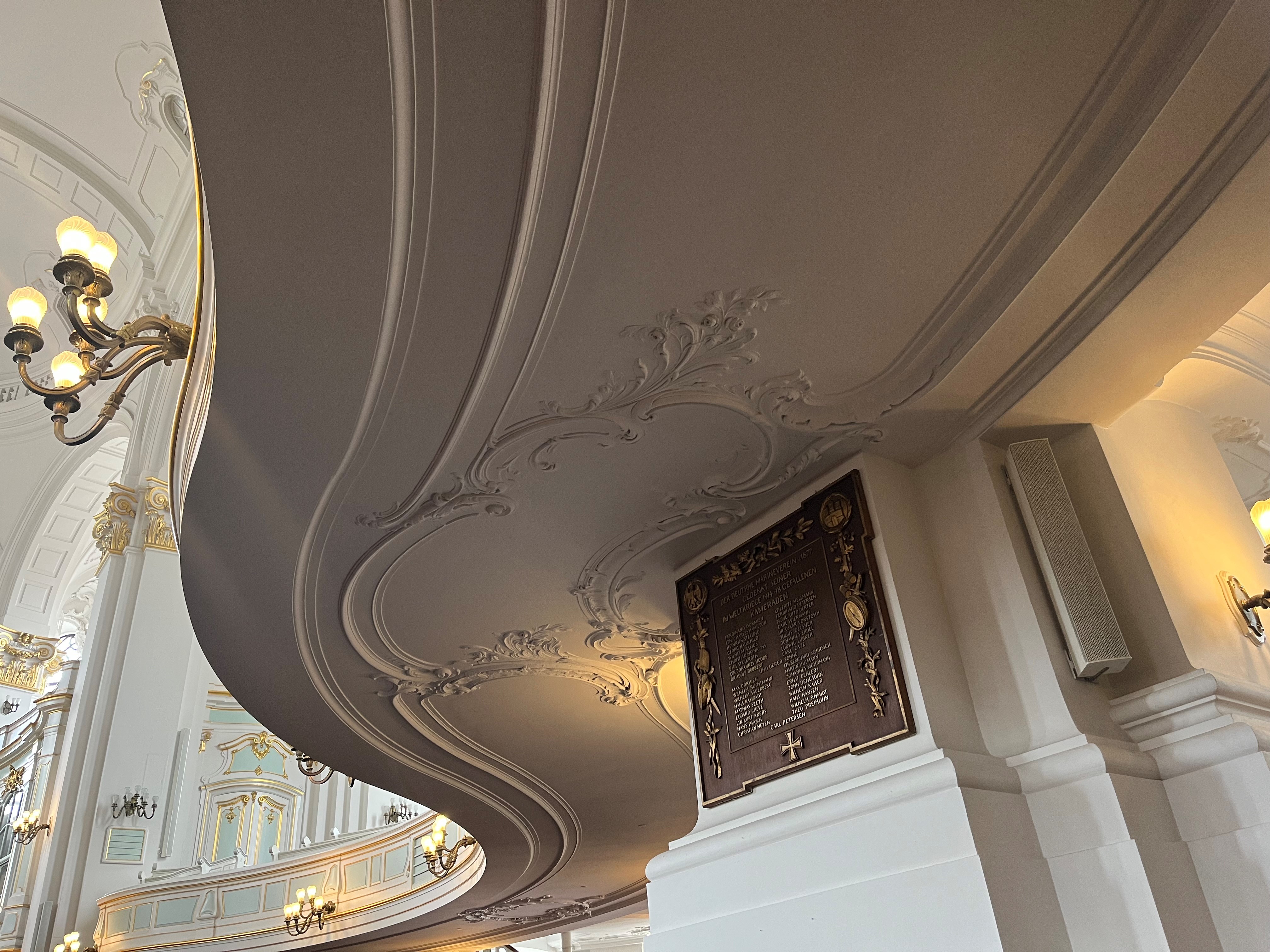
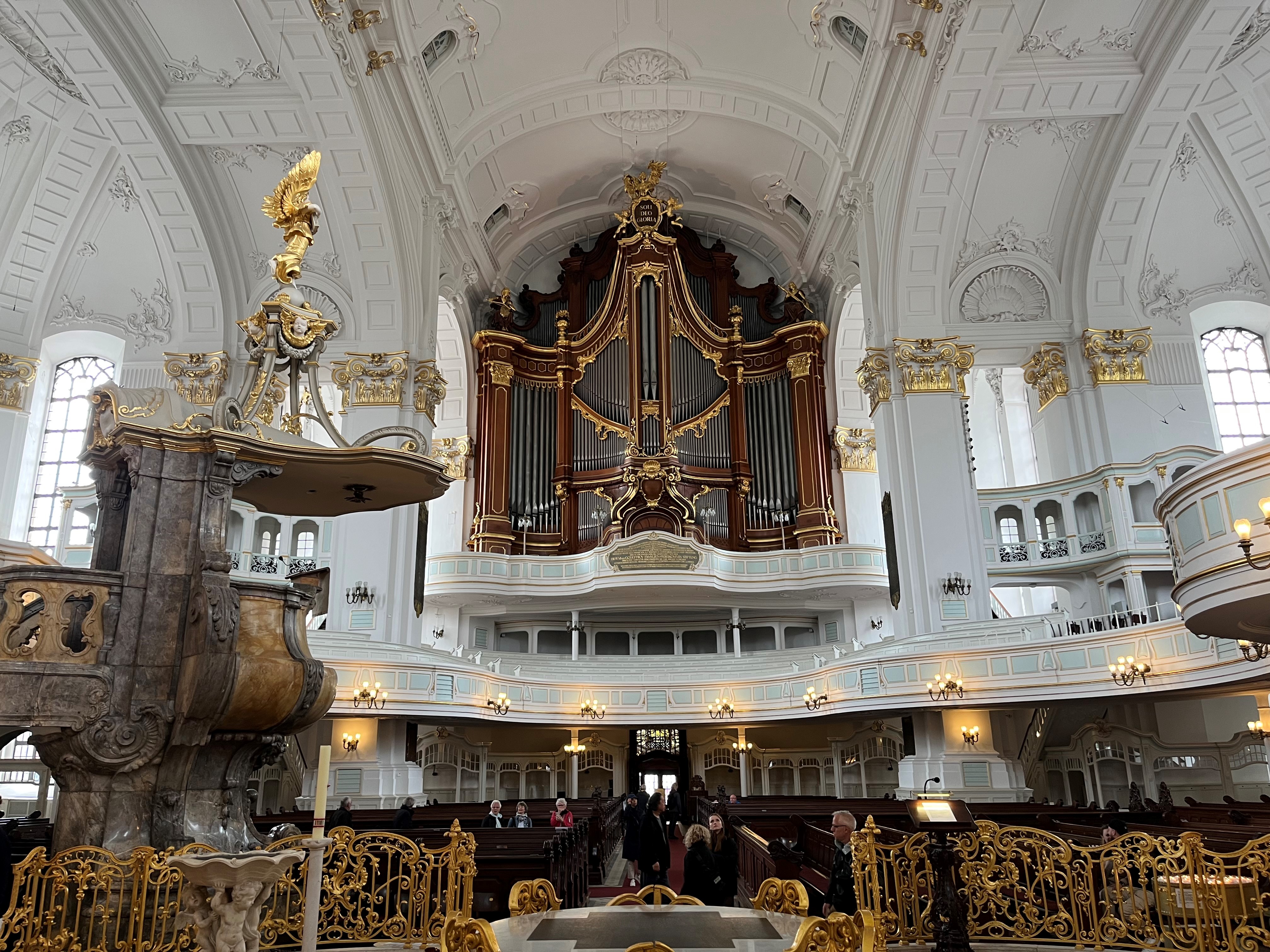
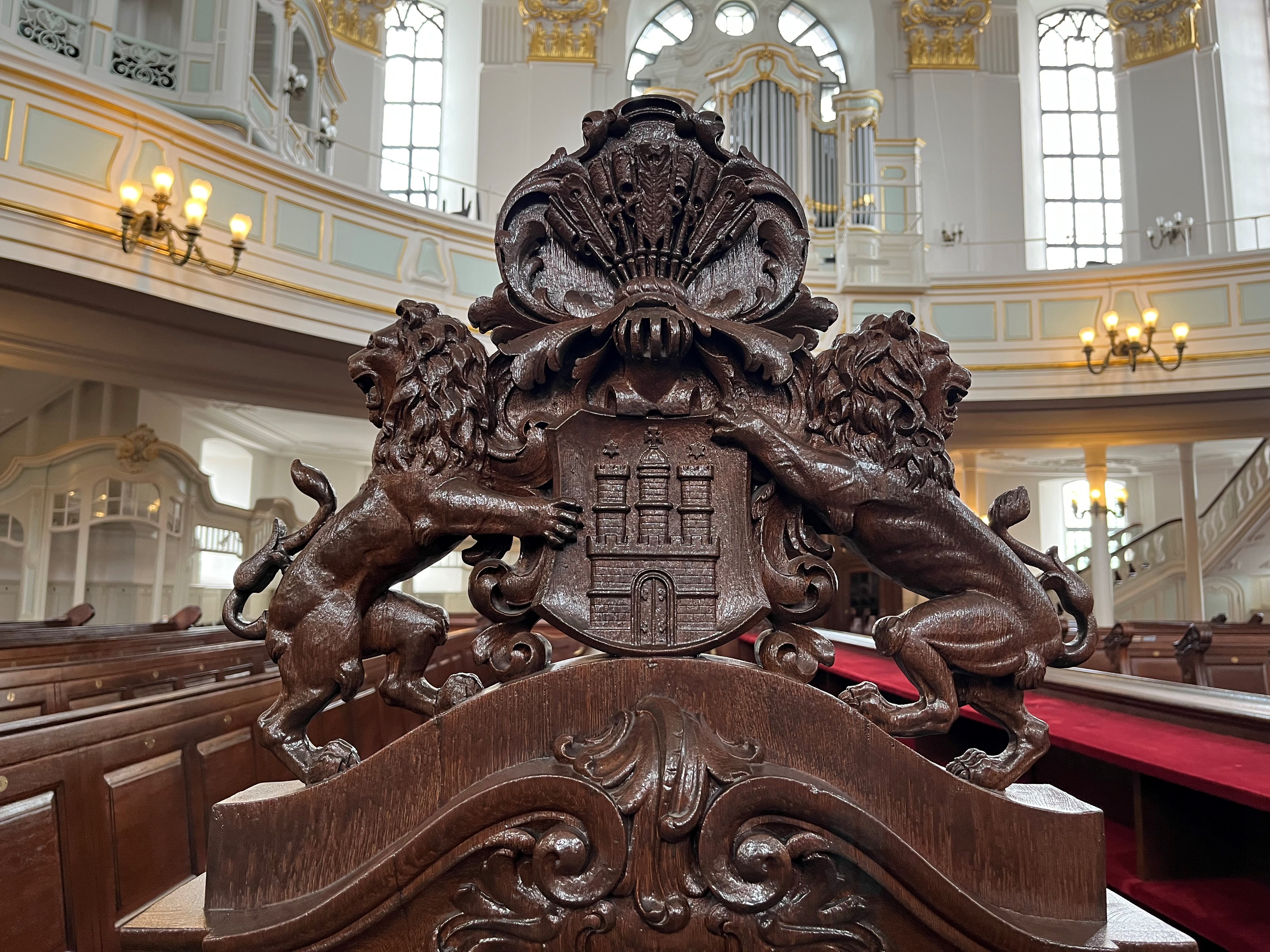
St. Michael’s is another impressive church: unlike the Peterskirche or the church up on the Kahlenberg, Hamburg’s largest church is brightly lit, with polished windows and glowing lamps giving this church a homely, warm feeling. The interior design also feels a lot more fluid, especially the upper levels with their wavy, overhanging canopies — it feels simultaneously more spartan, and less intimidating, than the Catholic churches back in Austria. (Then again, that might just be the inner Protestant talking.) They sell tickets for both the clock tower and the crypt, and at €10 it feels like a bargain, so I decide to spend some money for once and do a bit of exploring. Enter a side door and wander up a couple of passages, at the end of which is a lift that takes the visitor to the observation deck (more than a hundred metres up, yet dubiously described by the signage there as “about eight floors”).
Arriving at the top, my fellow tourists and I are somewhat befuddled by how the doors, despite our best efforts, don’t seem to be budging. Then we give it an extra push, the doors suddenly fly open, and we realise why they weren’t budging.
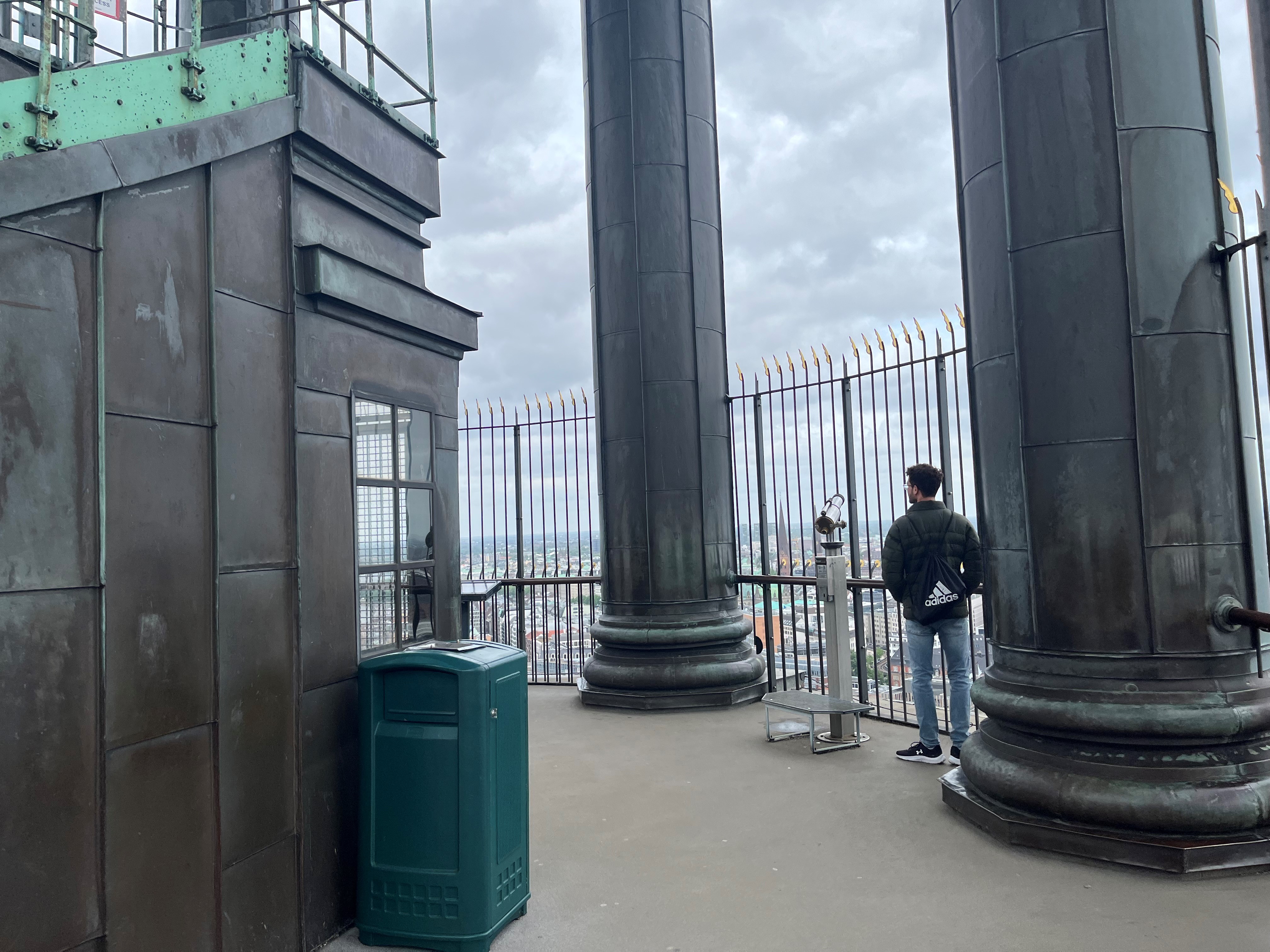
I have mentioned that the day was windy. Both Charmaine and I complained of cold as we stood on the Jungfernstieg earlier that afternoon, and the breeze was quite stiff as I walked down the Willy-Brandt-Straße an hour ago. Yet that was nothing compared to the absolute hurricane blowing about our heads as I step onto the concrete platform. The winds surrounding that clock tower actually hurt, landing freezing punches on my body and buffeting it in a thousand different directions as I stand there; within seconds my hand, extended to prevent my hat from falling three hundred and fifty feet into the streets of Hamburg, is an immobile claw; and for only the second time in my life, I am panicking about getting frostbite (did the onset feel damp or dry?). There are typhoons in the Sea of Japan that blow gentler than the winds surrounding St. Michael’s Church, and certainly none of them are as loud: the sound of it howling around my ears, clattering the pillars and the metalwork above, that is ALL I can hear on that landing.
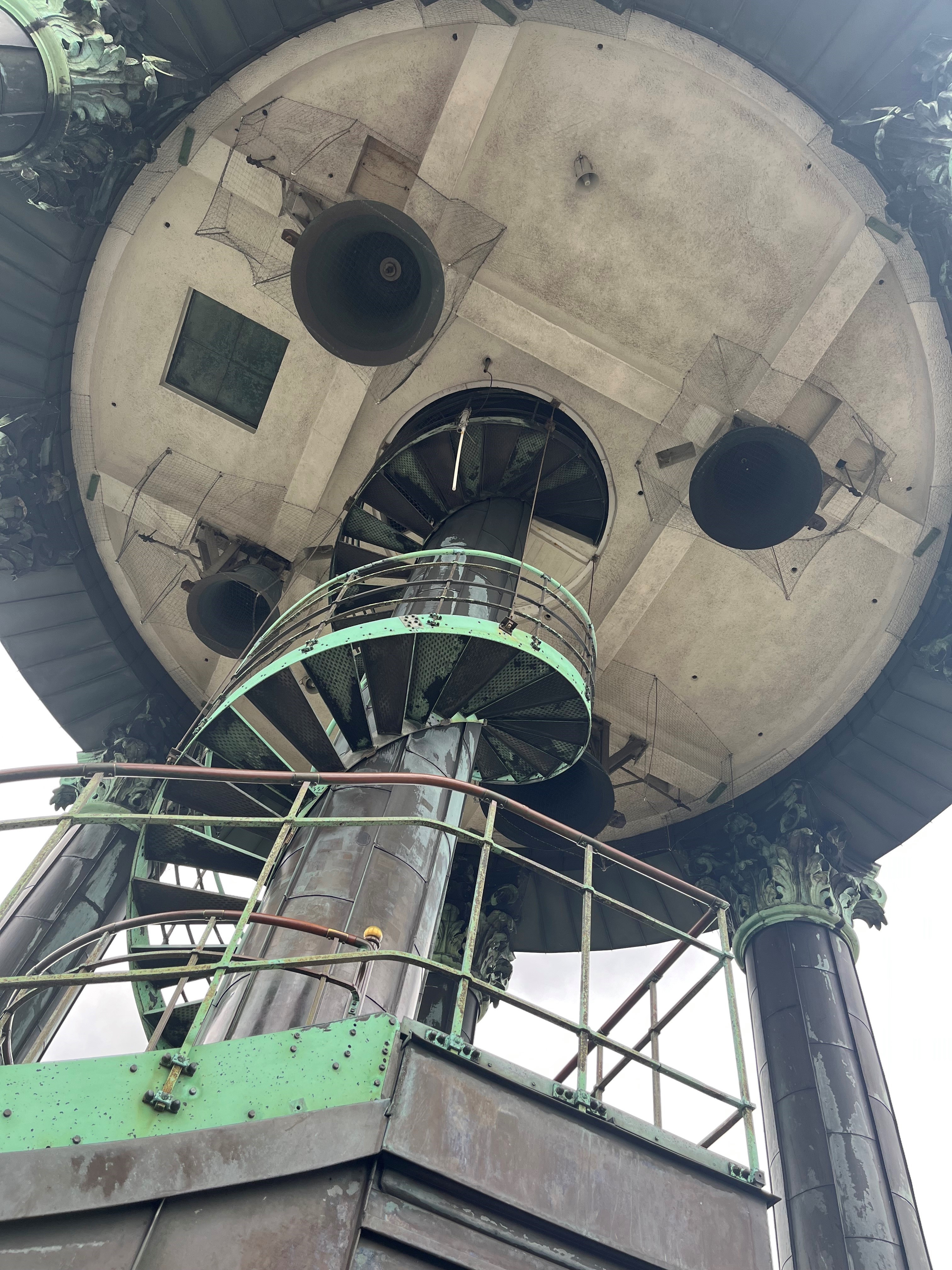
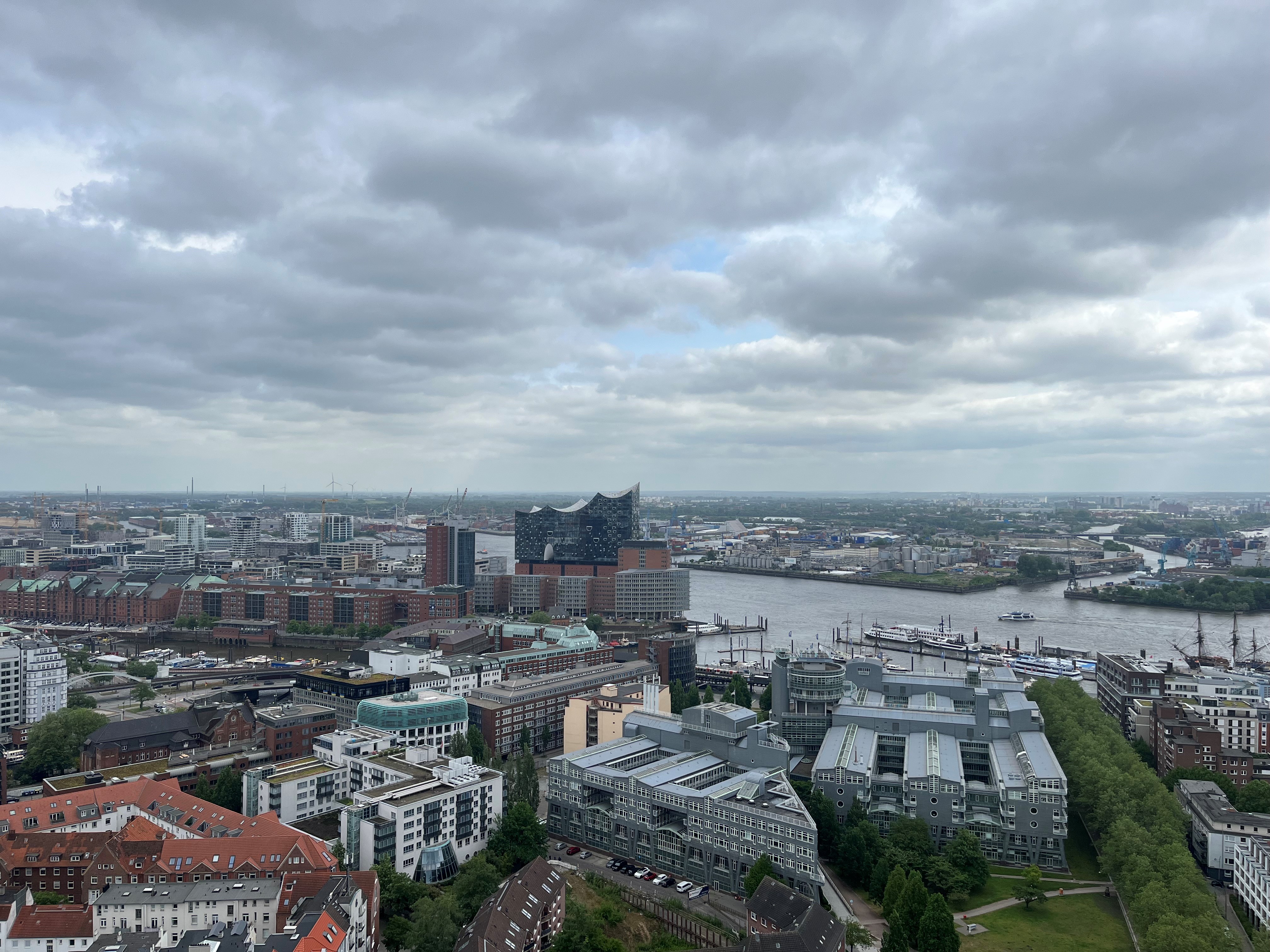
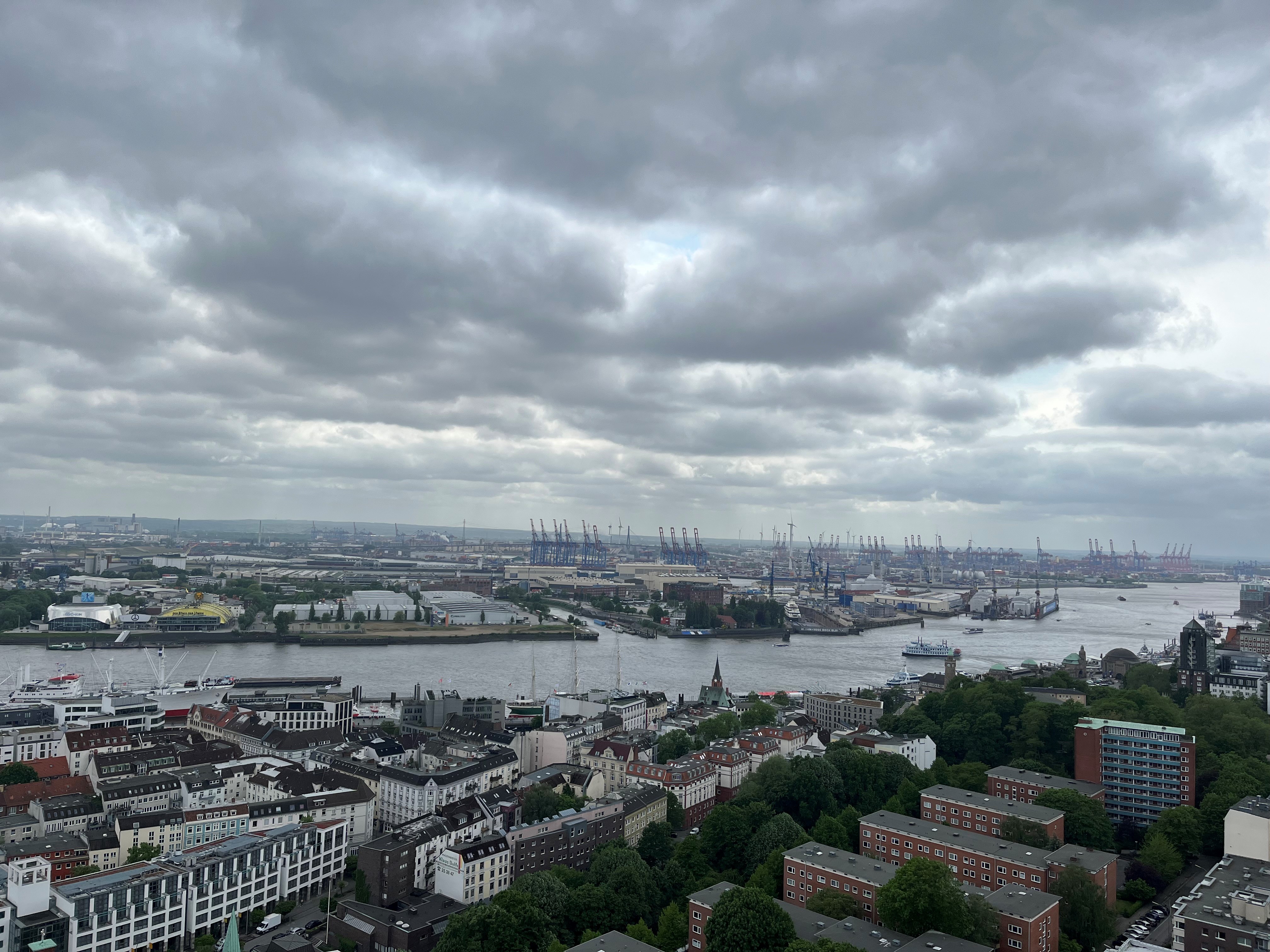
By degrees I fight my way to the railings that separate me from open air, and there, clutching my phone in one hand and my hat in the other, I manage to get a good look of the view below. And it is glorious: from the brown-and-white buildings of the Neustadt district below, to the Elbe flowing in all its majesty; from the archaic roofs of the built-up areas, to the modern desolation of the Port of Hamburg; all of Hamburg lies beneath my feet, and despite the overcast weather it is probably the most interesting cityscape I have ever laid my eyes upon. In Vienna, rural and urban were clearly segregated: you had the fields in the foreground, and then a great big mass of humanity in another — pretty, but too much like a painted picture, an unreal creation of an artist. Here, you got everything mingling with one another: a patch of water slicing through a city district, a few trees lining industrial heartland; the whole city seems to simultaneously pulse with energy and provide oases of calm, and I adore it so much more for it.
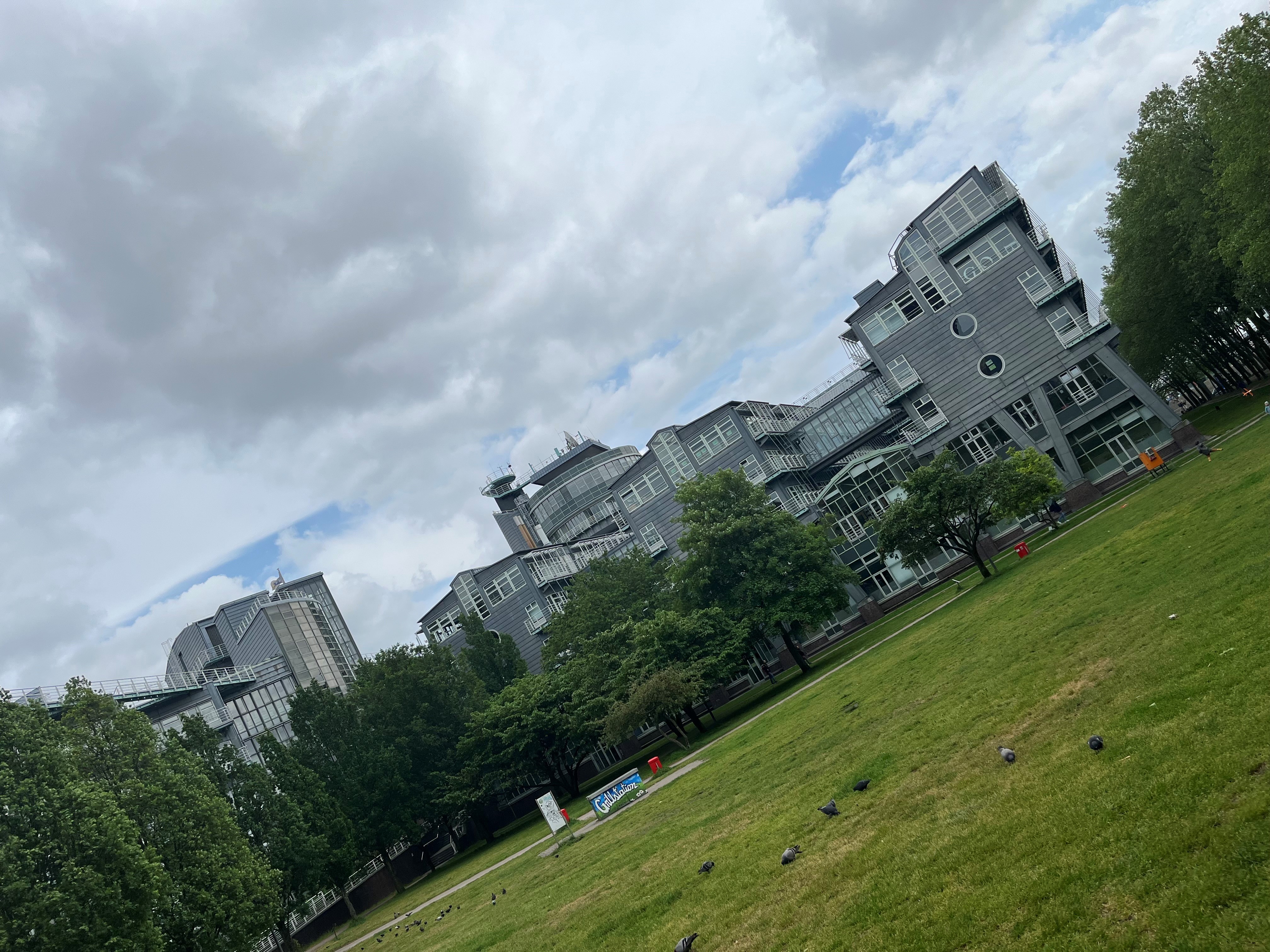
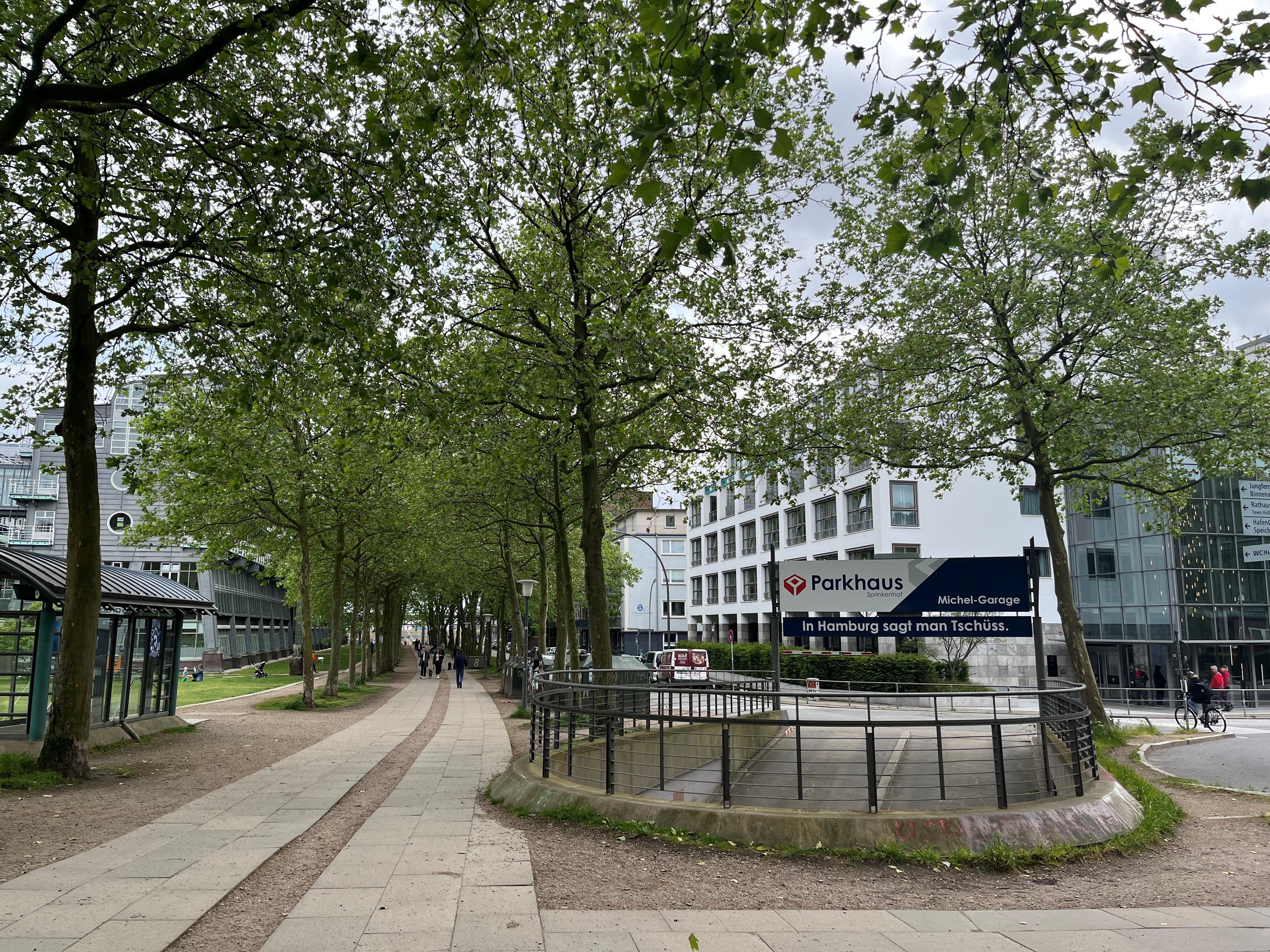
Four o’clock. I have climbed back down safely from the heights of St. Michael’s and regained the use of my hands. I have visited the crypt underneath and felt the warmth that contrasts the bitter cold up top. And now I am walking down the Michelwiese, a park full of loafing children and dogs in bliss, down towards the water’s edge at Baumwall station. I know where I am going, I know what my destination looks like, but every time I catch a hint of it I swerve to one side, desperate not to spoil it too early. I reach the station; there is a road to cross, and I wait impatiently at the pedestrian crossing. The wait is agonising, but at least my plan’s going well — my destination is still hidden from view by the raised promenade at the other side of the street. The magic is still there.
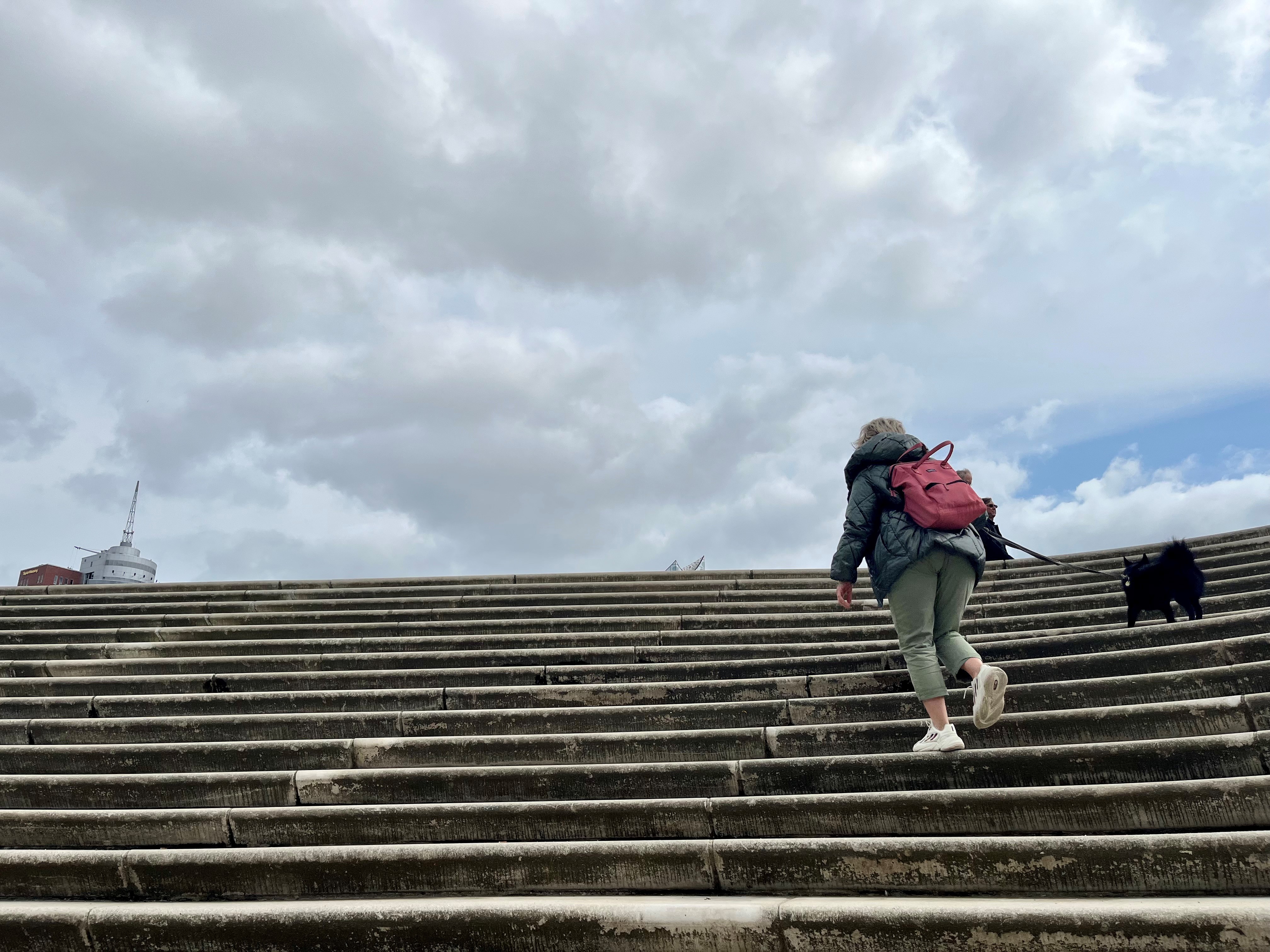
The lights turn green. I sprint across the Vorsetzen avenue — a car honks at me, and I have to draw back, temper my enthusiasm a bit. Just a few more seconds. A woman overtakes me, she and her dog rushing up the staircase to the promenade; perhaps she, too, is excited by the building that lies just over the horizon. I see a corner of it peeking over the top of the stairs and take one last picture: the woman, the dog and that teensy corner of glass and steel. Then I sprint up the stairs three at a time, and there it is.
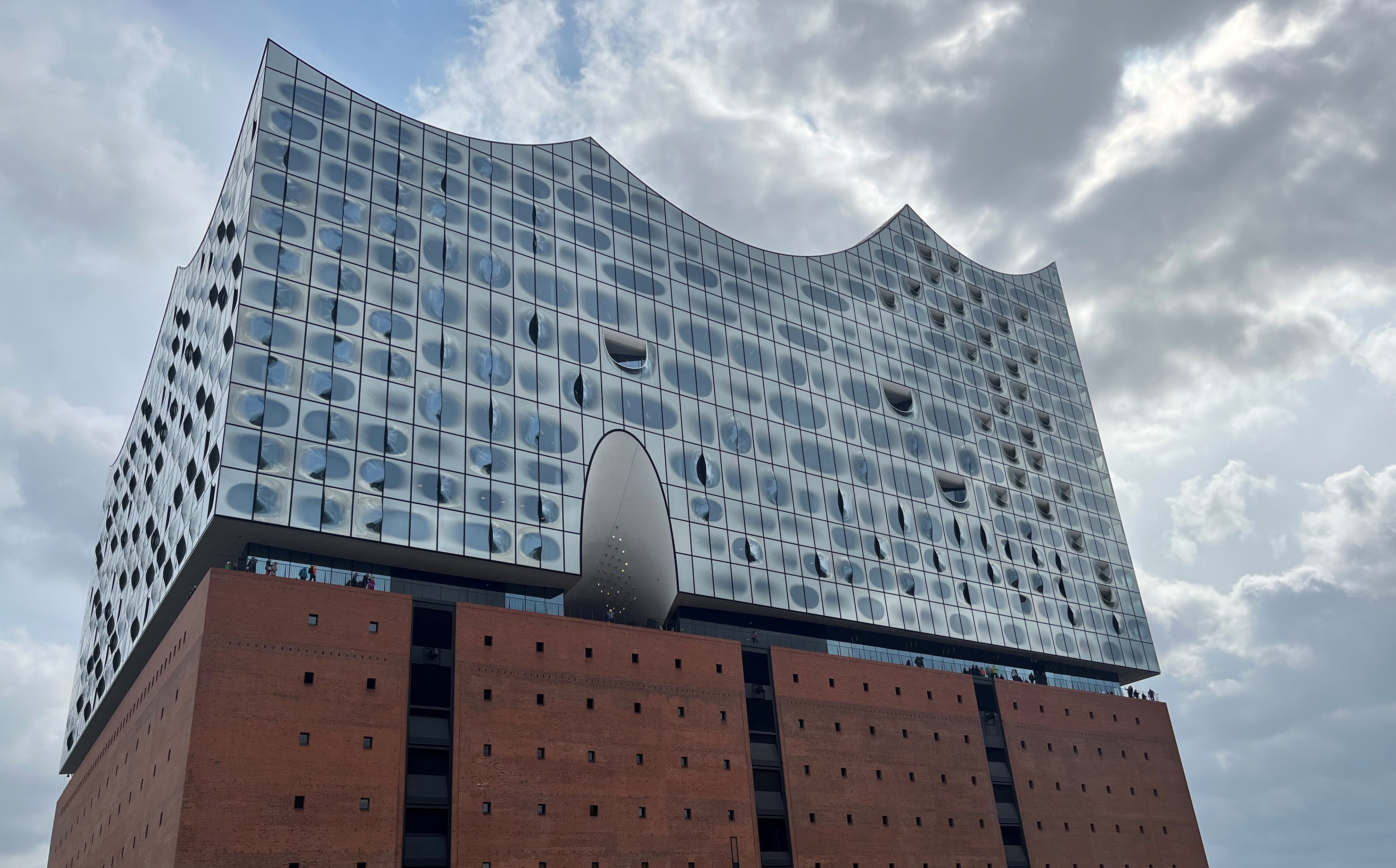
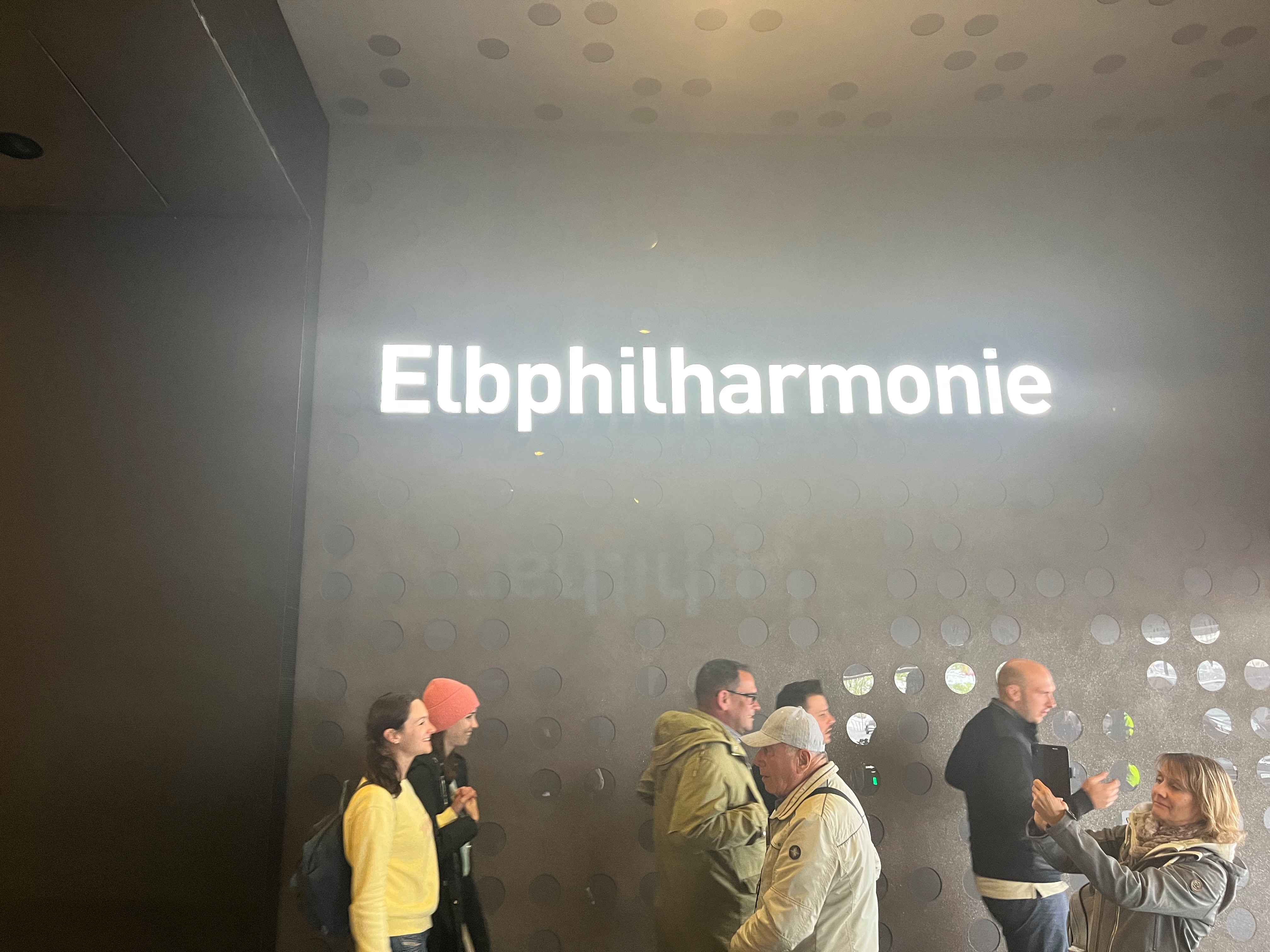
This is the Elbphilharmonie Concert Hall, and without wishing to exaggerate things, it is the most beautiful building Germany has built in the past century. It’s a very recent building — it was opened only in 2017 — but already it’s become a symbol of modern Germany, appearing in Eurovision and all those documentaries about the country as it is today. I’ve seen it every once in a while on the Internet, and it gradually wormed its way into my mind; no surprise, then, that when we set Hamburg as a destination, this building was one of the first things I put on my list. From a distance, it already looks incredible: its base is built out of the traditional red brick of the surrounding Speicherstadt district (the site used to be a warehouse like the rest of them), yet it is topped by a glass behemoth that ripples and shines even in the late afternoon light. The best thing about it though? It’s open to the public.
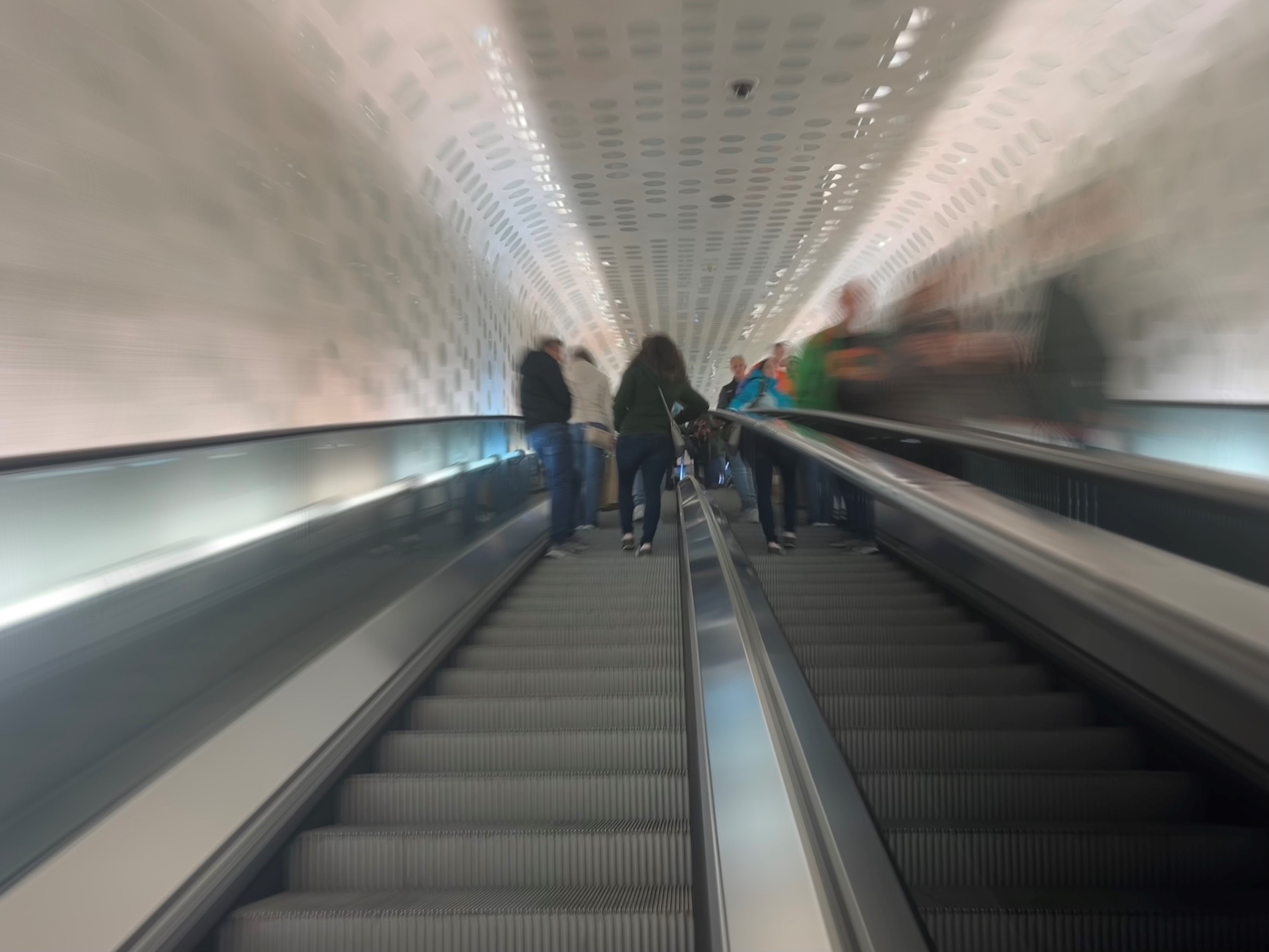
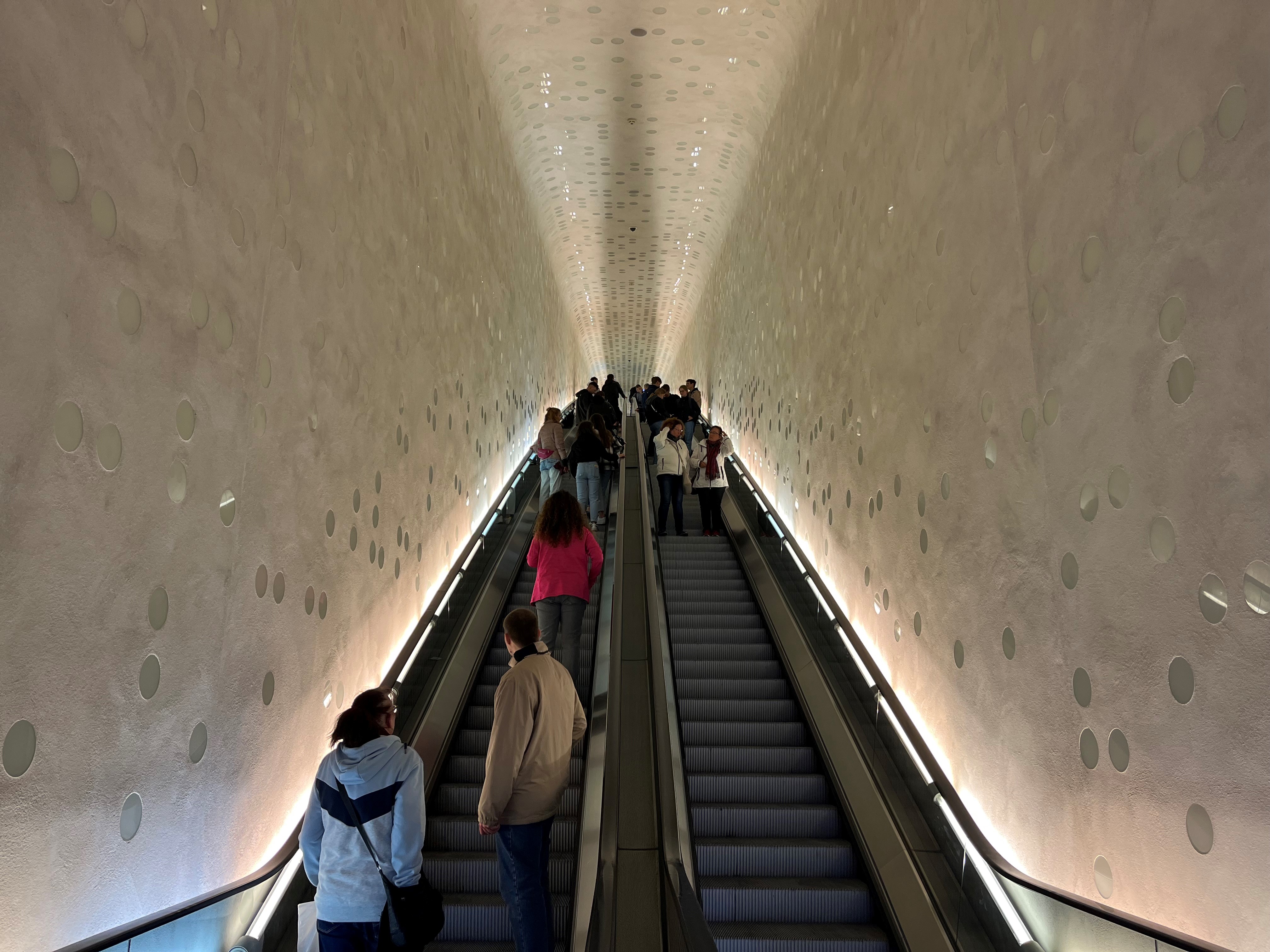
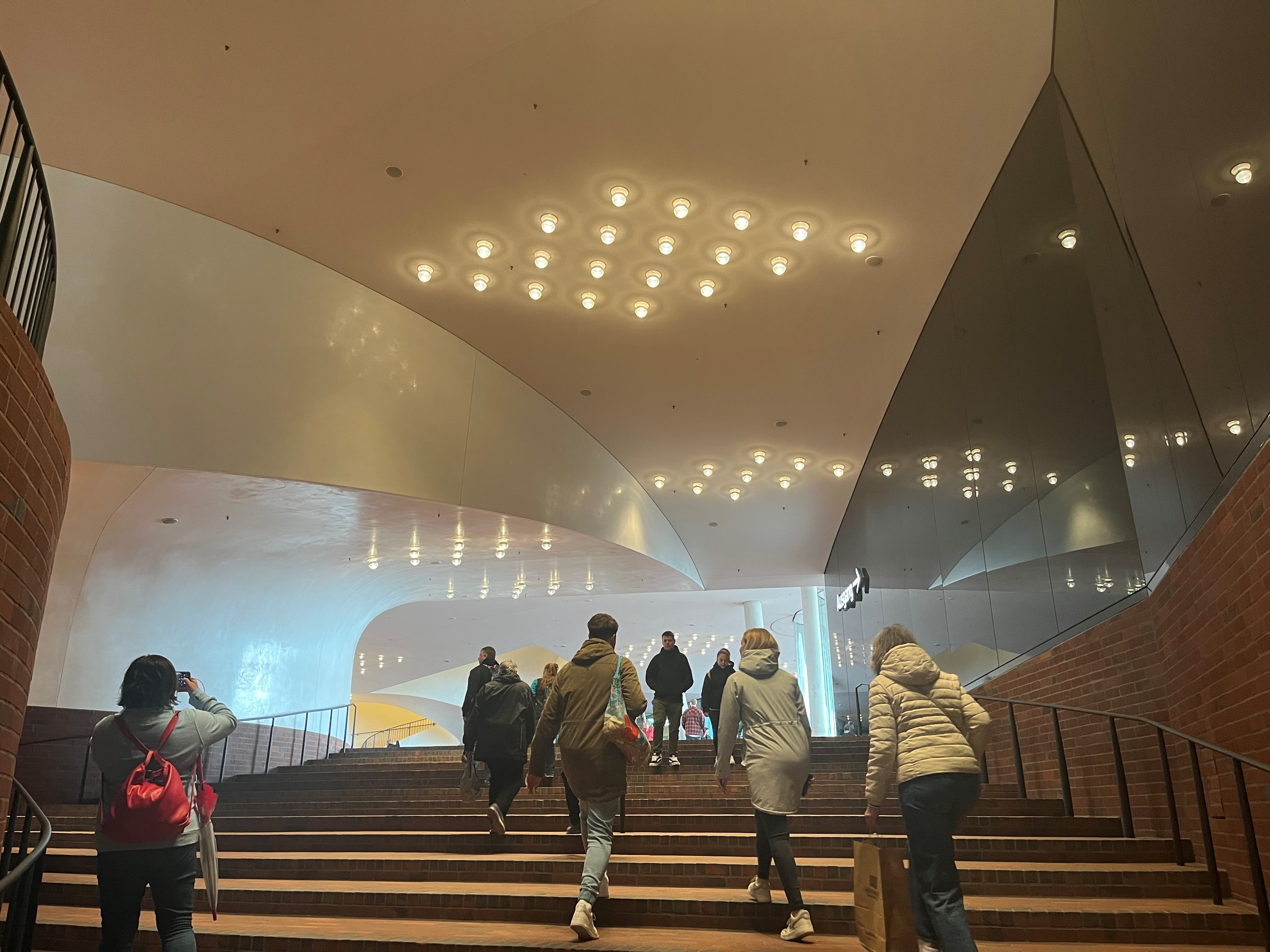
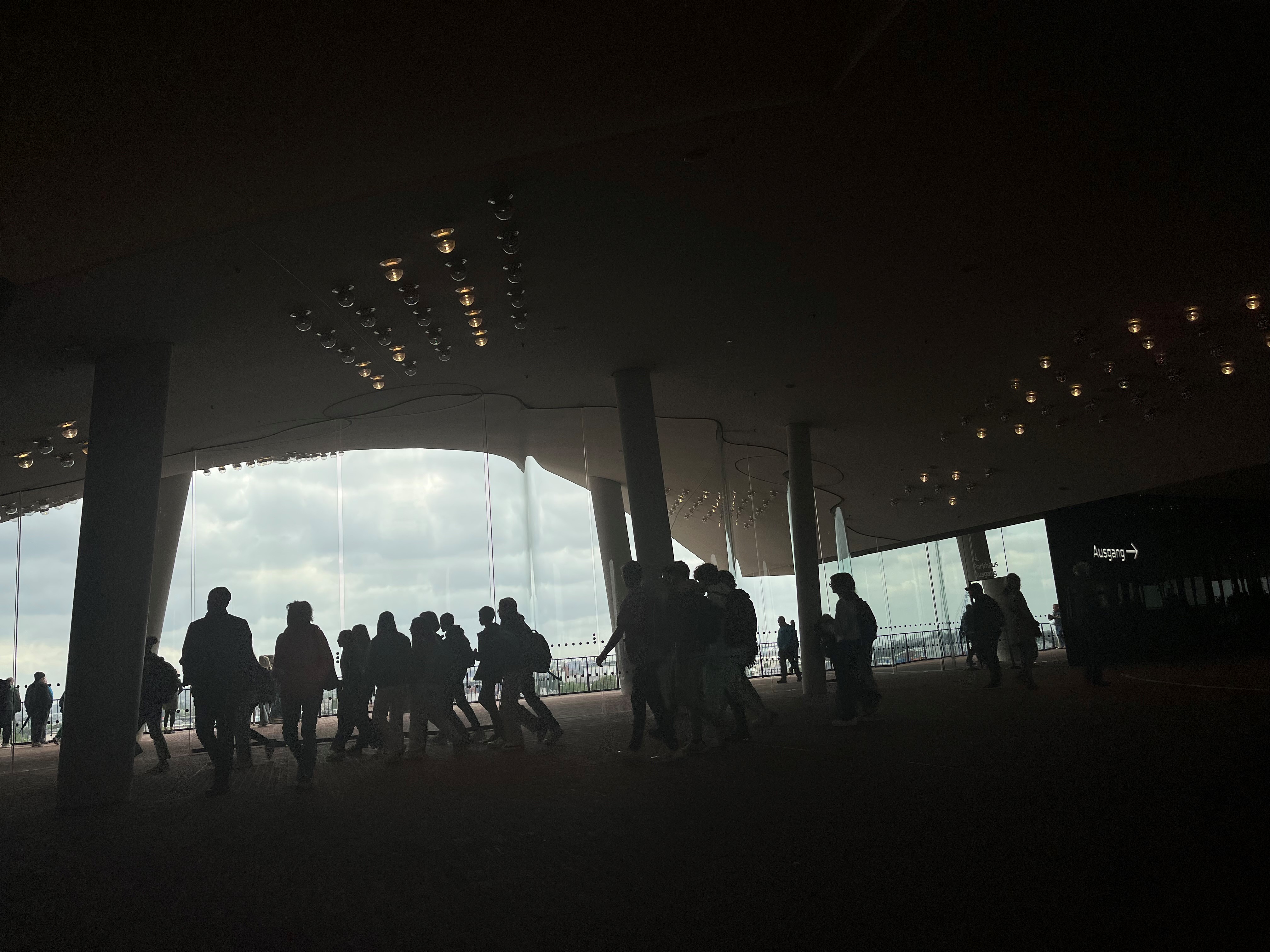
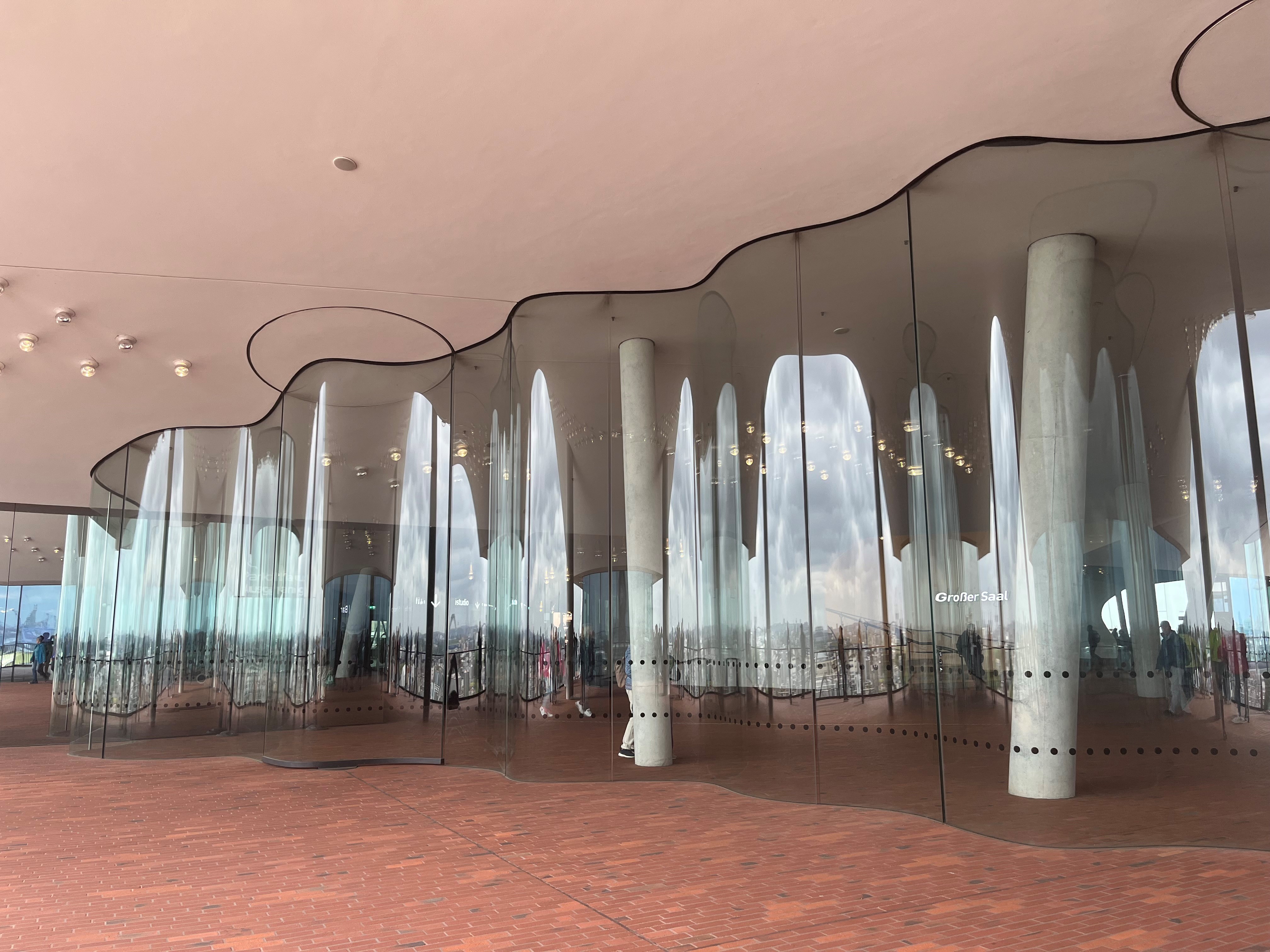
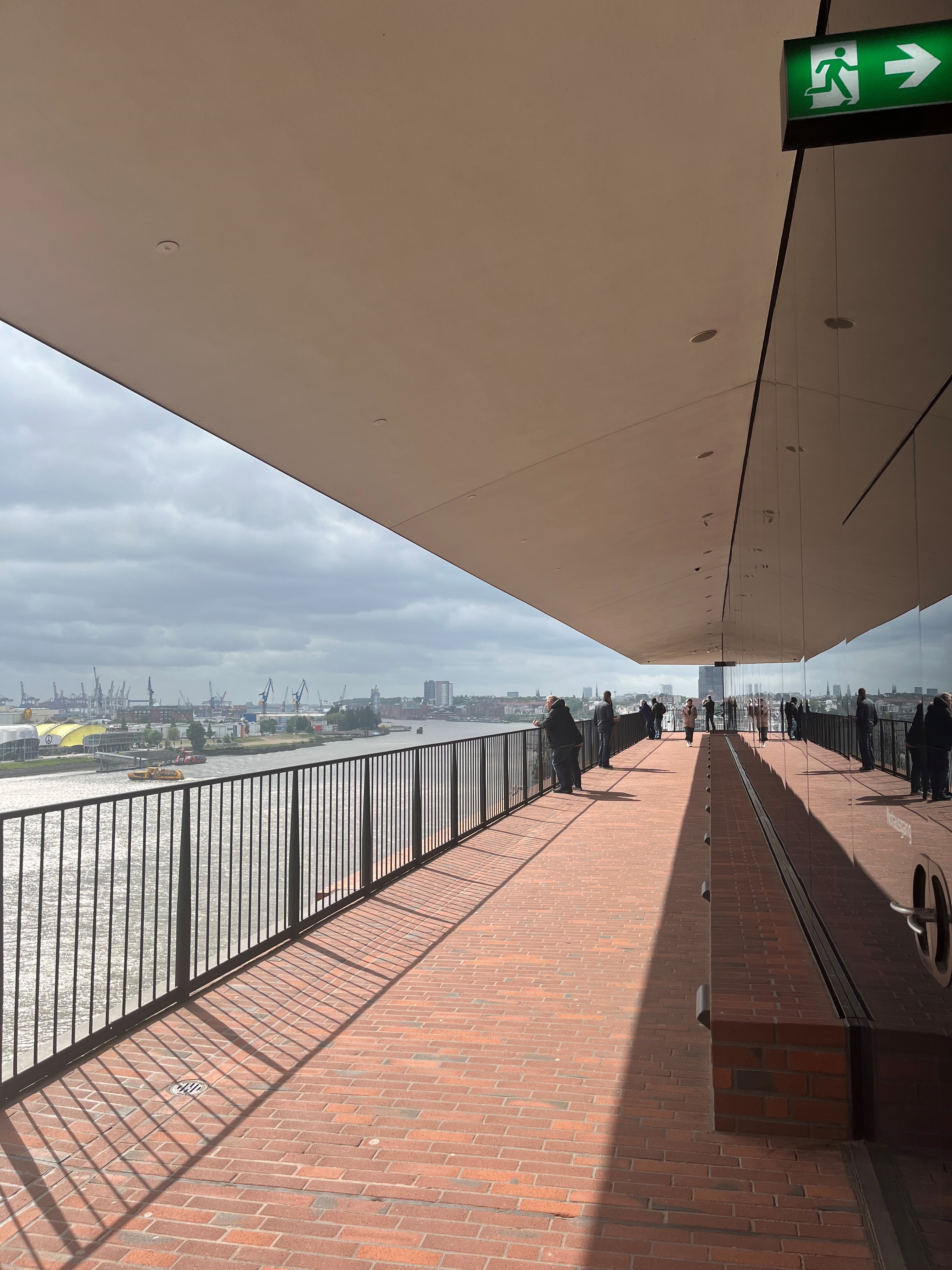
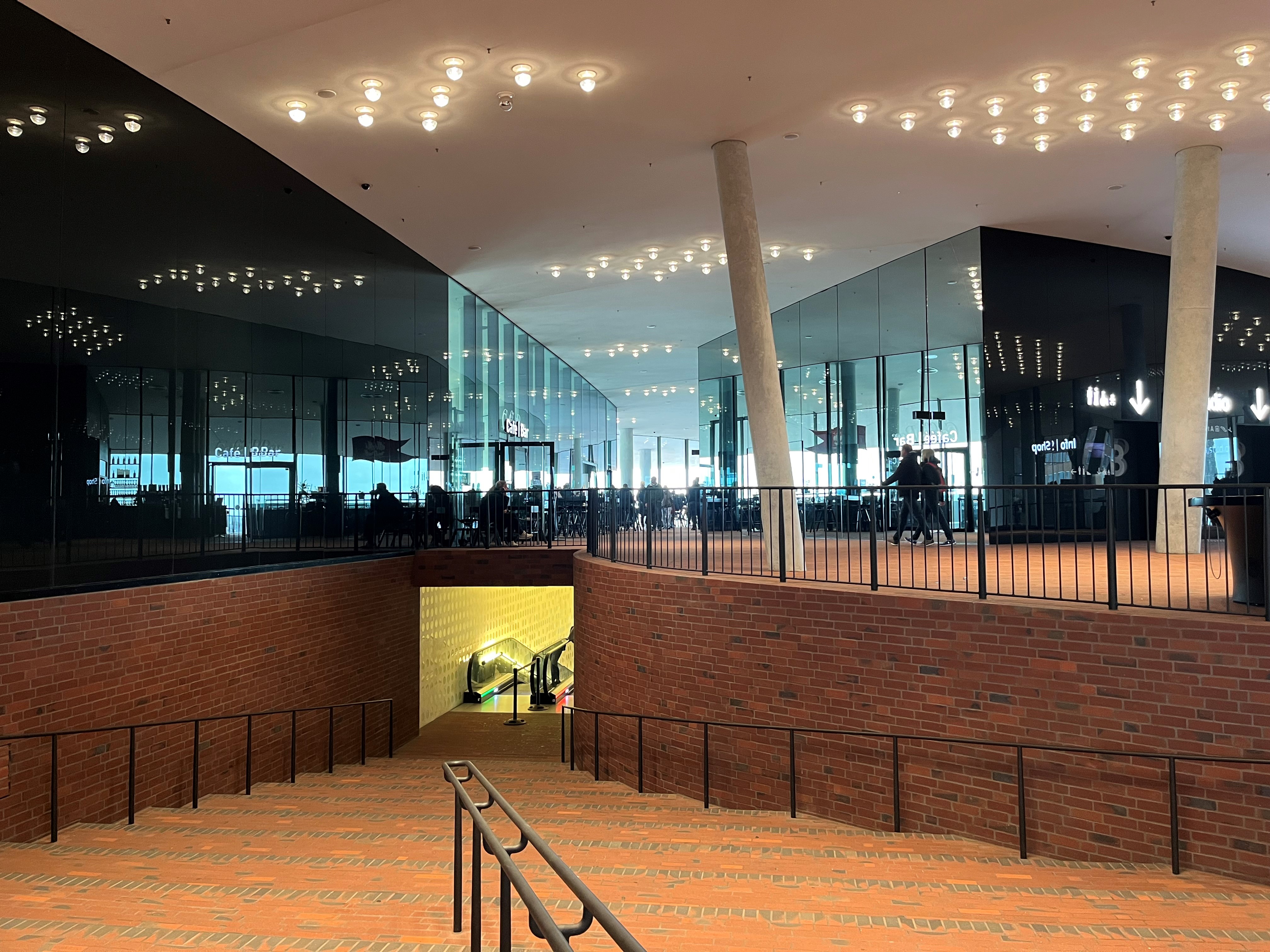
Well, alright, that last sentence comes qualified. Strictly speaking, it’s only the observation deck of the Elbphilharmonie, sandwiched into the thin space between the brick and the glass, that’s open to the public — but getting to that is, in itself, an experience. This is because access to the complex is gained by escalator — specifically, a CURVED escalator, one that starts off steep and zooms upward through a white tunnel before gradually levelling off. (You can actually see this curvature in action at the base of the building; call me an unsophisticated lout but I stood there gaping for quite a while when I first saw it in action.) Eventually the escalator dumps you in a wide, airy plaza, surrounded by wavy glass and the Elbe outside; a staircase nearby spirals upwards to the concert hall itself, open for anybody who’s been fortunate enough to book a tour; the interior itself, however, is impressive enough for the casual tourist to sit and gawp for ages, and indeed I sit there for quite some time, admiring how the lights and the glass interplay, watching the silhouettes as they flow in and out of the atrium.
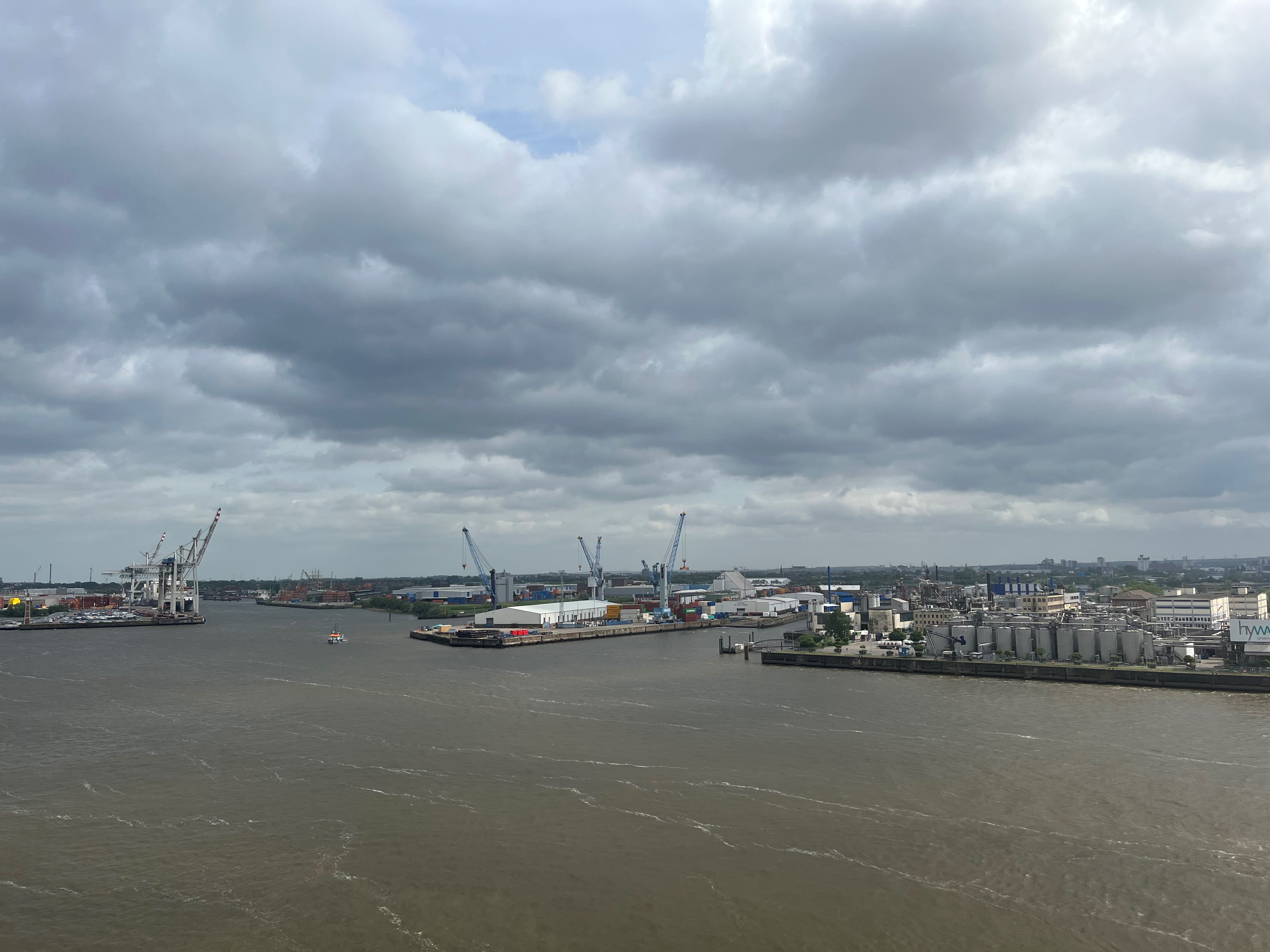
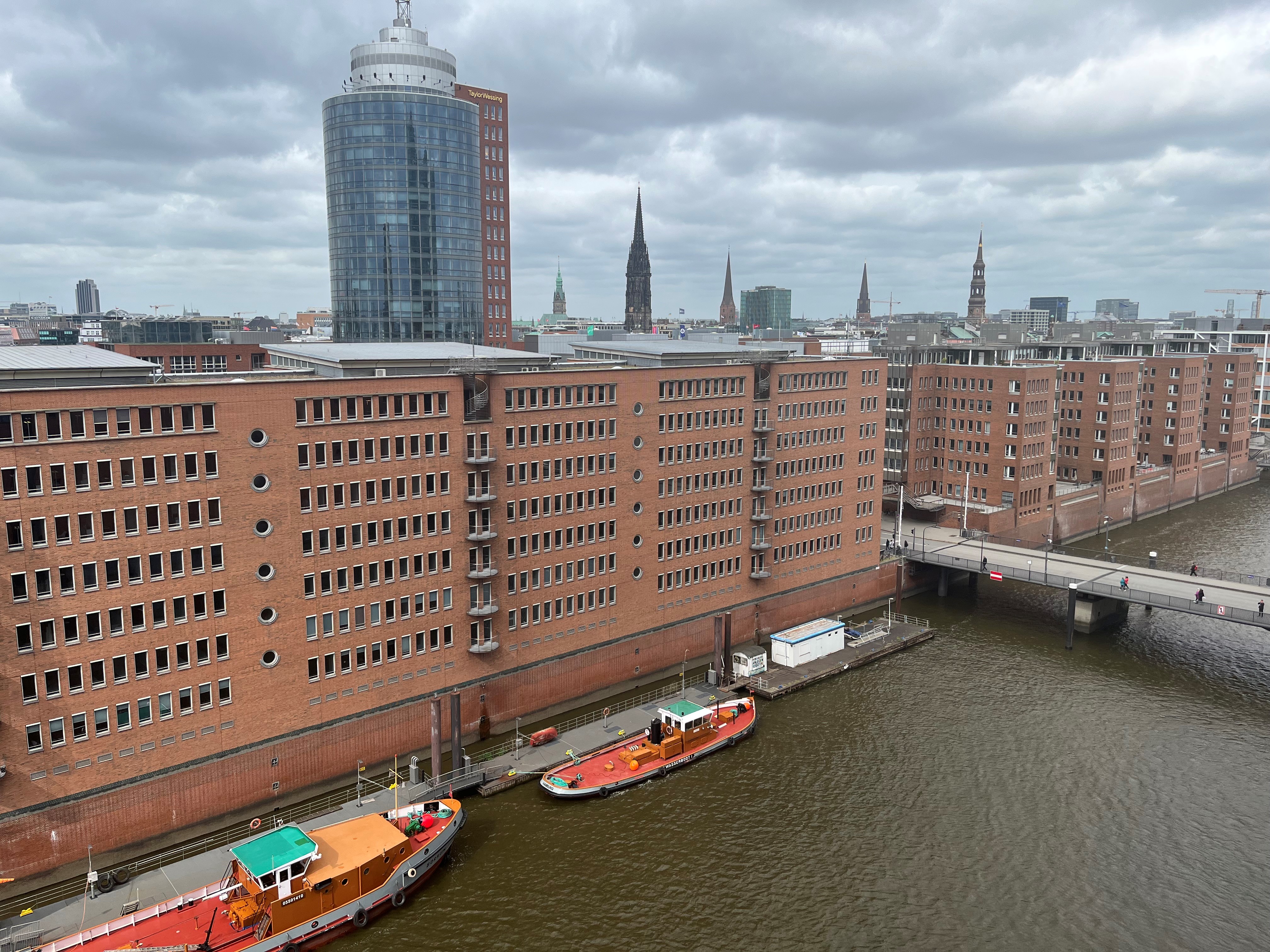
Eventually I walk outside. For the second time today I nearly have my hat blown off by the freezing wind; my hat being safeguarded, I turn my attention to the panorama below. Here the duality of Hamburg presents itself once more: on one side, modern machinery and storage spaces, with commuter boats criss-crossing the Elbe; on the other facing the Speicherstadt, a clutter of brick warehouses, lined up against the canals, with ancient barges and salvage craft just outside them to match. For me, this view sums up my experience of the city so far: a heady mix of infrastructure, where pockets of old and new mingle with each other. It makes for a very chaotic collage, but I like it all the same, this charming mix of unknowables.
I suppose that’s why I get so starry-eyed about the Elbphilharmonie: it’s a building where the old and the new collide to wonderful effect. The brick base and the glass roof are almost diametrical opposites: one’s an earthy, plain structure, the other’s a porous monstrosity that would give any trypophobic a nightmare. They shouldn’t work well together, and yet when stacked on top of one another they make perfect sense, and people even get to thrive in the spaces between (and above and below, too — the glass structure above our heads is part apartment block and part hotel). In a sense it’s a building that acts as a microcosm of Hamburg: pockets of history and modernity that clash awkwardly with each other, yet somehow the resulting mess still looks pretty good, and I wouldn’t replace it with anything more conventional.
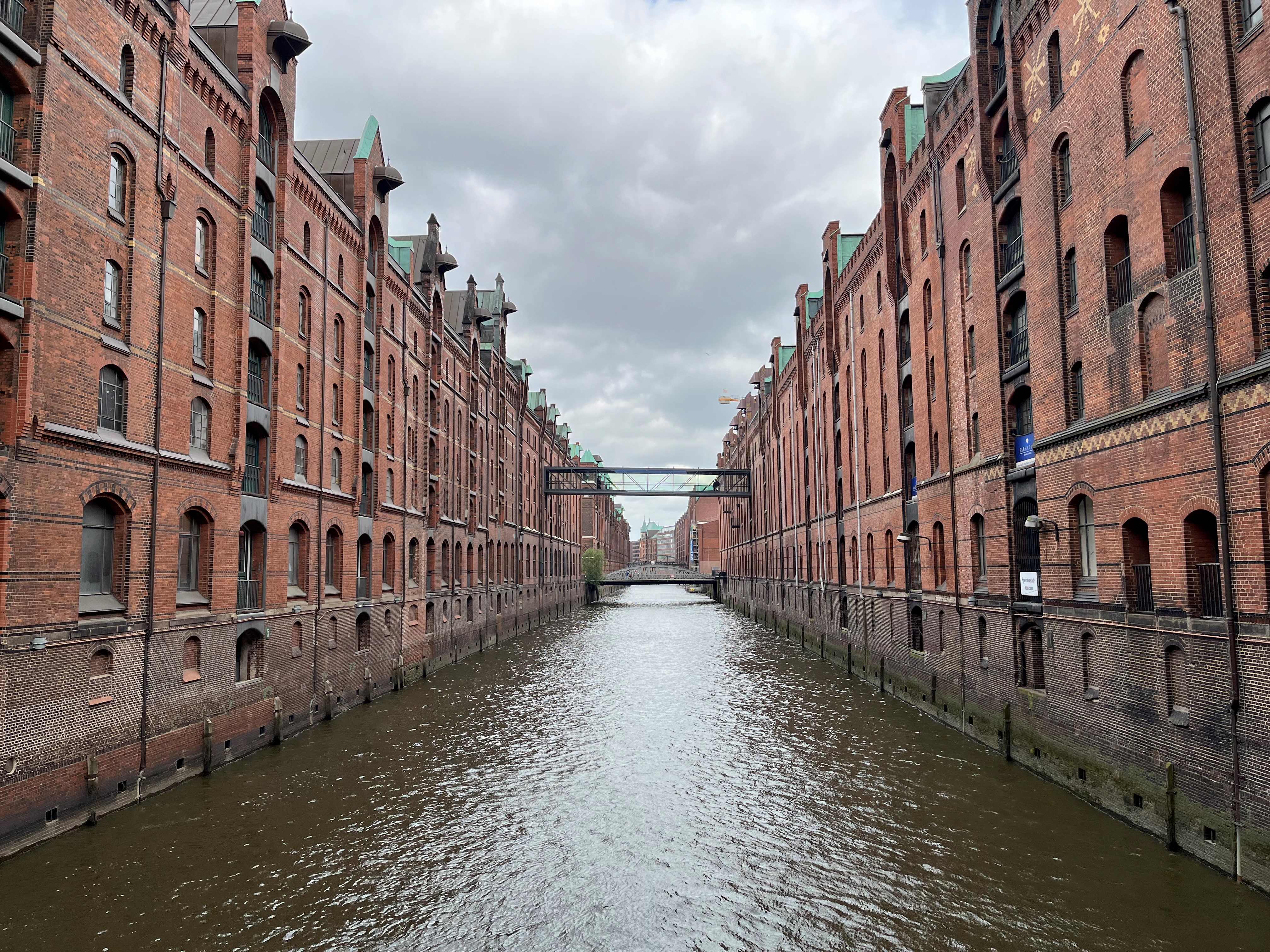
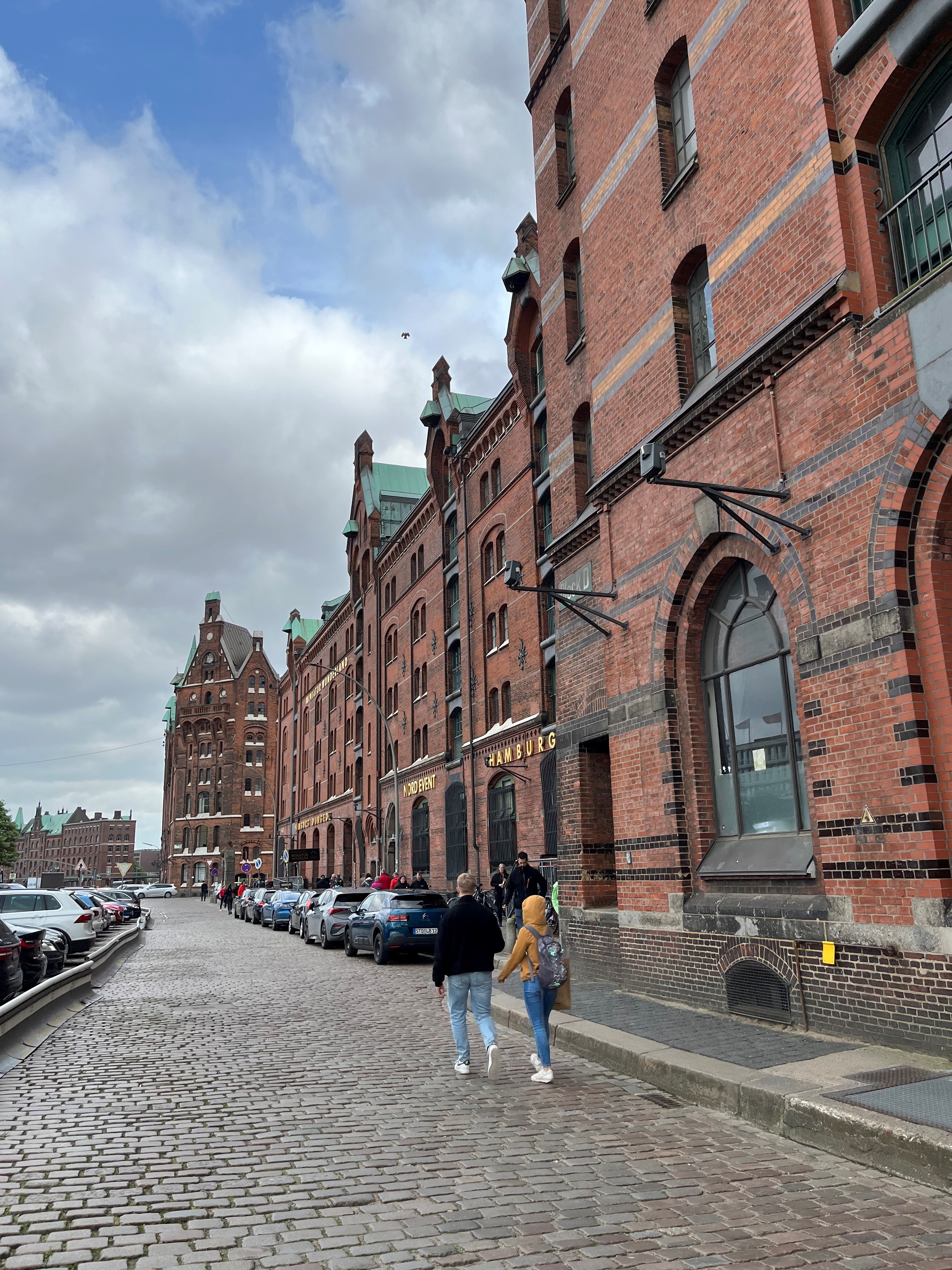
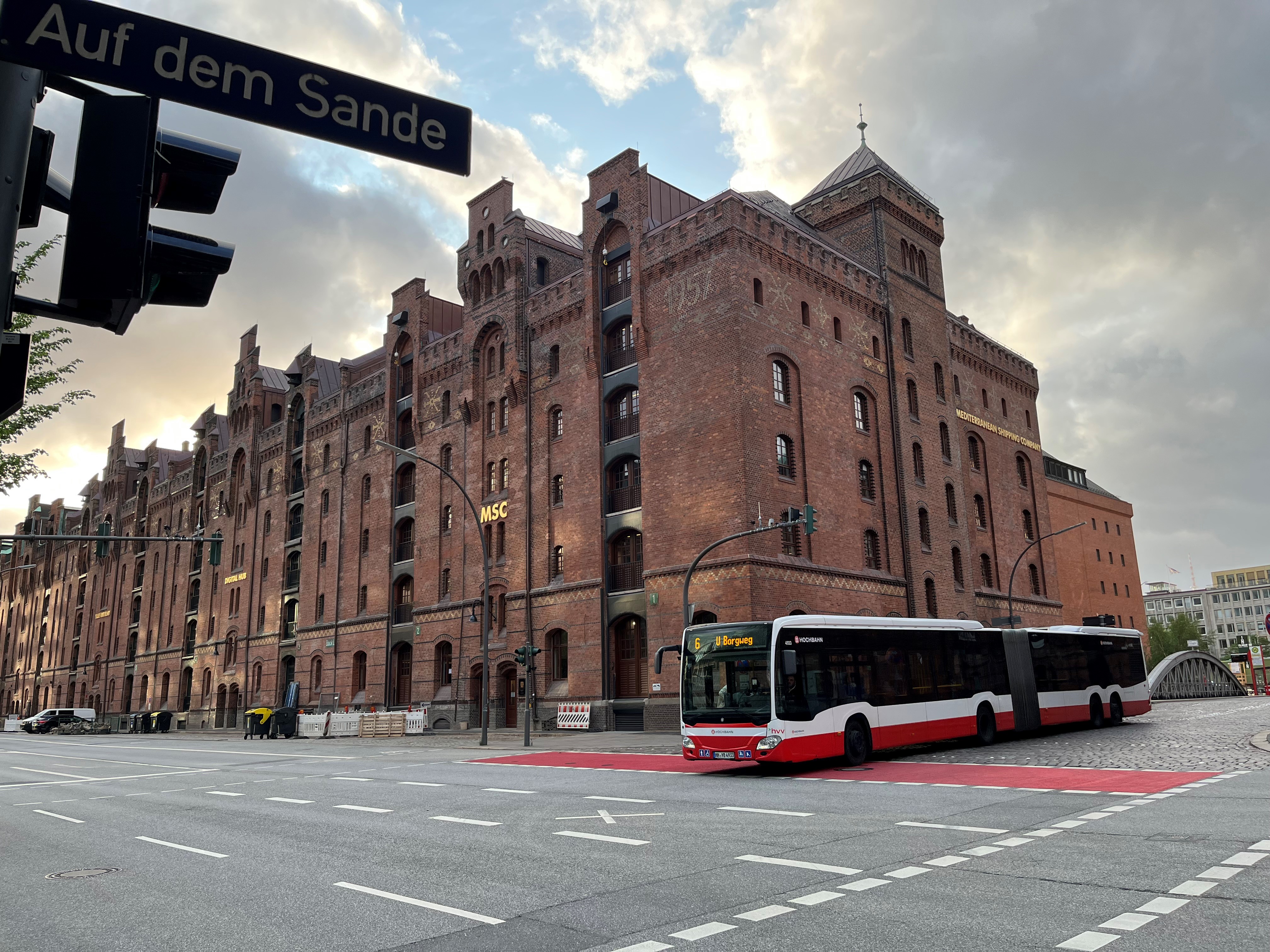
Half an hour later, I’m back down on solid ground, walking amongst the warehouses of the Speicherstadt. The name means “city of warehouses”, and that’s certainly not an exaggeration: row upon neat row of identical warehouses, all tall and imposing with the same red brick, dark Gothic windows and roofs of bronze. A series of canals thread through the buildings, while steel walkways connect them way above the streets. It all reminds me of Liverpool, which I’ve visited a couple of times, but not even the Albert Dock conglomerated warehouses on such a large scale. It also wasn’t this chilly: it’s close to evening and whatever heat energy I stored from lunch has disappeared from my body, and I find myself breaking into something of a sprint. Reach one of the warehouses, zoom inside — heavens be praised, it’s got heating — and sit down in the nearest corner, ignoring the curious looks from passers-by. Maybe I’m perpetuating the old “uncultured Chinese tourist squatter” stereotype, but I’m too cold to care; and anyway Dennis should be arriving soon enough.
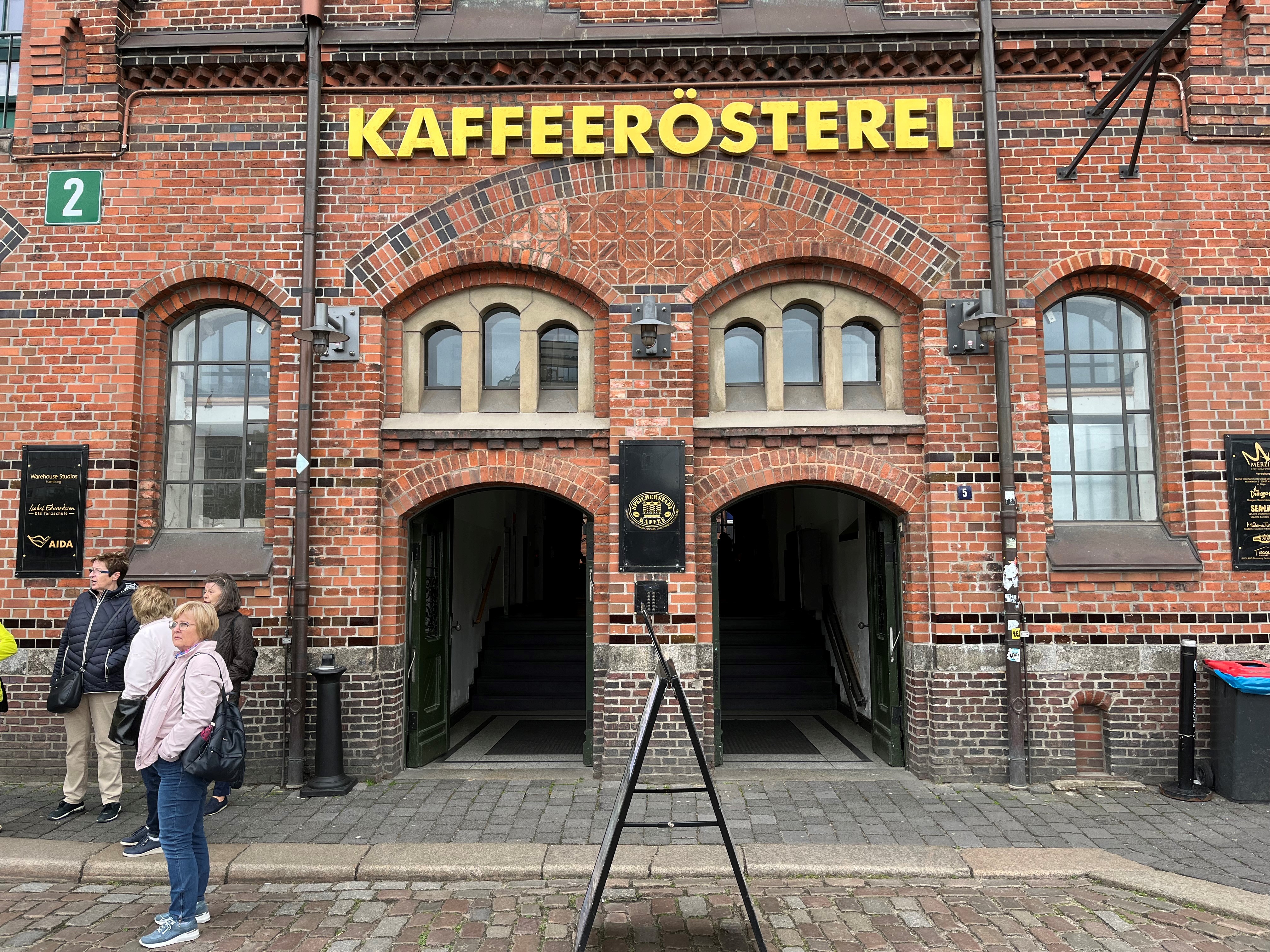
Half past five, and Dennis’ eager face pops round the corner. Together we ascend the stairs of the warehouse, me telling him about the wonders of the Elbphilharmonie, him telling me about the wonders of the sightseeing buses here, before we step onto the second-floor landing and our highlight for the day — as it is of any trip to Hamburg.
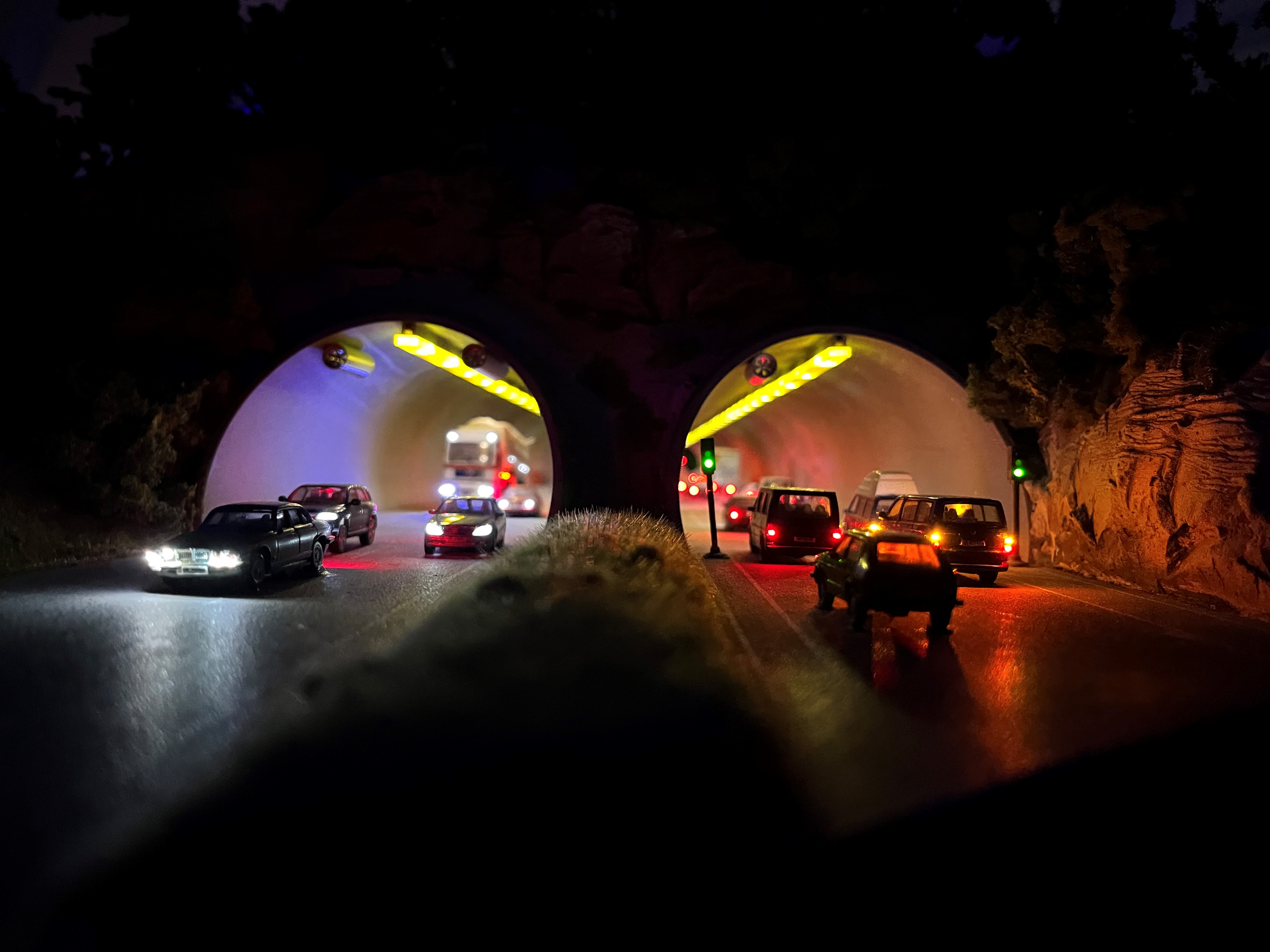
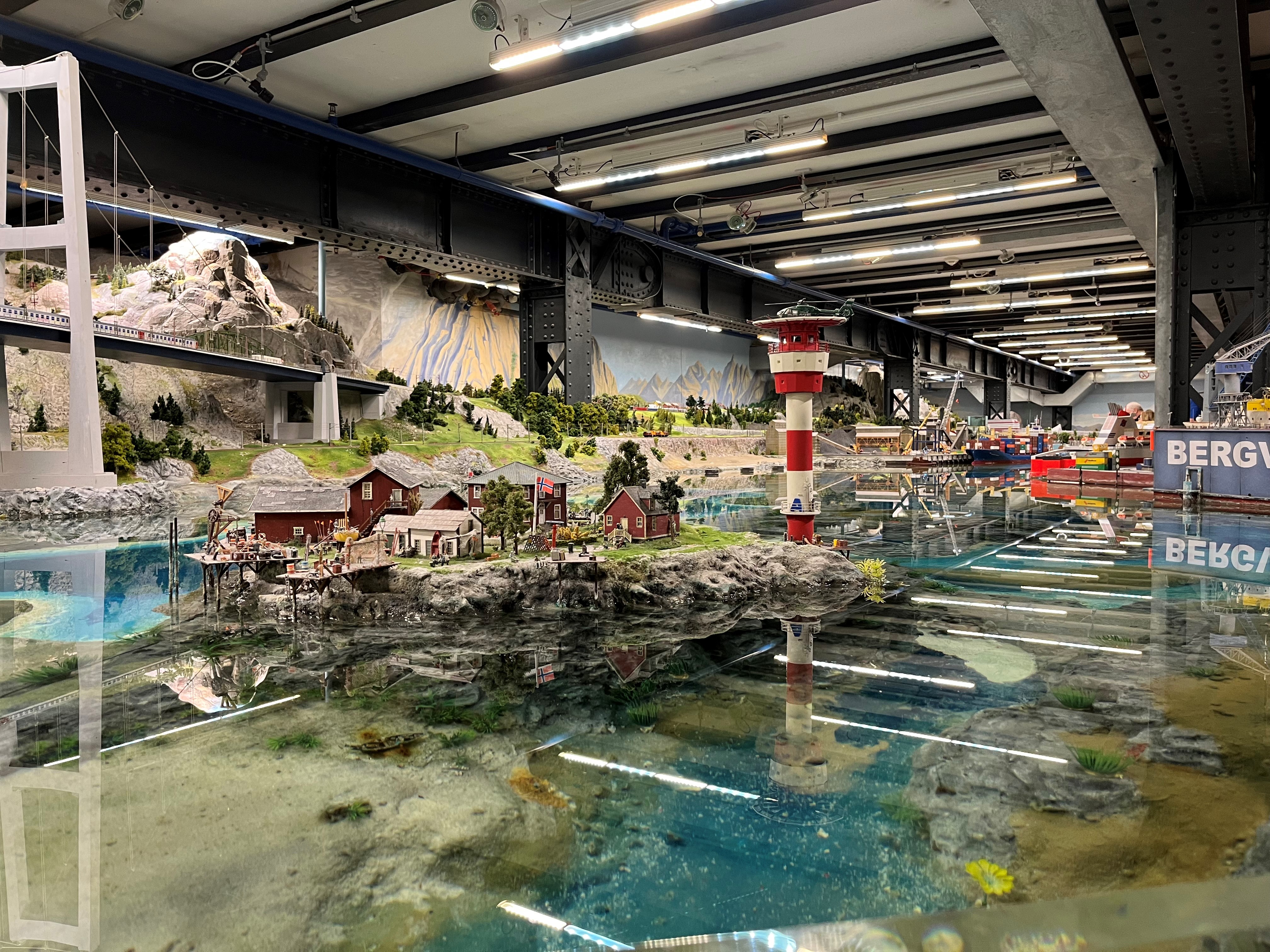
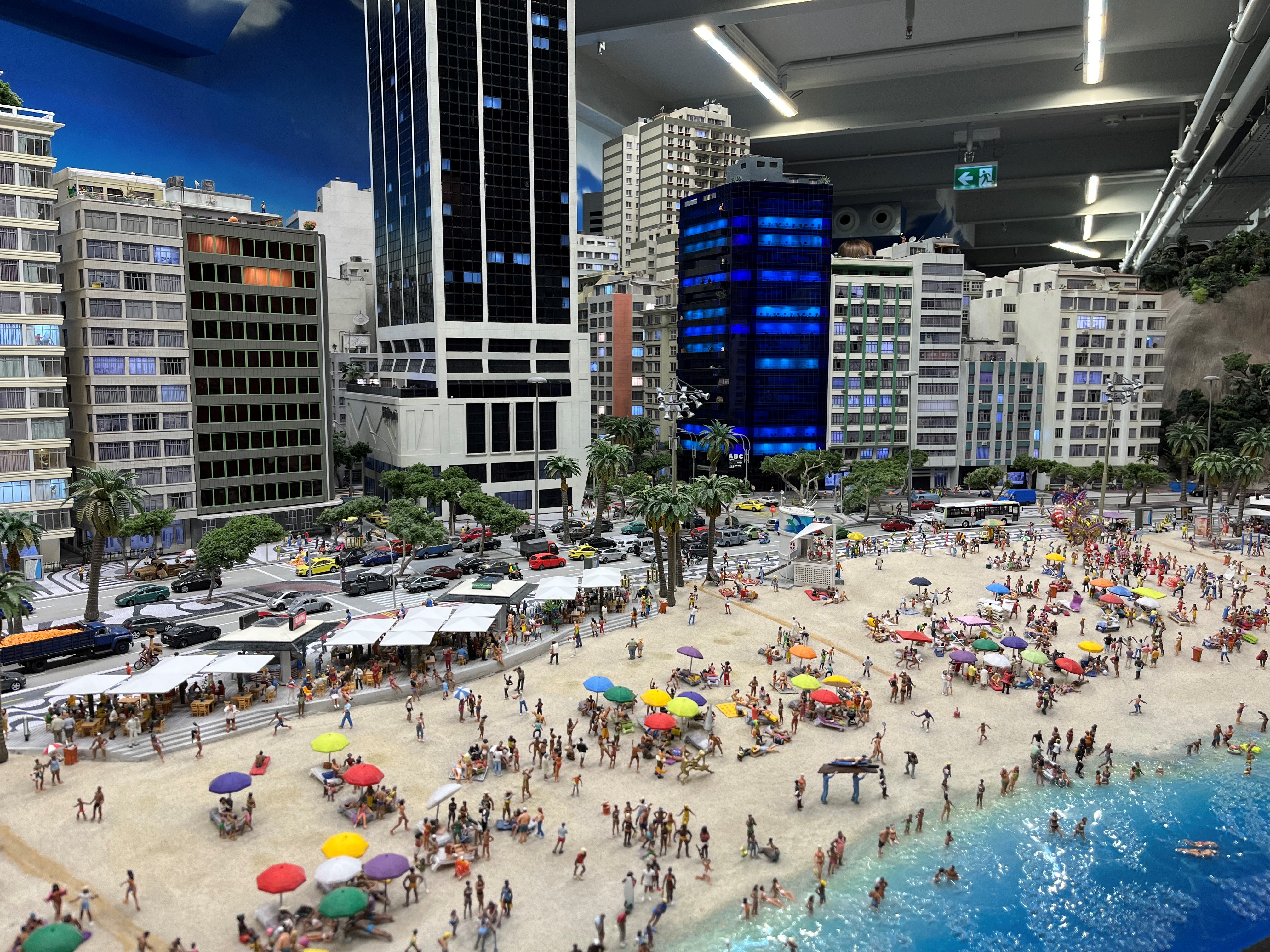
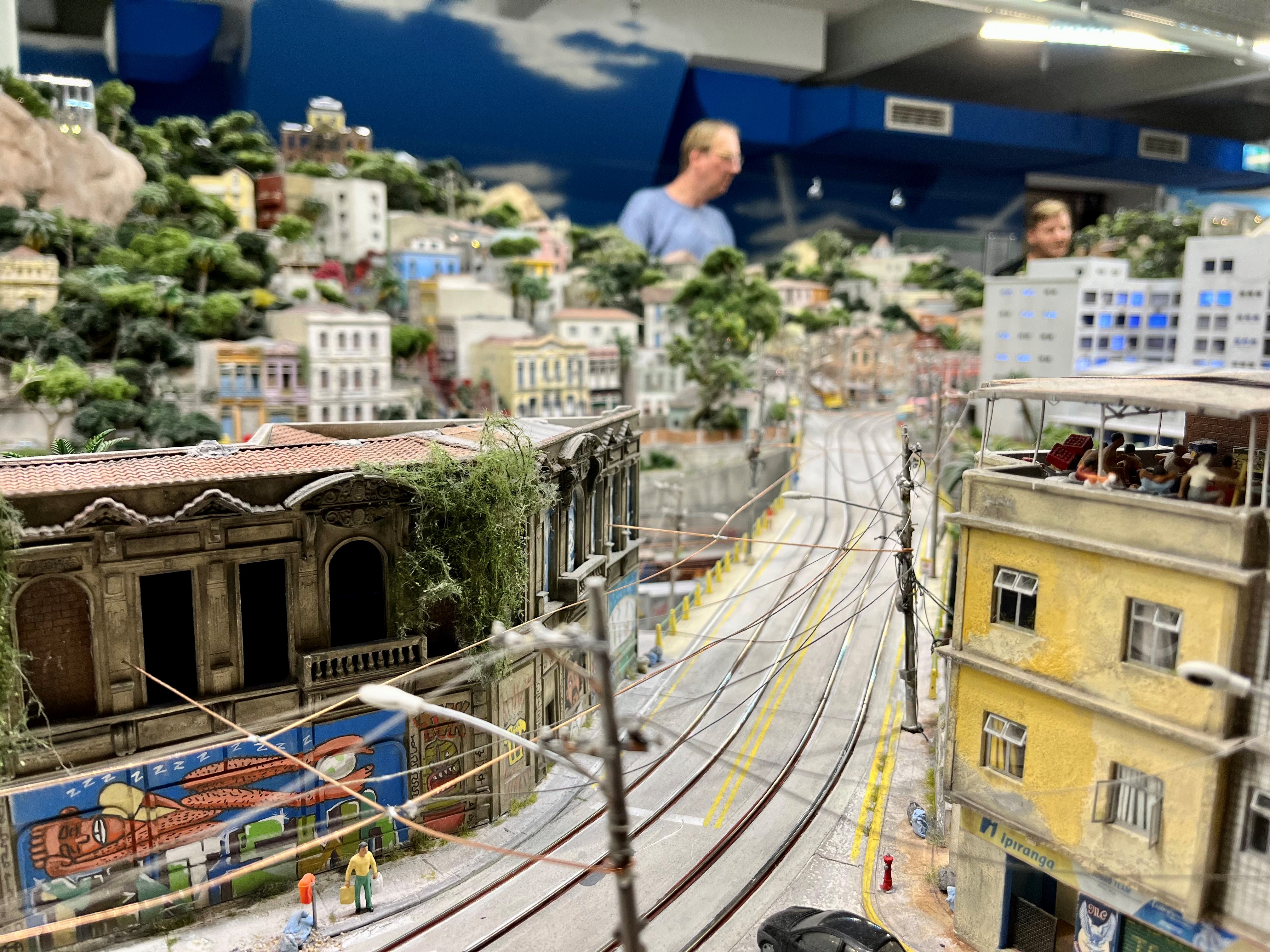
Simply put, Miniatur Wunderland is a model railway exhibit. Describing it like that, however, is rather like calling Germany “a large country”, or me “a bit elaborate when he writes”. Miniatur Wunderland is HUGE: a multi-storey exhibit that has no less lofty a goal than to replicate the entire world in miniature, as well as run railways through it for good measure. It’s not the kind of project that some geek might work on in their spare time: since it opened in 2001, the whole project has laid over sixteen KILOMETRES of track and become the home of more than 289,000 dainty figurines and almost 1200 trains (and 52 planes as well, because why not). It is a project of epic proportions and ambitions, so it’s only fair that over time it’s become Hamburg’s number one tourist attraction, as attested to by the large “visitors from around the world” board situated in the foyer.
As one might expect of a museum situated in Hamburg, much of the exhibits here are dedicated to Europe and especially Germany: the model for central Germany greets the visitor as they enter the premises, and right from the start Dennis and I are captivated by everything we see, poring over the models from up high and pointing excitedly at our latest discovery. I’m not going to pretend that I was most taken by the storytelling — my main reaction can be summarised as “wheeeee train go whoosh” — but over time it also registers just how much detail, how much love and care has been put into making these landscapes and making them truly multifaceted recreations of the lands depicted. There are “people” celebrating a village fete, waiting for a train, injured in accidents, or just copulating in the sunflower fields. (Perhaps to illustrate the close relationship between life and death, policemen fish a corpse from the river barely a couple of metres away.) And in between all of these happenings, trains rush in and out of stations and tunnels, all with the greatest precision and smoothness; cars and lorries on the adjacent roads, though fewer in number, dance no less complexly around one another.
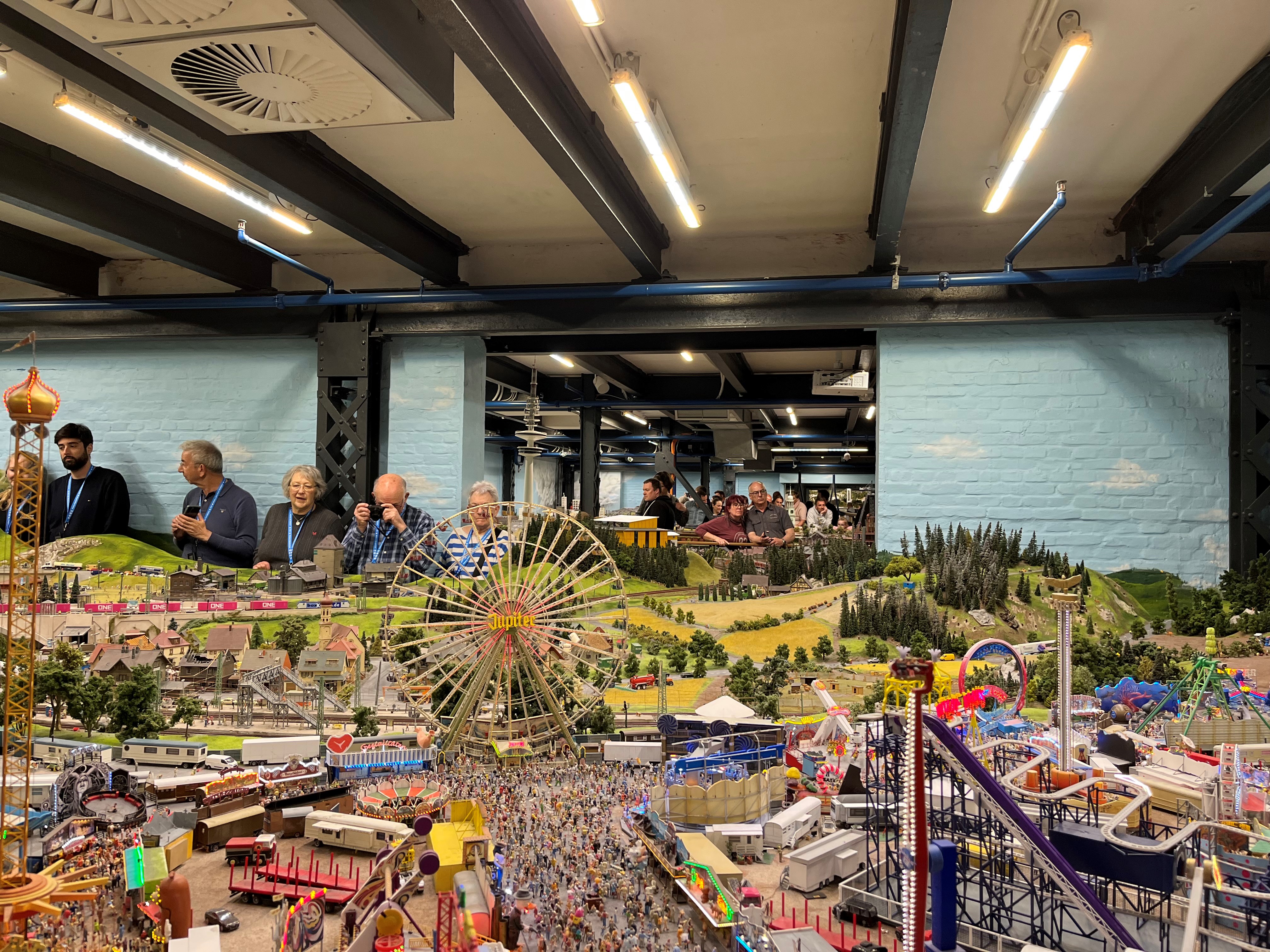
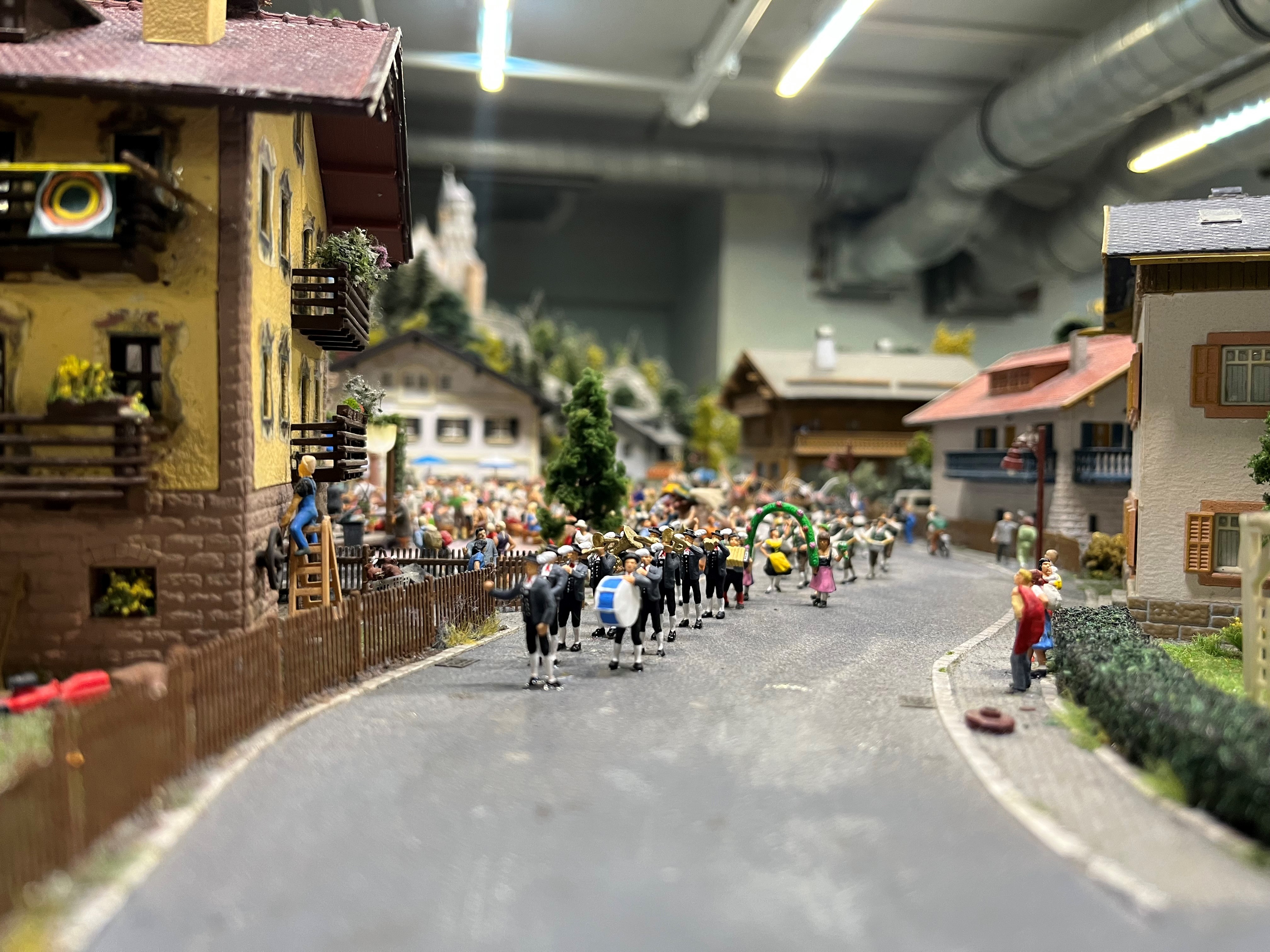
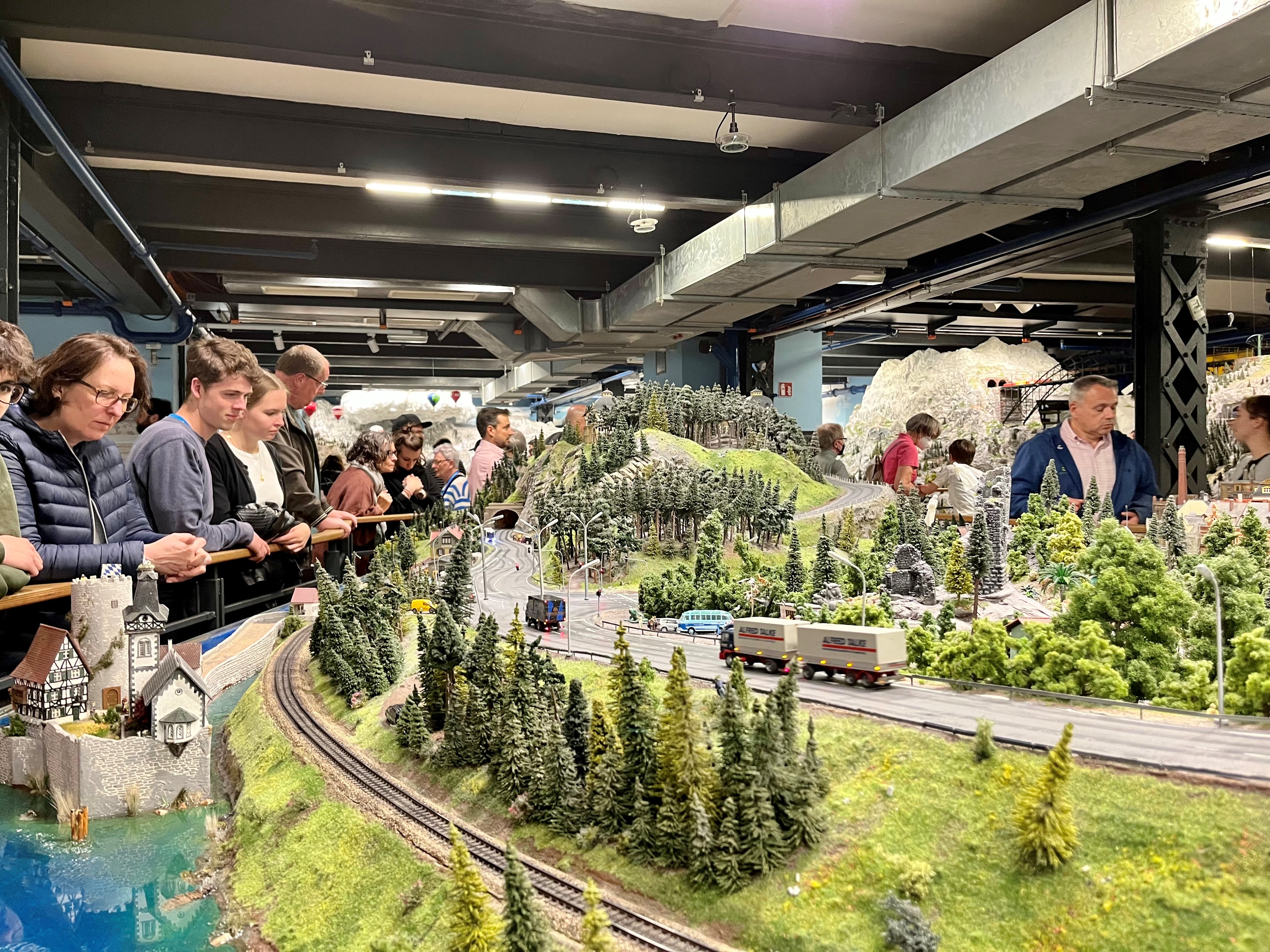
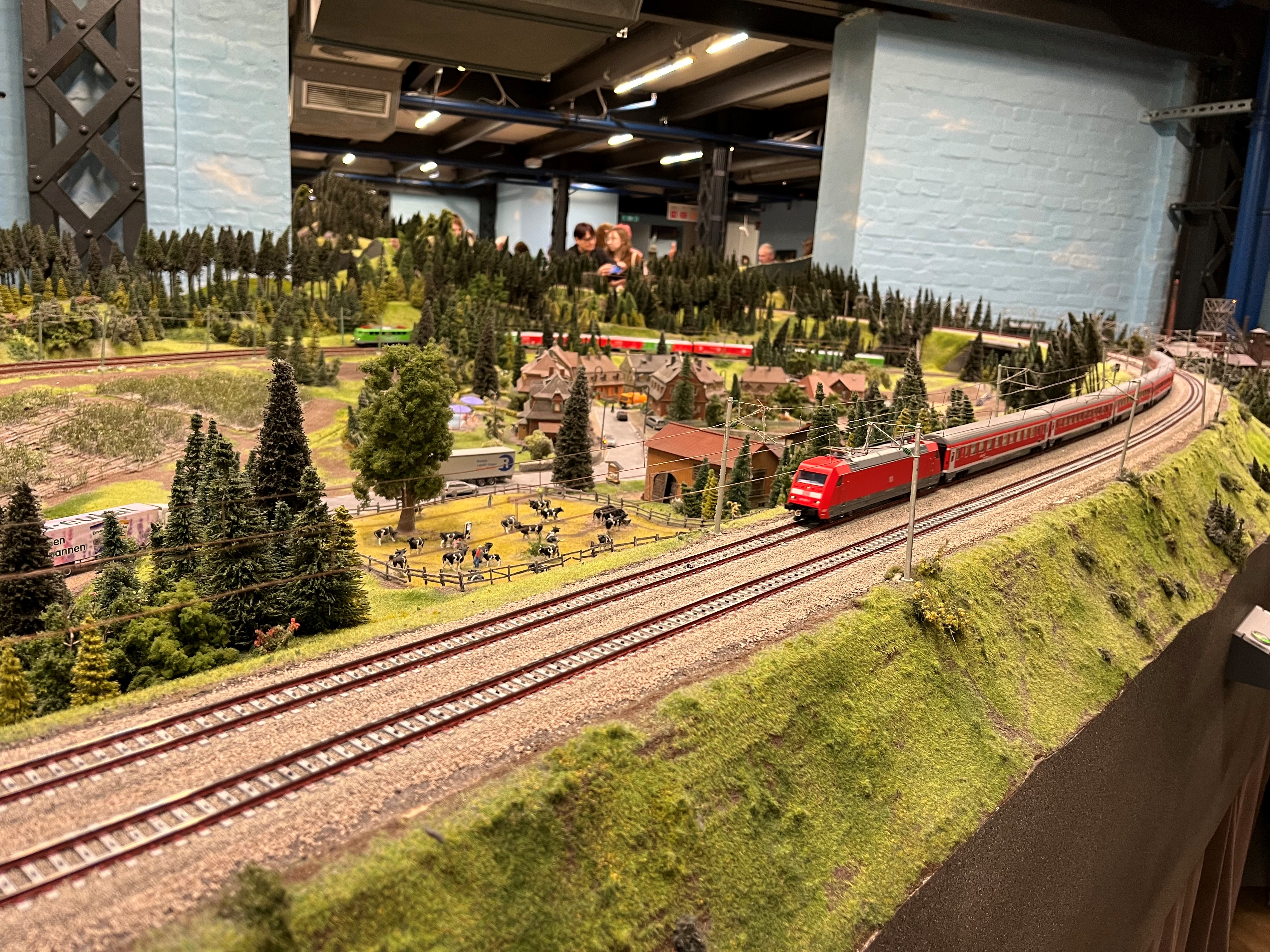
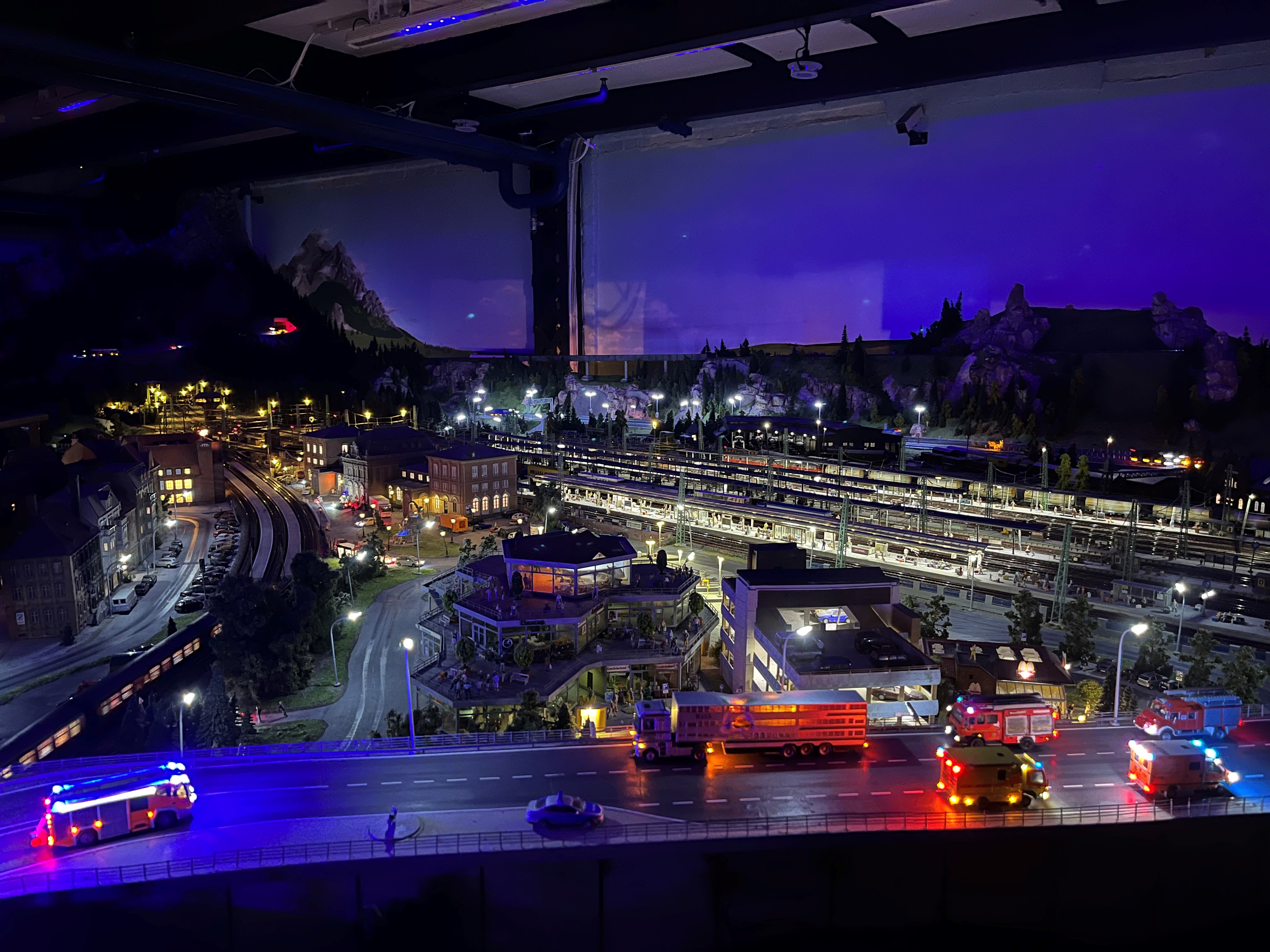
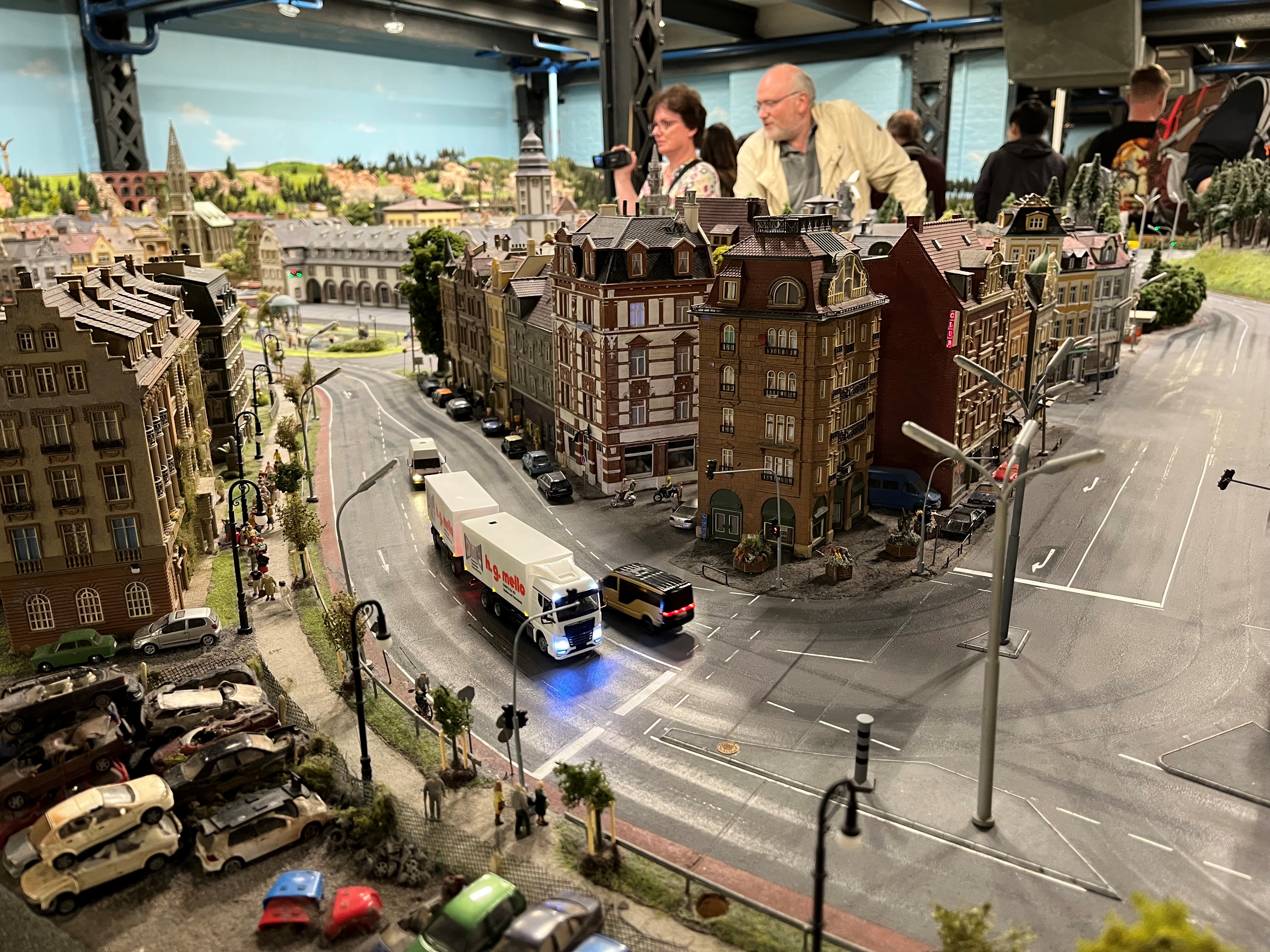
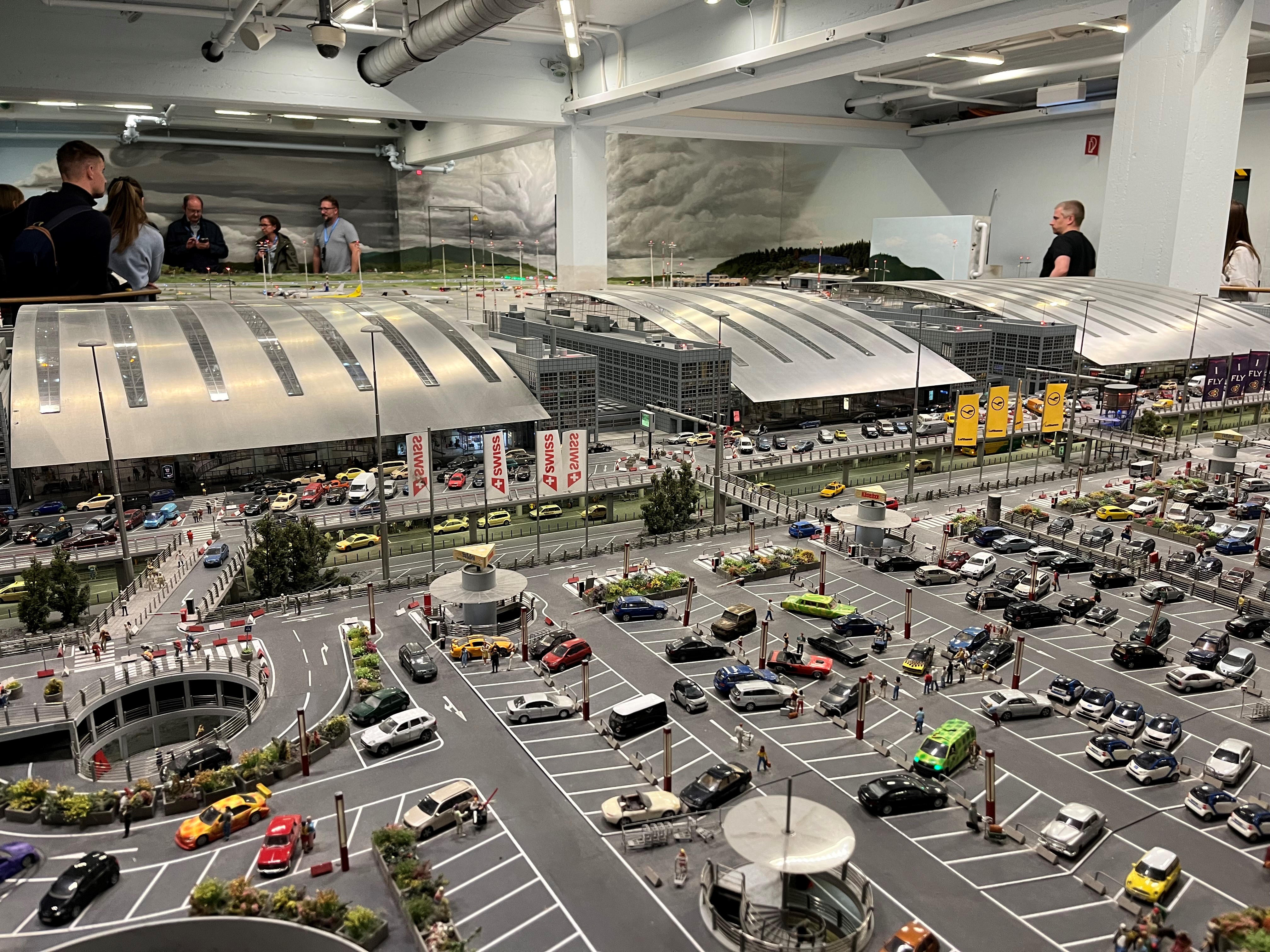
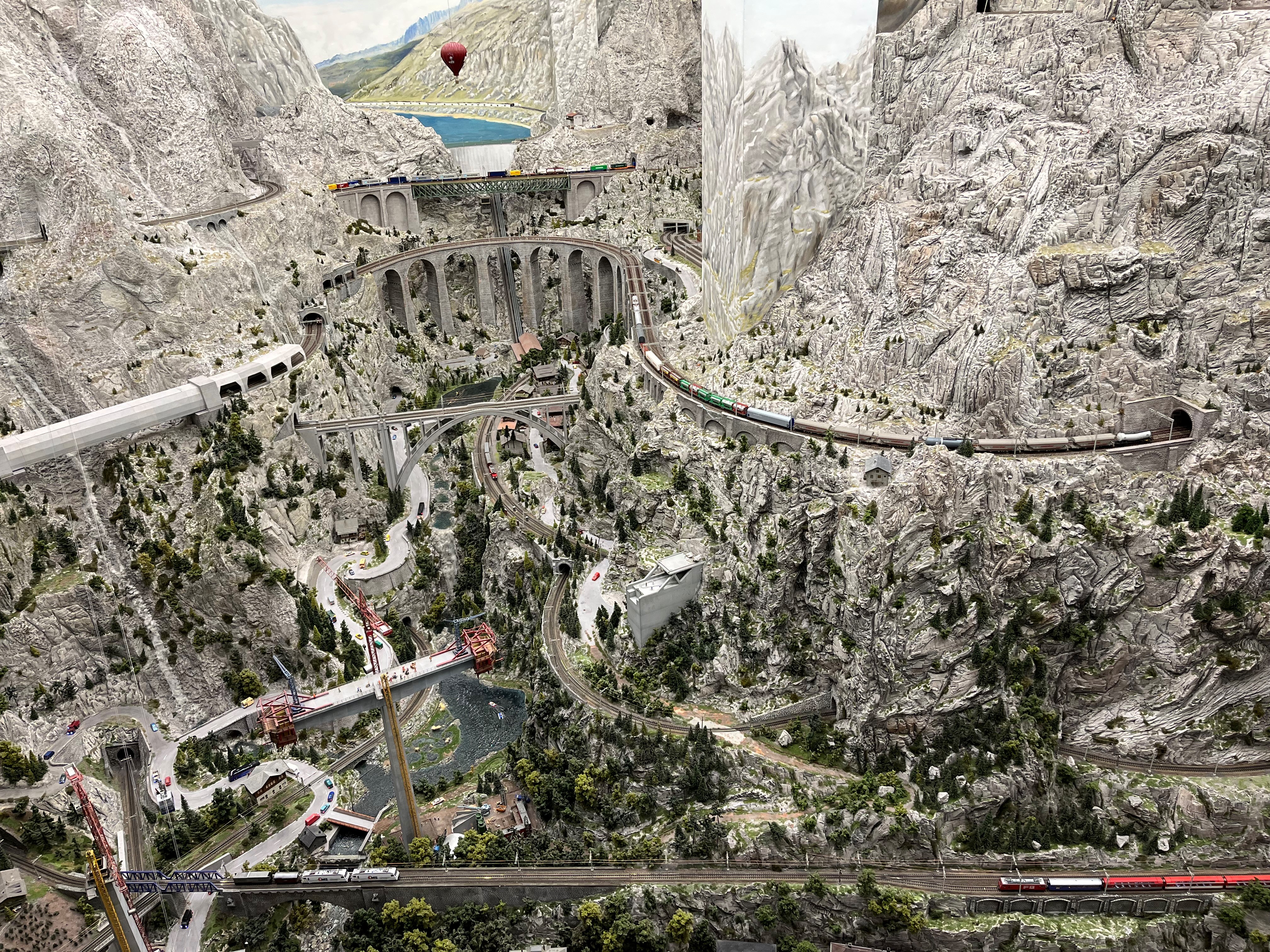
It’s half an hour before we even remember that there are different exhibits here, and the dedication and effort the Wunderland has paid on those is no less impressive. To describe them all here would be a fool’s errand, partly because it’s something you have to experience for yourself and partly because there’s just so much to look at: mineworkers in Austria, a rocket launch in America, lavender fields of the Provence, and of course a model of the Elbphilharmonie just down the road that swings open to reveal its glorious interior. For Dennis, though, nothing compares to the model of Hamburg Airport, situated at the far end of one level: here one can watch trains actually taxi from the terminal onto a runway, before they take off into a great unknown (that is, a hole in the opposite wall). Engine noises blast from loudspeakers above, the whole display seems to shake a little, all of which only add to his delight; when I futilely try to pull him towards the snowy mountains of the Swiss exhibit, he insists “just one more… just one more, please”.
To be honest I can’t blame him either: everything here appeals to my inner child, and everything here is brilliantly made. The combination of the stick figures and the stunningly made models means that Miniatur Wunderland truly lives up to its name; even if you have no interest in model trains, miniatures or the entire concept of fun, the amount of craftsmanship put into these displays is surely worthy of praise. As I take one last walk around the Antarctica exhibit (because of course they have one, complete with penguins and everything), I come face to face with one of the founders, recognisable from one of the many videos the museum posts on YouTube, and it’s only because he’s busy chatting with an American investor that I don’t go up to him, and shake his hand for a job well done.
Walk out into the evening air. Although it’s still clear and bright outside, it’s already way past eight o’clock; we decide to have dinner at a nearby canteen (this being Dennis, of course it’s Italian). Waiting for our food, we get talking about our trip so far: today’s the midpoint of our visit to Europe, and given that we’ve already visited six cities together, I’m getting curious about what he thinks about all of those places. Through dinner, we rank Munich, Prague, Berlin, Vienna, Bratislava and Hamburg (and London, because apparently we did that once as well); he loves Prague for the antiquated charm and Berlin for the buses, I love Vienna and Hamburg for all the surprises I’ve gotten. “I think what I like about Vienna,” I say while sipping my apple cider, “is that it’s much slower, too. I don’t know, I just feel like I’ve had so much less pressure when I’m there…”
“But honestly speaking there isn’t that much to do,” says Dennis. “It just didn’t feel as atmospheric as Prague, and you’ve got much better things to do there anyway. I feel like we could have finished and left Hamburg today.”
“But it’s not just the sights that matter. Take for instance the transport here —” at which point the conversation deviates into nerdy tangents on transport that need not concern the reader. In any case, it shouldn’t surprise anybody that both of us have wildly different views on what makes a good European city: atmosphere counts for much in his world and less in mine; the lack of rush more in my world than in his. We also agree that this restaurant really knows how to do Italian food.
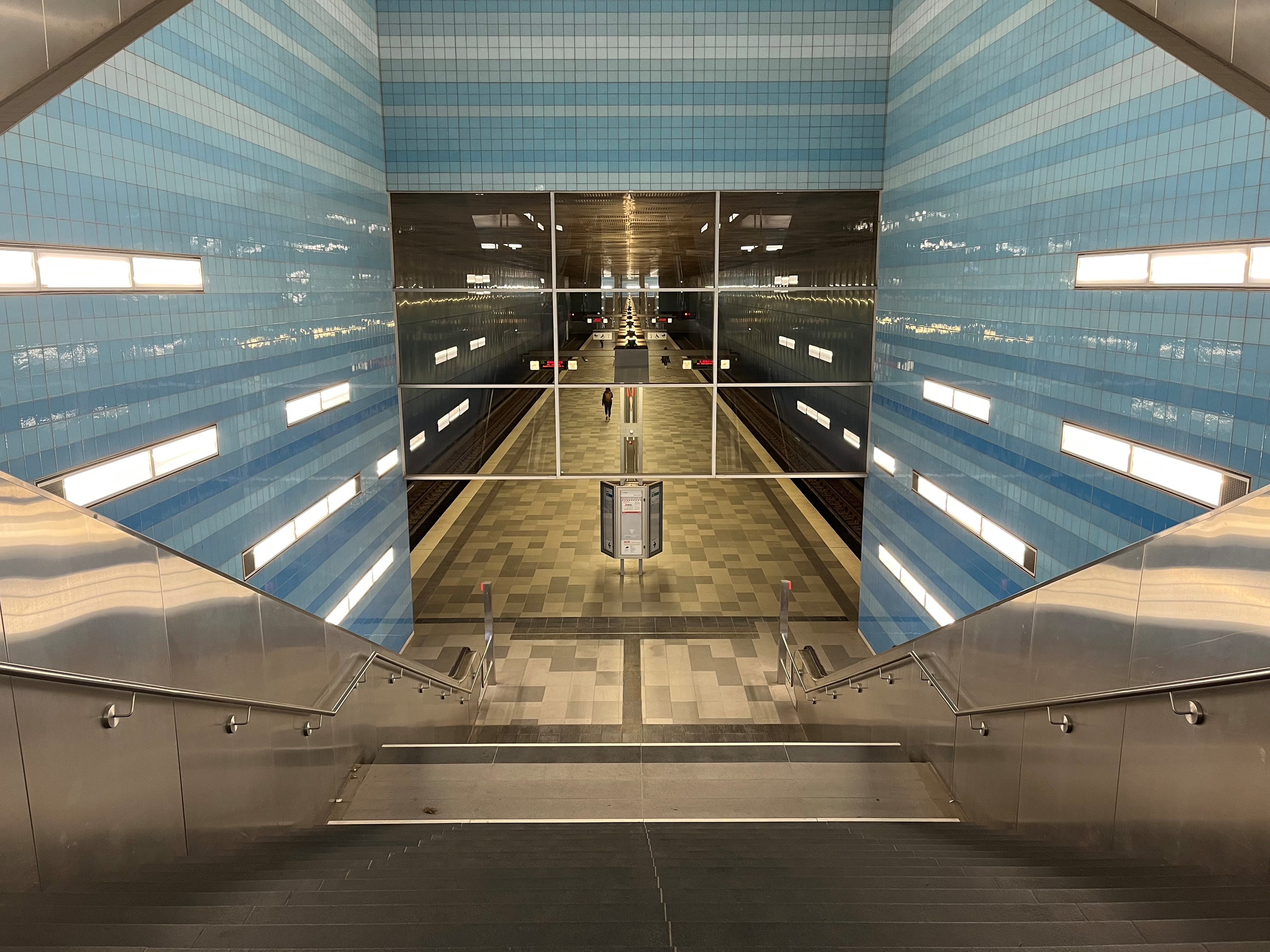
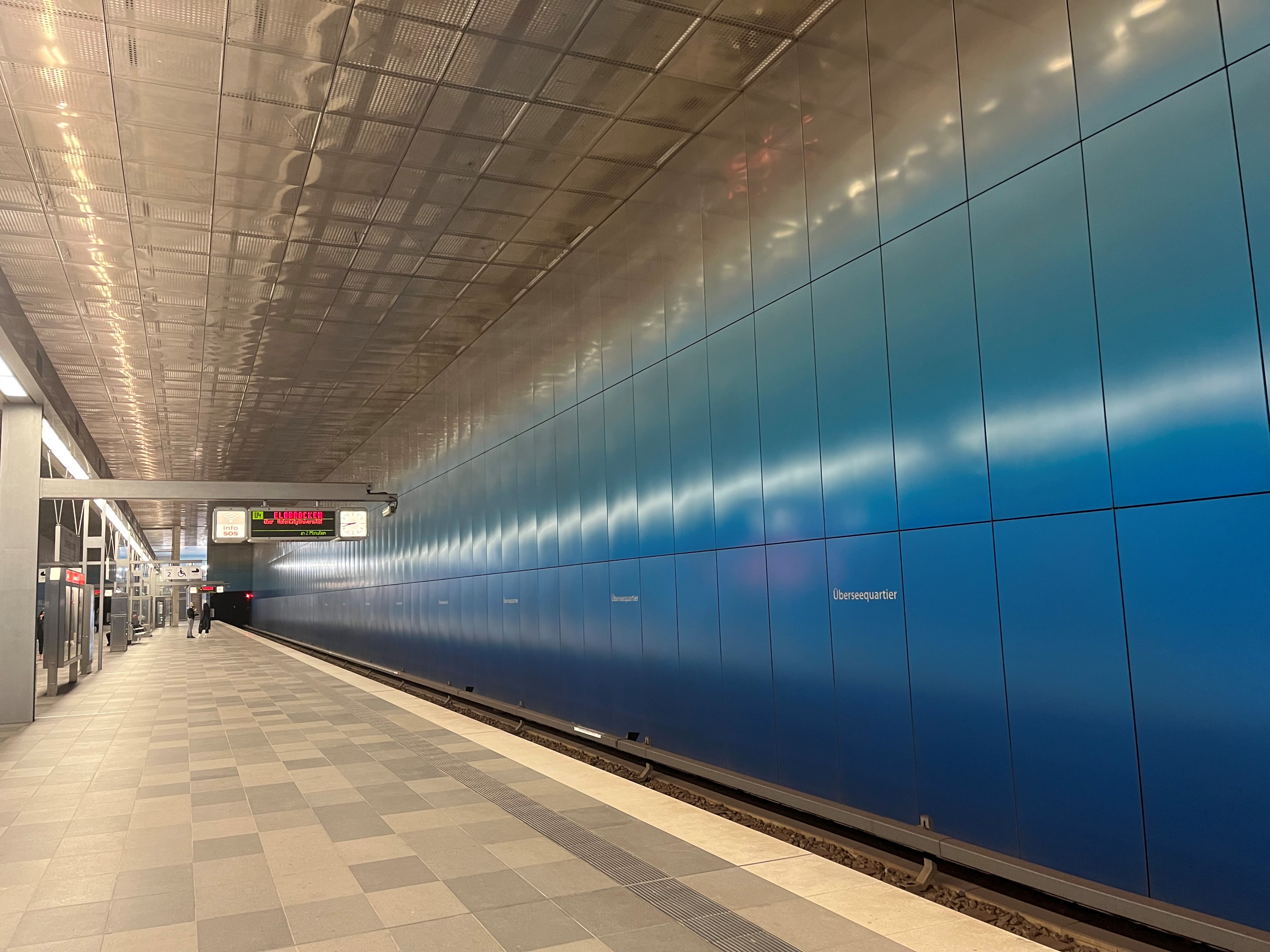
We walk to the nearby Überseequartier station and part. Tired as I am after a bouncy night on the train and a whole day of chilly exploration, I’m still not done for the day: there are a few more things I simply have to see — and Überseequartier station is the first of them. I’ve been a fan of Germany’s U-Bahn stations, a shining pinnacle of metro design, ever since I stepped out at Munich’s Westfriedhof U-Bahn station four years ago and saw its ridiculously lovely design, and especially those giant red lamps that contrasted against the blue hue of the rough stone walls. Although Hamburg’s system is much older than Munich’s, it has no shortage of stunning stations either, and my last goal for today is to visit the three latest additions to the network, all on the ocean-coloured U4 line. (If you’ve read this far, you’re probably here for the long haul, so settle in for some serious gushing. Those not interested may skip to the last paragraph, which has a bit of Charmaine in it.)
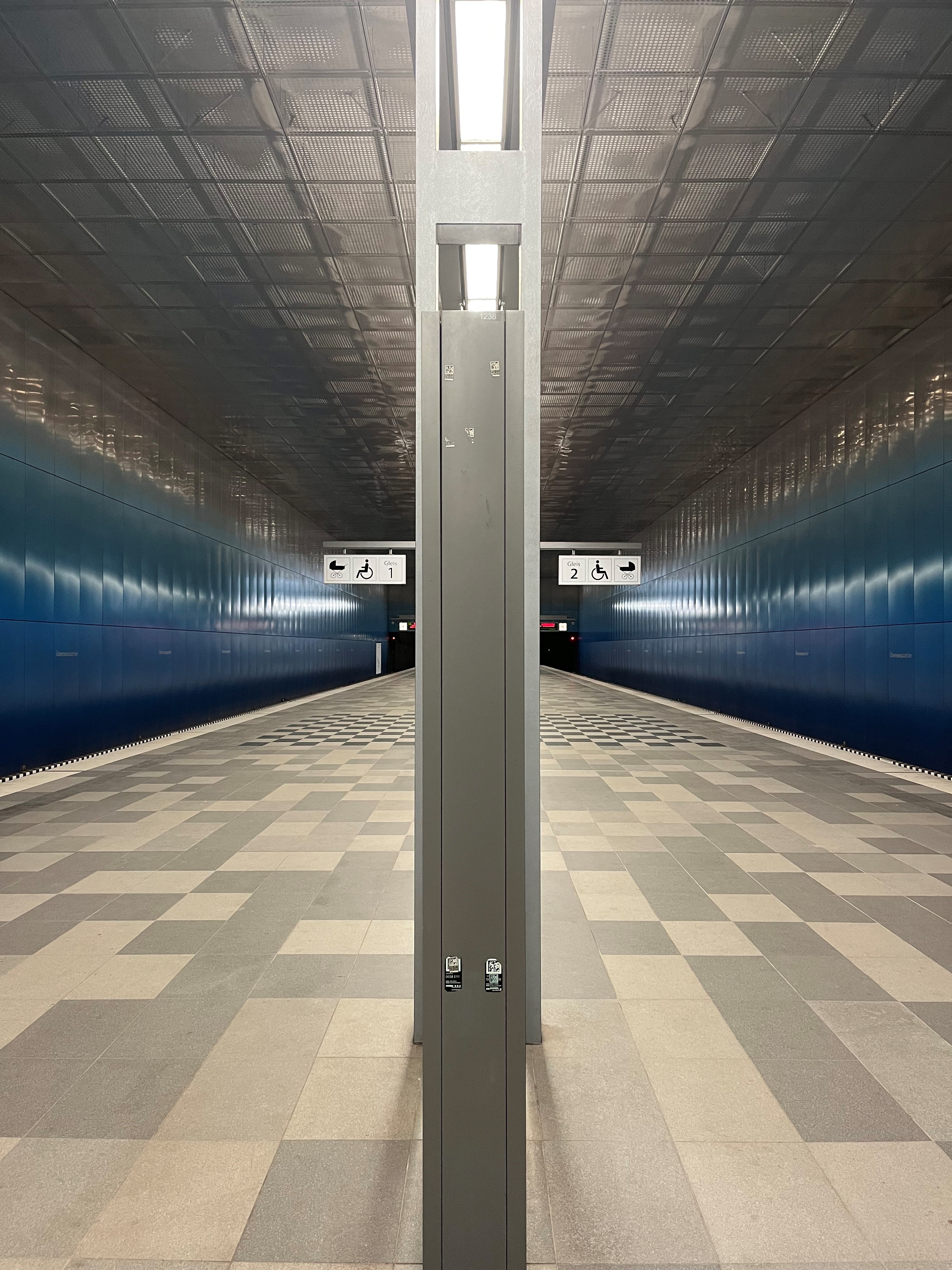
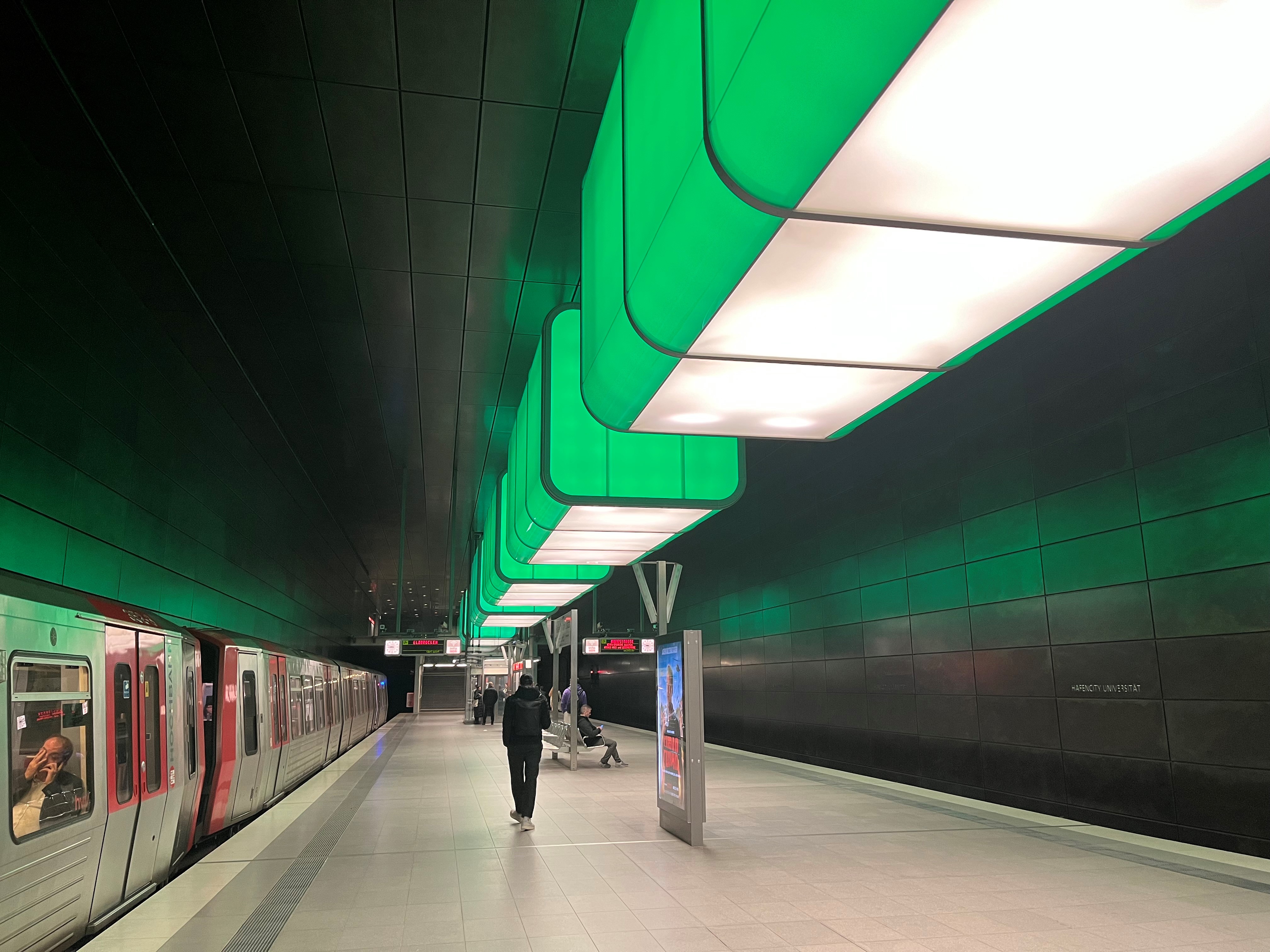
Überseequartier itself presents a hell of an opening salvo: as we descend underground, the turquoise tiles of the station rise to swallow us like the incoming tide, while the sound of waves play softly through speakers hidden in the ceiling. Though it’s already more than a decade old, the station still looks as pristine and exciting as the day it was opened; the smooth grey floor tiles and deep blue wall panels give this place something of an underwater vibe, and anybody stepping off the train here might be forgiven for thinking that they had wandered onto the bed of the North Sea. One stop down the line is HafenCity Universität, the dramatic shadows of which starkly contrast the mellow hues of the previous station; the harsh steel panels and glaring fluorescents above bring to mind a harsh steampunk dystopia, albeit one that’s still aesthetically amazing. At this late hour commuters alighting at this stop are few and far between, and each and every sound echoes loud on the glossy, dark grey walls — a perfect complement to the urban jungle above.
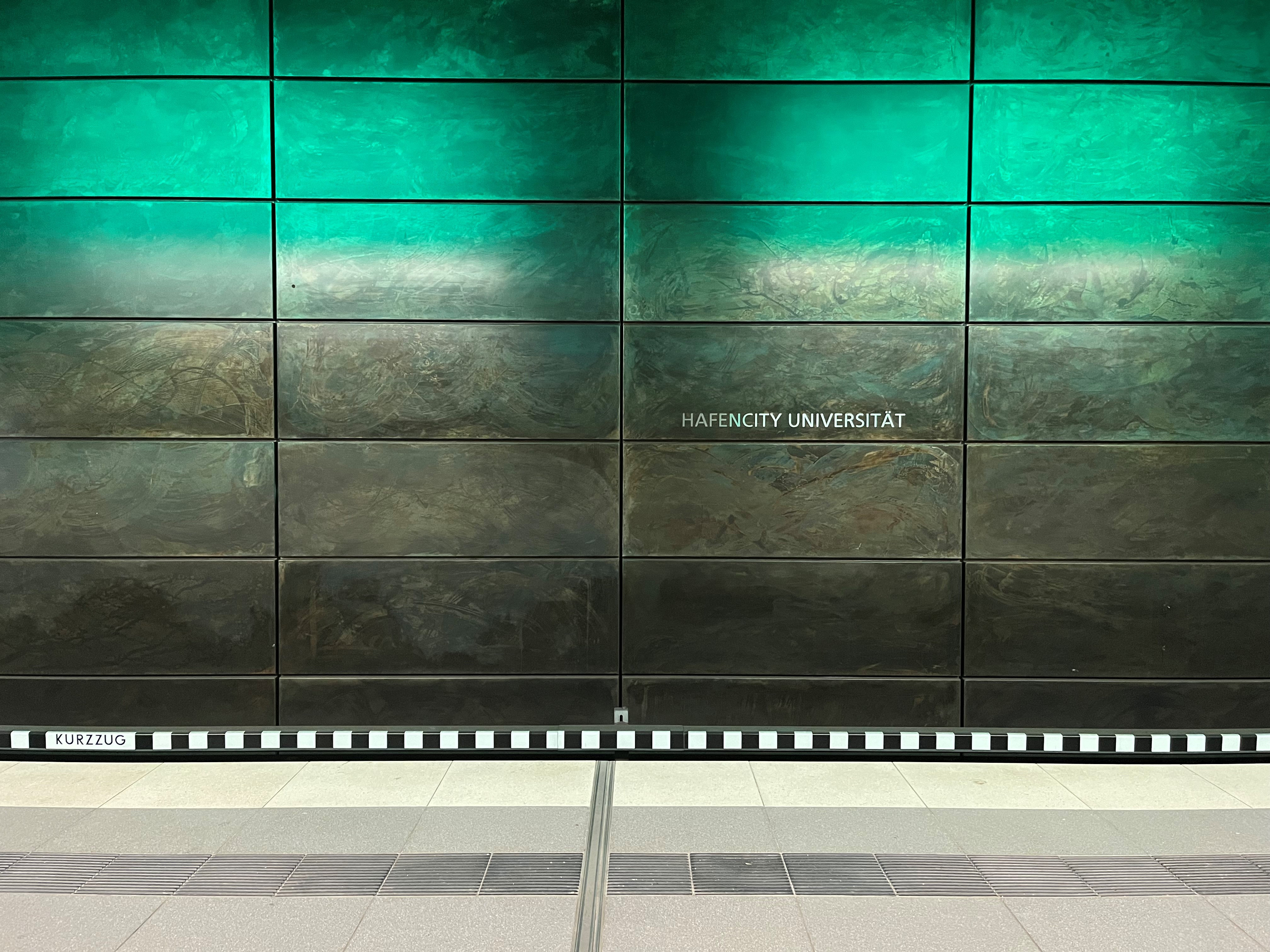
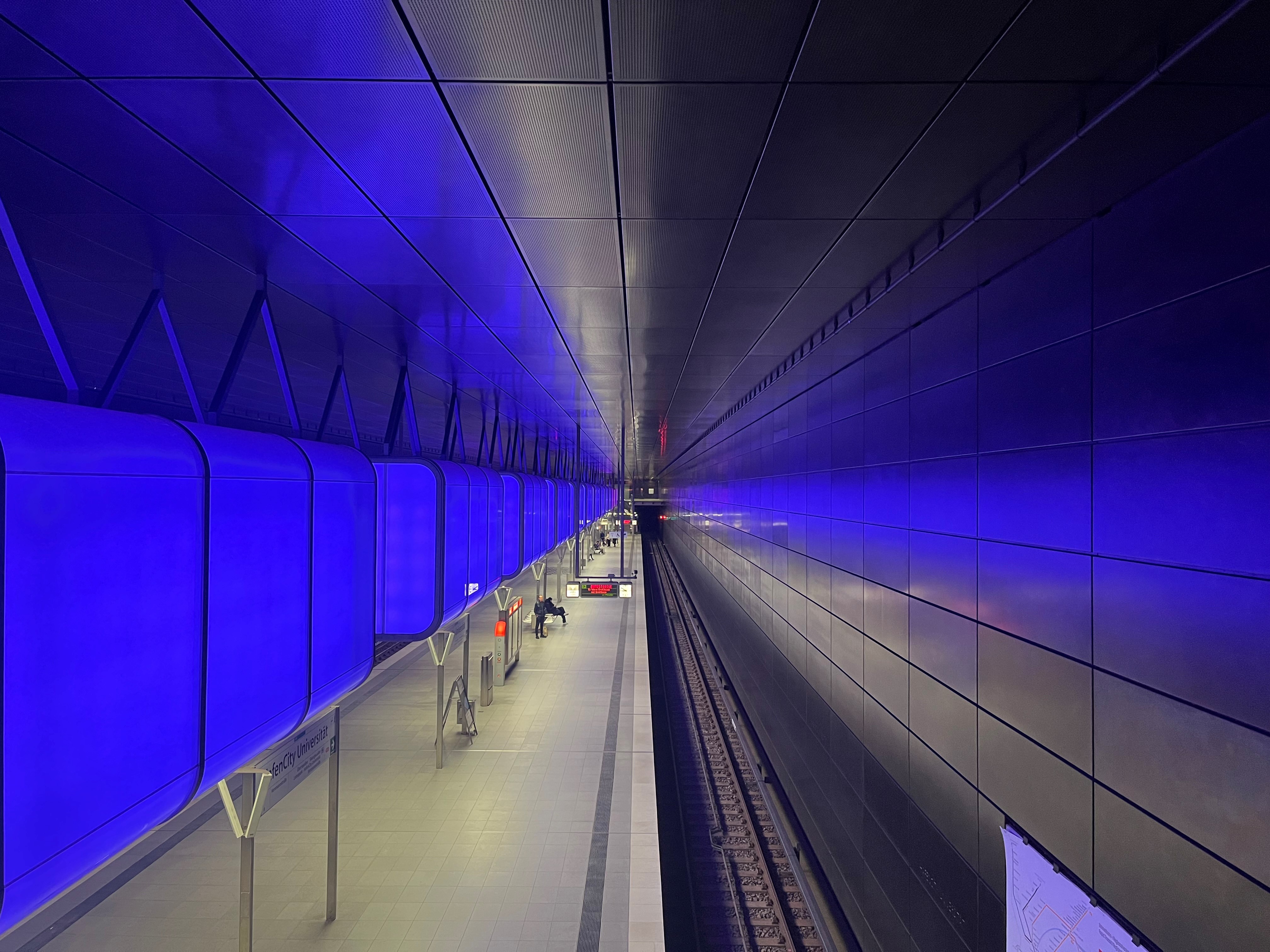
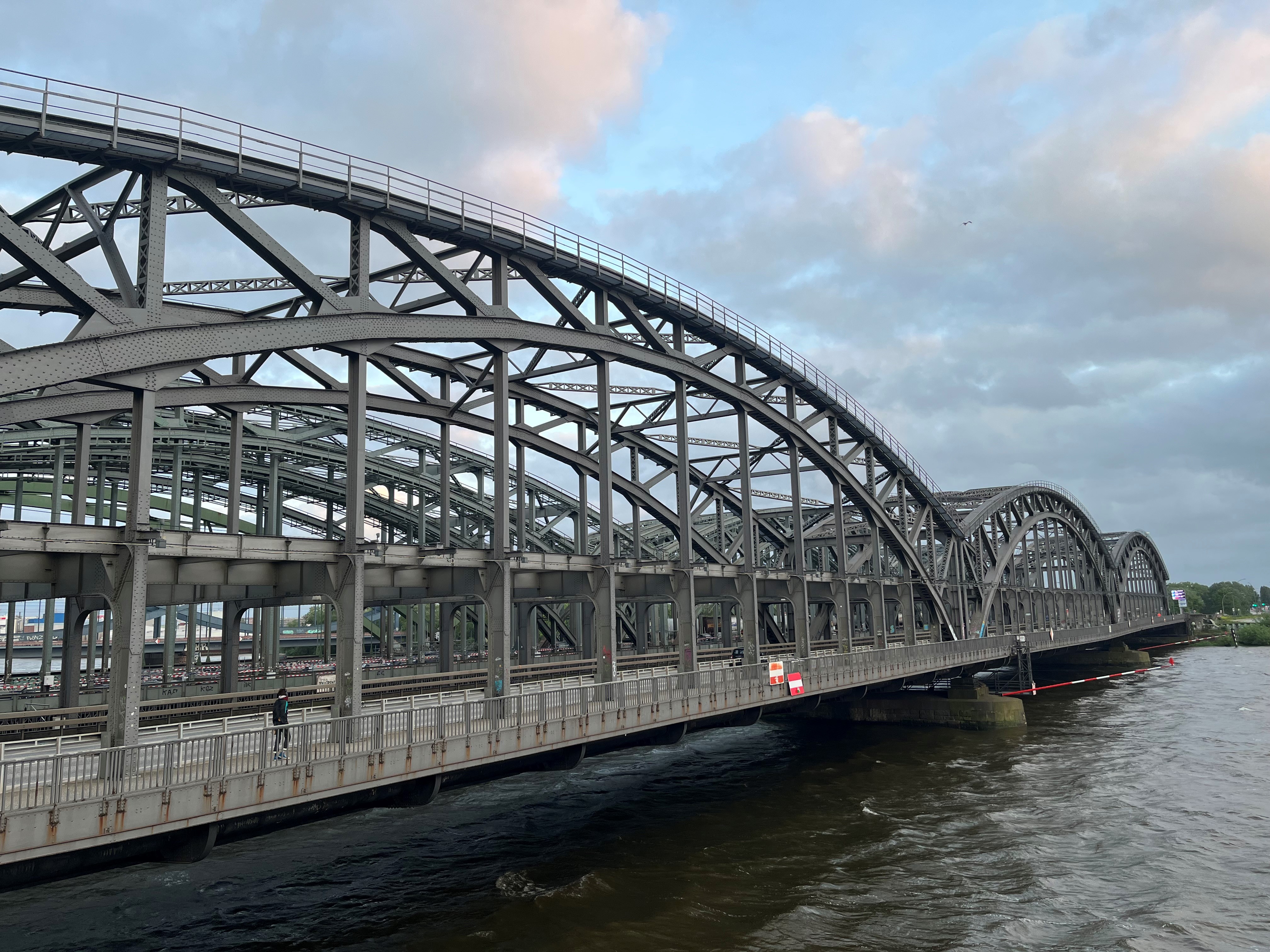
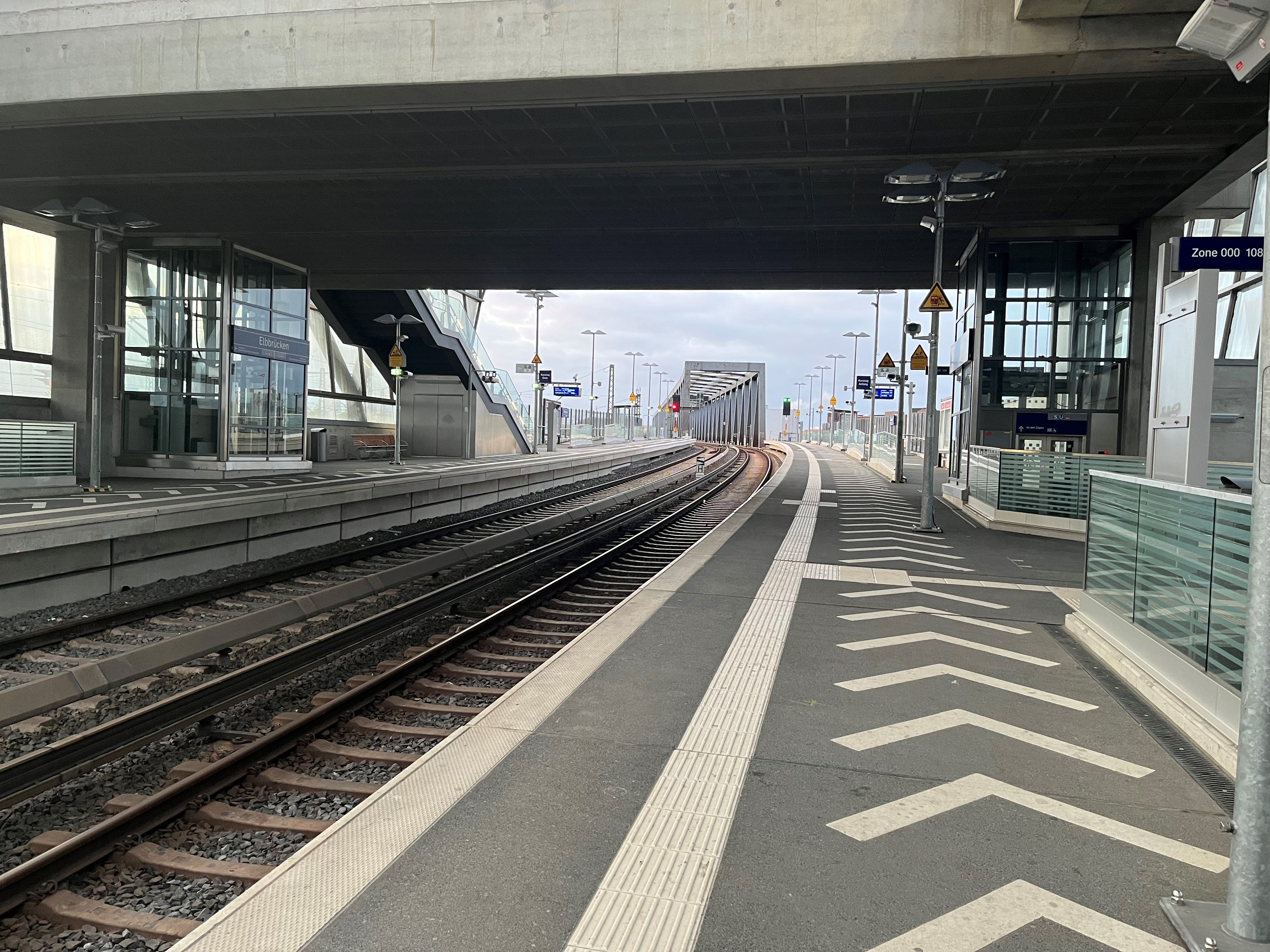
But I save my most effusive praise for the line’s southern terminus at Elbbrücken, without doubt the jewel in the crown of the Hamburg U-Bahn: once again I have timed my arrival to coincide with sunset, and as the train sharply curves and rises out of the tunnels the last rays of sunlight come streaming in, filtering through the (strangely clean) windows of the compartment. We coast into the terminus and come smoothly to a halt; the doors open, revealing an imposing lattice structure that curves in a graceful semicircle over the platforms. I bound out of the train, and immediately fall in love.
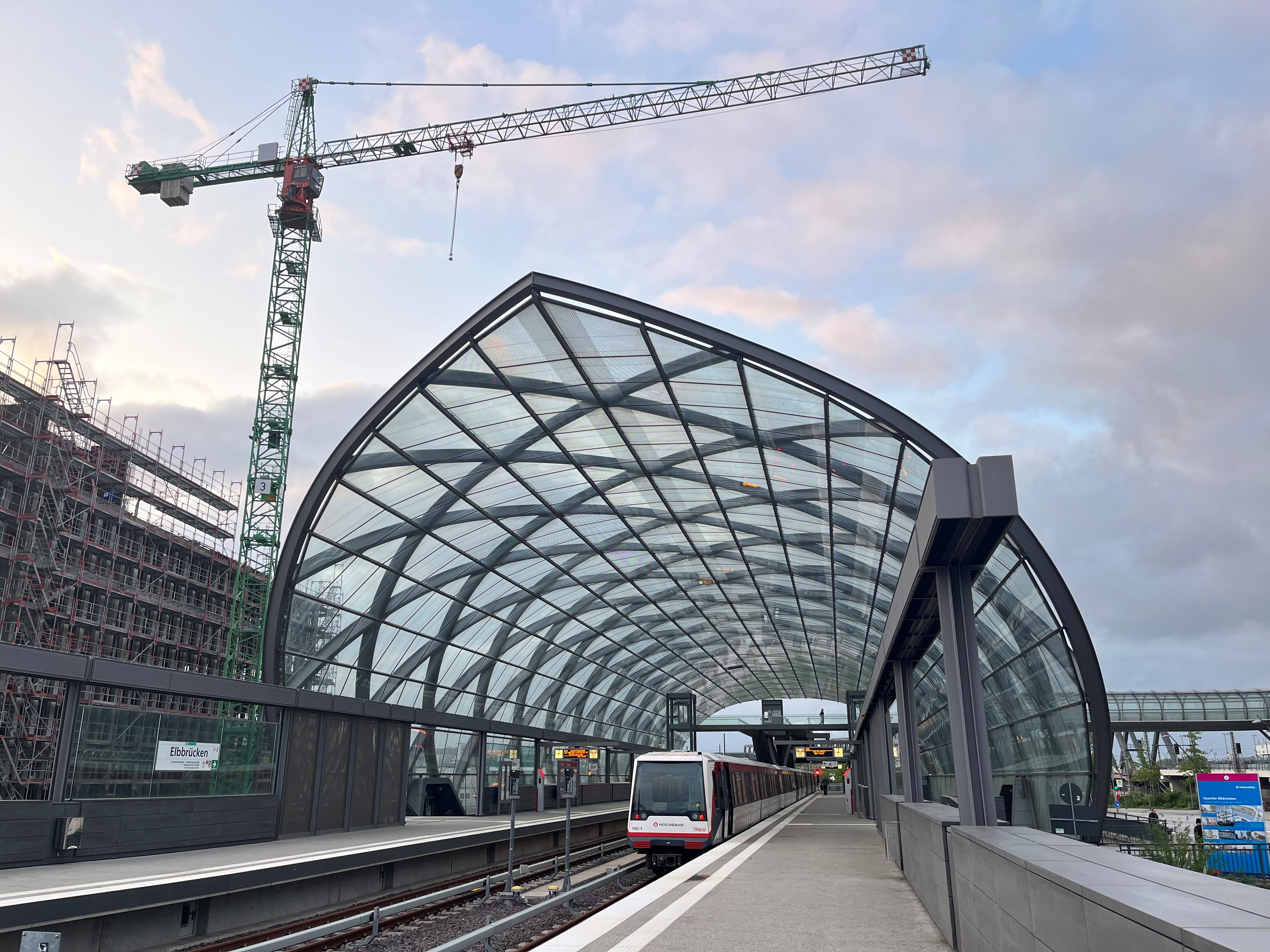
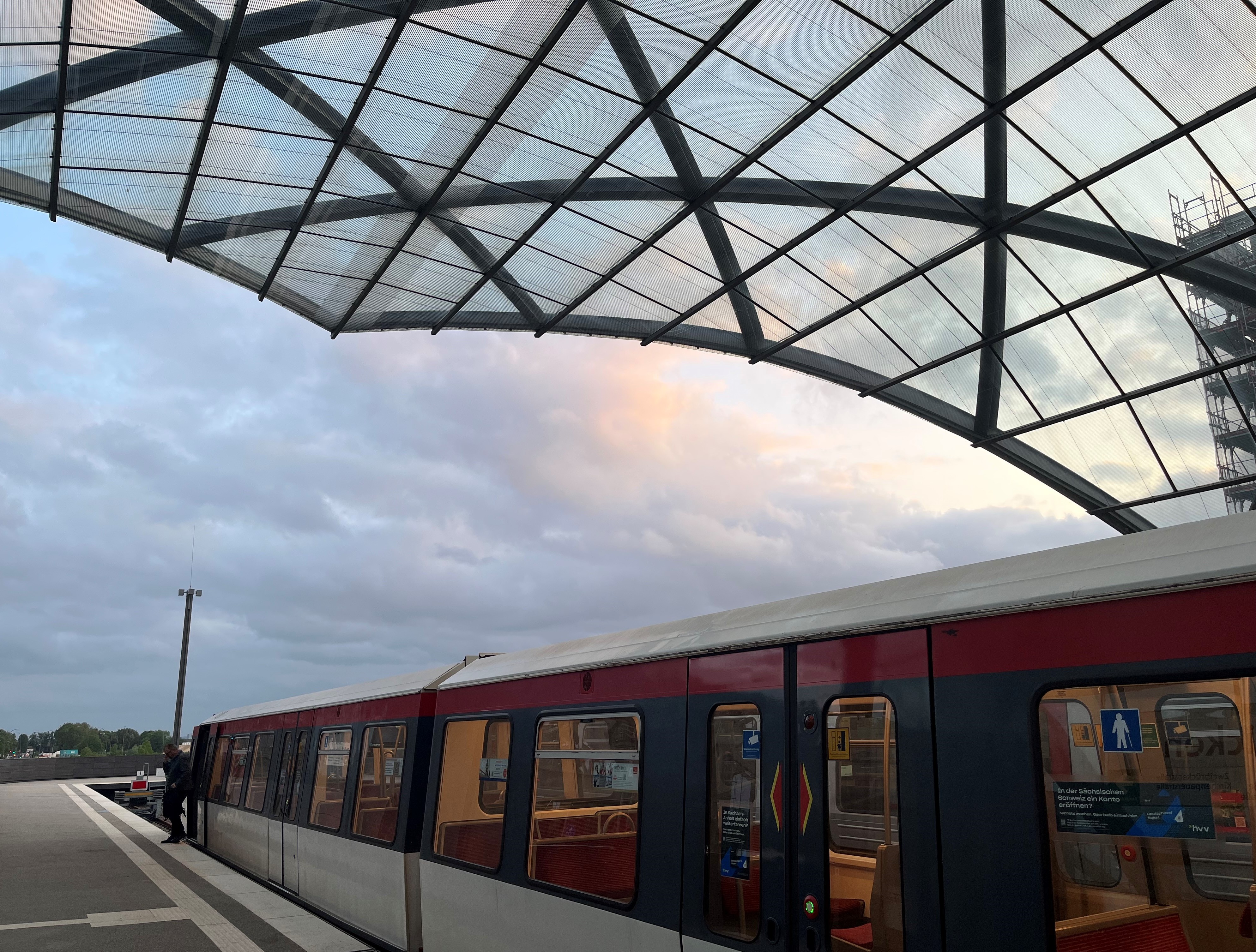
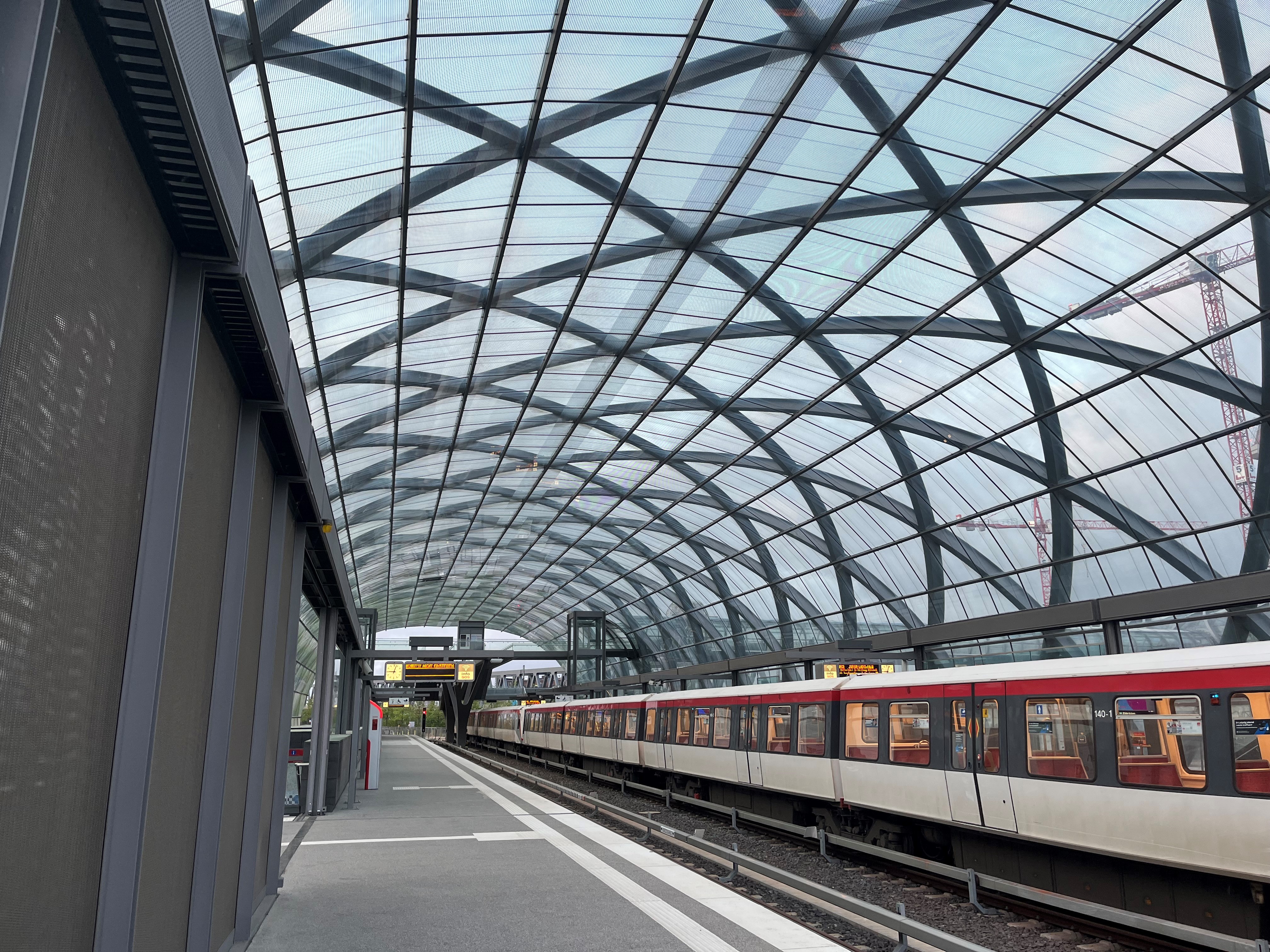
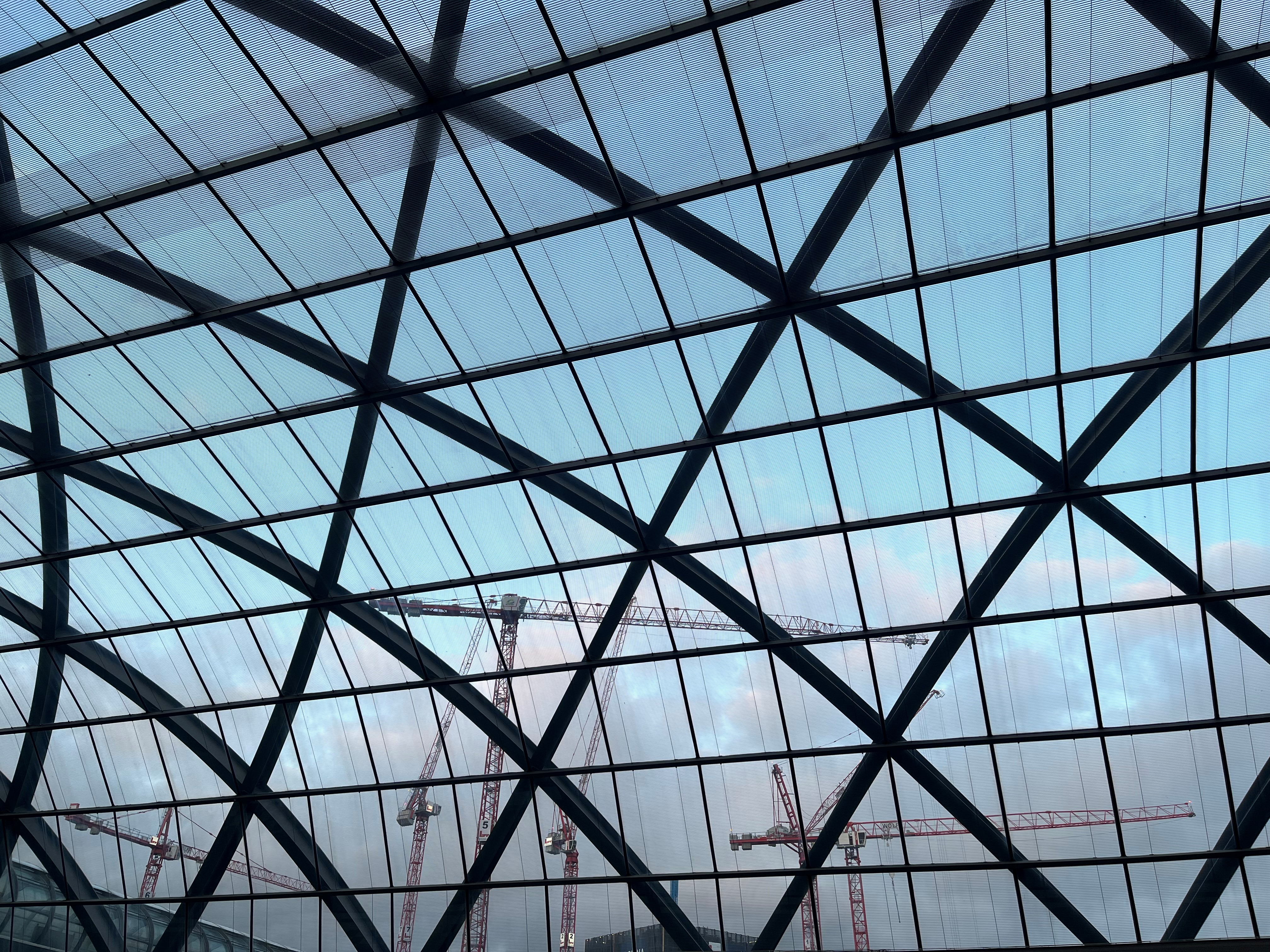
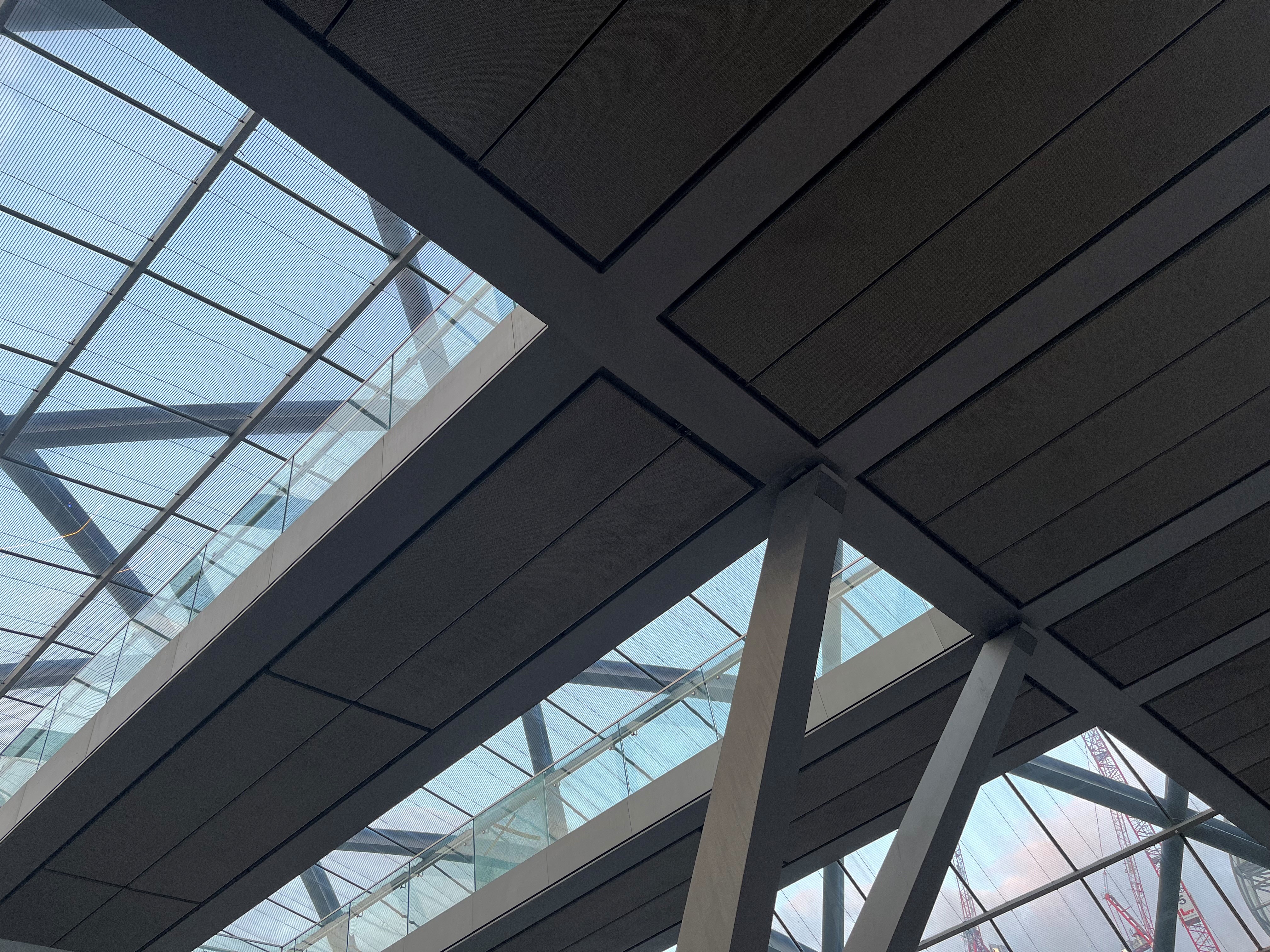
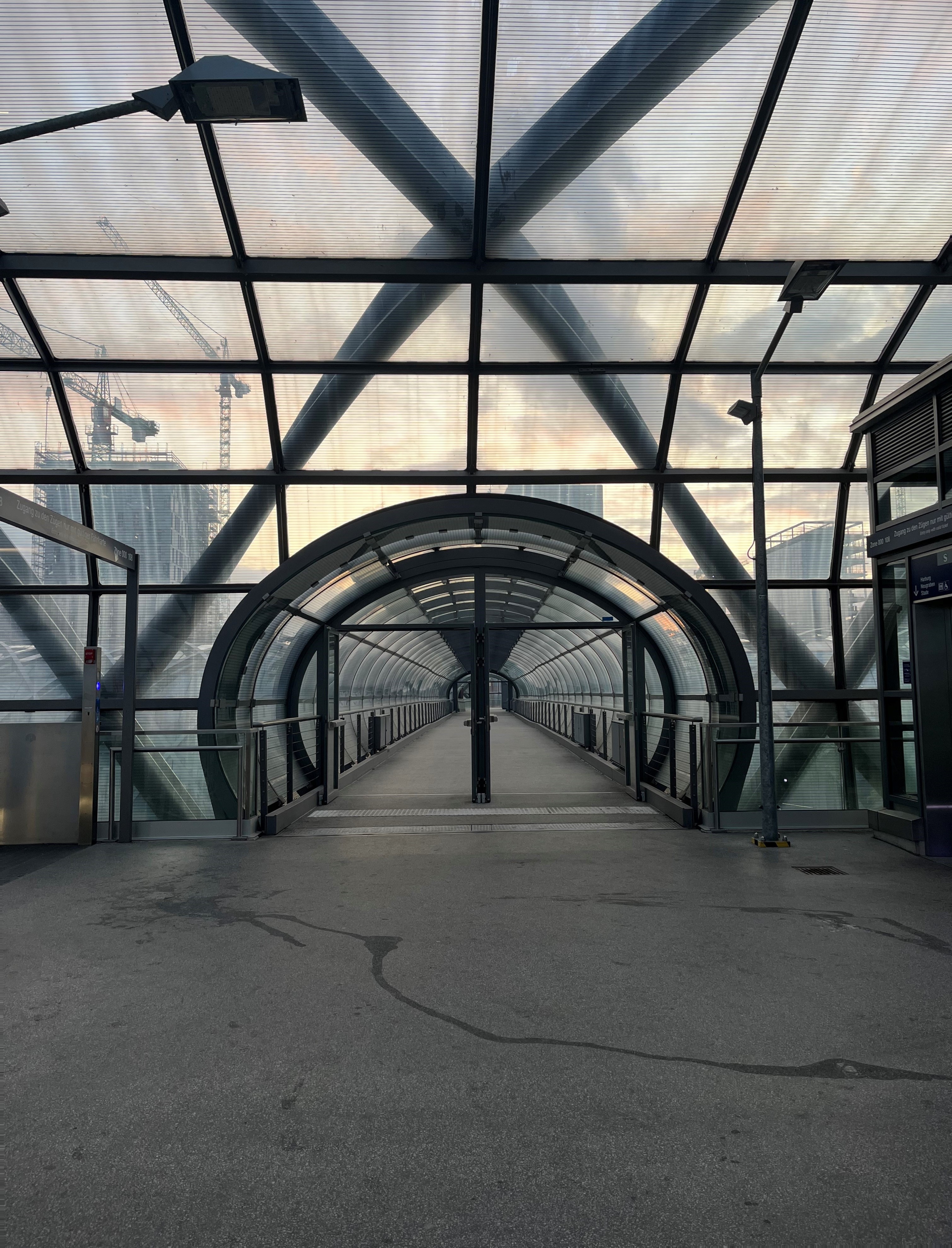
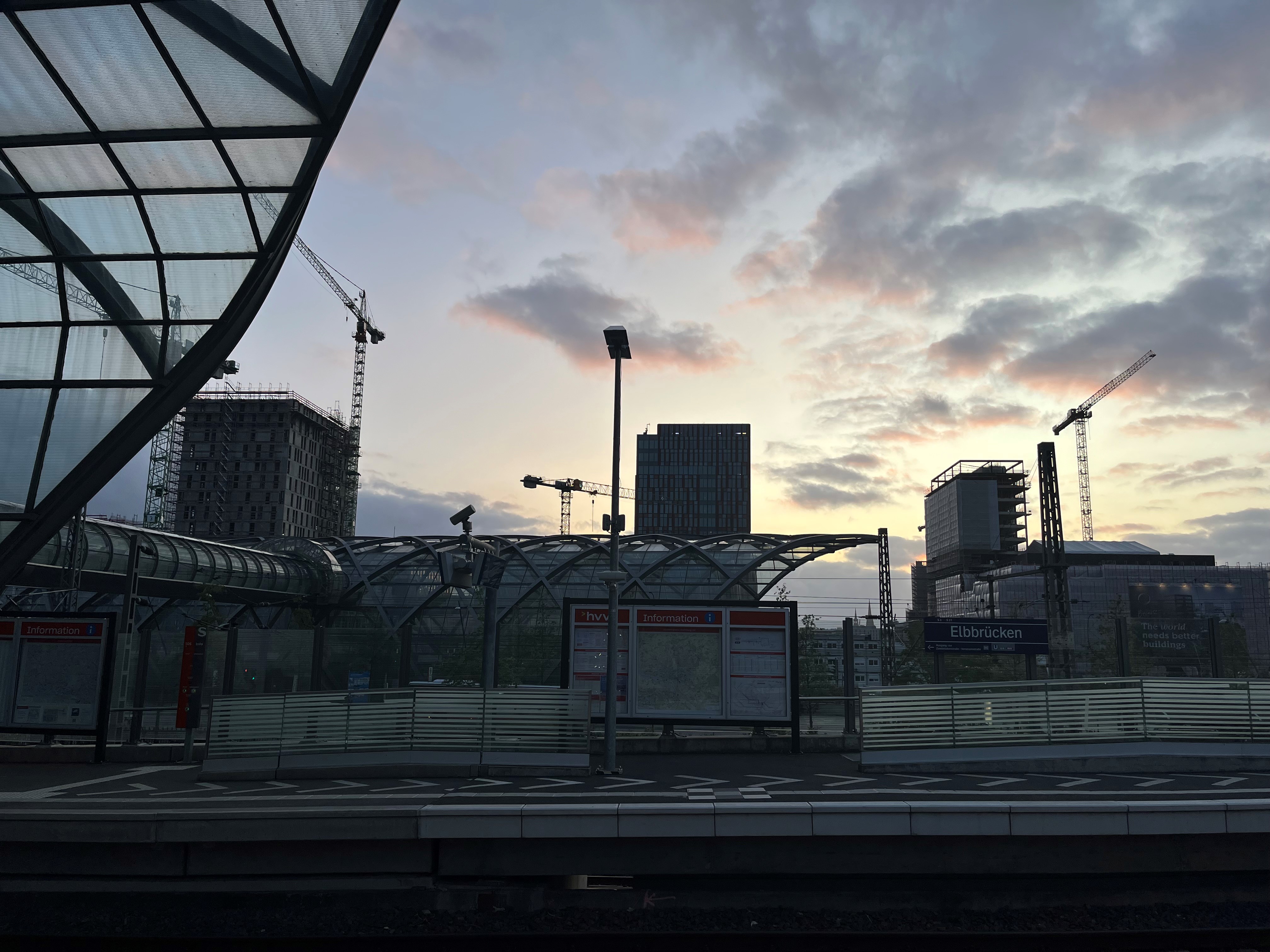
What impresses me most about Elbbrücken is its transparency. You can see every corner of the station from anywhere: its bridges, its entrances and exits, the detail of the steel canopy, every feature here is conveyed to you with a single glance; it feels like it’s actively trying to court your attention, constantly trying to show you its best self. But the transparency doesn’t stop there, of course: the whole ceiling gives you a full view of the Hamburg skies, the intersecting steel beams framing the surrounding scenery beautifully. The area around Elbbrücken is still under some heavy development, and everywhere you look you see a landscape dotted with construction cranes and scaffolding — but no matter, because it only adds to the ultramodern feel of the whole sector. And at either end of the station, just before the tracks run out, the steel-and-glass canopy retreats for unfettered views of the open sky and the buildings below: you see the tracks from whence you came, and where they might head in the future.
I walk to the latter, where a viewing platform currently juts out over the Elbe, commanding excellent views of the Hamburger suburbs. The two bridges that give Elbbrücken station its name stretch across the river, dirty and heavily industrial; in the other direction Hamburg and its port rises, tiny and yet majestic. There’s a faint wisp of sun visible from behind the clouds, a wonderful tinge of orange that makes the whole sunset so much more poignant and lovely. Right now there’s a cool breeze wafting in from the waters, and even though I’ve been complaining about the cold throughout the day, at this moment it doesn’t feel cold at all — I feel pumped up, ecstatic, delighted that I’ve found this spot and (due to the late hour) have it all to myself. It’s a close one, but I daresay that Elbbrücken is Germany’s finest U-Bahn station — nowhere else will you find such a seamless blend of human labour and Mother Nature.
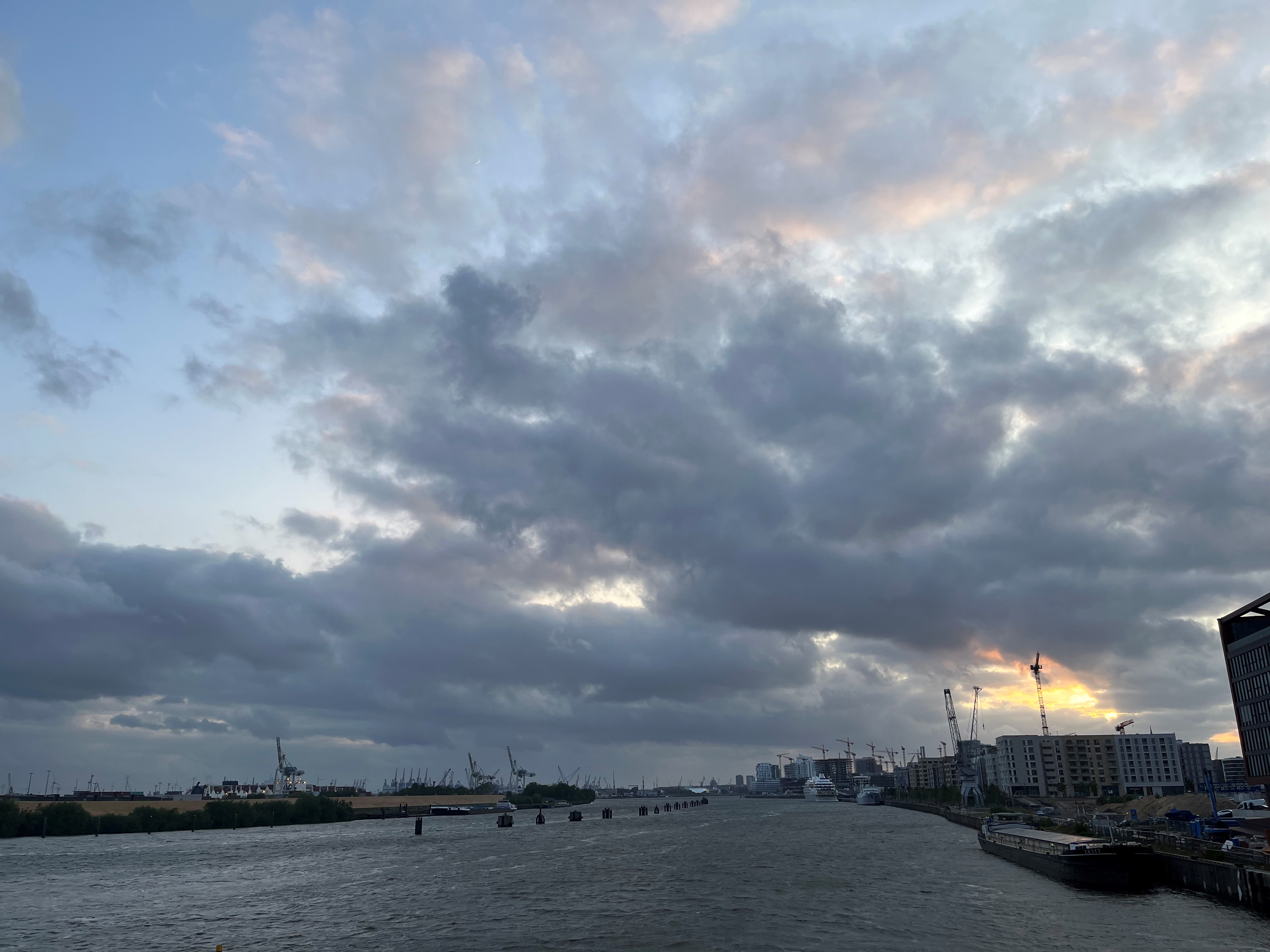
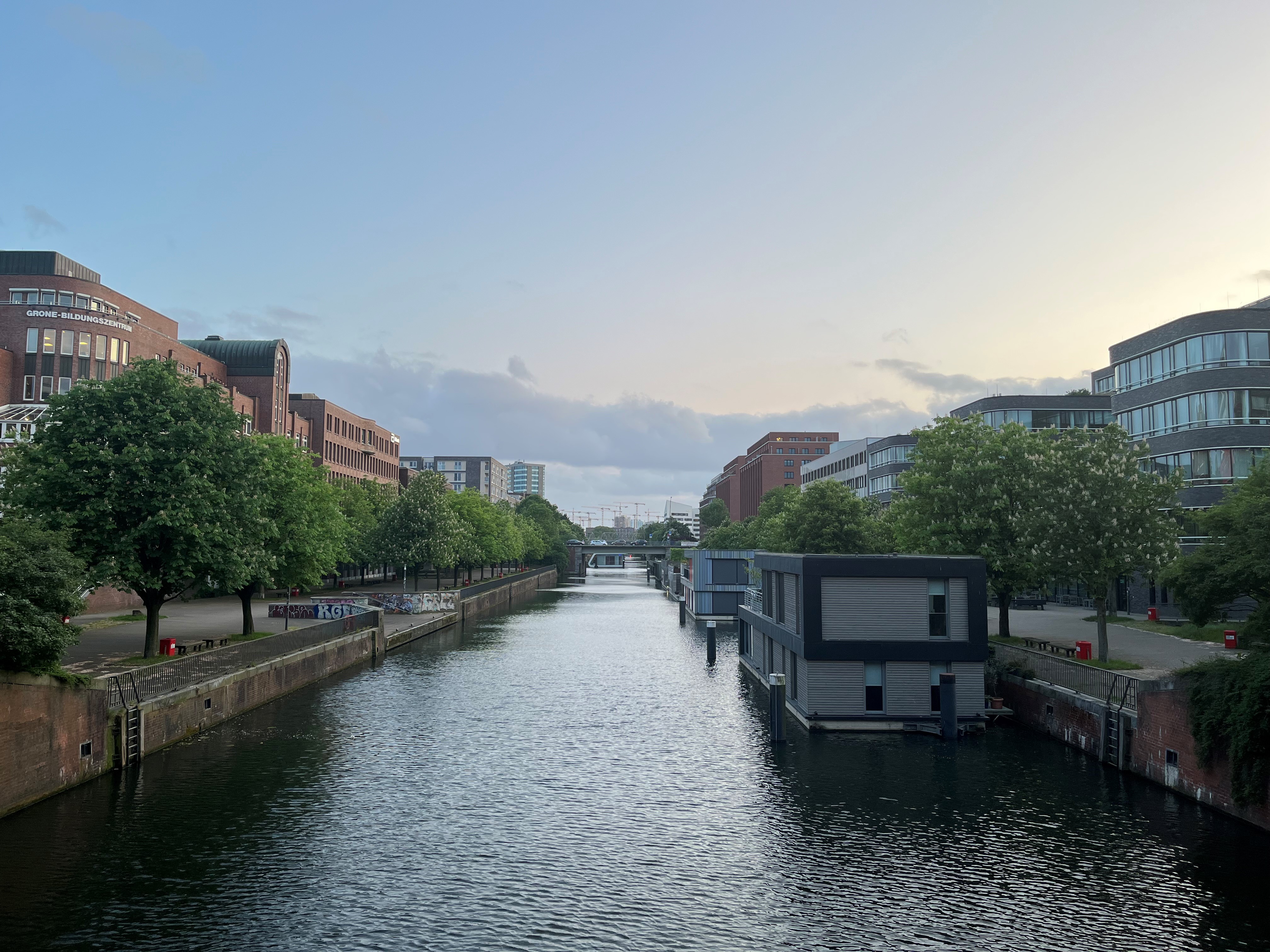
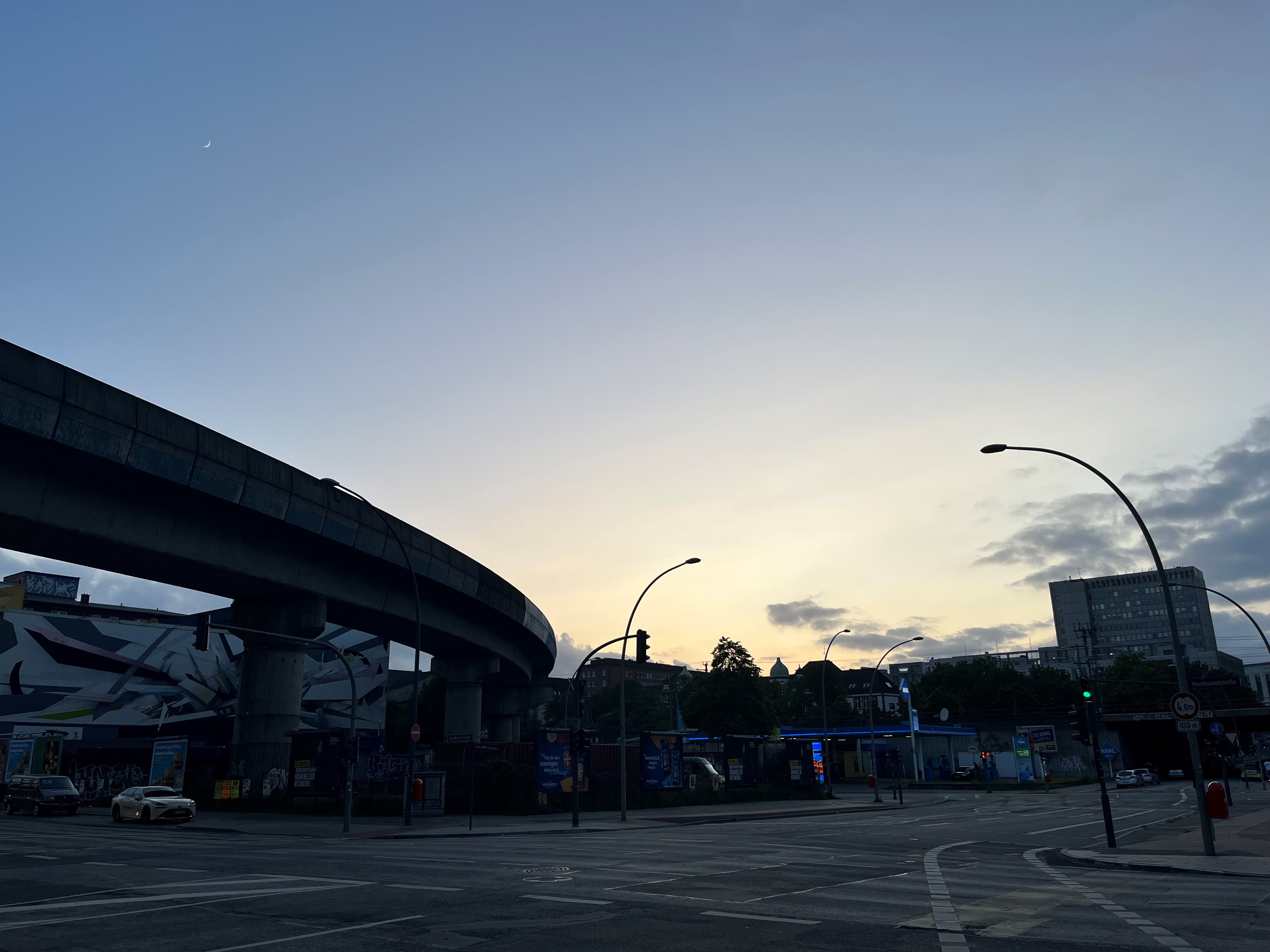
I take the S-Bahn back from Elbbrücken. Walking down from Hammarbrook station I come across another of Hamburg’s canals. The last bits of the sunset are fading into the distance, and the empty banks on either side make the whole scene feel somewhat too quiet, perhaps even ghostly. But I like it all the same, all this solitude and calm: this may be a metropolis, but it is a metropolis which knows that there is a time for rest and sleep, and I find it utterly precious. A few birds call in the distance, and the rattle of the trains above break the silence; I turn, and walk back up the street to the hotel.
Back at base we break out the UNO for a second round, and this time I lose so many games that Charmaine jokingly suggests that we’ll break off for the night if I ever win more than one game. (Oh, you sweet children of summer.) My eventual second win, after a whole HOUR of gameplay, is greeted with such relief and exhaustion that everybody is snoring in their beds within two minutes flat.

 Inkpot Shuffles in the Twilight