22-23 May
The word “couchette” puzzled me when I first read it. Being from a place that has no use for overnight trains, I had no real idea of what a couchette was or what one did with it. To me, it suggested long-term discomfort, constant insomnia, and alien smells — after all, that was what a “couch” was, right? You slept upright, and tried to grin and bear all the discomforts that plagued you till morning, in the fervent hope that whatever lay at your destination could only be an improvement on your current situation.
This is not a description that applies to Nightjet 490, the train which is to be our home for the next twelve hours. We have been assigned a compartment with four bunk beds, two on each side of the passageway, perpendicular to the direction of travel, and the first thing that strikes me upon entry is how clean it is. The couchettes that you usually see on travel documentaries are usually rudimentary affairs: old, dimly-lit, and musty relics of the last century, with shag carpet and cheap leather upholstering everything, and shadowy patches of indeterminate origin everywhere you look. The compartment we’ve been assigned is spick, span and practically spotless, and not only is it brightly lit, it is also blessedly airy — this last one, I soon discover, courtesy of the powerful aircon whose vent is about six inches above the spot I will be laying my head tonight. (The mattress — such as it is — is still fantastically uncomfortable, but I suppose you can’t have everything, and anyway the sheets are less icky than the ones I found in the Vienna hostel.)
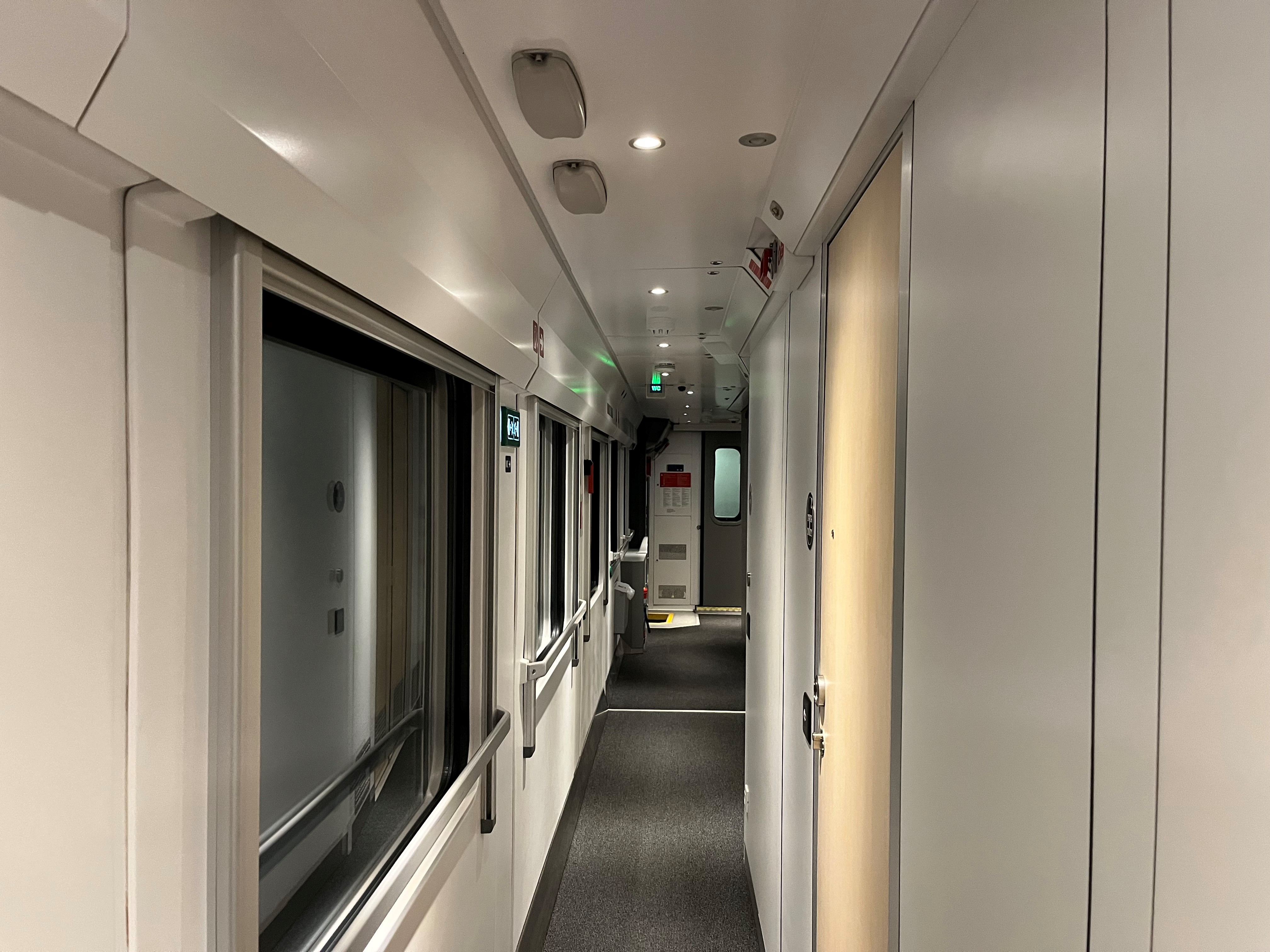
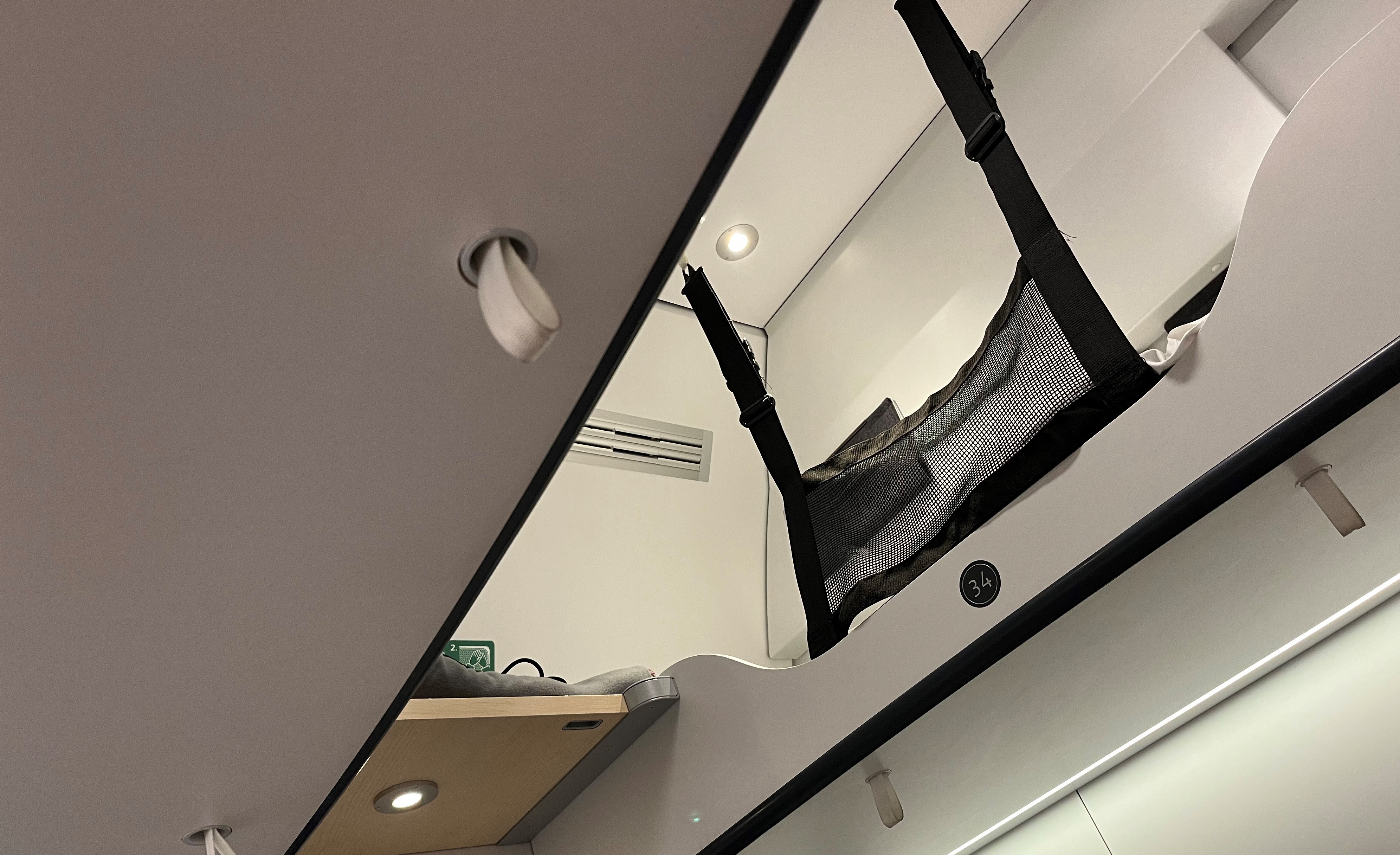
On the other hand, the farther we are from Vienna, my choice of the top bunk (done in the heat of the moment) proves more and more misguided. Although our compartment is undoubtedly well-furnished, it is not by any means a large one: there is barely enough standing room for three Asians, let alone three Asians with GIGANTIC suitcases. Anytime we remember something we’ve left in our luggage, a complex dance worthy of Strauss ensues: perching on our bunks, drawing out the suitcases, wrestling with the zippers, emptying out half the contents onto Dennis’ bunk, discovering that what you needed was in your trouser pocket all along, and haphazardly stuffing most of said contents back in. We only try it once or twice.
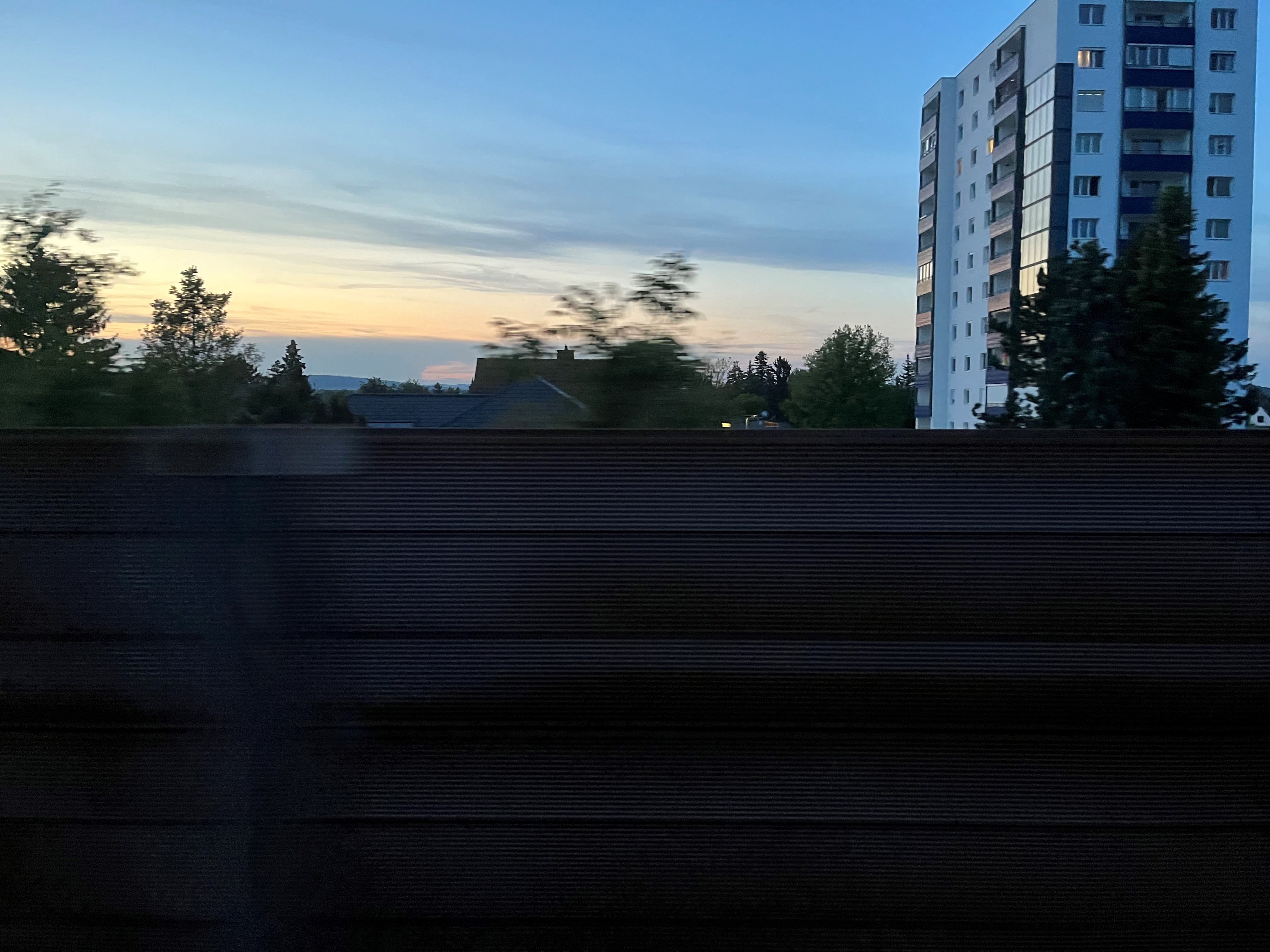
Eventually, however, we settle in and our minds turn away from our immediate surroundings. Vienna has long since disappeared, and instead what greets our eyes as we roll up the blinds are an indigo sky and the dark green plains of Lower Austria. The first stretch of our rail journey runs over the busy Westbahn between Vienna and Salzburg, and the railway here is extensively multi-tracked and modern, magnificent roads of steel steamrollering through lush countryside. Occasionally we flash through a small industrial settlement — nothing more than a few buildings, startlingly modern in their ceiling-to-floor glass panes and concrete structures, and a large warehouse — but they are so miniscule that by the time I’ve focused my phone camera and pressed it to the window, the town is already receding into the distance and there’s not much more than a few wind turbines on the distant horizon.
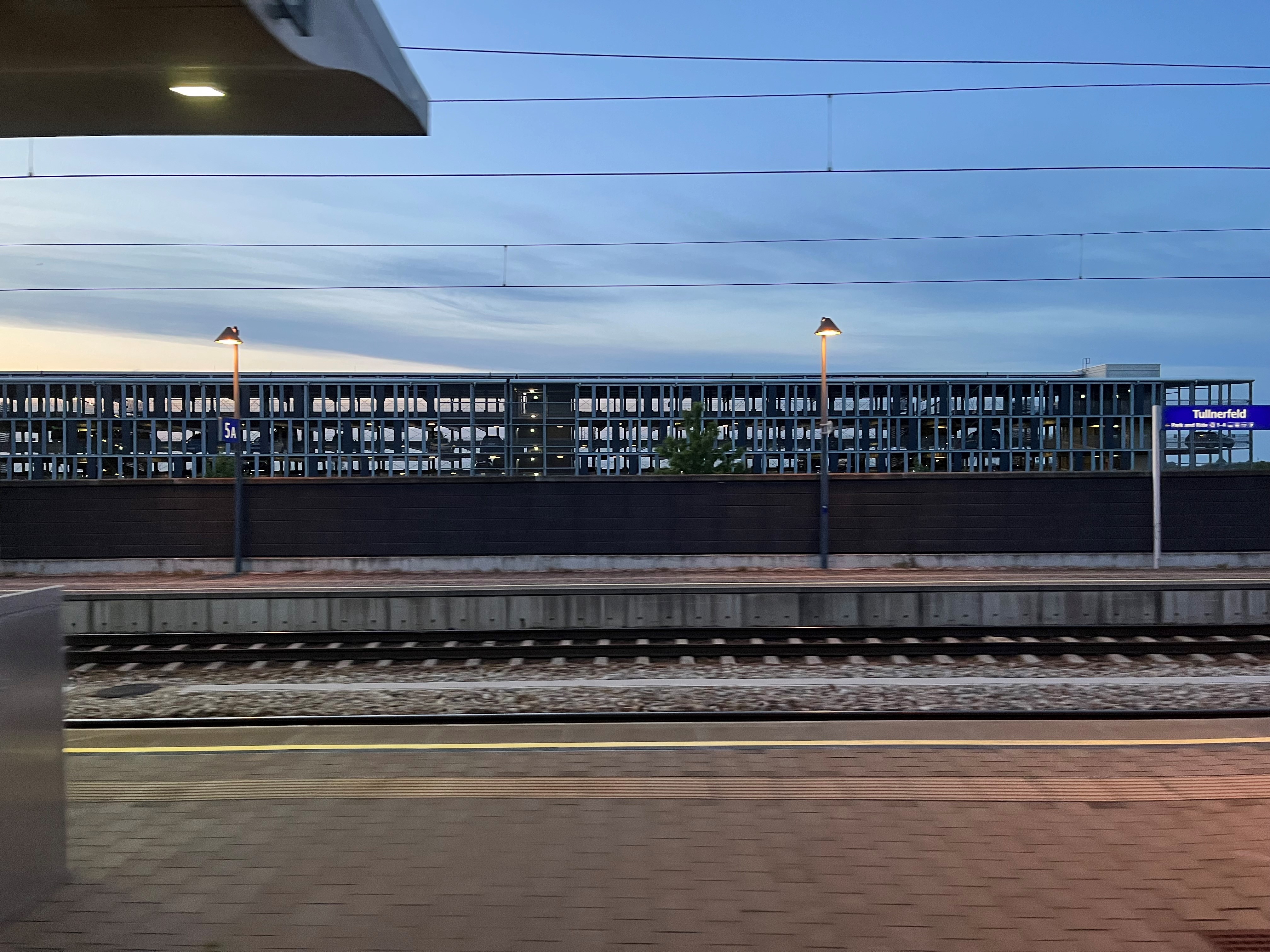

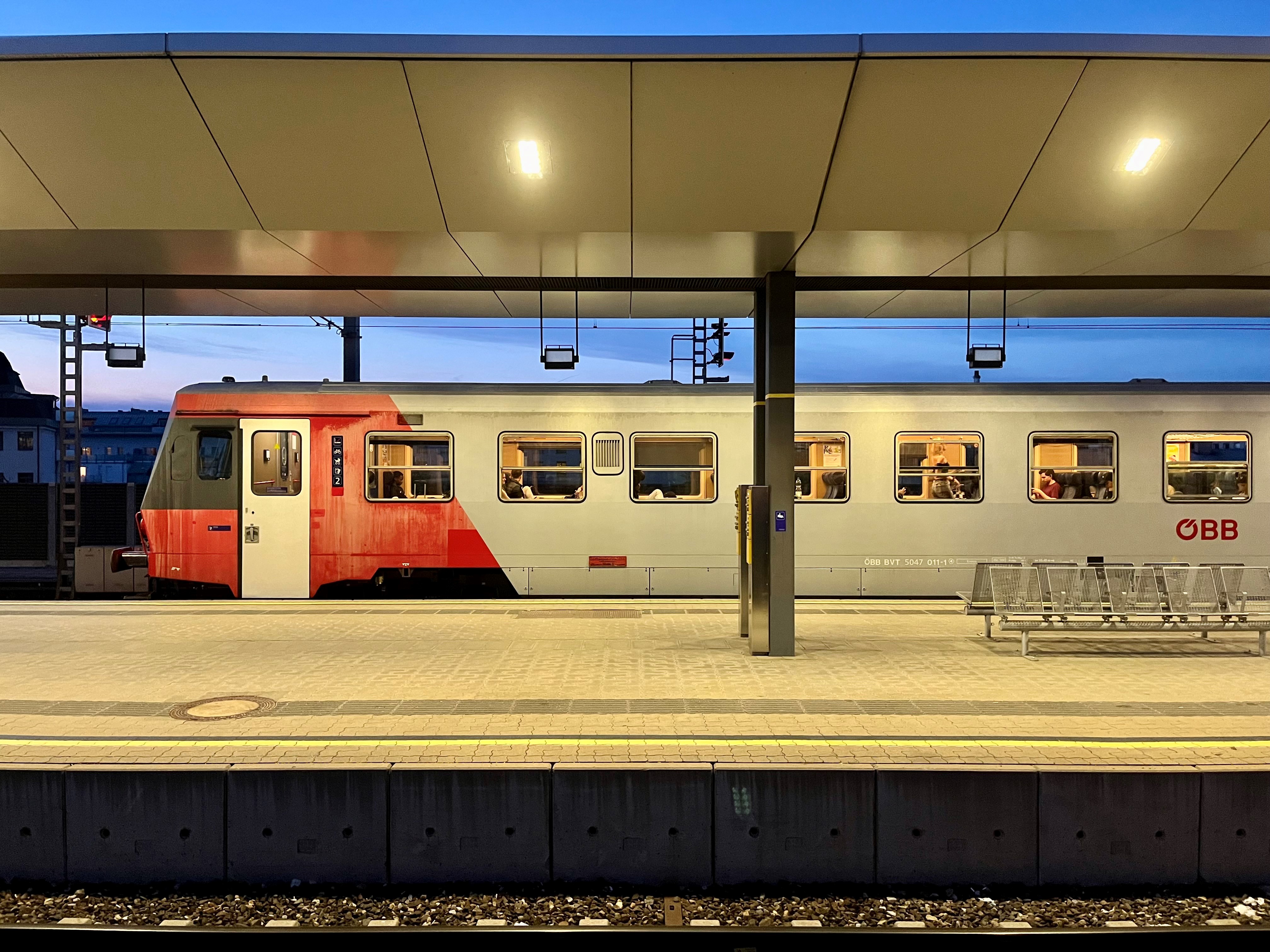
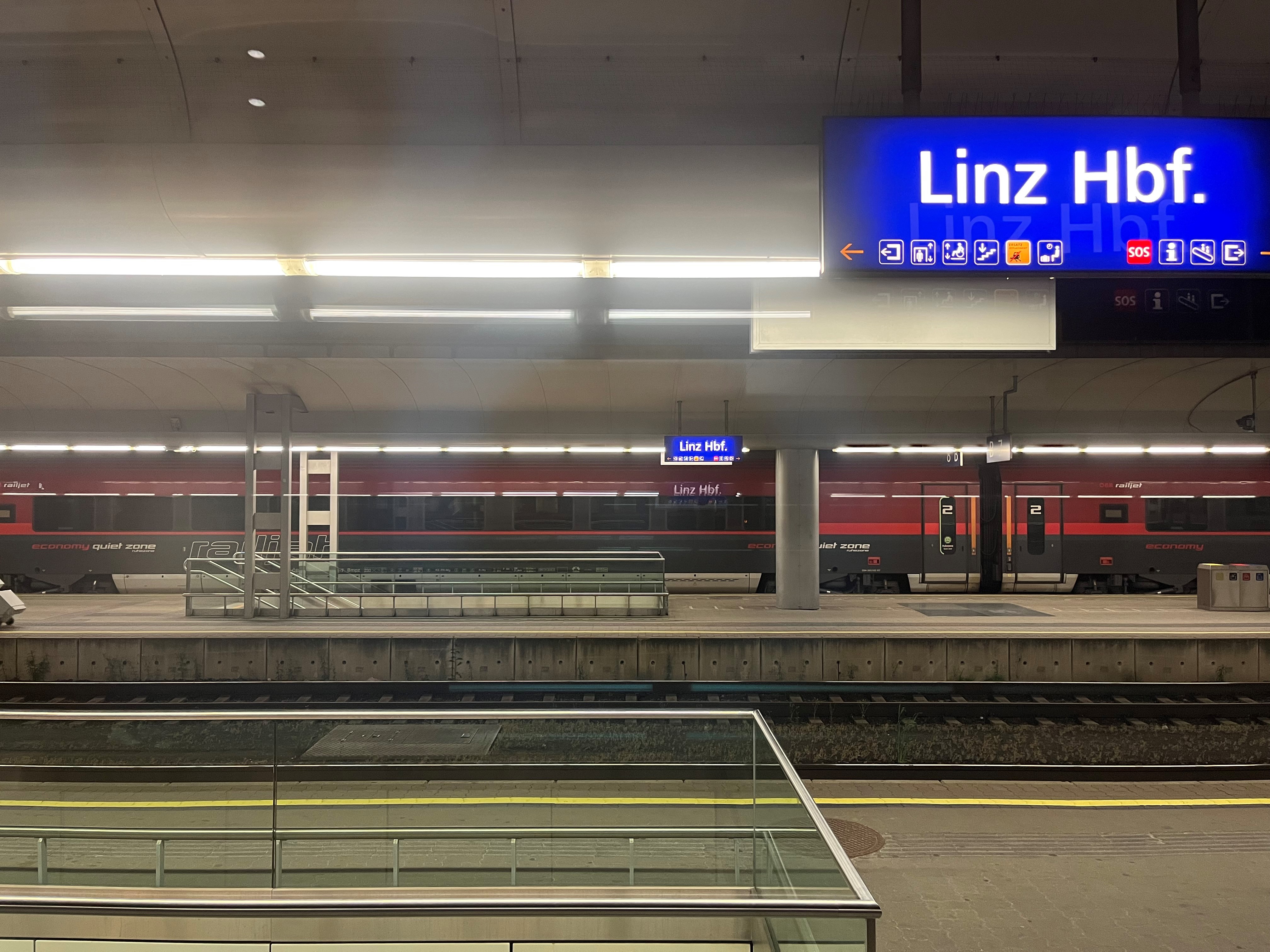
It’s a little more interesting in the stations: every half-hour or so we stop at some large town or mid-sized city to pick up more and more passengers. It’s close to nine o’clock, so these places aren’t the bustling hives of activity they were when I last passed them by (can it really be more than a decade ago?), but they still play host to a few intrepid, anticipatory travellers, climbing on with their duffel bags and suitcases that put ours to shame with how compact they are; I walk out into the corridor while we’ve stopped at Linz, the third largest city in Austria, and am weirdly comforted by the contrast between the dark skies and the sterile, white fluorescent lighting. One more stop down the line at Wels, we stop right next to an empty S-Bahn train, and Dennis and I comment on how lonely it looks in its desolation — it sits there, devoid of passengers, devoid of life, not really sure whether it’s coming or going. Then we pull out, and the world around us is monotone again; we decide to play a few games of UNO to pass the night, where in a remarkable show of consistency, I come dead last six games in a row.
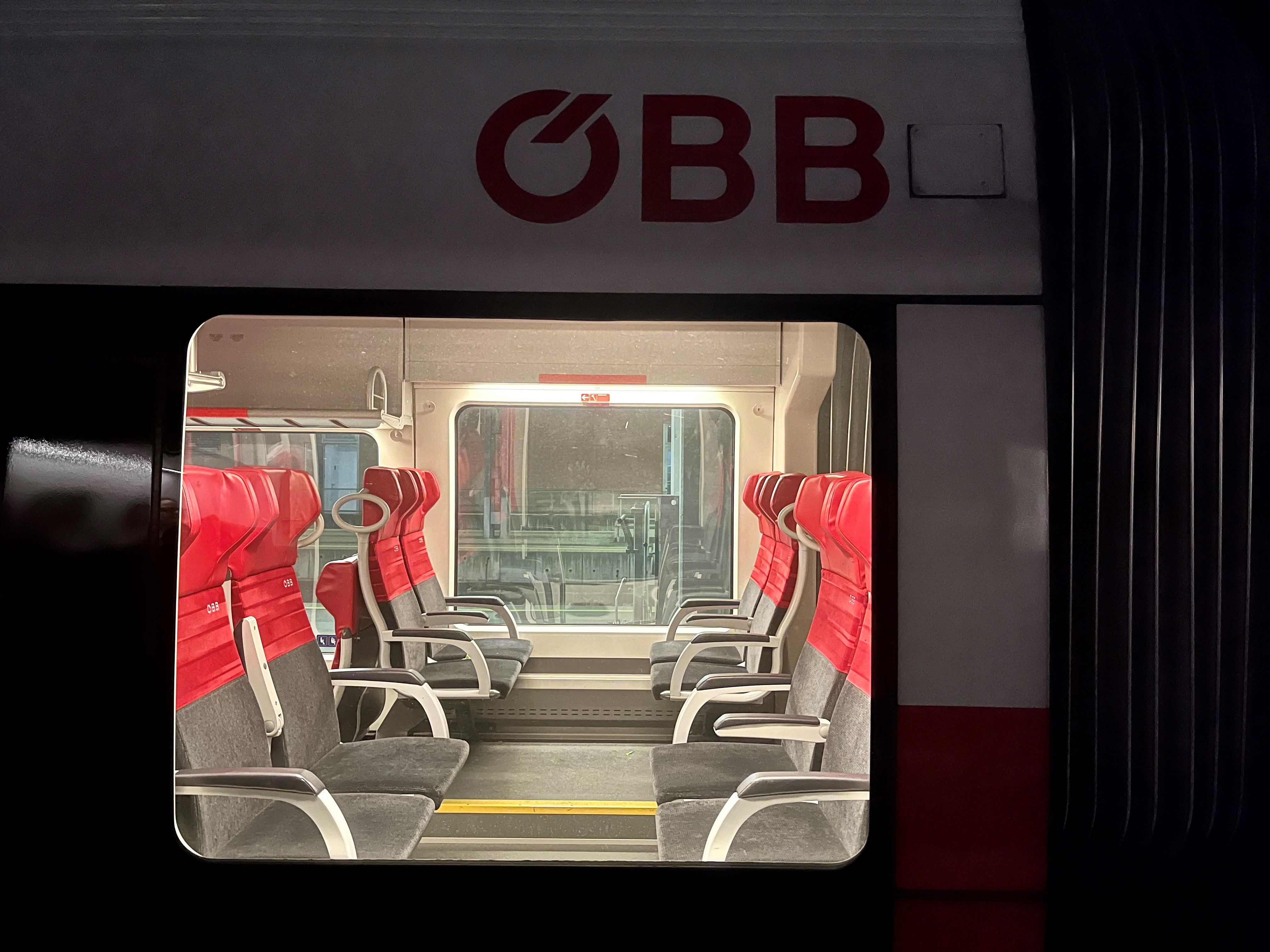
Shortly after departing our last stop in Austria I decide to go for a walk. Night trains always carry a little mystique in the way they promise unknown destinations and fellow passengers, and I’m determined to get a taste of both tonight. I seem to be alone in this naïve curiosity: as I pass through our couchette compartment, most of the doors are firmly shut to the outside world. Although snippets of conversation float in and out of the paper-thin doors, said convos are all rather mundane and not really travel journal-worthy, so I cross over to the next carriage. This one is the so-called “seat car”: open compartments that provide the traveller with an uncomfortable seat for the journey and not much else — the type I was thinking of, in fact, at the start of this post. In these compartments travellers do mingle with each other — I hear conversations in both English and German, and as I pass by one of them a man and a woman are happily sharing some sort of heady grape liqueur, the smell of which permeates out into the corridor; in another, two men doze off in the dark, facing each other on the same bench, their faces lit only by the eerie glow of laptop light from a fellow traveller. Behind that compartment are the normal sleepers, where money can buy you privacy and other less important luxuries; in one of those I spot an independent shower space. Sniff my own garments and slightly rue not shelling out for one of those.
At the end of the sleeper carriage I talk to one of the train attendants, a burly man with an impenetrable Slavic accent; not until we are three minutes deep into our conversation that I realise that he’s asking me about video games (“I said, do you play League of Legends?”). Once we’ve moved on from that misunderstanding he tells me that the trains we’re on are, rather poetically, called “Lunarwagens”. Judging by appearances sleeper customers are a lot more of a handful than us in the seat cars and the couchettes: a whole contingent of attendants are bustling about, arranging breakfast orders and the like. I wonder what it’s like for people like him to spend so much time on the move: unlike flight attendants, the only parts of the world they see are a few select European cities, and the fast turnaround of these trains must surely mean that they don’t have that many days (if not hours) to spend in their new home. Does it ever get lonely? Do they ever get a chance to settle down? What are their holidays like? Even if you grew up loving trains, the appeal must wear off pretty quickly. No wonder the one in our compartment sounded so irritated.
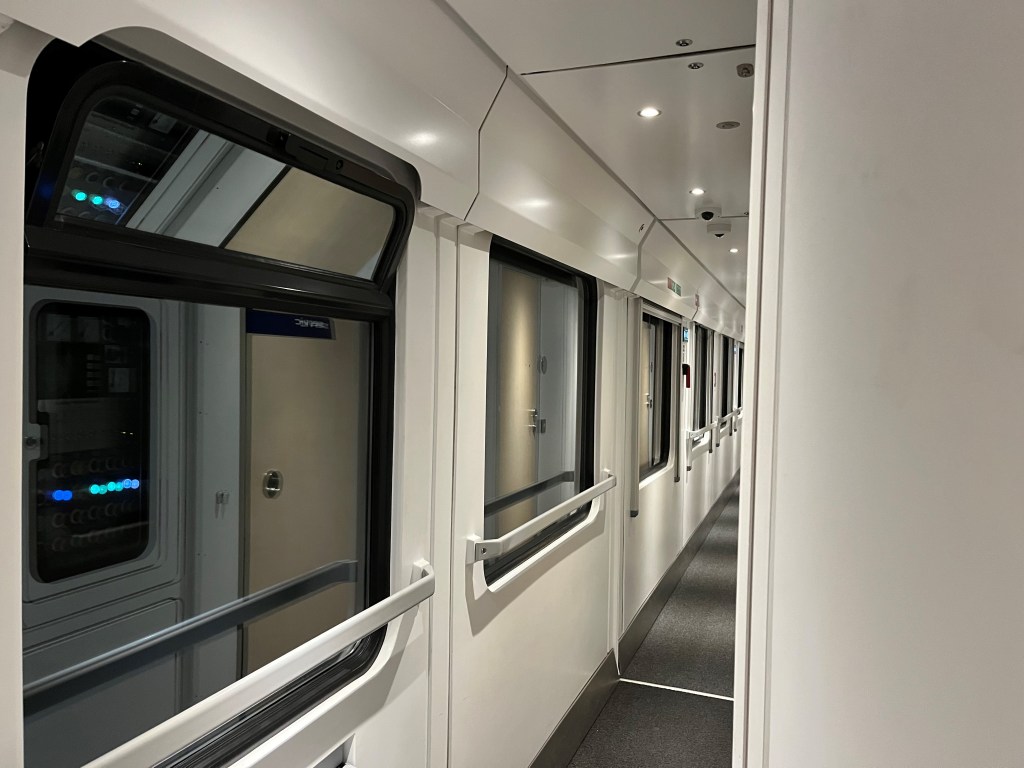
Walking back past our own compartment I walk into the front half of the train. Our current train is actually two services in one: the first few carriages are headed, not to northern Germany, but to Amsterdam; the two services part ways at Nuremberg. The arrangements here are largely the same, though the carriages are slightly older, and after traversing a couple of carriages I lose interest and return to the couchettes. There’s only one other person in the corridor besides me: a young woman, close to my age, sitting on the steps of the carriage and talking with a motor mouth into her mobile phone. Would have loved to chat to her, too, but her conversation seems endless and I resign myself to looking at the night outside, at the trees and the sickly white lights flashing past the window.
We clatter into Germany just after eleven, and arrive at the border town of Passau shortly after. The changeover seems instantaneous: whereas most of Austria’s stations were moderate, modest affairs, Passau Hauptbahnhof is MASSIVE, with platforms that stretch off far into the distance and seem to go on for miles on end; we seem to slide along our platform for minutes before coming to a gradual halt. Mindful of how big this place is, I decide to get out of the way of any travellers. Pulling the door open with some degree of force and an even greater degree of theatricality, I discover both Charmaine and Dennis already snoring on their beds; too sheepish to walk back out, I climb into my bed and lie there, listening to the thumping of luggage and stairways and people as they get on and off the train, and to the steady breathing of my friends in their moonlit bunks below.
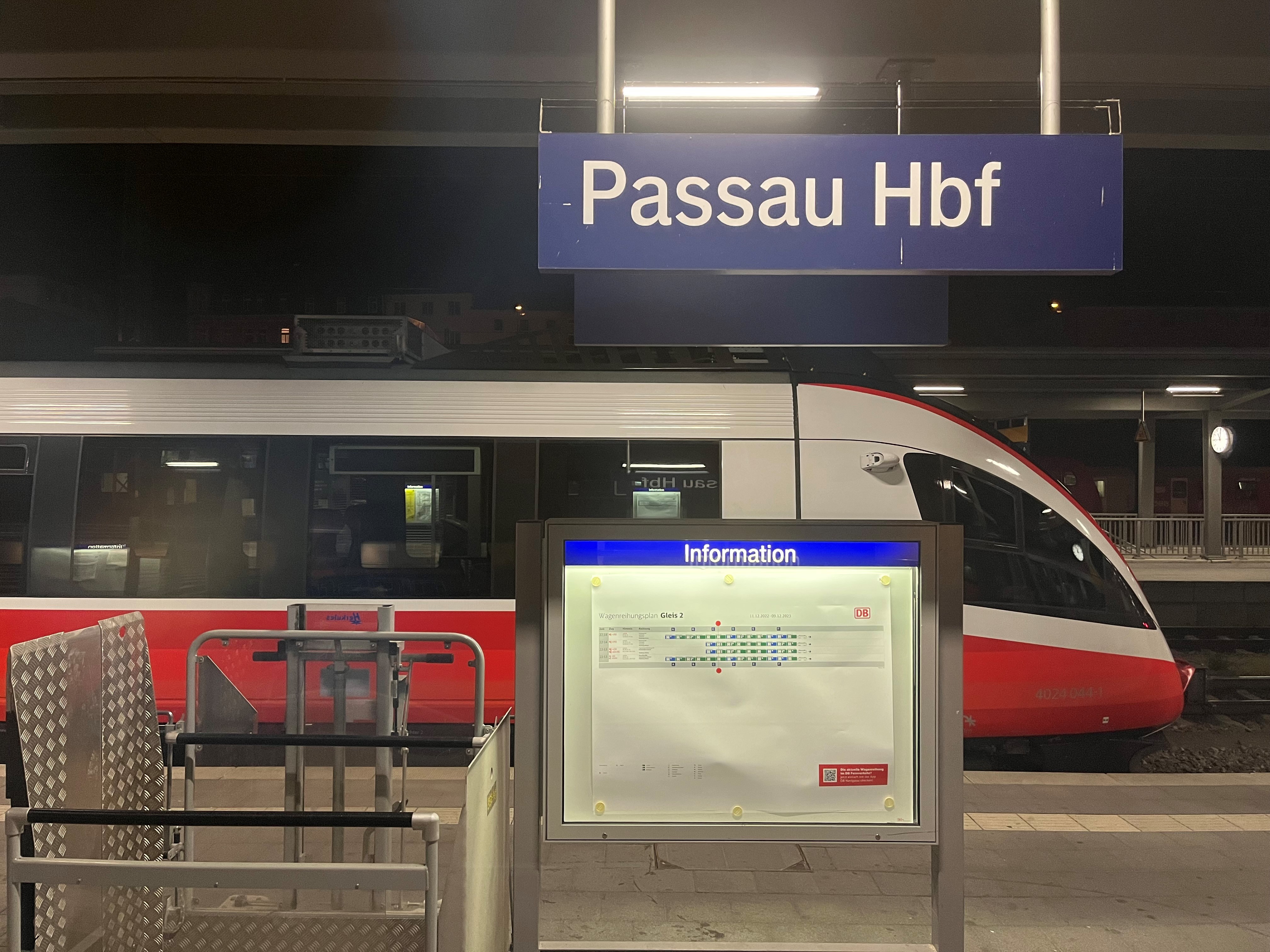
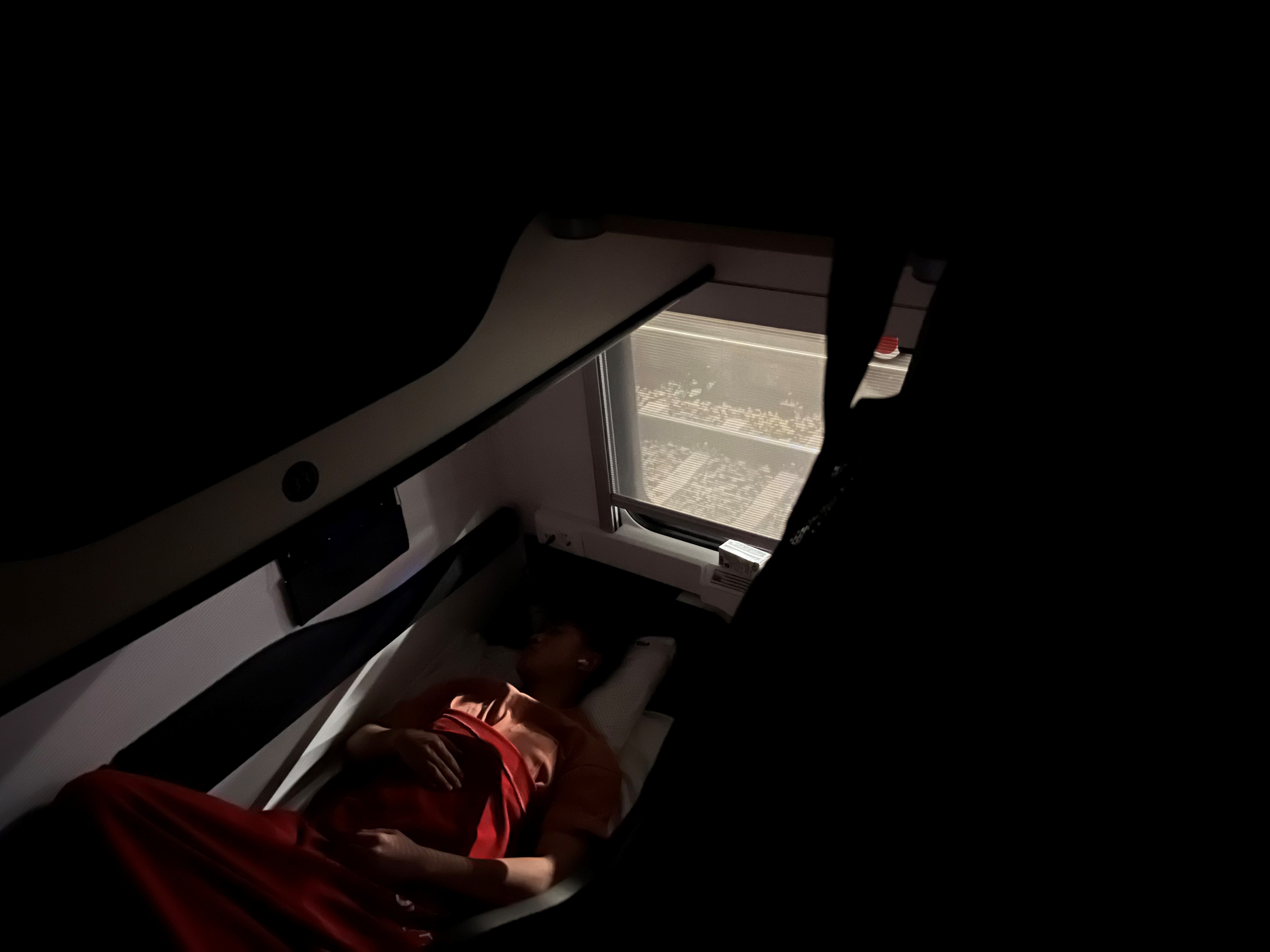
Eventually the whistle sounds, and we are off again; from my limited vantage point above, I watch as the concrete platform edge dissolves into gravel and earth. Despite the lateness of the hour I refuse to turn in: I have a vague plan to stay up until we reach Nuremberg, two-and-a-half hours later. Part of this is because I’d really like to see the two trains split up — I’ve never seen this kind of shunting manoeuvre in action before — but also I would like to really make sure that we don’t see tulips and windmills when we roll up the blinds tomorrow morning. But mostly it’s because I haven’t been in Germany for years now, and all those language classes in the intervening time have impressed on me what a vast, beautiful country it is. There is so much to see, so much to experience; it seems wrong, if you will, to waste Germany in sleep. So I lie there, on that hard mattress, rocked by the motions of the train as it passes on through junctions and lights and towns, waiting for a suitable moment to climb down and see what the night can bring me once more.
I never do manage to stay up until Nuremberg. The steady rhythm of the train, pushing me from left to right to left again, is somehow comforting enough to send me to sleep, and the next thing I know Dennis is rolling up the blinds and staring into the murky dawn across the fields of Saxony. By some miracle of transport we have managed to cross more than half of Germany in less than seven hours, so by the time we pull into Göttingen we are actually ten minutes ahead of schedule.
Perhaps it’s because we’ve already spent four days on the move, but as I sit up in bed I can’t help but notice the sombre mood of the room. Poor Charmaine has not had a very good night: trying to get comfortable with a narrow bed, the start-stop motion of the train and freezing (for her) aircon temperatures, she never managed much more than a fitful doze, slipping in and out of consciousness as Bavaria turned into Hesse and Hesse turned into Lower Saxony. Dennis is doing slightly better — the man could probably sleep through the apocalypse if he wanted — but he still looks tired from where I can see him. No doubt I look like I’ve been ravaged by something during the night too.

Step out from the toilet just as we arrive at Hanover, the capital of Lower Saxony. Its Hauptbahnhof is your classic German main station: long concrete-and-glass canopies, platforms that stretch for insane lengths, and austere-looking Germans parading on them. Maybe it’s because it’s half past six in the morning, but the station is still trying to rub the sleep out of its eyes: the sun is nowhere to be seen, everybody looks rather grumpy and lifeless, and the newsvendors on the platform have few people milling around them. I stick my head out into the open air and immediately sneeze: now that we’re 700 kilometres further north, the temperature has dropped precipitously, and every single commuter within sight is bundled up in a down jacket or a scarf. Retreat to our room and start the Straussian dances once more, digging out the winter clothes I packed for this journey.
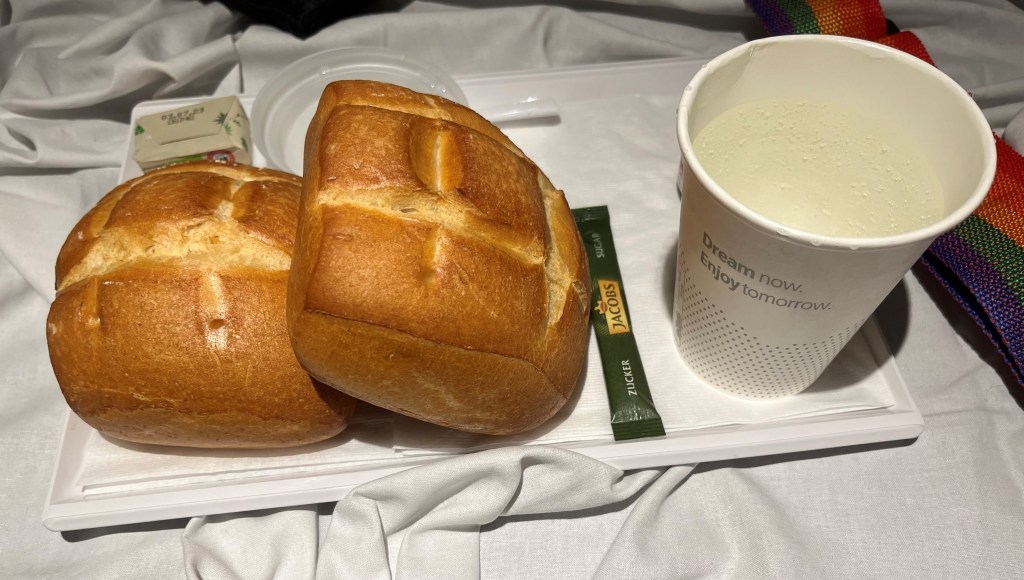
The train has barely left Hanover when there is a sharp tap on the door and a gruff train attendant comes in. Three trays containing bread rolls, jam and a cup of hot water are handed — nay, thrust on us by him and another unseen attendant, who both seem to brook no disagreement. “We will come back in forty minutes to take your breakfasts.” Charmaine nods nervously, and the unseen attendant’s gaze then presumably falls on the sleeping Dennis. “Wake up,” she says huffily, practically slamming the door. The bread is a bit hard, but the cup of tea is excellent, and it comes in a paper cup with a very nice slogan: “dream now. Enjoy tomorrow”. I make a note to steal it next time I write an article.
Half past eight. Slowly but surely our train winds into Hamburg. The landscape has changed once more: the mountains and forests that greeted us in Bavaria have levelled out into plains and low mountains. The buildings of Germany’s second largest city are yet to be seen — right now the landscape still suggests an anonymous suburb — and so it is a genuine surprise when Hamburg-Harburg station looms out of nowhere, its small red-brick building the only dash of colour in amongst the dark trees and the grey skies. The current temperature, as announced by the train’s tannoy system, is 12 degrees Celsius.
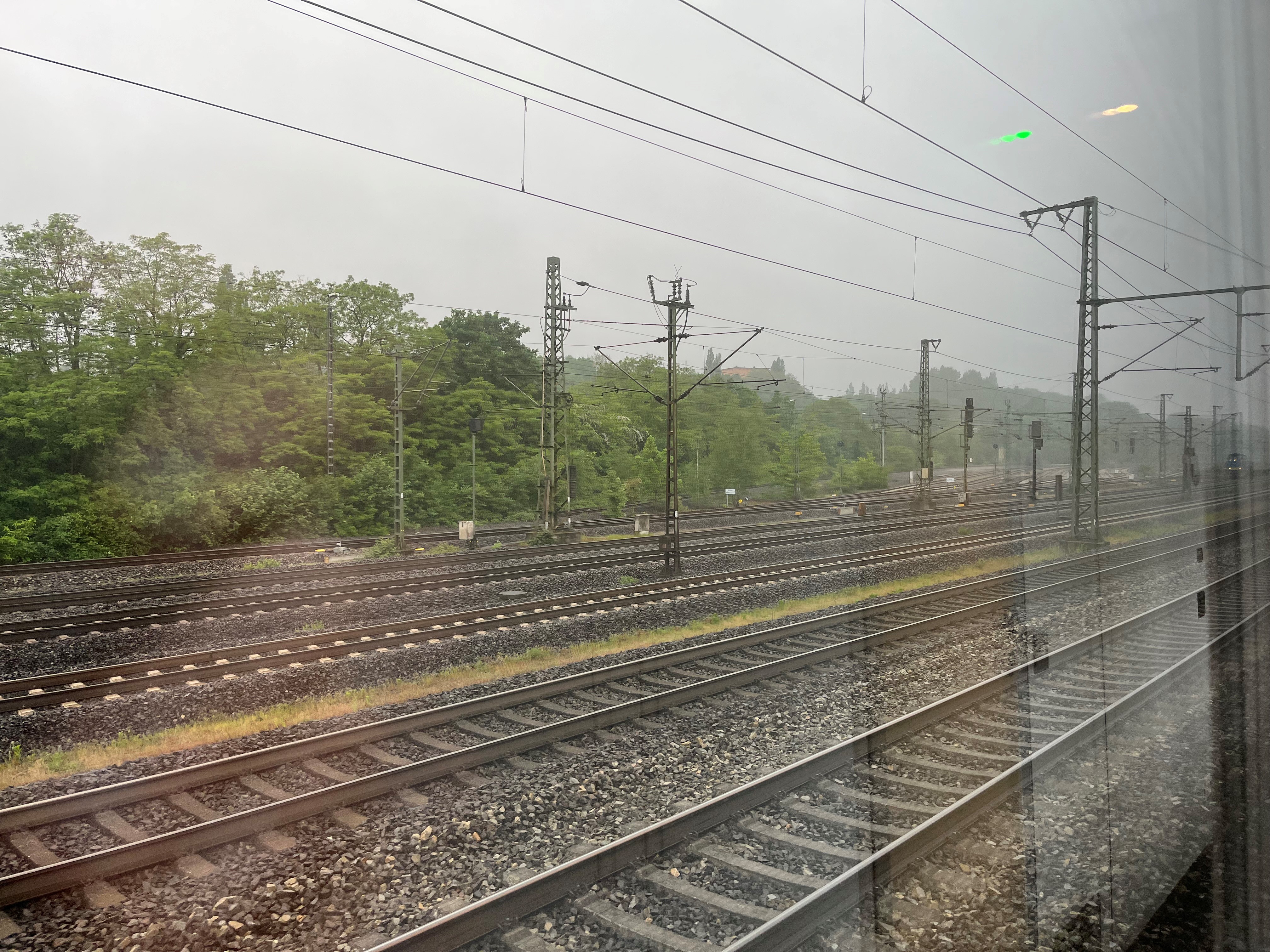

After Harburg we start seeing the Hamburger signs in earnest. (Might as well get it over with here: “Hamburger” in this case simply means “of Hamburg”, and no jokes about fast food will be tolerated, I’m already fried enough writing all this down.) The first indication of our location comes from a few squat buildings: a mishmash of styles new and old, a haphazard mix of both yellowing brick and shiny white tiling — the inconsistent kind that you’d only get in a still-expanding city. Railway tracks run to either side of our train: not merging or decreasing in number, but rather diverging into ever-greater numbers, servicing ever larger suburban stations. Then, all of a sudden, we swing onto a high embankment, and the Elbe and its many tributaries lie below us: wide, dark, sluggish, muddy. Across the water is some sort of fish market: a white warehouse, of a size only possible in Germany, where we can barely make out tiny pinpricks of vendors and trucks, moving alongside the barges floating on the water. We cross a bridge, duck into a short, dark tunnel, and then with no prior warning are thrust straight into the humongous halls of Hamburg Hauptbahnhof.
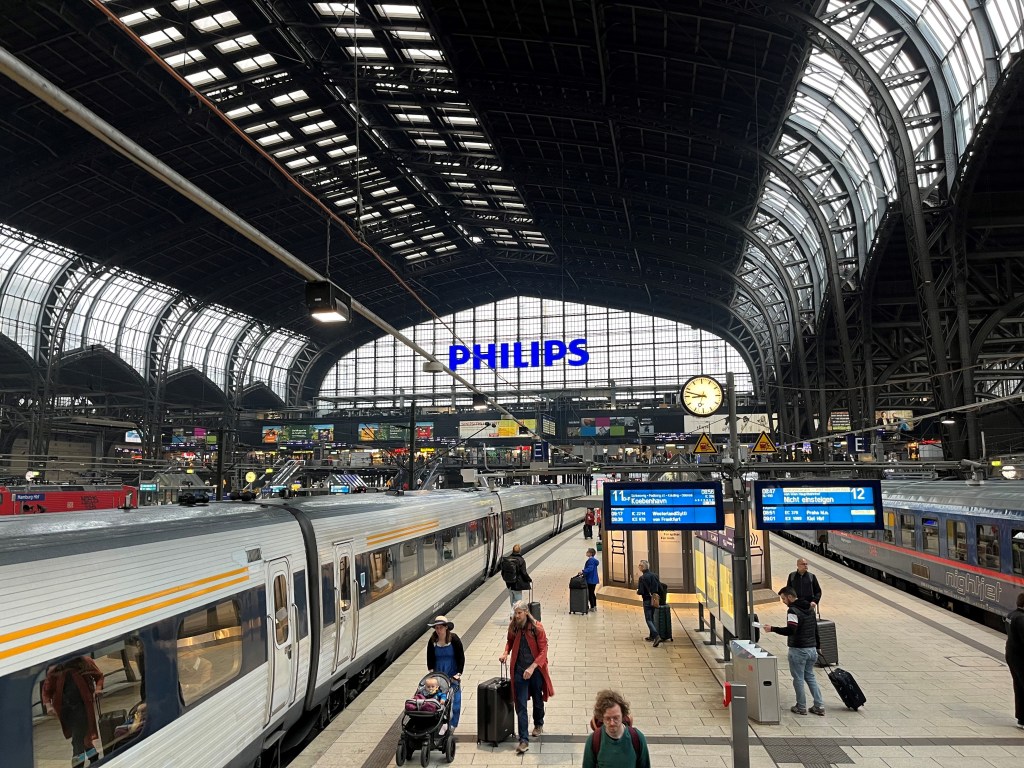
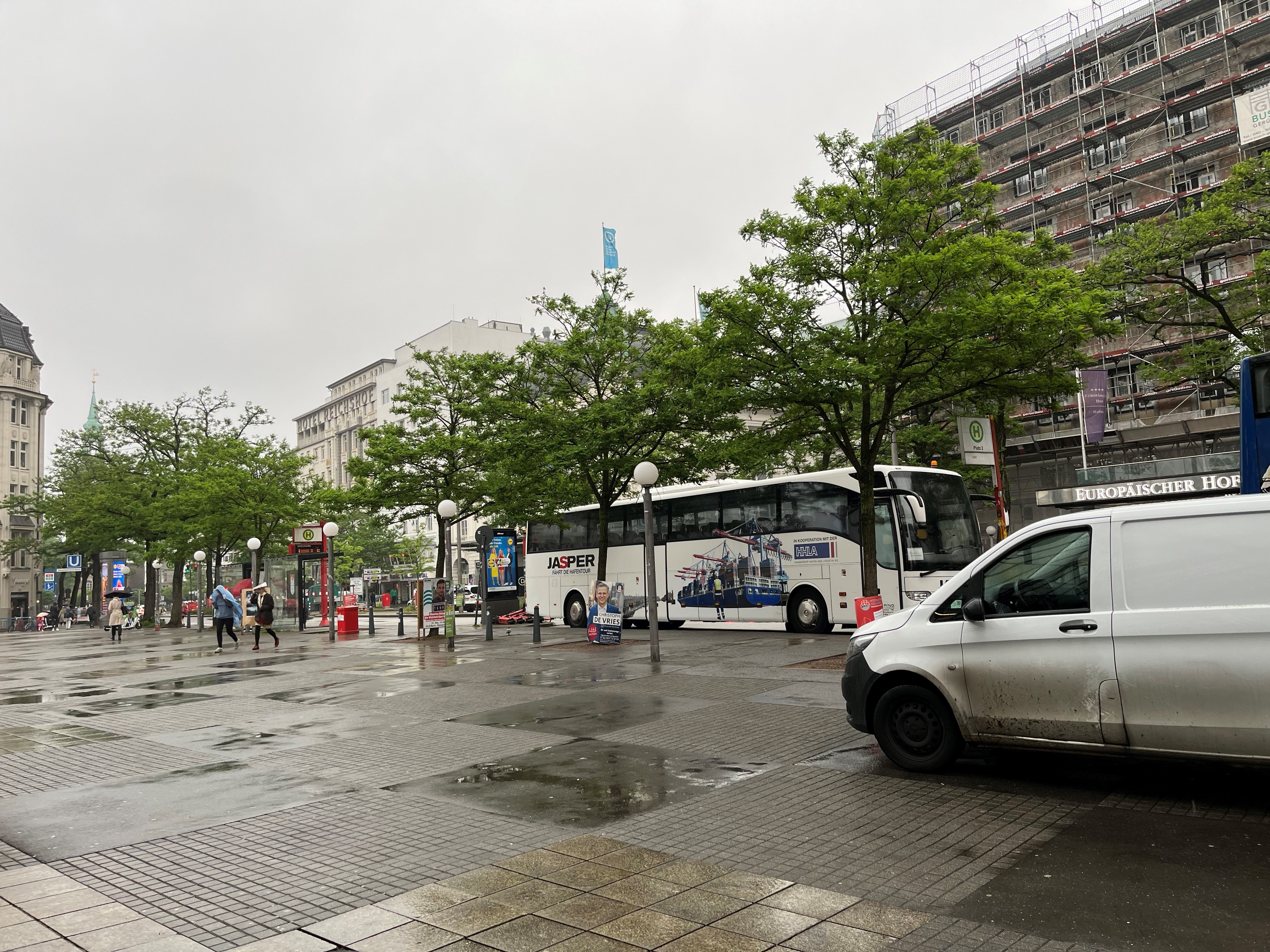
The first thing we notice is how huge the whole place seems. Having been confined into a small, cramped space lit by a few artificial lightbulbs, it’s a bit of a shock to coming across this colossal space of steel and glass, brightly illuminated and still (peculiarly) smelling of soot and grime. Then the cold begins to hit: the fetid warmth of the train dissipates, and the north wind bites hard on our faces and hands; Charmaine, who has only a thin jacket on, pauses to dig out a thicker anorak. We emerge out into a grey, wet morning — wet, as in pouring with rain. Unlike Vienna, the people around us seem to be actively grumpy, and tired, and giving us weird looks. For the briefest moment, doubt flashes through my mind: why did we even came here? Why does this place look so much worse than Vienna? But then Dennis turns on the maps and we begin the 15-minute trek to our hotel, dodging the driving rain and the unforgiving cyclists of Hamburg. The wheels on our suitcases kick up mud and leaves and water; we’ll have to wipe them down when we get to our place for the night.
Most of the shops on our way seem somewhat crummy — less spacious and more shifty than the ones we’ve seen in the past four days, as if they deal in contraband and other forbidden goods. We cross a few desolate streets and duck under a couple of underpasses. I recall from Wikipedia that the Hauptbahnhof abuts Hamburg’s more bohemian quarters, and the surroundings are drab, functional, not at all touristy. More than once I wonder if we’re heading in the wrong direction — this looks like a backdrop for American Beauty, not our place for the night — but then Dennis spots it, a grey and creaking structure right next to the YMCA. Reception looks at us as we walk in, faintly perplexed by our appearance. We are cold, exhausted, and already more than a little irritated by our German welcome.
But then: reversal. “Your room is actually ready now, we can let you in.”

I resist the urge to hug the receptionist; it’s amazing just how one simple sentence can turn your whole day around. But instead we haul our heavy suitcases across the hall and up a short staircase, at the top of which we find a spacious, high-ceilinged room, charmingly decorated with industrial motifs — it’s even got ridged iron walls that imitate a container. We collapse into our separate, comfy beds, and give thanks to whatever deity we believe in that we have survived the past twelve hours.

 Inkpot Shuffles in the Twilight