21-22 May
The U-Bahn train rumbles through the tunnels. Scores of people get on and off; tomorrow will be a workday for many of these commuters and yet the nightlife is swinging harder than it did 24 hours ago. Couples and friends stand next to me, gazing into each other’s eyes or engaging in intimate conversation — I catch snippets, inflections, solitary words. It’s all very nice and Viennese, but I wish some stranger would come talk English with me, just to compliment it all. The ride is only six stops, maybe ten or twelve minutes. But it still feels like a very long journey.
A crowd exits at Praterstern station; I follow them off and up the escalators. Everybody sounds excited — children yelping, adults chattering, and even the elderly ones are smiling — and before I’m even out of the station, I can already see the reason why.
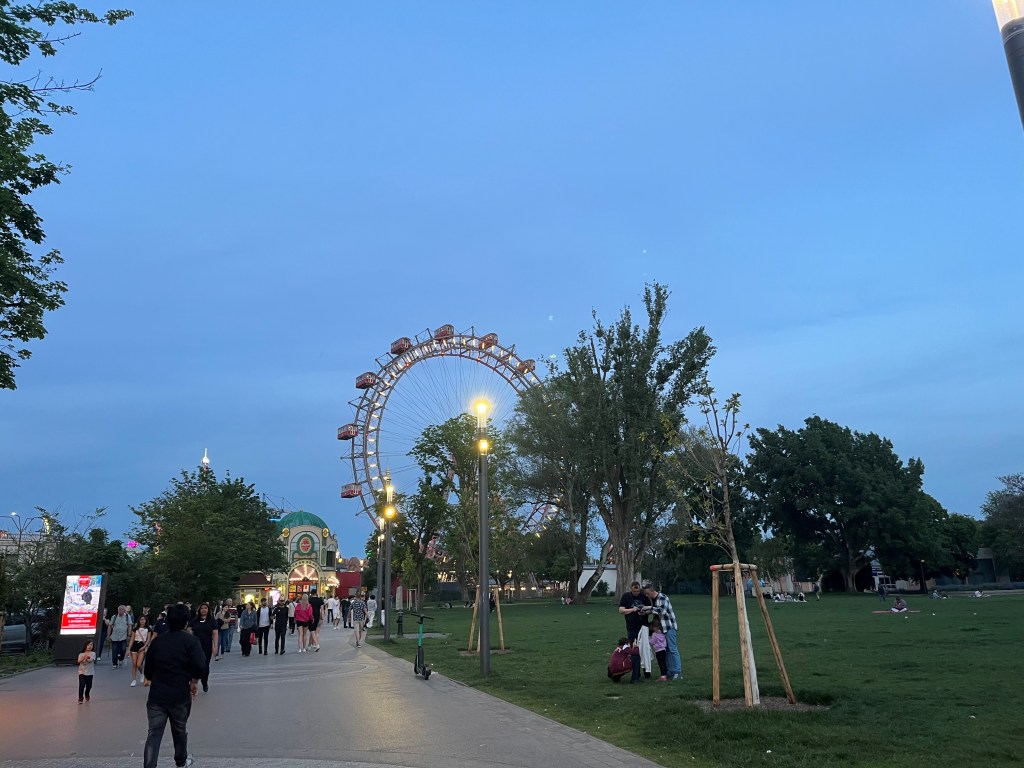
You can’t miss it. Even if it’s getting dark and everything else is indistinguishable, you’ll still see the Ferris wheel, shining like a beacon in the darkness from afar. Perhaps that’s why every film in Vienna makes a point of featuring it: if the Ringstrasse is where they establish a sojourn to the city, then the Wiener Riesenrad is almost always where those sojourns culminate. It is where Harry Lime threatened to push his childhood friend to his death, it is where James Bond met one of his flings as well as one of his informants, and as every English major worth their salt will tell you, it’s also where Jesse and Céline shared their first kiss.
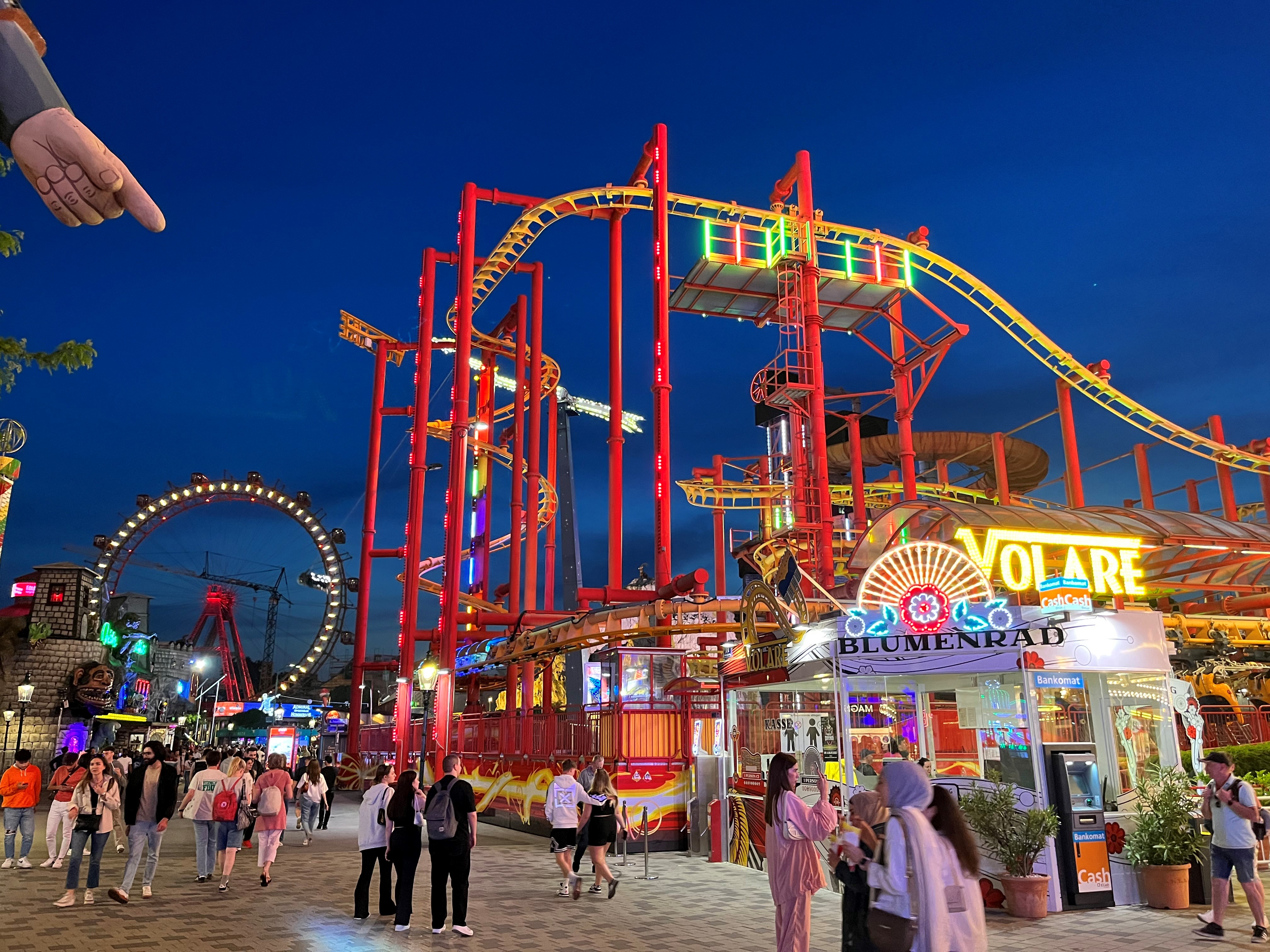
Of course what often gets lost in all that beautiful cinematography is that there’s more than just a Ferris wheel here: the Wurstelprater amusement park, one of the oldest in the world (but not the oldest we will visit on this trip), has been entertaining all sorts of people here since the late 19th century. Originally part of the Austrian monarchy’s hunting grounds, it slowly transformed into a carnival of dastardly rides and dazzling lights as the grounds opened up for public use. Like the rest of the city, it was heavily bombed in the Second World War, to the point where it was almost wiped off the map — viewers of “The Third Man” may recall Orson Welles picking his way through heaps of rubble and trash to meet up with Joseph Cotten — but it also followed Vienna’s lead in rebuilding bigger and better, and on this Sunday evening it looks positively phoenix-like as I step through the archway and into a land of hedonism.
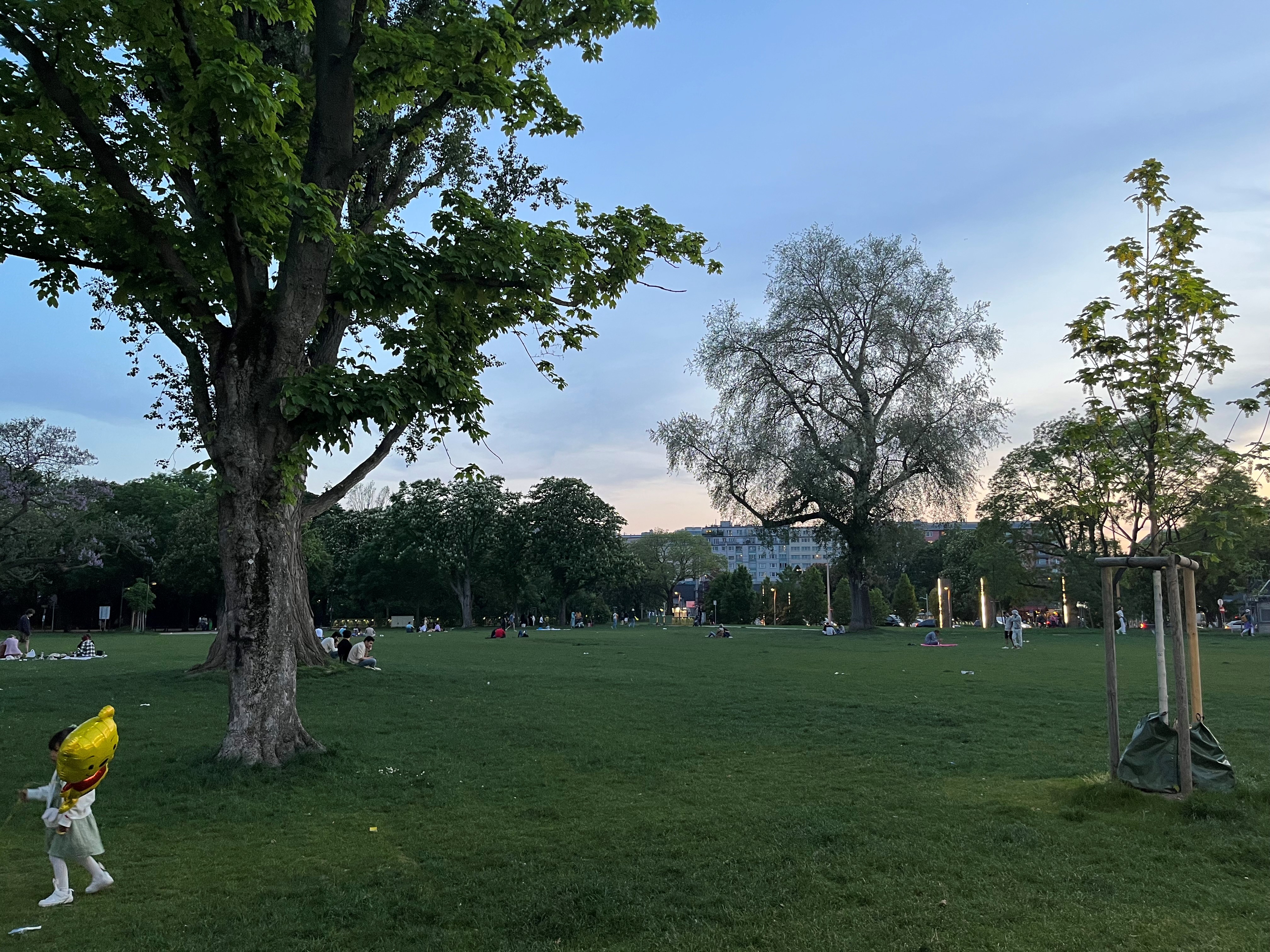

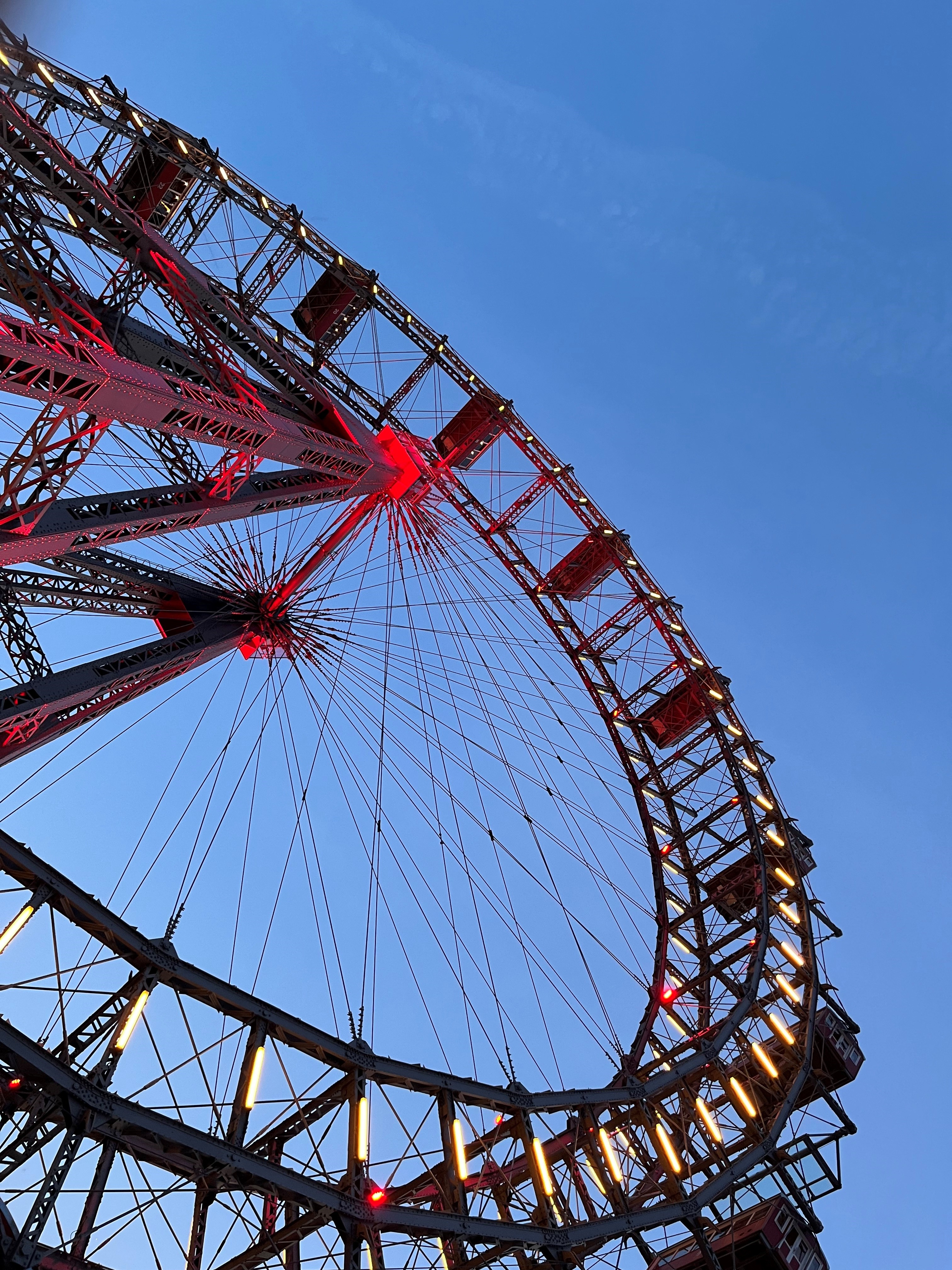
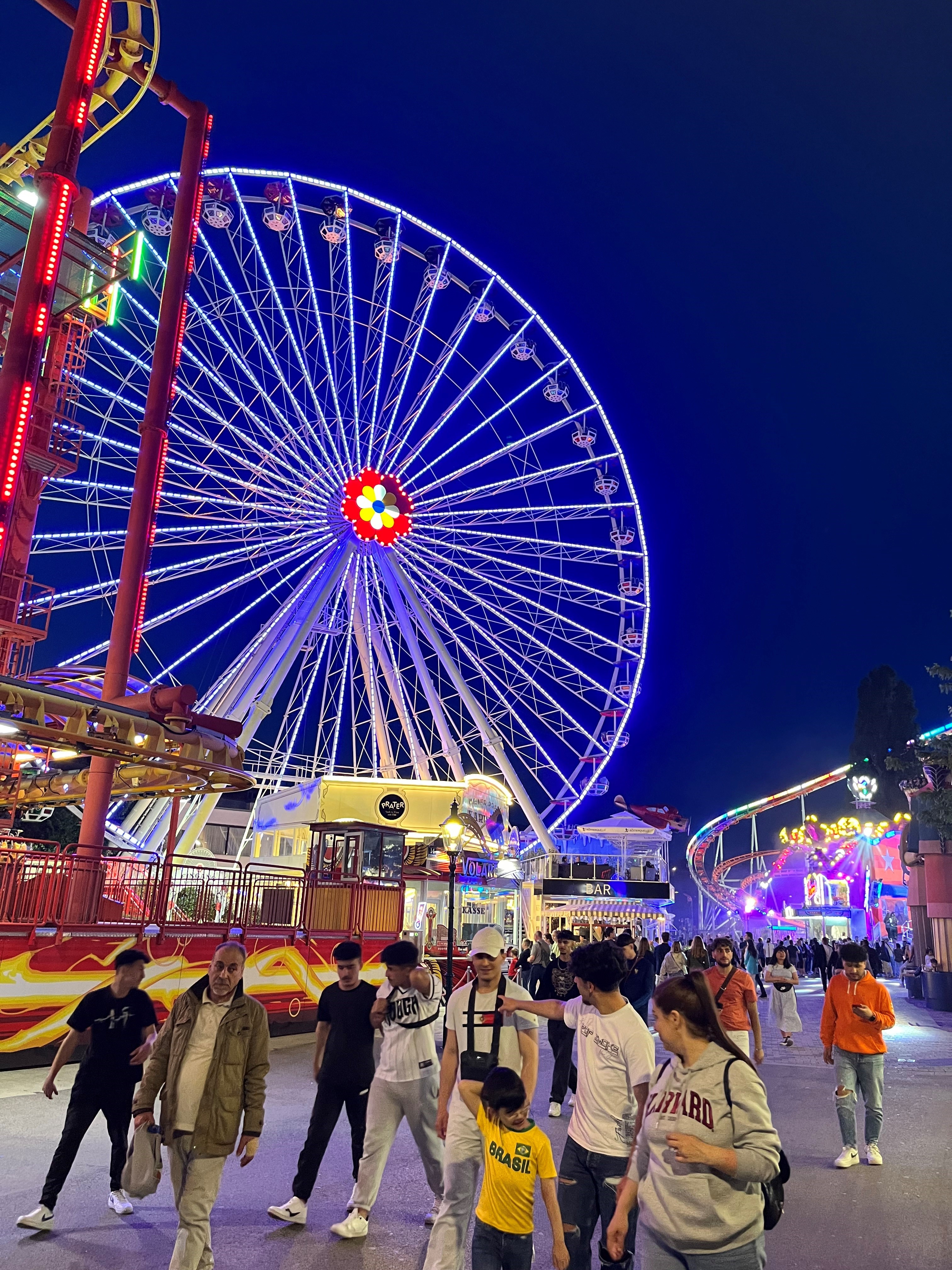
The Ferris wheel (or if you insist, the Wiener Riesenrad) looms large over me as I enter. It looks even more impressive up close, especially against the twilight: the red of the iron girders against the yellow-white of the lights and the dark turquoise of the skies makes for an exquisite picture, one of the prettiest moments in my journey, and I stand there for a good solid five minutes or so, just drinking in all the colours. Unfortunately the Riesenrad also charges the outrageous price of €13.50 for a couple of spins, and I’ve already been on it once many years ago, so I decide to forgo seeing Vienna from above (for now) and push farther into the park instead.
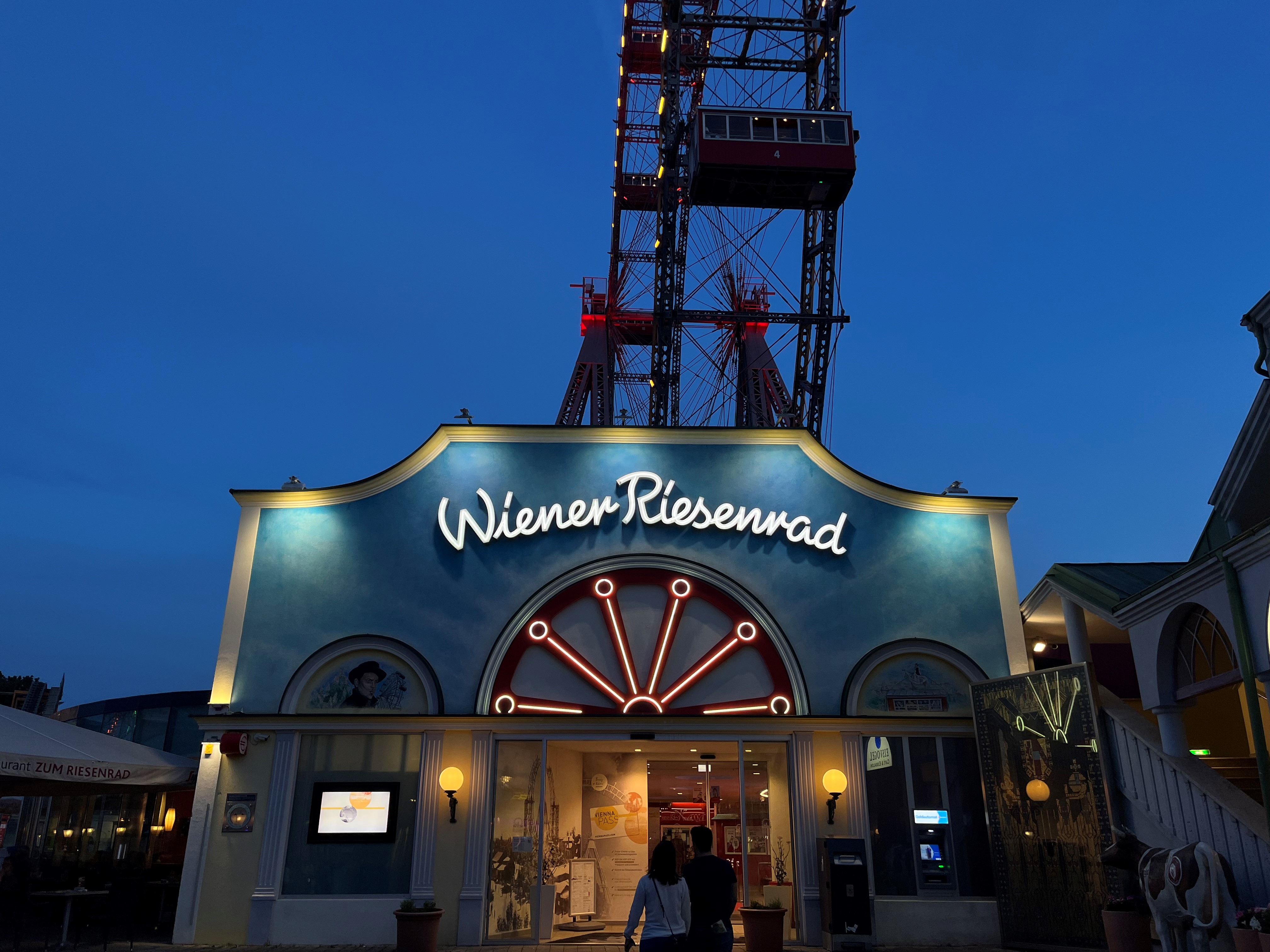

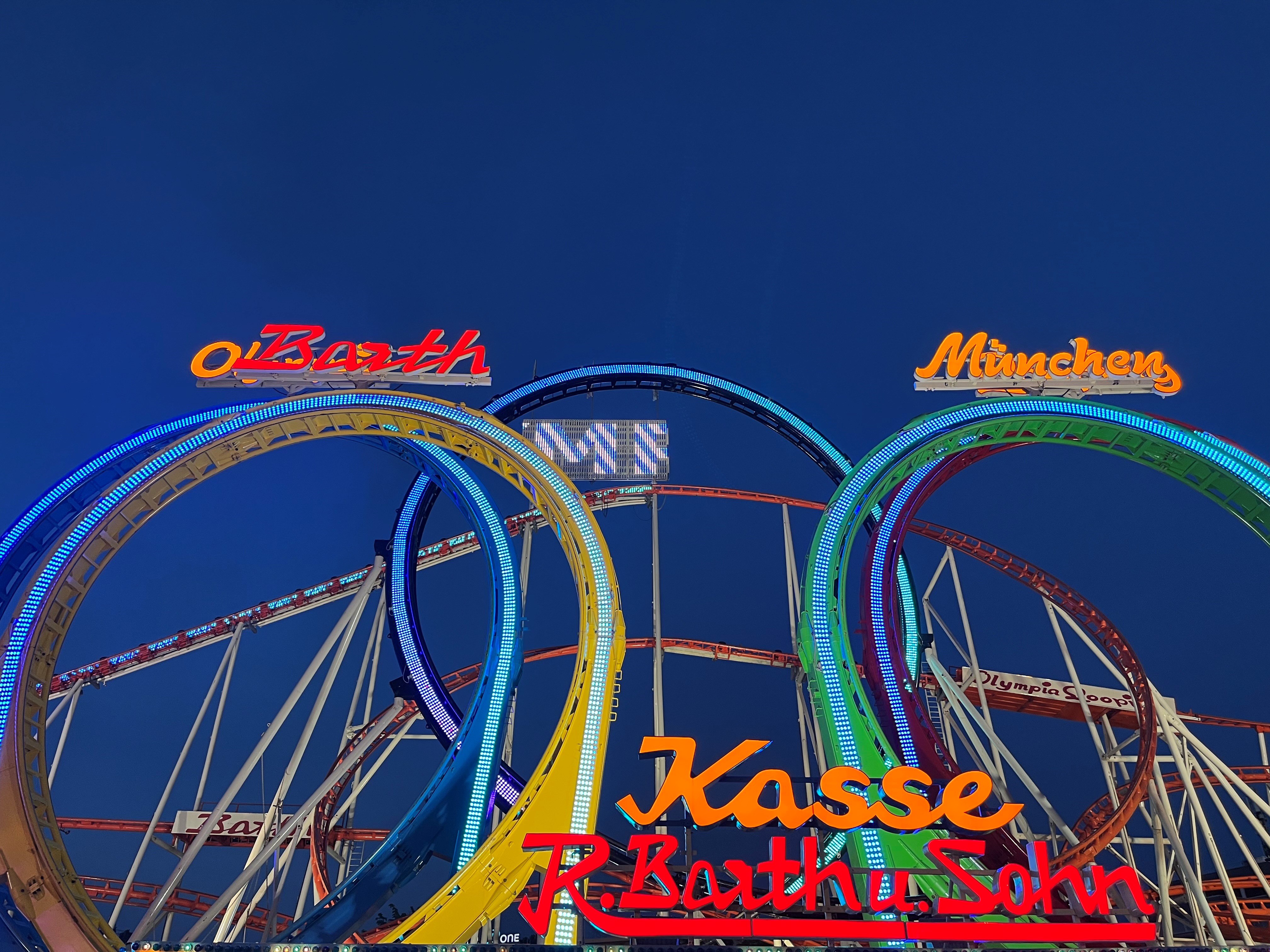
The music (Maroon 5’s “Moves Like Jagger”) gets louder as I walk down the alleyways, the pulsing beats going like a jackhammer, insistent on punching a hole through your brain. The lights get brighter and more glaring too: at first I think it’s just the contrast brought on by nightfall, but as I wander deeper into the crowds and the heavy machinery the neon and the LEDs reach a brightness that seem borderline blinding. It adds to the carnivalesque chaos happening all around: all around me people are laughing, chatting animatedly with each other, while the background music swells ever louder; the air is a whole smorgasbord of smells, of cotton candy and caramel sugar and cigarette smoke above all.
What strikes me, looking at all the rides around me, is how diverse the crowd is: there’s the usual youngsters and tourists here tonight, but there are also quite a few people in the queues wearing hijab along with their jeans, and I’m pretty sure I saw one woman, her hair white and her back slightly stooped, lining up for a ride so bouncy that I instinctively reached for my spine. In Hong Kong, people her age might get on the Ferris wheel and maybe the cable car; they certainly wouldn’t risk going on a contraption with three-inch-high guardrails that mercilessly blasts out Rihanna’s “SOS” as it tosses you around. Once again, I am struck by contrasts, by how much the Viennese are surprising me: specifically the willingness of the young to mix with the old, the religious to mix so freely with the hedonists.

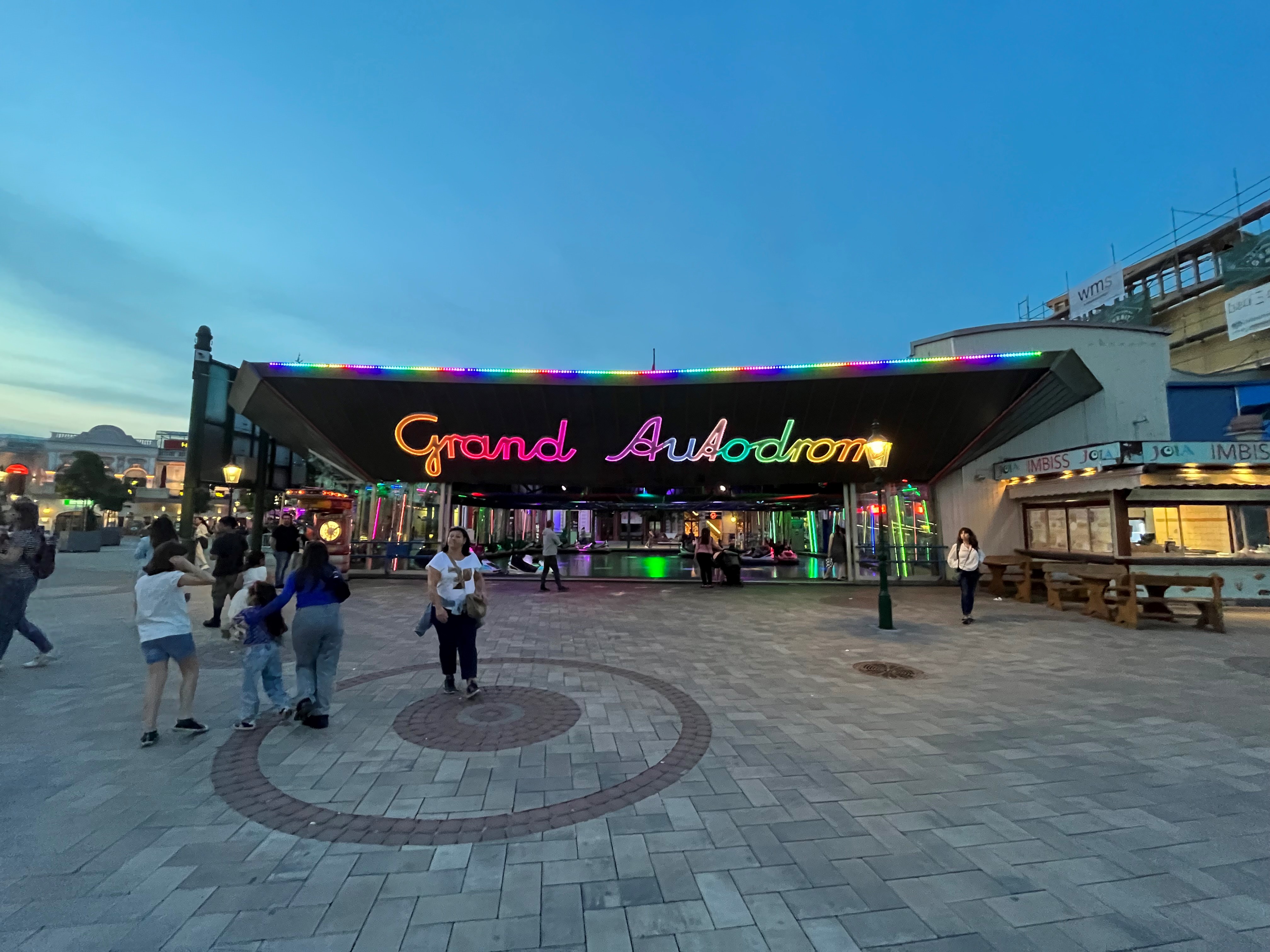


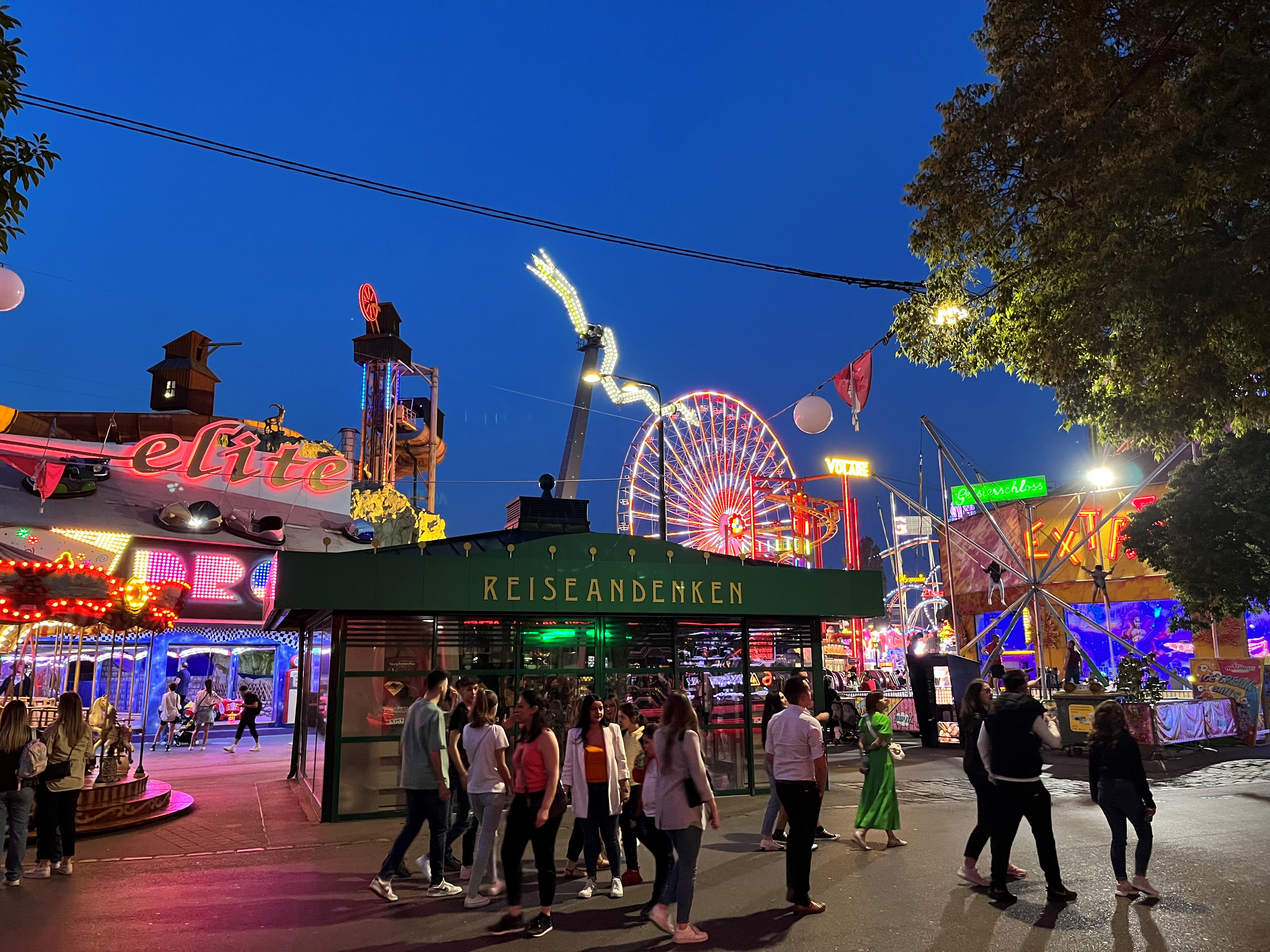
As the sky turns navy and indigo and then finally ink-black, the crowd gets thicker and the din harder to ignore. I turn around to look down the way I’ve come — and then get completely lost in the sights and sounds. Each alleyway I look down seems unfamiliar, and new rides (new thrilling rides) loom out of the darkness, temptation after neon temptation. Occasionally I dimly recognise a place I’ve walked past — oh look, here are the spinning nutcrackers — but for the most part the Prater amusement park continues offering up more attractions, ones that I think I’ve seen before (didn’t I walk past these bumper cars two minutes ago? Or is this a completely different variation?) but can’t be really sure about. It’s all a bit overwhelming, even though I find myself strangely attracted to this kind of overwhelm —
— well, to a point, that is. Consulting my notes later on I discover that I was in the Prater amusement park for exactly 31 minutes; and some of this brevity has to be attributed to my reluctance to go on a single ride (I make no excuse for this, I’m just a bit of a wimp). But time seems to elongate when I am in the Wurstelprater; the shouts of joy and exhilaration seem to affix this moment in time, and in my entire journey I never feel more like I am in a waking dream than my half-hour in the grounds of Prater (well, save for my actual dreaming each night). As I finally manage to locate a map I note the names of the streets within the park, elongated almost to the point of comedy: “Kratky-Baschik-Weg”, “Calafattiplatz”, “Strasse des Ersten Mai”. It only adds to those feelings of unreality.


Exiting the park at last I hustle through the streets before entering the U2’s Messe-Prater station, a clean and spotless affair barely more than a decade old. The Vienna U-Bahn is a rather ramshackle affair: although only officially commissioned in 1976, much of the network was recycled from the city’s Stadtbahn tram system, so purpose-built stations like the Messe-Prater present a marked contrast to stations like Schottenring, grimy and slightly unkempt. I change onto the U4 with my fellow commuters, noting how lively it is even at nine thirty on a Sunday night, and wondering just how I can join in the fun.
Sixteen hours later, I find myself travelling on the same stretch of line, but back in the opposite direction. In between these two journeys, I have returned to our hostel, gotten yet another fitful night of sleep, woken up Dennis by climbing out of our bunk bed, breakfasted, watched my co-travellers breakfast at a different restaurant, and hauled all our luggage to a dinky storage facility underneath the Vienna Hauptbahnhof — for today is our last day in the Austrian capital, and tonight we leave town on a cross-country train. But all that is for the end of the day, and so once again the train I am on pulls into Schottenring station, where the banks of the Danube rise high just beyond the platforms and the early-afternoon sunshine permeates through the metal grates.
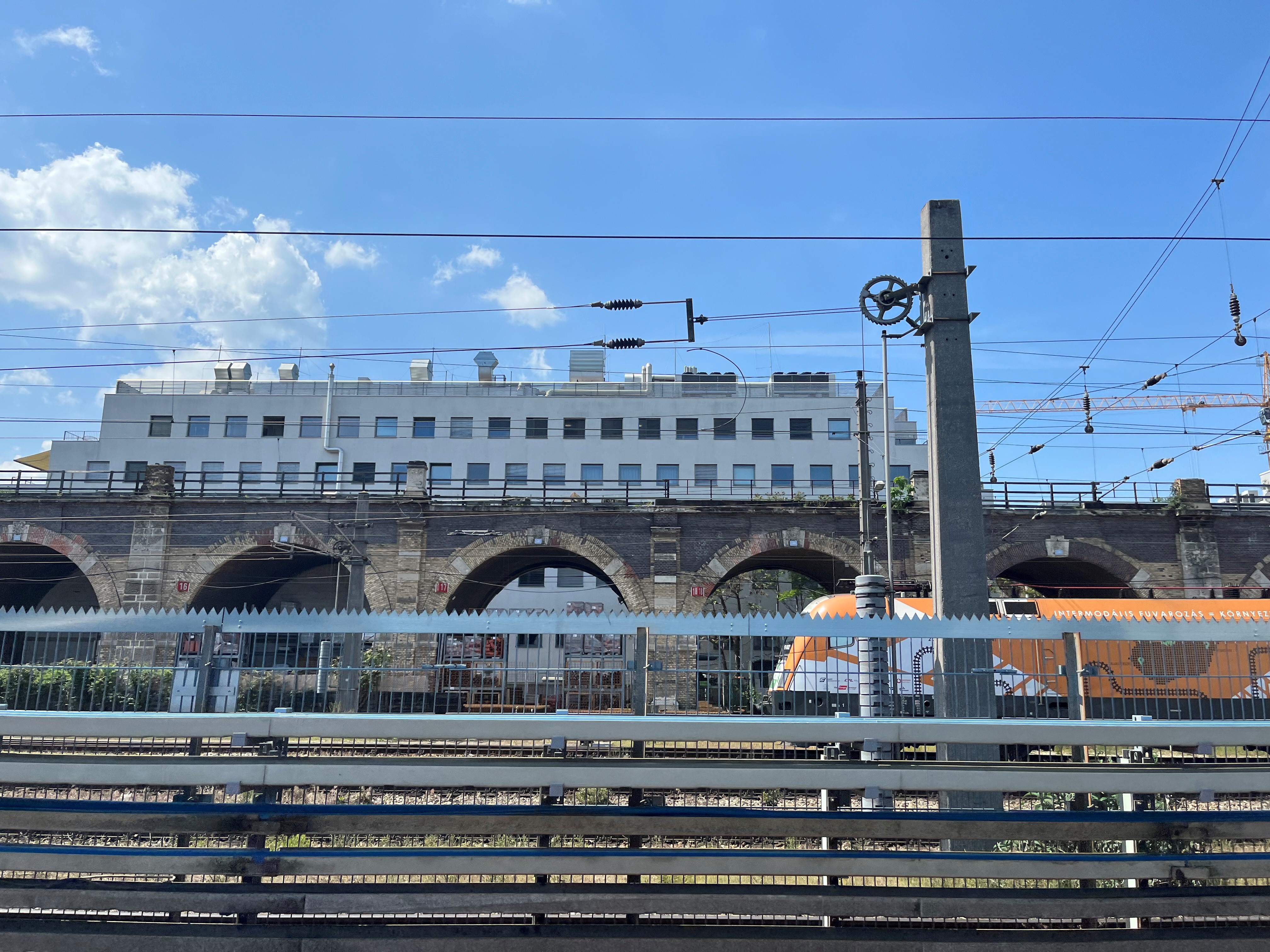
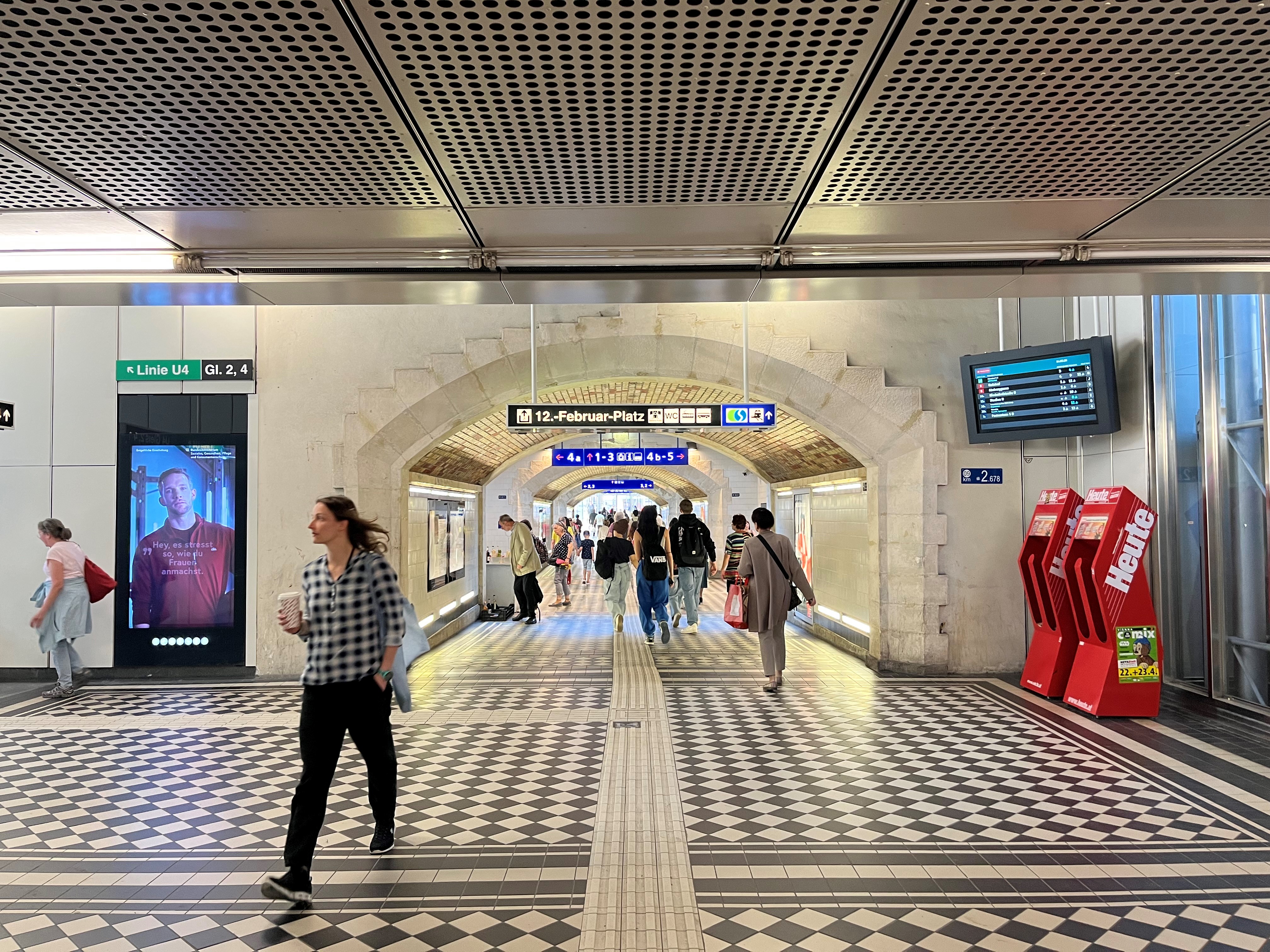
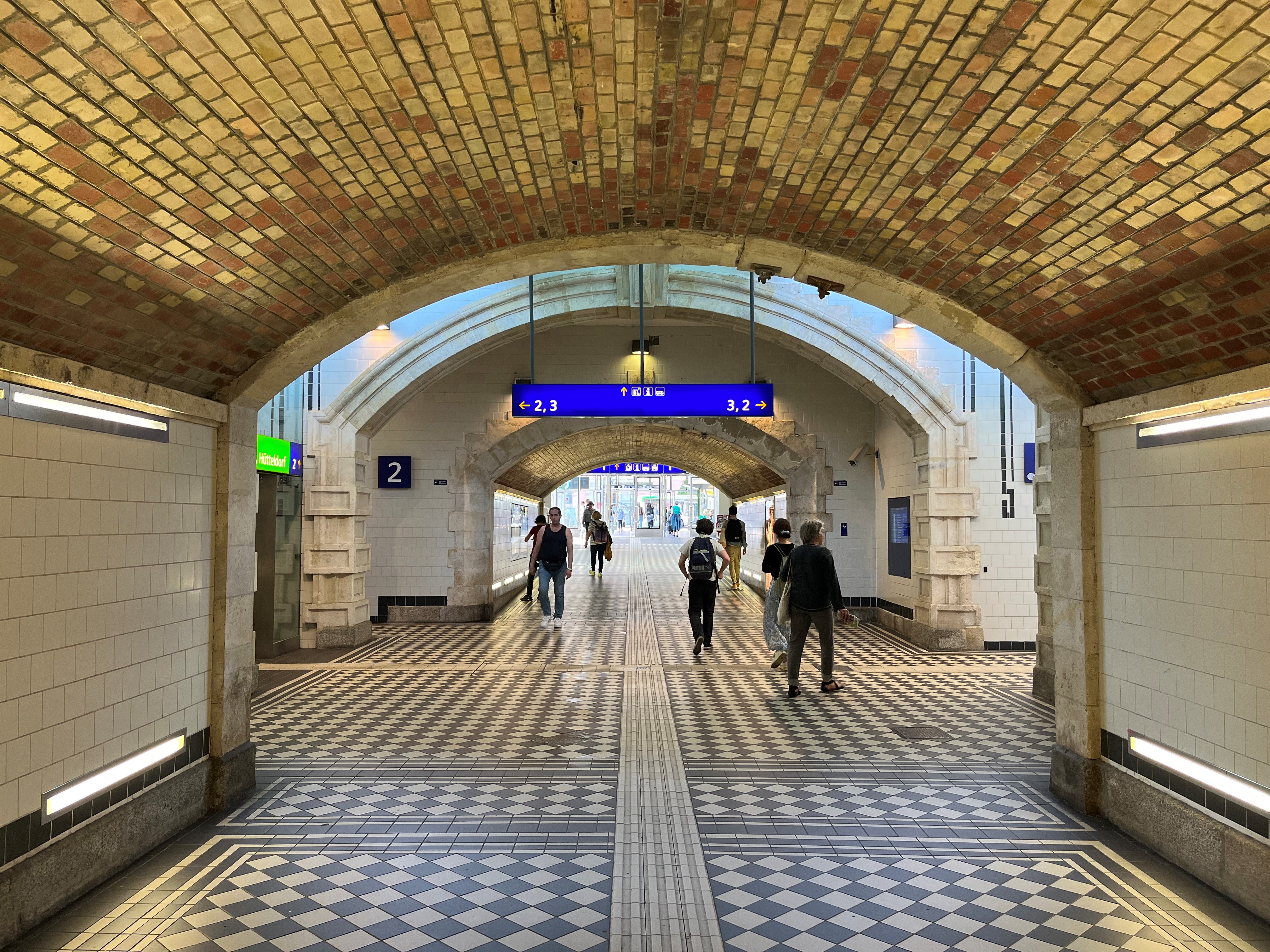
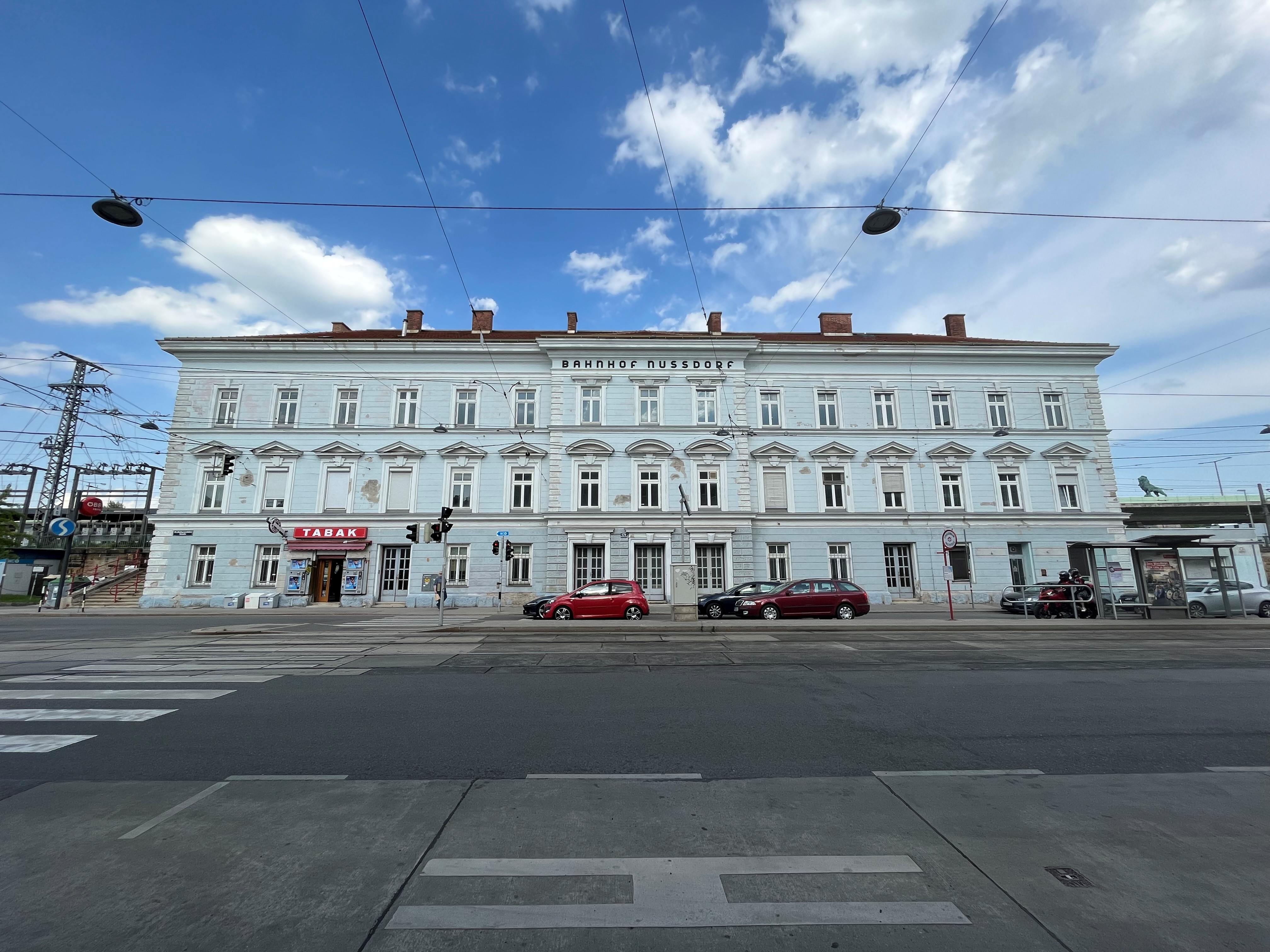
This is a quieter, slower stretch of the U4: I notice as we continue north that the only people still on the train are old women, hunched in a corner, clutching their shopping; or they are children, nervously holding onto their mothers’ hands. We emerge onto open track, and the Sun beats down on the gravel and the vegetation, harsh, scorching, unforgiving. By the time we slide into Heiligenstadt station, at the northern tip of Vienna, the cool dampness of the station building comes as a pleasant surprise. The station building itself is the sort you’d expect from the city: it may just be a lowly terminus (albeit one of the network’s two original stations), but everything everywhere screams fin de siècle and decadence. Typical Vienna in a nutshell.
Exiting onto the 12.-Februar-Platz, I come face-to-face with the longest building in the world. This is the Karl-Marx-Hof, built in the 1920s during a building spree for lower-class people in Vienna (as you can probably tell, the city government back then was dominated by socialists). It looks rather like an imposing bulwark, and that’s partly because it was designed as one — given the frosty relationship with the very left-wing city government and the borderline fascist national one, the architects for this gemeindebau were careful to ensure that it could also double as a fortress if things went south between the two, which is precisely what happened in 1934. These days, however, it’s mostly a grandiose housing estate, more than a mile long and still largely sturdy and well-kept despite nearing a century in age.
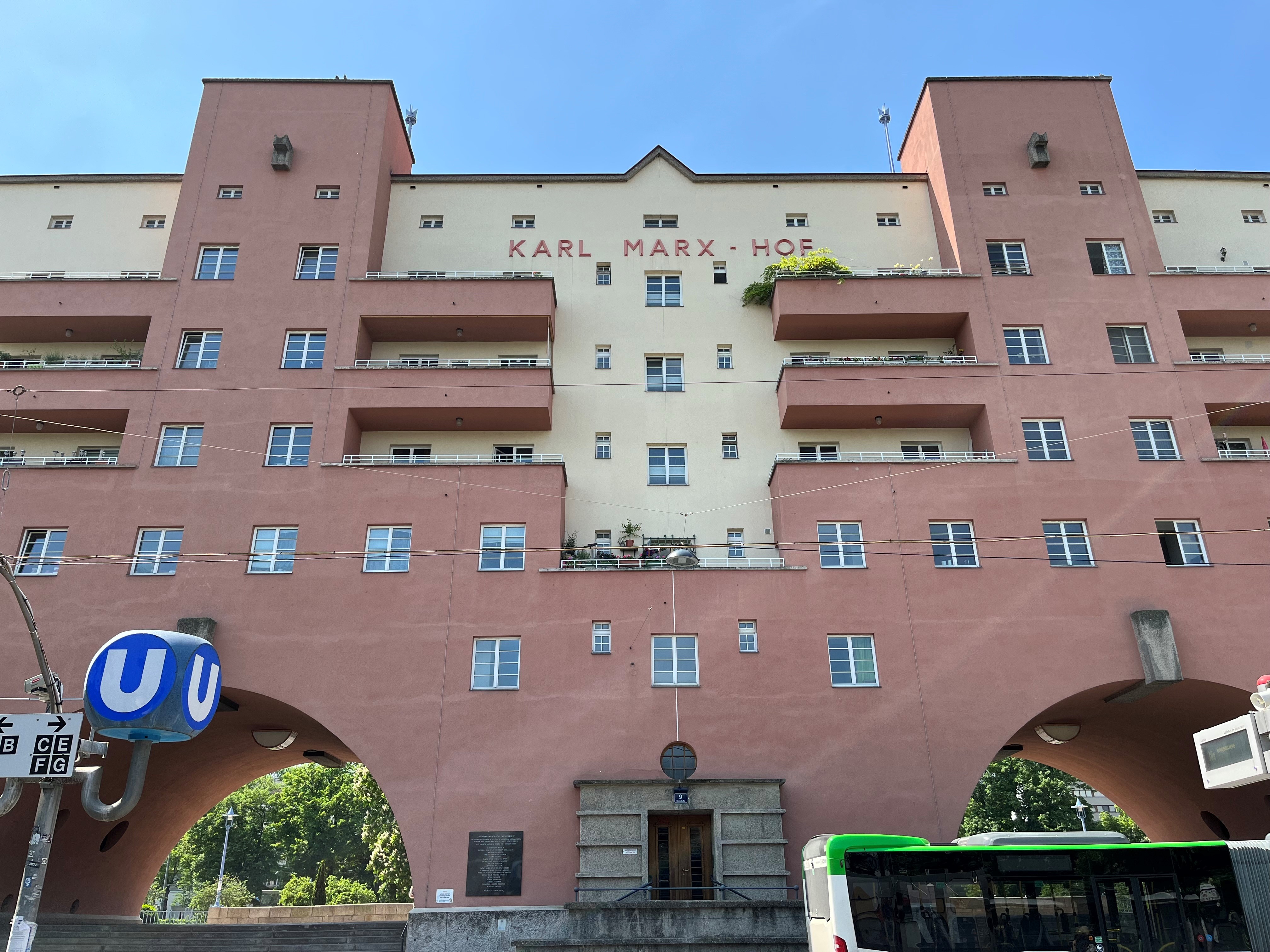

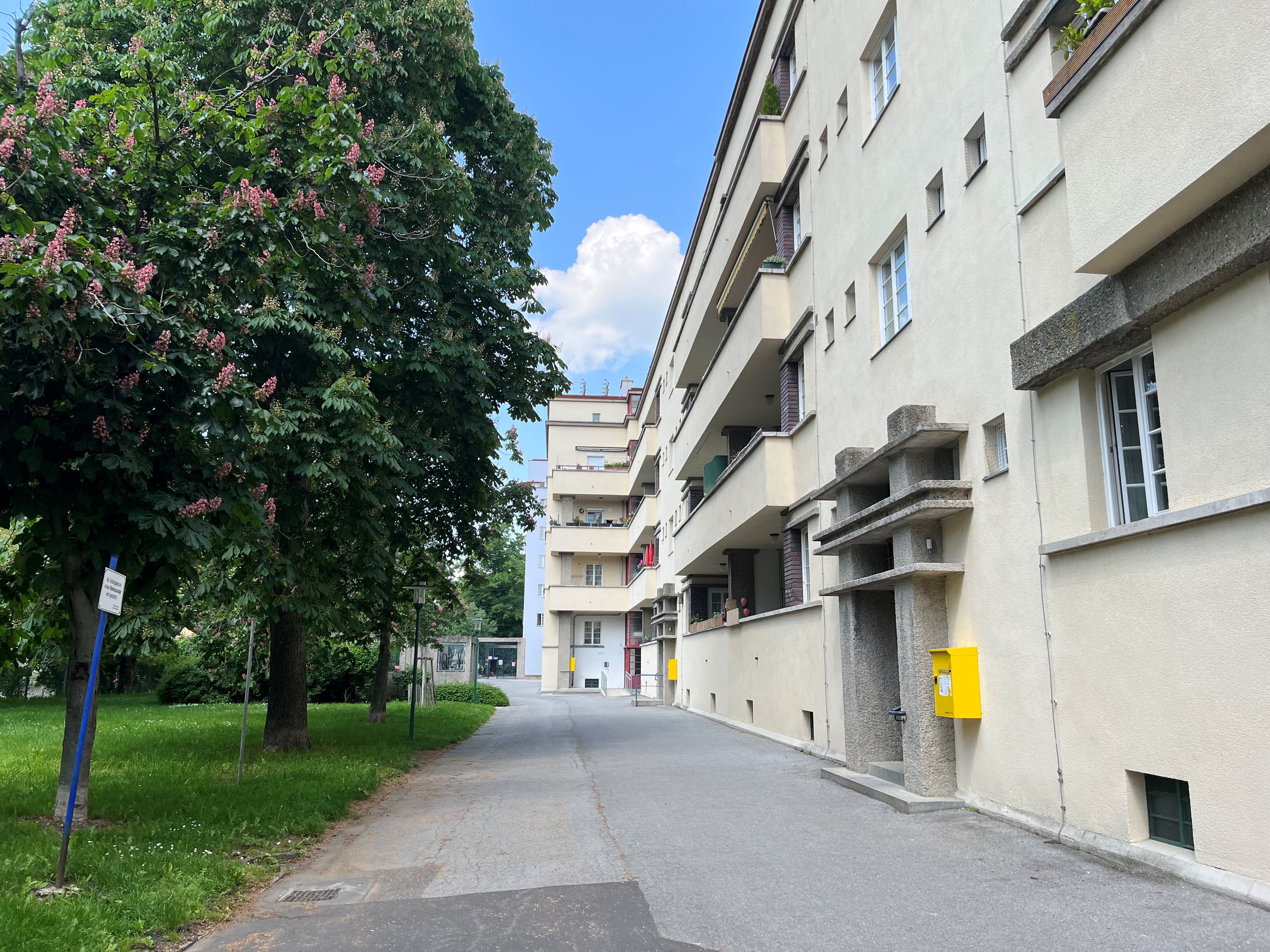
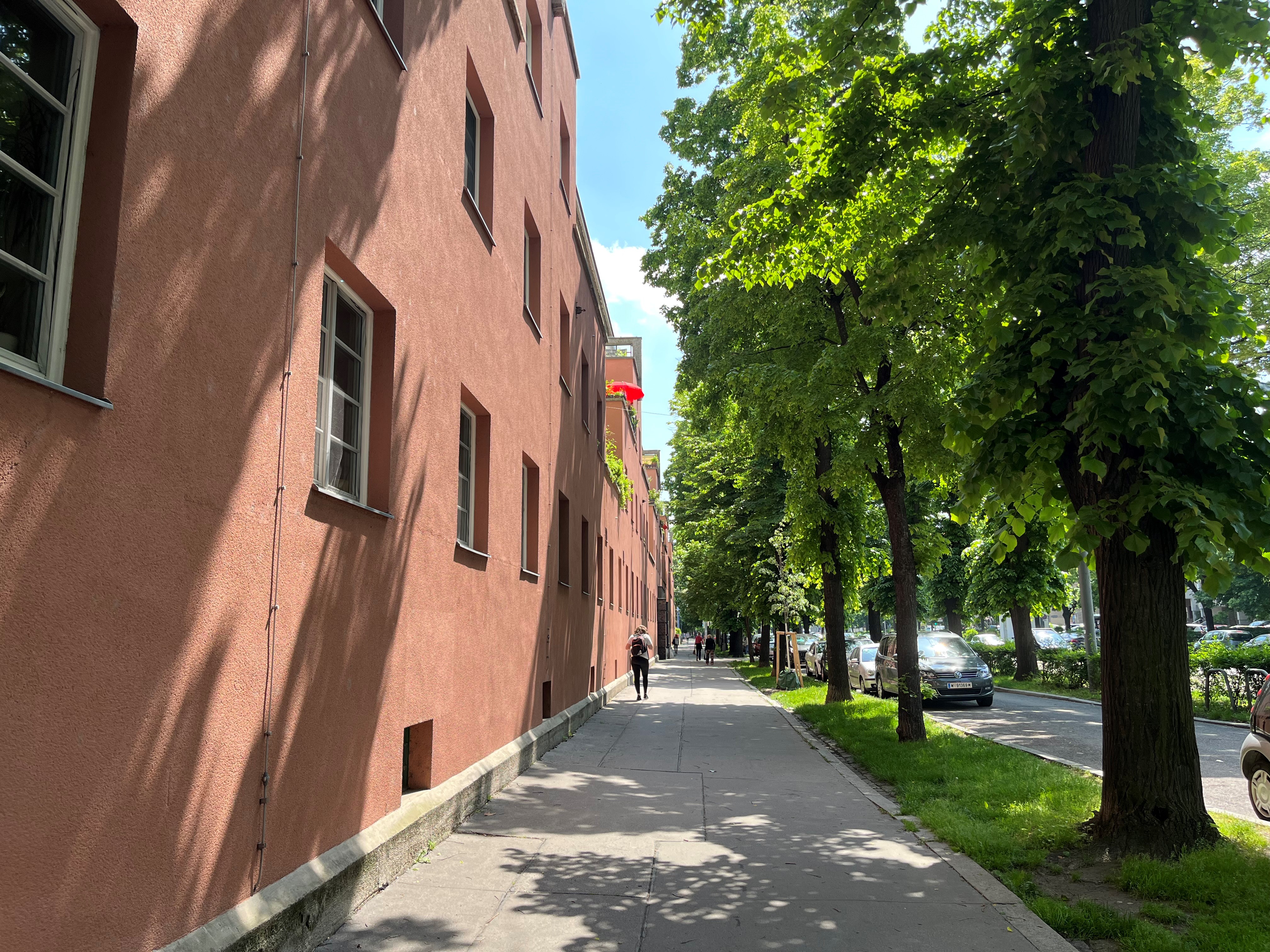
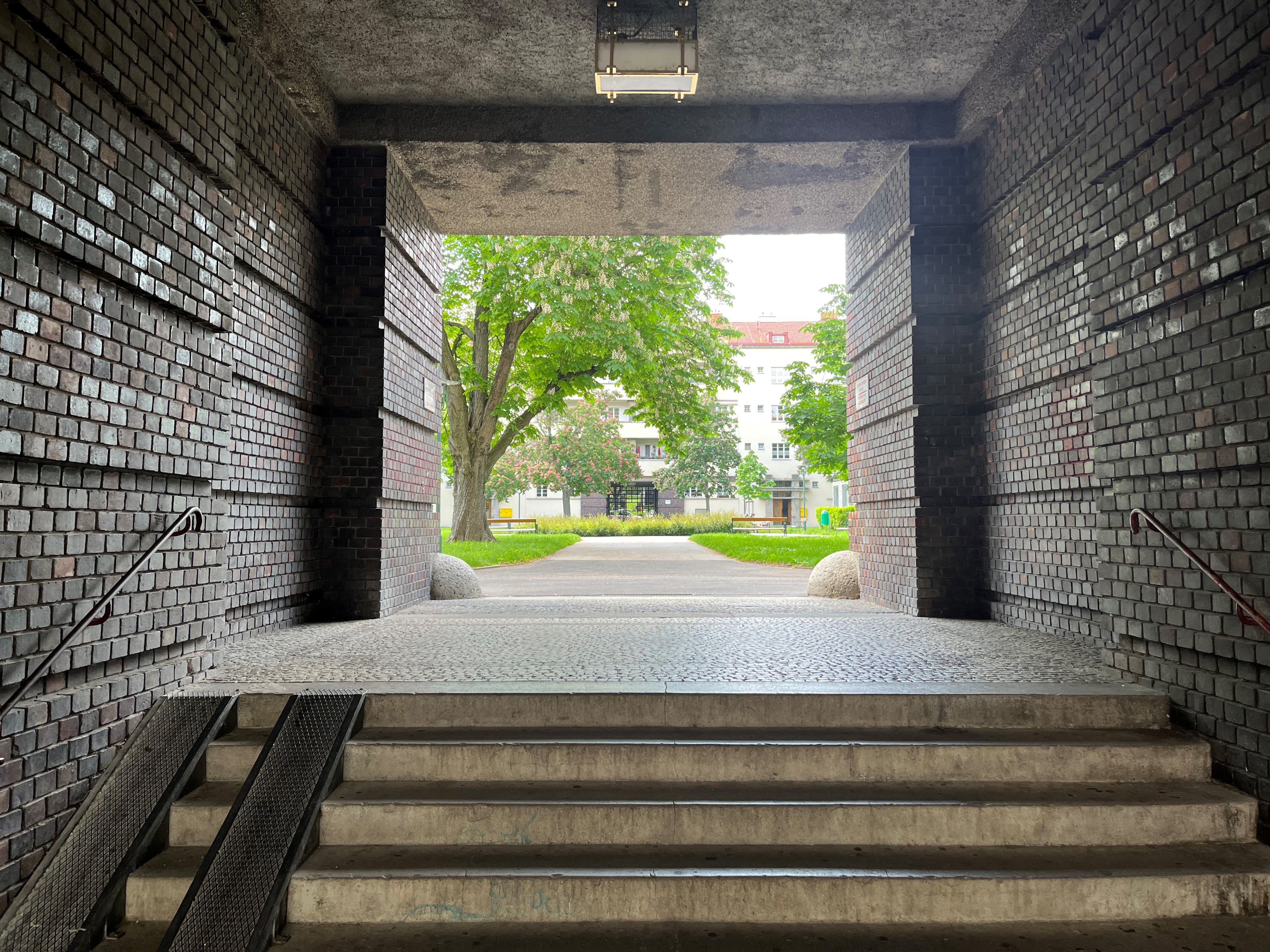

My connecting bus doesn’t leave for another twenty minutes, so I decide to do a bit of exploring. Skip past the red-and-yellow walls, admiring the lush, green overhang framing the streets and looking for an entrance. The drone of a television comes out of an open window, its grizzled tenant leaning out and smoking a cigarette. Occasionally the walls give way to a large gate or a wide-open area; I walk through one of the former and am greeted by a small communal park, with the sounds of ecstatic children filtering in from a nearby playground. Observing the pot plants that adorn each apartment and the hijab-wearing mother tightly gripping her son’s hand, I feel as if I’ve walked into a small town square, one where everything is genteel and tightly-knit. I sit down on one of the steps, basking in the warmth of the afternoon sunlight, and for one delicious moment allow myself the fantasy of spending my remaining years here. What wouldn’t I give for that kind of lazy retirement.
Three o’clock. I’m rattling up the streets of Heiligenstadt on a bus, listening to the chatter of thirty young students next to me. As we travel further and further away from the U-Bahn station, and climb higher and higher up, the landscape begins to shift drastically: gargantuan housing estates give way to squat little cottages, which in turn become more and more antiquated, and further and further apart, till at last they cease coming altogether and we are surrounded by nothing except vineyards and fields and tall trees. These are the famed Vienna Woods, the forests that line the city’s outskirts and inspired many a musician (as well as many a hiker trying to impress a friend or two). With an abrupt jolt we transition from smooth tarmac to cobblestone road; I spend the rest of the journey trying to hold my backbone together. We ascend through the tree-lined avenues, past observation points and the occasional sweaty wanderer, till at long last the sign above announces the bus’ arrival at the Kahlenberg.

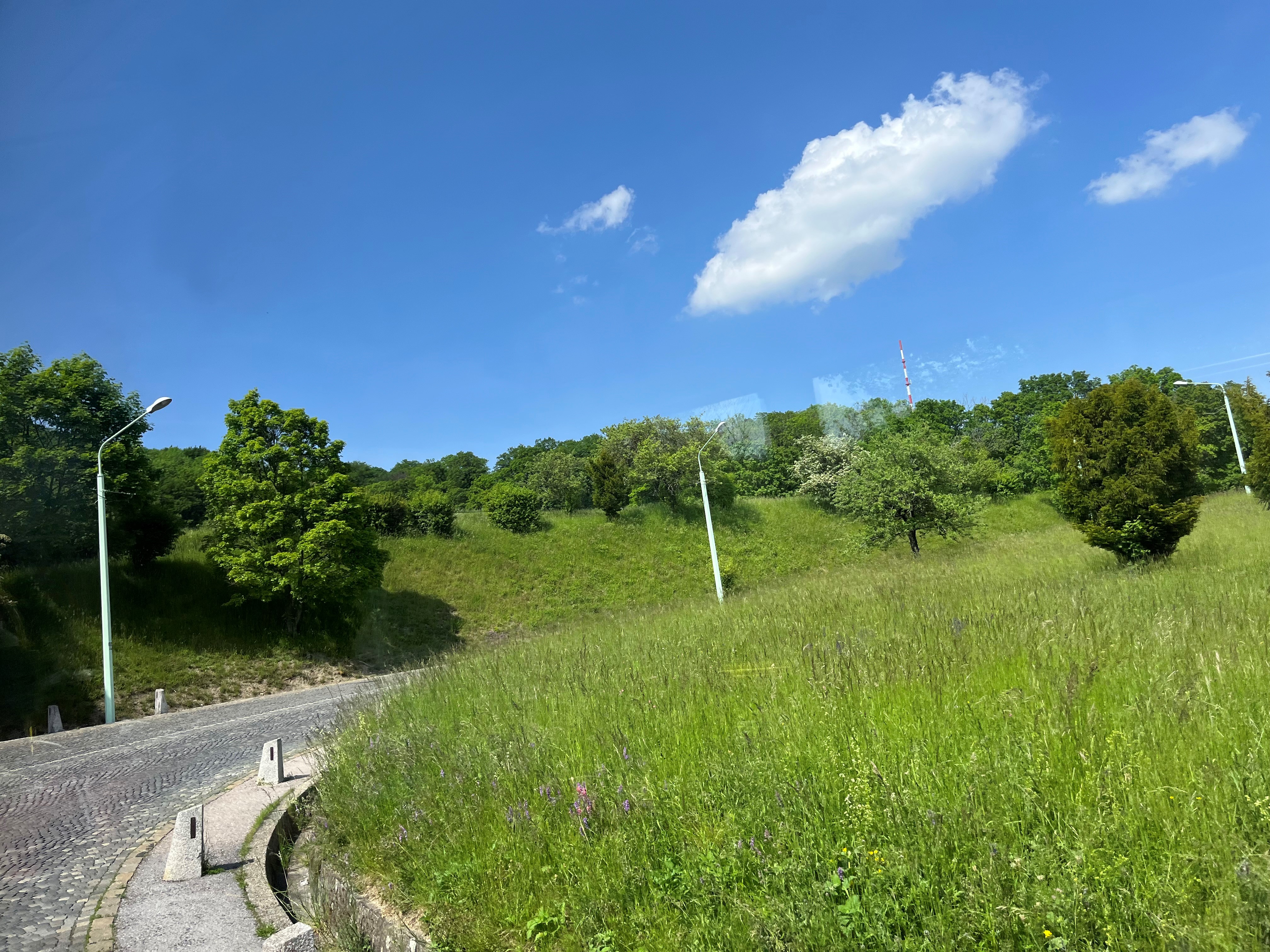

It might not get mentioned in the city’s promotional materials a lot, but the Kahlenberg is perhaps the most important location in the history of Austria, perhaps even Europe; it was here that the Battle of Vienna was fought in 1683 and singlehandedly reversed the onslaught of the Ottoman troops across Europe, sowing the seeds of that empire’s terminal decline while also marking the ascendancy of the Habsburg monarchy. Today, of course, both empires have been consigned to history, and very little remains of the battle. But there are quite a few memorials, and a chapel where numerous messages in Polish have been left (the leader of the Western troops was Polish, and Pope John Paul II came here once in 1985). Oh, and there is this view:
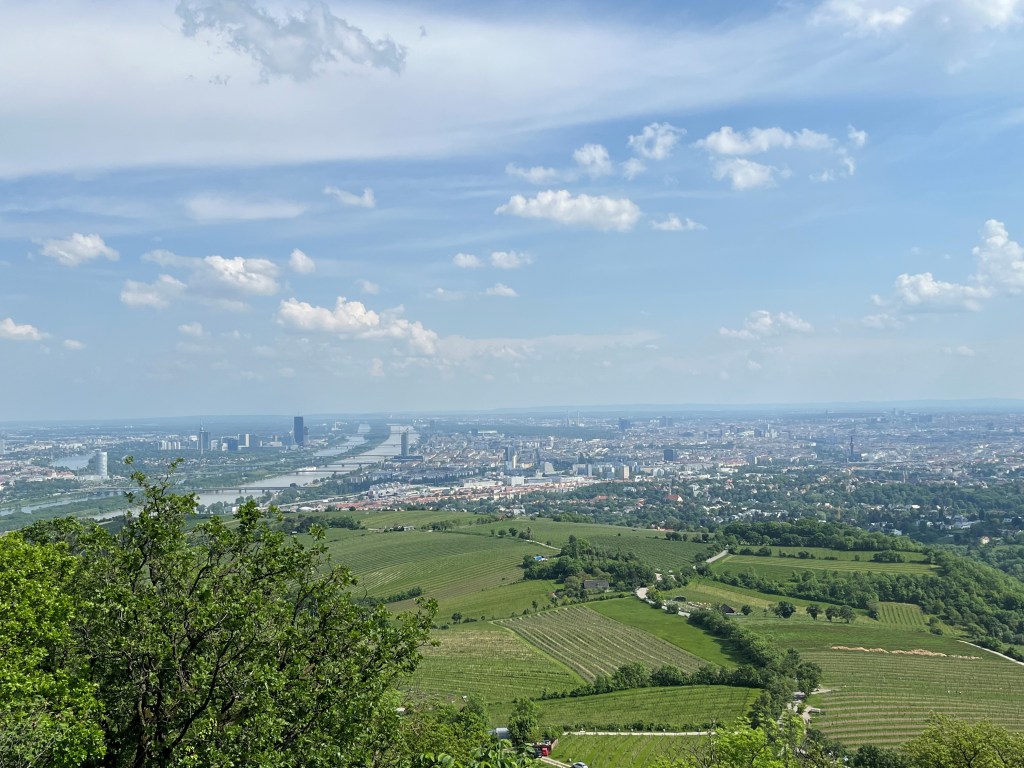
Yes, being some distance above Vienna means that visitors to the Kahlenberg will get to see the whole of the city beneath their feet. Every aspect of Viennese life is represented here: the vineyards that the Woods are famous for, the sluggish Danube to the left, the traditional houses with their red-bricked roofs, the skyscrapers with their glass frontages. This view is simply electrifying: writing about it now, almost three months after my actual visit, I am still unable to resist marvelling at the majesty of it all: the grand sweep of the fields, the organised chaos of the city. The only thing that’s missing from this picture is Bratislava, just about obscured by the haze, but who needs the Slovak capital anyway when there is so much that fascinates you in Vienna?
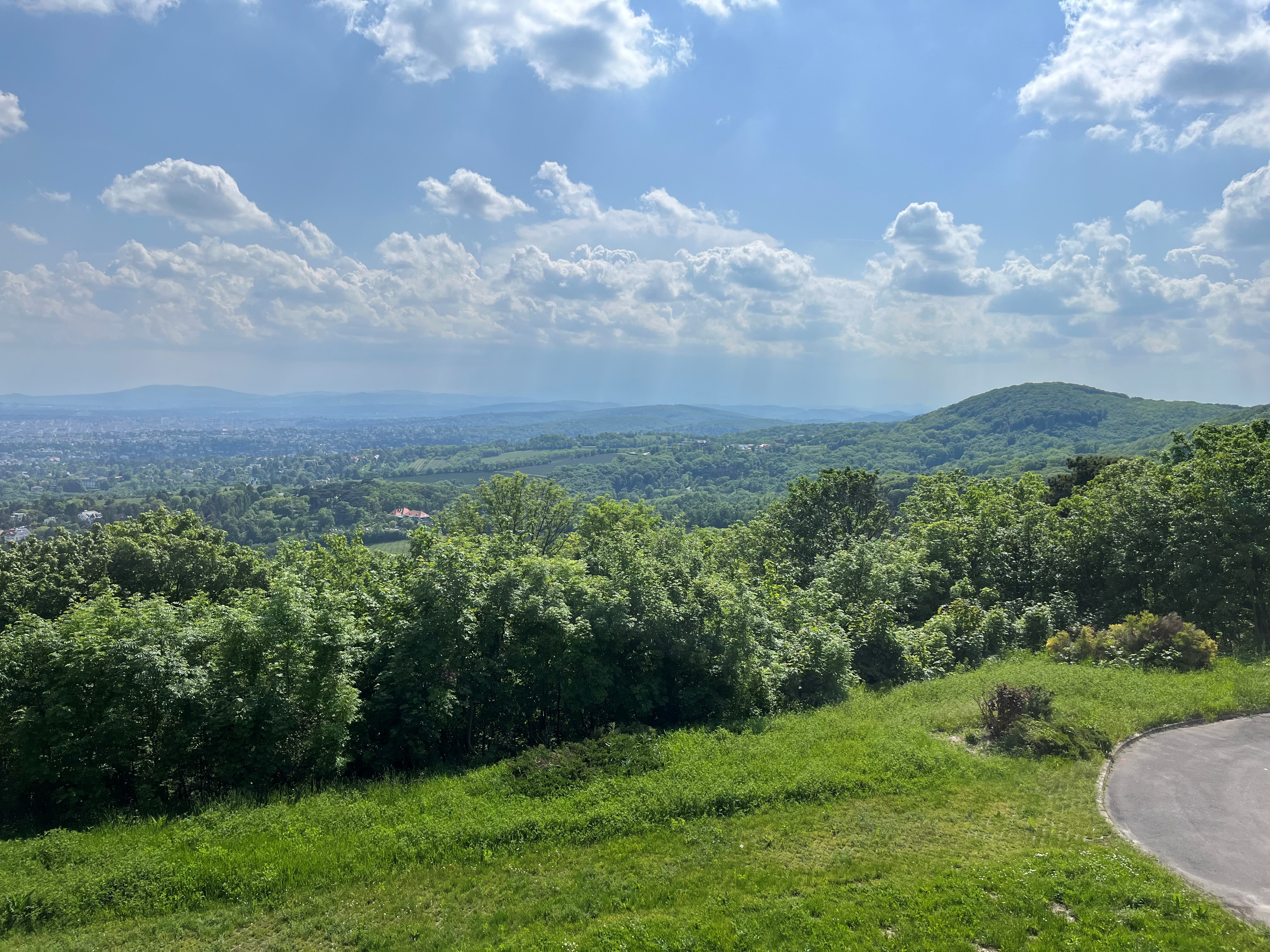
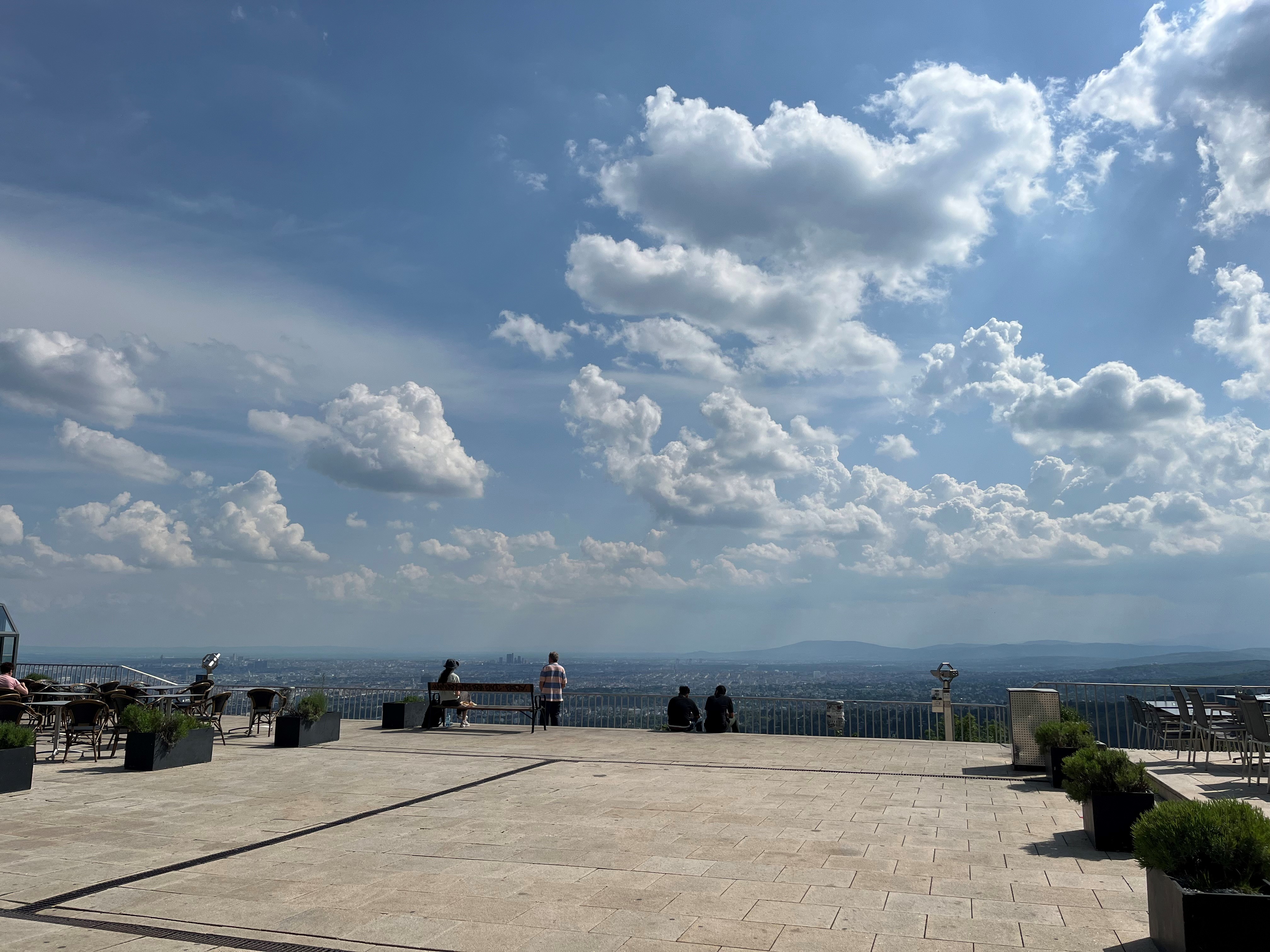
I take a walk around the hilltop. There is a second lookout point, tucked into the far end of the carpark; the two are separated by a glass-fronted hotel that looks spectacularly incongruous in these surroundings. A couple hundred feet away is the church that commemorates the breaking of the Siege; it is deserted and not open to the public, but there are still hints of the divine to be experienced just by peering into the gate, and seeing the solemn pews that lie beyond. Less divine is the public toilet on the opposite end of the carpark: their seats are bolted up at almost chest level, thereby opening up the user (I use the term “opening up” advisedly) to an embarrassing pratfall; I use it anyway, just because it looks so futuristic. Hiking trails sprawl from the mountaintop in all directions, some heading down to the villages below, some heading up to the nearby Stefaniewarte tower, and a couple lead the traveller over the hills to the adjacent Leopoldsberg, a historically significant peak in its own right. Briefly consider doing the latter, but I have other things to see today, so I hop back on the bus after taking one last look at the Viennese plains.




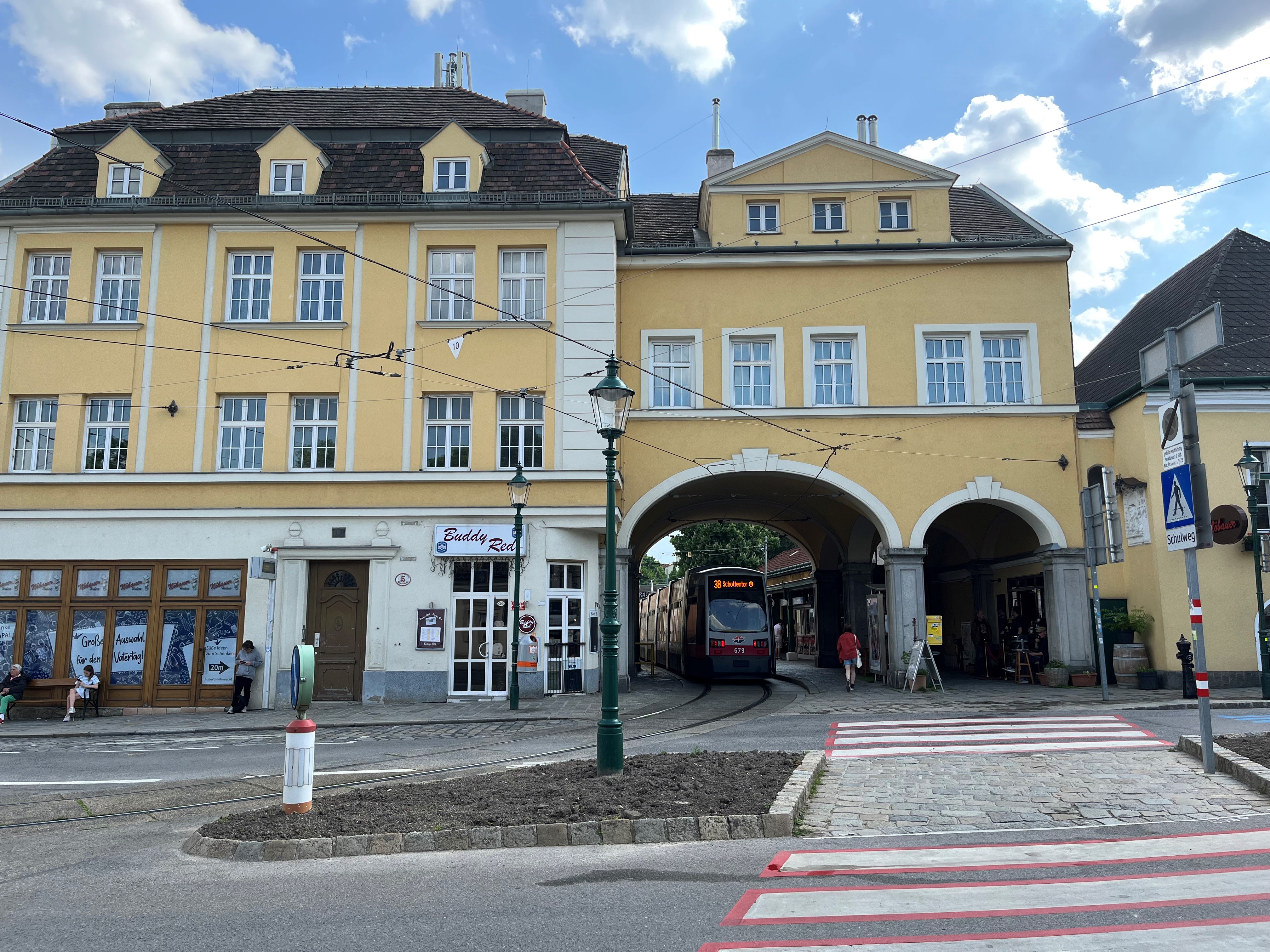
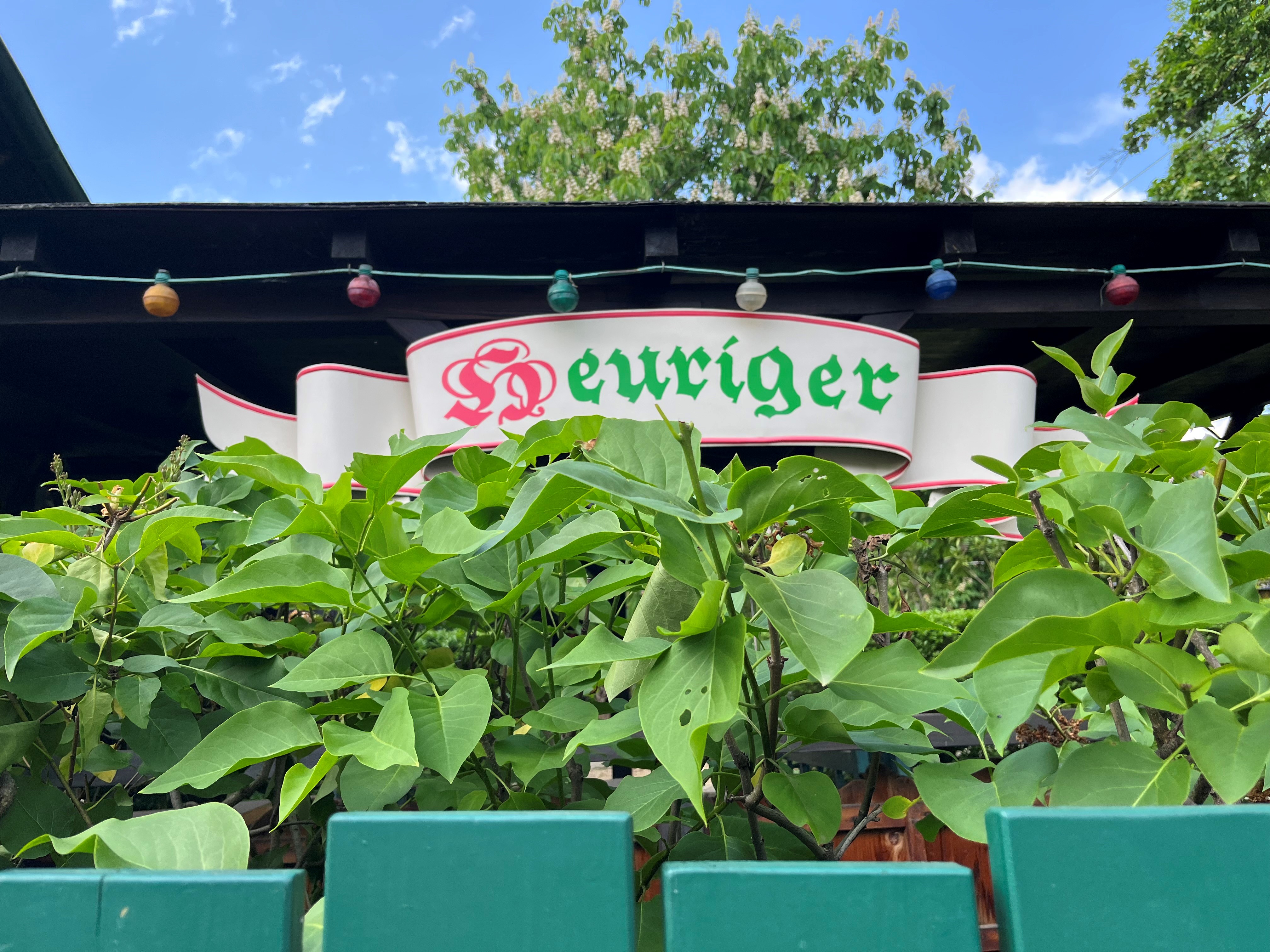
The bus drops me off in the centre of Grinzing, a suburb situated right on the tip of the city. After photographing its magnificent tram terminus (seriously, where else can you find sleek, modern trams disappearing into an ancient building?) I walk down the main street, admiring all the quaint little houses to be found in this neighbourhood. It’s a quiet neighbourhood, this: despite the presence of all the accoutrements one might expect of modern life, Grinzing operates to the soundtrack of birdsong and dog barks, which take over as soon as one steps away from the main street. Occasionally the steady chain of houses is broken by a heuriger, that Austrian variant of a pub where you share new wine and sausages with friends while some middle-aged fellow serenades you non-stop with one stringed instrument or another. Stop to peer through the doorway of one of them, and though it’s only four in the afternoon the omens are good for tonight’s business: people are slowly trickling in, the atmosphere is lively but intimate, and the violinist is already out hunting for prey. It’s all very stereotypical Vienna, although the unmistakable presence of the Hong Kong flag dangling from a single windowsill takes away the magic somewhat.




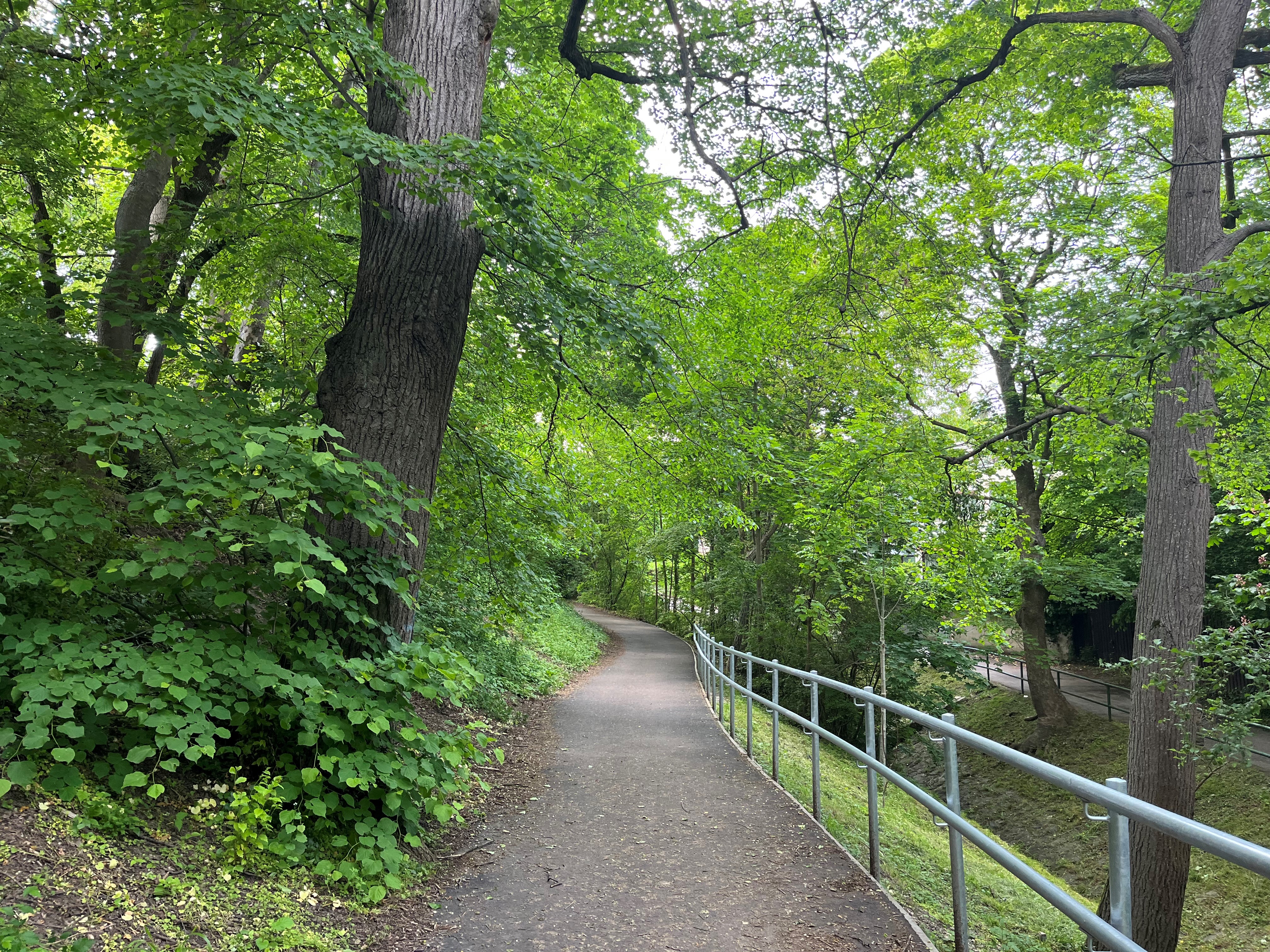
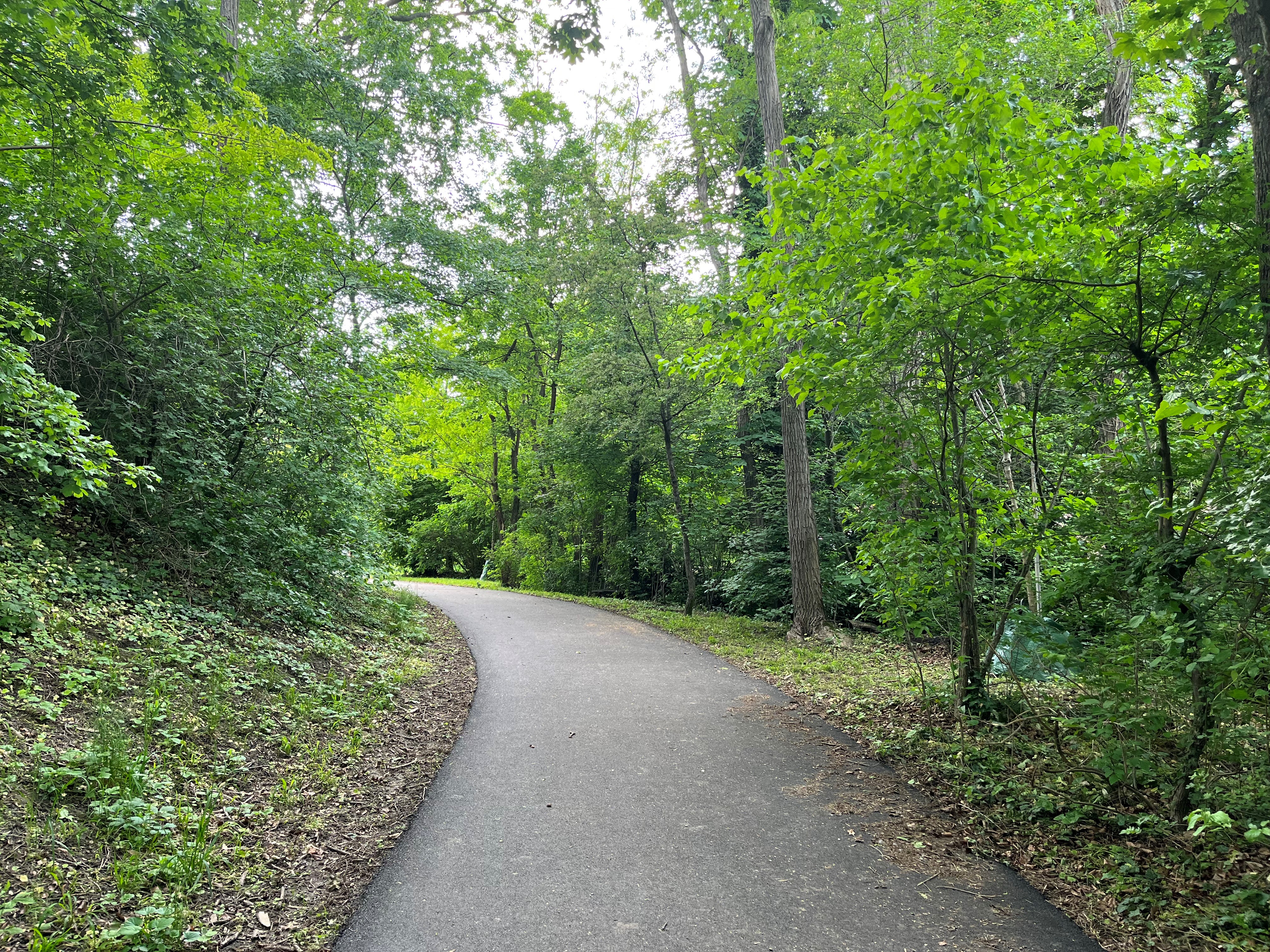
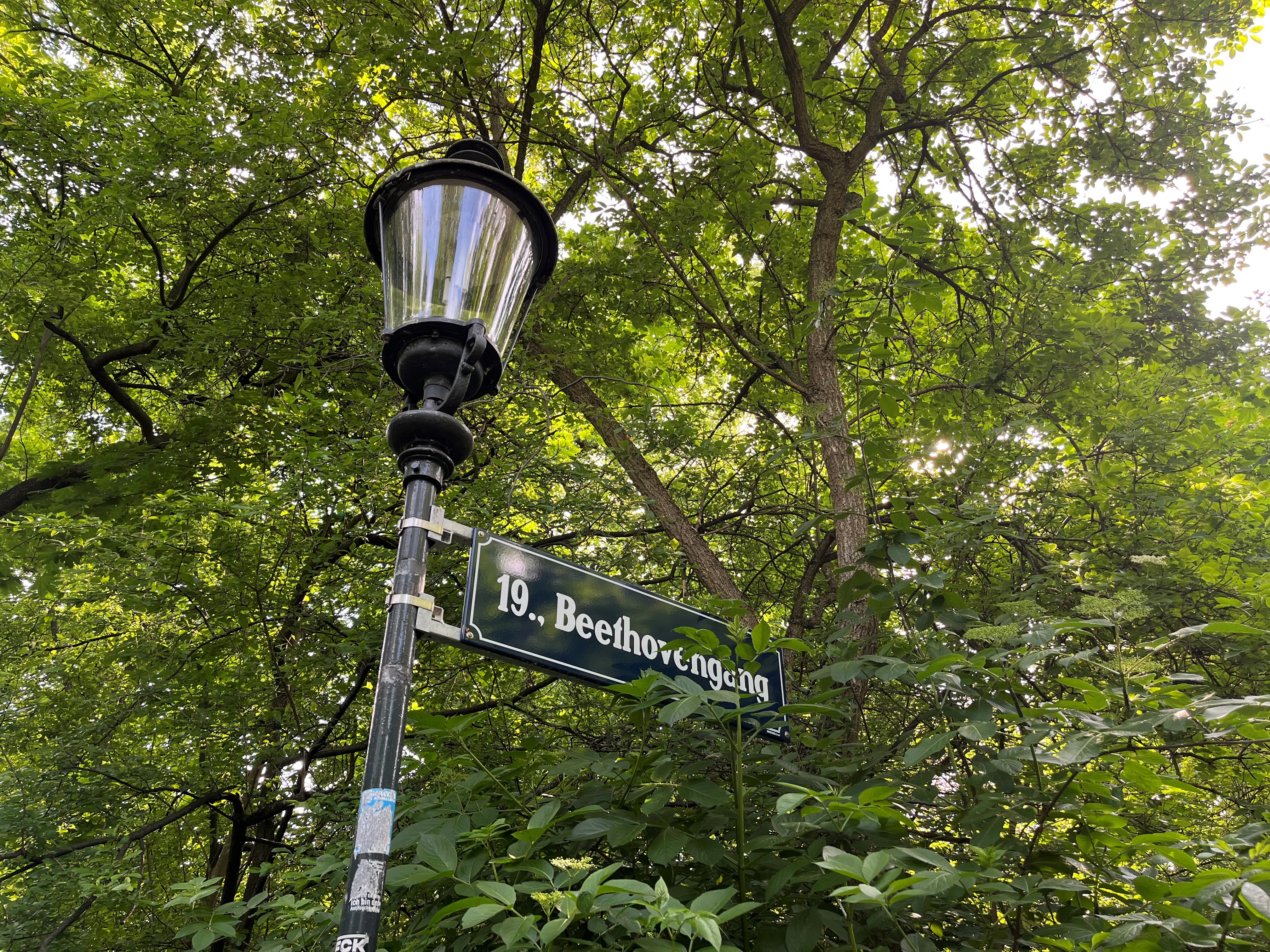
A few more twists and turns later I stumble, somewhat accidentally, into what is picturesquely named the “Beethovenpark”. The choice of name isn’t aesthetic, though: Ludwig van Beethoven really did live in this suburb for a few months in 1802 (a less prestigious honour than it might seem; he seems to have lived at no less than 27 addresses in Vienna, his frequent evictions at least partially attributed to his loud nocturnal piano-playing), and when not composing or writing long letters about how nobody understood his genius Ludwig would stroll inside this nearby park, wandering around its meandering paths and taking in all the sights and sounds.
It is, without doubt, a place made for strolling. Already soundproofed from daily life, the park’s foliage is of such a density that most of the buildings that have sprung up in the intervening 220 years are also hidden from view. The result is an extraordinary soundscape of both nature and humanity: there is a brook right in the centre of the park, its flow surprisingly loud; occasionally a jogger runs past, their footsteps ringing out on the tarmac; and more than once I am startled by the barkings of dogs on the opposite bank. It strikes me that this is more or less the same as what Beethoven himself would have experienced back when he lived here: maybe they didn’t have Lycra-clad joggers or the street signs with his name in large letters above, but nonetheless it does feel like stereotypical “inspiration territory”, the sort that a romantic/highly emotional composer might be stimulated by.
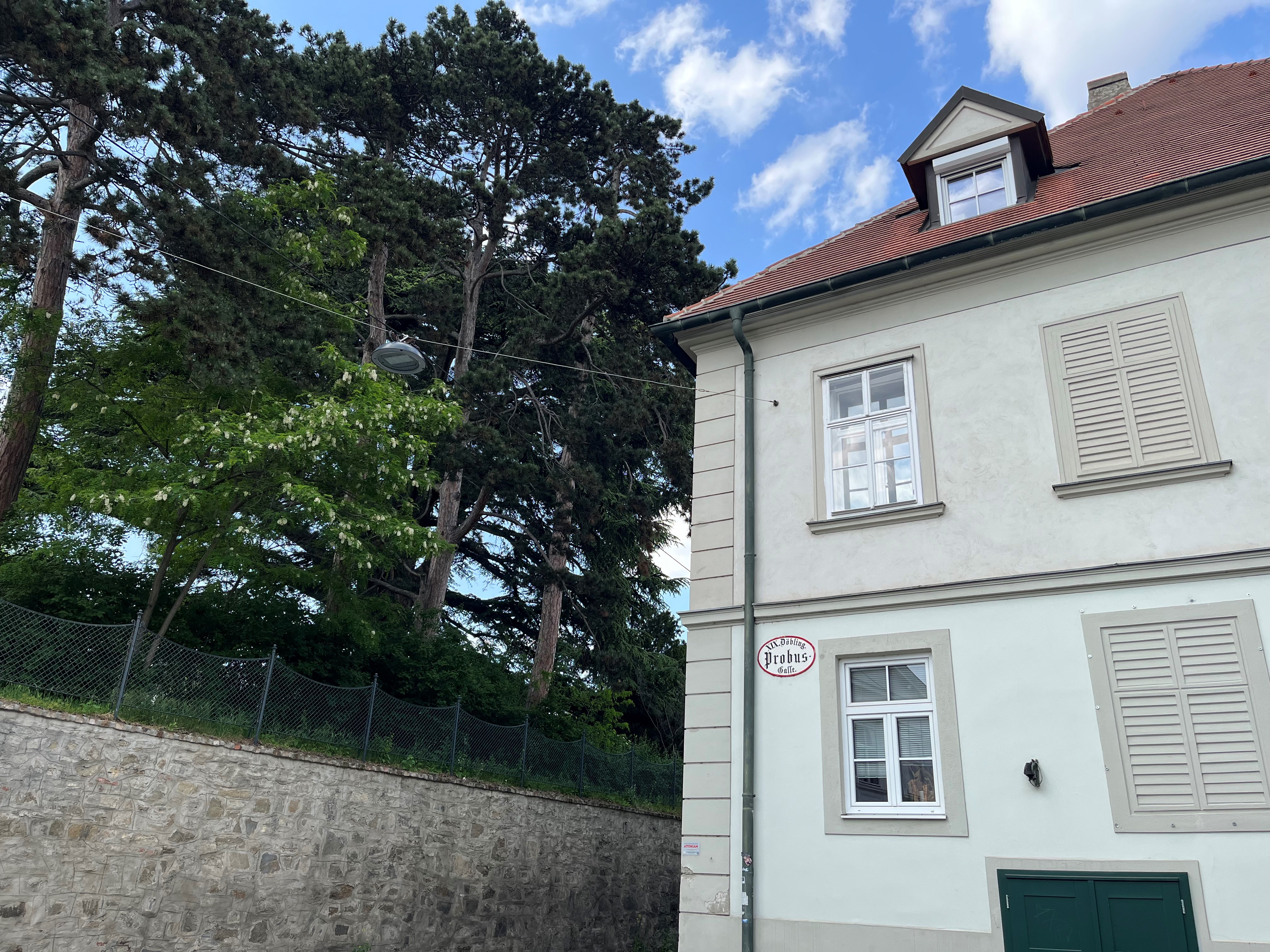
At the top end of the park, there is a memorial to the man himself — a bust sitting aloof, atop a marble plinth that’s been surrounded by fencing. There are no flowers lying on the base, just a couple sheets of paper, of indeterminate origin. It feels a bit odd that the monument to one of Vienna’s greatest residents should be sitting here, in a suburban park, and that it should be so unnoticed; yes I know that there is a bigger monument downtown, but Heiligenstadt is the place that most people think of when they think about Beethoven’s time in Vienna — it’s where he wrote the Heiligenstadt Testament, his famous cri de cœur, and the house involved is just down the road from here. Alas, on this warm May afternoon there’s only me here to gaze upon old Ludwig, and to hum a few bars of the Pastoral Symphony before heading on my merry way.


Meet up with Charmaine and Dennis at Neubaugasse, a trendy area of clothes and cosmetics where they’ve spent much of the afternoon shopping. Having been in the middle of woodland just an hour ago it feels strange to suddenly be in amongst skyscrapers and people and capitalism again, but there’s no time to contemplate any of this because Dennis has rented an electronic scooter and is very eager for me to go all Mario Kart with it. This being a pedestrianised zone, I express my concern about crashing into somebody and experiencing the full range of Austrian curse-words, but nevertheless I manage to enjoy myself for a few minutes, zooming up and down Neubaugasse with a deadpan look on my face. Briefly consider doing that thing you see in movies where the suave protagonist halts millimetres away from his lady to show his driving prowess, but I decide not to show off too much.
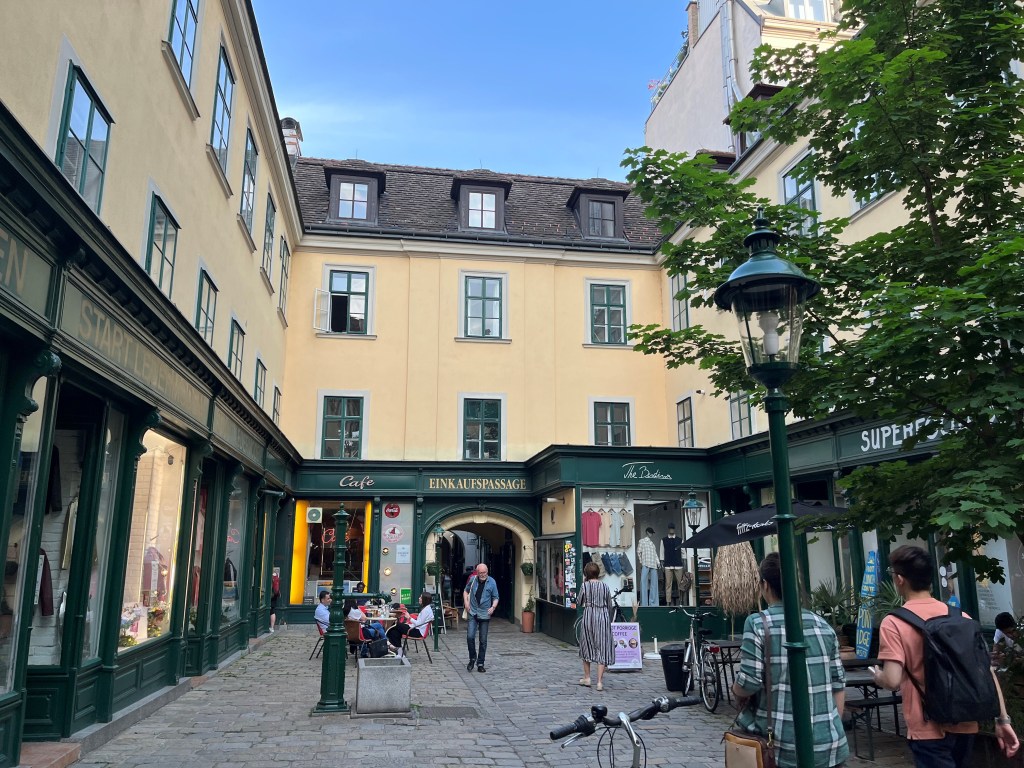
Half an hour later, we’re on a bus, rolling through the sidestreets of Vienna, ploughing a path towards the Hauptbahnhof. The bus takes us past many sights, some old, some new: on our right, we spot the city’s aquarium; to our left, the Naschmarkt and the art deco buildings, where it all began almost four days ago. It’s hard to believe that I’ve already spent four days in this city already — it feels like we were touching the tarmac at Vienna Airport only this morning. But it seems that I’m the only one who feels that; both my travel companions have complained about exhausting all the city has to offer, have both expressed the desire to be somewhere else. I can see why, even as I vehemently disagree: for all its past glories and present grandeur, the City of Music is still a rather miniscule place, with not much to do besides visiting museums and stuffing yourself with cakes. It has no major landmarks to tick off, like Paris or Rome; it has no thrilling activities for the physically active tourist, like Salzburg or Graz. It is a city for those content to be an observer of life; tick off the trams and a couple of the old palaces, and I confess there’s not much else that a tourist needs to see.
And yet having already paid the city three visits, I confess I’d still come back for a fourth in a heartbeat. Part of this is simply because there is still stuff I want to see: I’d have loved to give the Kunsthistoriches Museum or the University or even the Central Cemetery a go, but what with all the exploring I was already doing, there simply wasn’t enough time for me to slot all of those in as well. But another is because, as I hope I’ve made clear in the past four days and 17,000 words of rambling, Vienna is a city that knows how to surprise you. Case in point: I had been to Heiligenstadt twice before, and both times I had simply breezed past the giant red building that was the Karl-Marx-Hof despite it being A. right in front of me and B. not exactly easy to overlook. The places you thought you knew, the people you’d thought you’d gotten the hang of — in the past four days, I’ve seen Vienna methodically dismantle my preconceptions of them, one by one, while serving up new and pleasant surprises in their place. It is both familiar yet unfamiliar, alien without being alienating. Not only is it a finely-toned mix of art, culture, and people; but it rewards your loyalty by guaranteeing that you will never see things there the same way twice. What more can a man like me desire from it?

Except as the bus swings past our hostel and turns into the dense one-way streets of the Wieden, I find myself having doubts. Despite having been nothing but happy and content in the four days (well, three and a bit) I’ve spent in the city, I find myself still wanting more from Vienna. I’m not entirely sure why: the city has given me everything I wanted and then some, and even if I’ve had an occasional encounter with a dismissive local, it’s always been evened out by welcoming and friendly people like Olivia. So what gives?
The bus stops for a moment, and a classical, angular building comes into view. I take out my phone and snap a picture. Turn to tell my friends about this, but both are preoccupied: Charmaine is staring out the window in the other direction, and Dennis is busy processing the photos on his camera. I think therein lies my answer: the more time the three of us have spent in Vienna, the more time we’ve had to slowly drift apart and cultivate our own itineraries. Last Friday, we saw more or less the same sights and people; whereas readers may recall they last “saw” Charmaine in person halfway through Day 2, while we walked back to the hostel and bathed in the light of a dazzling sunset. Most of the things we’ve seen since then I saw alone, and while there is a certain joy in discovering a place and calling it your very own, there is also a certain melancholia in finding that there’s nobody else that can really understand that joy.
This is not to say, of course, that my itinerary was “the better one”: both Charmaine and Dennis found their own sources of amusement wandering around Vienna (and Bratislava), and their discoveries certainly didn’t give them any less enjoyment of the city than mine did. But it does bother me that our blissful moments cannot be pooled together, that that individual experience of Vienna remains frustratingly individual, exclusively understandable only to that audience of one. That, to me, feels like an incomplete disservice to a city that seems to reward so many alternative perspectives, to a city that reveals more every time I come back to it. I’m only speaking for myself here, but I do wish that I could see this city from their eyes, just as I wish that they could also see Vienna from mine: the culture, the change of pace, the surprises, all of it. Strange as it may seem, I don’t feel like I (or anyone, even) can have truly seen Vienna until they’ve experienced its full gamut of joys. Spoiler alert: later on this trip, I’ll discover one possible way out; but for the moment, as we get off the bus and out onto one of the many desolate bus lanes that surround Vienna’s main train station, this conundrum looms large in my mind, and it is one for which I have no satisfactory answer.
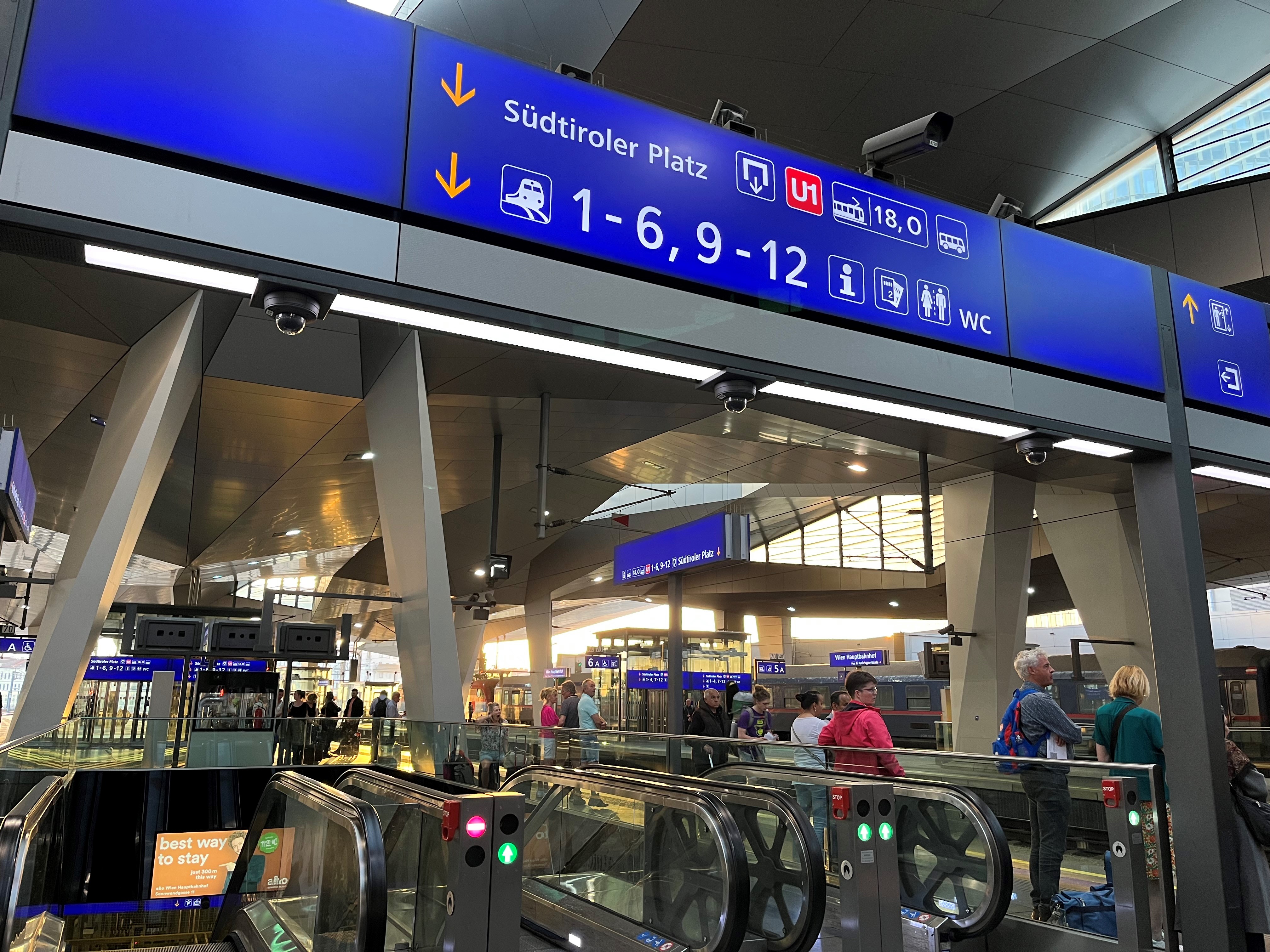
At the Hauptbahnhof we are greeted with the good news that the night train to Hamburg has already been assigned a platform, and the less good news that it is already twenty minutes late — this, despite the fact that we are literally the first stop being served. Charmaine heads off to buy a Subway sandwich, while Dennis and I look with morbid fascination upon the stall selling leberkäse next door. Alright, so it might not actually contain any liver nor cheese (leber comes from an old German word for leftovers) but the choices on offer are still as disturbing as an abattoir is. Options include truffle, “pizza”, spinach and garlic (which the menu board, somewhat alarmingly, needs to remind us is “tasty”), and for the slightly more discerning customer, there is of course the “horse” option. Luckily we still have the food court upstairs.
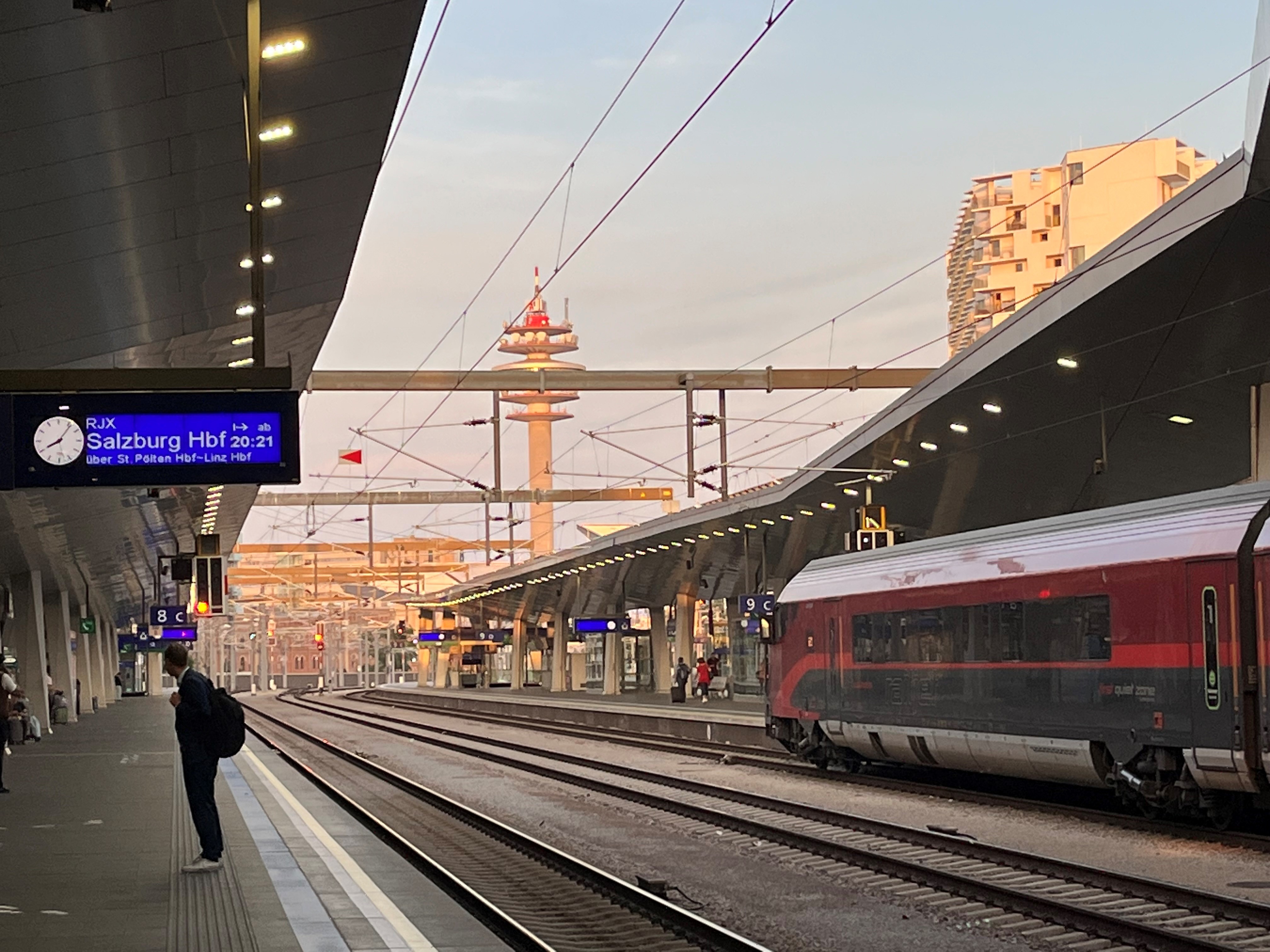
Quarter past eight, up on the platforms at the Hauptbahnhof. No sign of the Hamburg train, although there is a sleek ÖBB express bound for Salzburg on the other side of the platform. The last vestiges of the daylight bounce off the steel and glass canopy, spilling its light everywhere in a gorgeous tableau. I’ve seen sunsets before, of course, but never have I seen a twilight with colours so ridiculously rich: the light that shines on the tracks, on the carriages, and even on Dennis and Charmaine’s faces is deeply, impossibly golden; efforts to capture it on camera, as I have in the pictures below, seem a laughable mockery of the original. It’s the kind of beauty that feels intrinsically bittersweet: you’re glad that it exists, but you’re sad because you know you’ll never see anything this beautiful ever again. It’s strange that all of this is coming to me on a bare station platform, but then again Vienna Hauptbahnhof — like everything connected to Vienna in the past four days — is just one of those places that inspire beautiful conclusions out of the traveller.
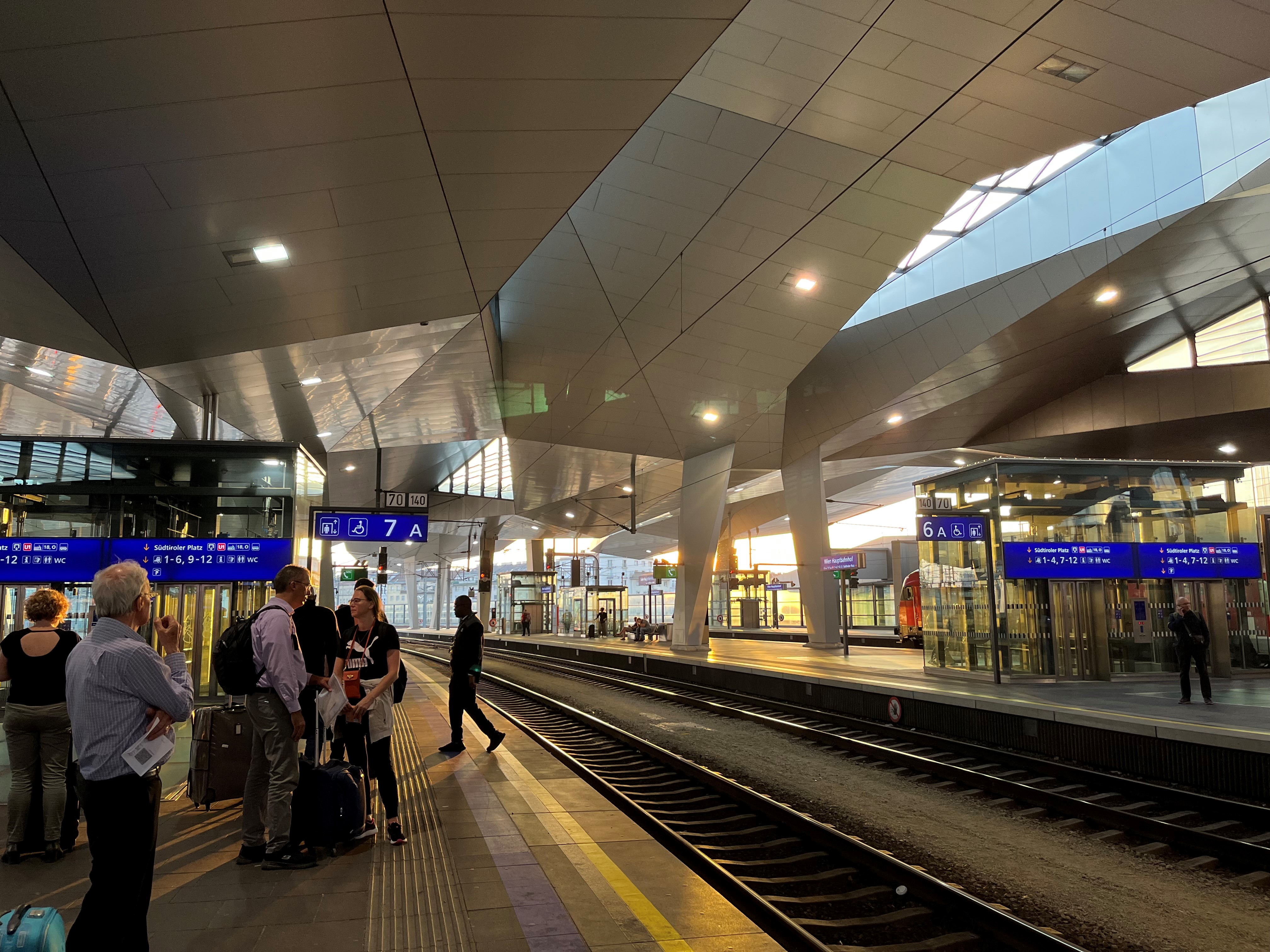

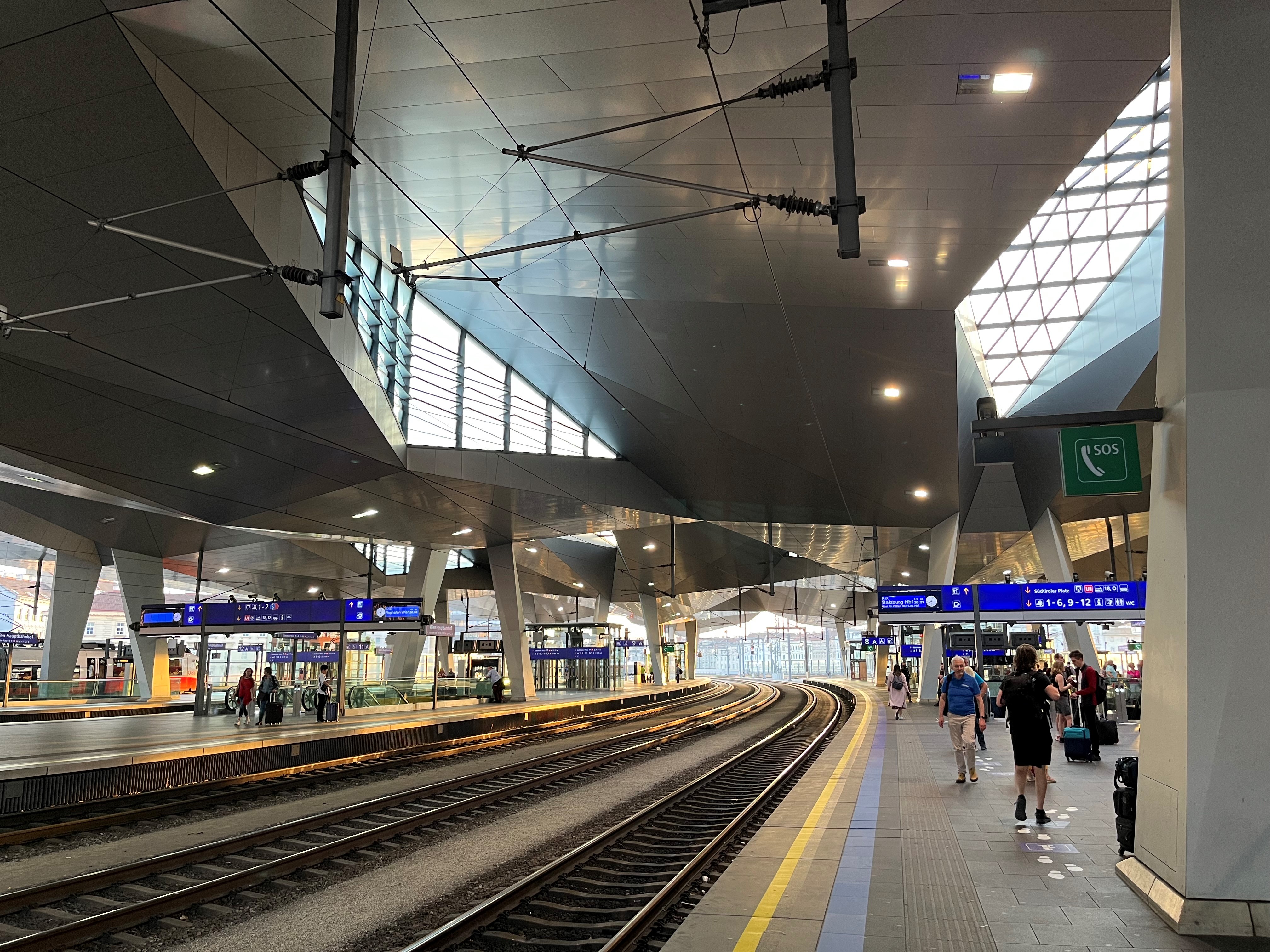
Time passes, and the sun slips further down the horizon. Dennis takes a few pictures of the sunset, and then generously gives us both a go on his camera. Eventually the train heaves into view, a sleek, stylish locomotive with state-of-the-art carriages, all painted the colour of the night sky. The platform comes alive: passengers scramble for the doors, a flurry of activity surrounding the train both inside and out. Springing into action, I harry both my co-travellers onboard at record speed, hustle them into our compartment like a sheepdog trying to impress its master, and bound onto the top bunk, realising too late that my choice leaves me with a rubbish view of the world outside. I hear the doors close and the train pick up speed, but I am sternly prohibited from descending and therefore messing up my friends’ unloading procedures. By the time I gain clearance to come down from my perch, hoping to take one last look at one of my favourite cities, it’s too late: Vienna has long been replaced by the Austrian countryside, its irresistible views consigned to memories and photos on my mobile phone.

 Inkpot Shuffles in the Twilight