21 May
Wake to the sound of church bells. Austria is a predominantly Catholic country, and even in rapidly secularising Western Europe, church is still a very important part of Sundays. Listening to this sacred, joyous soundtrack, my eyes fixed on the small patch of blue I can see through the open window, I can just about convince myself that I’ve woken into a fairytale; all that’s missing are the birdsong and the talking mice. I think to myself, as I lie on that slightly clammy mattress: do I have to get out of bed today? Do I have to do all this travelling, drag myself to a hundred places and change trains half a dozen times? Wouldn’t it be easier to just potter round the corner to some café, order a large hot chocolate and while away the hours people-watching? I like people-watching. It passes the time. But alas, the tickets have been bought and the restlessness grows strong, so I rub the sleep out my eyes and tiptoe past a sleeping Dennis into the bathroom, where the noise I make will soon wake him up anyway.
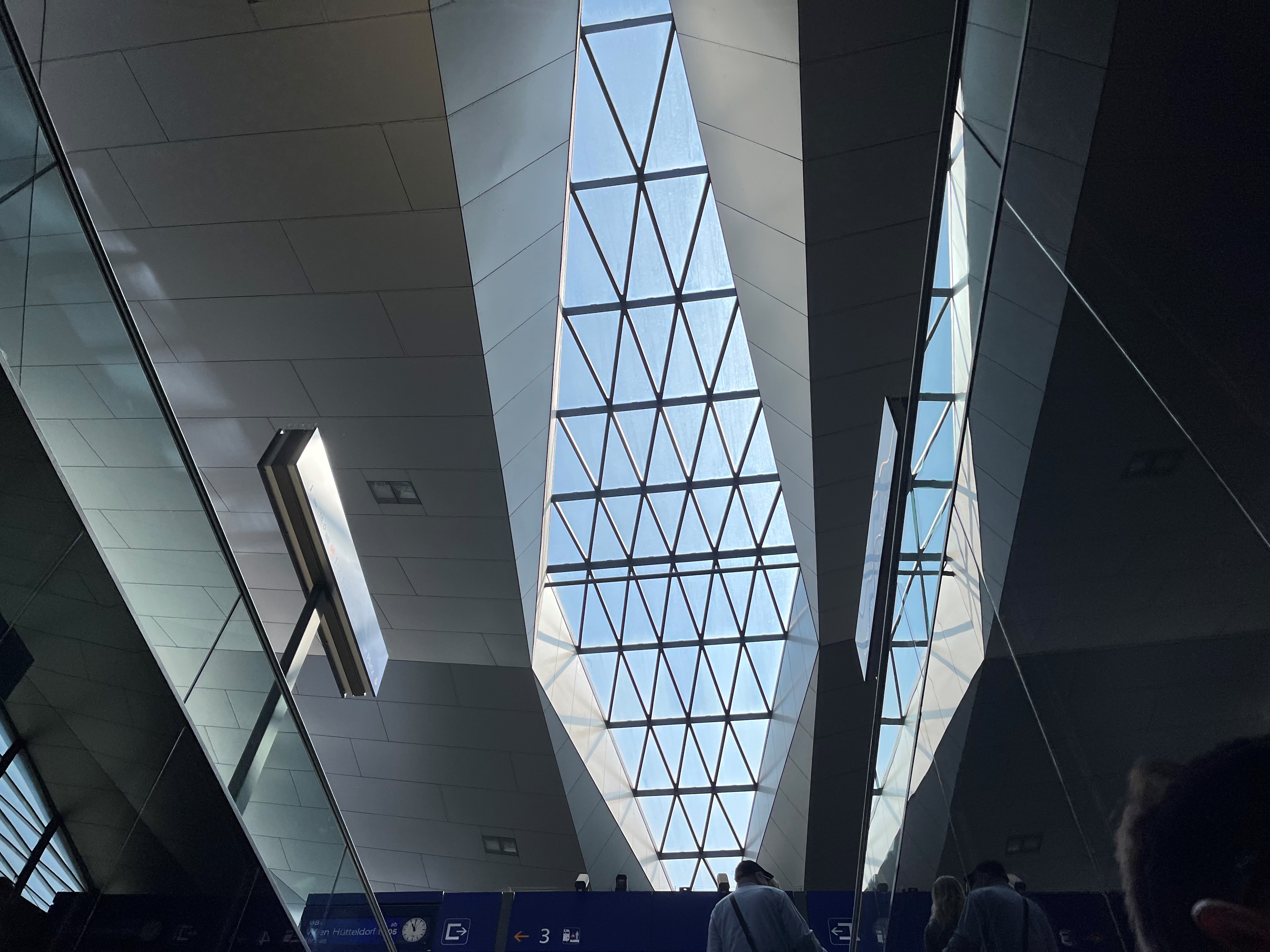
Vienna’s Hauptbahnhof, or Main Station, is a modern and clean affair: originally just one of many local termini dotted around the city, it was substantially rebuilt and expanded early last decade to act as Vienna’s main railway hub (it was this place that caused the downfall of the Westbahnhof). As a result it looks very spacious and efficient: a large cavernous underworld of endless restaurant chains and supermarkets lead up into wide-open hallways, where glass-fronted shops remind the traveller that they’ve forgotten to buy gifts for their loved ones, all under a grey, angular roof that stretches for miles in either direction. It’s here that we pick up our tickets for the 11:17 train to Bratislava, for today is the day we briefly tire of all Vienna has to offer and visit the Slovak capital instead. Although it’s just an hour’s ride east, I have never been to Bratislava in all my visits to Europe; for the first time in years, I’ll be exploring somewhere new.
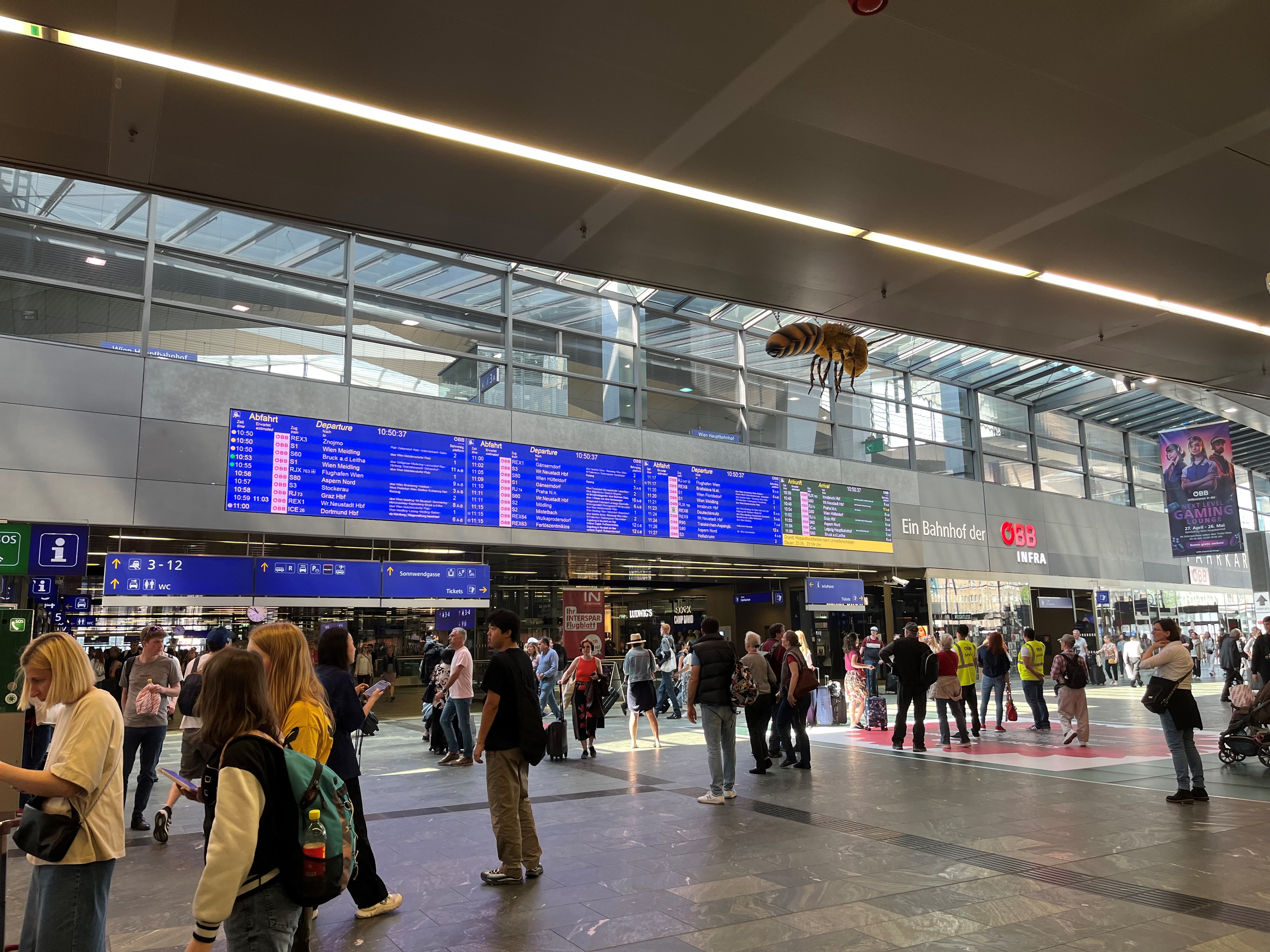
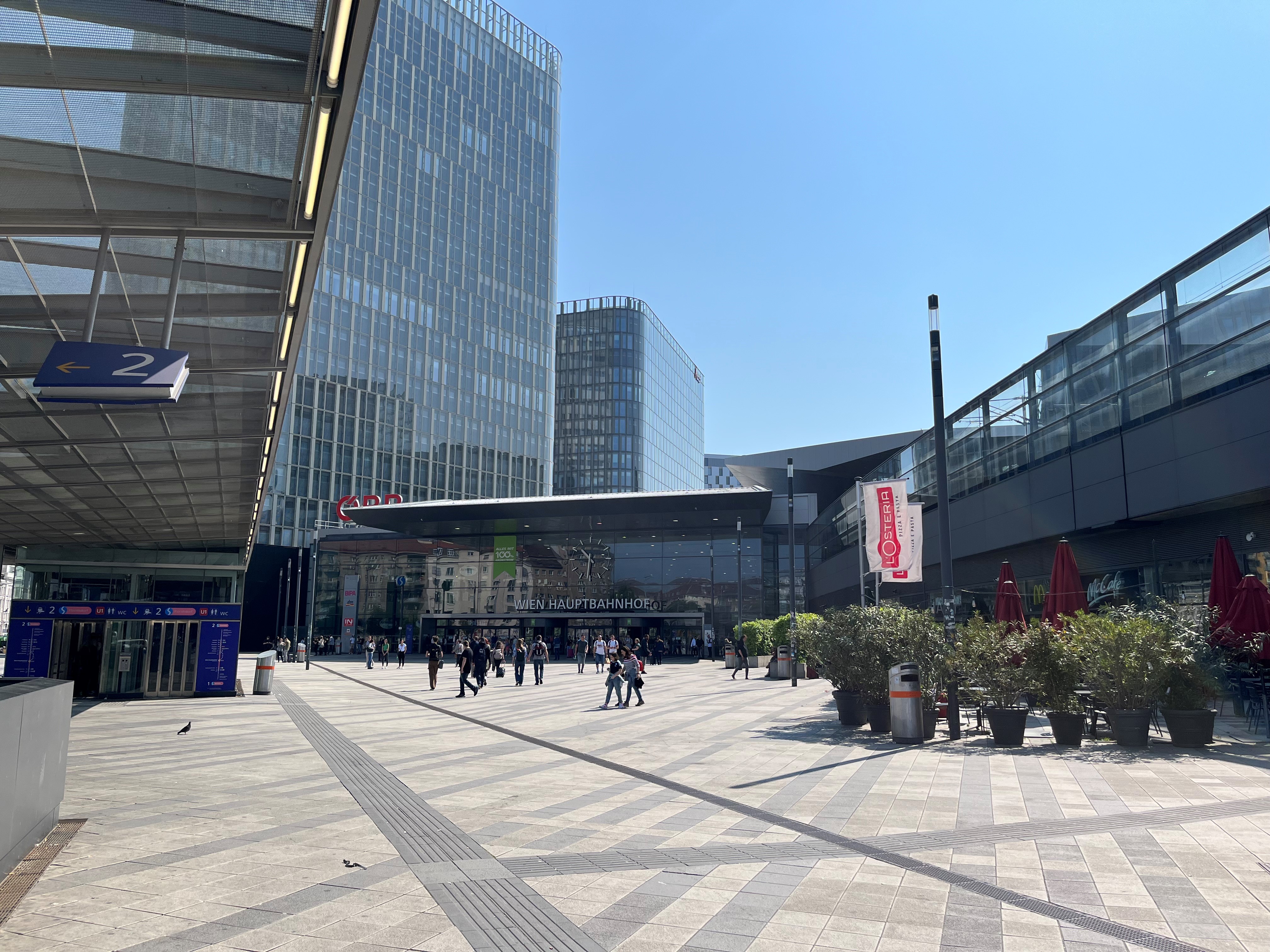
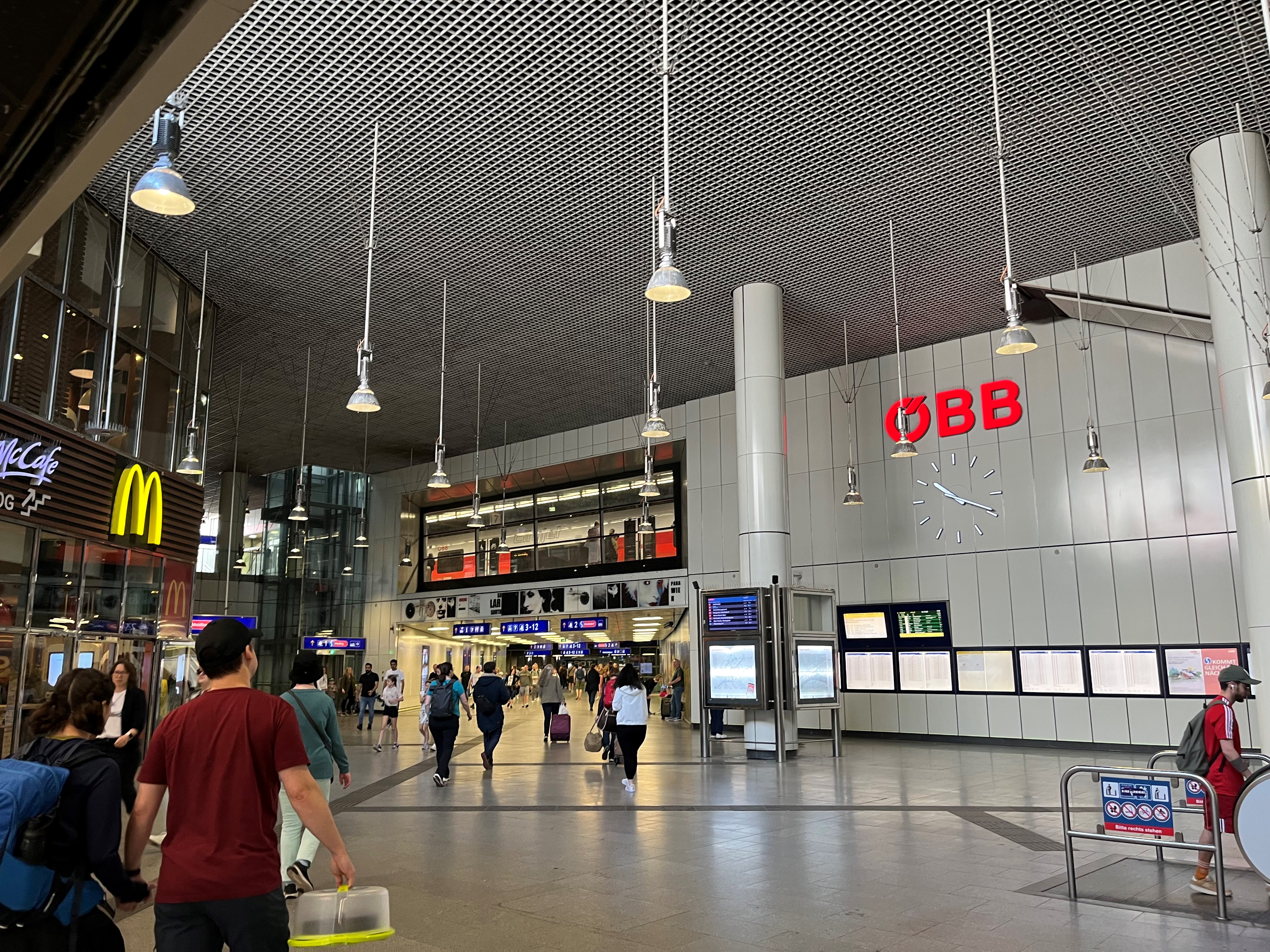
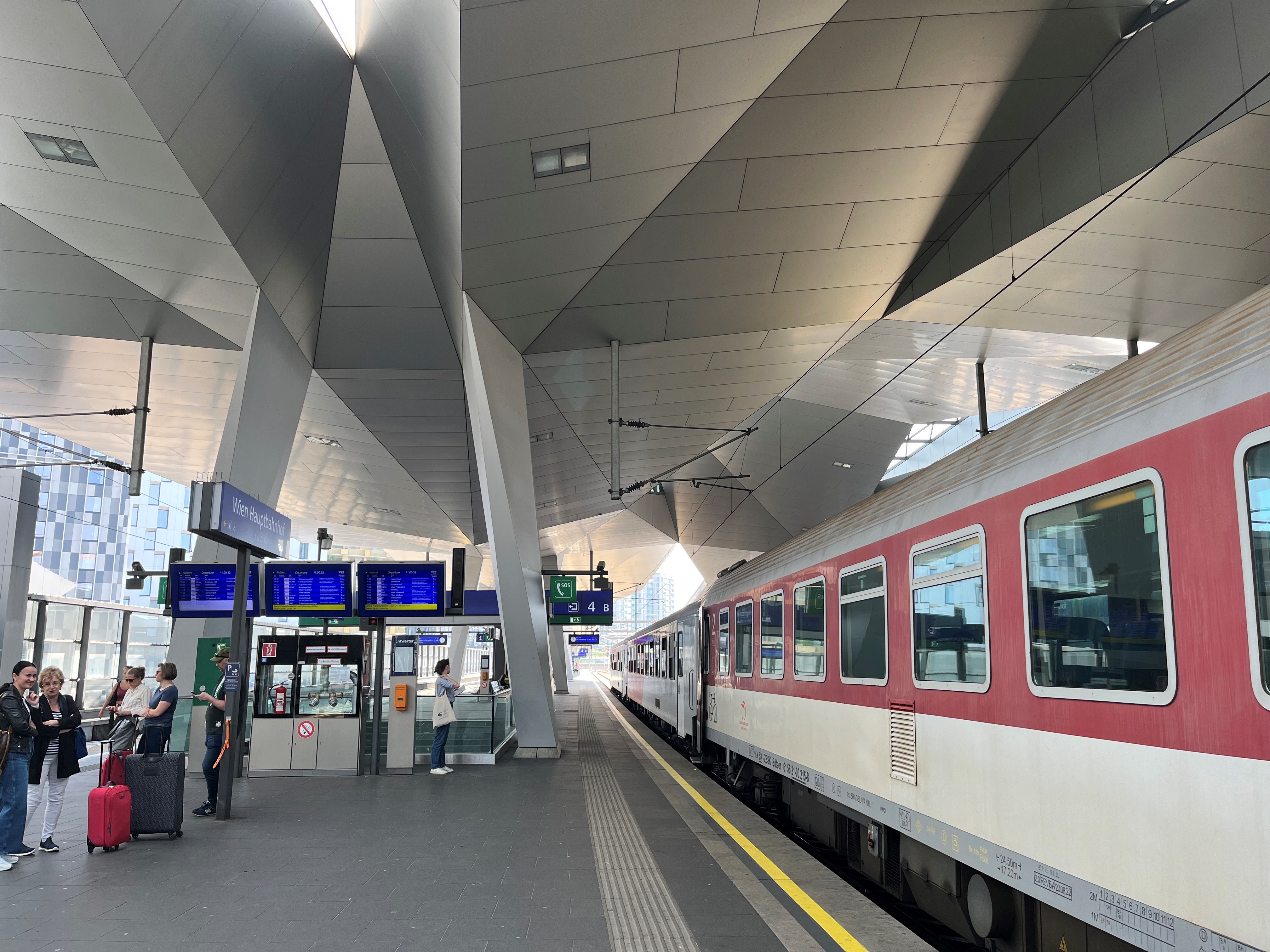
As we wait for our train to depart, an Asian-looking guy sidles up beside me and sits down. As I’m still somewhat knackered from getting up early on a Sunday morning I try to ignore him and write my postcards, but pretty soon he starts — horror of horrors — making conversation. In Mandarin. A language which I can comprehend, but am totally shit at otherwise.
Once Dennis and I get over the initial shock, though, we do get to talking with the newcomer. A postgrad from Tianjin spending a year in Europe, he’s spent the last four months holed up studying in his Heiligenstadt quarters, and this is his first time outside the Austrian capital — he was in the US for another study period this time last year, but he vastly prefers the open air of Europe. This I learn in the space of about thirty seconds and about the same number of sentences; he talks so quickly that it’s very hard to keep up. Over time it occurs to me that he’s really lonely and just wants someone to talk to — he’s extremely inquisitive about our lives (but not in an interrogative way, which is nice), trades contacts with Dennis in an instant and offers to come along with us for our day trip.
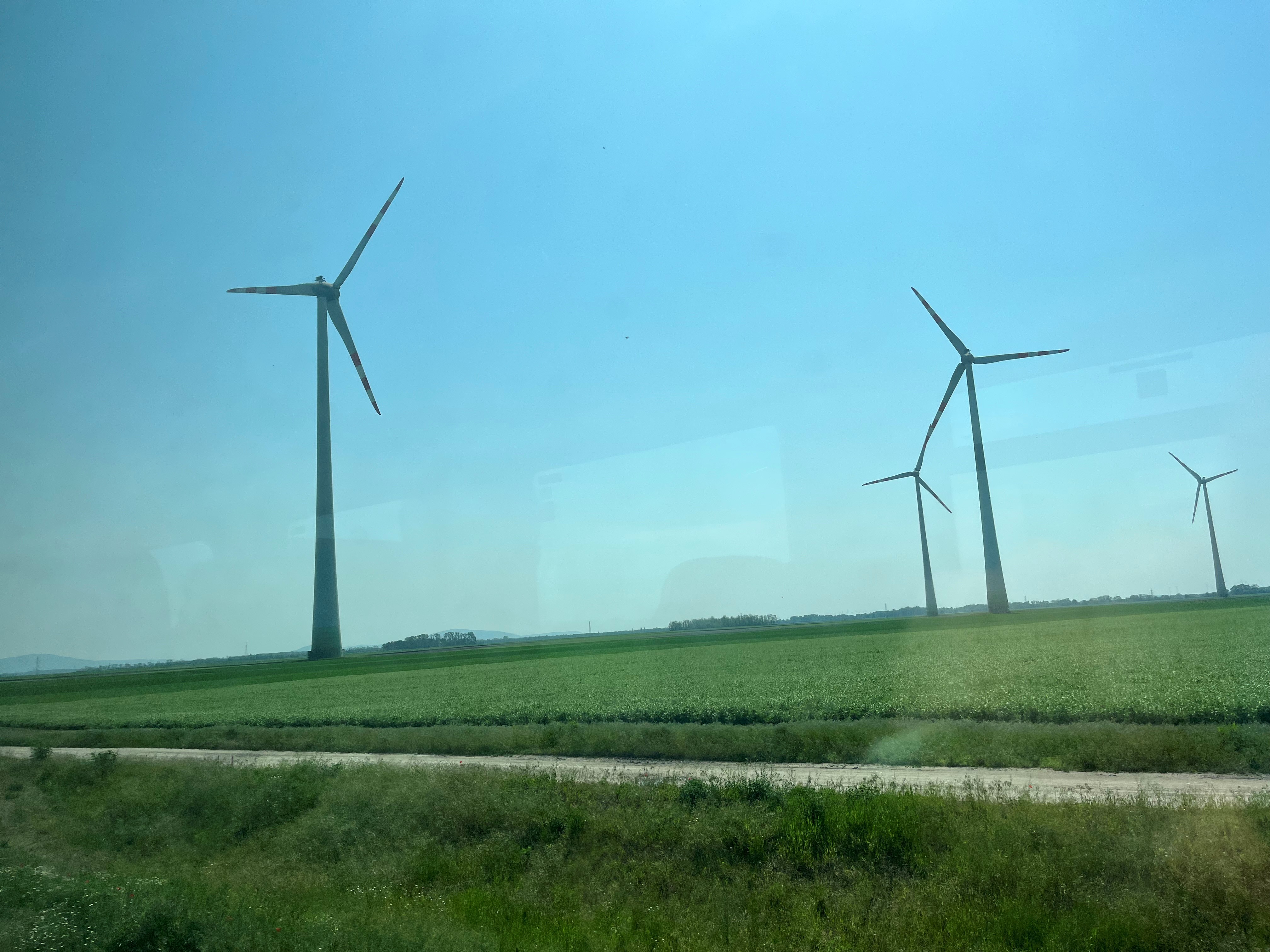
The two of them prattle on, but my ADHD brain (and awful Mandarin) means that soon enough I’ve lost the thread of the conversation and am staring out the window. The suburban streets of Vienna have long since given way to wide, expansive fields. Giant wind turbines loom above us, lazily spinning their blades; now and then the monochrome green is occasionally broken by parallel brown gashes, a sign that a tractor has recently come through with a plough. Franz Kafka once wrote about the strangeness of travelling through this very stretch of landscape on an ordinary town tram (as the Pressburgerbahn operated then), and though it’s no “Metamorphosis” I feel another kind of surrealism watching all of this flash genially before my eyes, as if Dennis and I are merely heading into the suburbs for a picnic, instead of exploring an entirely different country.
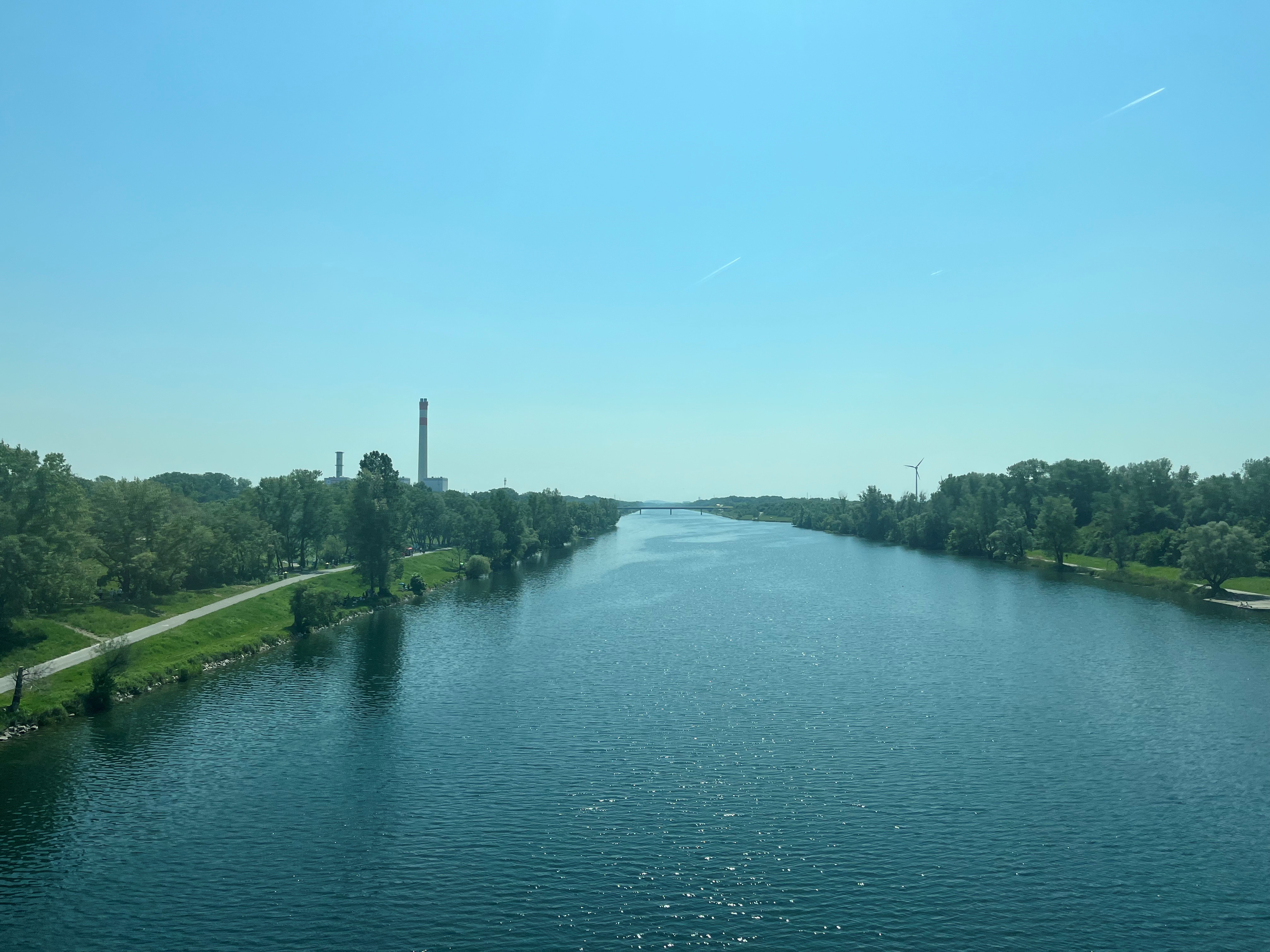
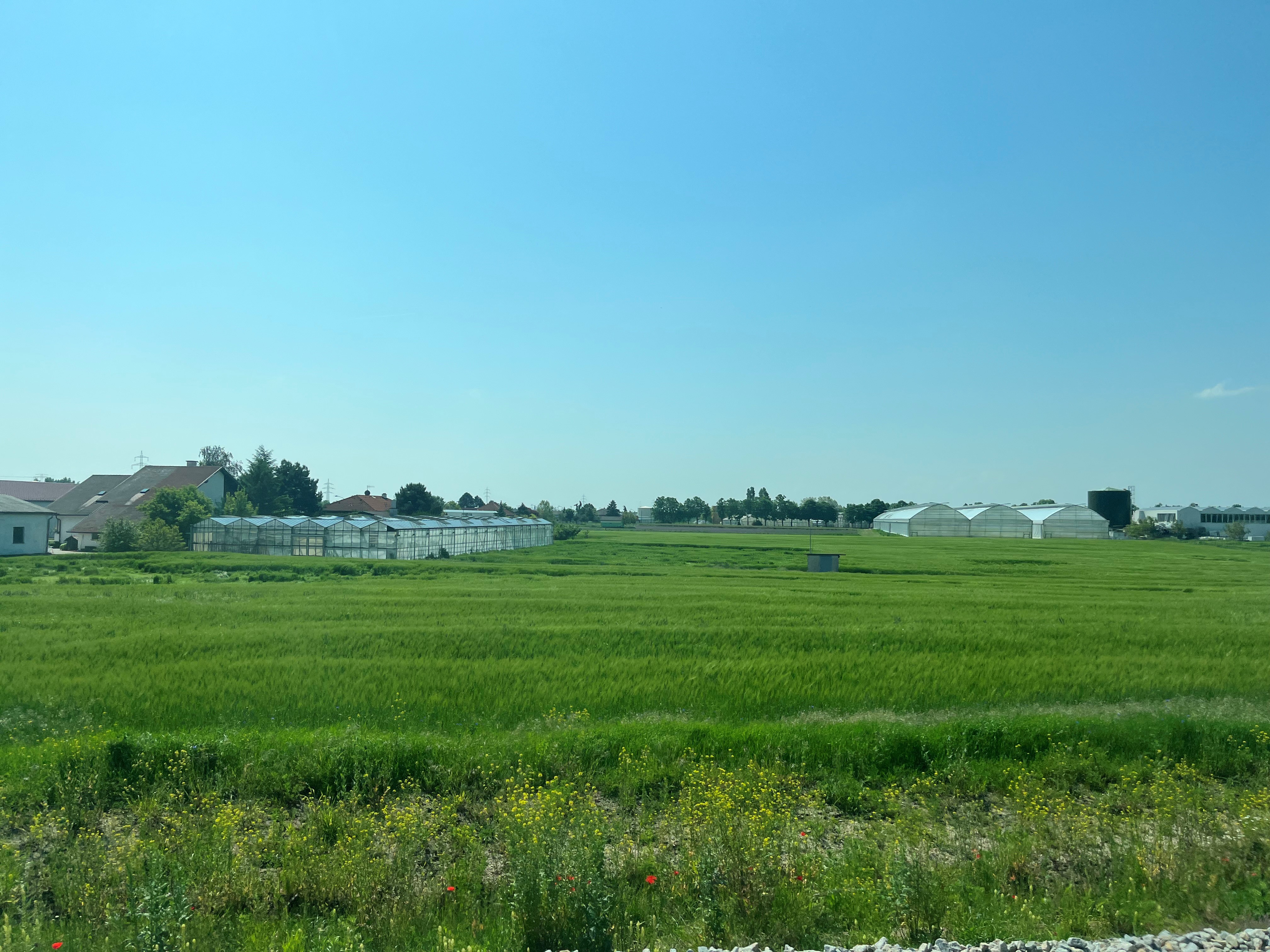
The change from Austria to Slovakia, from Central Europe to Eastern, is almost imperceptible: thanks to the Schengen Agreement the border between the two countries is now effectively invisible, and nothing marks our crossing from one land into another — no passport checks, no border guards, not even a large, tacky sign welcoming the traveller into another country. In fact, the first indication I get that I am in the former Soviet Union comes when the two letters indicating the network carrier on my phone silently change from the “AT” of Austria to the “SK” of Slovakia. But the verdant landscape remains unchanged, and it takes a special effort to notice the change in language, in architecture, even in the cars driving alongside us on the country lanes. It’s a strange way to be introduced into my first new country in eight years.
As we wind our way through the suburbs of Bratislava — a mere ten minutes after crossing the border — I peer anxiously out the window, trying to catch a first glimpse of the Slovak capital, trying to discover whether I’m going to like it or not. But foliage surrounds the railway line, and any glimpse of an apartment block or a suburban street is too fleeting and non-indicative. Then whoosh goes the train inside a tunnel, and when we emerge back into the light the engine is already powering down and pulling into Bratislava’s main station; all at once Bratislava and its people surrounds us, colourful but faded, lively but chaotic.
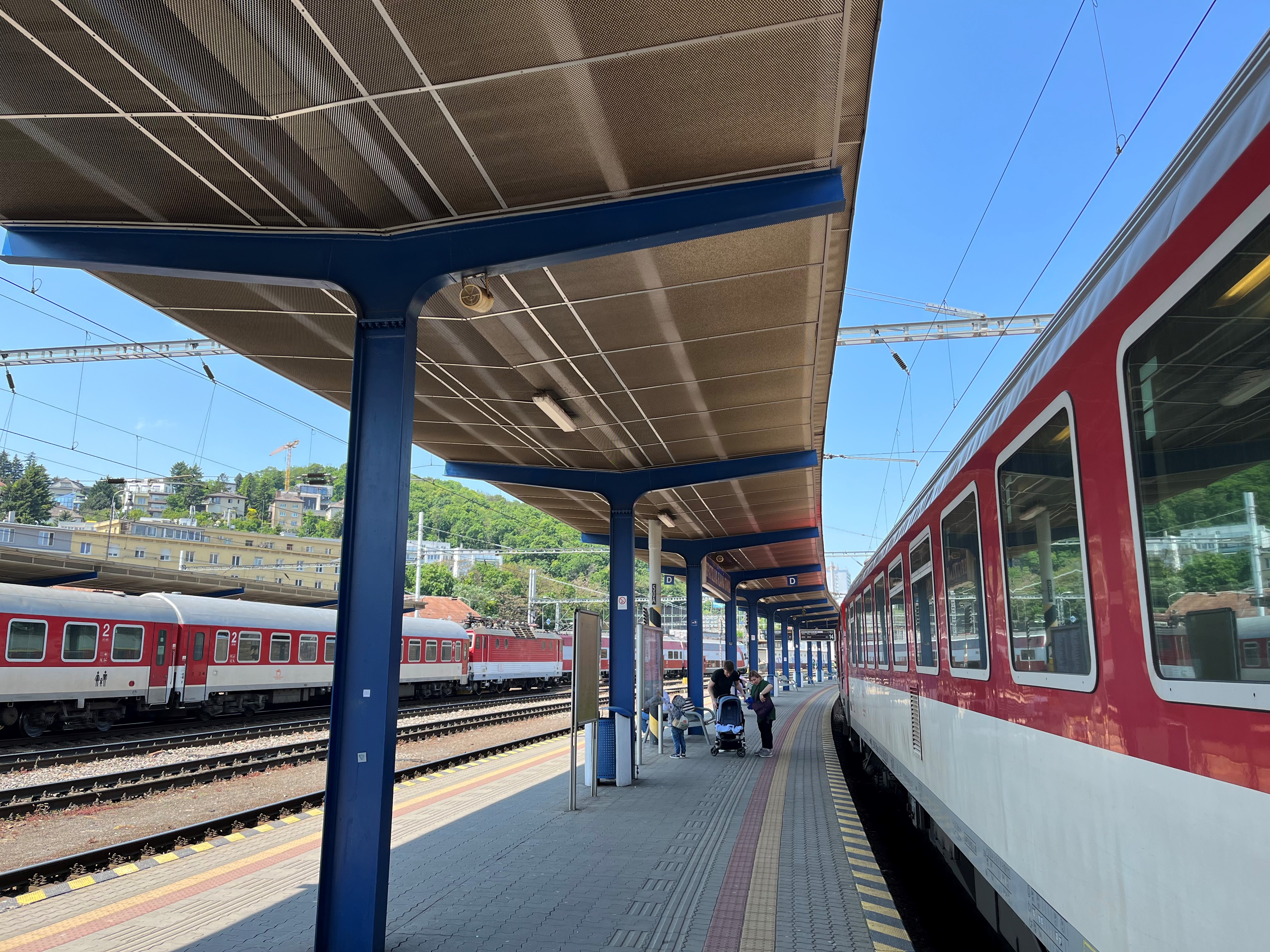
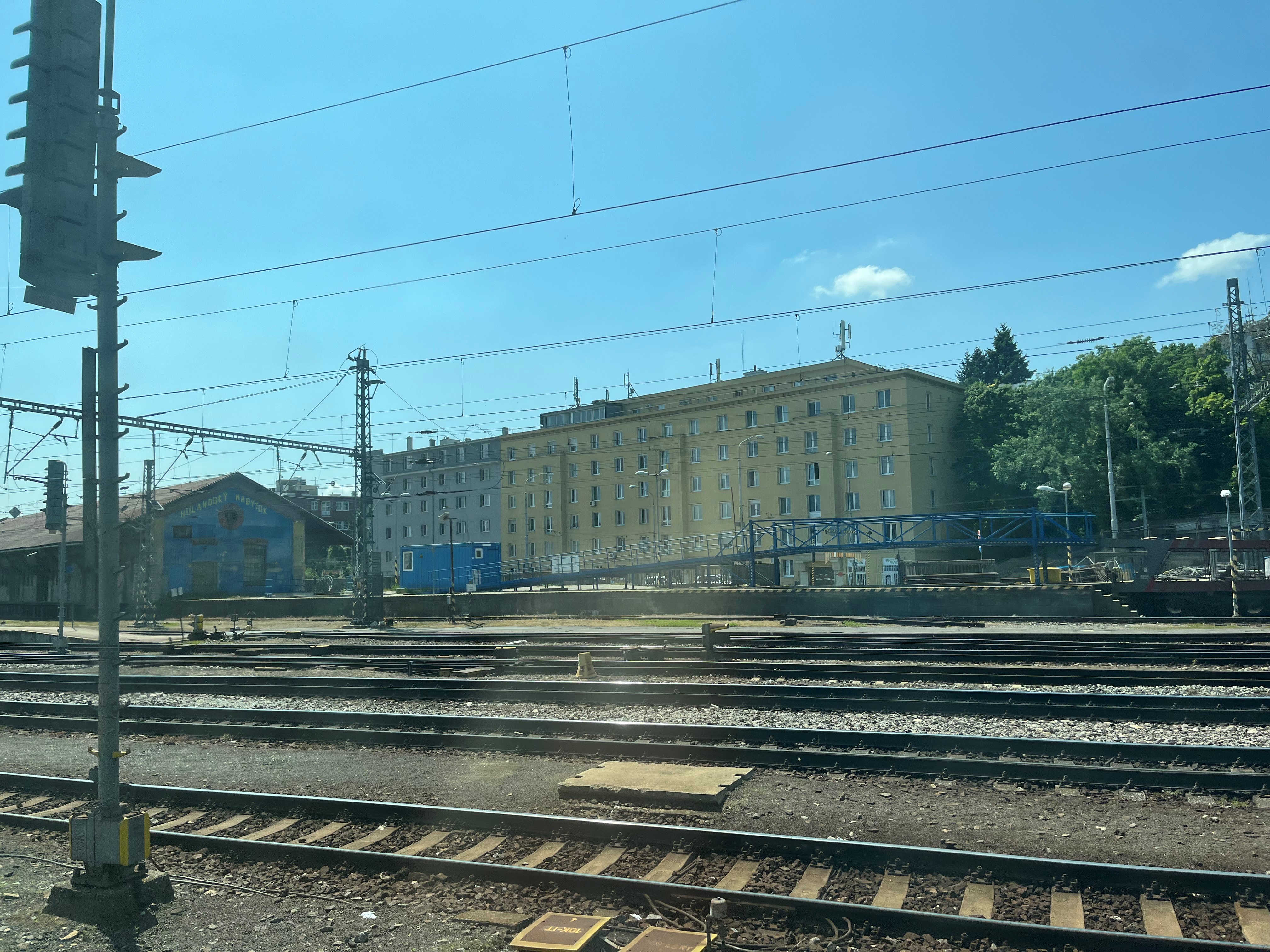
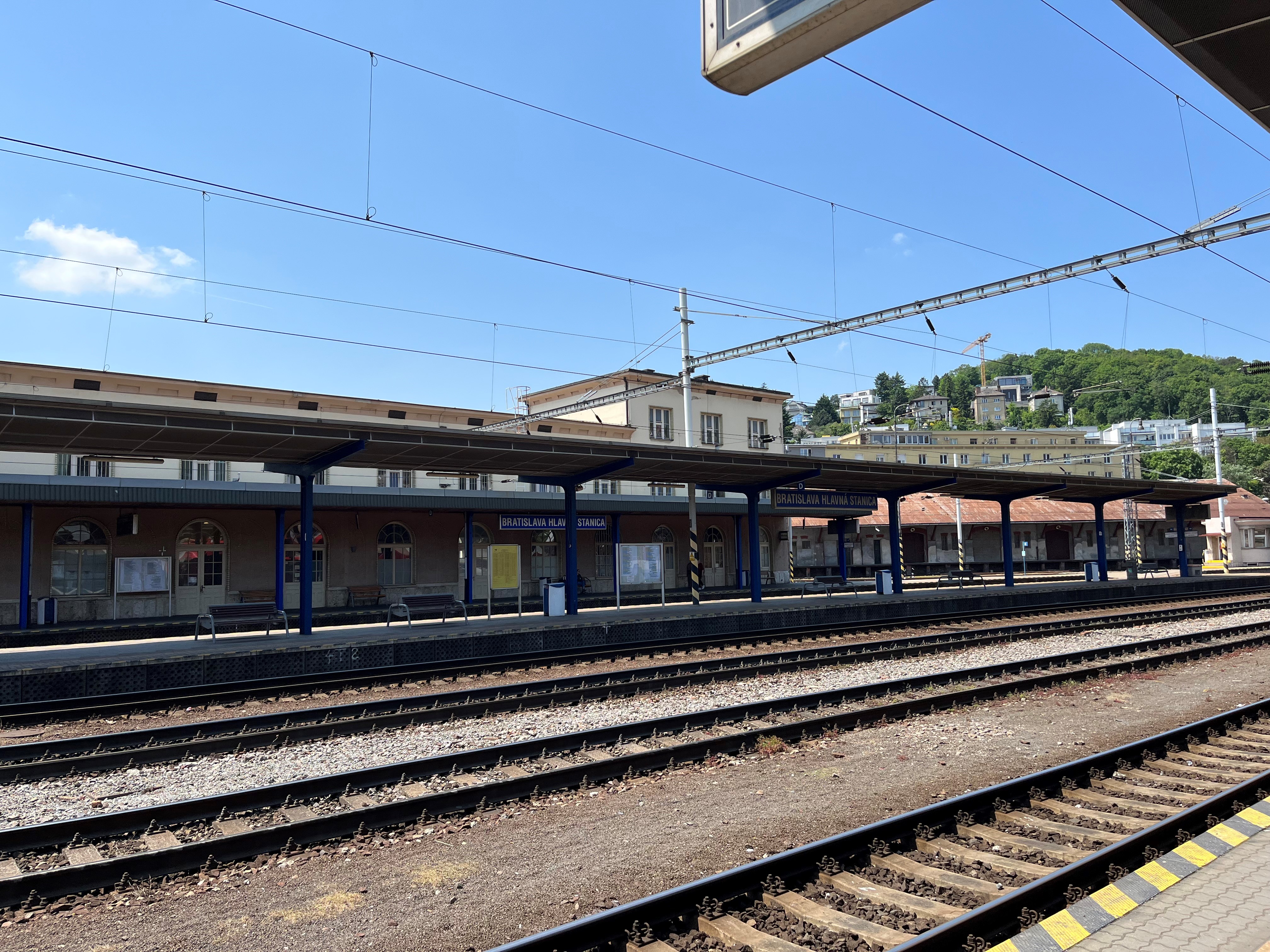
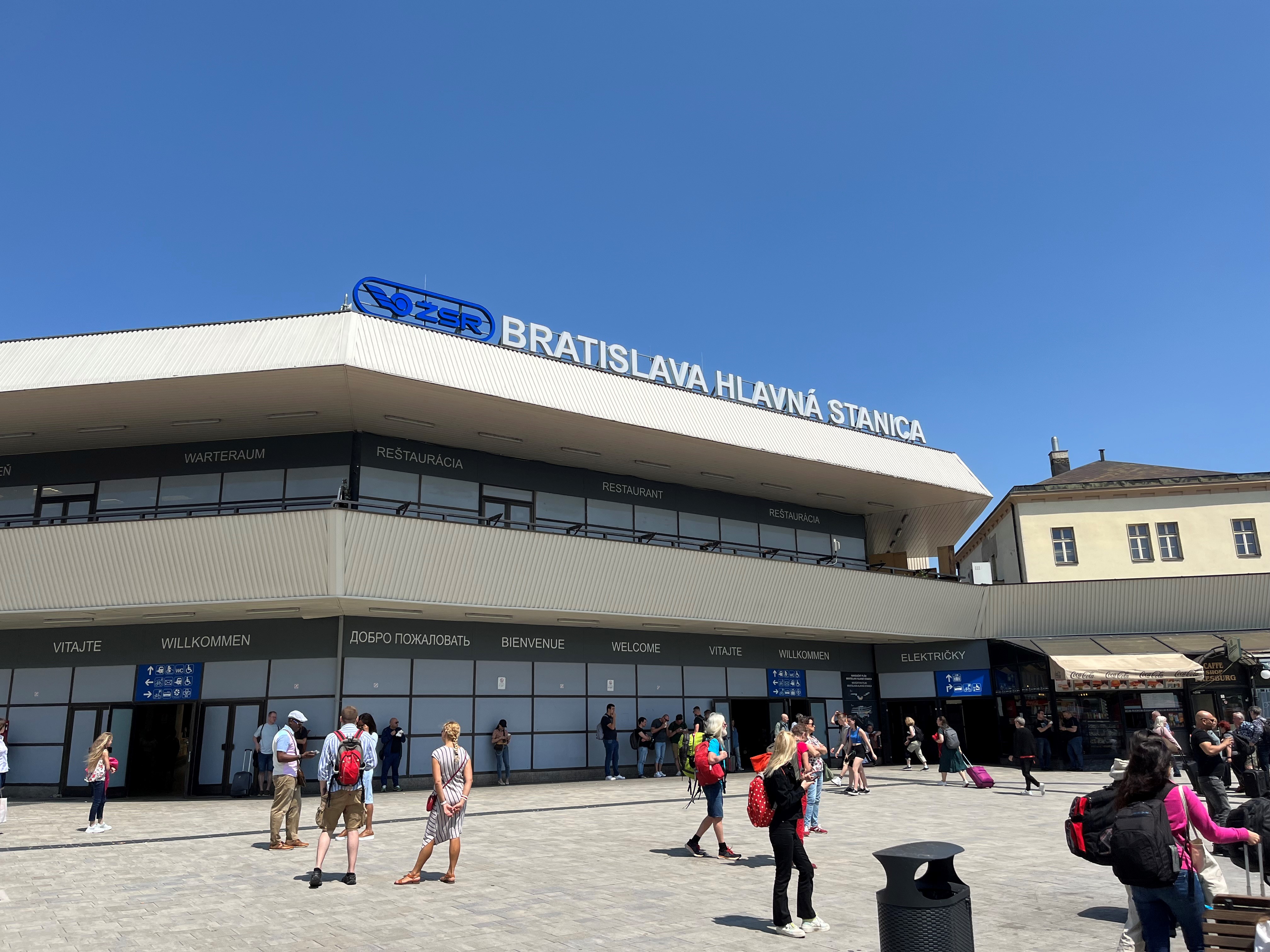
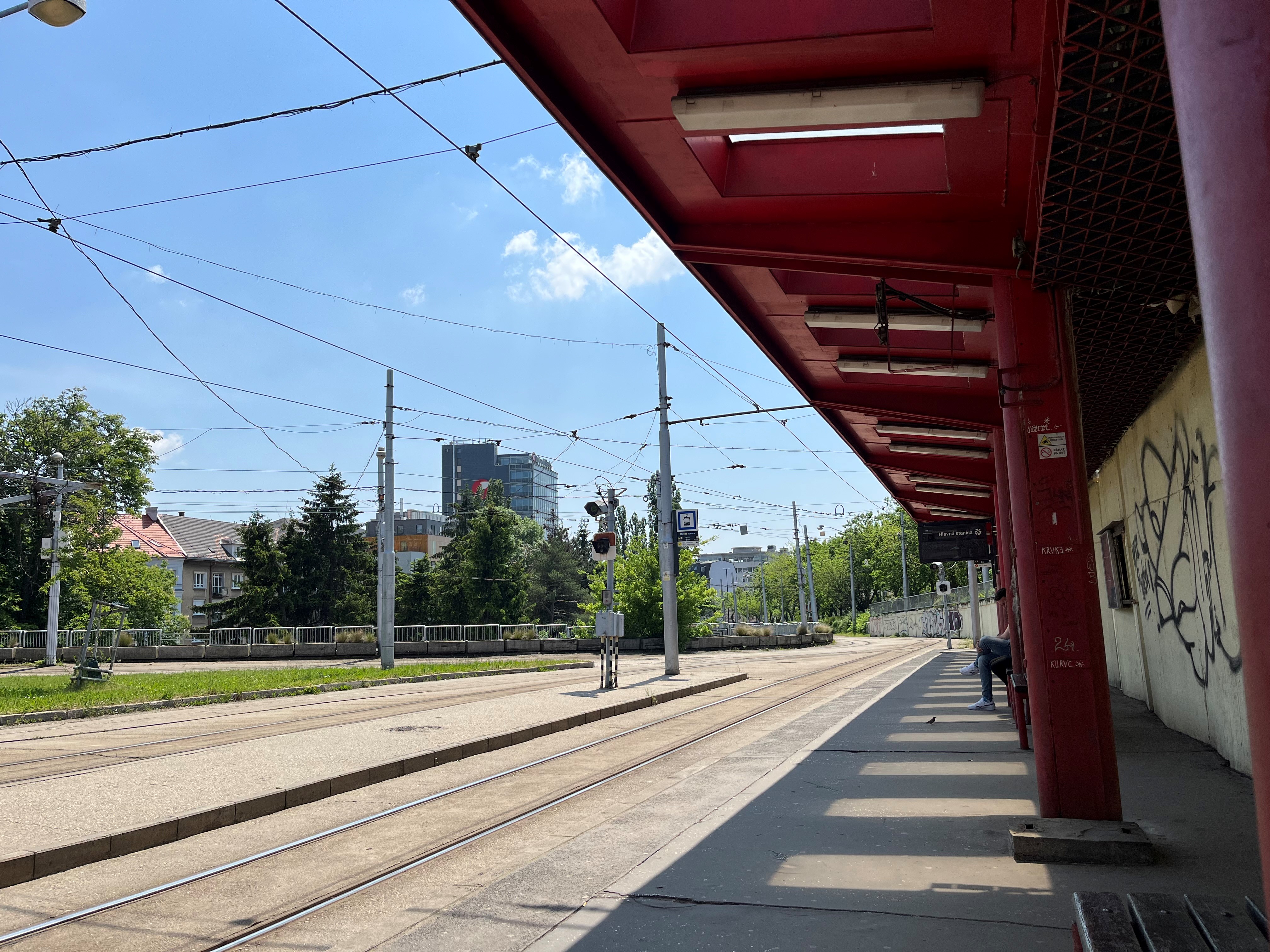
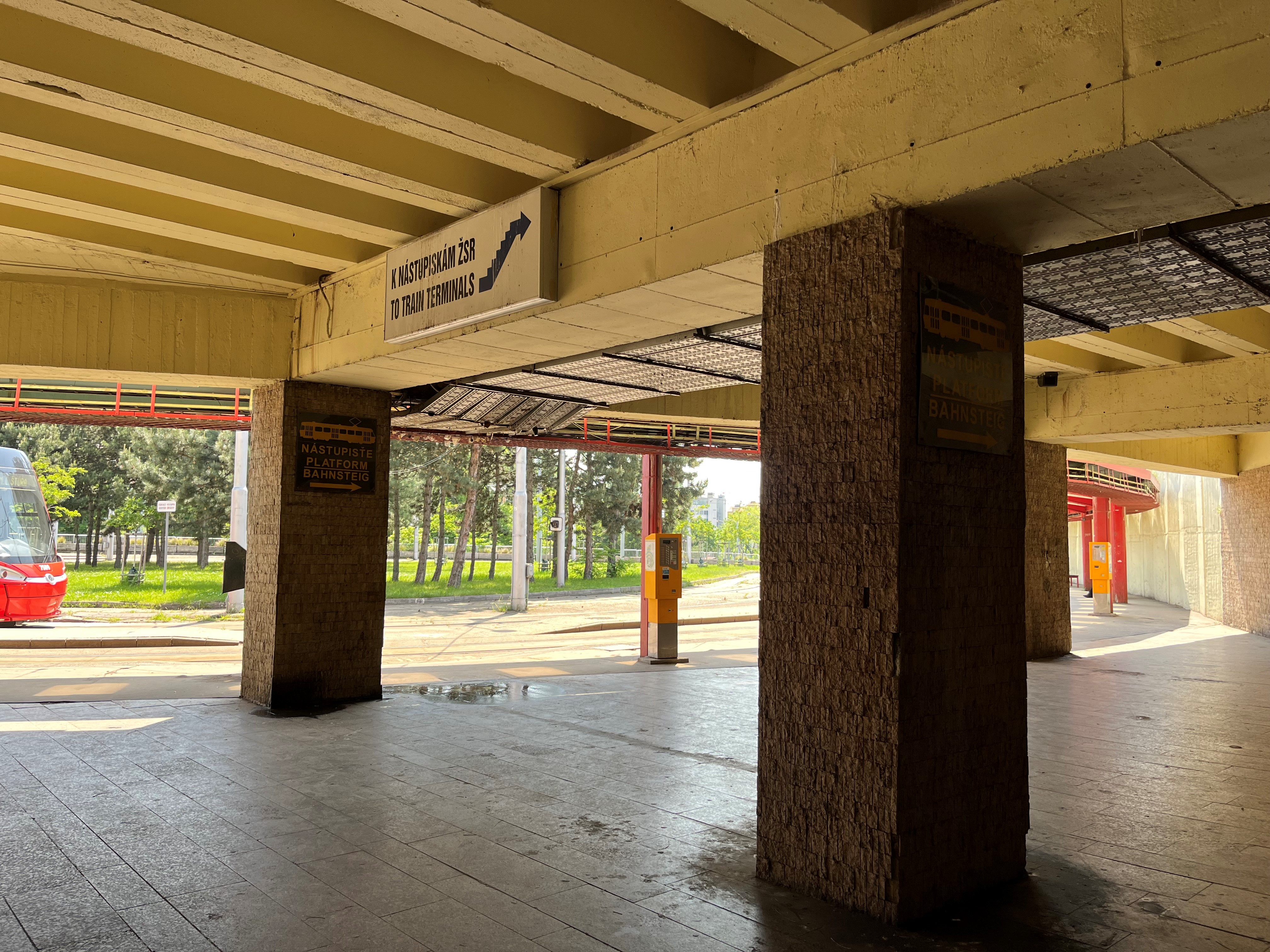
Bratislava’s main railway station — or Bratislava hlavná stanica, as it insists on being known — is, for a nation’s capital, not a very large nor grandiose affair. The miniscule hexagonal concourse in which we stand, built in 1987 as a sort of stopgap measure, feels like it hasn’t moved on since then: what stores not shuttered on this Sunday afternoon look lifeless and uninviting, a relic of the 80s. The same goes for the rest of the station, which is sparsely furnished and poorly maintained: the connecting passageway which we walk down to the tram stop is dusty, faded and bears no evidence of electric lighting, and you do not want to hear about the tram forecourt it led to. In these dilapidated surroundings, the gleaming red tram sitting there looks incongruous, a sleek smooth island of steel isolated in amongst a sea of yellow brick-and-mortar. The shabby state of the forecourt is all the more perplexing when I notice, just on the other side of the fence, a modern house complete with glass annex and tennis court, all of which are spotless and positively gleaming. Dennis and I hide in the shade, nervously eyeing the tram, waiting for it to take us away from this benighted place.

Half an hour later, we alight from the tram at the edge of Bratislava’s old town. Once the metal carriages have disappeared from view it’s strangely quiet — very few people are out and about today, perhaps because of the heat, perhaps because it’s Sunday and they’re all still in church — and the only sound we can hear is of water, tinkling merrily into a fountain on the other side of the square. Squinting in the sunlight to get our bearings, there’s a stab of déjà vu as the Central European surroundings recall our trip to Prague four years ago, another city frozen in time by the Communist regime; but where the Czech capital was chock-a-block with frantic activity, its Slovak counterpart seems content to move along slowly — tourists haven’t warmed to this part of Europe just yet.
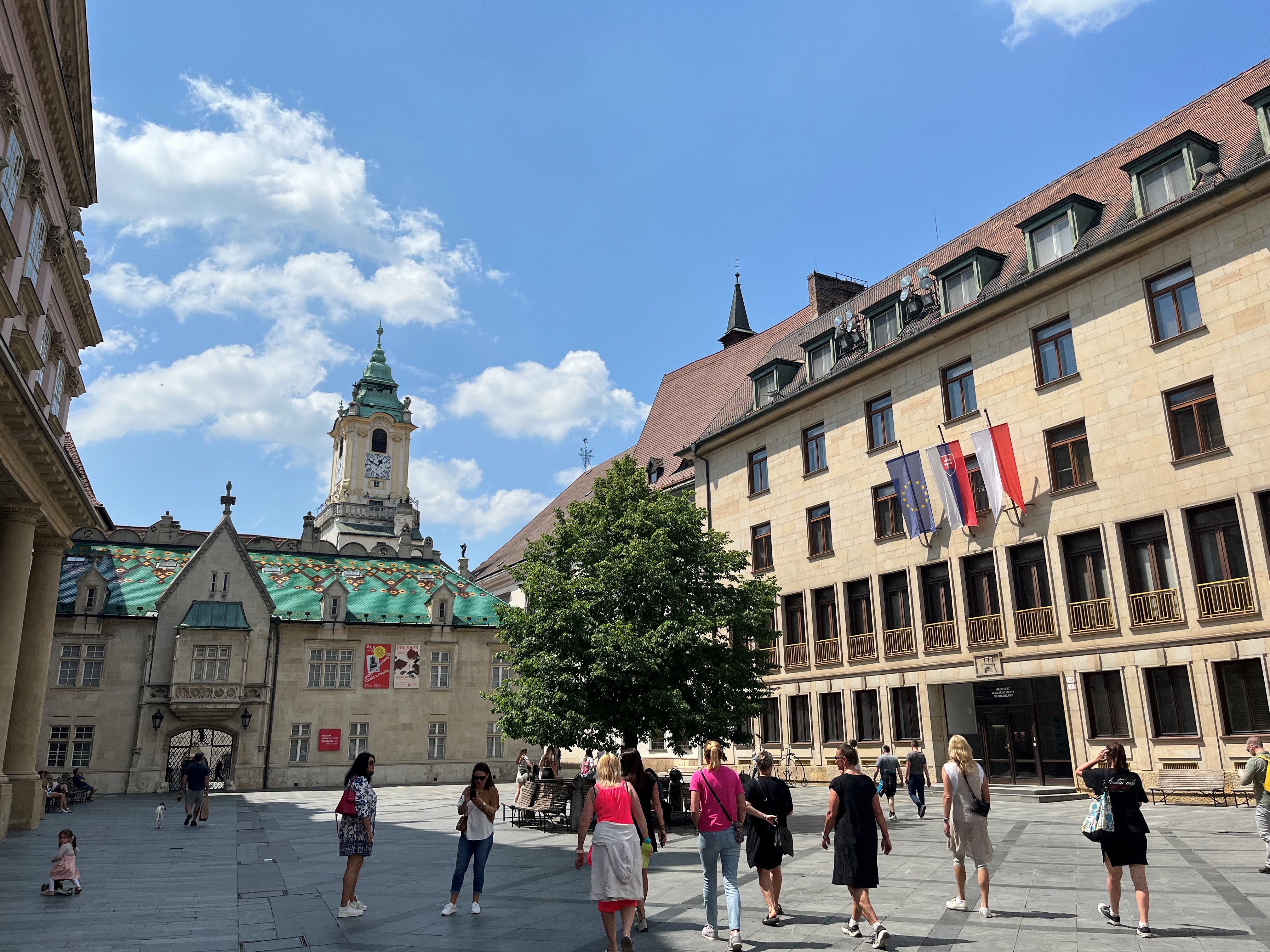
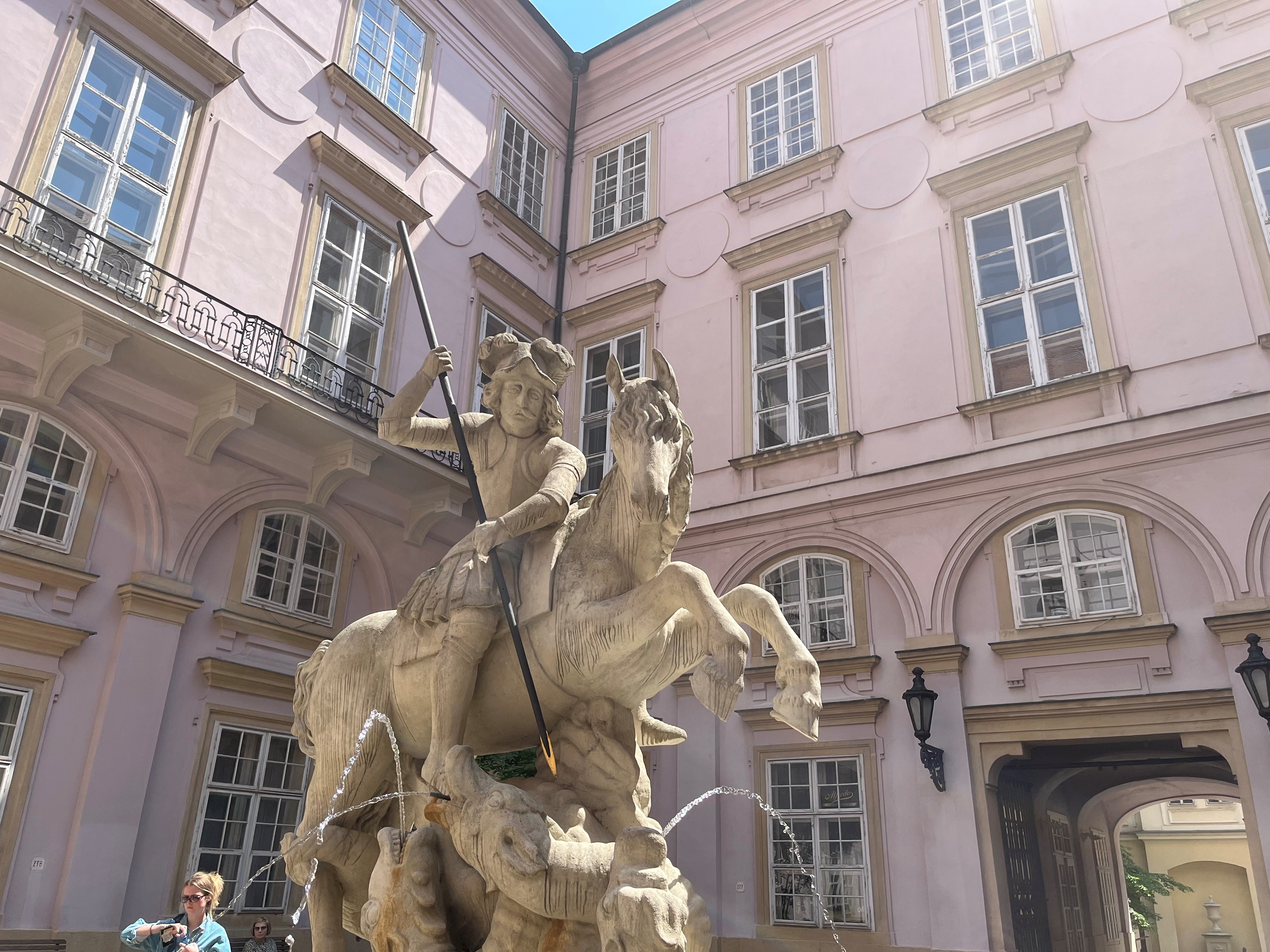
Plunging into the labyrinth of streets that is the city’s historical centre, we are assailed immediately by a series of neoclassical and baroque buildings. Most of these date from the 17th and 18th centuries, when the city was still known as “Pozsony” or “Pressburg” and ruled by its neighbours to the west and south; buildings like the Primate’s Palace, with its soft magenta hues and its simple but elegant windowsills, sprung up like rabbits during that heyday. Such is their concentration that it is impossible to turn a corner without bumping into five more historically significant buildings: next to the Primate’s Palace is the Old Town Hall, which abuts onto the Main Square, which faces the Greek embassy, which jostles for space with the Church of Our Holy Saviour, and so on. But there seems to be a binary at play here too: any building not serving a historical purpose has been turned, without exception, into an outpost of commercialism. In the Main Square, for example, a Starbuck’s sits proudly opposite the tiny Kutscherfeld Palace, garishly incongruous against both its green host building and the wider surroundings. For the most part it seems to be doing decent business, but I shudder to think of the prices people face inside. We enter a shop at random, buying a few trinkets from a girl with the bored look of someone who’s been press-ganged into keeping shop on a Sunday.
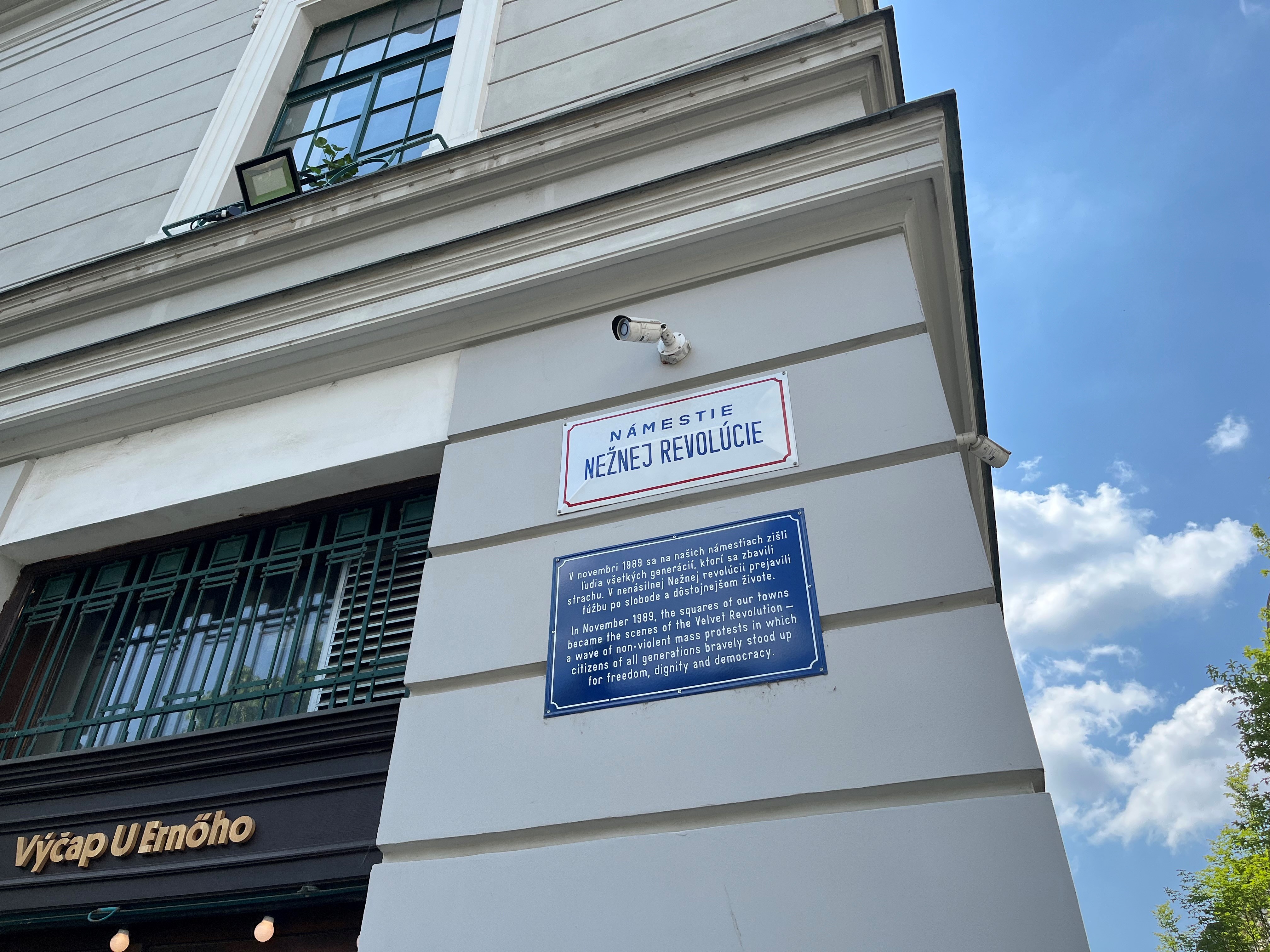
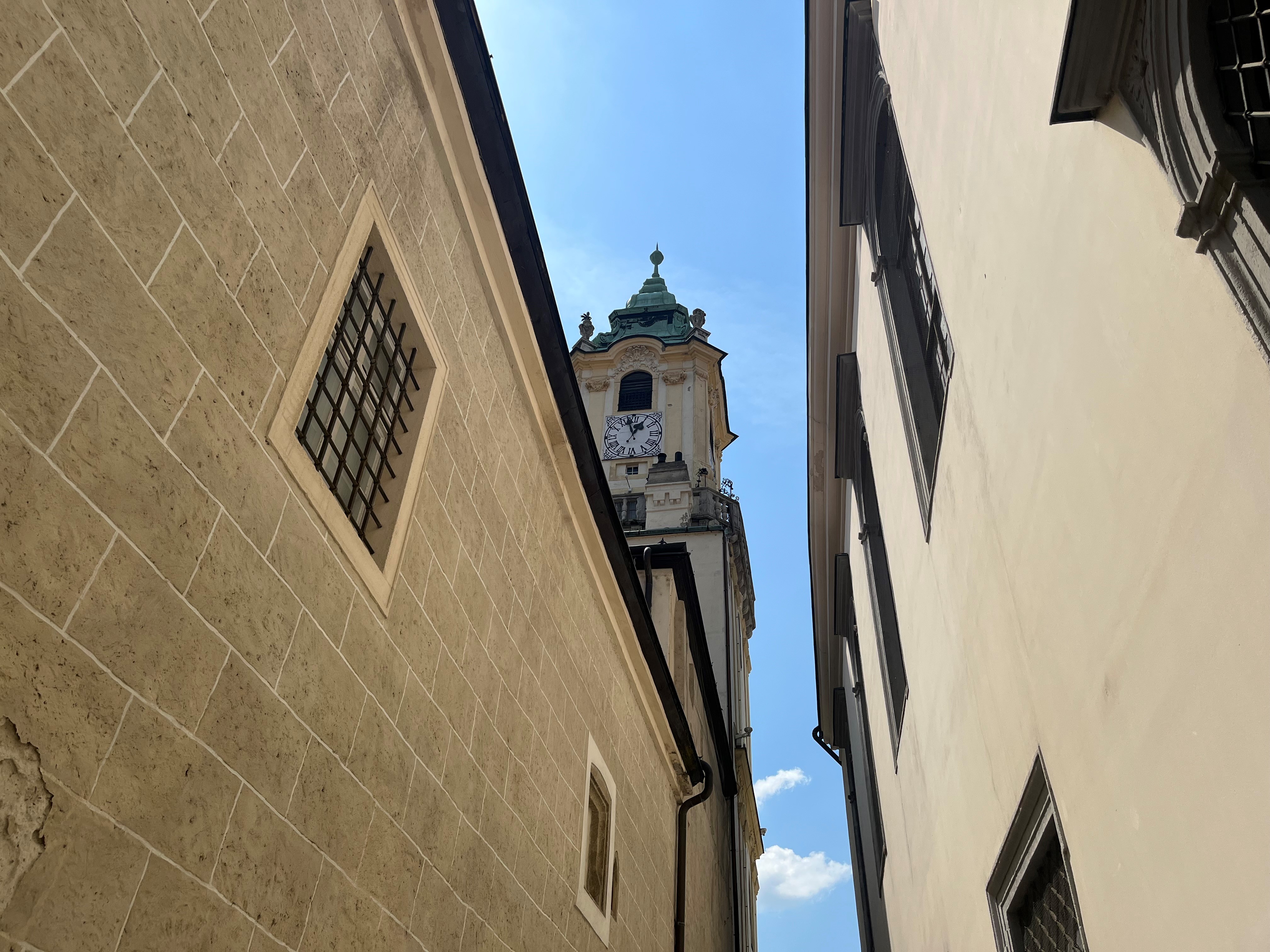

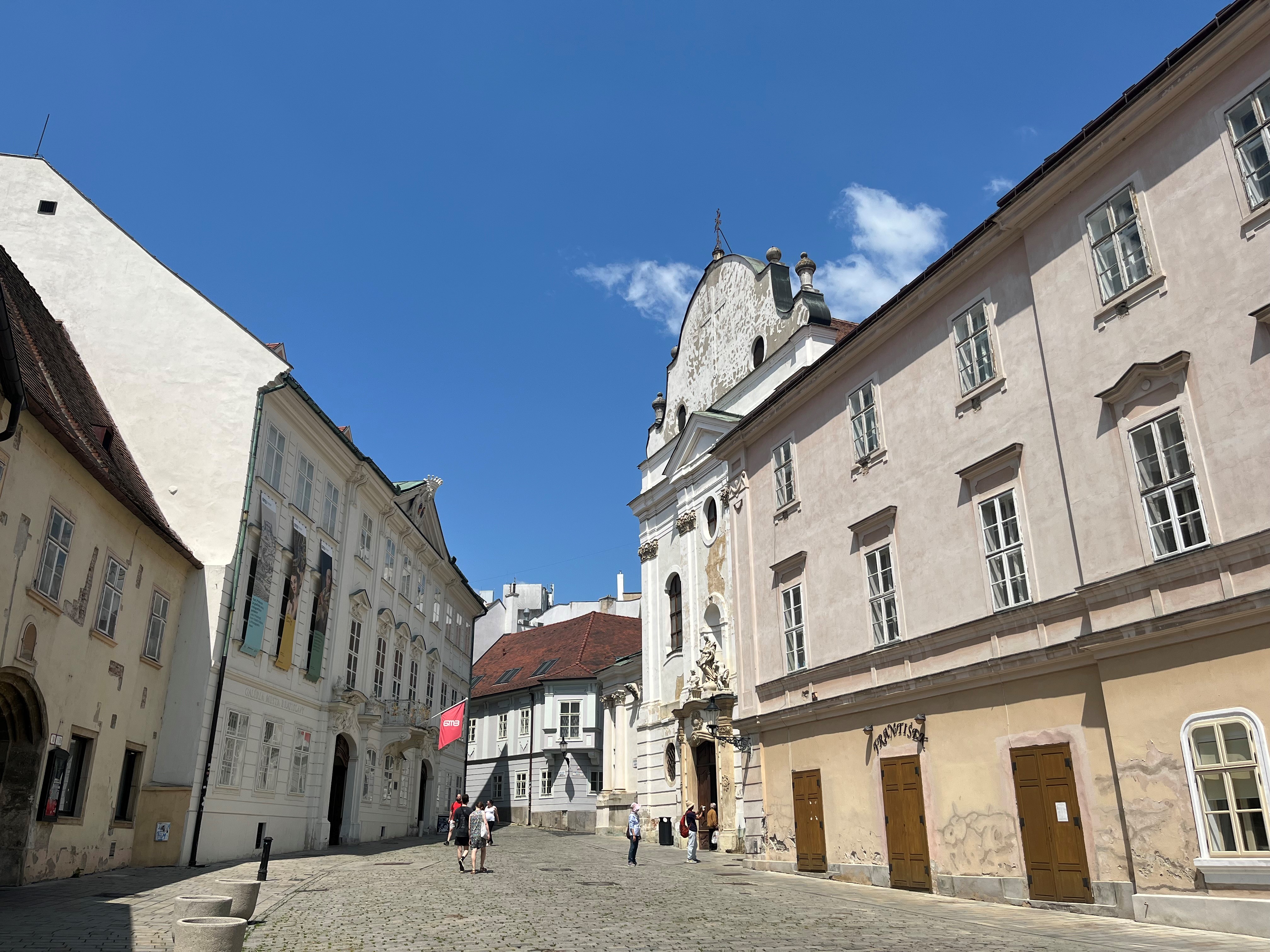
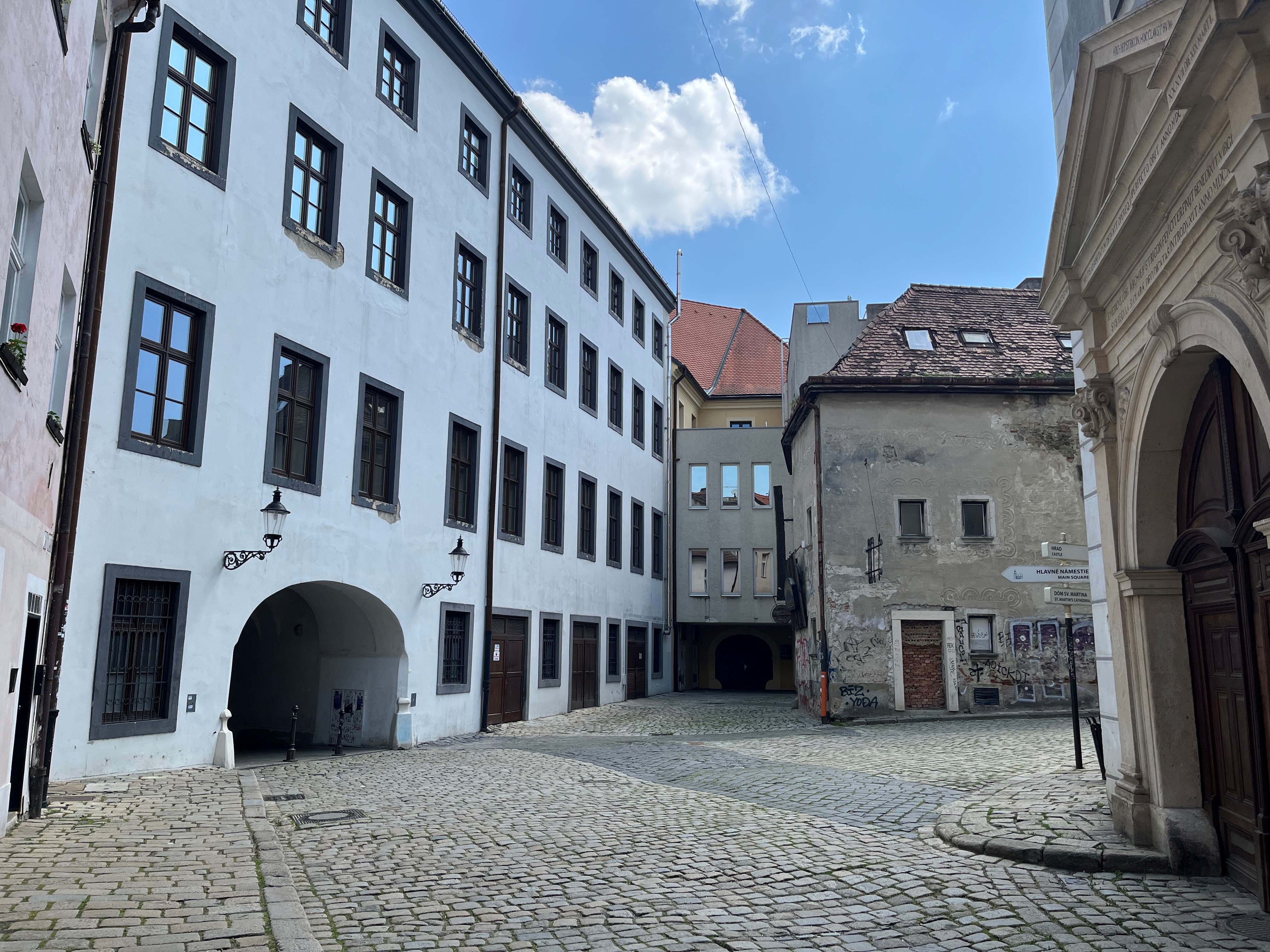
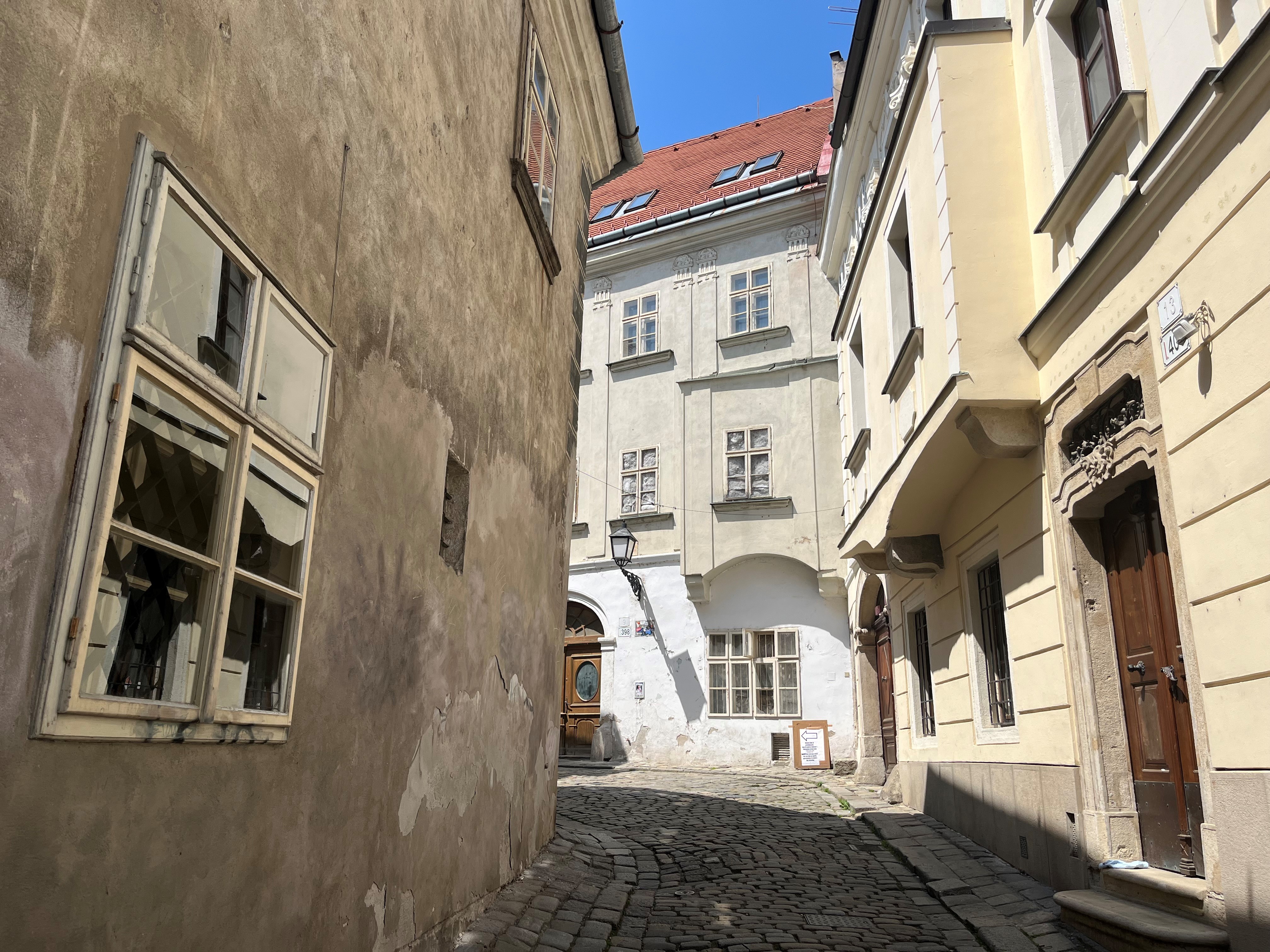
Dennis and I wander on, taking pictures of buildings and the occasional dog. The sun beats hard against our skin, the air uncomfortably warm. At one point we find ourselves alone in a side street just off the town square — well, I say side street, but it also happens to contain the Spanish and Bulgarian embassies. Everything here seems like the textbook version of Central Europe: the paintwork is vibrant, all pastel hues of pink and blue and creamy yellow. Accordion music floats in through a nearby tunnel, ghostly yet ethereal; a solitary young woman walks by, her poise casual yet immaculate.
But a closer look at the infrastructure gives lie to this impression, because neither the years nor the city council have been kind to these buildings. We like to imagine Central Europe as something straight out of “The Grand Budapest Hotel”, and while that version of Europe was always an idealistic fantasy, the reality here is so distant it’s almost brutal. The aforementioned pastel paintwork is unbelievably cracked and faded, with masonry and ironwork poking out in places; on some buildings, the concrete is so exposed that not even graffiti artists have bothered with it. Buildings that bear evidence of recent repair already look like they’re fading back into grey already. It’s by no means the first time I’ve seen an old town in such a state of disrepair — some corners of Prague, too, had felt shabby and uncared-for — but the scale of the neglect here is astounding, urban decay happening right before our eyes.
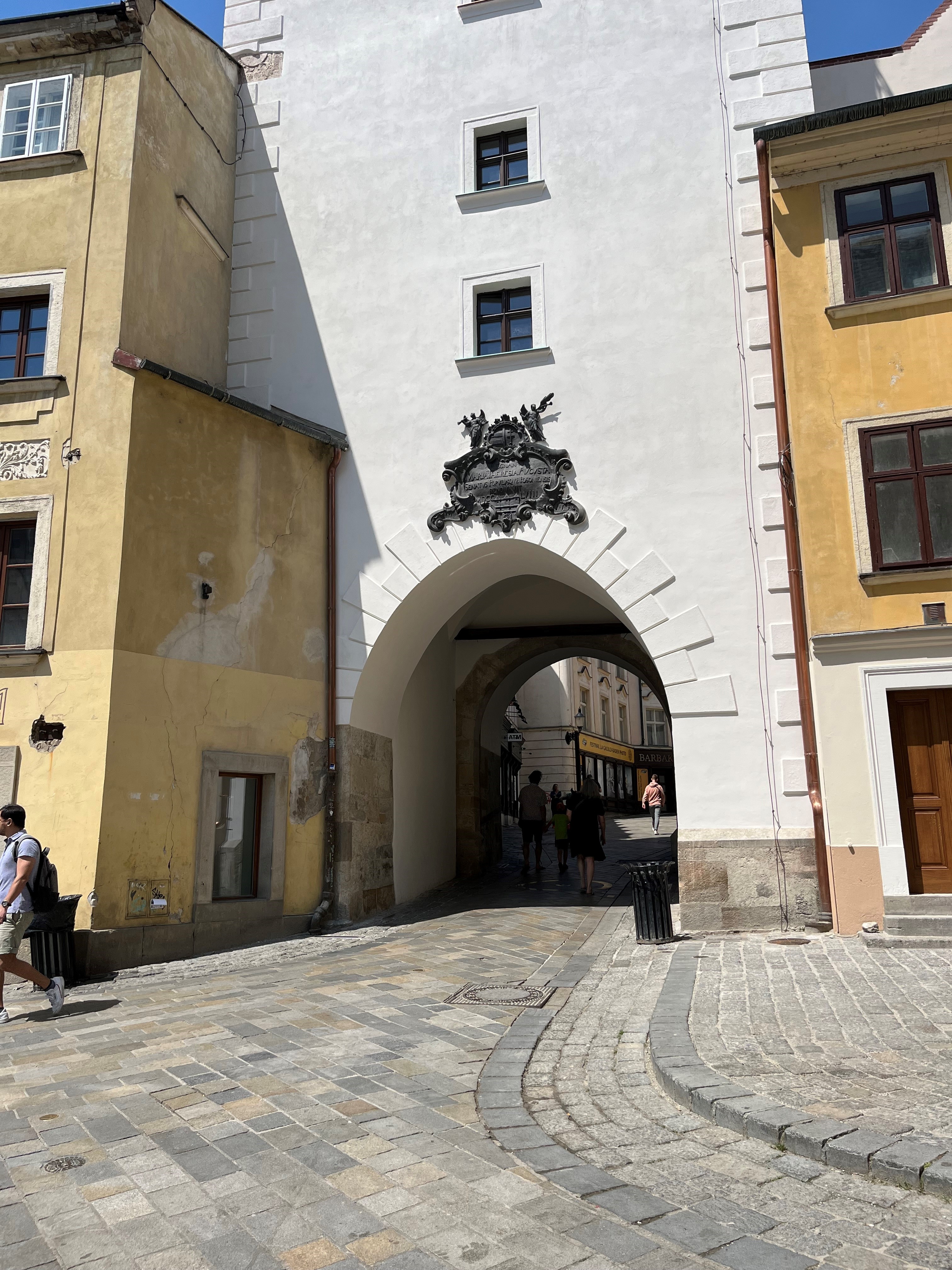

It’s no surprise that most tourists seem to be sticking to the one street that appears fresh-faced and modern. The narrow lane leading down from St. Michael’s Gate, at the north end of the old town, is a fiesta of restaurants and souvenir shops, all spick and span and much more international — within ten paces I count an Irish bar, an Italian pizzeria, and a “rock café”. It’s almost two o’clock now and tourists are coming out for an afternoon of sightseeing; many of the restaurants are quietening down or changing the menus. The bar-cum-restaurant we eventually pick seems to be having an identity crisis: on the menu are rice, burgers, pizzas and even Irish beer. Dennis gets a bowl of Japanese noodles, while I naively order a pizza that turns out to consist of nothing but slightly burnt pizza dough and pepperoni — and is the size of a baking tray. A large one.
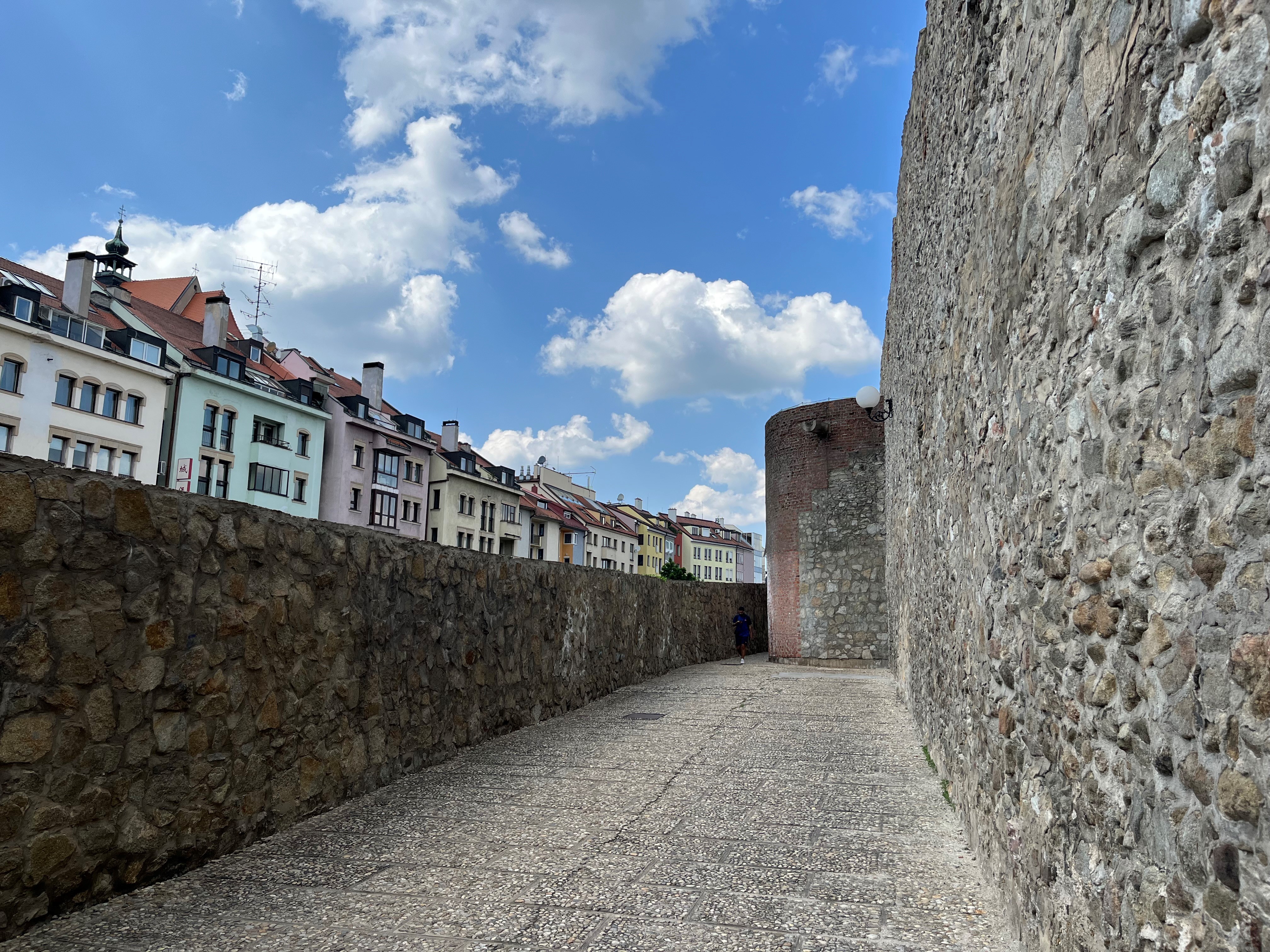
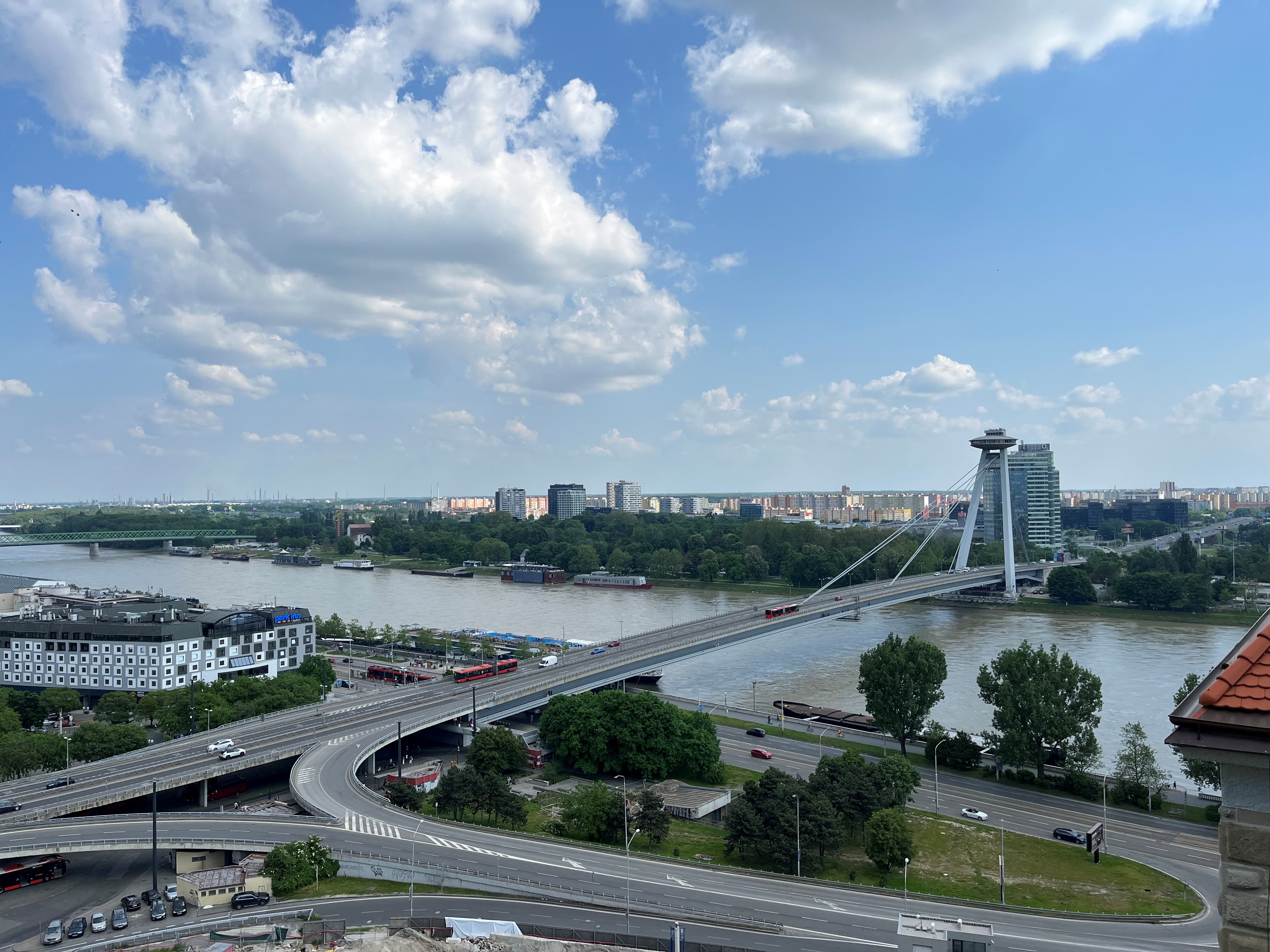
Having shortened my lifespan with a single lunch, we walk up the street towards the city walls. Although Bratislava used to be a heavily important city in Central/Eastern Europe (at one point becoming the capital of Hungary) its relevance diminished after the Ottoman threat from the east receded in the 18th century; over the next 200 years the old fortifications were knocked down to make room for development and were only saved in the 1980s after it was discovered that tourists actually like that kind of thing. For a moment, it does genuinely feel like we’ve crossed into mediaeval times: the baroque houses, the occasional battlement tower, the awe-inspiring high walls all make this place feel deliciously 1700s. Then we come to a side opening in the gate, and what should we see but a six-lane motorway underneath, ploughing straight through the old town, right past St. Martin’s Cathedral and across the Danube underneath a strange UFO-looking pylon. Apparently much of the old Jewish quarter was demolished to make way for this roadway, which is a level of irony not seen since Hitler became the first statesman to declare Slovakia an independent republic.

Making our way across on a bridge, we bump into another wandering bunch of Cantonese speakers, a boy and three girls who all look our age. “At last, people we can talk to,” I say to Dennis, and promptly approach the students to try and strike up a conversation. Unfortunately this bunch of youngsters are, if anything, even less forthcoming than the ones I met at the KunstHaus yesterday; not only does the boy speak for all of the girls (who, I notice, all have different hair colours), but his replies are curt and perfunctory:
“Do you think it’s a bit too warm here? The weather report said it was gonna be cold, and yet I’ve not had to break out the down jacket yet.”
“… yes. But it was cold in Munich.”
By degrees I do manage to discover that they are students on a grad trip around Central Europe (they’ve done Bavaria and Prague, and are soon to move on to Budapest) but no matter how enthusiastic I try to sound it just isn’t matched by the other side; gallantly coming to my conversational rescue, Dennis also gives it his best shot but is given a similar brush-off. I begin to think that it’s not due to a lack of charisma that we’re failing to connect with almost anybody on this trip: perhaps it’s just that us Hong Kong people are terrible at opening up, both at home and abroad. We shut ourselves off from the outside world while on the bus or in restaurants; rarely do we allow a stranger to fall into conversation with us, and we end up missing on what might be a wonderful interpersonal connection (and yes, I’m aware that I’m included in this demographic as well). By the time we’ve climbed the steps to the top of the hill, I’ve almost given up, and we drift away from each other — them to find a toilet, and us to enjoy the mind-blowing view of Bratislava that’s suddenly appeared before our eyes.
“Do you think we’ll be seeing them again?” I ask Dennis, staring wistfully at their receding backs, ruing another lost chance to make new friends.
Dennis laughs. “If you do ever see them again, I’ll buy you lunch back in Vienna.”
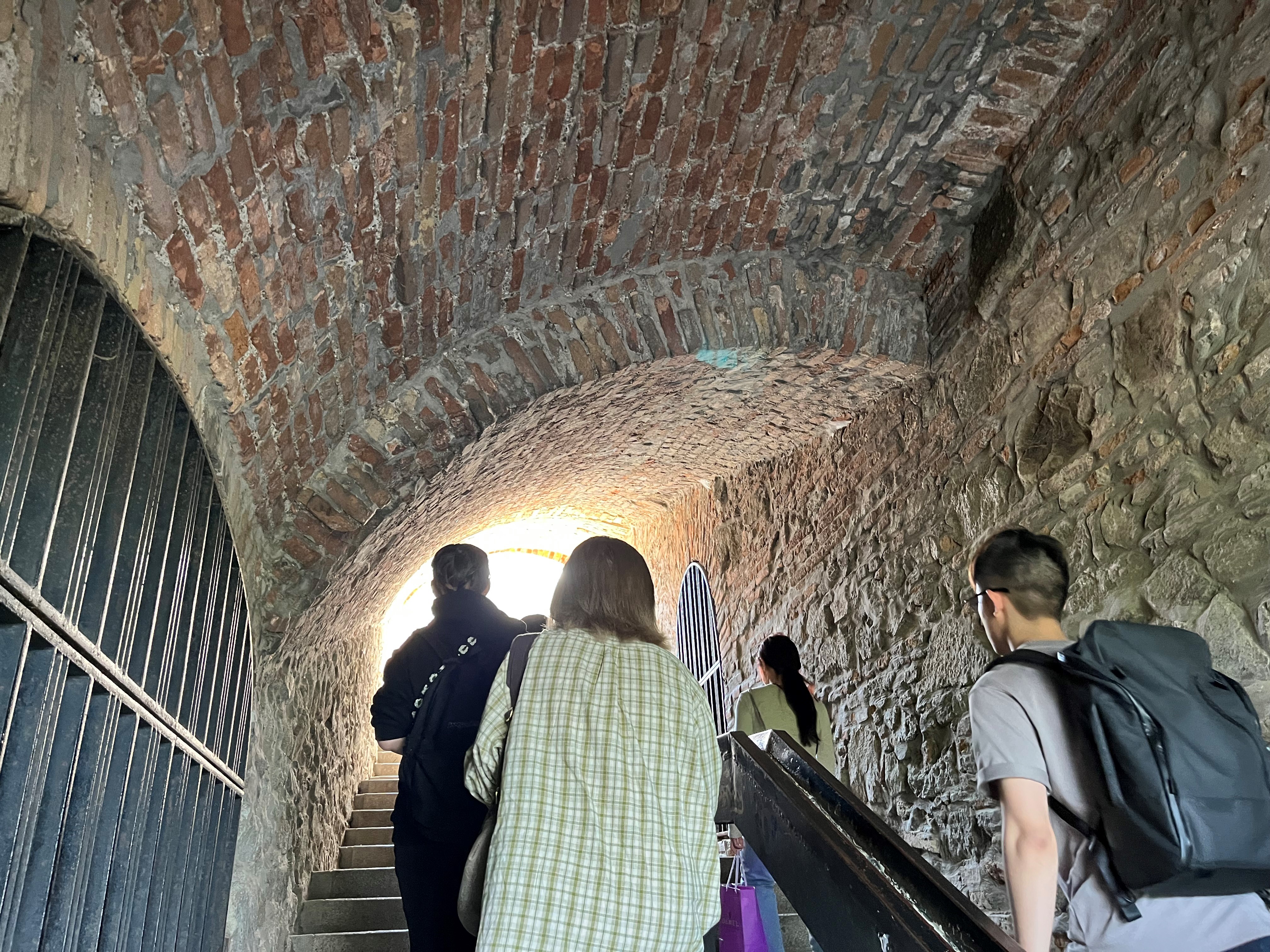
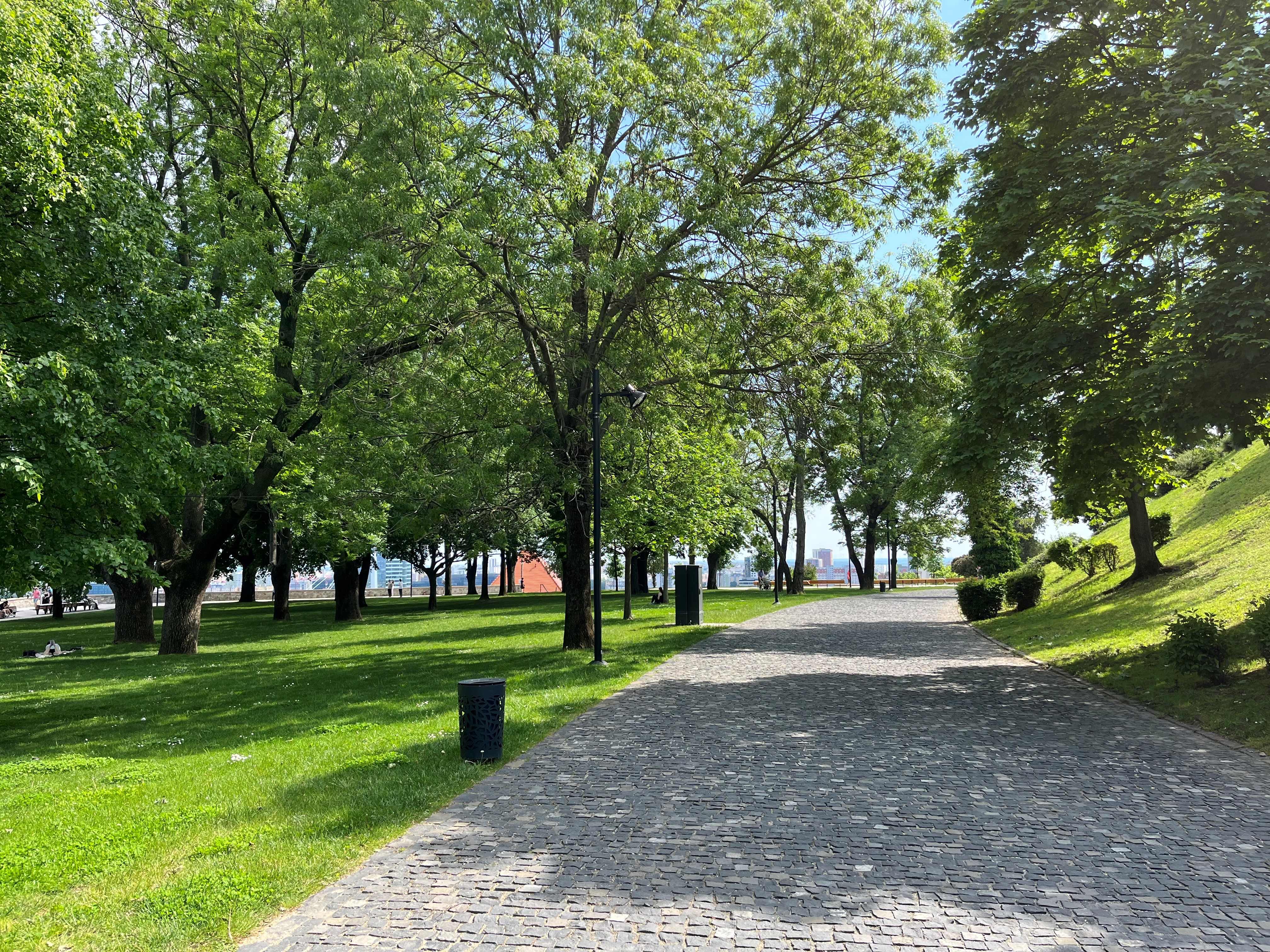
Anyway, their disappearance gives us the freedom to pop around Bratislava Castle ourselves. Despite appearances, much of the castle is actually quite young: largely destroyed by Napoleon’s armies in 1811, the castle stood derelict for almost a century and a half before the Communist Czechoslovak government decided to rebuild the whole thing. A decade’s worth of careful excavation, research and construction followed, during which archaeologists were careful to replicate every minute detail, and so what we have today is a facsimile dating from 1968 — which also means that this castle, a couple of towers notwithstanding, is younger than my parents. It certainly looks younger: the reception area looks like the local gymnasium more than the entrance to a castle, complete with staff in polo shirts and lockers to put your stuff in. Nobody speaks a word of English in this place, and there is some confusion over which gesture means what, but eventually Dennis and I manage to pay the correct fee and explore the castle grounds, although I do pause for a moment after seeing a bunch of children disappear through a doorway marked “to the riding school”.
Walking through the corridors of the castle, the first thing that strikes me is how clean everything looks. Instead of rough woodwork and granite bumpier than a teenager’s face, everything here is glass and polished white marble — unguarded white marble which any visitor can touch, and so I run my hand along the banisters of the central staircase, a fine film of dust sticking to my fingertips. It’s more like a palace than a castle, which is of course what it is; the reconstructed staircases are more suited to showing off and welcoming dignitaries than for practical defence purposes. As we traipse up the staircase, our footsteps muffled by thin carpet, I take in all the sloping canopies and the white and gold ornamentation, and it looks like I’ve somehow landed in a scene from “Monument Valley”.
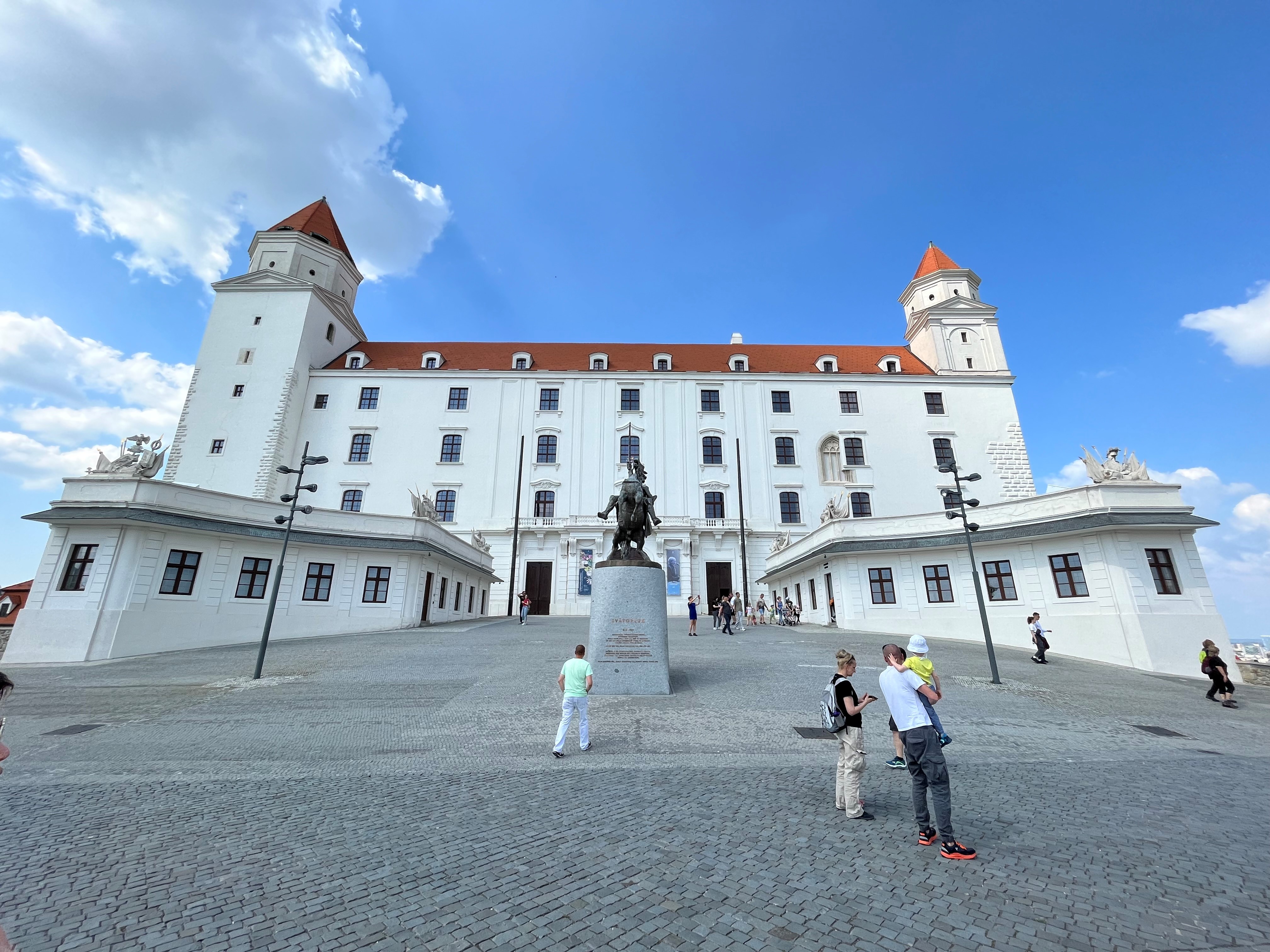


Sadly there’s not much else to look at: Slovakia itself has only been an actual independent state for three decades (even the name “Bratislava” is a post-WWI invention); as such much of its history has been shared with its much bigger neighbours, who’ve duly claimed large chunks of it for themselves, leaving Bratislava Castle with not much to speak of. It’s telling that the “history” exhibit we find in a dark corner of the Castle stops rather abruptly at the second millennium, which was the point that the Kingdom of Hungary entered the picture; anything past 1000 is nowhere to be found. So it is that Dennis and I walk into endless bare rooms, tastefully ornamented but empty save for perhaps one or two paintings and a solitary attendant tapping on her phone; in some of them the lighting’s even been switched off, partly to conserve energy, and partly because I don’t think they even envisioned anybody visiting today. The architecture and design here is impeccable, but there’s little else to see. (The café’s nice, though.)
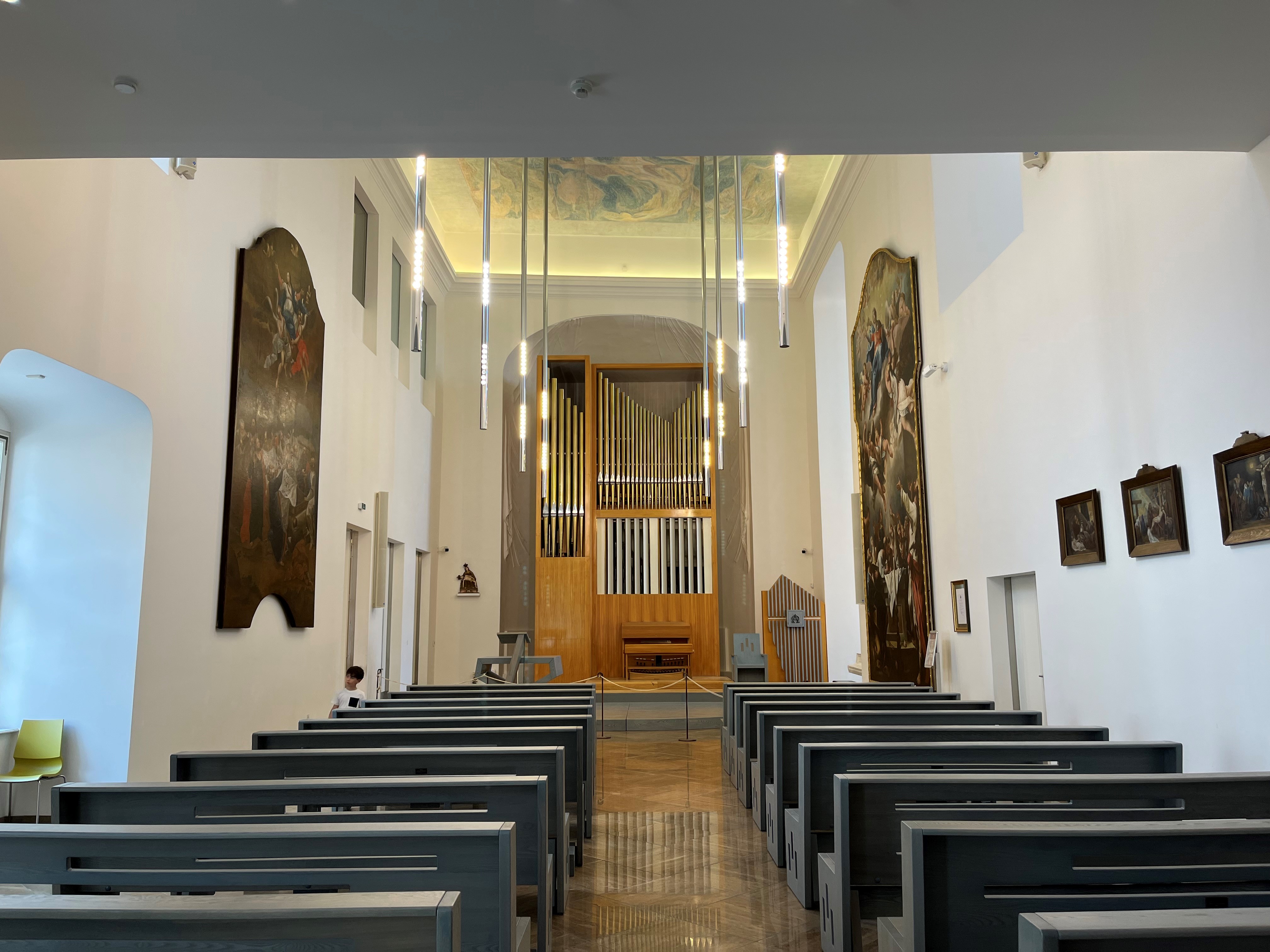

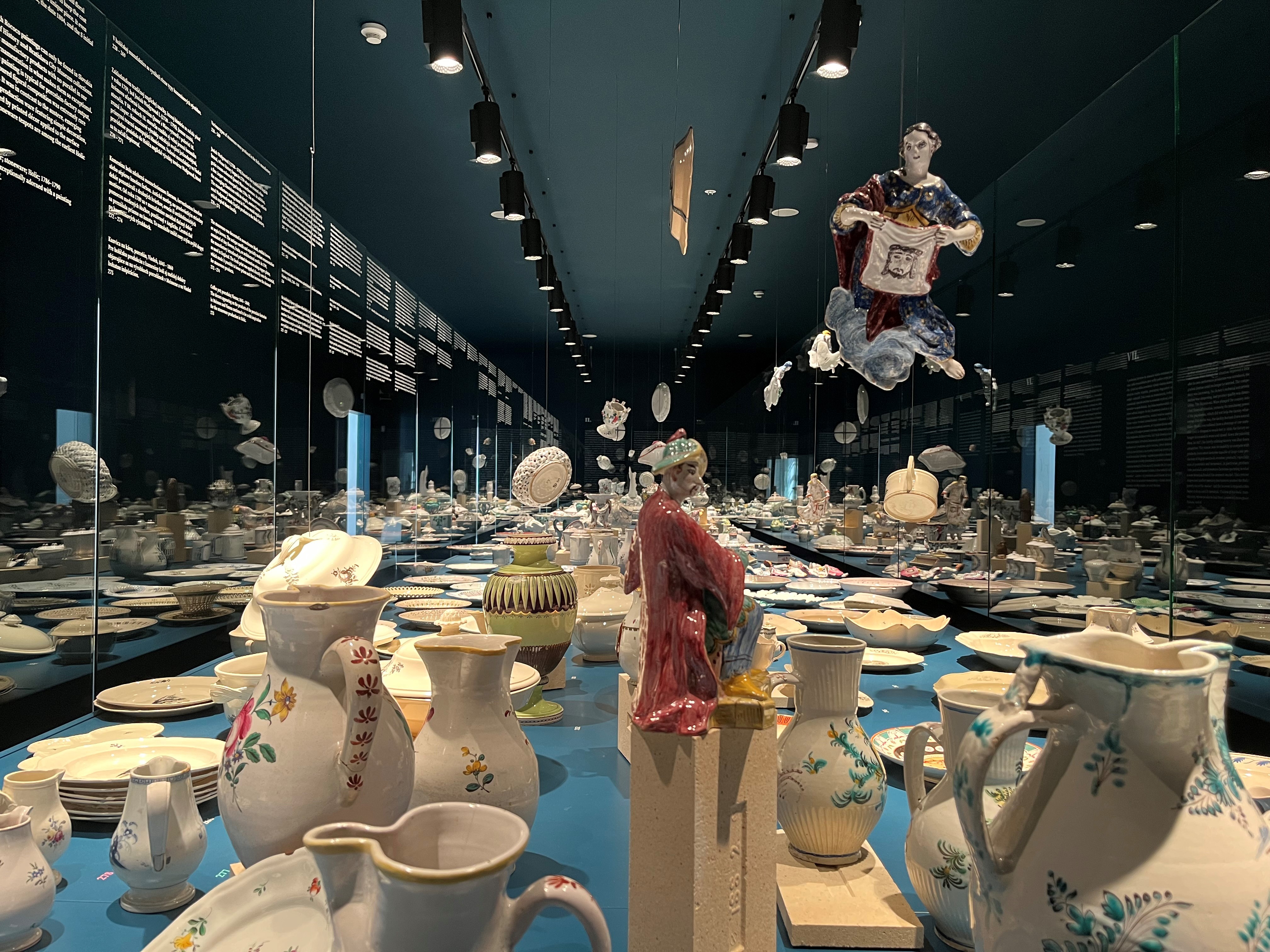
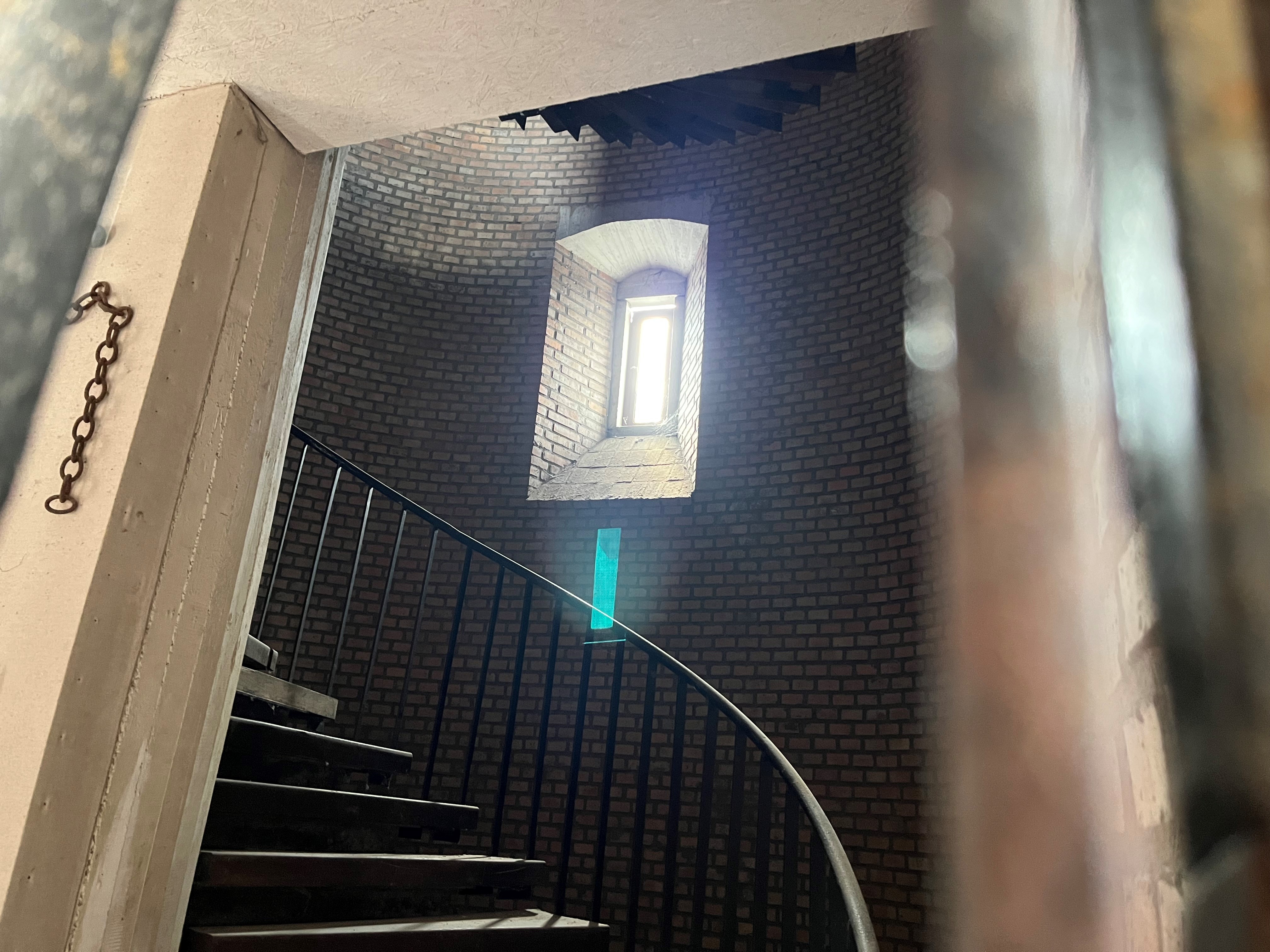
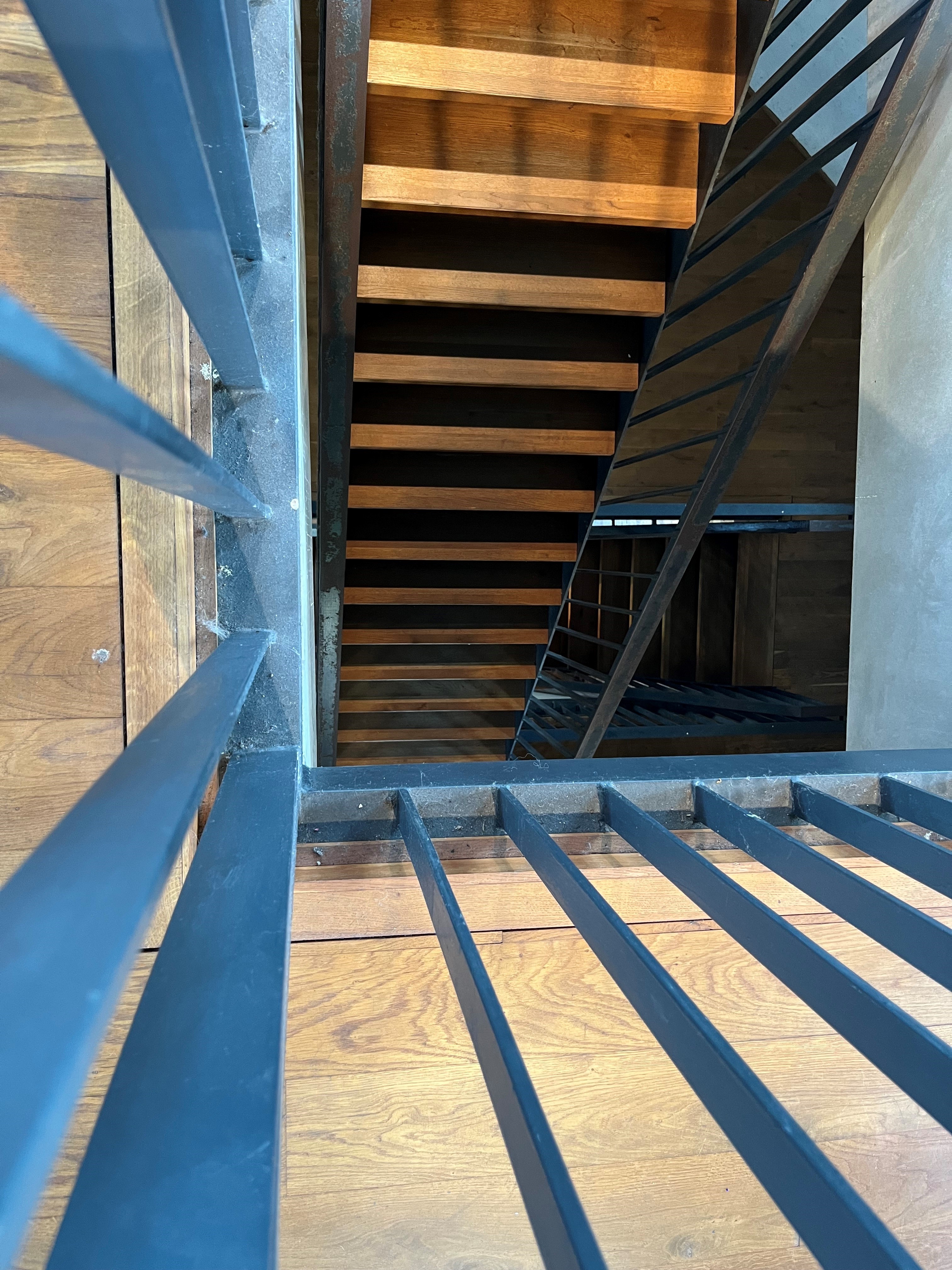
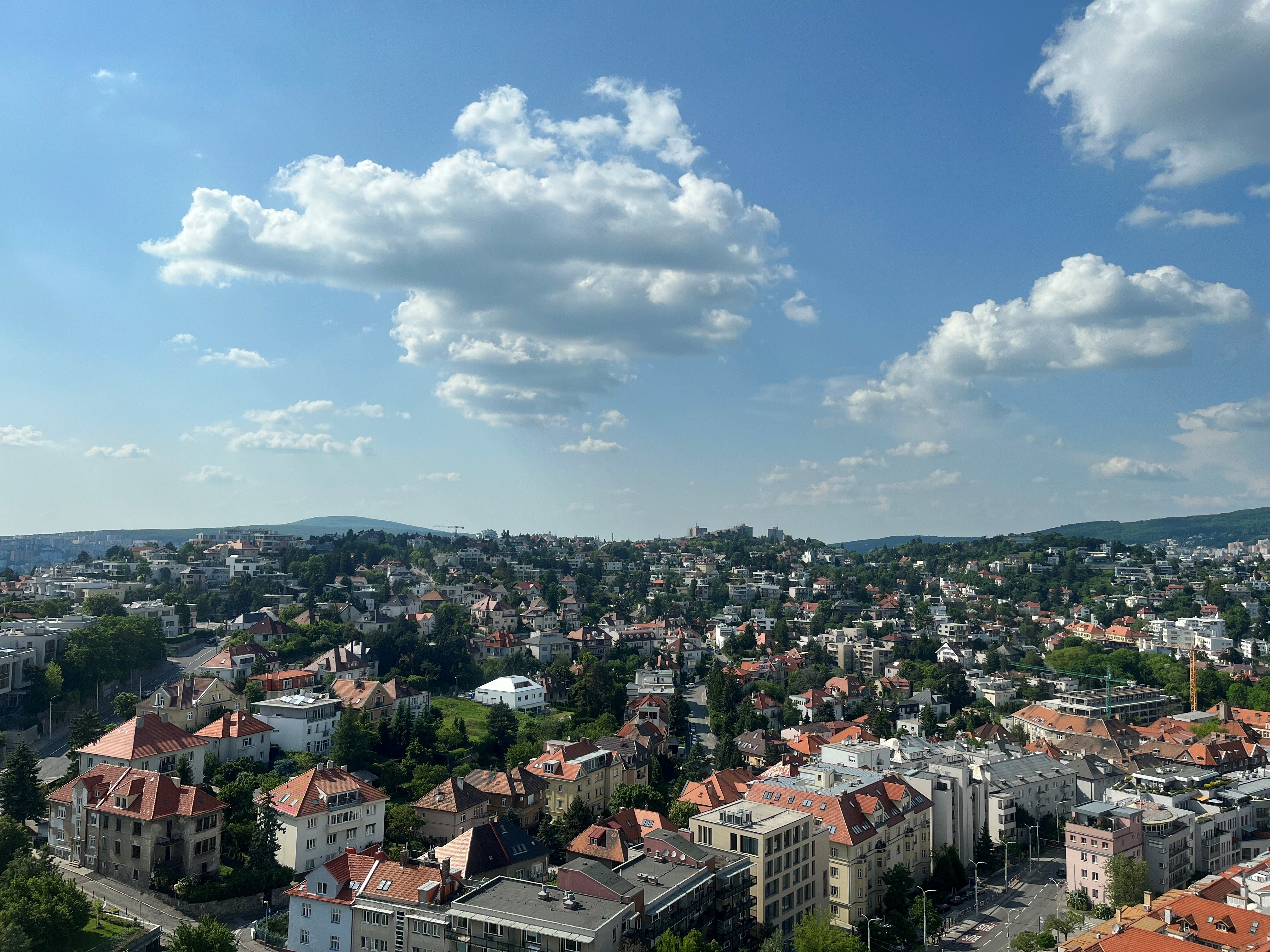
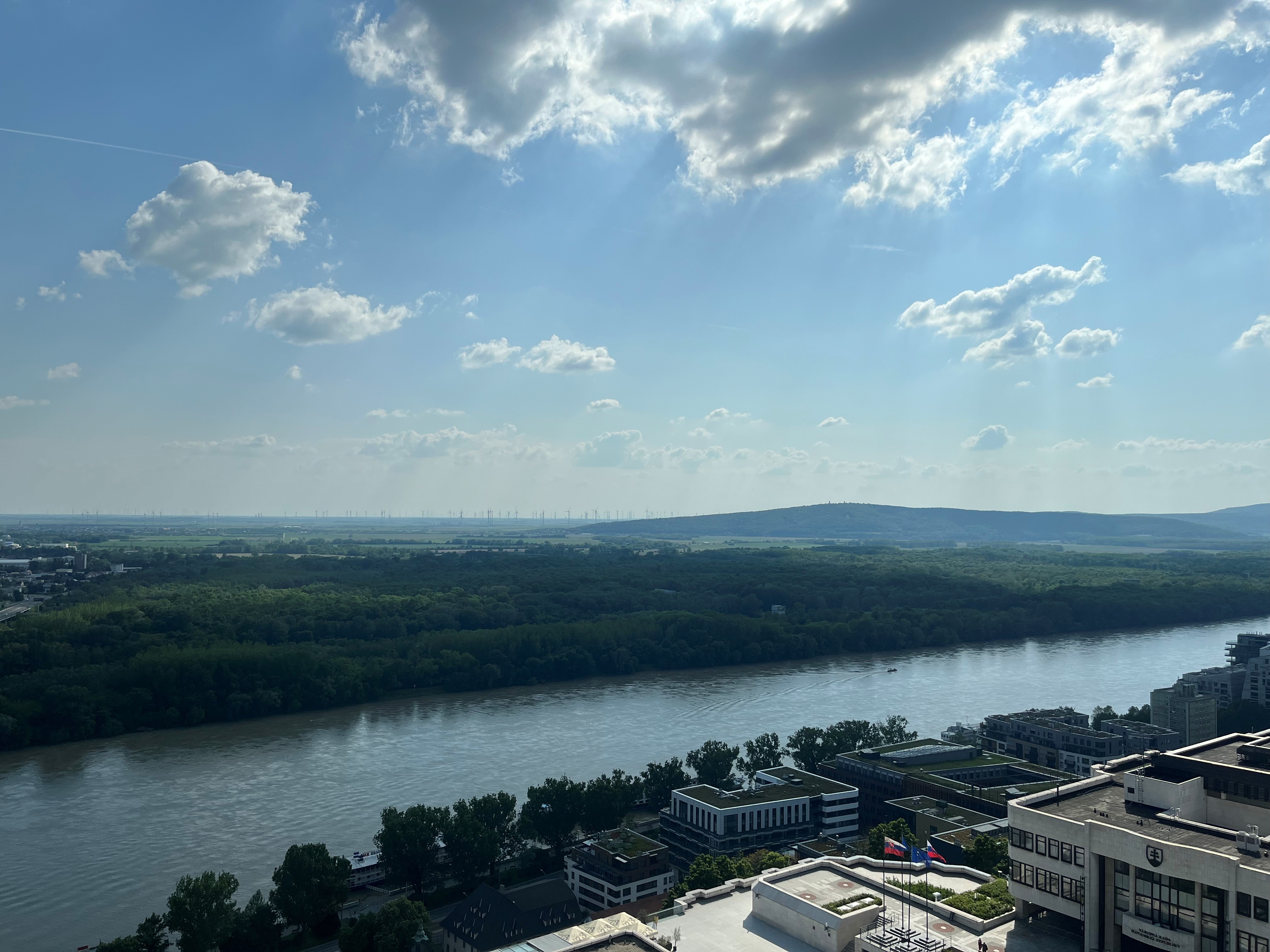
We are finishing up our tour of the castle building when I spot a sign for the observation tower. Following the arrows we find ourselves going up what are surely the steepest staircases humankind has ever invented; I do not “walk” so much as crawl on all fours up those stairs, and there were five flights of them. (I think back to my preservative-heavy lunch and briefly wonder if it’ll all catch up with me here.) But having hoisted ourselves up onto the uppermost landing, we are amply rewarded: blue-grey skies, perfect lighting, and beautiful views far as the eye can see. We’re still indoors and the windows are shut, but even so, through them I can see for miles in every direction: down the Danube towards Hungary, up the old town dotted with red roofs, and even the wind farms and actual farms we passed by this morning on our way here. And far, far in the distance, I can just make out the outlines of another metropolis, partially obscured in the haze but still recognisably a city. Consult the compass, and my jaw drops once more: that’s none other than Vienna beyond the whiteness, 60 kilometres away. It’s magnificent.
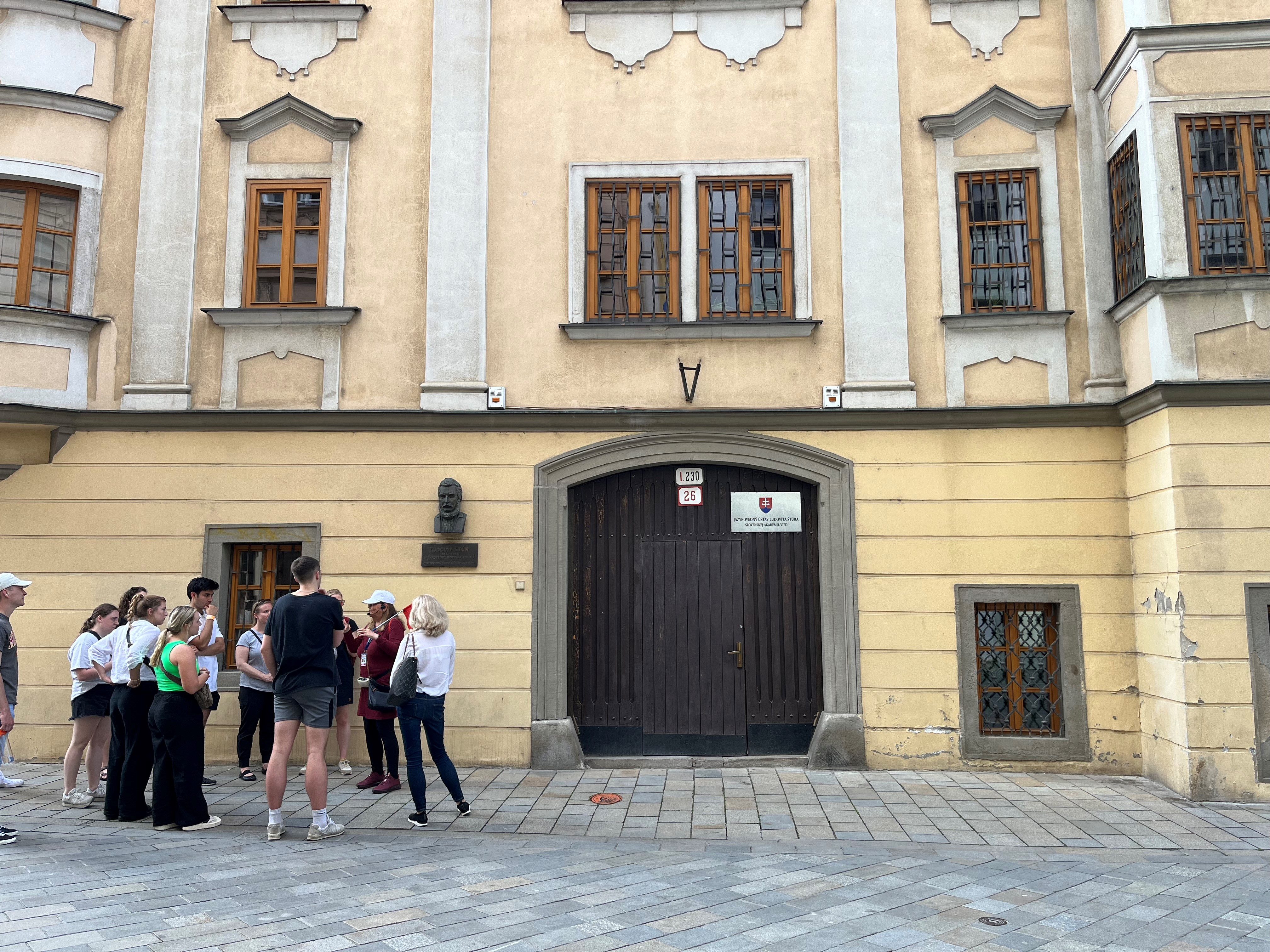
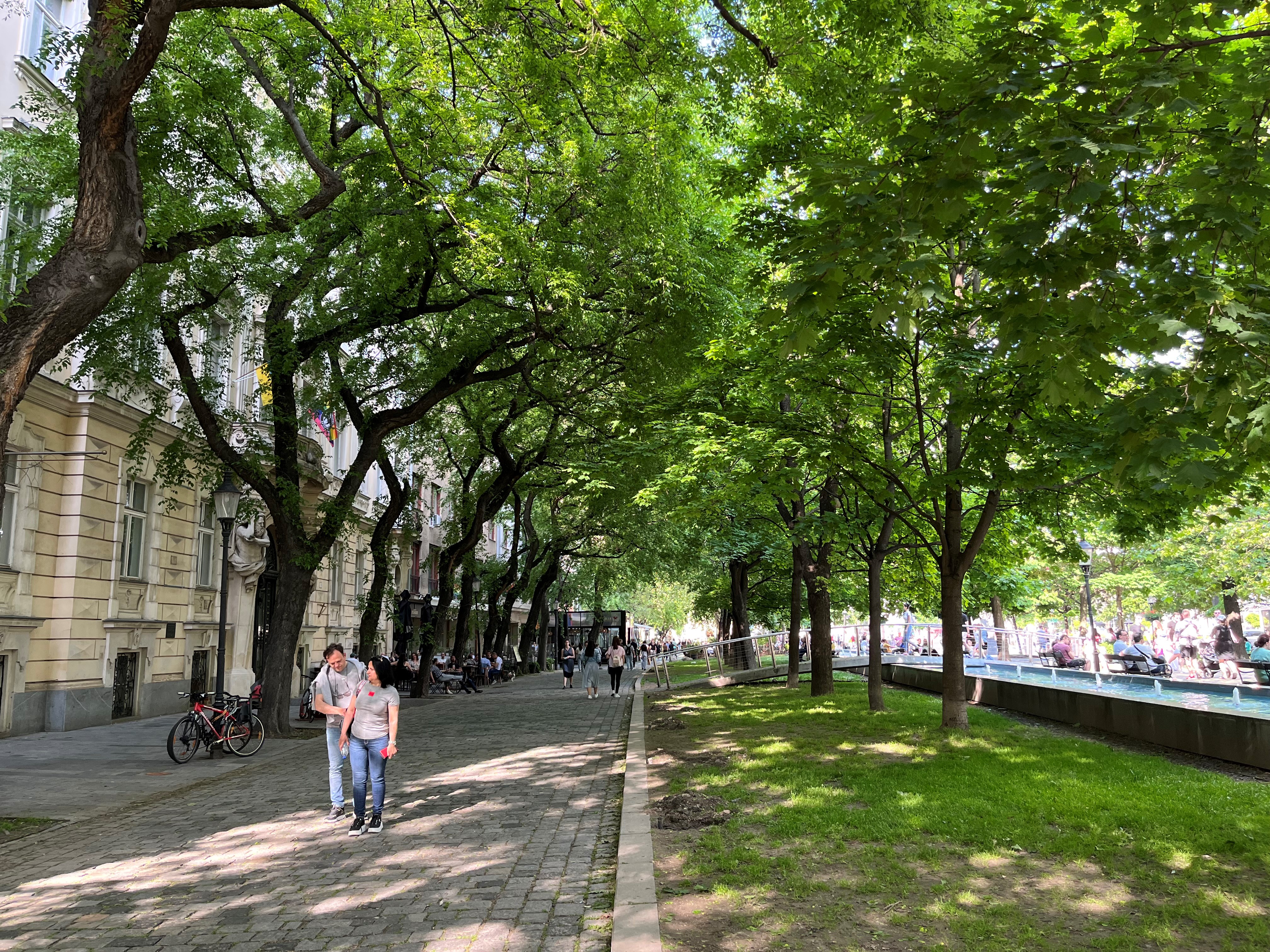
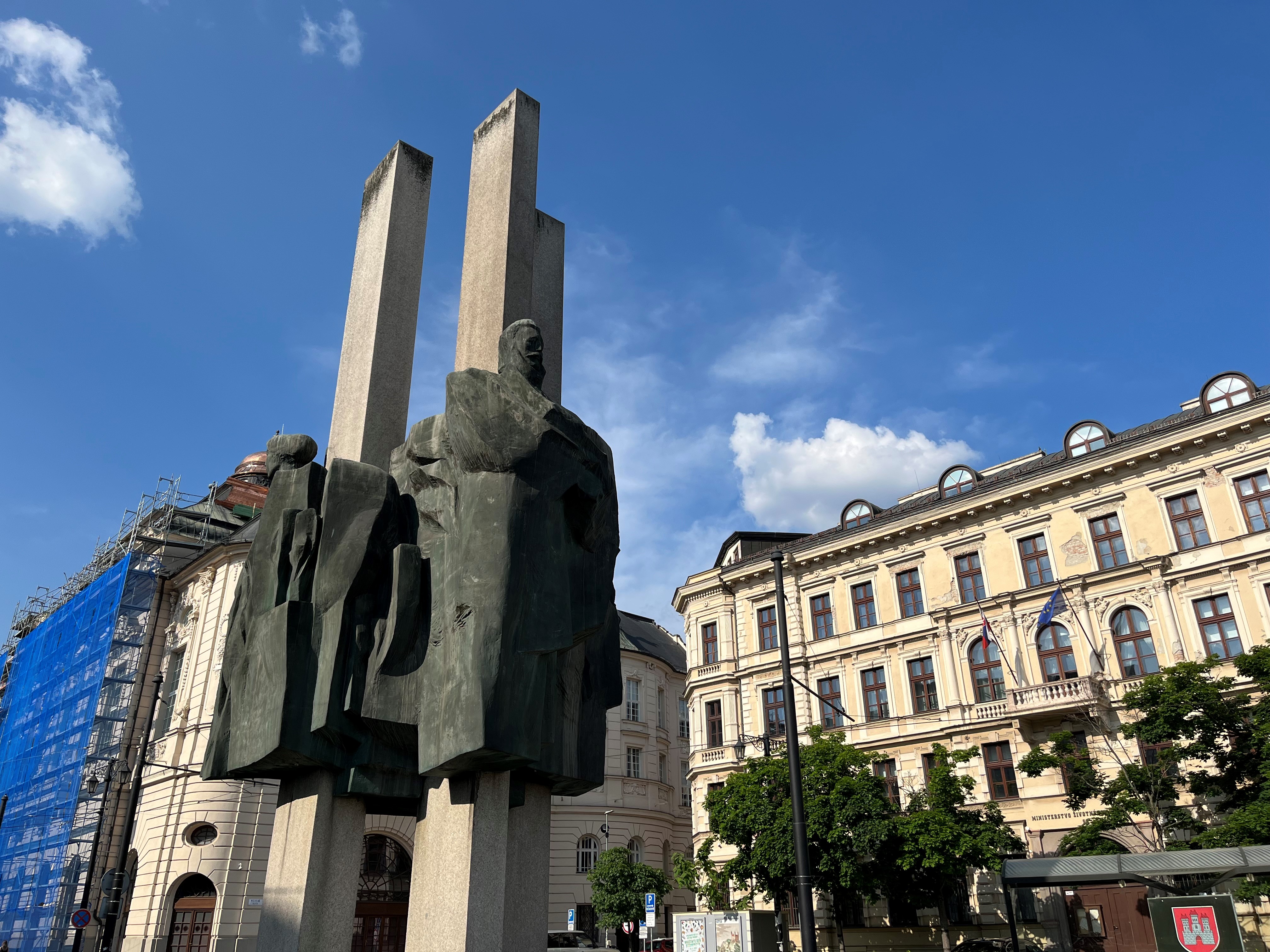
Five o’clock sees me walking through the streets of Bratislava alone, searching for a tram stop. Dennis’ transport obsession has perked up again and we have parted, him to go and explore more of Bratislava’s omnibuses, me to keep an appointment with Charmaine back in Austria. Actually, that’s a bit of an excuse: while I do have something to do back in Vienna, there’s also a part of me that just wants to get out of the city posthaste: without a friend to talk to, loneliness and vulnerability is filling up that void, and I’d much rather get back to familiar ground than spend more time in an unfamiliar city. I pass by places of importance — the National Theatre, the Ganymede Fountain, the tree-lined boulevard of Hviezdoslav Square — yet though I stop for photographs, I don’t seem to be able to relax and enjoy it; a handbrake has been inadvertently triggered somewhere in my mind and I can’t seem to find the reset switch anywhere. Eventually I arrive at the terminus at Ľudovíta Štúra Square — a prettily tiled piazza, flanked by the Nationals Gallery and Philharmonic — and sit next to a kindly old lady. We smile uneasily at each other but keep to ourselves, while the bronze likeness of writer Ľudovíta Štúra glares disapprovingly down at us.

As the tram back to the hlavná stanica weaves through the streets, I think back on my time in Bratislava. (Spoiler alert: this will be a frighteningly frequent feature, as I seem to have grown a brain between my last trip abroad and now.) Despite boarding the tram overwhelmed with relief, I’m beginning to have second thoughts: maybe I’ve been too harsh on the city, maybe it’s not that bad. After all, quite a few friends of mine (including Dennis) have liked it just fine; I’ve only been here for five hours, far too short a time to form a definite view of the place. Yes, the city literally looks like it’s falling apart and much of what we’ve seen so far has been a disappointment, but is it really as bad as those first impressions have made it out to be? If you look past the decay the city can be quite engaging, perhaps even charming. To take just two examples, St. Martin’s Cathedral left me all contemplative and pious again, and I certainly enjoyed how the city walls brought me back in time. This place works.
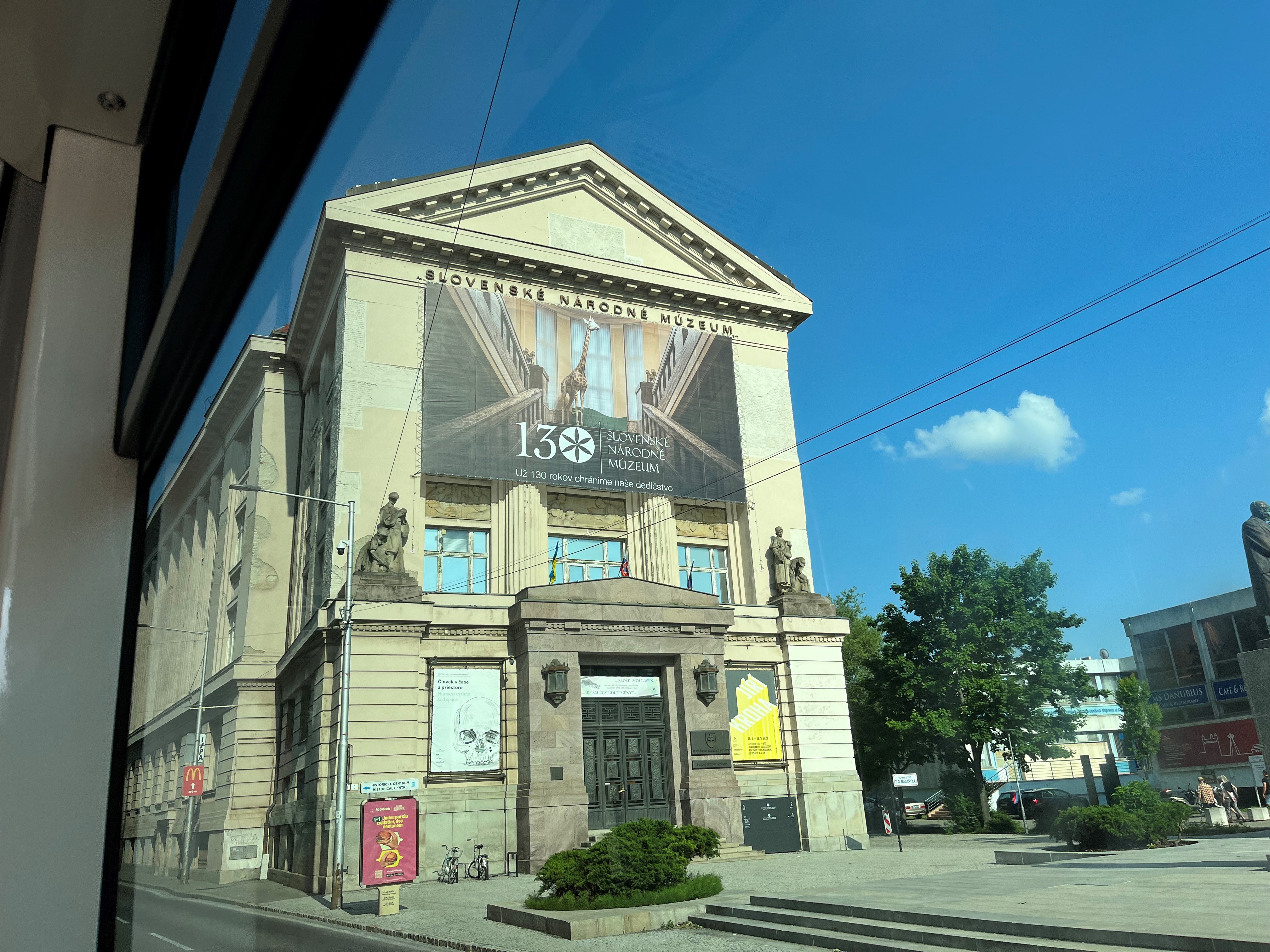
While I’m thinking about all of this, the tram runs past the smooth yellow brick of the National Museum and Comenius University in the space of 60 seconds. For a moment, I think “these look interesting. I should get off and look at them”. But by the time I’ve made up my mind the doors have already shut and the tram is turning away from the Danube and heading uptown once more. I think some of my insecurity about this place comes from not being able to navigate it as easily as I’ve done Vienna and Prague: the Slovak capital is a manic jumble of sights and unruly alleyways, many of which are confusing to this average tourist; getting lost here inspires more panic than in other Central European cities. But five hours — a time limit I arbitrarily set myself — is not enough to rectify all that, and so if there is one regret I have about the whole trip (a remarkably pleasant affair, even by my low standards), one slightly ugly splotch on the canvas I am trying to paint, it is that I passed up so many chances to understand Bratislava more, that I decided to retreat from the chaos instead of getting to know it better. It’s not something that keeps me awake at night, nor do I honestly feel the need to go back and “redo” the city — but I do wonder what might have been, every time I think about Bratislava.


As the sun hangs low in the blue-grey sky, I arrive back at Bratislava hlavná stanica. The place seems busier than when we arrived. Scan the departure board for a sign of the train back to “Wien Hbf”. Find it on the second row — and next to it, in big, fat, red letters on the board, I read the word “zrušený”.
My heart sinks. I have a slight inkling of what “zrušený” means, but in a state of denial I log onto Google Translate anyway — perhaps it means “delayed”, “diverted”, or even “last call”, anything but the meaning that’s bouncing around in my head. But no, there it is in large and ugly letters on the page: “Recalled. Cancelled. Decommissioned.”
The panic rushes in in an instant. Of how this cancellation imperils the rest of my plans for today I shall say nothing; more to the point, I am stuck in an isolated part of town, with my nearest help on the other side of Bratislava, stranded here for at least one more hour and God knows how many more. Why did the train get cancelled? Is something wrong with the engine, or — heaven forbid — the line? If one train can get cancelled, then what’s to say that the ones after it won’t be as well? How long am I going to be here for: an hour, perhaps two, perhaps a whole night? Around me, travellers are swarming around the ticket offices, the voices in ten different languages an unholy amplified mix in that small, dingy, enclosed granite-and-marble space, and it’s so fucking chaotic that I can’t think straight for what feels like an eternity. Am I about to lose it once more?

Stop. Step back. Deep breath. For all appearances the next train to Vienna is still scheduled and leaving on time, and Dennis and Charmaine are easily reachable on WhatsApp — and to assure myself of this I fire them a few texts and thank God, they reply almost immediately. Gradually the panic fades and is replaced by despondency: still not great, but better. I wonder what there is to do at the hlavná stanica: perhaps I should visit the very shops I disparaged just a few hours ago? Or maybe I should visit that cramped café down to the right; after all, there’s no place like a station restaurant for getting a taste of local hospitality. But in the end I settle for the vestibule at Bratislava station, a dull, functional room that fills up with travellers as the afternoon wears on: a muscular woman with a huge tennis racket; an old couple, the man on a walking stick, sitting down and reading their own separate newspapers. Turns out that trains for Budapest and Krakow have also been horribly delayed, and now we’re all sitting in the same room, looking at each other uneasily, waiting for something to happen. It’s all there is to do.
Eventually the announcement sounds for the Vienna train. Perhaps it’s because the last train got cancelled, but when I wearily trudge up the steps to platform 6 it feels like the whole world has turned up as well: more tourists from all across the world, the Mainland exchange student we met on the train here, and — oh sweet vindication! — the return of the graduates we met at Bratislava Castle. Remind Dennis of our bet, to which he responds with one single word: “shit”. (Later that night, he will discover a bus connection between the Slovak and Austrian capitals, and he will be so enamoured of this alternative mode of transport that he will return to Vienna on it, arriving late at night just as Charmaine and I are climbing into our beds.)
The train pulls into Vienna Hauptbahnhof at quarter to eight. Determined to have the last word, I catch up to the sullen graduates to say goodbye — “have fun in Budapest!” — before practically flouncing my way past them and down into the steel and glass of the concourse. Charmaine has long since finished dinner, so I’m left to sample the wares of the Hauptbahnhof food court alone. This is a lot harder than it sounds, for the sheer amount of choices here are simply mind-boggling: as well as the expected Austrian and German classics, there’s Turkish, Indian, French, vegan… you name it. Yes, most of them are fast food outlets, but it still feels like a piece of the United Nations (just 20 minutes away by U-Bahn!) broke off and established itself in the city’s biggest train station. Having had nothing but rich, heavy Western food for the past three days my digestive system begs for something lighter, so I opt for reliability and chicken phở. I don’t realise how much I’ve missed that warmth until I take my first bite.

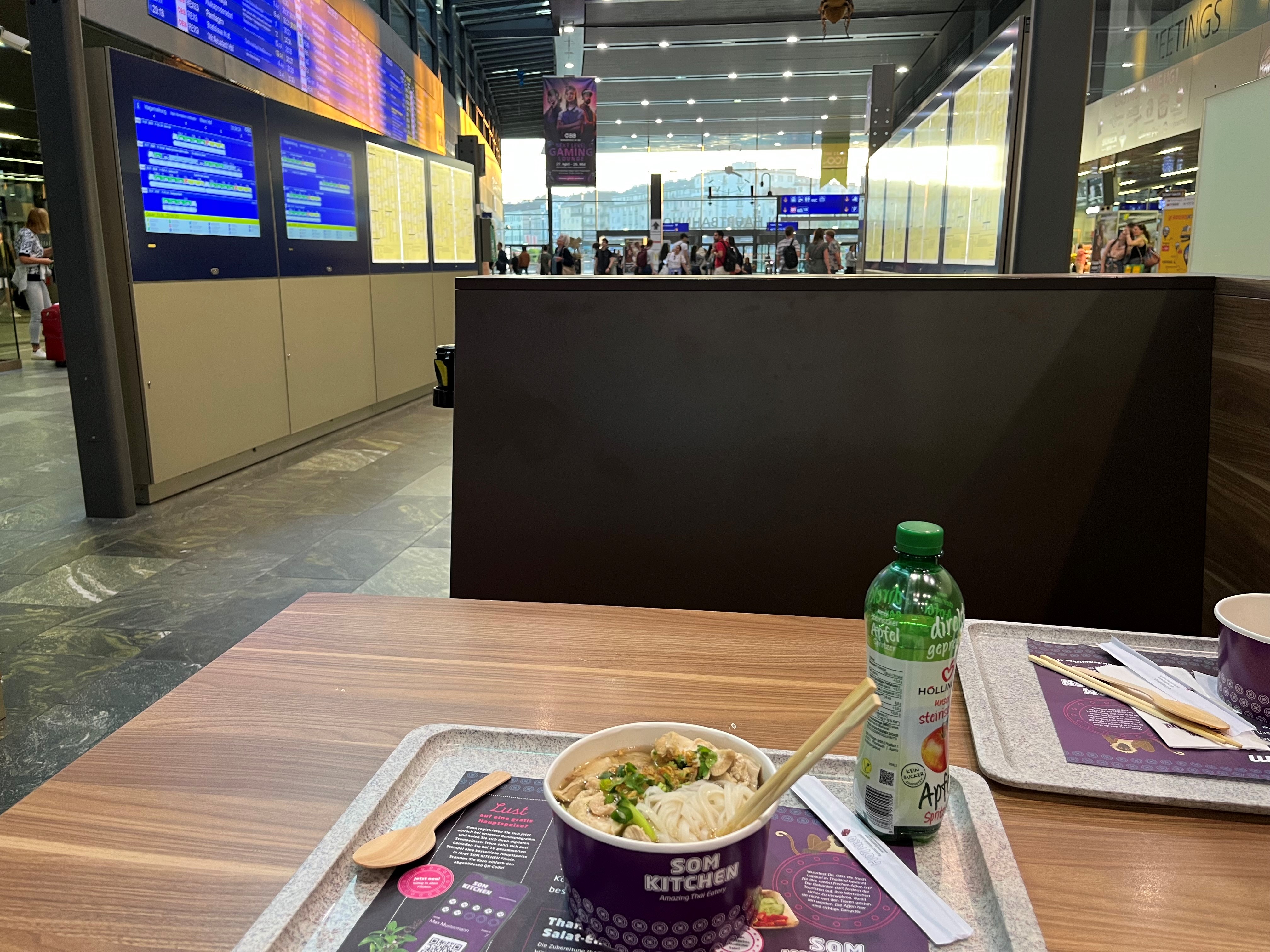
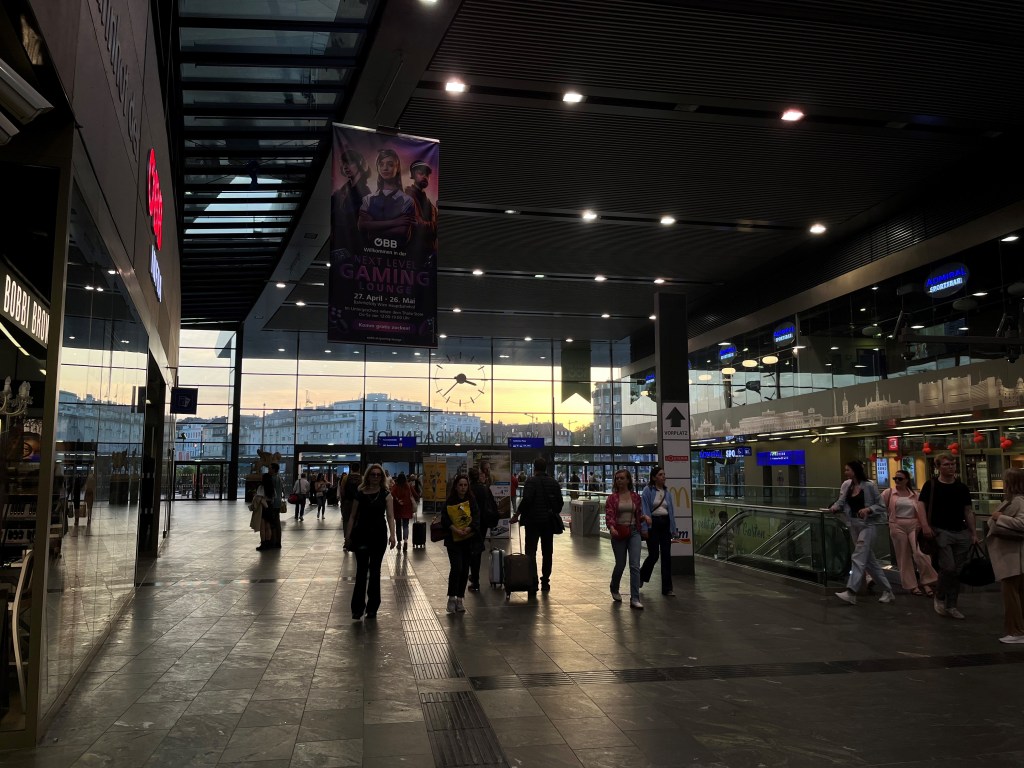
It’s close to sunset as I’m sipping the broth; it shines through the glass of the front entrance and fills the entire hall. I’ve made no secret of my love for sunsets over the years but this is something special: the amber of the dying sunlight bouncing off every surface, transforming every information board and phone screen it touches into a dazzling display of pure, white light. Beyond the glass frontage, I can just about see the city’s buildings: white, classical, rectangular windows that stretch from floor to ceiling, still luminous amidst all the brightness. And between that and me, crowds of people flocking past, their murmurings and footsteps coalescing into this general hubbub; one that in normal circumstances would stress me out but feels calming and natural tonight. I realise that Vienna has surprised me once more: in a city famed for its antiquity, where millions pass through every day, I have still been able to find a beautiful, peaceful corner in one of its most modern edifices; a peace that has nothing to do with its culture or its cityscape, but simply from sitting in the middle of a crowded station on a Sunday evening, watching the people come and go, talking of more than Michelangelo.
As the sun starts dipping below the horizon, I walk up to the centre of the concourse and take a photo. The light flares right through the lens, creating an ugly pale streak across the picture, but I’m looking at it two months later and it still has this indescribable aura that just looks pretty cute. Then I turn, and walk down the stairs into the netherworld of the U-Bahn.
And this is where this post ends, but it’s NOT the end of day 3 for me — as you’ll see next week, Vienna is one of those places that, even after nightfall, still manages to have all the fun of the fair.

 Inkpot Shuffles in the Twilight