20 May
I don’t sleep very well during the night. Some of it is due to jet lag, but also the mattress is thin and slightly sticky even through the covers, and as I’m something of a sensitive hypochondriac a subtle current of unease runs through my mind as I sleep. Get up and read Truman Capote’s “In Cold Blood” after my mind wakes at five thirty and refuses to shut down again. It’s certainly not shutting down after reading about four grisly murders.
As the morning gradually takes hold and my friends show signs of consciousness, I open the slanted windows and look out. Our room on the fourth floor provides both passable views of Vienna from above (well, a few cranes and taller buildings, at least), and much clearer views of what our fellow hostelmates are doing in other rooms. It also looks down into the courtyard of the next building, complete with washing hung out to dry, and at the risk of sounding like a sheltered tourist there is a certain quaintness in looking out your window and seeing such a panorama of peoples before your very eyes. After the others have woken, we all head down for breakfast, only for both Charmaine and Dennis to dismiss it with one glance and head over to the Naschmarkt instead. Having tasted what the market stalls had to offer, it was probably for the best.


Today we’re headed away from the city centre to Vienna’s favourite tourist attraction. Schönbrunn Palace was, in the words of the documentary I mentioned last week, “built in the 18th century to show off” the Habsburg Empire’s immense wealth; over time it became the Habsburgs’ summer residence and recreation grounds, and unlike the Hofburg in the centre of the city, it also possesses a very large backyard. As we queue up in the ticket hall (a long, long queue), we debate the best way to see the palace. Ever since we invited her on this trip, Charmaine has frequently voiced a wish to see the animals at the palace zoo; meanwhile, I try to convince them that the 250-year-old rooms are worth seeing and not just a bunch of old ornate furniture. As it turns out this selection is immaterial: the palace is so packed this Saturday morning that tickets currently being sold will only gain us admission six hours later, so we decide to settle for a walk in the gardens and zoo.
As we pass through the courtyard with its magnificent Baroque frontage, Dennis decides that he can control himself no longer and announces his desire to shoot portraits of us two. This was a running theme on our trip four years ago, during which I grew to appreciate the value of a good headshot from him and overcame my fear of seeing my own face in pictures; this time it’s Charmaine’s turn to be the reluctant model while I shamelessly pile on the requests. After a while Dennis decides that a group photo would also be nice against these mustard-yellow walls, and he approaches the nearest tourist with a similar camera, hoping that he can relive his Charles Bridge experience all over again and find likeminded people to talk to. The guy spends minutes fiddling with the camera before snapping a few perfunctory photos; when Dennis finally gets his camera back, he takes one look at the pictures before loudly cursing his new acquaintance in Cantonese.
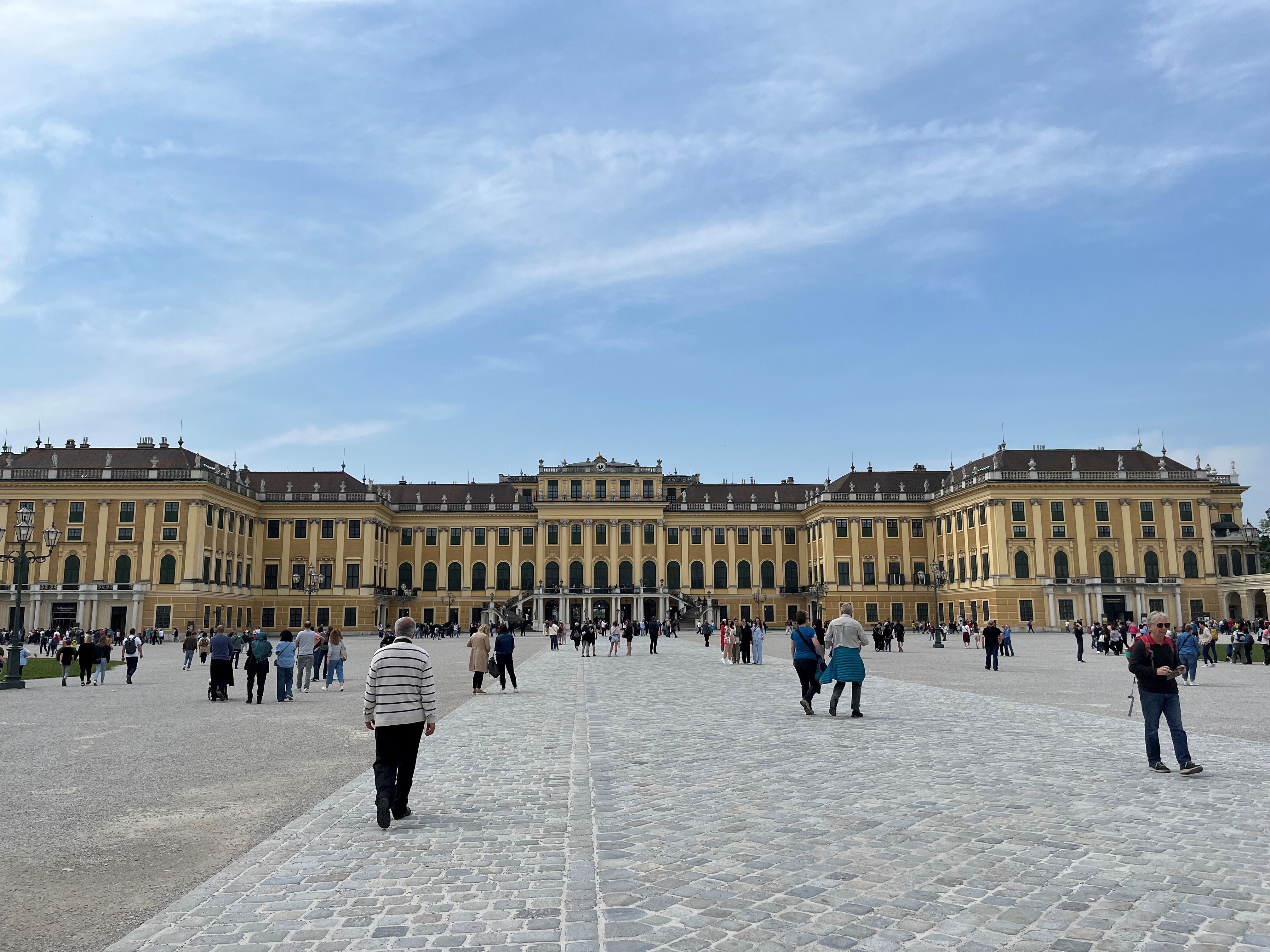
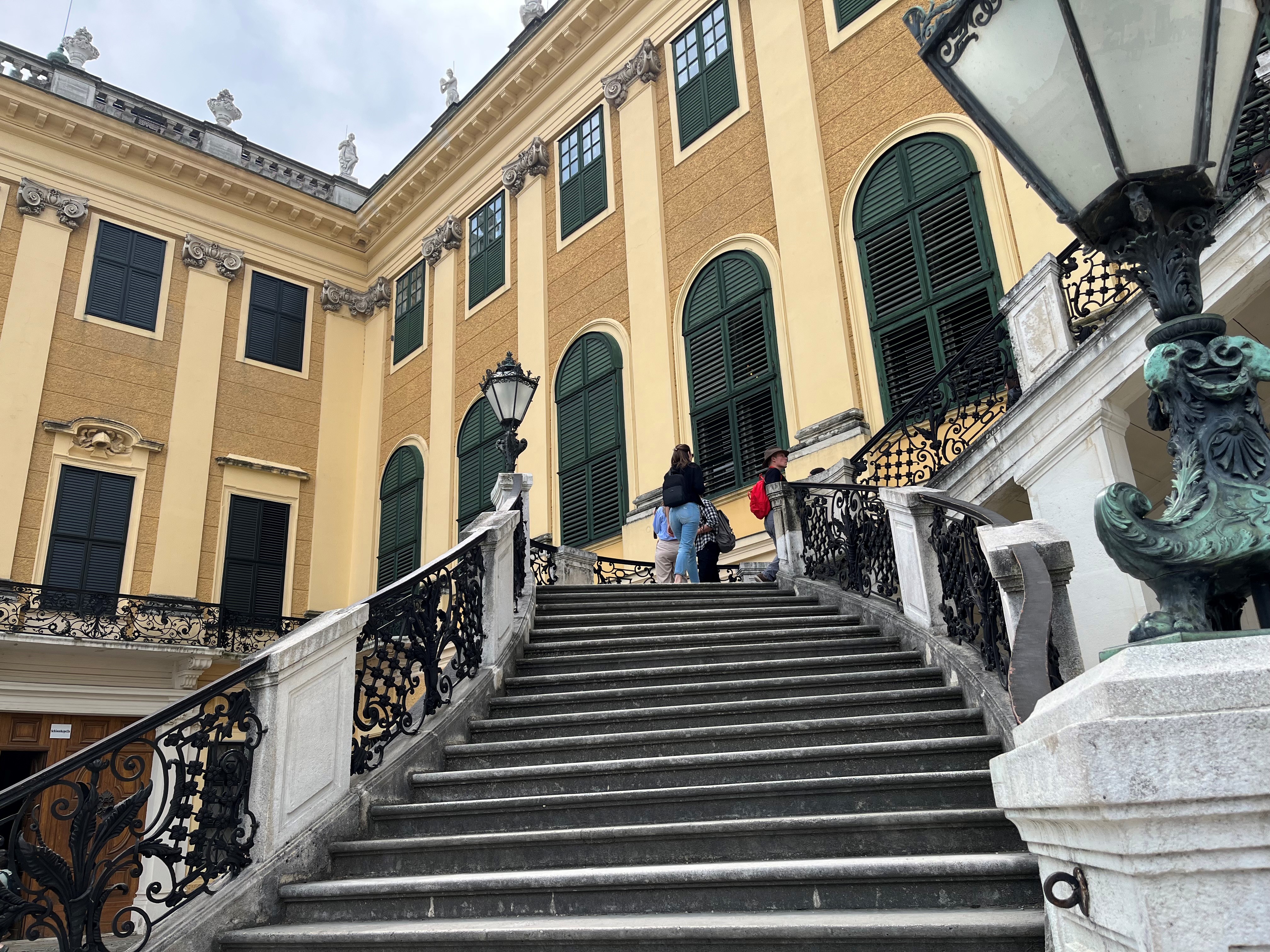
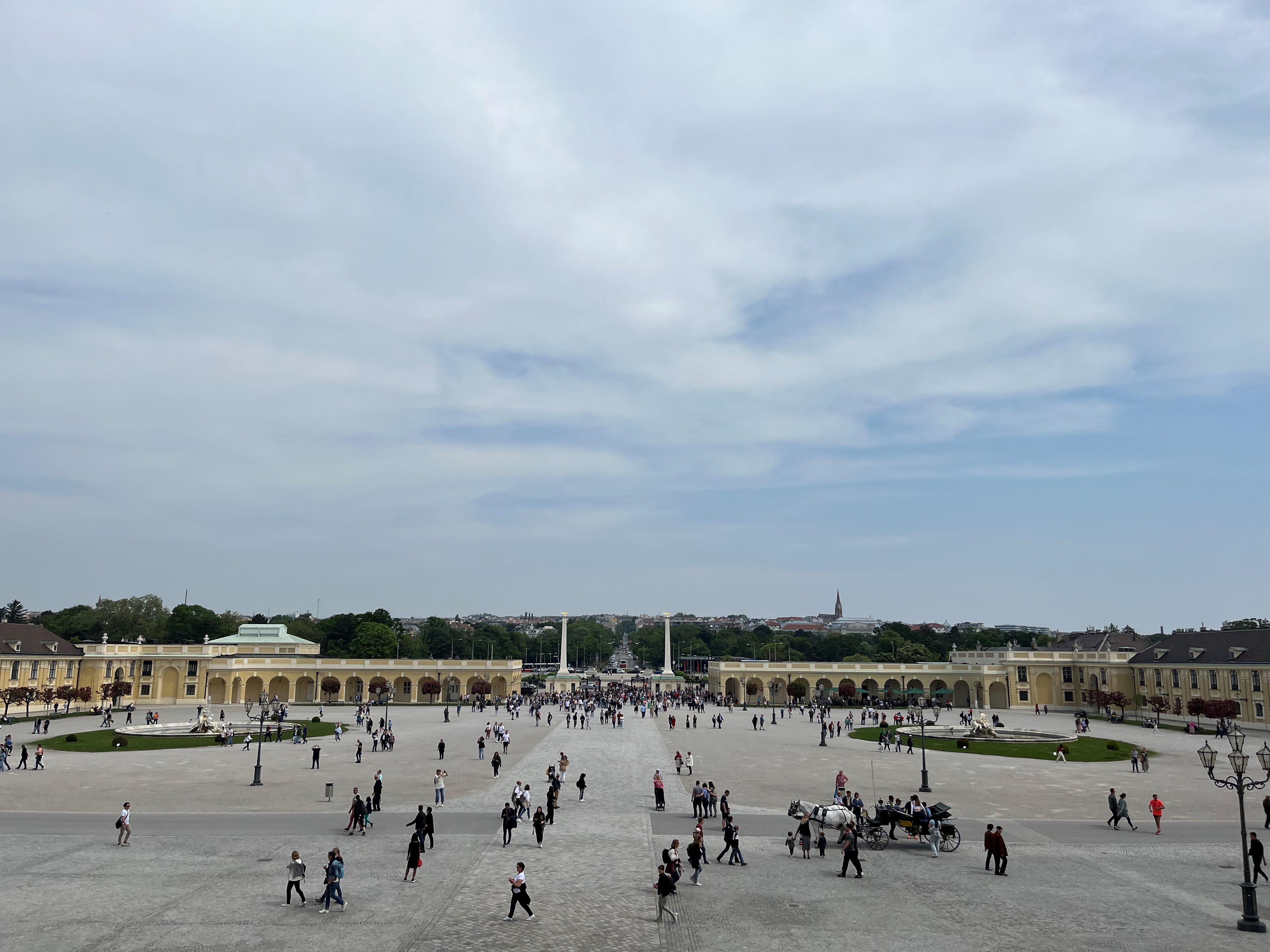
We follow the crowd as we circle around the palace walls and head into the gardens. Freely open to the public, the Schönbrunn gardens were built up during the same time the site was expanded from hunting lodge to summer palace; since French gardens were in vogue at the time, it feels a lot like we’ve been transported to Versailles — and not just because I’ve been hearing a lot of French around here. Everything is lined up with geometric precision; from our vantage point just outside the back door of the palace, we see at least four different avenues and alleyways, boxed in by the most carefully trimmed trees and hedges, and allowing for plenty of illumination while providing some cool dark shade on the side alleyways. Further down the garden, we find the fountains that gave Schönbrunn its name, no longer “beautiful springs” but roaring, briny pools surrounded by marble sculptures twenty feet tall. It all makes for a very lovely backdrop, and even though she’s just talked a lot about being camera-shy Charmaine is unmistakably beaming as I photograph her against it.


While we fuss over that, Dennis wanders off to photograph a ladybug.
The crowning glory of all this is the Gloriette, a pavilion standing at the top of a small hill that I mercilessly drag my friends up. Built as a paean to wars by the Empress Maria Theresa (people did weird things in the 18th century) it doesn’t really have much of a use — to quote the documentary once more, “it was built so that one could have a good view of the palace, and from the palace one could have a good view of the Gloriette, and that’s about it really”. To be fair to the Empress, however, the strenuous hike up the hill is extremely worth it: from the Gloriette our view stretches past the ornate brickwork of the palace, past the spacious courtyard and the traffic roundabout outside, past even the huge boulevard that leads up to the palace, all the way to the distant mountains that surround Vienna. I gaze at the red-and-white rooftops of this majestic city, hear the crunch of gravel underneath my feet, and at long last I feel it: we have well and truly arrived in Europe.


Briefly consider getting an early lunch inside the Gloriette’s lovely café — what the Habsburgs used to do only on lazy summer afternoons, modern tourists can now do all day under aircon — but instead we walk down a gravel path towards a small wooden cabin, almost imperceptible in amongst the trees. This, as it turns out, is the back entrance to Schönbrunn Zoo, the oldest zoo in the world (as old as the palace itself) and one of the few situated inside a palace complex. Despite only taking up a small trapezium on maps of the palace grounds, its scale is unimaginably vast: it takes us 30 minutes just to visit the Alpine animals, the lynx, the Arctic wolves and even an exhibit of bees, and yet one look at the map tells me that we’ve barely scratched the surface and that there’s still dozens of animals left to see.
It feels like there’s a lot to go through, and even though it’s barely past noon I’m already feeling somewhat tired. I have never really been an animal person — aren’t humans trouble enough already? — and the mass of adults and children rushing around this cramped space is also making me feel icky all over. But there is no denying the unbridled joy they bring to many people, and that is a group that includes Dennis and especially Charmaine: we have been friends for eight years and yet never have I seen her with this much unbridled joy. She skips from exhibit to exhibit, from animal to animal, with a lightness that defies description. “Ooh, look at those penguins!” she says, while said flightless birds waddle about on the rocks, or “have you seen those seals, Dennis”. Dennis, for his part, is also snapping the animals and trading comments with her, his enjoyment genuine, his words sincere.


We wander past animals that flop about listlessly in the heat (it may still be mid-May, but the temperature regularly reaches the upper twenties), in amongst screaming children and their just-as-loud parents. The seals and the giraffes are savvy enough to pander to the gawking visitors, but most of the others rootle around in their tiny enclosures, not really giving a damn about the outside world — none of which really discourages passers-by from cooing at them. While Dennis and Charmaine gush over the anteaters (or was it the guinea pigs?) I go to the toilet, only to find a father calmly changing his baby daughter’s nappies. Check to see if I’ve stumbled into the wrong room, but no, the sign is for the men’s room and so the father, the daughter and I must share this space for sixty seconds, casually (in their case) or awkwardly (mine) ignoring each other, even when I reach across for the washbasin.


Later. Lunchtime. Dennis has spirited off to a transport museum in the east of town, and Charmaine and I are at a shopping centre, chowing down on McDonalds. (Yes, we know all about wiener schnitzel and the like, but sometimes your brain is so fried that maccies is all you want, sue me.) Over bacon burgers and curly fries, we discuss our impressions of Vienna so far: after all, we’re closing in on the halfway point of our stay and I’m more than eager to see what she thinks of my favourite city. Charmaine chews on her burger, picks her words carefully. “It’s been less frightening than I expected,” she says at last. “Most of the things I was worried about haven’t materialised. Yet.” We talk about the sights we’ve seen, the emotions we’ve felt on finally travelling again — but mostly we talk about finding our way in a city so radically different from Hong Kong. Vienna, after all, is a city where everybody speaks a different language, walks to a slower beat. Everybody looks spick and span — and sometimes, outrageously stylish. Where do us awkward tourists from halfway across the world fit in?
But then Charmaine and I realise that there’s a running theme in all the things we’ve talked about: the only thing holding us (or me, at least) back is trust, the ability to place your life in the hands of strangers, of being comfortable enough in your own skin that you can try out new experiences and live to tell the tale. Travel doesn’t have to be uncomfortable, of course (anybody saying otherwise has never heard of cruises before), but it SHOULD take you out of your comfort zone, surprise you with what the world has to offer — and it’s down to us to open up. And on that happy note we split for the afternoon: Charmaine heads to the Shakespeare and Company bookstore in the inner city, while I walk to a tram stop just down the street. Perhaps it’s just Coke buzz, but I feel a little more confident after unspooling those thoughts, a little more alert to what’s happening around me. For the first time on this trip, Vienna no longer seems daunting or confusing, but a place where possibility lies waiting round every corner, a place you can explore at your own pace. It is at this point that I discover I’ve taken the tram in the wrong direction.

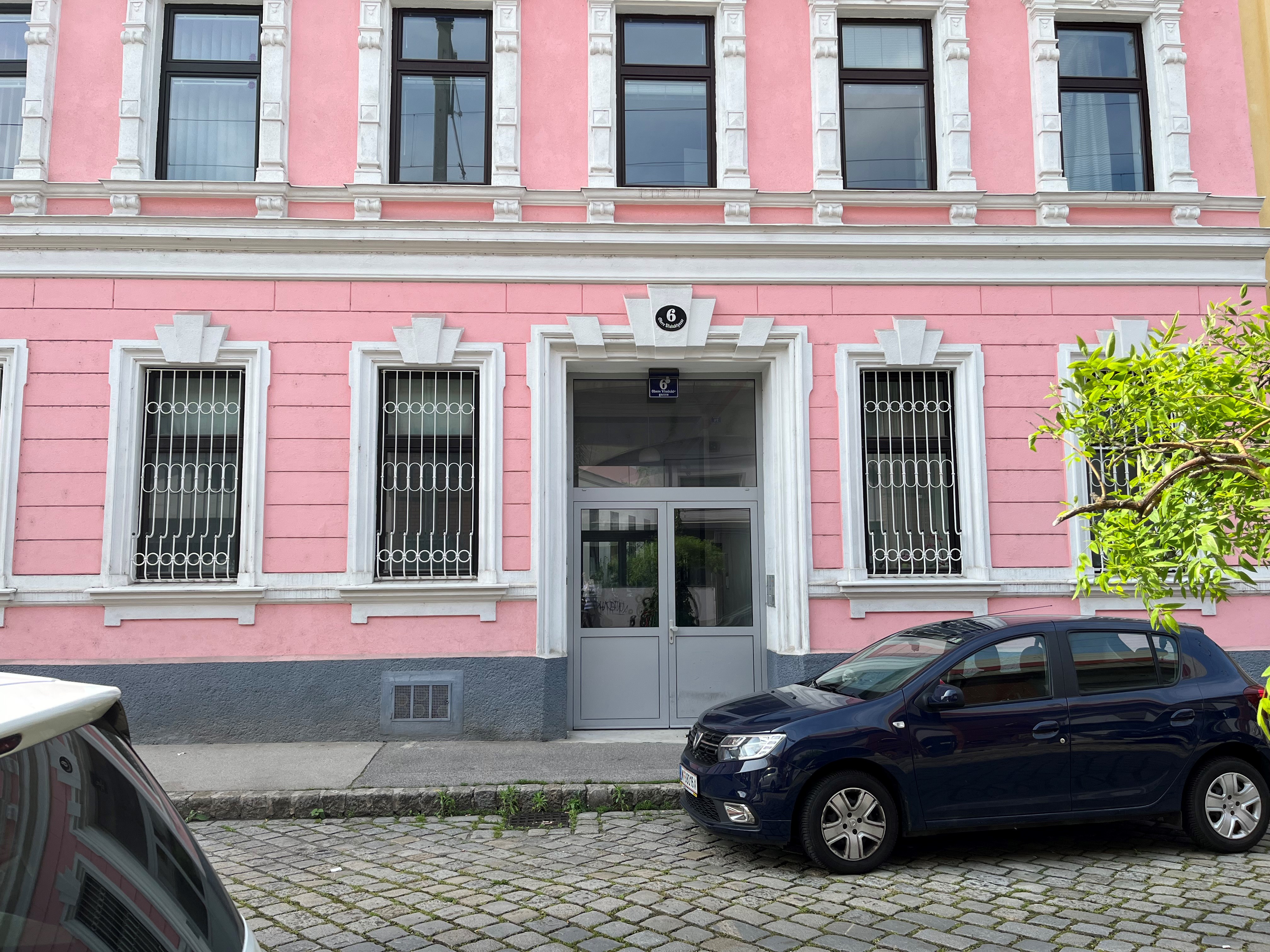

Off at Radetzkyplatz and walk the last few hundred metres. I’m now in the Landstrasse, a posher part of Vienna, where the streets are lined with brightly-painted apartment blocks — the squat type with humongous decorated windows and arched doorways, typical of any self-respecting Central European country. Cars are parked neatly (if slightly randomly) on the side of the road; on one building someone has scrawled the graffito “do you know what love is”. Even though I’m walking in the shadow of a railway bridge and derelict garages line the opposite side of the street, it still feels like a scene straight out of “The Grand Budapest Hotel” from my point of view, and I’m just turning my head and looking for a Ralph Fiennes-lookalike when I turn the corner, and my eyes fall on something that would have grossly offended Wes Anderson.

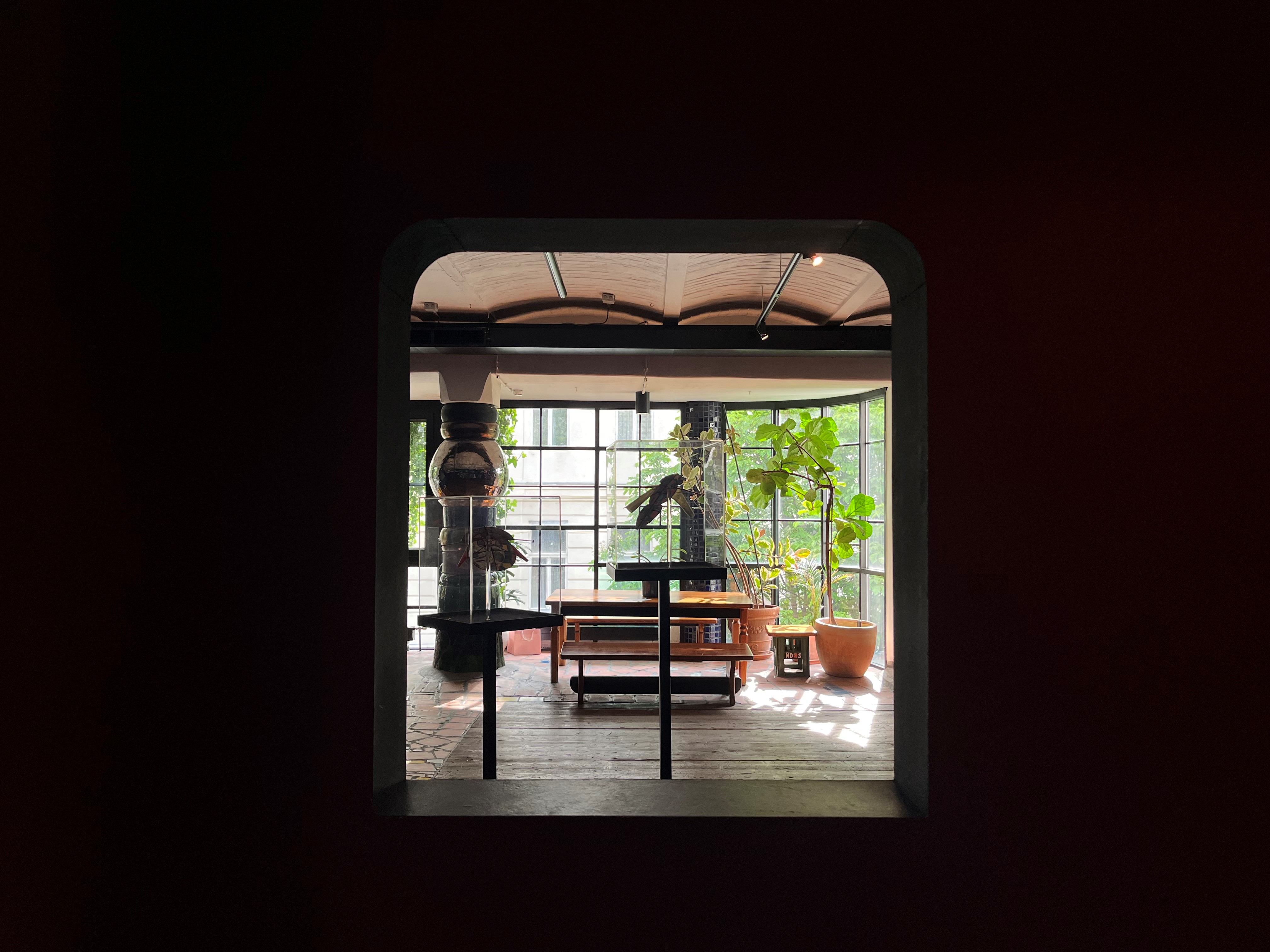
This is the KunstHaus Wien, perhaps the city’s most striking piece of architecture. Formerly a furniture factory, it was turned into an art museum in the late 80s by local artist Friedensreich Hundertwasser, whose main defining features as an artist were an emphasis on nature and the organic (his pseudonym literally means “the Hundred Waters”) and an incurable phobia of the straight line. The German-speaking world is dotted with buildings that he designed — there’s a very famous incineration plant just across the Danube that you’ve probably seen on the Internet — and fittingly the museum he helped design is now a tribute to his life and works, a building with a dazzling façade that inevitably makes any passer-by stop, look, and marvel. That included me, on my first visit to the city many years ago, but that time I only went as far as the lobby. I remember being particularly astounded by its water feature, watching it defying gravity and somehow flow upwards, and thinking “just how the hell did they do that? This Hundertwasser’s a genius”.
A decade on, however, the magic has worn off and instead I’m aware of nothing but absurdities. Wikivoyage had described this place as “a Disneyland for adults”, but Wikivoyage was obviously lying because there are no thrill rides, no joyfully shouting visitors, and no fun to be had at all. The water feature I gawped over turns out to be nothing more than a few feeble streams trickling out a la drinking fountains; and once the novelty of the architecture has worn off, the design of the KunstHaus feels more like a distraction than a feature. Hundertwasser’s whole artistic ethos lay in foregrounding both nature and creativity, which is why he detested the unnatural straight line and had the floor bulge up in random places to simulate the earth; it’s an amusing quirk but that single quirk is all there is to the museum. The museum’s exhibits, too, leave me cold: modern art intrigues me but does not fascinate, and this is especially true for Friedensreich Hundertwasser, whose style is best described as “Picasso as imagined by children”. Yes, the colours are vivid and his visions are undoubtedly unique, but there’s a certain crudeness to his faces and outlines that somehow feels amateurish and ugly — like he’s parodying Modernist art.



To brighten up my experience at the KunstHaus a bit, I try to get talking with two girls from Hong Kong also wandering around the museum. (I AM a hormonal young man, after all.) Medical students in the UK, they’ve just come down from Edinburgh to tour the cities along the Danube — apparently they got off the plane this morning. We trade a bit of small talk on how we’ve found Vienna, as well as our travel plans for the rest of the week. After a while, though, we run out of things to say, and despite my best efforts to keep the conversation going they seem reticent to engage any further. Make my excuses and leave, feeling slightly disappointed. Perhaps I just lack the charisma.
Meet up with Charmaine, fresh from a happy rummage in a sea of books, and plot our way to tonight’s restaurant. After a couple of false starts involving a few redirected trams, we pop out into the sunlight at Schottentor station, where hordes of youngsters disgorged from the nearby University of Vienna board trams and trains back to their homes in the suburbs. The Ringstrasse seems weirdly empty except for a few police cars that are parked in the centre of the road, and as we cross the street we hear a cacophony of noises: sounds of people chanting, and marching, and drumming. As we slowly walk towards the crowd, trying to figure out how we might weave our way around them, I catch a glimpse of people waving dozens of tricolours around. Stop to see which flags they are — and it is then that I make out the white, blue and red of the Russian flag. The temperature seems to instantly drop a few degrees, and we hastily make our escape from the far-right crowd.
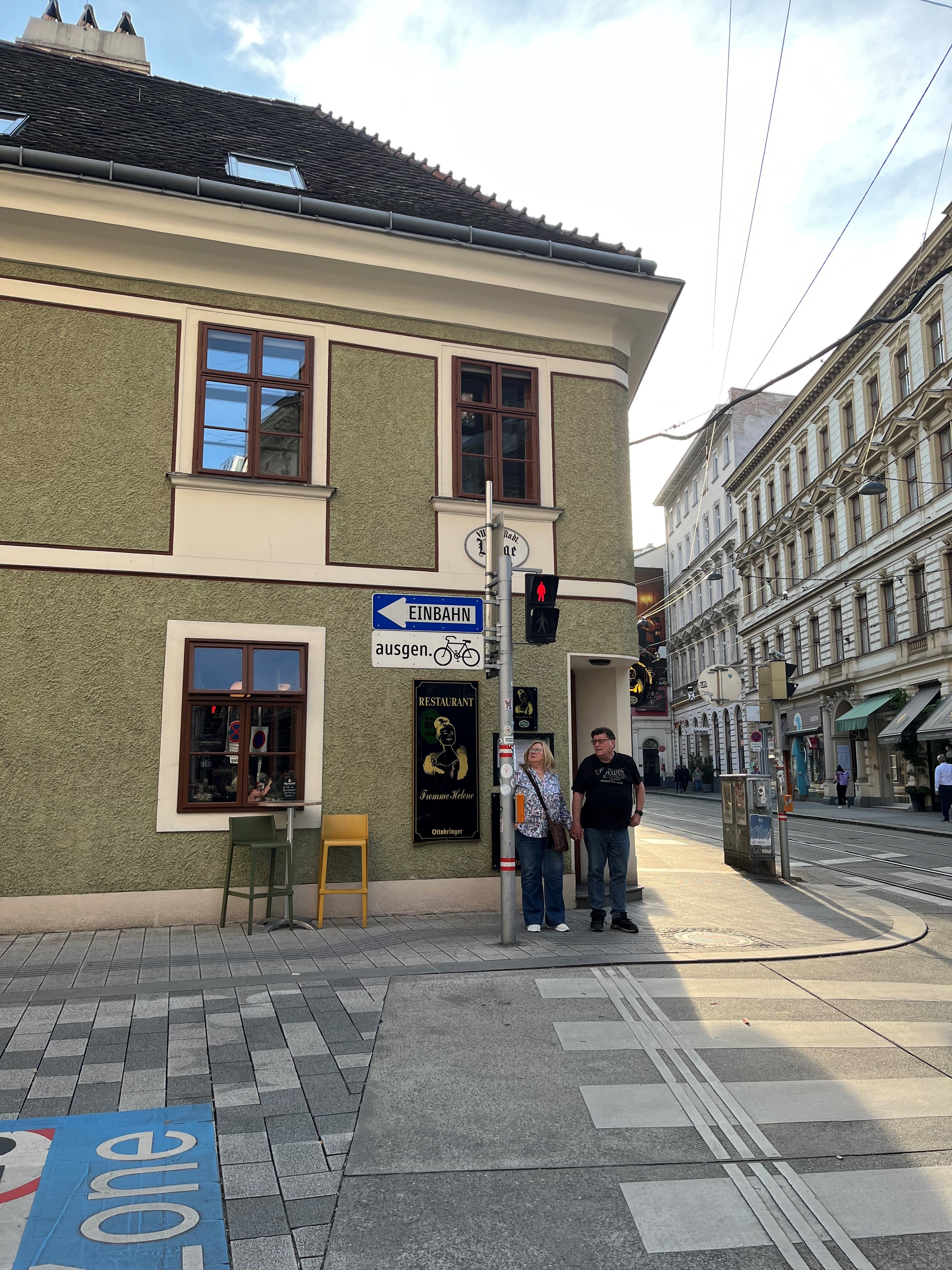
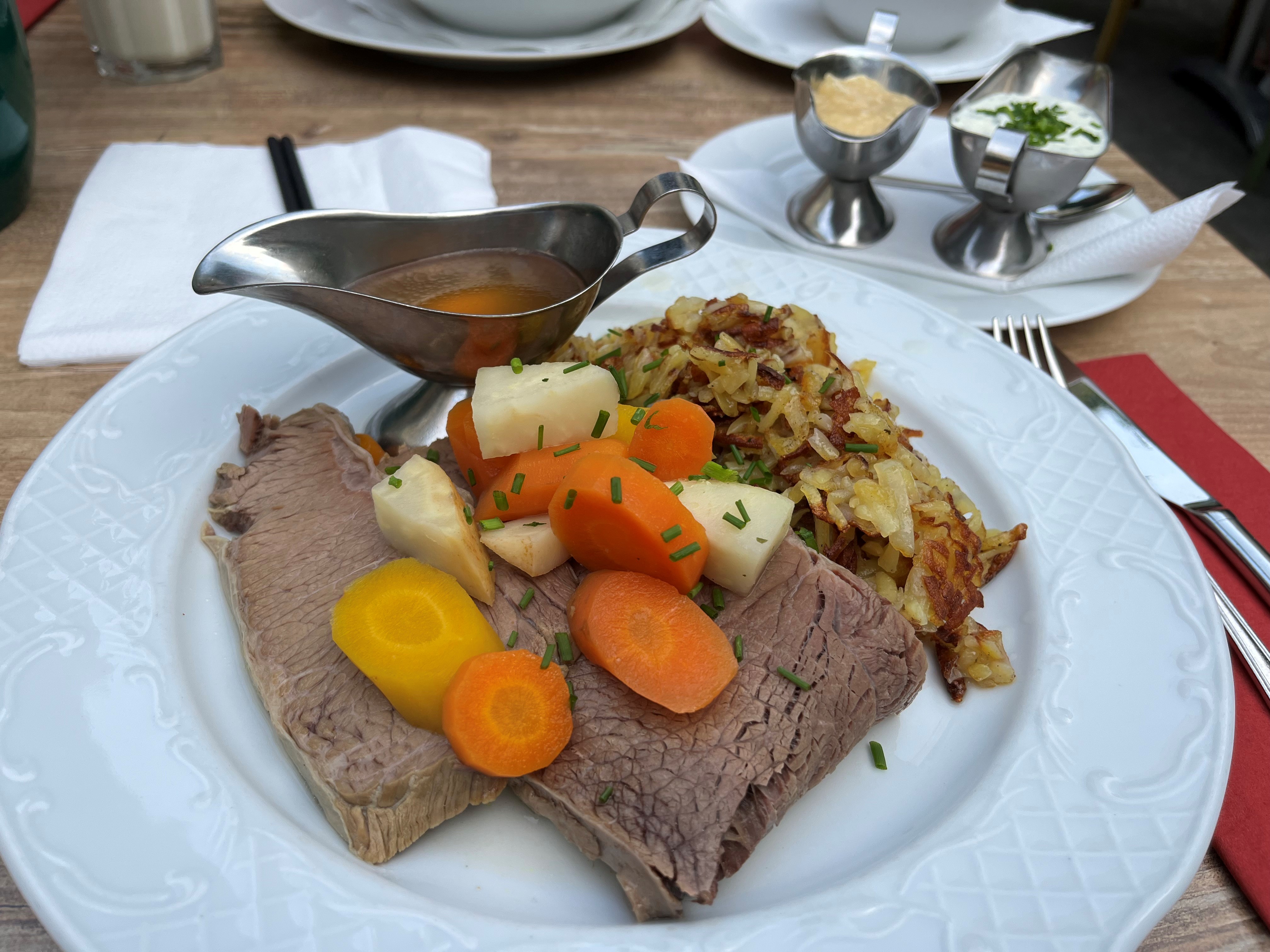

Josefstadt, the district we end up in, is a compact, middle-class, slightly trendy area featuring a wide array of quaint little basement boutiques. It is in these surroundings that we find the “Fromme Helene”, situated atop an old theatre and which promises (to quote their website) “good food and friendly staff”. What follows for us, however, is a culinary Rashomon that defies the neat characterisation of those five simple words. Because our reservation was made only yesterday, we’ve been dealt an outdoors table, and this being summer in Vienna, said table turns out to be very popular with insects. While Dennis freaks out progressively over the number of gnats attaching themselves to him, I shrug and tuck into my tafelspitz, which is basically a hunk of boiled beef served with potatoes, applesauce, and horseradish, while Charmaine trudges (somewhat gloomily) through her schnitzel. Both of these are regularly held up as examples of typical Viennese cuisine — after all, one of them’s been immortalised by Oscar Hammerstein — but only the delicately-fried schnitzel proves worthy, while the tafelspitz feels like it’s been hauled out of a vat of broth and tastes of exactly nothing, not even beef. Happily the sides are much more comestible, and since Dennis has leapt out of his chair at this point I steal a couple of vegetables from his salad as well.
Dinner and countless gnats hastily vanquished, we make our way back to the hostel. As we walk through the streets, passing aquariums and hookah cafes, the twilight sun shines from in between the buildings, casting shadows that land softly on our faces. Turning onto the Wienzeile — the streets that flank the Naschmarkt and the Wien River on both sides — I catch my breath upon noticing the structures rising up on either side. Everything here is lavishly, sumptuously decorated, the influence of the Secession movement clearly visible; even the dourest buildings here are in fetching pastel shades that just can’t help but draw your attention (I spend minutes staring at a particularly fetching cream-and-chocolate ensemble). On a wall next to Kettenbrückengasse station, somebody has painted a mural of Falco, the local hero whose “Rock Me Amadeus” turned him into Austria’s biggest twentieth-century musical export, and whose “Vienna Calling” I’ve had on repeat for the past few days.


Eight thirty in the evening. Despite it being a Saturday, Vienna already feels like it’s winding down for the night: the roads are empty, the shops are shuttered, and few restaurants still ply a roaring trade. But there are some corners of the city that stay up even after sundown, which is why Dennis and I are at… a museum. Yes, a museum, because the Haus der Musik, tucked deep inside a side street in the Inner Stadt, is one of those rare tourist attractions still open at this time of night. (You didn’t think I was really going to go clubbing, did you?)
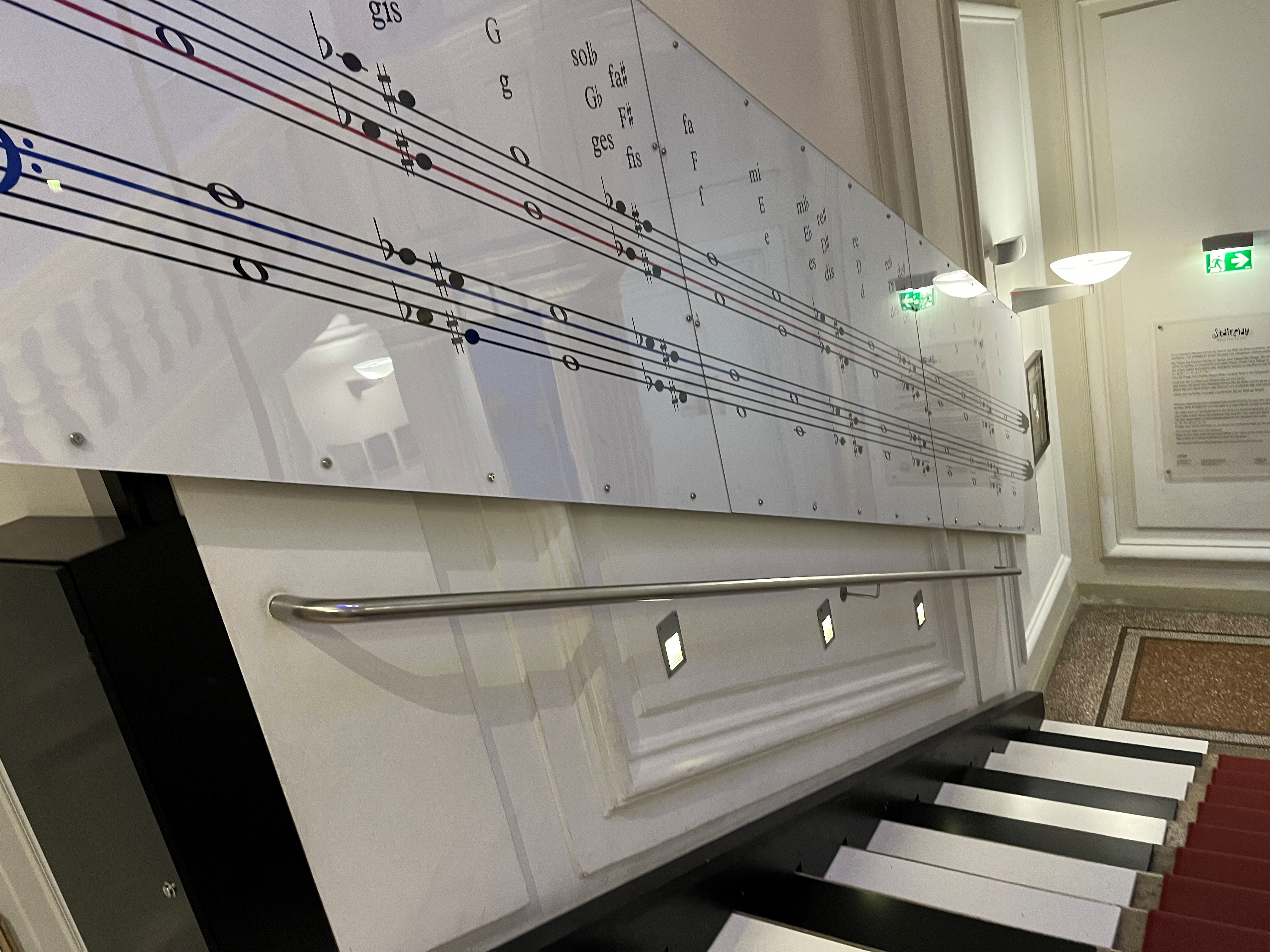
But the other reason why we’re here is that it’s just such a fun museum; I have been to this place on all of my visits to Vienna, and it has never once disappointed. The fun starts right after you go through the entry turnstile: on the staircase in front of you, a bunch of pressure-sensitive mats chime musical notes as you ascend, encouraging you to play something by hopping on and off, and indeed the visitors in front of us play a shambolic C-major scale as they make their way to the first floor. Once inside, they deftly balance information with entertainment: an interactive screen where you can create your own Viennese waltz, a screening room for the latest New Year’s Concert, experiments with sound… the list goes on, and so too does the wonder you feel. It’s one of those rare museums that understands that its mission is not to throw a bunch of facts in the guests’ faces, but to ignite in them a thirst for knowledge, to make them want to learn more. So it is that I find myself developing sudden interests in the Vienna Philharmonic, in the works of Jacques Offenbach, and in the many varieties of percussion instruments; I am not and have never been a musical person (whatever my blogs might suggest), yet I always feel a little more knowledgeable and a little less tone-deaf everytime I visit the Haus der Musik.



My favourite thing about this place, however, is the care with which all this information’s been laid out. I’ve made no secret of my love for good museum design, and this is one place that gets the atmosphere on every floor just right: the stately nineteenth-century furnishings for the first level about the Philharmonic; the next about sound, dark and moody and built like a futuristic recording studio; and each composer based in Vienna — Haydn, Mozart, Schubert and so on — all get rooms that feel thematically appropriate, rooms designed to fit the style of their music and which spotlight their contribution to the city’s music culture. It’s all very intricately designed and very cool; it makes you intrigued about what lies round the next corner, what else you might be able to learn.
The crowning glory of the museum is its virtual conductor exhibit: situated at the top floor of the museum, it allows visitors to conduct the Vienna Philharmonic, or at least a digital version of them that responds to the baton you’re holding as you wave your arms about, pretending you have some sort of rhythm. Unfortunately the sensor on said baton doesn’t work very well, so despite doing a pitch-perfect imitation of Zubin Mehta my “Radetzky March” still sounds very wonky; the “Can-Can” Dennis attempts afterward, his arms flapping about like a chicken caught by torchlight, is just as strange. No matter, the point here is to have fun, and at the Haus der Musik, I have had the most fun I’ve ever had in the city. Before we exit, the final room implores us to “reset your ears” after such a long barrage of auditory stimulation, and it’s a measure of how much I respect the place that I stop and follow suit, allowing the silence to rush in and flood my ears.


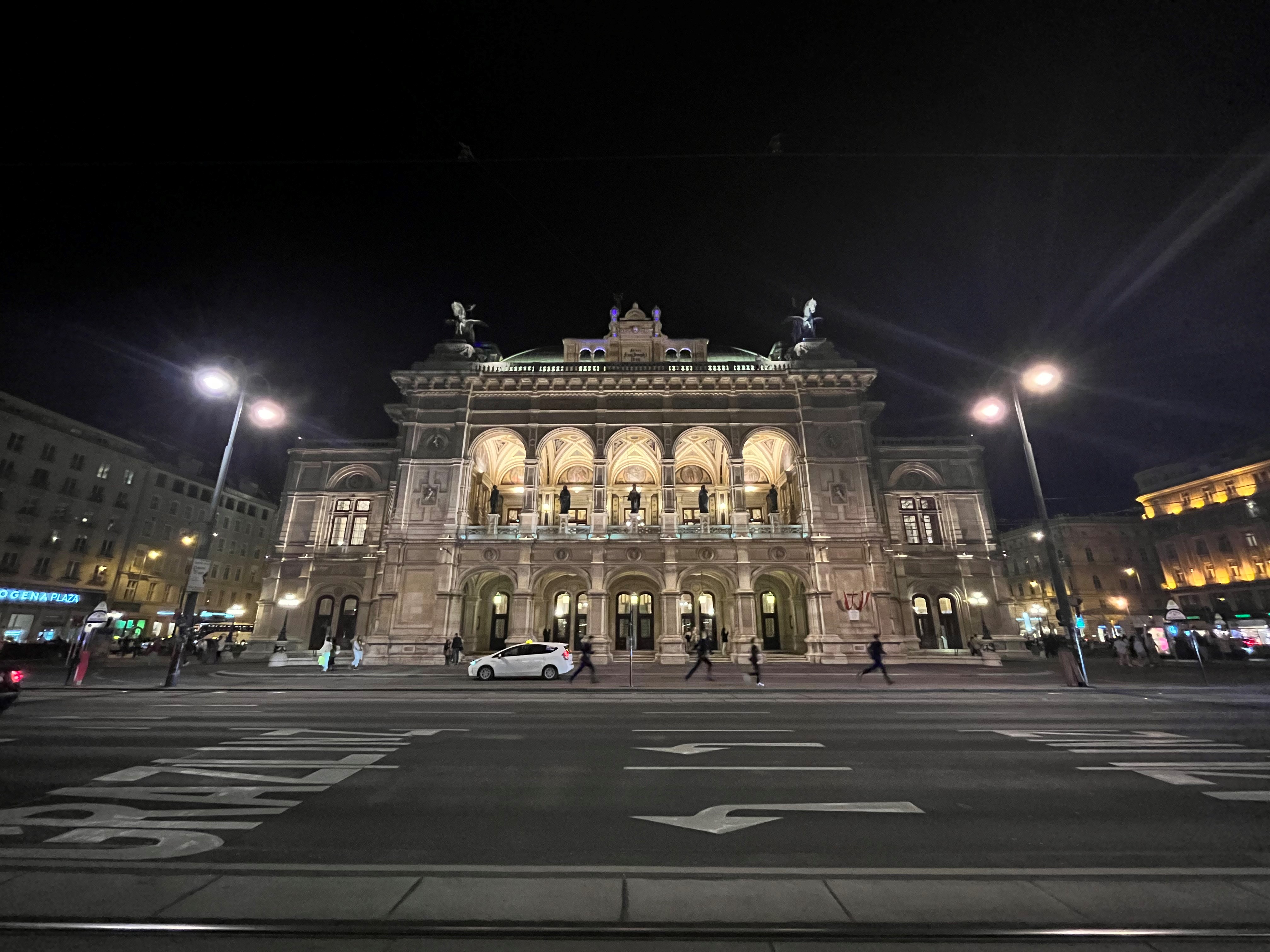
As we step out into the night, Vienna seems different, more subdued. The streets are lit only by the occasional appearance of a street lamp, and the buildings look a lot more foreboding, fortresses of glass and steel deserted for the night. Out on the Ringstrasse, the only sound comes from the steel-on-steel clatter of trams careening down the boulevard, and a few rowdy youngsters in dinner jackets and little black dresses playing tag at the State Opera tram stop. There are few people still roaming the pedestrian tunnels underneath the Karlsplatz, and our footsteps sound all too loud in the underground. It’s surreal to think that only a few hours ago this place was humming with tourists, that a city can be so unreal, even creepy, once you remove the people from its streets — here in the Secession passageway with its white marbled walls, it feels more like we’ve intruded upon a mausoleum than a busy subway, and I feel that drop in the temperature again.


On the road back towards the hostel, we stumble across three local women about our age, bedecked in elegant dresses, crouching on the pavement and munching on what appears to be a birthday cake. They say nothing as we pass, though one of them looks up at the sound of our approach and squints at us. Our footsteps quicken on the asphalt, and we hurry on, on towards the safety of our room.

 Inkpot Shuffles in the Twilight